TOOTH NUMBERING SYSTEM / 
TOOTH IDENTIFICATION SYSTEMS 
BY – K KISHOR KUMAR 
24-1-2014
WHY DO WE NEED ? 
• system used by dentists to associate information to a 
specific tooth. 
• In clinical practice some “shorthand” system of tooth 
notation is necessary for recording data. 
To do so efficiently, it is necessary to adopt a type of code 
or numbering system for teeth
Types of numbering system’s. 
• There are several systems in world, 
• 3 main systems are : 
1. Universal Notation System. 
2. Zsigmondy/Palmer Notation System. 
3. Federation Dentaire Internationale (FDI).
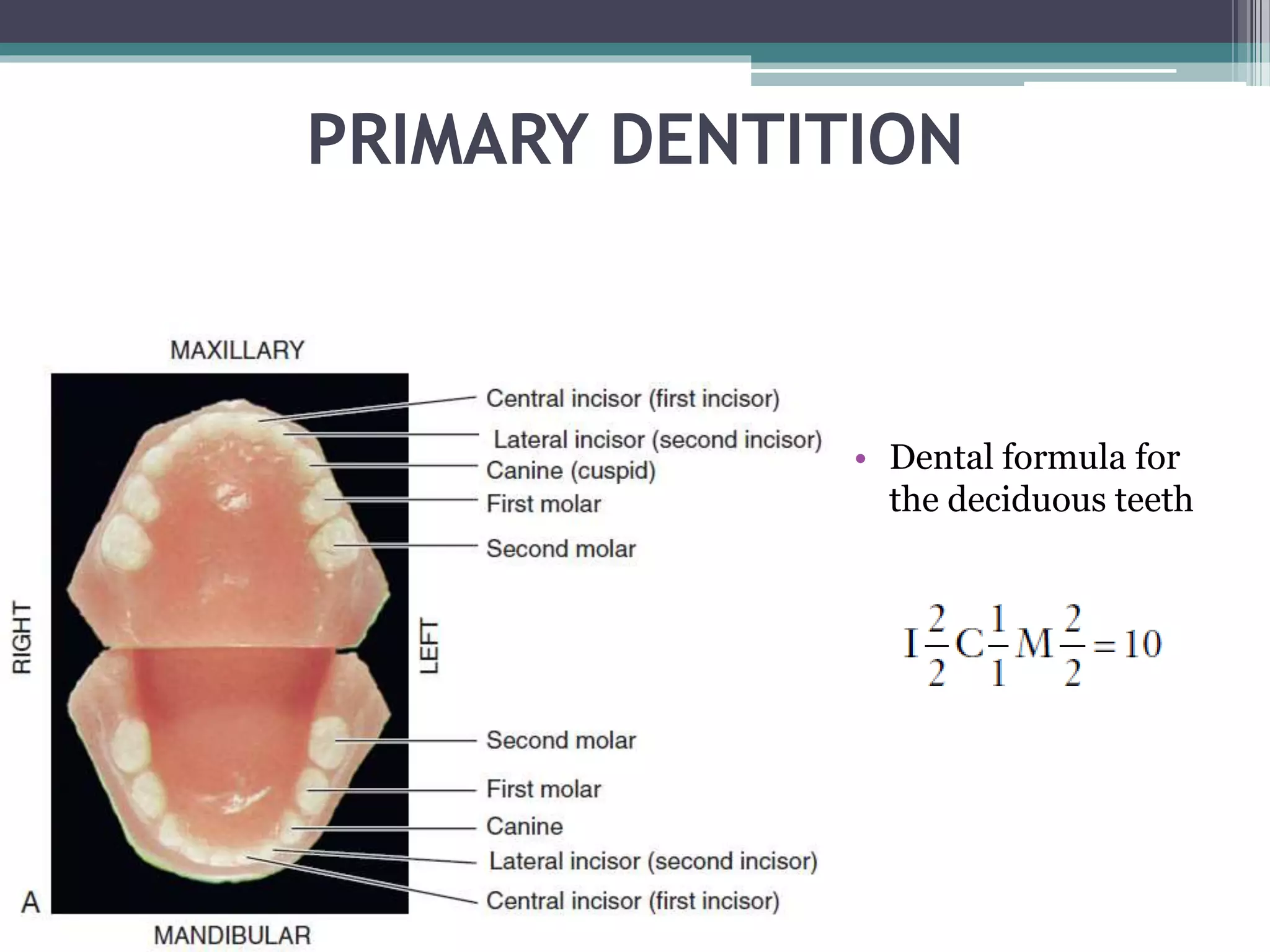
PRIMARY DENTITION 
• Dental formula for 
the deciduous teeth
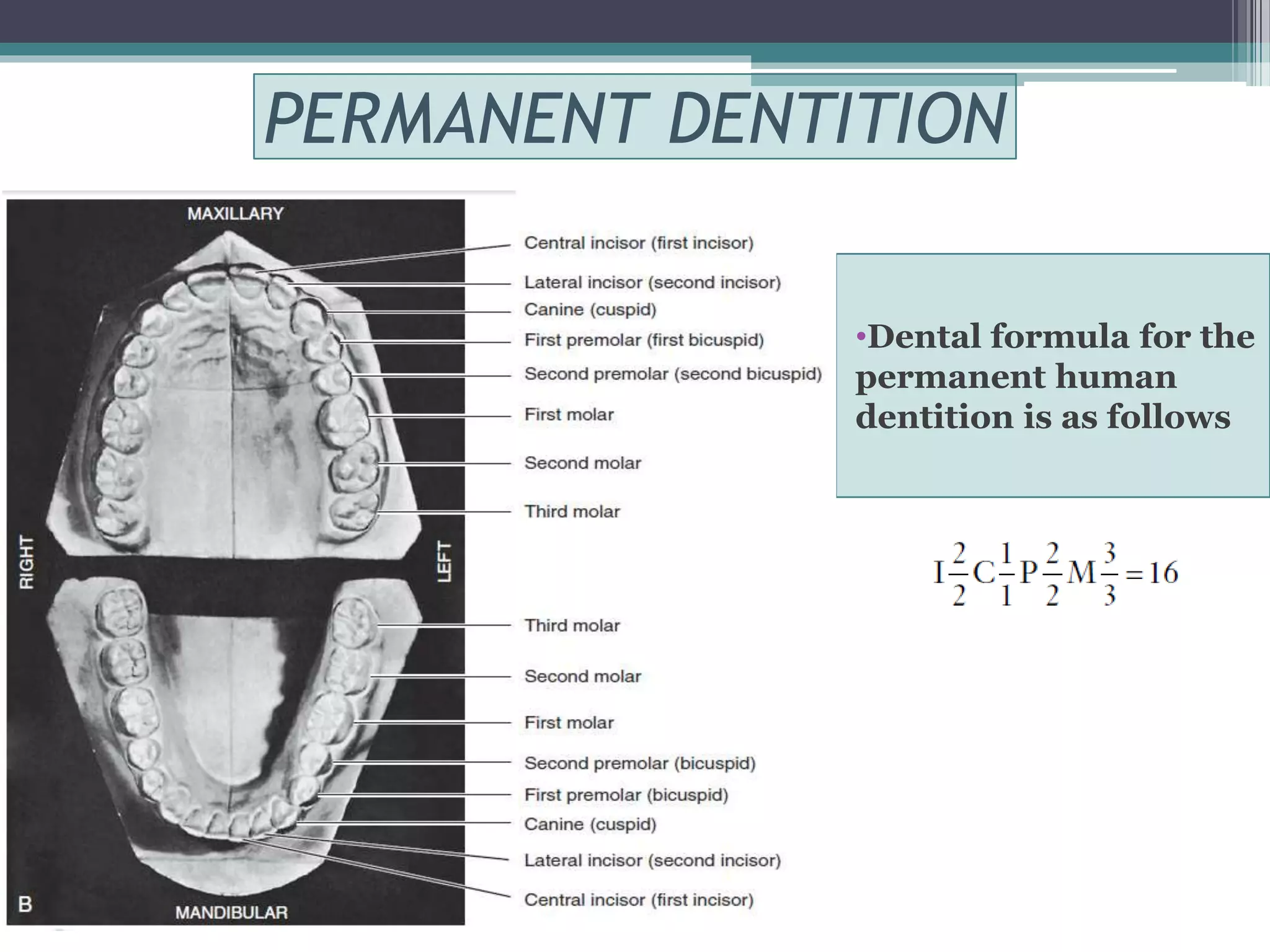
PERMANENT DENTITION 
•Dental formula for the 
permanent human 
dentition is as follows
Universal Notation System 
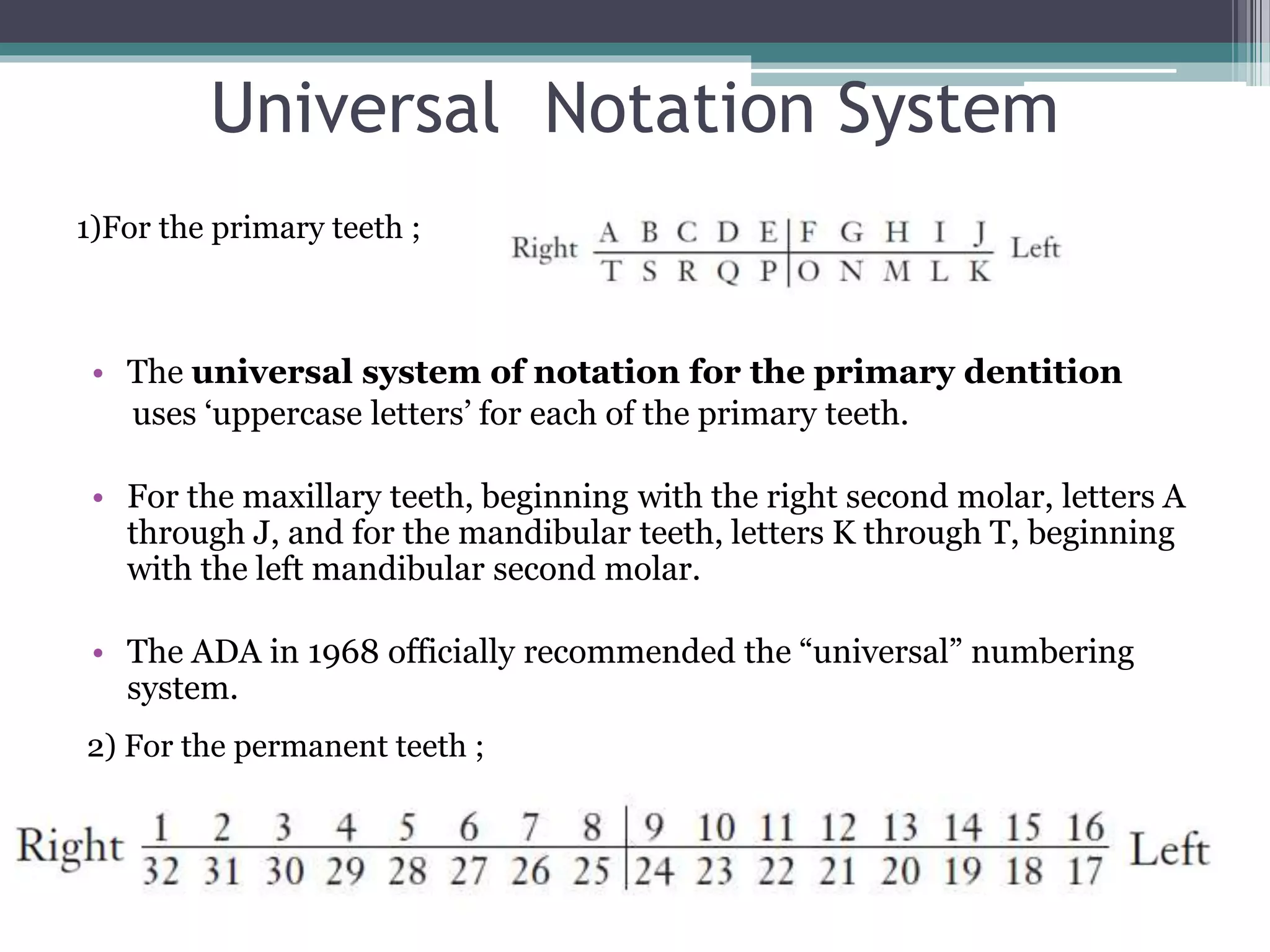
1)For the primary teeth ; 
• The universal system of notation for the primary dentition 
uses ‘uppercase letters’ for each of the primary teeth. 
• For the maxillary teeth, beginning with the right second molar, letters A 
through J, and for the mandibular teeth, letters K through T, beginning 
with the left mandibular second molar. 
• The ADA in 1968 officially recommended the “universal” numbering 
system. 
2) For the permanent teeth ;
Universal Notation System 
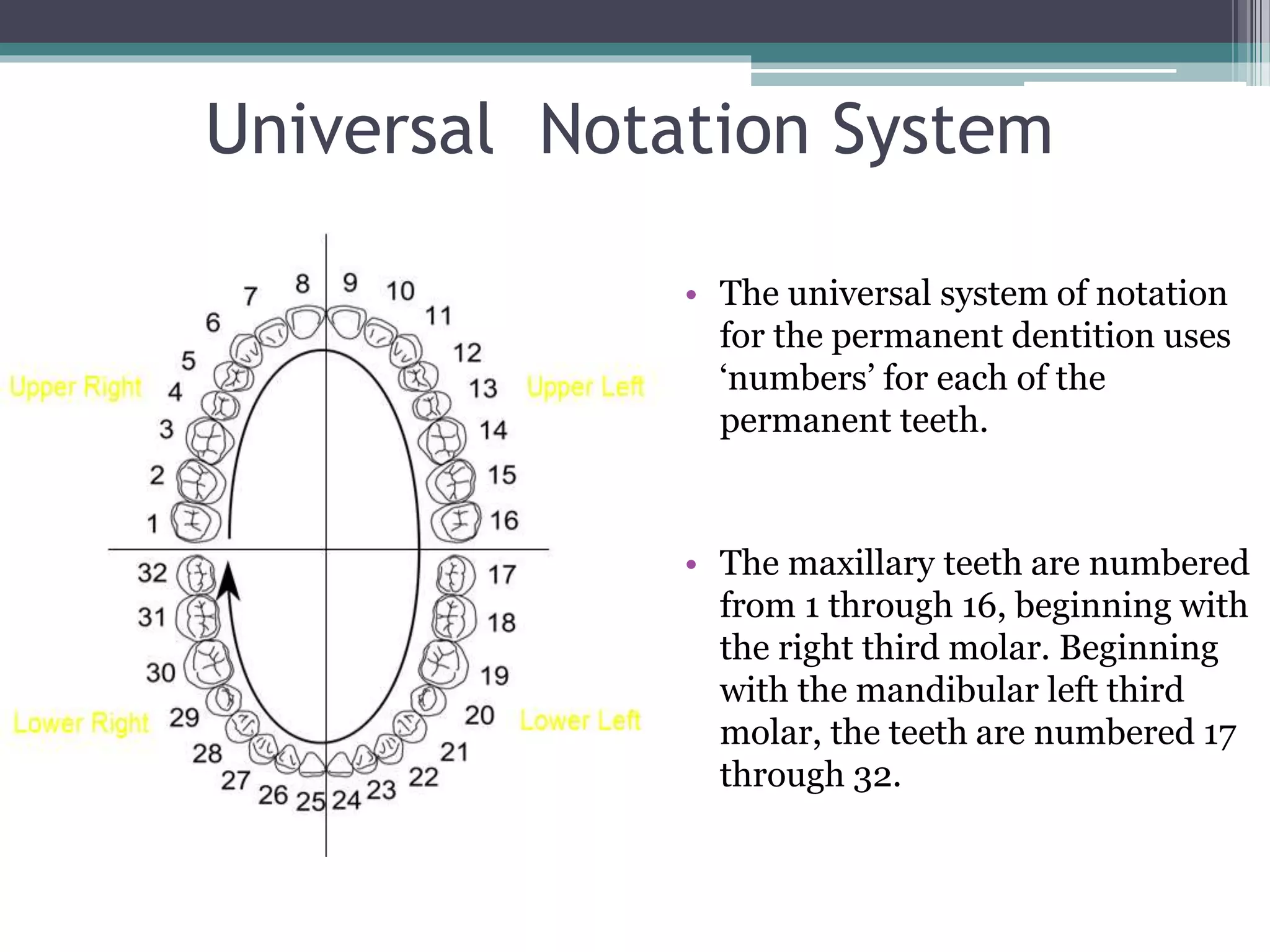
• The universal system of notation 
for the permanent dentition uses 
‘numbers’ for each of the 
permanent teeth. 
• The maxillary teeth are numbered 
from 1 through 16, beginning with 
the right third molar. Beginning 
with the mandibular left third 
molar, the teeth are numbered 17 
through 32.
Zsigmondy/Palmer Notation System. 
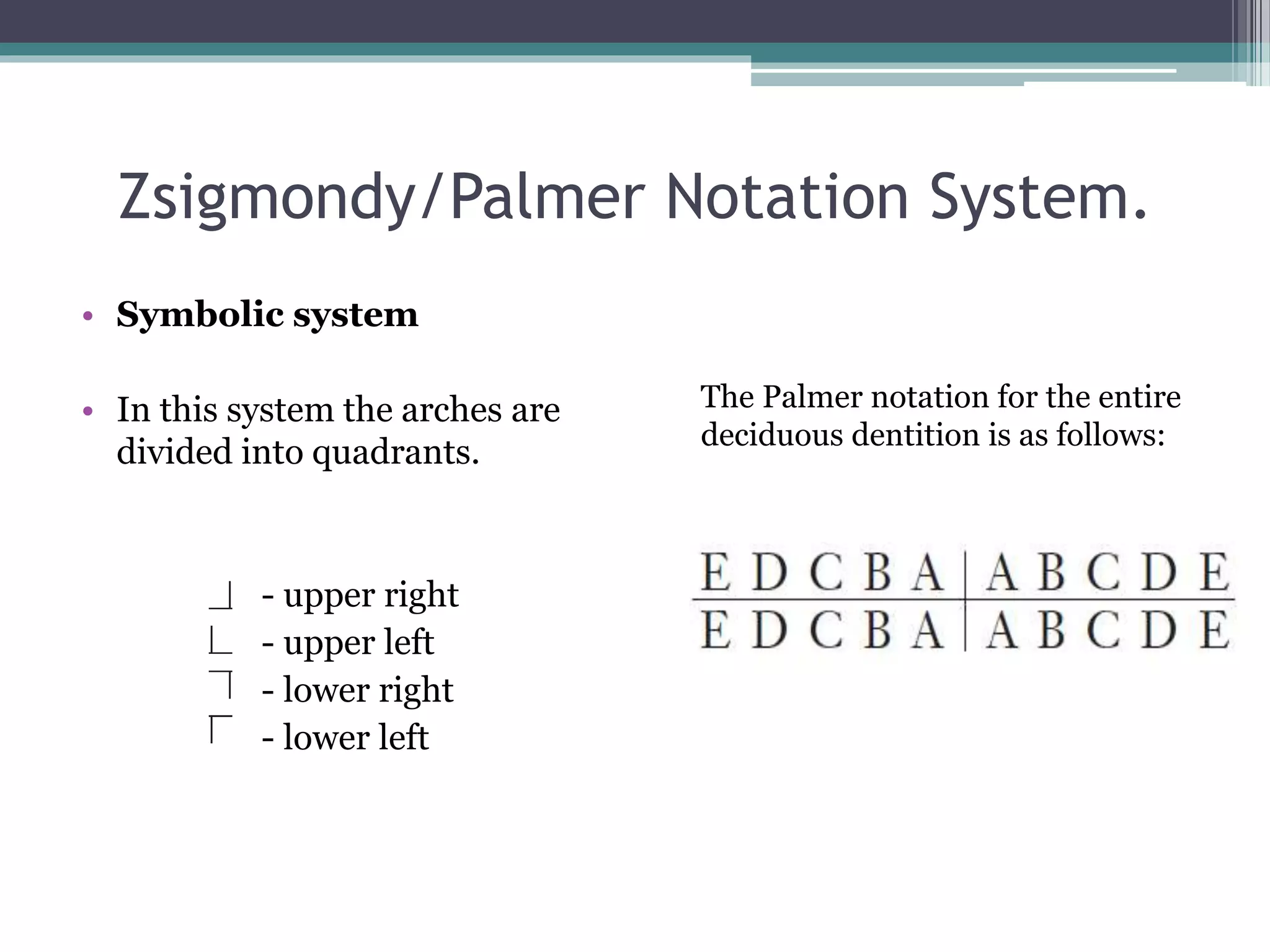
• Symbolic system 
• In this system the arches are 
divided into quadrants. 
- upper right 
- upper left 
- lower right 
- lower left 
The Palmer notation for the entire 
deciduous dentition is as follows:
Zsigmondy/Palmer Notation System. 
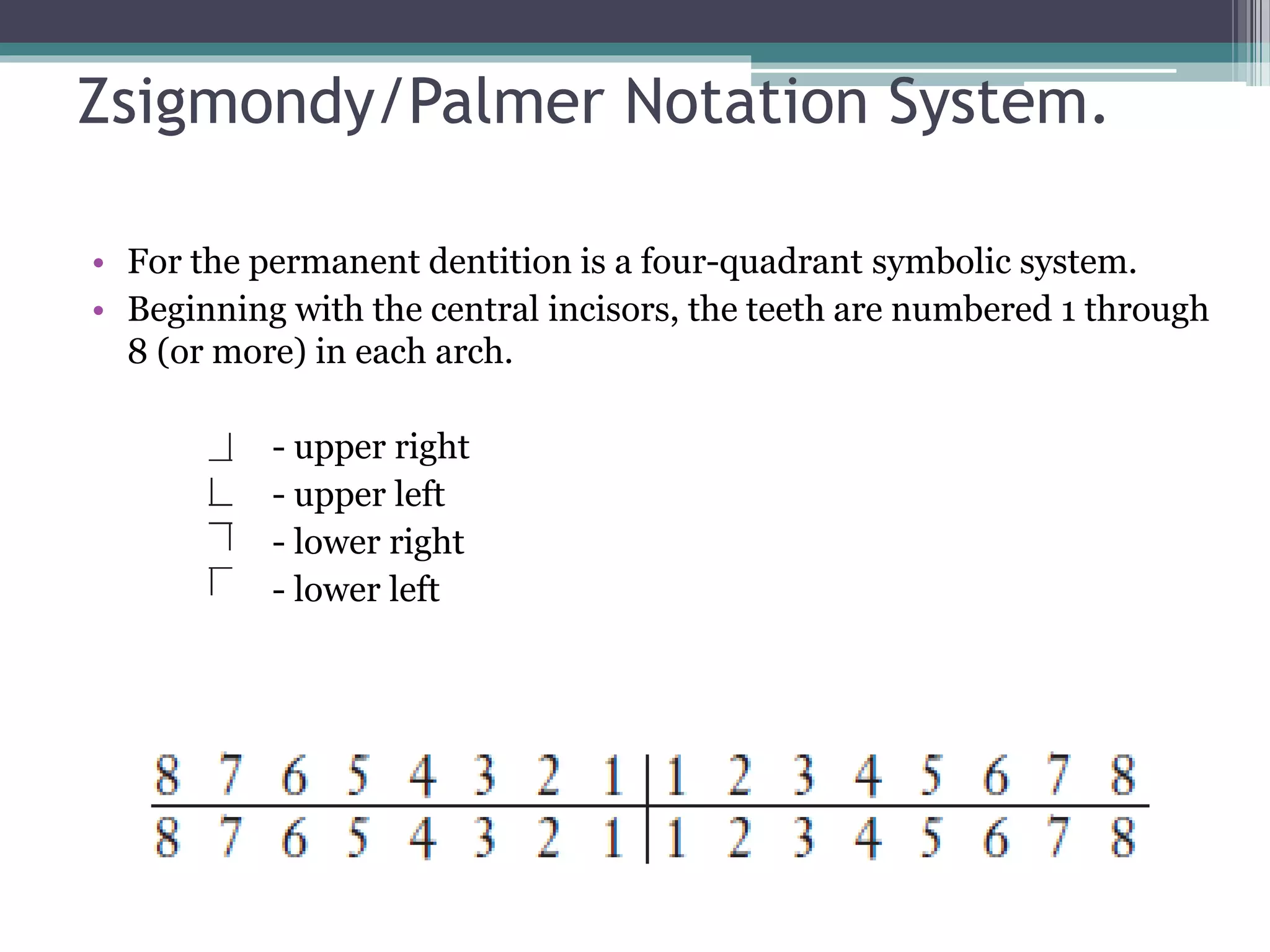
• For the permanent dentition is a four-quadrant symbolic system. 
• Beginning with the central incisors, the teeth are numbered 1 through 
8 (or more) in each arch. 
- upper right 
- upper left 
- lower right 
- lower left
Federation Dentaire Internationale 
(FDI). 
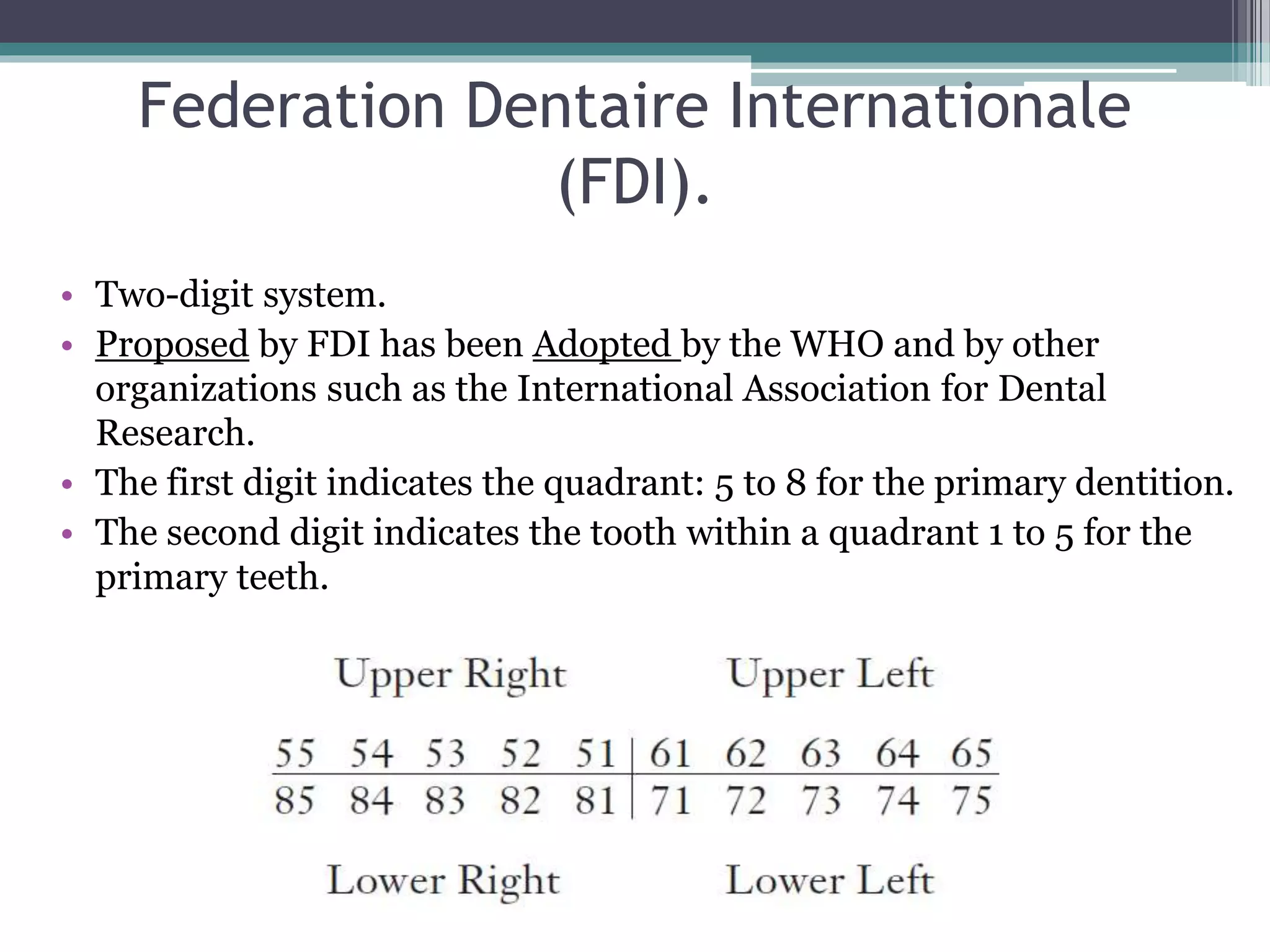
• Two-digit system. 
• Proposed by FDI has been Adopted by the WHO and by other 
organizations such as the International Association for Dental 
Research. 
• The first digit indicates the quadrant: 5 to 8 for the primary dentition. 
• The second digit indicates the tooth within a quadrant 1 to 5 for the 
primary teeth.
Federation Dentaire Internationale 
(FDI). 
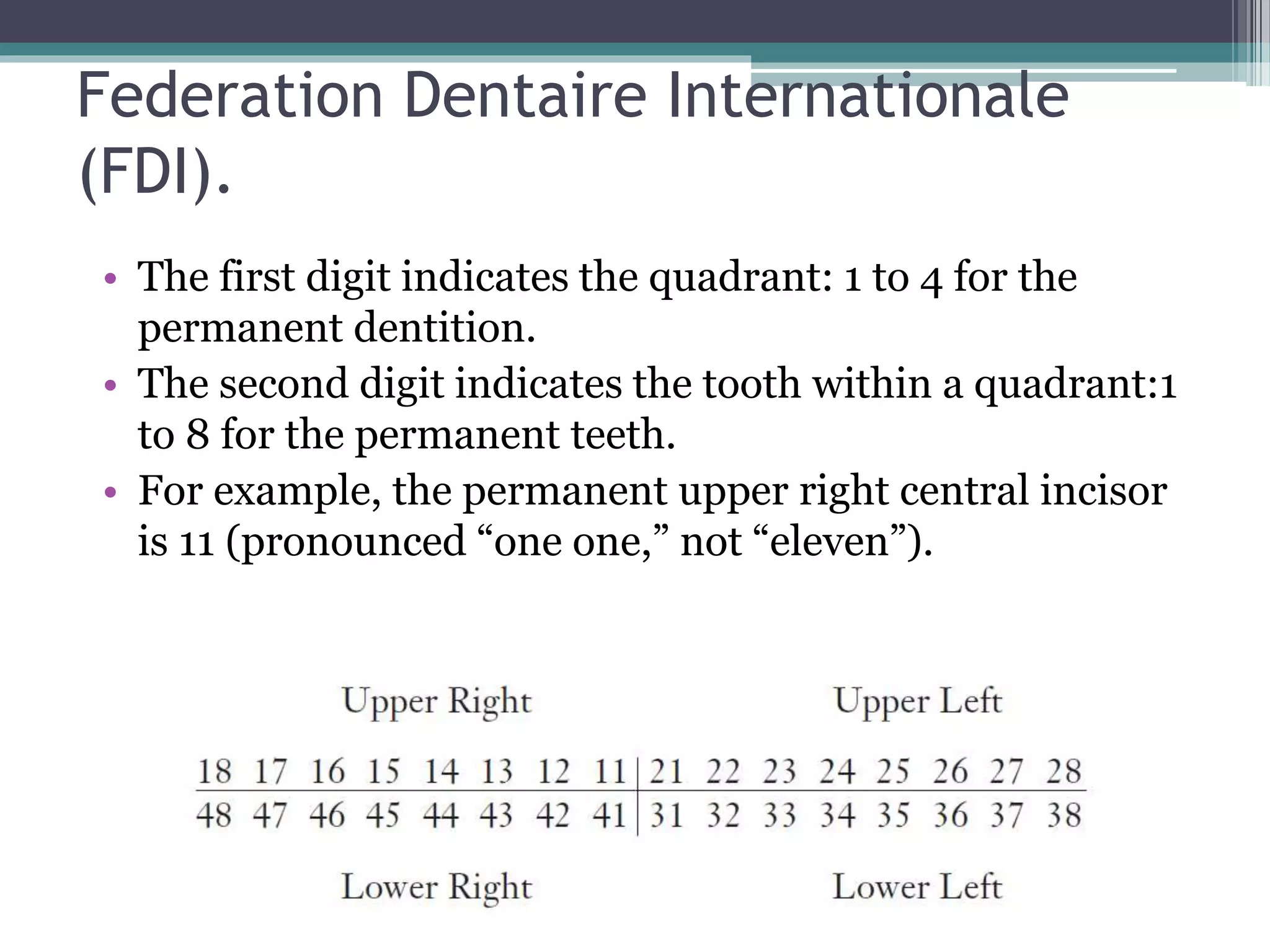
• The first digit indicates the quadrant: 1 to 4 for the 
permanent dentition. 
• The second digit indicates the tooth within a quadrant:1 
to 8 for the permanent teeth. 
• For example, the permanent upper right central incisor 
is 11 (pronounced “one one,” not “eleven”).

Tooth numbering system

  • 1.
    TOOTH NUMBERING SYSTEM/ TOOTH IDENTIFICATION SYSTEMS BY – K KISHOR KUMAR 24-1-2014
  • 2.
    WHY DO WENEED ? • system used by dentists to associate information to a specific tooth. • In clinical practice some “shorthand” system of tooth notation is necessary for recording data. To do so efficiently, it is necessary to adopt a type of code or numbering system for teeth
  • 3.
    Types of numberingsystem’s. • There are several systems in world, • 3 main systems are : 1. Universal Notation System. 2. Zsigmondy/Palmer Notation System. 3. Federation Dentaire Internationale (FDI).
  • 4.
    PRIMARY DENTITION •Dental formula for the deciduous teeth
  • 5.
    PERMANENT DENTITION •Dentalformula for the permanent human dentition is as follows
  • 6.
    Universal Notation System 1)For the primary teeth ; • The universal system of notation for the primary dentition uses ‘uppercase letters’ for each of the primary teeth. • For the maxillary teeth, beginning with the right second molar, letters A through J, and for the mandibular teeth, letters K through T, beginning with the left mandibular second molar. • The ADA in 1968 officially recommended the “universal” numbering system. 2) For the permanent teeth ;
  • 7.
    Universal Notation System • The universal system of notation for the permanent dentition uses ‘numbers’ for each of the permanent teeth. • The maxillary teeth are numbered from 1 through 16, beginning with the right third molar. Beginning with the mandibular left third molar, the teeth are numbered 17 through 32.
  • 8.
    Zsigmondy/Palmer Notation System. • Symbolic system • In this system the arches are divided into quadrants. - upper right - upper left - lower right - lower left The Palmer notation for the entire deciduous dentition is as follows:
  • 9.
    Zsigmondy/Palmer Notation System. • For the permanent dentition is a four-quadrant symbolic system. • Beginning with the central incisors, the teeth are numbered 1 through 8 (or more) in each arch. - upper right - upper left - lower right - lower left
  • 10.
    Federation Dentaire Internationale (FDI). • Two-digit system. • Proposed by FDI has been Adopted by the WHO and by other organizations such as the International Association for Dental Research. • The first digit indicates the quadrant: 5 to 8 for the primary dentition. • The second digit indicates the tooth within a quadrant 1 to 5 for the primary teeth.
  • 11.
    Federation Dentaire Internationale (FDI). • The first digit indicates the quadrant: 1 to 4 for the permanent dentition. • The second digit indicates the tooth within a quadrant:1 to 8 for the permanent teeth. • For example, the permanent upper right central incisor is 11 (pronounced “one one,” not “eleven”).