HUMAN TEETH
AND ITS FUNCTION
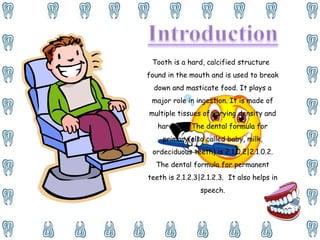
Tooth is a hard, calcified structure
found in the mouth and is used to break
down and masticate food. It plays a
major role in ingestion. It is made of
multiple tissues of varying density and
hardness. The dental formula for
primary(also called baby, milk,
ordeciduous teeth) is 2.1.0.2|2.1.0.2.
The dental formula for permanent
teeth is 2.1.2.3|2.1.2.3. It also helps in
speech.
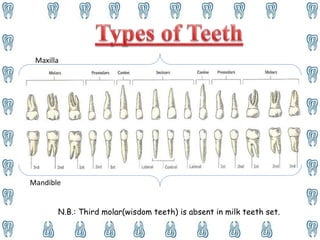
Maxilla
Mandible
N.B.: Third molar(wisdom teeth) is absent in milk teeth set.
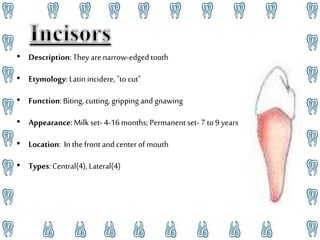
• Description: They are narrow-edged tooth
• Etymology: Latin incidere, "to cut"
• Function:Biting, cutting, gripping and gnawing
• Appearance:Milk set- 4-16 months; Permanent set- 7 to9 years
• Location: In the front and center of mouth
• Types:Central(4), Lateral(4)
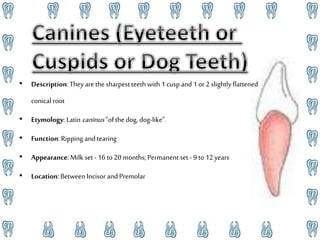
• Description: Theyare the sharpest teeth with 1 cuspand 1or 2 slightly flattened
conical root
• Etymology: Latin canīnus“of the dog, dog-like”.
• Function: Ripping and tearing
• Appearance: Milk set - 16 to 20 months; Permanent set - 9to 12years
• Location: Between Incisor and Premolar
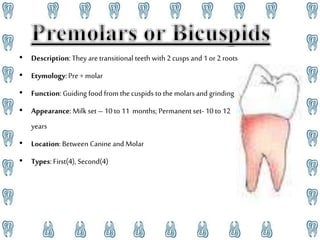
• Description: They are transitional teeth with 2 cusps and 1 or 2 roots
• Etymology:Pre+ molar
• Function: Guiding food from the cuspids to the molars and grinding
• Appearance: Milk set – 10 to 11 months; Permanent set- 10 to 12
years
• Location: Between Canine and Molar
• Types: First(4), Second(4)
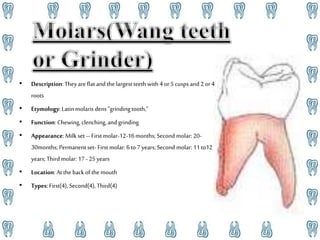
• Description: Theyare flat and the largest teeth with 4 or 5cusps and 2or 4
roots
• Etymology: Latin molaris dens "grindingtooth,"
• Function: Chewing, clenching,and grinding
• Appearance: Milk set – First molar-12-16months; Second molar: 20-
30months;Permanentset- First molar: 6 to 7 years; Second molar: 11to12
years; Thirdmolar: 17 -25years
• Location: At the backof the mouth
• Types:First(4), Second(4), Third(4)
X X
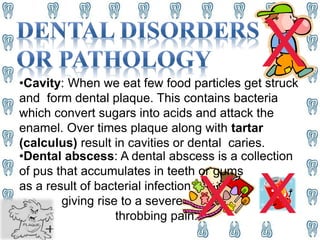
X•Cavity: When we eat few food particles get struck
and form dental plaque. This contains bacteria
which convert sugars into acids and attack the
enamel. Over times plaque along with tartar
(calculus) result in cavities or dental caries.
•Dental abscess: A dental abscess is a collection
of pus that accumulates in teeth or gums
as a result of bacterial infection
giving rise to a severe
throbbing pain.
• Avoid fast foods
• Brush regularly twice a day
• Floss regularly
• Have Monthly checkups
Human teeth and its functions

Human teeth and its functions

  • 1.
  • 2.
    Tooth is ahard, calcified structure found in the mouth and is used to break down and masticate food. It plays a major role in ingestion. It is made of multiple tissues of varying density and hardness. The dental formula for primary(also called baby, milk, ordeciduous teeth) is 2.1.0.2|2.1.0.2. The dental formula for permanent teeth is 2.1.2.3|2.1.2.3. It also helps in speech.
  • 4.
    Maxilla Mandible N.B.: Third molar(wisdomteeth) is absent in milk teeth set.
  • 5.
    • Description: Theyare narrow-edged tooth • Etymology: Latin incidere, "to cut" • Function:Biting, cutting, gripping and gnawing • Appearance:Milk set- 4-16 months; Permanent set- 7 to9 years • Location: In the front and center of mouth • Types:Central(4), Lateral(4)
  • 6.
    • Description: Theyarethe sharpest teeth with 1 cuspand 1or 2 slightly flattened conical root • Etymology: Latin canīnus“of the dog, dog-like”. • Function: Ripping and tearing • Appearance: Milk set - 16 to 20 months; Permanent set - 9to 12years • Location: Between Incisor and Premolar
  • 7.
    • Description: Theyare transitional teeth with 2 cusps and 1 or 2 roots • Etymology:Pre+ molar • Function: Guiding food from the cuspids to the molars and grinding • Appearance: Milk set – 10 to 11 months; Permanent set- 10 to 12 years • Location: Between Canine and Molar • Types: First(4), Second(4)
  • 8.
    • Description: Theyareflat and the largest teeth with 4 or 5cusps and 2or 4 roots • Etymology: Latin molaris dens "grindingtooth," • Function: Chewing, clenching,and grinding • Appearance: Milk set – First molar-12-16months; Second molar: 20- 30months;Permanentset- First molar: 6 to 7 years; Second molar: 11to12 years; Thirdmolar: 17 -25years • Location: At the backof the mouth • Types:First(4), Second(4), Third(4)
  • 9.
    X X X•Cavity: Whenwe eat few food particles get struck and form dental plaque. This contains bacteria which convert sugars into acids and attack the enamel. Over times plaque along with tartar (calculus) result in cavities or dental caries. •Dental abscess: A dental abscess is a collection of pus that accumulates in teeth or gums as a result of bacterial infection giving rise to a severe throbbing pain.
  • 10.
    • Avoid fastfoods • Brush regularly twice a day • Floss regularly • Have Monthly checkups