



Human Ear
PREPARED BY ATHEENA PANDIAN
Discussion
HIGHLIGHTS
Ear
Anatomy
Parts
Function
1.
2.
3.
4.
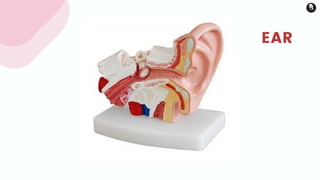
EAR
The ear - a magnificent organ.
The ear is an advanced and very
sensitive organ of
the human body. The ear's
function is to transmit and
transduce sound to the brain
LEWISHOWES
WHY EAR?
Ear Divisions
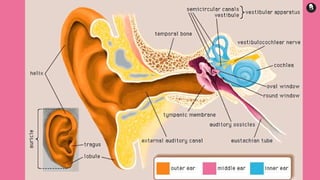
the ear is usually described as having three parts—the outer
ear, the middle ear and the inner ear.
THE OUTER EAR
The outer ear, external ear, or auris externa
is the external portion of the ear, which
consists of the auricle (also pinna) and
the ear canal. It gathers sound energy and
focuses it on the eardrum (tympanic
membrane).
THE MIDDLE EAR
The middle ear is the part of the ear between
the eardrum and the oval window. The middle
ear transmits sound from the outer ear to the
inner ear
THE INNER EAR
The inner ear is the innermost part of the ear,
which consist of the cochlea, the balance
mechanism, the vestibular and the auditory
nerve. ..
PARTS OF THE
HUMAN EAR
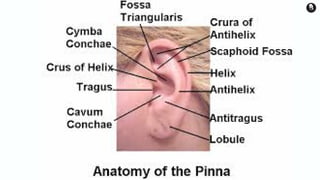
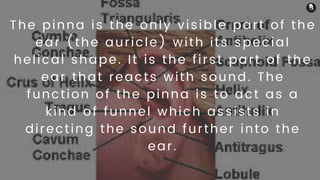
The pinna is the only visible part of the
ear (the auricle) with its special
helical shape. It is the first part of the
ear that reacts with sound. The
function of the pinna is to act as a
kind of funnel which assists in
directing the sound further into the
ear.
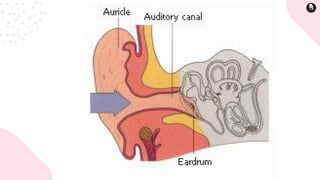
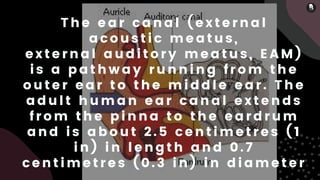
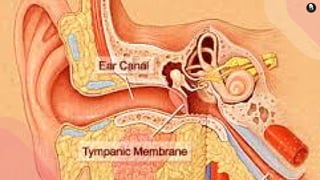
The ear canal (external
acoustic meatus,
external auditory meatus, EAM)
is a pathway running from the
outer ear to the middle ear. The
adult human ear canal extends
from the pinna to the eardrum
and is about 2. 5 centimetres (1
in) in length and 0. 7
centimetres (0. 3 in) in diameter
Tympanic membrane, also
called eardrum, thin layer of
tissue in the human ear that
receives sound vibrations from
the outer air and transmits
them to the auditory ossicles,
which are tiny bones in
the tympanic (middle-ear)
cavity.
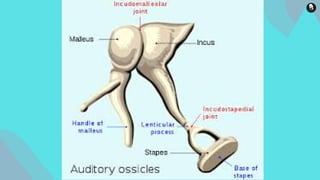
The ossicles (also called auditory ossicles)
are three bones in either middle ear that
are among the smallest bones in the
human body. They serve to transmit
sounds from the air to the fluid-filled
labyrinth (cochlea).
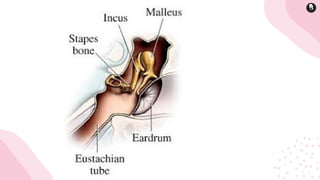
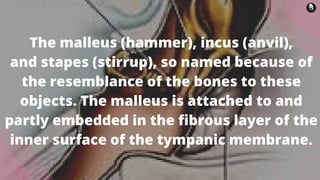
The malleus (hammer), incus (anvil),
and stapes (stirrup), so named because of
the resemblance of the bones to these
objects. The malleus is attached to and
partly embedded in the fibrous layer of the
inner surface of the tympanic membrane.
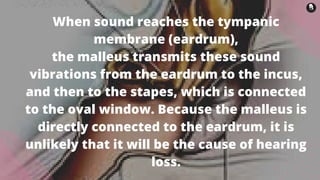
When sound reaches the tympanic
membrane (eardrum),
the malleus transmits these sound
vibrations from the eardrum to the incus,
and then to the stapes, which is connected
to the oval window. Because the malleus is
directly connected to the eardrum, it is
unlikely that it will be the cause of hearing
loss.
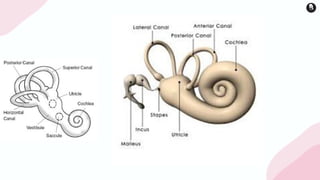
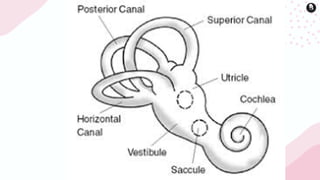
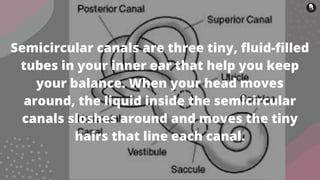
Semicircular canals are three tiny, fluid-filled
tubes in your inner ear that help you keep
your balance. When your head moves
around, the liquid inside the semicircular
canals sloshes around and moves the tiny
hairs that line each canal.
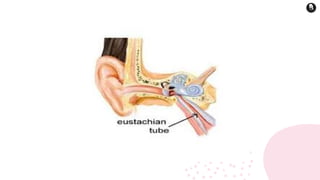
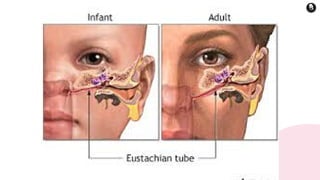
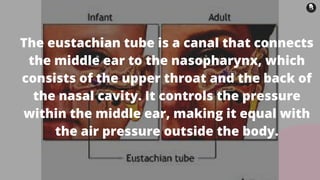
The eustachian tube is a canal that connects
the middle ear to the nasopharynx, which
consists of the upper throat and the back of
the nasal cavity. It controls the pressure
within the middle ear, making it equal with
the air pressure outside the body.
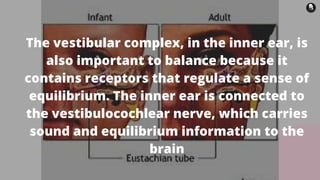
The vestibular complex, in the inner ear, is
also important to balance because it
contains receptors that regulate a sense of
equilibrium. The inner ear is connected to
the vestibulocochlear nerve, which carries
sound and equilibrium information to the
brain
Thank You
NEW EVENT BUDGET

Structure, parts and function of human ear

  • 1.
    Human Ear PREPARED BYATHEENA PANDIAN
  • 2.
  • 3.
  • 4.
    The ear - a magnificentorgan. The ear is an advanced and very sensitive organ of the human body. The ear's function is to transmit and transduce sound to the brain LEWISHOWES WHY EAR?
  • 5.
    Ear Divisions the earis usually described as having three parts—the outer ear, the middle ear and the inner ear.
  • 7.
    THE OUTER EAR Theouter ear, external ear, or auris externa is the external portion of the ear, which consists of the auricle (also pinna) and the ear canal. It gathers sound energy and focuses it on the eardrum (tympanic membrane).
  • 8.
    THE MIDDLE EAR Themiddle ear is the part of the ear between the eardrum and the oval window. The middle ear transmits sound from the outer ear to the inner ear
  • 9.
    THE INNER EAR Theinner ear is the innermost part of the ear, which consist of the cochlea, the balance mechanism, the vestibular and the auditory nerve. ..
  • 10.
  • 12.
    The pinna is the onlyvisible part of the ear (the auricle) with its special helical shape. It is the first part of the ear that reacts with sound. The function of the pinna is to act as a kind of funnel which assists in directing the sound further into the ear.
  • 14.
    The ear canal (external acoustic meatus, external auditory meatus,EAM) is a pathway running from the outer ear to the middle ear. The adult human ear canal extends from the pinna to the eardrum and is about 2. 5 centimetres (1 in) in length and 0. 7 centimetres (0. 3 in) in diameter
  • 16.
    Tympanic membrane, also calledeardrum, thin layer of tissue in the human ear that receives sound vibrations from the outer air and transmits them to the auditory ossicles, which are tiny bones in the tympanic (middle-ear) cavity.
  • 18.
    The ossicles (also called auditory ossicles) arethree bones in either middle ear that are among the smallest bones in the human body. They serve to transmit sounds from the air to the fluid-filled labyrinth (cochlea).
  • 20.
    The malleus (hammer), incus (anvil), and stapes (stirrup), so namedbecause of the resemblance of the bones to these objects. The malleus is attached to and partly embedded in the fibrous layer of the inner surface of the tympanic membrane.
  • 21.
    When sound reachesthe tympanic membrane (eardrum), the malleus transmits these sound vibrations from the eardrum to the incus, and then to the stapes, which is connected to the oval window. Because the malleus is directly connected to the eardrum, it is unlikely that it will be the cause of hearing loss.
  • 24.
    Semicircular canals are threetiny, fluid-filled tubes in your inner ear that help you keep your balance. When your head moves around, the liquid inside the semicircular canals sloshes around and moves the tiny hairs that line each canal.
  • 27.
    The eustachian tube is acanal that connects the middle ear to the nasopharynx, which consists of the upper throat and the back of the nasal cavity. It controls the pressure within the middle ear, making it equal with the air pressure outside the body.
  • 28.
    The vestibular complex,in the inner ear, is also important to balance because it contains receptors that regulate a sense of equilibrium. The inner ear is connected to the vestibulocochlear nerve, which carries sound and equilibrium information to the brain
  • 29.