


INFUSION
PUMPS
BIOMEDICAL EQUIPMENT TRAINING
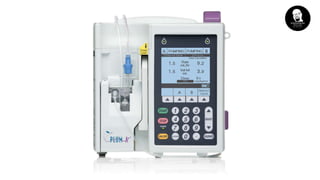
An infusion pump is a medical
device that delivers fluids, such as
nutrients and medications, into a
patient’s body in controlled
amounts.
What is Infusion Pupm?
Types of infusion
• Continuous infusion usually consists of small pulses of
infusion, usually between 500 nanoliters and 10
milliliters, depending on the pump's design, with the
rate of these pulses depending on the programmed
infusion speed.
• Intermittent infusion has a "high" infusion rate,
alternating with a low programmable infusion rate to
keep the cannula open. The timings are programmable.
This mode is often used to administer antibiotics, or
other drugs that can irritate a blood vessel.
Types of infusion
• Patient-controlled is infusion on-demand,
usually with a preprogrammed ceiling to
avoid intoxication. The rate is controlled by
a pressure pad or button that can be
activated by the patient.
• Total parenteral nutrition usually requires
an infusion curve similar to normal
mealtimes.
There are many types of infusion
pumps, including
• Large volume,
• patient-controlled
analgesia (PCA),
• elastomeric,
• syringe,
• enteral, and
• insulin pumps,.
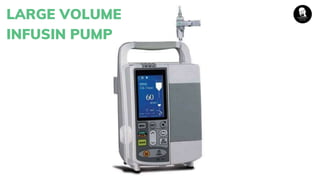
LARGE VOLUME
INFUSIN PUMP
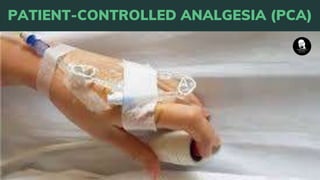
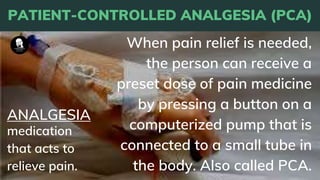
PATIENT-CONTROLLED ANALGESIA (PCA)
When pain relief is needed,
the person can receive a
preset dose of pain medicine
by pressing a button on a
computerized pump that is
connected to a small tube in
the body. Also called PCA.
medication
that acts to
relieve pain.
ANALGESIA
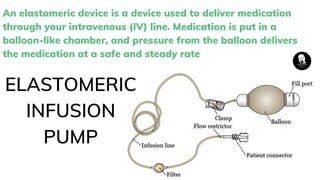
An elastomeric device is a device used to deliver medication
through your intravenous (IV) line. Medication is put in a
balloon-like chamber, and pressure from the balloon delivers
the medication at a safe and steady rate
ELASTOMERIC
INFUSION
PUMP
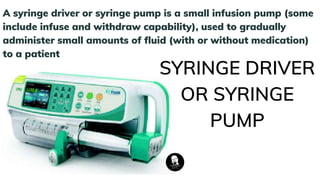
A syringe driver or syringe pump is a small infusion pump (some
include infuse and withdraw capability), used to gradually
administer small amounts of fluid (with or without medication)
to a patient
SYRINGE DRIVER
OR SYRINGE
PUMP
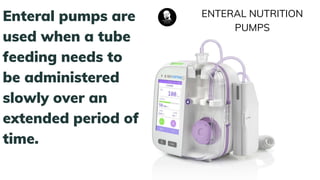
Enteral pumps are
used when a tube
feeding needs to
be administered
slowly over an
extended period of
time.
ENTERAL NUTRITION
PUMPS
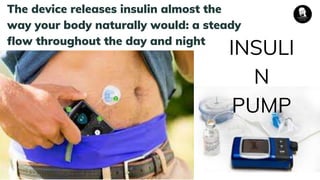
The device releases insulin almost the
way your body naturally would: a steady
flow throughout the day and night
INSULI
N
PUMP
DIFFERENT TYPES OF IV PUMPS BASED
ON MOBILITY
Ambulatory infusion
pumps
Stationary infusion
pumps
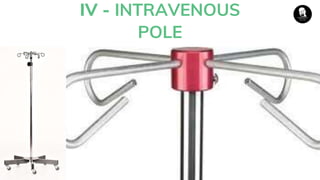
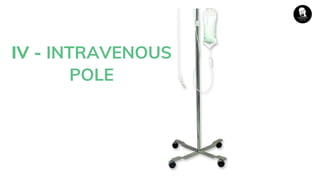
IV POLE
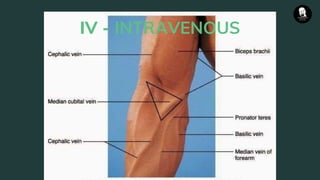
IV - INTRAVENOUS
Existing or taking place
within, or administered
into, a vein or veins.
IV - INTRAVENOUS
IV - INTRAVENOUS
POLE
IV - INTRAVENOUS
POLE
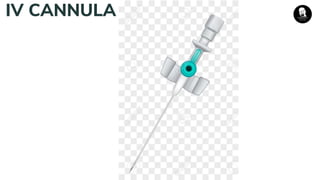
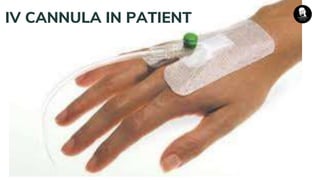
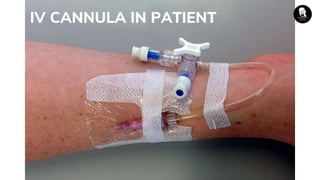
IV CANNULA
A needle is housed inside a cannula, a tiny
plastic tube that is usually placed under the
skin in the subcutaneous fat. This needle is
necessary to puncture the skin to insert the
set.
IV CANNULA
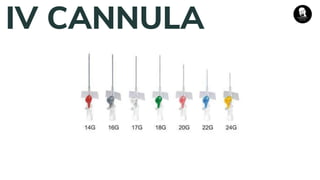
IV CANNULA
IV CANNULA IN PATIENT
THANK YOU
VERY MUCH

Infusion pump

  • 1.
  • 2.
    An infusion pumpis a medical device that delivers fluids, such as nutrients and medications, into a patient’s body in controlled amounts. What is Infusion Pupm?
  • 4.
    Types of infusion •Continuous infusion usually consists of small pulses of infusion, usually between 500 nanoliters and 10 milliliters, depending on the pump's design, with the rate of these pulses depending on the programmed infusion speed. • Intermittent infusion has a "high" infusion rate, alternating with a low programmable infusion rate to keep the cannula open. The timings are programmable. This mode is often used to administer antibiotics, or other drugs that can irritate a blood vessel.
  • 5.
    Types of infusion •Patient-controlled is infusion on-demand, usually with a preprogrammed ceiling to avoid intoxication. The rate is controlled by a pressure pad or button that can be activated by the patient. • Total parenteral nutrition usually requires an infusion curve similar to normal mealtimes.
  • 6.
    There are manytypes of infusion pumps, including • Large volume, • patient-controlled analgesia (PCA), • elastomeric, • syringe, • enteral, and • insulin pumps,.
  • 7.
  • 8.
  • 9.
    PATIENT-CONTROLLED ANALGESIA (PCA) Whenpain relief is needed, the person can receive a preset dose of pain medicine by pressing a button on a computerized pump that is connected to a small tube in the body. Also called PCA. medication that acts to relieve pain. ANALGESIA
  • 10.
    An elastomeric deviceis a device used to deliver medication through your intravenous (IV) line. Medication is put in a balloon-like chamber, and pressure from the balloon delivers the medication at a safe and steady rate ELASTOMERIC INFUSION PUMP
  • 11.
    A syringe driveror syringe pump is a small infusion pump (some include infuse and withdraw capability), used to gradually administer small amounts of fluid (with or without medication) to a patient SYRINGE DRIVER OR SYRINGE PUMP
  • 12.
    Enteral pumps are usedwhen a tube feeding needs to be administered slowly over an extended period of time. ENTERAL NUTRITION PUMPS
  • 13.
    The device releasesinsulin almost the way your body naturally would: a steady flow throughout the day and night INSULI N PUMP
  • 14.
    DIFFERENT TYPES OFIV PUMPS BASED ON MOBILITY Ambulatory infusion pumps Stationary infusion pumps
  • 15.
  • 16.
    IV - INTRAVENOUS Existingor taking place within, or administered into, a vein or veins.
  • 17.
  • 18.
  • 19.
  • 20.
    IV CANNULA A needleis housed inside a cannula, a tiny plastic tube that is usually placed under the skin in the subcutaneous fat. This needle is necessary to puncture the skin to insert the set.
  • 21.
  • 22.
  • 23.
  • 24.
  • 25.