Vital Parameters of the
Human Organs
Live Online Class
Introduction to
Biomedical Engineers
Vital signs are useful in detecting
or monitoring medical problems
Vital signs can be measured in a
medical setting, at home, at the
site of a medical emergency, or
elsewhere.
04
Vital Parameters
1.Body Temperature
2.Pulse Rate
3.Respiration Rate (rate of breathing)
4.Blood Pressure
02
BODY TEMPERATURE
The normal body temperature of a person varies depending on
gender, recent activity, food and fluid consumption, time of
day, and, in women, the stage of the menstrual cycle.
Normal body temperature can range from 97.8 degrees F (or
Fahrenheit, equivalent to 36.5 degrees C, or Celsius) to 99
degrees F (37.2 degrees C) for a healthy adult
Body Temperature
A person's body temperature
can be taken in any of the
following ways:
Body Temperature
Body
Temperature
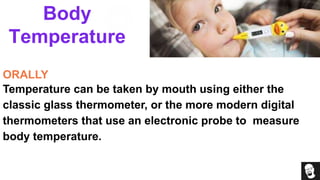
ORALLY
Temperature can be taken by mouth using either the
classic glass thermometer, or the more modern digital
thermometers that use an electronic probe to measure
body temperature.
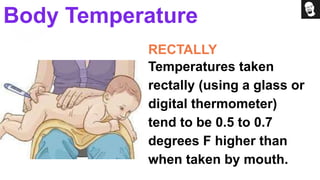
RECTALLY
Temperatures taken
rectally (using a glass or
digital thermometer)
tend to be 0.5 to 0.7
degrees F higher than
when taken by mouth.
Body Temperature
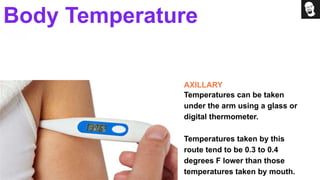
AXILLARY
Temperatures can be taken
under the arm using a glass or
digital thermometer.
Temperatures taken by this
route tend to be 0.3 to 0.4
degrees F lower than those
temperatures taken by mouth.
Body Temperature
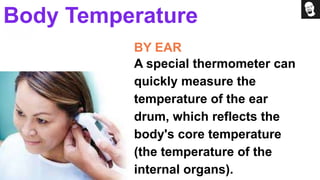
BY EAR
A special thermometer can
quickly measure the
temperature of the ear
drum, which reflects the
body's core temperature
(the temperature of the
internal organs).
Body Temperature
Body Temperature
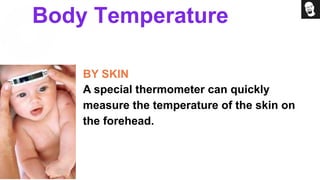
BY SKIN
A special thermometer can quickly
measure the temperature of the skin on
the forehead.
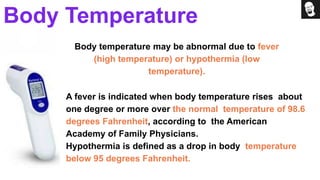
Body temperature may be abnormal due to fever
(high temperature) or hypothermia (low
temperature).
A fever is indicated when body temperature rises about
one degree or more over the normal temperature of 98.6
degrees Fahrenheit, according to the American
Academy of Family Physicians.
Hypothermia is defined as a drop in body temperature
below 95 degrees Fahrenheit.
Body Temperature
PULSE
RATE
PULSE RATE
The pulse rate is a measurement of the
heart rate, or the number of times the
heart beats per minute.
As the heart pushes blood through the
arteries, the arteries expand and
contract with the flow of the blood.
PULSE RATE
Taking a pulse not only measures the
heart rate, but also can indicate the
following:
1. Heart rhythm
2. Strength of the pulse
PULSE RATE
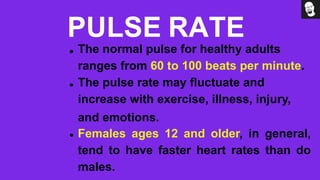
The normal pulse for healthy adults
ranges from 60 to 100 beats per minute.
The pulse rate may fluctuate and
increase with exercise, illness, injury,
and emotions.
Females ages 12 and older, in general,
tend to have faster heart rates than do
males.
PULSE RATE
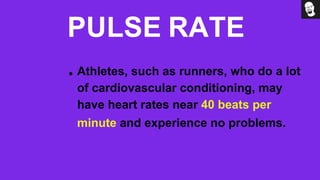
Athletes, such as runners, who do a lot
of cardiovascular conditioning, may
have heart rates near 40 beats per
minute and experience no problems.
PULSE RATE
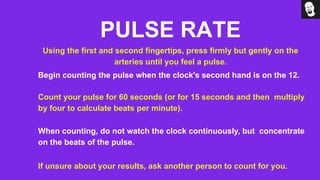
Using the first and second fingertips, press firmly but gently on the
arteries until you feel a pulse.
Begin counting the pulse when the clock's second hand is on the 12.
Count your pulse for 60 seconds (or for 15 seconds and then multiply
by four to calculate beats per minute).
When counting, do not watch the clock continuously, but concentrate
on the beats of the pulse.
If unsure about your results, ask another person to count for you.
RESPIRATION
RATE
RESPIRATION RATE
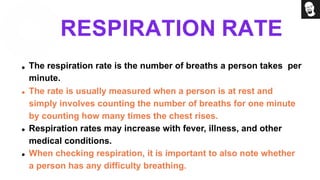
The respiration rate is the number of breaths a person takes per
minute.
The rate is usually measured when a person is at rest and
simply involves counting the number of breaths for one minute
by counting how many times the chest rises.
Respiration rates may increase with fever, illness, and other
medical conditions.
When checking respiration, it is important to also note whether
a person has any difficulty breathing.
RESPIRATION RATE
Normal respiration
rates for an adult
person at rest range
from 12 to 16 breaths
per minute.
BLOOD PRESSURE
BLOOD PRESSURE
Blood pressure is the force of the blood pushing
against the artery walls during contraction and
relaxation of the heart.
Each time the heart beats, it pumps blood into
the arteries, resulting in the highest blood
pressure as the heart contracts.
When the heart relaxes, the blood pressure
falls.
BLOOD PRESSURE
Two numbers are recorded when
measuring blood pressure.
The higher number, or systolic
pressure, refers to the pressure inside
the artery when the heart contracts
and pumps blood through the body.
BLOOD PRESSURE
The lower number, or diastolic pressure, refers
to the pressure inside the artery when the heart
is at rest and is filling with blood.
Both the systolic and diastolic pressures are
recorded as "mm Hg" (millimeters of mercury).
BLOOD PRESSURE
This recording represents how high
the mercury column in an old-
fashioned manual blood pressure
device (called a mercury manometer
or sphygmomanometer) is raised by
the pressure of the blood.
BLOOD PRESSURE
High blood pressure, or hypertension, directly
increases the risk of heart attack, heart failure,
and stroke.
With high blood pressure, the arteries may
have an increased resistance against the flow
of blood, causing the heart to pump harder to
circulate the blood.
BLOOD PRESSURE
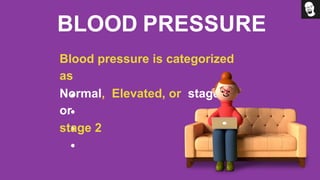
Blood pressure is categorized
as
Normal, Elevated, or stage 1
or
stage 2
BLOOD PRESSURE
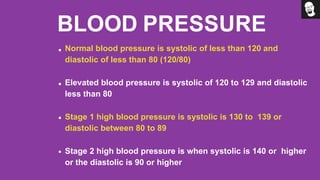
Normal blood pressure is systolic of less than 120 and
diastolic of less than 80 (120/80)
Elevated blood pressure is systolic of 120 to 129 and diastolic
less than 80
Stage 1 high blood pressure is systolic is 130 to 139 or
diastolic between 80 to 89
Stage 2 high blood pressure is when systolic is 140 or higher
or the diastolic is 90 or higher
BLOOD PRESSURE
These numbers should be used as a guide only. A single
blood pressure measurement that is higher than normal is
not necessarily an indication of a problem.
Your doctor will want to see multiple blood pressure
measurements over several days or weeks before making
a diagnosis of high blood pressure and starting
treatment.
Ask your provider when to contact him or her if your blood
pressure readings are not within the normal range.
Thank You

Thermometer

  • 1.
    Vital Parameters ofthe Human Organs Live Online Class Introduction to Biomedical Engineers
  • 2.
    Vital signs areuseful in detecting or monitoring medical problems Vital signs can be measured in a medical setting, at home, at the site of a medical emergency, or elsewhere. 04
  • 3.
    Vital Parameters 1.Body Temperature 2.PulseRate 3.Respiration Rate (rate of breathing) 4.Blood Pressure 02
  • 4.
  • 5.
    The normal bodytemperature of a person varies depending on gender, recent activity, food and fluid consumption, time of day, and, in women, the stage of the menstrual cycle. Normal body temperature can range from 97.8 degrees F (or Fahrenheit, equivalent to 36.5 degrees C, or Celsius) to 99 degrees F (37.2 degrees C) for a healthy adult Body Temperature
  • 6.
    A person's bodytemperature can be taken in any of the following ways: Body Temperature
  • 7.
    Body Temperature ORALLY Temperature can betaken by mouth using either the classic glass thermometer, or the more modern digital thermometers that use an electronic probe to measure body temperature.
  • 8.
    RECTALLY Temperatures taken rectally (usinga glass or digital thermometer) tend to be 0.5 to 0.7 degrees F higher than when taken by mouth. Body Temperature
  • 9.
    AXILLARY Temperatures can betaken under the arm using a glass or digital thermometer. Temperatures taken by this route tend to be 0.3 to 0.4 degrees F lower than those temperatures taken by mouth. Body Temperature
  • 10.
    BY EAR A specialthermometer can quickly measure the temperature of the ear drum, which reflects the body's core temperature (the temperature of the internal organs). Body Temperature
  • 11.
    Body Temperature BY SKIN Aspecial thermometer can quickly measure the temperature of the skin on the forehead.
  • 12.
    Body temperature maybe abnormal due to fever (high temperature) or hypothermia (low temperature). A fever is indicated when body temperature rises about one degree or more over the normal temperature of 98.6 degrees Fahrenheit, according to the American Academy of Family Physicians. Hypothermia is defined as a drop in body temperature below 95 degrees Fahrenheit. Body Temperature
  • 13.
  • 14.
    PULSE RATE The pulserate is a measurement of the heart rate, or the number of times the heart beats per minute. As the heart pushes blood through the arteries, the arteries expand and contract with the flow of the blood.
  • 15.
    PULSE RATE Taking apulse not only measures the heart rate, but also can indicate the following: 1. Heart rhythm 2. Strength of the pulse
  • 16.
    PULSE RATE The normalpulse for healthy adults ranges from 60 to 100 beats per minute. The pulse rate may fluctuate and increase with exercise, illness, injury, and emotions. Females ages 12 and older, in general, tend to have faster heart rates than do males.
  • 17.
    PULSE RATE Athletes, suchas runners, who do a lot of cardiovascular conditioning, may have heart rates near 40 beats per minute and experience no problems.
  • 18.
    PULSE RATE Using thefirst and second fingertips, press firmly but gently on the arteries until you feel a pulse. Begin counting the pulse when the clock's second hand is on the 12. Count your pulse for 60 seconds (or for 15 seconds and then multiply by four to calculate beats per minute). When counting, do not watch the clock continuously, but concentrate on the beats of the pulse. If unsure about your results, ask another person to count for you.
  • 19.
  • 20.
    RESPIRATION RATE The respirationrate is the number of breaths a person takes per minute. The rate is usually measured when a person is at rest and simply involves counting the number of breaths for one minute by counting how many times the chest rises. Respiration rates may increase with fever, illness, and other medical conditions. When checking respiration, it is important to also note whether a person has any difficulty breathing.
  • 21.
    RESPIRATION RATE Normal respiration ratesfor an adult person at rest range from 12 to 16 breaths per minute.
  • 22.
  • 23.
    BLOOD PRESSURE Blood pressureis the force of the blood pushing against the artery walls during contraction and relaxation of the heart. Each time the heart beats, it pumps blood into the arteries, resulting in the highest blood pressure as the heart contracts. When the heart relaxes, the blood pressure falls.
  • 24.
    BLOOD PRESSURE Two numbersare recorded when measuring blood pressure. The higher number, or systolic pressure, refers to the pressure inside the artery when the heart contracts and pumps blood through the body.
  • 25.
    BLOOD PRESSURE The lowernumber, or diastolic pressure, refers to the pressure inside the artery when the heart is at rest and is filling with blood. Both the systolic and diastolic pressures are recorded as "mm Hg" (millimeters of mercury).
  • 26.
    BLOOD PRESSURE This recordingrepresents how high the mercury column in an old- fashioned manual blood pressure device (called a mercury manometer or sphygmomanometer) is raised by the pressure of the blood.
  • 27.
    BLOOD PRESSURE High bloodpressure, or hypertension, directly increases the risk of heart attack, heart failure, and stroke. With high blood pressure, the arteries may have an increased resistance against the flow of blood, causing the heart to pump harder to circulate the blood.
  • 28.
    BLOOD PRESSURE Blood pressureis categorized as Normal, Elevated, or stage 1 or stage 2
  • 29.
    BLOOD PRESSURE Normal bloodpressure is systolic of less than 120 and diastolic of less than 80 (120/80) Elevated blood pressure is systolic of 120 to 129 and diastolic less than 80 Stage 1 high blood pressure is systolic is 130 to 139 or diastolic between 80 to 89 Stage 2 high blood pressure is when systolic is 140 or higher or the diastolic is 90 or higher
  • 30.
    BLOOD PRESSURE These numbersshould be used as a guide only. A single blood pressure measurement that is higher than normal is not necessarily an indication of a problem. Your doctor will want to see multiple blood pressure measurements over several days or weeks before making a diagnosis of high blood pressure and starting treatment. Ask your provider when to contact him or her if your blood pressure readings are not within the normal range.
  • 31.