Structure and Function
of the lungs
Cardiothoracic Department
University Hospital of South Manchester
Dr Marco Nardini
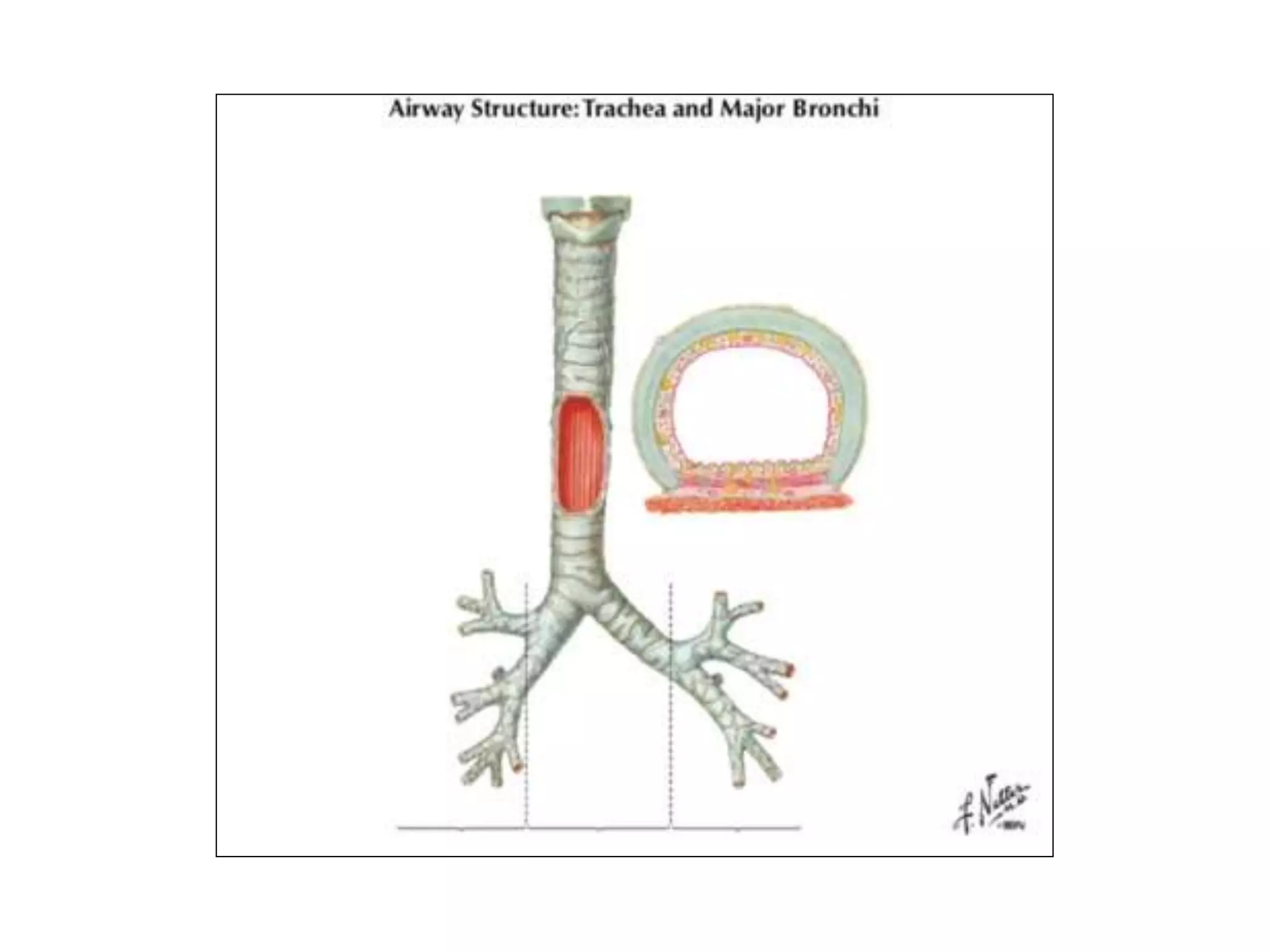
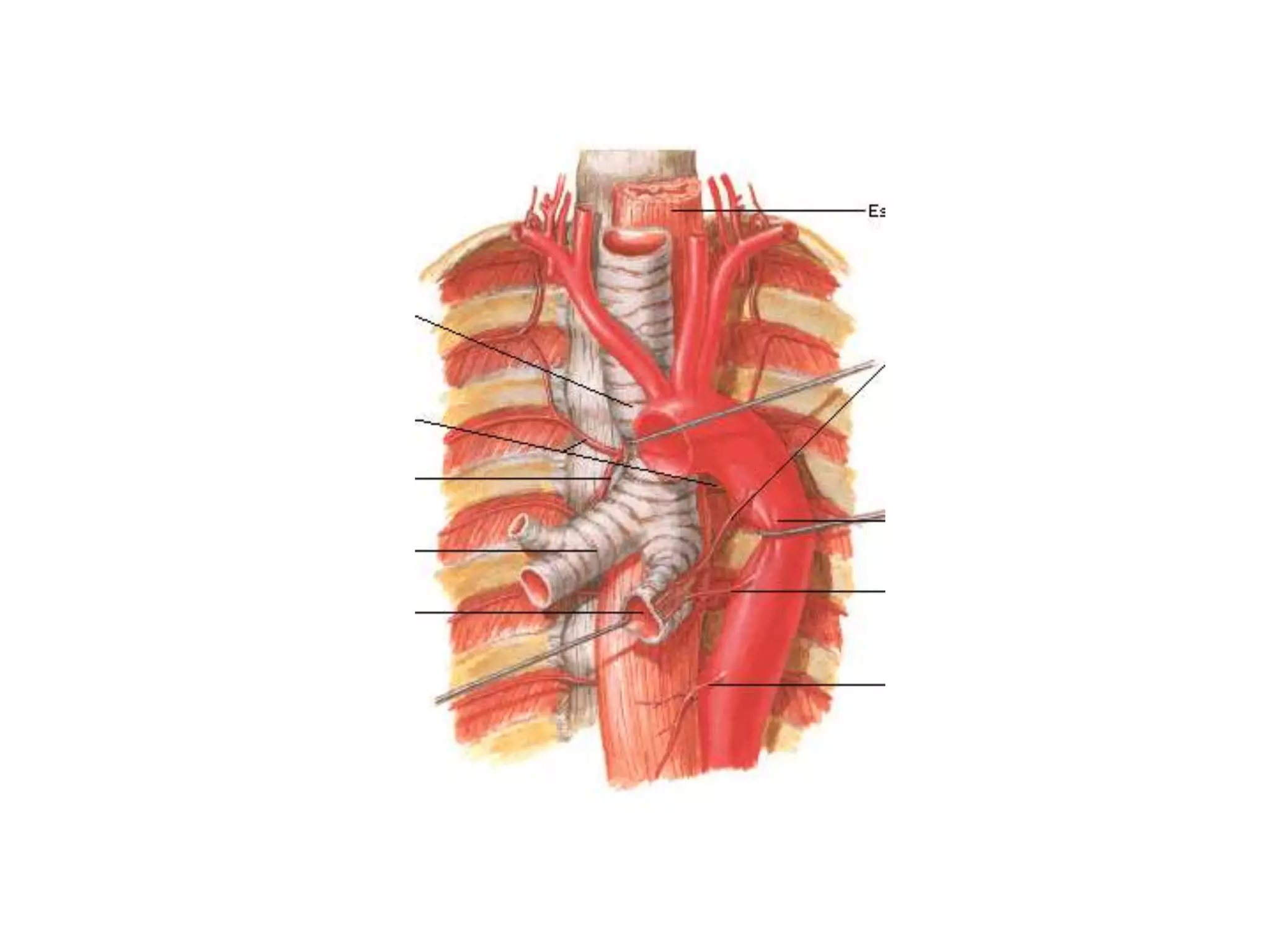
Trachea
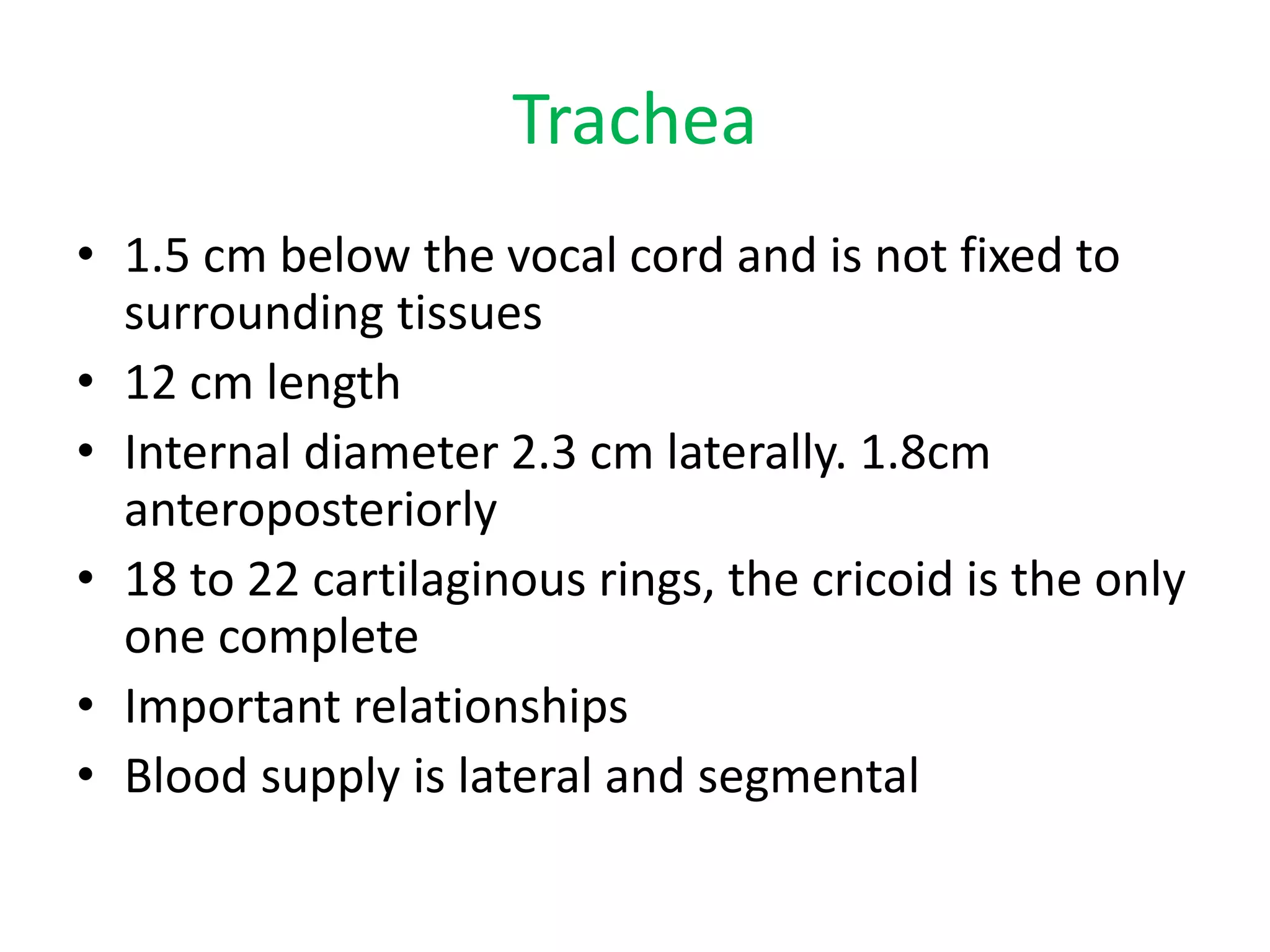
• 1.5 cm below the vocal cord and is not fixed to
surrounding tissues
• 12 cm length
• Internal diameter 2.3 cm laterally. 1.8cm
anteroposteriorly
• 18 to 22 cartilaginous rings, the cricoid is the only
one complete
• Important relationships
• Blood supply is lateral and segmental
Lungs
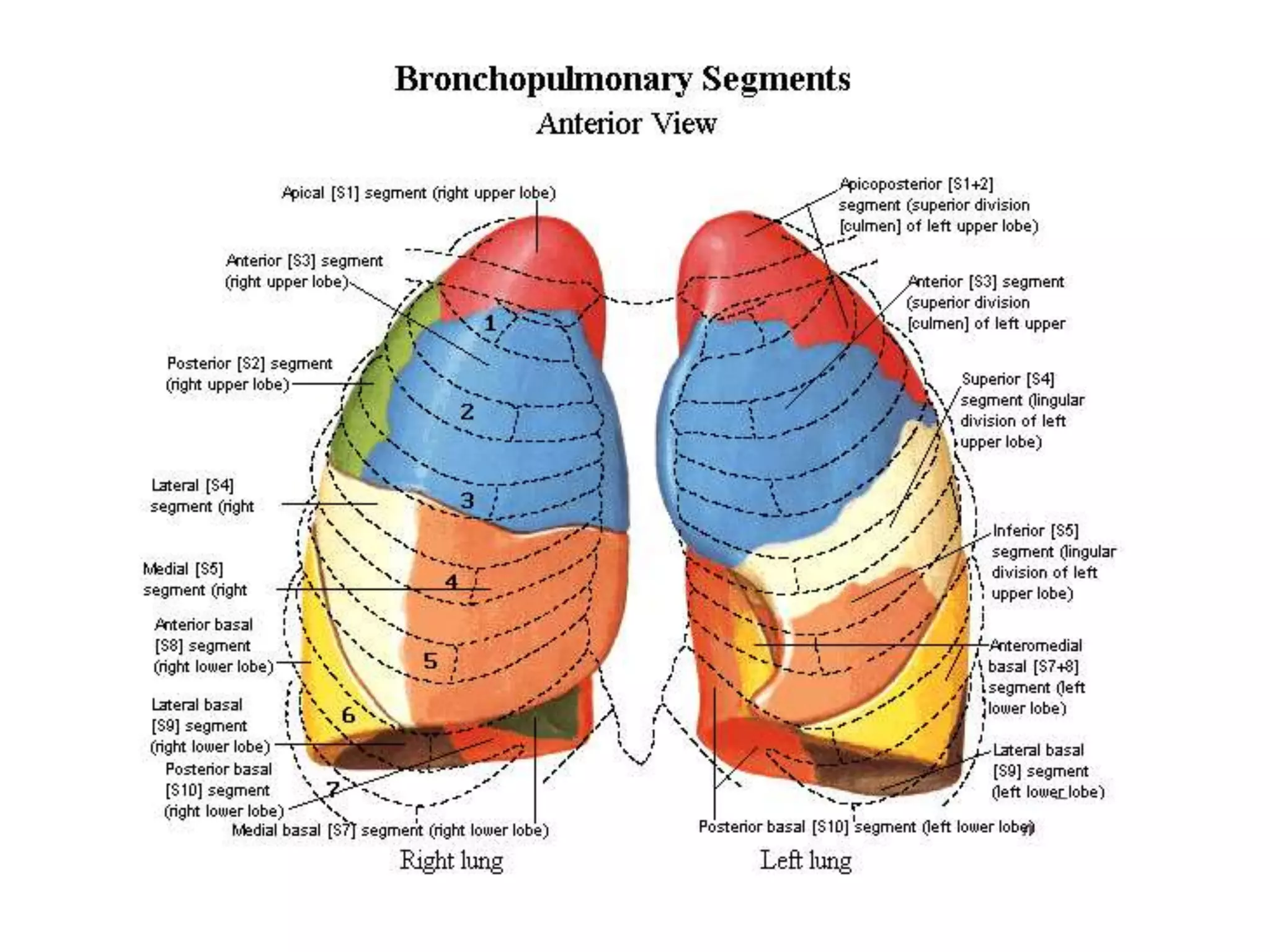
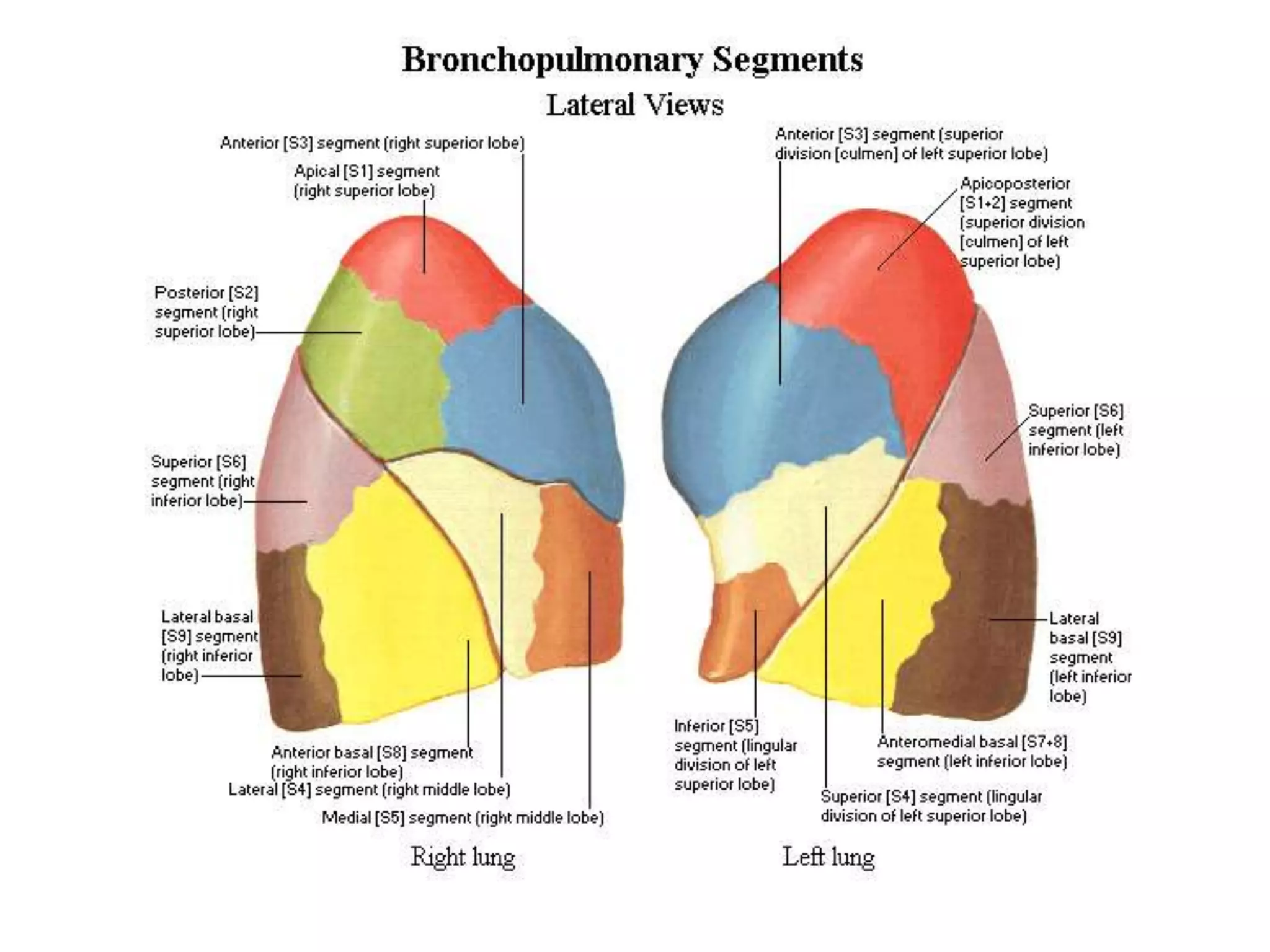
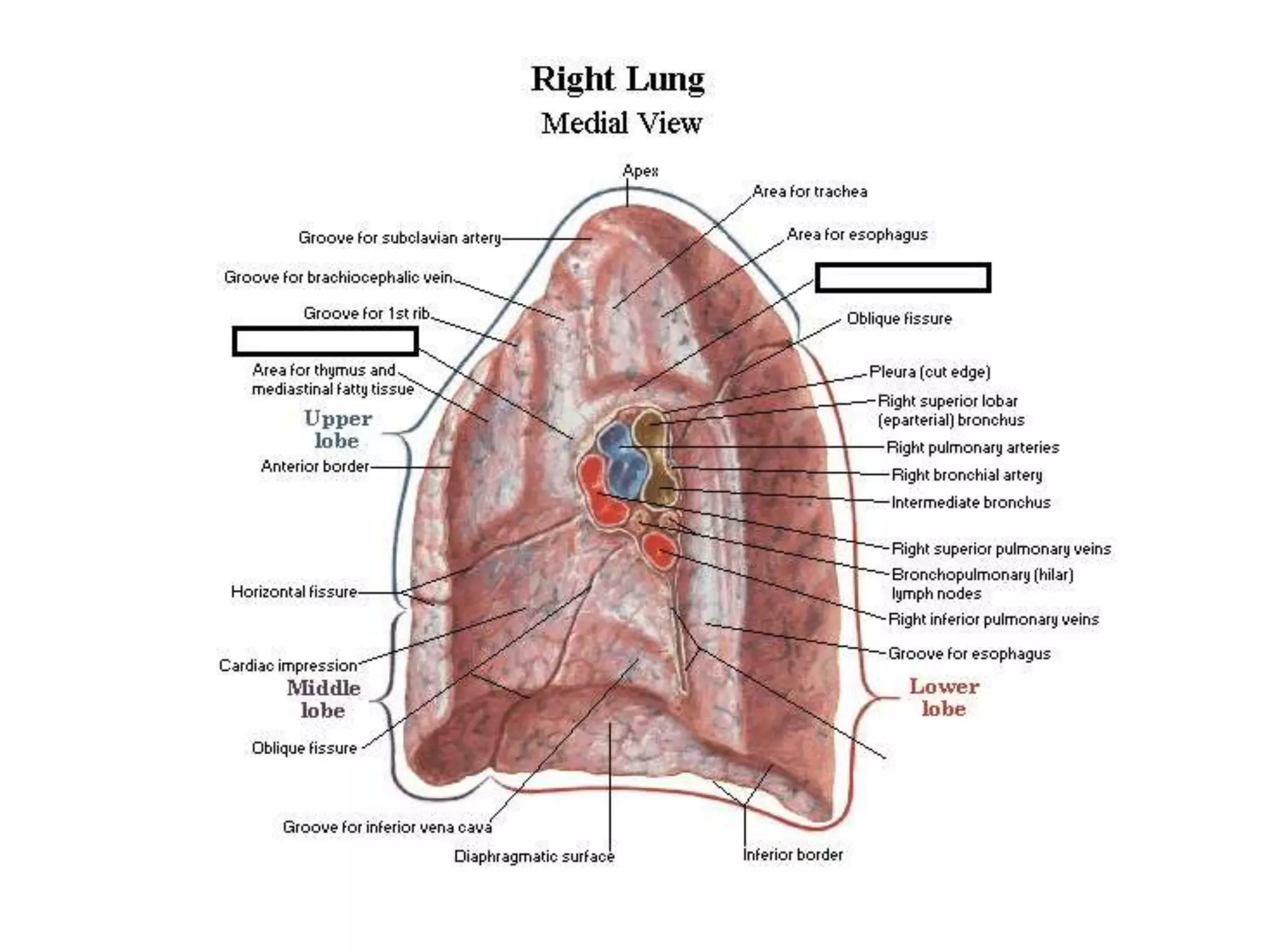
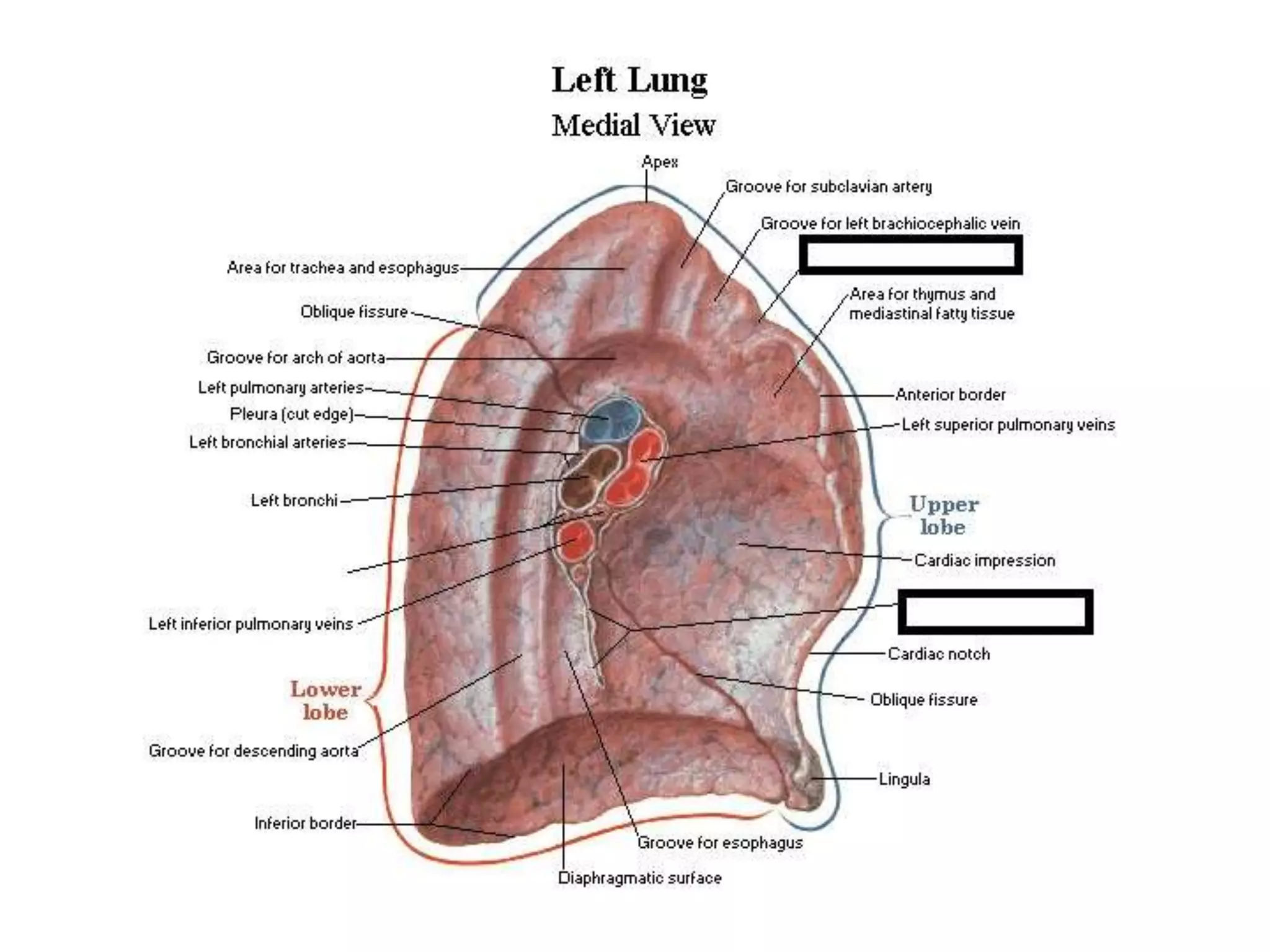
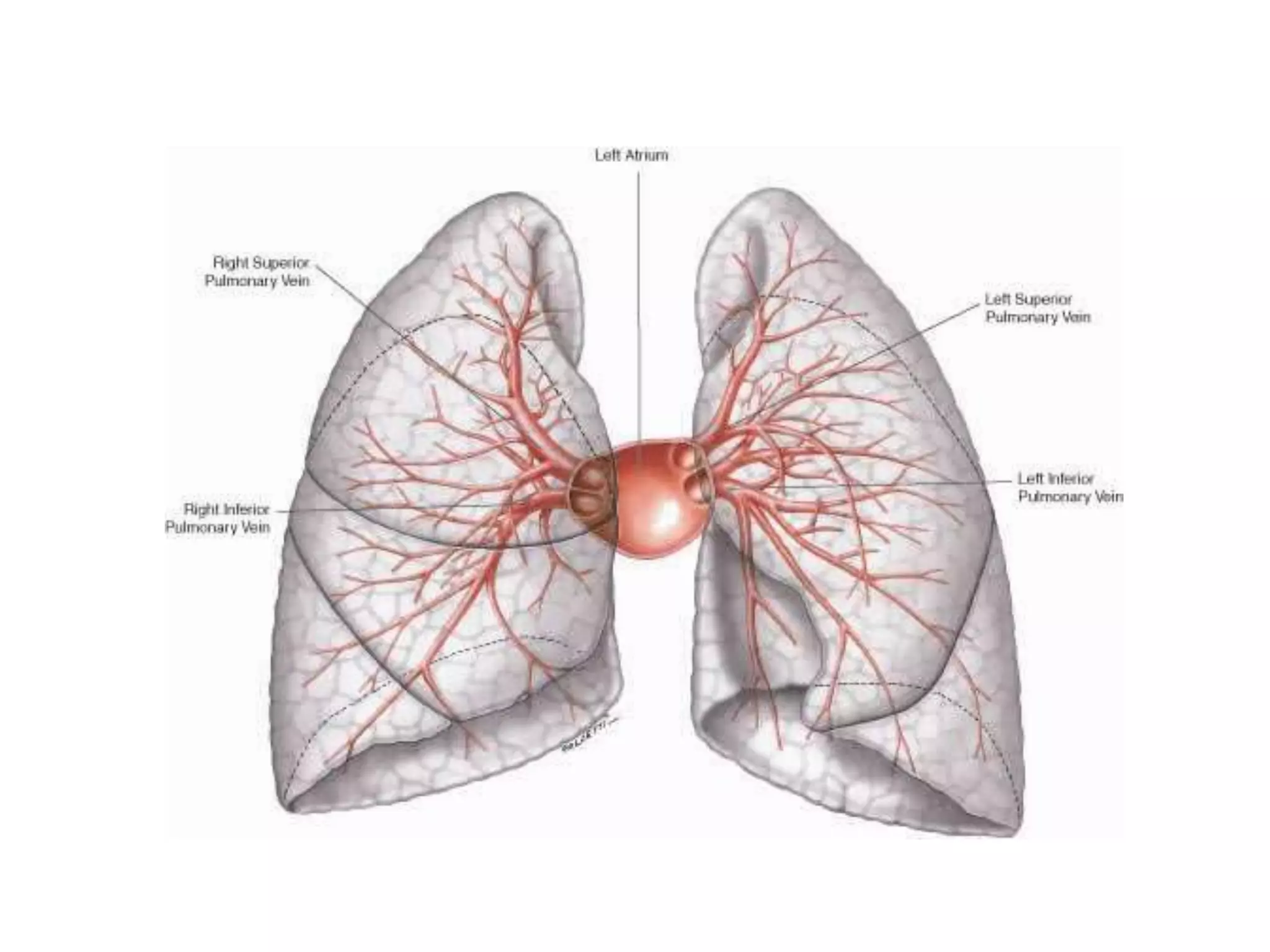
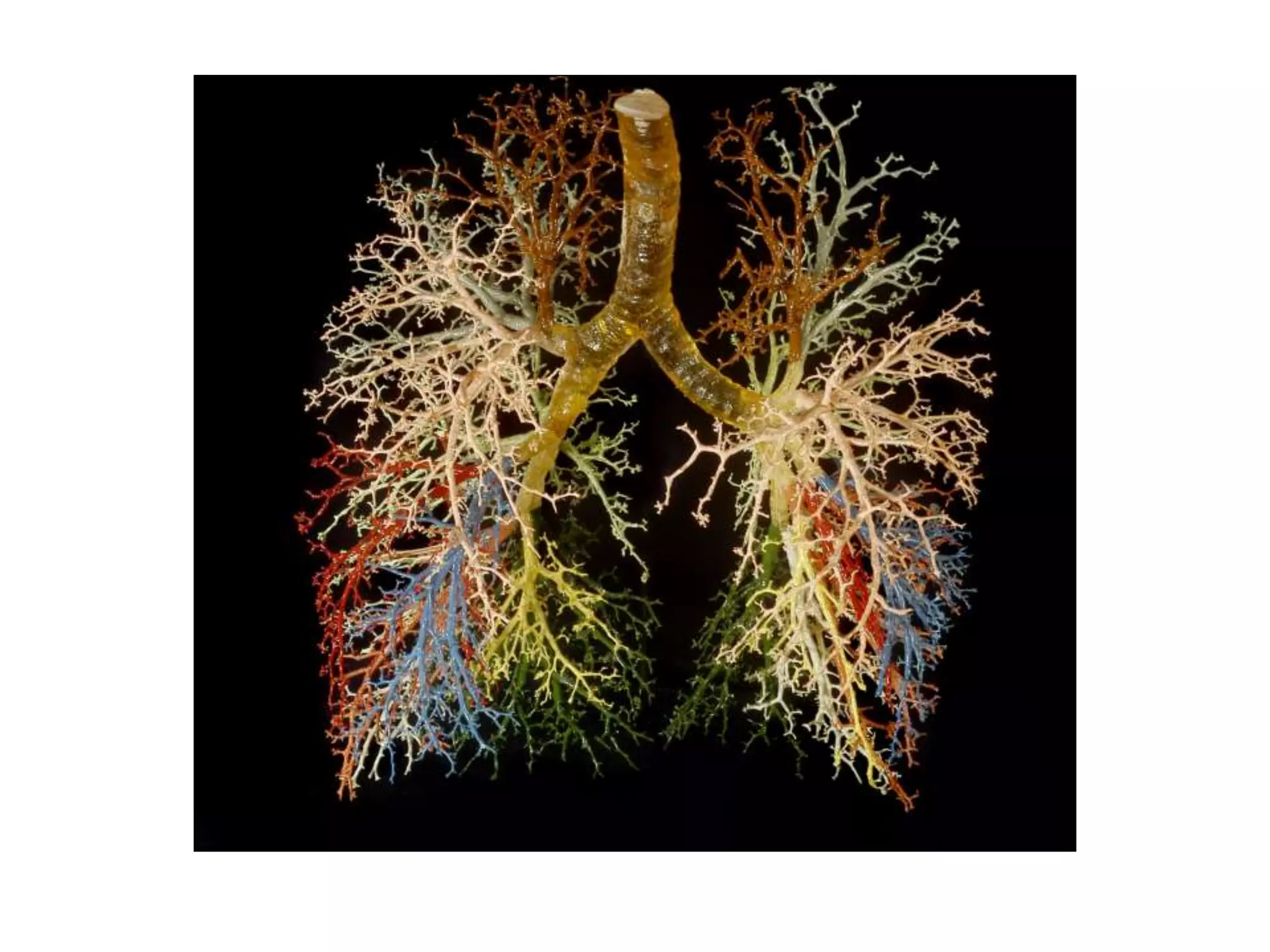
• The Bronchopulmonary segments are division
of each lobe that contain anatomically
separate arterial, venous and bronchial
supplies.
• 10 segments on the right
• 8 segments on the left
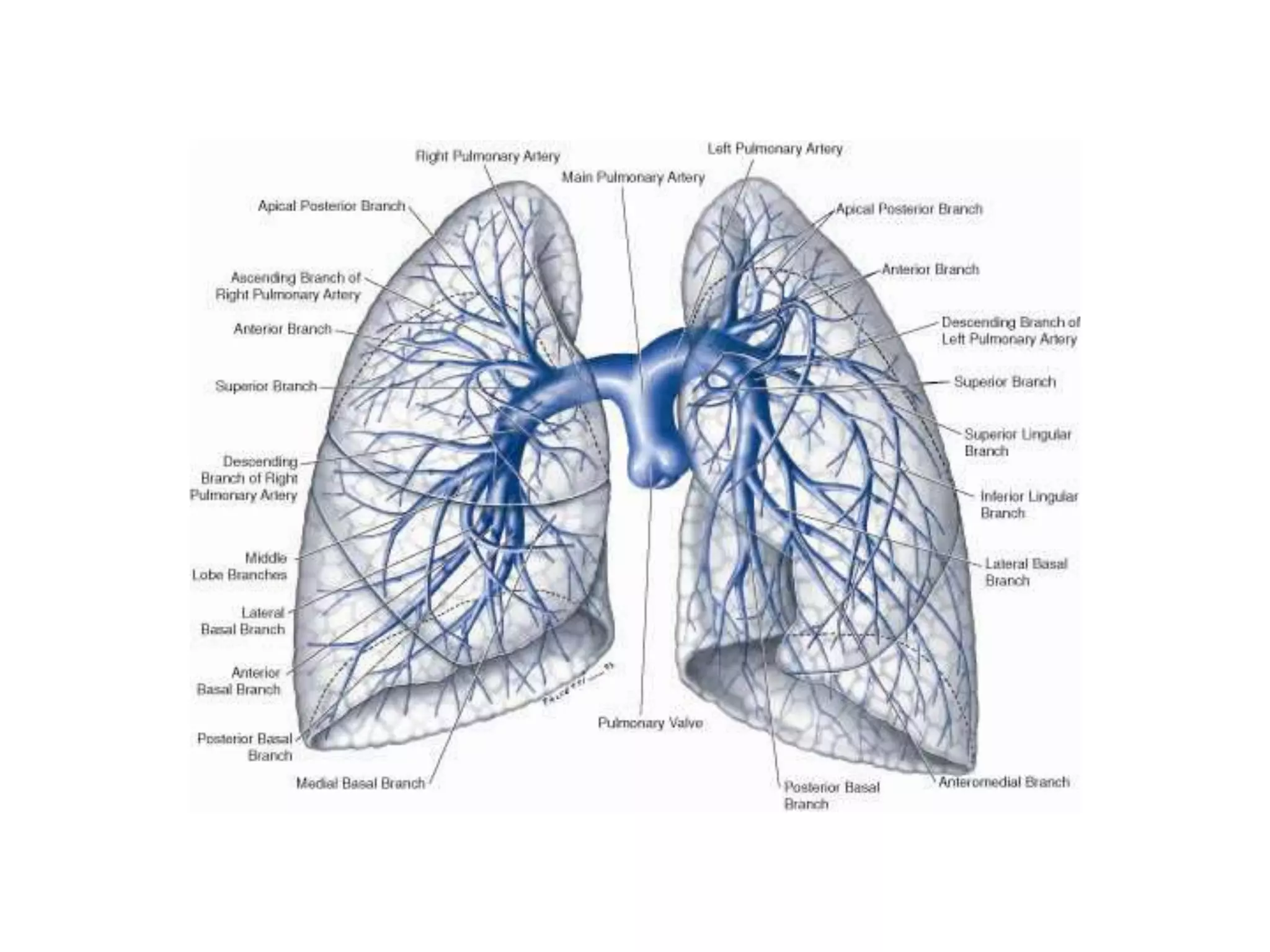
• The blood supply of the lung is twofold
• Lymphatic drainage usually affect ipsilateral
lymph nodes
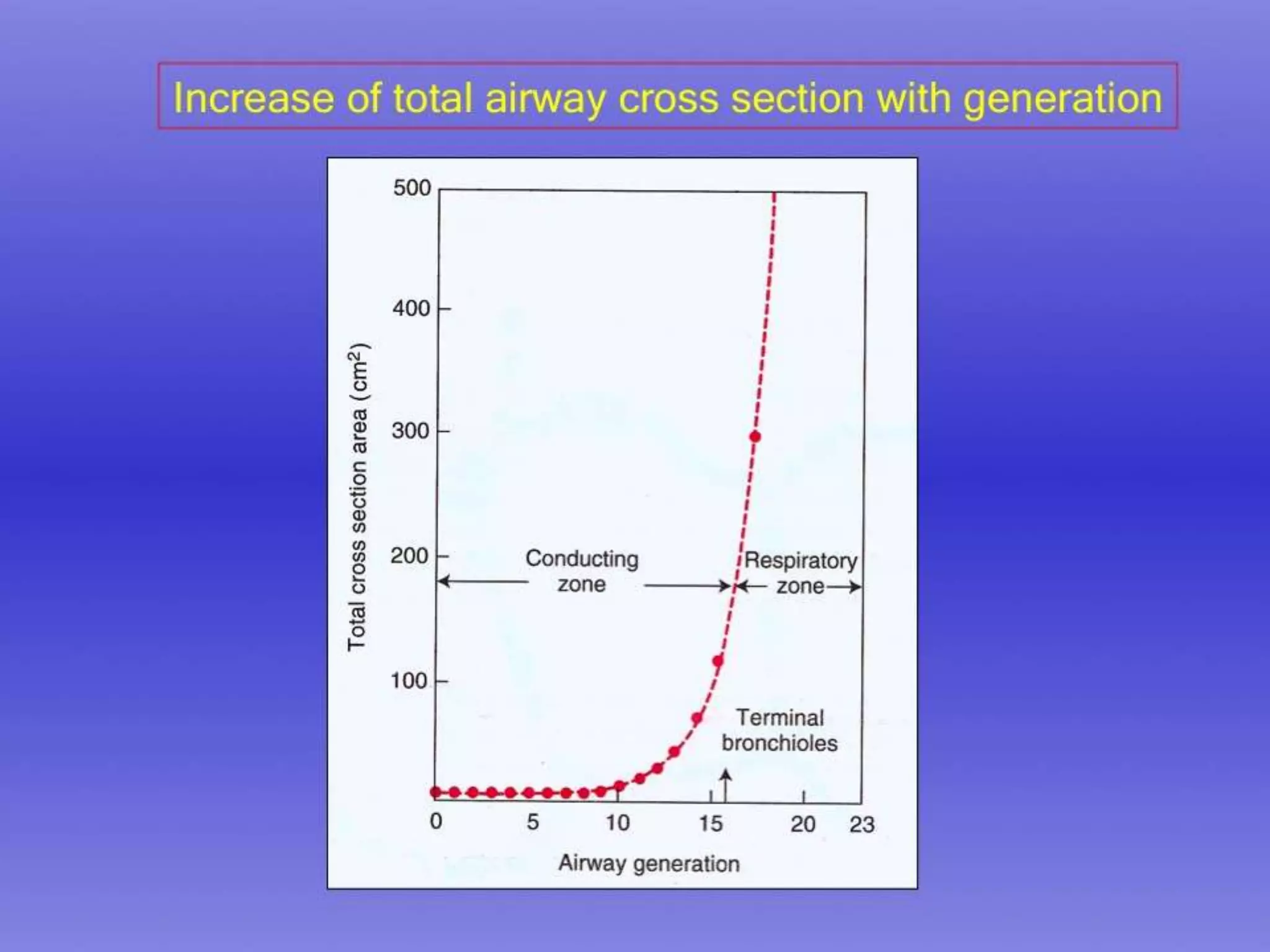
•In the lung 80% of its volume
is air
•10% is blood
•10% is solid tissue
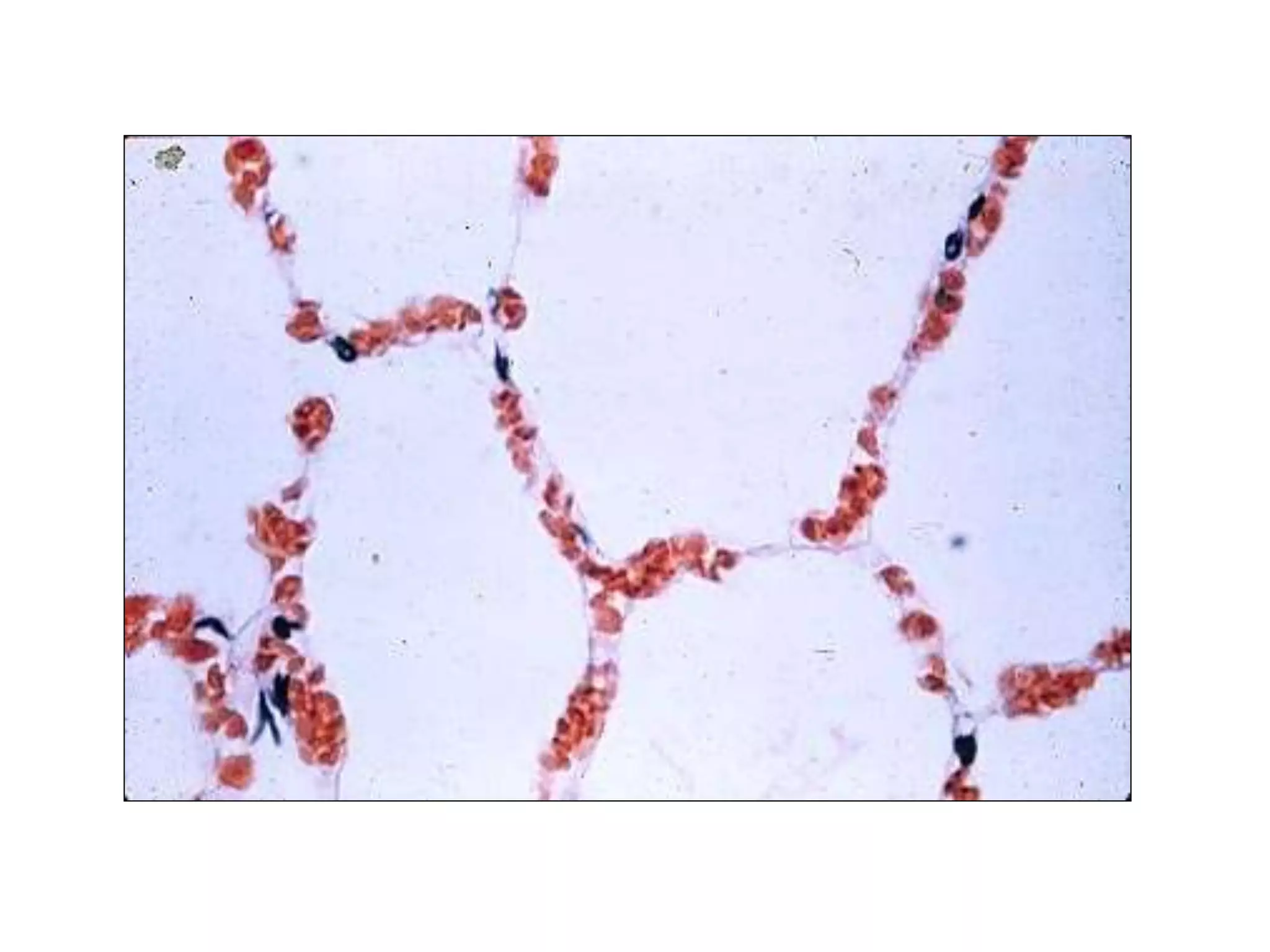
•Alveoli make up 50% of the
entire volume
Lungs
http://www.thoracic-anesthesia.com/?page_id=2
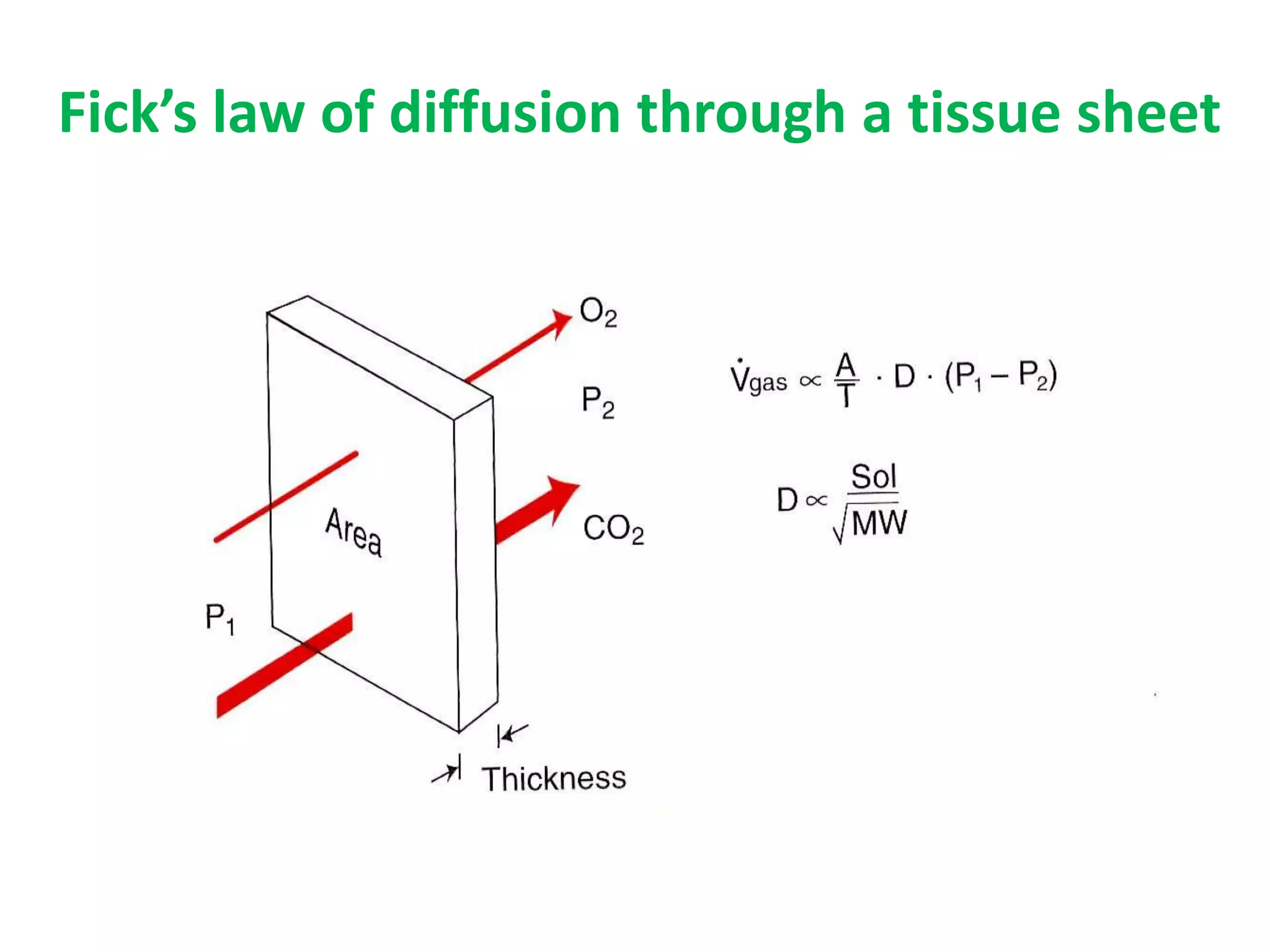
Fick’s law of diffusion through a tissue sheet
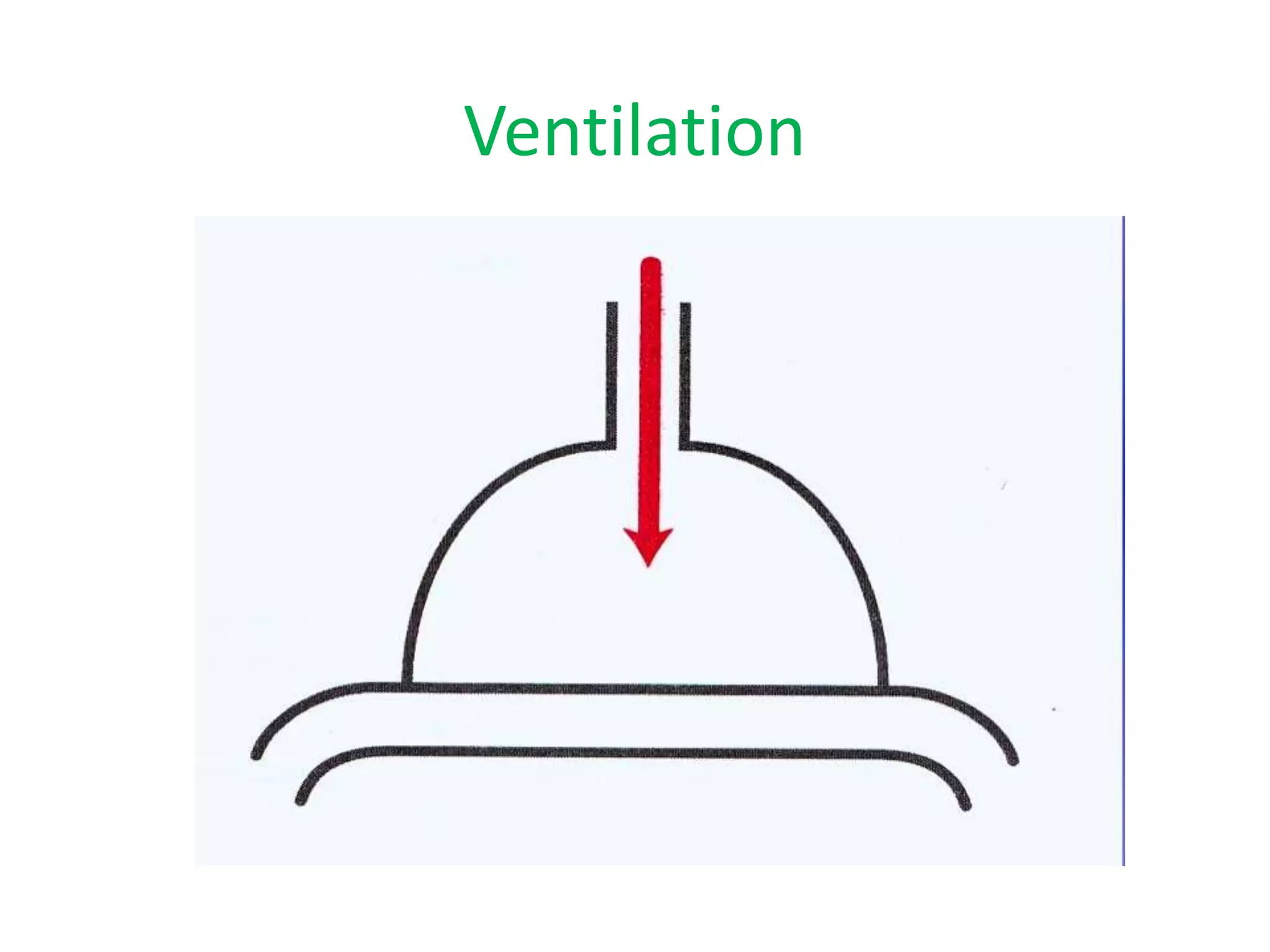
Ventilation
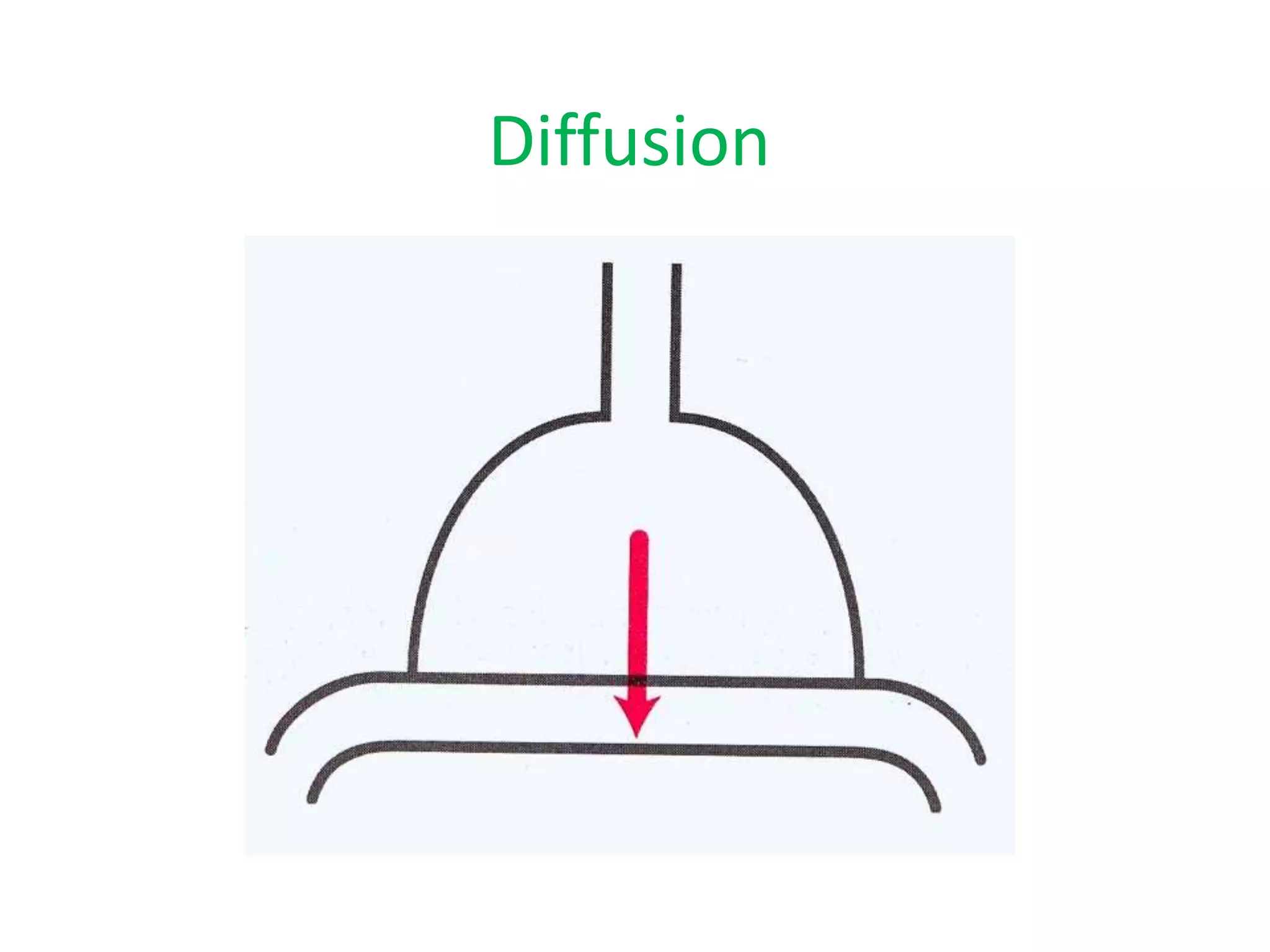
Diffusion
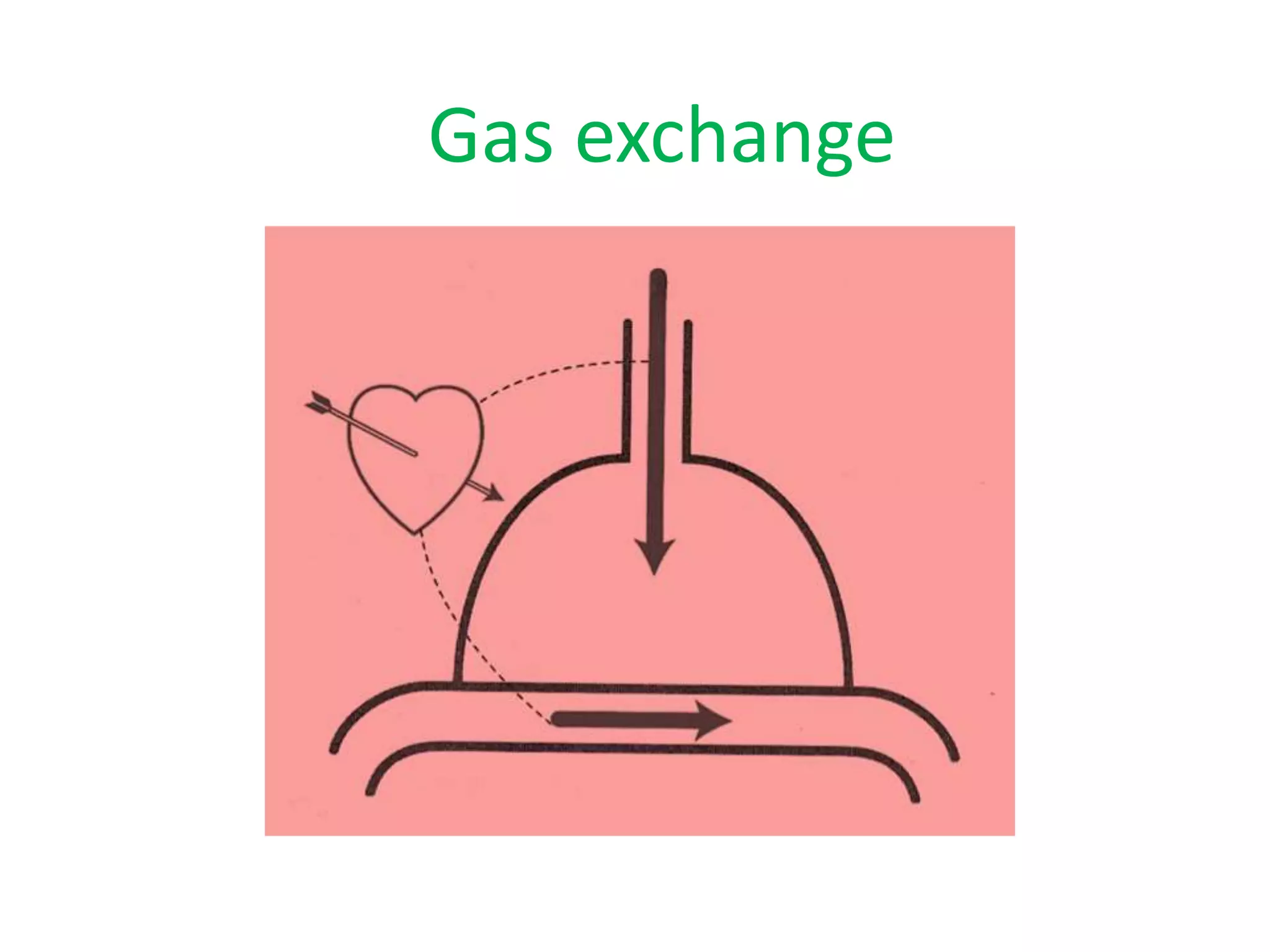
Gas exchange
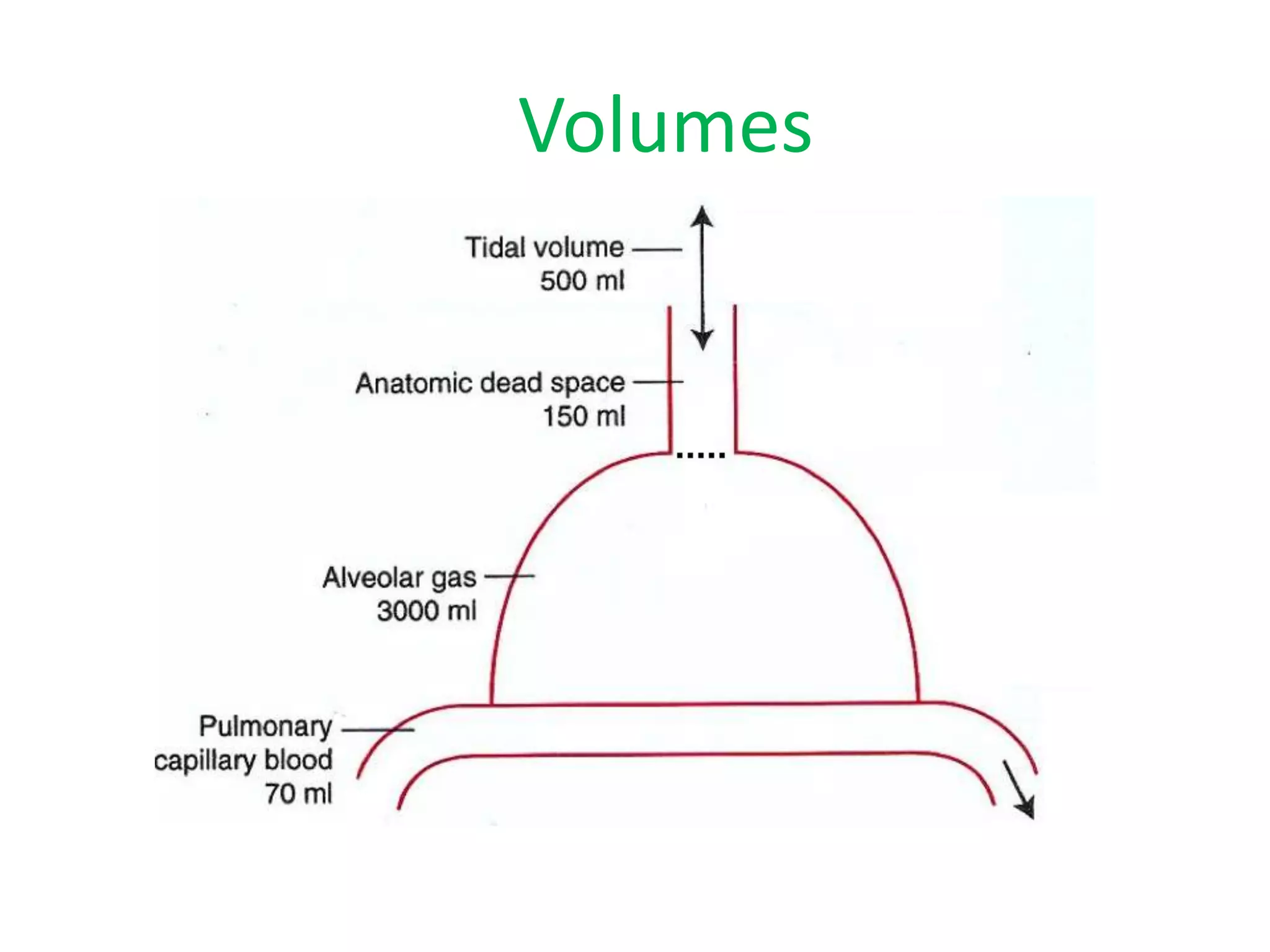
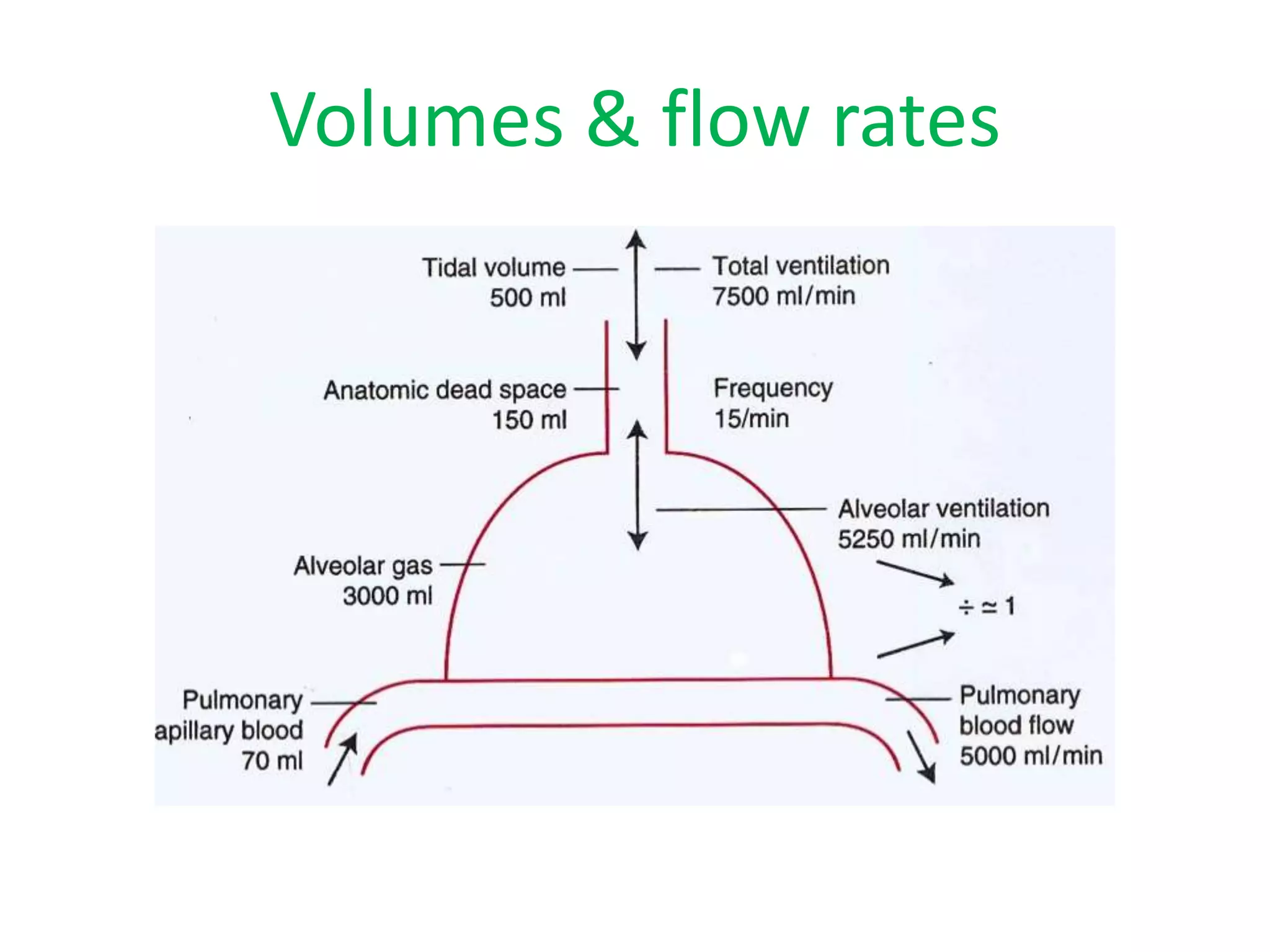
Volumes
Volumes & flow rates
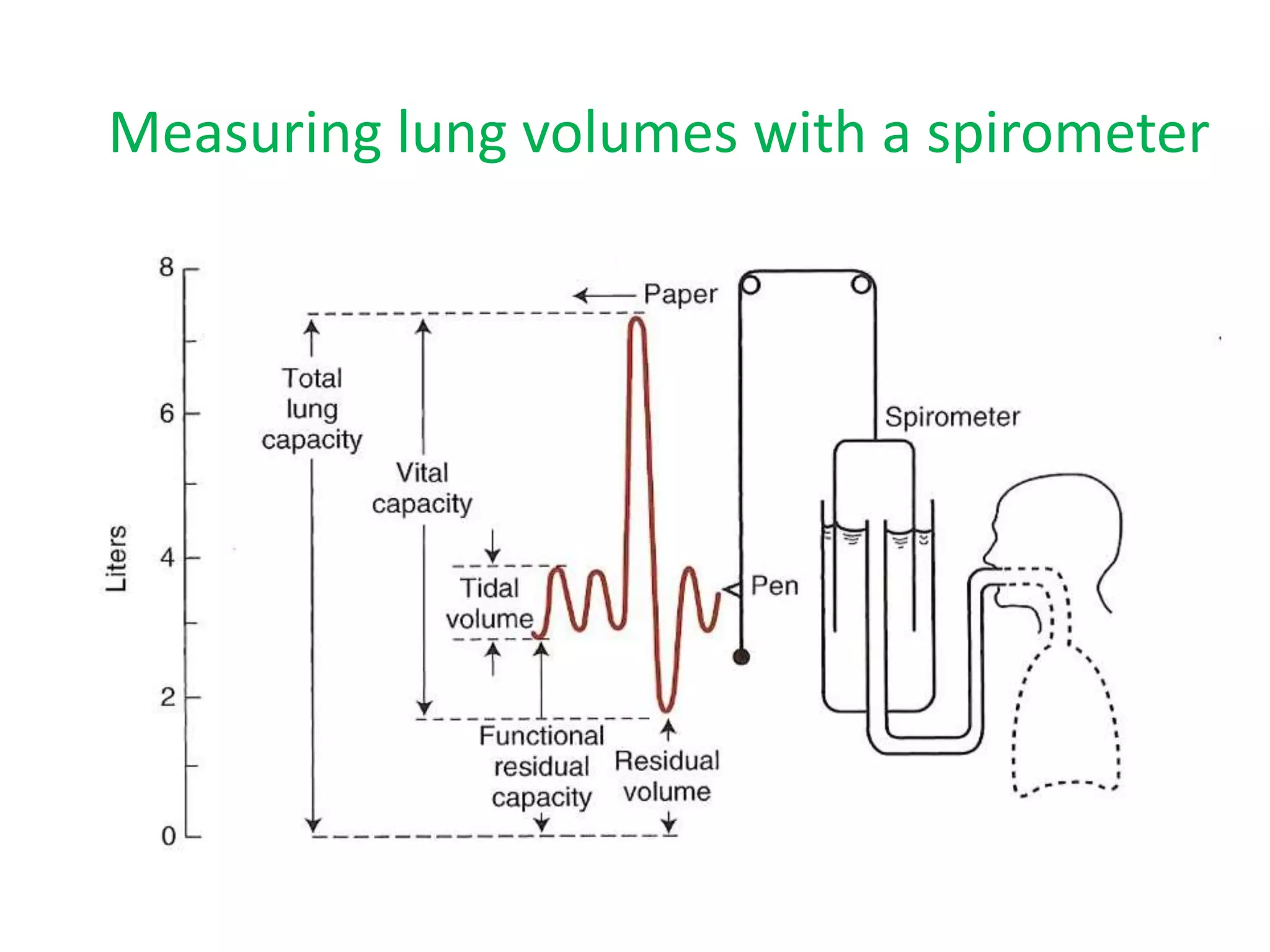
Measuring lung volumes with a spirometer
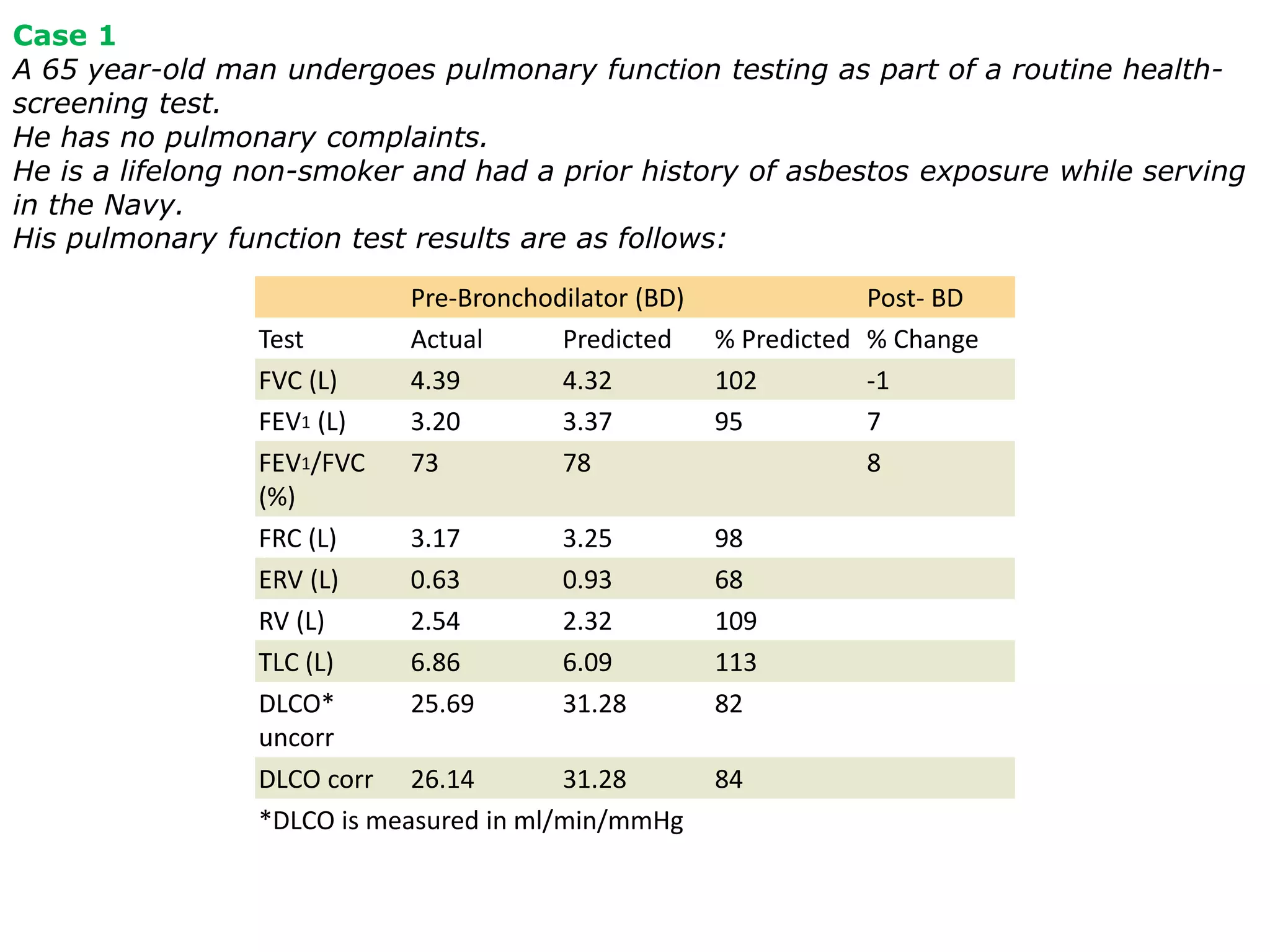
Pre-Bronchodilator (BD) Post- BD
Test Actual Predicted % Predicted % Change
FVC (L) 4.39 4.32 102 -1
FEV1 (L) 3.20 3.37 95 7
FEV1/FVC
(%)
73 78 8
FRC (L) 3.17 3.25 98
ERV (L) 0.63 0.93 68
RV (L) 2.54 2.32 109
TLC (L) 6.86 6.09 113
DLCO*
uncorr
25.69 31.28 82
DLCO corr 26.14 31.28 84
*DLCO is measured in ml/min/mmHg
Case 1
A 65 year-old man undergoes pulmonary function testing as part of a routine health-
screening test.
He has no pulmonary complaints.
He is a lifelong non-smoker and had a prior history of asbestos exposure while serving
in the Navy.
His pulmonary function test results are as follows:
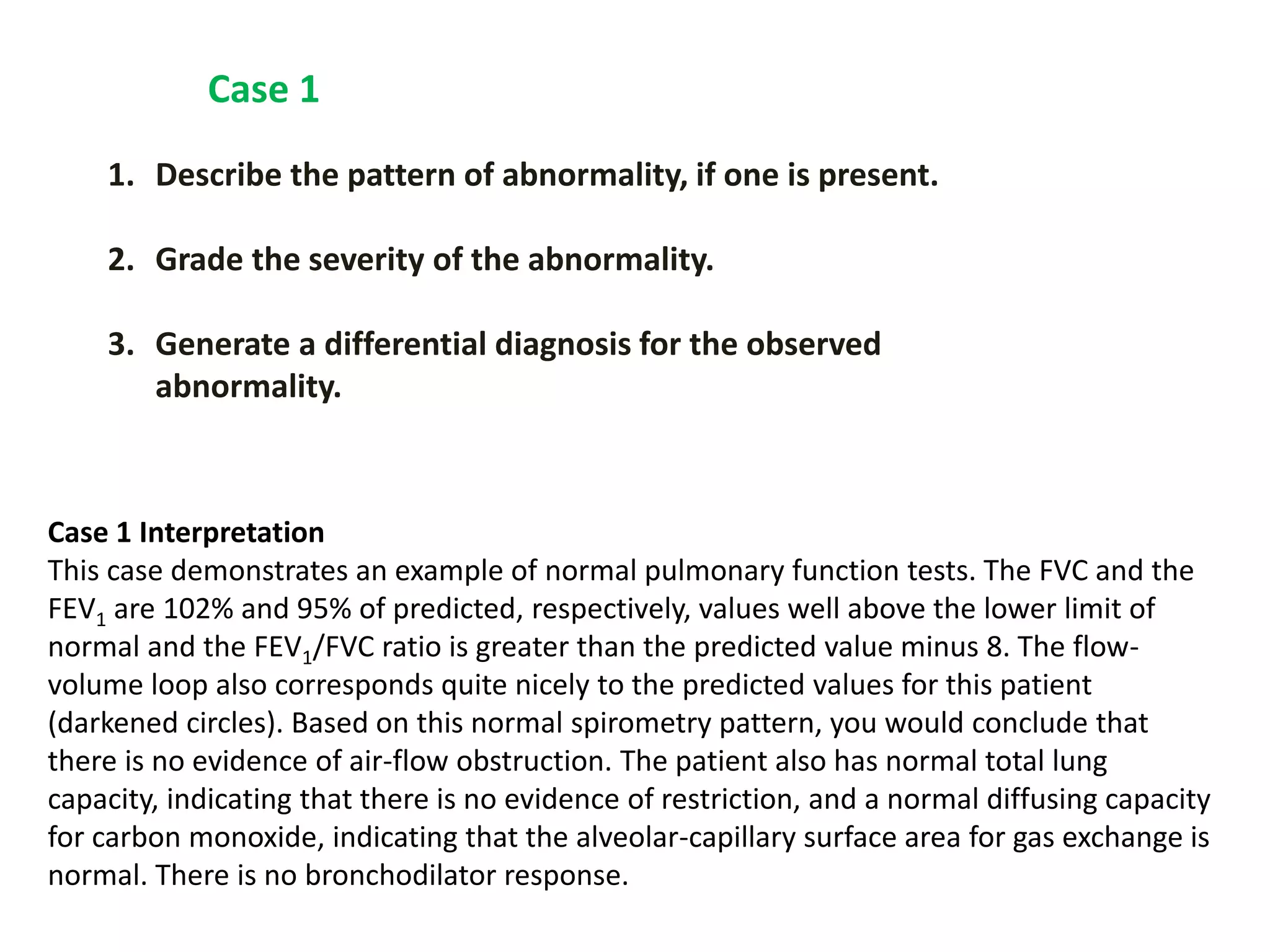
1. Describe the pattern of abnormality, if one is present.
2. Grade the severity of the abnormality.
3. Generate a differential diagnosis for the observed
abnormality.
Case 1
Case 1 Interpretation
This case demonstrates an example of normal pulmonary function tests. The FVC and the
FEV1 are 102% and 95% of predicted, respectively, values well above the lower limit of
normal and the FEV1/FVC ratio is greater than the predicted value minus 8. The flow-
volume loop also corresponds quite nicely to the predicted values for this patient
(darkened circles). Based on this normal spirometry pattern, you would conclude that
there is no evidence of air-flow obstruction. The patient also has normal total lung
capacity, indicating that there is no evidence of restriction, and a normal diffusing capacity
for carbon monoxide, indicating that the alveolar-capillary surface area for gas exchange is
normal. There is no bronchodilator response.
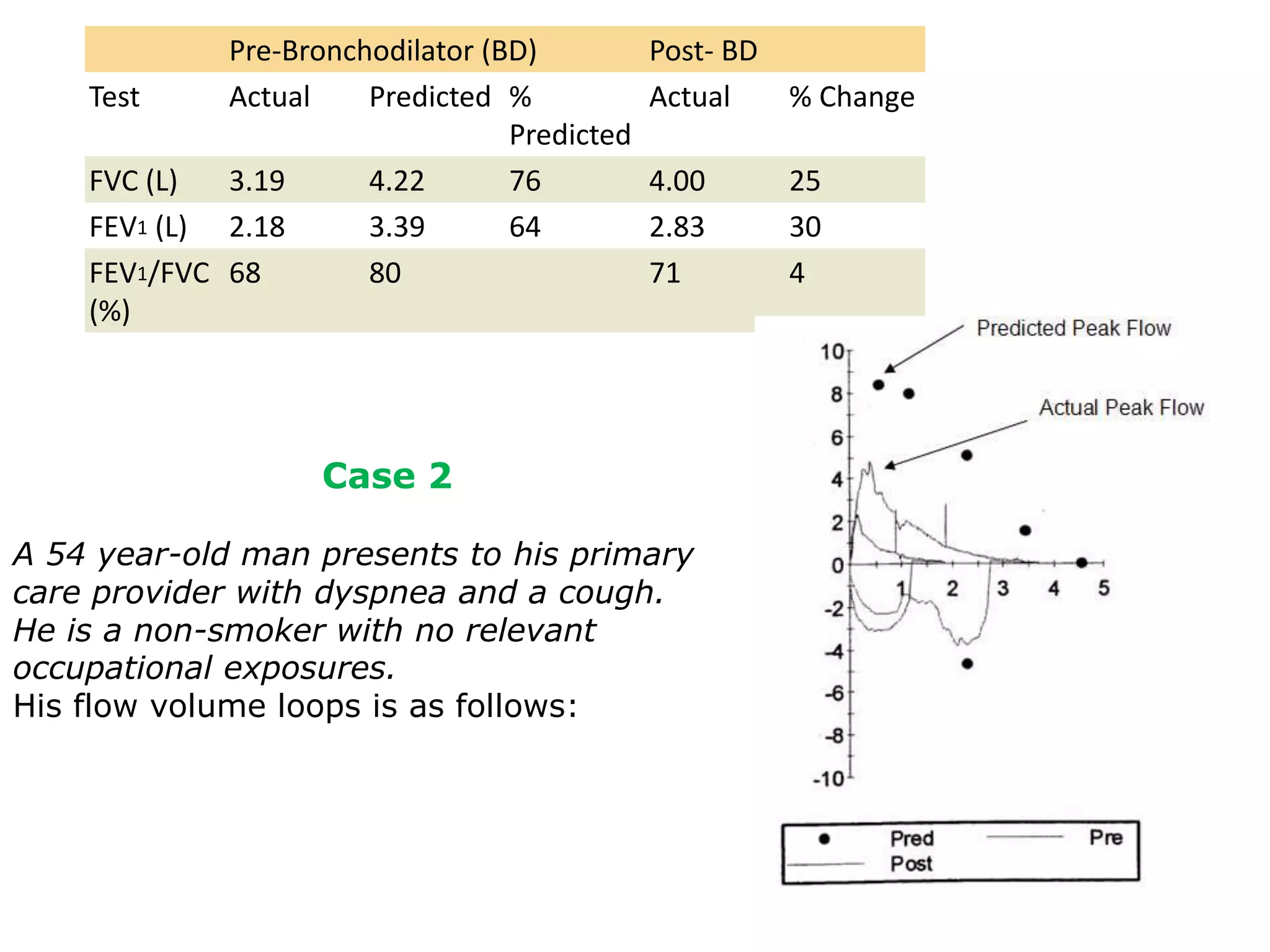
Pre-Bronchodilator (BD) Post- BD
Test Actual Predicted %
Predicted
Actual % Change
FVC (L) 3.19 4.22 76 4.00 25
FEV1 (L) 2.18 3.39 64 2.83 30
FEV1/FVC
(%)
68 80 71 4
Case 2
A 54 year-old man presents to his primary
care provider with dyspnea and a cough.
He is a non-smoker with no relevant
occupational exposures.
His flow volume loops is as follows:
Case 2 Interpretation
The FVC and FEV1 are both below the lower limit of normal
(defined as 80% of the predicted value for the patient). In addition,
the FEV1/FVC ratio is only 0.68, less than the lower limit of normal
of the predicted value minus 8 (80-8 = 72) for this male patient. A
low FEV1 and FVC with a decreased FEV1/FVC ratio is consistent
with a diagnosis of air-flow obstruction. With an FEV1 of 64%
predicted this would be classified as “moderate” airflow
obstruction.
In addition, the FVC improves by 0.81 L (25% increase) and the
FEV1 improves by 0.65L (30% increase) following administration of
a bronchodilator so this patient would qualify as having a
bronchodilator response (defined as a 12% and 200 ml increase in
either the FEV1 or FVC).
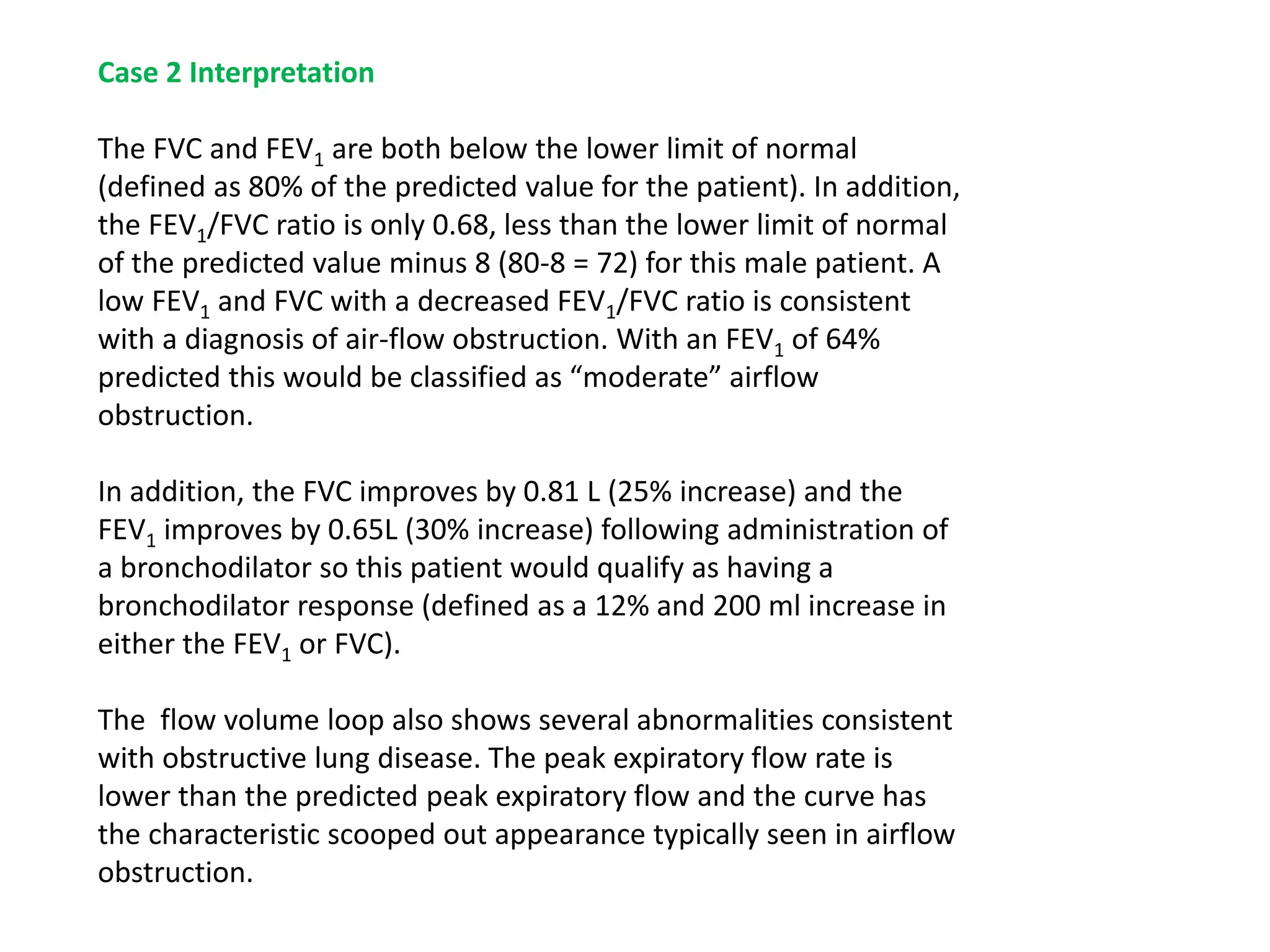
The flow volume loop also shows several abnormalities consistent
with obstructive lung disease. The peak expiratory flow rate is
lower than the predicted peak expiratory flow and the curve has
the characteristic scooped out appearance typically seen in airflow
obstruction.

Structure and Function of the lung

  • 1.
    Structure and Function ofthe lungs Cardiothoracic Department University Hospital of South Manchester Dr Marco Nardini
  • 4.
    Trachea • 1.5 cmbelow the vocal cord and is not fixed to surrounding tissues • 12 cm length • Internal diameter 2.3 cm laterally. 1.8cm anteroposteriorly • 18 to 22 cartilaginous rings, the cricoid is the only one complete • Important relationships • Blood supply is lateral and segmental
  • 8.
    Lungs • The Bronchopulmonarysegments are division of each lobe that contain anatomically separate arterial, venous and bronchial supplies. • 10 segments on the right • 8 segments on the left • The blood supply of the lung is twofold • Lymphatic drainage usually affect ipsilateral lymph nodes
  • 9.
    •In the lung80% of its volume is air •10% is blood •10% is solid tissue •Alveoli make up 50% of the entire volume Lungs
  • 15.
  • 21.
    Fick’s law ofdiffusion through a tissue sheet
  • 22.
  • 23.
  • 24.
  • 25.
  • 26.
  • 27.
    Measuring lung volumeswith a spirometer
  • 28.
    Pre-Bronchodilator (BD) Post-BD Test Actual Predicted % Predicted % Change FVC (L) 4.39 4.32 102 -1 FEV1 (L) 3.20 3.37 95 7 FEV1/FVC (%) 73 78 8 FRC (L) 3.17 3.25 98 ERV (L) 0.63 0.93 68 RV (L) 2.54 2.32 109 TLC (L) 6.86 6.09 113 DLCO* uncorr 25.69 31.28 82 DLCO corr 26.14 31.28 84 *DLCO is measured in ml/min/mmHg Case 1 A 65 year-old man undergoes pulmonary function testing as part of a routine health- screening test. He has no pulmonary complaints. He is a lifelong non-smoker and had a prior history of asbestos exposure while serving in the Navy. His pulmonary function test results are as follows:
  • 29.
    1. Describe thepattern of abnormality, if one is present. 2. Grade the severity of the abnormality. 3. Generate a differential diagnosis for the observed abnormality. Case 1 Case 1 Interpretation This case demonstrates an example of normal pulmonary function tests. The FVC and the FEV1 are 102% and 95% of predicted, respectively, values well above the lower limit of normal and the FEV1/FVC ratio is greater than the predicted value minus 8. The flow- volume loop also corresponds quite nicely to the predicted values for this patient (darkened circles). Based on this normal spirometry pattern, you would conclude that there is no evidence of air-flow obstruction. The patient also has normal total lung capacity, indicating that there is no evidence of restriction, and a normal diffusing capacity for carbon monoxide, indicating that the alveolar-capillary surface area for gas exchange is normal. There is no bronchodilator response.
  • 30.
    Pre-Bronchodilator (BD) Post-BD Test Actual Predicted % Predicted Actual % Change FVC (L) 3.19 4.22 76 4.00 25 FEV1 (L) 2.18 3.39 64 2.83 30 FEV1/FVC (%) 68 80 71 4 Case 2 A 54 year-old man presents to his primary care provider with dyspnea and a cough. He is a non-smoker with no relevant occupational exposures. His flow volume loops is as follows:
  • 31.
    Case 2 Interpretation TheFVC and FEV1 are both below the lower limit of normal (defined as 80% of the predicted value for the patient). In addition, the FEV1/FVC ratio is only 0.68, less than the lower limit of normal of the predicted value minus 8 (80-8 = 72) for this male patient. A low FEV1 and FVC with a decreased FEV1/FVC ratio is consistent with a diagnosis of air-flow obstruction. With an FEV1 of 64% predicted this would be classified as “moderate” airflow obstruction. In addition, the FVC improves by 0.81 L (25% increase) and the FEV1 improves by 0.65L (30% increase) following administration of a bronchodilator so this patient would qualify as having a bronchodilator response (defined as a 12% and 200 ml increase in either the FEV1 or FVC). The flow volume loop also shows several abnormalities consistent with obstructive lung disease. The peak expiratory flow rate is lower than the predicted peak expiratory flow and the curve has the characteristic scooped out appearance typically seen in airflow obstruction.