Regents Biology
[ Mechanism of
Respiration ]
2015/2016
Mohamed M.Elsaied
2015/2016
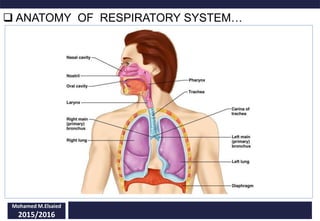
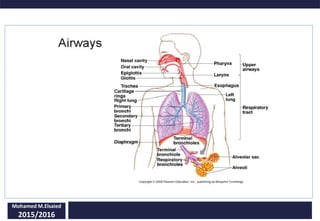
 ANATOMY OF RESPIRATORY SYSTEM…
Mohamed M.Elsaied
2015/2016
Mohamed M.Elsaied
2015/2016
Mohamed M.Elsaied
2015/2016
Mohamed M.Elsaied
2015/2016
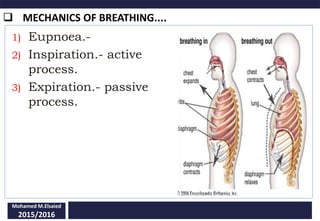
 MECHANICS OF BREATHING....
Mohamed M.Elsaied
2015/2016
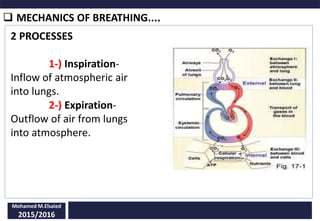
2 PROCESSES
1-) Inspiration-
Inflow of atmospheric air
into lungs.
2-) Expiration-
Outflow of air from lungs
into atmosphere.
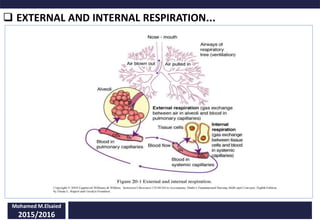
 EXTERNAL AND INTERNAL RESPIRATION...
Mohamed M.Elsaied
2015/2016
 EXTERNAL RESPIRATION
Mohamed M.Elsaied
2015/2016
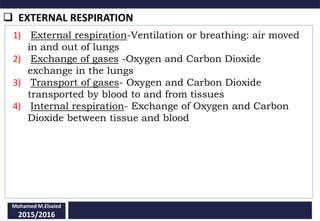
1) External respiration-Ventilation or breathing: air moved
in and out of lungs
2) Exchange of gases -Oxygen and Carbon Dioxide
exchange in the lungs
3) Transport of gases- Oxygen and Carbon Dioxide
transported by blood to and from tissues
4) Internal respiration- Exchange of Oxygen and Carbon
Dioxide between tissue and blood
 INTERNAL RESPIRATION ....
Mohamed M.Elsaied
2015/2016
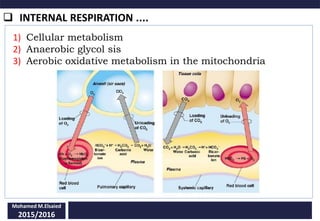
1) Cellular metabolism
2) Anaerobic glycol sis
3) Aerobic oxidative metabolism in the mitochondria
 MECHANICS OF BREATHING....
Mohamed M.Elsaied
2015/2016
1) Eupnoea.-
2) Inspiration.- active
process.
3) Expiration.- passive
process.
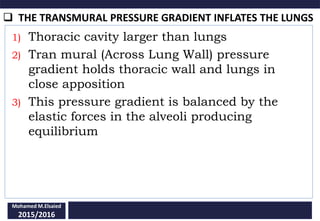
 THE TRANSMURAL PRESSURE GRADIENT INFLATES THE LUNGS
Mohamed M.Elsaied
2015/2016
1) Thoracic cavity larger than lungs
2) Tran mural (Across Lung Wall) pressure
gradient holds thoracic wall and lungs in
close apposition
3) This pressure gradient is balanced by the
elastic forces in the alveoli producing
equilibrium
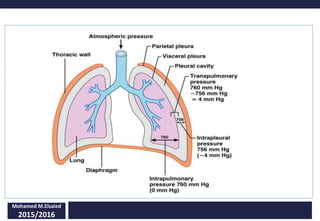
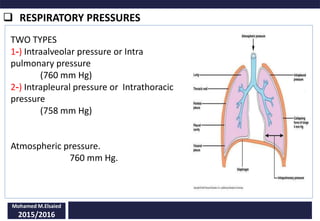
 RESPIRATORY PRESSURES
Mohamed M.Elsaied
2015/2016
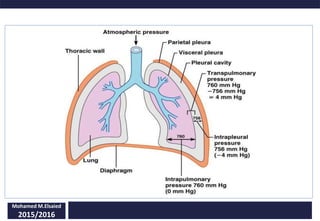
TWO TYPES
1-) Intraalveolar pressure or Intra
pulmonary pressure
(760 mm Hg)
2-) Intrapleural pressure or Intrathoracic
pressure
(758 mm Hg)
Atmospheric pressure.
760 mm Hg.
 MUSCLE OF INSPIRATION....
Muscle of normal tidal inspiration-
Diaphragm
External intercostal
Accessory Muscle of inspiration-
i. Sternocleidomastoid
ii. Scalene
iii. Serratus Anterior
iv. Pectoralis major and minor
Laryngeal muscle
Mohamed M.Elsaied
2015/2016
 MUSCLE OF EXPIRATION
Mohamed M.Elsaied
2015/2016
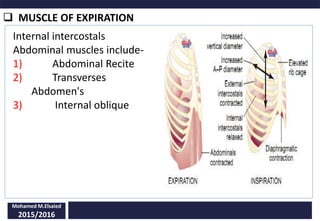
Internal intercostals
Abdominal muscles include-
1) Abdominal Recite
2) Transverses
Abdomen's
3) Internal oblique
Mohamed M.Elsaied
2015/2016
Mohamed M.Elsaied
2015/2016
Mohamed M.Elsaied
2015/2016
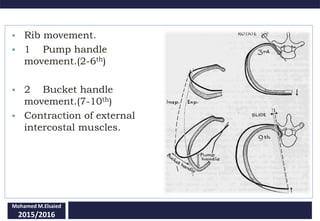
 Rib movement.
 1 Pump handle
movement.(2-6th)
 2 Bucket handle
movement.(7-10th)
 Contraction of external
intercostal muscles.
 CLINICAL SIGNIFICANCE…..
Mohamed M.Elsaied
2015/2016
 Transaction of spinal cord.
above 3rd cervical spinal segment- fatal – needs artificial
respiration.
below 5th cervical spinal segment – not,
Phrenic nerve that innervate diaphragm
( C 3,4,5)
 ACCESSORY MUSCLES OF INSPIRATION…..
Mohamed M.Elsaied
2015/2016
 Scalene & sternocleidomastoid
 Intrinsic muscles of larynx
1) Abductors of vocal cords – post cricoarytenoids –
supplied by recurrent laryngeal nerve, branch of
vagus.
2) Paralysis – Inspiratory Stridor.
 EXPIRATION…
Mohamed M.Elsaied
2015/2016
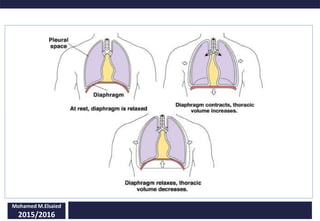
1) Return of ribs to rest position causes
diminishing of lung volume
2) Return of diaphragm to rest position also
causes diminishing of lung volume
3) Diminishing of lung volume causes pressure
in lung to raise to a higher value than
atmospheric pressure
4) Air flows out of the lungs
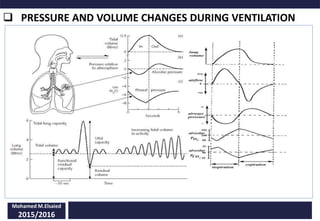
 PRESSURE AND VOLUME CHANGES DURING VENTILATION
Mohamed M.Elsaied
2015/2016
 PRESSURE CHANGES DURING VENTILATION
Mohamed M.Elsaied
2015/2016
 INTRAPULMONARY PRESSURE,( INTRA-ALVEOLAR
PRESSURE)
1) In quite breathing = 0 atmospheric pressure i.e.
760 mm Hg.
2) During inspiration -- 759 mm Hg.
3) During expiration -- 761 mm Hg.
 Factors affecting intrapulmonary pressure.
1) Valsalva manoeuvre (+100 mm Hg)
2) Muller’s manoeuvre (-80 mm Hg)
 PRESSURE CHANGES DURING VENTILATION
Mohamed M.Elsaied
2015/2016
INTRAPLEURAL PRESSURE,(INTRA-
THORACIC PRESSURE)
 In quite breathing (-2 mm Hg.)
 Reason – balance between
1) Lung – Tendency to collapse due to Intraalveolar
negative pressure..
2) Thoracic cage – Tendency to expand due to ribs
and elastic tissue.
 INTRAPLEURAL PRESSURE,(INTRA-THORACIC PRESSURE)
Mohamed M.Elsaied
2015/2016
Factors affecting intra pleural pressure.
Physiological
 Deep inspiration (-30 mm Hg.)
 Valsalva manoeuvre (+60-70 mm Hg.)
 Effect of gravity. (-7 apex, -2 Base)
○ Clinical significance – during first part of inspiration
more of inspired gas goes to apices than to bases.

Mechanism of-respiration

  • 1.
    Regents Biology [ Mechanismof Respiration ] 2015/2016 Mohamed M.Elsaied 2015/2016
  • 2.
     ANATOMY OFRESPIRATORY SYSTEM… Mohamed M.Elsaied 2015/2016
  • 3.
  • 4.
  • 5.
  • 6.
     MECHANICS OFBREATHING.... Mohamed M.Elsaied 2015/2016 2 PROCESSES 1-) Inspiration- Inflow of atmospheric air into lungs. 2-) Expiration- Outflow of air from lungs into atmosphere.
  • 7.
     EXTERNAL ANDINTERNAL RESPIRATION... Mohamed M.Elsaied 2015/2016
  • 8.
     EXTERNAL RESPIRATION MohamedM.Elsaied 2015/2016 1) External respiration-Ventilation or breathing: air moved in and out of lungs 2) Exchange of gases -Oxygen and Carbon Dioxide exchange in the lungs 3) Transport of gases- Oxygen and Carbon Dioxide transported by blood to and from tissues 4) Internal respiration- Exchange of Oxygen and Carbon Dioxide between tissue and blood
  • 9.
     INTERNAL RESPIRATION.... Mohamed M.Elsaied 2015/2016 1) Cellular metabolism 2) Anaerobic glycol sis 3) Aerobic oxidative metabolism in the mitochondria
  • 10.
     MECHANICS OFBREATHING.... Mohamed M.Elsaied 2015/2016 1) Eupnoea.- 2) Inspiration.- active process. 3) Expiration.- passive process.
  • 11.
     THE TRANSMURALPRESSURE GRADIENT INFLATES THE LUNGS Mohamed M.Elsaied 2015/2016 1) Thoracic cavity larger than lungs 2) Tran mural (Across Lung Wall) pressure gradient holds thoracic wall and lungs in close apposition 3) This pressure gradient is balanced by the elastic forces in the alveoli producing equilibrium
  • 12.
     RESPIRATORY PRESSURES MohamedM.Elsaied 2015/2016 TWO TYPES 1-) Intraalveolar pressure or Intra pulmonary pressure (760 mm Hg) 2-) Intrapleural pressure or Intrathoracic pressure (758 mm Hg) Atmospheric pressure. 760 mm Hg.
  • 13.
     MUSCLE OFINSPIRATION.... Muscle of normal tidal inspiration- Diaphragm External intercostal Accessory Muscle of inspiration- i. Sternocleidomastoid ii. Scalene iii. Serratus Anterior iv. Pectoralis major and minor Laryngeal muscle Mohamed M.Elsaied 2015/2016
  • 14.
     MUSCLE OFEXPIRATION Mohamed M.Elsaied 2015/2016 Internal intercostals Abdominal muscles include- 1) Abdominal Recite 2) Transverses Abdomen's 3) Internal oblique
  • 15.
  • 16.
  • 17.
    Mohamed M.Elsaied 2015/2016  Ribmovement.  1 Pump handle movement.(2-6th)  2 Bucket handle movement.(7-10th)  Contraction of external intercostal muscles.
  • 18.
     CLINICAL SIGNIFICANCE….. MohamedM.Elsaied 2015/2016  Transaction of spinal cord. above 3rd cervical spinal segment- fatal – needs artificial respiration. below 5th cervical spinal segment – not, Phrenic nerve that innervate diaphragm ( C 3,4,5)
  • 19.
     ACCESSORY MUSCLESOF INSPIRATION….. Mohamed M.Elsaied 2015/2016  Scalene & sternocleidomastoid  Intrinsic muscles of larynx 1) Abductors of vocal cords – post cricoarytenoids – supplied by recurrent laryngeal nerve, branch of vagus. 2) Paralysis – Inspiratory Stridor.
  • 20.
     EXPIRATION… Mohamed M.Elsaied 2015/2016 1)Return of ribs to rest position causes diminishing of lung volume 2) Return of diaphragm to rest position also causes diminishing of lung volume 3) Diminishing of lung volume causes pressure in lung to raise to a higher value than atmospheric pressure 4) Air flows out of the lungs
  • 21.
     PRESSURE ANDVOLUME CHANGES DURING VENTILATION Mohamed M.Elsaied 2015/2016
  • 22.
     PRESSURE CHANGESDURING VENTILATION Mohamed M.Elsaied 2015/2016  INTRAPULMONARY PRESSURE,( INTRA-ALVEOLAR PRESSURE) 1) In quite breathing = 0 atmospheric pressure i.e. 760 mm Hg. 2) During inspiration -- 759 mm Hg. 3) During expiration -- 761 mm Hg.  Factors affecting intrapulmonary pressure. 1) Valsalva manoeuvre (+100 mm Hg) 2) Muller’s manoeuvre (-80 mm Hg)
  • 23.
     PRESSURE CHANGESDURING VENTILATION Mohamed M.Elsaied 2015/2016 INTRAPLEURAL PRESSURE,(INTRA- THORACIC PRESSURE)  In quite breathing (-2 mm Hg.)  Reason – balance between 1) Lung – Tendency to collapse due to Intraalveolar negative pressure.. 2) Thoracic cage – Tendency to expand due to ribs and elastic tissue.
  • 24.
     INTRAPLEURAL PRESSURE,(INTRA-THORACICPRESSURE) Mohamed M.Elsaied 2015/2016 Factors affecting intra pleural pressure. Physiological  Deep inspiration (-30 mm Hg.)  Valsalva manoeuvre (+60-70 mm Hg.)  Effect of gravity. (-7 apex, -2 Base) ○ Clinical significance – during first part of inspiration more of inspired gas goes to apices than to bases.