Dr. Dene W. Daugherty
Department of Surgery
Goal
- To increase positive surgical outcomes for
patients by decreasing perioperative
complications from misidentified risk factors
for infection and sepsis
Importance
 Predictor of postsurgical site infection
 Risk adjusted data will impact healthcare statistics and grades
 Drives quality improvement initiatives
Risk of Post-Operative Infection
• Class I (Clean): 2%
• Class II (Clean Contaminated): 5-15%
• Class III (Contaminated): >15%
• Class IV (Dirty): >30%
Wound Classification
Predicts risk of postoperative
infection based on assessment of
bacterial load at time of surgery
Assists surgeon determine his/her
approach to postop care
Class I: Clean
 Respiratory, gastrointestinal, genital and urinary tracts not entered
 No break in aseptic technique
 No inflammation
Class I: Examples
Breast surgery
C-section with non-ruptured membranes
Exploratory lap with no bowel resection
Eye Surgery (unless inflamed, infected, or
with foreign body)
Hernia repair
Total joint arthroplasty
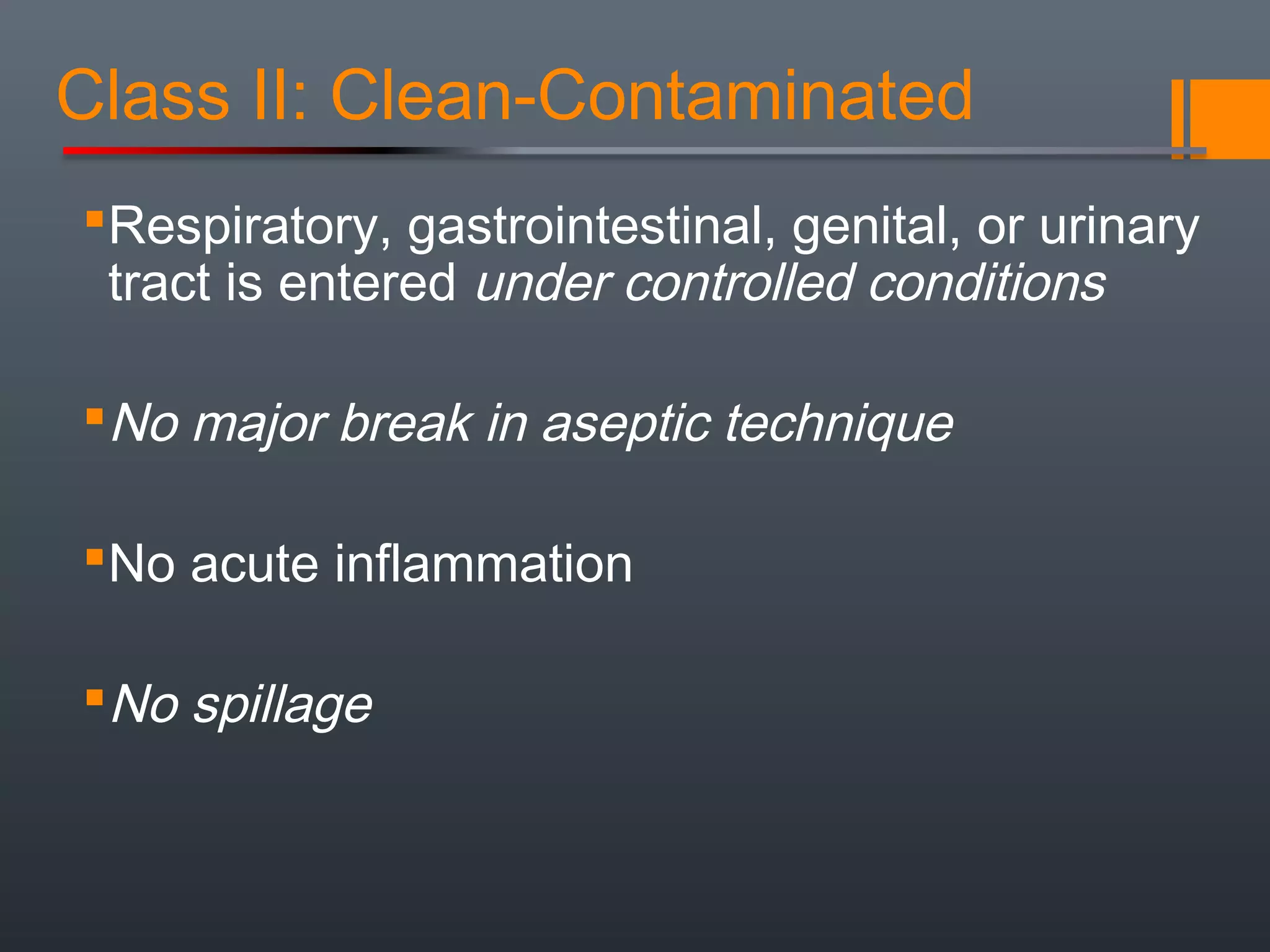
Class II: Clean-Contaminated
Respiratory, gastrointestinal, genital, or urinary
tract is entered under controlled conditions
No major break in aseptic technique
No acute inflammation
No spillage
Class II: Examples
Cholecystectomy (chronic inflammation)
Gastrointestinal procedures
Gynecological procedures
Urological procedures
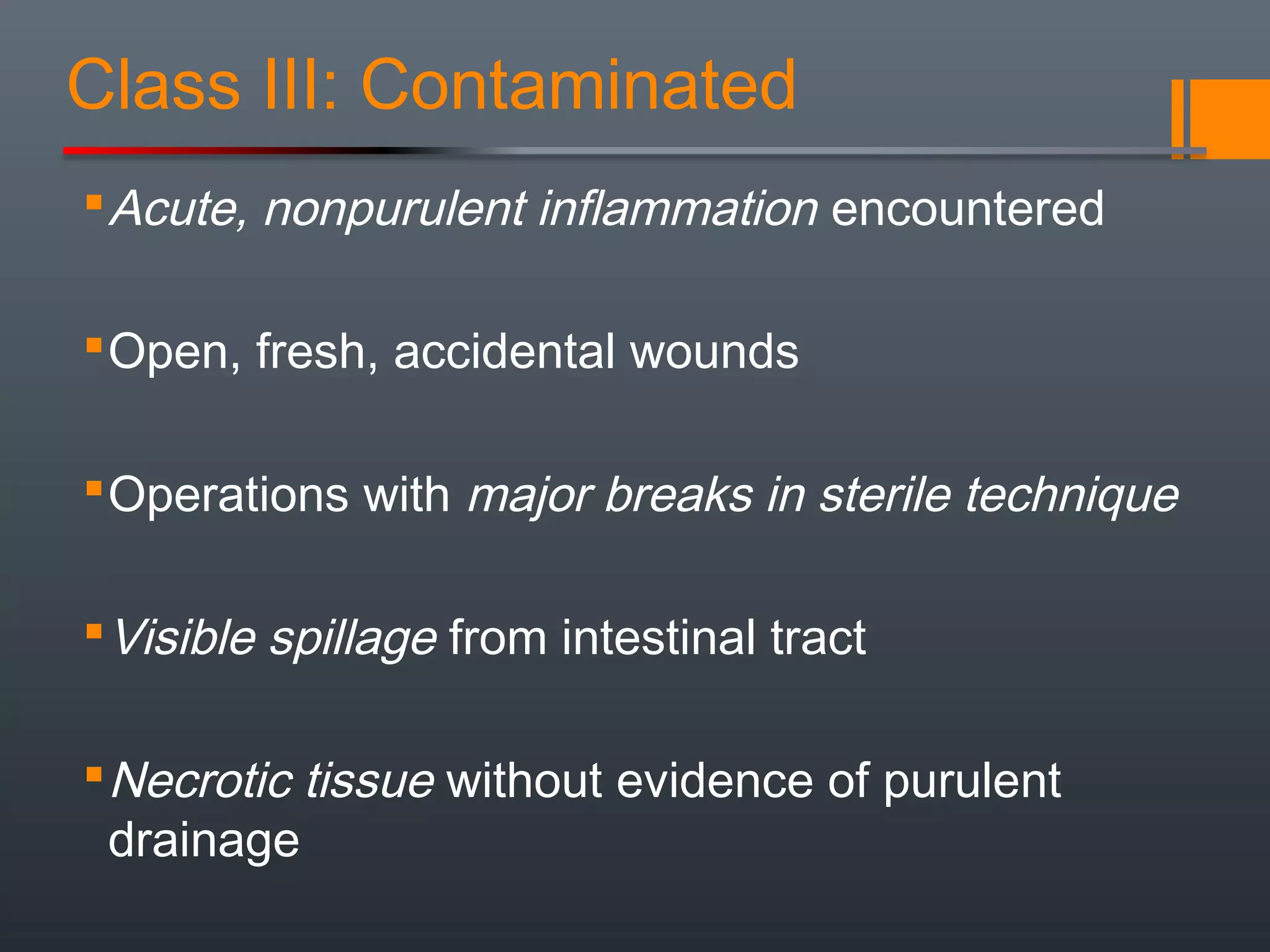
Class III: Contaminated
Acute, nonpurulent inflammation encountered
Open, fresh, accidental wounds
Operations with major breaks in sterile technique
Visible spillage from intestinal tract
Necrotic tissue without evidence of purulent
drainage
Class III: Examples
Appendectomy (no rupture, no pus)
Bowel resection for infarcted and/or
necrotic bowel
Cholecystectomy with acute inflammation
or bile spillage
Compromised integrity of sterile field
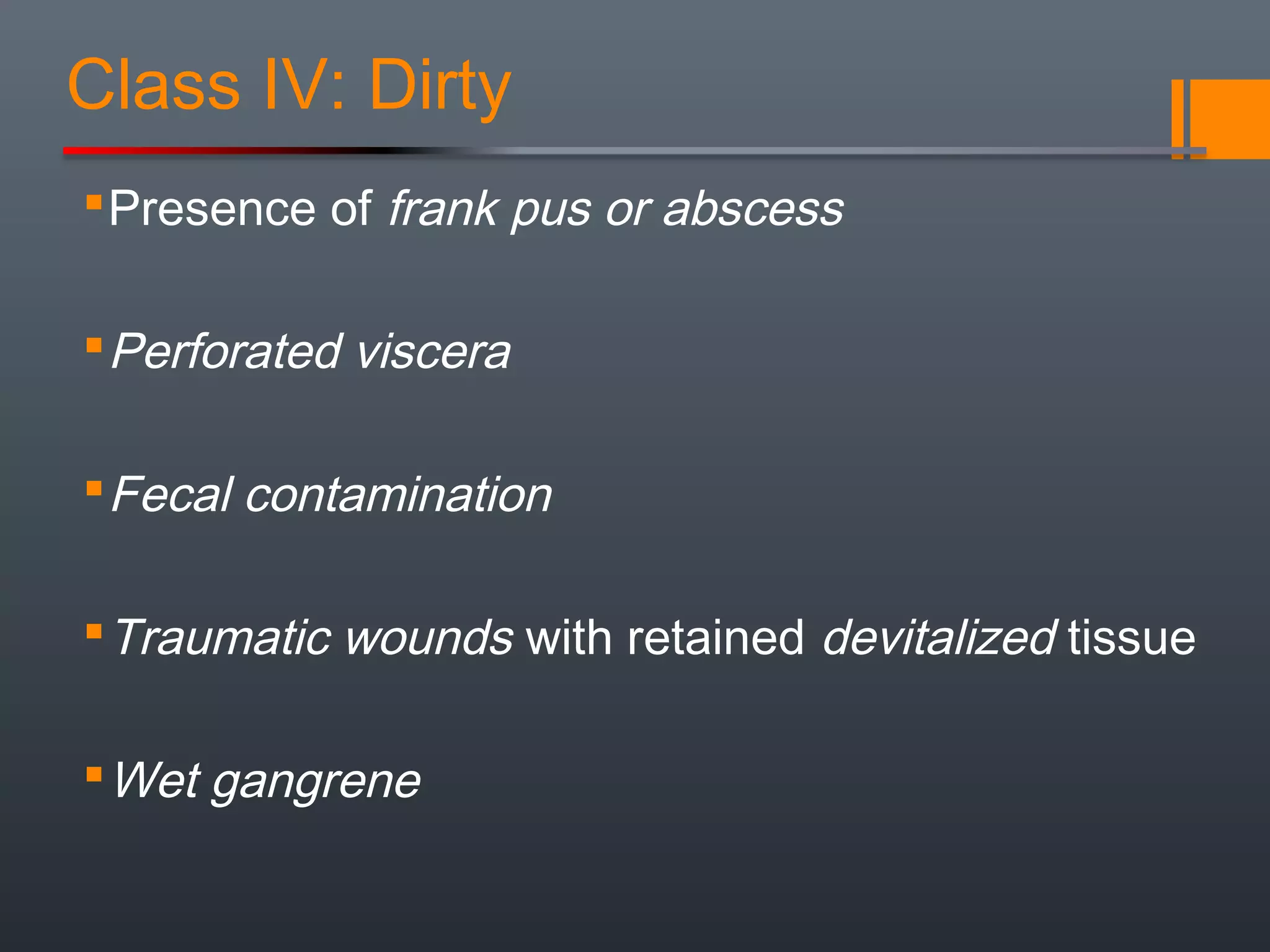
Class IV: Dirty
Presence of frank pus or abscess
Perforated viscera
Fecal contamination
Traumatic wounds with retained devitalized tissue
Wet gangrene
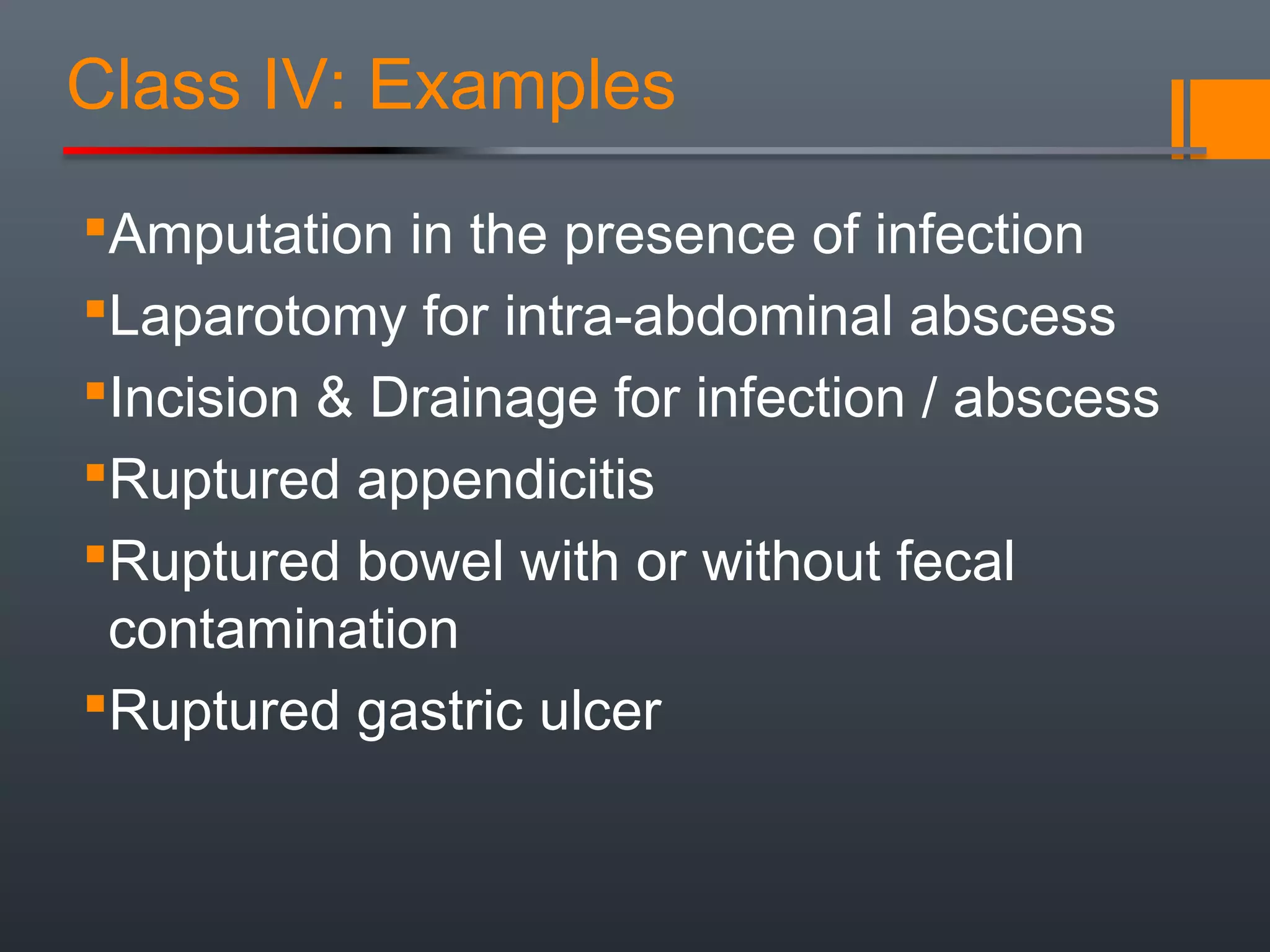
Class IV: Examples
Amputation in the presence of infection
Laparotomy for intra-abdominal abscess
Incision & Drainage for infection / abscess
Ruptured appendicitis
Ruptured bowel with or without fecal
contamination
Ruptured gastric ulcer
When to document class
 At the end of the surgical procedure; during surgical team debriefing
 This ensures any events that occurred during the surgery that may
influence wound class are considered

Surgical Wound Classification

  • 1.
    Dr. Dene W.Daugherty Department of Surgery
  • 2.
    Goal - To increasepositive surgical outcomes for patients by decreasing perioperative complications from misidentified risk factors for infection and sepsis
  • 3.
    Importance  Predictor ofpostsurgical site infection  Risk adjusted data will impact healthcare statistics and grades  Drives quality improvement initiatives
  • 4.
    Risk of Post-OperativeInfection • Class I (Clean): 2% • Class II (Clean Contaminated): 5-15% • Class III (Contaminated): >15% • Class IV (Dirty): >30%
  • 5.
    Wound Classification Predicts riskof postoperative infection based on assessment of bacterial load at time of surgery Assists surgeon determine his/her approach to postop care
  • 6.
    Class I: Clean Respiratory, gastrointestinal, genital and urinary tracts not entered  No break in aseptic technique  No inflammation
  • 7.
    Class I: Examples Breastsurgery C-section with non-ruptured membranes Exploratory lap with no bowel resection Eye Surgery (unless inflamed, infected, or with foreign body) Hernia repair Total joint arthroplasty
  • 8.
    Class II: Clean-Contaminated Respiratory,gastrointestinal, genital, or urinary tract is entered under controlled conditions No major break in aseptic technique No acute inflammation No spillage
  • 9.
    Class II: Examples Cholecystectomy(chronic inflammation) Gastrointestinal procedures Gynecological procedures Urological procedures
  • 10.
    Class III: Contaminated Acute,nonpurulent inflammation encountered Open, fresh, accidental wounds Operations with major breaks in sterile technique Visible spillage from intestinal tract Necrotic tissue without evidence of purulent drainage
  • 11.
    Class III: Examples Appendectomy(no rupture, no pus) Bowel resection for infarcted and/or necrotic bowel Cholecystectomy with acute inflammation or bile spillage Compromised integrity of sterile field
  • 12.
    Class IV: Dirty Presenceof frank pus or abscess Perforated viscera Fecal contamination Traumatic wounds with retained devitalized tissue Wet gangrene
  • 13.
    Class IV: Examples Amputationin the presence of infection Laparotomy for intra-abdominal abscess Incision & Drainage for infection / abscess Ruptured appendicitis Ruptured bowel with or without fecal contamination Ruptured gastric ulcer
  • 14.
    When to documentclass  At the end of the surgical procedure; during surgical team debriefing  This ensures any events that occurred during the surgery that may influence wound class are considered