STROKE & CEREBROVASCULAR ACCIDENTMOHD HANAFI RAMLEE
DefinitionTransient Ischaemic Attack (TIA) – an acute focal neurological deficit resulting from cerebrovascular disease with resolution of signs and symptoms within 24 hours.Reversible Ischaemic Neurological Deficit (RIND) – attack lasting longer than 24 hours but with complete clearance of signs and symptoms within 7 days.Completed Stroke – neurological deficit lasts longer than 7 days.
HOW YOU GIVE THE DIAGNOSIS?The diagnosis should provide answers to the following questions:1. What is the neurological deficit?2. Where is the lesion?3. What is the lesion?4. Why has the lesion occurred?5. What are the potential complications and prognosis?
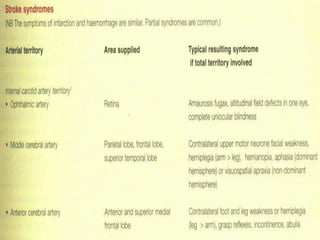
What Artery Involved?Aphasia (dominant hemisphere)Hemiparesis / plegiaHemisensoryloss/disturbanceHomonymous hemianopiaParietal lobe dysfunction, e.g. astereognosis, agraphaesthesia, impaired two-point discrimination, sensory and visual inattention, left-right dissociation and acalculia
What Artery Involved?Weakness of lower limb more than upper limb
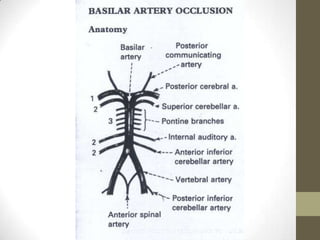
What Artery Involved?Homonymous hemianopiaCortical blindnessAtaxiaDizziness or vertigoDysarthriaDiplopiaDysphagiaHorner’s syndromeHemiparesis or hemisensory loss contralateral to the cranial nerves palsyCerebellar signs
SO… BASIC IS IMPORTANT!!!!!!!!
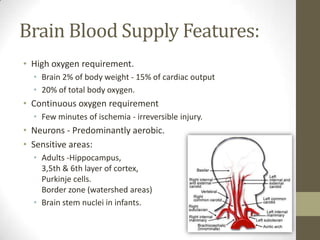
Brain Blood Supply Features:High oxygen requirement. Brain 2% of body weight - 15% of cardiac output 20% of total body oxygen. Continuous oxygen requirementFew minutes of ischemia - irreversible injury. Neurons - Predominantly aerobic.Sensitive areas:Adults -Hippocampus, 3,5th & 6th layer of cortex, Purkinje cells. Border zone (watershed areas)Brain stem nuclei in infants.
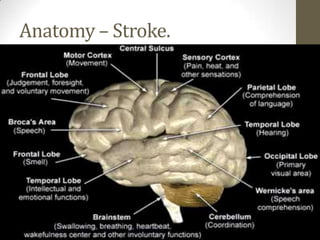
Anatomy – Stroke.
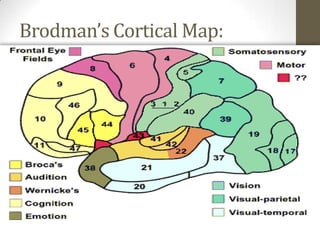
Brodman’s Cortical Map:
Frontal[f*ck – motor] Lobe Functions:High level cognitive functions. i.e reasoning, abstraction, concentrationStorage of information – memoryControl of voluntary eye movementMotor control of speech in the dominant hemisphere.Motor Cortex – Motor control of the contralateral side of the bodyUrinary continenceEmotion and personality
Parietal[p-sx – sensory] Lobe Functions:Sensory cortex – sensory input is interpreted to define size, weight, texture and consistency (contralateral)Sensation is localised, and modalities of touch, pressure and position are identified.Awareness of the parts of bodyNon-dominant – processes visuospatial information andcontrols spatial orientationDominant is involved in ideomotor praxis (ability to perform learned motor tasks
Temporal[t-telinga] Lobe Functions:Primary auditory receptive areasIn dominant ability to comprehend speech (wernicke’s) – receptionInterpretive area – area at the junction of the temporal, parietal and occipital lobes.Plays an important role in visual, auditory and olfactory perceptionImportant role in learning; memory and emotional affect.
Occipital[O-optic] Lobe Functions:Primary visual cortexVisual association areasVisual perceptionSome visual reflexes (i.e. visual fixation)Involuntary smooth eye movement
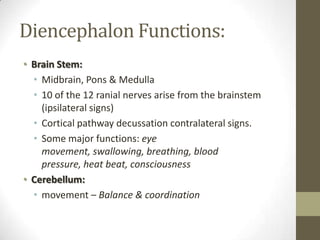
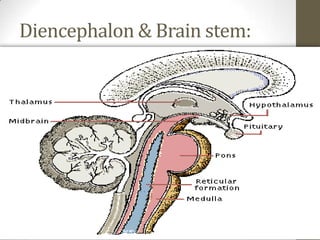
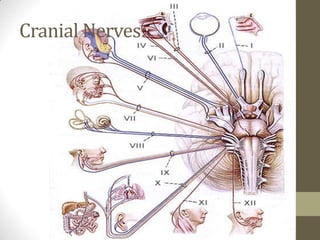
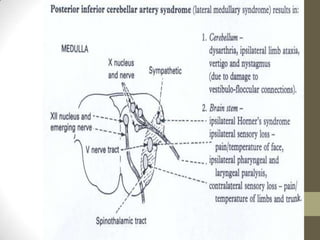
Diencephalon Functions:Brain Stem:Midbrain, Pons & Medulla10 of the 12 ranial nerves arise from the brainstem (ipsilateral signs)Cortical pathway decussation contralateral signs.Some major functions: eye movement, swallowing, breathing, blood pressure, heat beat, consciousnessCerebellum:movement – Balance & coordination
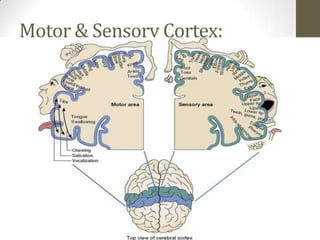
Motor & Sensory Cortex:
Diencephalon & Brain stem:
Cranial Nerves:
Stroke Types:ClinicalTransient Ischemic Attack –TIA resolve <24hEvolving stroke – increasing >24h. – Thromb.Recurrent / multiple stroke – sec. factors.Completed stroke – no change… embolic.PathologicalFocal / GlobalIschemic & hemorrhagic (chronic/acute)Venous infarcts. (young, infections)
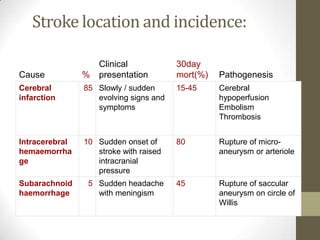
Common Types and Incidence:Infarction: Incidence 80% - mortality20%50% - Thrombotic – atherosclerosisLarge-vessel 30% (carotid, middle cerebral)Small vessel 20% (lacunar stroke)30% Embolic(heart dis / atherosclerosis) Young, rapid, extensive.Venousthromboembolism (rare)Hemorrhage:Incidence20% - mortality80%Berry aneurysm, Microaneurysm, Atheroma.Intracerebral or subarachnoid.
Stroke location and incidence:
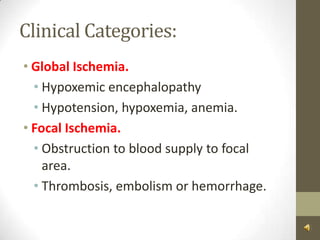
Clinical Categories:Global Ischemia.Hypoxemic encephalopathyHypotension, hypoxemia, anemia.Focal Ischemia.Obstruction to blood supply to focal area.Thrombosis, embolism or hemorrhage.
GLOBAL ISCHAEMIA
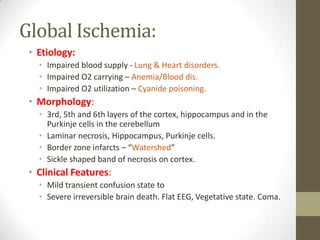
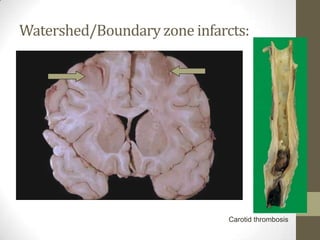
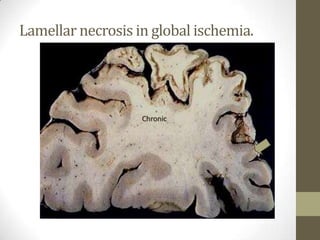
Global Ischemia:Etiology:Impaired blood supply - Lung & Heart disorders.Impaired O2 carrying – Anemia/Blood dis.Impaired O2 utilization – Cyanide poisoning.Morphology:3rd, 5th and 6th layers of the cortex, hippocampus and in the Purkinje cells in the cerebellum Laminar necrosis, Hippocampus, Purkinje cells.Border zone infarcts – “Watershed”Sickle shaped band of necrosis on cortex.ClinicalFeatures:Mild transient confusion state toSevere irreversible brain death. Flat EEG, Vegetative state. Coma.
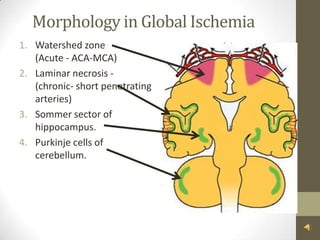
Morphology in Global IschemiaWatershed zone (Acute - ACA-MCA)Laminar necrosis - (chronic- short penetrating arteries)Sommer sector of hippocampus.Purkinje cells of cerebellum.
Watershed/Boundary zone infarcts:Carotid thrombosis
Lamellar necrosis in global ischemia.Chronic
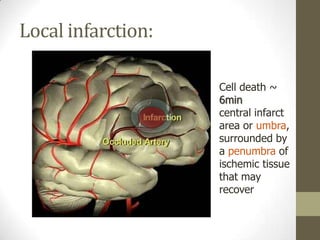
Local infarction:Cell death ~ 6mincentral infarct area or umbra, surrounded by a penumbra of ischemic tissue that may recover
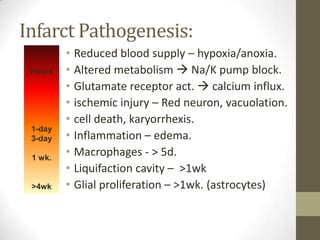
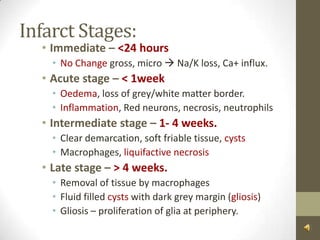
Infarct Pathogenesis:Reduced blood supply – hypoxia/anoxia.Altered metabolism  Na/K pump block. Glutamate receptor act.  calcium influx.ischemic injury – Red neuron, vacuolation.cell death, karyorrhexis.Inflammation – edema.Macrophages - > 5d.Liquifaction cavity –  >1wkGlial proliferation – >1wk. (astrocytes)Hours1-day3-day1 wk.>4wk
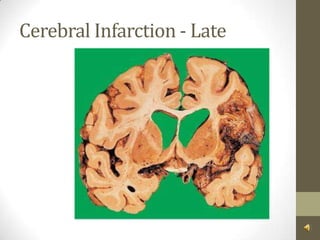
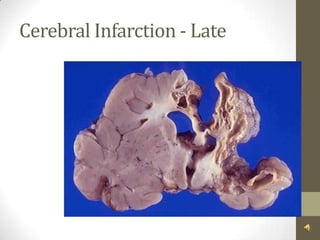
Infarct Stages:Immediate – <24 hoursNo Change gross, micro  Na/K loss, Ca+ influx.Acute stage – < 1week Oedema, loss of grey/white matter border.Inflammation, Red neurons, necrosis, neutrophilsIntermediate stage – 1- 4 weeks.Clear demarcation, soft friable tissue, cystsMacrophages, liquifactive necrosisLate stage – > 4 weeks.Removal of tissue by macrophagesFluid filled cysts with dark grey margin (gliosis)Gliosis – proliferation of glia at periphery.
FOCAL ISCHAEMIA
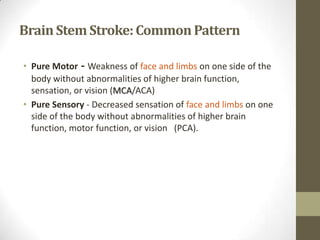
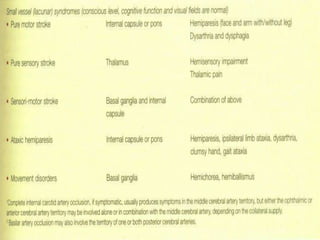
Brain Stem Stroke: Common PatternPure Motor - Weakness of face and limbs on one side of the body without abnormalities of higher brain function, sensation, or vision (MCA/ACA)Pure Sensory - Decreased sensation of face and limbs on one side of the body without abnormalities of higher brain function, motor function, or vision   (PCA).
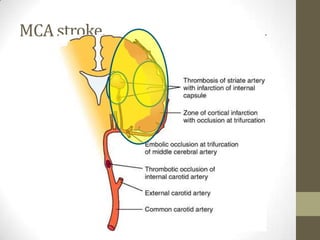
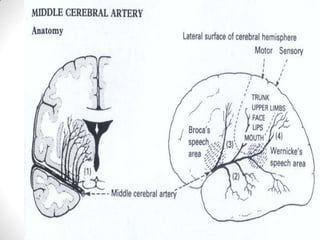
MCA [most common] Features:Paralysis of the contralateral face, arm and legSensory impairment over the contralateral face, arm & legHomonymous hemi or quadrantonopiaParalysis of gaze to the opposite sideAphasia (dominant) and dysarthria [broca/wernicke]Penetrating - contralateral hemiplegia/paresis, slurred speech.Impaired spatial perception
MCA stroke.
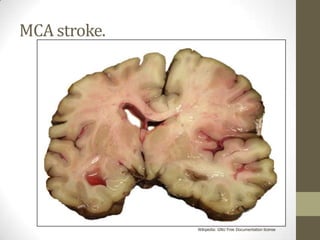
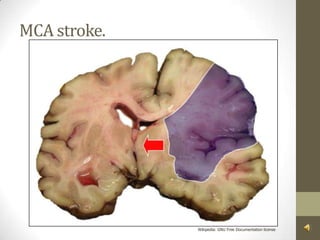
MCA stroke.Wikipedia: GNU Free Documentation license
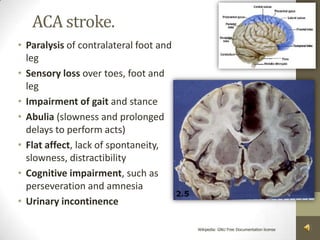
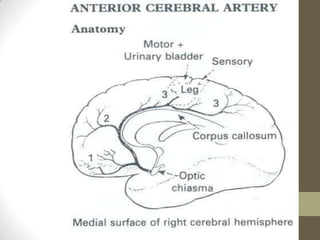
ACA stroke.Paralysis of contralateral foot and legSensory loss over toes, foot and legImpairment of gait and stanceAbulia (slowness and prolonged delays to perform acts)Flat affect, lack of spontaneity, slowness, distractibilityCognitive impairment, such as perseveration and amnesiaUrinary incontinenceWikipedia: GNU Free Documentation license
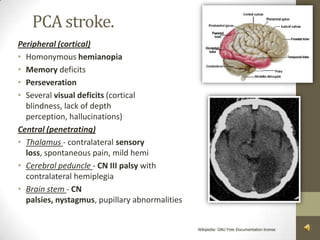
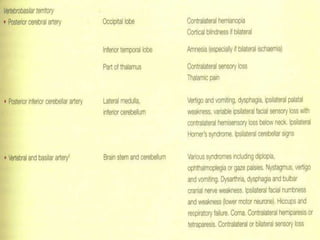
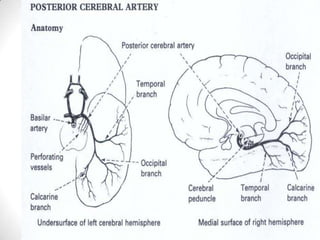
PCA stroke.Peripheral (cortical)Homonymous hemianopiaMemory deficitsPerseverationSeveral visual deficits (cortical blindness, lack of depth perception, hallucinations)Central (penetrating)Thalamus - contralateral sensory loss, spontaneous pain, mild hemiCerebral peduncle - CN III palsy with contralateral hemiplegiaBrain stem - CN palsies, nystagmus, pupillary abnormalitiesWikipedia: GNU Free Documentation license
Posterior Cerebral ArteryVisual disturbancescontralateral homonymous hemianopsia(central vision is often spared) L. Hemi: lesions alexia (with or without agraphia) Bilateral lesions: cortical blindness patients unaware they cannot see (Anton's syndrome)Memory impairment if temporal lobe is affected ~Proximal occlusioncontralateral hemisensory loss, spontaneous pain and dysesthesia if thalamus affected (thalamic pain syndrome) contralateral severe proximal chorea (hemiballism) ~
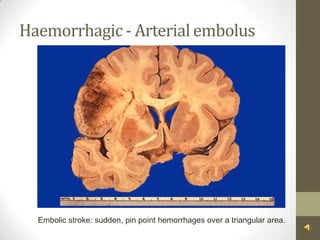
Haemorrhagic - Arterial embolusEmbolic stroke: sudden, pin point hemorrhages over a triangular area.
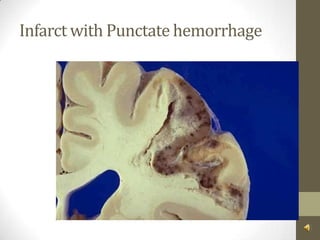
Infarct with Punctate hemorrhage
Cerebral Infarction - Late
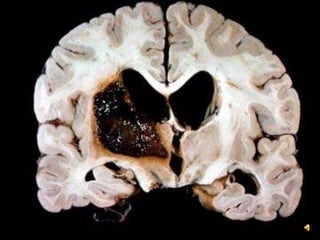
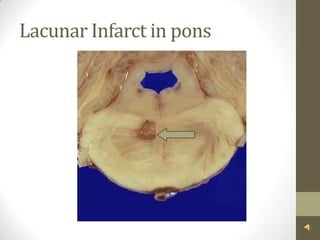
Hypertensive CVDIntraerebral/Subarachnoid HemorrhageMicroaneurysm hemorrhages – Basal ganglia. Putamen(60%), thalamus, ventricles.Berry aneurysm hemorrhages– subarachnoid.Chronic Hypertension: (dementia)  Slit hemorrhages. Microhemorrhages heal as slit with pigment.Lacunar infarcts: Brain stem - pale infarcts. A.sclerosisHypertensive encephalopathy-Malignant.Headache, confusion, vomiting – Raised ICP.
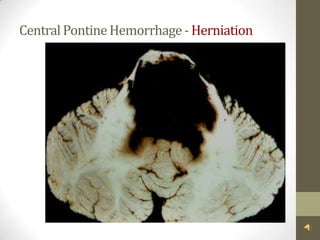
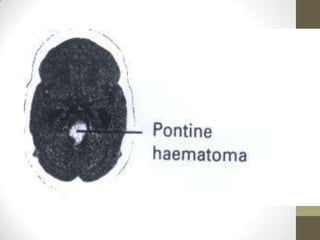
Central Pontine Hemorrhage - Herniation
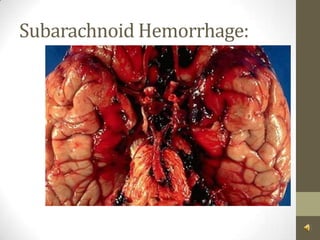
Subarachnoid Hemorrhage:
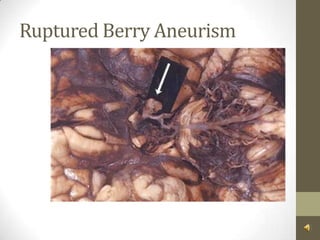
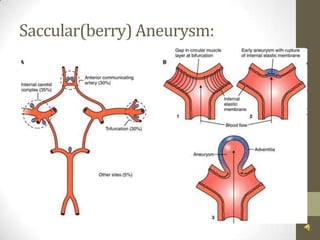
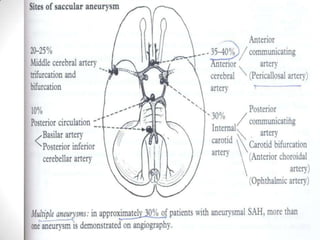
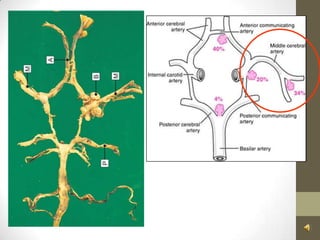
Ruptured Berry Aneurism
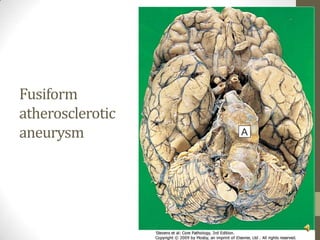
Fusiform atherosclerotic aneurysm
Saccular(berry) Aneurysm:
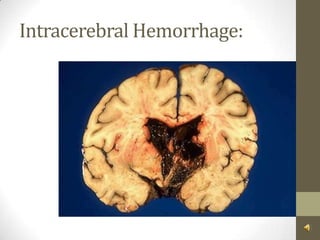
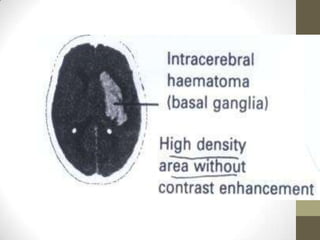
Intracerebral Hemorrhage:
Lacunar Infarct in pons
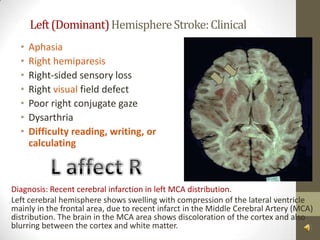
Left (Dominant) Hemisphere Stroke: ClinicalAphasiaRighthemiparesisRight-sided sensory loss Right visual field defect Poor right conjugate gaze Dysarthria Difficulty reading, writing, or calculatingL affect RDiagnosis: Recent cerebral infarction in left MCA distribution.Left cerebral hemisphere shows swelling with compression of the lateral ventricle mainly in the frontal area, due to recent infarct in the Middle Cerebral Artery (MCA) distribution. The brain in the MCA area shows discoloration of the cortex and also blurring between the cortex and white matter.
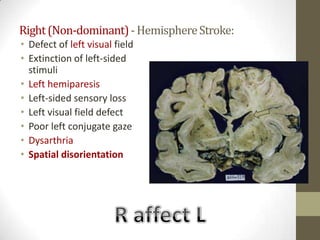
Right (Non-dominant) - Hemisphere Stroke:Defect of left visual field Extinction of left-sided stimuli Left hemiparesisLeft-sided sensory loss Left visual field defect Poor left conjugate gaze Dysarthria Spatial disorientation R affect L
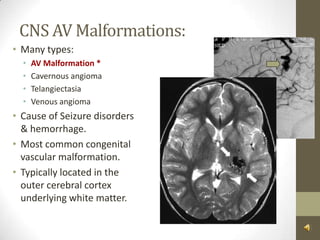
CNS AV Malformations:Many types:AV Malformation *Cavernous angiomaTelangiectasiaVenous angiomaCause of Seizure disorders & hemorrhage.Most common congenital vascular malformation.Typically located in the outer cerebral cortex underlying white matter.
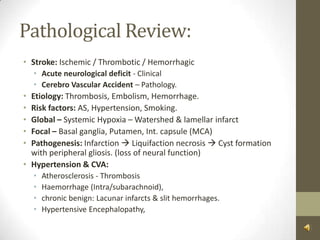
Pathological Review:Stroke: Ischemic / Thrombotic / HemorrhagicAcute neurological deficit - ClinicalCerebro Vascular Accident – Pathology.Etiology: Thrombosis, Embolism, Hemorrhage.Risk factors: AS, Hypertension, Smoking.Global – Systemic Hypoxia – Watershed & lamellar infarctFocal – Basal ganglia, Putamen, Int. capsule (MCA) Pathogenesis: Infarction  Liquifaction necrosis  Cyst formation with peripheral gliosis. (loss of neural function)Hypertension & CVA:Atherosclerosis - ThrombosisHaemorrhage (Intra/subarachnoid), chronic benign: Lacunar infarcts & slit hemorrhages. Hypertensive Encephalopathy,
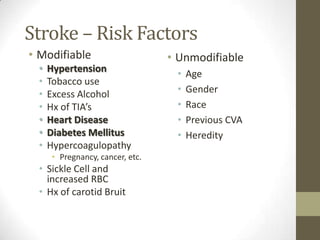
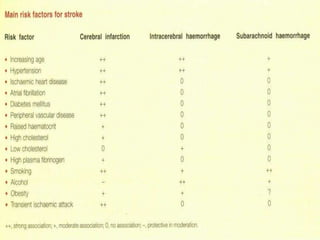
Stroke – Risk FactorsModifiableHypertensionTobacco useExcess AlcoholHx of TIA’sHeart DiseaseDiabetes MellitusHypercoagulopathyPregnancy, cancer, etc.Sickle Cell and increased RBCHx of carotid BruitUnmodifiableAgeGenderRacePrevious CVAHeredity
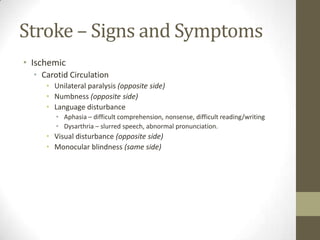
Stroke – Signs and SymptomsIschemicCarotid CirculationUnilateral paralysis (opposite side)Numbness (opposite side)Language disturbanceAphasia – difficult comprehension, nonsense, difficult reading/writingDysarthria – slurred speech, abnormal pronunciation.Visual disturbance (opposite side)Monocular blindness (same side)
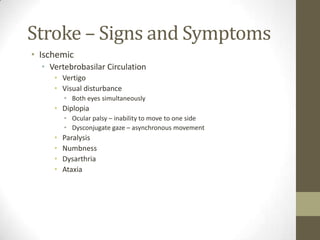
Stroke – Signs and SymptomsIschemicVertebrobasilar CirculationVertigoVisual disturbanceBoth eyes simultaneouslyDiplopiaOcular palsy – inability to move to one sideDysconjugate gaze – asynchronous movementParalysisNumbnessDysarthriaAtaxia
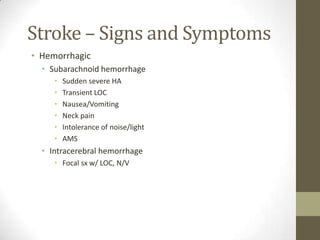
Stroke – Signs and SymptomsHemorrhagicSubarachnoid hemorrhageSudden severe HATransient LOCNausea/VomitingNeck painIntolerance of noise/lightAMSIntracerebral hemorrhageFocal sx w/ LOC, N/V
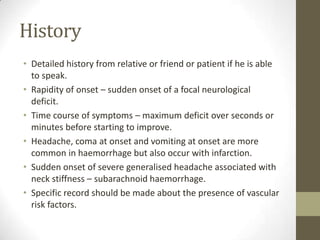
HistoryDetailed history from relative or friend or patient if he is able to speak.Rapidity of onset – sudden onset of a focal neurological deficit.Time course of symptoms – maximum deficit over seconds or minutes before starting to improve.Headache, coma at onset and vomiting at onset are more common in haemorrhage but also occur with infarction.Sudden onset of severe generalised headache associated with neck stiffness – subarachnoid haemorrhage.Specific record should be made about the presence of vascular risk factors.
ExaminationGeneral ExaminationBP – should be taken in both arms.Stroke may cause an acute rise in BP and therefore hypertension should not be diagnosed in the first few days after a stroke unless left ventricular hypertrophy of fundal changes are present.Pulse – for arrhythmias particularly atrial fibrillation.Peripheral pulses.Auscultation for a carotid bruit.Heart – for valvular heart disease especially mitral stenosis.Neck stiffness – subarachnoid haemorrhage or meningitis.Identify the anatomical localization of the lesion and record the degree of disability.
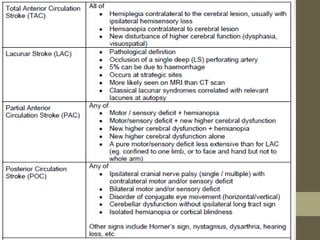
Oxfordshire Community Stroke Project ClassificationOCSP
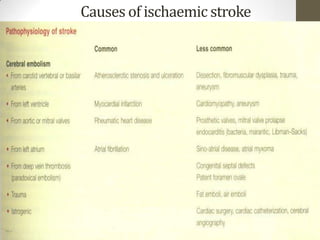
Causes of ischaemic stroke
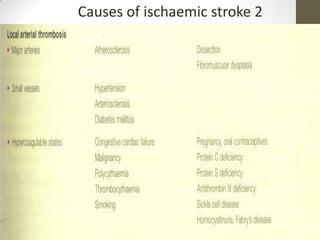
Causes of ischaemic stroke 2
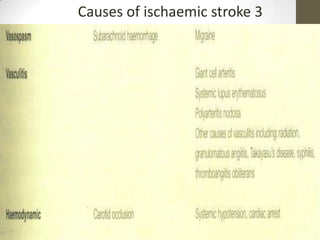
Causes of ischaemic stroke 3
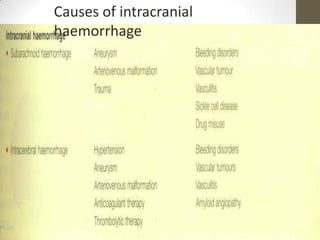
Causes of intracranial haemorrhage
Subarachnoid haemorrhageInitial headache or coma – sudden rise in intracranial pressure.Focal symptoms if aneurysm ruptures into underlying brain.Cerebral vasospasm causes delayed cerebral infarction 4-14 days after onset in 30% of patients.Recurrent haemorrhage and hydrocephalus are other complications.
Intracerebral HaemorrhageSudden rupture of microaneurysms caused by hypertensive vascular disease.Characteristically occurs in the basal ganglia, pons and cerebellum.Elderly patients – cerebral amyloid angiopathy, a degenerative disorder affecting the walls of the artey – subcortical haematomas.Cryptic av malformations are suspect especially in younger patients < 40 yrs and when the haemotoma is Lobar (frontal, temporal, parieto-occipital).
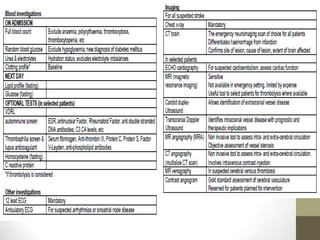
Investigations Confirm the diagnosisCT ScanTo establish the site, size and pathological diagnosis by showing infarction or haemorrhage.
To exclude other conditions that may mimic stroke like subdural haematoma, intracranial tumour.Y CT Scan?There is doubt about the diagnosis.Symptoms progress or fluctuate.Conscious level is depressed or patient is in coma.If thrombolytic therapy or anticoagulant treatment is considered.Neck stiffness is present.Has severe headache.Deteriorates unexpectedly.Haemorrhage can be seen within a few minutes as an area of increased attenuation.Infarction as a low density lesion which conforms to a vascular territory usually wedge shaped.It is not immediately visible on CT but in most patients becomes apparent in 4-7 days.
MRI ScanPosterior circulation strokes are more readily identified than by CT.
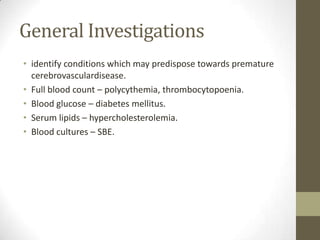
General Investigationsidentify conditions which may predispose towards premature cerebrovasculardisease.Full blood count – polycythemia, thrombocytopoenia.Blood glucose – diabetes mellitus.Serum lipids – hypercholesterolemia.Blood cultures – SBE.
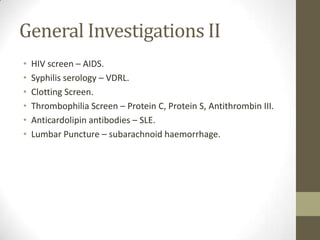
General Investigations IIHIV screen – AIDS.Syphilis serology – VDRL.Clotting Screen.Thrombophilia Screen – Protein C, Protein S, Antithrombin III.Anticardolipin antibodies – SLE.Lumbar Puncture – subarachnoid haemorrhage.
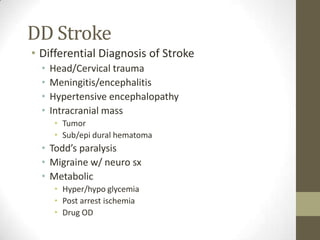
DD StrokeDifferential Diagnosis of StrokeHead/Cervical traumaMeningitis/encephalitisHypertensive encephalopathyIntracranial massTumorSub/epi dural hematomaTodd’s paralysisMigraine w/ neuro sxMetabolicHyper/hypo glycemiaPost arrest ischemiaDrug OD
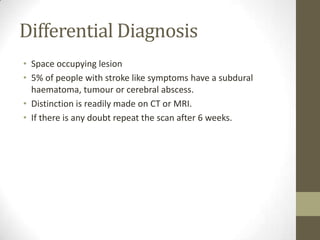
Differential DiagnosisSpace occupying lesion5% of people with stroke like symptoms have a subdural haematoma, tumour or cerebral abscess.  Distinction is readily made on CT or MRI.  If there is any doubt repeat the scan after 6 weeks.
Differential Diagnosis IIMultiple sclerosisMay present with hemiparesis, sensory impairment or brainstem symptoms that mimic stroke.  Symptoms occur gradually over a few days.HypoglycaemiaMay cause hemiparesis.Migraine
Complications ICerebral oedemaShould be suspected in a patient with a large infarct or haemorrhage experiences a lucid interval of 24-48 hours and then shows a decline in consciousness.
Complication IIHaemorrhagic transformationCan occur as a result of thrombolysis.PneumoniaIn patients with swallowing difficulties as a result of aspiration.Pressure soresDevelop rapidly and may be exacerbated because of incontinence.Oedema of Weak LimbsIs common and has a partially autonomic basis.
Complication IIIAnxiety and DepressionCommon reactions to stroke but depression may have an organic basis related to damage of the frontal and limbic systems.Emotional LabilityPrecipitated by minor emotional stimuli.
Management IHas the following aimsConfirmation of the diagnosis, anatomical site of the lesion, pathology and aetiology.Acute care.Rehabilitation of persistent disability and handicap.Prevention of recurrence.
Management IIAcute CareTreatment aimsPrevent progression of present event.Prevent immediate complication.Prevent the development of subsequent events.To rehabilitate the patient.
Management IIIGeneral MeasuresAround the edge of the infarct, ischaemic tissue is at risk, but is potentially recoverable. This must be protected by ensuring a good supply of glucose and oxygen.Maintain hydration, oxygenation and blood pressure.
Specific MeasuresMedical TreatmentAnticoagulationPatient with high risk of developing deep vein thrombosis.Thromboembolic stroke - started as soon as possible, except in large infarcts where it may be wise to delay anticoagulation for 2 weeks.Stroke in a patient with myocardial infarct - due to mural thrombus.Stroke in evolution.Exclude a haemorrhage by doing a CT scan first.
Medical Treatment IIAntiplatelet AgentsEspecially in TIA.ThrombolysisI/V thrombolysis espcially recombinant tissue plasminogen activator rTPA to be given only within the first 3 hours after onset to those patients who have not developed CT abnormalities especially in patients with basilar artery occlusion.Risk – haemorrhage.
HypertensionTreated cautiously in acute stroke.A reduction in blood pressure may lower cerebral blood flow in the regions surrounding the infarct below a critical level at which further ischaemic brain damage will occur.Mild to moderate elevations in BP – no treatment unless they are maintained for several days after admission.
If stroke associated with hypertensive encephalopathy or if diastolic BP is persistently above 120 mm Hg. The BP should be lowered cautiously using oral agents. Sudden precipitious fall in BP should be avoided.Hypertension II
Medical TreatmentCalcium AntagonistNimodipine prevents ischaemic brain damage and reduces the number of patients remaining disabled after subarachnoid haemorrhage.Prescribed as soon as diagnosis is made (within 12 hours).
NeurosurgeryShould be considered in subaracnoid and intracerebral haemorrhage.Evacuation of cerebellar haematoma.Evacuation of supratentorial haematomas should only be considered in younger patients with superficial cortical haematomas causing mass effect with a deteriorating level of conciousness.
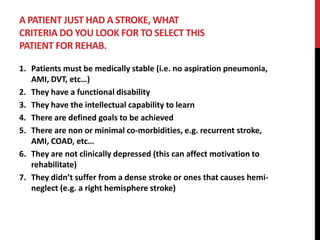
Nursing Care and RehabilitationPhysiotherapy, proper positioning and early mobilization – prevent pressure sores.Support stockings – prevent deep vein thrombosis and pulmonary embolism.Swallowing difficulties.Lead to silent aspiration – aspiration pneuomonia.Nasogastric tube feeding.Percutanious endoscopic gastrostomy.
RehabilitationPhysiotherapy, occupational therapy, speech therapy and psychology input – multidisciplinary stroke rehabilitation team.Home visit by occupational therapist to plan adaptations to home before discharge.
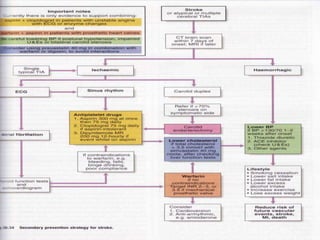
Secondary PreventationControl hypertension and diabetes mellitus.Correct lipid abnormality.Stop cigarette smoking.Stop thrombogenic drugs e.g. oral contraceptives.
Secondary Preventation IIGive platlet antiaggregation drugs to reduce the rate of reinfarction.Low dose aspirin (75 mg – 150 mg), if    patient allergic or has gastrointestinal   side effects give ticlopidine.  Regular   blood tests because of a small risk of   neutropoenia.Remove or treat embolic source (long term anticoagulation in atrial fibrillation).Treat inflammatory or vascular inflammatory diseases.
Secondary Preventation IIICarotid Endarterectomy – preventing stroke in symptomatic patients with recent TIA and stroke and severe stenosis of the internal carotid artery (at least 70%).
Chain of Survival StrokeStroke Chain of SurvivalDetectionEarly sx recognitionDispatchPrompt EMS responseDeliveryTransport, approp, prehospital care, prearrival notificationDoorER TriageDataER evaluation incl, CT, etc.DecisionAppropriate therapiesDrug/Therapy
Detect & DispatchDetection: Early RecognitionPublic education of Stroke sxEarly access to medical careDispatch: Early EMS and PDI’sCaller triageEMD recognition of Stroke sx
How to detect?Delivery: Pre-hospital Transport and ManagementHow we scale the pre-hospital management of the patient?
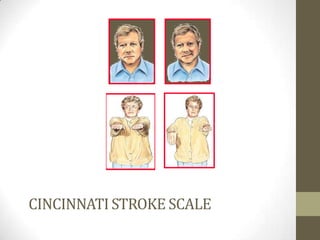
CINCINNATI STROKE SCALE
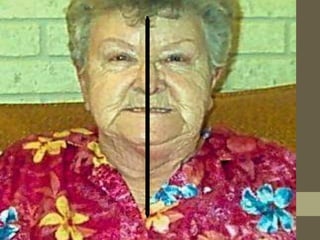
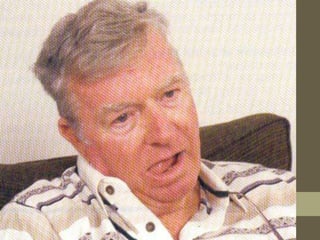
CINCINNATI STROKE SCALEIdentifies patients with strokes.It evaluates three major physical findings.Facial droopMotor arm weaknessSpeech abnormalities
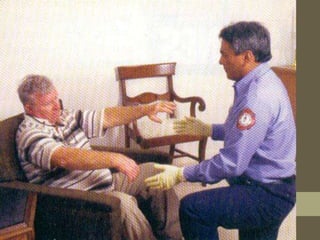
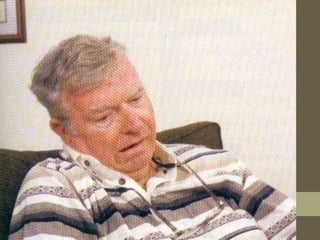
CSS - Facial DroopHave the patient show their teeth or smile.Normal – both sides of the face move equally wellAbnormal – one side of the face does not move as well as the other side
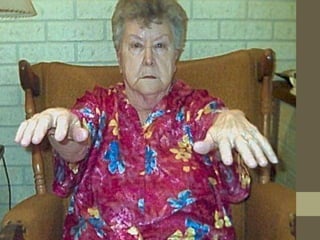
Arm DriftHave the patient close his/her eyes and hold both arms out.Normal – both arms move the same way, or both arms do not move at all.Abnormal – one arm does not move or one arm drifts down compared to the other arm.Other findings such as pronator grip, may be helpful
SpeechHave the patient say “You can’t teach an old dog new tricks.” – “Perlambagaan Malaysia”Normal – patient uses correct words with no slurring.Abnormal – patient slurs words, uses inappropriate words, or is unable to speak
“You can’t teach an old dog new tricks.”
Cincinnati PrehospitalStroke ScalePatients with 1 of these 3 findings -as a new event - have a 72% probability of an ischemic stroke.If all 3 findings are present the probability of an acute stroke is more than 85%Immediately contact medical control and the destination ED and provide prearrival notification.
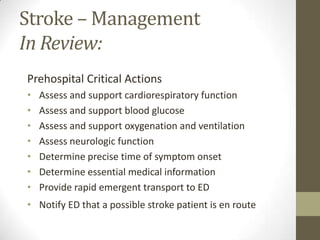
Stroke – Management In Review:Prehospital Critical ActionsAssess and support cardiorespiratory functionAssess and support blood glucoseAssess and support oxygenation and ventilationAssess neurologic functionDetermine precise time of symptom onset Determine essential medical informationProvide rapid emergent transport to EDNotify ED that a possible stroke patient is en route
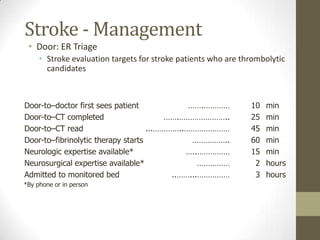
Stroke - ManagementDoor: ER TriageStroke evaluation targets for stroke patients who are thrombolytic candidates Door-to–doctor first sees patient…….…………	10	min Door-to–CT completed	…….…………………..	25	min Door-to–CT read	...…………..…………………	45	min Door-to–fibrinolytic therapy starts	……………..	60	min Neurologic expertise available*…..……………	15	min Neurosurgical expertise available*	……………	 2	hours Admitted to monitored bed	..……...……………	 3	hours *By phone or in person
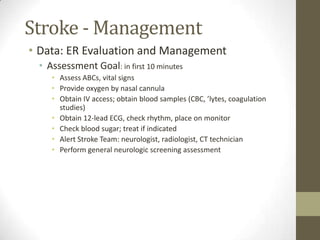
Stroke - ManagementData: ER Evaluation and ManagementAssessment Goal: in first 10 minutesAssess ABCs, vital signsProvide oxygen by nasal cannulaObtain IV access; obtain blood samples (CBC, ’lytes, coagulation studies)Obtain 12-lead ECG, check rhythm, place on monitorCheck blood sugar; treat if indicatedAlert Stroke Team: neurologist, radiologist, CT technicianPerform general neurologic screening assessment
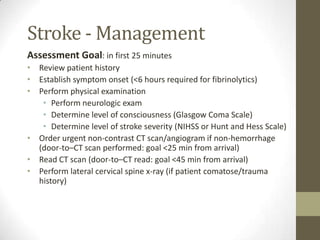
Stroke - ManagementAssessment Goal: in first 25 minutesReview patient historyEstablish symptom onset (<6 hours required for fibrinolytics)Perform physical examinationPerform neurologic examDetermine level of consciousness (Glasgow Coma Scale) Determine level of stroke severity (NIHSS or Hunt and Hess Scale)Order urgent non-contrast CT scan/angiogram if non-hemorrhage (door-to–CT scan performed: goal <25 min from arrival)Read CT scan (door-to–CT read: goal <45 min from arrival)Perform lateral cervical spine x-ray (if patient comatose/trauma history)
Stroke - ManagementER Diagnostic StudiesCT scan – done w/in 25 mins, read w/in 45 minsr/o hemorrhageOften normal early in ischemic strokeLumbar punctureEKGChanges may be caused by or cause of strokeMRA (Magnetic Resonance Angiography)Cerebral Angiography
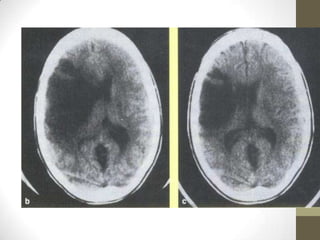
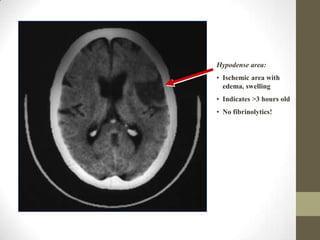
Hypodense area:Ischemic area with edema, swelling
Indicates >3 hours old
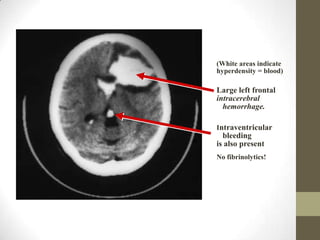
No fibrinolytics!(White areas indicate hyperdensity = blood)Large left frontalintracerebral hemorrhage.Intraventricularbleeding is also presentNo fibrinolytics!
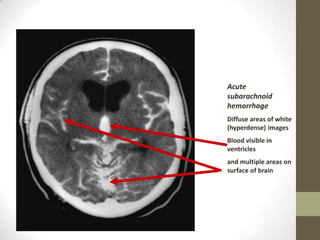
Acute subarachnoid hemorrhageDiffuse areas of white (hyperdense) imagesBlood visible in ventriclesand multiple areas on surface of brain
Stroke - ManagementDecision: Specific TherapiesGeneral CareABC’s, O2IV w/ BSSTreat hypotensionAvoid over-hydrationMonitor input/outputNormalize BGLManage Elevated BP?
Stroke - ManagementIndications for Antihypertensive therapyIn general:Consider: absolute level of BP?If BP: >185/>110 mm Hg = fibrinolytic therapy contraindicatedConsider: other than BP, is patient candidate for fibrinolytics? If patient is candidate for fibrinolytics: treat initial BP >185/>110 mm HgConsider: response to initial efforts to lower BP in ED? If treatment brings BP down to <185/110 mm Hg: give fibrinolyticsConsider: ischemic vs hemorrhagic stroke?Treat BP in the 180-230/110-140 mm Hg range the sameThe obvious: no fibrinolytics for hemorrhagic stroke
Stroke - ManagementDecision: Specific Therapies (cont.)Management of SeizuresBenzodiazepinesLong-acting anticonvulsantsManagement of Increased ICPMaintain PaCO2 30mm HgMannitol/DiureticsBarbituratesNeurosurgical decompression
Stroke - ManagementDrugs: Thrombolytic TherapyFibrinolytic Therapy Checklist Ischemic StrokeCandidates for Neurointerventional Therapy 	Age 18 years or older	Acute signs and symptoms of CVA <6 hours 	onset.	No contraindications.
Stroke - ManagementContraindications for Interventional TherapyAbsolute	Evidence of intracranial hemorrhage on non-contrast head CT	Patient with early infarct signs on CT scan.Relative	Recent (w/in 2 mo’s) cranial or spinal surgery, trauma, or injury 	Known bleeding disorder and/or risk of bleeding including:		- Current anticoagulant therapy, prothrombin time >15 sec.		- Heparin within 48 hrs of admission, PTT elevated		- Platelet count <100,000/mm	Active internal bleeding w/in the previous 10 days	Known or suspected pregnancy		History of stroke w/in past 6 weeks
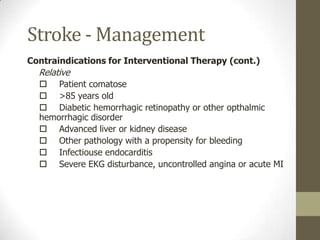
Stroke - ManagementContraindications for Interventional Therapy (cont.)Relative	Patient comatose	>85 years old	Diabetic hemorrhagic retinopathy or other opthalmic hemorrhagic disorder	Advanced liver or kidney disease	Other pathology with a propensity for bleeding	Infectiouse endocarditis	Severe EKG disturbance, uncontrolled angina or acute MI
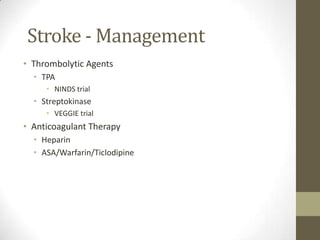
Stroke - ManagementThrombolytic AgentsTPANINDS trialStreptokinaseVEGGIE trialAnticoagulant TherapyHeparinASA/Warfarin/Ticlodipine
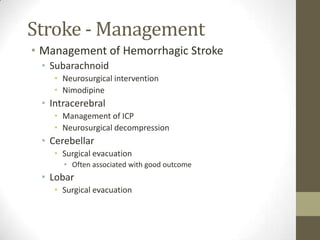
Stroke - ManagementManagement of Hemorrhagic StrokeSubarachnoidNeurosurgical interventionNimodipineIntracerebralManagement of ICPNeurosurgical decompressionCerebellarSurgical evacuation Often associated with good outcomeLobarSurgical evacuation
141
THE END
If they come to you with stroke, what investigation what you like to do?
QUIZ ON STROKEMOHD HANAFI RAMLEE
ANSWER GILIR2 TAU
QUESTION 1On the history of a patient with suspected or known stroke, what should you ask about?
ANSWER 1Ask about the presenting symptoms of stroke initially, for exampleUnilateral weakness or clumsinessDifficulty understanding or expressing spoken languageAltered sensation unilaterallyPartial or complete loss of vision in one eye
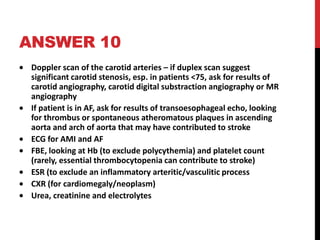
ANSWER 1Questions to focus on the causes of strokeAtherosclerosis, e.g. enquire about vascular risk factors (smoking, DM, hyperlipids, PVDs, etc…)History of heart disease, e.g. recent myocardial infarction, history of AF requiring anticoagulation, palpitationsHistory of hypertension (lacunar infarcts due to arteriosclerosis of small penetrating arteries of the brain)MigraineManipulation of neck (precipitating cause for dissection of carotid artery or vertebral artery)Any recent cessation of anticoagulation Family history of strokeHistory of connective tissue disease (e.g. SLE, vasculitis, etc…)
ANSWER 1History of connective tissue disease (e.g. SLE, vasculitis, etc…)Medication history, esp. those that increase risk of stroke include oral contraceptives, some antihypertensives
Ask about alcohol consumption and recent falls (may have caused an intracranial haemorrhage)
Enquire about premorbid as well as the current level of independence and mobility
If patient is incapacitated, ask about social support available at home
Don’t forget to screen for depressionQUESTION 2On examination, what features should you be looking for?
ANSWER 2A complete examination of the neurological and cardiovascular systems is essentialCheck the fundi for evidence of emboli, hypertensive changes, diabetic changes and ischaemic neuropathy
Test the visual fields for homonymous hemianopia
Listen for bruit over the carotids and orbits (commonly heard in the side opposite the carotid occlusion, due to increased contralateral flow)
Decide whether patient is in AF
Assess BP and test for postural drop
Listen for murmurs (e.g. AS, infective endocarditis, rheumatic heart disease or prosthetic valve)
Note presence of electronic pace maker and assess whether it’s working
Perform peripheral vascular examination
Look for complications, e.g. pressure sores, limb contractures and disuse atrophy of the paralysed limbs
See if patient has a percutaneous gastrostomy (PEG) feeding tube inserted and, if present, inspect for cellulitis or pus around the insertion siteQUESTION 3What clinical features are suggestive of a carotid arterial stroke?
ANSWER 3Transient aphasia
Ipsilateralamaurosisfugax
Contralateral hemiplegia/monoplegia
Contralateral hemi or monoparesis
Carotid bruits (a/w >50% stenosis)QUESTION 4What clinical features are suggestive of vertebrobasilar insufficiency?
ANSWER 4All the DsDizziness (vertigo and ataxia)
Diplopia +/- blindness
Dysphagia
Dysarthria

Stroke and cerebrovascular accident

  • 1.
    STROKE & CEREBROVASCULARACCIDENTMOHD HANAFI RAMLEE
  • 2.
    DefinitionTransient Ischaemic Attack(TIA) – an acute focal neurological deficit resulting from cerebrovascular disease with resolution of signs and symptoms within 24 hours.Reversible Ischaemic Neurological Deficit (RIND) – attack lasting longer than 24 hours but with complete clearance of signs and symptoms within 7 days.Completed Stroke – neurological deficit lasts longer than 7 days.
  • 3.
    HOW YOU GIVETHE DIAGNOSIS?The diagnosis should provide answers to the following questions:1. What is the neurological deficit?2. Where is the lesion?3. What is the lesion?4. Why has the lesion occurred?5. What are the potential complications and prognosis?
  • 4.
    What Artery Involved?Aphasia(dominant hemisphere)Hemiparesis / plegiaHemisensoryloss/disturbanceHomonymous hemianopiaParietal lobe dysfunction, e.g. astereognosis, agraphaesthesia, impaired two-point discrimination, sensory and visual inattention, left-right dissociation and acalculia
  • 5.
    What Artery Involved?Weaknessof lower limb more than upper limb
  • 6.
    What Artery Involved?HomonymoushemianopiaCortical blindnessAtaxiaDizziness or vertigoDysarthriaDiplopiaDysphagiaHorner’s syndromeHemiparesis or hemisensory loss contralateral to the cranial nerves palsyCerebellar signs
  • 7.
    SO… BASIC ISIMPORTANT!!!!!!!!
  • 8.
    Brain Blood SupplyFeatures:High oxygen requirement. Brain 2% of body weight - 15% of cardiac output 20% of total body oxygen. Continuous oxygen requirementFew minutes of ischemia - irreversible injury. Neurons - Predominantly aerobic.Sensitive areas:Adults -Hippocampus, 3,5th & 6th layer of cortex, Purkinje cells. Border zone (watershed areas)Brain stem nuclei in infants.
  • 9.
  • 10.
  • 11.
    Frontal[f*ck – motor]Lobe Functions:High level cognitive functions. i.e reasoning, abstraction, concentrationStorage of information – memoryControl of voluntary eye movementMotor control of speech in the dominant hemisphere.Motor Cortex – Motor control of the contralateral side of the bodyUrinary continenceEmotion and personality
  • 12.
    Parietal[p-sx – sensory]Lobe Functions:Sensory cortex – sensory input is interpreted to define size, weight, texture and consistency (contralateral)Sensation is localised, and modalities of touch, pressure and position are identified.Awareness of the parts of bodyNon-dominant – processes visuospatial information andcontrols spatial orientationDominant is involved in ideomotor praxis (ability to perform learned motor tasks
  • 13.
    Temporal[t-telinga] Lobe Functions:Primaryauditory receptive areasIn dominant ability to comprehend speech (wernicke’s) – receptionInterpretive area – area at the junction of the temporal, parietal and occipital lobes.Plays an important role in visual, auditory and olfactory perceptionImportant role in learning; memory and emotional affect.
  • 14.
    Occipital[O-optic] Lobe Functions:Primaryvisual cortexVisual association areasVisual perceptionSome visual reflexes (i.e. visual fixation)Involuntary smooth eye movement
  • 15.
    Diencephalon Functions:Brain Stem:Midbrain,Pons & Medulla10 of the 12 ranial nerves arise from the brainstem (ipsilateral signs)Cortical pathway decussation contralateral signs.Some major functions: eye movement, swallowing, breathing, blood pressure, heat beat, consciousnessCerebellum:movement – Balance & coordination
  • 16.
  • 17.
  • 18.
  • 19.
    Stroke Types:ClinicalTransient IschemicAttack –TIA resolve <24hEvolving stroke – increasing >24h. – Thromb.Recurrent / multiple stroke – sec. factors.Completed stroke – no change… embolic.PathologicalFocal / GlobalIschemic & hemorrhagic (chronic/acute)Venous infarcts. (young, infections)
  • 20.
    Common Types andIncidence:Infarction: Incidence 80% - mortality20%50% - Thrombotic – atherosclerosisLarge-vessel 30% (carotid, middle cerebral)Small vessel 20% (lacunar stroke)30% Embolic(heart dis / atherosclerosis) Young, rapid, extensive.Venousthromboembolism (rare)Hemorrhage:Incidence20% - mortality80%Berry aneurysm, Microaneurysm, Atheroma.Intracerebral or subarachnoid.
  • 21.
  • 22.
    Clinical Categories:Global Ischemia.HypoxemicencephalopathyHypotension, hypoxemia, anemia.Focal Ischemia.Obstruction to blood supply to focal area.Thrombosis, embolism or hemorrhage.
  • 23.
  • 24.
    Global Ischemia:Etiology:Impaired bloodsupply - Lung & Heart disorders.Impaired O2 carrying – Anemia/Blood dis.Impaired O2 utilization – Cyanide poisoning.Morphology:3rd, 5th and 6th layers of the cortex, hippocampus and in the Purkinje cells in the cerebellum Laminar necrosis, Hippocampus, Purkinje cells.Border zone infarcts – “Watershed”Sickle shaped band of necrosis on cortex.ClinicalFeatures:Mild transient confusion state toSevere irreversible brain death. Flat EEG, Vegetative state. Coma.
  • 25.
    Morphology in GlobalIschemiaWatershed zone (Acute - ACA-MCA)Laminar necrosis - (chronic- short penetrating arteries)Sommer sector of hippocampus.Purkinje cells of cerebellum.
  • 26.
  • 27.
    Lamellar necrosis inglobal ischemia.Chronic
  • 28.
    Local infarction:Cell death~ 6mincentral infarct area or umbra, surrounded by a penumbra of ischemic tissue that may recover
  • 29.
    Infarct Pathogenesis:Reduced bloodsupply – hypoxia/anoxia.Altered metabolism  Na/K pump block. Glutamate receptor act.  calcium influx.ischemic injury – Red neuron, vacuolation.cell death, karyorrhexis.Inflammation – edema.Macrophages - > 5d.Liquifaction cavity – >1wkGlial proliferation – >1wk. (astrocytes)Hours1-day3-day1 wk.>4wk
  • 30.
    Infarct Stages:Immediate –<24 hoursNo Change gross, micro  Na/K loss, Ca+ influx.Acute stage – < 1week Oedema, loss of grey/white matter border.Inflammation, Red neurons, necrosis, neutrophilsIntermediate stage – 1- 4 weeks.Clear demarcation, soft friable tissue, cystsMacrophages, liquifactive necrosisLate stage – > 4 weeks.Removal of tissue by macrophagesFluid filled cysts with dark grey margin (gliosis)Gliosis – proliferation of glia at periphery.
  • 31.
  • 32.
    Brain Stem Stroke: CommonPatternPure Motor - Weakness of face and limbs on one side of the body without abnormalities of higher brain function, sensation, or vision (MCA/ACA)Pure Sensory - Decreased sensation of face and limbs on one side of the body without abnormalities of higher brain function, motor function, or vision   (PCA).
  • 34.
    MCA [most common]Features:Paralysis of the contralateral face, arm and legSensory impairment over the contralateral face, arm & legHomonymous hemi or quadrantonopiaParalysis of gaze to the opposite sideAphasia (dominant) and dysarthria [broca/wernicke]Penetrating - contralateral hemiplegia/paresis, slurred speech.Impaired spatial perception
  • 35.
  • 37.
    MCA stroke.Wikipedia: GNUFree Documentation license
  • 38.
    MCA stroke.Wikipedia: GNUFree Documentation license
  • 39.
    ACA stroke.Paralysis ofcontralateral foot and legSensory loss over toes, foot and legImpairment of gait and stanceAbulia (slowness and prolonged delays to perform acts)Flat affect, lack of spontaneity, slowness, distractibilityCognitive impairment, such as perseveration and amnesiaUrinary incontinenceWikipedia: GNU Free Documentation license
  • 41.
    PCA stroke.Peripheral (cortical)HomonymoushemianopiaMemory deficitsPerseverationSeveral visual deficits (cortical blindness, lack of depth perception, hallucinations)Central (penetrating)Thalamus - contralateral sensory loss, spontaneous pain, mild hemiCerebral peduncle - CN III palsy with contralateral hemiplegiaBrain stem - CN palsies, nystagmus, pupillary abnormalitiesWikipedia: GNU Free Documentation license
  • 42.
    Posterior Cerebral ArteryVisualdisturbancescontralateral homonymous hemianopsia(central vision is often spared) L. Hemi: lesions alexia (with or without agraphia) Bilateral lesions: cortical blindness patients unaware they cannot see (Anton's syndrome)Memory impairment if temporal lobe is affected ~Proximal occlusioncontralateral hemisensory loss, spontaneous pain and dysesthesia if thalamus affected (thalamic pain syndrome) contralateral severe proximal chorea (hemiballism) ~
  • 45.
    Haemorrhagic - ArterialembolusEmbolic stroke: sudden, pin point hemorrhages over a triangular area.
  • 46.
  • 47.
  • 48.
  • 49.
    Hypertensive CVDIntraerebral/Subarachnoid HemorrhageMicroaneurysmhemorrhages – Basal ganglia. Putamen(60%), thalamus, ventricles.Berry aneurysm hemorrhages– subarachnoid.Chronic Hypertension: (dementia) Slit hemorrhages. Microhemorrhages heal as slit with pigment.Lacunar infarcts: Brain stem - pale infarcts. A.sclerosisHypertensive encephalopathy-Malignant.Headache, confusion, vomiting – Raised ICP.
  • 51.
  • 52.
  • 53.
  • 54.
  • 55.
  • 58.
  • 59.
  • 60.
    Left (Dominant) HemisphereStroke: ClinicalAphasiaRighthemiparesisRight-sided sensory loss Right visual field defect Poor right conjugate gaze Dysarthria Difficulty reading, writing, or calculatingL affect RDiagnosis: Recent cerebral infarction in left MCA distribution.Left cerebral hemisphere shows swelling with compression of the lateral ventricle mainly in the frontal area, due to recent infarct in the Middle Cerebral Artery (MCA) distribution. The brain in the MCA area shows discoloration of the cortex and also blurring between the cortex and white matter.
  • 61.
    Right (Non-dominant) -Hemisphere Stroke:Defect of left visual field Extinction of left-sided stimuli Left hemiparesisLeft-sided sensory loss Left visual field defect Poor left conjugate gaze Dysarthria Spatial disorientation R affect L
  • 62.
    CNS AV Malformations:Manytypes:AV Malformation *Cavernous angiomaTelangiectasiaVenous angiomaCause of Seizure disorders & hemorrhage.Most common congenital vascular malformation.Typically located in the outer cerebral cortex underlying white matter.
  • 64.
    Pathological Review:Stroke: Ischemic/ Thrombotic / HemorrhagicAcute neurological deficit - ClinicalCerebro Vascular Accident – Pathology.Etiology: Thrombosis, Embolism, Hemorrhage.Risk factors: AS, Hypertension, Smoking.Global – Systemic Hypoxia – Watershed & lamellar infarctFocal – Basal ganglia, Putamen, Int. capsule (MCA) Pathogenesis: Infarction  Liquifaction necrosis  Cyst formation with peripheral gliosis. (loss of neural function)Hypertension & CVA:Atherosclerosis - ThrombosisHaemorrhage (Intra/subarachnoid), chronic benign: Lacunar infarcts & slit hemorrhages. Hypertensive Encephalopathy,
  • 65.
    Stroke – RiskFactorsModifiableHypertensionTobacco useExcess AlcoholHx of TIA’sHeart DiseaseDiabetes MellitusHypercoagulopathyPregnancy, cancer, etc.Sickle Cell and increased RBCHx of carotid BruitUnmodifiableAgeGenderRacePrevious CVAHeredity
  • 67.
    Stroke – Signsand SymptomsIschemicCarotid CirculationUnilateral paralysis (opposite side)Numbness (opposite side)Language disturbanceAphasia – difficult comprehension, nonsense, difficult reading/writingDysarthria – slurred speech, abnormal pronunciation.Visual disturbance (opposite side)Monocular blindness (same side)
  • 68.
    Stroke – Signsand SymptomsIschemicVertebrobasilar CirculationVertigoVisual disturbanceBoth eyes simultaneouslyDiplopiaOcular palsy – inability to move to one sideDysconjugate gaze – asynchronous movementParalysisNumbnessDysarthriaAtaxia
  • 69.
    Stroke – Signsand SymptomsHemorrhagicSubarachnoid hemorrhageSudden severe HATransient LOCNausea/VomitingNeck painIntolerance of noise/lightAMSIntracerebral hemorrhageFocal sx w/ LOC, N/V
  • 70.
    HistoryDetailed history fromrelative or friend or patient if he is able to speak.Rapidity of onset – sudden onset of a focal neurological deficit.Time course of symptoms – maximum deficit over seconds or minutes before starting to improve.Headache, coma at onset and vomiting at onset are more common in haemorrhage but also occur with infarction.Sudden onset of severe generalised headache associated with neck stiffness – subarachnoid haemorrhage.Specific record should be made about the presence of vascular risk factors.
  • 71.
    ExaminationGeneral ExaminationBP –should be taken in both arms.Stroke may cause an acute rise in BP and therefore hypertension should not be diagnosed in the first few days after a stroke unless left ventricular hypertrophy of fundal changes are present.Pulse – for arrhythmias particularly atrial fibrillation.Peripheral pulses.Auscultation for a carotid bruit.Heart – for valvular heart disease especially mitral stenosis.Neck stiffness – subarachnoid haemorrhage or meningitis.Identify the anatomical localization of the lesion and record the degree of disability.
  • 72.
    Oxfordshire Community StrokeProject ClassificationOCSP
  • 76.
  • 77.
  • 78.
  • 79.
  • 80.
    Subarachnoid haemorrhageInitial headacheor coma – sudden rise in intracranial pressure.Focal symptoms if aneurysm ruptures into underlying brain.Cerebral vasospasm causes delayed cerebral infarction 4-14 days after onset in 30% of patients.Recurrent haemorrhage and hydrocephalus are other complications.
  • 81.
    Intracerebral HaemorrhageSudden ruptureof microaneurysms caused by hypertensive vascular disease.Characteristically occurs in the basal ganglia, pons and cerebellum.Elderly patients – cerebral amyloid angiopathy, a degenerative disorder affecting the walls of the artey – subcortical haematomas.Cryptic av malformations are suspect especially in younger patients < 40 yrs and when the haemotoma is Lobar (frontal, temporal, parieto-occipital).
  • 82.
    Investigations Confirm thediagnosisCT ScanTo establish the site, size and pathological diagnosis by showing infarction or haemorrhage.
  • 83.
    To exclude otherconditions that may mimic stroke like subdural haematoma, intracranial tumour.Y CT Scan?There is doubt about the diagnosis.Symptoms progress or fluctuate.Conscious level is depressed or patient is in coma.If thrombolytic therapy or anticoagulant treatment is considered.Neck stiffness is present.Has severe headache.Deteriorates unexpectedly.Haemorrhage can be seen within a few minutes as an area of increased attenuation.Infarction as a low density lesion which conforms to a vascular territory usually wedge shaped.It is not immediately visible on CT but in most patients becomes apparent in 4-7 days.
  • 87.
    MRI ScanPosterior circulationstrokes are more readily identified than by CT.
  • 88.
    General Investigationsidentify conditionswhich may predispose towards premature cerebrovasculardisease.Full blood count – polycythemia, thrombocytopoenia.Blood glucose – diabetes mellitus.Serum lipids – hypercholesterolemia.Blood cultures – SBE.
  • 89.
    General Investigations IIHIVscreen – AIDS.Syphilis serology – VDRL.Clotting Screen.Thrombophilia Screen – Protein C, Protein S, Antithrombin III.Anticardolipin antibodies – SLE.Lumbar Puncture – subarachnoid haemorrhage.
  • 90.
    DD StrokeDifferential Diagnosisof StrokeHead/Cervical traumaMeningitis/encephalitisHypertensive encephalopathyIntracranial massTumorSub/epi dural hematomaTodd’s paralysisMigraine w/ neuro sxMetabolicHyper/hypo glycemiaPost arrest ischemiaDrug OD
  • 91.
    Differential DiagnosisSpace occupyinglesion5% of people with stroke like symptoms have a subdural haematoma, tumour or cerebral abscess. Distinction is readily made on CT or MRI. If there is any doubt repeat the scan after 6 weeks.
  • 92.
    Differential Diagnosis IIMultiplesclerosisMay present with hemiparesis, sensory impairment or brainstem symptoms that mimic stroke. Symptoms occur gradually over a few days.HypoglycaemiaMay cause hemiparesis.Migraine
  • 93.
    Complications ICerebral oedemaShouldbe suspected in a patient with a large infarct or haemorrhage experiences a lucid interval of 24-48 hours and then shows a decline in consciousness.
  • 94.
    Complication IIHaemorrhagic transformationCanoccur as a result of thrombolysis.PneumoniaIn patients with swallowing difficulties as a result of aspiration.Pressure soresDevelop rapidly and may be exacerbated because of incontinence.Oedema of Weak LimbsIs common and has a partially autonomic basis.
  • 95.
    Complication IIIAnxiety andDepressionCommon reactions to stroke but depression may have an organic basis related to damage of the frontal and limbic systems.Emotional LabilityPrecipitated by minor emotional stimuli.
  • 96.
    Management IHas thefollowing aimsConfirmation of the diagnosis, anatomical site of the lesion, pathology and aetiology.Acute care.Rehabilitation of persistent disability and handicap.Prevention of recurrence.
  • 97.
    Management IIAcute CareTreatmentaimsPrevent progression of present event.Prevent immediate complication.Prevent the development of subsequent events.To rehabilitate the patient.
  • 98.
    Management IIIGeneral MeasuresAroundthe edge of the infarct, ischaemic tissue is at risk, but is potentially recoverable. This must be protected by ensuring a good supply of glucose and oxygen.Maintain hydration, oxygenation and blood pressure.
  • 99.
    Specific MeasuresMedical TreatmentAnticoagulationPatientwith high risk of developing deep vein thrombosis.Thromboembolic stroke - started as soon as possible, except in large infarcts where it may be wise to delay anticoagulation for 2 weeks.Stroke in a patient with myocardial infarct - due to mural thrombus.Stroke in evolution.Exclude a haemorrhage by doing a CT scan first.
  • 100.
    Medical Treatment IIAntiplateletAgentsEspecially in TIA.ThrombolysisI/V thrombolysis espcially recombinant tissue plasminogen activator rTPA to be given only within the first 3 hours after onset to those patients who have not developed CT abnormalities especially in patients with basilar artery occlusion.Risk – haemorrhage.
  • 101.
    HypertensionTreated cautiously inacute stroke.A reduction in blood pressure may lower cerebral blood flow in the regions surrounding the infarct below a critical level at which further ischaemic brain damage will occur.Mild to moderate elevations in BP – no treatment unless they are maintained for several days after admission.
  • 102.
    If stroke associatedwith hypertensive encephalopathy or if diastolic BP is persistently above 120 mm Hg. The BP should be lowered cautiously using oral agents. Sudden precipitious fall in BP should be avoided.Hypertension II
  • 103.
    Medical TreatmentCalcium AntagonistNimodipineprevents ischaemic brain damage and reduces the number of patients remaining disabled after subarachnoid haemorrhage.Prescribed as soon as diagnosis is made (within 12 hours).
  • 104.
    NeurosurgeryShould be consideredin subaracnoid and intracerebral haemorrhage.Evacuation of cerebellar haematoma.Evacuation of supratentorial haematomas should only be considered in younger patients with superficial cortical haematomas causing mass effect with a deteriorating level of conciousness.
  • 105.
    Nursing Care andRehabilitationPhysiotherapy, proper positioning and early mobilization – prevent pressure sores.Support stockings – prevent deep vein thrombosis and pulmonary embolism.Swallowing difficulties.Lead to silent aspiration – aspiration pneuomonia.Nasogastric tube feeding.Percutanious endoscopic gastrostomy.
  • 106.
    RehabilitationPhysiotherapy, occupational therapy,speech therapy and psychology input – multidisciplinary stroke rehabilitation team.Home visit by occupational therapist to plan adaptations to home before discharge.
  • 107.
    Secondary PreventationControl hypertensionand diabetes mellitus.Correct lipid abnormality.Stop cigarette smoking.Stop thrombogenic drugs e.g. oral contraceptives.
  • 108.
    Secondary Preventation IIGiveplatlet antiaggregation drugs to reduce the rate of reinfarction.Low dose aspirin (75 mg – 150 mg), if patient allergic or has gastrointestinal side effects give ticlopidine. Regular blood tests because of a small risk of neutropoenia.Remove or treat embolic source (long term anticoagulation in atrial fibrillation).Treat inflammatory or vascular inflammatory diseases.
  • 109.
    Secondary Preventation IIICarotidEndarterectomy – preventing stroke in symptomatic patients with recent TIA and stroke and severe stenosis of the internal carotid artery (at least 70%).
  • 110.
    Chain of SurvivalStrokeStroke Chain of SurvivalDetectionEarly sx recognitionDispatchPrompt EMS responseDeliveryTransport, approp, prehospital care, prearrival notificationDoorER TriageDataER evaluation incl, CT, etc.DecisionAppropriate therapiesDrug/Therapy
  • 111.
    Detect & DispatchDetection:Early RecognitionPublic education of Stroke sxEarly access to medical careDispatch: Early EMS and PDI’sCaller triageEMD recognition of Stroke sx
  • 112.
    How to detect?Delivery:Pre-hospital Transport and ManagementHow we scale the pre-hospital management of the patient?
  • 113.
  • 114.
    CINCINNATI STROKE SCALEIdentifiespatients with strokes.It evaluates three major physical findings.Facial droopMotor arm weaknessSpeech abnormalities
  • 115.
    CSS - FacialDroopHave the patient show their teeth or smile.Normal – both sides of the face move equally wellAbnormal – one side of the face does not move as well as the other side
  • 118.
    Arm DriftHave thepatient close his/her eyes and hold both arms out.Normal – both arms move the same way, or both arms do not move at all.Abnormal – one arm does not move or one arm drifts down compared to the other arm.Other findings such as pronator grip, may be helpful
  • 121.
    SpeechHave the patientsay “You can’t teach an old dog new tricks.” – “Perlambagaan Malaysia”Normal – patient uses correct words with no slurring.Abnormal – patient slurs words, uses inappropriate words, or is unable to speak
  • 122.
    “You can’t teachan old dog new tricks.”
  • 124.
    Cincinnati PrehospitalStroke ScalePatientswith 1 of these 3 findings -as a new event - have a 72% probability of an ischemic stroke.If all 3 findings are present the probability of an acute stroke is more than 85%Immediately contact medical control and the destination ED and provide prearrival notification.
  • 125.
    Stroke – ManagementIn Review:Prehospital Critical ActionsAssess and support cardiorespiratory functionAssess and support blood glucoseAssess and support oxygenation and ventilationAssess neurologic functionDetermine precise time of symptom onset Determine essential medical informationProvide rapid emergent transport to EDNotify ED that a possible stroke patient is en route
  • 126.
    Stroke - ManagementDoor:ER TriageStroke evaluation targets for stroke patients who are thrombolytic candidates Door-to–doctor first sees patient…….………… 10 min Door-to–CT completed …….………………….. 25 min Door-to–CT read ...…………..………………… 45 min Door-to–fibrinolytic therapy starts …………….. 60 min Neurologic expertise available*…..…………… 15 min Neurosurgical expertise available* …………… 2 hours Admitted to monitored bed ..……...…………… 3 hours *By phone or in person
  • 127.
    Stroke - ManagementData:ER Evaluation and ManagementAssessment Goal: in first 10 minutesAssess ABCs, vital signsProvide oxygen by nasal cannulaObtain IV access; obtain blood samples (CBC, ’lytes, coagulation studies)Obtain 12-lead ECG, check rhythm, place on monitorCheck blood sugar; treat if indicatedAlert Stroke Team: neurologist, radiologist, CT technicianPerform general neurologic screening assessment
  • 128.
    Stroke - ManagementAssessmentGoal: in first 25 minutesReview patient historyEstablish symptom onset (<6 hours required for fibrinolytics)Perform physical examinationPerform neurologic examDetermine level of consciousness (Glasgow Coma Scale) Determine level of stroke severity (NIHSS or Hunt and Hess Scale)Order urgent non-contrast CT scan/angiogram if non-hemorrhage (door-to–CT scan performed: goal <25 min from arrival)Read CT scan (door-to–CT read: goal <45 min from arrival)Perform lateral cervical spine x-ray (if patient comatose/trauma history)
  • 129.
    Stroke - ManagementERDiagnostic StudiesCT scan – done w/in 25 mins, read w/in 45 minsr/o hemorrhageOften normal early in ischemic strokeLumbar punctureEKGChanges may be caused by or cause of strokeMRA (Magnetic Resonance Angiography)Cerebral Angiography
  • 130.
    Hypodense area:Ischemic areawith edema, swelling
  • 131.
  • 132.
    No fibrinolytics!(White areasindicate hyperdensity = blood)Large left frontalintracerebral hemorrhage.Intraventricularbleeding is also presentNo fibrinolytics!
  • 133.
    Acute subarachnoid hemorrhageDiffuseareas of white (hyperdense) imagesBlood visible in ventriclesand multiple areas on surface of brain
  • 134.
    Stroke - ManagementDecision:Specific TherapiesGeneral CareABC’s, O2IV w/ BSSTreat hypotensionAvoid over-hydrationMonitor input/outputNormalize BGLManage Elevated BP?
  • 135.
    Stroke - ManagementIndicationsfor Antihypertensive therapyIn general:Consider: absolute level of BP?If BP: >185/>110 mm Hg = fibrinolytic therapy contraindicatedConsider: other than BP, is patient candidate for fibrinolytics? If patient is candidate for fibrinolytics: treat initial BP >185/>110 mm HgConsider: response to initial efforts to lower BP in ED? If treatment brings BP down to <185/110 mm Hg: give fibrinolyticsConsider: ischemic vs hemorrhagic stroke?Treat BP in the 180-230/110-140 mm Hg range the sameThe obvious: no fibrinolytics for hemorrhagic stroke
  • 136.
    Stroke - ManagementDecision:Specific Therapies (cont.)Management of SeizuresBenzodiazepinesLong-acting anticonvulsantsManagement of Increased ICPMaintain PaCO2 30mm HgMannitol/DiureticsBarbituratesNeurosurgical decompression
  • 137.
    Stroke - ManagementDrugs:Thrombolytic TherapyFibrinolytic Therapy Checklist Ischemic StrokeCandidates for Neurointerventional Therapy  Age 18 years or older Acute signs and symptoms of CVA <6 hours onset. No contraindications.
  • 138.
    Stroke - ManagementContraindicationsfor Interventional TherapyAbsolute Evidence of intracranial hemorrhage on non-contrast head CT Patient with early infarct signs on CT scan.Relative Recent (w/in 2 mo’s) cranial or spinal surgery, trauma, or injury  Known bleeding disorder and/or risk of bleeding including: - Current anticoagulant therapy, prothrombin time >15 sec. - Heparin within 48 hrs of admission, PTT elevated - Platelet count <100,000/mm Active internal bleeding w/in the previous 10 days Known or suspected pregnancy  History of stroke w/in past 6 weeks
  • 139.
    Stroke - ManagementContraindicationsfor Interventional Therapy (cont.)Relative Patient comatose >85 years old Diabetic hemorrhagic retinopathy or other opthalmic hemorrhagic disorder Advanced liver or kidney disease Other pathology with a propensity for bleeding Infectiouse endocarditis Severe EKG disturbance, uncontrolled angina or acute MI
  • 140.
    Stroke - ManagementThrombolyticAgentsTPANINDS trialStreptokinaseVEGGIE trialAnticoagulant TherapyHeparinASA/Warfarin/Ticlodipine
  • 141.
    Stroke - ManagementManagementof Hemorrhagic StrokeSubarachnoidNeurosurgical interventionNimodipineIntracerebralManagement of ICPNeurosurgical decompressionCerebellarSurgical evacuation Often associated with good outcomeLobarSurgical evacuation
  • 142.
  • 143.
  • 144.
    If they cometo you with stroke, what investigation what you like to do?
  • 146.
    QUIZ ON STROKEMOHDHANAFI RAMLEE
  • 147.
  • 148.
    QUESTION 1On thehistory of a patient with suspected or known stroke, what should you ask about?
  • 149.
    ANSWER 1Ask aboutthe presenting symptoms of stroke initially, for exampleUnilateral weakness or clumsinessDifficulty understanding or expressing spoken languageAltered sensation unilaterallyPartial or complete loss of vision in one eye
  • 150.
    ANSWER 1Questions tofocus on the causes of strokeAtherosclerosis, e.g. enquire about vascular risk factors (smoking, DM, hyperlipids, PVDs, etc…)History of heart disease, e.g. recent myocardial infarction, history of AF requiring anticoagulation, palpitationsHistory of hypertension (lacunar infarcts due to arteriosclerosis of small penetrating arteries of the brain)MigraineManipulation of neck (precipitating cause for dissection of carotid artery or vertebral artery)Any recent cessation of anticoagulation Family history of strokeHistory of connective tissue disease (e.g. SLE, vasculitis, etc…)
  • 151.
    ANSWER 1History ofconnective tissue disease (e.g. SLE, vasculitis, etc…)Medication history, esp. those that increase risk of stroke include oral contraceptives, some antihypertensives
  • 152.
    Ask about alcoholconsumption and recent falls (may have caused an intracranial haemorrhage)
  • 153.
    Enquire about premorbidas well as the current level of independence and mobility
  • 154.
    If patient isincapacitated, ask about social support available at home
  • 155.
    Don’t forget toscreen for depressionQUESTION 2On examination, what features should you be looking for?
  • 156.
    ANSWER 2A completeexamination of the neurological and cardiovascular systems is essentialCheck the fundi for evidence of emboli, hypertensive changes, diabetic changes and ischaemic neuropathy
  • 157.
    Test the visualfields for homonymous hemianopia
  • 158.
    Listen for bruitover the carotids and orbits (commonly heard in the side opposite the carotid occlusion, due to increased contralateral flow)
  • 159.
  • 160.
    Assess BP andtest for postural drop
  • 161.
    Listen for murmurs(e.g. AS, infective endocarditis, rheumatic heart disease or prosthetic valve)
  • 162.
    Note presence ofelectronic pace maker and assess whether it’s working
  • 163.
  • 164.
    Look for complications,e.g. pressure sores, limb contractures and disuse atrophy of the paralysed limbs
  • 165.
    See if patienthas a percutaneous gastrostomy (PEG) feeding tube inserted and, if present, inspect for cellulitis or pus around the insertion siteQUESTION 3What clinical features are suggestive of a carotid arterial stroke?
  • 166.
  • 167.
  • 168.
  • 169.
  • 170.
    Carotid bruits (a/w>50% stenosis)QUESTION 4What clinical features are suggestive of vertebrobasilar insufficiency?
  • 171.
    ANSWER 4All theDsDizziness (vertigo and ataxia)
  • 172.
  • 173.
  • 174.

Editor's Notes

  • #35 Impaired spatial perception more likely after R. Hemi. damagespatial neglect dressing apraxiaconstructional apraxiatopographagnosia ~