HYPOTHALAMUS
AND ITS CONNECTIONS
(APPLIED)
Dr. ATM HASIBUL HASAN
MD (Neurology) Thesis Part Student
Dhaka Medical College
Who should deal?
Endocrinologist Neurologist
Alexis
Contents
Imaging of Hypothalamus
Diseases of Hypothalamus
Presentation of Hypothalamic disease
o Dysfunction
Hypofunction
Hyperfunction
o Mechanical effect
Brief description of some relevant diseases
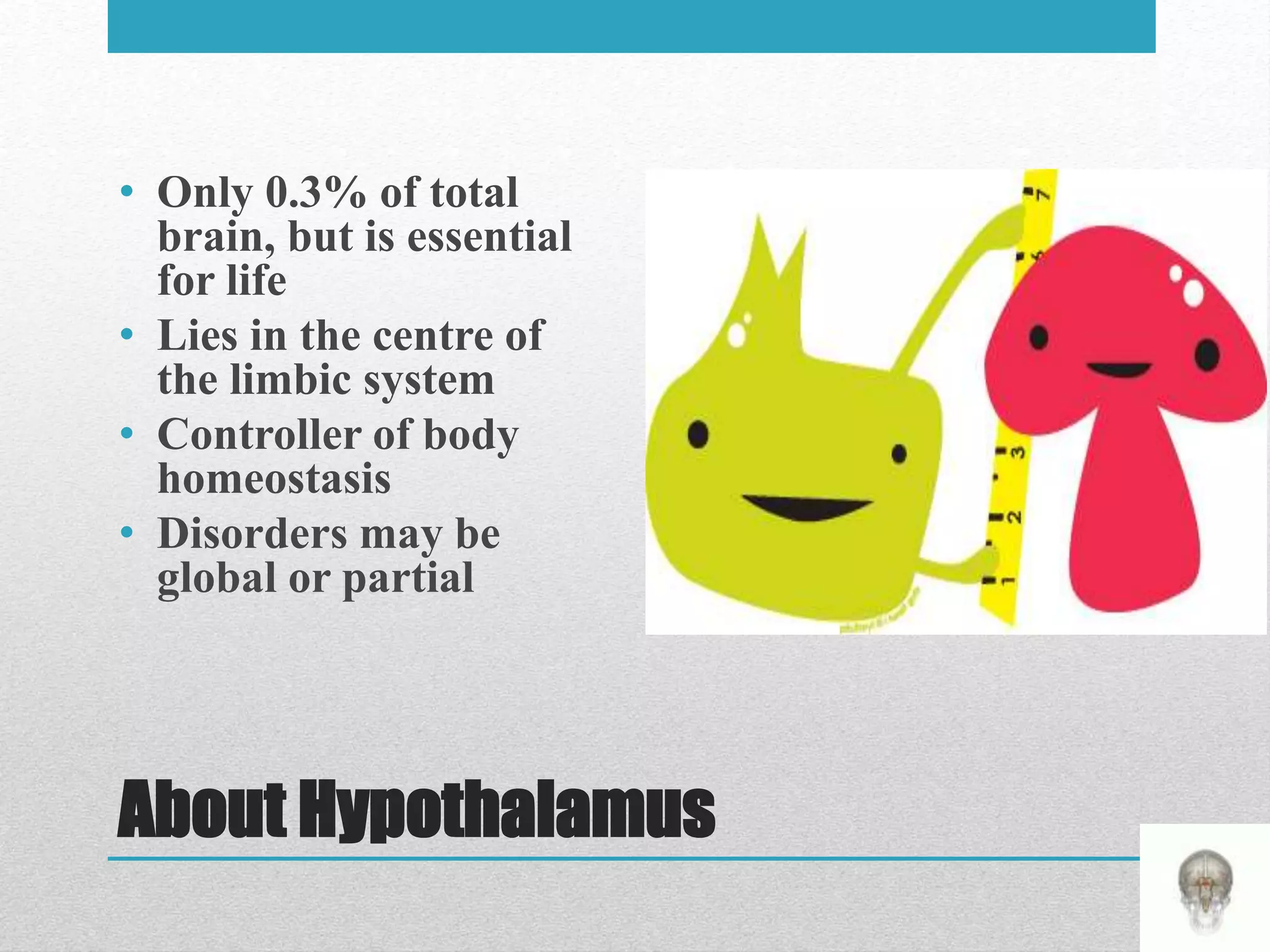
About Hypothalamus
• Only 0.3% of total
brain, but is essential
for life
• Lies in the centre of
the limbic system
• Controller of body
homeostasis
• Disorders may be
global or partial
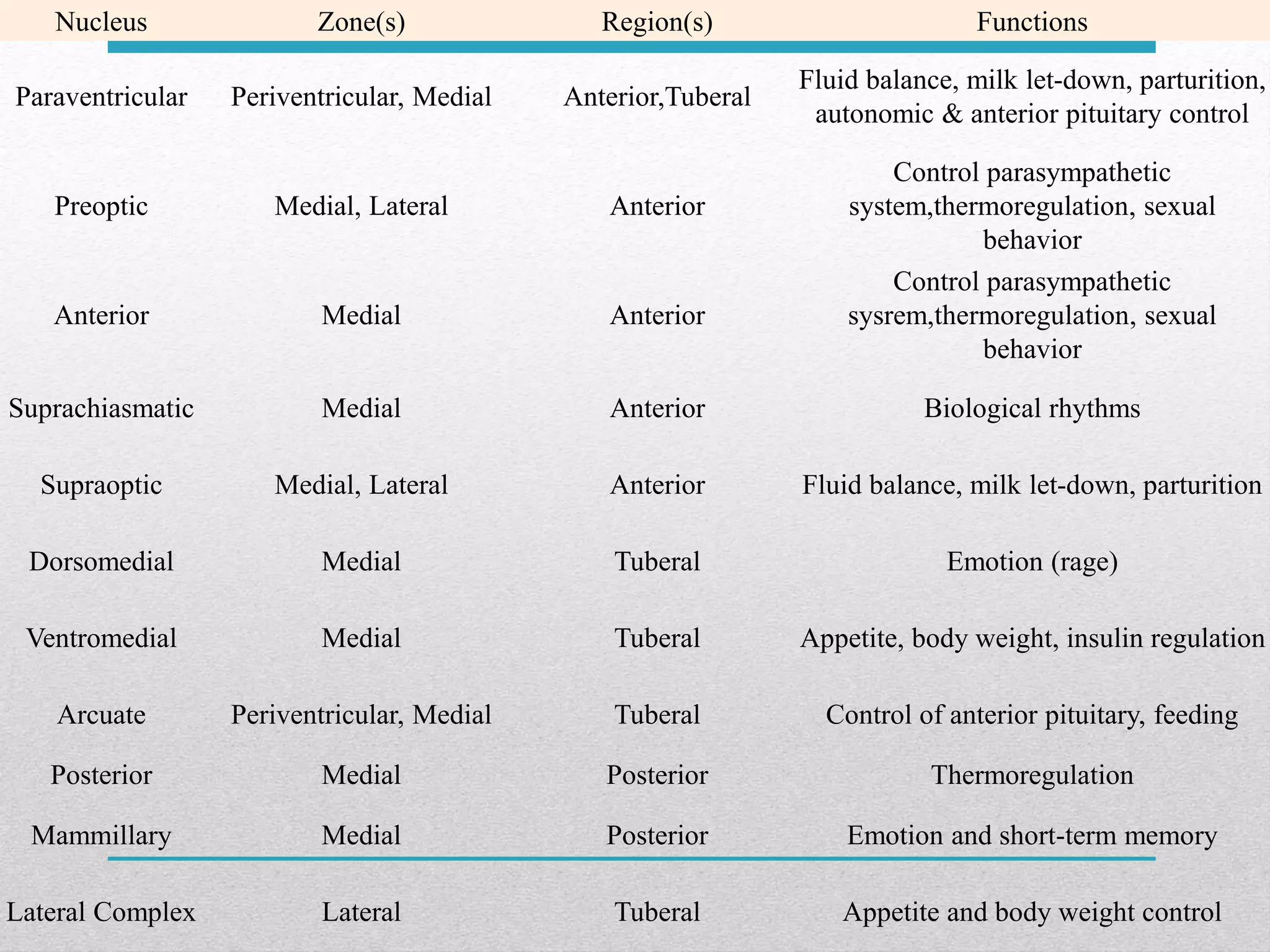
Nucleus Zone(s) Region(s) Functions
Paraventricular Periventricular, Medial Anterior,Tuberal
Fluid balance, milk let-down, parturition,
autonomic & anterior pituitary control
Preoptic Medial, Lateral Anterior
Control parasympathetic
system,thermoregulation, sexual
behavior
Anterior Medial Anterior
Control parasympathetic
sysrem,thermoregulation, sexual
behavior
Suprachiasmatic Medial Anterior Biological rhythms
Supraoptic Medial, Lateral Anterior Fluid balance, milk let-down, parturition
Dorsomedial Medial Tuberal Emotion (rage)
Ventromedial Medial Tuberal Appetite, body weight, insulin regulation
Arcuate Periventricular, Medial Tuberal Control of anterior pituitary, feeding
Posterior Medial Posterior Thermoregulation
Mammillary Medial Posterior Emotion and short-term memory
Lateral Complex Lateral Tuberal Appetite and body weight control
Imaging of Hypothalamus
Magnetic Resonance Imaging (MRI)
Magnetization Transfer Imaging (MTI)
Diffusion Weighted Imaging (DWI)
Proton MR Spectroscopy
18 FDG PET
SPECT
Intraoperative Real Time Ultrasonography
MRI
a. Optic chiasm
b. Median eminence
c. Mamillary bodies
MTI
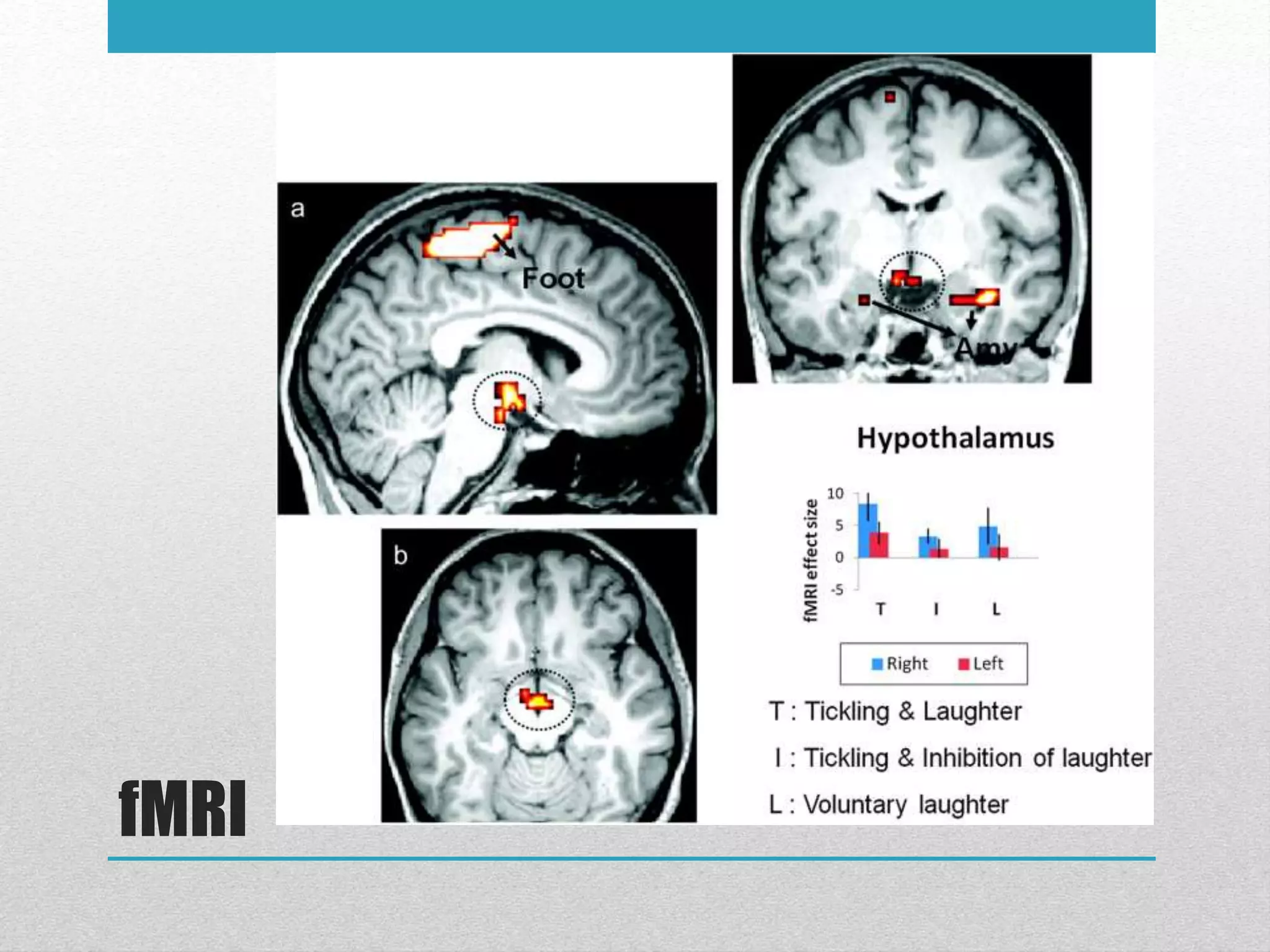
fMRI
When to Suspect ?
• Any feature of
 Diencephalic syndrome (FTT, vomiting and emaciation-
Anterior hypothalamus)
 Precocious puberty (Tuber cinereum)
 Hormone deficinecy
• Features suggesting mass effect on Chiasma
• Epilepsy:
 Gelastic seizure
* Destructive lesion of hypothalamus never causes precocious puberty
Diseases
 Developmental disorders
 Midline cleft defects
 Kallman’s syndrome
 Septo-optic dysplasia
 Infiltrative and inflammatory diseases
 Sarcoidosis
 Tuberculosis
 Langerhans cell histiocytosis
 Encephalitis
Cont
 Space occupying lesions
 Craniopharyngioma
 Glioma
 Meningioma
 Hemangioblastoma
 Hamartoma
 Cysts : Epidermoid, dermoid, colloid
 Metastasis
 Lymphoma and leukaemia
Cont.
 Vascular
 Stroke
 Arterio-venous malformation
 Aneurysm
 Functional abnormalities
 Isolated hormone or receptor defect
 Systemic illness and psychosocial deprivation
Cont
 Iatrogenic
 Parasellar surgery
 Cranial irradiation
 Miscelleneous
 Hydrocephalus
 Pituitary adenoma
 Wernicke’s encephalopathy
Effects
Dysfunction
 Endocrine
 Autonomic regulation
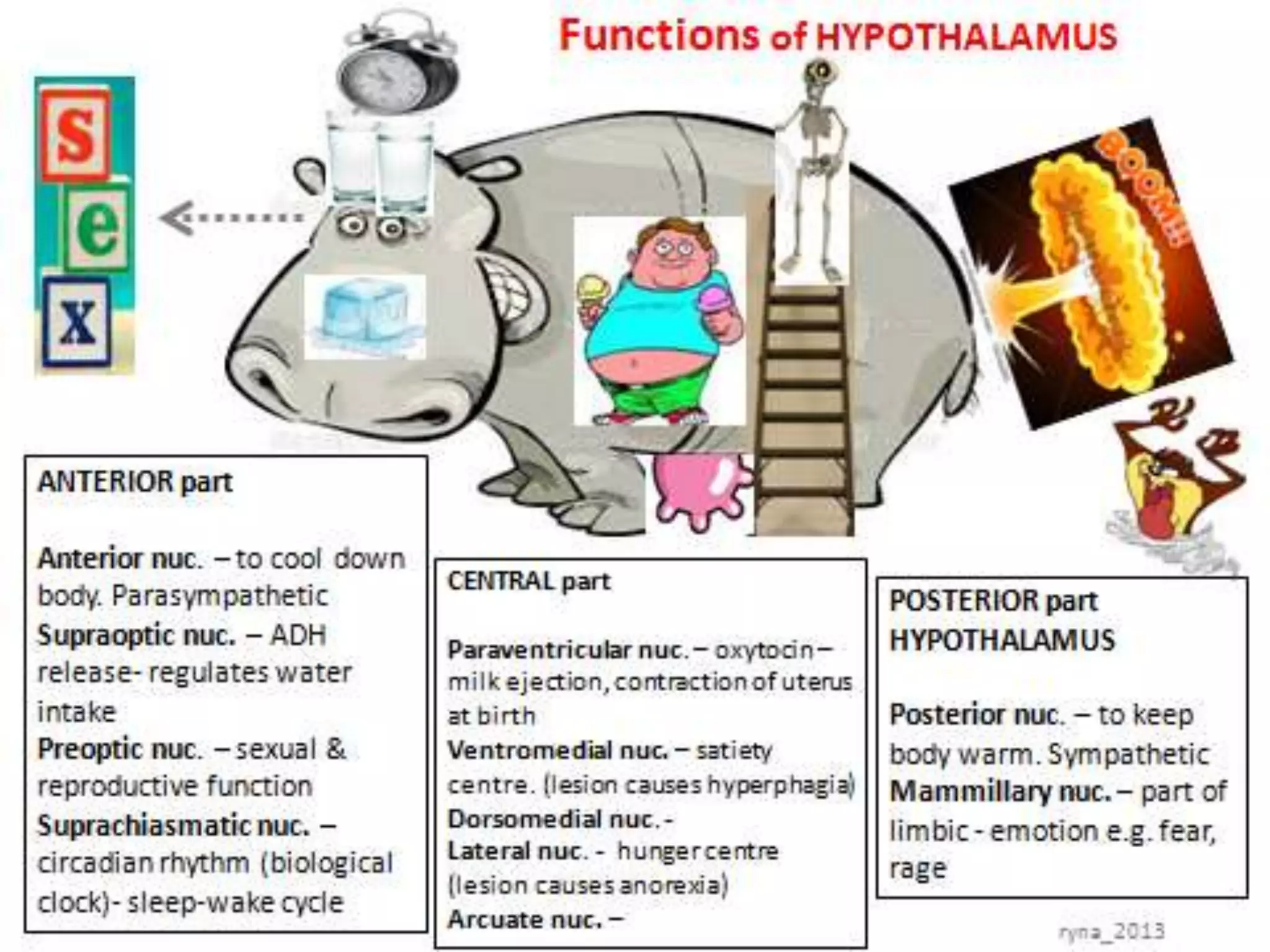
 Temperature regulation
 Eating behavior
Mechanical effects
 Optic chiasma compression
 Hydrocephalus
Endocrine dysfunctions
Hypofunctions
Growth hormone deficiency
Hypothalamic hypogonadism
Secondary hypothyroidism
Central diabetes insipidus
Pituitary insufficiency
Cont.
Hyperfunctions
 Hypothalamic precocious puberty
 Hypothalamic hyperprolactinaemia
 Syndrome of inappropriate ADH secretion
Abnormalities of Growth: (Def/Excess of GHRH/GH)
Dwarfism
Acromegaly
Gigantism
Cont.
Causes of GH Deficiency:
 Idiopathic / functional
 Congenital idiopathic growth hormone deficiency
 Emotional deprivation syndrome
 GH deficiency in chronic illness
 Hypothalamic gangliocytomas
 Pituitary tumor
* GH deficiency due to hypothalamic disorder are mostly functional
Cont.
Hypothalamic hypogonadism
Causes
 Isolated GnRH deficiency
 Structural lesion of hypothalamus
 Hyperprolactinaemia
A 3yr old girl presented with regular monthly PV bleeding for last 6 months. Her
parents also noticed brief spells of abnormal laughter for last few months.
Hypothalamic Hamartoma
Cont.
Hypothalamic hypergonadism
Causes-
 Structural lesion of hypothalamus
(Hamartoma most common)
 Idiopathic
 More common in females (most are idiopathic)
 Males are more severely affected (most are structural
lesions)
Precocious Puberty
• Abnormally early onset of androgen
secretion in boys (<9yrs) and
estrogen secretion in girls (<8yrs).
• Causes-
 Teratoma of pineal gland or
mediastinum, androgenic tumour of
testes and adrenal- male
 Hypothalamic disease and estrogen
secreting ovarian tumours-female
 Hamartoma in both sexes, in a number
of cases gelastic seizure have been
conjoined.
• Treatment:
 GnRH analogue: Leuprolide
A 32yr old man presented with intermittent fever, cough, breathlessness, polyuria and
polydipsia
Cranial Diabetes Insipidus due to
Sarcoidosis
Cranial diabetes insipidus
Pathogenesis
• Lack of ADH
• Impaired renal water reabsorption
• Diuresis
• Raised plasma osmolarity
• Increased thirst
Cranial diabetes insipidus
Cause
 Parasellar surgery
 Head injury
 ICSOL
 Infiltrative granulomatous disease eg.
Neurosarcoidosis
 Congenital eg. Wolfram syndrome (DIDMOD)
 Drugs eg.CBZ, lithium
 Idiopathic
CDI
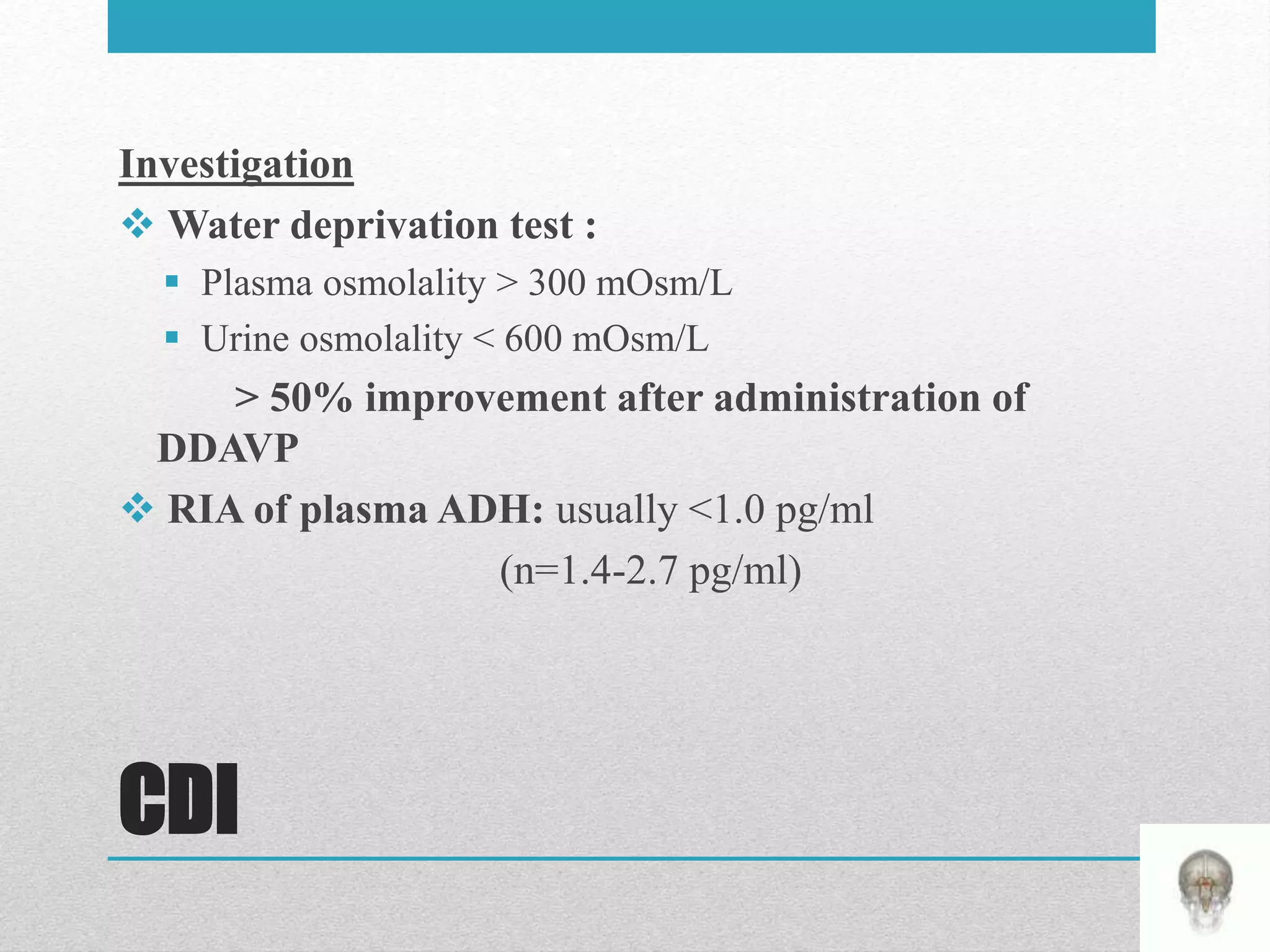
Investigation
 Water deprivation test :
 Plasma osmolality > 300 mOsm/L
 Urine osmolality < 600 mOsm/L
> 50% improvement after administration of
DDAVP
 RIA of plasma ADH: usually <1.0 pg/ml
(n=1.4-2.7 pg/ml)
A 66 yrs old man presented to ER with headache, confusion and unsteadiness. He had
H/O PTB 15 yrs back. On query the attendants also reported frequent cough with
sputum production for last 6 yrs.
SIADH due to Bronchiactasis
Syndrome of inappropraite ADH
secretion (SIADH)
Pathogenesis :
• Excessive ADH
• Excessive water reabsorption in collecting tubule
• Dilutional hyponatraemia
SIADH
Causes-
CNS disorders :Stroke, infection, injury, tumor
Pulmonary disorders : Pneumonia, TB , CA
Drugs : Carbamazepine, TCA, Antipsychotic
Ectopic production of ADH: Carcinoma, thymoma,
mesothelioma, lymphoma
Idiopathic
SIADH
Diagnosis
 Low plasma sodium (<130 mmol/L)
 Low plasma osmolality (<270 mosmol/L)
 Urine osmolality not minimally low (> 150 mosmol/L)
 Urine Na not minimally low (>30 mmol/L)
 Exclusion of other causes
 Appropriate clinical setting
A 42 yrs old alcoholic man presented to ER with sudden fall and unconsciousness.
The situation was further complicated by alcohol withdrawal seizure. After initial
improvement patient again developed confusion at 10th day and there was postural
drop of BP. Investigation revealed nothing but hyponatremia (Na level is 122
mmol/l).
Cerebral Salt Wasting Syndrome
• Also known as Neurogenic SWS
• Caused by –
 Acute intracranial diseases,
 Tumor
 Post neurosurgical procedure
• Pathophysiology-
 Decreased sympathetic drive
 BNP and ANP
• Effect- Sodium loss rather than water retention
• Fluid restriction may be dangerous
Opposes the action of ADH in RT
and also inhibit ADH release from
hypothalamus
SIADH & CSWS
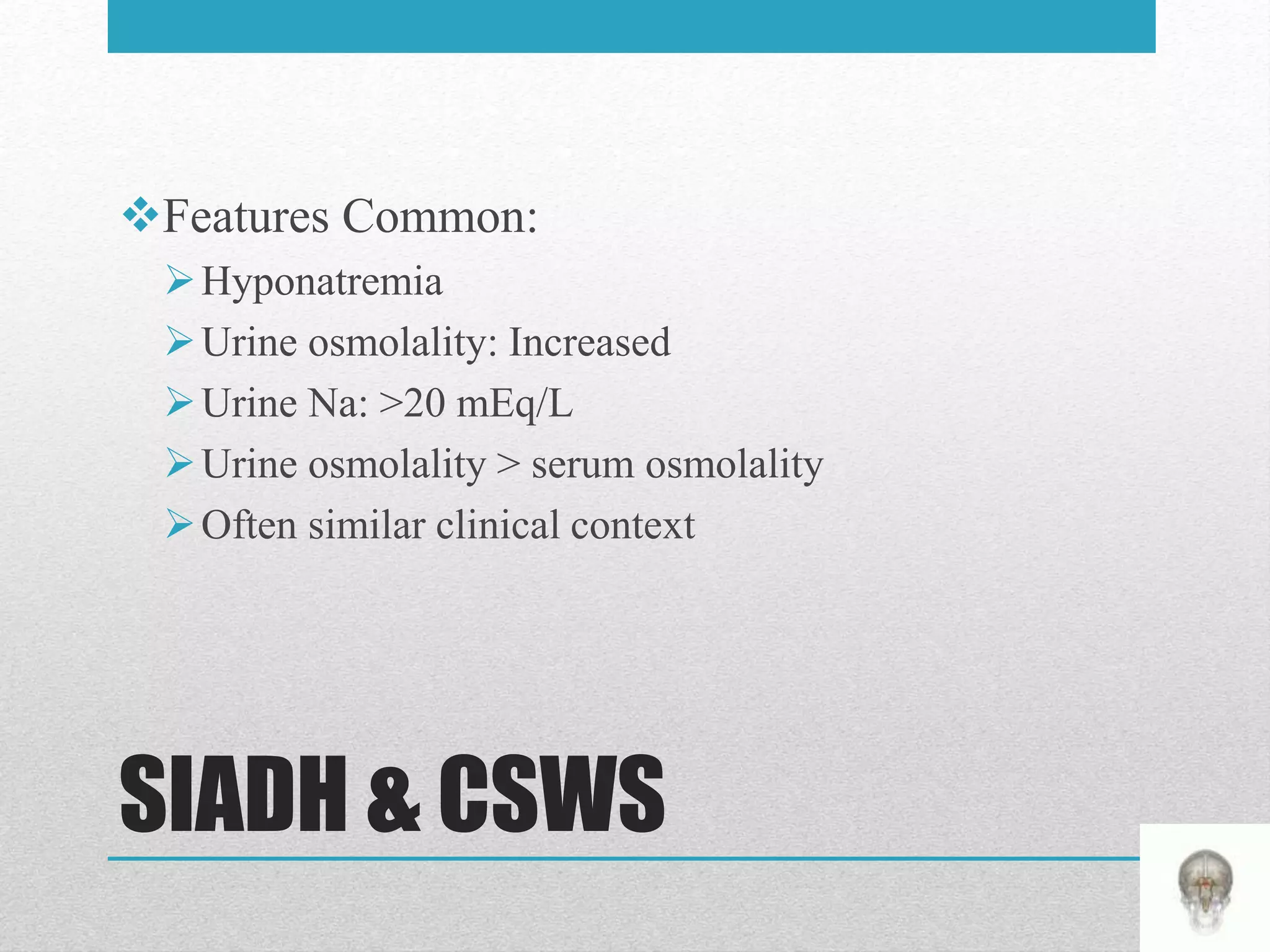
Features Common:
Hyponatremia
Urine osmolality: Increased
Urine Na: >20 mEq/L
Urine osmolality > serum osmolality
Often similar clinical context
Distinguishing features between SIADH & CSWS
Disturbance of temperature regulation
Hyperthermia:
Anterior hypothalamic lesion (Preoptic)
Hypothermia :
Posterior hypothalamic lesion
Persistent temparature of ≤ 35°C (95°F)
Poikilothermia: Large lesion in the posterior hypothalamus
Disturbance of temperature regulation
Causes:
Structural – stroke, head injury, surgery,
demyelination
Functional – Spontaneous recurrent
hypothermia
o Shapiro’s syndrome (cholesteatoma of 3rd V.)
o Reverse Shapiro’s syndrome
Disturbance of Autonomic regulation
• Acute autonomic crises (Sympathetic storm)
• An exacerbation of stress response
Causes-
• Toxic and pharmacologic agents-
Cocaine
Phenylpropanolamine
TCA overdose
OP insectisides
• Severe head injury
• Hypertensive ICH
Disturbance of Autonomic regulation
Presentatoin-
i. Abrupt overactivity of sympathetic and parasympathetic
nervous system
ii. Occcasional sign of CNS excitation eg. seizure
iii. Cushing response/reflex (HTN, ↓ HR, Irreg. RR)
iv. Diencephalic seizure (Paroxysmal HTN, intense
diaphoresis, flushed skin and mydriasis)
Disturbance of body weight
Hypothalamic obesity :
Lesion in
 Ventromedial hypothalamus
 Paraventricular nucleus
Effect-
 Uncontrolled voracious
appetite causing the pt
extreme obesity
Disturbance of body weight
Hypothalamic weight loss:
Lesion in
 Lateral hypothalamus
 Dorsomedial nucleus
o May be associated with
Hypothalamic tumour or disorder of
behavior
(Anorexia Nervosa)
o Adolescent girls are affected
Periodic somnolence and bulimia
Known as Kleine-Levin Syndrome
• Hypothalamus is responsible, but without definite
pathologic confirmation
• Usually adolescent boys are affected
• Episodic disorder characterized by somnolence and over
eating
• Pt. sleep ≥18 hrs/day, waking only to eat and attend to toilet
needs
• They appeared dull, often confused and restless
Developmental disorders
Midline cleft syndromes:
Developmental abnormalities of Skull and brain with
Hypopituitarism (varying degree)
Cont.
Septo-optic dysplasia:
• Agenesis of septum pellucidum
• Hypoplastic optic nerve
• Hypothalamic precocious puberty
MRI showing absent septum pellucidum with characteristic configuration of frontal
horns. Very thin optic chiasm. Thin corpus callosum and low fornices. Pituitary has
normal appearance.
Septo optic Dysplasia/ De Morsier Syndrome
Kallman’s syndrome:
X-linked recessive
 Clinical features
 Hypogonadism
 Anosmia
 Tall stature
 Mental retardation,
Deafness, colour
blindness
 Absent secondary sexual
characteristics Kallman’s syndrome Normal
Developmental disorders (cont.)
Investigation
 Low GnRH, LH, FSH, testosterone
 MRI : Hypoplastic or absent olfactory bulbs
MRI through frontal lobe showing absent olfactory bulb
Rathke Cleft Cyst
• Benign sellar cyst
• Derived from Rathke Pouch
remnant
• Presents in 5th-6th decade
• Features of compression of
pituitary or hypothalamus
Craniopharyngioma
Origin : Remnants of Rathke’s pouch
(Craniopharyngeal duct)
Types :
 Adamantinoma (Children)
 Papillary (Adult)
Presentation:
 Raised ICP
 Visual field defect
 Hypopituitarism, commonly DI
8 yr old boy - Adamantinoma 39 yr old man Papillary CP
Hypothalamic Chiasmatic Glioma
• About 10-15% of supratentorial
tumor in children
• Presents at 2-4 yrs of age
• Diminished visual acuity
• Short stature ( GH )
• F/H/O NF-1
• Slowly progressive with
occasional spontaneous
remission
• Haemangioblastoma are benign vascular tumor (2%)
• Usually 35-45 yrs of age
• Rarely affects hypothalamus- mostly Von Hippel Lindau
Hemangioblastoma
Encephalitis
• Mostly viral
• Presents with fever,
Central DI, SIADH
A 61-year-old woman developed a rapidly progressive dementia
associated with visual loss. In 7 mo she was dependent for self-care.
Coronal T2-weighted [A], axial FLAIR [B], and axial contrast-enhanced
T1-weighted images [C and D] demonstrate extensive involvement of the
hypothalamic and suprasellar regions, extending laterally towards the optic
tracts, and to the left temporal lobe. The enhancing portion of the lesion is
hypothalamic and suprasellar, and there is also a component of
enhancement in the anterior portion of the temporal lobe (arrow in D).
Neurosarcoidosis involving Hypothalamus
Neurosarcoidosis
Neurosarcoidosis occurs in approximately 5% cases of
all sarcoidosis.
Presentation:
• Aseptic meningitis
• Cranial nerve palsy
• Hypothalamic dysfunction : DI
• Tumor like effect: seizure, hemiparesis
Neurosarcoidosis (cont.)
Investigations
 Chest X-ray
 Histopathology/cytology
 Serum calcium
 Serum ACE
 CSF study (including ACE level)
 MRI brain
Neurosarcoidosis (cont.)
Treatment:
• Corticosteroid
• Cyclosporin
• Cyclophsphamide
• Radiation of focal lesion
Hypothalamus
Love
Living
Your
For
Disorder of Hypothalamus

Disorder of Hypothalamus

  • 1.
    HYPOTHALAMUS AND ITS CONNECTIONS (APPLIED) Dr.ATM HASIBUL HASAN MD (Neurology) Thesis Part Student Dhaka Medical College
  • 2.
  • 3.
  • 4.
    Contents Imaging of Hypothalamus Diseasesof Hypothalamus Presentation of Hypothalamic disease o Dysfunction Hypofunction Hyperfunction o Mechanical effect Brief description of some relevant diseases
  • 5.
    About Hypothalamus • Only0.3% of total brain, but is essential for life • Lies in the centre of the limbic system • Controller of body homeostasis • Disorders may be global or partial
  • 7.
    Nucleus Zone(s) Region(s)Functions Paraventricular Periventricular, Medial Anterior,Tuberal Fluid balance, milk let-down, parturition, autonomic & anterior pituitary control Preoptic Medial, Lateral Anterior Control parasympathetic system,thermoregulation, sexual behavior Anterior Medial Anterior Control parasympathetic sysrem,thermoregulation, sexual behavior Suprachiasmatic Medial Anterior Biological rhythms Supraoptic Medial, Lateral Anterior Fluid balance, milk let-down, parturition Dorsomedial Medial Tuberal Emotion (rage) Ventromedial Medial Tuberal Appetite, body weight, insulin regulation Arcuate Periventricular, Medial Tuberal Control of anterior pituitary, feeding Posterior Medial Posterior Thermoregulation Mammillary Medial Posterior Emotion and short-term memory Lateral Complex Lateral Tuberal Appetite and body weight control
  • 9.
    Imaging of Hypothalamus MagneticResonance Imaging (MRI) Magnetization Transfer Imaging (MTI) Diffusion Weighted Imaging (DWI) Proton MR Spectroscopy 18 FDG PET SPECT Intraoperative Real Time Ultrasonography
  • 10.
  • 11.
    a. Optic chiasm b.Median eminence c. Mamillary bodies
  • 12.
  • 13.
  • 14.
    When to Suspect? • Any feature of  Diencephalic syndrome (FTT, vomiting and emaciation- Anterior hypothalamus)  Precocious puberty (Tuber cinereum)  Hormone deficinecy • Features suggesting mass effect on Chiasma • Epilepsy:  Gelastic seizure * Destructive lesion of hypothalamus never causes precocious puberty
  • 15.
    Diseases  Developmental disorders Midline cleft defects  Kallman’s syndrome  Septo-optic dysplasia  Infiltrative and inflammatory diseases  Sarcoidosis  Tuberculosis  Langerhans cell histiocytosis  Encephalitis
  • 16.
    Cont  Space occupyinglesions  Craniopharyngioma  Glioma  Meningioma  Hemangioblastoma  Hamartoma  Cysts : Epidermoid, dermoid, colloid  Metastasis  Lymphoma and leukaemia
  • 17.
    Cont.  Vascular  Stroke Arterio-venous malformation  Aneurysm  Functional abnormalities  Isolated hormone or receptor defect  Systemic illness and psychosocial deprivation
  • 18.
    Cont  Iatrogenic  Parasellarsurgery  Cranial irradiation  Miscelleneous  Hydrocephalus  Pituitary adenoma  Wernicke’s encephalopathy
  • 19.
    Effects Dysfunction  Endocrine  Autonomicregulation  Temperature regulation  Eating behavior Mechanical effects  Optic chiasma compression  Hydrocephalus
  • 20.
    Endocrine dysfunctions Hypofunctions Growth hormonedeficiency Hypothalamic hypogonadism Secondary hypothyroidism Central diabetes insipidus Pituitary insufficiency
  • 21.
    Cont. Hyperfunctions  Hypothalamic precociouspuberty  Hypothalamic hyperprolactinaemia  Syndrome of inappropriate ADH secretion
  • 22.
    Abnormalities of Growth:(Def/Excess of GHRH/GH) Dwarfism Acromegaly Gigantism
  • 23.
    Cont. Causes of GHDeficiency:  Idiopathic / functional  Congenital idiopathic growth hormone deficiency  Emotional deprivation syndrome  GH deficiency in chronic illness  Hypothalamic gangliocytomas  Pituitary tumor * GH deficiency due to hypothalamic disorder are mostly functional
  • 24.
    Cont. Hypothalamic hypogonadism Causes  IsolatedGnRH deficiency  Structural lesion of hypothalamus  Hyperprolactinaemia
  • 25.
    A 3yr oldgirl presented with regular monthly PV bleeding for last 6 months. Her parents also noticed brief spells of abnormal laughter for last few months. Hypothalamic Hamartoma
  • 26.
    Cont. Hypothalamic hypergonadism Causes-  Structurallesion of hypothalamus (Hamartoma most common)  Idiopathic  More common in females (most are idiopathic)  Males are more severely affected (most are structural lesions)
  • 27.
    Precocious Puberty • Abnormallyearly onset of androgen secretion in boys (<9yrs) and estrogen secretion in girls (<8yrs). • Causes-  Teratoma of pineal gland or mediastinum, androgenic tumour of testes and adrenal- male  Hypothalamic disease and estrogen secreting ovarian tumours-female  Hamartoma in both sexes, in a number of cases gelastic seizure have been conjoined. • Treatment:  GnRH analogue: Leuprolide
  • 28.
    A 32yr oldman presented with intermittent fever, cough, breathlessness, polyuria and polydipsia Cranial Diabetes Insipidus due to Sarcoidosis
  • 29.
    Cranial diabetes insipidus Pathogenesis •Lack of ADH • Impaired renal water reabsorption • Diuresis • Raised plasma osmolarity • Increased thirst
  • 30.
    Cranial diabetes insipidus Cause Parasellar surgery  Head injury  ICSOL  Infiltrative granulomatous disease eg. Neurosarcoidosis  Congenital eg. Wolfram syndrome (DIDMOD)  Drugs eg.CBZ, lithium  Idiopathic
  • 31.
    CDI Investigation  Water deprivationtest :  Plasma osmolality > 300 mOsm/L  Urine osmolality < 600 mOsm/L > 50% improvement after administration of DDAVP  RIA of plasma ADH: usually <1.0 pg/ml (n=1.4-2.7 pg/ml)
  • 32.
    A 66 yrsold man presented to ER with headache, confusion and unsteadiness. He had H/O PTB 15 yrs back. On query the attendants also reported frequent cough with sputum production for last 6 yrs. SIADH due to Bronchiactasis
  • 33.
    Syndrome of inappropraiteADH secretion (SIADH) Pathogenesis : • Excessive ADH • Excessive water reabsorption in collecting tubule • Dilutional hyponatraemia
  • 34.
    SIADH Causes- CNS disorders :Stroke,infection, injury, tumor Pulmonary disorders : Pneumonia, TB , CA Drugs : Carbamazepine, TCA, Antipsychotic Ectopic production of ADH: Carcinoma, thymoma, mesothelioma, lymphoma Idiopathic
  • 35.
    SIADH Diagnosis  Low plasmasodium (<130 mmol/L)  Low plasma osmolality (<270 mosmol/L)  Urine osmolality not minimally low (> 150 mosmol/L)  Urine Na not minimally low (>30 mmol/L)  Exclusion of other causes  Appropriate clinical setting
  • 36.
    A 42 yrsold alcoholic man presented to ER with sudden fall and unconsciousness. The situation was further complicated by alcohol withdrawal seizure. After initial improvement patient again developed confusion at 10th day and there was postural drop of BP. Investigation revealed nothing but hyponatremia (Na level is 122 mmol/l). Cerebral Salt Wasting Syndrome
  • 37.
    Cerebral Salt WastingSyndrome • Also known as Neurogenic SWS • Caused by –  Acute intracranial diseases,  Tumor  Post neurosurgical procedure • Pathophysiology-  Decreased sympathetic drive  BNP and ANP • Effect- Sodium loss rather than water retention • Fluid restriction may be dangerous Opposes the action of ADH in RT and also inhibit ADH release from hypothalamus
  • 38.
    SIADH & CSWS FeaturesCommon: Hyponatremia Urine osmolality: Increased Urine Na: >20 mEq/L Urine osmolality > serum osmolality Often similar clinical context
  • 39.
  • 41.
    Disturbance of temperatureregulation Hyperthermia: Anterior hypothalamic lesion (Preoptic) Hypothermia : Posterior hypothalamic lesion Persistent temparature of ≤ 35°C (95°F) Poikilothermia: Large lesion in the posterior hypothalamus
  • 42.
    Disturbance of temperatureregulation Causes: Structural – stroke, head injury, surgery, demyelination Functional – Spontaneous recurrent hypothermia o Shapiro’s syndrome (cholesteatoma of 3rd V.) o Reverse Shapiro’s syndrome
  • 43.
    Disturbance of Autonomicregulation • Acute autonomic crises (Sympathetic storm) • An exacerbation of stress response Causes- • Toxic and pharmacologic agents- Cocaine Phenylpropanolamine TCA overdose OP insectisides • Severe head injury • Hypertensive ICH
  • 44.
    Disturbance of Autonomicregulation Presentatoin- i. Abrupt overactivity of sympathetic and parasympathetic nervous system ii. Occcasional sign of CNS excitation eg. seizure iii. Cushing response/reflex (HTN, ↓ HR, Irreg. RR) iv. Diencephalic seizure (Paroxysmal HTN, intense diaphoresis, flushed skin and mydriasis)
  • 45.
    Disturbance of bodyweight Hypothalamic obesity : Lesion in  Ventromedial hypothalamus  Paraventricular nucleus Effect-  Uncontrolled voracious appetite causing the pt extreme obesity
  • 46.
    Disturbance of bodyweight Hypothalamic weight loss: Lesion in  Lateral hypothalamus  Dorsomedial nucleus o May be associated with Hypothalamic tumour or disorder of behavior (Anorexia Nervosa) o Adolescent girls are affected
  • 47.
    Periodic somnolence andbulimia Known as Kleine-Levin Syndrome • Hypothalamus is responsible, but without definite pathologic confirmation • Usually adolescent boys are affected • Episodic disorder characterized by somnolence and over eating • Pt. sleep ≥18 hrs/day, waking only to eat and attend to toilet needs • They appeared dull, often confused and restless
  • 48.
    Developmental disorders Midline cleftsyndromes: Developmental abnormalities of Skull and brain with Hypopituitarism (varying degree)
  • 49.
    Cont. Septo-optic dysplasia: • Agenesisof septum pellucidum • Hypoplastic optic nerve • Hypothalamic precocious puberty
  • 50.
    MRI showing absentseptum pellucidum with characteristic configuration of frontal horns. Very thin optic chiasm. Thin corpus callosum and low fornices. Pituitary has normal appearance. Septo optic Dysplasia/ De Morsier Syndrome
  • 51.
    Kallman’s syndrome: X-linked recessive Clinical features  Hypogonadism  Anosmia  Tall stature  Mental retardation, Deafness, colour blindness  Absent secondary sexual characteristics Kallman’s syndrome Normal
  • 52.
    Developmental disorders (cont.) Investigation Low GnRH, LH, FSH, testosterone  MRI : Hypoplastic or absent olfactory bulbs MRI through frontal lobe showing absent olfactory bulb
  • 54.
    Rathke Cleft Cyst •Benign sellar cyst • Derived from Rathke Pouch remnant • Presents in 5th-6th decade • Features of compression of pituitary or hypothalamus
  • 55.
    Craniopharyngioma Origin : Remnantsof Rathke’s pouch (Craniopharyngeal duct) Types :  Adamantinoma (Children)  Papillary (Adult) Presentation:  Raised ICP  Visual field defect  Hypopituitarism, commonly DI
  • 56.
    8 yr oldboy - Adamantinoma 39 yr old man Papillary CP
  • 57.
    Hypothalamic Chiasmatic Glioma •About 10-15% of supratentorial tumor in children • Presents at 2-4 yrs of age • Diminished visual acuity • Short stature ( GH ) • F/H/O NF-1 • Slowly progressive with occasional spontaneous remission
  • 58.
    • Haemangioblastoma arebenign vascular tumor (2%) • Usually 35-45 yrs of age • Rarely affects hypothalamus- mostly Von Hippel Lindau Hemangioblastoma
  • 60.
    Encephalitis • Mostly viral •Presents with fever, Central DI, SIADH
  • 61.
    A 61-year-old womandeveloped a rapidly progressive dementia associated with visual loss. In 7 mo she was dependent for self-care. Coronal T2-weighted [A], axial FLAIR [B], and axial contrast-enhanced T1-weighted images [C and D] demonstrate extensive involvement of the hypothalamic and suprasellar regions, extending laterally towards the optic tracts, and to the left temporal lobe. The enhancing portion of the lesion is hypothalamic and suprasellar, and there is also a component of enhancement in the anterior portion of the temporal lobe (arrow in D). Neurosarcoidosis involving Hypothalamus
  • 62.
    Neurosarcoidosis Neurosarcoidosis occurs inapproximately 5% cases of all sarcoidosis. Presentation: • Aseptic meningitis • Cranial nerve palsy • Hypothalamic dysfunction : DI • Tumor like effect: seizure, hemiparesis
  • 63.
    Neurosarcoidosis (cont.) Investigations  ChestX-ray  Histopathology/cytology  Serum calcium  Serum ACE  CSF study (including ACE level)  MRI brain
  • 64.
    Neurosarcoidosis (cont.) Treatment: • Corticosteroid •Cyclosporin • Cyclophsphamide • Radiation of focal lesion
  • 65.

Editor's Notes

  • #41 EABV: Measured by Plasma renin activity and has inverse relationship. ECFV: Measured in association with GFR with 125 I- Iothalamate.