HEADACHE -2
Headache “Red Flags” That Could Indicate
Need for Evaluation
1. New headache in older patients
2. Abnormal neurologic examination including papilledema andchange in mental status
3. New change in headache pattern or progressive headache
4. New headache in the setting of HIV risk factors, cancer, or immunocompromised status
5. Signs of a systemic illness ( fever, stiff neck, rash)
6. Triggered by cough, exertion, Valsalva maneuver
7. Headache in pregnancy/postpartum period
8. First or worst headache
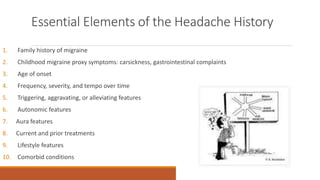
Essential Elements of the Headache History
1. Family history of migraine
2. Childhood migraine proxy symptoms: carsickness, gastrointestinal complaints
3. Age of onset
4. Frequency, severity, and tempo over time
5. Triggering, aggravating, or alleviating features
6. Autonomic features
7. Aura features
8. Current and prior treatments
9. Lifestyle features
10. Comorbid conditions
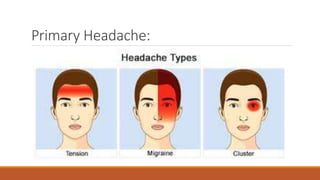
Primary Headache:
Migraine
migraine derives from the ancient Greek word, hemikranios,
which means “half head,”
migraine attack can consist of up to four phases:
1. premonitory phase
2. aura
3. headache phase(consists of a combination of photosensitivity, phonosensitivity, olfactory
hypersensitivity,cutaneous allodynia, nausea and vomiting
4. postdrome.
Epidemiology:Migraine
•one-year prevalence of 12% in the general population, including 18% of women
and 6% of men
•At puberty, the incidence of migraine increases sharply in both boys and girls, but
preferentially so in girls.
•Peak migraine prevalence for both sexes occurs in the fourth decade of life during
which time approximately 24% of women and 7% of men have migraine
• Migraine tends to manifest with fluctuating frequencies of attacks throughout
one’s life, with a typical trend towards milder and less frequent migraines late in
life.
•The lifetime prevalence of migraine is about 33% in women and 13% in men
Genetic predisposition for developing migraine.
 first-degree relatives of people who have migraine without aura are
about twice as likely to develop migraine without aura, while first-
degree relatives of people who have migraine with aura are about four
times more likely to have migraine with aura.
Several genetic susceptibility loci forms of migraine have been
identified
Migraine Attack Frequency
majority - 1–4 times per month / “episodic migraine”, meaning they have
headaches on fewer than 15 days per month.
2% - “chronic migraine,” meaning that they have headaches on at least 15 days per
month including at least 8 days per month on which they have symptoms of
fullblown migraine attacks .
On average, people with chronic migraine have 22 headache days per month.
About 2.5% of people with episodic migraine transformto chronic migraine each
year
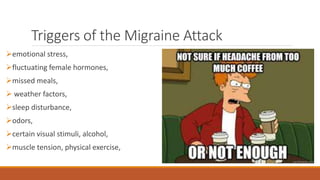
Triggers of the Migraine Attack
emotional stress,
fluctuating female hormones,
missed meals,
 weather factors,
sleep disturbance,
odors,
certain visual stimuli, alcohol,
muscle tension, physical exercise,
The Migraine Attack
1.Migraine Prodrome.
typically starting 1–2 hours prior to onset of migraine headache.
frequent prodromal symptoms include:-
fatigue, mild cognitive dysfunction, irritability, neck pain, light and noise
sensitivity, blurred vision, excessive yawning and excessive thirst.
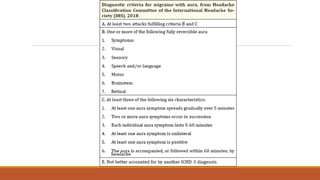
2.Migraine Aura.
• occur in about one-third of migraine patients
•who have migraine attacks with aura also have attacks without aura
• Typical aura symptoms develop and progress gradually over several minutes and then resolve within 60
minutes.
• The resolution of aura symptoms often coincides with the onset of headache.
•Individual aura symptoms may occur in isolation during an individual migraine attack or more than one
aura symptom may occur sequentially.
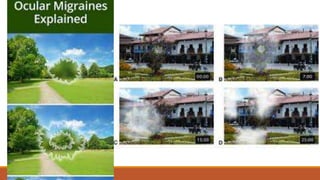
•Visual phenomena are the most common aura symptom, reported by over 80% of patients with
migraine aura .
• Like all migraine aura symptoms, visual symptoms progress slowly, moving across the visual
field.
Visual auras consist of positive symptoms such as seeing flashing lights and wavy lines
(“scintillating scotoma”), often followed by negative scotomas within the same distribution of
the preceding positive visual phenomena.
Sensory aura, the second most common aura type, ischaracterized by positive symptoms (paresthesias) followed by
negative symptoms (numbness), which slowly spread or migrate
Sensory aura is usually unilateral and has a predilection for the hand, arm, shoulder and face ( due to the large representation of
these structures in sensory cortex or thalamus)
Rate of spread of a sensory aura is important to help distinguish it from sensory seizure and sensory disturbance
of a TIA.
Just as a visual aura spreads across the visual field slowly, taking as long as 20 minutes to reach maximum, paresthesias may take
10 to 20 minutes to spread from point at which they are first felt to their maximal distribution.
This is slower than the spread of a sensory seizure and much slower than the spread of sensory symptoms associated with TIA.
A migrainous sensory aura generally resolves over the course of 20 to 60 minutes, most often within 30 minutes.
Language aura:
Expressive dysphasias,
including paraphasic errors, are most common language symptoms
of migraine aura,
with receptive dysphasias being less common.
Language symptoms of migraine aura are typically of mild severity.
Hemiplegic migraine
-can be “familial” or “sporadic
-weakness as opposed to true paralysis
-In addition to the hemiparesis, there must be at least one other aura symptom including a visual,
sensory, or language/speech symptom.
-the aura symptoms of hemiplegic migraine have a slow spreading onset over several minutes with each symptom
resolving within 60 minutes..
Brainstem aura
Migraine with brainstem aura consists of a combination of fully reversible visual,
sensory, and language/speech symptoms
with at least two brainstem symptoms
including dysarthria, vertigo, tinnitus, hypacusis, diplopia, ataxia, and decreased
level of consciousness.
Each aura symptom resolves within 60 minutes
Headache Phase
The headache of migraine is typically a moderate to severe unilateral throbbing
pain that is exacerbated by routine physical activities.
In addition to the headache, patients are hypersensitive to visual, auditory,
olfactory and somatosensory stimuli often resulting in the migraine patient
desiring rest in a dark and quiet room.
Nausea, vomiting, and neck pain are frequent accompaniments.
A migraine headache can be felt anywhere throughout the head, including retro-
and peri-orbital locations, frontal, occipital, temporal, vertex, and parietal regions.
Headache Phase
Pain is unilateral in 60%–75% of patients and bilateral in others.
Often, pain starts unilaterally and then becomes bilateral as the migraine attack
endures.
Pain is most commonly described as throbbing/pulsating, but other pain qualities
are also common. Headache intensity increases over approximately 90 minutes
before reaching moderate to severe intensity.
Pain is intensified by physical activity in the majority of patients
Headache Phase
Nausea is present during the migraine attack in the majority of patients and
vomiting occurs in about half and leading to dehydration and preventing
absorption of orally administered medications.
•Even when vomiting is absent, the absorption of orally administered migraine
medications might be unpredictable due to presence of gastric stasis .
Untreated, the migraine headache phase usually lasts from 4 to 72 hours, with the
majority subsiding within a day or after a night’s sleep. When the migraine attack
endures for longer than 72 hours, “status migrainosus” is diagnosed.
Migraine Postdrome.
The majority of migraineurs continue to have migraine symptoms for up to 24 hours following resolution of the
migraine headache .
The constellation of symptoms, commonly referred to by patients as the “migraine hangover,” is very similar to
those symptoms experienced during the premonitory phase of the migraine attack.
Symptoms often include fatigue, mild cognitive dysfunction, atypical mood, generalized weakness, feeling dizzy,
neck stiffness,light and sound hypersensitivity, and excessive thirst
Physical Findings
•Between attacks, the migraineur should have a normal neurologic examination, with abnormalities on
examination increasing the suspicion for a secondary headache disorder.
•In addition to the usual physical and neurologic examinations, attention should be paid to examination of the
temporal arteries, fundoscopy, cervical and cranial muscles, and temporomandibular joint.
• During an attack of migraine, the scalp vessels may be distended and tender.
• BP is likely to be elevated due to the pain.
Diagnostic Testing
•The majority of patients presenting with migraine do not require diagnostic testing.
•Diagnostic tests may be needed to evaluate for other headache causes when a patient has atypical or worrisome
features identified during the patient interview and when there are unexplained abnormalities on the neurologic
examination.
•Although such investigations must be chosen based upon the clinician’s suspicions for specific causes for a
secondary headache,
• testing may include blood tests, brain imaging, imaging of the cervical and intracranial arteries, imaging of the
intracranial venous sinuses, cervical spine imaging, lumbar puncture, sleep studies, and others
Migraine Genetics
•Familial hemiplegic migraine (FHM) is a rare autosomal dominant subtype -
CACNA1A, ATP1A2, and SCNA1A.
•Common forms of migraine have complex underlying genetic profiles.
•It is estimated that about half of the underlying propensity towards developing
migraine is due to additive gene effects, while the other half is attributable to
environmental factors.
•Several susceptibility loci for migraine have been identified
Pathophysiology
Vascular Versus Neuronal- migraine attack is now considered to be primarily due to brain dysfunction, perhaps with secondary vascular
effects.
A Migraine Generator-posterolateral hypothalamus, several brainstem regions
(e.g., midbrain tegmental area, periaqueductal gray, dorsal pons), and several cortical areas
Cortical Spreading Depression- is considered the electrophysiological substrate of the
migraine aura.
period of brain activation followed by period of brain deactivation might correspond with the pattern
of “positive” symptoms (e.g., visual scintillations) followed by “negative” symptoms (e.g., visual scotoma) typical of migraine aura
Trigeminocervical System - trigeminocervical system is the basic anatomic system that
underlies the migraine attack.
Hyperexcitable Migraine Brain-hyperexcitability likely linked to the allodynia, photosensitivity, phonosensitivity, and olfactory hypersensitivity
of migraine
Treatment and Management
 Reassurance.
A normal head CT or MRI scan may offer considerable reassurance.
Medication use should be reviewed and modified if necessary. The use of drugs known to cause headaches (e.g.,
reserpine, nifedipine, theophylline derivatives, caffeine, vasodilators [including long-acting nitrates], alcohol)
should be discontinued, or substituted to other agents if possible.
 Exercise programs to promote well-being, correction of dietary excesses, and avoidance of prolonged fasts and
irregular sleeping habits can be helpful
Long-term stress management may require the help of a psychologist or other appropriately trained professional.
Useful self-management techniques include biofeedback, relaxation .training, hypnosis, and cognitive behavioral
training
Avoidance of foods containing nitrites and prepared foods containing monosodium glutamate
Avoidance of trigger factors is important in the management of migraine, but simply advising a patient to
avoid stress and relax more is usually meaningless.
Advice to reduce excessive caffeine intake, stop smoking, and reduce alcohol intake may be more useful
Symptomatic Treatment
•Start symptomatic treatment as early in the development of an attack as possible. If an aura is
recognized, patients should take medications during it rather than waiting for the pain to begin.
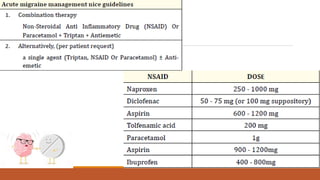
•For many patients, a simple oral analgesic such as aspirin, acetaminophen, naproxen, ibuprofen,
or an analgesic combination with caffeine may be effective.
•Caffeine aids absorption, helps induce vasoconstriction, and may reduce the firing of
serotonergic brainstem neurons.
•However, the use of caffeine-containing combination analgesics more than 2 days per week
may lead to increased incidence of headaches.
•The patient may need rest in a dark, quiet room with an ice pack on the head.
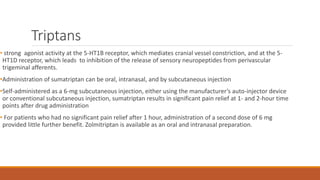
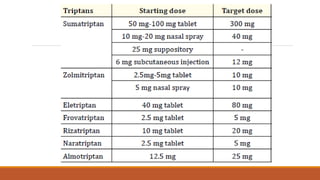
Triptans
• strong agonist activity at the 5-HT1B receptor, which mediates cranial vessel constriction, and at the 5-
HT1D receptor, which leads to inhibition of the release of sensory neuropeptides from perivascular
trigeminal afferents.
•Administration of sumatriptan can be oral, intranasal, and by subcutaneous injection
•Self-administered as a 6-mg subcutaneous injection, either using the manufacturer’s auto-injector device
or conventional subcutaneous injection, sumatriptan results in significant pain relief at 1- and 2-hour time
points after drug administration
• For patients who had no significant pain relief after 1 hour, administration of a second dose of 6 mg
provided little further benefit. Zolmitriptan is available as an oral and intranasal preparation.
Preventive treatment
a. Two or more attacks per month that significantly interfere with the patient’s daily routine
activity and produce disability for 4 or more days per month;
b. An unsatisfactory or scarce response to acute therapy;
c. Contraindication to acute treatments and adverse effects (AE’s) related to them;
d. The use of abortive medications more than twice per week;
e. Uncommon migraine conditions, including hemiplegic migraine, migraine with prolonged aura
or migrainous infarction
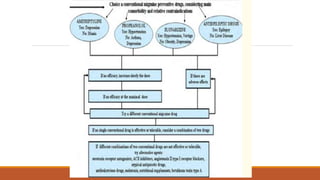
Prophylactic Treatment
The most effective prophylactic agents available typically reduce
headache frequency by at least 50% in approximately 50% of patients.
Preventive medications are generally titrated gradually to minimum
effective or maximum tolerated dosage.
This target dosage is maintained for at least 3 months, and if there is
a beneficial response, the medication is continued until there has been
clinical stabilization for at least 6 to 12 months.
The full benefit of a preventive medication may take up to 6 months
to be realized.
Nonpharmacological treatment
 Cognitive Behavioural Therapy
Complementary Treatments: acupuncture acupressure, massage, exercise and chiropractic,
herbs
Yoga therapy: Yoga, coupling physical exercise and breathing,
 Lifestyle Modifications:
 Sleep: Maintain consistent sleep patterns, including weekend and holidays
 Exercise: A routine of 20-40 minutes of aerobic exercise
 Eating: Have and maintain meals regularly and properly with good diet.
 Reduce stress and increase posture:
Complication of migraine:
1.Status migrainosus: A debilitating migraine attack lasting for more than 72 hours
2. Persistent aura without infarction: This is the Aura symptoms which are
persisting for one or more weeks without evidence of infarction on neuroimaging .
3. Migrainous infarction: This are One or more migraine aura symptoms occurring
in association with an ischemic brain lesion in the appropriate territory
demonstrated by neuroimaging, with onset during the course of a typical migraine
with aura attack.
4. Migraine aura-triggered seizure: It is described as a seizure which is triggered by
an attack of migraine with aura
Medication Overuse Headache
• daily headache syndrome
• Opioids, combination analgesics have highest risk;
triptans carry moderate risk
NSAIDs the lowest risk
•Treatment of MOH is challenging and requires aggressive nonpharmacological and appropriate
acute and preventive headache treatment.
•Pharmacological treatment involves tapering or discontinuing overused medication. Abrupt drug
withdrawal is treatment of choice except with barbiturates, benzodiazepines and opioids.
•Prednisone 60 mg daily for 5 days as a transitional and short-term treatment during the
withdrawal phase
Cluster Headache
migraine is 10 to 50 times more common than cluster headache.
The prevalence of cluster headache is about 1 person per 500.
three times more often in men than in women
Clinical Features
•Onset typically begins in the third decade of life
• Periodicity is a cardinal feature of cluster headache.
•In most patients, the first cluster of attacks, the cluster period, persists on average
for 6 to 12 weeks and is followed by a remission lasting for months or even years.
• The duration of the cluster period is often strikingly consistent for a given patient.
•A common pattern is one or two cluster periods per year.
•With time, however, the clusters may become seasonal and then
occur more often and last longer. During a cluster, patients typically
experience from 1 to 3 or more attacks in 24 hours.
•The attacks commonly occur at similar times throughout the 24
hours for several weeks to months.
• The pain is strictly unilateral and almost always remains on same side of the head
from cluster to cluster.
• The pain is generally felt in the retro-orbital and temporal regions (upper
syndrome) but may be maximal in the cheek or jaw (lower syndrome).
•It is usually described as steady or boring and of terrible
intensity(so-called “suicide headache”).
• The pain intensifies very rapidly, peaking in 5 to 10 min
and usually persisting for 45 min to 2 hours.
•During the pain, patients almost invariably avoid recumbent position
because doing so increases pain intensity.
•Unlike patients with migraine, they are restless and prefer to pace or
sit during an attack. Some remain outdoors even in freezing weather
for the duration of the attack.
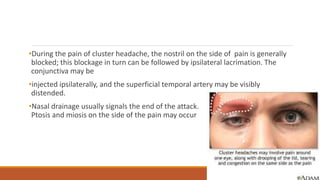
•During the pain of cluster headache, the nostril on the side of pain is generally
blocked; this blockage in turn can be followed by ipsilateral lacrimation. The
conjunctiva may be
•injected ipsilaterally, and the superficial temporal artery may be visibly
distended.
•Nasal drainage usually signals the end of the attack.
Ptosis and miosis on the side of the pain may occur
Investigations
In most patients, the diagnosis is certain on clinical grounds alone. However, imaging studies are
recommended for all patients at the time of diagnosis, particularly for those presenting with an atypical
episodic cluster (“cluster-like”) headache or for patients with headache in the chronic phase.
“Clusterlike”headaches can be associated with underlying intracranial or neck structural lesions such as
neoplasms, paranasal sinus disease, vascular malformations, and cervicocephalic arterial aneurysms or
dissections .
A contrast-enhanced brain MRI scan is recommended to help reassure the patient, their relatives, and
physicians that the extremely painful attacks are not due to some major abnormality.
Treatment and Management
The patient should be reassured that the syndrome, even though unbearably painful, is benign
and not life threatening.
Pain reduction but not cure should be promised.
Pharmacological Management
Acute (Symptomatic) Therapy.
Oxygen, subcutaneous sumatriptan, and subcutaneous or intramuscular DHE provide the most rapid, effective, and
consistent relief for cluster headache attacks.
1.Inhaled oxygen at 100% for 15-20 minvia a nonrebreathing face mask can be dramatically effective for aborting a
cluster attack in position for oxygen inhalation is sitting on the edge of a chair or bed and leaning
forward with arms on knees.
2. Administration of sumatriptan by subcutaneous injection in a dose of 4-6 mg is an effective means of aborting an
individual cluster attack
Preventive Pharmacotherapy.
The goals of preventive therapy are to produce a rapid suppression of attacks and
maintain remission over the expected duration of the cluster
period.
Transitional Prophylaxis. short-term use of corticosteroids, occipital nerve blocks,
ergotamine, or DHE.
This typically induces a rapid suppression of attacks while one of the maintenance agents can take effect.
Maintenance Prophylaxis-
calcium channel blockers particularly verapamil
Lithium carbonate
triple therapy-consisting of verapamil with either topiramate
or valproate plus lithium
Surgical Treatment-
radiofrequency thermocoagulation of the gasserian ganglion,
trigeminal sensory rhizotomy,
microvascular decompression of the trigeminal Nerve
sphenopalatine ganglion radiofrequency ablation
Tension-Type or Muscle-Contraction
Headache
•Almost everyone has a headache at some time when stressed, overworked, anxious, or subject to
prolonged muscular strain.
•Such headaches rapidly subside with relaxation, sleep, or ingestion of simple analgesics
•prevalence -30% to 78%
•bilateral, and are often described as a sense of pressure or wearing a tight band around the head. The
pain is of mild to moderate intensity and may wax and wane throughout the day or may be present and
steady for days, weeks, or even years at a time & not associated with nausea and vomiting and are
much less commonly associated with light and sound sensitivity than migraine.
Investigations:
•In elderly patients, the ESR should be determined to help exclude giant-cell arteritis.
•If the headache is new or progressively worsening, a CT or MRI of the brain can help rule out
serious structural intracranial diseases mimicking tension-type headache.
•Cervical spine imaging may be needed to rule out secondary causes of sustained contraction of
the cervical and scalp muscles.
Acute:
mild -aspirin, acetaminophen, or NSAIDs may be sufficient.
More severe headaches -prescription analgesic, combination of acetaminophen with isometheptene and
dichloralphenazone
Prophylaxis:
amitriptyline.
Other tricyclic antidepressants, gabapentin, mirtazapine, sodium valproate, or topiramate
Primary headache
Primary headache

Primary headache

  • 1.
  • 2.
    Headache “Red Flags”That Could Indicate Need for Evaluation 1. New headache in older patients 2. Abnormal neurologic examination including papilledema andchange in mental status 3. New change in headache pattern or progressive headache 4. New headache in the setting of HIV risk factors, cancer, or immunocompromised status 5. Signs of a systemic illness ( fever, stiff neck, rash) 6. Triggered by cough, exertion, Valsalva maneuver 7. Headache in pregnancy/postpartum period 8. First or worst headache
  • 3.
    Essential Elements ofthe Headache History 1. Family history of migraine 2. Childhood migraine proxy symptoms: carsickness, gastrointestinal complaints 3. Age of onset 4. Frequency, severity, and tempo over time 5. Triggering, aggravating, or alleviating features 6. Autonomic features 7. Aura features 8. Current and prior treatments 9. Lifestyle features 10. Comorbid conditions
  • 4.
  • 6.
    Migraine migraine derives fromthe ancient Greek word, hemikranios, which means “half head,” migraine attack can consist of up to four phases: 1. premonitory phase 2. aura 3. headache phase(consists of a combination of photosensitivity, phonosensitivity, olfactory hypersensitivity,cutaneous allodynia, nausea and vomiting 4. postdrome.
  • 7.
    Epidemiology:Migraine •one-year prevalence of12% in the general population, including 18% of women and 6% of men •At puberty, the incidence of migraine increases sharply in both boys and girls, but preferentially so in girls. •Peak migraine prevalence for both sexes occurs in the fourth decade of life during which time approximately 24% of women and 7% of men have migraine • Migraine tends to manifest with fluctuating frequencies of attacks throughout one’s life, with a typical trend towards milder and less frequent migraines late in life. •The lifetime prevalence of migraine is about 33% in women and 13% in men
  • 8.
    Genetic predisposition fordeveloping migraine.  first-degree relatives of people who have migraine without aura are about twice as likely to develop migraine without aura, while first- degree relatives of people who have migraine with aura are about four times more likely to have migraine with aura. Several genetic susceptibility loci forms of migraine have been identified
  • 9.
    Migraine Attack Frequency majority- 1–4 times per month / “episodic migraine”, meaning they have headaches on fewer than 15 days per month. 2% - “chronic migraine,” meaning that they have headaches on at least 15 days per month including at least 8 days per month on which they have symptoms of fullblown migraine attacks . On average, people with chronic migraine have 22 headache days per month. About 2.5% of people with episodic migraine transformto chronic migraine each year
  • 13.
    Triggers of theMigraine Attack emotional stress, fluctuating female hormones, missed meals,  weather factors, sleep disturbance, odors, certain visual stimuli, alcohol, muscle tension, physical exercise,
  • 14.
    The Migraine Attack 1.MigraineProdrome. typically starting 1–2 hours prior to onset of migraine headache. frequent prodromal symptoms include:- fatigue, mild cognitive dysfunction, irritability, neck pain, light and noise sensitivity, blurred vision, excessive yawning and excessive thirst.
  • 15.
    2.Migraine Aura. • occurin about one-third of migraine patients •who have migraine attacks with aura also have attacks without aura • Typical aura symptoms develop and progress gradually over several minutes and then resolve within 60 minutes. • The resolution of aura symptoms often coincides with the onset of headache. •Individual aura symptoms may occur in isolation during an individual migraine attack or more than one aura symptom may occur sequentially.
  • 16.
    •Visual phenomena arethe most common aura symptom, reported by over 80% of patients with migraine aura . • Like all migraine aura symptoms, visual symptoms progress slowly, moving across the visual field. Visual auras consist of positive symptoms such as seeing flashing lights and wavy lines (“scintillating scotoma”), often followed by negative scotomas within the same distribution of the preceding positive visual phenomena.
  • 19.
    Sensory aura, thesecond most common aura type, ischaracterized by positive symptoms (paresthesias) followed by negative symptoms (numbness), which slowly spread or migrate Sensory aura is usually unilateral and has a predilection for the hand, arm, shoulder and face ( due to the large representation of these structures in sensory cortex or thalamus) Rate of spread of a sensory aura is important to help distinguish it from sensory seizure and sensory disturbance of a TIA. Just as a visual aura spreads across the visual field slowly, taking as long as 20 minutes to reach maximum, paresthesias may take 10 to 20 minutes to spread from point at which they are first felt to their maximal distribution. This is slower than the spread of a sensory seizure and much slower than the spread of sensory symptoms associated with TIA. A migrainous sensory aura generally resolves over the course of 20 to 60 minutes, most often within 30 minutes.
  • 20.
    Language aura: Expressive dysphasias, includingparaphasic errors, are most common language symptoms of migraine aura, with receptive dysphasias being less common. Language symptoms of migraine aura are typically of mild severity.
  • 21.
    Hemiplegic migraine -can be“familial” or “sporadic -weakness as opposed to true paralysis -In addition to the hemiparesis, there must be at least one other aura symptom including a visual, sensory, or language/speech symptom. -the aura symptoms of hemiplegic migraine have a slow spreading onset over several minutes with each symptom resolving within 60 minutes..
  • 22.
    Brainstem aura Migraine withbrainstem aura consists of a combination of fully reversible visual, sensory, and language/speech symptoms with at least two brainstem symptoms including dysarthria, vertigo, tinnitus, hypacusis, diplopia, ataxia, and decreased level of consciousness. Each aura symptom resolves within 60 minutes
  • 23.
    Headache Phase The headacheof migraine is typically a moderate to severe unilateral throbbing pain that is exacerbated by routine physical activities. In addition to the headache, patients are hypersensitive to visual, auditory, olfactory and somatosensory stimuli often resulting in the migraine patient desiring rest in a dark and quiet room. Nausea, vomiting, and neck pain are frequent accompaniments. A migraine headache can be felt anywhere throughout the head, including retro- and peri-orbital locations, frontal, occipital, temporal, vertex, and parietal regions.
  • 24.
    Headache Phase Pain isunilateral in 60%–75% of patients and bilateral in others. Often, pain starts unilaterally and then becomes bilateral as the migraine attack endures. Pain is most commonly described as throbbing/pulsating, but other pain qualities are also common. Headache intensity increases over approximately 90 minutes before reaching moderate to severe intensity. Pain is intensified by physical activity in the majority of patients
  • 25.
    Headache Phase Nausea ispresent during the migraine attack in the majority of patients and vomiting occurs in about half and leading to dehydration and preventing absorption of orally administered medications. •Even when vomiting is absent, the absorption of orally administered migraine medications might be unpredictable due to presence of gastric stasis . Untreated, the migraine headache phase usually lasts from 4 to 72 hours, with the majority subsiding within a day or after a night’s sleep. When the migraine attack endures for longer than 72 hours, “status migrainosus” is diagnosed.
  • 26.
    Migraine Postdrome. The majorityof migraineurs continue to have migraine symptoms for up to 24 hours following resolution of the migraine headache . The constellation of symptoms, commonly referred to by patients as the “migraine hangover,” is very similar to those symptoms experienced during the premonitory phase of the migraine attack. Symptoms often include fatigue, mild cognitive dysfunction, atypical mood, generalized weakness, feeling dizzy, neck stiffness,light and sound hypersensitivity, and excessive thirst
  • 27.
    Physical Findings •Between attacks,the migraineur should have a normal neurologic examination, with abnormalities on examination increasing the suspicion for a secondary headache disorder. •In addition to the usual physical and neurologic examinations, attention should be paid to examination of the temporal arteries, fundoscopy, cervical and cranial muscles, and temporomandibular joint. • During an attack of migraine, the scalp vessels may be distended and tender. • BP is likely to be elevated due to the pain.
  • 28.
    Diagnostic Testing •The majorityof patients presenting with migraine do not require diagnostic testing. •Diagnostic tests may be needed to evaluate for other headache causes when a patient has atypical or worrisome features identified during the patient interview and when there are unexplained abnormalities on the neurologic examination. •Although such investigations must be chosen based upon the clinician’s suspicions for specific causes for a secondary headache, • testing may include blood tests, brain imaging, imaging of the cervical and intracranial arteries, imaging of the intracranial venous sinuses, cervical spine imaging, lumbar puncture, sleep studies, and others
  • 29.
    Migraine Genetics •Familial hemiplegicmigraine (FHM) is a rare autosomal dominant subtype - CACNA1A, ATP1A2, and SCNA1A. •Common forms of migraine have complex underlying genetic profiles. •It is estimated that about half of the underlying propensity towards developing migraine is due to additive gene effects, while the other half is attributable to environmental factors. •Several susceptibility loci for migraine have been identified
  • 30.
    Pathophysiology Vascular Versus Neuronal-migraine attack is now considered to be primarily due to brain dysfunction, perhaps with secondary vascular effects. A Migraine Generator-posterolateral hypothalamus, several brainstem regions (e.g., midbrain tegmental area, periaqueductal gray, dorsal pons), and several cortical areas Cortical Spreading Depression- is considered the electrophysiological substrate of the migraine aura. period of brain activation followed by period of brain deactivation might correspond with the pattern of “positive” symptoms (e.g., visual scintillations) followed by “negative” symptoms (e.g., visual scotoma) typical of migraine aura Trigeminocervical System - trigeminocervical system is the basic anatomic system that underlies the migraine attack. Hyperexcitable Migraine Brain-hyperexcitability likely linked to the allodynia, photosensitivity, phonosensitivity, and olfactory hypersensitivity of migraine
  • 32.
    Treatment and Management Reassurance. A normal head CT or MRI scan may offer considerable reassurance. Medication use should be reviewed and modified if necessary. The use of drugs known to cause headaches (e.g., reserpine, nifedipine, theophylline derivatives, caffeine, vasodilators [including long-acting nitrates], alcohol) should be discontinued, or substituted to other agents if possible.  Exercise programs to promote well-being, correction of dietary excesses, and avoidance of prolonged fasts and irregular sleeping habits can be helpful Long-term stress management may require the help of a psychologist or other appropriately trained professional. Useful self-management techniques include biofeedback, relaxation .training, hypnosis, and cognitive behavioral training
  • 33.
    Avoidance of foodscontaining nitrites and prepared foods containing monosodium glutamate Avoidance of trigger factors is important in the management of migraine, but simply advising a patient to avoid stress and relax more is usually meaningless. Advice to reduce excessive caffeine intake, stop smoking, and reduce alcohol intake may be more useful
  • 34.
    Symptomatic Treatment •Start symptomatictreatment as early in the development of an attack as possible. If an aura is recognized, patients should take medications during it rather than waiting for the pain to begin. •For many patients, a simple oral analgesic such as aspirin, acetaminophen, naproxen, ibuprofen, or an analgesic combination with caffeine may be effective. •Caffeine aids absorption, helps induce vasoconstriction, and may reduce the firing of serotonergic brainstem neurons. •However, the use of caffeine-containing combination analgesics more than 2 days per week may lead to increased incidence of headaches. •The patient may need rest in a dark, quiet room with an ice pack on the head.
  • 37.
    Triptans • strong agonistactivity at the 5-HT1B receptor, which mediates cranial vessel constriction, and at the 5- HT1D receptor, which leads to inhibition of the release of sensory neuropeptides from perivascular trigeminal afferents. •Administration of sumatriptan can be oral, intranasal, and by subcutaneous injection •Self-administered as a 6-mg subcutaneous injection, either using the manufacturer’s auto-injector device or conventional subcutaneous injection, sumatriptan results in significant pain relief at 1- and 2-hour time points after drug administration • For patients who had no significant pain relief after 1 hour, administration of a second dose of 6 mg provided little further benefit. Zolmitriptan is available as an oral and intranasal preparation.
  • 39.
    Preventive treatment a. Twoor more attacks per month that significantly interfere with the patient’s daily routine activity and produce disability for 4 or more days per month; b. An unsatisfactory or scarce response to acute therapy; c. Contraindication to acute treatments and adverse effects (AE’s) related to them; d. The use of abortive medications more than twice per week; e. Uncommon migraine conditions, including hemiplegic migraine, migraine with prolonged aura or migrainous infarction
  • 40.
    Prophylactic Treatment The mosteffective prophylactic agents available typically reduce headache frequency by at least 50% in approximately 50% of patients. Preventive medications are generally titrated gradually to minimum effective or maximum tolerated dosage. This target dosage is maintained for at least 3 months, and if there is a beneficial response, the medication is continued until there has been clinical stabilization for at least 6 to 12 months. The full benefit of a preventive medication may take up to 6 months to be realized.
  • 43.
    Nonpharmacological treatment  CognitiveBehavioural Therapy Complementary Treatments: acupuncture acupressure, massage, exercise and chiropractic, herbs Yoga therapy: Yoga, coupling physical exercise and breathing,  Lifestyle Modifications:  Sleep: Maintain consistent sleep patterns, including weekend and holidays  Exercise: A routine of 20-40 minutes of aerobic exercise  Eating: Have and maintain meals regularly and properly with good diet.  Reduce stress and increase posture:
  • 44.
    Complication of migraine: 1.Statusmigrainosus: A debilitating migraine attack lasting for more than 72 hours 2. Persistent aura without infarction: This is the Aura symptoms which are persisting for one or more weeks without evidence of infarction on neuroimaging . 3. Migrainous infarction: This are One or more migraine aura symptoms occurring in association with an ischemic brain lesion in the appropriate territory demonstrated by neuroimaging, with onset during the course of a typical migraine with aura attack. 4. Migraine aura-triggered seizure: It is described as a seizure which is triggered by an attack of migraine with aura
  • 45.
    Medication Overuse Headache •daily headache syndrome • Opioids, combination analgesics have highest risk; triptans carry moderate risk NSAIDs the lowest risk •Treatment of MOH is challenging and requires aggressive nonpharmacological and appropriate acute and preventive headache treatment. •Pharmacological treatment involves tapering or discontinuing overused medication. Abrupt drug withdrawal is treatment of choice except with barbiturates, benzodiazepines and opioids. •Prednisone 60 mg daily for 5 days as a transitional and short-term treatment during the withdrawal phase
  • 47.
    Cluster Headache migraine is10 to 50 times more common than cluster headache. The prevalence of cluster headache is about 1 person per 500. three times more often in men than in women
  • 48.
    Clinical Features •Onset typicallybegins in the third decade of life • Periodicity is a cardinal feature of cluster headache. •In most patients, the first cluster of attacks, the cluster period, persists on average for 6 to 12 weeks and is followed by a remission lasting for months or even years. • The duration of the cluster period is often strikingly consistent for a given patient.
  • 49.
    •A common patternis one or two cluster periods per year. •With time, however, the clusters may become seasonal and then occur more often and last longer. During a cluster, patients typically experience from 1 to 3 or more attacks in 24 hours. •The attacks commonly occur at similar times throughout the 24 hours for several weeks to months.
  • 50.
    • The painis strictly unilateral and almost always remains on same side of the head from cluster to cluster. • The pain is generally felt in the retro-orbital and temporal regions (upper syndrome) but may be maximal in the cheek or jaw (lower syndrome). •It is usually described as steady or boring and of terrible intensity(so-called “suicide headache”). • The pain intensifies very rapidly, peaking in 5 to 10 min and usually persisting for 45 min to 2 hours.
  • 51.
    •During the pain,patients almost invariably avoid recumbent position because doing so increases pain intensity. •Unlike patients with migraine, they are restless and prefer to pace or sit during an attack. Some remain outdoors even in freezing weather for the duration of the attack.
  • 52.
    •During the painof cluster headache, the nostril on the side of pain is generally blocked; this blockage in turn can be followed by ipsilateral lacrimation. The conjunctiva may be •injected ipsilaterally, and the superficial temporal artery may be visibly distended. •Nasal drainage usually signals the end of the attack. Ptosis and miosis on the side of the pain may occur
  • 53.
    Investigations In most patients,the diagnosis is certain on clinical grounds alone. However, imaging studies are recommended for all patients at the time of diagnosis, particularly for those presenting with an atypical episodic cluster (“cluster-like”) headache or for patients with headache in the chronic phase. “Clusterlike”headaches can be associated with underlying intracranial or neck structural lesions such as neoplasms, paranasal sinus disease, vascular malformations, and cervicocephalic arterial aneurysms or dissections . A contrast-enhanced brain MRI scan is recommended to help reassure the patient, their relatives, and physicians that the extremely painful attacks are not due to some major abnormality.
  • 54.
    Treatment and Management Thepatient should be reassured that the syndrome, even though unbearably painful, is benign and not life threatening. Pain reduction but not cure should be promised.
  • 55.
    Pharmacological Management Acute (Symptomatic)Therapy. Oxygen, subcutaneous sumatriptan, and subcutaneous or intramuscular DHE provide the most rapid, effective, and consistent relief for cluster headache attacks. 1.Inhaled oxygen at 100% for 15-20 minvia a nonrebreathing face mask can be dramatically effective for aborting a cluster attack in position for oxygen inhalation is sitting on the edge of a chair or bed and leaning forward with arms on knees. 2. Administration of sumatriptan by subcutaneous injection in a dose of 4-6 mg is an effective means of aborting an individual cluster attack
  • 56.
    Preventive Pharmacotherapy. The goalsof preventive therapy are to produce a rapid suppression of attacks and maintain remission over the expected duration of the cluster period. Transitional Prophylaxis. short-term use of corticosteroids, occipital nerve blocks, ergotamine, or DHE. This typically induces a rapid suppression of attacks while one of the maintenance agents can take effect. Maintenance Prophylaxis- calcium channel blockers particularly verapamil Lithium carbonate triple therapy-consisting of verapamil with either topiramate or valproate plus lithium
  • 57.
    Surgical Treatment- radiofrequency thermocoagulationof the gasserian ganglion, trigeminal sensory rhizotomy, microvascular decompression of the trigeminal Nerve sphenopalatine ganglion radiofrequency ablation
  • 58.
    Tension-Type or Muscle-Contraction Headache •Almosteveryone has a headache at some time when stressed, overworked, anxious, or subject to prolonged muscular strain. •Such headaches rapidly subside with relaxation, sleep, or ingestion of simple analgesics •prevalence -30% to 78% •bilateral, and are often described as a sense of pressure or wearing a tight band around the head. The pain is of mild to moderate intensity and may wax and wane throughout the day or may be present and steady for days, weeks, or even years at a time & not associated with nausea and vomiting and are much less commonly associated with light and sound sensitivity than migraine.
  • 59.
    Investigations: •In elderly patients,the ESR should be determined to help exclude giant-cell arteritis. •If the headache is new or progressively worsening, a CT or MRI of the brain can help rule out serious structural intracranial diseases mimicking tension-type headache. •Cervical spine imaging may be needed to rule out secondary causes of sustained contraction of the cervical and scalp muscles.
  • 60.
    Acute: mild -aspirin, acetaminophen,or NSAIDs may be sufficient. More severe headaches -prescription analgesic, combination of acetaminophen with isometheptene and dichloralphenazone Prophylaxis: amitriptyline. Other tricyclic antidepressants, gabapentin, mirtazapine, sodium valproate, or topiramate