Dr. Ramesh Parajuli
Chitwan Medical College Teaching Hospital Bharatpur-
10,Chitwan, Nepal
Stridor & management of
obstructed airway
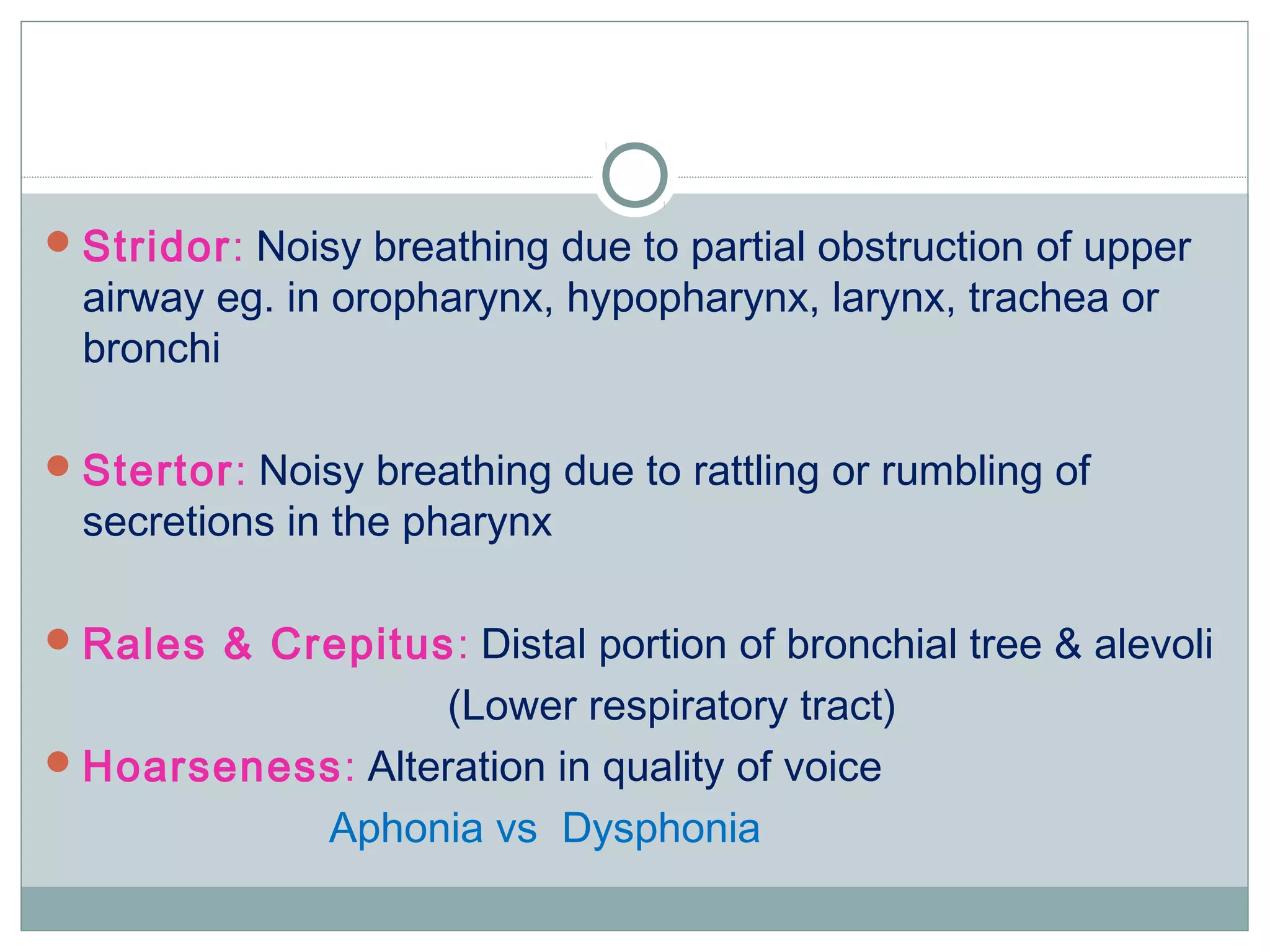
Stridor: Noisy breathing due to partial obstruction of upper
airway eg. in oropharynx, hypopharynx, larynx, trachea or
bronchi
Stertor: Noisy breathing due to rattling or rumbling of
secretions in the pharynx
Rales & Crepitus: Distal portion of bronchial tree & alevoli
(Lower respiratory tract)
Hoarseness: Alteration in quality of voice
Aphonia vs Dysphonia
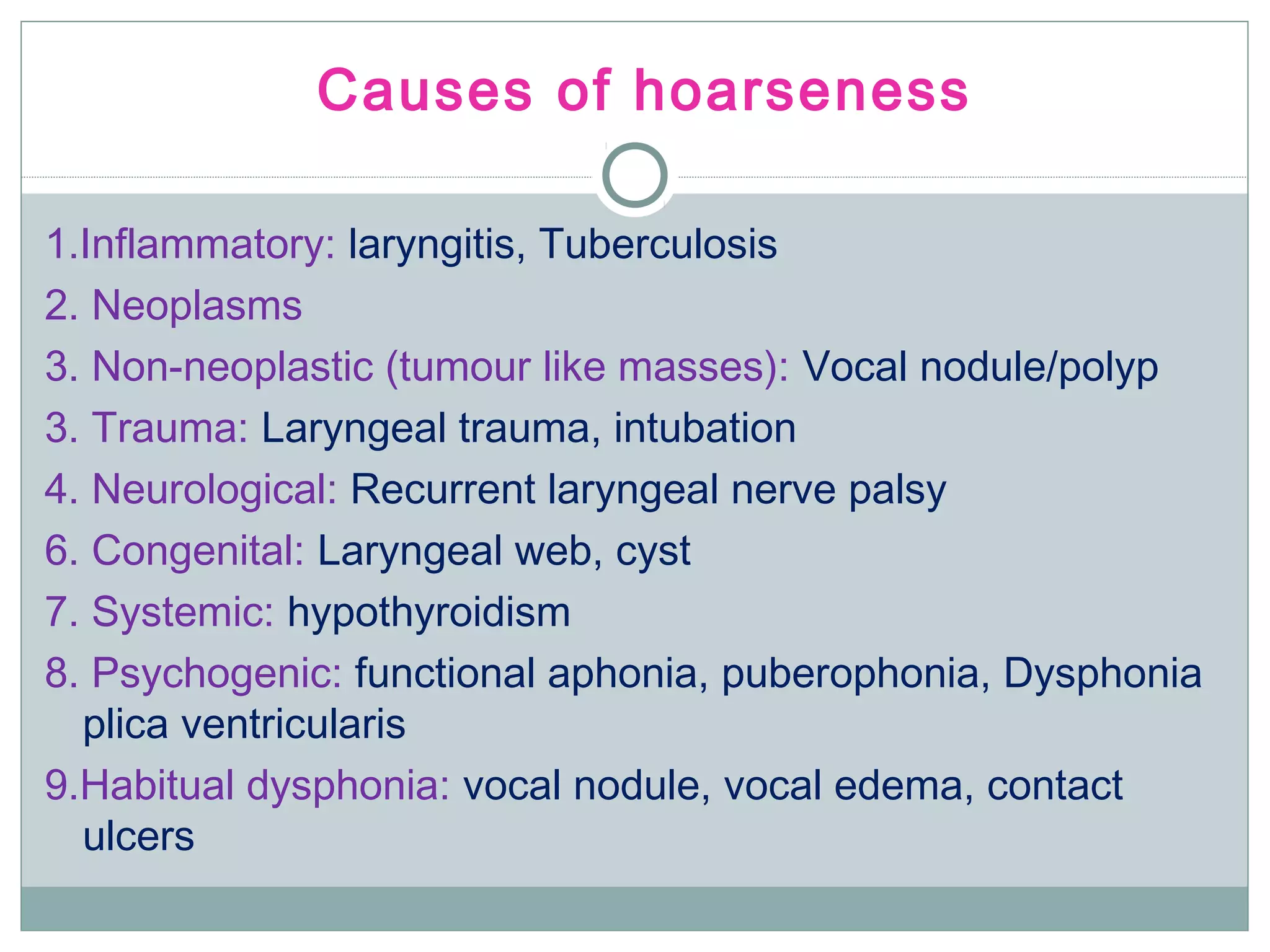
Causes of hoarseness
1.Inflammatory: laryngitis, Tuberculosis
2. Neoplasms
3. Non-neoplastic (tumour like masses): Vocal nodule/polyp
3. Trauma: Laryngeal trauma, intubation
4. Neurological: Recurrent laryngeal nerve palsy
6. Congenital: Laryngeal web, cyst
7. Systemic: hypothyroidism
8. Psychogenic: functional aphonia, puberophonia, Dysphonia
plica ventricularis
9.Habitual dysphonia: vocal nodule, vocal edema, contact
ulcers
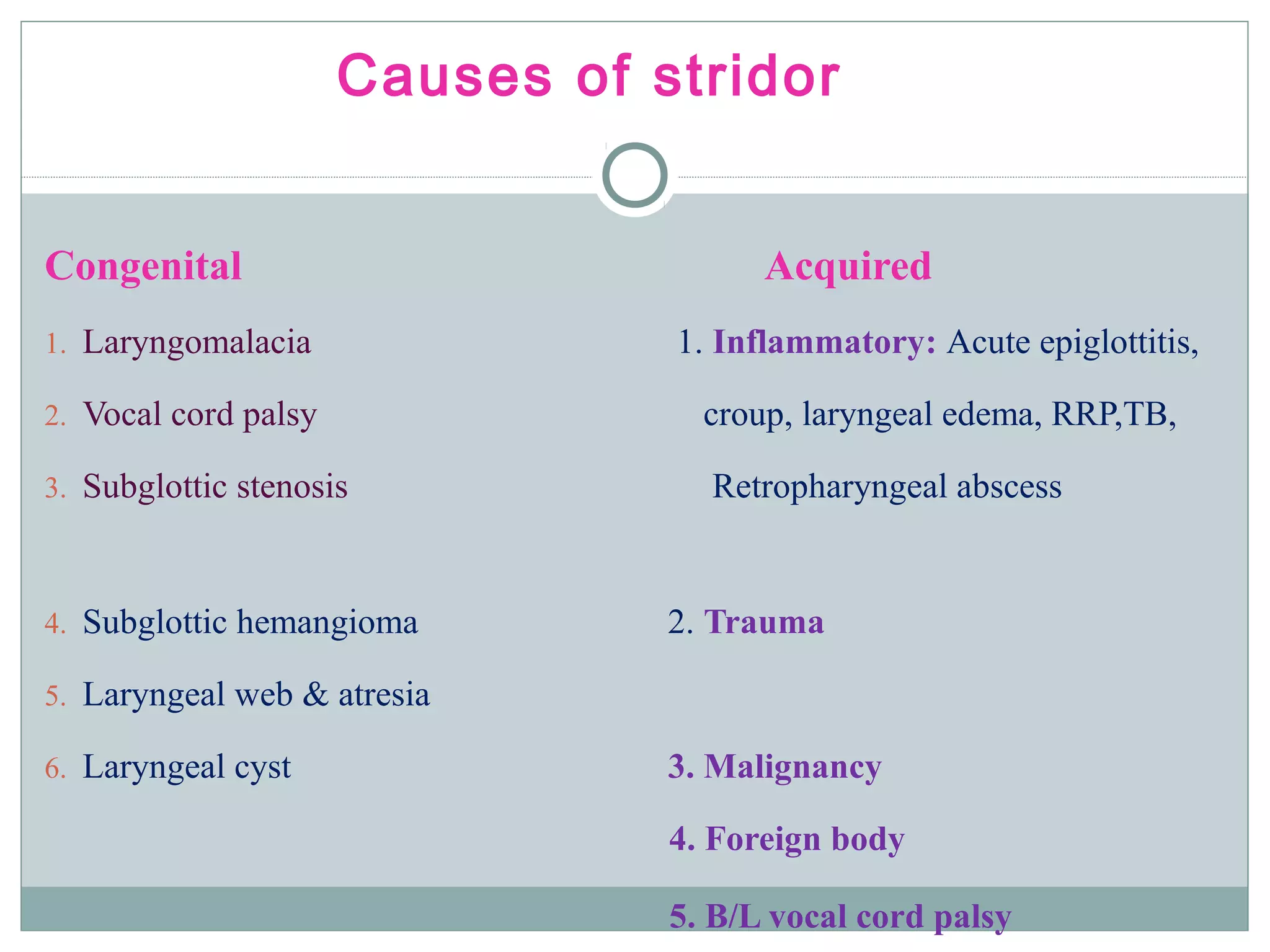
Congenital Acquired
1. Laryngomalacia 1. Inflammatory: Acute epiglottitis,
2. Vocal cord palsy croup, laryngeal edema, RRP,TB,
3. Subglottic stenosis Retropharyngeal abscess
4. Subglottic hemangioma 2. Trauma
5. Laryngeal web & atresia
6. Laryngeal cyst 3. Malignancy
4. Foreign body
5. B/L vocal cord palsy
Causes of stridor
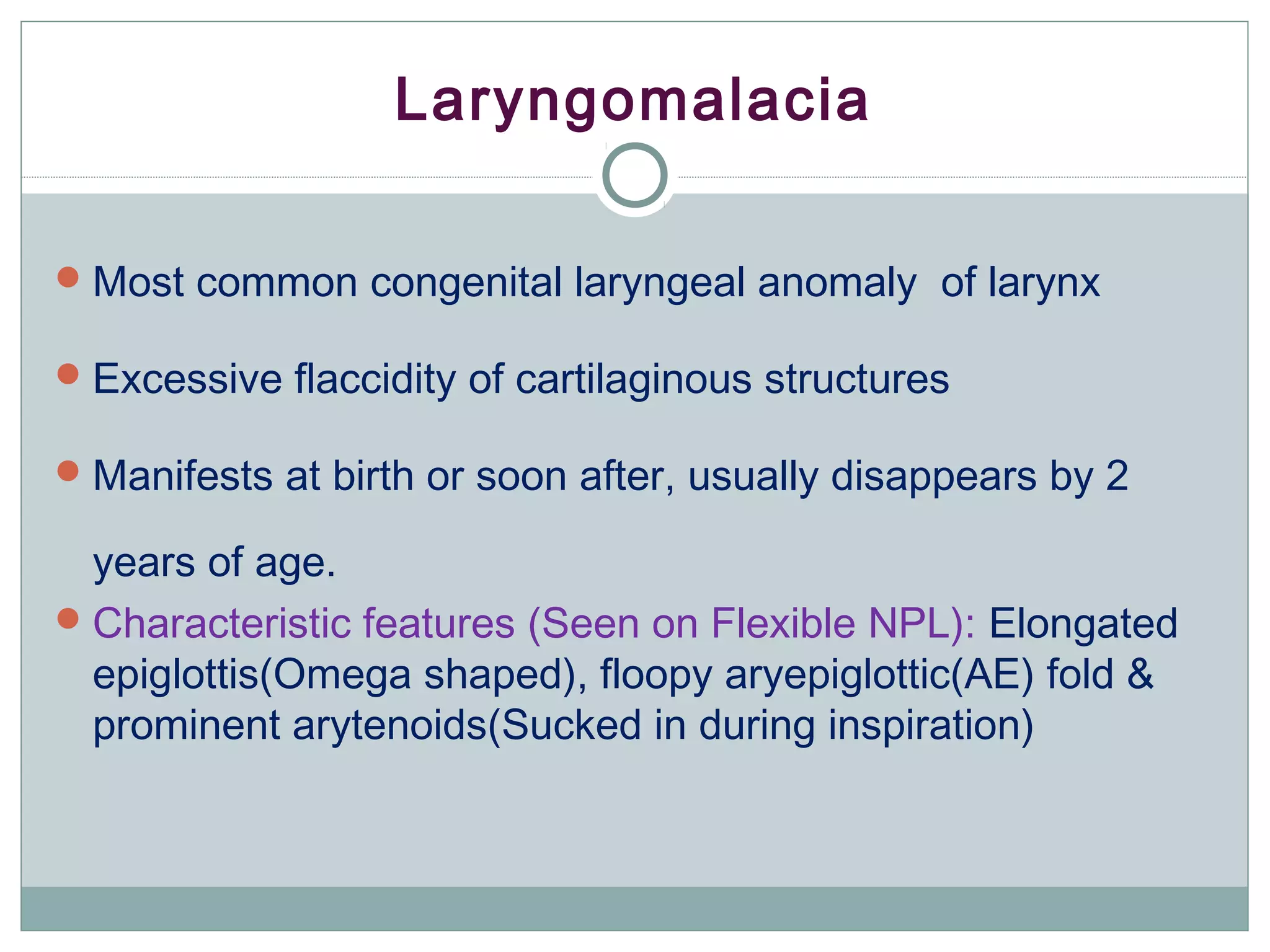
Laryngomalacia
Most common congenital laryngeal anomaly of larynx
Excessive flaccidity of cartilaginous structures
Manifests at birth or soon after, usually disappears by 2
years of age.
Characteristic features (Seen on Flexible NPL): Elongated
epiglottis(Omega shaped), floopy aryepiglottic(AE) fold &
prominent arytenoids(Sucked in during inspiration)
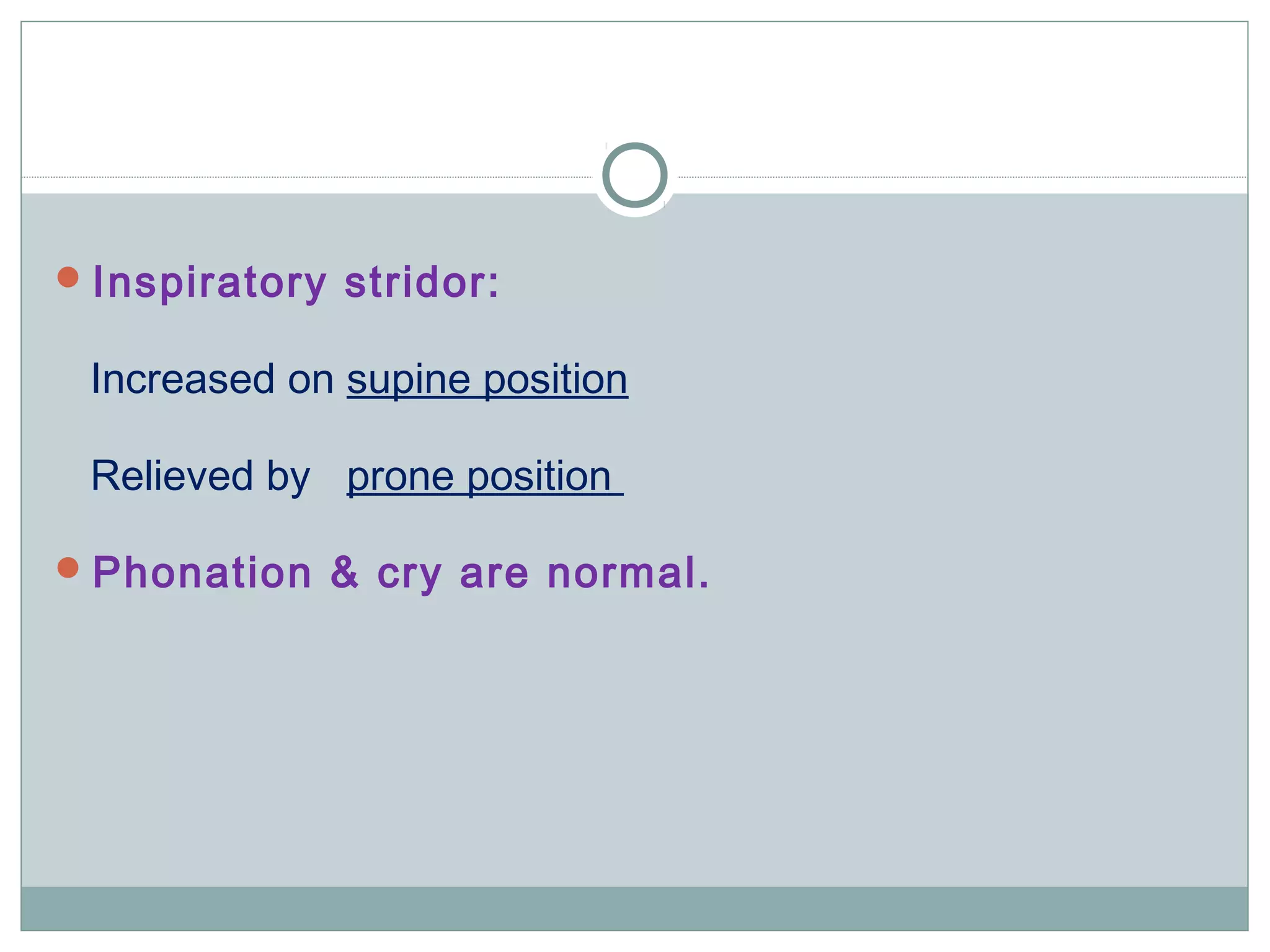
Inspiratory stridor:
Increased on supine position
Relieved by prone position
Phonation & cry are normal.
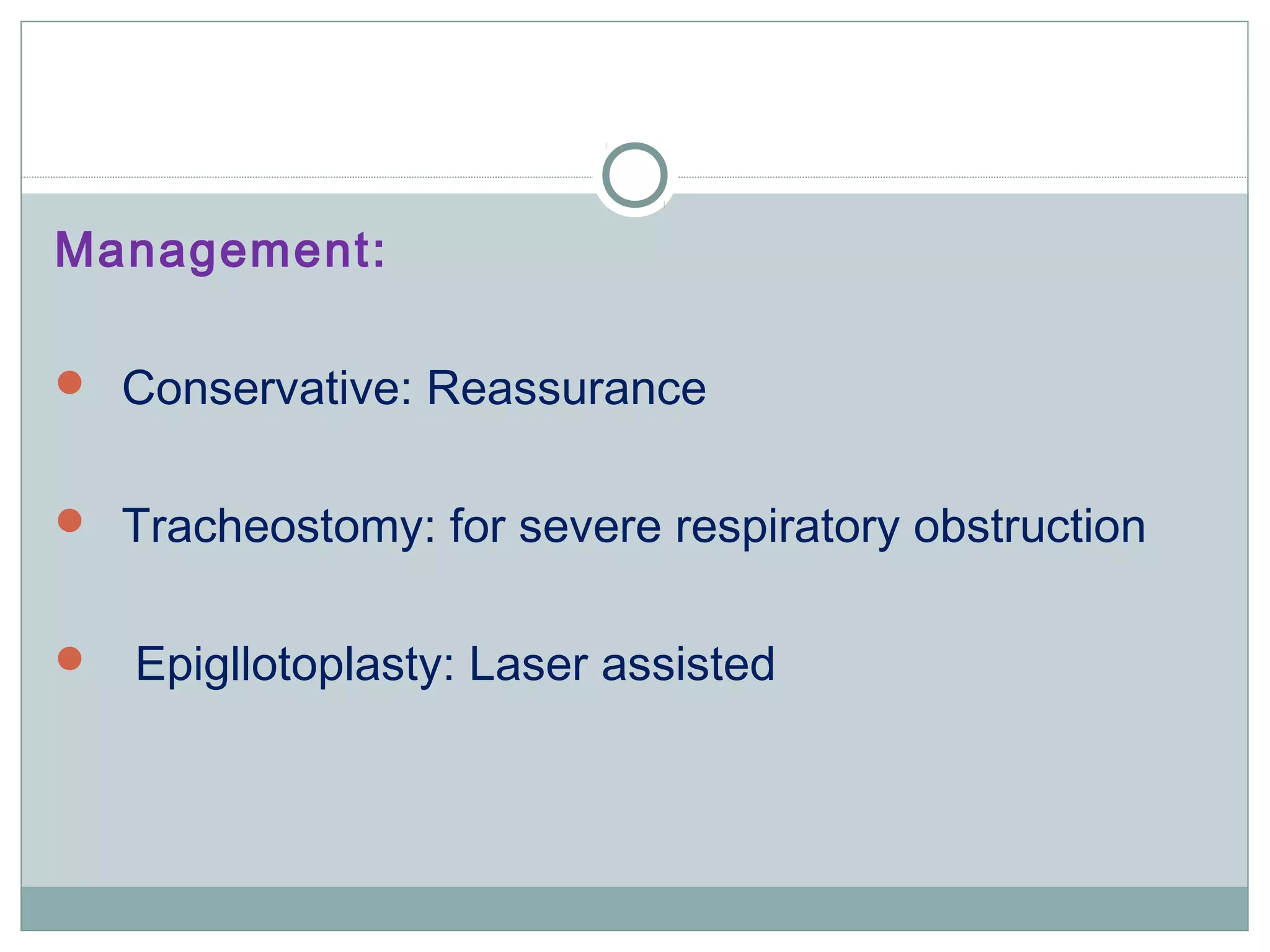
Management:
 Conservative: Reassurance
 Tracheostomy: for severe respiratory obstruction
 Epigllotoplasty: Laser assisted
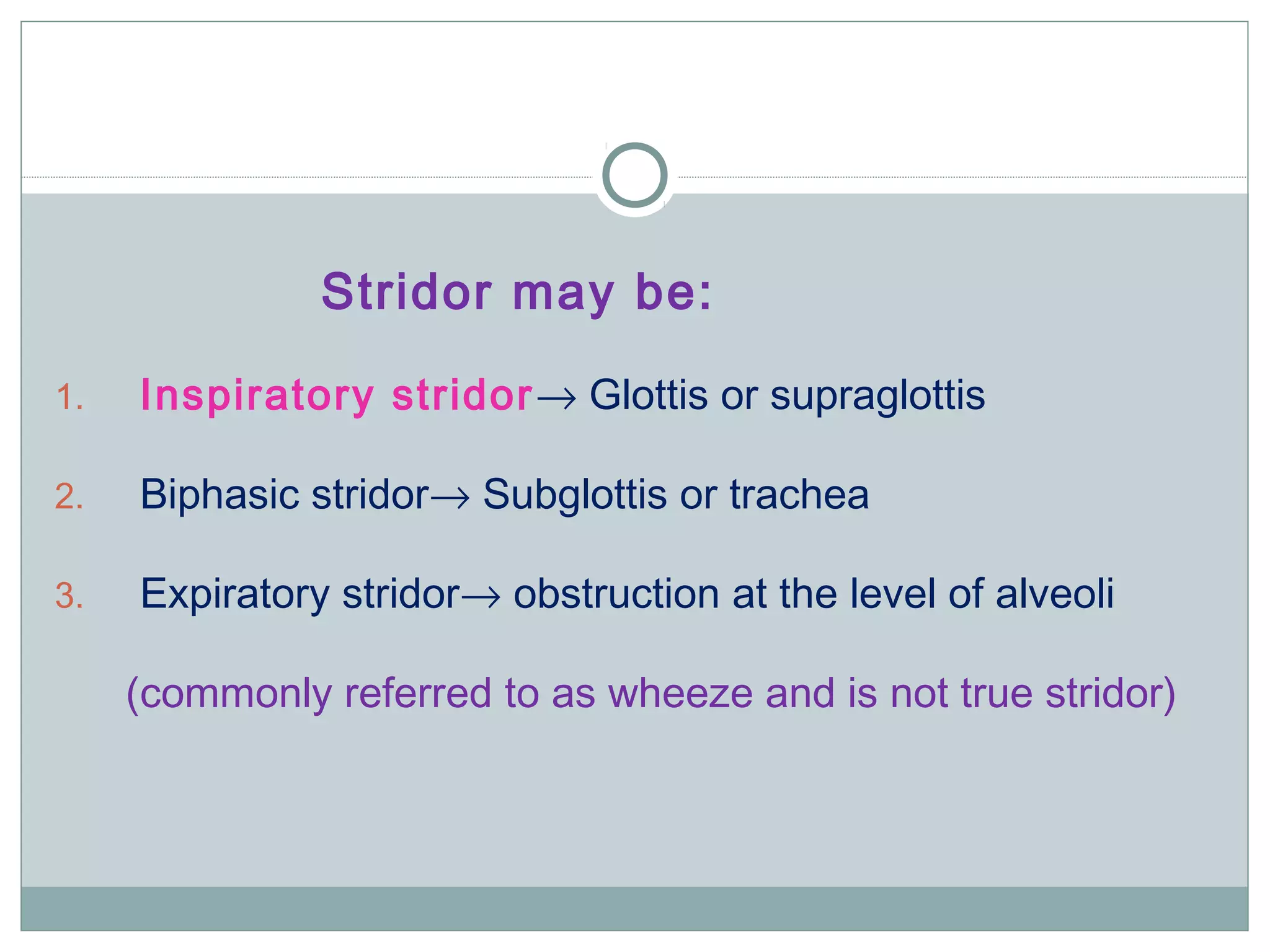
Stridor may be:
1. Inspiratory stridor→ Glottis or supraglottis
2. Biphasic stridor→ Subglottis or trachea
3. Expiratory stridor→ obstruction at the level of alveoli
(commonly referred to as wheeze and is not true stridor)
History
1.Time of onset: Congenital or acquired
2. Mode of onset:
Sudden onset → Foreign body, Trauma, Infection
Gradual(insidious) onset + progressive → Laryngomalacia,
Stenosis, Respiratory papillomatosis, Neoplasms
3. Relation to feeding → Aspiration due to laryngeal paralysis,
esophageal obstruction
4. Relation to sleep and body position:
Present only during sleep Stertor
Disappears in prone position Laryngomalacia
Physical examination:
Stridor is always associated with respiratory distress.
Signs of airway resistance: Nasal flaring, intercostal/
subcostal / supraclavicular recession, cyanosis
Investigations
1. X-Ray soft tissue neck: Epiglottitis, Stenosis
2. X-Ray chest: Mediastinal lesion
3. Flexible Nasopharyngolaryngoscopy (NPL)
4. Direct laryngoscopy & Bronchoscopy
5. Imaging (CT/MRI) of neck & chest
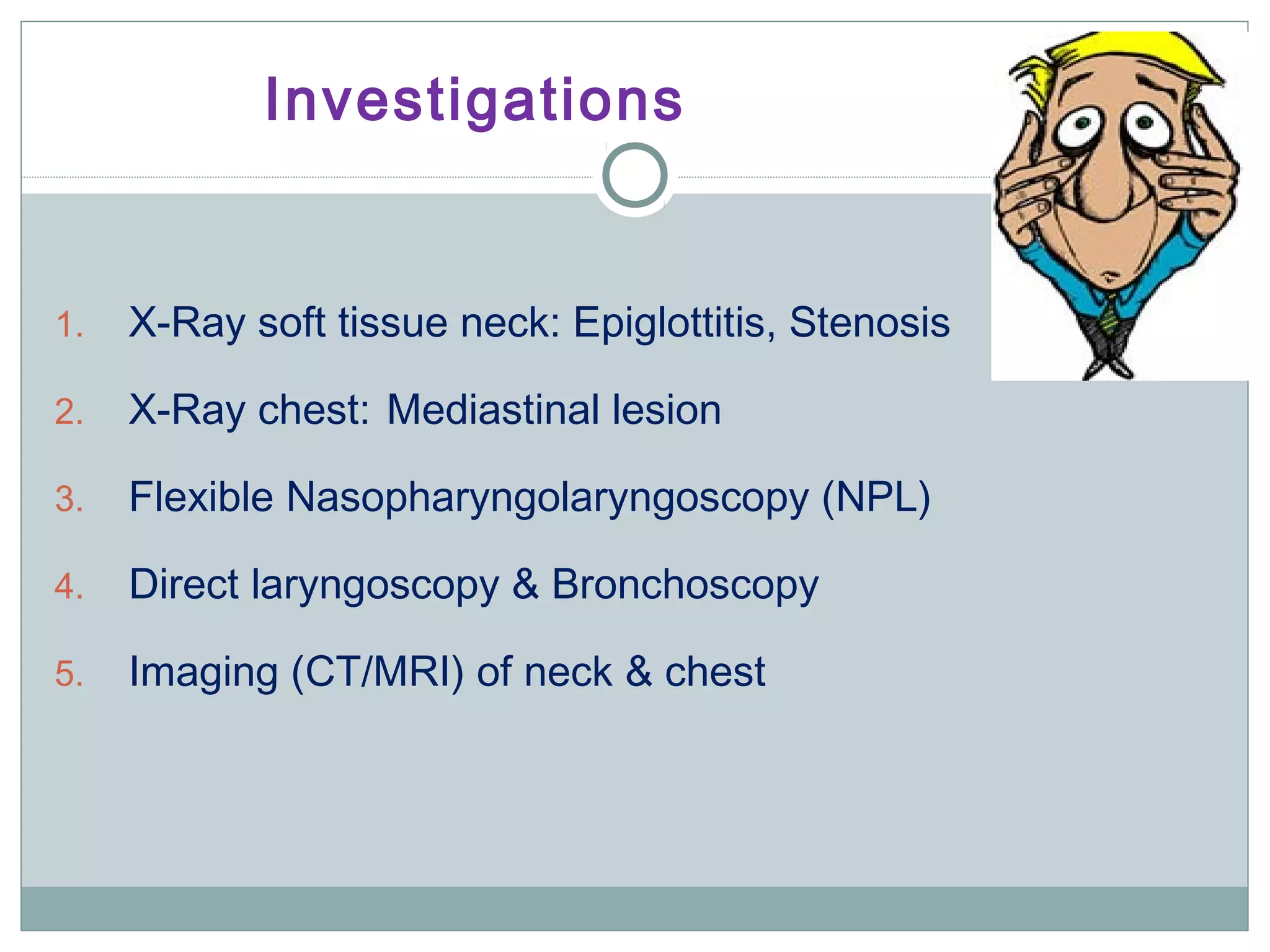
Nasopharyngolaryngoscopy(NPL): B/L abductor
palsy
1. Heimlich manoeuvre
2. Oropharyngeal or nasal airway
3. Intubation
4. Wide bore needle
5. Cricothyroidotomy
6. Tracheostomy
Management of obstructed airway
Acute life threatening respiratory obstruction
Vs
Gradual onset respiratory obstruction
Acute life threatening resp. obstruction: FB, inhalation of food
bolus, trauma, infection, late presentation of large neoplasms of
larynx/hypopharynx (esp.in Nepal)
Gradual onset resp. obstruction: Neoplasms of
larynx/hypopharynx, subglottic/tracheal stenosis, infection, blunt
laryngeal trauma
Signs of worsening (increasing stridor) in gradual
onset respiratory obstruction
Stridor at rest
Restless
Patient can’t lie flat in bed
Rising pulse rate
Patient using accessory muscles of respiration: intercostal
recession
Intubation or Tracheostomy
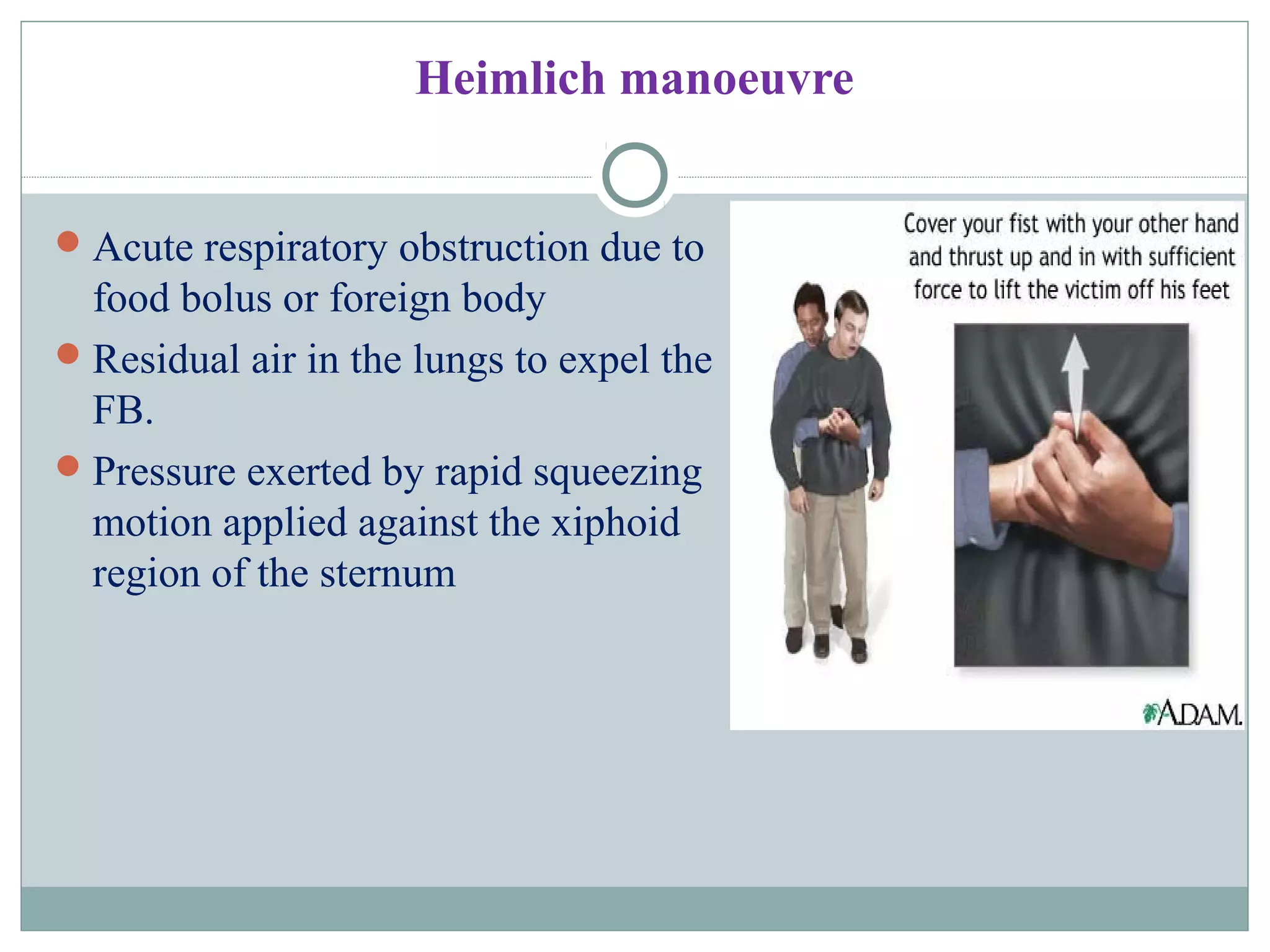
Heimlich manoeuvre
Acute respiratory obstruction due to
food bolus or foreign body
Residual air in the lungs to expel the
FB.
Pressure exerted by rapid squeezing
motion applied against the xiphoid
region of the sternum
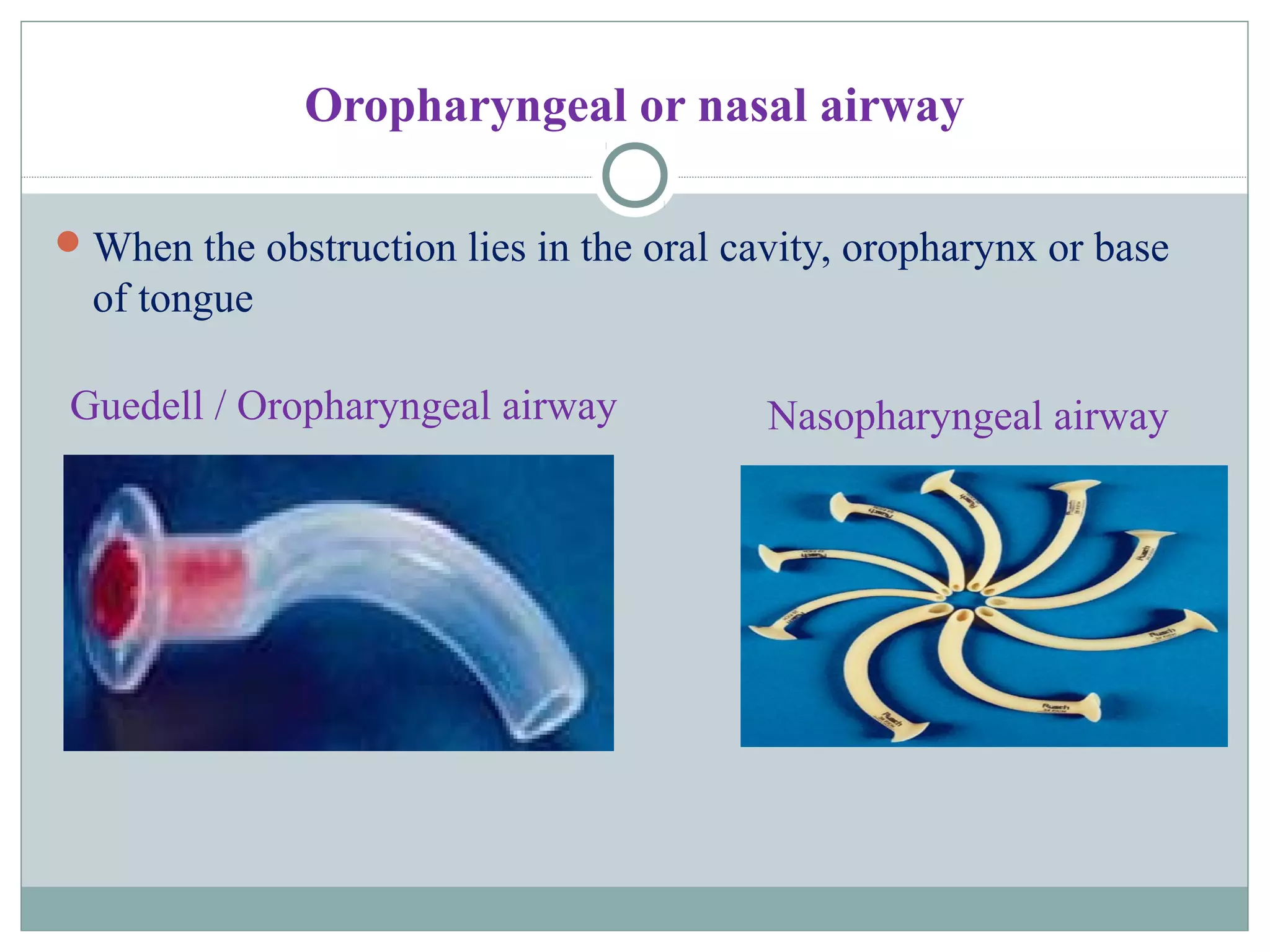
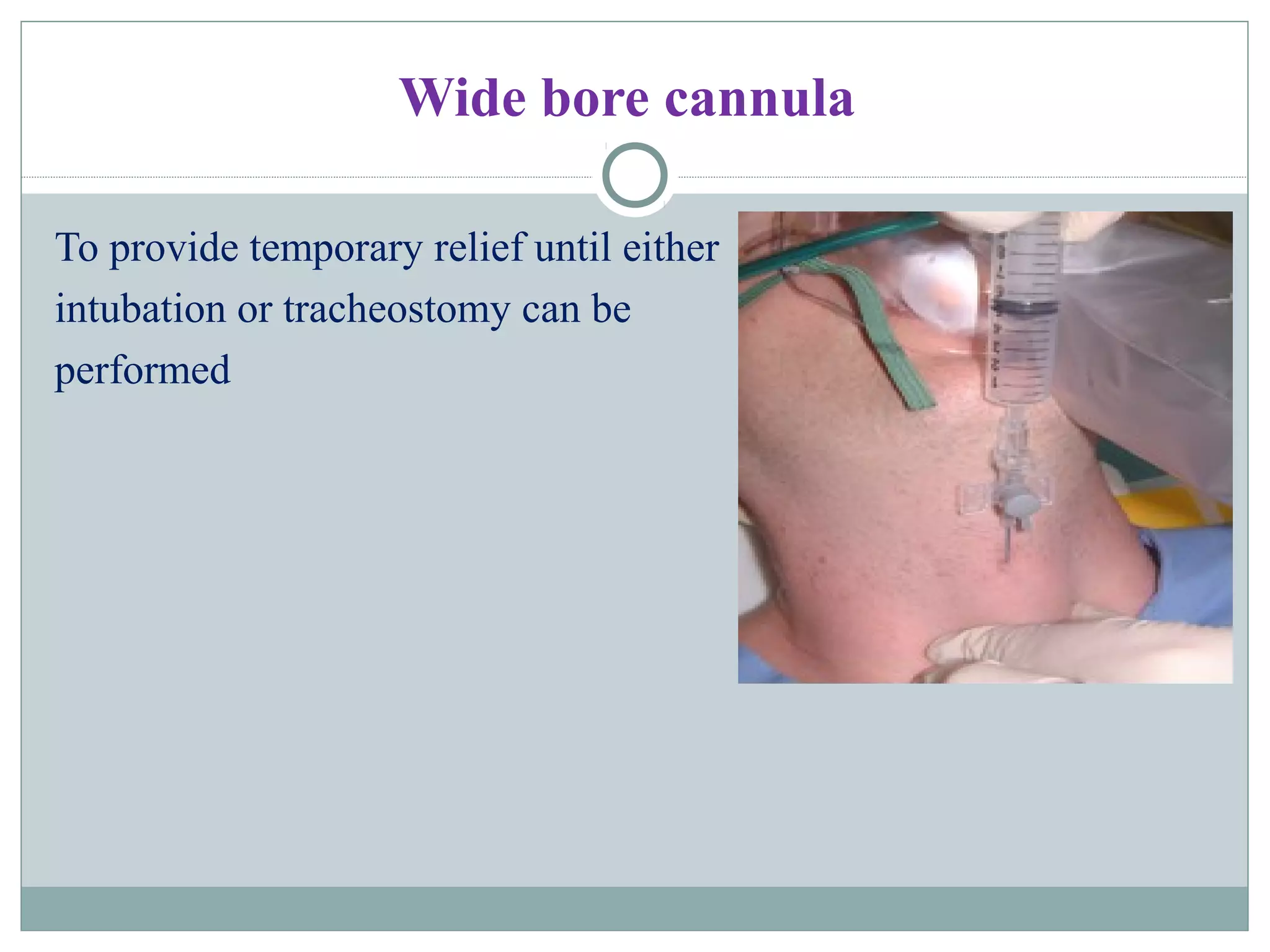
Oropharyngeal or nasal airway
When the obstruction lies in the oral cavity, oropharynx or base
of tongue
Guedell / Oropharyngeal airway Nasopharyngeal airway
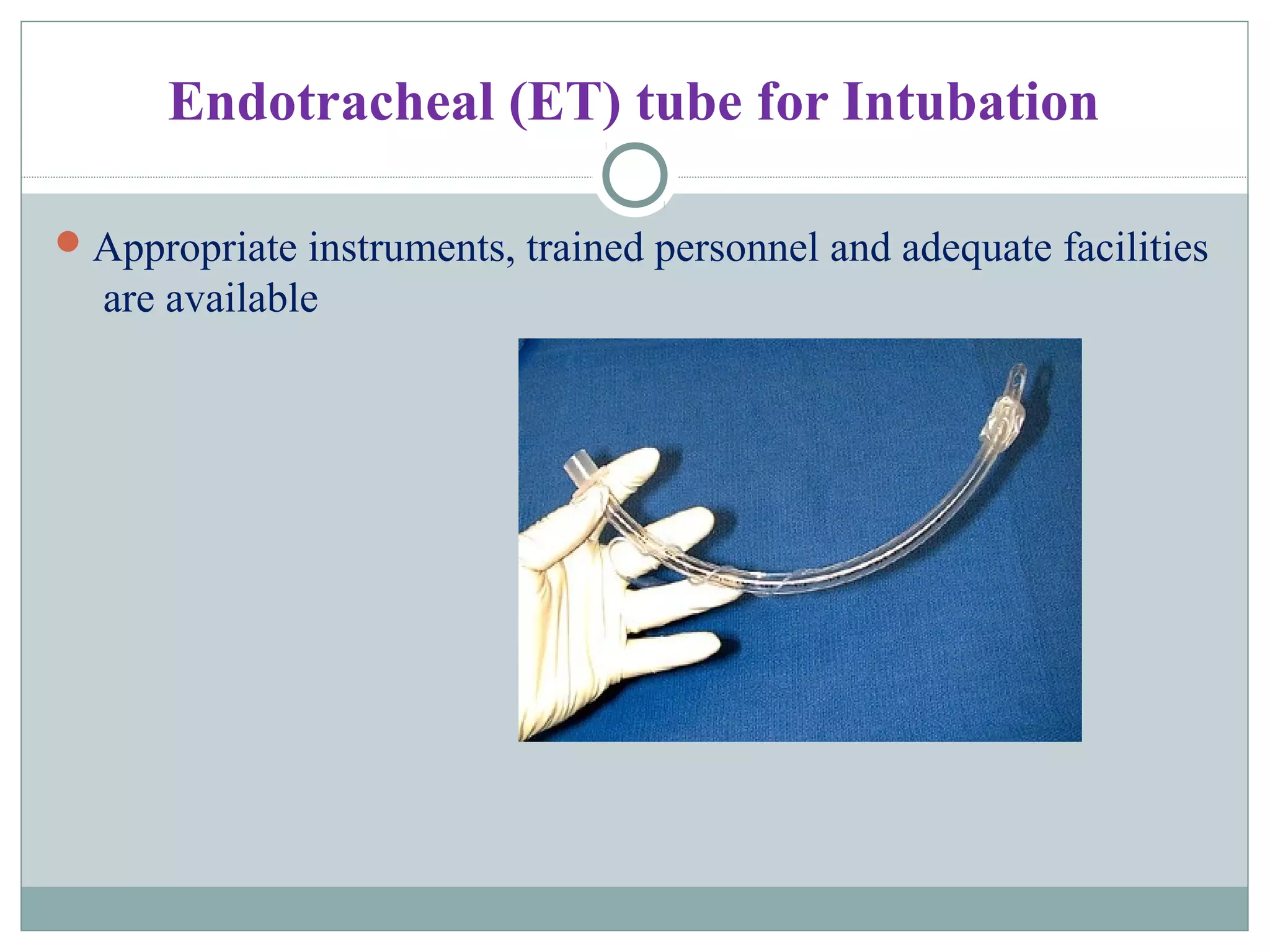
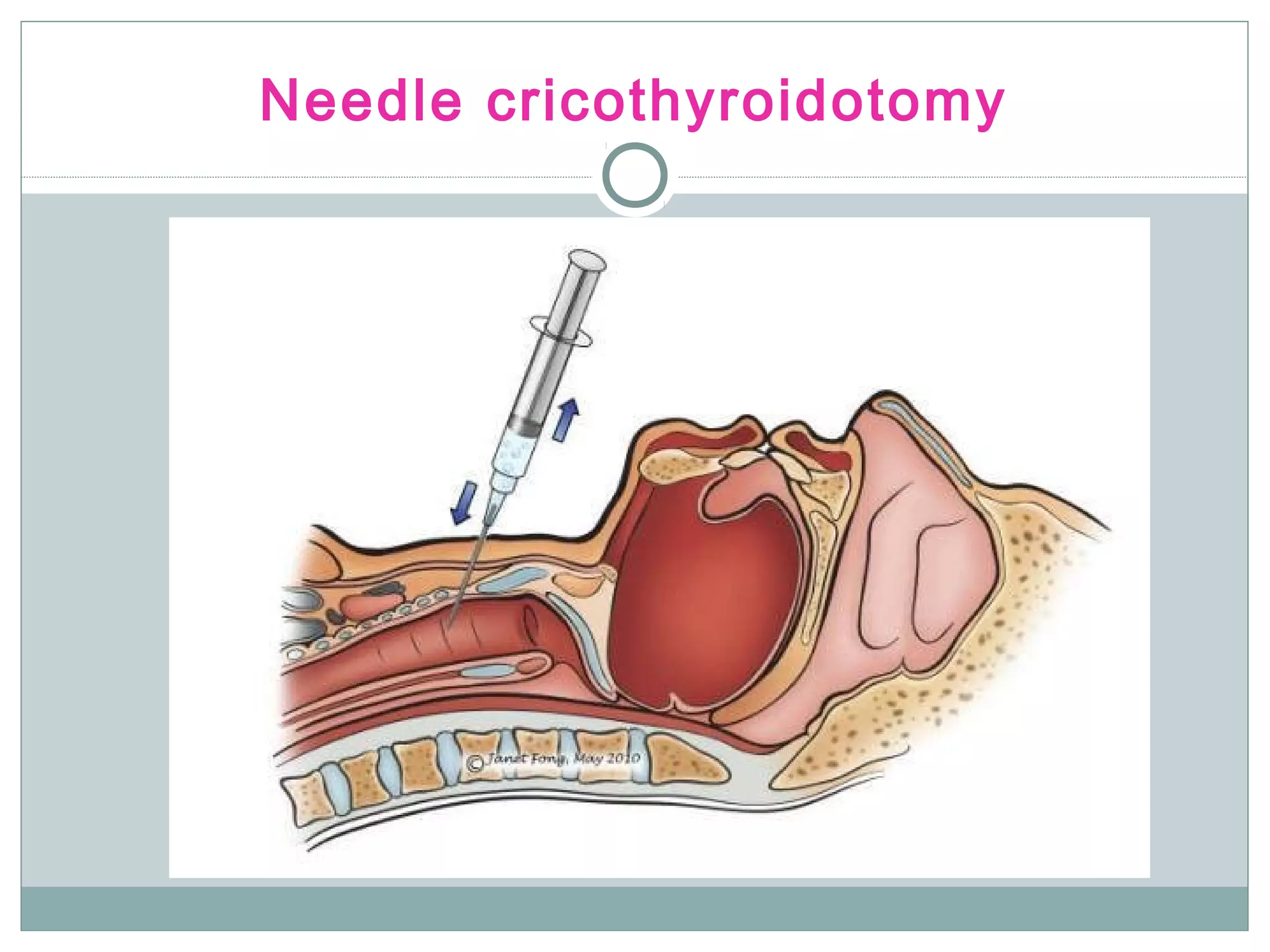
Wide bore cannula
To provide temporary relief until either
intubation or tracheostomy can be
performed
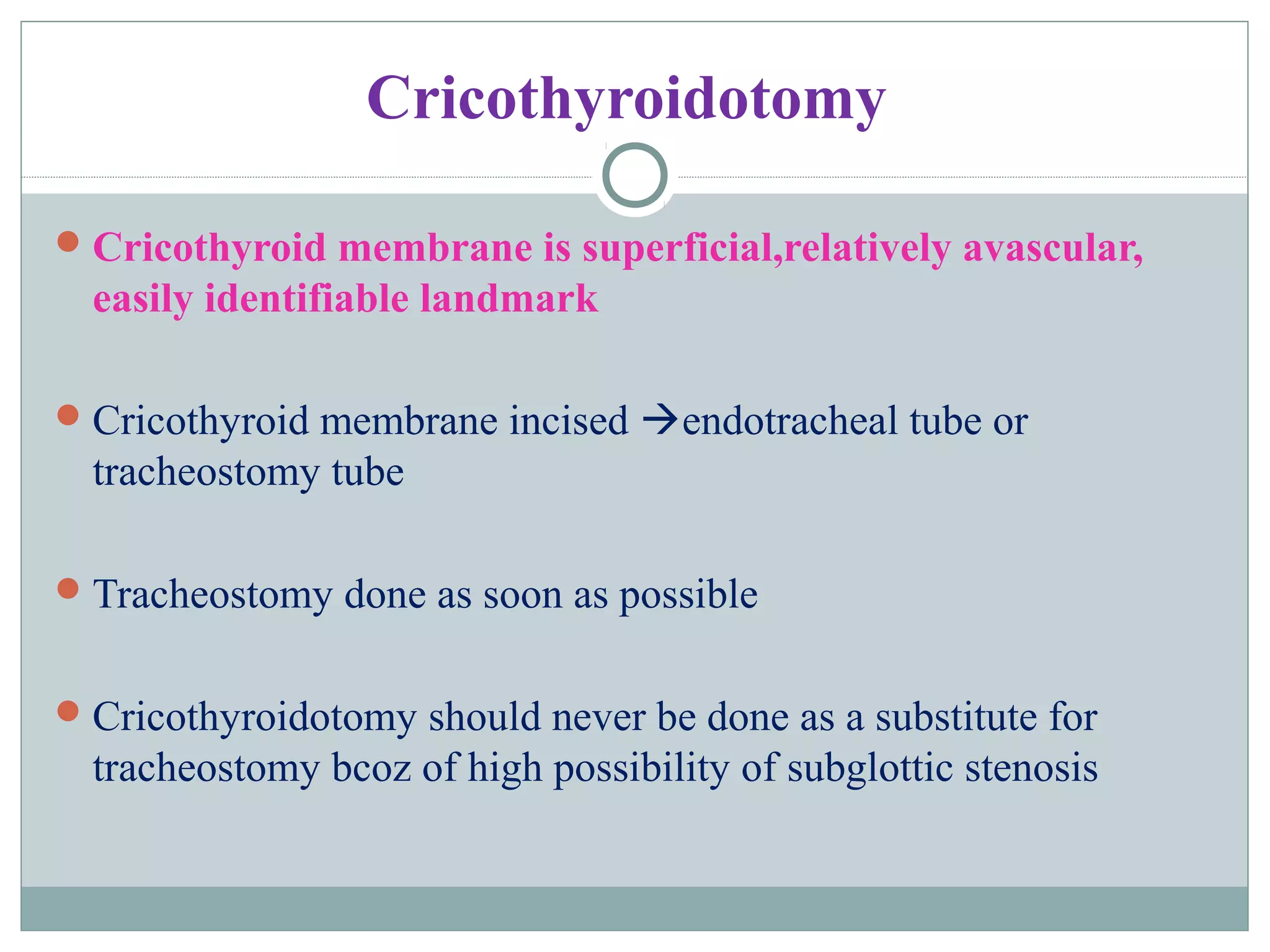
Endotracheal (ET) tube for Intubation
Appropriate instruments, trained personnel and adequate facilities
are available
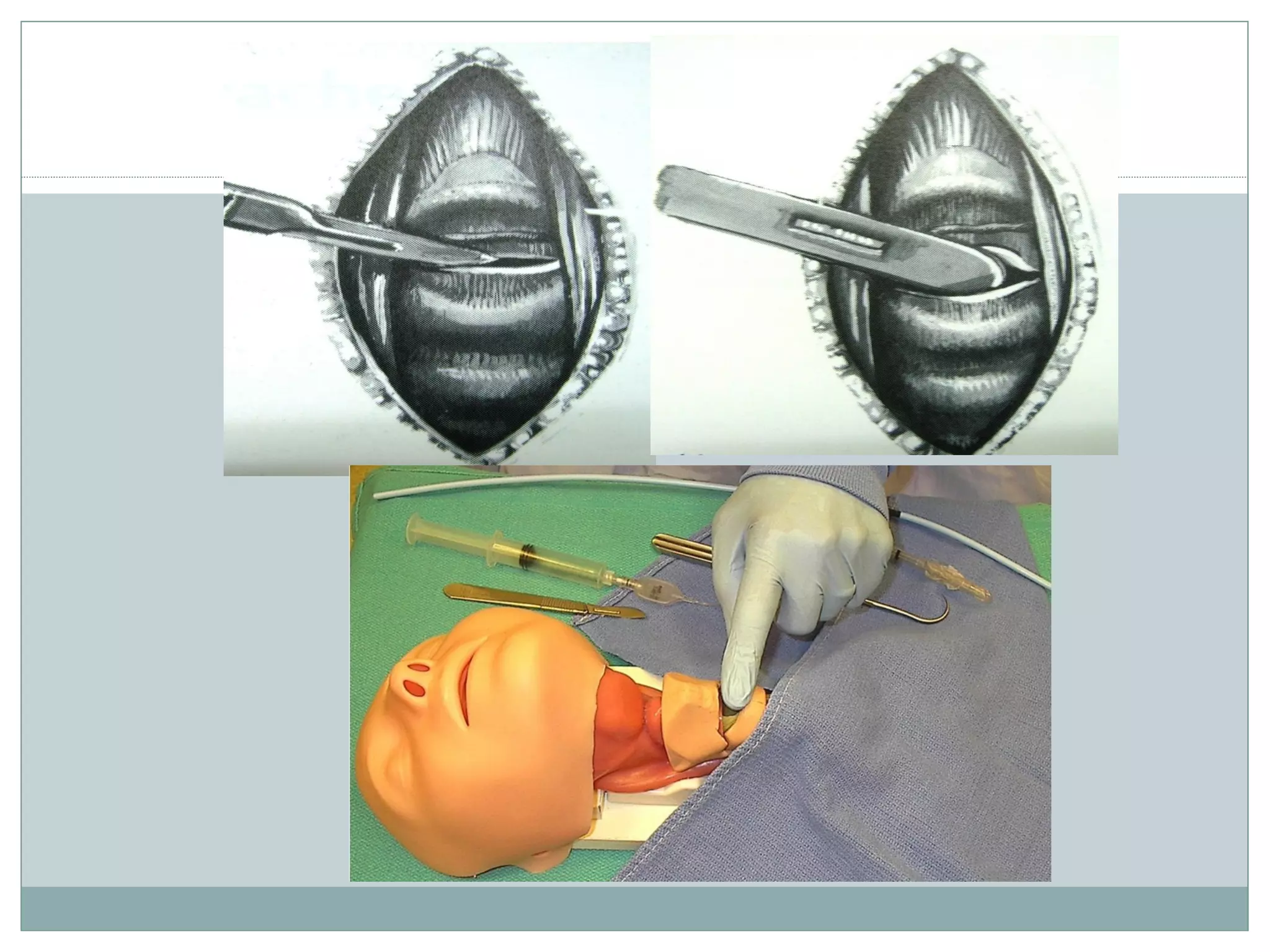
Cricothyroidotomy
Cricothyroid membrane is superficial,relatively avascular,
easily identifiable landmark
Cricothyroid membrane incised endotracheal tube or
tracheostomy tube
Tracheostomy done as soon as possible
Cricothyroidotomy should never be done as a substitute for
tracheostomy bcoz of high possibility of subglottic stenosis
Needle cricothyroidotomy
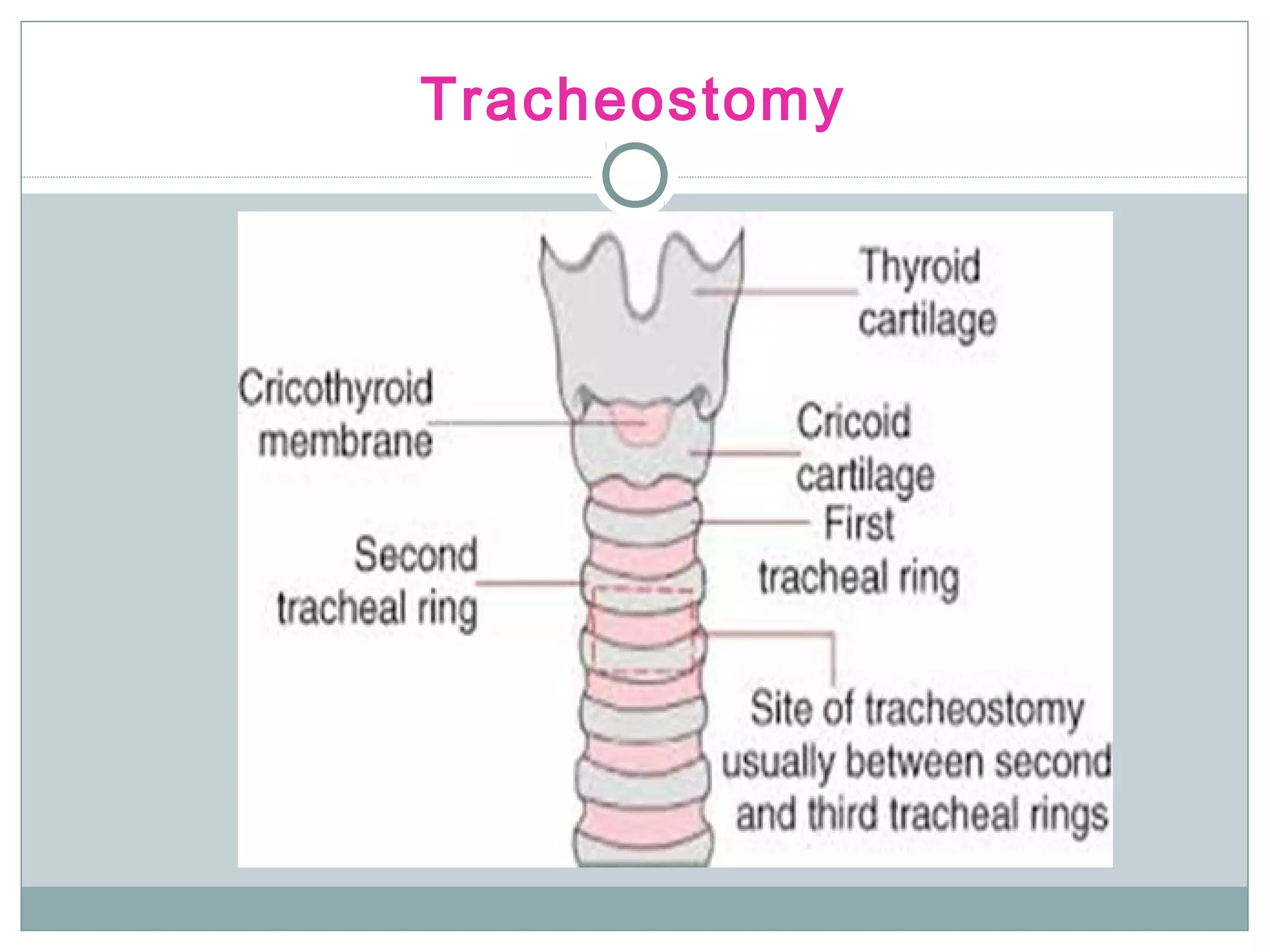
Tracheostomy
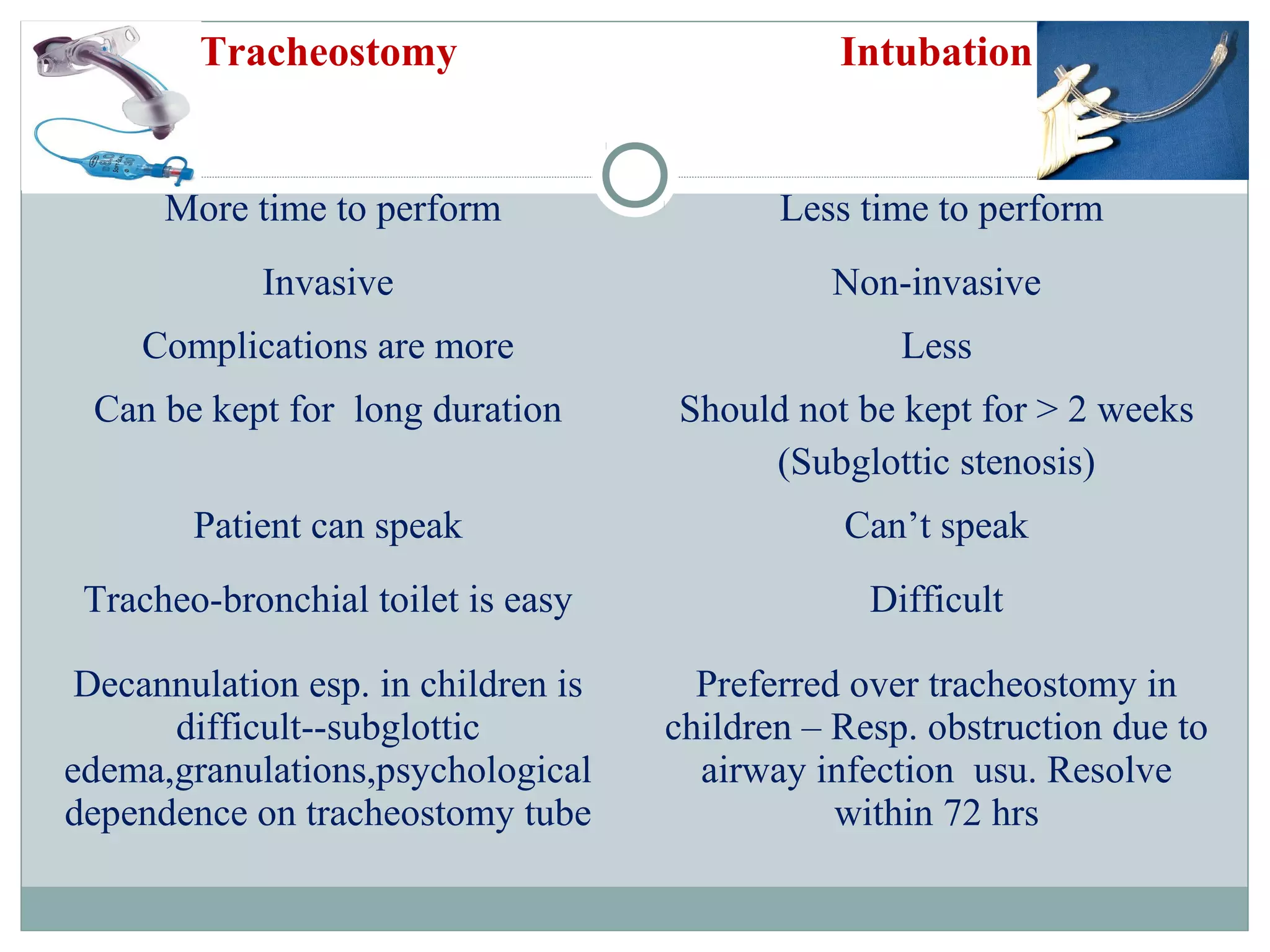
Tracheostomy Intubation
More time to perform Less time to perform
Invasive Non-invasive
Complications are more Less
Can be kept for long duration Should not be kept for > 2 weeks
(Subglottic stenosis)
Patient can speak Can’t speak
Tracheo-bronchial toilet is easy Difficult
Decannulation esp. in children is
difficult--subglottic
edema,granulations,psychological
dependence on tracheostomy tube
Preferred over tracheostomy in
children – Resp. obstruction due to
airway infection usu. Resolve
within 72 hrs
Thank you

Stridor and management of obstructed airway

  • 1.
    Dr. Ramesh Parajuli ChitwanMedical College Teaching Hospital Bharatpur- 10,Chitwan, Nepal Stridor & management of obstructed airway
  • 2.
    Stridor: Noisy breathingdue to partial obstruction of upper airway eg. in oropharynx, hypopharynx, larynx, trachea or bronchi Stertor: Noisy breathing due to rattling or rumbling of secretions in the pharynx Rales & Crepitus: Distal portion of bronchial tree & alevoli (Lower respiratory tract) Hoarseness: Alteration in quality of voice Aphonia vs Dysphonia
  • 3.
    Causes of hoarseness 1.Inflammatory:laryngitis, Tuberculosis 2. Neoplasms 3. Non-neoplastic (tumour like masses): Vocal nodule/polyp 3. Trauma: Laryngeal trauma, intubation 4. Neurological: Recurrent laryngeal nerve palsy 6. Congenital: Laryngeal web, cyst 7. Systemic: hypothyroidism 8. Psychogenic: functional aphonia, puberophonia, Dysphonia plica ventricularis 9.Habitual dysphonia: vocal nodule, vocal edema, contact ulcers
  • 4.
    Congenital Acquired 1. Laryngomalacia1. Inflammatory: Acute epiglottitis, 2. Vocal cord palsy croup, laryngeal edema, RRP,TB, 3. Subglottic stenosis Retropharyngeal abscess 4. Subglottic hemangioma 2. Trauma 5. Laryngeal web & atresia 6. Laryngeal cyst 3. Malignancy 4. Foreign body 5. B/L vocal cord palsy Causes of stridor
  • 5.
    Laryngomalacia Most common congenitallaryngeal anomaly of larynx Excessive flaccidity of cartilaginous structures Manifests at birth or soon after, usually disappears by 2 years of age. Characteristic features (Seen on Flexible NPL): Elongated epiglottis(Omega shaped), floopy aryepiglottic(AE) fold & prominent arytenoids(Sucked in during inspiration)
  • 6.
    Inspiratory stridor: Increased onsupine position Relieved by prone position Phonation & cry are normal.
  • 7.
    Management:  Conservative: Reassurance Tracheostomy: for severe respiratory obstruction  Epigllotoplasty: Laser assisted
  • 8.
    Stridor may be: 1.Inspiratory stridor→ Glottis or supraglottis 2. Biphasic stridor→ Subglottis or trachea 3. Expiratory stridor→ obstruction at the level of alveoli (commonly referred to as wheeze and is not true stridor)
  • 9.
    History 1.Time of onset:Congenital or acquired 2. Mode of onset: Sudden onset → Foreign body, Trauma, Infection Gradual(insidious) onset + progressive → Laryngomalacia, Stenosis, Respiratory papillomatosis, Neoplasms 3. Relation to feeding → Aspiration due to laryngeal paralysis, esophageal obstruction 4. Relation to sleep and body position: Present only during sleep Stertor Disappears in prone position Laryngomalacia
  • 10.
    Physical examination: Stridor isalways associated with respiratory distress. Signs of airway resistance: Nasal flaring, intercostal/ subcostal / supraclavicular recession, cyanosis
  • 11.
    Investigations 1. X-Ray softtissue neck: Epiglottitis, Stenosis 2. X-Ray chest: Mediastinal lesion 3. Flexible Nasopharyngolaryngoscopy (NPL) 4. Direct laryngoscopy & Bronchoscopy 5. Imaging (CT/MRI) of neck & chest
  • 12.
  • 13.
    1. Heimlich manoeuvre 2.Oropharyngeal or nasal airway 3. Intubation 4. Wide bore needle 5. Cricothyroidotomy 6. Tracheostomy Management of obstructed airway
  • 14.
    Acute life threateningrespiratory obstruction Vs Gradual onset respiratory obstruction Acute life threatening resp. obstruction: FB, inhalation of food bolus, trauma, infection, late presentation of large neoplasms of larynx/hypopharynx (esp.in Nepal) Gradual onset resp. obstruction: Neoplasms of larynx/hypopharynx, subglottic/tracheal stenosis, infection, blunt laryngeal trauma
  • 15.
    Signs of worsening(increasing stridor) in gradual onset respiratory obstruction Stridor at rest Restless Patient can’t lie flat in bed Rising pulse rate Patient using accessory muscles of respiration: intercostal recession Intubation or Tracheostomy
  • 16.
    Heimlich manoeuvre Acute respiratoryobstruction due to food bolus or foreign body Residual air in the lungs to expel the FB. Pressure exerted by rapid squeezing motion applied against the xiphoid region of the sternum
  • 17.
    Oropharyngeal or nasalairway When the obstruction lies in the oral cavity, oropharynx or base of tongue Guedell / Oropharyngeal airway Nasopharyngeal airway
  • 18.
    Wide bore cannula Toprovide temporary relief until either intubation or tracheostomy can be performed
  • 19.
    Endotracheal (ET) tubefor Intubation Appropriate instruments, trained personnel and adequate facilities are available
  • 20.
    Cricothyroidotomy Cricothyroid membrane issuperficial,relatively avascular, easily identifiable landmark Cricothyroid membrane incised endotracheal tube or tracheostomy tube Tracheostomy done as soon as possible Cricothyroidotomy should never be done as a substitute for tracheostomy bcoz of high possibility of subglottic stenosis
  • 22.
  • 23.
  • 24.
    Tracheostomy Intubation More timeto perform Less time to perform Invasive Non-invasive Complications are more Less Can be kept for long duration Should not be kept for > 2 weeks (Subglottic stenosis) Patient can speak Can’t speak Tracheo-bronchial toilet is easy Difficult Decannulation esp. in children is difficult--subglottic edema,granulations,psychological dependence on tracheostomy tube Preferred over tracheostomy in children – Resp. obstruction due to airway infection usu. Resolve within 72 hrs
  • 25.