Chapter 1.
Introduction to Training & Development
Learning Objectives
• To understand the concept ofTraining & Development
• To know the factors which influenceTraining
• To learn the different types ofTraining
• To understand the process ofTraining
• To identify the key roles inTraining
Key Components of Learning
• Learning
• Acquiring knowledge, skills, competencies, attitudes, or behaviors
• Human Capital
• Knowledge
• Advanced skills
• System understanding and creativity
• Motivation to deliver high-quality products and services
Key Components of Learning
• Training
• Facilitates learning job-related competencies, knowledge, skills or behavior
• Development
• Future focused—includes formal education, job experiences, relationships, and
assessments
• FormalTraining and Development
• Developed and organized by the company
Key Components of Learning
• Informal learning
• Learner initiated
• Occurs without a trainer or instructor
• Motivated by an intent to develop
• Does not occur in a formal learning setting
• Breadth, depth, and timing is controlled by the employee
Key Components of Learning
• Explicit Knowledge
• Well documented, easily articulated, and easily transferred from person-to-
person
• Primary focus of formal training
• Tacit Knowledge
• Personal knowledge based on individual experiences that is difficult to codify
• Facilitated by informal learning
Key Components of Learning
• Knowledge Management
• Tools, processes, systems, structures, and cultures to improve the
creation, sharing, and use of knowledge
Importance ofTraining
• There are many challenges and opportunities in the workplace today
• Training equips individuals with necessary knowledge, skills, and abilities
• Training serves to attract employees to companies, engages, them, and
promotes retention
• Training helps to create a competitive advantage
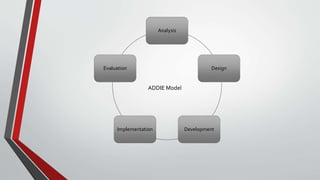
SystematicTraining Design
Analysis
Design
Development
Implementation
Evaluation
ADDIE Model
Forces Impacting Learning
Following factors have an impact on Learning:
• Economic cycles
• Globalization
• Value of intangible assets and human capital
• Focus on links to business strategy
• Diversity
• Generational differences
• Talent management
• New technology
• High-performance models of work systems
Economic Cycles
• In difficult times, companies may be tempted to reduce training
expenditures
• However, doing so may be detrimental
• For example, companies that used more selective staffing and training
before the recession of 2009 performed better and recovered more quickly
Globalization
• Global companies must find talented employees
• Expatriates require training for success
• Individuals from different countries come to the U.S. for low-skill work and
highly technical positions
• There are pros and cons of outsourcing
Intangible Assets
Implications
• Knowledge workers are becoming more important
• A greater focus on employee engagement is needed
• There is an increasing need for companies to become “learning
organizations”
Links to Business Strategy
• Given the importance of intangible assets and human capital, training has
greater strategic importance
• Training is no longer an isolated function, but rather an integral part of
business success
• Different companies have different strategic training needs—one size does
not fit all
5 Generations atWork by 2022
• Traditionalist
• Baby Boomers
• Generation X
• GenerationY—Millennials
• Generation Z—Digital Natives
Managing Diversity
• Communicating effectively
• Coaching, training, and developing
• Providing performance feedback that is free of stereotypes
• Recognizing and responding to generational differences
• Allowing employees of all backgrounds to be creative and innovative
Talent Management
• Systematic, planned, and strategic effort by a company to attract,
retain, develop, and motivate highly skilled talent
• Key components
• acquiring and assessing employees
• learning and development
• performance management and compensation
NewTechnology
• Technology has changed how we train
• Training can occur at any time, anywhere
• Training is more consistent and more realistic
• More individuals can now be trained
• Knowledge can be shared by readily
• Trainers roles have evolved
• Many organizations used blended training methods
Challenges withTechnology
• Not all trainees may be comfortable with technology
• It may be difficult to engage trainees and ensure compliance with training
• Some trainees may desire greater “live” interaction with trainers
High Performance Systems
• Work teams
• Employees interact to assemble a product or provide a service
• Cross training
• Training employees in a range of skills to fill roles needed to be performed
• Virtual teams
• Teams separated by time, geographic, and organizational boundaries
Training Roles
American Society forTraining and Development (ASTD, 1998) identified 11 roles of an HRD manager, which
can be enumerated as follows:
• Administrator: The role of providing coordination and support services for the delivery of HRD
programmes and services.
• Evaluator: The role of identifying the impact of an intervention on individual or organizational
effectiveness.
• Individual Career DevelopmentAdvisor: The role of helping individuals to assess personal competencies,
values and goals and to identify, plan and implement development and career actions.
• HRD Manager: The role of supporting and leading a group’s work and linking that work with the entire
organization.
Training Roles Cont..
• Instructor/Facilitator: The role of presenting information, directing structured learning experiences and managing group
discussions and group process.
• Marketer:The role of marketing and contracting from HRD viewpoints, programmes and services.
• Material Developer:The role of producing written and/or electronically mediated instructional materials.
• NeedsAnalyst: The role of identifying ideal and actual performance and performance conditions and determining causes of
discrepancies.
• OrganizationalChange: The role of influencing and supporting changes in organizational behaviour.
• Programme Designer: The role of preparing objectives, defining content and selecting and sequencing activities for a
specific intervention.
• Researcher:The role of identifying, developing or testing new information (theory, concepts, technology, models and
hardware) and translating these two implications for improved individual or organizational performance.
Skills in Demand
In the changed global business scenario, organizations need to develop the
following skills in all cross sections of employees to sustain in competition and
to achieve excellence.
• Partnership and collaboration skills
• Quick decision-making skill
• Skill to attract and retain the talents
• Skills to predict future
• Skills to integrate technology with the business
• Skill to balance the stakeholders need
ThankYou

Chapter 1-TnD.pptx

  • 1.
    Chapter 1. Introduction toTraining & Development
  • 2.
    Learning Objectives • Tounderstand the concept ofTraining & Development • To know the factors which influenceTraining • To learn the different types ofTraining • To understand the process ofTraining • To identify the key roles inTraining
  • 3.
    Key Components ofLearning • Learning • Acquiring knowledge, skills, competencies, attitudes, or behaviors • Human Capital • Knowledge • Advanced skills • System understanding and creativity • Motivation to deliver high-quality products and services
  • 4.
    Key Components ofLearning • Training • Facilitates learning job-related competencies, knowledge, skills or behavior • Development • Future focused—includes formal education, job experiences, relationships, and assessments • FormalTraining and Development • Developed and organized by the company
  • 5.
    Key Components ofLearning • Informal learning • Learner initiated • Occurs without a trainer or instructor • Motivated by an intent to develop • Does not occur in a formal learning setting • Breadth, depth, and timing is controlled by the employee
  • 6.
    Key Components ofLearning • Explicit Knowledge • Well documented, easily articulated, and easily transferred from person-to- person • Primary focus of formal training • Tacit Knowledge • Personal knowledge based on individual experiences that is difficult to codify • Facilitated by informal learning
  • 7.
    Key Components ofLearning • Knowledge Management • Tools, processes, systems, structures, and cultures to improve the creation, sharing, and use of knowledge
  • 8.
    Importance ofTraining • Thereare many challenges and opportunities in the workplace today • Training equips individuals with necessary knowledge, skills, and abilities • Training serves to attract employees to companies, engages, them, and promotes retention • Training helps to create a competitive advantage
  • 9.
  • 10.
  • 11.
    Forces Impacting Learning Followingfactors have an impact on Learning: • Economic cycles • Globalization • Value of intangible assets and human capital • Focus on links to business strategy • Diversity • Generational differences • Talent management • New technology • High-performance models of work systems
  • 12.
    Economic Cycles • Indifficult times, companies may be tempted to reduce training expenditures • However, doing so may be detrimental • For example, companies that used more selective staffing and training before the recession of 2009 performed better and recovered more quickly
  • 13.
    Globalization • Global companiesmust find talented employees • Expatriates require training for success • Individuals from different countries come to the U.S. for low-skill work and highly technical positions • There are pros and cons of outsourcing
  • 14.
  • 15.
    Implications • Knowledge workersare becoming more important • A greater focus on employee engagement is needed • There is an increasing need for companies to become “learning organizations”
  • 16.
    Links to BusinessStrategy • Given the importance of intangible assets and human capital, training has greater strategic importance • Training is no longer an isolated function, but rather an integral part of business success • Different companies have different strategic training needs—one size does not fit all
  • 17.
    5 Generations atWorkby 2022 • Traditionalist • Baby Boomers • Generation X • GenerationY—Millennials • Generation Z—Digital Natives
  • 18.
    Managing Diversity • Communicatingeffectively • Coaching, training, and developing • Providing performance feedback that is free of stereotypes • Recognizing and responding to generational differences • Allowing employees of all backgrounds to be creative and innovative
  • 19.
    Talent Management • Systematic,planned, and strategic effort by a company to attract, retain, develop, and motivate highly skilled talent • Key components • acquiring and assessing employees • learning and development • performance management and compensation
  • 20.
    NewTechnology • Technology haschanged how we train • Training can occur at any time, anywhere • Training is more consistent and more realistic • More individuals can now be trained • Knowledge can be shared by readily • Trainers roles have evolved • Many organizations used blended training methods
  • 21.
    Challenges withTechnology • Notall trainees may be comfortable with technology • It may be difficult to engage trainees and ensure compliance with training • Some trainees may desire greater “live” interaction with trainers
  • 22.
    High Performance Systems •Work teams • Employees interact to assemble a product or provide a service • Cross training • Training employees in a range of skills to fill roles needed to be performed • Virtual teams • Teams separated by time, geographic, and organizational boundaries
  • 23.
    Training Roles American SocietyforTraining and Development (ASTD, 1998) identified 11 roles of an HRD manager, which can be enumerated as follows: • Administrator: The role of providing coordination and support services for the delivery of HRD programmes and services. • Evaluator: The role of identifying the impact of an intervention on individual or organizational effectiveness. • Individual Career DevelopmentAdvisor: The role of helping individuals to assess personal competencies, values and goals and to identify, plan and implement development and career actions. • HRD Manager: The role of supporting and leading a group’s work and linking that work with the entire organization.
  • 24.
    Training Roles Cont.. •Instructor/Facilitator: The role of presenting information, directing structured learning experiences and managing group discussions and group process. • Marketer:The role of marketing and contracting from HRD viewpoints, programmes and services. • Material Developer:The role of producing written and/or electronically mediated instructional materials. • NeedsAnalyst: The role of identifying ideal and actual performance and performance conditions and determining causes of discrepancies. • OrganizationalChange: The role of influencing and supporting changes in organizational behaviour. • Programme Designer: The role of preparing objectives, defining content and selecting and sequencing activities for a specific intervention. • Researcher:The role of identifying, developing or testing new information (theory, concepts, technology, models and hardware) and translating these two implications for improved individual or organizational performance.
  • 25.
    Skills in Demand Inthe changed global business scenario, organizations need to develop the following skills in all cross sections of employees to sustain in competition and to achieve excellence. • Partnership and collaboration skills • Quick decision-making skill • Skill to attract and retain the talents • Skills to predict future • Skills to integrate technology with the business • Skill to balance the stakeholders need
  • 26.