TRAINING &
DEVELOPMENT
 STRATEGIES
                  Lijoe Mathew
                     Sini Rajan
                       S4 MBA
              MACFAST,Tiruvalla
TRAINING AND DEVELOPMENT

 Training and development is vital part of the human

  resource development.

 It is a subsystem of an organization.

 It ensures that randomness is reduced and learning or
  behavioral change takes place in structured format.

 Training and Development refers to the process to
  obtain or transfer knowledge, skills and abilities needed
  to carry out a specific activity or task.
Training(today……)


“An organization’s planned efforts to help employees acquire
 job-related knowledge, skills, abilities, and behaviors, with the
 goal of applying these on the job.”
Development(tomorrow….)


“Learning   that goes beyond today’s job and has a long term
  focus, so development is Strategic Training”.
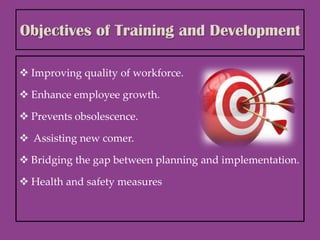
Objectives of Training and Development

 Improving quality of workforce.

 Enhance employee growth.

 Prevents obsolescence.

 Assisting new comer.

 Bridging the gap between planning and implementation.

 Health and safety measures
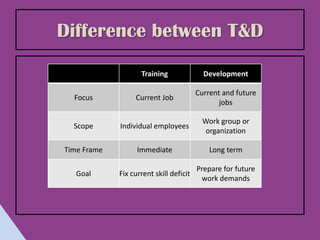
Difference between T&D

                    Training               Development

                                         Current and future
  Focus           Current Job
                                                jobs

                                           Work group or
  Scope      Individual employees
                                            organization

Time Frame         Immediate                 Long term

                                         Prepare for future
   Goal      Fix current skill deficit
                                          work demands
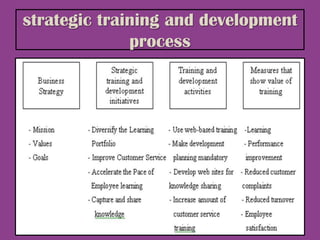
strategic training and development
              process
Strategies for Effective Human ResourceTraining
        and Development in 21st. Century

 The main focus is how to link HR with business strategies.
 The corporate training must be understood in terms of paradigm shift that is
   taking place in Indian Industry.
 Three factors have added new dimension to the need for training in all
   industries , they are
            1) Liberalization
           2) Imbalance in demand and supply of professional talent
          3) Growing expectation of employees regarding their professional and
       personal development.

 Training is an effort into immediate position while development is an effort
   directed towards growth.
Training and development as a strategy for growth
              A Siemens case study

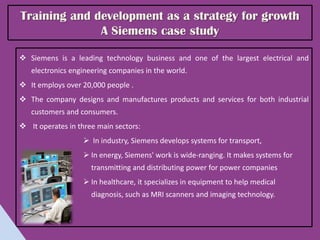
 Siemens is a leading technology business and one of the largest electrical and
   electronics engineering companies in the world.
 It employs over 20,000 people .
 The company designs and manufactures products and services for both industrial
   customers and consumers.
 It operates in three main sectors:
                    In industry, Siemens develops systems for transport,
                    In energy, Siemens' work is wide-ranging. It makes systems for
                     transmitting and distributing power for power companies
                    In healthcare, it specializes in equipment to help medical
                     diagnosis, such as MRI scanners and imaging technology.
 To keep its world-leading position and grow in a competitive
  environment.

 Siemens aims to deliver quality products and services.

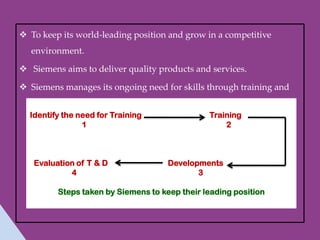
 Siemens manages its ongoing need for skills through training and
  development.
  Identify the need for Training               Training
                1                                  2


   Evaluation of T & D               Developments
            4                               3

         Steps taken by Siemens to keep their leading position
Benefits that Siemens can attain
      through training and development

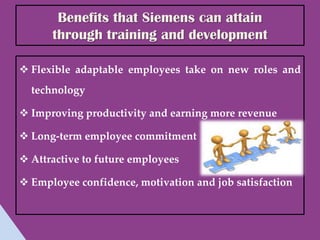
 Flexible adaptable employees take on new roles and
  technology

 Improving productivity and earning more revenue

 Long-term employee commitment

 Attractive to future employees

 Employee confidence, motivation and job satisfaction
CONCLUSION
 Training and development, has its strategic positioning and it
  directly contributes towards organizational business goals and
  objectives.

 Training and development helps the growth of a business.

 Training and development cannot be disconnected from the
  business activities of the organizations

 Training and development improves efficiency and productivity of
  employees and lead the organization towards success.
Training and Development Strategies

Training and Development Strategies

  • 1.
    TRAINING & DEVELOPMENT STRATEGIES Lijoe Mathew Sini Rajan S4 MBA MACFAST,Tiruvalla
  • 2.
    TRAINING AND DEVELOPMENT Training and development is vital part of the human resource development.  It is a subsystem of an organization.  It ensures that randomness is reduced and learning or behavioral change takes place in structured format.  Training and Development refers to the process to obtain or transfer knowledge, skills and abilities needed to carry out a specific activity or task.
  • 3.
    Training(today……) “An organization’s plannedefforts to help employees acquire job-related knowledge, skills, abilities, and behaviors, with the goal of applying these on the job.”
  • 4.
    Development(tomorrow….) “Learning that goes beyond today’s job and has a long term focus, so development is Strategic Training”.
  • 5.
    Objectives of Trainingand Development  Improving quality of workforce.  Enhance employee growth.  Prevents obsolescence.  Assisting new comer.  Bridging the gap between planning and implementation.  Health and safety measures
  • 6.
    Difference between T&D Training Development Current and future Focus Current Job jobs Work group or Scope Individual employees organization Time Frame Immediate Long term Prepare for future Goal Fix current skill deficit work demands
  • 7.
    strategic training anddevelopment process
  • 8.
    Strategies for EffectiveHuman ResourceTraining and Development in 21st. Century  The main focus is how to link HR with business strategies.  The corporate training must be understood in terms of paradigm shift that is taking place in Indian Industry.  Three factors have added new dimension to the need for training in all industries , they are 1) Liberalization 2) Imbalance in demand and supply of professional talent 3) Growing expectation of employees regarding their professional and personal development.  Training is an effort into immediate position while development is an effort directed towards growth.
  • 9.
    Training and developmentas a strategy for growth A Siemens case study  Siemens is a leading technology business and one of the largest electrical and electronics engineering companies in the world.  It employs over 20,000 people .  The company designs and manufactures products and services for both industrial customers and consumers.  It operates in three main sectors:  In industry, Siemens develops systems for transport,  In energy, Siemens' work is wide-ranging. It makes systems for transmitting and distributing power for power companies  In healthcare, it specializes in equipment to help medical diagnosis, such as MRI scanners and imaging technology.
  • 10.
     To keepits world-leading position and grow in a competitive environment.  Siemens aims to deliver quality products and services.  Siemens manages its ongoing need for skills through training and development. Identify the need for Training Training 1 2 Evaluation of T & D Developments 4 3 Steps taken by Siemens to keep their leading position
  • 11.
    Benefits that Siemenscan attain through training and development  Flexible adaptable employees take on new roles and technology  Improving productivity and earning more revenue  Long-term employee commitment  Attractive to future employees  Employee confidence, motivation and job satisfaction
  • 12.
    CONCLUSION  Training anddevelopment, has its strategic positioning and it directly contributes towards organizational business goals and objectives.  Training and development helps the growth of a business.  Training and development cannot be disconnected from the business activities of the organizations  Training and development improves efficiency and productivity of employees and lead the organization towards success.