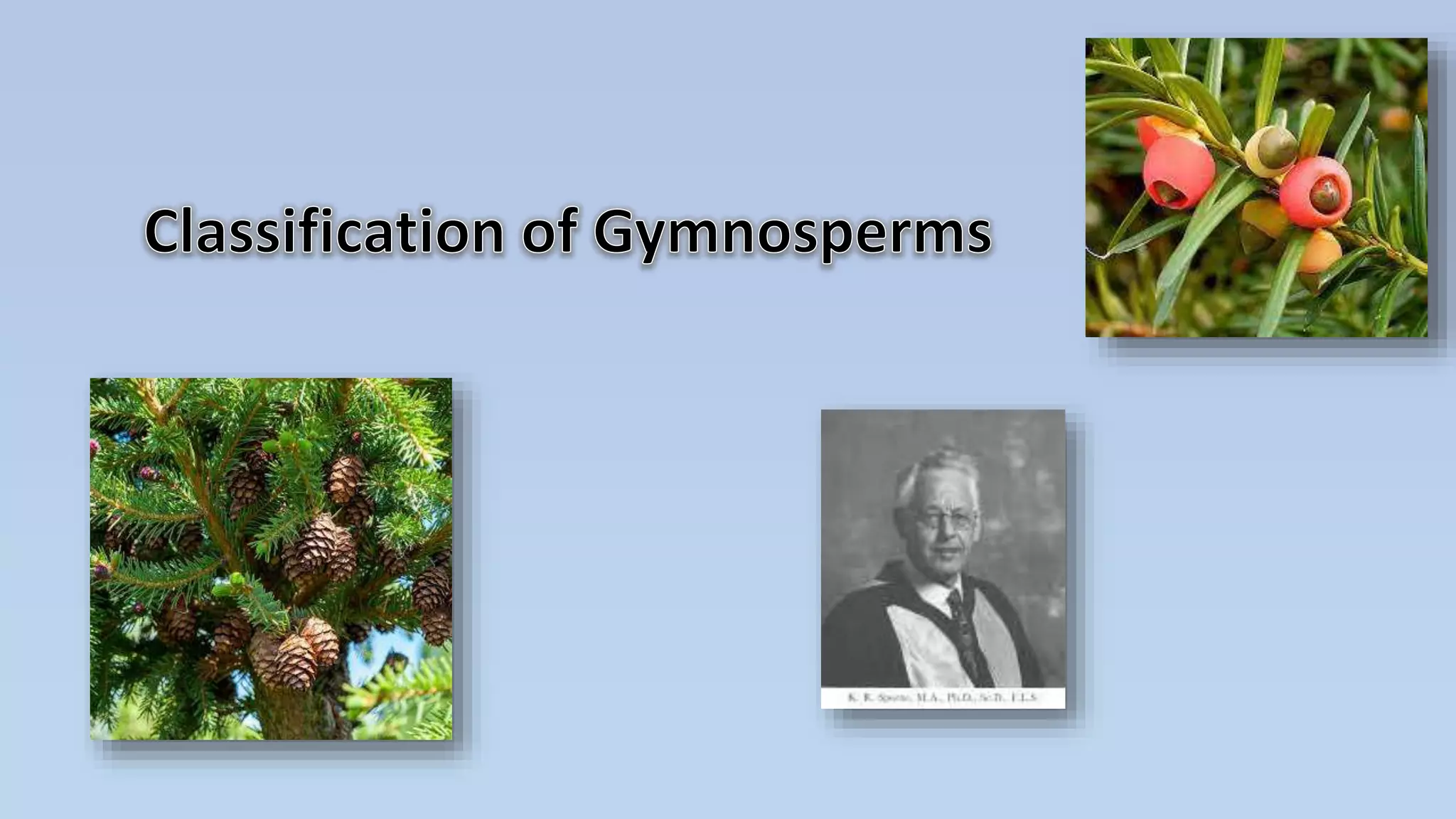
 The term ‘Gymnosperm’ was coined by Theophrastus (372-286 B.C). Gymnosperms (gymnos
= naked, sperma = seed) include the group of flowering plants with naked seeds. Gymnosperm
seeds (ovules) are with a single in integument. The unique features of angiosperms i.e., the
double fertilisation is completely absent in gymnosperms.
 The Gymnosperms originated in the Devonian period of the Palaeozoic Era and formed the
supreme vegetation in the Mesozoic Era. At present, gymnosperms are represented by about 72
genera and about 650 species and are widely distributed from North temperate to Tropical
regions of the world.
 Gymnosperms have been considered as a co-associate group of Angiosperms. Gymnosperms
have been classified by various workers based mainly on the morphological, anatomical and
developmental aspects. It was Robert Brown (1827) who first recognised gymnosperms as a
separate entity among plant kingdom.
 Bentham & Hooker (1883) in ‘Genera Plantarum’ considered the gymnosperms as a
coordinate group with the angiosperms and placed them in-between the dicotyledons and
monocotyledons.
INTRODUCTION
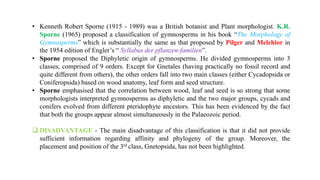
• Kenneth Robert Sporne (1915 - 1989) was a British botanist and Plant morphologist. K.R.
Sporne (1965) proposed a classification of gymnosperms in his book “The Morphology of
Gymnosperms” which is substantially the same as that proposed by Pilger and Melchior in
the 1954 edition of Engler’s “ Syllabus der pflanzen-familien”.
• Sporne proposed the Diphyletic origin of gymnosperms. He divided gymnosperms into 3
classes, comprised of 9 orders. Except for Gnetales (having practically no fossil record and
quite different from others), the other orders fall into two main classes (either Cycadopsida or
Coniferopsida) based on wood anatomy, leaf form and seed structure.
• Sporne emphasised that the correlation between wood, leaf and seed is so strong that some
morphologists interpreted gymnosperms as diphyletic and the two major groups, cycads and
conifers evolved from different pteridophyte ancestors. This has been evidenced by the fact
that both the groups appear almost simultaneously in the Palaeozoic period.
 DISADVANTAGE - The main disadvantage of this classification is that it did not provide
sufficient information regarding affinity and phylogeny of the group. Moreover, the
placement and position of the 3rd class, Gnetopsida, has not been highlighted.
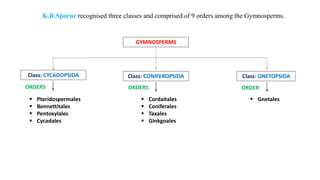
K.R.Sporne recognised three classes and comprised of 9 orders among the Gymnosperms.
GYMNOSPERMS
Class: CONIFEROPSIDA Class: GNETOPSIDA
Class: CYCADOPSIDA
 Pteridospermales
 Bennettitales
 Pentoxylales
 Cycadales
 Cordaitales
 Coniferales
 Taxales
 Ginkgoales
 Gnetales
ORDERS ORDERS ORDER
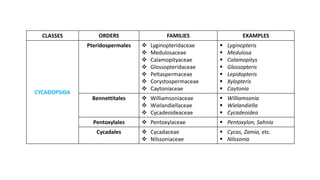
CLASSES ORDERS FAMILIES EXAMPLES
CYCADOPSIDA
Pteridospermales  Lyginopteridaceae
 Medulosaceae
 Calamopityaceae
 Glossopteridaceae
 Peltaspermaceae
 Corystospermaceae
 Caytoniaceae
 Lyginopteris
 Medulosa
 Calamopitys
 Glossopteris
 Lepidopteris
 Xylopteris
 Caytonia
Bennettitales  Williamsoniaceae
 Wielandiellaceae
 Cycadeoideaceae
 Williamsonia
 Wielandiella
 Cycadeoidea
Pentoxylales  Pentoxylaceae  Pentoxylon, Sahnia
Cycadales  Cycadaceae
 Nilssoniaceae
 Cycas, Zamia, etc.
 Nilssonia
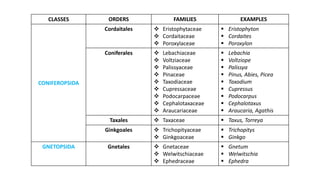
CLASSES ORDERS FAMILIES EXAMPLES
CONIFEROPSIDA
Cordaitales  Eristophytaceae
 Cordaitaceae
 Poroxylaceae
 Eristophyton
 Cordaites
 Poroxylon
Coniferales  Lebachiaceae
 Voltziaceae
 Palissyaceae
 Pinaceae
 Taxodiaceae
 Cupressaceae
 Podocarpaceae
 Cephalotaxaceae
 Araucariaceae
 Lebachia
 Voltziope
 Palissya
 Pinus, Abies, Picea
 Taxodium
 Cupressus
 Podocarpus
 Cephalotaxus
 Araucaria, Agathis
Taxales  Taxaceae  Taxus, Torreya
Ginkgoales  Trichopityaceae
 Ginkgoaceae
 Trichopitys
 Ginkgo
GNETOPSIDA Gnetales  Gnetaceae
 Welwitschiaceae
 Ephedraceae
 Gnetum
 Welwitschia
 Ephedra
Classification of Gymnosperms (K.R.Sporne).pptx

Classification of Gymnosperms (K.R.Sporne).pptx

  • 2.
     The term‘Gymnosperm’ was coined by Theophrastus (372-286 B.C). Gymnosperms (gymnos = naked, sperma = seed) include the group of flowering plants with naked seeds. Gymnosperm seeds (ovules) are with a single in integument. The unique features of angiosperms i.e., the double fertilisation is completely absent in gymnosperms.  The Gymnosperms originated in the Devonian period of the Palaeozoic Era and formed the supreme vegetation in the Mesozoic Era. At present, gymnosperms are represented by about 72 genera and about 650 species and are widely distributed from North temperate to Tropical regions of the world.  Gymnosperms have been considered as a co-associate group of Angiosperms. Gymnosperms have been classified by various workers based mainly on the morphological, anatomical and developmental aspects. It was Robert Brown (1827) who first recognised gymnosperms as a separate entity among plant kingdom.  Bentham & Hooker (1883) in ‘Genera Plantarum’ considered the gymnosperms as a coordinate group with the angiosperms and placed them in-between the dicotyledons and monocotyledons. INTRODUCTION
  • 3.
    • Kenneth RobertSporne (1915 - 1989) was a British botanist and Plant morphologist. K.R. Sporne (1965) proposed a classification of gymnosperms in his book “The Morphology of Gymnosperms” which is substantially the same as that proposed by Pilger and Melchior in the 1954 edition of Engler’s “ Syllabus der pflanzen-familien”. • Sporne proposed the Diphyletic origin of gymnosperms. He divided gymnosperms into 3 classes, comprised of 9 orders. Except for Gnetales (having practically no fossil record and quite different from others), the other orders fall into two main classes (either Cycadopsida or Coniferopsida) based on wood anatomy, leaf form and seed structure. • Sporne emphasised that the correlation between wood, leaf and seed is so strong that some morphologists interpreted gymnosperms as diphyletic and the two major groups, cycads and conifers evolved from different pteridophyte ancestors. This has been evidenced by the fact that both the groups appear almost simultaneously in the Palaeozoic period.  DISADVANTAGE - The main disadvantage of this classification is that it did not provide sufficient information regarding affinity and phylogeny of the group. Moreover, the placement and position of the 3rd class, Gnetopsida, has not been highlighted.
  • 4.
    K.R.Sporne recognised threeclasses and comprised of 9 orders among the Gymnosperms. GYMNOSPERMS Class: CONIFEROPSIDA Class: GNETOPSIDA Class: CYCADOPSIDA  Pteridospermales  Bennettitales  Pentoxylales  Cycadales  Cordaitales  Coniferales  Taxales  Ginkgoales  Gnetales ORDERS ORDERS ORDER
  • 5.
    CLASSES ORDERS FAMILIESEXAMPLES CYCADOPSIDA Pteridospermales  Lyginopteridaceae  Medulosaceae  Calamopityaceae  Glossopteridaceae  Peltaspermaceae  Corystospermaceae  Caytoniaceae  Lyginopteris  Medulosa  Calamopitys  Glossopteris  Lepidopteris  Xylopteris  Caytonia Bennettitales  Williamsoniaceae  Wielandiellaceae  Cycadeoideaceae  Williamsonia  Wielandiella  Cycadeoidea Pentoxylales  Pentoxylaceae  Pentoxylon, Sahnia Cycadales  Cycadaceae  Nilssoniaceae  Cycas, Zamia, etc.  Nilssonia
  • 6.
    CLASSES ORDERS FAMILIESEXAMPLES CONIFEROPSIDA Cordaitales  Eristophytaceae  Cordaitaceae  Poroxylaceae  Eristophyton  Cordaites  Poroxylon Coniferales  Lebachiaceae  Voltziaceae  Palissyaceae  Pinaceae  Taxodiaceae  Cupressaceae  Podocarpaceae  Cephalotaxaceae  Araucariaceae  Lebachia  Voltziope  Palissya  Pinus, Abies, Picea  Taxodium  Cupressus  Podocarpus  Cephalotaxus  Araucaria, Agathis Taxales  Taxaceae  Taxus, Torreya Ginkgoales  Trichopityaceae  Ginkgoaceae  Trichopitys  Ginkgo GNETOPSIDA Gnetales  Gnetaceae  Welwitschiaceae  Ephedraceae  Gnetum  Welwitschia  Ephedra