Mendel and his success
Dr. K. GANESH KUMARI
ASSISTANT PROFESSOR
DEPARTMENT OF BOTANY
SRIMAD ANDAVAN ARTS AND SCIENCE COLLEGE (AUTONOMOUS)
TRICHY - 5
Topics to be covered
• Introduction
• Mendelism
• Re-discovery of Mendel’s principles
• Reasons for Mendel’s success
• Characters selected by Mendel
Introduction
• One of the most important subdivisions of the science of
biology is genetics, the study of heredity.
• The term genetics was first coined by William Bateson in
1906.
• The word genetics is derived from the Greek term “gen”
which means “to become” or “to grow into”.
• Thus, the derivation of the word indicates that genetics deals
not only with the way in which
characteristics are transmitted from one generation to the next
the actions of the units of heredity as they bring about the
characteristics which they control
Cont…
• According to Webster, Genetics is the branch of biology
which deals with heredity and variation among related
organisms largely in their evolutionary aspects.
• The science of genetics originated in 1900 with the re-
discovery of a scientific article originally published in 1866 by
Gregor Johann Mendel.
Mendelism
• The contribution of Mendel to Genetics is called Mendelism.
• Mendel is called the Father of Genetics.
• He was born in a peasant family in 22nd July 1822 in Austria.
• In 1843 he entered the monastery at Brunn and in 1847 he
was ordained as a priest.
• After completing the theological studies, he worked as a
substitute teacher in Mathematics and Greek.
• In 1851 he was sent to the University of Vienna, where he
studied Science. He passed his rest of his life as the Abbot.
• He died in 1884.
Cont…
• Mendel was fond of gardening from his boyhood.
• When he was working as teacher, he performed a series of
experiments with pea plants in the garden of the monastery.
• His work contains inheritance of characters in 22 varieties of
green peas.
• His papers were published in 1866 and 1867 in the
proceedings of Natural History Society of Brunn.
Cont…
• The work of Mendel remained unnoticed to he world for 34
years.
• In 1990 the principles of Genetics worked by Mendel were
rediscovered by three botanists, namely Correns, De Vries
and Tshermark.
• The unrecognised papers of Mendel were taken out from the
grave and made known to the scientific world.
• When Mendel’s work was recognised and appreciated, he
was no more.
Reasons for Non - recognition
• His work was not published properly
• Experiments in Plant Hybridization – Natural history Society
of Brunn
• Biology did not accept the concepts of Mendel
• Statistical datas
• Darwin’s natural selection was talked world wide
• Factors – discrete units of life.
• Microscope and Mol. Biology was not developed at that time
Rediscovery of Mendel’s Principles
• In 1990 Mendel’s principles were rediscovered by three
different investigators.
• They were De vries (Holland), Correns (Germany) and
Tschermak (Austria).
• After Mendel’s death several other experiments on plants
and animals were done all over the world and Mendel’s
conclusions were confirmed.
• Bateson confirmed Mendel’s work by a series of
hybridization experiments.
Reasons for mendel’s success
• Mendel did his work by collecting several types of garden
pea Pisum sativum from salesman and studied the
differences among them.
• Then he did hybridization experiments with different types
of pea plants.
• The secret of Mendel’s success lay in his wise selection.
Cont…
• The following are the reasons for the success of Mendel:
The flowers of pea plants are normally self fertilized.
The pea plant shows a number of clear – cut contrasting characters.
The hybrids of garden pea are perfectly fertile.
Cross pollination is not very difficult in pea plant.
Artificial fertilization is almost always successful.
Cont…
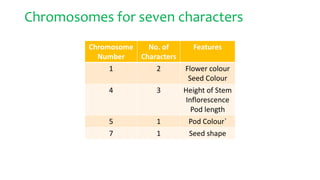
• The genes for the seven pairs of characters are located on seven
separate homologous pairs of chromosomes.
• Many pure breeding varieties are available for the experiments.
• It is very easy to cultivate the pea plants in open ground.
• They have a short growth period and a short life cycle.
• He studied the inheritance of only one character at a time. This made
the complex problem simple.
• He maintained statistical records of the results. It helped Mendel to
derive numerical ratios of significance.
Chromosomes for seven characters
Chromosome
Number
No. of
Characters
Features
1 2 Flower colour
Seed Colour
4 3 Height of Stem
Inflorescence
Pod length
5 1 Pod Colour`
7 1 Seed shape
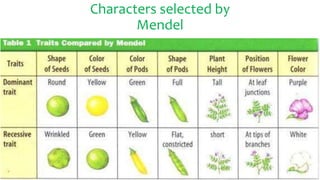
Characters selected by
Mendel
Cont…
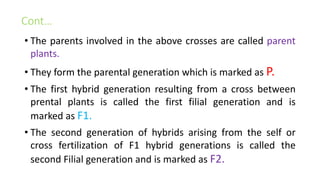
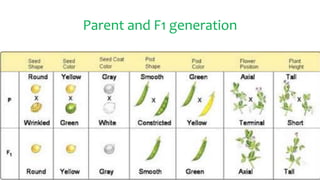
• The parents involved in the above crosses are called parent
plants.
• They form the parental generation which is marked as P.
• The first hybrid generation resulting from a cross between
prental plants is called the first filial generation and is
marked as F1.
• The second generation of hybrids arising from the self or
cross fertilization of F1 hybrid generations is called the
second Filial generation and is marked as F2.
Parent and F1 generation
Thank you

Mendel and his success

  • 1.
    Mendel and hissuccess Dr. K. GANESH KUMARI ASSISTANT PROFESSOR DEPARTMENT OF BOTANY SRIMAD ANDAVAN ARTS AND SCIENCE COLLEGE (AUTONOMOUS) TRICHY - 5
  • 2.
    Topics to becovered • Introduction • Mendelism • Re-discovery of Mendel’s principles • Reasons for Mendel’s success • Characters selected by Mendel
  • 3.
    Introduction • One ofthe most important subdivisions of the science of biology is genetics, the study of heredity. • The term genetics was first coined by William Bateson in 1906. • The word genetics is derived from the Greek term “gen” which means “to become” or “to grow into”. • Thus, the derivation of the word indicates that genetics deals not only with the way in which characteristics are transmitted from one generation to the next the actions of the units of heredity as they bring about the characteristics which they control
  • 4.
    Cont… • According toWebster, Genetics is the branch of biology which deals with heredity and variation among related organisms largely in their evolutionary aspects. • The science of genetics originated in 1900 with the re- discovery of a scientific article originally published in 1866 by Gregor Johann Mendel.
  • 5.
    Mendelism • The contributionof Mendel to Genetics is called Mendelism. • Mendel is called the Father of Genetics. • He was born in a peasant family in 22nd July 1822 in Austria. • In 1843 he entered the monastery at Brunn and in 1847 he was ordained as a priest. • After completing the theological studies, he worked as a substitute teacher in Mathematics and Greek. • In 1851 he was sent to the University of Vienna, where he studied Science. He passed his rest of his life as the Abbot. • He died in 1884.
  • 6.
    Cont… • Mendel wasfond of gardening from his boyhood. • When he was working as teacher, he performed a series of experiments with pea plants in the garden of the monastery. • His work contains inheritance of characters in 22 varieties of green peas. • His papers were published in 1866 and 1867 in the proceedings of Natural History Society of Brunn.
  • 7.
    Cont… • The workof Mendel remained unnoticed to he world for 34 years. • In 1990 the principles of Genetics worked by Mendel were rediscovered by three botanists, namely Correns, De Vries and Tshermark. • The unrecognised papers of Mendel were taken out from the grave and made known to the scientific world. • When Mendel’s work was recognised and appreciated, he was no more.
  • 8.
    Reasons for Non- recognition • His work was not published properly • Experiments in Plant Hybridization – Natural history Society of Brunn • Biology did not accept the concepts of Mendel • Statistical datas • Darwin’s natural selection was talked world wide • Factors – discrete units of life. • Microscope and Mol. Biology was not developed at that time
  • 9.
    Rediscovery of Mendel’sPrinciples • In 1990 Mendel’s principles were rediscovered by three different investigators. • They were De vries (Holland), Correns (Germany) and Tschermak (Austria). • After Mendel’s death several other experiments on plants and animals were done all over the world and Mendel’s conclusions were confirmed. • Bateson confirmed Mendel’s work by a series of hybridization experiments.
  • 10.
    Reasons for mendel’ssuccess • Mendel did his work by collecting several types of garden pea Pisum sativum from salesman and studied the differences among them. • Then he did hybridization experiments with different types of pea plants. • The secret of Mendel’s success lay in his wise selection.
  • 11.
    Cont… • The followingare the reasons for the success of Mendel: The flowers of pea plants are normally self fertilized. The pea plant shows a number of clear – cut contrasting characters. The hybrids of garden pea are perfectly fertile. Cross pollination is not very difficult in pea plant. Artificial fertilization is almost always successful.
  • 12.
    Cont… • The genesfor the seven pairs of characters are located on seven separate homologous pairs of chromosomes. • Many pure breeding varieties are available for the experiments. • It is very easy to cultivate the pea plants in open ground. • They have a short growth period and a short life cycle. • He studied the inheritance of only one character at a time. This made the complex problem simple. • He maintained statistical records of the results. It helped Mendel to derive numerical ratios of significance.
  • 13.
    Chromosomes for sevencharacters Chromosome Number No. of Characters Features 1 2 Flower colour Seed Colour 4 3 Height of Stem Inflorescence Pod length 5 1 Pod Colour` 7 1 Seed shape
  • 14.
  • 15.
    Cont… • The parentsinvolved in the above crosses are called parent plants. • They form the parental generation which is marked as P. • The first hybrid generation resulting from a cross between prental plants is called the first filial generation and is marked as F1. • The second generation of hybrids arising from the self or cross fertilization of F1 hybrid generations is called the second Filial generation and is marked as F2.
  • 16.
    Parent and F1generation
  • 17.