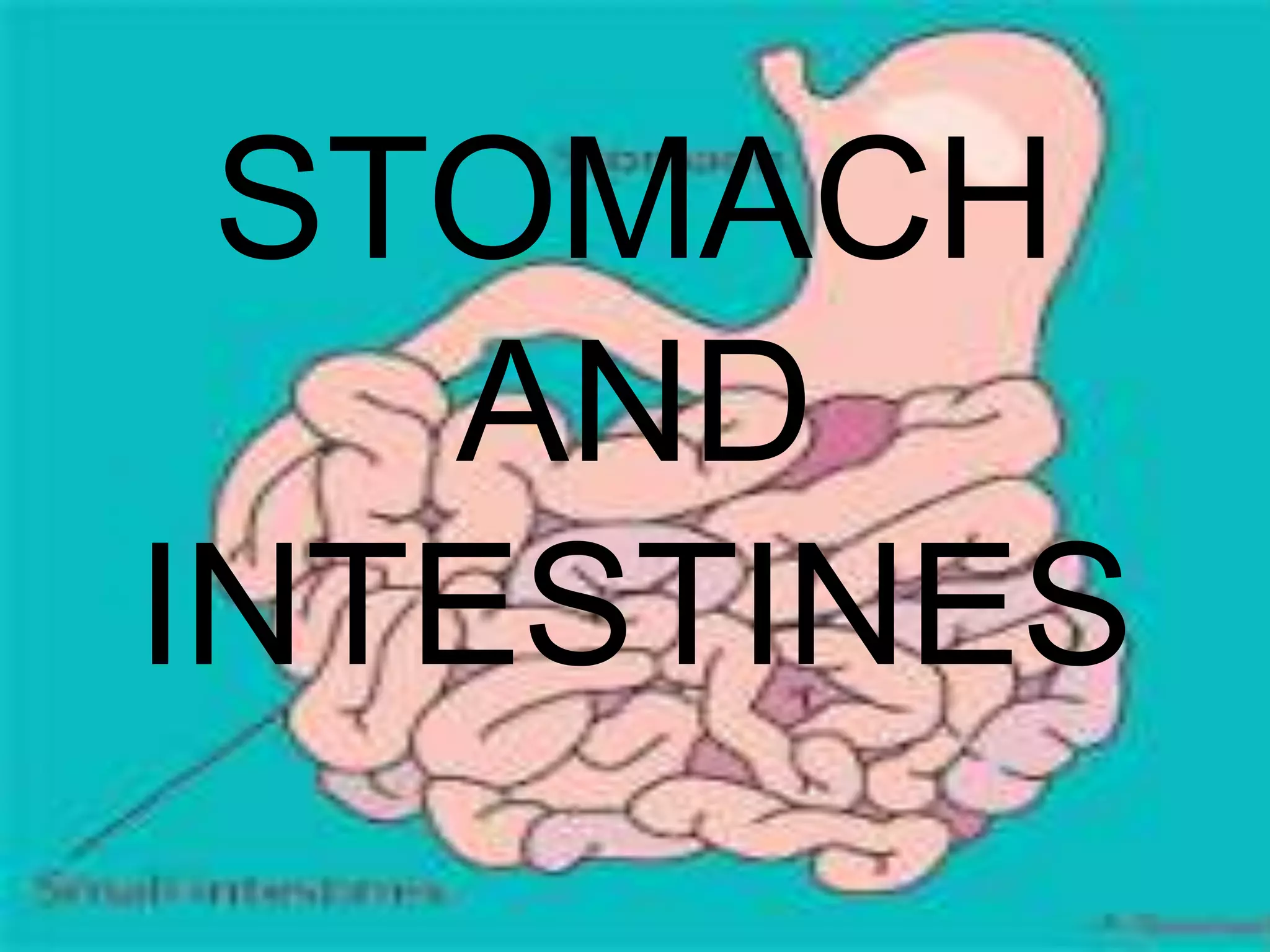
STOMACH
AND
INTESTINES
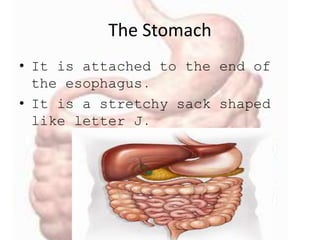
The Stomach
• It is attached to the end of
the esophagus.
• It is a stretchy sack shaped
like letter J.
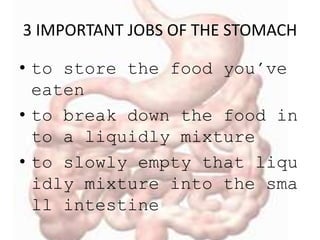
3 IMPORTANT JOBS OF THE STOMACH
• to store the food you've
eaten
• to break down the food in
to a liquidly mixture
• to slowly empty that liqu
idly mixture into the sma
ll intestine
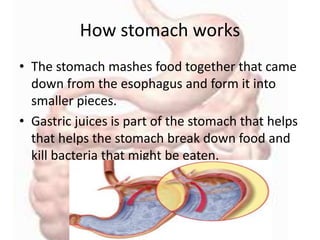
How stomach works
• The stomach mashes food together that came
down from the esophagus and form it into
smaller pieces.
• Gastric juices is part of the stomach that helps
that helps the stomach break down food and
kill bacteria that might be eaten.
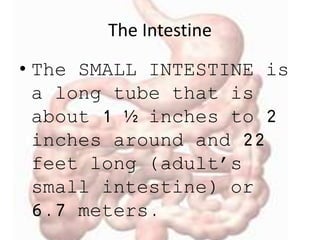
The Intestine
• The SMALL INTESTINE is
a long tube that is
about 1 ½ inches to 2
inches around and 22
feet long (adult’s
small intestine) or
6.7 meters.
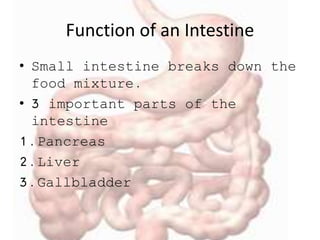
Function of an Intestine
• Small intestine breaks down the
food mixture.
• 3 important parts of the
intestine
1.Pancreas
2.Liver
3.Gallbladder
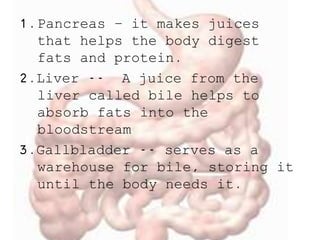
1.Pancreas – it makes juices
that helps the body digest
fats and protein.
2.Liver -- A juice from the
liver called bile helps to
absorb fats into the
bloodstream
3.Gallbladder -- serves as a
warehouse for bile, storing it
until the body needs it.
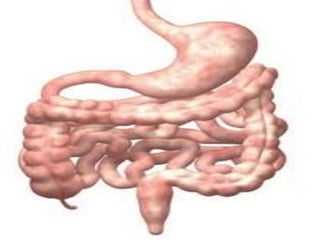
• The LARGE INTESTINE – the
left over that your body
don’t need goes to your
large intestine.
• At 3 or 4 inches it's almost
the last stop on the
digestive tract. Like the
small intestine, it is
packed into the body, and
would measure 5 feet long if
you spread it out.
Common Ailment
• Indigestion – is characterized by pain in
the abdomen caused by too much eating
too fast or eating too spicy and fatty
foods.
• Diarrhea – is the frequent passing of
loose and watery stool.
• Constipation – is the difficulty in bowel
movement. It is characterized by hard
and dry feces.
How to take care of your stomach
• Eat the right kind and amount of
food.
• Drink sufficient amount of water .
• Chew your food well
• Eat on time
• Practice regular bowel movemnet

Stomach and intestines

  • 1.
  • 2.
    The Stomach • Itis attached to the end of the esophagus. • It is a stretchy sack shaped like letter J.
  • 3.
    3 IMPORTANT JOBSOF THE STOMACH • to store the food you've eaten • to break down the food in to a liquidly mixture • to slowly empty that liqu idly mixture into the sma ll intestine
  • 4.
    How stomach works •The stomach mashes food together that came down from the esophagus and form it into smaller pieces. • Gastric juices is part of the stomach that helps that helps the stomach break down food and kill bacteria that might be eaten.
  • 5.
    The Intestine • TheSMALL INTESTINE is a long tube that is about 1 ½ inches to 2 inches around and 22 feet long (adult’s small intestine) or 6.7 meters.
  • 6.
    Function of anIntestine • Small intestine breaks down the food mixture. • 3 important parts of the intestine 1.Pancreas 2.Liver 3.Gallbladder
  • 7.
    1.Pancreas – itmakes juices that helps the body digest fats and protein. 2.Liver -- A juice from the liver called bile helps to absorb fats into the bloodstream 3.Gallbladder -- serves as a warehouse for bile, storing it until the body needs it.
  • 8.
    • The LARGEINTESTINE – the left over that your body don’t need goes to your large intestine. • At 3 or 4 inches it's almost the last stop on the digestive tract. Like the small intestine, it is packed into the body, and would measure 5 feet long if you spread it out.
  • 10.
    Common Ailment • Indigestion– is characterized by pain in the abdomen caused by too much eating too fast or eating too spicy and fatty foods. • Diarrhea – is the frequent passing of loose and watery stool. • Constipation – is the difficulty in bowel movement. It is characterized by hard and dry feces.
  • 11.
    How to takecare of your stomach • Eat the right kind and amount of food. • Drink sufficient amount of water . • Chew your food well • Eat on time • Practice regular bowel movemnet