Digestive System
Dr. Pooja Walia
Assistant Professor
Dept. of Education
MIzoram University
Outline of the Presentation
• What is digestion?
• Digestive System
• Anatomy of Digestive System
• Mouth & Salivary Glands
• Esophagus
• Stomach
• Small Intestine
• Large Intestine
What is Digestion?
Digestion is the process by which food is broken
down into smaller pieces so the body can use them
to build and nourish cells and to provide energy.
Digestion involves the mixing of food, its movement
through the digestive tract (also known as the
alimentary canal), and the chemical breakdown of
larger molecules into smaller molecules.Every
piece of food eaten has to be broken down into
smaller nutrients that the body can absorb, which is
why it takes hours to fully digest food.
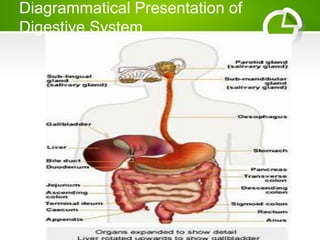
Diagrammatical Presentation of
Digestive System
The Digestive System
The digestive system is made up of the
digestive tract. This consists of a long tube of
organs that runs from the mouth to the anus
and includes the esophagus, stomach, small
intestine, and large intestine, together with
the liver, gallbladder, and pancreas, which
produce important secretions for digestion
that drain into the small intestine.The
digestive tract in an adult is about 30 feet
long.
The Digestive System
The digestive system works in such a way
that the digested food may reach to every
part of the body. This job is done by large
and small intestine. The minor portion of
large intestine is covered by mucous
membrane. In between them there are some
projected portions. Their shape is just like
silk furs. This all fur is filled with blood veins
Lymphatic and nerves. Here much of sugar
is consumed by capillaries and milk and fat
is consumed by lacteals.
The Digestive System
The unnecessary sugar, carbo hydrate and
protein, which our body does not need stored
as glycogen in liver and when the body is
needed than it is supplied by bile duct.
Lacteals enter into lymphatic vessel and there
they mix up with thorotic duct. From thorotic
duct they go to large intestline. In this way the
large portion of food go to our body through
small intestine. The rest of the matter, which
is not needed by our body excretes as
excreted matter.
• Mouth & Salivary Glands
• Esophagus
• Stomach
• Small Intestine
• Large Intestine
Mouth and Salivary Glands
Digestion begins in the mouth, where
chemical and mechanical digestion occurs.
Saliva or spit, produced by the salivary
glands (located under the tongue and near
the lower jaw), is released into the mouth.
Saliva begins to break down the food,
moistening it and making it easier to
swallow.
Mouth and Salivary Glands
A digestive enzyme (amylase) in the saliva
begins to break down the carbohydrates
(starches and sugars). One of the most
important functions of the mouth is
chewing. Chewing allows food to be
mashed into a soft mass that is easier to
swallow and digest later.
Mouth and Salivary Glands
Movements by the tongue and the mouth
push the food to the back of the throat for it
to be swallowed. A flexible flap called the
epiglottis closes over the trachea (windpipe)
to ensure that food enters the esophagus
and not the windpipe to prevent choking.
Esophagus
Once food is swallowed, it enters the
esophagus, a muscular tube that is about 10
inches long. The esophagus is located
between the throat and the stomach.
Muscular wavelike contractions known as
peristalsis push the food down through the
esophagus to the stomach. A muscular ring
(cardiac sphincter) at the end of the
esophagus allows food to enter the stomach,
and, then, it squeezes shut to prevent food
and fluid from going back up the esophagus
Stomach
The stomach is a J-shaped organ that lies
between the esophagus and the small
intestine in the upper abdomen. The
stomach has 3 main functions: to store the
swallowed food and liquid; to mix up the
food, liquid, and digestive juices produced
by the sto mach; and to slowly empty its
contents into the small intestine
Small Intestine
Most digestion and absorption of food
occurs in the small intestine. The small
intestine is a narrow, twisting tube that
occupies most of the lower abdomen
between the stomach and the beginning of
the large intestine. It extends about 20 feet
in length. The small intestine consists of
three parts: the duodenum (the C-shaped
part), the jejunum (the coiled midsection),
and the ileum (the last section).
Large Intestine
The large intestine forms an upside down U
over the coiled small intestine. It begins at
the lower right-hand side of the body and
ends on the lower left-hand side. The large
intestine is about 5-6 feet long. It has three
parts: the cecum, the colon, and the rectum.
The cecum is a pouch at the beginning of
the large intestine. This area allows food to
pass from the small intestine to the large
intestine.
.
The colon is where fluids and salts are
absorbed and extends from the cecum to
the rectum. The last part of the large
intestine is the rectum, which is where
feces (waste material) is stored before
leaving the body through the anus.
...
Thanks for Watching.
Please Like, share and
Comment
poojawaliakuk@gmail.com

digestivesyetem-201015071928.pdf

  • 1.
    Digestive System Dr. PoojaWalia Assistant Professor Dept. of Education MIzoram University
  • 2.
    Outline of thePresentation • What is digestion? • Digestive System • Anatomy of Digestive System • Mouth & Salivary Glands • Esophagus • Stomach • Small Intestine • Large Intestine
  • 3.
    What is Digestion? Digestionis the process by which food is broken down into smaller pieces so the body can use them to build and nourish cells and to provide energy. Digestion involves the mixing of food, its movement through the digestive tract (also known as the alimentary canal), and the chemical breakdown of larger molecules into smaller molecules.Every piece of food eaten has to be broken down into smaller nutrients that the body can absorb, which is why it takes hours to fully digest food.
  • 4.
  • 5.
    The Digestive System Thedigestive system is made up of the digestive tract. This consists of a long tube of organs that runs from the mouth to the anus and includes the esophagus, stomach, small intestine, and large intestine, together with the liver, gallbladder, and pancreas, which produce important secretions for digestion that drain into the small intestine.The digestive tract in an adult is about 30 feet long.
  • 6.
    The Digestive System Thedigestive system works in such a way that the digested food may reach to every part of the body. This job is done by large and small intestine. The minor portion of large intestine is covered by mucous membrane. In between them there are some projected portions. Their shape is just like silk furs. This all fur is filled with blood veins Lymphatic and nerves. Here much of sugar is consumed by capillaries and milk and fat is consumed by lacteals.
  • 7.
    The Digestive System Theunnecessary sugar, carbo hydrate and protein, which our body does not need stored as glycogen in liver and when the body is needed than it is supplied by bile duct. Lacteals enter into lymphatic vessel and there they mix up with thorotic duct. From thorotic duct they go to large intestline. In this way the large portion of food go to our body through small intestine. The rest of the matter, which is not needed by our body excretes as excreted matter.
  • 8.
    • Mouth &Salivary Glands • Esophagus • Stomach • Small Intestine • Large Intestine
  • 9.
    Mouth and SalivaryGlands Digestion begins in the mouth, where chemical and mechanical digestion occurs. Saliva or spit, produced by the salivary glands (located under the tongue and near the lower jaw), is released into the mouth. Saliva begins to break down the food, moistening it and making it easier to swallow.
  • 10.
    Mouth and SalivaryGlands A digestive enzyme (amylase) in the saliva begins to break down the carbohydrates (starches and sugars). One of the most important functions of the mouth is chewing. Chewing allows food to be mashed into a soft mass that is easier to swallow and digest later.
  • 11.
    Mouth and SalivaryGlands Movements by the tongue and the mouth push the food to the back of the throat for it to be swallowed. A flexible flap called the epiglottis closes over the trachea (windpipe) to ensure that food enters the esophagus and not the windpipe to prevent choking.
  • 12.
    Esophagus Once food isswallowed, it enters the esophagus, a muscular tube that is about 10 inches long. The esophagus is located between the throat and the stomach. Muscular wavelike contractions known as peristalsis push the food down through the esophagus to the stomach. A muscular ring (cardiac sphincter) at the end of the esophagus allows food to enter the stomach, and, then, it squeezes shut to prevent food and fluid from going back up the esophagus
  • 13.
    Stomach The stomach isa J-shaped organ that lies between the esophagus and the small intestine in the upper abdomen. The stomach has 3 main functions: to store the swallowed food and liquid; to mix up the food, liquid, and digestive juices produced by the sto mach; and to slowly empty its contents into the small intestine
  • 14.
    Small Intestine Most digestionand absorption of food occurs in the small intestine. The small intestine is a narrow, twisting tube that occupies most of the lower abdomen between the stomach and the beginning of the large intestine. It extends about 20 feet in length. The small intestine consists of three parts: the duodenum (the C-shaped part), the jejunum (the coiled midsection), and the ileum (the last section).
  • 15.
    Large Intestine The largeintestine forms an upside down U over the coiled small intestine. It begins at the lower right-hand side of the body and ends on the lower left-hand side. The large intestine is about 5-6 feet long. It has three parts: the cecum, the colon, and the rectum. The cecum is a pouch at the beginning of the large intestine. This area allows food to pass from the small intestine to the large intestine.
  • 16.
    . The colon iswhere fluids and salts are absorbed and extends from the cecum to the rectum. The last part of the large intestine is the rectum, which is where feces (waste material) is stored before leaving the body through the anus.
  • 17.
    ... Thanks for Watching. PleaseLike, share and Comment poojawaliakuk@gmail.com