Digestive
System
Digestive System
The function of the digestive system is digestion
and absorption. Digestion is the breakdown of
food into small molecules, which are then
absorbed into the body. The digestive system is
divided into two major parts: The digestive tract
(alimentary canal) is a continuous tube with two
openings: the mouth and the anus.
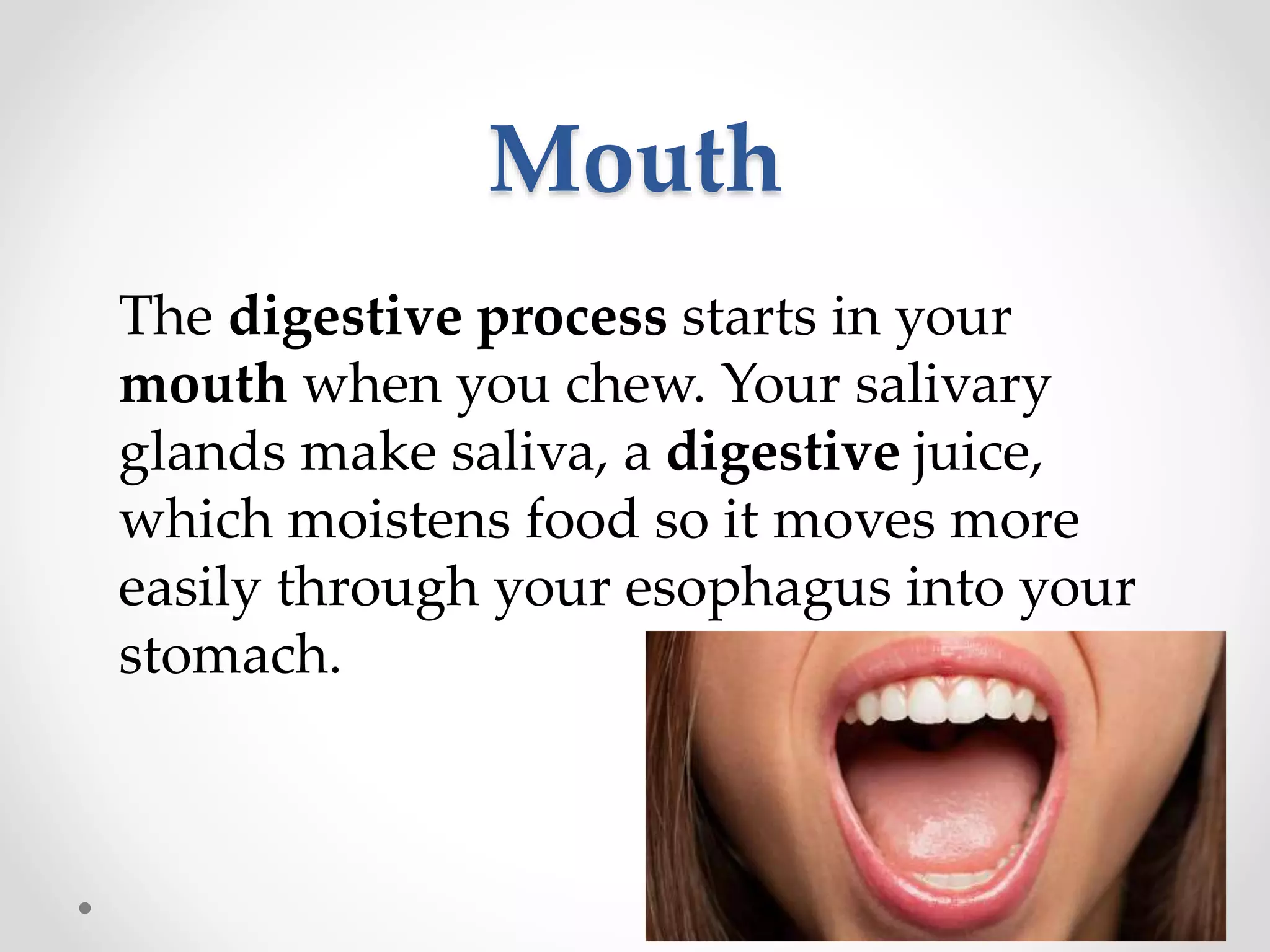
Mouth
The digestive process starts in your
mouth when you chew. Your salivary
glands make saliva, a digestive juice,
which moistens food so it moves more
easily through your esophagus into your
stomach.
Saliva
Saliva or spit, begins to form
in your mouth.
When you do eat, the saliva
breaks down the chemicals
in the food a bit, which helps
make the food mushy and
easy to swallow. Your
tongue helps out, pushing
the food around while you
chew with your teeth.
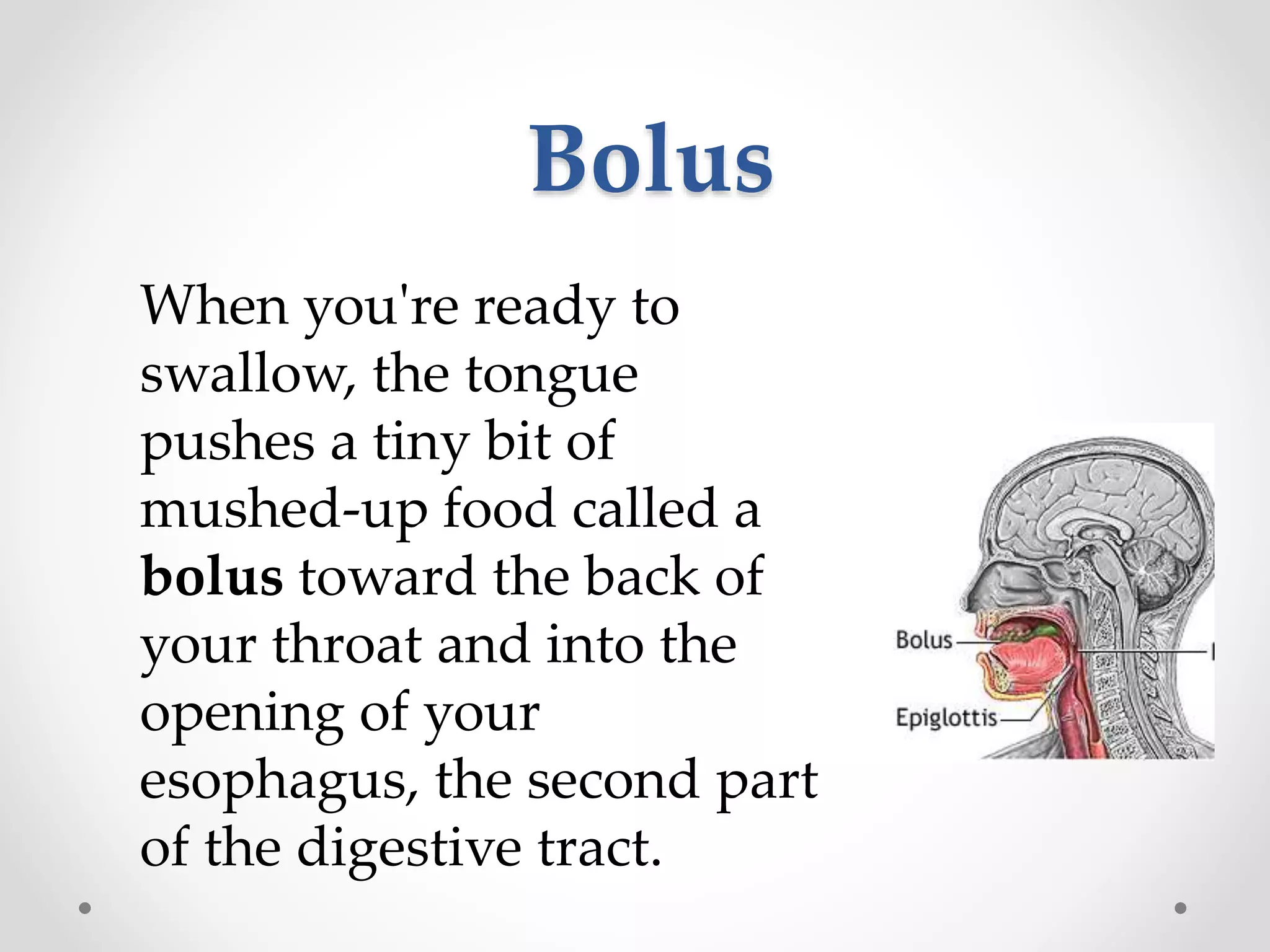
Bolus
When you're ready to
swallow, the tongue
pushes a tiny bit of
mushed-up food called a
bolus toward the back of
your throat and into the
opening of your
esophagus, the second part
of the digestive tract.
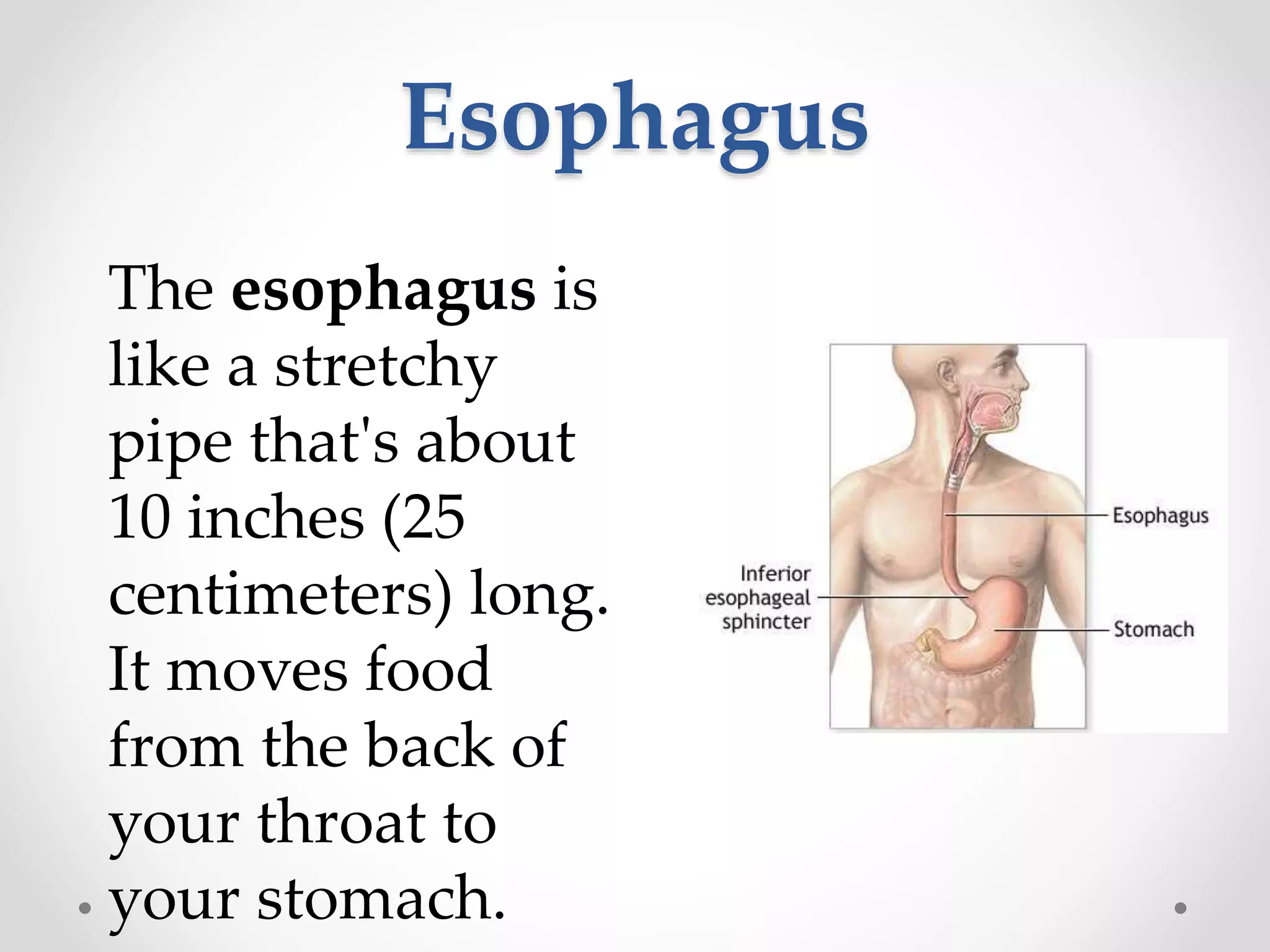
Esophagus
The esophagus is
like a stretchy
pipe that's about
10 inches (25
centimeters) long.
It moves food
from the back of
your throat to
your stomach.
Epiglottis
When you swallow a small
ball of mushed-up food or
liquids, a special flap called
the epiglottis flops down
over the opening of your
windpipe to make sure the
food enters the esophagus
and not the windpipe
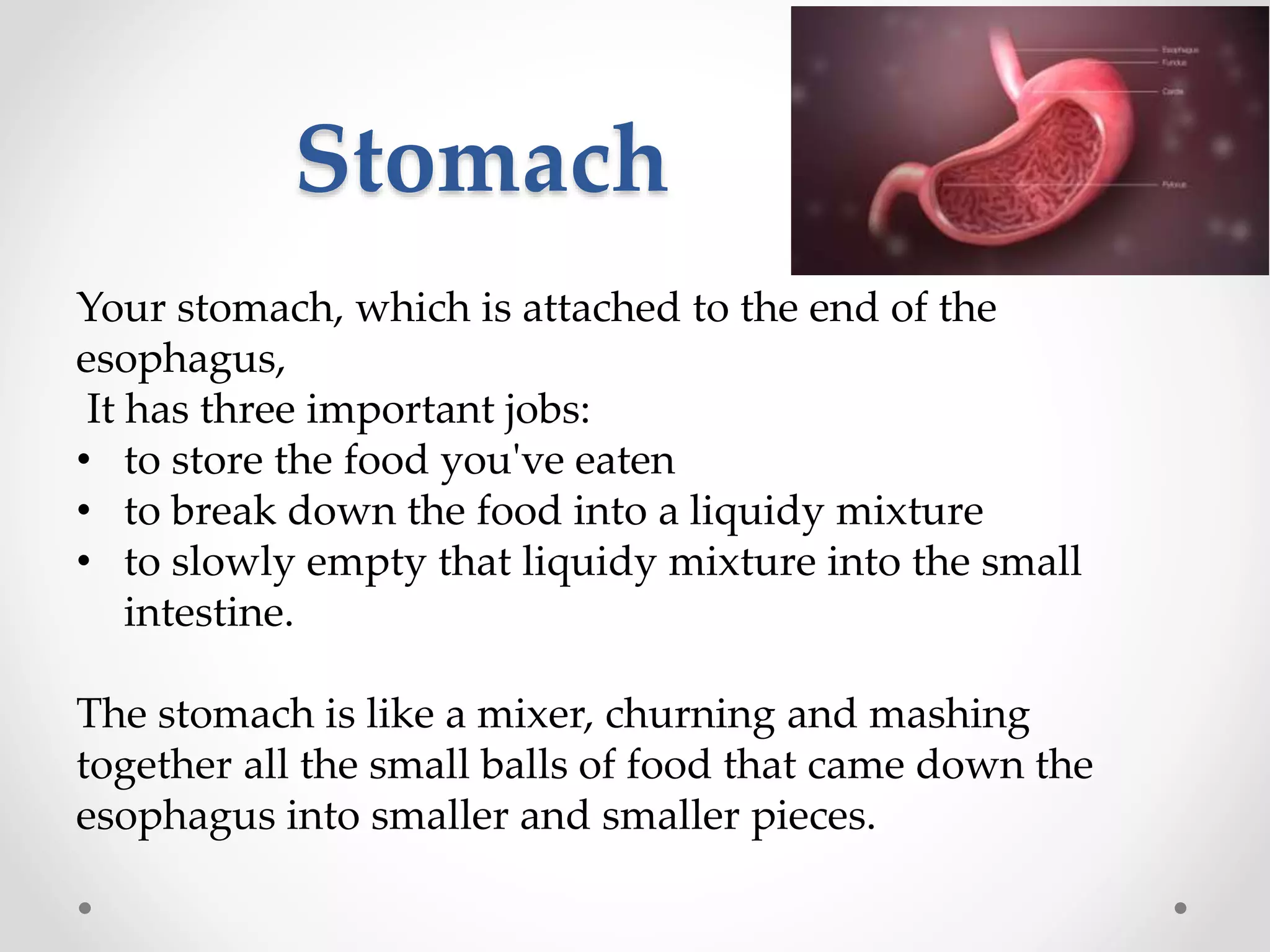
Stomach
Your stomach, which is attached to the end of the
esophagus,
It has three important jobs:
• to store the food you've eaten
• to break down the food into a liquidy mixture
• to slowly empty that liquidy mixture into the small
intestine.
The stomach is like a mixer, churning and mashing
together all the small balls of food that came down the
esophagus into smaller and smaller pieces.
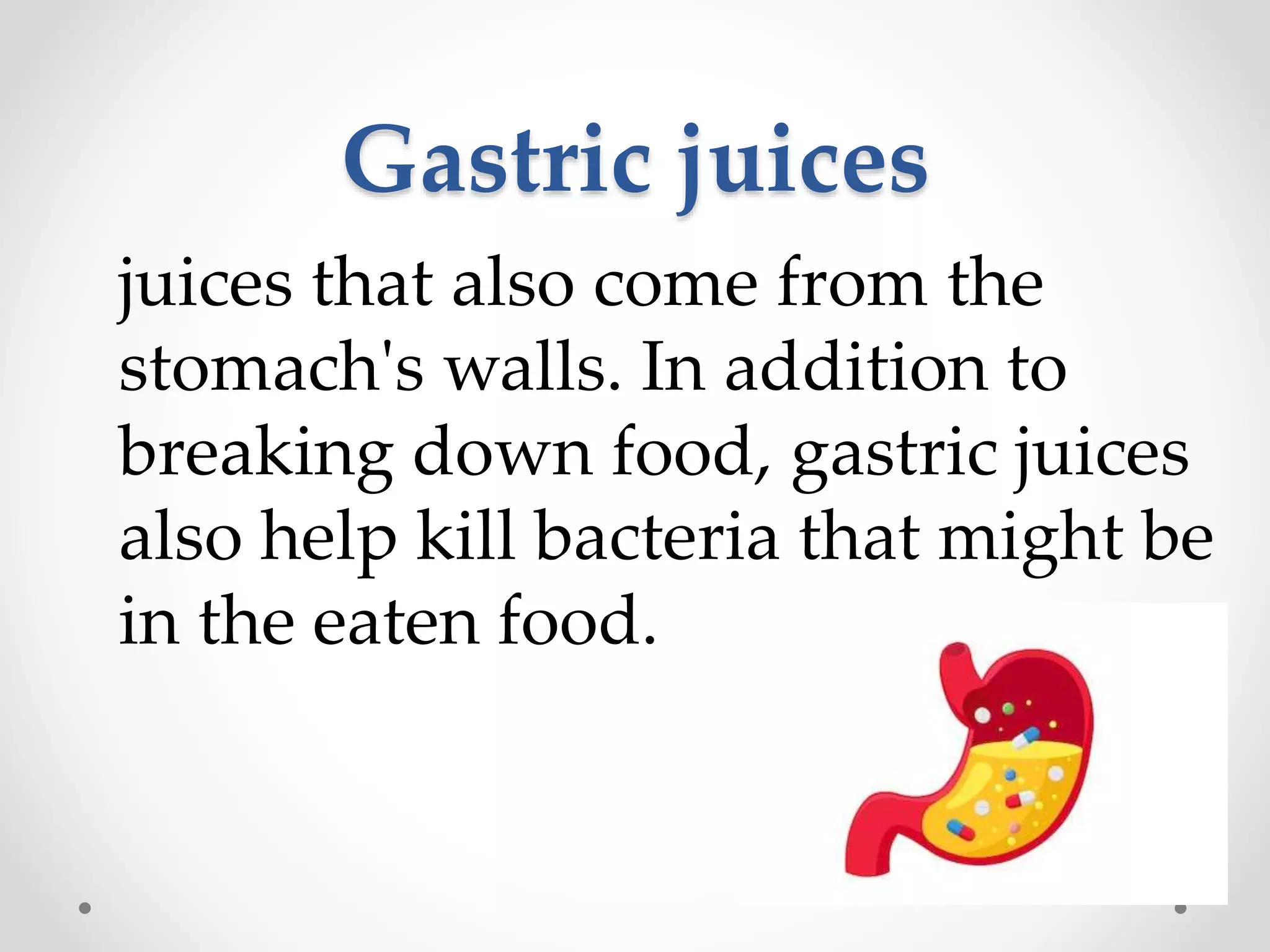
Gastric juices
juices that also come from the
stomach's walls. In addition to
breaking down food, gastric juices
also help kill bacteria that might be
in the eaten food.
Small intestine
The small intestine is a long tube that's about 1½ inches to
2 inches (about 3.5 to 5 centimeters) around, and it's
packed inside you beneath your stomach.
The small intestine breaks down the food mixture even
more so your body can absorb all the vitamins, minerals,
proteins, carbohydrates, and fats.
Pancreas
The pancreas is an organ located in the
abdomen. It plays an essential role in
converting the food we eat into fuel for the
body's cells. The pancreas has two main
functions: an exocrine function that helps in
digestion and an endocrine function that
regulates blood sugar.
Liver
The liver is an organ only found in
vertebrates which detoxifies various
metabolites, synthesizes proteins and
produces biochemicals necessary for
digestion and growth. In humans, it is
located in the right upper quadrant of the
abdomen, below the diaphragm.
Large Intestine
Function. The large intestine has 3 primary
functions: absorbing water and
electrolytes, producing and absorbing
vitamins, and forming and propelling
feces toward the rectum for elimination.
Maintaining a healthy
digestive system
Good (healthy) digestion is a 'silent'
process - digestion in some form is taking
place while we rest, eat, sleep or work.
We generally only become aware of
digestion when something goes wrong
(eg, if you eat foods that don't agree with
your body or drink too much alcohol or
say, if you become constipated or have
gas).
Eat a healthy diet
Eat foods rich in fibre (vegetables, fruit and
wholegrains/cereals). Fibre encourages
passage of material through the digestive
system and gives the correct consistency
and bulk to stools. Ideally you should
consume at least 30 grams of fibre per day.
A balanced diet that is rich in fibre may
reduce the risk of developing diverticular
disease, heart disease, or colorectal cancer.
Drink plenty of fluids
Drink plenty of fluids -
especially water. Water
helps to dissolve some
nutrients, encourages
passage of waste through
the digestive system and
helps soften stools.
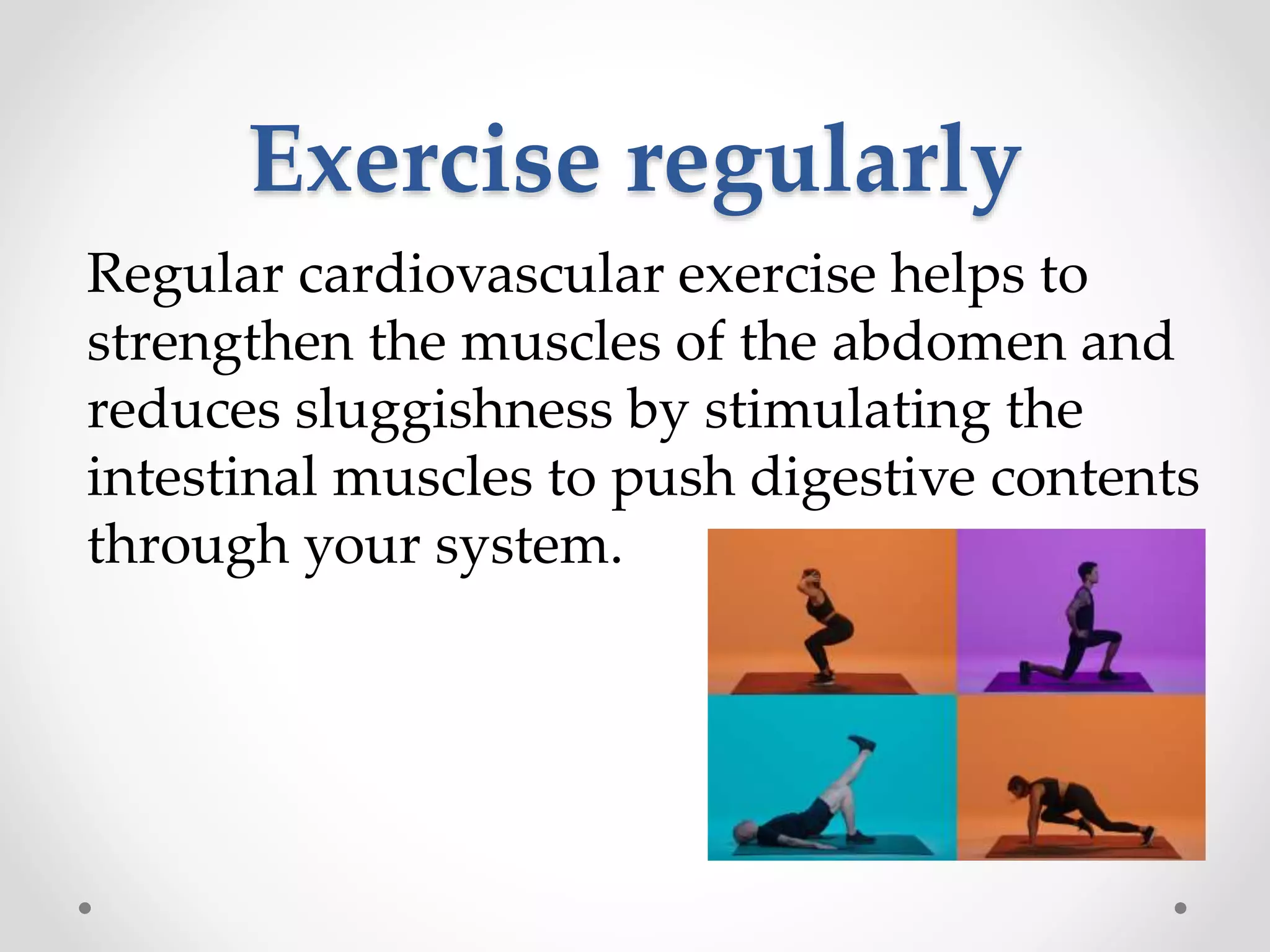
Exercise regularly
Regular cardiovascular exercise helps to
strengthen the muscles of the abdomen and
reduces sluggishness by stimulating the
intestinal muscles to push digestive contents
through your system.
Reduce/manage stress
levels
You may have noticed a
feeling of unease in the
abdomen during times
of stress. Stress effects
the nerves of the
digestive system and
can upset the intricate
balance of digestion.
Quit smoking
Smoking lowers the pressure at the
junction between the stomach and
esophagus, promoting backflow of
stomach acid into the esophagus
(reflux) - which can result in
heartburn and other complications.

Grade 6-science-digestive-system

  • 1.
  • 2.
    Digestive System The functionof the digestive system is digestion and absorption. Digestion is the breakdown of food into small molecules, which are then absorbed into the body. The digestive system is divided into two major parts: The digestive tract (alimentary canal) is a continuous tube with two openings: the mouth and the anus.
  • 3.
    Mouth The digestive processstarts in your mouth when you chew. Your salivary glands make saliva, a digestive juice, which moistens food so it moves more easily through your esophagus into your stomach.
  • 4.
    Saliva Saliva or spit,begins to form in your mouth. When you do eat, the saliva breaks down the chemicals in the food a bit, which helps make the food mushy and easy to swallow. Your tongue helps out, pushing the food around while you chew with your teeth.
  • 5.
    Bolus When you're readyto swallow, the tongue pushes a tiny bit of mushed-up food called a bolus toward the back of your throat and into the opening of your esophagus, the second part of the digestive tract.
  • 6.
    Esophagus The esophagus is likea stretchy pipe that's about 10 inches (25 centimeters) long. It moves food from the back of your throat to your stomach.
  • 7.
    Epiglottis When you swallowa small ball of mushed-up food or liquids, a special flap called the epiglottis flops down over the opening of your windpipe to make sure the food enters the esophagus and not the windpipe
  • 8.
    Stomach Your stomach, whichis attached to the end of the esophagus, It has three important jobs: • to store the food you've eaten • to break down the food into a liquidy mixture • to slowly empty that liquidy mixture into the small intestine. The stomach is like a mixer, churning and mashing together all the small balls of food that came down the esophagus into smaller and smaller pieces.
  • 9.
    Gastric juices juices thatalso come from the stomach's walls. In addition to breaking down food, gastric juices also help kill bacteria that might be in the eaten food.
  • 10.
    Small intestine The smallintestine is a long tube that's about 1½ inches to 2 inches (about 3.5 to 5 centimeters) around, and it's packed inside you beneath your stomach. The small intestine breaks down the food mixture even more so your body can absorb all the vitamins, minerals, proteins, carbohydrates, and fats.
  • 11.
    Pancreas The pancreas isan organ located in the abdomen. It plays an essential role in converting the food we eat into fuel for the body's cells. The pancreas has two main functions: an exocrine function that helps in digestion and an endocrine function that regulates blood sugar.
  • 12.
    Liver The liver isan organ only found in vertebrates which detoxifies various metabolites, synthesizes proteins and produces biochemicals necessary for digestion and growth. In humans, it is located in the right upper quadrant of the abdomen, below the diaphragm.
  • 13.
    Large Intestine Function. Thelarge intestine has 3 primary functions: absorbing water and electrolytes, producing and absorbing vitamins, and forming and propelling feces toward the rectum for elimination.
  • 14.
  • 15.
    Good (healthy) digestionis a 'silent' process - digestion in some form is taking place while we rest, eat, sleep or work. We generally only become aware of digestion when something goes wrong (eg, if you eat foods that don't agree with your body or drink too much alcohol or say, if you become constipated or have gas).
  • 16.
    Eat a healthydiet Eat foods rich in fibre (vegetables, fruit and wholegrains/cereals). Fibre encourages passage of material through the digestive system and gives the correct consistency and bulk to stools. Ideally you should consume at least 30 grams of fibre per day. A balanced diet that is rich in fibre may reduce the risk of developing diverticular disease, heart disease, or colorectal cancer.
  • 17.
    Drink plenty offluids Drink plenty of fluids - especially water. Water helps to dissolve some nutrients, encourages passage of waste through the digestive system and helps soften stools.
  • 18.
    Exercise regularly Regular cardiovascularexercise helps to strengthen the muscles of the abdomen and reduces sluggishness by stimulating the intestinal muscles to push digestive contents through your system.
  • 19.
    Reduce/manage stress levels You mayhave noticed a feeling of unease in the abdomen during times of stress. Stress effects the nerves of the digestive system and can upset the intricate balance of digestion.
  • 20.
    Quit smoking Smoking lowersthe pressure at the junction between the stomach and esophagus, promoting backflow of stomach acid into the esophagus (reflux) - which can result in heartburn and other complications.