NDRK COLLEGE OF EDUCATION
HASSAN.
Welcome to Evaluation Work shop
TOPIC: ªÀiË®åªÀiÁ¥À£À ¥ÀæQæAiÉÄAiÀÄ ºÀAvÀUÀ¼ÀÄ/
Steps in the process of evaluation
Presented by:
Devaraju B N
ªÀiË®åªÀiÁ¥À£À
EVALUATION
• Process of evaluation is a method of assessing, how a teaching
learning process is being implemented and what are the effectiveness
or outcomes.
• ªÀiË®åªÀiÁ¥À£À ¥ÀæQæAiÉÄAiÀÄÄ MAzÀÄ ªÀiÁ¥À£À «zsÁ£ÀªÁVzÀÄÝ,
¨ÉÆÃzsÀ£Á PÀ°PÁ ¥ÀæQæAiÉÄ ºÉÃUÉ eÁjUÉ §A¢zÉ ªÀÄvÀÄÛ CzÀgÀ
¥ÀjuÁªÀÄPÀvÉ CxÀªÁ ¥sÀ°vÁA±ÀªÀ£ÀÄß w½AiÀÄĪÀÅzÁVzÉ.
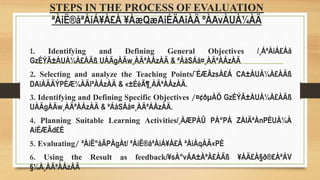
STEPS IN THE PROCESS OF EVALUATION
ªÀiË®åªÀiÁ¥À£À ¥ÀæQæAiÉÄAiÀÄ ºÀAvÀUÀ¼ÀÄ
1. Identifying and Defining General Objectives /¸ÁªÀiÁ£Àå
GzÉÝñÀUÀ¼À£ÀÄß UÀÄgÀÄw¸ÀĪÀÅzÀÄ & ªÁåSÁ夸ÀĪÀÅzÀÄ
2. Selecting and analyze the Teaching Points/¨ÉÆÃzsÀ£Á CA±ÀUÀ¼À£ÀÄß
DAiÀÄÄÝPÉÆ¼ÀÄîªÀÅzÀÄ & «±Éèö¸ÀĪÀÅzÀÄ.
3. Identifying and Defining Specific Objectives /¤¢ðµÀÖ GzÉÝñÀUÀ¼À£ÀÄß
UÀÄgÀÄw¸ÀĪÀÅzÀÄ & ªÁåSÁ夸ÀĪÀÅzÀÄ.
4. Planning Suitable Learning Activities/¸ÀÆPÀÛ PÀ°PÁ ZÀlĪÀnPÉUÀ¼À
AiÉÆÃd£É
5. Evaluating/ ªÀi˰åÃPÀgÀt/ ªÀiË®åªÀiÁ¥À£À ªÀiÁqÀÄ«PÉ
6. Using the Result as feedback/¥sÀ°vÁA±ÀªÀ£ÀÄß ¥ÀÄ£À§ð®£ÀªÁV
§¼À¸ÀĪÀÅzÀÄ
1. Identifying and Defining General Objectives
¸ÁªÀiÁ£Àå GzÉÝñÀUÀ¼À£ÀÄß UÀÄgÀÄw¸ÀĪÀÅzÀÄ &
ªÁåSÁ夸ÀĪÀÅzÀÄ
The process of identifying and defining educational objectives is a complex one; and
there is no simple or single procedure which suits all teachers. Some prefer to begin with the
course content, some with general aims, and some with lists of objectives suggested by
curriculum experts in the area.
±ÉÊPÀëtÂPÀ GzÉÝñÀUÀ¼À£ÀÄß ªÁåSÁ夸ÀĪÀÅzÀÄ & UÀÄgÀÄw¸ÀĪÀ
¥ÀæQæAiÉÄAiÀÄÄ MAzÀÄ ¸ÀAQÃtð PÁAiÀÄð. J¯Áè jÃwAiÀÄ ²PÀëPÀjUÀÆ M¥ÀÄàªÀAvÀºÀ
AiÀiÁªÀÅzÉà ¸ÀgÀ¼À CxÀªÁ KPÉÊPÀ ºÀAvÀUÀ½®è. GzÉÝñÀUÀ¼ÀÄ «µÀAiÀĪÀ¸ÀÄÛ«UÉ
C£ÀÄUÀÄtªÁVzÀÝgÉ, PÉ®ªÀÅ ¸ÁªÀiÁ£Àå UÀÄjUÀ¼ÁVªÉ, ªÀÄvÉÛ PÉ®ªÀÅ GzÉÝñÀUÀ¼À£ÀÄß D
PÉëÃvÀæzÀ°è ¥ÀjtÂvÀ ºÉÆA¢zÀ C£ÀĨsÀ« ¥ÀoÀåPÀæªÀÄ gÀZÀ£ÁPÁgÀgÀÄ gÀƦ¹gÀĪÀÅzÁVzÉ.
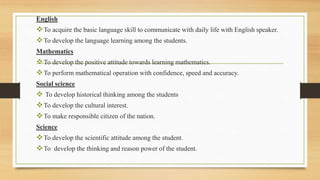
English
To acquire the basic language skill to communicate with daily life with English speaker.
To develop the language learning among the students.
Mathematics
To develop the positive attitude towards learning mathematics.
To perform mathematical operation with confidence, speed and accuracy.
Social science
 To develop historical thinking among the students
To develop the cultural interest.
To make responsible citizen of the nation.
Science
To develop the scientific attitude among the student.
To develop the thinking and reason power of the student.
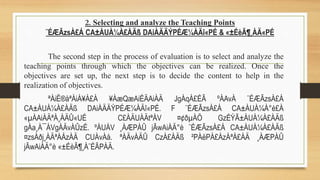
2. Selecting and analyze the Teaching Points
¨ÉÆÃzsÀ£Á CA±ÀUÀ¼À£ÀÄß DAiÀÄÄÝPÉÆ¼ÀÄî«PÉ & «±Éèö¸ÀÄ«PÉ
The second step in the process of evaluation is to select and analyze the
teaching points through which the objectives can be realized. Once the
objectives are set up, the next step is to decide the content to help in the
realization of objectives.
ªÀiË®åªÀiÁ¥À£À ¥ÀæQæAiÉÄAiÀÄ JgÀqÀ£Éà ºÀAvÀ ¨ÉÆÃzsÀ£Á
CA±ÀUÀ¼À£ÀÄß DAiÀÄÄÝPÉÆ¼ÀÄî«PÉ. F ¨ÉÆÃzsÀ£Á CA±ÀUÀ¼À°è£À
«µÀAiÀĪÀ¸ÀÄÛ«UÉ C£ÀÄUÀÄtªÁV ¤¢ðµÀÖ GzÉÝñÀUÀ¼À£ÀÄß
gÀa¸À¯ÁVgÀÄvÀÛzÉ. ºÁUÁV ¸ÀÆPÀÛ jÃwAiÀÄ°è ¨ÉÆÃzsÀ£Á CA±ÀUÀ¼À£ÀÄß
¤zsÀðj¸ÀĪÀÅzÀÄ CUÀvÀå. ªÀÄvÀÄÛ CzÀ£ÀÄß ²PÀëPÀ£ÁzÀªÀ£ÀÄ ¸ÀÆPÀÛ
jÃwAiÀÄ°è «±Éèö¸À¨ÉÃPÀÄ.
Sir C V Raman
Early life of Sir C V Raman
 Higher education of Raman
Occupation of Raman
Works and achievement of Raman
±ÀAPÀgÁZÁAiÀÄðgÀ ¨Á®å ªÀÄvÀÄÛ
CzÉÊvÀ ¹zÁÝAvÀ
±ÀAPÀgÁZÁAiÀÄðgÀ ¨Á®åfêÀ£À
±ÀAPÀgÁZÁAiÀÄðgÀ «zÁå¨Áå¸À
±ÀAPÀgÁZÁAiÀÄðgÀ CzÉÊvÀ ¹zÁÝAvÀ
Natural resources
 Meaning an types of natural resources
 Living resources
 Nonliving resources
vÀ®PÁr£À ªÉʨsÀªÀ
PÀ«¥ÀjZÀAiÀÄ ªÀÄvÀÄÛ vÀ®PÁrUÉ
¯ÉÃRPÀgÀ ¨sÉÃn
UÀAUÀgÀ D½éPÉ
gÀ£ÀߣÀ ¨sÉÃn ªÀÄvÀÄÛ
ºÉÆAiÀÄì¼ÀgÀ PÉÆqÀÄUÉ
EARLY LIFE OF SIR C V RAMAN
Teaching points
 Content and Structural words
 Birth of Raman
 Raman first invention
 Basic education
 Grammar
3. Identifying and Defining Specific Objectives
¤¢ðµÀÖ GzÉÝñÀUÀ¼À£ÀÄß UÀÄgÀÄw¸ÀĪÀÅzÀÄ &
ªÁåSÁ夸ÀĪÀÅzÀÄ.
• Learning is a modification of behavior in a desirable direction. Changes in behavior
are an indication of learning. These changes, arising out of classroom instruction. are
known as the learning outcome. What type of learning outcome is expected from a
student after he has undergone the teaching learning process is the first and foremost
concern of the teacher. These specific objectives will provide direction to teaching-
learning process.
• PÀ°PÉAiÀÄÄ D¥ÉÃPÀëtÂÃAiÀÄ ¢QÌ£ÉqÉUÉ £ÀªÀÄä ªÀvÀð£ÉAiÀÄ£ÀÄß ªÀiÁ¥ÁðqÀÄ
ªÀvÀð£ÉAiÀİè£À §zÀ¯ÁªÀuÉ PÀ°PÉAiÀÄ£ÀÄß ¸ÀÆa¸ÀĪÀÅzÀÄ. EzÀ£Éßà PÀ°PÁ
¥sÀ®UÀ¼ÀÄ JAzÀÄ PÀgÉAiÀÄĪÀgÀÄ. ¨ÉÆÃzsÀ£Á ¥ÀæQæAiÉÄAiÀÄ ªÀÄÆ®PÀ AiÀiÁªÀ
PÀ°PÁ ¥sÀ®ªÀ£ÀÄß D¥ÉÃQë¸À¯ÁUÀĪÀÅzÀÄ JA§ÄzÀ£ÀÄß ²PÀëPÀ ªÉÆzÀ¯ÉÃ
gÀƦ¹PÉÆ¼Àî¨ÉÃPÁVgÀĪÀÅzÀÄ CªÀ£À ªÉÆzÀ® & ªÀÄÄRå PÁ¼Àf.CzÀÄ
¸ÁzsÀåªÁUÀĪÀÅzÀÄ AiÀiÁªÁUÀ JAzÀgÉ ²PÀëPÀ GzÉÝñÀUÀ¼À£ÀÄß UÀÄgÀÄw¸ÀÄ«PÉ &
ªÁåSÁ夸ÀĪÀ ªÀÄÆ®PÀ. CzÀgÀ®Æè D GzÉÝñÀUÀ¼ÀÄ ªÀvÀð£ÉAiÀÄ£ÀÄß
§zÀ¯Á¬Ä¸ÀĪÀAvÀºÀ ¤¢ðµÀÖ GzÉÝñÀUÀ¼À ªÀÄÆ®PÀ. F ¤¢ðµÀÖ GzÉÝñÀUÀ¼ÀÄ
¨ÉÆÃzsÀ£Á PÀ°PÁ ¥ÀæQæAiÉÄUÉ ªÀiÁUÀð¸ÀÆaUÀ¼ÁVªÉ.
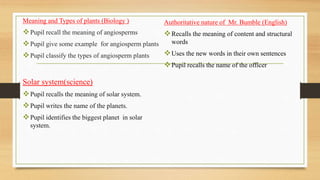
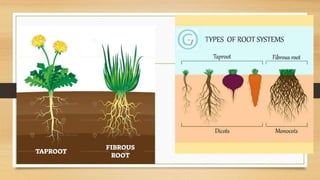
Meaning and Types of plants (Biology )
Pupil recall the meaning of angiosperms
Pupil give some example for angiosperm plants
Pupil classify the types of angiosperm plants
Solar system(science)
Pupil recalls the meaning of solar system.
Pupil writes the name of the planets.
Pupil identifies the biggest planet in solar
system.
Authoritative nature of Mr. Bumble (English)
Recalls the meaning of content and structural
words
Uses the new words in their own sentences
Pupil recalls the name of the officer
4. Planning Suitable Learning Activities
¸ÀÆPÀÛ PÀ°PÁ ZÀlĪÀnPÉUÀ¼À AiÉÆÃd£É
• The teacher will have to plan the learning activities to be provided to the pupils and at the same time, he
must be have two things in mind- objectives as well as teaching point. The process then becomes three
dimensional, the three co-ordinates being objectives, teaching points and learning activities. The teacher
gets the objectives and content readymade. -One thing he has to remember is that he should select only
such activities as will make it possible for him to realize his objectives. moreover, help his to determine
the evaluation procedures to be used in future.
• F AiÉÆÃd£ÉAiÀÄ£ÀÄß gÀƦ¸ÀĪÁUÀ ¤¢ðµÀÖ GzÉÝñÀUÀ¼ÀÄ ªÀÄvÀÄÛ PÀ°PÁ CA±ÀUÀ¼À£ÀÄß
UÀªÀÄ£ÀzÀ°èlÄÖPÉÆAqÀÄ AiÉÆÃf¸À¨ÉÃPÀÄ. DUÀ F ¥ÀæQæAiÉÄAiÀÄÄ ªÀÄÆgÀÄ DAiÀiÁªÀÄUÀ¼À£ÀÄß
ºÉÆAzÀĪÀÅzÀÄ. D ªÀÄÆgÀÄ DAiÀiÁªÀÄUÀ¼ÉAzÀgÉ GzÉÝñÀUÀ¼ÀÄ, PÀ°PÁA±ÀUÀ¼ÀÄ ªÀÄvÀÄÛ
PÀ°PÁ ZÀlĪÀnPÉUÀ¼ÀÄ. «µÀAiÀĪÀ¸ÀÄÛ ªÀÄvÀÄÛ GzÉÝñÀUÀ¼ÀÄ ²PÀëPÀjUÉ ¹zÀÝgÀÆ¥ÀzÀ°è
¹UÀÄvÀÛzÉ.ºÁUÁV D GzÉÝñÀUÀ¼À£ÀÄß FqÉÃj¹ «µÀAiÀĪÀ¸ÀÄÛªÀ£ÀÄß CxÉÊð¬Ä¸À®Ä
ªÉÊ«zsÀåªÀÄAiÀĪÁzÀ PÀ°PÁ ZÀlĪÀnPÉUÀ¼À£ÀÄß ¸ÀAWÀn¸À®Ä ²PÀëPÀ ¸ÀA¥ÀÆtð
¸ÀévÀAvÀæ£ÁVgÀÄvÁÛ£É. AiÀiÁªÀÅzÉà PÀ°PÁ ZÀlĪÀnPÉUÀ¼À£ÀÄß DAiÉÆÃf¹zÀgÀÆ CzÀÄ CªÀ£À
¤¢ðµÀÖ GzÉÝñÀUÀ¼À£ÀÄß FqÉÃj¹PÉÆ¼ÀÄîªÀ jÃwAiÀİè EgÀ¨ÉÃPÀÄ. F PÀ°PÁ ZÀlĪÀnPÉUÀ¼ÀÄ
ªÀÄÄAzÉ DvÀ¤UÉ ªÀiË®åªÀiÁ¥À£À ¥ÀæQæAiÉÄ £ÉqɸÀ®Ä ¸ÀºÁAiÀÄPÀªÁUÀĪÀÅzÀÄ.
5.Evaluating
ªÀi˰åÃPÀgÀt/ ªÀiË®åªÀiÁ¥À£À ªÀiÁqÀÄ«PÉ
He will keep his mind in three thinks one is objectives, teaching points and
learning activities, but his focus will be on the attainment of objectives. here the
teacher will construct test by making the maximum use of teaching points already
introduced in the class and the learning experience already acquired by his pupils. He
may plan for an oral test or a written test or practical test. In any case he will select
the test through which he can best evaluate the objectives.
«zÁåyðUÀ¼À£ÀÄß ¥ÀjÃQë¸ÀĪÁUÀ ²PÀëPÀ, GzÉÝñÀUÀ¼ÀÄ, PÀ°PÁ
CA±ÀUÀ¼ÀÄ ªÀÄvÀÄÛ PÀ°PÁ ZÀlĪÀnPÉUÀ¼ÉA§ ªÀÄÆgÀÄ CA±ÀUÀ¼À£ÀÄß
UÀªÀÄ£ÀzÀ°èlÄÖPÉÆAqÀÄ ªÀiË®åªÀiÁ¥À£ÀªÀ£ÀÄß ¸ÀAWÀn¸À¨ÉÃPÀÄ. DzÀgÉ
EªÀÅUÀ¼À°è ªÀÄÄRåªÁV ²PÀëPÀgÀ UÀªÀÄ£À, ¸Á¢ü¸À®àlÖ GzÉÝñÀUÀ¼À
ªÉÄðgÀ¨ÉÃPÀÄ. eÉÆvÉUÉ ¥ÀjÃPÉëUÀ¼ÀÄ vÀgÀUÀwAiÀÄ°è ¸Á¢ü¸À®àlÖ J¯Áè
GzÉÝñÀUÀ¼ÀÄ ªÀÄvÀÄÛ PÀ°PÁA±ÀUÀ¼ÀÄ ªÀÄvÀÄÛ PÀ°PÁ C£ÀĨsÀªÀUÀ¼À
DzsÁjvÀªÁVgÀ¨ÉÃPÀÄ. ²PÀëPÀ ¥ÀjÃPÉëUÀ¼À£ÀÄß ¨ÁAiÉÄÝgÉ, °TvÀ CxÀªÁ
¥ÁæAiÉÆÃVPÀ ªÀiÁzÀjAiÀİèAiÀÄÆ ¸ÀAWÀn¸ÀĪÀ ªÀÄÆ®PÀ ªÀiË®åªÀiÁ¥À£À
ªÀiÁqÀ§ºÀÄzÀÄ. MnÖ£À°è ªÀi˰åÃPÀgÀt GzÉÝñÀUÀ¼À ¸ÁzsÀ£ÉAiÀÄ£ÀÄß
C¼ÉAiÀÄĪÀAwgÀ¨ÉÃPÀÄ.
6. Using the Result as feedback
¥sÀ°vÁA±ÀªÀ£ÀÄß ¥ÀÄ£À§ð®£ÀªÁV §¼À¸ÀĪÀÅzÀÄ
If the teacher after testing his pupils he will use result in reconsidering the
objectives and in reorganizing learning activities. He will replace his steps to find
out the draw backs in the objectives or in the learning activities. he has provided
for his students this is known as feedback. Whatever the results teacher gets after
testing his pupils should be utilized for the betterment of the students.
F ºÀAvÀªÀÅ ªÀiË®åªÀiÁ¥À£À ¥ÀæQæAiÉÄAiÀÄ ¥ÀæªÀÄÄR ºÀAvÀ.
«zÁåyðUÀ¼À£ÀÄß ªÀiË®åªÀiÁ¥À£À ªÀiÁrzÀ £ÀAvÀgÀ CzÀgÀ ¥sÀ°vÁA±ÀPÉÌ
C£ÀÄUÀÄtªÁV ¤¢ðµÀÖ GzÉÝñÀUÀ¼À£ÀÄß & PÀ°PÁ ZÀlĪÀnPÉUÀ¼À£ÀÄß ¥ÀÄ£Àgï
¸ÀAgÀa¹ «µÀAiÀĪÀ¸ÀÄÛªÀ£ÀÄß ¥ÀÄ£Àgï ¥Àæ¸ÀÄÛvÀ ¥Àr¸À¨ÉÃPÀÄ. EzÀ£ÀÄß
¥ÀÄ£À§ð®£À JAzÀÄ PÀgÉAiÀÄĪÀgÀÄ. ²PÀëPÀ ¥ÀjÃPÉëAiÀÄ ªÀÄÆ®PÀ ¥ÀqÉzÀ
zÀvÁÛA±ÀUÀ¼À£ÀÄß D «zÁåyðUÀ¼À C©üªÀÈ¢ÞUÉ §¼À¸À¨ÉÃPÀÄ.
STEPS OF EVALUATION.pptx

STEPS OF EVALUATION.pptx

  • 1.
    NDRK COLLEGE OFEDUCATION HASSAN. Welcome to Evaluation Work shop TOPIC: ªÀiË®åªÀiÁ¥À£À ¥ÀæQæAiÉÄAiÀÄ ºÀAvÀUÀ¼ÀÄ/ Steps in the process of evaluation Presented by: Devaraju B N
  • 2.
    ªÀiË®åªÀiÁ¥À£À EVALUATION • Process ofevaluation is a method of assessing, how a teaching learning process is being implemented and what are the effectiveness or outcomes. • ªÀiË®åªÀiÁ¥À£À ¥ÀæQæAiÉÄAiÀÄÄ MAzÀÄ ªÀiÁ¥À£À «zsÁ£ÀªÁVzÀÄÝ, ¨ÉÆÃzsÀ£Á PÀ°PÁ ¥ÀæQæAiÉÄ ºÉÃUÉ eÁjUÉ §A¢zÉ ªÀÄvÀÄÛ CzÀgÀ ¥ÀjuÁªÀÄPÀvÉ CxÀªÁ ¥sÀ°vÁA±ÀªÀ£ÀÄß w½AiÀÄĪÀÅzÁVzÉ.
  • 3.
    STEPS IN THEPROCESS OF EVALUATION ªÀiË®åªÀiÁ¥À£À ¥ÀæQæAiÉÄAiÀÄ ºÀAvÀUÀ¼ÀÄ 1. Identifying and Defining General Objectives /¸ÁªÀiÁ£Àå GzÉÝñÀUÀ¼À£ÀÄß UÀÄgÀÄw¸ÀĪÀÅzÀÄ & ªÁåSÁ夸ÀĪÀÅzÀÄ 2. Selecting and analyze the Teaching Points/¨ÉÆÃzsÀ£Á CA±ÀUÀ¼À£ÀÄß DAiÀÄÄÝPÉÆ¼ÀÄîªÀÅzÀÄ & «±Éèö¸ÀĪÀÅzÀÄ. 3. Identifying and Defining Specific Objectives /¤¢ðµÀÖ GzÉÝñÀUÀ¼À£ÀÄß UÀÄgÀÄw¸ÀĪÀÅzÀÄ & ªÁåSÁ夸ÀĪÀÅzÀÄ. 4. Planning Suitable Learning Activities/¸ÀÆPÀÛ PÀ°PÁ ZÀlĪÀnPÉUÀ¼À AiÉÆÃd£É 5. Evaluating/ ªÀi˰åÃPÀgÀt/ ªÀiË®åªÀiÁ¥À£À ªÀiÁqÀÄ«PÉ 6. Using the Result as feedback/¥sÀ°vÁA±ÀªÀ£ÀÄß ¥ÀÄ£À§ð®£ÀªÁV §¼À¸ÀĪÀÅzÀÄ
  • 4.
    1. Identifying andDefining General Objectives ¸ÁªÀiÁ£Àå GzÉÝñÀUÀ¼À£ÀÄß UÀÄgÀÄw¸ÀĪÀÅzÀÄ & ªÁåSÁ夸ÀĪÀÅzÀÄ The process of identifying and defining educational objectives is a complex one; and there is no simple or single procedure which suits all teachers. Some prefer to begin with the course content, some with general aims, and some with lists of objectives suggested by curriculum experts in the area. ±ÉÊPÀëtÂPÀ GzÉÝñÀUÀ¼À£ÀÄß ªÁåSÁ夸ÀĪÀÅzÀÄ & UÀÄgÀÄw¸ÀĪÀ ¥ÀæQæAiÉÄAiÀÄÄ MAzÀÄ ¸ÀAQÃtð PÁAiÀÄð. J¯Áè jÃwAiÀÄ ²PÀëPÀjUÀÆ M¥ÀÄàªÀAvÀºÀ AiÀiÁªÀÅzÉà ¸ÀgÀ¼À CxÀªÁ KPÉÊPÀ ºÀAvÀUÀ½®è. GzÉÝñÀUÀ¼ÀÄ «µÀAiÀĪÀ¸ÀÄÛ«UÉ C£ÀÄUÀÄtªÁVzÀÝgÉ, PÉ®ªÀÅ ¸ÁªÀiÁ£Àå UÀÄjUÀ¼ÁVªÉ, ªÀÄvÉÛ PÉ®ªÀÅ GzÉÝñÀUÀ¼À£ÀÄß D PÉëÃvÀæzÀ°è ¥ÀjtÂvÀ ºÉÆA¢zÀ C£ÀĨsÀ« ¥ÀoÀåPÀæªÀÄ gÀZÀ£ÁPÁgÀgÀÄ gÀƦ¹gÀĪÀÅzÁVzÉ.
  • 5.
    English To acquire thebasic language skill to communicate with daily life with English speaker. To develop the language learning among the students. Mathematics To develop the positive attitude towards learning mathematics. To perform mathematical operation with confidence, speed and accuracy. Social science  To develop historical thinking among the students To develop the cultural interest. To make responsible citizen of the nation. Science To develop the scientific attitude among the student. To develop the thinking and reason power of the student.
  • 6.
    2. Selecting andanalyze the Teaching Points ¨ÉÆÃzsÀ£Á CA±ÀUÀ¼À£ÀÄß DAiÀÄÄÝPÉÆ¼ÀÄî«PÉ & «±Éèö¸ÀÄ«PÉ The second step in the process of evaluation is to select and analyze the teaching points through which the objectives can be realized. Once the objectives are set up, the next step is to decide the content to help in the realization of objectives. ªÀiË®åªÀiÁ¥À£À ¥ÀæQæAiÉÄAiÀÄ JgÀqÀ£Éà ºÀAvÀ ¨ÉÆÃzsÀ£Á CA±ÀUÀ¼À£ÀÄß DAiÀÄÄÝPÉÆ¼ÀÄî«PÉ. F ¨ÉÆÃzsÀ£Á CA±ÀUÀ¼À°è£À «µÀAiÀĪÀ¸ÀÄÛ«UÉ C£ÀÄUÀÄtªÁV ¤¢ðµÀÖ GzÉÝñÀUÀ¼À£ÀÄß gÀa¸À¯ÁVgÀÄvÀÛzÉ. ºÁUÁV ¸ÀÆPÀÛ jÃwAiÀÄ°è ¨ÉÆÃzsÀ£Á CA±ÀUÀ¼À£ÀÄß ¤zsÀðj¸ÀĪÀÅzÀÄ CUÀvÀå. ªÀÄvÀÄÛ CzÀ£ÀÄß ²PÀëPÀ£ÁzÀªÀ£ÀÄ ¸ÀÆPÀÛ jÃwAiÀÄ°è «±Éèö¸À¨ÉÃPÀÄ.
  • 7.
    Sir C VRaman Early life of Sir C V Raman  Higher education of Raman Occupation of Raman Works and achievement of Raman ±ÀAPÀgÁZÁAiÀÄðgÀ ¨Á®å ªÀÄvÀÄÛ CzÉÊvÀ ¹zÁÝAvÀ ±ÀAPÀgÁZÁAiÀÄðgÀ ¨Á®åfêÀ£À ±ÀAPÀgÁZÁAiÀÄðgÀ «zÁå¨Áå¸À ±ÀAPÀgÁZÁAiÀÄðgÀ CzÉÊvÀ ¹zÁÝAvÀ Natural resources  Meaning an types of natural resources  Living resources  Nonliving resources vÀ®PÁr£À ªÉʨsÀªÀ PÀ«¥ÀjZÀAiÀÄ ªÀÄvÀÄÛ vÀ®PÁrUÉ ¯ÉÃRPÀgÀ ¨sÉÃn UÀAUÀgÀ D½éPÉ gÀ£ÀߣÀ ¨sÉÃn ªÀÄvÀÄÛ ºÉÆAiÀÄì¼ÀgÀ PÉÆqÀÄUÉ EARLY LIFE OF SIR C V RAMAN Teaching points  Content and Structural words  Birth of Raman  Raman first invention  Basic education  Grammar
  • 8.
    3. Identifying andDefining Specific Objectives ¤¢ðµÀÖ GzÉÝñÀUÀ¼À£ÀÄß UÀÄgÀÄw¸ÀĪÀÅzÀÄ & ªÁåSÁ夸ÀĪÀÅzÀÄ. • Learning is a modification of behavior in a desirable direction. Changes in behavior are an indication of learning. These changes, arising out of classroom instruction. are known as the learning outcome. What type of learning outcome is expected from a student after he has undergone the teaching learning process is the first and foremost concern of the teacher. These specific objectives will provide direction to teaching- learning process. • PÀ°PÉAiÀÄÄ D¥ÉÃPÀëtÂÃAiÀÄ ¢QÌ£ÉqÉUÉ £ÀªÀÄä ªÀvÀð£ÉAiÀÄ£ÀÄß ªÀiÁ¥ÁðqÀÄ ªÀvÀð£ÉAiÀİè£À §zÀ¯ÁªÀuÉ PÀ°PÉAiÀÄ£ÀÄß ¸ÀÆa¸ÀĪÀÅzÀÄ. EzÀ£Éßà PÀ°PÁ ¥sÀ®UÀ¼ÀÄ JAzÀÄ PÀgÉAiÀÄĪÀgÀÄ. ¨ÉÆÃzsÀ£Á ¥ÀæQæAiÉÄAiÀÄ ªÀÄÆ®PÀ AiÀiÁªÀ PÀ°PÁ ¥sÀ®ªÀ£ÀÄß D¥ÉÃQë¸À¯ÁUÀĪÀÅzÀÄ JA§ÄzÀ£ÀÄß ²PÀëPÀ ªÉÆzÀ¯Éà gÀƦ¹PÉÆ¼Àî¨ÉÃPÁVgÀĪÀÅzÀÄ CªÀ£À ªÉÆzÀ® & ªÀÄÄRå PÁ¼Àf.CzÀÄ ¸ÁzsÀåªÁUÀĪÀÅzÀÄ AiÀiÁªÁUÀ JAzÀgÉ ²PÀëPÀ GzÉÝñÀUÀ¼À£ÀÄß UÀÄgÀÄw¸ÀÄ«PÉ & ªÁåSÁ夸ÀĪÀ ªÀÄÆ®PÀ. CzÀgÀ®Æè D GzÉÝñÀUÀ¼ÀÄ ªÀvÀð£ÉAiÀÄ£ÀÄß §zÀ¯Á¬Ä¸ÀĪÀAvÀºÀ ¤¢ðµÀÖ GzÉÝñÀUÀ¼À ªÀÄÆ®PÀ. F ¤¢ðµÀÖ GzÉÝñÀUÀ¼ÀÄ ¨ÉÆÃzsÀ£Á PÀ°PÁ ¥ÀæQæAiÉÄUÉ ªÀiÁUÀð¸ÀÆaUÀ¼ÁVªÉ.
  • 9.
    Meaning and Typesof plants (Biology ) Pupil recall the meaning of angiosperms Pupil give some example for angiosperm plants Pupil classify the types of angiosperm plants Solar system(science) Pupil recalls the meaning of solar system. Pupil writes the name of the planets. Pupil identifies the biggest planet in solar system. Authoritative nature of Mr. Bumble (English) Recalls the meaning of content and structural words Uses the new words in their own sentences Pupil recalls the name of the officer
  • 10.
    4. Planning SuitableLearning Activities ¸ÀÆPÀÛ PÀ°PÁ ZÀlĪÀnPÉUÀ¼À AiÉÆÃd£É • The teacher will have to plan the learning activities to be provided to the pupils and at the same time, he must be have two things in mind- objectives as well as teaching point. The process then becomes three dimensional, the three co-ordinates being objectives, teaching points and learning activities. The teacher gets the objectives and content readymade. -One thing he has to remember is that he should select only such activities as will make it possible for him to realize his objectives. moreover, help his to determine the evaluation procedures to be used in future. • F AiÉÆÃd£ÉAiÀÄ£ÀÄß gÀƦ¸ÀĪÁUÀ ¤¢ðµÀÖ GzÉÝñÀUÀ¼ÀÄ ªÀÄvÀÄÛ PÀ°PÁ CA±ÀUÀ¼À£ÀÄß UÀªÀÄ£ÀzÀ°èlÄÖPÉÆAqÀÄ AiÉÆÃf¸À¨ÉÃPÀÄ. DUÀ F ¥ÀæQæAiÉÄAiÀÄÄ ªÀÄÆgÀÄ DAiÀiÁªÀÄUÀ¼À£ÀÄß ºÉÆAzÀĪÀÅzÀÄ. D ªÀÄÆgÀÄ DAiÀiÁªÀÄUÀ¼ÉAzÀgÉ GzÉÝñÀUÀ¼ÀÄ, PÀ°PÁA±ÀUÀ¼ÀÄ ªÀÄvÀÄÛ PÀ°PÁ ZÀlĪÀnPÉUÀ¼ÀÄ. «µÀAiÀĪÀ¸ÀÄÛ ªÀÄvÀÄÛ GzÉÝñÀUÀ¼ÀÄ ²PÀëPÀjUÉ ¹zÀÝgÀÆ¥ÀzÀ°è ¹UÀÄvÀÛzÉ.ºÁUÁV D GzÉÝñÀUÀ¼À£ÀÄß FqÉÃj¹ «µÀAiÀĪÀ¸ÀÄÛªÀ£ÀÄß CxÉÊð¬Ä¸À®Ä ªÉÊ«zsÀåªÀÄAiÀĪÁzÀ PÀ°PÁ ZÀlĪÀnPÉUÀ¼À£ÀÄß ¸ÀAWÀn¸À®Ä ²PÀëPÀ ¸ÀA¥ÀÆtð ¸ÀévÀAvÀæ£ÁVgÀÄvÁÛ£É. AiÀiÁªÀÅzÉà PÀ°PÁ ZÀlĪÀnPÉUÀ¼À£ÀÄß DAiÉÆÃf¹zÀgÀÆ CzÀÄ CªÀ£À ¤¢ðµÀÖ GzÉÝñÀUÀ¼À£ÀÄß FqÉÃj¹PÉÆ¼ÀÄîªÀ jÃwAiÀİè EgÀ¨ÉÃPÀÄ. F PÀ°PÁ ZÀlĪÀnPÉUÀ¼ÀÄ ªÀÄÄAzÉ DvÀ¤UÉ ªÀiË®åªÀiÁ¥À£À ¥ÀæQæAiÉÄ £ÉqɸÀ®Ä ¸ÀºÁAiÀÄPÀªÁUÀĪÀÅzÀÄ.
  • 14.
    5.Evaluating ªÀi˰åÃPÀgÀt/ ªÀiË®åªÀiÁ¥À£À ªÀiÁqÀÄ«PÉ Hewill keep his mind in three thinks one is objectives, teaching points and learning activities, but his focus will be on the attainment of objectives. here the teacher will construct test by making the maximum use of teaching points already introduced in the class and the learning experience already acquired by his pupils. He may plan for an oral test or a written test or practical test. In any case he will select the test through which he can best evaluate the objectives. «zÁåyðUÀ¼À£ÀÄß ¥ÀjÃQë¸ÀĪÁUÀ ²PÀëPÀ, GzÉÝñÀUÀ¼ÀÄ, PÀ°PÁ CA±ÀUÀ¼ÀÄ ªÀÄvÀÄÛ PÀ°PÁ ZÀlĪÀnPÉUÀ¼ÉA§ ªÀÄÆgÀÄ CA±ÀUÀ¼À£ÀÄß UÀªÀÄ£ÀzÀ°èlÄÖPÉÆAqÀÄ ªÀiË®åªÀiÁ¥À£ÀªÀ£ÀÄß ¸ÀAWÀn¸À¨ÉÃPÀÄ. DzÀgÉ EªÀÅUÀ¼À°è ªÀÄÄRåªÁV ²PÀëPÀgÀ UÀªÀÄ£À, ¸Á¢ü¸À®àlÖ GzÉÝñÀUÀ¼À ªÉÄðgÀ¨ÉÃPÀÄ. eÉÆvÉUÉ ¥ÀjÃPÉëUÀ¼ÀÄ vÀgÀUÀwAiÀÄ°è ¸Á¢ü¸À®àlÖ J¯Áè GzÉÝñÀUÀ¼ÀÄ ªÀÄvÀÄÛ PÀ°PÁA±ÀUÀ¼ÀÄ ªÀÄvÀÄÛ PÀ°PÁ C£ÀĨsÀªÀUÀ¼À DzsÁjvÀªÁVgÀ¨ÉÃPÀÄ. ²PÀëPÀ ¥ÀjÃPÉëUÀ¼À£ÀÄß ¨ÁAiÉÄÝgÉ, °TvÀ CxÀªÁ ¥ÁæAiÉÆÃVPÀ ªÀiÁzÀjAiÀİèAiÀÄÆ ¸ÀAWÀn¸ÀĪÀ ªÀÄÆ®PÀ ªÀiË®åªÀiÁ¥À£À ªÀiÁqÀ§ºÀÄzÀÄ. MnÖ£À°è ªÀi˰åÃPÀgÀt GzÉÝñÀUÀ¼À ¸ÁzsÀ£ÉAiÀÄ£ÀÄß C¼ÉAiÀÄĪÀAwgÀ¨ÉÃPÀÄ.
  • 15.
    6. Using theResult as feedback ¥sÀ°vÁA±ÀªÀ£ÀÄß ¥ÀÄ£À§ð®£ÀªÁV §¼À¸ÀĪÀÅzÀÄ If the teacher after testing his pupils he will use result in reconsidering the objectives and in reorganizing learning activities. He will replace his steps to find out the draw backs in the objectives or in the learning activities. he has provided for his students this is known as feedback. Whatever the results teacher gets after testing his pupils should be utilized for the betterment of the students. F ºÀAvÀªÀÅ ªÀiË®åªÀiÁ¥À£À ¥ÀæQæAiÉÄAiÀÄ ¥ÀæªÀÄÄR ºÀAvÀ. «zÁåyðUÀ¼À£ÀÄß ªÀiË®åªÀiÁ¥À£À ªÀiÁrzÀ £ÀAvÀgÀ CzÀgÀ ¥sÀ°vÁA±ÀPÉÌ C£ÀÄUÀÄtªÁV ¤¢ðµÀÖ GzÉÝñÀUÀ¼À£ÀÄß & PÀ°PÁ ZÀlĪÀnPÉUÀ¼À£ÀÄß ¥ÀÄ£Àgï ¸ÀAgÀa¹ «µÀAiÀĪÀ¸ÀÄÛªÀ£ÀÄß ¥ÀÄ£Àgï ¥Àæ¸ÀÄÛvÀ ¥Àr¸À¨ÉÃPÀÄ. EzÀ£ÀÄß ¥ÀÄ£À§ð®£À JAzÀÄ PÀgÉAiÀÄĪÀgÀÄ. ²PÀëPÀ ¥ÀjÃPÉëAiÀÄ ªÀÄÆ®PÀ ¥ÀqÉzÀ zÀvÁÛA±ÀUÀ¼À£ÀÄß D «zÁåyðUÀ¼À C©üªÀÈ¢ÞUÉ §¼À¸À¨ÉÃPÀÄ.