Preparation & Development of low-cost Improvised Apparatus for Science Teaching
The document discusses the concept of improvised apparatus, defined as low-cost alternatives to traditional equipment used in science experiments. It outlines the benefits of using locally sourced materials to enhance learning experiences and creativity in the classroom, particularly under financial constraints. The implementation of improvised apparatus allows for quick construction and easy maintenance, promoting hands-on science education for both teachers and students.
Definition and importance of improvised apparatus in science, its cost-effectiveness and alternative role in teaching.
Hands-on learning using indigenous materials, local substitutes, and the advantages of constructing improvised apparatus for effective science education.
Preparation & Development of low-cost Improvised Apparatus for Science Teaching
2.
1. Whatis Apparatus?
2. What is Improvised Apparatus?
3. Logic Behind using low cost
Improvised Apparatus
4. Steps involved in preparing Improvised
Apparatus
5. Advantages of using low cost
Improvised Apparatus
3.
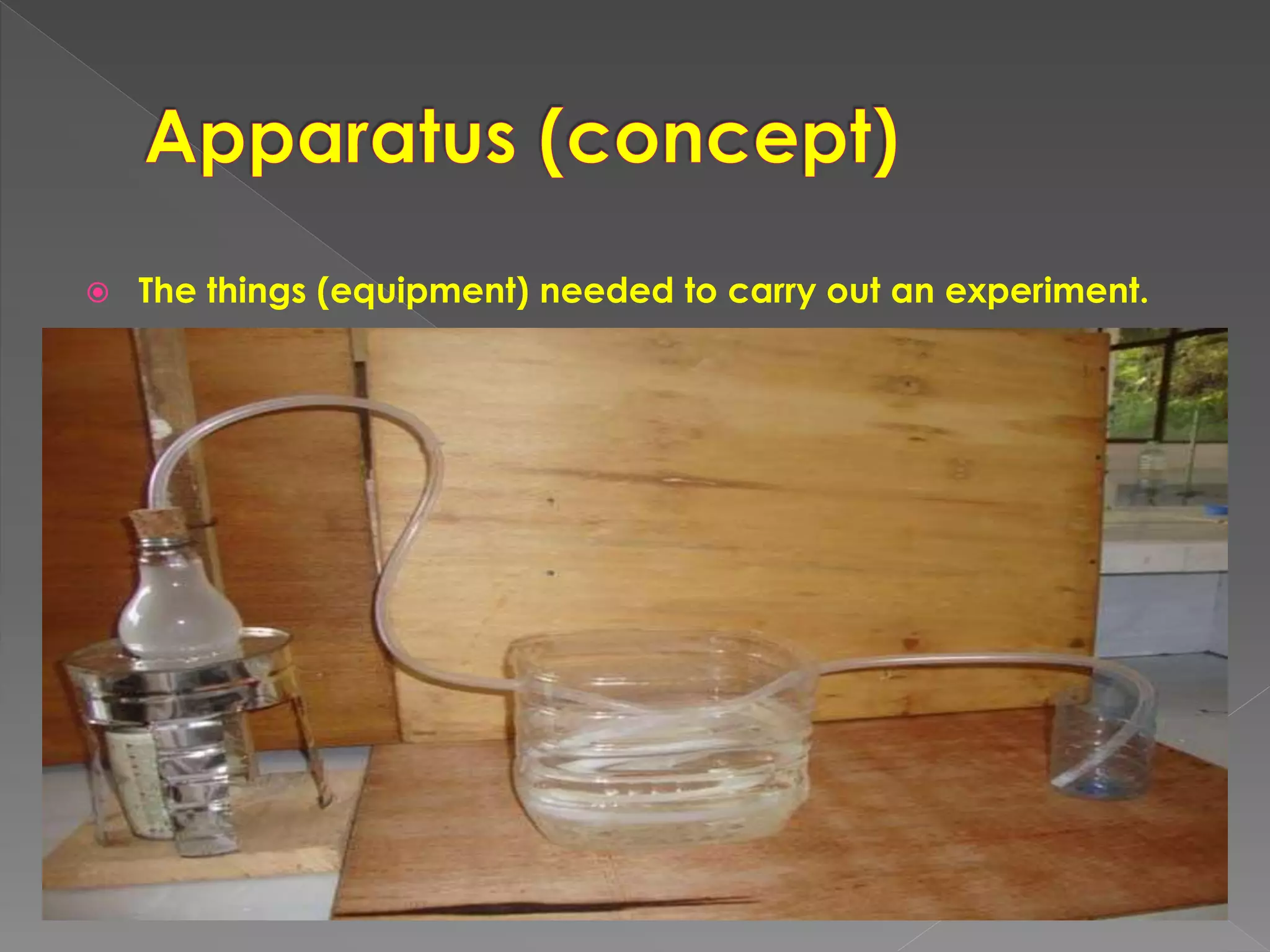
The things(equipment) needed to carry out an experiment.
4.
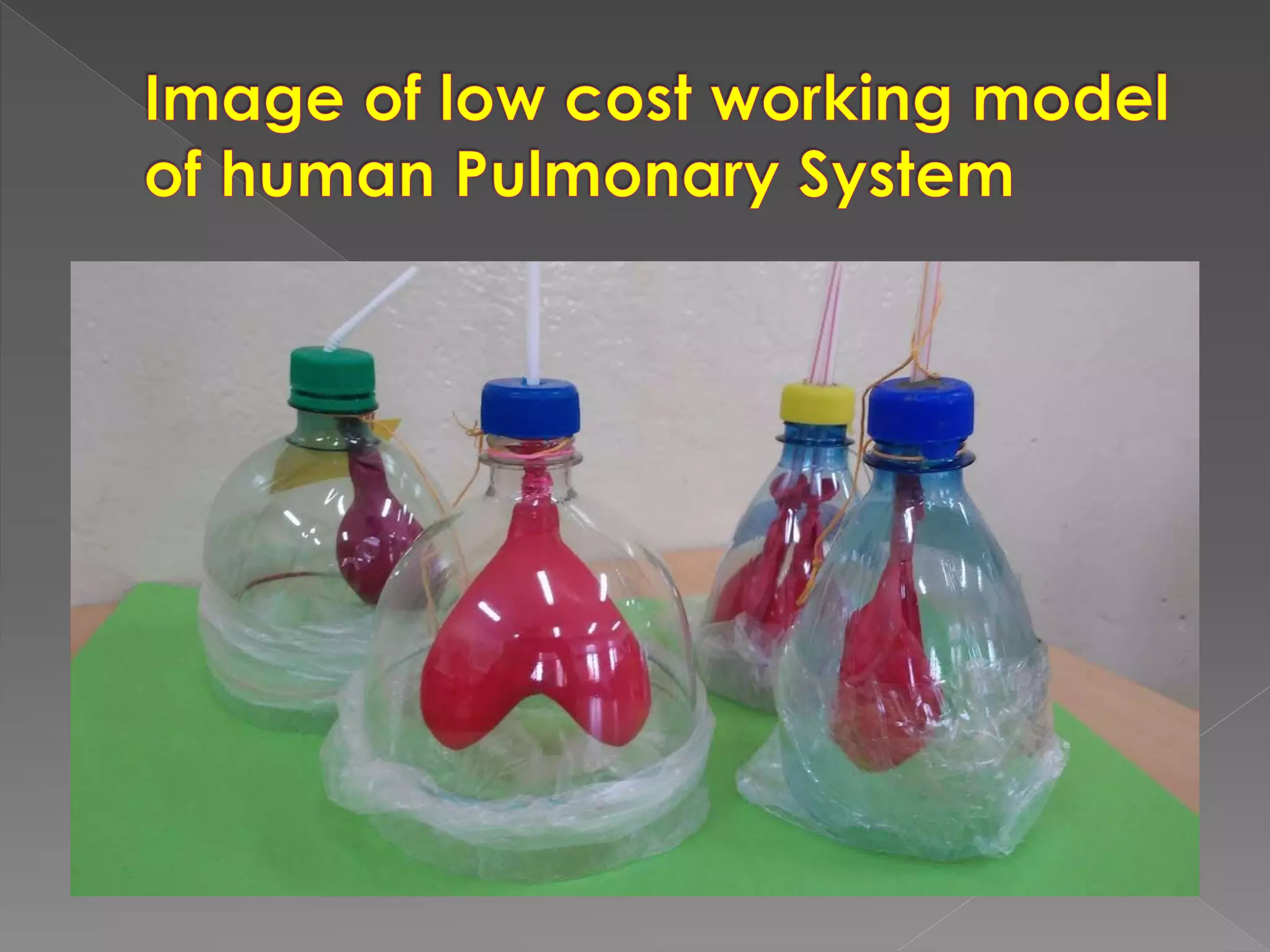
An improvisedapparatus in science
projects is an apparatus which is used as
an alternative for the original equipment.
The use of improvised apparatus is an
effective step taken towards reducing
the cost in Integrated Science teaching.
6.
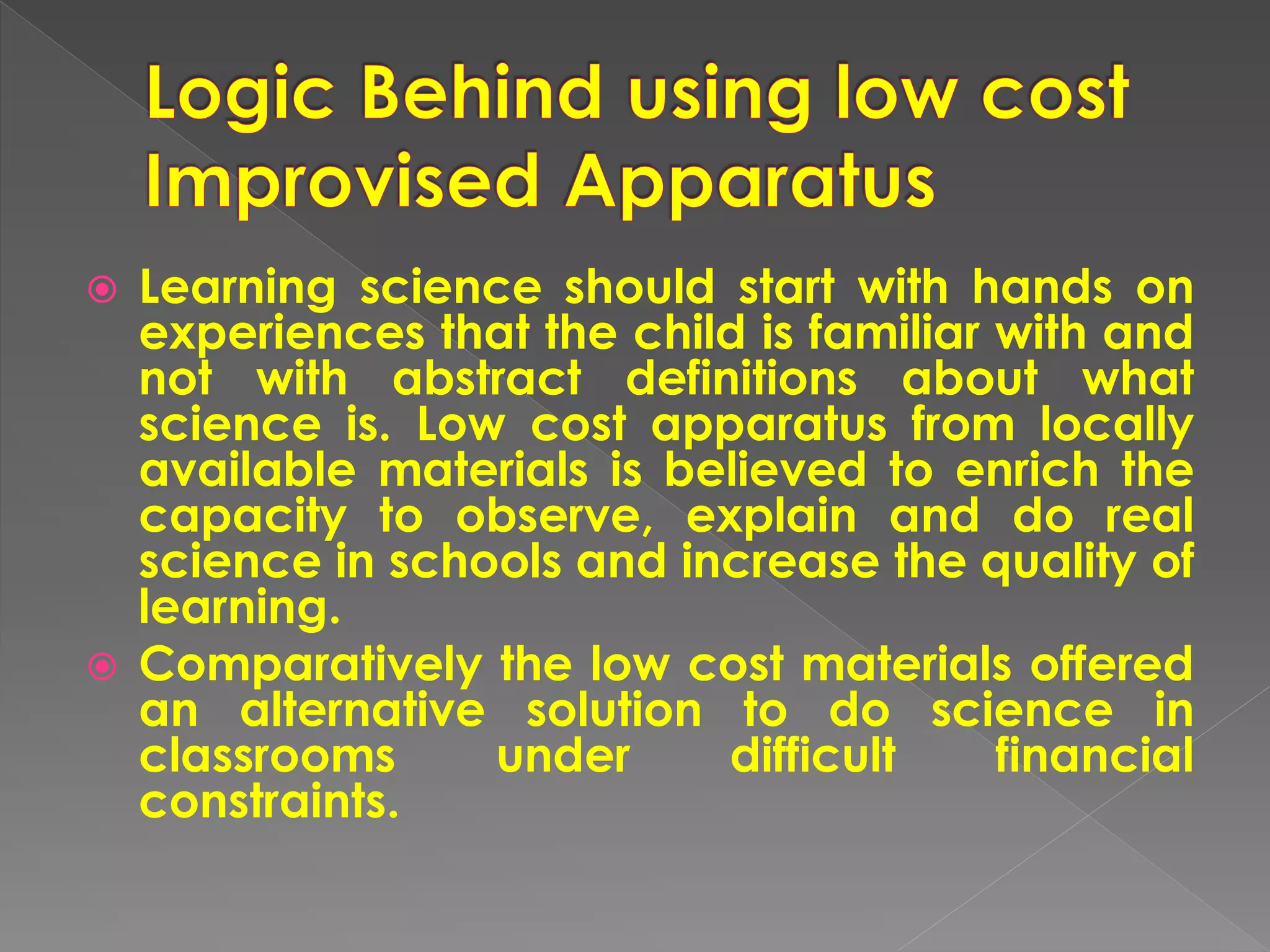
Learning scienceshould start with hands on
experiences that the child is familiar with and
not with abstract definitions about what
science is. Low cost apparatus from locally
available materials is believed to enrich the
capacity to observe, explain and do real
science in schools and increase the quality of
learning.
Comparatively the low cost materials offered
an alternative solution to do science in
classrooms under difficult financial
constraints.
7.
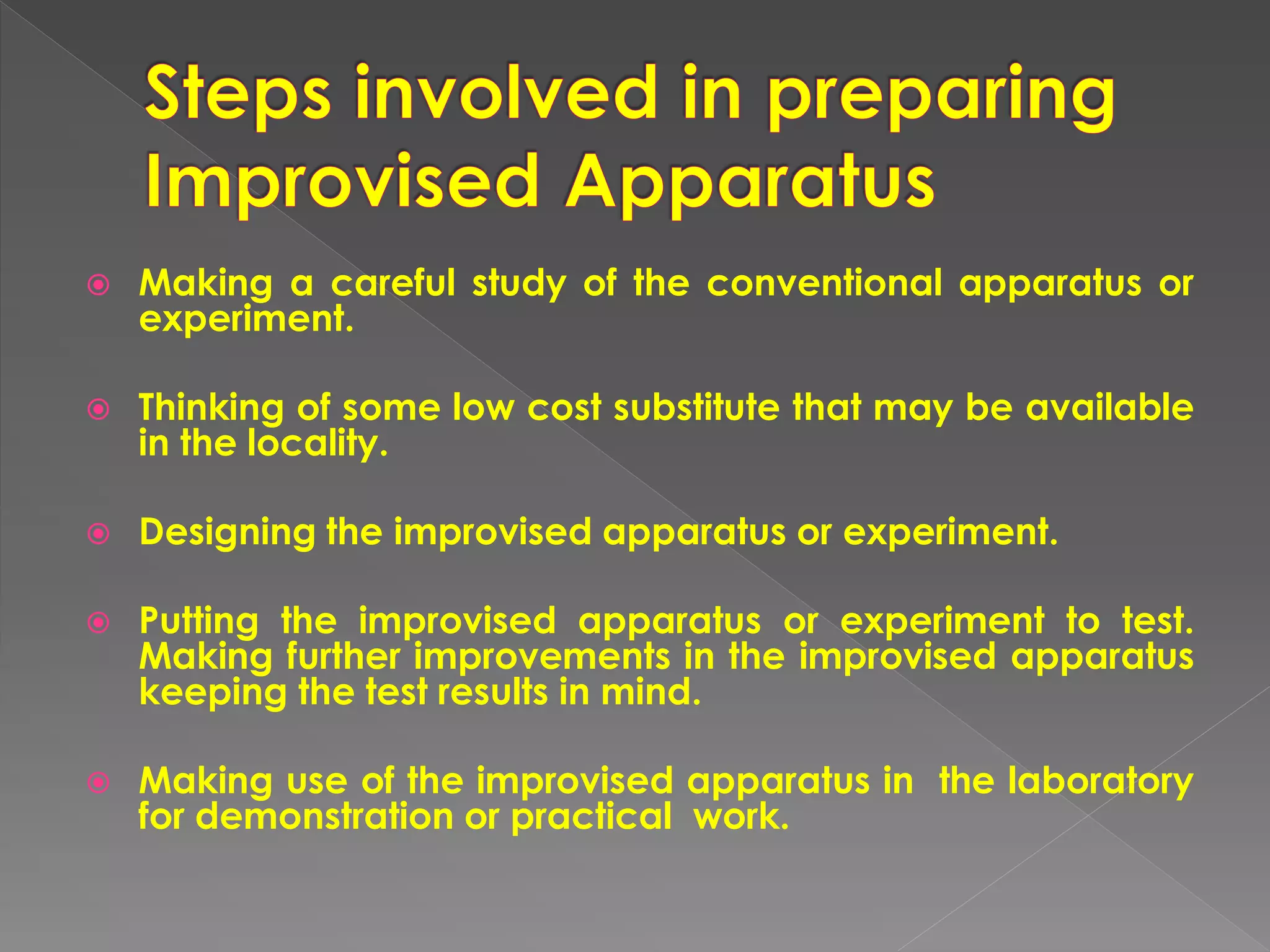
Making acareful study of the conventional apparatus or
experiment.
Thinking of some low cost substitute that may be available
in the locality.
Designing the improvised apparatus or experiment.
Putting the improvised apparatus or experiment to test.
Making further improvements in the improvised apparatus
keeping the test results in mind.
Making use of the improvised apparatus in the laboratory
for demonstration or practical work.
9.
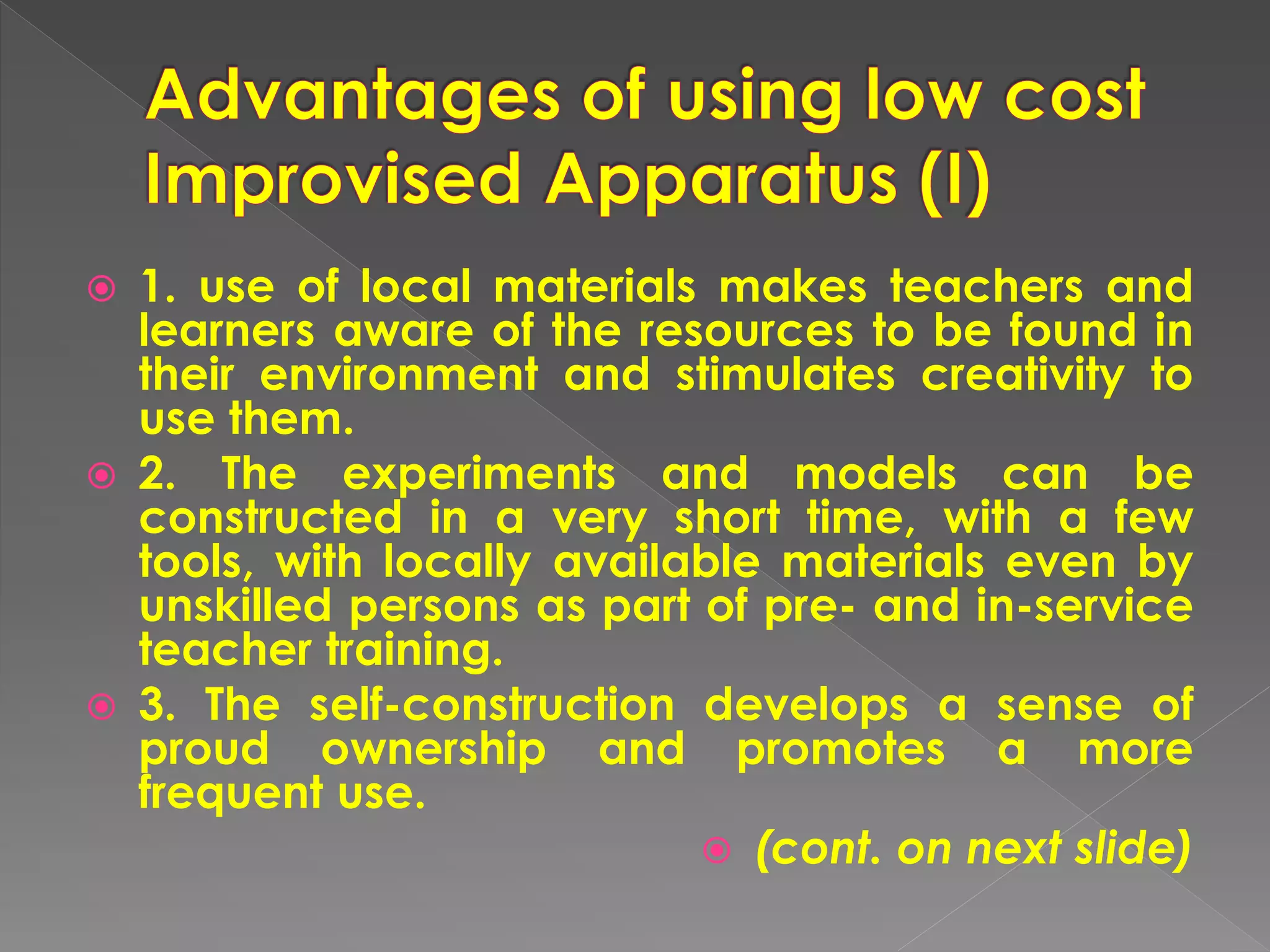
1. useof local materials makes teachers and
learners aware of the resources to be found in
their environment and stimulates creativity to
use them.
2. The experiments and models can be
constructed in a very short time, with a few
tools, with locally available materials even by
unskilled persons as part of pre- and in-service
teacher training.
3. The self-construction develops a sense of
proud ownership and promotes a more
frequent use.
(cont. on next slide)
10.
4. Repairand replacement of broken parts
are possible locally without technical or
administrative problems.
5. For the storage no special storage facility
is needed; a lockable cupboard is enough.
Security is no problem, because of the low
material value.
6. For the implementation no special
infrastructure is needed. The innovations go
straight to the schools. What has been
learned today in a training workshop can
be applied tomorrow in the classroom.