By Karl M. Kapp
Bloomsburg University
Gamification of Learning &Instruction
July 16, 2014
EMAIL: kkapp@bloomu.edu
TWITTER: @kkapp
BLOG: http://karlkapp.com/kapp-notes/
What is Gamification?
Is there any Science Behind It?
Brief history of…
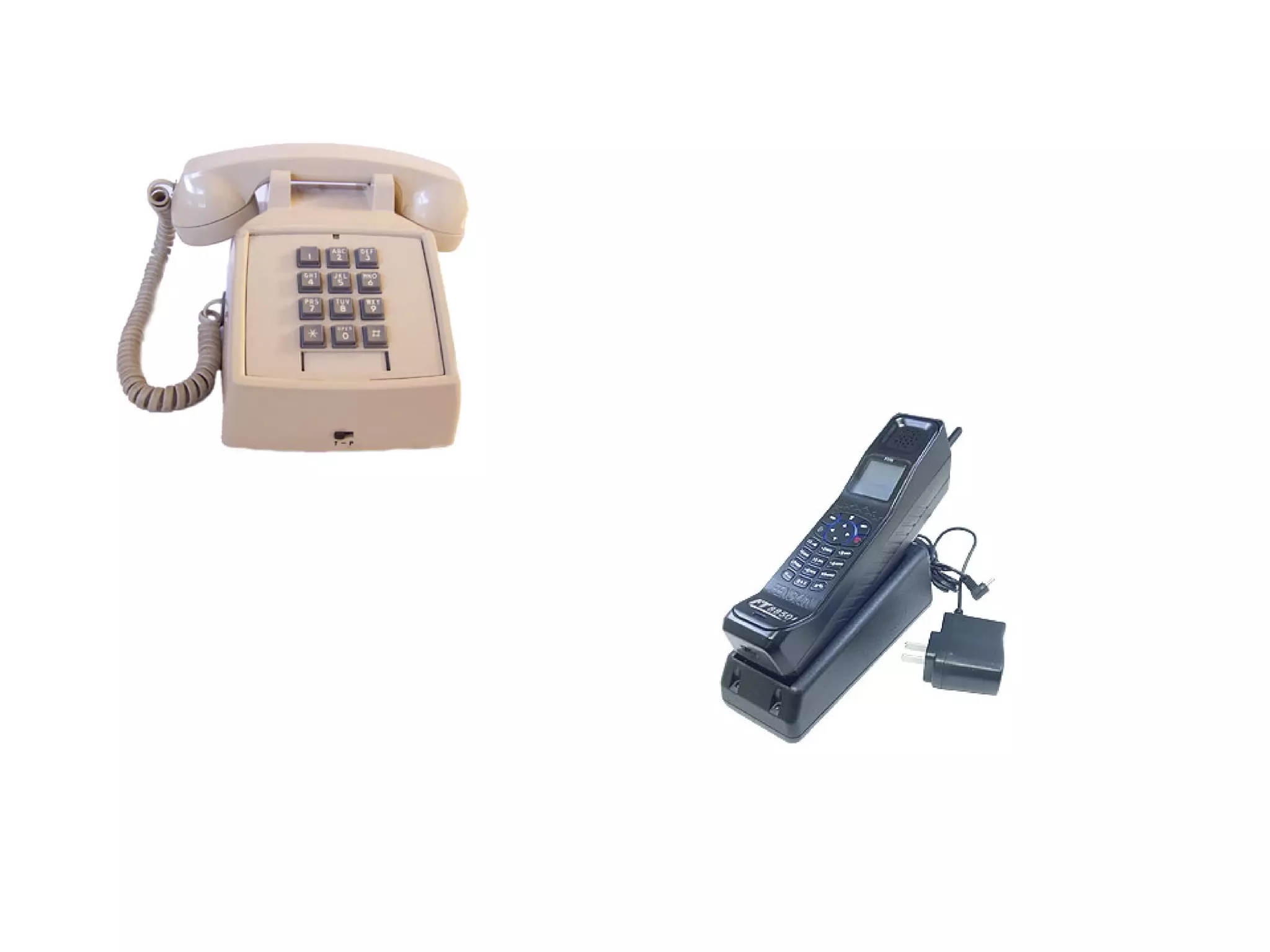
The World
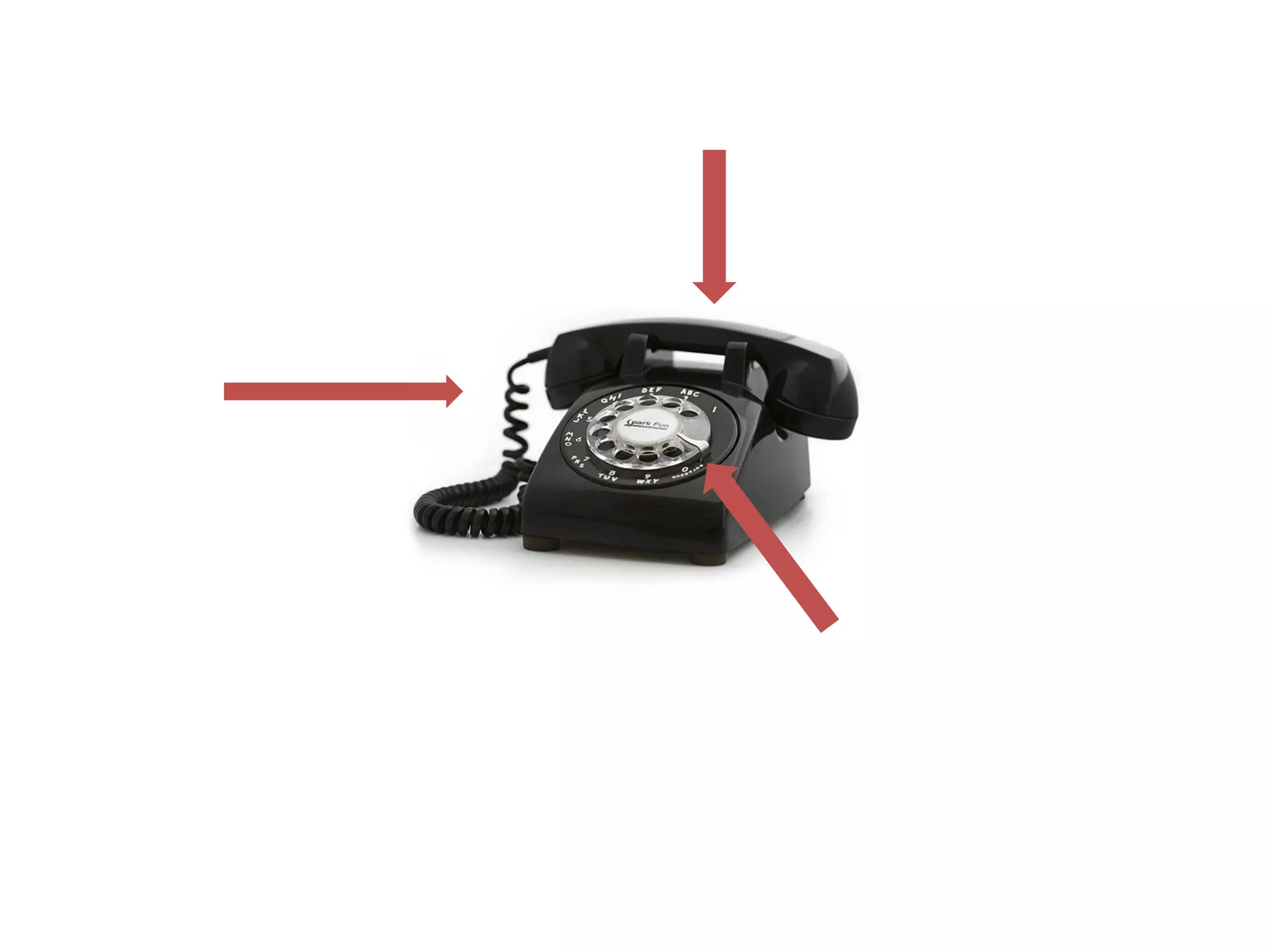
We’ve learned and struggled for a few
years here figuring out how to make a
decent phone. PC guys are not going
to just figure this out.
They’re not going to just walk in.
--Palm CEO Ed Colligan, 16 Nov 2006
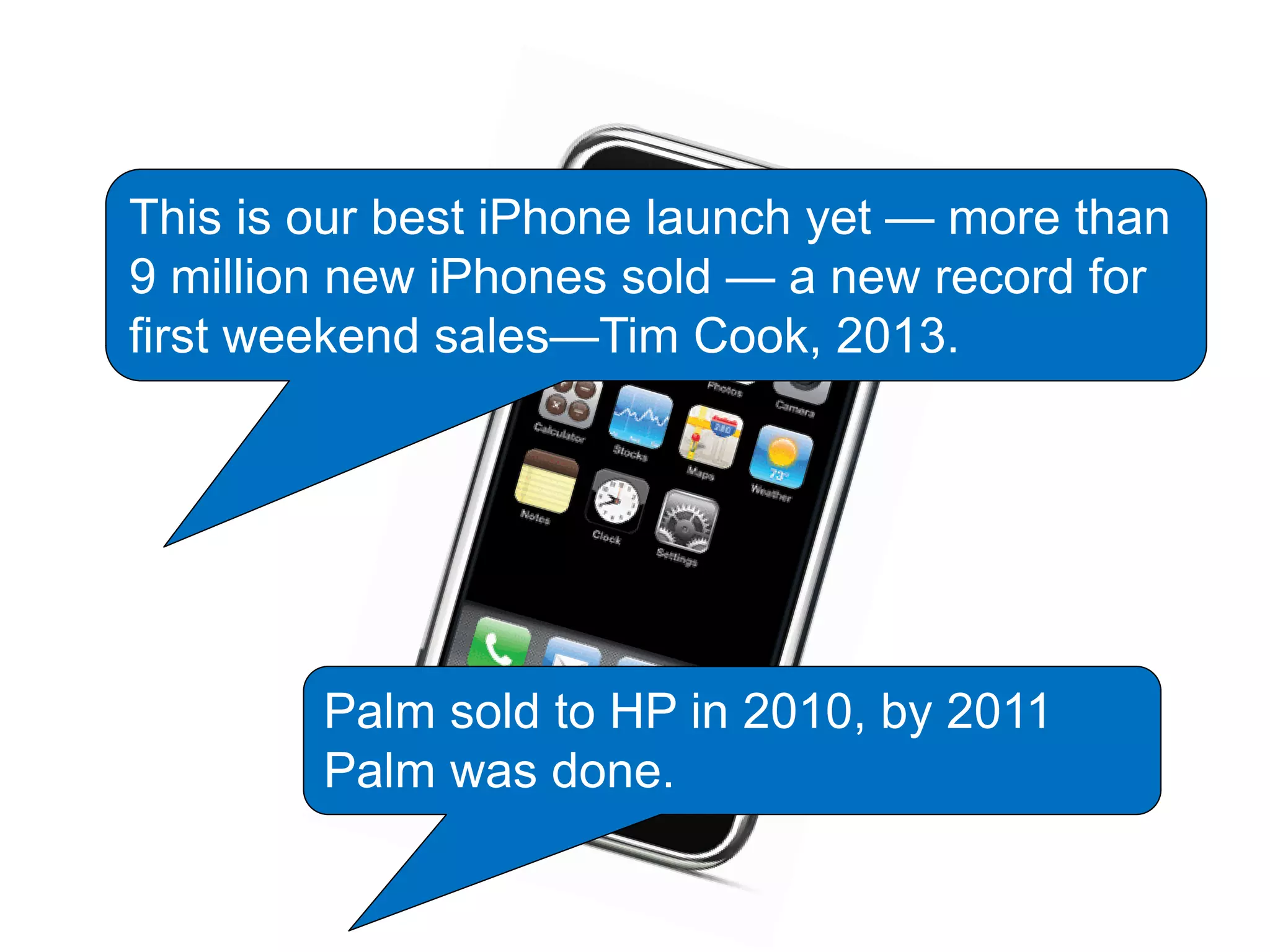
This is our best iPhone launch yet — more than
9 million new iPhones sold — a new record for
first weekend sales—Tim Cook, 2013.
Palm sold to HP in 2010, by 2011
Palm was done.
New
Instructional
Approaches
are Needed
Gamification
Gamification
Lots of Hype
Gartner Group predicts by 2015, 40 percent
of Global 1000 organizations will use
gamification as the primary mechanism to
transform business operations.
Gartner Group predicts 80 percent of
current gamified applications will fail to
meet business objectives, primarily due
to poor design.
Let’s Play
Fact or Fishy…
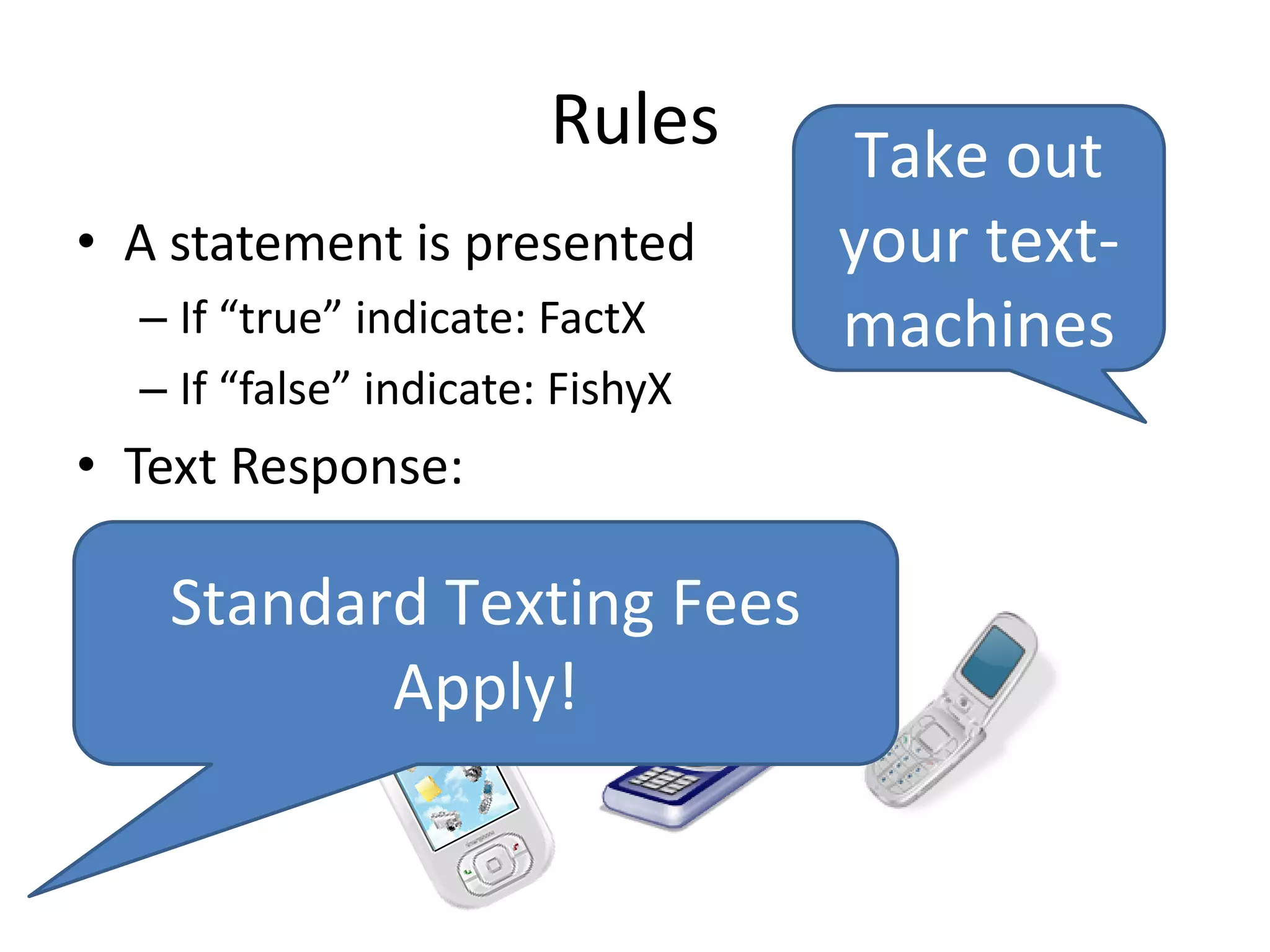
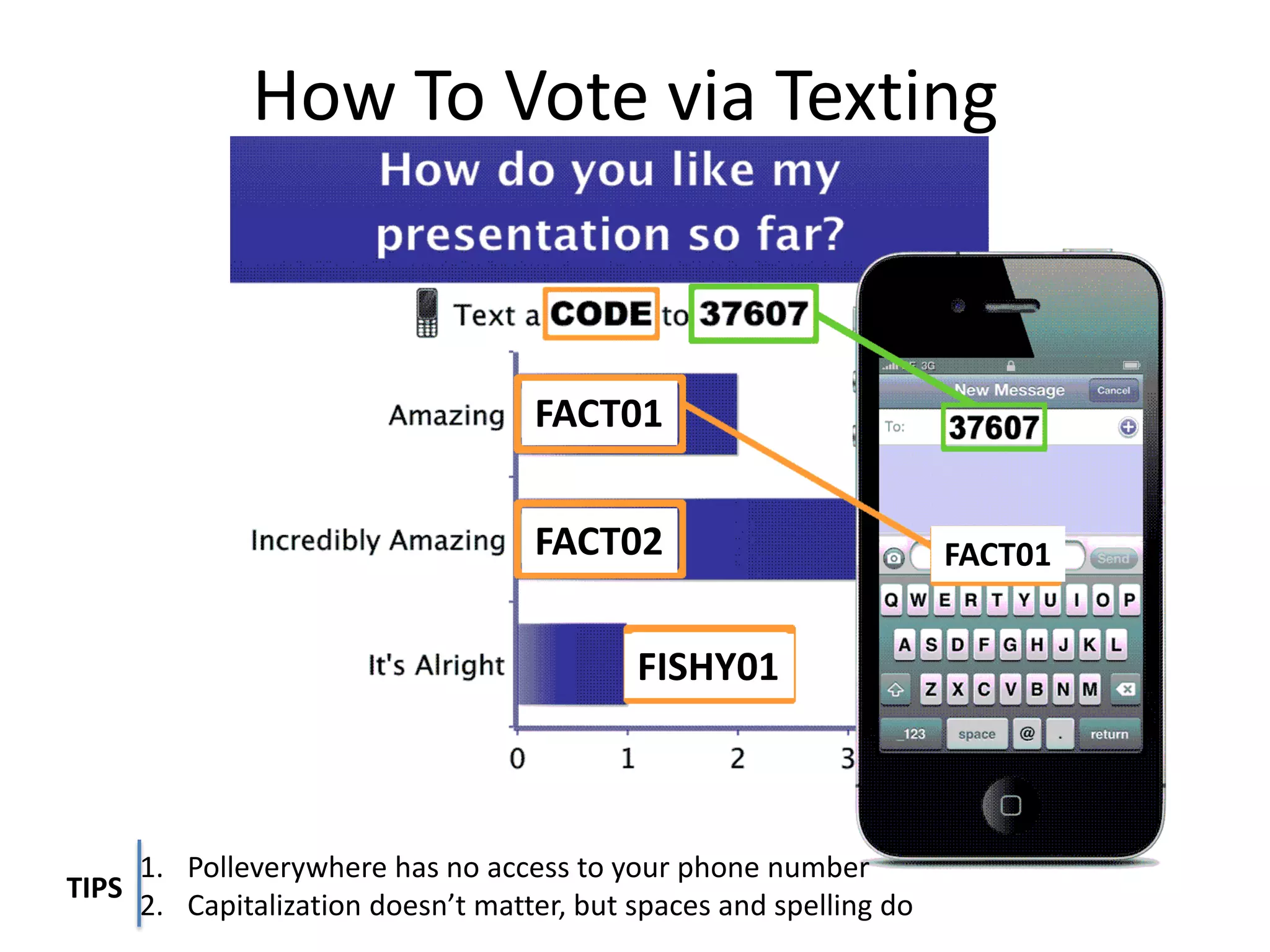
Rules
• A statement is presented
– If “true” indicate: FactX
– If “false” indicate: FishyX
• Text Response:
Take out
your text-
machines
Standard Texting Fees
Apply!
How To Vote via Texting
1. Polleverywhere has no access to your phone number
2. Capitalization doesn’t matter, but spaces and spelling do
TIPS
FACT01
FACT02
FISHY01
FACT01
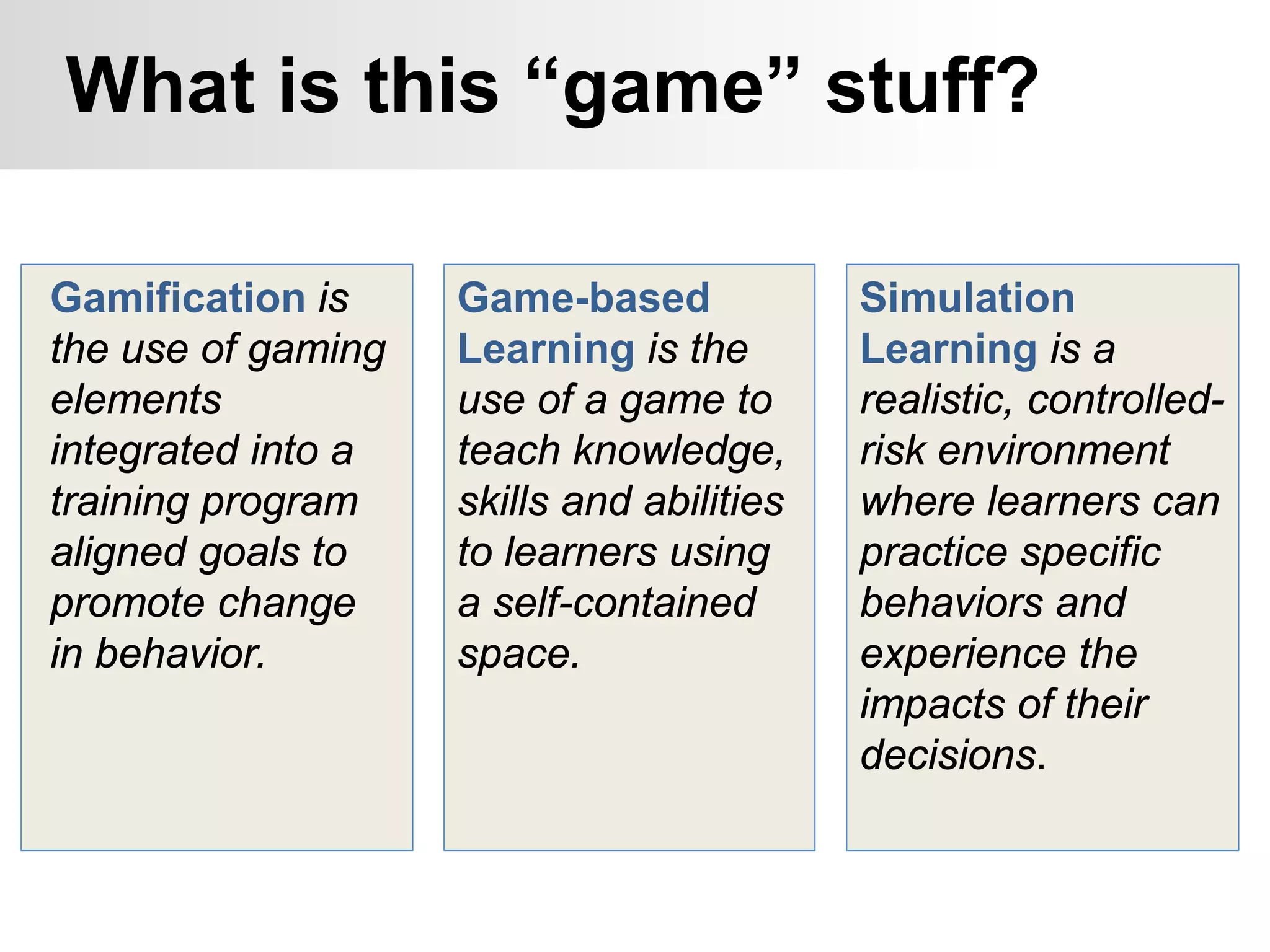
Gamification is
the use of gaming
elements
integrated into a
training program
aligned goals to
promote change
in behavior.
Game-based
Learning is the
use of a game to
teach knowledge,
skills and abilities
to learners using
a self-contained
space.
What is this “game” stuff?
Simulation
Learning is a
realistic, controlled-
risk environment
where learners can
practice specific
behaviors and
experience the
impacts of their
decisions.
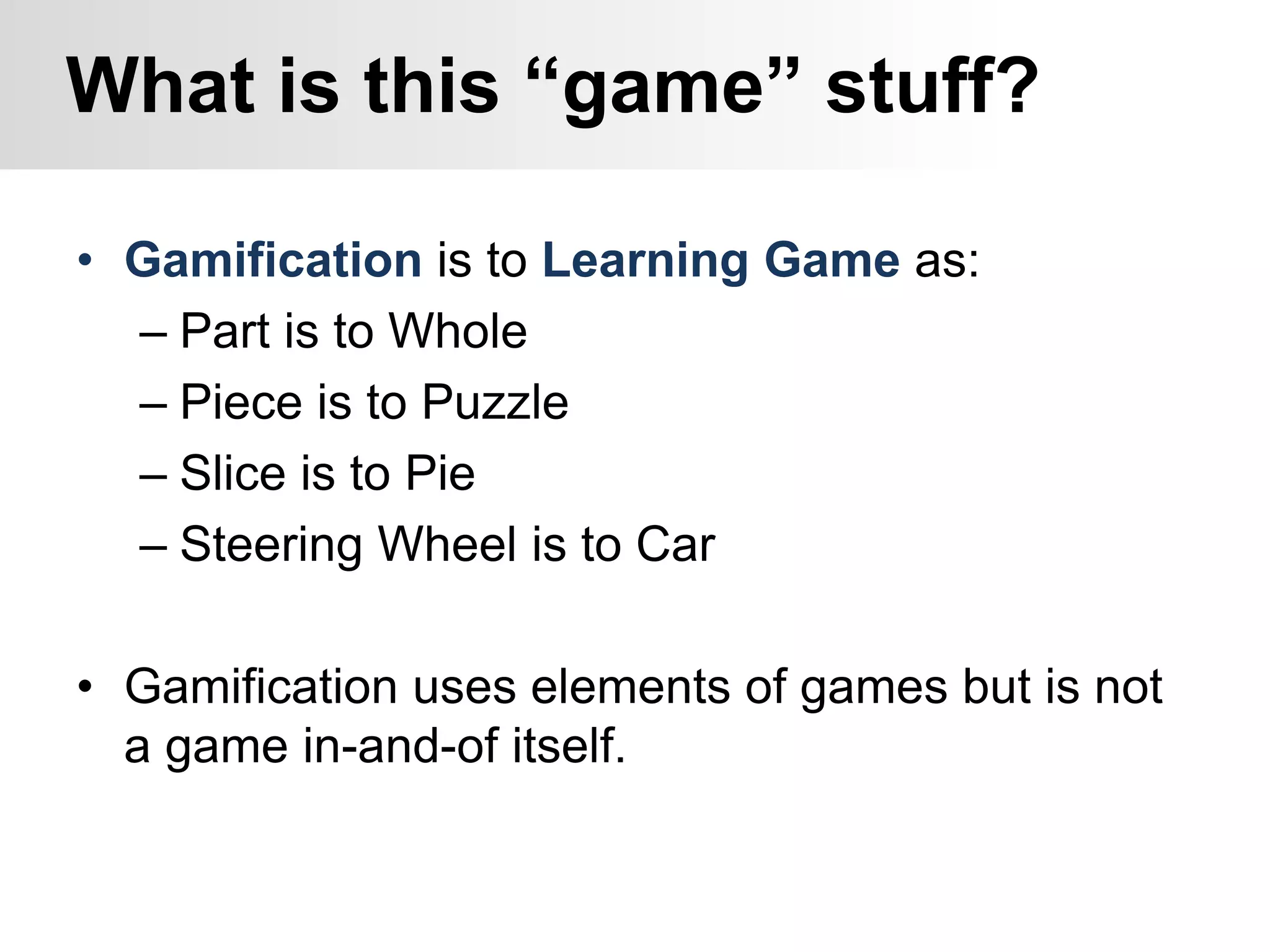
• Gamification is to Learning Game as:
– Part is to Whole
– Piece is to Puzzle
– Slice is to Pie
– Steering Wheel is to Car
• Gamification uses elements of games but is not
a game in-and-of itself.
What is this “game” stuff?
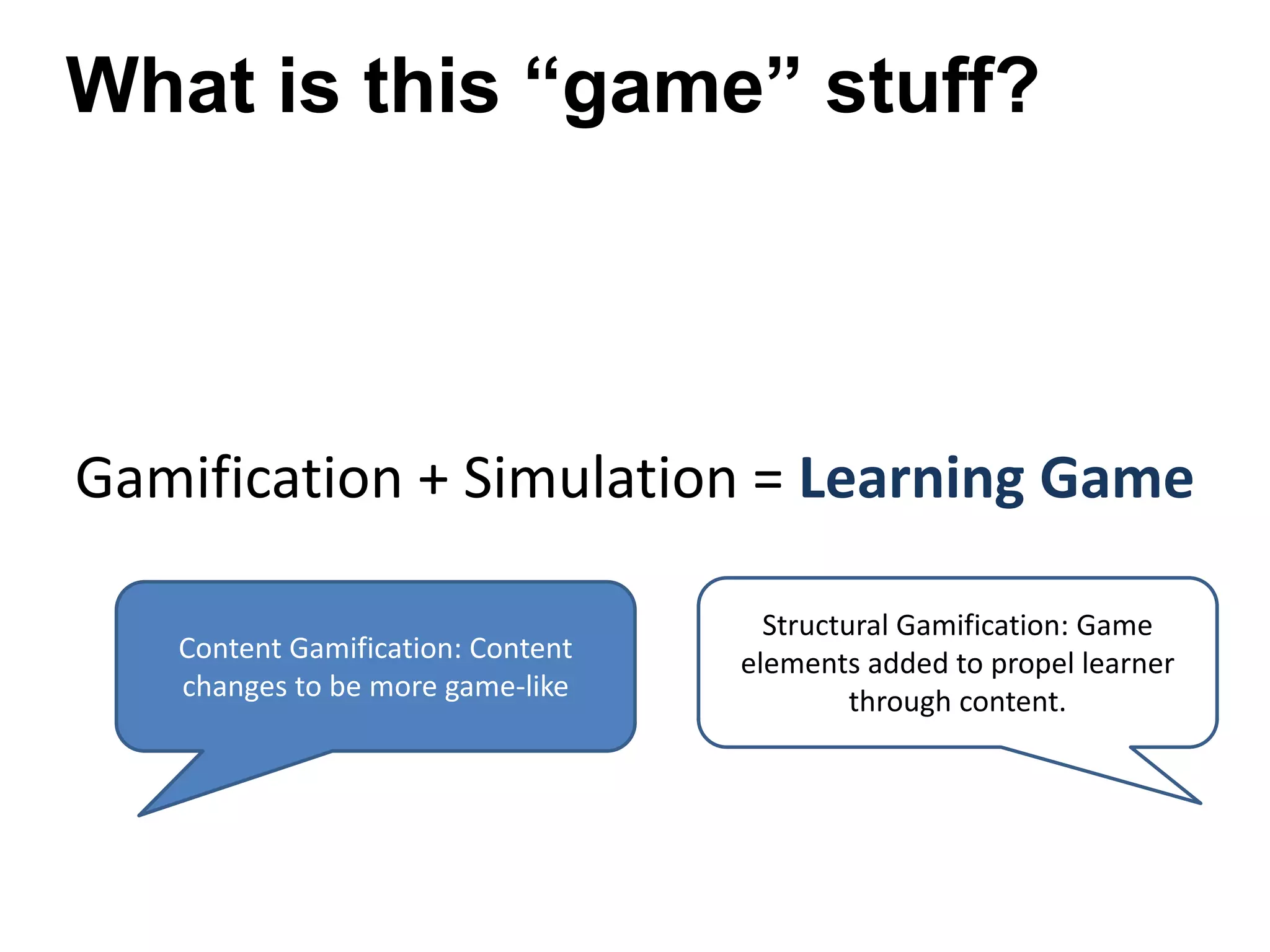
Gamification + Simulation = Learning Game
What is this “game” stuff?
Content Gamification: Content
changes to be more game-like
Structural Gamification: Game
elements added to propel learner
through content.
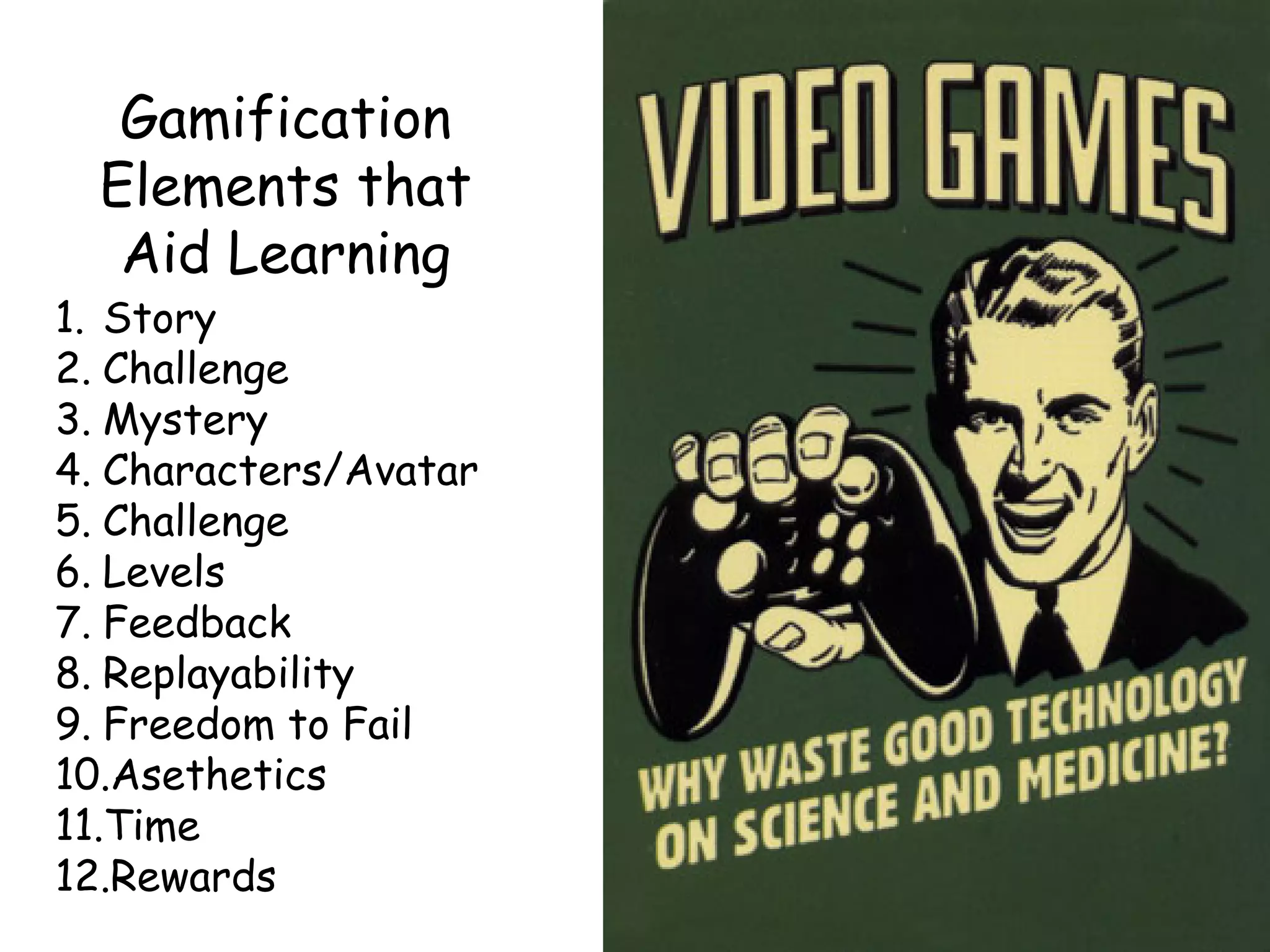
Gamification
Elements that
Aid Learning
1. Story
2. Challenge
3. Mystery
4. Characters/Avatar
5. Challenge
6. Levels
7. Feedback
8. Replayability
9. Freedom to Fail
10.Asethetics
11.Time
12.Rewards
Gamification
Elements that
Aid Learning
1. Story
2. Challenge
3. Mystery
4. Characters/Avatar
5. Challenge
6. Levels
7. Feedback
8. Replayability
9. Freedom to Fail
10.Asethetics
11.Time
12.Rewards
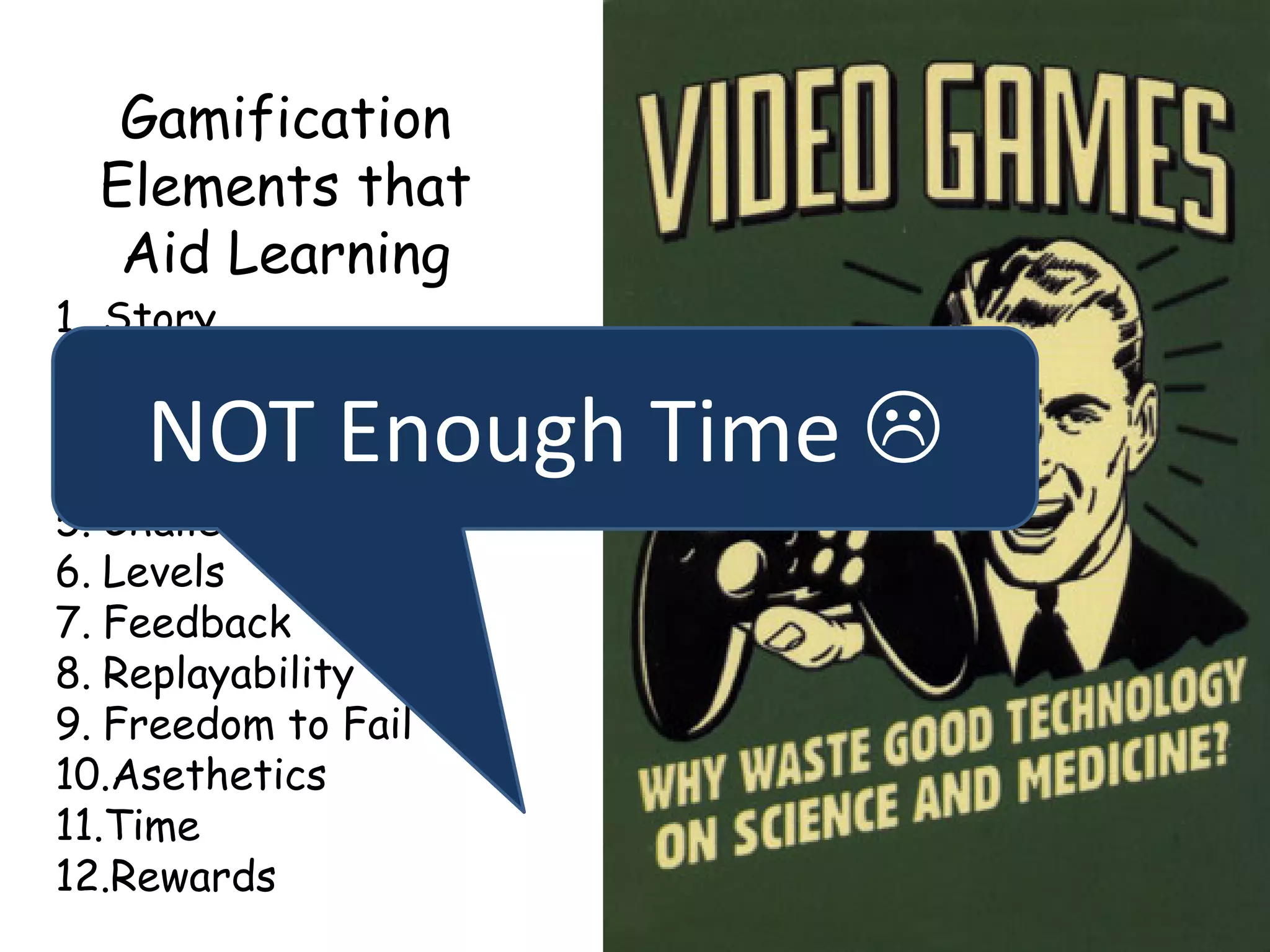
NOT Enough Time 
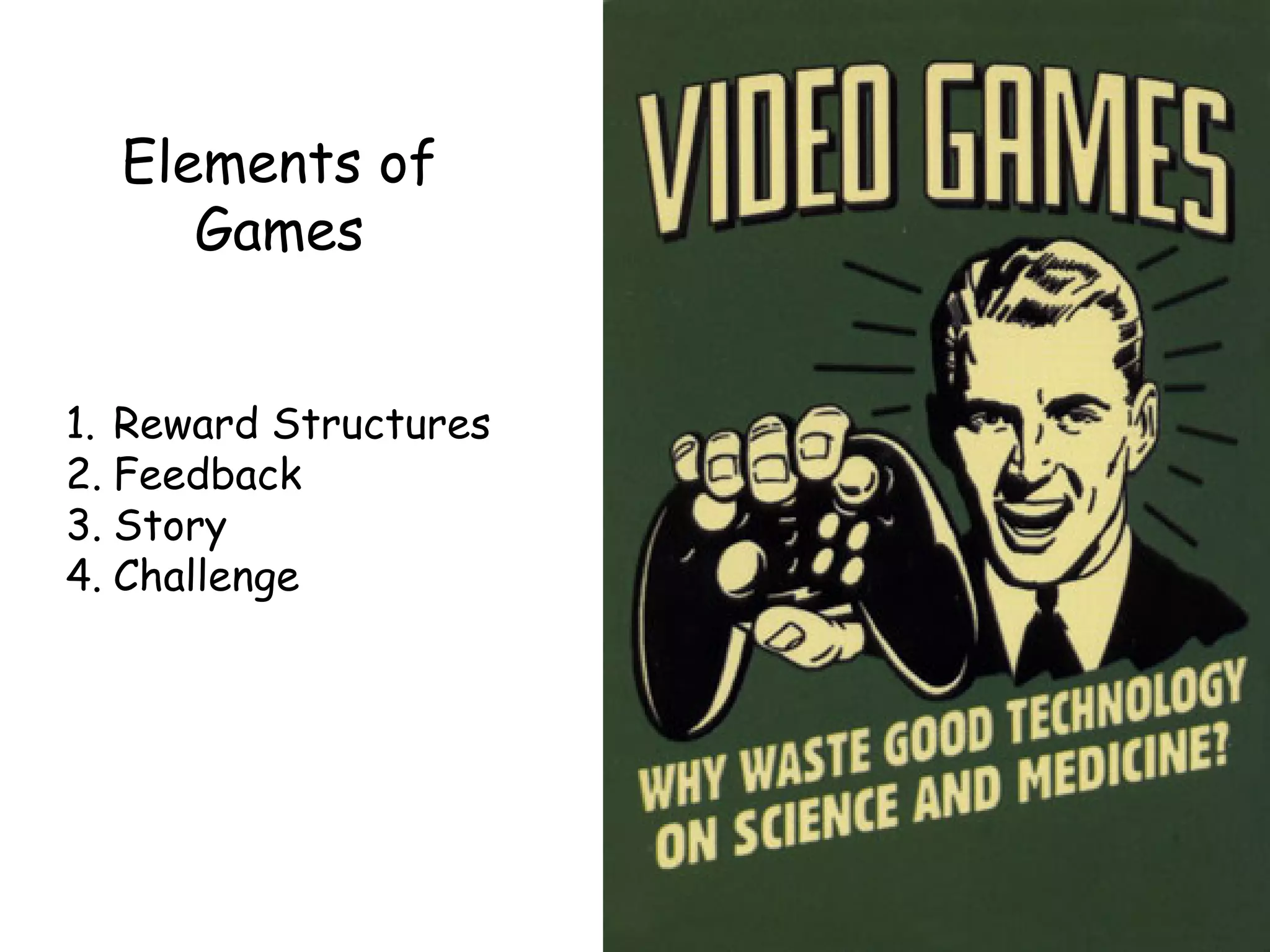
Elements of
Games
1. Reward Structures
2. Feedback
3. Story
4. Challenge
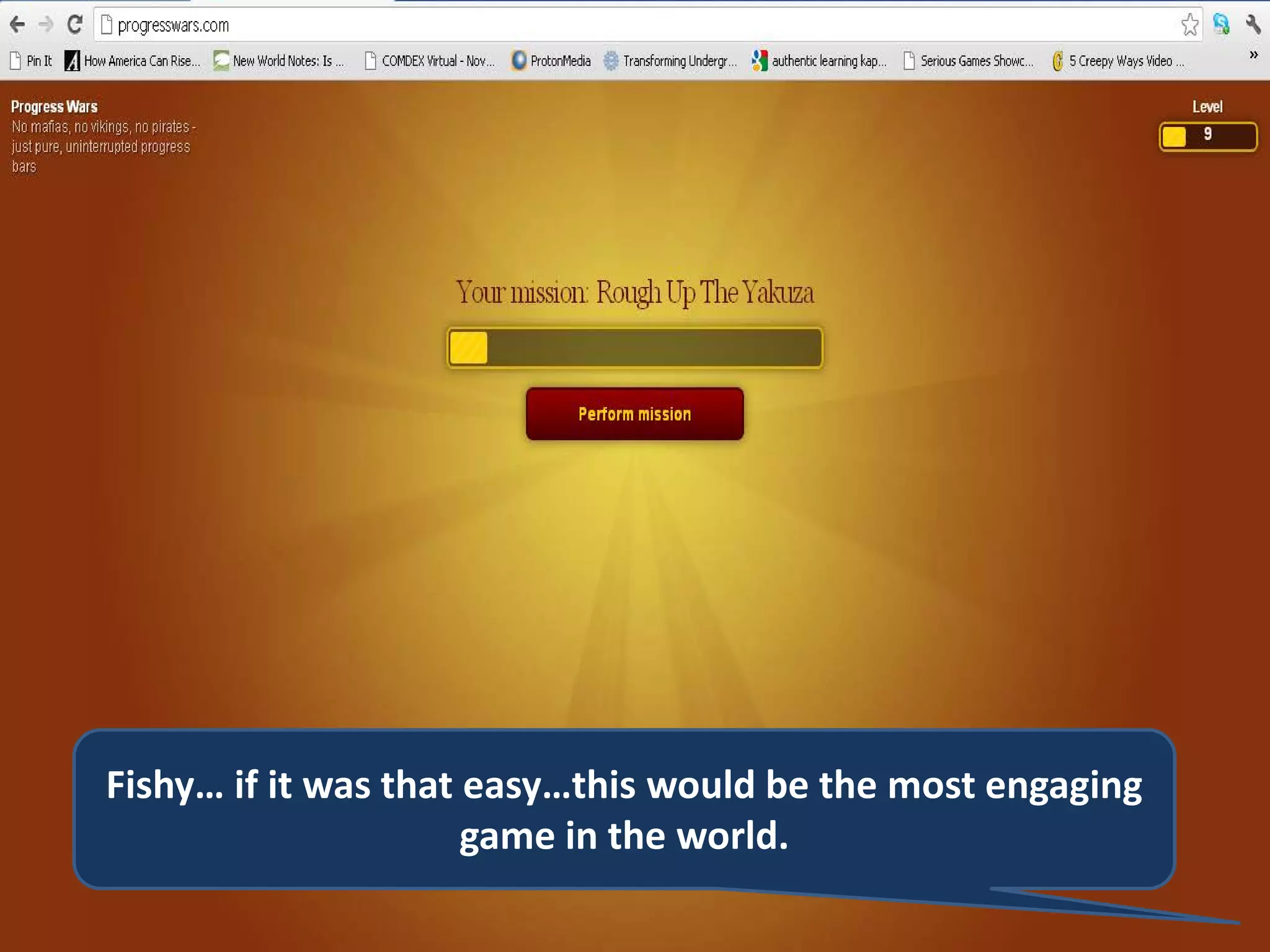
Fishy… if it was that easy…this would be the most engaging
game in the world.
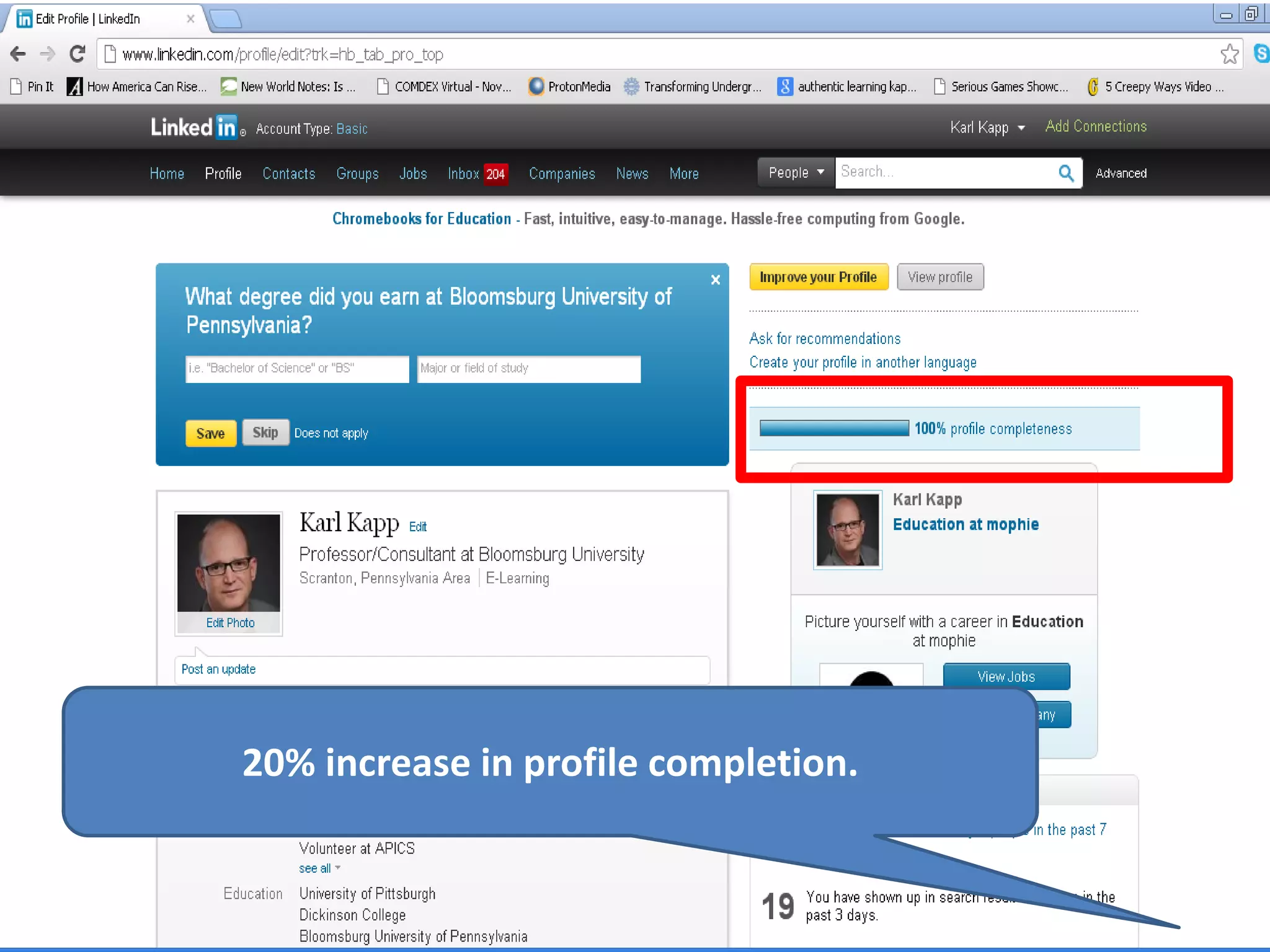
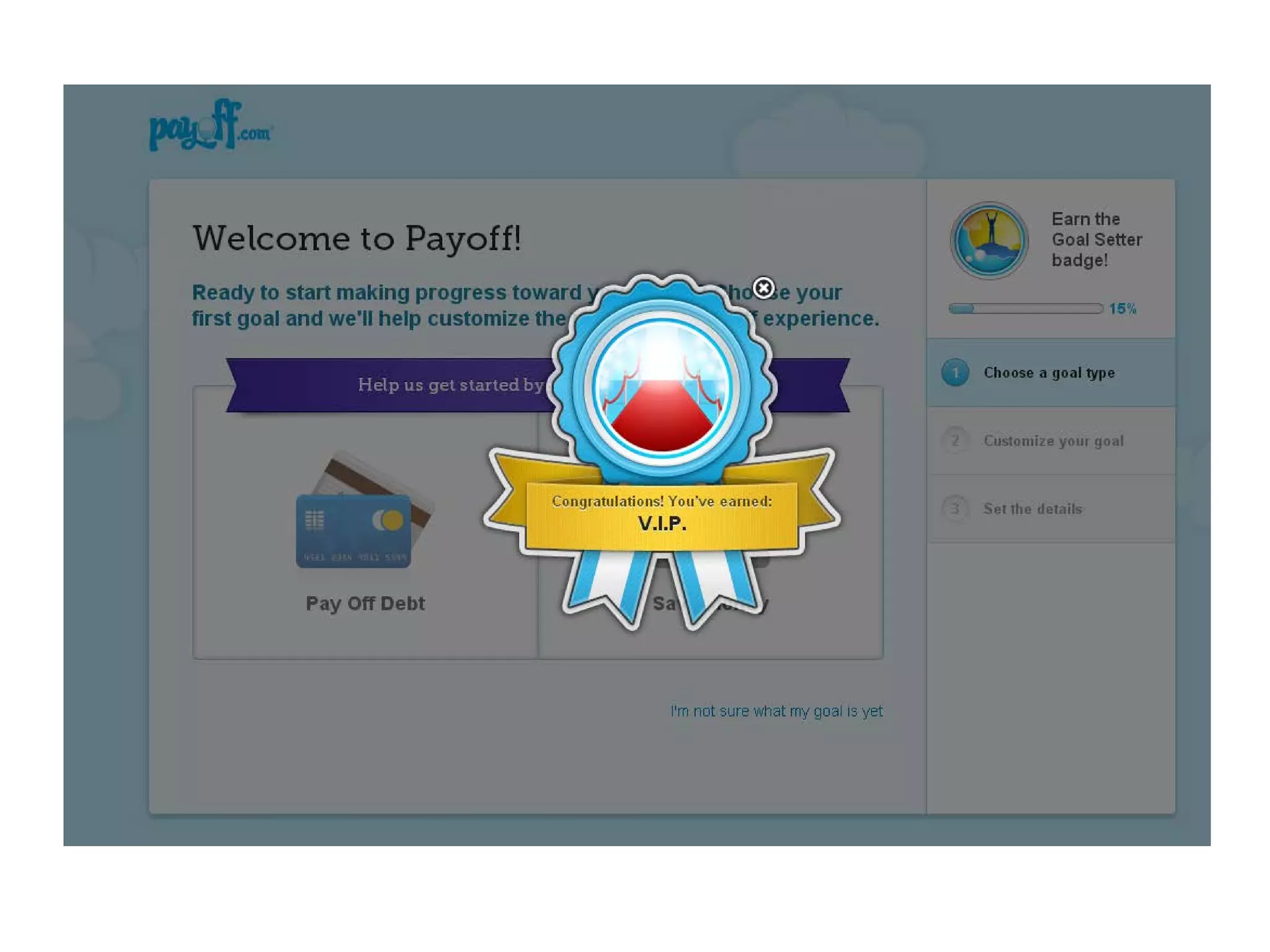
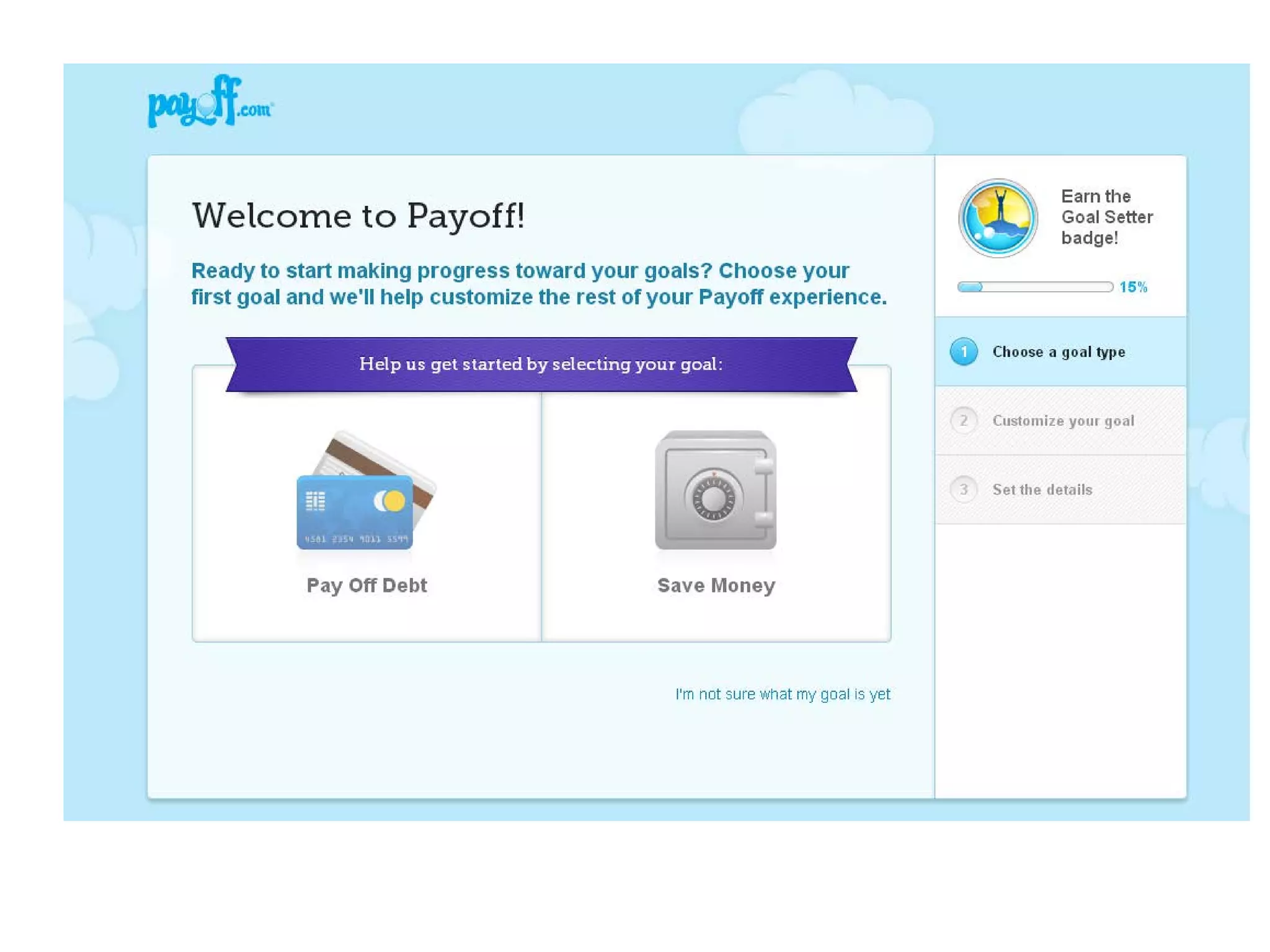
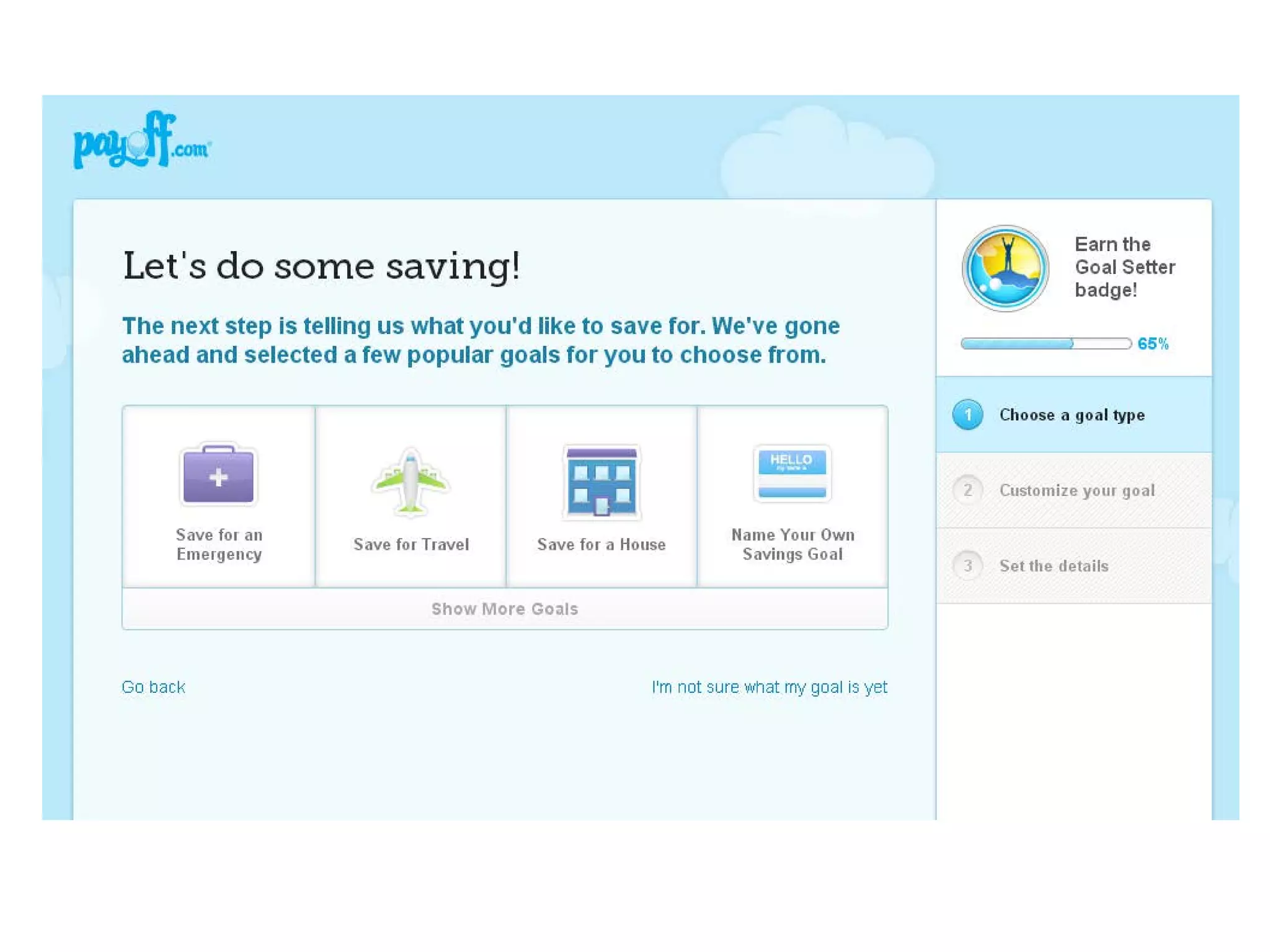
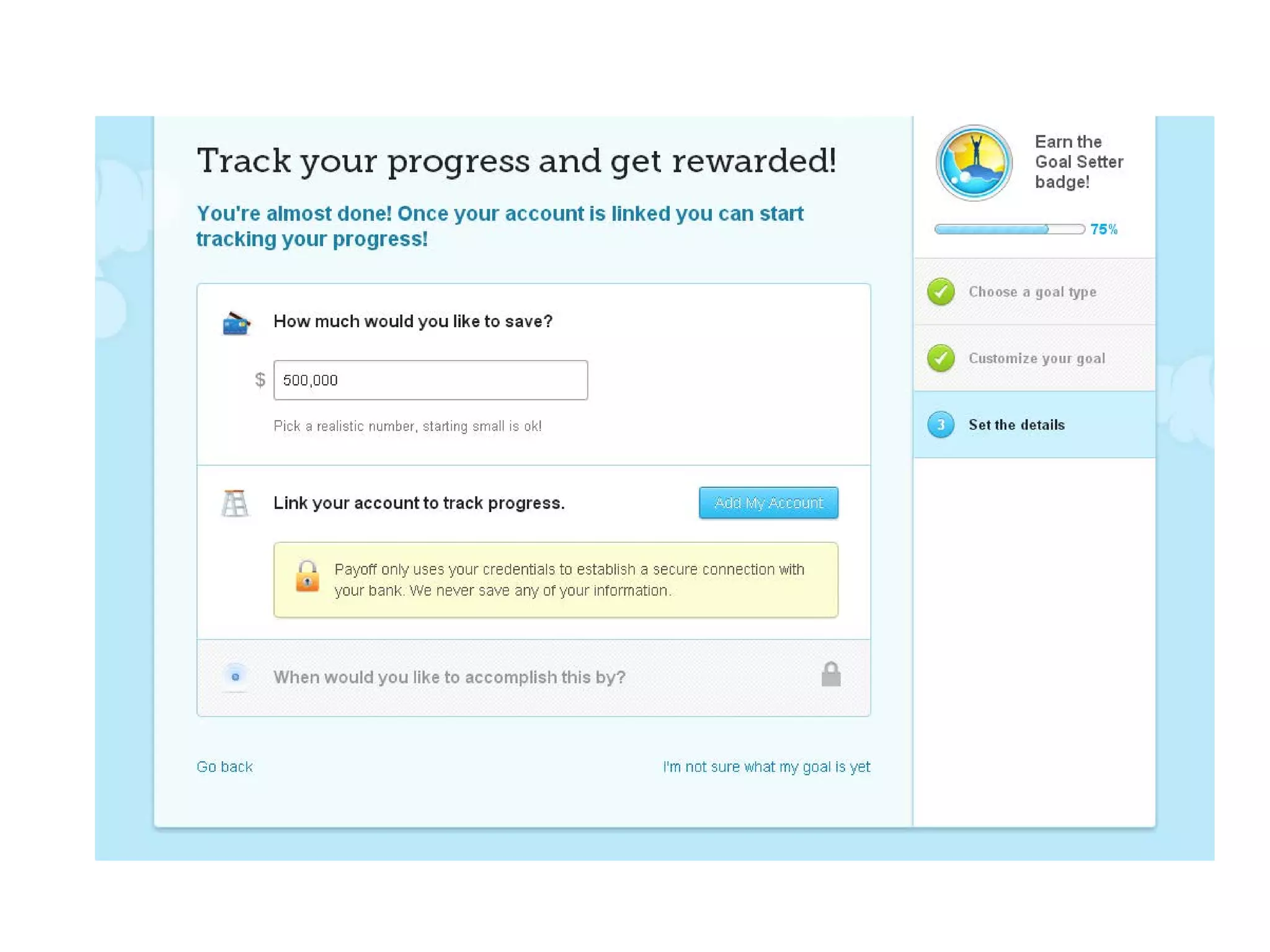
20% increase in profile completion.
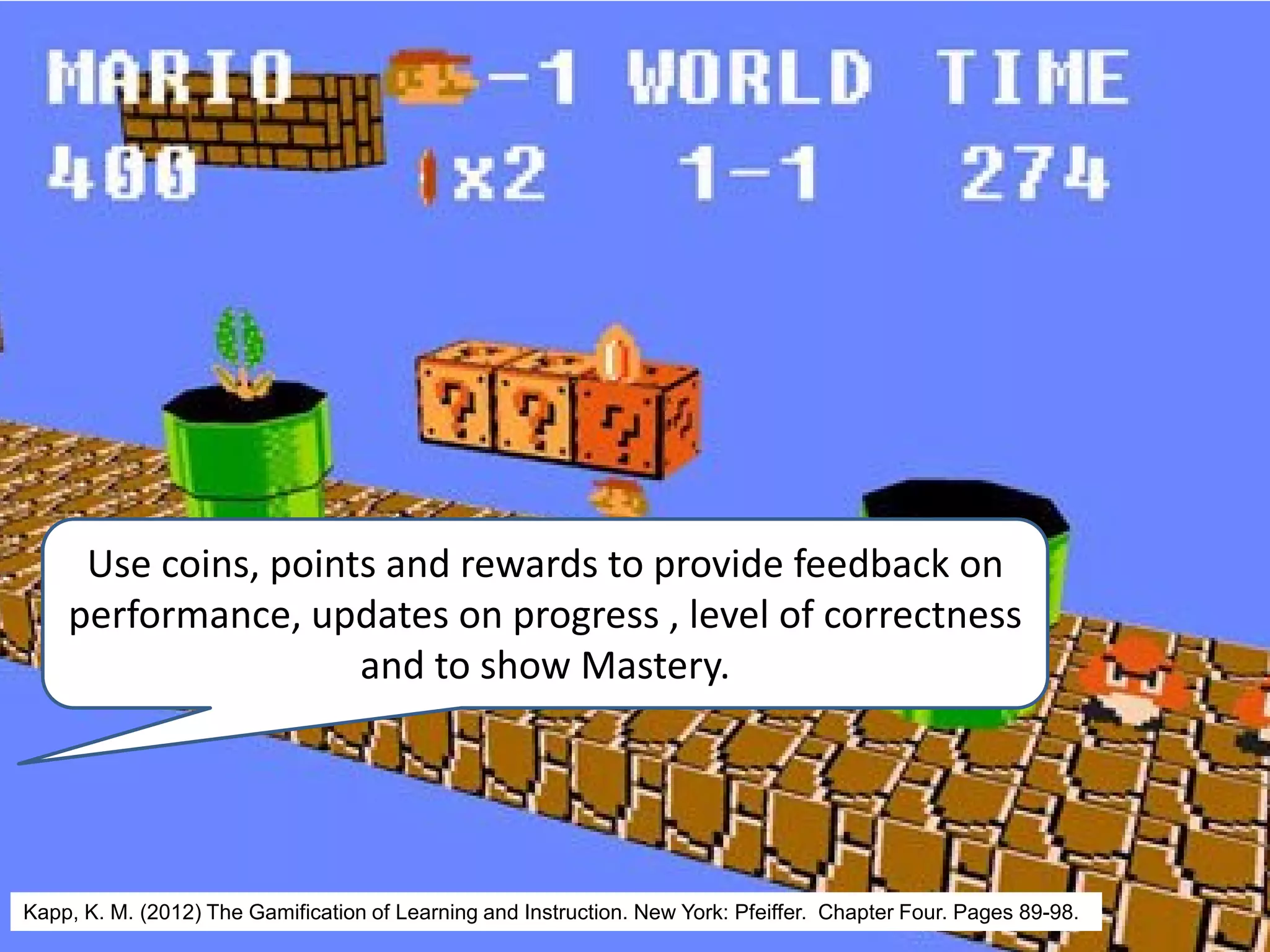
Use coins, points and rewards to provide feedback on
performance, updates on progress , level of correctness
and to show Mastery.
Kapp, K. M. (2012) The Gamification of Learning and Instruction. New York: Pfeiffer. Chapter Four. Pages 89-98.
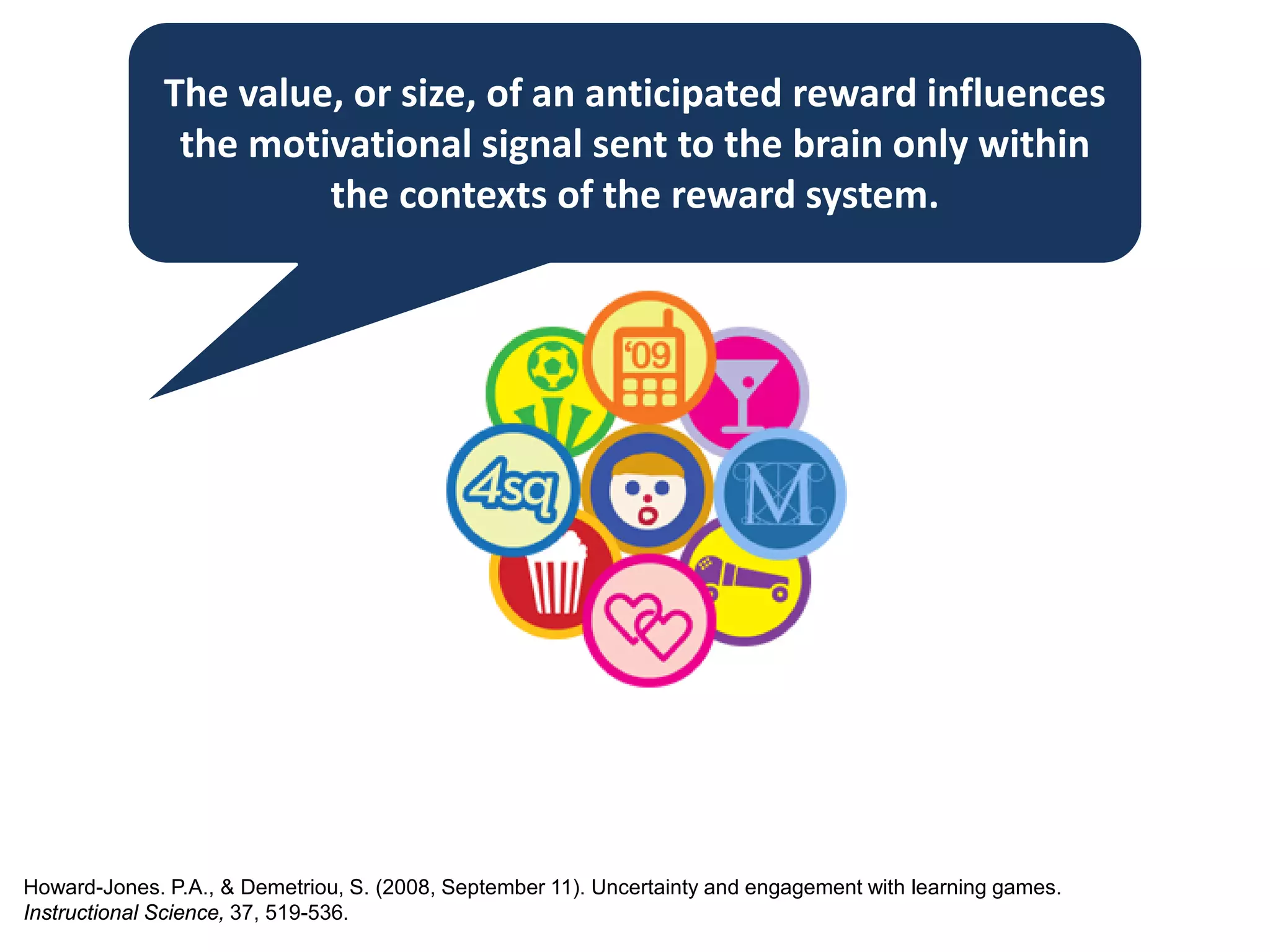
The value, or size, of an anticipated reward influences
the motivational signal sent to the brain only within
the contexts of the reward system.
Howard-Jones. P.A., & Demetriou, S. (2008, September 11). Uncertainty and engagement with learning games.
Instructional Science, 37, 519-536.
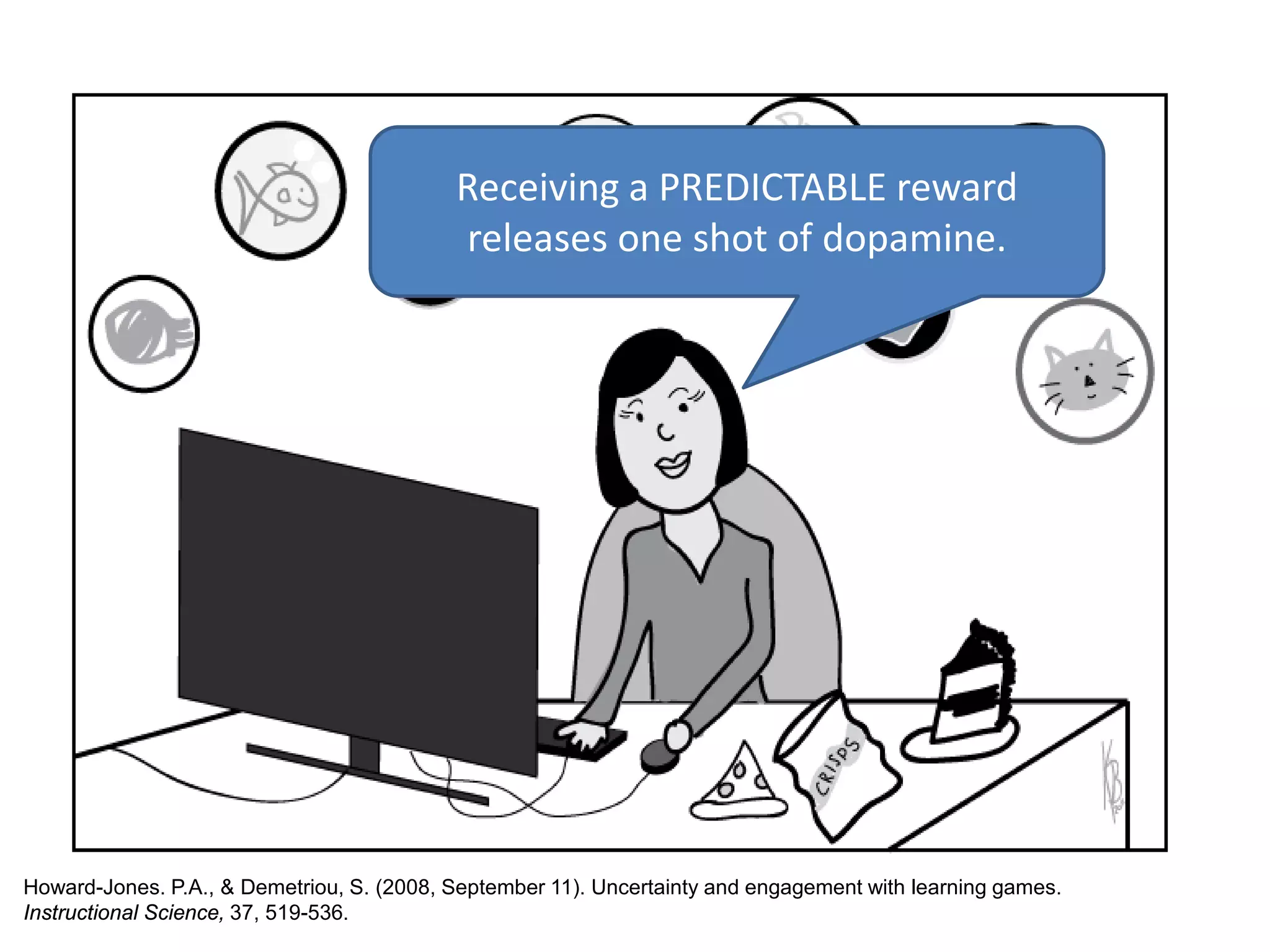
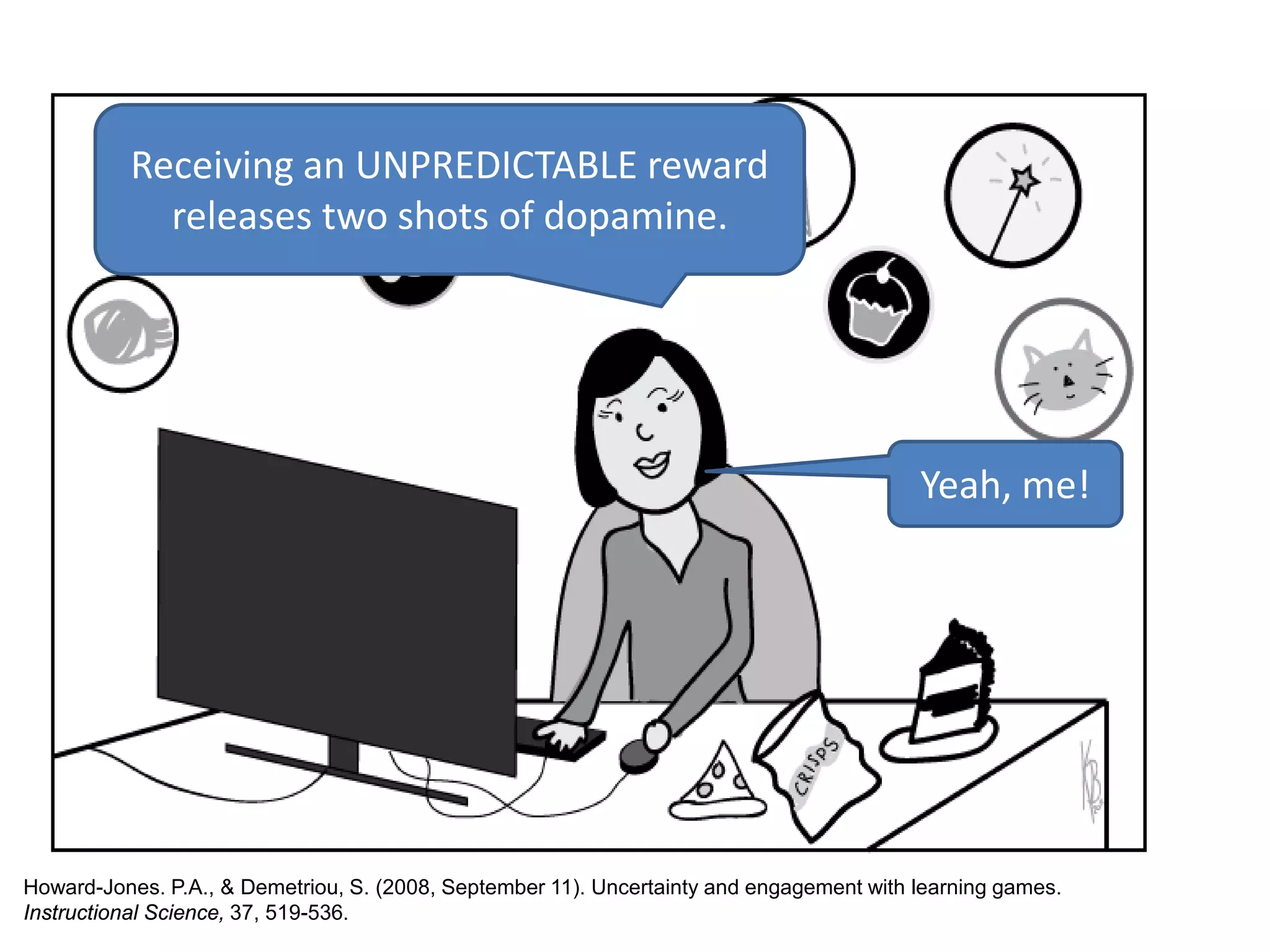
Receiving a PREDICTABLE reward
releases one shot of dopamine.
Howard-Jones. P.A., & Demetriou, S. (2008, September 11). Uncertainty and engagement with learning games.
Instructional Science, 37, 519-536.
Receiving an UNPREDICTABLE reward
releases two shots of dopamine.
Yeah, me!
Howard-Jones. P.A., & Demetriou, S. (2008, September 11). Uncertainty and engagement with learning games.
Instructional Science, 37, 519-536.
What can you do?
Intelligently add game elements to
instruction. Use points, rewards
and badges to convey
meaning…not simply completion.
Feedback
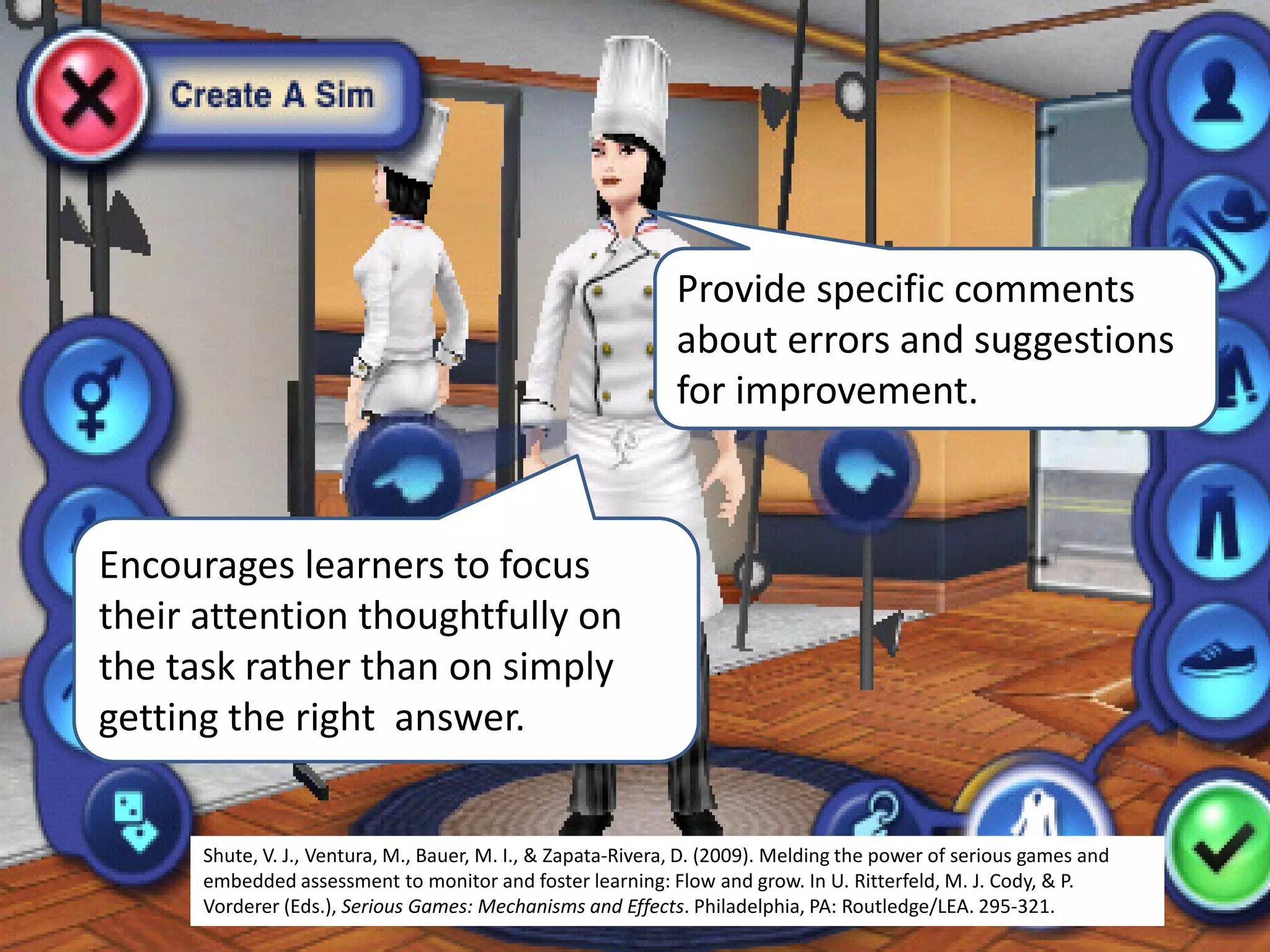
Encourages learners to focus
their attention thoughtfully on
the task rather than on simply
getting the right answer.
Shute, V. J., Ventura, M., Bauer, M. I., & Zapata-Rivera, D. (2009). Melding the power of serious games and
embedded assessment to monitor and foster learning: Flow and grow. In U. Ritterfeld, M. J. Cody, & P.
Vorderer (Eds.), Serious Games: Mechanisms and Effects. Philadelphia, PA: Routledge/LEA. 295-321.
Provide specific comments
about errors and suggestions
for improvement.
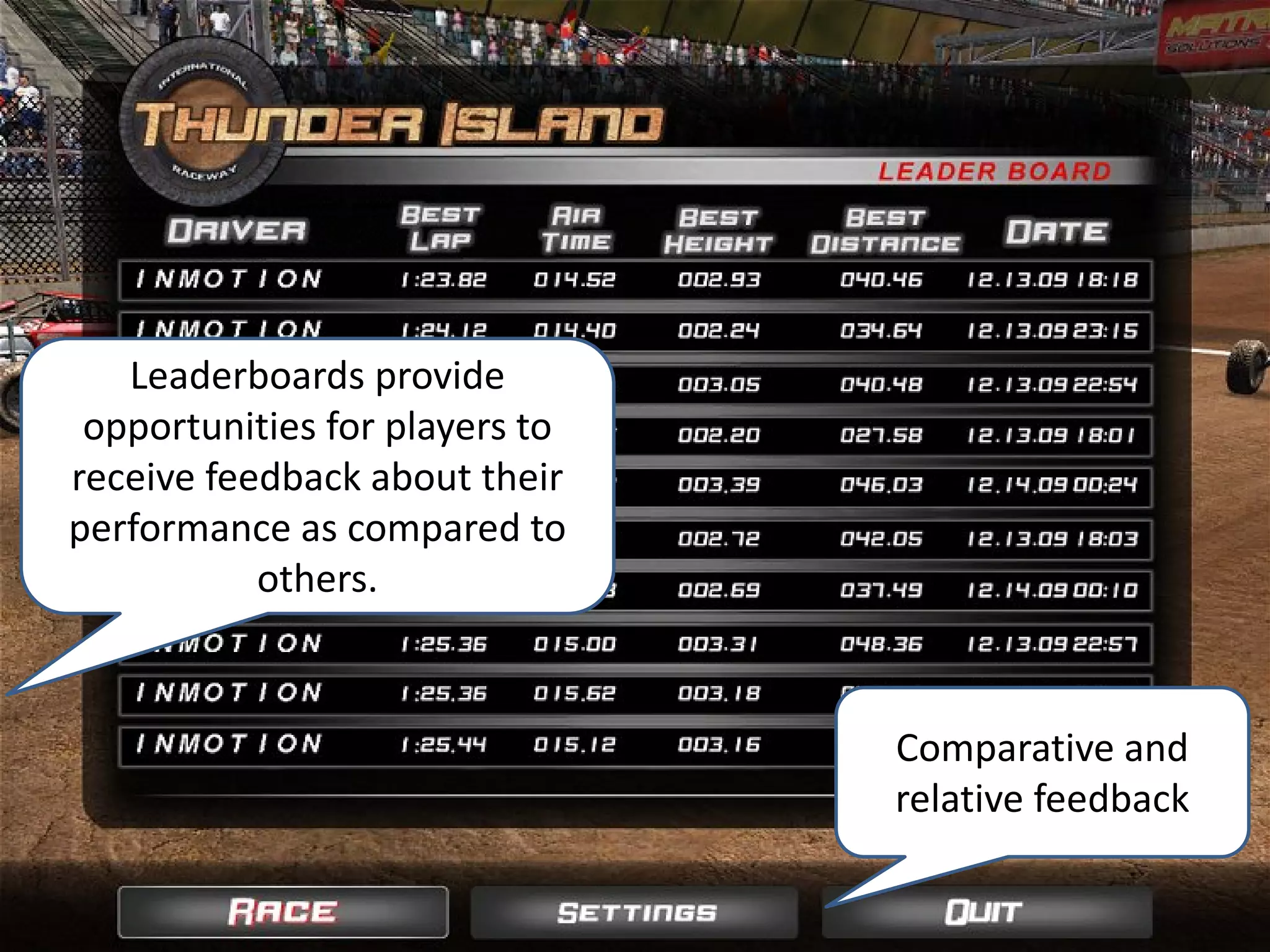
Leaderboards provide
opportunities for players to
receive feedback about their
performance as compared to
others.
Comparative and
relative feedback
What can you do?
Use feedback to inform learners of
errors in thinking and to focus them
on the task they are learning.
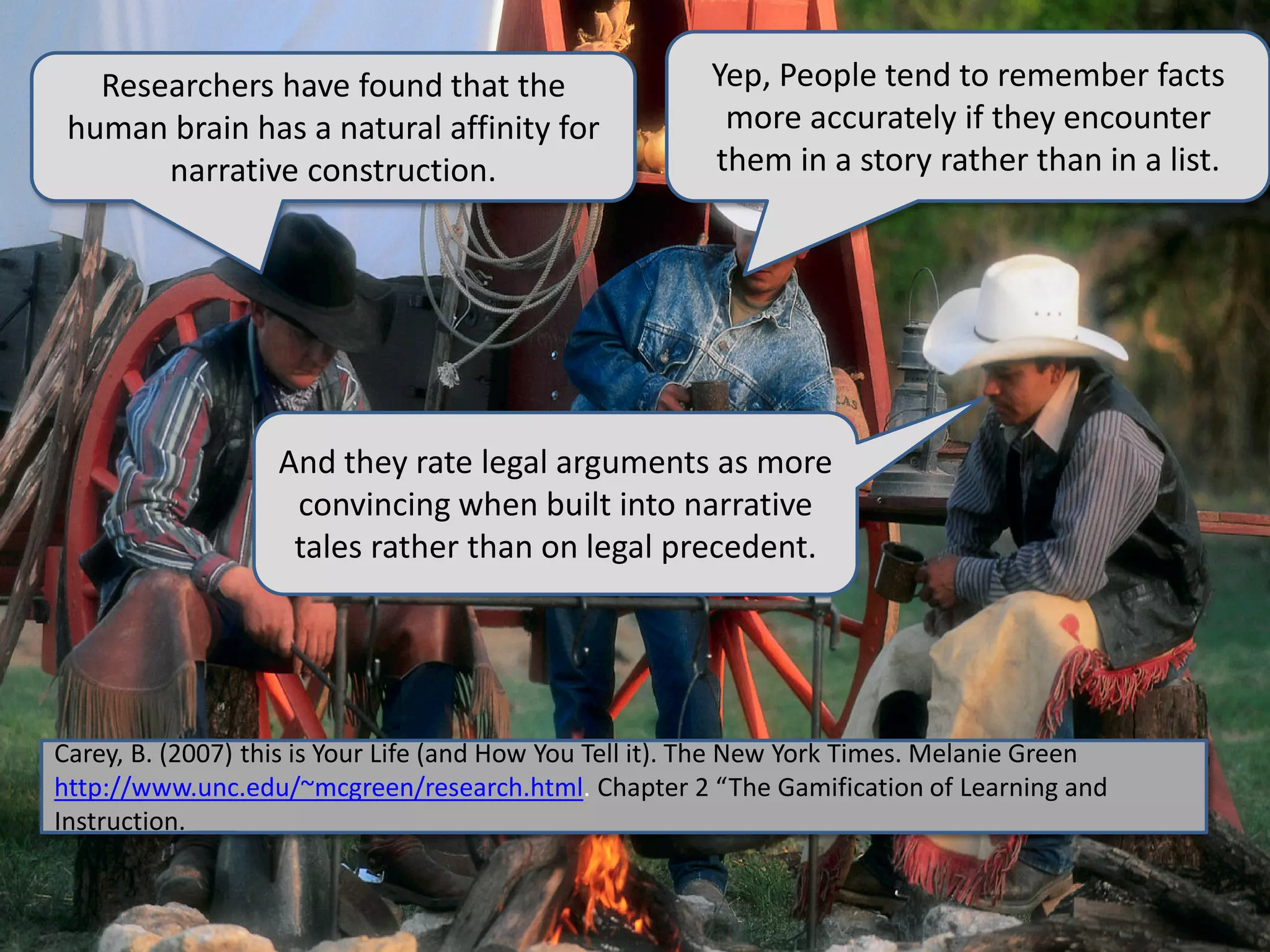
Researchers have found that the
human brain has a natural affinity for
narrative construction.
Yep, People tend to remember facts
more accurately if they encounter
them in a story rather than in a list.
And they rate legal arguments as more
convincing when built into narrative
tales rather than on legal precedent.
Carey, B. (2007) this is Your Life (and How You Tell it). The New York Times. Melanie Green
http://www.unc.edu/~mcgreen/research.html. Chapter 2 “The Gamification of Learning and
Instruction.
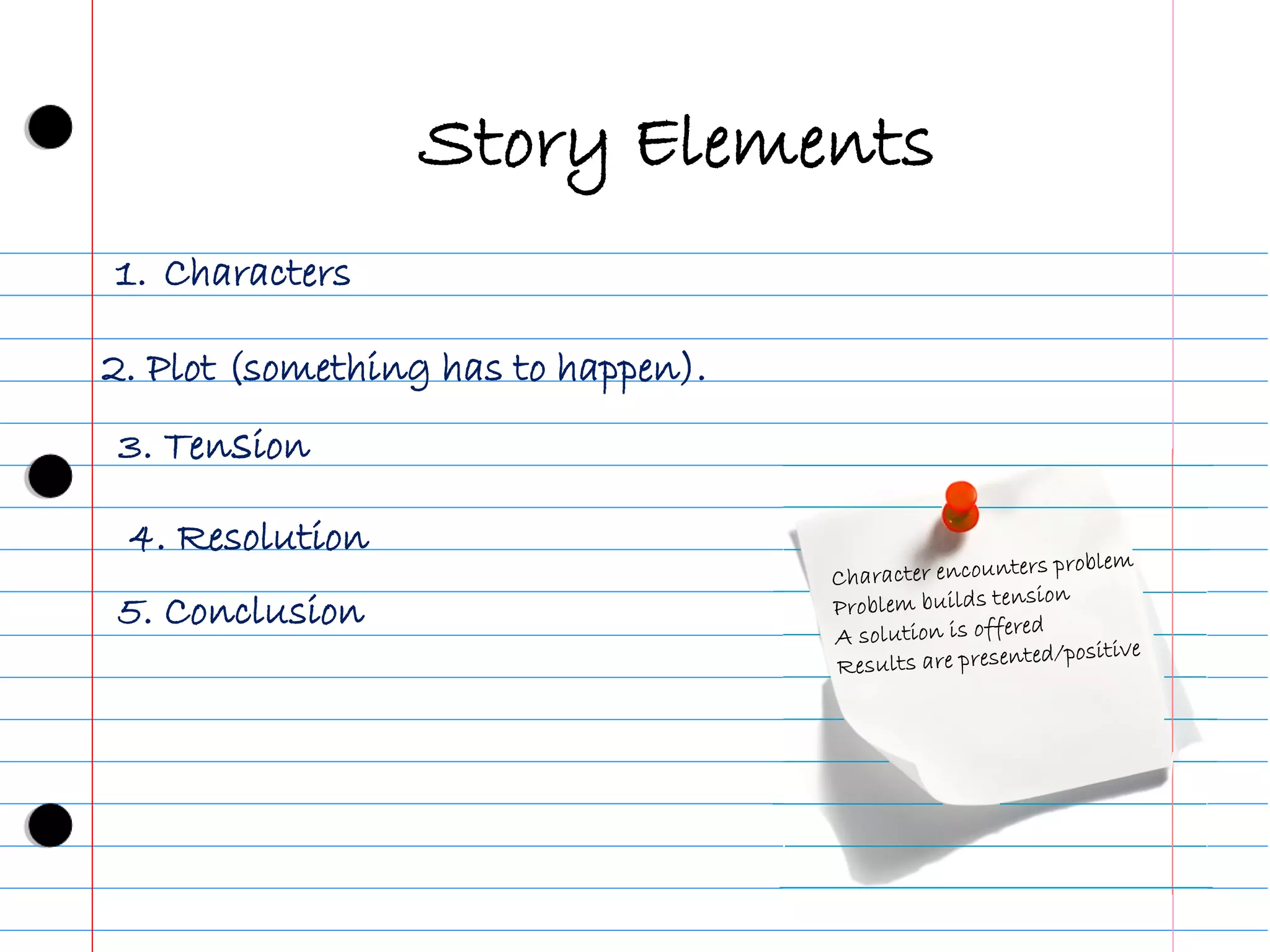
1. Characters
Story Elements
5. Conclusion
2. Plot (something has to happen).
3. Tension
4. Resolution
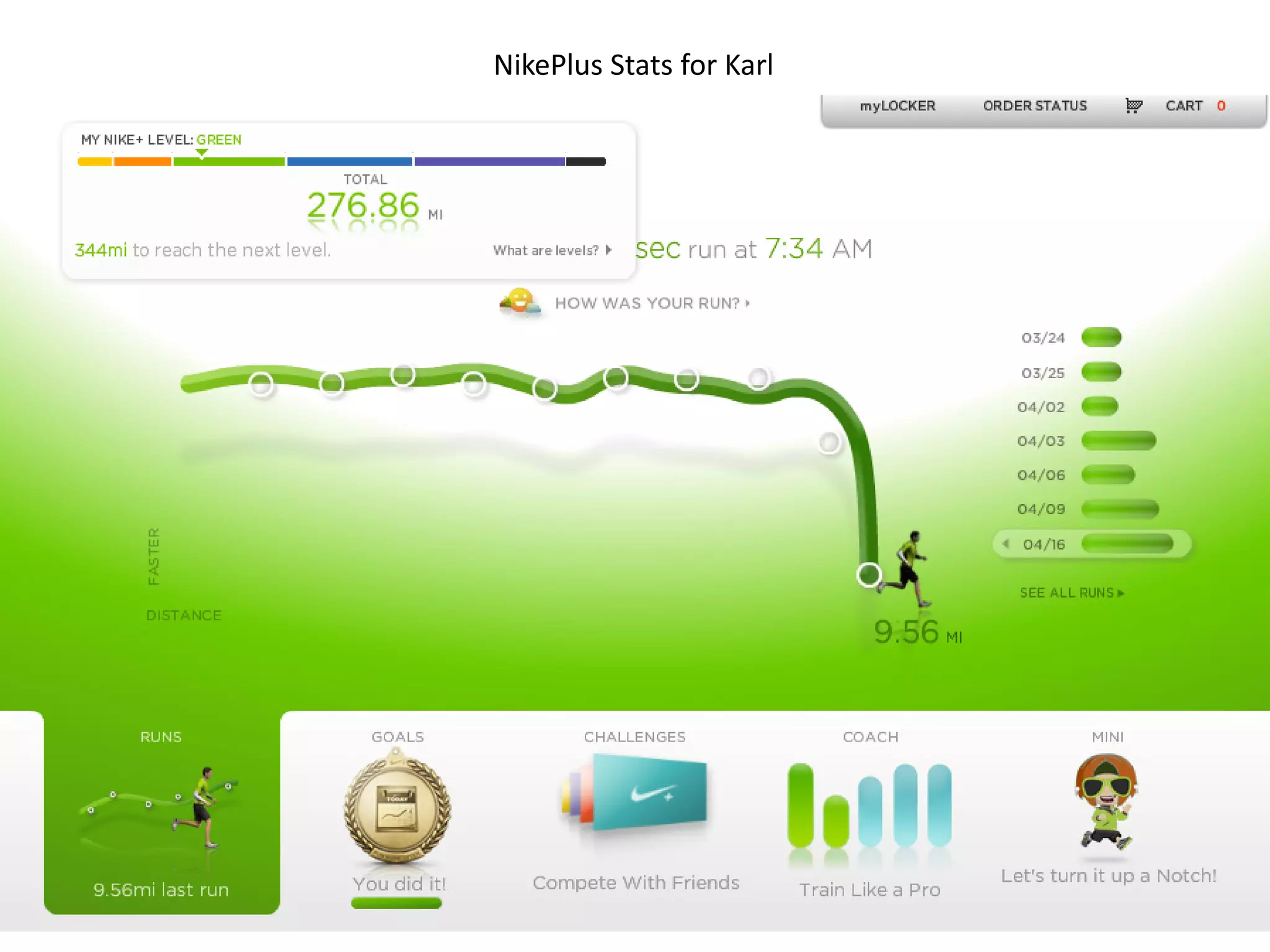
NikePlus Stats for Karl
What can you do?
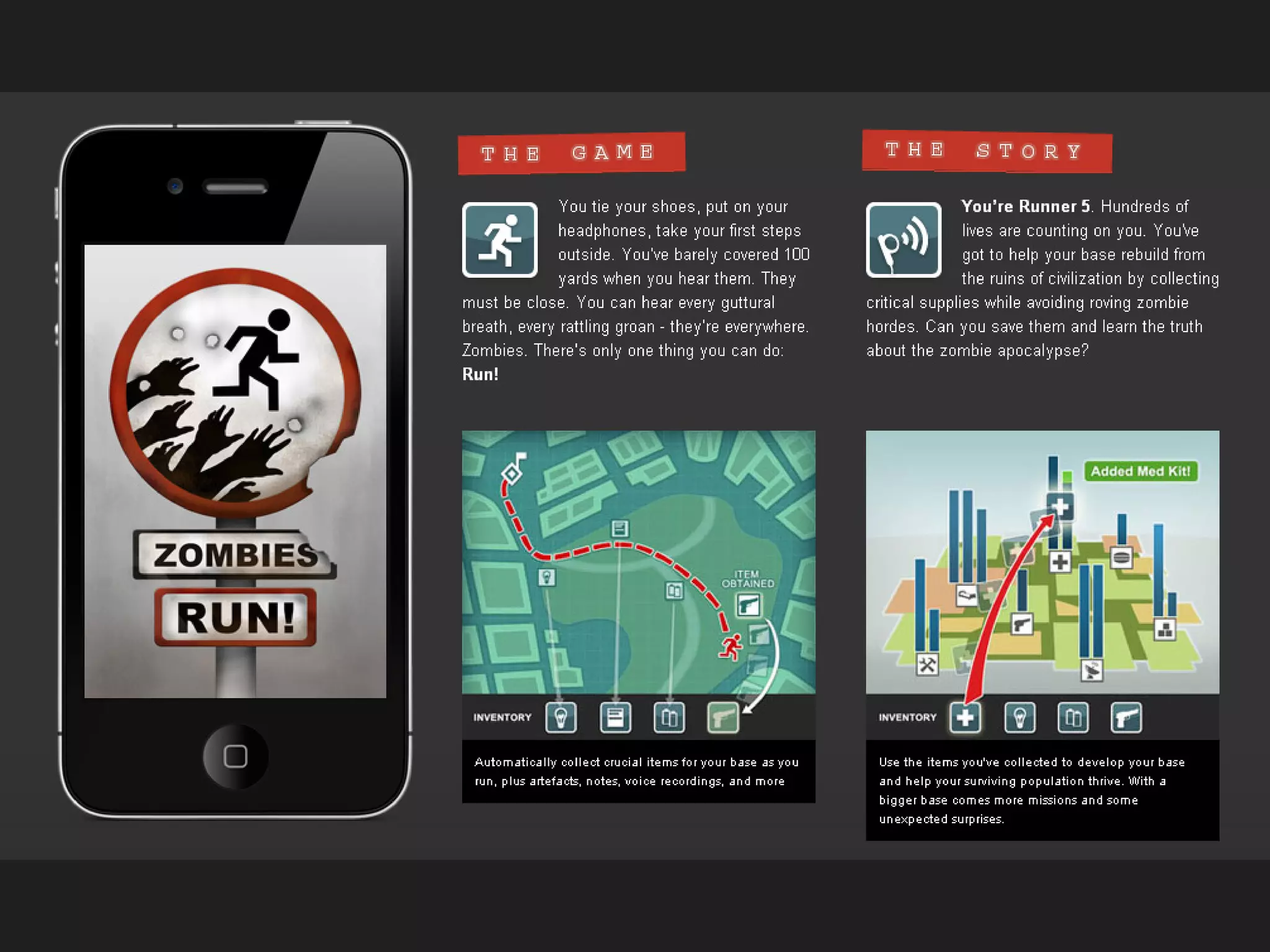
Use meaningful stories. Provide the
context for the learning.
Fact.
Provide a challenge
Jones, B., Valdez, G., Norakowski, J., & Rasmussen, C. (1994). Designing learning and technology for educational
reform. North Central Regional Educational Laboratory. [Online]. Available:
http://www.ncrtec.org/capacity/profile/profwww.htm and Schlechty, P. C. (1997). Inventing better schools: An action plan
for educational reform. San Francisco, CA: Jossey-Bass
Re-design the Instruction to
Start with a Challenge
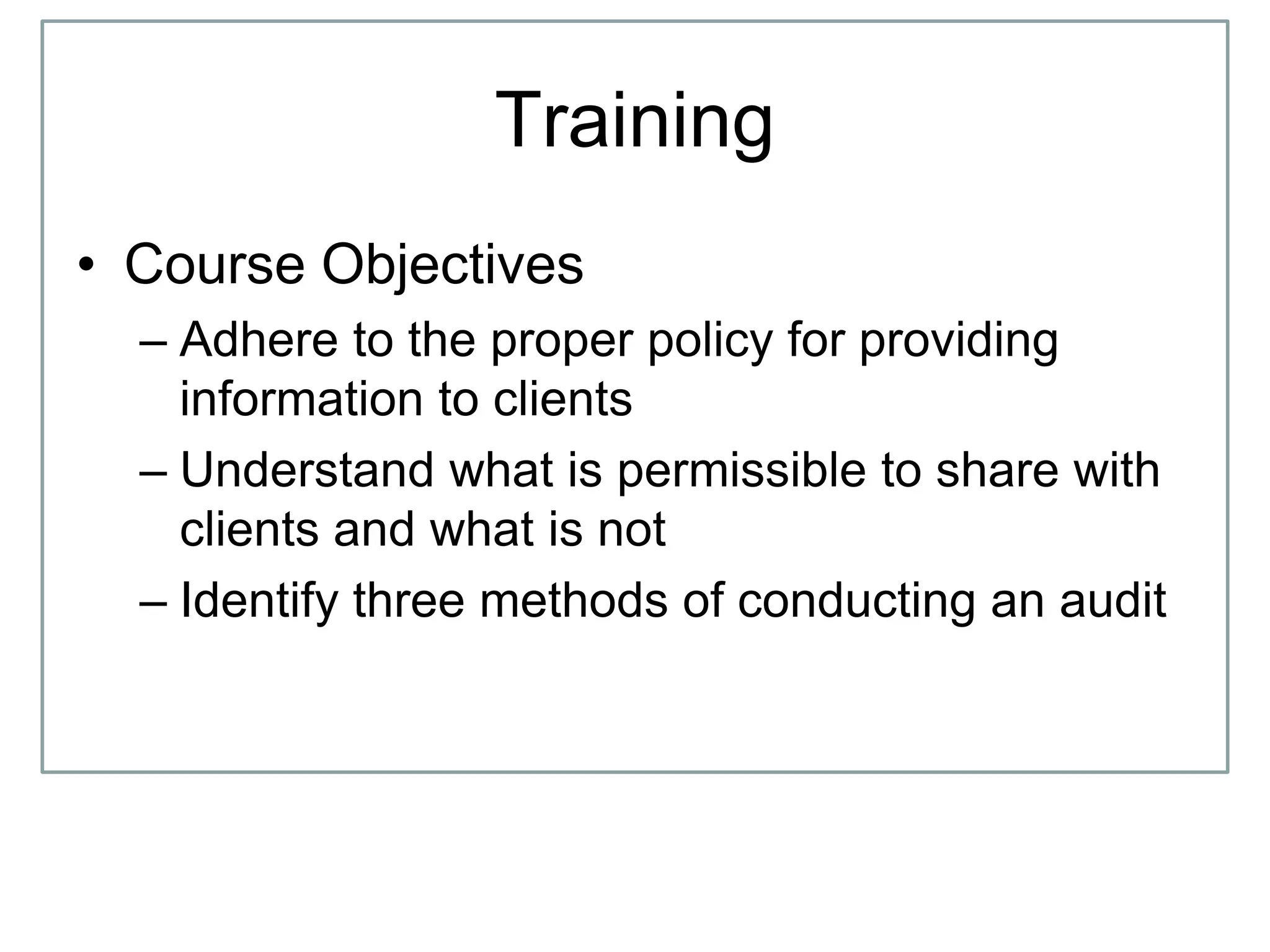
Training
• Course Objectives
– Adhere to the proper policy for providing
information to clients
– Understand what is permissible to share with
clients and what is not
– Identify three methods of conducting an audit
You are gathering data during the first day
of an audit. During lunch, Mary
approaches you and tells you that she has
something important to discuss. The two
of you go to your office and she makes the
accusation that the VP of Finance is hiding
an account…
What is the first thing you should do?
What can you do?
Give your learners the “Kobayashi
Maru” equivalent.
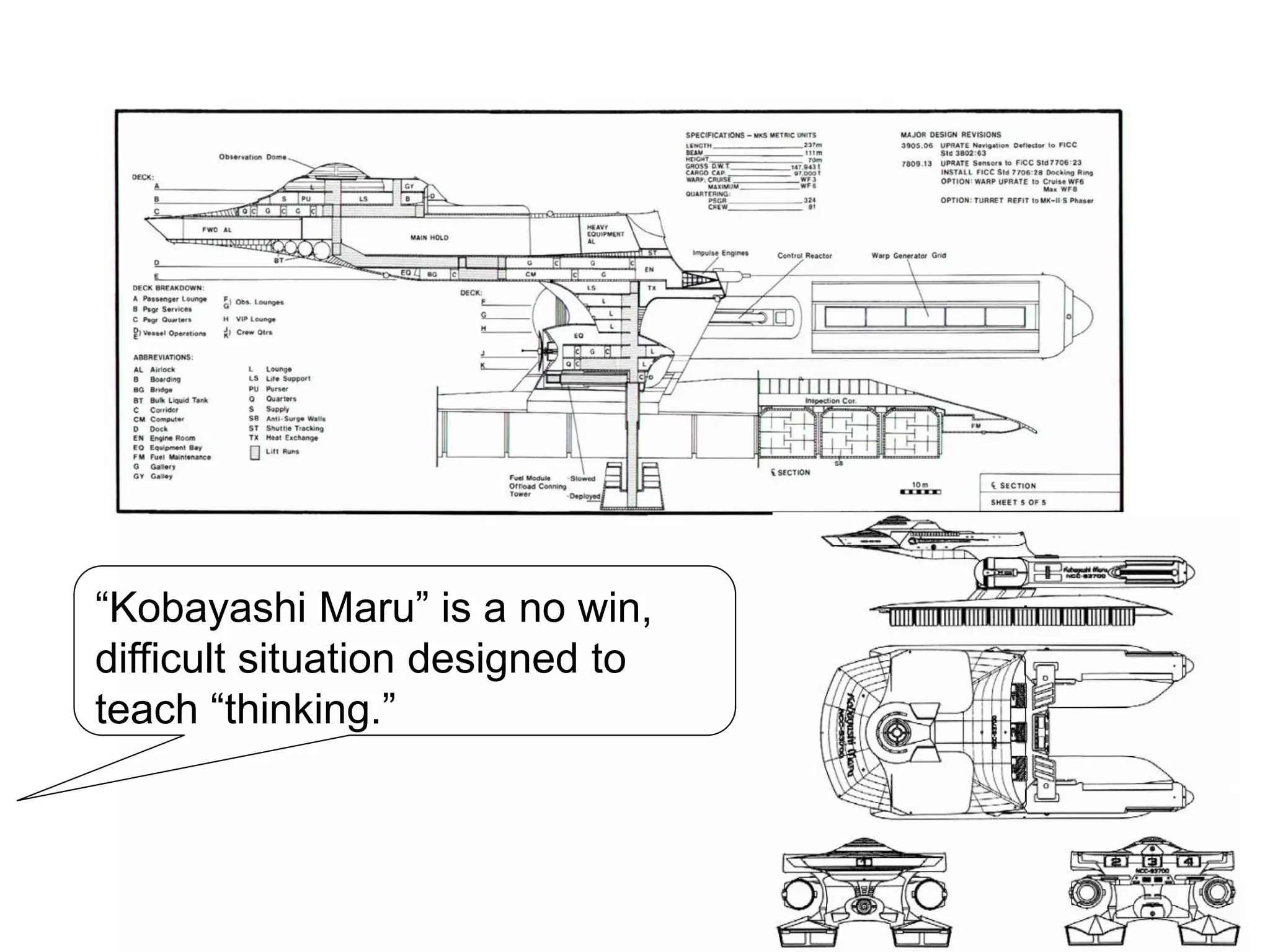
“Kobayashi Maru” is a no win,
difficult situation designed to
teach “thinking.”
Putting it All Together
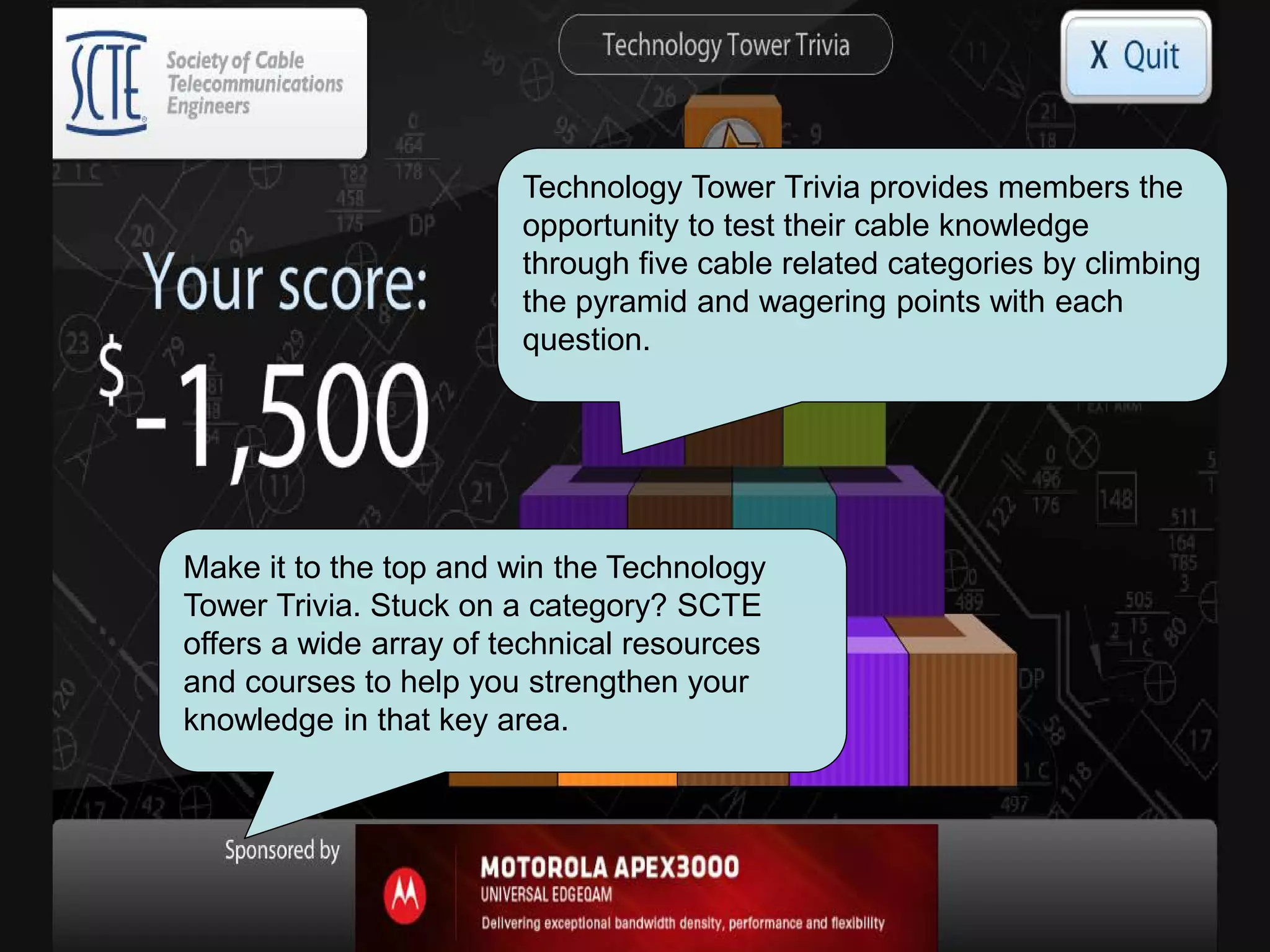
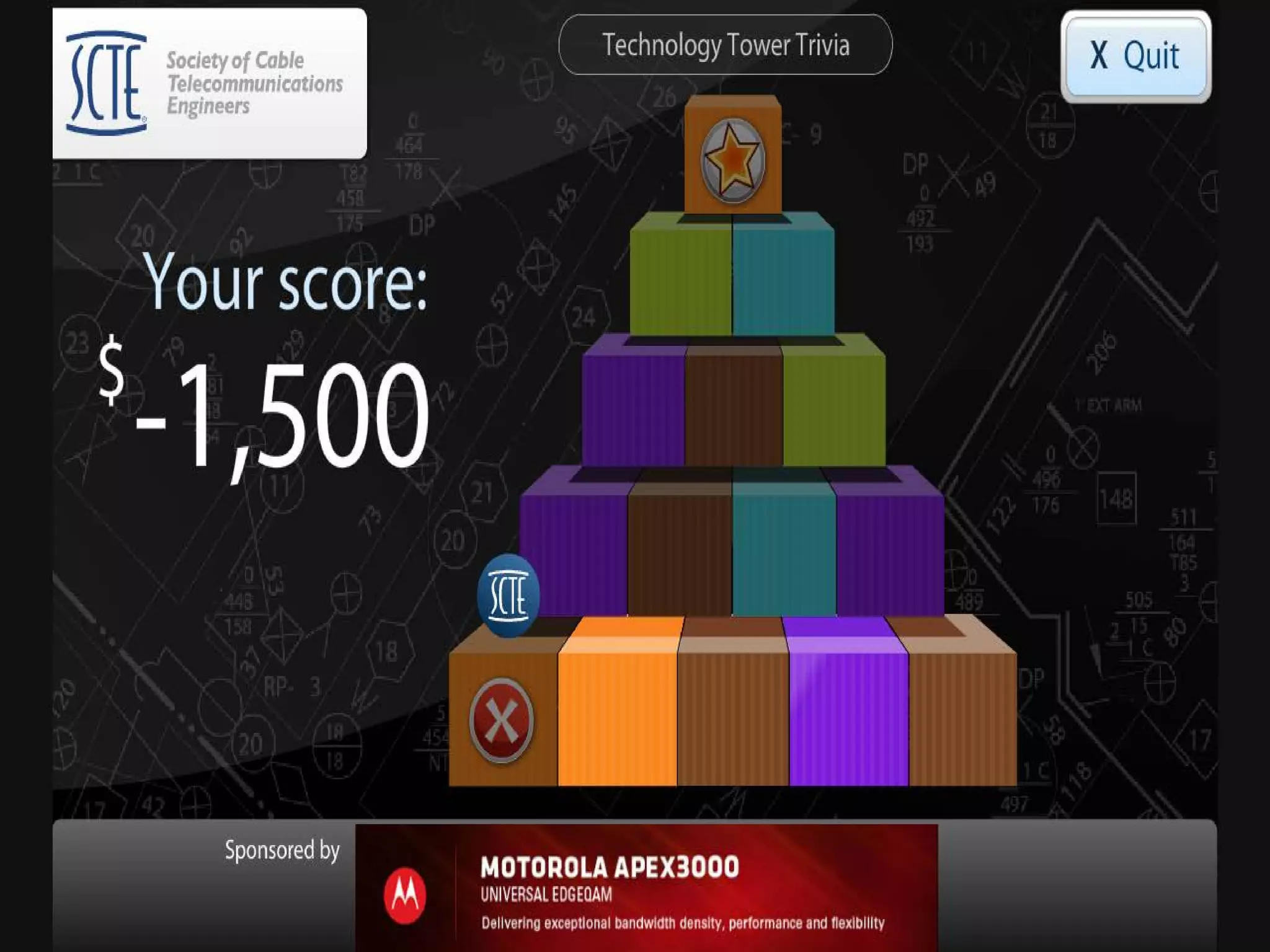
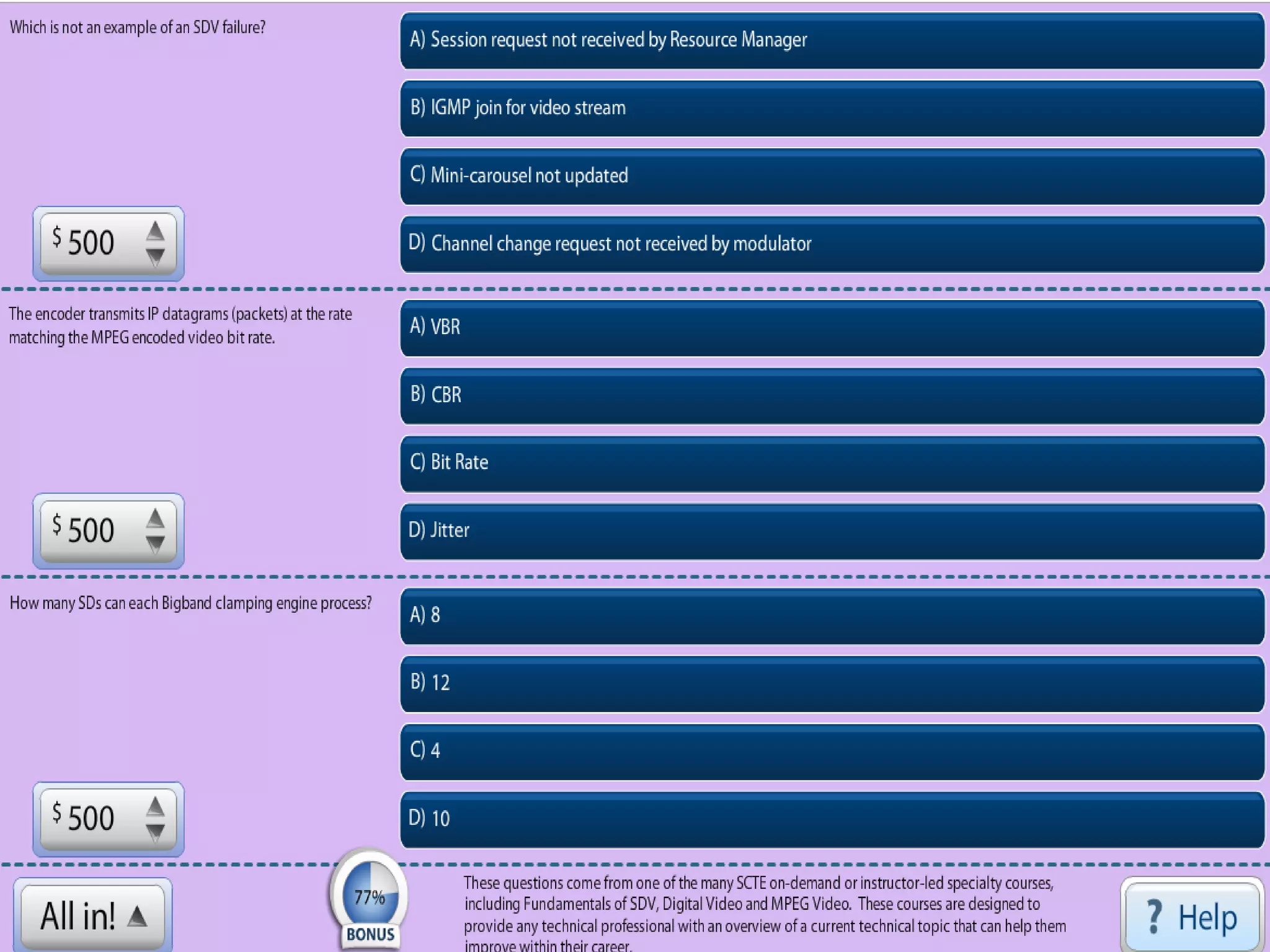
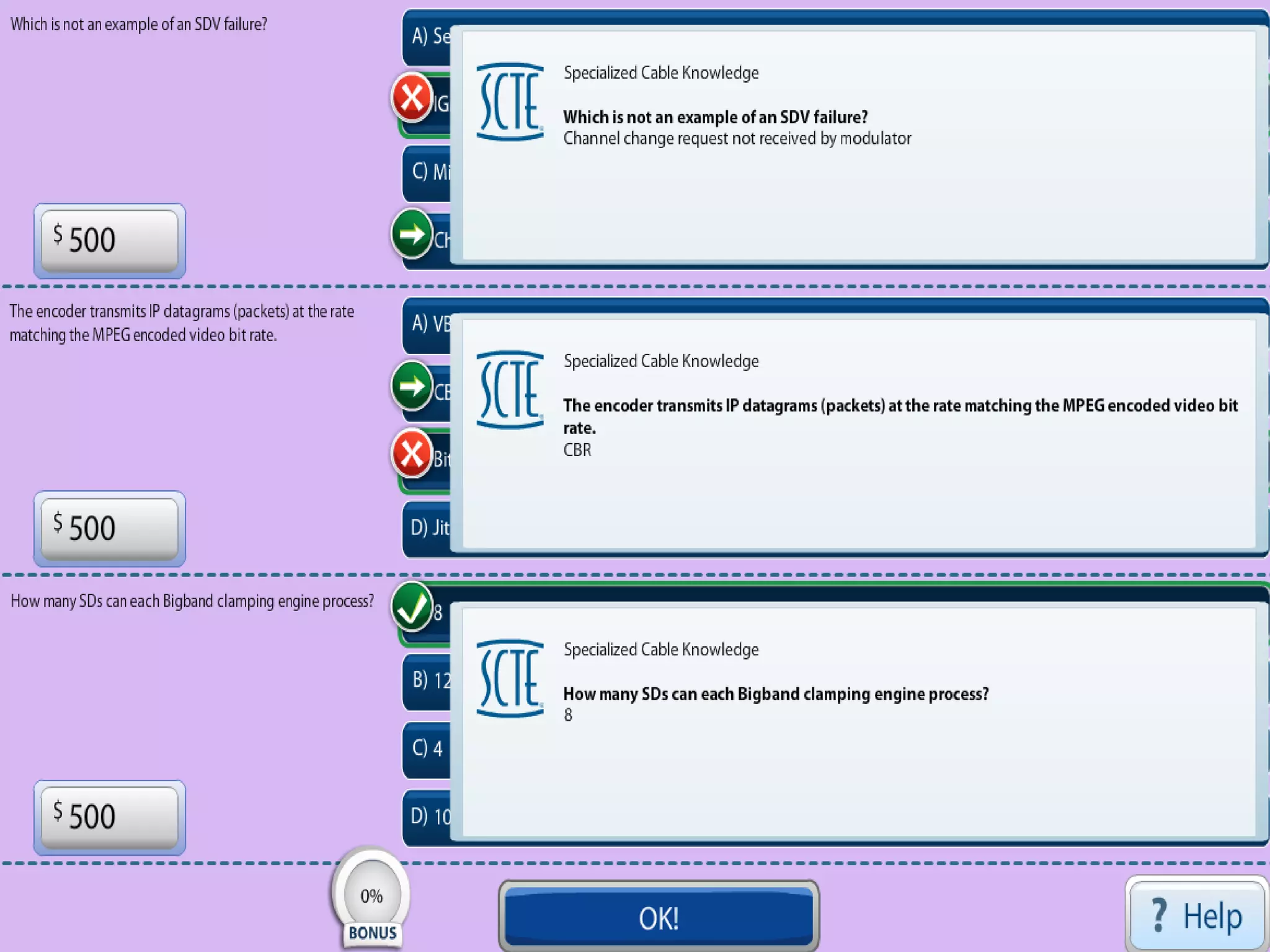
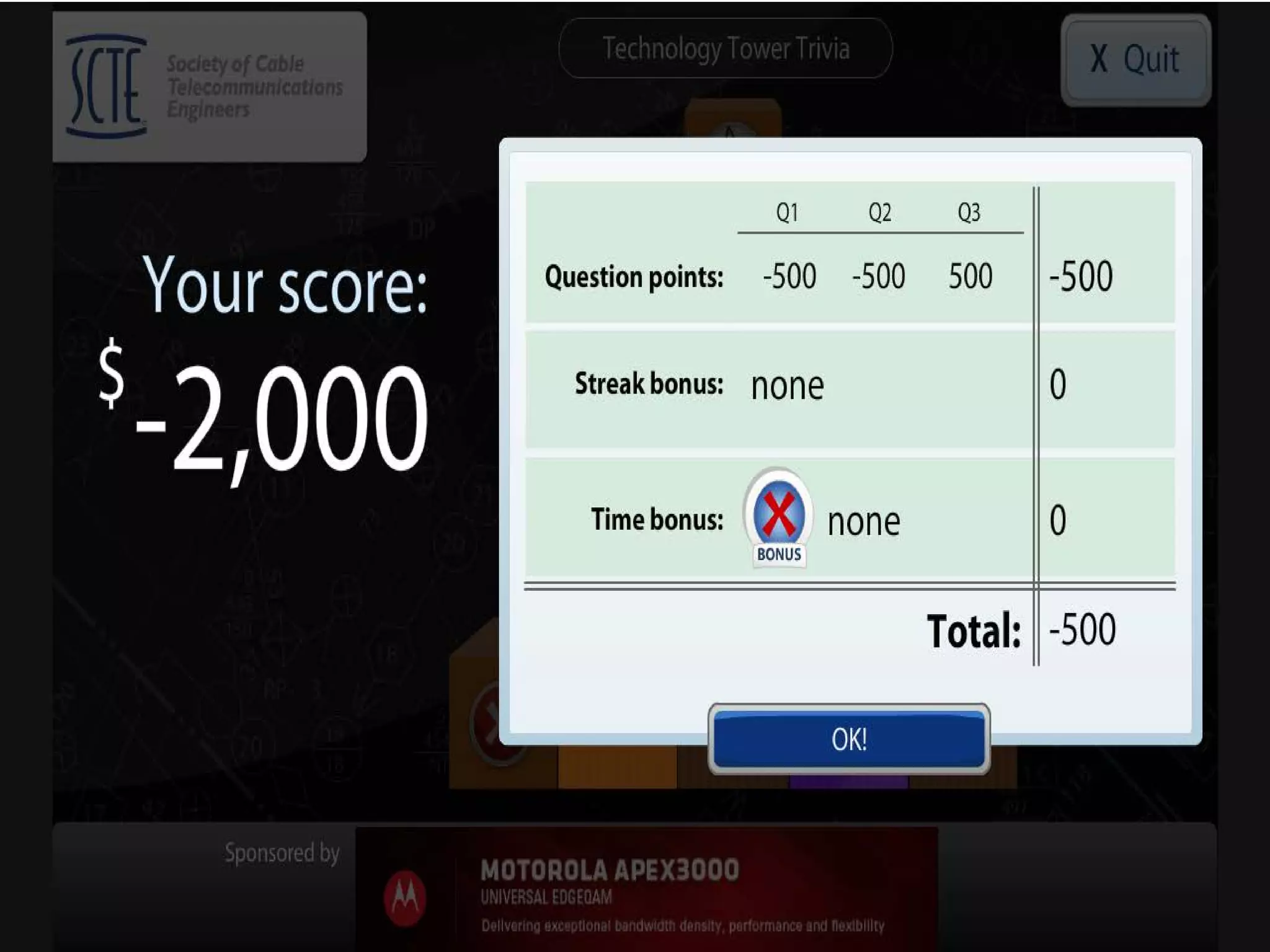
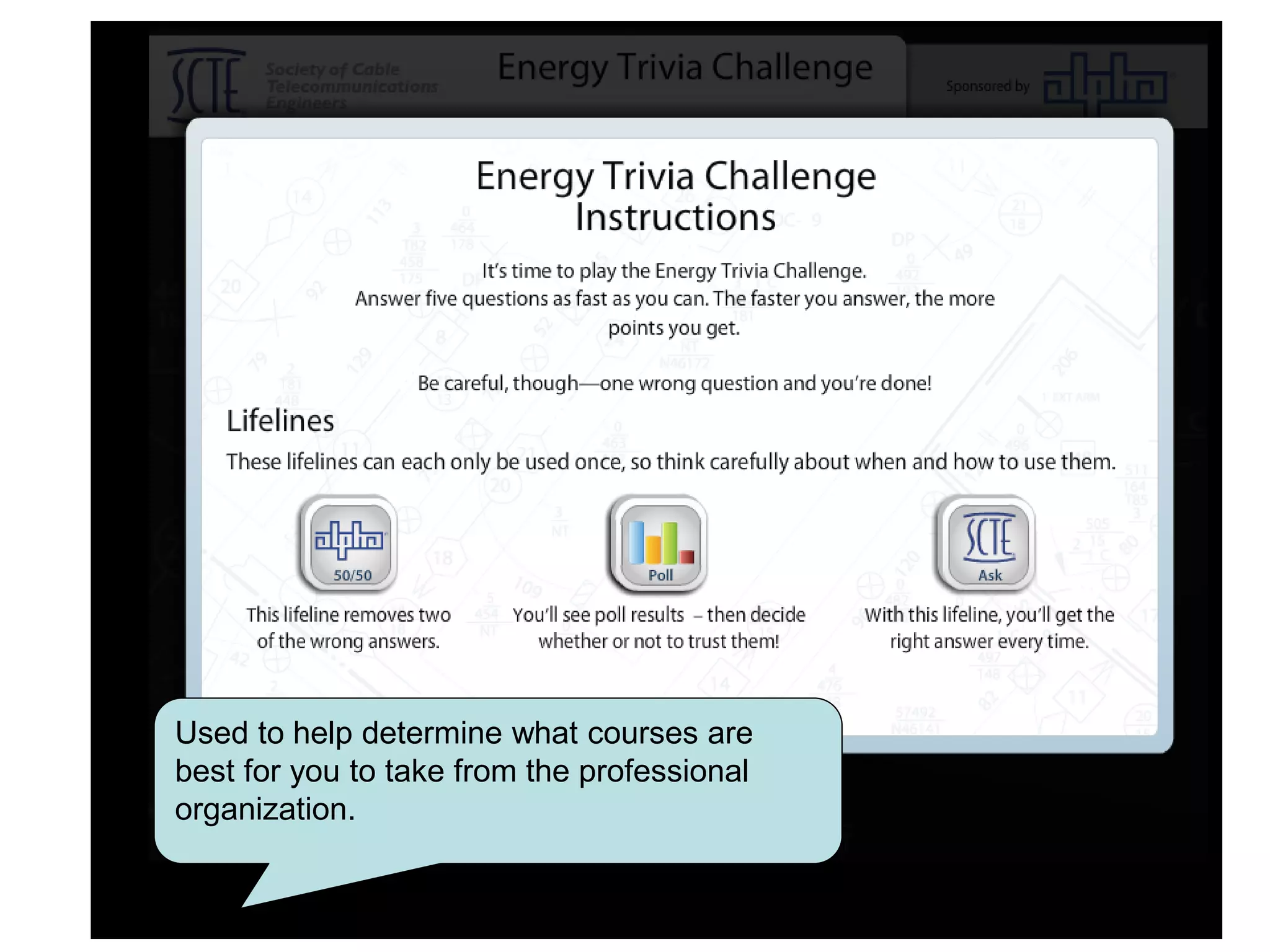
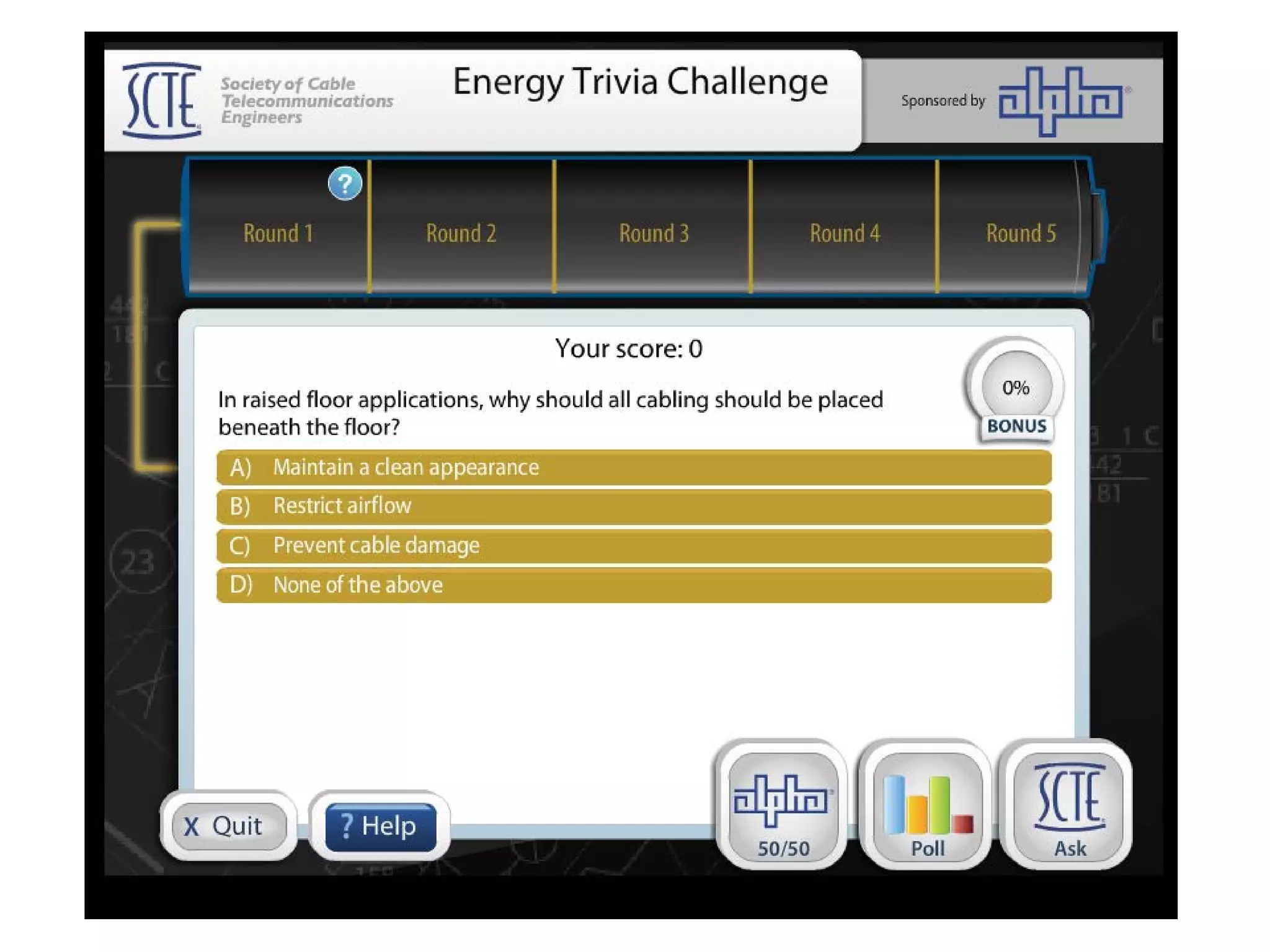
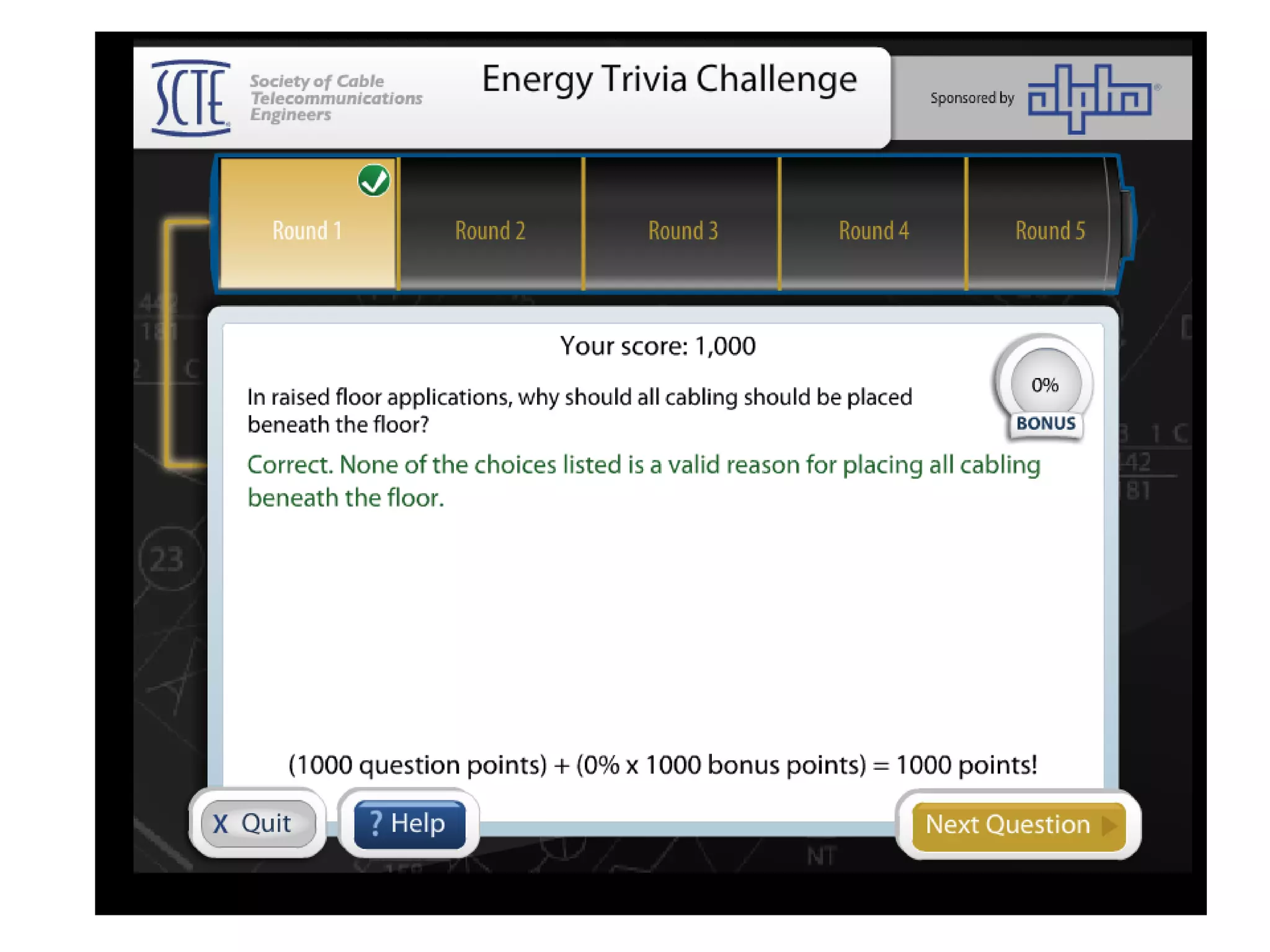
Technology Tower Trivia provides members the
opportunity to test their cable knowledge
through five cable related categories by climbing
the pyramid and wagering points with each
question.
Make it to the top and win the Technology
Tower Trivia. Stuck on a category? SCTE
offers a wide array of technical resources
and courses to help you strengthen your
knowledge in that key area.
Used to help determine what courses are
best for you to take from the professional
organization.
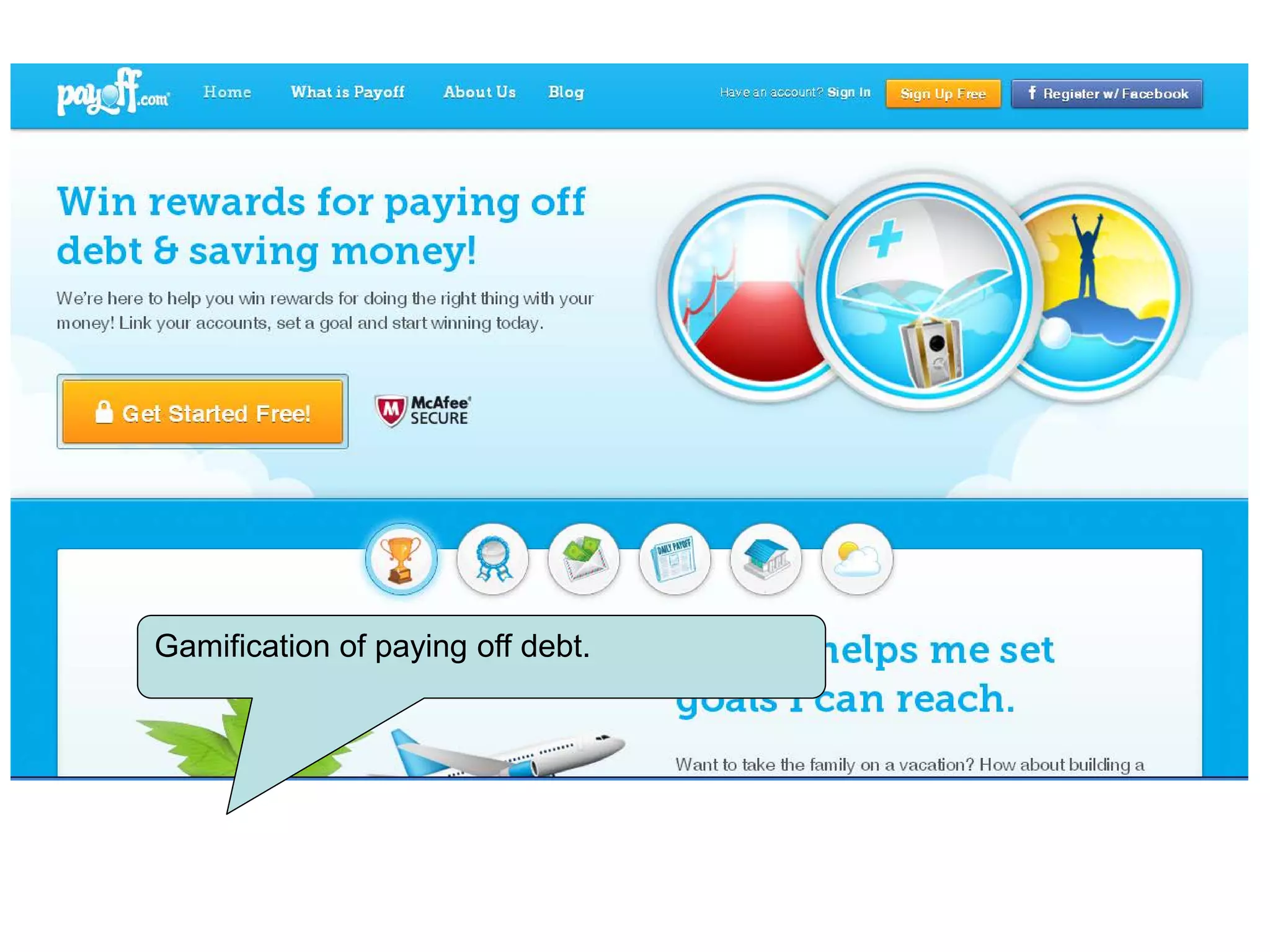
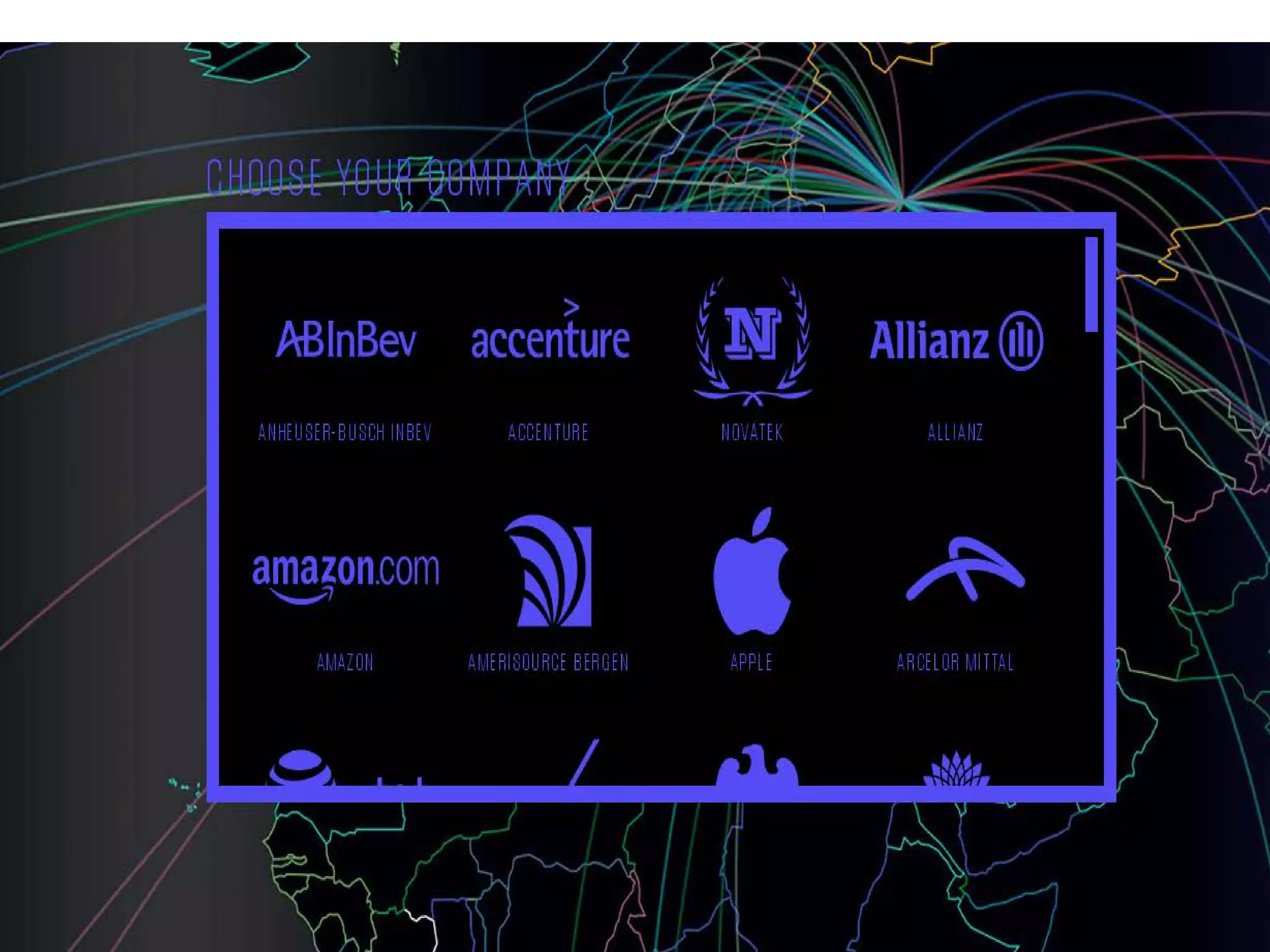
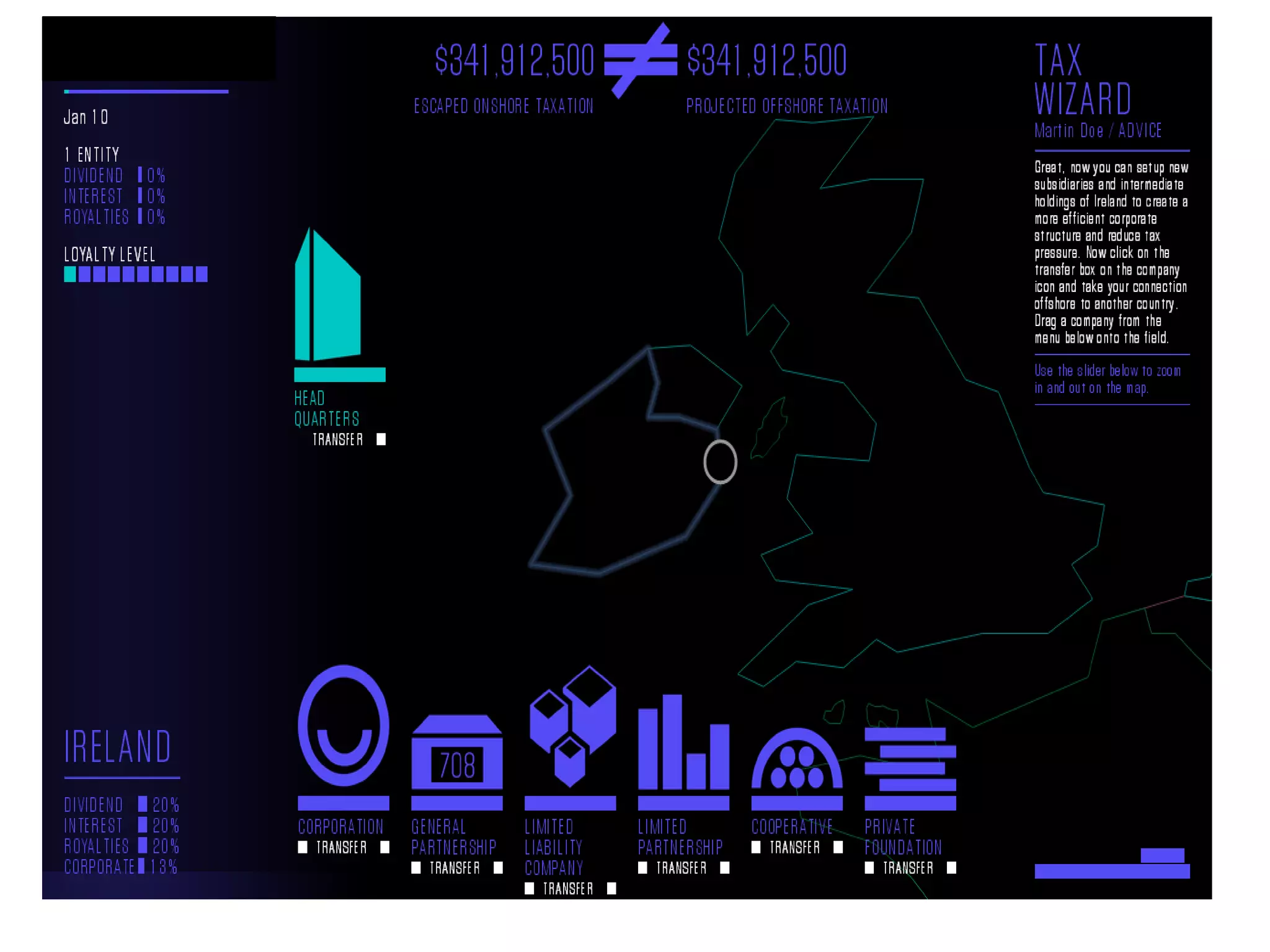
Gamification of paying off debt.
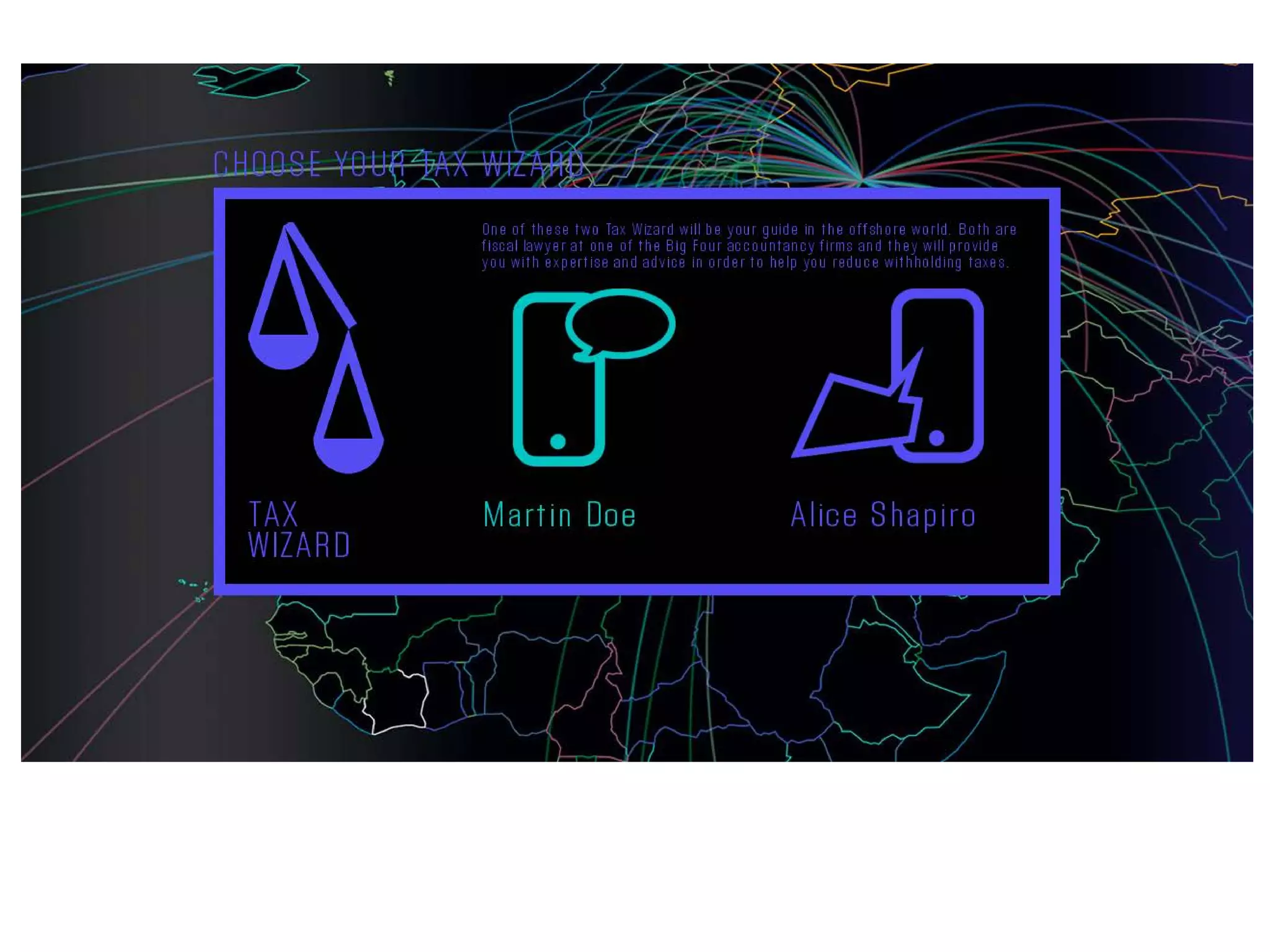
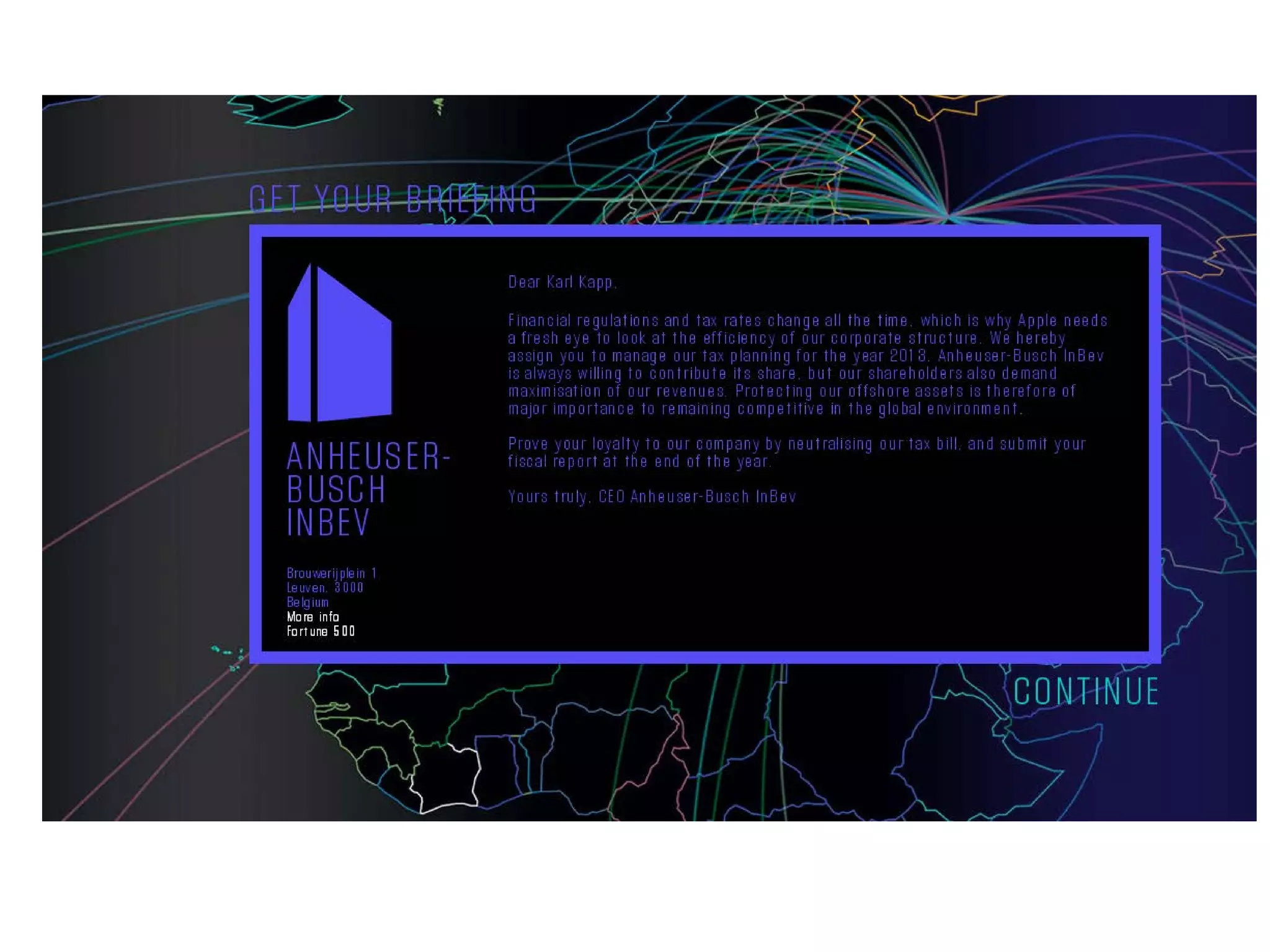
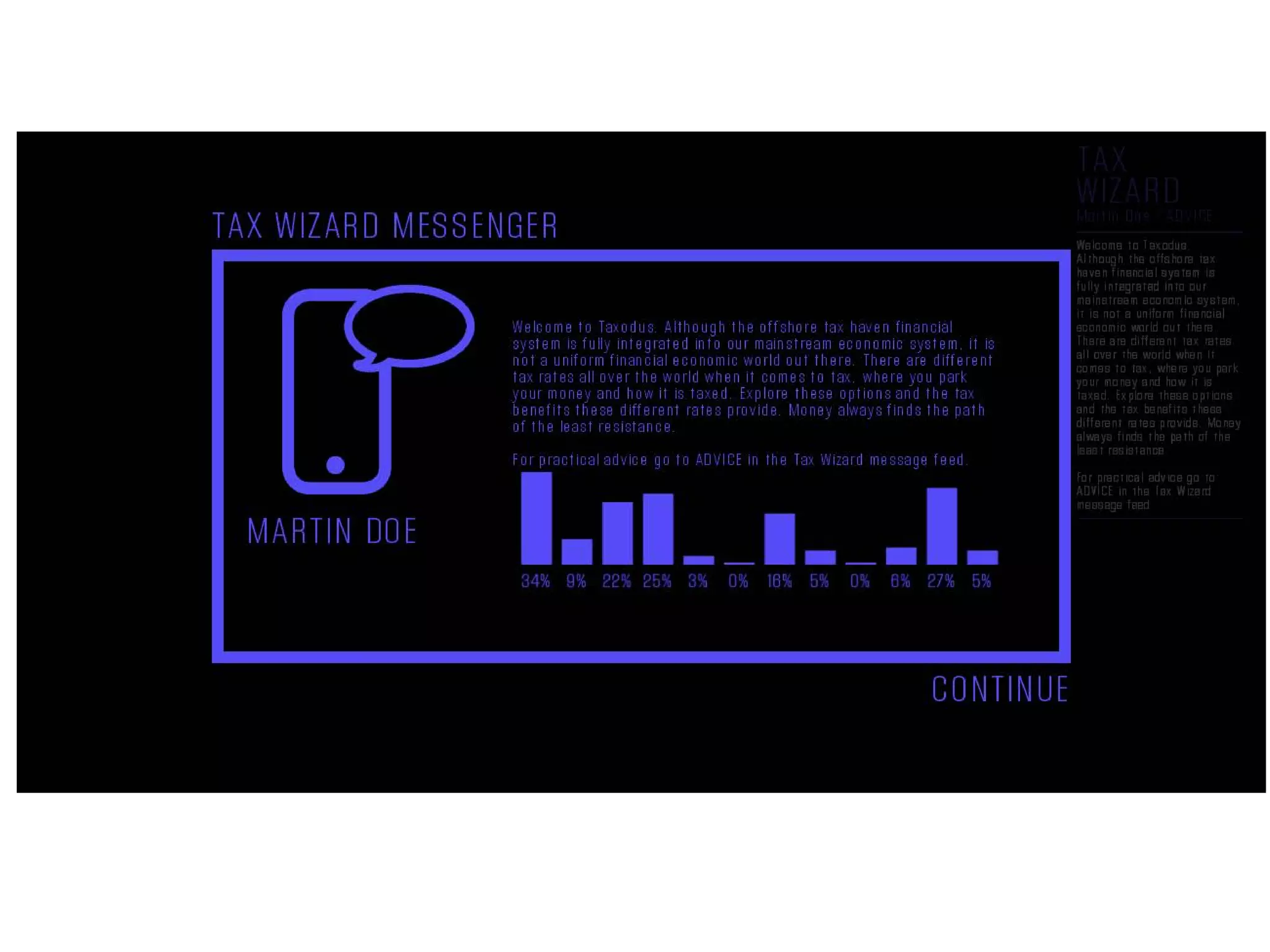
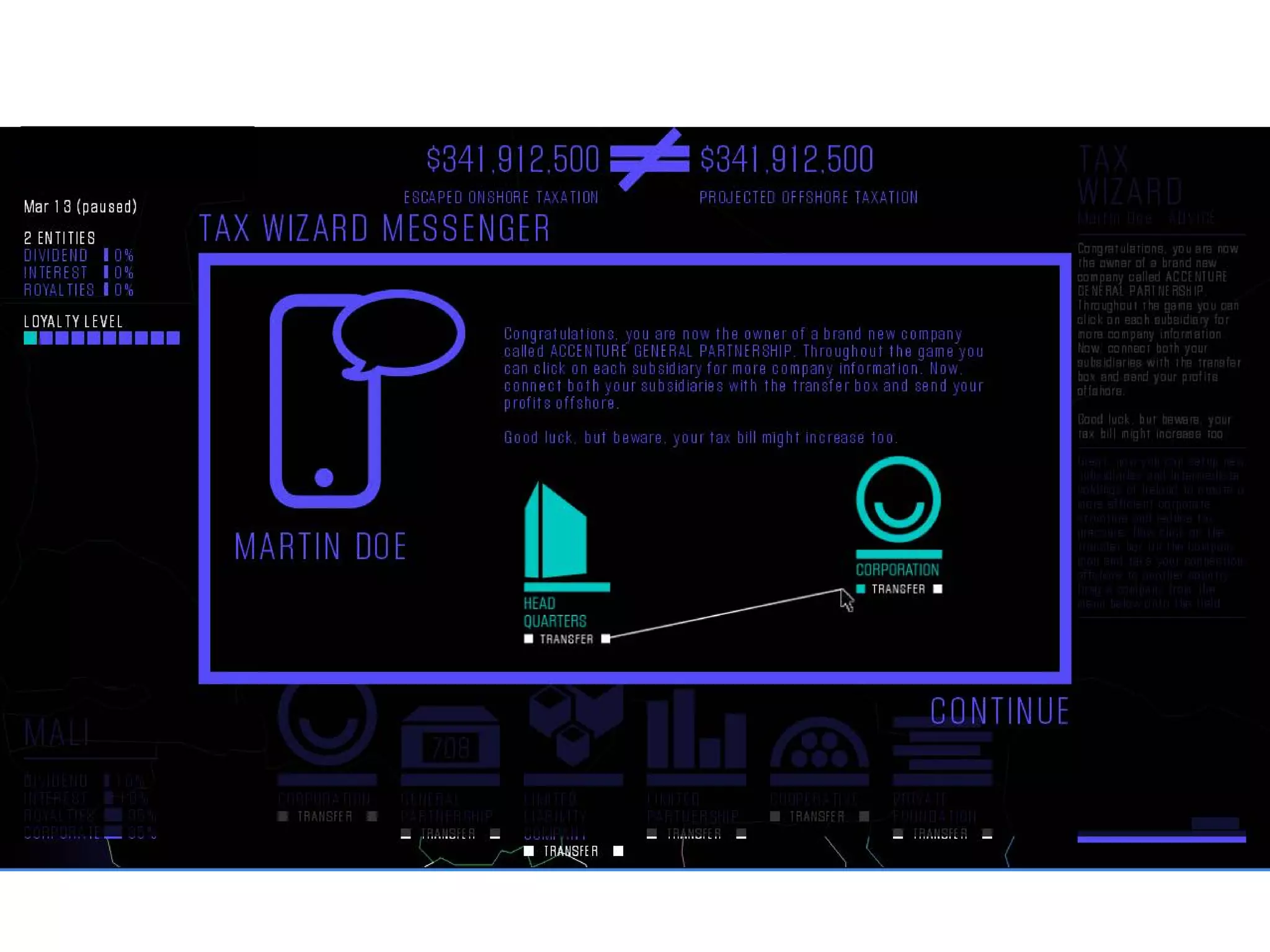
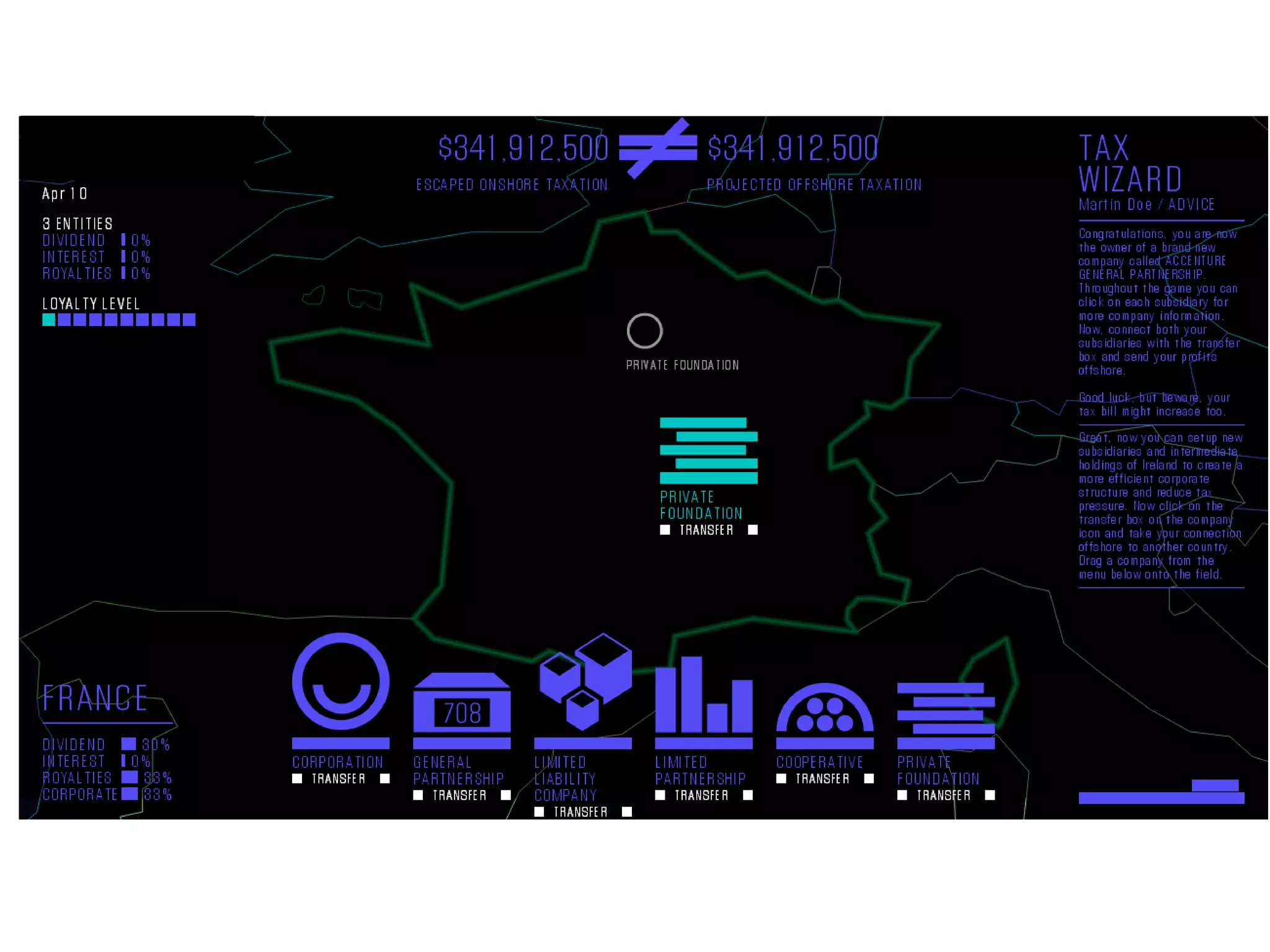
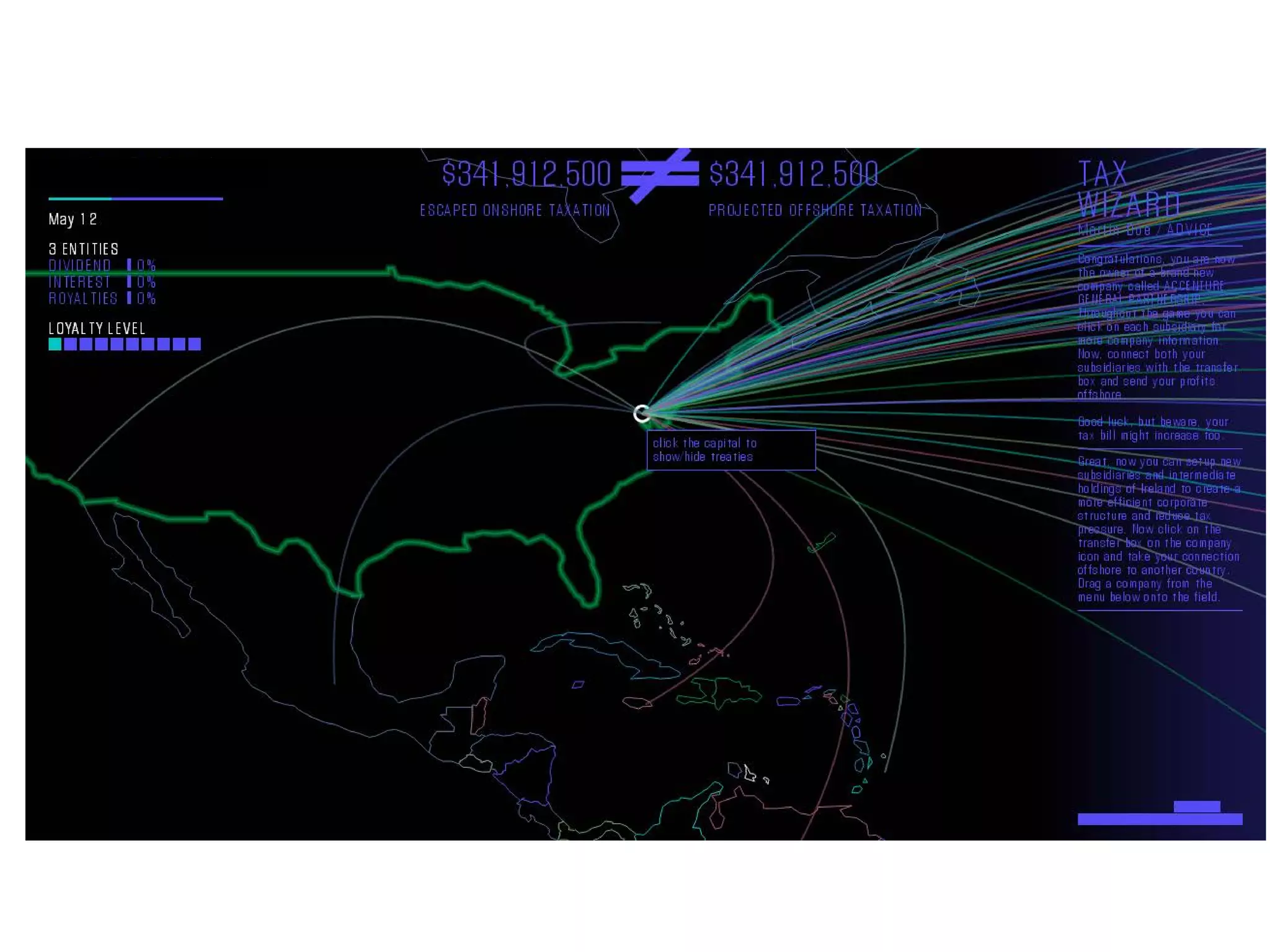
Femke Herregraven, won the Young Designer Award 2013 for developing a gamified
way of teaching international tax laws
What if a small company doing international business had a tool available that lets
them determine in an easy way how to pay as little tax as possible?
The tool www.taxodus.net does just that.
Copy of Slides and Notes available at
www.karlkapp.com
Contact Karl at:
kkapp@bloomu.edu

What is Gamification?

  • 1.
    By Karl M.Kapp Bloomsburg University Gamification of Learning &Instruction July 16, 2014 EMAIL: kkapp@bloomu.edu TWITTER: @kkapp BLOG: http://karlkapp.com/kapp-notes/ What is Gamification? Is there any Science Behind It?
  • 2.
  • 8.
    We’ve learned andstruggled for a few years here figuring out how to make a decent phone. PC guys are not going to just figure this out. They’re not going to just walk in. --Palm CEO Ed Colligan, 16 Nov 2006
  • 9.
    This is ourbest iPhone launch yet — more than 9 million new iPhones sold — a new record for first weekend sales—Tim Cook, 2013. Palm sold to HP in 2010, by 2011 Palm was done.
  • 12.
  • 13.
  • 14.
  • 15.
    Gartner Group predictsby 2015, 40 percent of Global 1000 organizations will use gamification as the primary mechanism to transform business operations.
  • 16.
    Gartner Group predicts80 percent of current gamified applications will fail to meet business objectives, primarily due to poor design.
  • 17.
  • 18.
    Rules • A statementis presented – If “true” indicate: FactX – If “false” indicate: FishyX • Text Response: Take out your text- machines Standard Texting Fees Apply!
  • 19.
    How To Votevia Texting 1. Polleverywhere has no access to your phone number 2. Capitalization doesn’t matter, but spaces and spelling do TIPS FACT01 FACT02 FISHY01 FACT01
  • 20.
    Gamification is the useof gaming elements integrated into a training program aligned goals to promote change in behavior. Game-based Learning is the use of a game to teach knowledge, skills and abilities to learners using a self-contained space. What is this “game” stuff? Simulation Learning is a realistic, controlled- risk environment where learners can practice specific behaviors and experience the impacts of their decisions.
  • 21.
    • Gamification isto Learning Game as: – Part is to Whole – Piece is to Puzzle – Slice is to Pie – Steering Wheel is to Car • Gamification uses elements of games but is not a game in-and-of itself. What is this “game” stuff?
  • 22.
    Gamification + Simulation= Learning Game What is this “game” stuff? Content Gamification: Content changes to be more game-like Structural Gamification: Game elements added to propel learner through content.
  • 23.
    Gamification Elements that Aid Learning 1.Story 2. Challenge 3. Mystery 4. Characters/Avatar 5. Challenge 6. Levels 7. Feedback 8. Replayability 9. Freedom to Fail 10.Asethetics 11.Time 12.Rewards
  • 24.
    Gamification Elements that Aid Learning 1.Story 2. Challenge 3. Mystery 4. Characters/Avatar 5. Challenge 6. Levels 7. Feedback 8. Replayability 9. Freedom to Fail 10.Asethetics 11.Time 12.Rewards NOT Enough Time 
  • 25.
    Elements of Games 1. RewardStructures 2. Feedback 3. Story 4. Challenge
  • 26.
    Fishy… if itwas that easy…this would be the most engaging game in the world.
  • 27.
    20% increase inprofile completion.
  • 28.
    Use coins, pointsand rewards to provide feedback on performance, updates on progress , level of correctness and to show Mastery. Kapp, K. M. (2012) The Gamification of Learning and Instruction. New York: Pfeiffer. Chapter Four. Pages 89-98.
  • 29.
    The value, orsize, of an anticipated reward influences the motivational signal sent to the brain only within the contexts of the reward system. Howard-Jones. P.A., & Demetriou, S. (2008, September 11). Uncertainty and engagement with learning games. Instructional Science, 37, 519-536.
  • 30.
    Receiving a PREDICTABLEreward releases one shot of dopamine. Howard-Jones. P.A., & Demetriou, S. (2008, September 11). Uncertainty and engagement with learning games. Instructional Science, 37, 519-536.
  • 31.
    Receiving an UNPREDICTABLEreward releases two shots of dopamine. Yeah, me! Howard-Jones. P.A., & Demetriou, S. (2008, September 11). Uncertainty and engagement with learning games. Instructional Science, 37, 519-536.
  • 32.
    What can youdo? Intelligently add game elements to instruction. Use points, rewards and badges to convey meaning…not simply completion.
  • 33.
  • 35.
    Encourages learners tofocus their attention thoughtfully on the task rather than on simply getting the right answer. Shute, V. J., Ventura, M., Bauer, M. I., & Zapata-Rivera, D. (2009). Melding the power of serious games and embedded assessment to monitor and foster learning: Flow and grow. In U. Ritterfeld, M. J. Cody, & P. Vorderer (Eds.), Serious Games: Mechanisms and Effects. Philadelphia, PA: Routledge/LEA. 295-321. Provide specific comments about errors and suggestions for improvement.
  • 36.
    Leaderboards provide opportunities forplayers to receive feedback about their performance as compared to others. Comparative and relative feedback
  • 37.
    What can youdo? Use feedback to inform learners of errors in thinking and to focus them on the task they are learning.
  • 38.
    Researchers have foundthat the human brain has a natural affinity for narrative construction. Yep, People tend to remember facts more accurately if they encounter them in a story rather than in a list. And they rate legal arguments as more convincing when built into narrative tales rather than on legal precedent. Carey, B. (2007) this is Your Life (and How You Tell it). The New York Times. Melanie Green http://www.unc.edu/~mcgreen/research.html. Chapter 2 “The Gamification of Learning and Instruction.
  • 39.
    1. Characters Story Elements 5.Conclusion 2. Plot (something has to happen). 3. Tension 4. Resolution
  • 40.
  • 42.
    What can youdo? Use meaningful stories. Provide the context for the learning.
  • 43.
    Fact. Provide a challenge Jones,B., Valdez, G., Norakowski, J., & Rasmussen, C. (1994). Designing learning and technology for educational reform. North Central Regional Educational Laboratory. [Online]. Available: http://www.ncrtec.org/capacity/profile/profwww.htm and Schlechty, P. C. (1997). Inventing better schools: An action plan for educational reform. San Francisco, CA: Jossey-Bass
  • 44.
    Re-design the Instructionto Start with a Challenge
  • 45.
    Training • Course Objectives –Adhere to the proper policy for providing information to clients – Understand what is permissible to share with clients and what is not – Identify three methods of conducting an audit
  • 46.
    You are gatheringdata during the first day of an audit. During lunch, Mary approaches you and tells you that she has something important to discuss. The two of you go to your office and she makes the accusation that the VP of Finance is hiding an account… What is the first thing you should do?
  • 47.
    What can youdo? Give your learners the “Kobayashi Maru” equivalent.
  • 48.
    “Kobayashi Maru” isa no win, difficult situation designed to teach “thinking.”
  • 49.
  • 50.
    Technology Tower Triviaprovides members the opportunity to test their cable knowledge through five cable related categories by climbing the pyramid and wagering points with each question. Make it to the top and win the Technology Tower Trivia. Stuck on a category? SCTE offers a wide array of technical resources and courses to help you strengthen your knowledge in that key area.
  • 55.
    Used to helpdetermine what courses are best for you to take from the professional organization.
  • 58.
  • 63.
    Femke Herregraven, wonthe Young Designer Award 2013 for developing a gamified way of teaching international tax laws What if a small company doing international business had a tool available that lets them determine in an easy way how to pay as little tax as possible? The tool www.taxodus.net does just that.
  • 75.
    Copy of Slidesand Notes available at www.karlkapp.com Contact Karl at: kkapp@bloomu.edu