PowerPoint to accompany


Foundations in Microbiology
          Fifth Edition

                                        Talaro
                                     Chapter
                                       15

    Copyright The McGraw-Hill Companies, Inc. Permission required for reproduction or display.
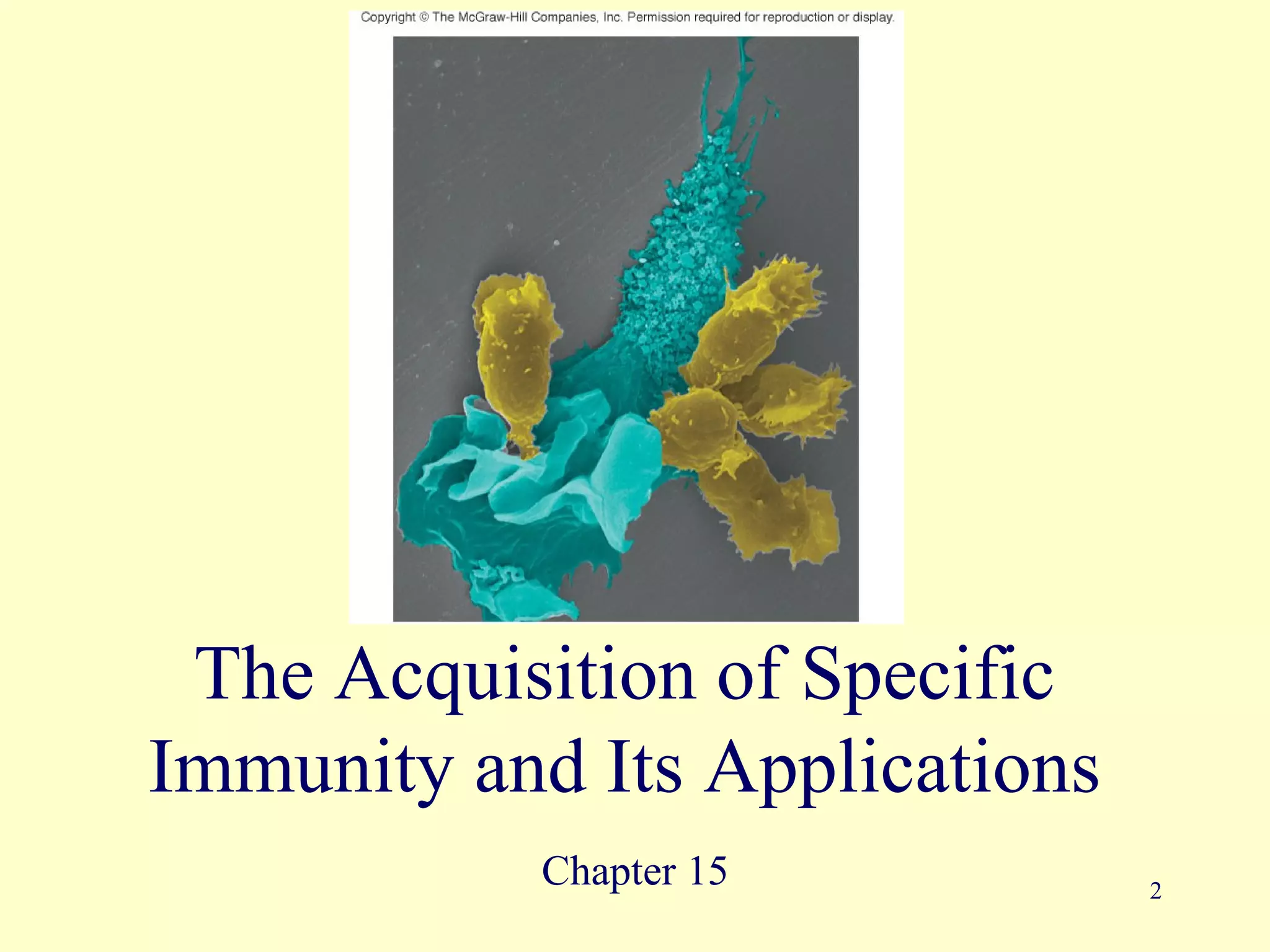
The Acquisition of Specific
Immunity and Its Applications
           Chapter 15           2
Chapter Overview
1. Development of the Dual Lymphocyte System
2. Entrance and Processing of Antigens and Clonal
   Selection
3. Activation of Lymphocytes and Clonal
   Expansion
4. Products of B Lymphocytes: Antibody Structure
   and Functions
5. How T cells Respond to Antigen: Cell-Mediated
   Immunity
                                                    3
Preliminary concepts
•  Cell receptors or markers confer specificity and
   identity
• Major functions of receptors are
  1. to perceive & attach to nonself or foreign
      molecules
  2. to promote the recognition of self molecules
  3. to receive & transmit chemical messages
      among other cells of the system
  4. to aid in cellular development.
                                                      4
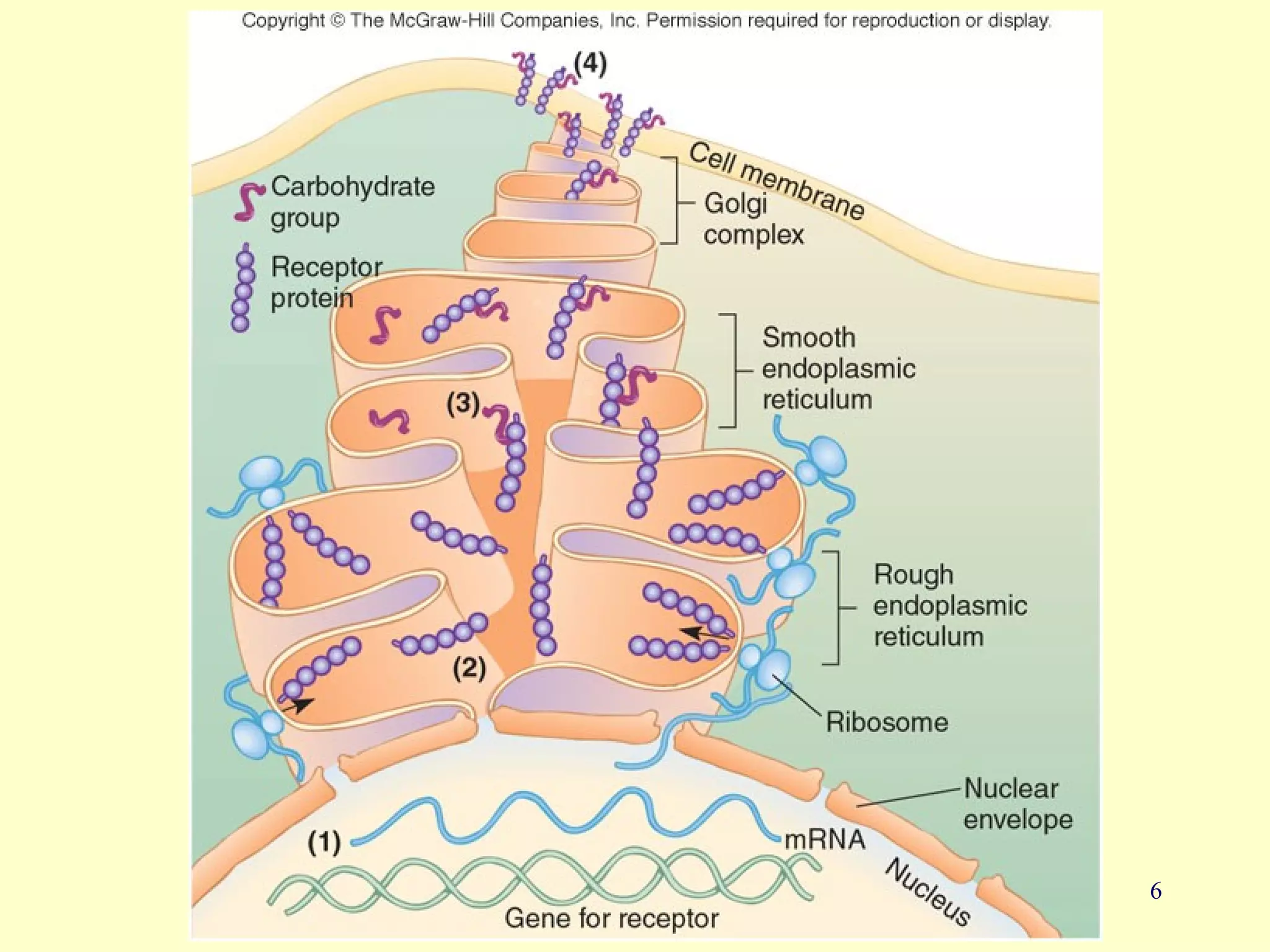
How are receptors formed?
• As a cell matures, certain genes that encode cell
  receptors are transcribed & translated into protein
  products with a distinctive shape, specificity and
  function.
• Receptor is modified & packaged by the
  endoplasmic reticulum & Golgi complex.
• It is ultimately inserted into the cell membrane,
  accessible to antigens, other cells, and chemical
  mediators.
                                                        5
6
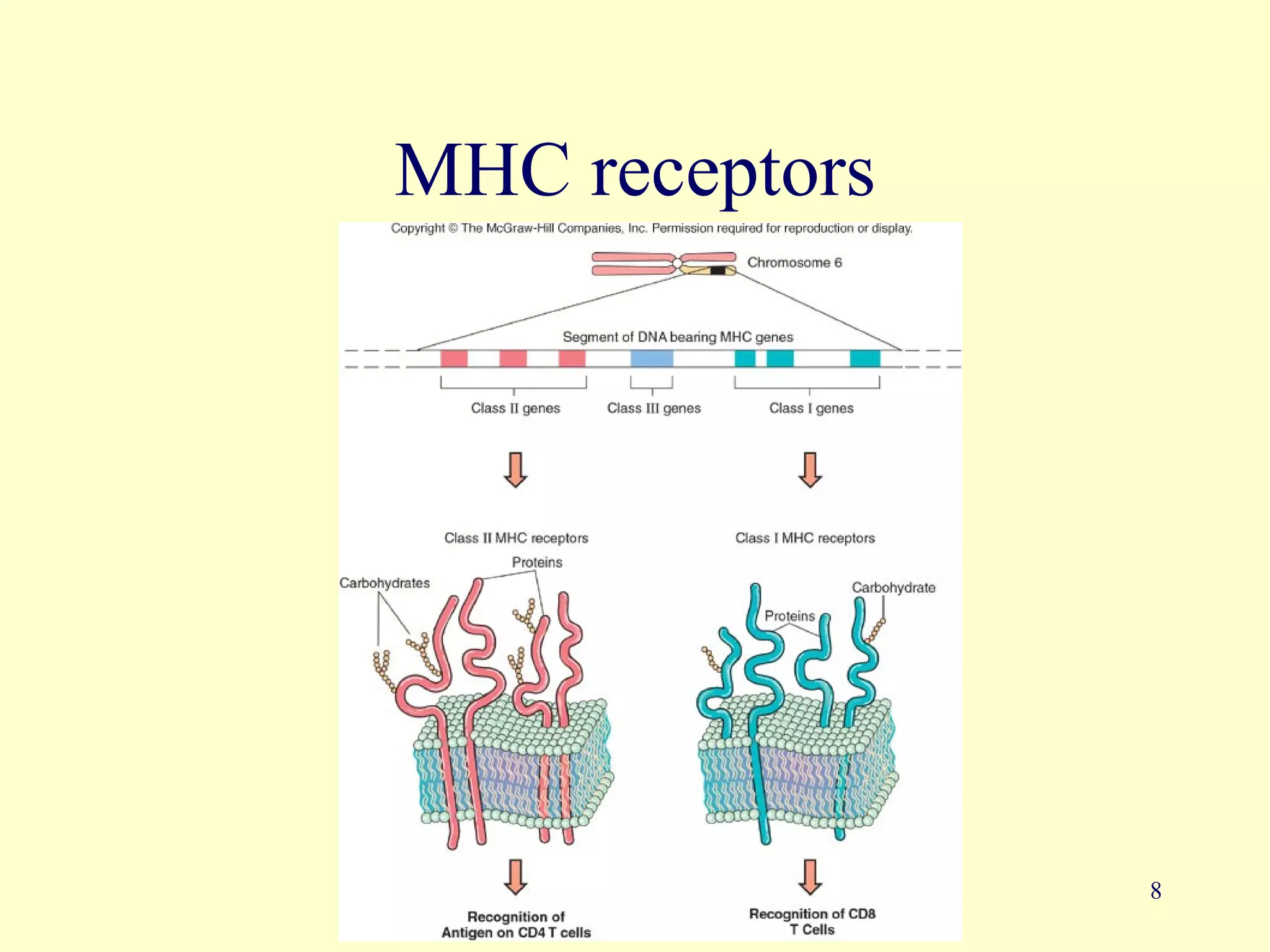
Major Histocompatibility Complex (MHC)
 • Receptors found on all cells except RBCs
 • Also known as human leukocyte antigen
   (HLA)
 • Plays a role in recognition of self by the
   immune system and in rejection of foreign
   tissue
 • Genes for MHC are located on chromosome 6,
   clustered in a multigene complex of classes I,
   II, III
                                               7
MHC receptors


                8
Functions of MHC
• Class I – markers that display unique
  characteristics of self molecules & regulation of
  immune reactions
  – Required for T lymphocytes
• Class II – receptors that recognize & react with
  foreign antigens. Located primarily on
  macrophages & B cells
  – Involved in presenting antigen to T cells
• Class III – secreted complement components,
  C2 and C4
                                                9
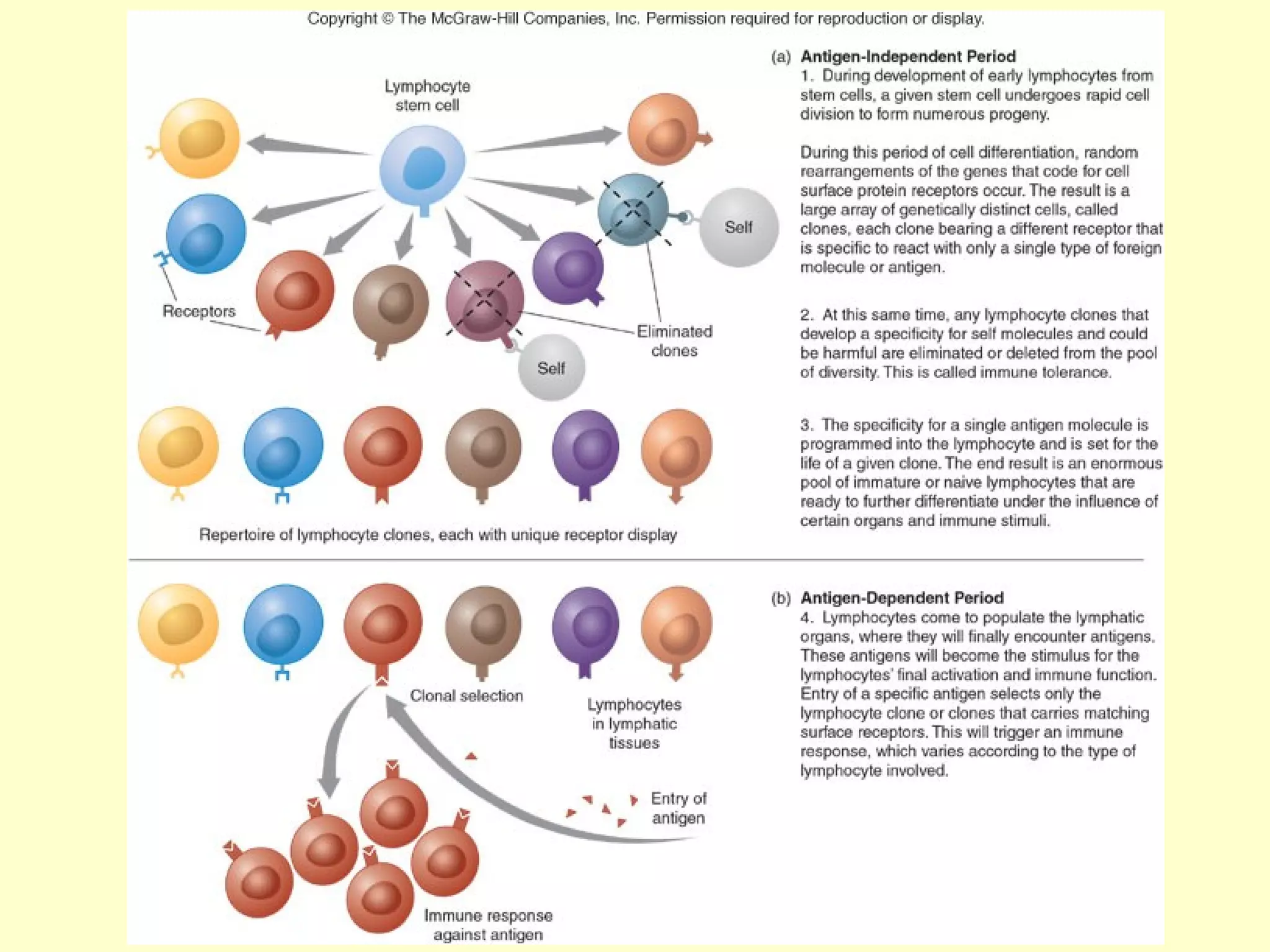
Clonal selection theory
• Lymphocytes use 500 genes to produce a
  tremendous variety of specific receptors
• Undifferentiated lymphocytes undergo
  genetic mutations & recombinations while
  they proliferate in the embryo forming a
  billion different clones with the ability to
  react with a tremendous variety of antigens.

                                             10
• Lymphocyte specificity is preprogrammed,
  existing in the genetic makeup before an antigen
  has ever entered the system.
• Each genetically different type of lymphocyte
  expresses a single specificity.
• First introduction of each type of antigen into the
  immune system selects a genetically distinct
  lymphocyte and causes it to expand into a clone
  of cells that can react to that antigen.
                                                11
12
Specific B cell receptor:
           Immunoglobulin
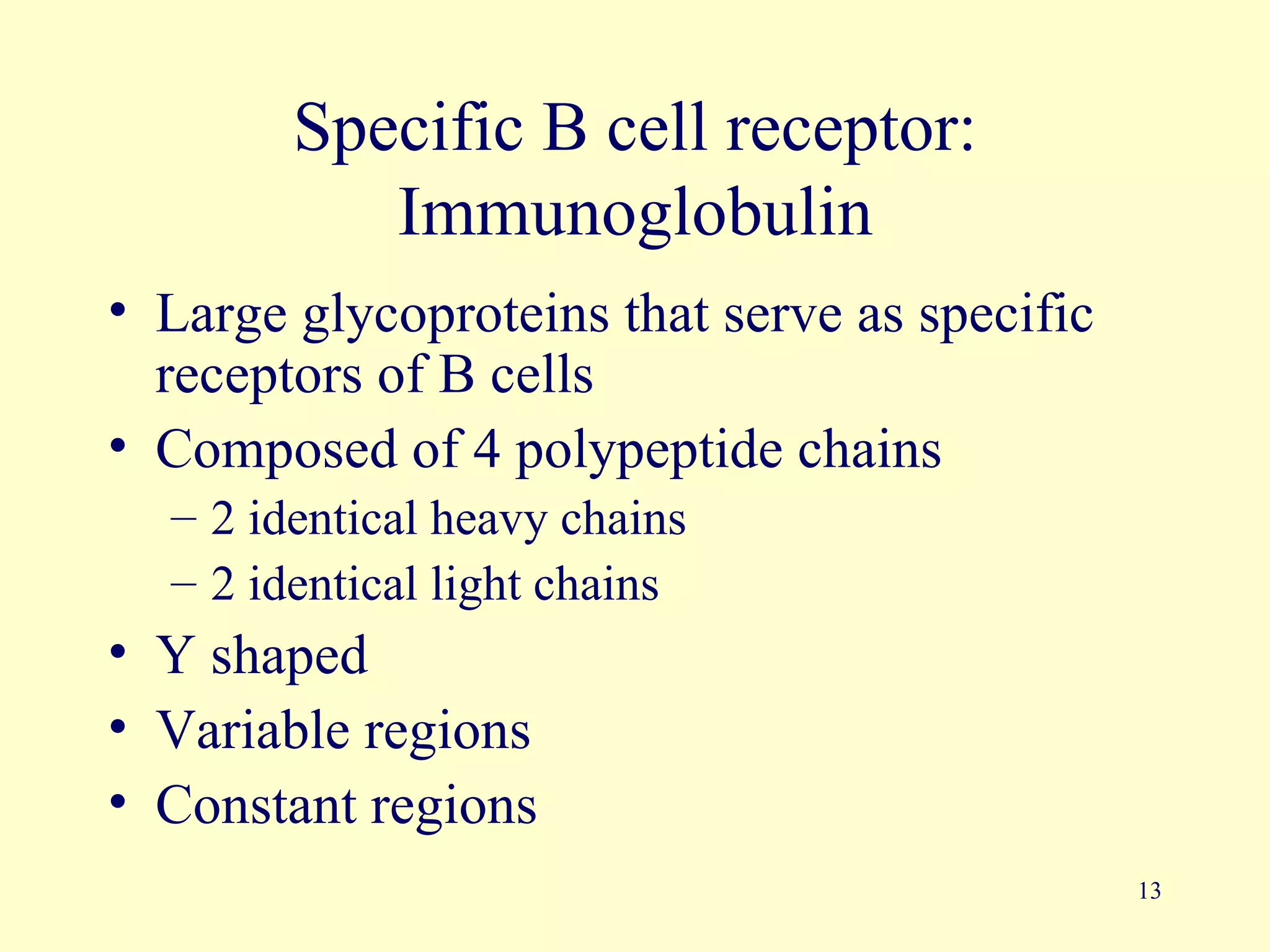
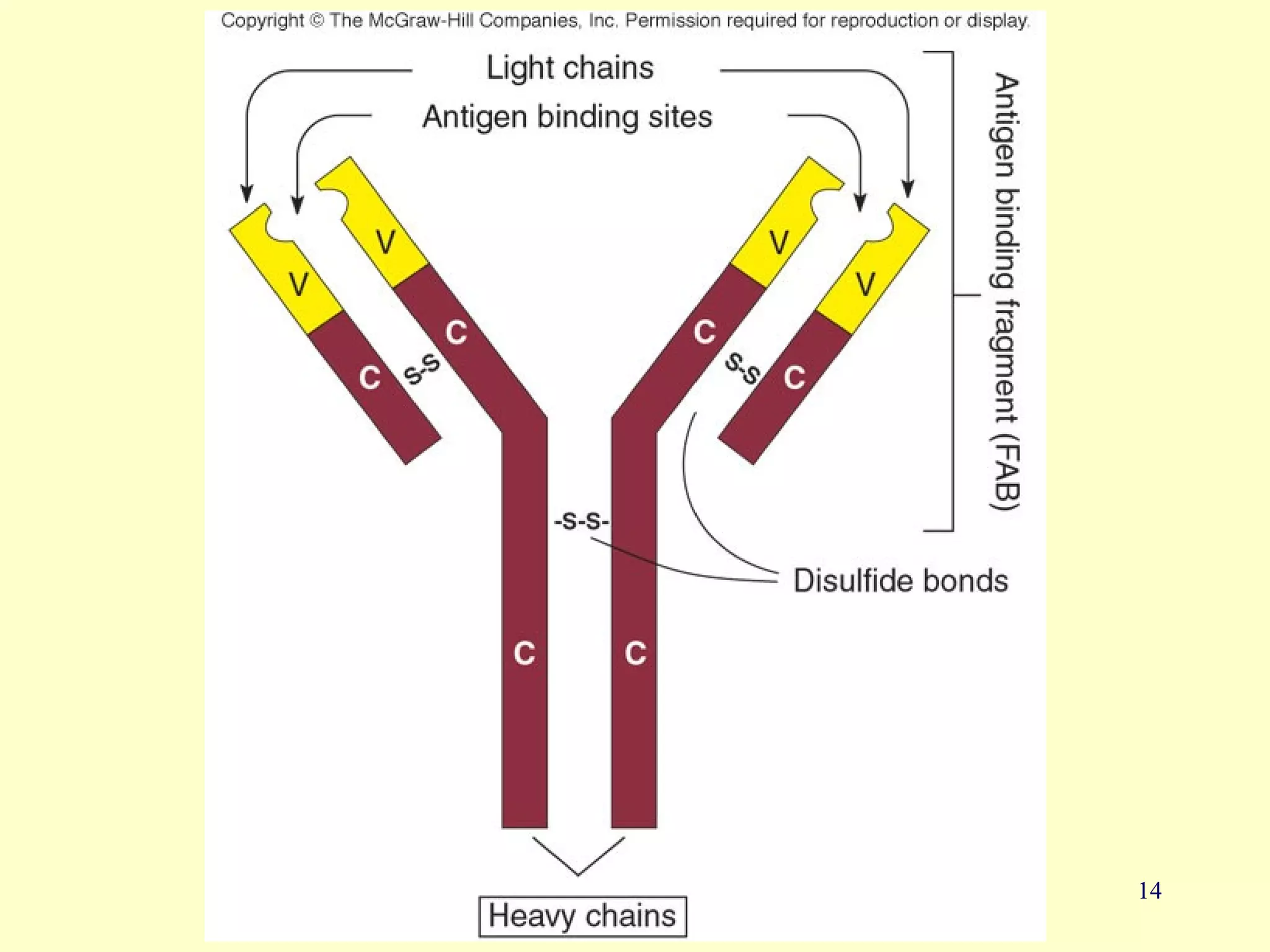
• Large glycoproteins that serve as specific
  receptors of B cells
• Composed of 4 polypeptide chains
  – 2 identical heavy chains
  – 2 identical light chains
• Y shaped
• Variable regions
• Constant regions
                                               13
14
Immunoglobulins
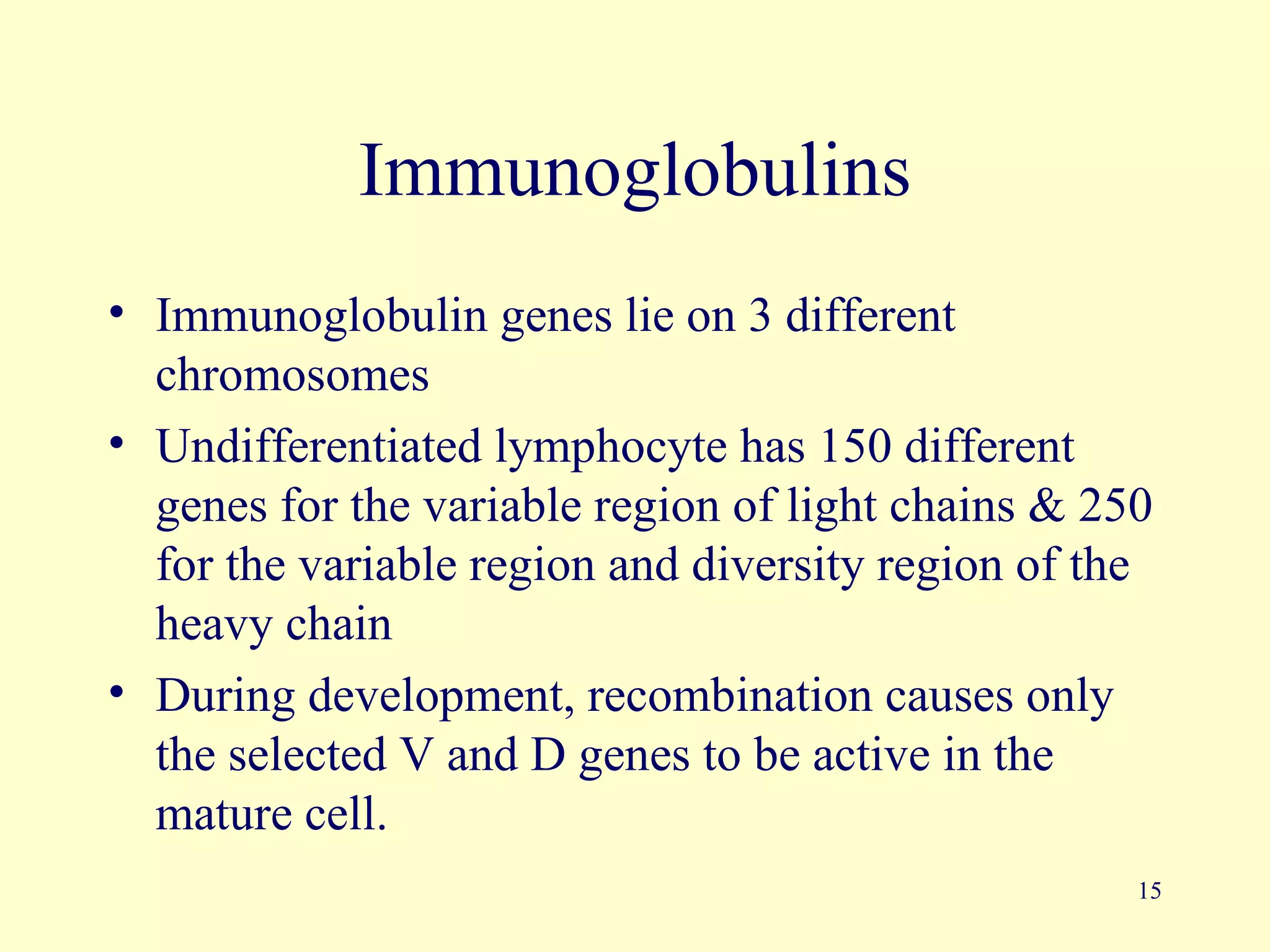
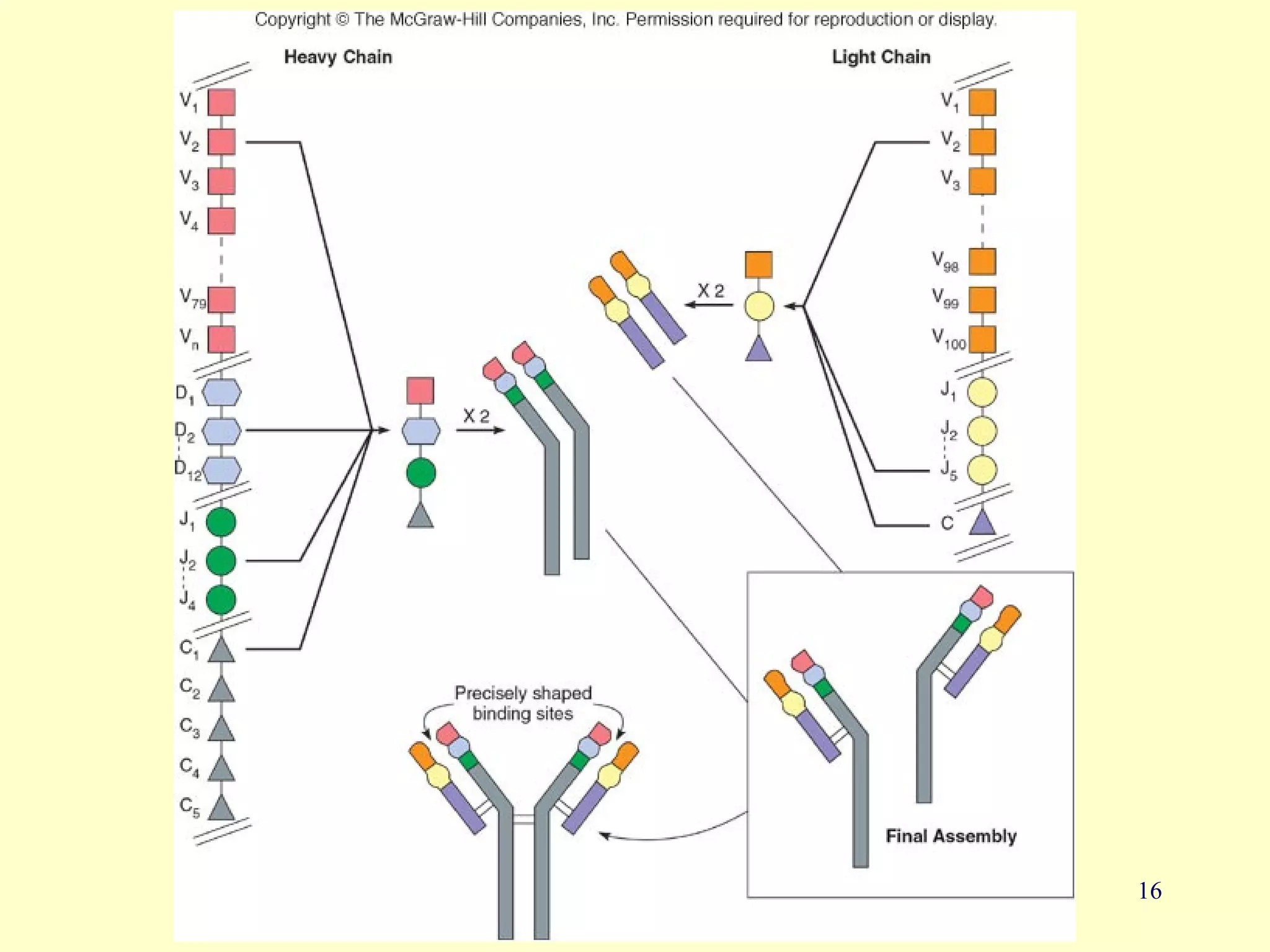
• Immunoglobulin genes lie on 3 different
  chromosomes
• Undifferentiated lymphocyte has 150 different
  genes for the variable region of light chains & 250
  for the variable region and diversity region of the
  heavy chain
• During development, recombination causes only
  the selected V and D genes to be active in the
  mature cell.
                                                    15
16
B cell receptors
• Once synthesized, immunoglobulin is
  transported to cell membrane & inserted
  there to act as a receptor
• First receptor on most B cells is a small
  form of IgM & mature B cells carry IgD
  receptors


                                              17
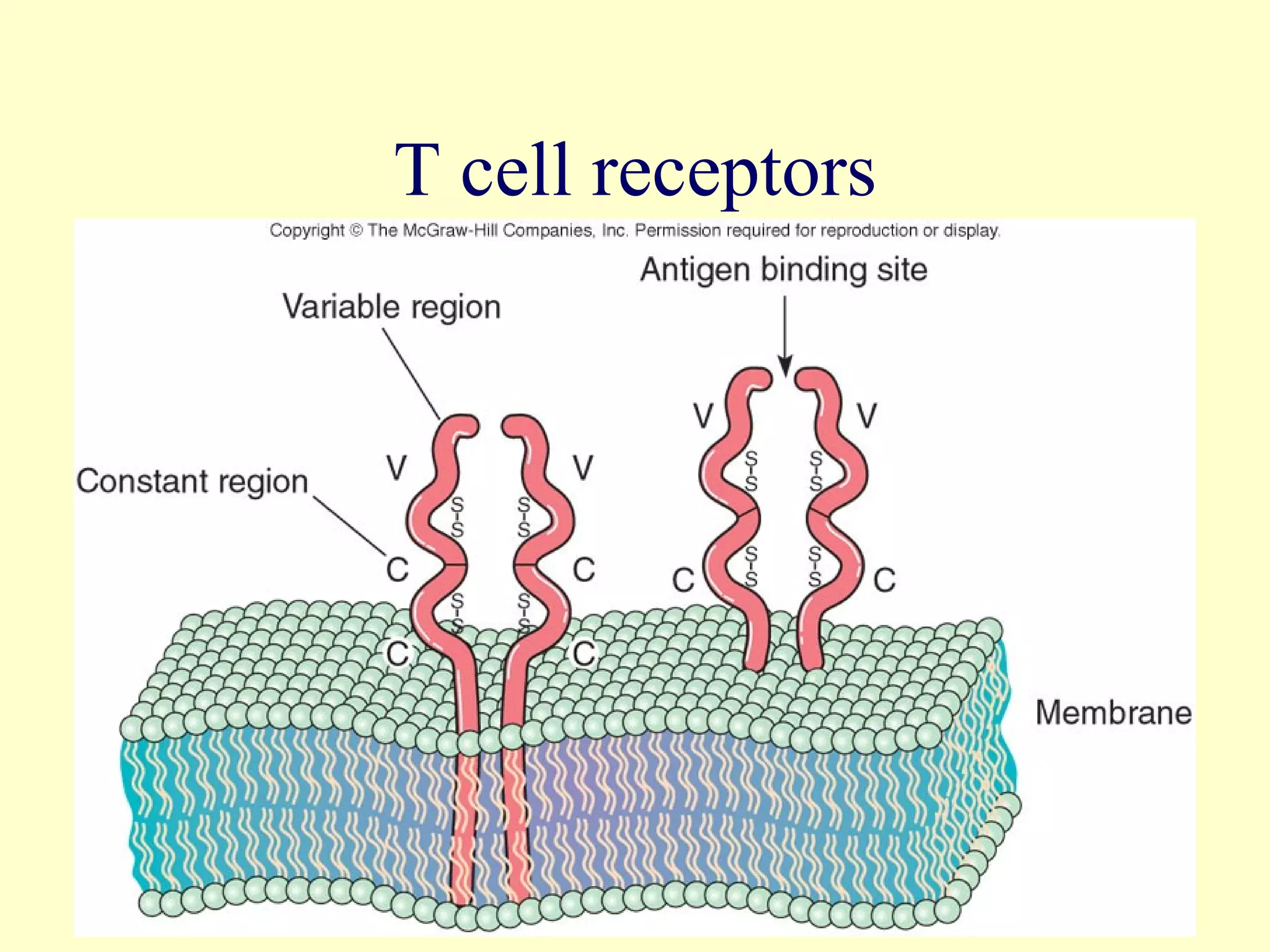
T cell receptors
• Formed by genetic recombination, having
  variable and constant regions
• 2 parallel polypeptide chains
• Small, without humoral functions


                                            18
T cell receptors


                   19
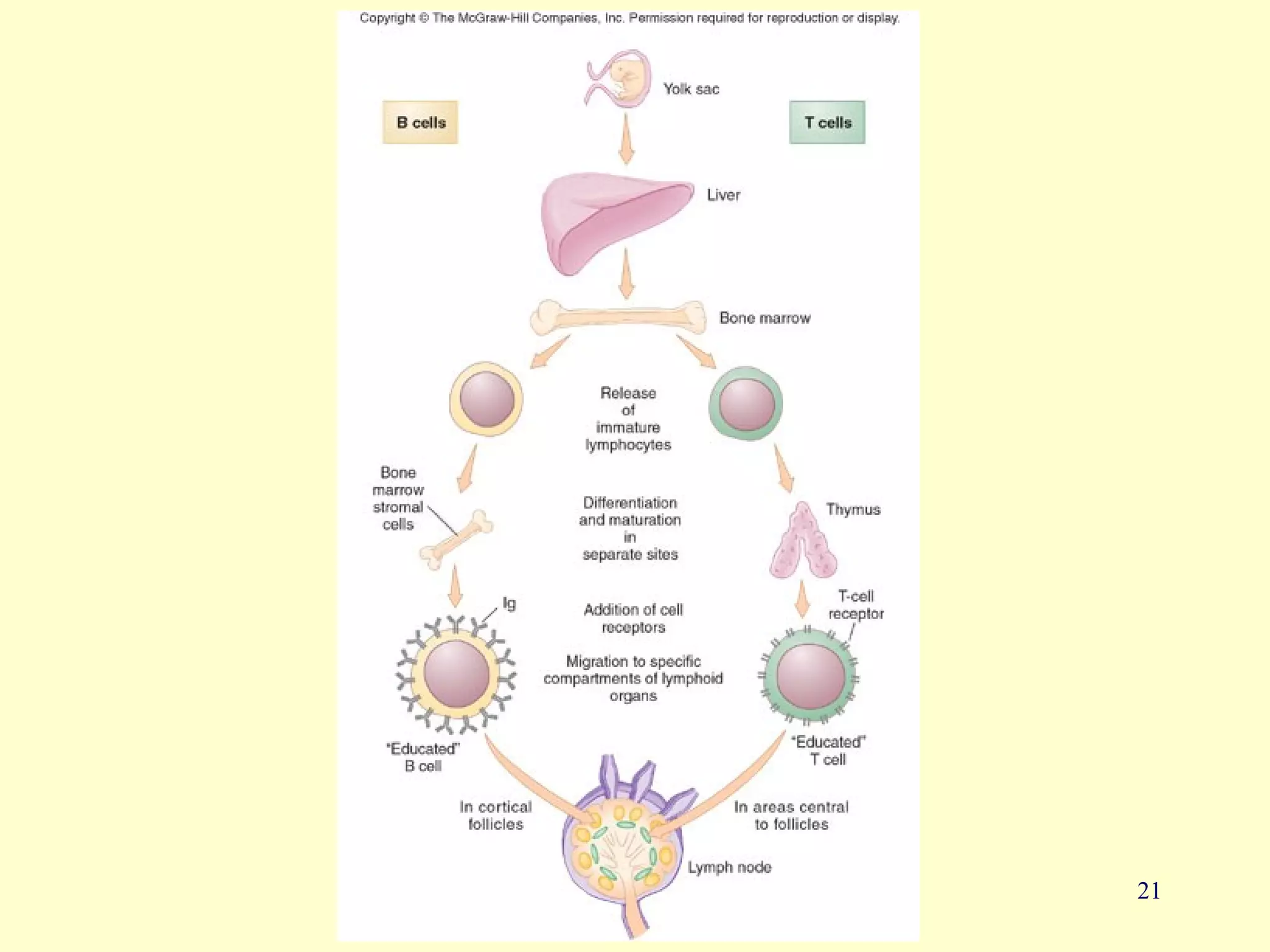
Development of the Dual
          Lymphocyte System
• Starting in the embryonic & fetal stages,
  stem cells in the yolk sac, liver, and bone
  marrow release immature lymphocytes into
  the circulation
• These undifferentiated cells must mature to
  be able to react to antigen
• Maturation occurs differently for B and T
  cells

                                            20
21
B cell maturation
• Directed by bone marrow sites that harbor
  stromal cells, which nurture the lymphocyte
  stem cells & provide hormonal signals
• Millions of distinct B cells develop & home
  to specific sites in the lymph nodes, spleen,
  and GALT where they come into contact
  with antigens throughout life

                                              22
T cell maturation
• Maturation is directed by the thymus gland
  and its hormones
• 7 classes of T-cell receptors termed CD
  cluster
• Mature T cells migrate to lymphoid organs
  and occupy specific sites


                                               23
Entrance and Processing of
Antigens and Clonal Selection
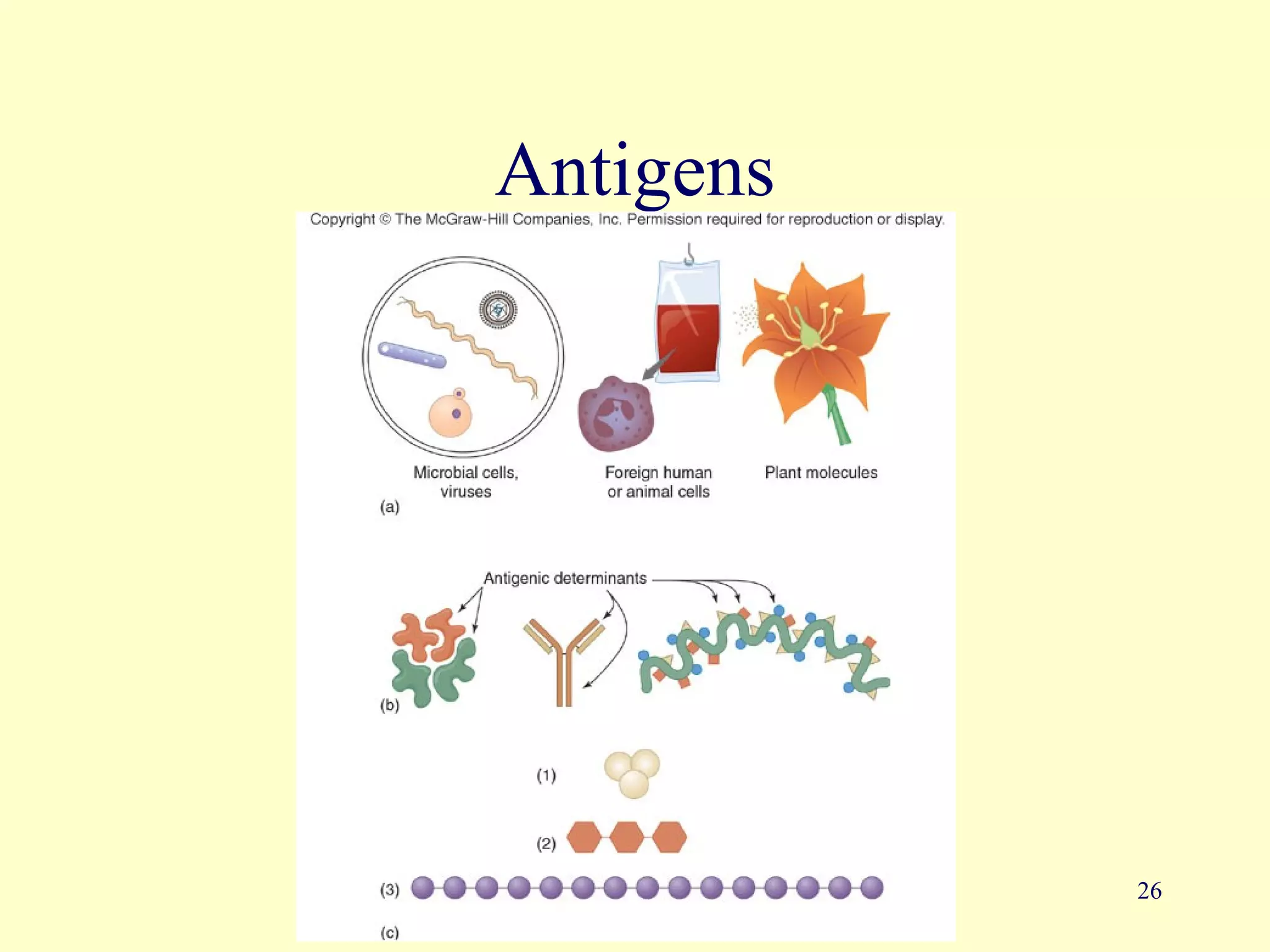
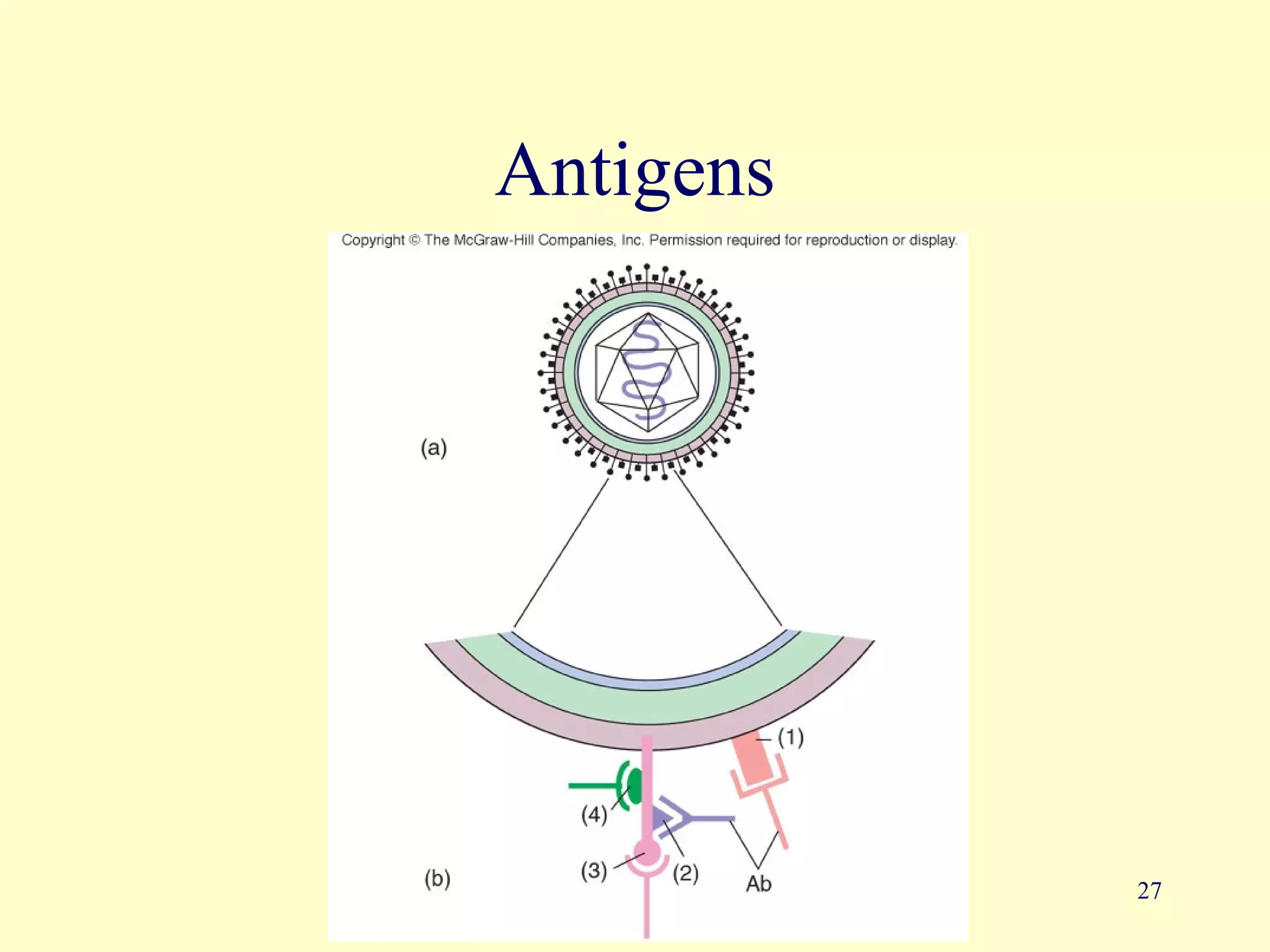
Antigen (Ag)
• substance that provokes an immune response in
  specific lymphocytes
• perceived as foreign, not a normal constituent of the
  body
• Foreign cells & large complex molecules over 10,000
  MW are most antigenic
• Foreign molecules less than 1,000 MW (haptens) are
  not antigenic unless attached to a larger carrier
• Antigenic determinant, epitope – small molecular
  group that is recognized by lymphocytes. An antigen
  has many antigenic determinants.

                                                    25
Antigens


           26
Antigens


           27
Special categories of antigens
• Autoantigens – molecules on self tissues for which
  tolerance is inadequate
• Alloantigens – cell surface markers of one individual
  that are antigens to another of that same species
• Heterophilic antigens – molecules from unrelated
  species that bear similar antigenic determinants
• Superantigens – potent T cell stimulators, provoke an
  overwhelming response
• Allergen – antigen that provokes allergy

                                                    28
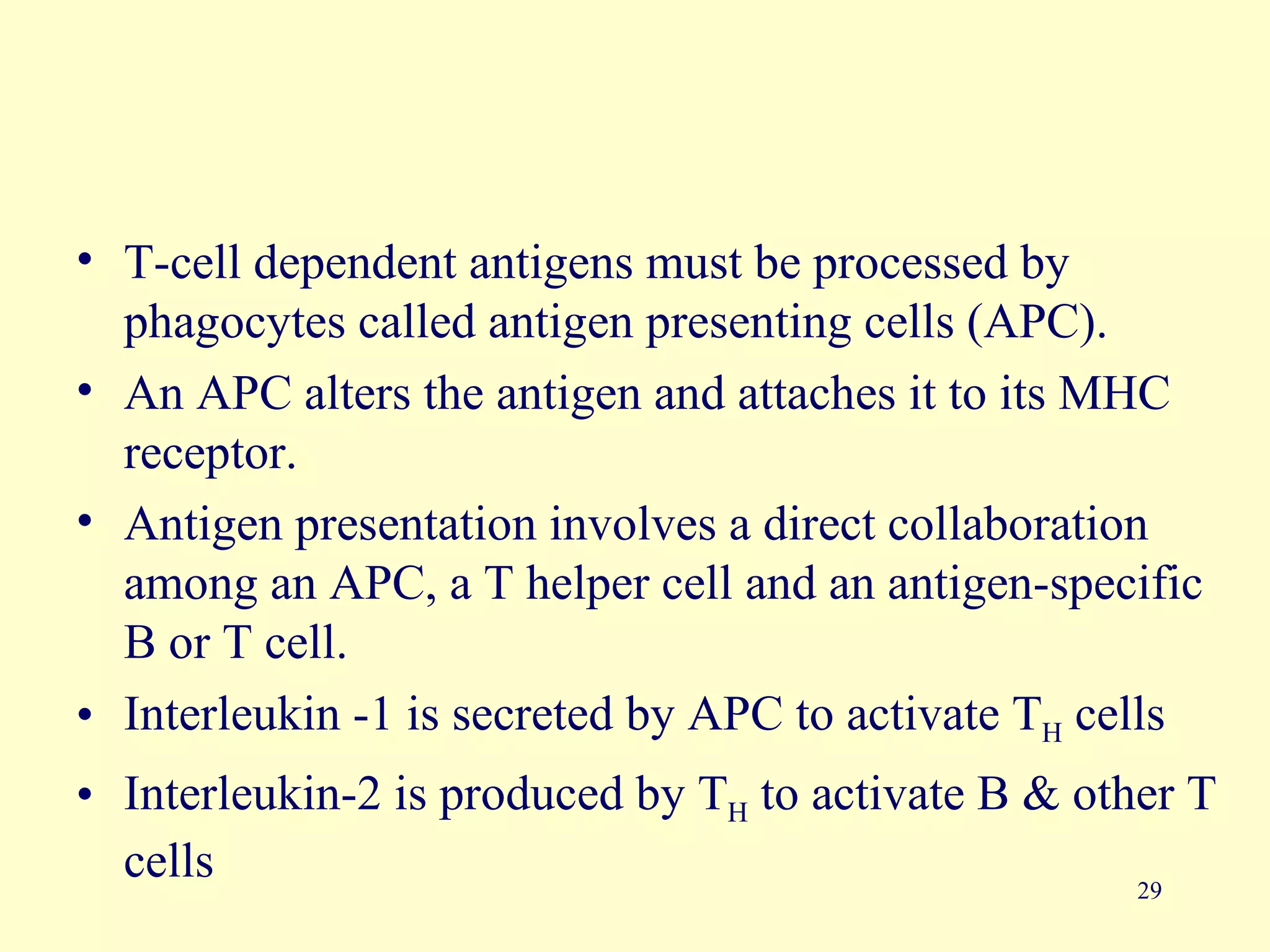
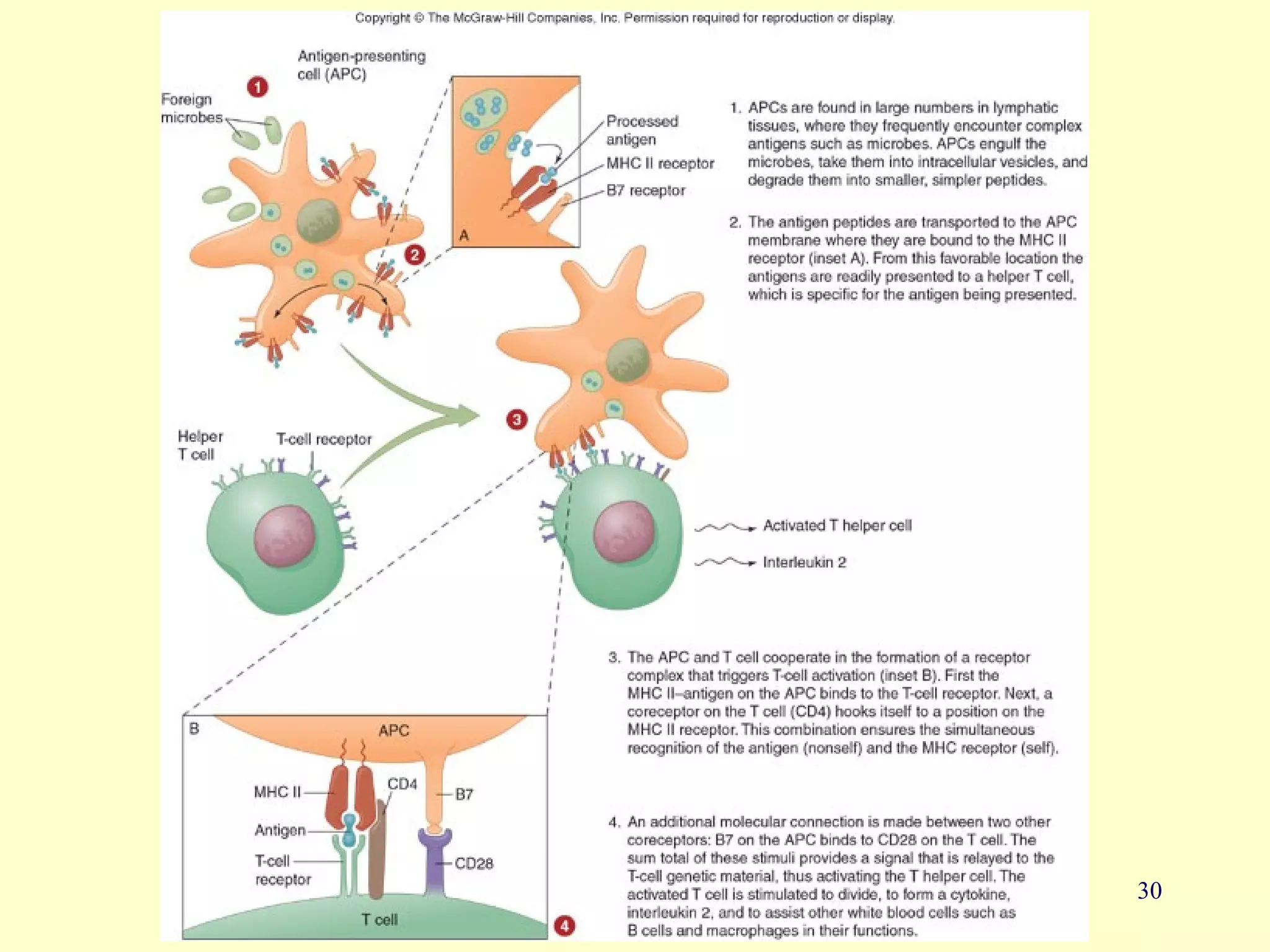
• T-cell dependent antigens must be processed by
  phagocytes called antigen presenting cells (APC).
• An APC alters the antigen and attaches it to its MHC
  receptor.
• Antigen presentation involves a direct collaboration
  among an APC, a T helper cell and an antigen-specific
  B or T cell.
• Interleukin -1 is secreted by APC to activate TH cells
• Interleukin-2 is produced by TH to activate B & other T
  cells                                              29
30
Activation of Lymphocytes and
      Clonal Expansion
B cell activation & antibody
              production
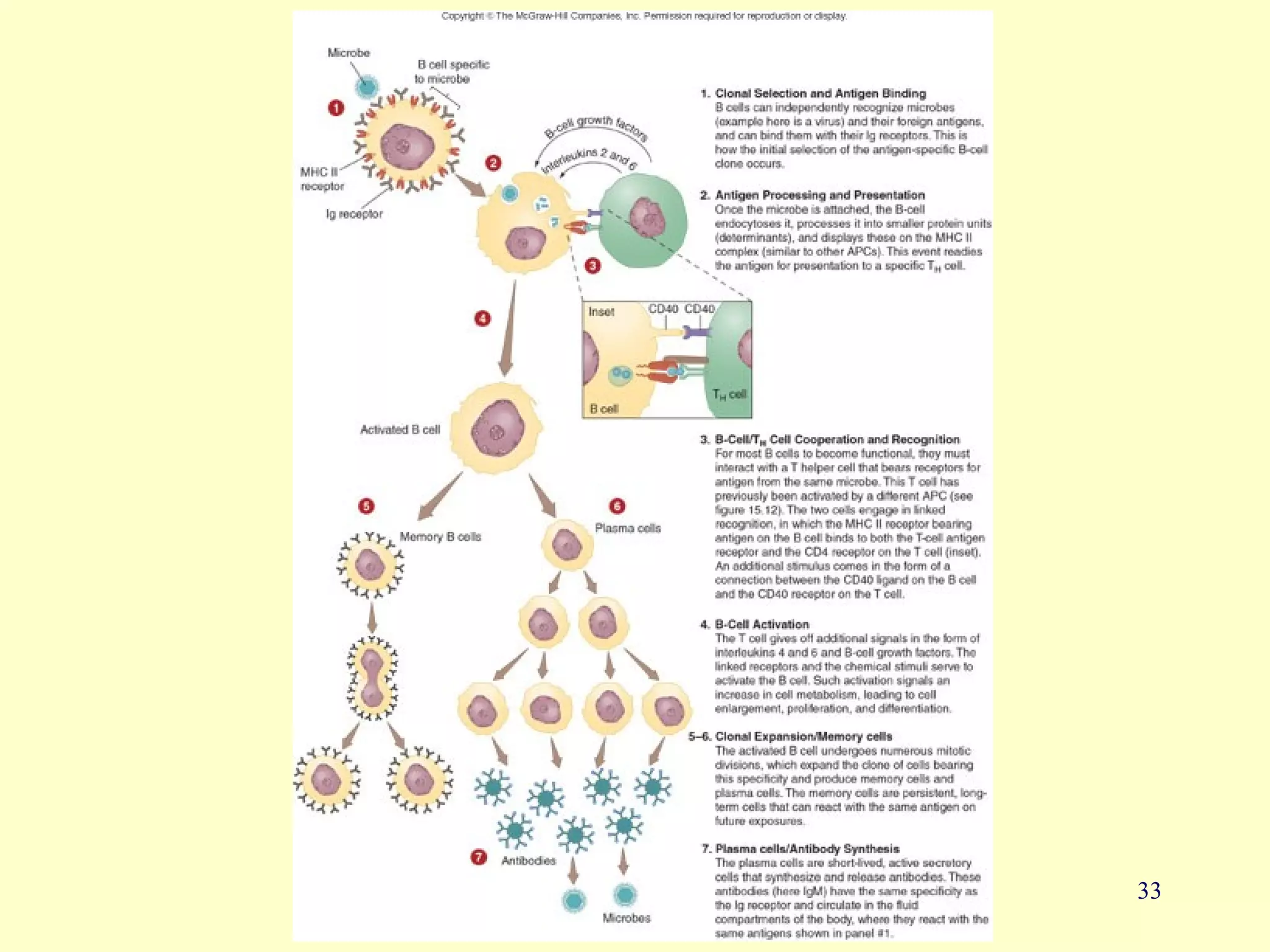
• Once B cells process the Ag, interact with
  TH cells and are stimulated by growth and
  differentiation factors, they enter the cell
  cycle in preparation for mitosis and clonal
  expansion.
• Divisions give rise to plasma cells that
  secrete antibodies and memory cells that
  can react to the same antigen later.
                                                 32
33
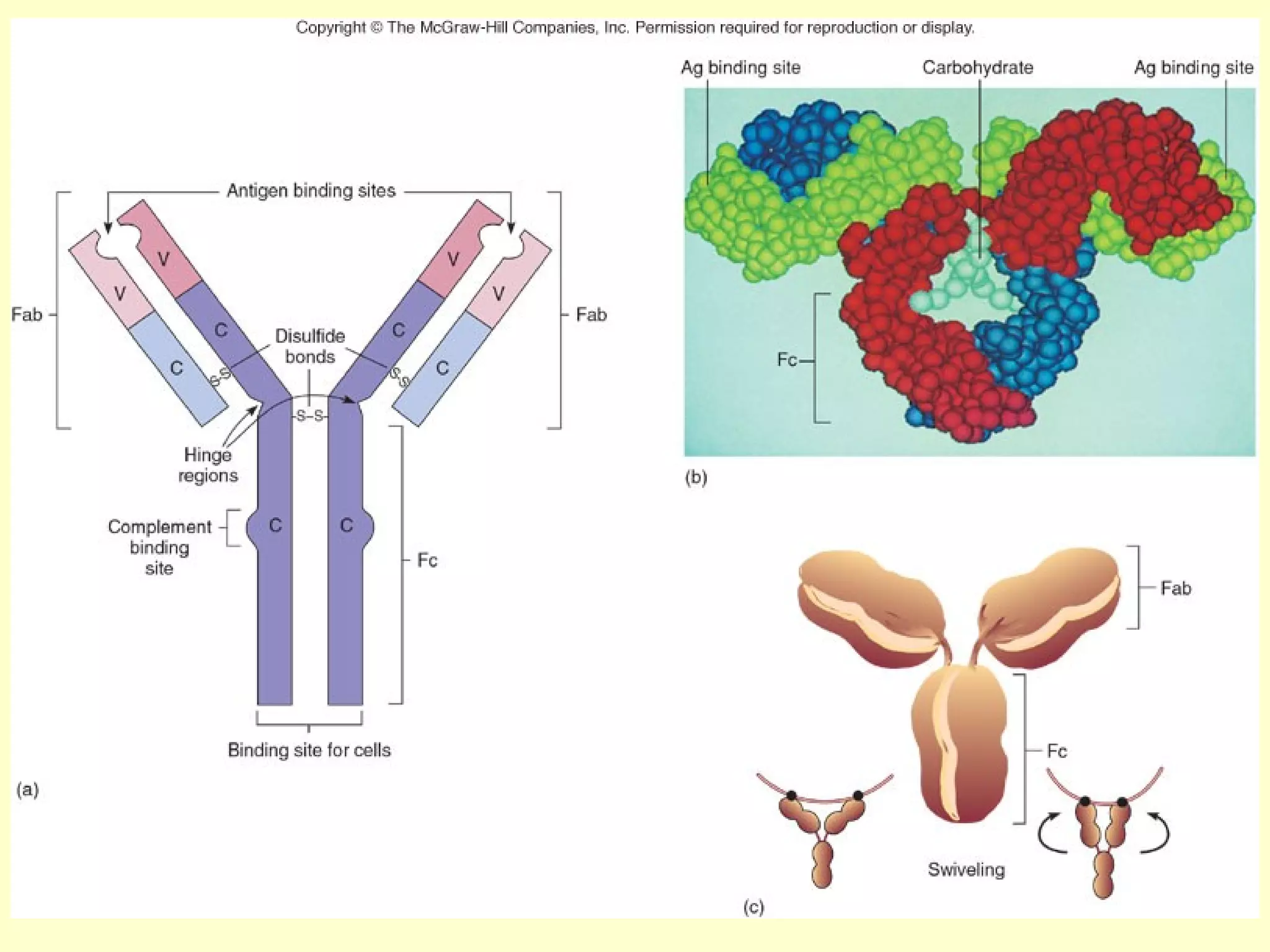
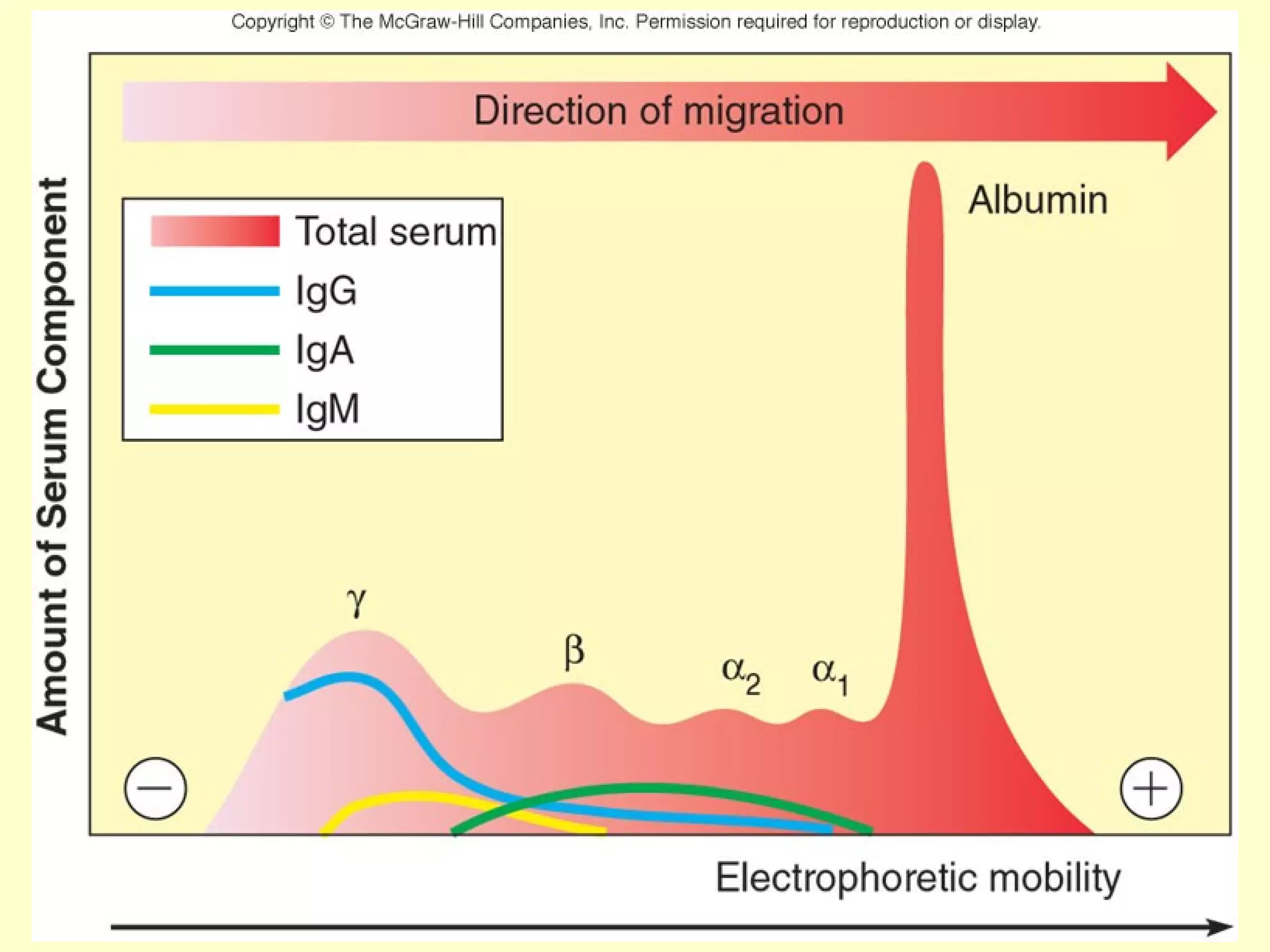
Nature of antibodies
• Immunoglobulins
• A large Y-shaped protein
• Consists of 4 polypeptide chains
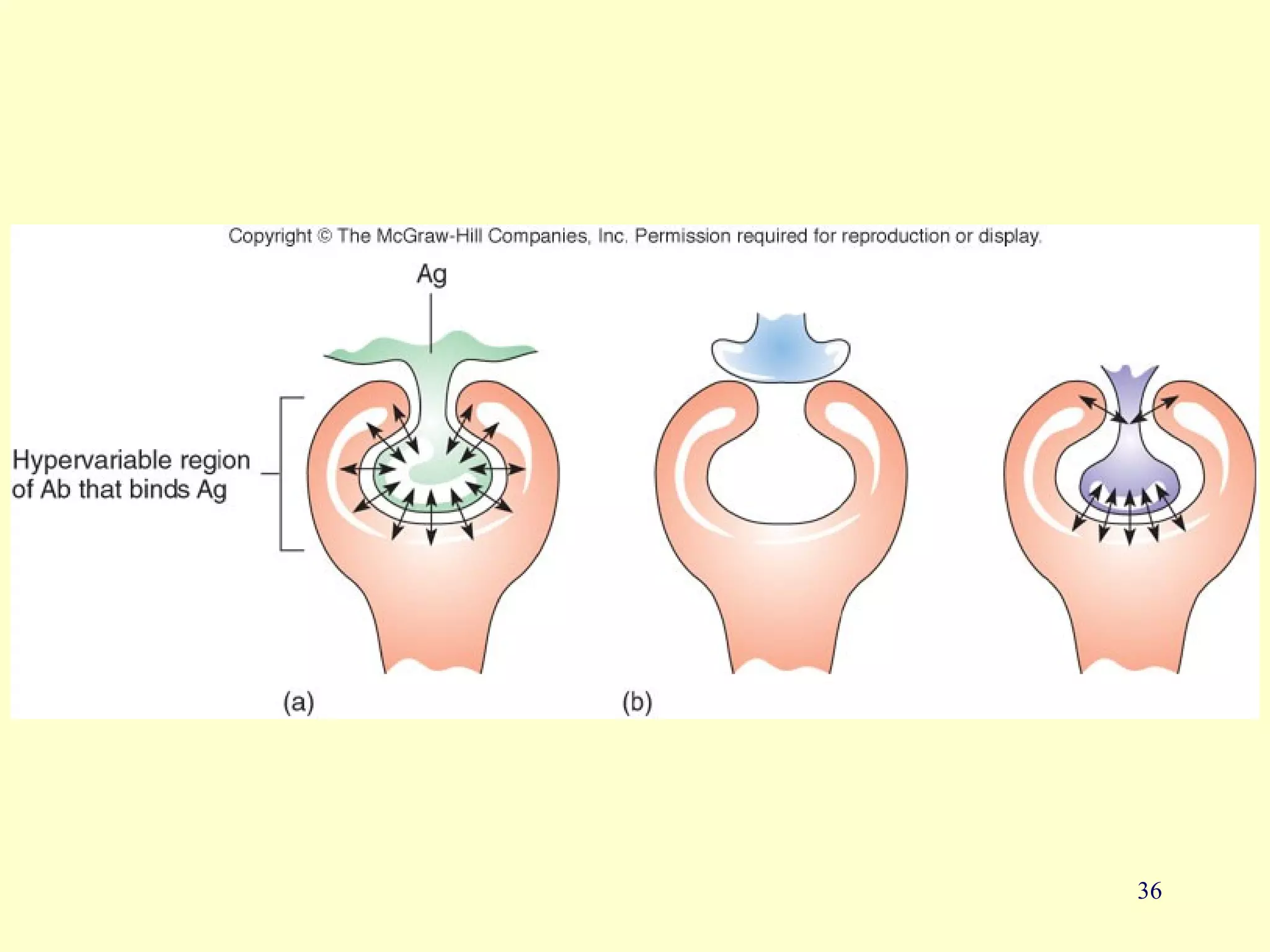
• Contains 2 identical fragments (Fab) with
  ends that bind to specific antigen
• Fc binds to self


                                              34
35
36
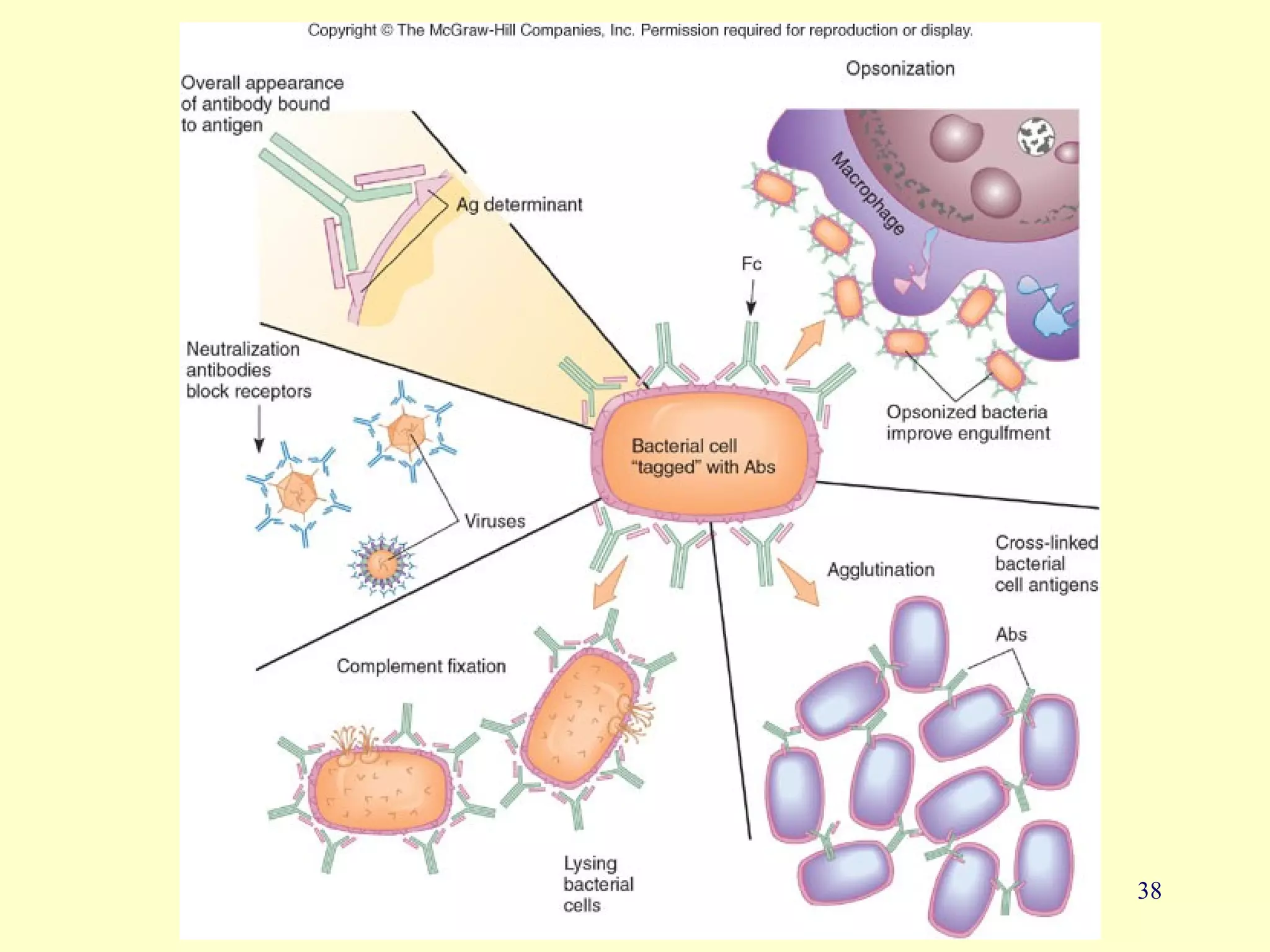
Ag-Ab reactions
•   Opsonization
•   Neutralization
•   Agglutination
•   Complement fixation


                              37
38
39
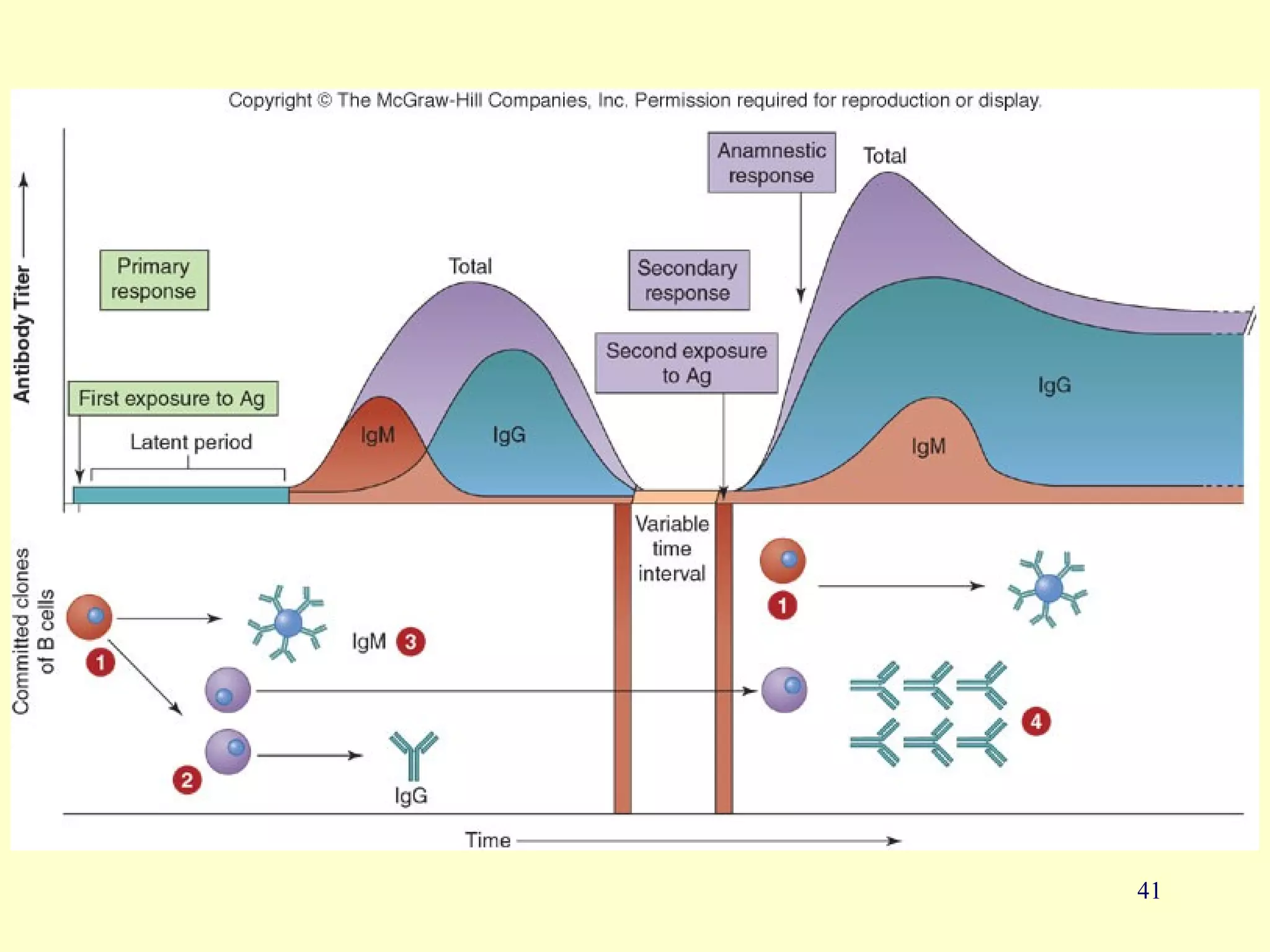
• Primary response – after first exposure to an
  Ag immune system produces IgM and a
  gradual increase in Ab titer
• Secondary response –after second contact
  with the same Ag, immune system produces
  a more rapid, stronger response due to
  memory cells

                                             40
41
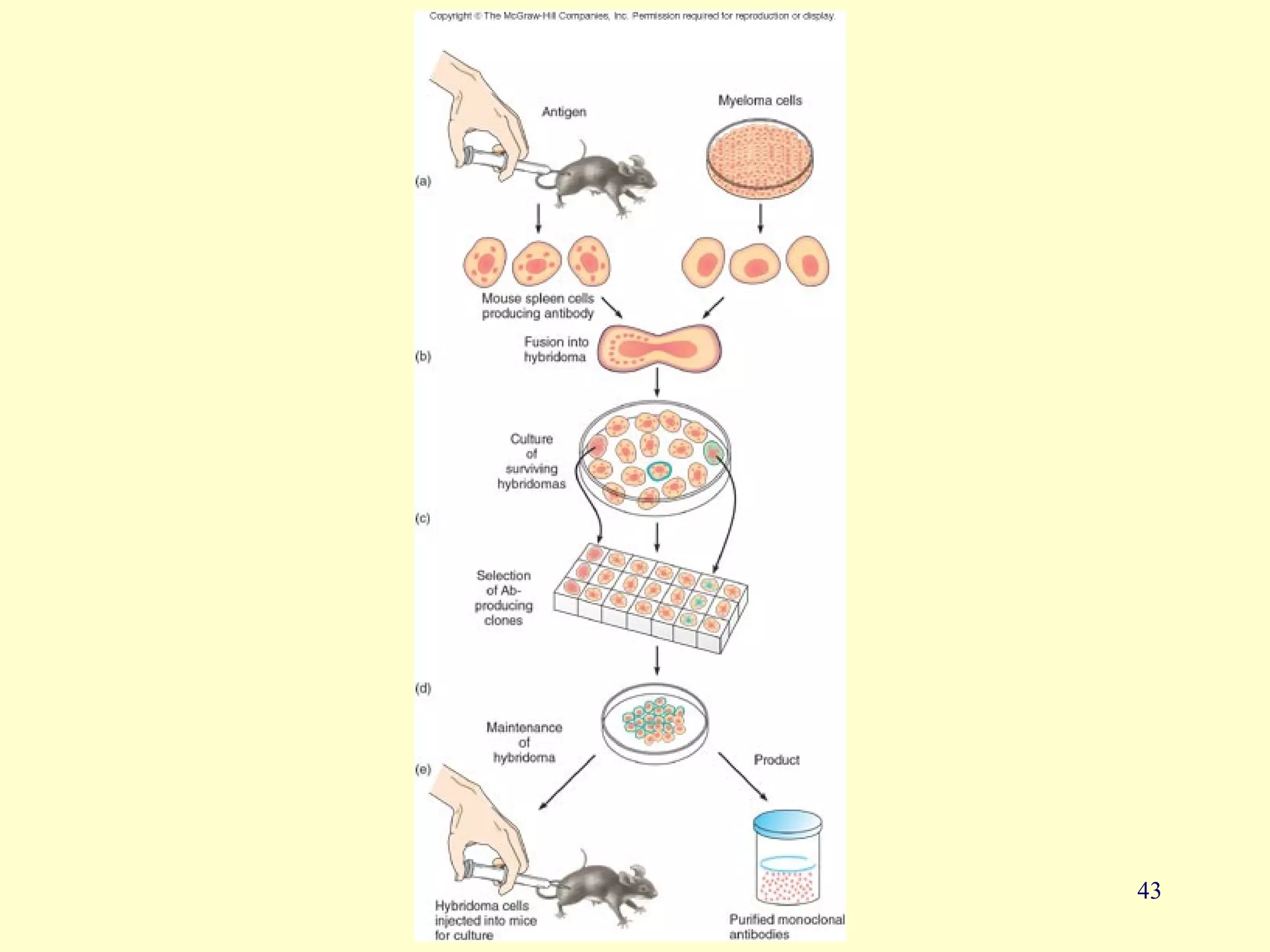
Monoclonal antibodies
• single specificity antibodies formed by
  fusing a mouse B cell with a cancer cell.
• used in diagnosis of disease, identification
  of microbes and therapy


                                                 42
43
T cells & Cell Mediated Immunity

• T cells act directly against Ag and foreign
  cells.
• T cells secrete cytokines that act on other
  cells.
• Sensitized T cells proliferate into long-
  lasting memory T cells.


                                                44
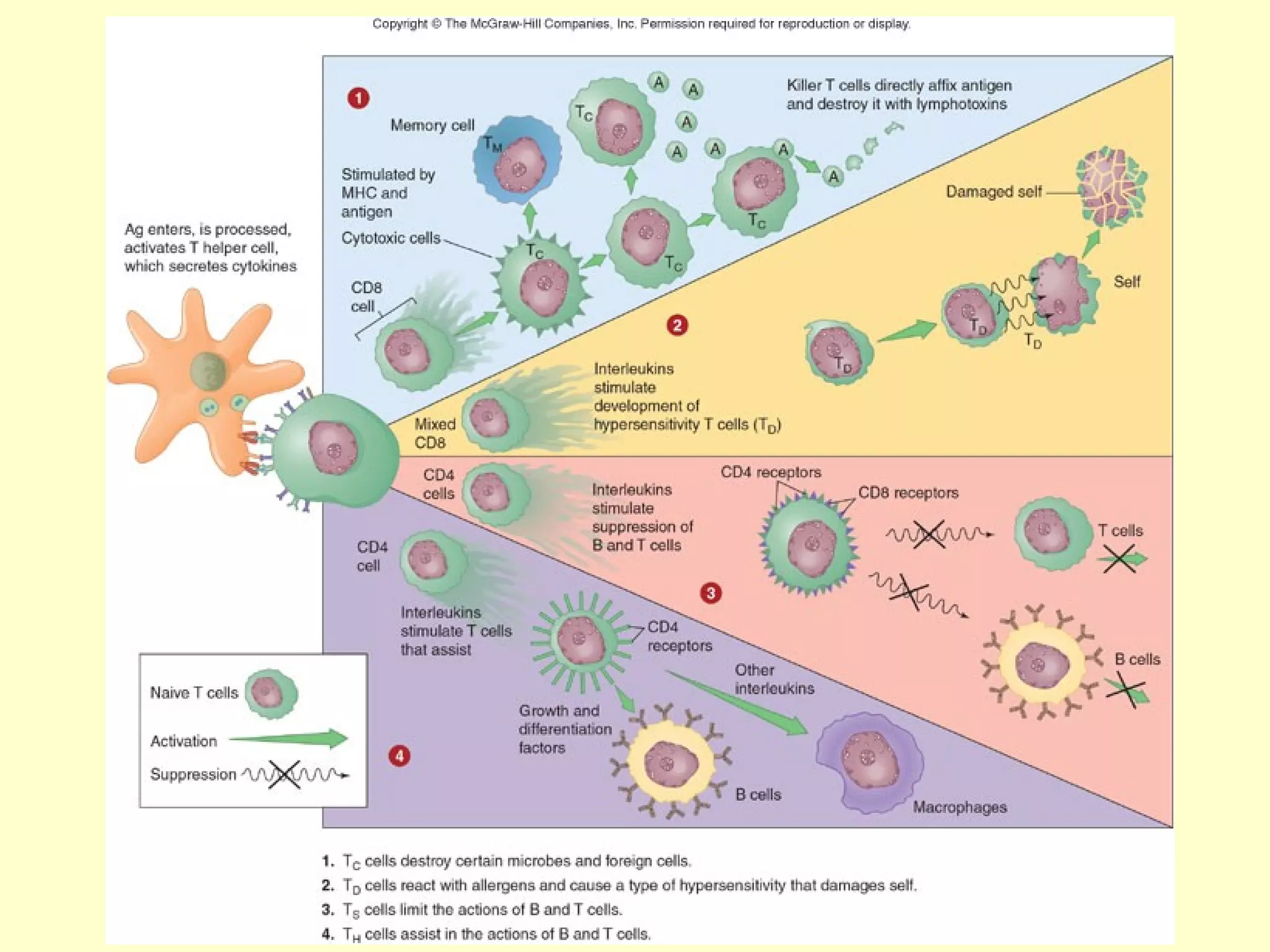
4 types of T cells
•   T helper cells (CD4 or TH) assist other T and B
    cells; conductor of immune response
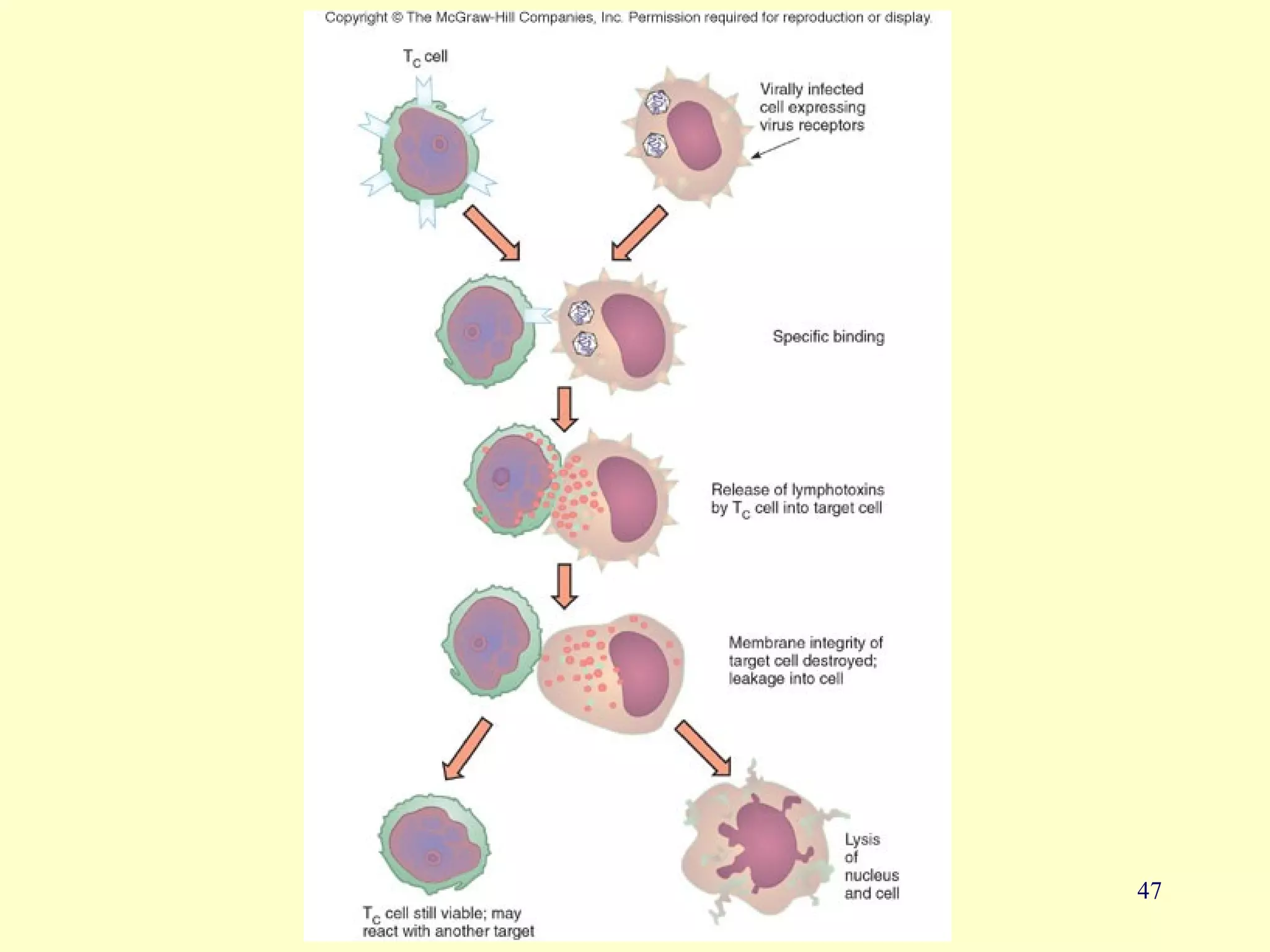
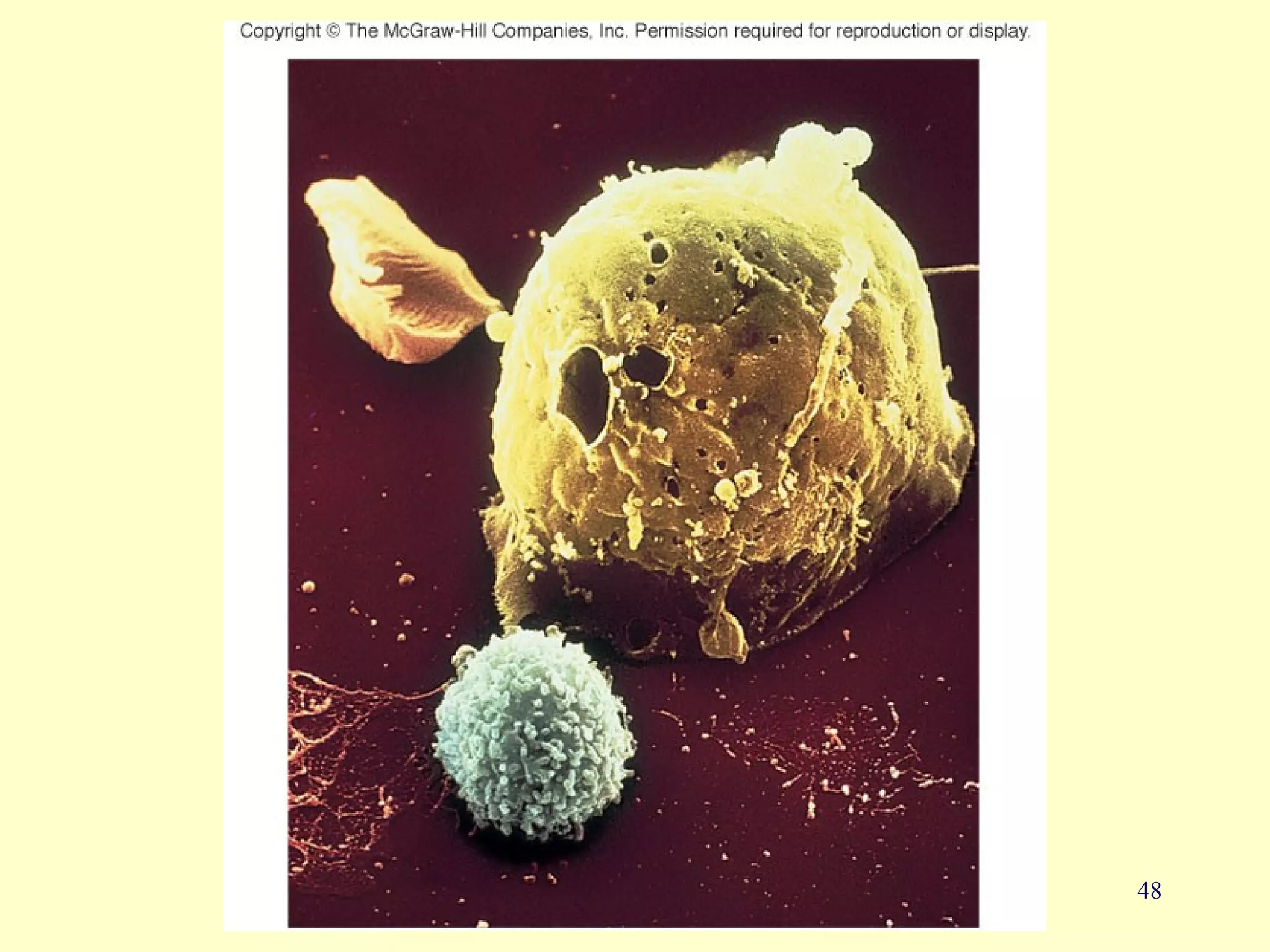
•   Cytotoxic T cells (CD8 or TC) destroy foreign
    or abnormal cells by secreting perforins that lyse
    cells
•   Delayed hypersensitivity cells (TD) responsible
    for allergies occurring several hours or days after
    contact
•   T suppressor cells (TS) limit the actions of other
    T cells and B cells
                                                      45
46
47
48
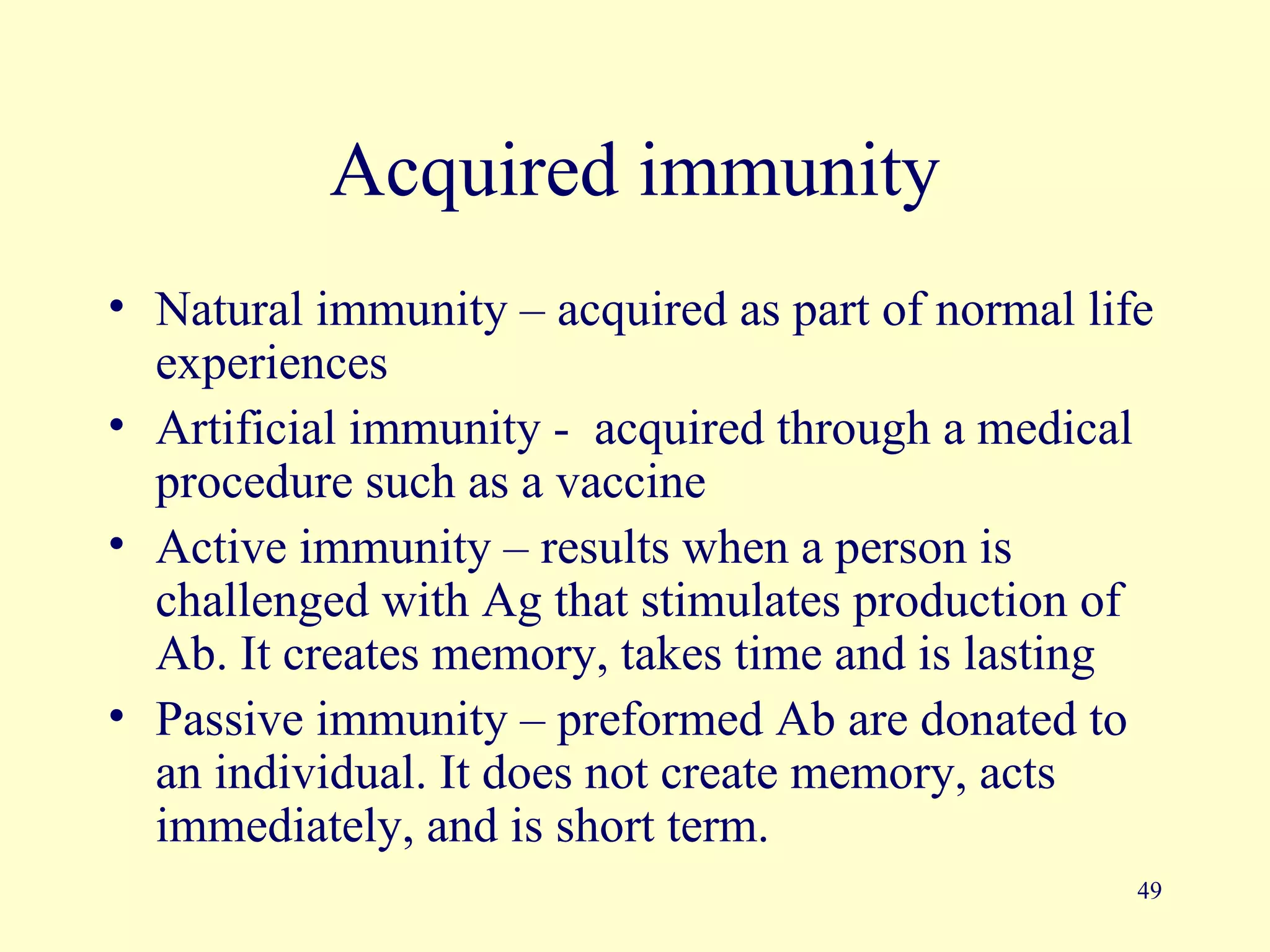
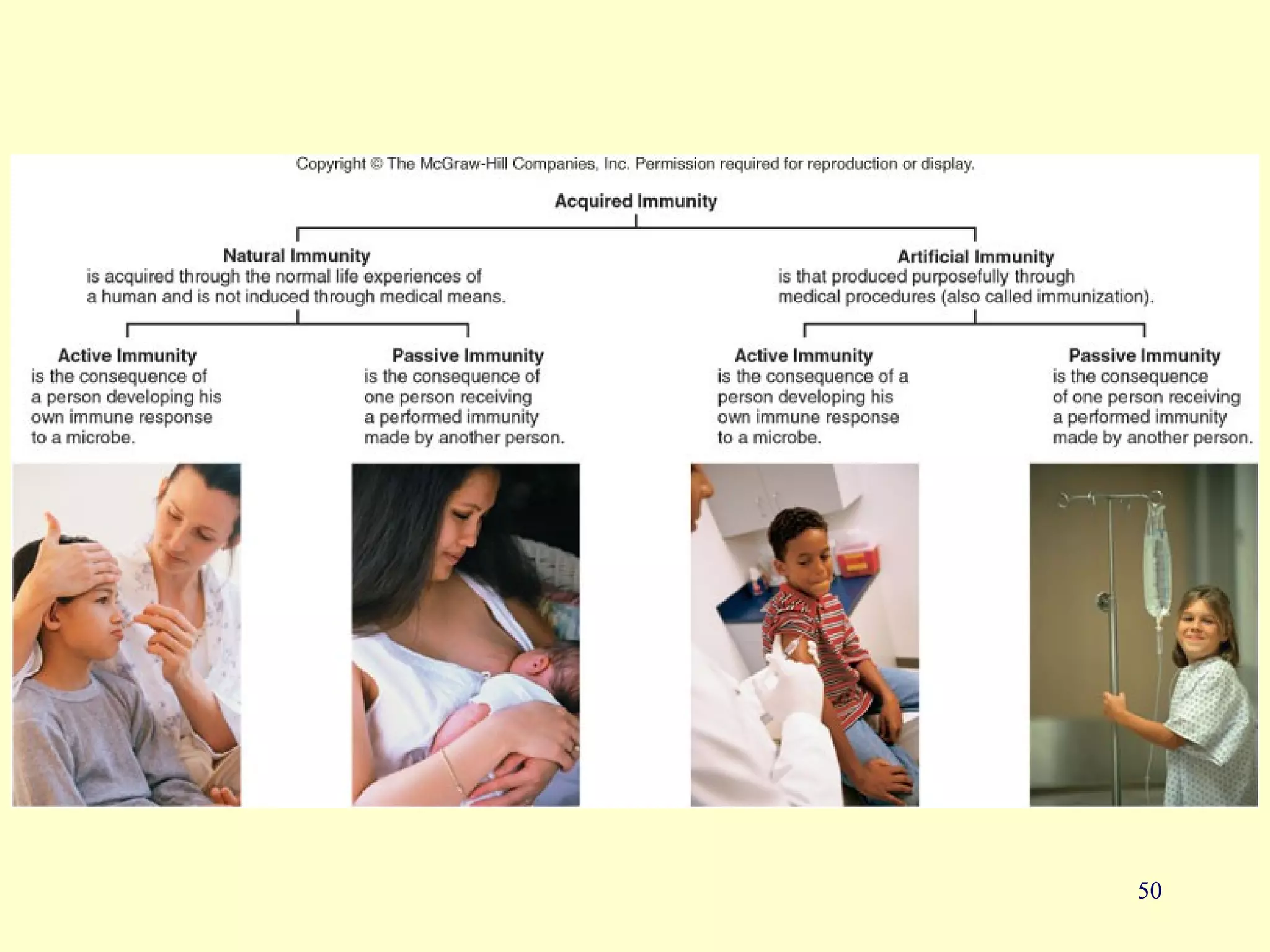
Acquired immunity
• Natural immunity – acquired as part of normal life
  experiences
• Artificial immunity - acquired through a medical
  procedure such as a vaccine
• Active immunity – results when a person is
  challenged with Ag that stimulates production of
  Ab. It creates memory, takes time and is lasting
• Passive immunity – preformed Ab are donated to
  an individual. It does not create memory, acts
  immediately, and is short term.
                                                   49
50
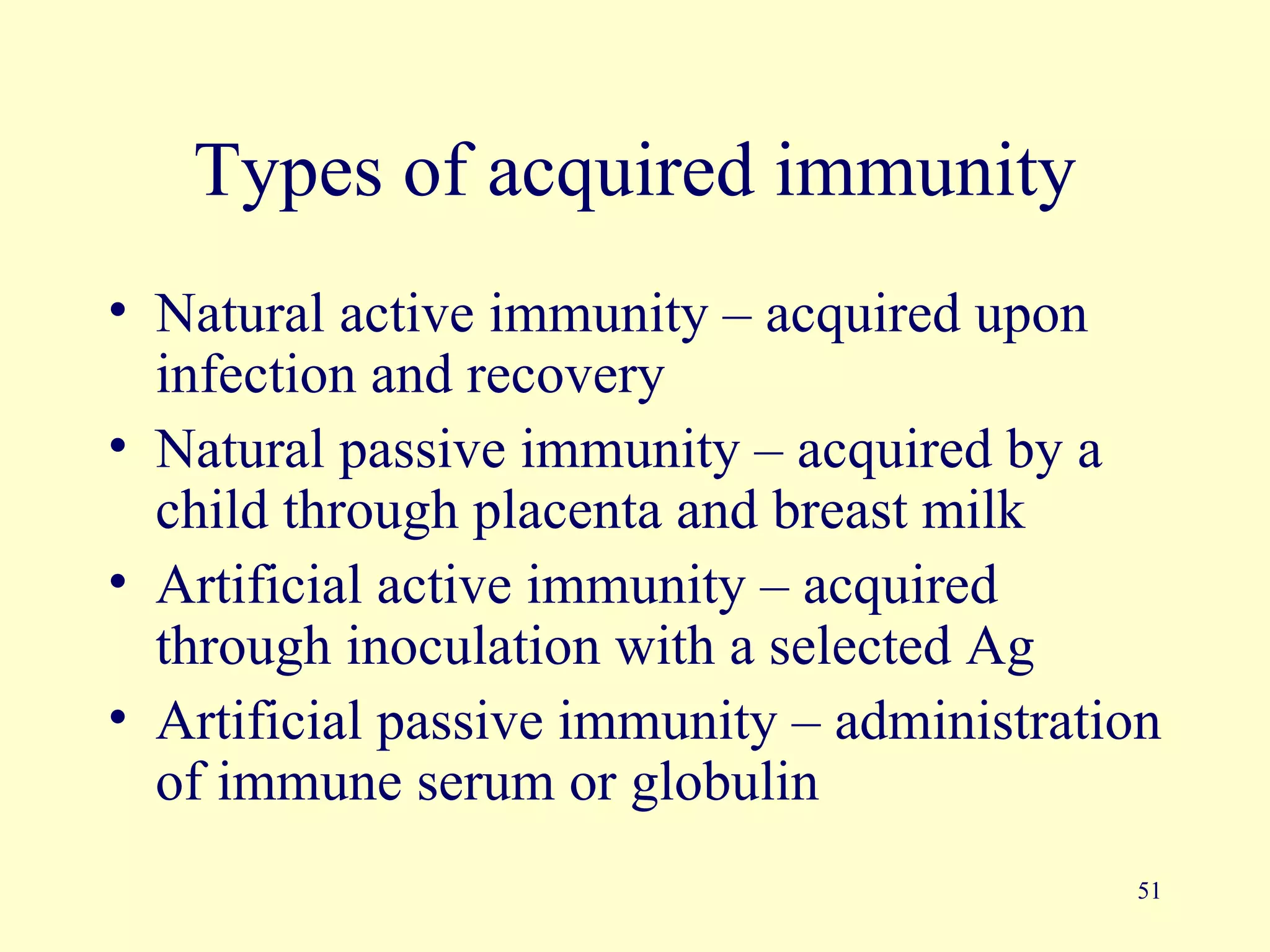
Types of acquired immunity
• Natural active immunity – acquired upon
  infection and recovery
• Natural passive immunity – acquired by a
  child through placenta and breast milk
• Artificial active immunity – acquired
  through inoculation with a selected Ag
• Artificial passive immunity – administration
  of immune serum or globulin
                                            51

Specific immunity and its applications

  • 1.
    PowerPoint to accompany Foundationsin Microbiology Fifth Edition Talaro Chapter 15 Copyright The McGraw-Hill Companies, Inc. Permission required for reproduction or display.
  • 2.
    The Acquisition ofSpecific Immunity and Its Applications Chapter 15 2
  • 3.
    Chapter Overview 1. Developmentof the Dual Lymphocyte System 2. Entrance and Processing of Antigens and Clonal Selection 3. Activation of Lymphocytes and Clonal Expansion 4. Products of B Lymphocytes: Antibody Structure and Functions 5. How T cells Respond to Antigen: Cell-Mediated Immunity 3
  • 4.
    Preliminary concepts • Cell receptors or markers confer specificity and identity • Major functions of receptors are 1. to perceive & attach to nonself or foreign molecules 2. to promote the recognition of self molecules 3. to receive & transmit chemical messages among other cells of the system 4. to aid in cellular development. 4
  • 5.
    How are receptorsformed? • As a cell matures, certain genes that encode cell receptors are transcribed & translated into protein products with a distinctive shape, specificity and function. • Receptor is modified & packaged by the endoplasmic reticulum & Golgi complex. • It is ultimately inserted into the cell membrane, accessible to antigens, other cells, and chemical mediators. 5
  • 6.
  • 7.
    Major Histocompatibility Complex(MHC) • Receptors found on all cells except RBCs • Also known as human leukocyte antigen (HLA) • Plays a role in recognition of self by the immune system and in rejection of foreign tissue • Genes for MHC are located on chromosome 6, clustered in a multigene complex of classes I, II, III 7
  • 8.
  • 9.
    Functions of MHC •Class I – markers that display unique characteristics of self molecules & regulation of immune reactions – Required for T lymphocytes • Class II – receptors that recognize & react with foreign antigens. Located primarily on macrophages & B cells – Involved in presenting antigen to T cells • Class III – secreted complement components, C2 and C4 9
  • 10.
    Clonal selection theory •Lymphocytes use 500 genes to produce a tremendous variety of specific receptors • Undifferentiated lymphocytes undergo genetic mutations & recombinations while they proliferate in the embryo forming a billion different clones with the ability to react with a tremendous variety of antigens. 10
  • 11.
    • Lymphocyte specificityis preprogrammed, existing in the genetic makeup before an antigen has ever entered the system. • Each genetically different type of lymphocyte expresses a single specificity. • First introduction of each type of antigen into the immune system selects a genetically distinct lymphocyte and causes it to expand into a clone of cells that can react to that antigen. 11
  • 12.
  • 13.
    Specific B cellreceptor: Immunoglobulin • Large glycoproteins that serve as specific receptors of B cells • Composed of 4 polypeptide chains – 2 identical heavy chains – 2 identical light chains • Y shaped • Variable regions • Constant regions 13
  • 14.
  • 15.
    Immunoglobulins • Immunoglobulin geneslie on 3 different chromosomes • Undifferentiated lymphocyte has 150 different genes for the variable region of light chains & 250 for the variable region and diversity region of the heavy chain • During development, recombination causes only the selected V and D genes to be active in the mature cell. 15
  • 16.
  • 17.
    B cell receptors •Once synthesized, immunoglobulin is transported to cell membrane & inserted there to act as a receptor • First receptor on most B cells is a small form of IgM & mature B cells carry IgD receptors 17
  • 18.
    T cell receptors •Formed by genetic recombination, having variable and constant regions • 2 parallel polypeptide chains • Small, without humoral functions 18
  • 19.
  • 20.
    Development of theDual Lymphocyte System • Starting in the embryonic & fetal stages, stem cells in the yolk sac, liver, and bone marrow release immature lymphocytes into the circulation • These undifferentiated cells must mature to be able to react to antigen • Maturation occurs differently for B and T cells 20
  • 21.
  • 22.
    B cell maturation •Directed by bone marrow sites that harbor stromal cells, which nurture the lymphocyte stem cells & provide hormonal signals • Millions of distinct B cells develop & home to specific sites in the lymph nodes, spleen, and GALT where they come into contact with antigens throughout life 22
  • 23.
    T cell maturation •Maturation is directed by the thymus gland and its hormones • 7 classes of T-cell receptors termed CD cluster • Mature T cells migrate to lymphoid organs and occupy specific sites 23
  • 24.
    Entrance and Processingof Antigens and Clonal Selection
  • 25.
    Antigen (Ag) • substancethat provokes an immune response in specific lymphocytes • perceived as foreign, not a normal constituent of the body • Foreign cells & large complex molecules over 10,000 MW are most antigenic • Foreign molecules less than 1,000 MW (haptens) are not antigenic unless attached to a larger carrier • Antigenic determinant, epitope – small molecular group that is recognized by lymphocytes. An antigen has many antigenic determinants. 25
  • 26.
  • 27.
  • 28.
    Special categories ofantigens • Autoantigens – molecules on self tissues for which tolerance is inadequate • Alloantigens – cell surface markers of one individual that are antigens to another of that same species • Heterophilic antigens – molecules from unrelated species that bear similar antigenic determinants • Superantigens – potent T cell stimulators, provoke an overwhelming response • Allergen – antigen that provokes allergy 28
  • 29.
    • T-cell dependentantigens must be processed by phagocytes called antigen presenting cells (APC). • An APC alters the antigen and attaches it to its MHC receptor. • Antigen presentation involves a direct collaboration among an APC, a T helper cell and an antigen-specific B or T cell. • Interleukin -1 is secreted by APC to activate TH cells • Interleukin-2 is produced by TH to activate B & other T cells 29
  • 30.
  • 31.
    Activation of Lymphocytesand Clonal Expansion
  • 32.
    B cell activation& antibody production • Once B cells process the Ag, interact with TH cells and are stimulated by growth and differentiation factors, they enter the cell cycle in preparation for mitosis and clonal expansion. • Divisions give rise to plasma cells that secrete antibodies and memory cells that can react to the same antigen later. 32
  • 33.
  • 34.
    Nature of antibodies •Immunoglobulins • A large Y-shaped protein • Consists of 4 polypeptide chains • Contains 2 identical fragments (Fab) with ends that bind to specific antigen • Fc binds to self 34
  • 35.
  • 36.
  • 37.
    Ag-Ab reactions • Opsonization • Neutralization • Agglutination • Complement fixation 37
  • 38.
  • 39.
  • 40.
    • Primary response– after first exposure to an Ag immune system produces IgM and a gradual increase in Ab titer • Secondary response –after second contact with the same Ag, immune system produces a more rapid, stronger response due to memory cells 40
  • 41.
  • 42.
    Monoclonal antibodies • singlespecificity antibodies formed by fusing a mouse B cell with a cancer cell. • used in diagnosis of disease, identification of microbes and therapy 42
  • 43.
  • 44.
    T cells &Cell Mediated Immunity • T cells act directly against Ag and foreign cells. • T cells secrete cytokines that act on other cells. • Sensitized T cells proliferate into long- lasting memory T cells. 44
  • 45.
    4 types ofT cells • T helper cells (CD4 or TH) assist other T and B cells; conductor of immune response • Cytotoxic T cells (CD8 or TC) destroy foreign or abnormal cells by secreting perforins that lyse cells • Delayed hypersensitivity cells (TD) responsible for allergies occurring several hours or days after contact • T suppressor cells (TS) limit the actions of other T cells and B cells 45
  • 46.
  • 47.
  • 48.
  • 49.
    Acquired immunity • Naturalimmunity – acquired as part of normal life experiences • Artificial immunity - acquired through a medical procedure such as a vaccine • Active immunity – results when a person is challenged with Ag that stimulates production of Ab. It creates memory, takes time and is lasting • Passive immunity – preformed Ab are donated to an individual. It does not create memory, acts immediately, and is short term. 49
  • 50.
  • 51.
    Types of acquiredimmunity • Natural active immunity – acquired upon infection and recovery • Natural passive immunity – acquired by a child through placenta and breast milk • Artificial active immunity – acquired through inoculation with a selected Ag • Artificial passive immunity – administration of immune serum or globulin 51