Notes: Solutions CW: There’s more than one Solution H: Working with Solutions
November 14, 2008 Solutions
Objectives Define solution, solubility, insoluble, solute and solvent Name the universal solvent Distinguish between an aqueous solution and a tincture Identify the factors that affect rates ofsolubility
Solution A mixture that appears to be a single substance but is made up of 2 or more substances that are evenly distributed throughout the mixture
Homogeneous Best mixed of the mixtures Particles are dissolved
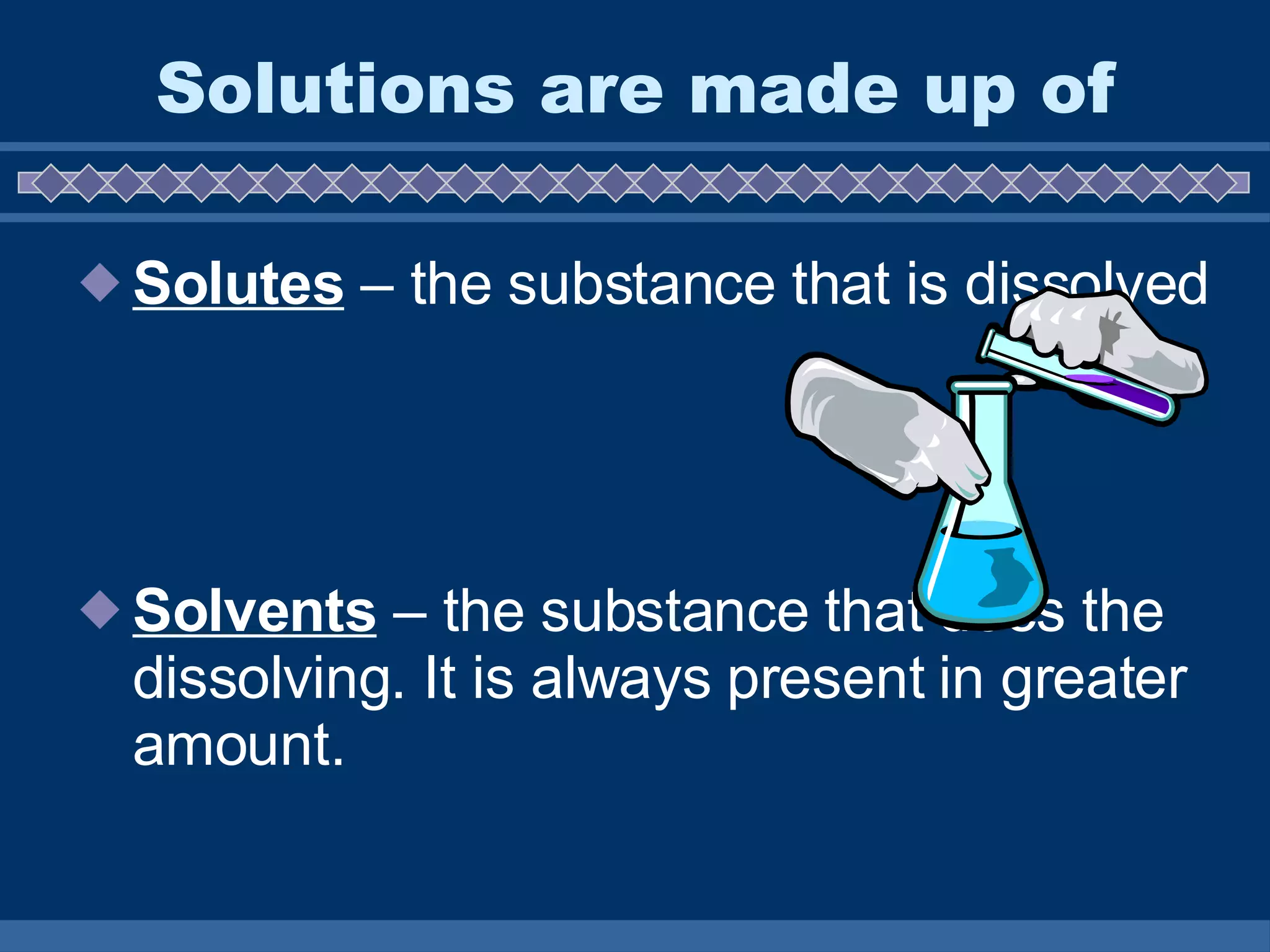
Solutions are made up of Solutes  – the substance that is dissolved Solvents  – the substance that does the dissolving. It is always present in greater amount.
Can be more than 2 substances Soda – carbon dioxide gas, sugar, flavorings, food coloring are dissolved in water. Usually solutions are substances dissolved in a liquid but solutions may also be gasses and solids.
How Does a Solution Form? Solvent molecules attracted to surface ions. Each ion is surrounded by solvent molecules.
Solubility  – the physical property of being able to dissolve Insoluble  – a substance that can not be dissolved
Water is the universal solvent. Most things will dissolve in water. It is called an  aqueous solution . Sometimes the solvent is alcohol. In this case it is called a  tincture .
Solution rates vary Temperature Surface area Movement Pressure
Temperature The solubility of  solid  solutes in liquid solvents increases with increasing temperature.
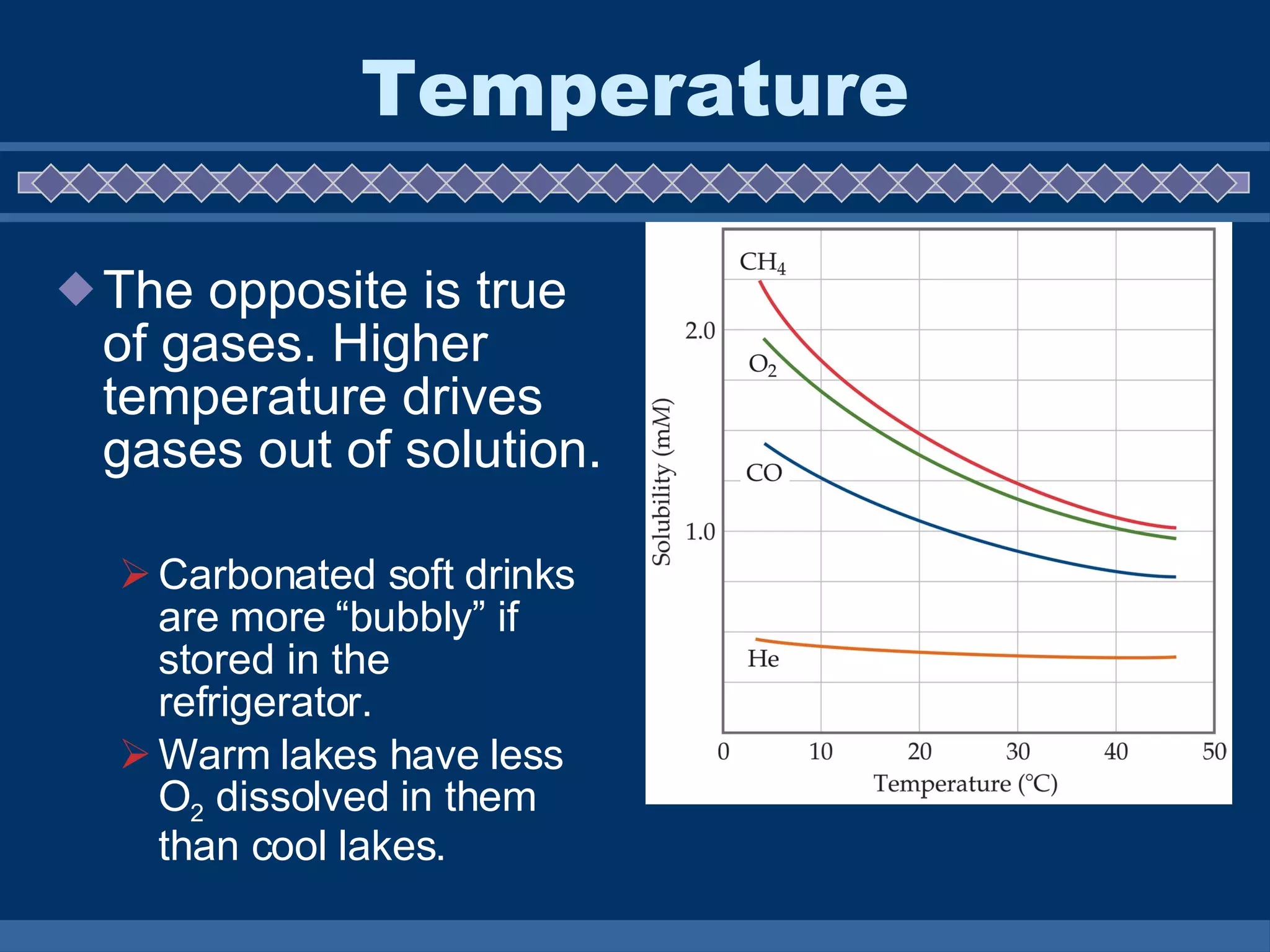
Temperature The opposite is true of gases. Higher temperature drives gases out of solution. Carbonated soft drinks are more “bubbly” if stored in the refrigerator. Warm lakes have less O 2  dissolved in them than cool lakes.
Surface area The larger the surface area of a solid, the faster the rate of dissolving. The surface area of an object increases when it is broken down into smaller pieces.
Movement When a substance dissolves, it fills the available spaces between the closest water molecules. Stirring increases the rate the empty spaces can be filled.
Pressure The solubility of  liquids  and  solids  does not change with pressure. Increased pressure increases the solubility of gases.

Solutions2008

  • 1.
    Notes: Solutions CW:There’s more than one Solution H: Working with Solutions
  • 2.
  • 3.
    Objectives Define solution,solubility, insoluble, solute and solvent Name the universal solvent Distinguish between an aqueous solution and a tincture Identify the factors that affect rates ofsolubility
  • 4.
    Solution A mixturethat appears to be a single substance but is made up of 2 or more substances that are evenly distributed throughout the mixture
  • 5.
    Homogeneous Best mixedof the mixtures Particles are dissolved
  • 6.
    Solutions are madeup of Solutes – the substance that is dissolved Solvents – the substance that does the dissolving. It is always present in greater amount.
  • 7.
    Can be morethan 2 substances Soda – carbon dioxide gas, sugar, flavorings, food coloring are dissolved in water. Usually solutions are substances dissolved in a liquid but solutions may also be gasses and solids.
  • 8.
    How Does aSolution Form? Solvent molecules attracted to surface ions. Each ion is surrounded by solvent molecules.
  • 9.
    Solubility –the physical property of being able to dissolve Insoluble – a substance that can not be dissolved
  • 10.
    Water is theuniversal solvent. Most things will dissolve in water. It is called an aqueous solution . Sometimes the solvent is alcohol. In this case it is called a tincture .
  • 11.
    Solution rates varyTemperature Surface area Movement Pressure
  • 12.
    Temperature The solubilityof solid solutes in liquid solvents increases with increasing temperature.
  • 13.
    Temperature The oppositeis true of gases. Higher temperature drives gases out of solution. Carbonated soft drinks are more “bubbly” if stored in the refrigerator. Warm lakes have less O 2 dissolved in them than cool lakes.
  • 14.
    Surface area Thelarger the surface area of a solid, the faster the rate of dissolving. The surface area of an object increases when it is broken down into smaller pieces.
  • 15.
    Movement When asubstance dissolves, it fills the available spaces between the closest water molecules. Stirring increases the rate the empty spaces can be filled.
  • 16.
    Pressure The solubilityof liquids and solids does not change with pressure. Increased pressure increases the solubility of gases.