Concentration
Concentration
Remember a solution is made when one substance
dissolves into another
Solute: the substance that dissolves
Solvent: the substances that does the dissolving
example: crystal light (solute) dissolving in water (solvent).
Concentration: is the amount of solute dissolved in a specific
amount of solvent
example: 50g of solute dissolved in 100mL of water. This is
read as 50g per 100mL of solution.
Concentration
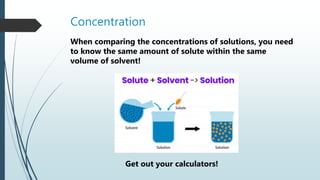
When comparing the concentrations of solutions, you need
to know the same amount of solute within the same
volume of solvent!
Get out your calculators!
Concentration
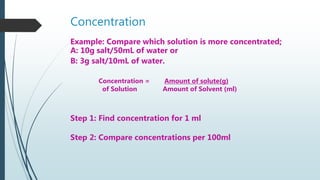
Example: Compare which solution is more concentrated;
A: 10g salt/50mL of water or
B: 3g salt/10mL of water.
Concentration = Amount of solute(g)
of Solution Amount of Solvent (ml)
Step 1: Find concentration for 1 ml
Step 2: Compare concentrations per 100ml
Concentration
Example: Compare which solution is more concentrated;
A: 10g salt/50mL of water or
B: 3g salt/10mL of water.
Concentration = Amount of solute(g)
of Solution Amount of Solvent (ml)
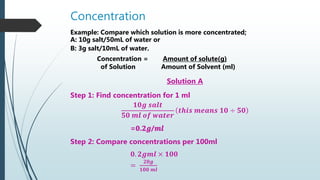
Solution A
Step 1: Find concentration for 1 ml
𝟏𝟎𝒈 𝒔𝒂𝒍𝒕
𝟓𝟎 𝒎𝒍 𝒐𝒇 𝒘𝒂𝒕𝒆𝒓
𝒕𝒉𝒊𝒔 𝒎𝒆𝒂𝒏𝒔 𝟏𝟎 ÷ 𝟓𝟎
=𝟎.𝟐𝒈/𝒎𝒍
Step 2: Compare concentrations per 100ml
𝟎. 𝟐𝒈𝒎𝒍 × 𝟏𝟎𝟎
=
𝟐𝟎𝒈
𝟏𝟎𝟎 𝒎𝒍
Concentration
Example: Compare which solution is more concentrated;
A: 10g salt/50mL of water or
B: 3g salt/10mL of water.
Concentration = Amount of solute(g)
of Solution Amount of Solvent (ml)
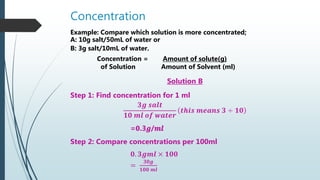
Solution B
Step 1: Find concentration for 1 ml
𝟑𝒈 𝒔𝒂𝒍𝒕
𝟏𝟎 𝒎𝒍 𝒐𝒇 𝒘𝒂𝒕𝒆𝒓
𝒕𝒉𝒊𝒔 𝒎𝒆𝒂𝒏𝒔 𝟑 ÷ 𝟏𝟎
=𝟎.3𝒈/𝒎𝒍
Step 2: Compare concentrations per 100ml
𝟎. 𝟑𝒈𝒎𝒍 × 𝟏𝟎𝟎
=
𝟑𝟎𝒈
𝟏𝟎𝟎 𝒎𝒍
Concentration
Example: Compare which solution is more concentrated;
A: 10g salt/50mL of water or
B: 3g salt/10mL of water.
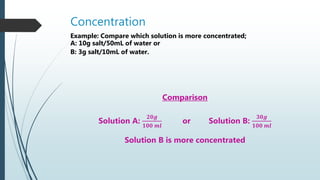
Comparison
Solution A:
𝟐𝟎𝒈
𝟏𝟎𝟎 𝒎𝒍
or Solution B:
𝟑𝟎𝒈
𝟏𝟎𝟎 𝒎𝒍
Solution B is more concentrated
Concentration
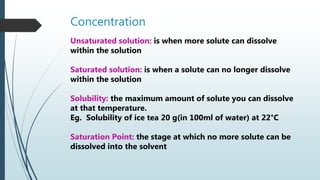
Unsaturated solution: is when more solute can dissolve
within the solution
Saturated solution: is when a solute can no longer dissolve
within the solution
Solubility: the maximum amount of solute you can dissolve
at that temperature.
Eg. Solubility of ice tea 20 g(in 100ml of water) at 22°C
Saturation Point: the stage at which no more solute can be
dissolved into the solvent

Concentration

  • 1.
  • 2.
    Concentration Remember a solutionis made when one substance dissolves into another Solute: the substance that dissolves Solvent: the substances that does the dissolving example: crystal light (solute) dissolving in water (solvent). Concentration: is the amount of solute dissolved in a specific amount of solvent example: 50g of solute dissolved in 100mL of water. This is read as 50g per 100mL of solution.
  • 3.
    Concentration When comparing theconcentrations of solutions, you need to know the same amount of solute within the same volume of solvent! Get out your calculators!
  • 4.
    Concentration Example: Compare whichsolution is more concentrated; A: 10g salt/50mL of water or B: 3g salt/10mL of water. Concentration = Amount of solute(g) of Solution Amount of Solvent (ml) Step 1: Find concentration for 1 ml Step 2: Compare concentrations per 100ml
  • 5.
    Concentration Example: Compare whichsolution is more concentrated; A: 10g salt/50mL of water or B: 3g salt/10mL of water. Concentration = Amount of solute(g) of Solution Amount of Solvent (ml) Solution A Step 1: Find concentration for 1 ml 𝟏𝟎𝒈 𝒔𝒂𝒍𝒕 𝟓𝟎 𝒎𝒍 𝒐𝒇 𝒘𝒂𝒕𝒆𝒓 𝒕𝒉𝒊𝒔 𝒎𝒆𝒂𝒏𝒔 𝟏𝟎 ÷ 𝟓𝟎 =𝟎.𝟐𝒈/𝒎𝒍 Step 2: Compare concentrations per 100ml 𝟎. 𝟐𝒈𝒎𝒍 × 𝟏𝟎𝟎 = 𝟐𝟎𝒈 𝟏𝟎𝟎 𝒎𝒍
  • 6.
    Concentration Example: Compare whichsolution is more concentrated; A: 10g salt/50mL of water or B: 3g salt/10mL of water. Concentration = Amount of solute(g) of Solution Amount of Solvent (ml) Solution B Step 1: Find concentration for 1 ml 𝟑𝒈 𝒔𝒂𝒍𝒕 𝟏𝟎 𝒎𝒍 𝒐𝒇 𝒘𝒂𝒕𝒆𝒓 𝒕𝒉𝒊𝒔 𝒎𝒆𝒂𝒏𝒔 𝟑 ÷ 𝟏𝟎 =𝟎.3𝒈/𝒎𝒍 Step 2: Compare concentrations per 100ml 𝟎. 𝟑𝒈𝒎𝒍 × 𝟏𝟎𝟎 = 𝟑𝟎𝒈 𝟏𝟎𝟎 𝒎𝒍
  • 7.
    Concentration Example: Compare whichsolution is more concentrated; A: 10g salt/50mL of water or B: 3g salt/10mL of water. Comparison Solution A: 𝟐𝟎𝒈 𝟏𝟎𝟎 𝒎𝒍 or Solution B: 𝟑𝟎𝒈 𝟏𝟎𝟎 𝒎𝒍 Solution B is more concentrated
  • 8.
    Concentration Unsaturated solution: iswhen more solute can dissolve within the solution Saturated solution: is when a solute can no longer dissolve within the solution Solubility: the maximum amount of solute you can dissolve at that temperature. Eg. Solubility of ice tea 20 g(in 100ml of water) at 22°C Saturation Point: the stage at which no more solute can be dissolved into the solvent