Biomass EnergyMay 18, 2010
ObjectivesIdentify fuels used for biomass energyDescribe how biomass produces electricityList pros and cons of biomass energy
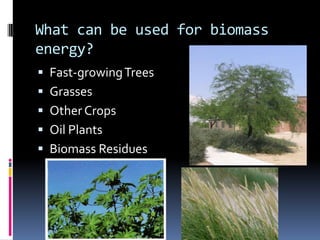
What can be used for biomass energy?Fast-growing TreesGrassesOther CropsOil PlantsBiomass Residues
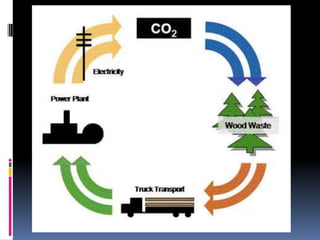
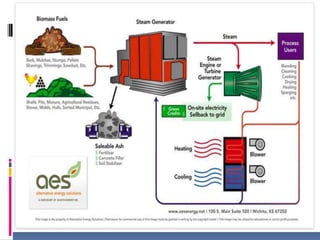
Biomass Producing ElectricityDifference is the energy sourceBiomass is used to heat water into steamSteam is used to turn a turbine to produce electricity
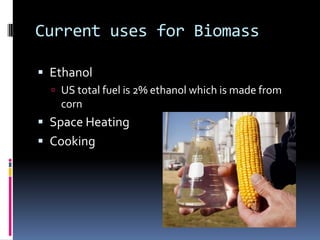
Current uses for BiomassEthanolUS total fuel is 2% ethanol which is made from cornSpace HeatingCooking
Advantages of Biomass EnergyAvailable worldwideCould possibly never run outEfficient and non-polluting
Disadvantages of Biomass EnergyNeed to use fossil fuels to harvest and transportCould contribute to global warmingExpensive to produce biomass materials

Biomass energy

Editor's Notes

  • #4 In addition to growing very fast, some trees will grow back after being cut off close to the ground, a feature called "coppicing." Coppicing allows trees to be harvested every three to eight years for 20 or 30 years before replanting. These trees, also called "short-rotation woody crops," grow as much as 40 feet high in the years between harvests. In the cooler, wetter regions of the northern United States, varieties of poplar, maple, black locust, and willow are the best choice. In the warmer Southeast, sycamore and sweetgum are best, while in the warmest parts of Florida and California, eucalyptus is likely to grow well.Thin-stemmed perennial grasses used to blanket the prairies of the United States before the settlers replaced them with corn and beans. Switchgrass, big bluestem, and other native varieties grow quickly in many parts of the country, and can be harvested for up to 10 years before replanting. Thick-stemmed perennials like sugar cane and elephant grass can be grown in hot and wet climates like those of Florida and Hawaii.A third type of grass includes annuals commonly grown for food, such as corn and sorghum. Since these must be replanted every year, they require much closer management and greater use of fertilizers, pesticides, and energy. While corn currently provides most of the liquid fuel from biomass in the United States, there are more sustainable ways to produce energy from plants.Plants such as soybeans and sunflowers produce oil, which can be used to make fuels. Like corn, though, these crops require intensive management and may not be sustainable in the longer term. A rather different type of oil crop with great promise for the future is microalgae. These tiny aquatic plants have the potential to grow extremely fast in the hot, shallow, saline water found in some lakes in the desert Southwest.  In 2004, Green Fuel Technologies, a Massachusetts-based company, harnessed the ability to capture and use carbon dioxide emissions from power plants as a means to stimulate algae growth. The algae is then converted into a various range of fuels.  This technology, known as Emissions-to-Biofuels, is demonstrating great promise and has the potential to transform the way utilities produce energy.Forestry leftovers, agriculture residues from farm animal manures, cities using “urban wood waste”
  • #10 50% of the worldwide source for cooking comes from wood biomass