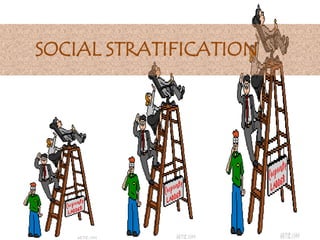
SOCIAL STRATIFICATION
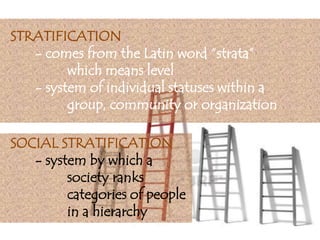
STRATIFICATION
- comes from the Latin word “strata”
which means level
- system of individual statuses within a
group, community or organization
SOCIAL STRATIFICATION
- system by which a
society ranks
categories of people
in a hierarchy
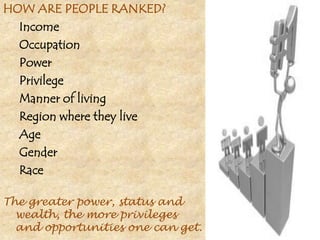
HOW ARE PEOPLE RANKED?
Income
Occupation
Power
Privilege
Manner of living
Region where they live
Age
Gender
Race
The greater power, status and
wealth, the more privileges
and opportunities one can get.
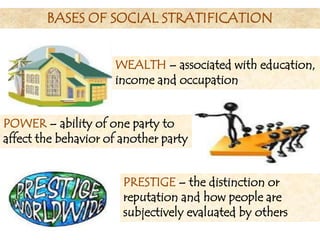
WEALTH – associated with education,
income and occupation
BASES OF SOCIAL STRATIFICATION
POWER – ability of one party to
affect the behavior of another party
PRESTIGE – the distinction or
reputation and how people are
subjectively evaluated by others
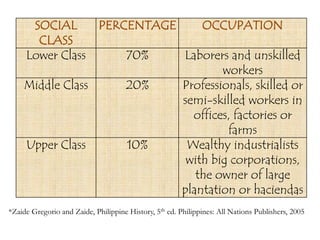
SOCIAL
CLASS
PERCENTAGE OCCUPATION
Lower Class 70% Laborers and unskilled
workers
Middle Class 20% Professionals, skilled or
semi-skilled workers in
offices, factories or
farms
Upper Class 10% Wealthy industrialists
with big corporations,
the owner of large
plantation or haciendas
*Zaide Gregorio and Zaide, Philippine History, 5th ed. Philippines: All Nations Publishers, 2005
TYPES OF SOCIAL STRATIFICATION /
FOUR SYSTEMS OF SOCIAL ART
SLAVERY SYSTEM
CASTE SYSTEM
ESTATE SYSTEM
CLASS SYSTEM
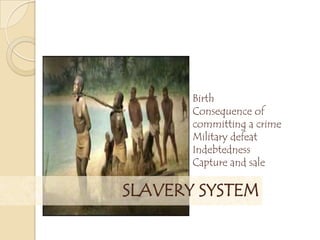
SLAVERY SYSTEM
Birth
Consequence of
committing a crime
Military defeat
Indebtedness
Capture and sale
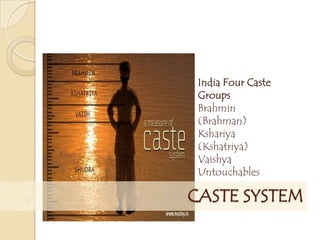
CASTE SYSTEM
India Four Caste
Groups
Brahmin
(Brahman)
Kshariya
(Kshatriya)
Vaishya
Untouchables
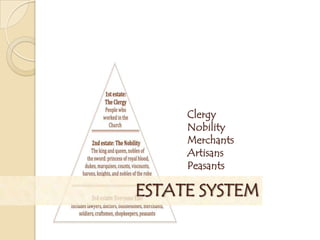
ESTATE SYSTEM
Clergy
Nobility
Merchants
Artisans
Peasants
CLASS SYSTEM
SOCIAL MOBILITY - the comparative
position by which one can improve or worsen
his social and economic standing in society
Slavery System - possible
Caste System - impossible
Estate System – low but possible
Class System – possible and frequently occurring
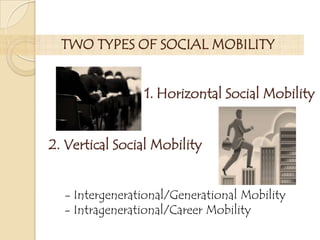
1. Horizontal Social Mobility
2. Vertical Social Mobility
- Intergenerational/Generational Mobility
- Intragenerational/Career Mobility
TWO TYPES OF SOCIAL MOBILITY
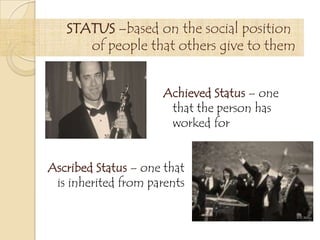
STATUS –based on the social position
of people that others give to them
Achieved Status – one
that the person has
worked for
Ascribed Status – one that
is inherited from parents
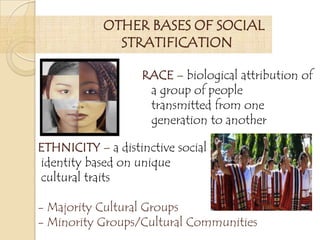
RACE – biological attribution of
a group of people
transmitted from one
generation to another
OTHER BASES OF SOCIAL
STRATIFICATION
ETHNICITY – a distinctive social
identity based on unique
cultural traits
- Majority Cultural Groups
- Minority Groups/Cultural Communities
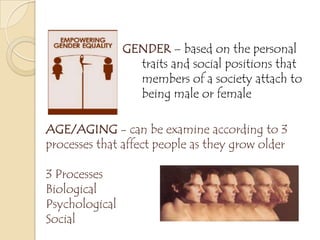
GENDER – based on the personal
traits and social positions that
members of a society attach to
being male or female
AGE/AGING - can be examine according to 3
processes that affect people as they grow older
3 Processes
Biological
Psychological
Social
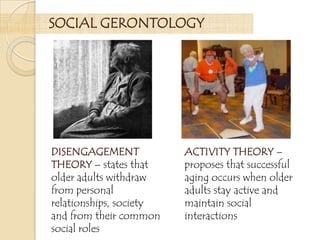
DISENGAGEMENT
THEORY – states that
older adults withdraw
from personal
relationships, society
and from their common
social roles
ACTIVITY THEORY –
proposes that successful
aging occurs when older
adults stay active and
maintain social
interactions
SOCIAL GERONTOLOGY

Social stratification

  • 1.
  • 2.
    STRATIFICATION - comes fromthe Latin word “strata” which means level - system of individual statuses within a group, community or organization SOCIAL STRATIFICATION - system by which a society ranks categories of people in a hierarchy
  • 3.
    HOW ARE PEOPLERANKED? Income Occupation Power Privilege Manner of living Region where they live Age Gender Race The greater power, status and wealth, the more privileges and opportunities one can get.
  • 4.
    WEALTH – associatedwith education, income and occupation BASES OF SOCIAL STRATIFICATION POWER – ability of one party to affect the behavior of another party PRESTIGE – the distinction or reputation and how people are subjectively evaluated by others
  • 5.
    SOCIAL CLASS PERCENTAGE OCCUPATION Lower Class70% Laborers and unskilled workers Middle Class 20% Professionals, skilled or semi-skilled workers in offices, factories or farms Upper Class 10% Wealthy industrialists with big corporations, the owner of large plantation or haciendas *Zaide Gregorio and Zaide, Philippine History, 5th ed. Philippines: All Nations Publishers, 2005
  • 6.
    TYPES OF SOCIALSTRATIFICATION / FOUR SYSTEMS OF SOCIAL ART SLAVERY SYSTEM CASTE SYSTEM ESTATE SYSTEM CLASS SYSTEM
  • 7.
    SLAVERY SYSTEM Birth Consequence of committinga crime Military defeat Indebtedness Capture and sale
  • 8.
    CASTE SYSTEM India FourCaste Groups Brahmin (Brahman) Kshariya (Kshatriya) Vaishya Untouchables
  • 9.
  • 10.
  • 11.
    SOCIAL MOBILITY -the comparative position by which one can improve or worsen his social and economic standing in society Slavery System - possible Caste System - impossible Estate System – low but possible Class System – possible and frequently occurring
  • 12.
    1. Horizontal SocialMobility 2. Vertical Social Mobility - Intergenerational/Generational Mobility - Intragenerational/Career Mobility TWO TYPES OF SOCIAL MOBILITY
  • 13.
    STATUS –based onthe social position of people that others give to them Achieved Status – one that the person has worked for Ascribed Status – one that is inherited from parents
  • 14.
    RACE – biologicalattribution of a group of people transmitted from one generation to another OTHER BASES OF SOCIAL STRATIFICATION ETHNICITY – a distinctive social identity based on unique cultural traits - Majority Cultural Groups - Minority Groups/Cultural Communities
  • 15.
    GENDER – basedon the personal traits and social positions that members of a society attach to being male or female AGE/AGING - can be examine according to 3 processes that affect people as they grow older 3 Processes Biological Psychological Social
  • 16.
    DISENGAGEMENT THEORY – statesthat older adults withdraw from personal relationships, society and from their common social roles ACTIVITY THEORY – proposes that successful aging occurs when older adults stay active and maintain social interactions SOCIAL GERONTOLOGY