Community
Engagement,
Solidarity and
Citizenship
Social
Science
Dept.
Arellano
University
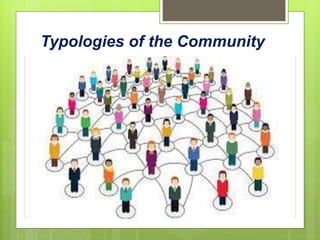
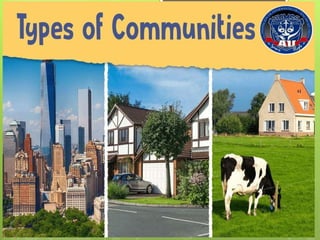
Typologies of the Community
Objective Guide Questions
Understand
how
communities
are
categorized.
1. What are the
categories of
communities?
2. Who fits in which
category of
community?
3. How are
communities
delineated?
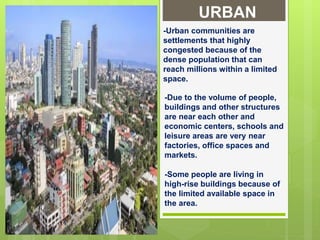
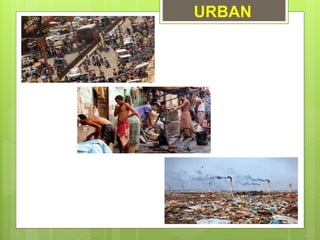
URBAN
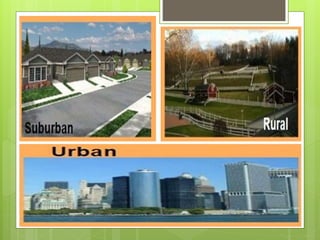
-Urban communities are
settlements that highly
congested because of the
dense population that can
reach millions within a limited
space.
-Due to the volume of people,
buildings and other structures
are near each other and
economic centers, schools and
leisure areas are very near
factories, office spaces and
markets.
-Some people are living in
high-rise buildings because of
the limited available space in
the area.
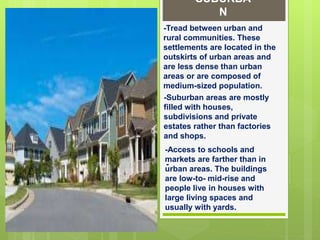
SUBURBA
N
-Tread between urban and
rural communities. These
settlements are located in the
outskirts of urban areas and
are less dense than urban
areas or are composed of
medium-sized population.
-Suburban areas are mostly
filled with houses,
subdivisions and private
estates rather than factories
and shops.
-
-Access to schools and
markets are farther than in
urban areas. The buildings
are low-to- mid-rise and
people live in houses with
large living spaces and
usually with yards.
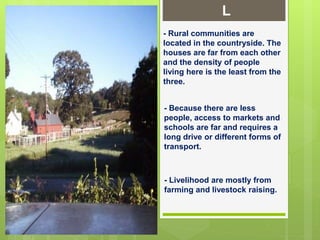
L
- Rural communities are
located in the countryside. The
houses are far from each other
and the density of people
living here is the least from the
three.
- Because there are less
people, access to markets and
schools are far and requires a
long drive or different forms of
transport.
- Livelihood are mostly from
farming and livestock raising.
URBAN
SUBURBA
N
RURAL
Formal
Sector
Formal Sector
This sector is composed of
establishments, businesses
and other enterprises that
are legal based on their
compliance to government
requirements such as
licenses. Because they have
successfully attained all
requirements, they alongside
their workers and customers,
are continually being
supervised and protected by
the government and its
policies. In exchange, they
follow the regulations and
also are taxed by the state.
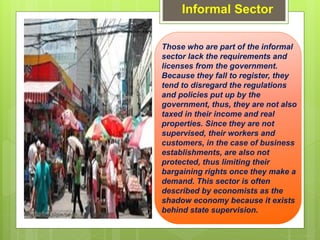
Informal Sector
Those who are part of the informal
sector lack the requirements and
licenses from the government.
Because they fall to register, they
tend to disregard the regulations
and policies put up by the
government, thus, they are not also
taxed in their income and real
properties. Since they are not
supervised, their workers and
customers, in the case of business
establishments, are also not
protected, thus limiting their
bargaining rights once they make a
demand. This sector is often
described by economists as the
shadow economy because it exists
behind state supervision.
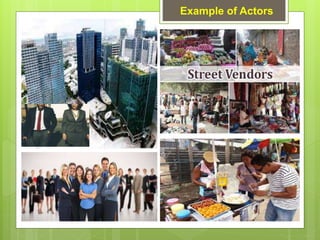
Example of Actors
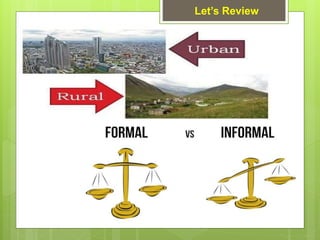
Let’s Review
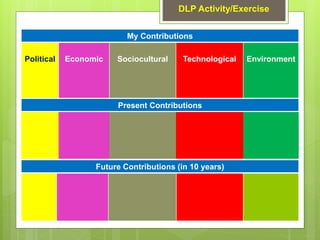
DLP Activity/Exercise
My Contributions
Political Economic Sociocultural Technological Environment
Present Contributions
Future Contributions (in 10 years)

Typologies of Community

  • 1.
  • 2.
  • 3.
    Objective Guide Questions Understand how communities are categorized. 1.What are the categories of communities? 2. Who fits in which category of community? 3. How are communities delineated?
  • 6.
    URBAN -Urban communities are settlementsthat highly congested because of the dense population that can reach millions within a limited space. -Due to the volume of people, buildings and other structures are near each other and economic centers, schools and leisure areas are very near factories, office spaces and markets. -Some people are living in high-rise buildings because of the limited available space in the area.
  • 7.
    SUBURBA N -Tread between urbanand rural communities. These settlements are located in the outskirts of urban areas and are less dense than urban areas or are composed of medium-sized population. -Suburban areas are mostly filled with houses, subdivisions and private estates rather than factories and shops. - -Access to schools and markets are farther than in urban areas. The buildings are low-to- mid-rise and people live in houses with large living spaces and usually with yards.
  • 8.
    L - Rural communitiesare located in the countryside. The houses are far from each other and the density of people living here is the least from the three. - Because there are less people, access to markets and schools are far and requires a long drive or different forms of transport. - Livelihood are mostly from farming and livestock raising.
  • 10.
  • 11.
  • 12.
  • 13.
  • 14.
    Formal Sector This sectoris composed of establishments, businesses and other enterprises that are legal based on their compliance to government requirements such as licenses. Because they have successfully attained all requirements, they alongside their workers and customers, are continually being supervised and protected by the government and its policies. In exchange, they follow the regulations and also are taxed by the state.
  • 15.
    Informal Sector Those whoare part of the informal sector lack the requirements and licenses from the government. Because they fall to register, they tend to disregard the regulations and policies put up by the government, thus, they are not also taxed in their income and real properties. Since they are not supervised, their workers and customers, in the case of business establishments, are also not protected, thus limiting their bargaining rights once they make a demand. This sector is often described by economists as the shadow economy because it exists behind state supervision.
  • 16.
  • 17.
  • 18.
    DLP Activity/Exercise My Contributions PoliticalEconomic Sociocultural Technological Environment Present Contributions Future Contributions (in 10 years)