Downloaded 64 times

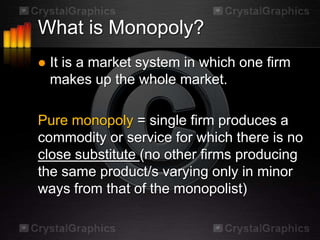



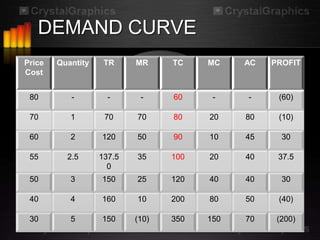


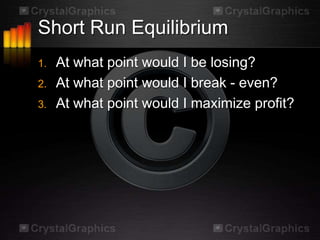
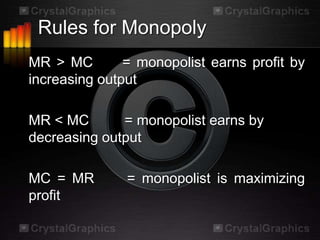
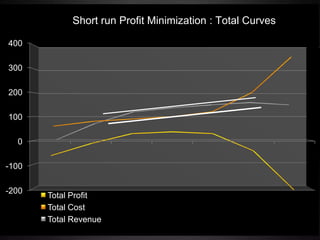
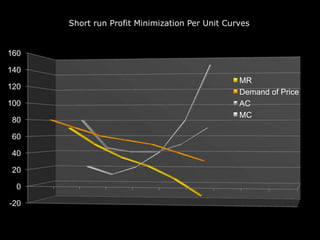
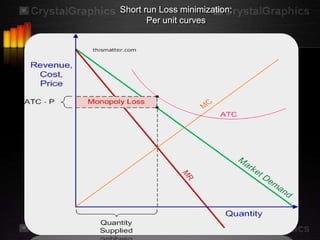


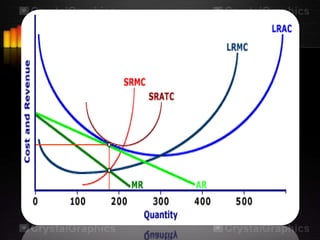

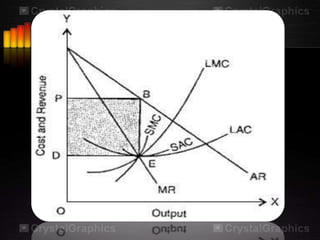


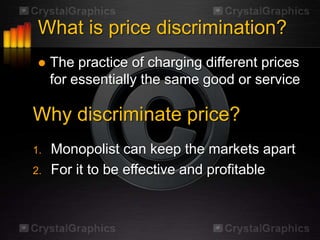
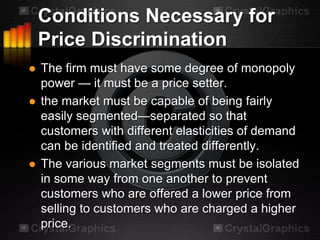
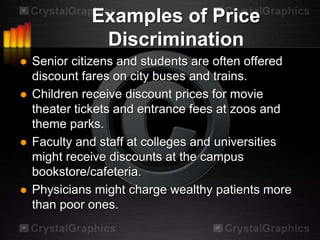
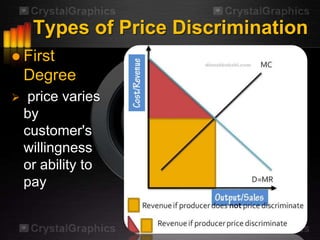


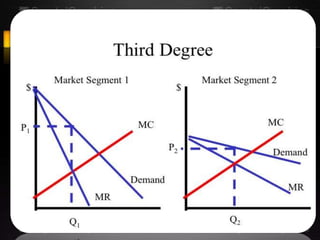
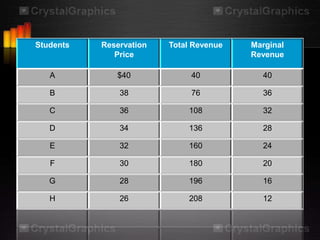
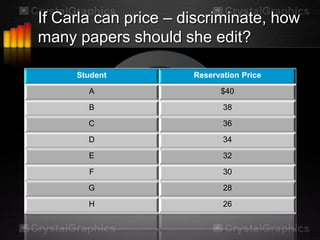
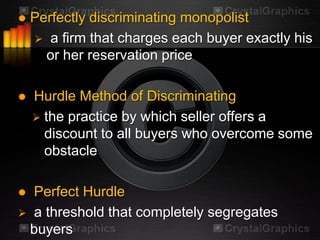
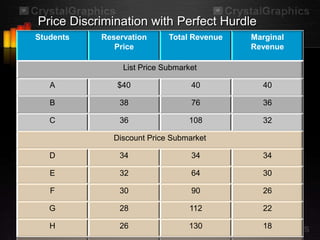
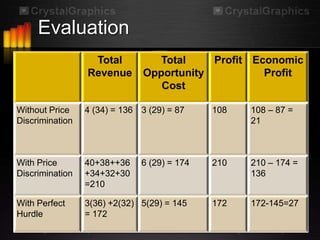
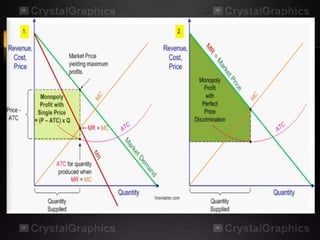


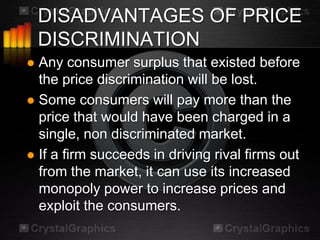

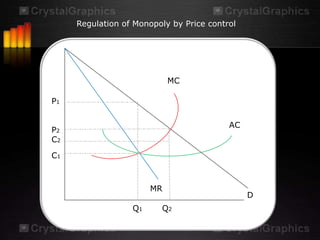
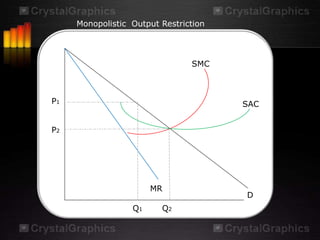

Monopoly is a market structure where there is only one seller of a product or service. Examples include public utilities like electricity and water. Under monopoly, the firm faces a downward sloping demand curve and sets a price where marginal revenue equals marginal cost to maximize profits. This price is generally higher and quantity lower than under perfect competition. Price discrimination is when a monopolist charges different prices to different customers, even though the cost of production is the same. It allows a firm to extract more consumer surplus. Conditions for effective price discrimination include the ability to segment markets and prevent resale.


