
Prepared by: Ms. Frencis Joy Panerio 
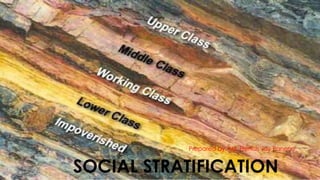
SOCIAL STRATIFICATION
WHAT IS SOCIAL STRATIFICATION? 
A system by which a society ranks categories of 
people in a hierarchy (Machionis, 2007) 
 Internal division into a hierarchy of distinct social 
groups, each having specific life chances, and a 
distinctive style of life (Panopio&Raymundo, 2004)
FOUR BASIC PRINCIPLES: 
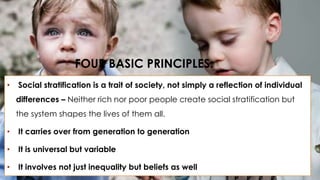
• Social stratification is a trait of society, not simply a reflection of individual 
differences – Neither rich nor poor people create social stratification but 
the system shapes the lives of them all. 
• It carries over from generation to generation 
• It is universal but variable 
• It involves not just inequality but beliefs as well
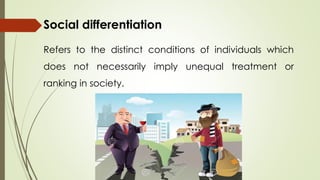
Social differentiation 
Refers to the distinct conditions of individuals which 
does not necessarily imply unequal treatment or 
ranking in society.
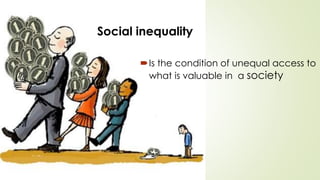
Social inequality 
Is the condition of unequal access to 
what is valuable in a society
continuation 
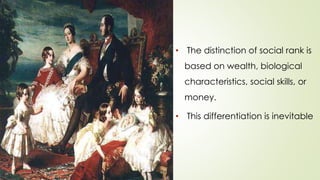
• The distinction of social rank is 
based on wealth, biological 
characteristics, social skills, or 
money. 
• This differentiation is inevitable
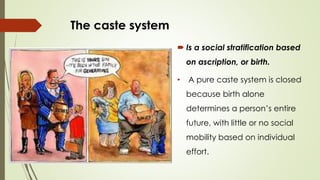
The caste system 
 Is a social stratification based 
on ascription, or birth. 
• A pure caste system is closed 
because birth alone 
determines a person’s entire 
future, with little or no social 
mobility based on individual 
effort.
The class system 
Social stratification based on both birth and individual 
achievements 
• Work is no longer fixed at birth but involves some 
personal choice. 
• Greater individuality also translates into more freedom 
in selecting a marital partner.
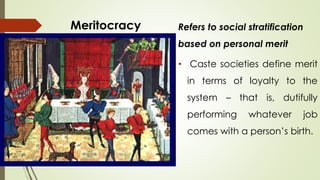
Meritocracy Refers to social stratification 
based on personal merit 
• Caste societies define merit 
in terms of loyalty to the 
system – that is, dutifully 
performing whatever job 
comes with a person’s birth.
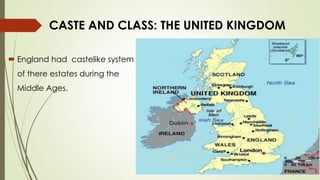
CASTE AND CLASS: THE UNITED KINGDOM 
 England had castelike system 
of there estates during the 
Middle Ages.
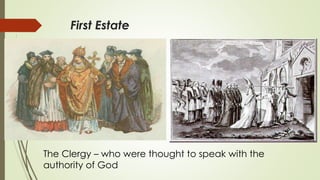
First Estate 
The Clergy – who were thought to speak with the 
authority of God
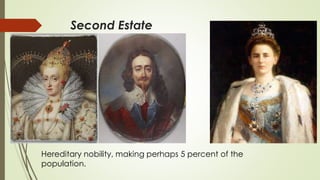
Second Estate 
Hereditary nobility, making perhaps 5 percent of the 
population.
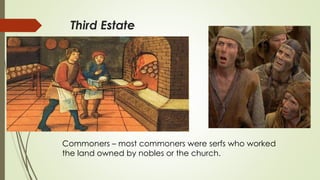
Third Estate 
Commoners – most commoners were serfs who worked 
the land owned by nobles or the church.
Basic components of social 
stratification 
• Social Class 
• Status – is the social standing of a person within 
a social class or in the entire social stratification 
system. 
• Roles – pertains to the expected behaviour 
patterns that corresponds with a status
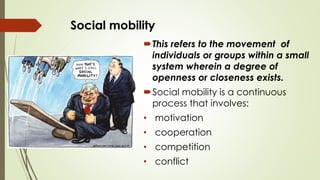
Social mobility 
This refers to the movement of 
individuals or groups within a small 
system wherein a degree of 
openness or closeness exists. 
Social mobility is a continuous 
process that involves: 
• motivation 
• cooperation 
• competition 
• conflict
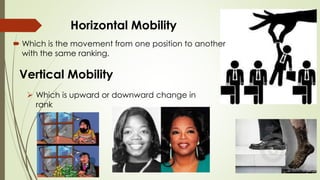
Horizontal Mobility 
Which is the movement from one position to another 
with the same ranking. 
Vertical Mobility 
 Which is upward or downward change in 
rank

Social stratification

  • 1.
    Prepared by: Ms.Frencis Joy Panerio SOCIAL STRATIFICATION
  • 2.
    WHAT IS SOCIALSTRATIFICATION? A system by which a society ranks categories of people in a hierarchy (Machionis, 2007)  Internal division into a hierarchy of distinct social groups, each having specific life chances, and a distinctive style of life (Panopio&Raymundo, 2004)
  • 3.
    FOUR BASIC PRINCIPLES: • Social stratification is a trait of society, not simply a reflection of individual differences – Neither rich nor poor people create social stratification but the system shapes the lives of them all. • It carries over from generation to generation • It is universal but variable • It involves not just inequality but beliefs as well
  • 4.
    Social differentiation Refersto the distinct conditions of individuals which does not necessarily imply unequal treatment or ranking in society.
  • 5.
    Social inequality Isthe condition of unequal access to what is valuable in a society
  • 6.
    continuation • Thedistinction of social rank is based on wealth, biological characteristics, social skills, or money. • This differentiation is inevitable
  • 7.
    The caste system  Is a social stratification based on ascription, or birth. • A pure caste system is closed because birth alone determines a person’s entire future, with little or no social mobility based on individual effort.
  • 8.
    The class system Social stratification based on both birth and individual achievements • Work is no longer fixed at birth but involves some personal choice. • Greater individuality also translates into more freedom in selecting a marital partner.
  • 9.
    Meritocracy Refers tosocial stratification based on personal merit • Caste societies define merit in terms of loyalty to the system – that is, dutifully performing whatever job comes with a person’s birth.
  • 10.
    CASTE AND CLASS:THE UNITED KINGDOM  England had castelike system of there estates during the Middle Ages.
  • 11.
    First Estate TheClergy – who were thought to speak with the authority of God
  • 12.
    Second Estate Hereditarynobility, making perhaps 5 percent of the population.
  • 13.
    Third Estate Commoners– most commoners were serfs who worked the land owned by nobles or the church.
  • 14.
    Basic components ofsocial stratification • Social Class • Status – is the social standing of a person within a social class or in the entire social stratification system. • Roles – pertains to the expected behaviour patterns that corresponds with a status
  • 15.
    Social mobility Thisrefers to the movement of individuals or groups within a small system wherein a degree of openness or closeness exists. Social mobility is a continuous process that involves: • motivation • cooperation • competition • conflict
  • 16.
    Horizontal Mobility Whichis the movement from one position to another with the same ranking. Vertical Mobility  Which is upward or downward change in rank