Self micro emulsified
drug delivery system
      Presented by
    T.SHIVAKUMAR
 KOTTAM INSTITUTE OF
     PHARMACY
WHAT IS SMEDDS
SMEEDS is mixture of oils,
 surfactants, and cosurfactants, which
 are emulsified in aqueous media
 under conditions of gentle agitation
 of digestive motility that would be
 encountered in the gastro intestinal
 (GI) tract.
AIM
Most of the new drug candidates in
 development today are sparingly
 soluble and associated with poor
 bioavailability
The main purpose is to prepare
 SMEDDS for oral bioavailability
 enhancement of a poorly water soluble
 drug
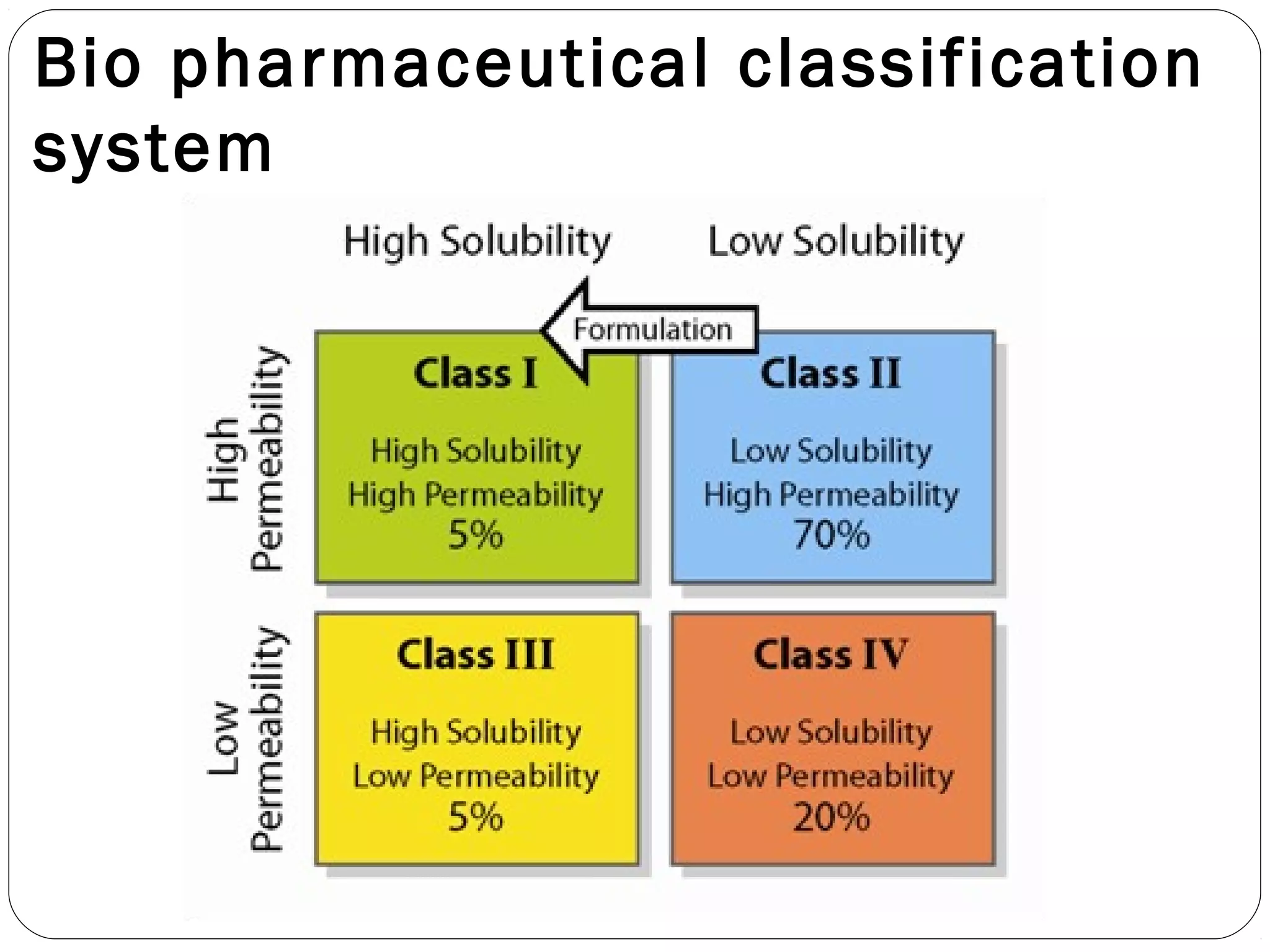
Bio pharmaceutical classification
system
according to bio pharmaceutical
 classification system(BCS) the classII
 drugs have poor solubility and high
 permeability , thus the rate limiting
 process of absorption is the drug
 dissolution step. Formulation plays the
 major role in improving the rate and
 extent of absorption of such drugs from GI
 tract.
Present study
In the present study, an attempt was
 made to enhance the solubility and in
 vitro dissolution of candesartan
 cilexetil byformulating it as SMEDDS
 for filling into hard gelatin capsules.
Drug profile
Candesartan Cilexetil a prodrug is
 hydrolyzed to candesartan during
 absorption from the gastrointestinal
 tract., practically insoluble in water.
Category: Antihypertensive Agents
Subcategory: Angiotensin II Receptor
 Antagonist
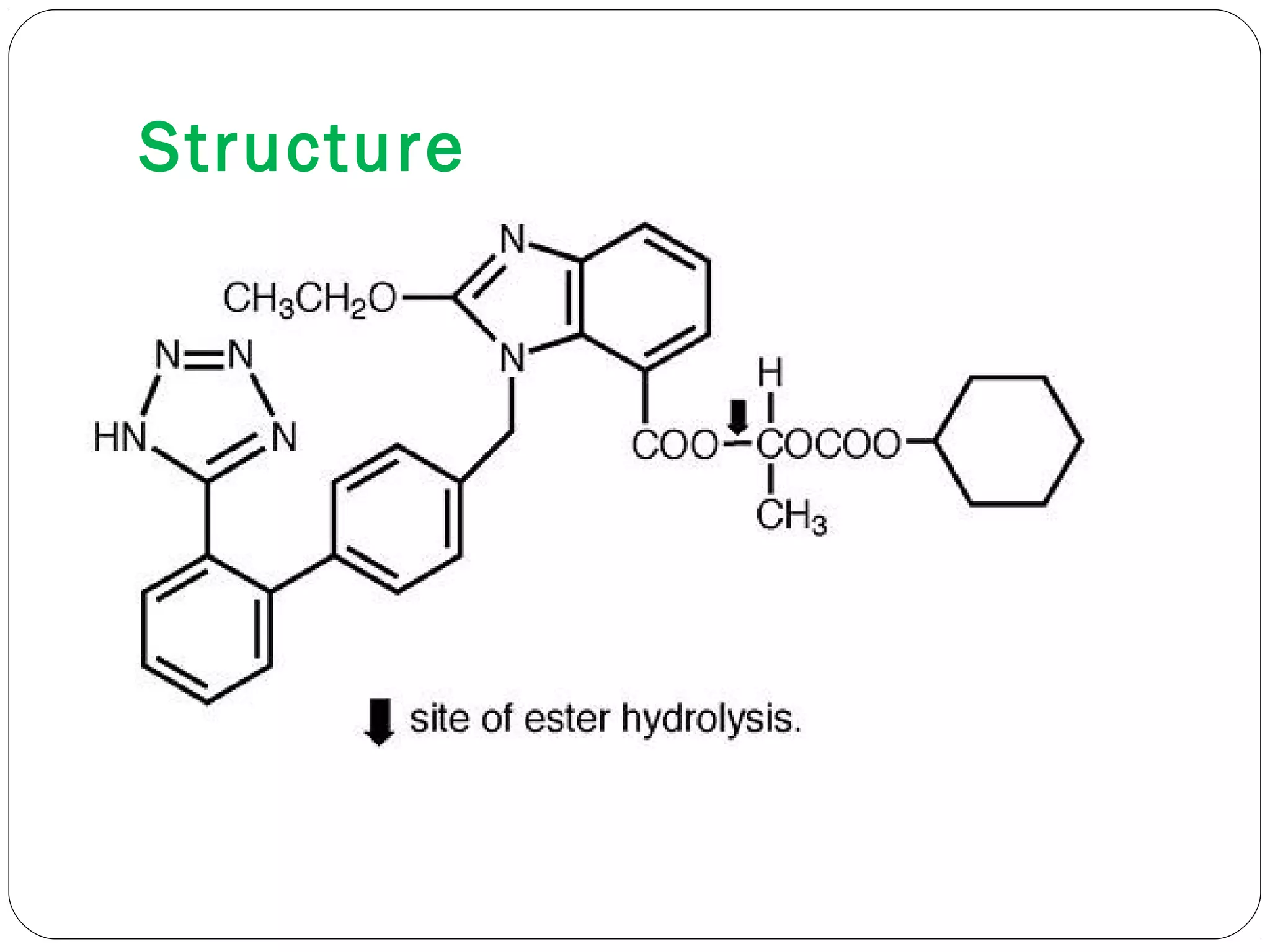
Structure
Materials

 Drug- Candesartan cilexetile-
Oil -Miglyol 812
Surfactants- Cremophor EL &Tween 80
Cosurfactant -Labrasol
 The quantity of each content will be taken
 according to the pseudo ternary phase
 diagram
This diagram is very essential in
 manipulation of ingredients in the
 formulation of SMEDDS
CONSTRUCTION OF PSUEDO TERNARY
 PHASE DIAGRAMS:
 The pseudoternary phase diagrams of oil, surfactant–
 cosurfactant, and water were developed to optimize the
 formulation using a water titration method. The mixtures
 of oil and surfactant–cosurfactant ratios were diluted with
 water in a dropwise addition. Phase diagrams were constructed
 in the presence of drug to obtain the optimum concentrations
 of oil, surfactant, and cosurfactant. SMEDDS form fine oil–
water emulsions upon addition to an aqueous media under
gentle agitation.
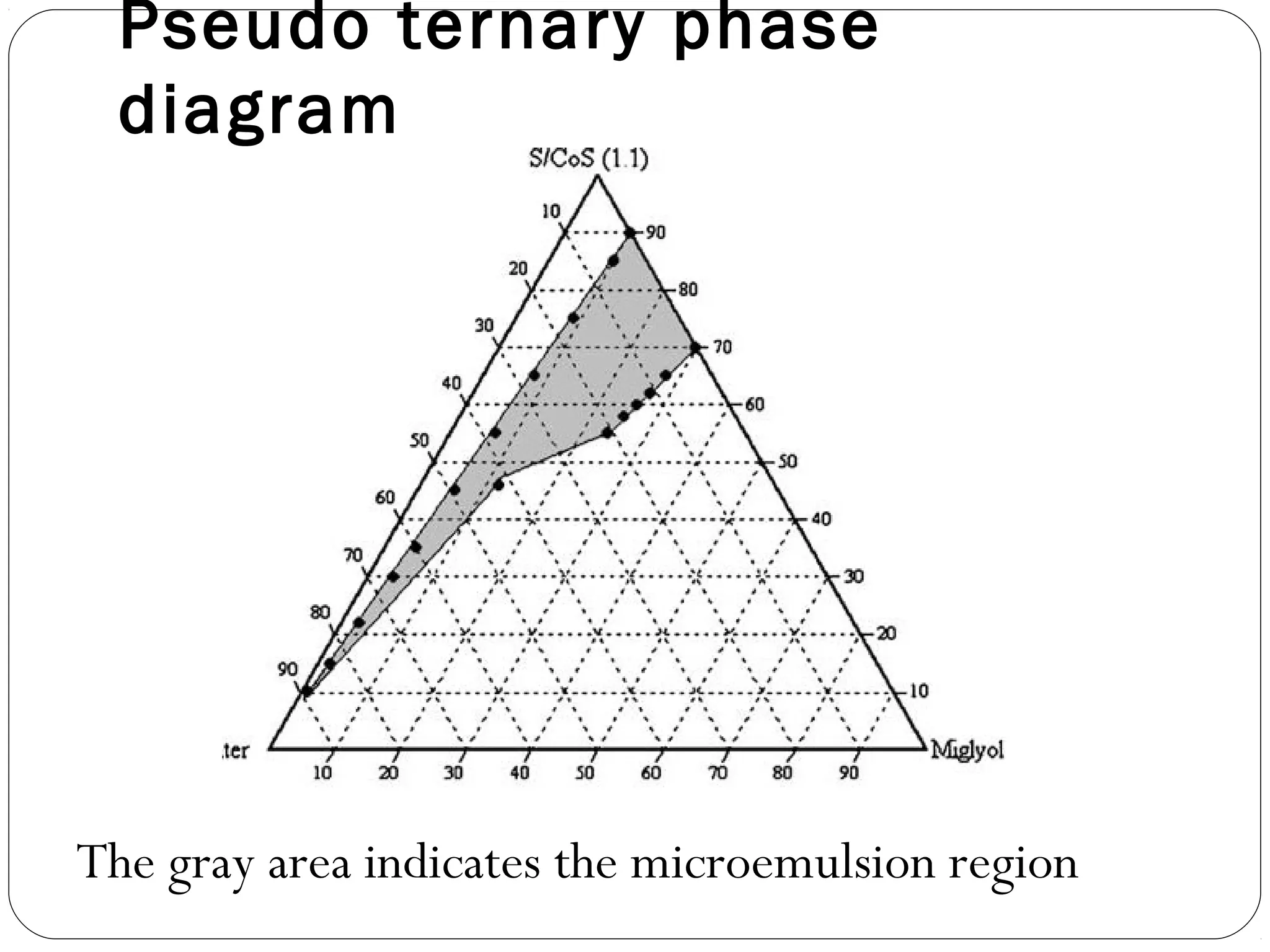
Pseudo ternary phase
  diagram


The gray area indicates the microemulsion region
formulation
  Four self-microemulsifying formulations were prepared
 using mixtures of oils, surfactants, and cosurfactants in
 various proportions. The self-microemulsification
 properties, droplet size, and zeta potential of these
 formulations were studied upon dilution with water.
 The optimized liquid SMEDDS formulation was
 converted into free flowing powder by adsorbing onto a
 solid carrier for encapsulation.
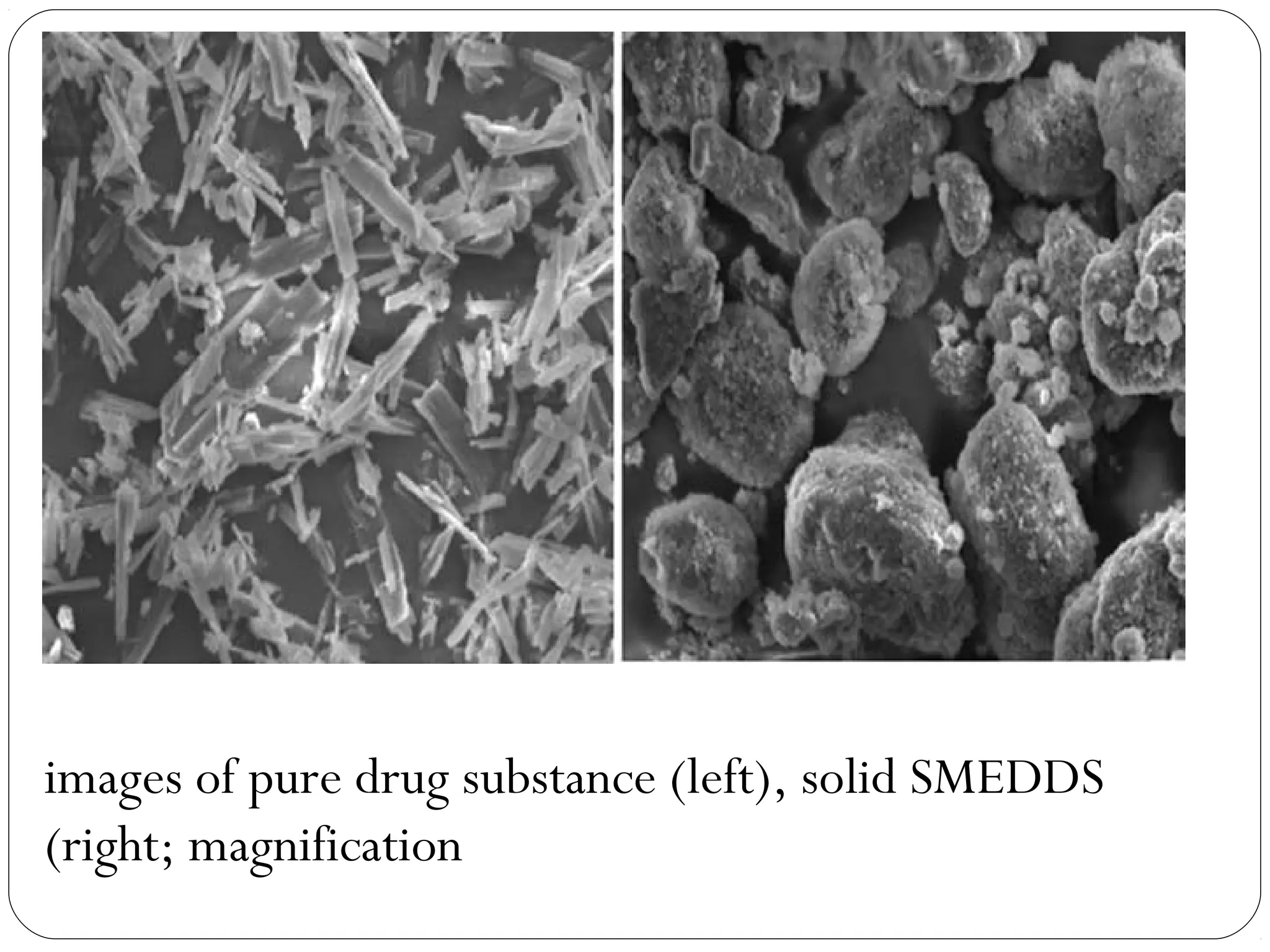
images of pure drug substance (left), solid SMEDDS
(right; magnification
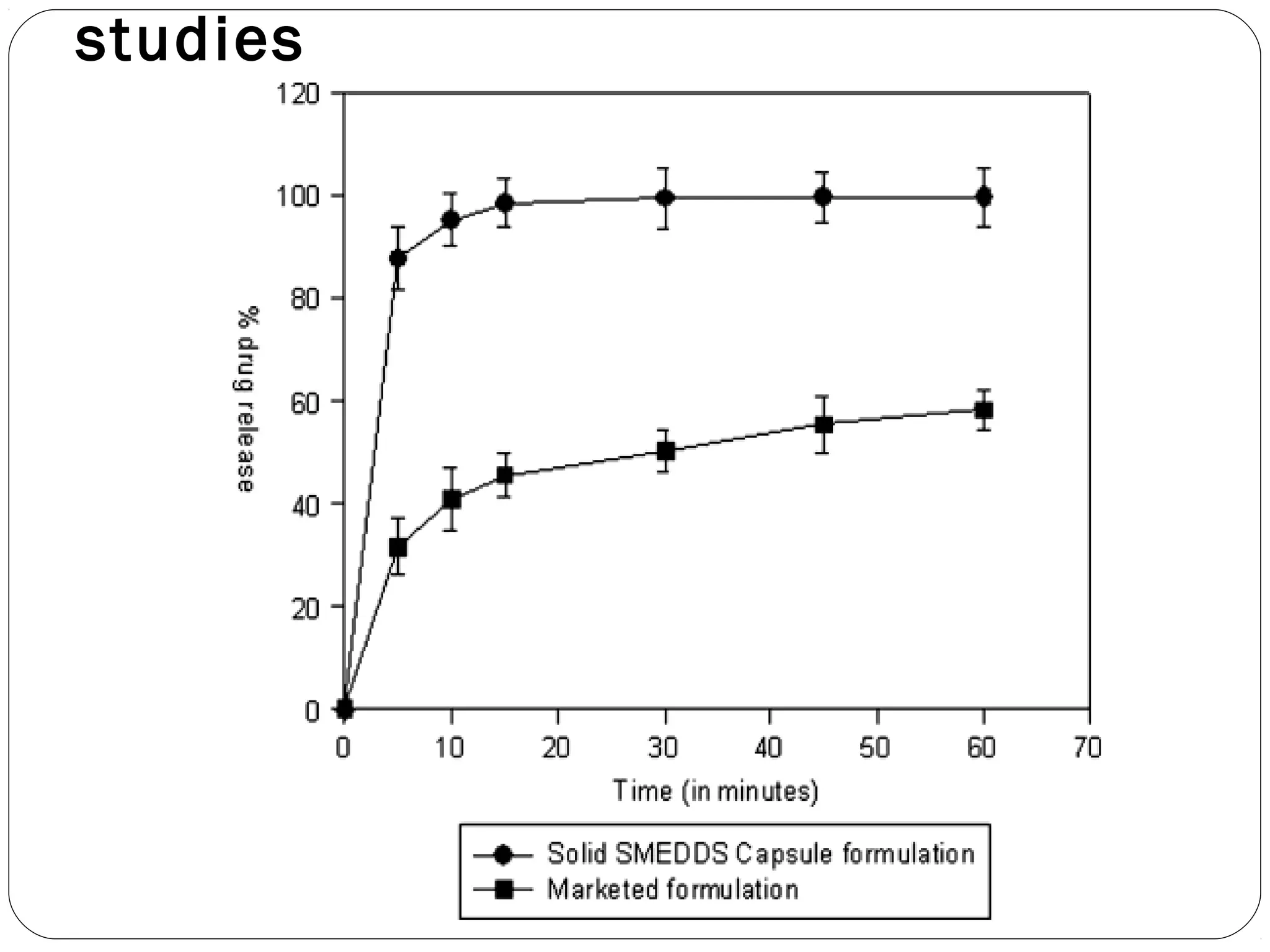
Dissolution studies

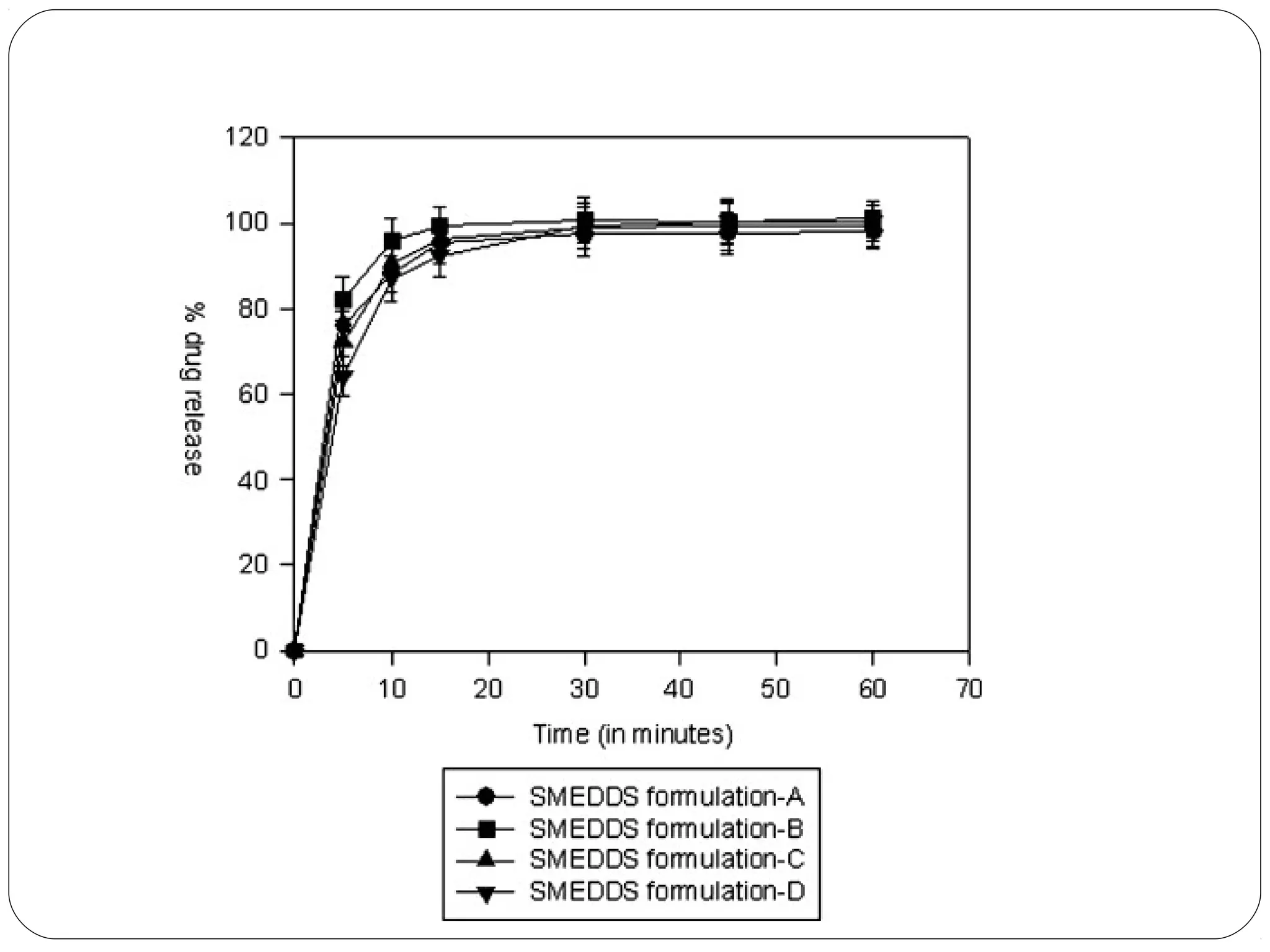
The dissolution characteristics of solid
 intermediates of SMEDDS filled into hard gelatin
 capsules was investigated and compared with
 liquid formulation and commercial formulation
 to ascertain the impact on self-emulsifying
 properties following conversion.
Results
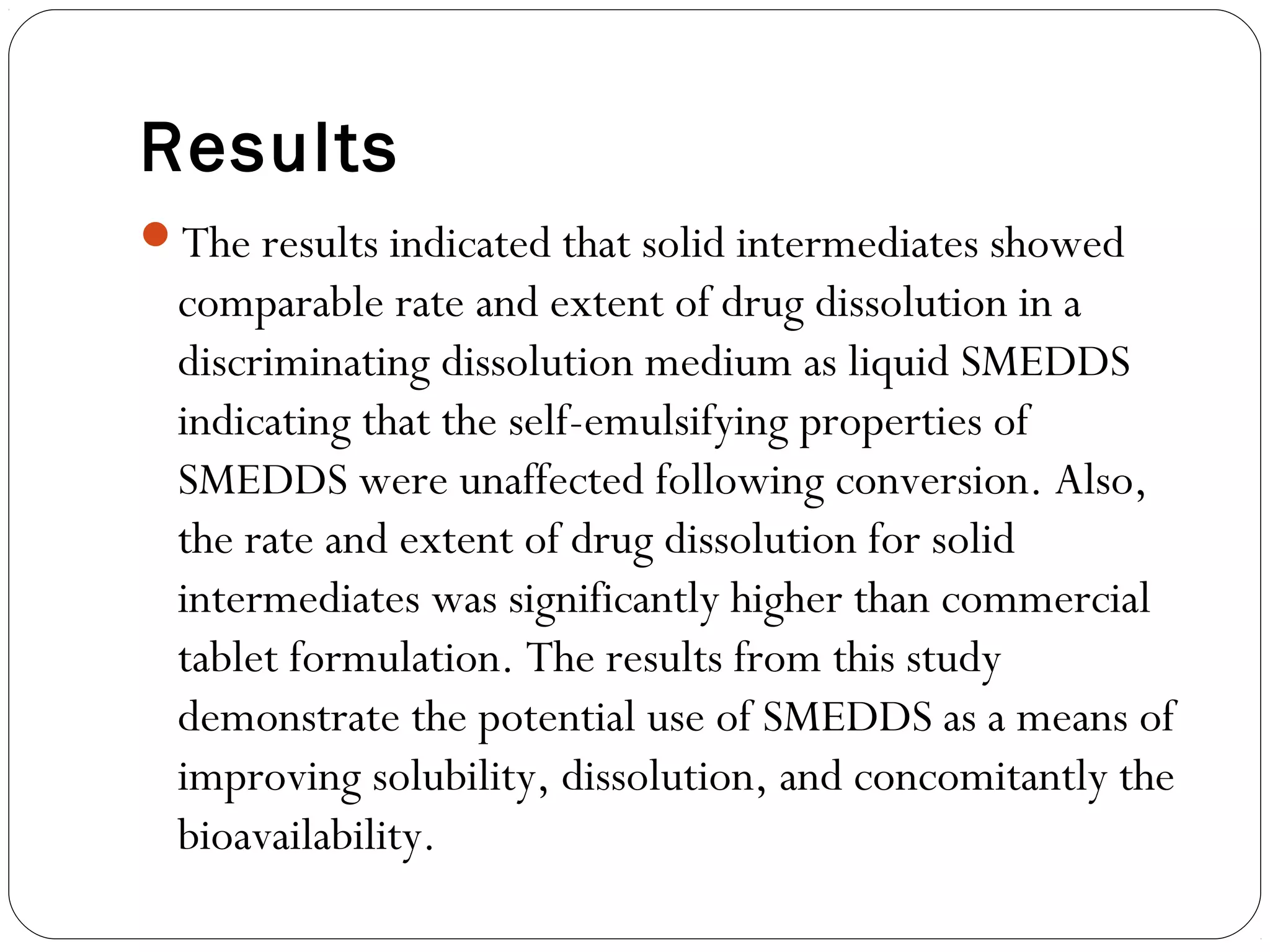
The results indicated that solid intermediates showed
  comparable rate and extent of drug dissolution in a
  discriminating dissolution medium as liquid SMEDDS
  indicating that the self-emulsifying properties of
  SMEDDS were unaffected following conversion. Also,
  the rate and extent of drug dissolution for solid
  intermediates was significantly higher than commercial
  tablet formulation. The results from this study
  demonstrate the potential use of SMEDDS as a means of
  improving solubility, dissolution, and concomitantly the
  bioavailability. 
studies
Advantages
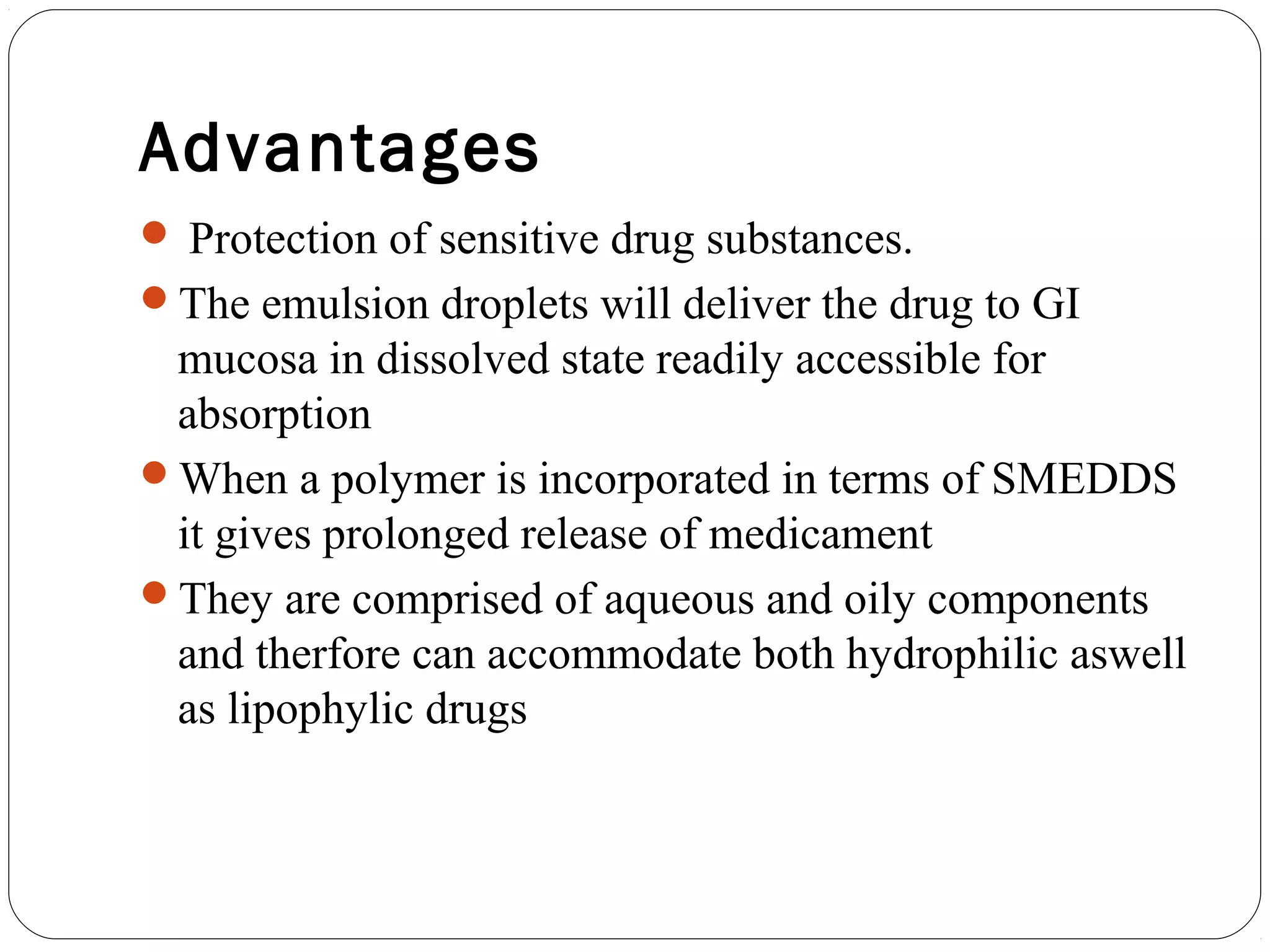
 Protection of sensitive drug substances.
The emulsion droplets will deliver the drug to GI
 mucosa in dissolved state readily accessible for
 absorption
When a polymer is incorporated in terms of SMEDDS
 it gives prolonged release of medicament
They are comprised of aqueous and oily components
 and therfore can accommodate both hydrophilic aswell
 as lipophylic drugs
Disadvantages


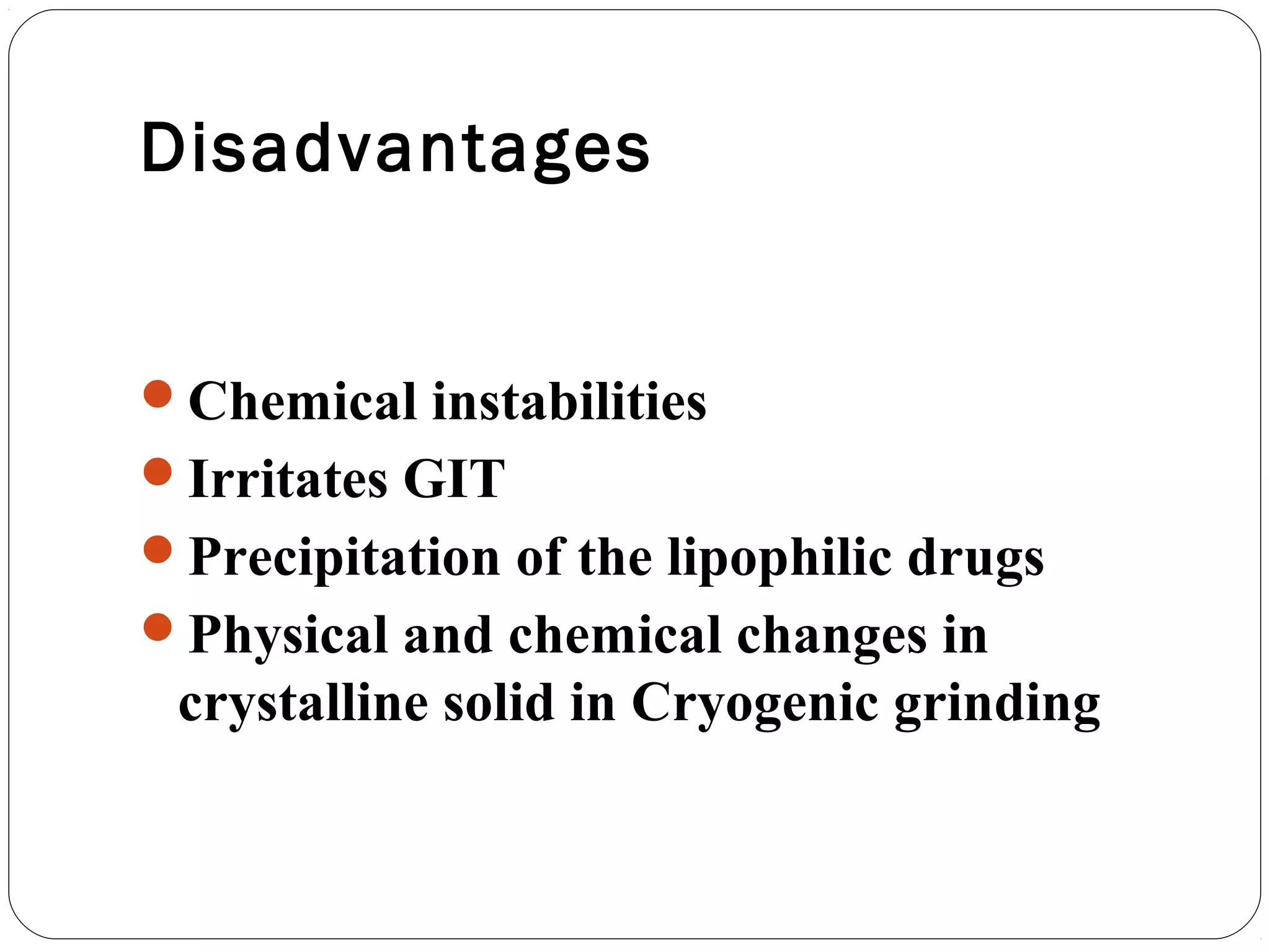
Chemical instabilities
Irritates GIT
Precipitation of the lipophilic drugs
Physical and chemical changes in
 crystalline solid in Cryogenic grinding
CONCLUSION

 A SMEDDS formulation of a poorly water-soluble
drug, candesartan cilexetil was formulated for direct
filling into hardgelatin capsules for oral
administrationshowed faster rate of drug release than
the marketed product in
 a discriminating dissolution media. The results from
this study
demonstrate the utility of SMEDDS to enhance
solubility and
dissolution of sparingly soluble compounds like
candesartan
which may result in improved therapeutic performance
REFERENCES
 1. Robinson JR. Introduction: semi-solid formulations for oral
  drug delivery. Bull Tech Gattefosse. 1996;89:11–3
 2. Aungst BJ. Novel formulation strategies for improving oral
   bioavailability of drugs with poor membrane permeation or
   presystemic metabolism. J Pharm Sci. 1993;82:979–87.
 3. Constantinides PP. Lipid microemulsions for improving drug
   dissolution and oral absorption: physical and biopharmaceutical
   aspects. Pharm Res. 1995;12:1561–72.
 4. Pouton CW. Formulation of self-emulsifying drug delivery
  systems.
Thank you….

Smedds seminaaar final

  • 1.
    Self micro emulsified drugdelivery system Presented by T.SHIVAKUMAR KOTTAM INSTITUTE OF PHARMACY
  • 2.
    WHAT IS SMEDDS SMEEDSis mixture of oils, surfactants, and cosurfactants, which are emulsified in aqueous media under conditions of gentle agitation of digestive motility that would be encountered in the gastro intestinal (GI) tract.
  • 3.
    AIM Most of thenew drug candidates in development today are sparingly soluble and associated with poor bioavailability The main purpose is to prepare SMEDDS for oral bioavailability enhancement of a poorly water soluble drug
  • 4.
  • 5.
    according to biopharmaceutical classification system(BCS) the classII drugs have poor solubility and high permeability , thus the rate limiting process of absorption is the drug dissolution step. Formulation plays the major role in improving the rate and extent of absorption of such drugs from GI tract.
  • 6.
    Present study In thepresent study, an attempt was made to enhance the solubility and in vitro dissolution of candesartan cilexetil byformulating it as SMEDDS for filling into hard gelatin capsules.
  • 7.
    Drug profile Candesartan Cilexetila prodrug is hydrolyzed to candesartan during absorption from the gastrointestinal tract., practically insoluble in water. Category: Antihypertensive Agents Subcategory: Angiotensin II Receptor Antagonist
  • 8.
  • 9.
    Materials  Drug- Candesartancilexetile- Oil -Miglyol 812 Surfactants- Cremophor EL &Tween 80 Cosurfactant -Labrasol
  • 10.
     The quantityof each content will be taken according to the pseudo ternary phase diagram This diagram is very essential in manipulation of ingredients in the formulation of SMEDDS
  • 11.
    CONSTRUCTION OF PSUEDOTERNARY PHASE DIAGRAMS: The pseudoternary phase diagrams of oil, surfactant– cosurfactant, and water were developed to optimize the formulation using a water titration method. The mixtures of oil and surfactant–cosurfactant ratios were diluted with water in a dropwise addition. Phase diagrams were constructed in the presence of drug to obtain the optimum concentrations of oil, surfactant, and cosurfactant. SMEDDS form fine oil– water emulsions upon addition to an aqueous media under gentle agitation.
  • 12.
    Pseudo ternary phase diagram The gray area indicates the microemulsion region
  • 13.
    formulation Fourself-microemulsifying formulations were prepared using mixtures of oils, surfactants, and cosurfactants in various proportions. The self-microemulsification properties, droplet size, and zeta potential of these formulations were studied upon dilution with water. The optimized liquid SMEDDS formulation was converted into free flowing powder by adsorbing onto a solid carrier for encapsulation.
  • 15.
    images of puredrug substance (left), solid SMEDDS (right; magnification
  • 16.
    Dissolution studies The dissolutioncharacteristics of solid intermediates of SMEDDS filled into hard gelatin capsules was investigated and compared with liquid formulation and commercial formulation to ascertain the impact on self-emulsifying properties following conversion.
  • 17.
    Results The results indicatedthat solid intermediates showed comparable rate and extent of drug dissolution in a discriminating dissolution medium as liquid SMEDDS indicating that the self-emulsifying properties of SMEDDS were unaffected following conversion. Also, the rate and extent of drug dissolution for solid intermediates was significantly higher than commercial tablet formulation. The results from this study demonstrate the potential use of SMEDDS as a means of improving solubility, dissolution, and concomitantly the bioavailability. 
  • 18.
  • 19.
    Advantages  Protection ofsensitive drug substances. The emulsion droplets will deliver the drug to GI mucosa in dissolved state readily accessible for absorption When a polymer is incorporated in terms of SMEDDS it gives prolonged release of medicament They are comprised of aqueous and oily components and therfore can accommodate both hydrophilic aswell as lipophylic drugs
  • 20.
    Disadvantages Chemical instabilities Irritates GIT Precipitationof the lipophilic drugs Physical and chemical changes in crystalline solid in Cryogenic grinding
  • 21.
    CONCLUSION A SMEDDSformulation of a poorly water-soluble drug, candesartan cilexetil was formulated for direct filling into hardgelatin capsules for oral administrationshowed faster rate of drug release than the marketed product in a discriminating dissolution media. The results from this study demonstrate the utility of SMEDDS to enhance solubility and dissolution of sparingly soluble compounds like candesartan which may result in improved therapeutic performance
  • 22.
    REFERENCES  1. RobinsonJR. Introduction: semi-solid formulations for oral drug delivery. Bull Tech Gattefosse. 1996;89:11–3  2. Aungst BJ. Novel formulation strategies for improving oral bioavailability of drugs with poor membrane permeation or presystemic metabolism. J Pharm Sci. 1993;82:979–87.  3. Constantinides PP. Lipid microemulsions for improving drug dissolution and oral absorption: physical and biopharmaceutical aspects. Pharm Res. 1995;12:1561–72.  4. Pouton CW. Formulation of self-emulsifying drug delivery systems.
  • 23.