Submitted to:
Dr. J. Josephine Leno Jenita
Asst. Professor,
Department of Pharmaceutics,
College of Pharmaceutical Sciences, DSU
Dayananda sagar college of Pharmacy,
Banglore.
Presented by:
Arpitha.B. M
M Pharm (I SEM),
Department of Pharmaceutics,
College of Pharmaceutical Sciences, DSU
Dayananda Sagar College of Pharmacy,
Banglore.
Self micro emulsifying drug
delivery system
Contents
• Introduction
• Need for SMEEDS
• Difference between SMEDDS & SEDDS
• Advantages and disadvantages
• Formulation aspects of SMEDDS
• Application
• Reference
2COPS DSU Department of Pharmaceutics
Introduction
SMEDDS are defined as isotropic mixtures of natural or
synthetic oils, solid and liquid surfactants or alternatively, one
or more hydrophillic solvents and co-solvents/surfactants, that
have a unique ability of forming fine oil-in-water (o/w) micro
emulsions upon mild agitation followed by dilution in aqueous
media, such as GI fluids.
• These are micro emulsion containing particle size from 10-
100nm.
• Micro emulsion have been succesively used to improve the
solubility, chemical stability and oral bioavailability of poorly
water soluble drugs. (class II and IV as per BCS clasification)
3COPS DSU Department of Pharmaceutics
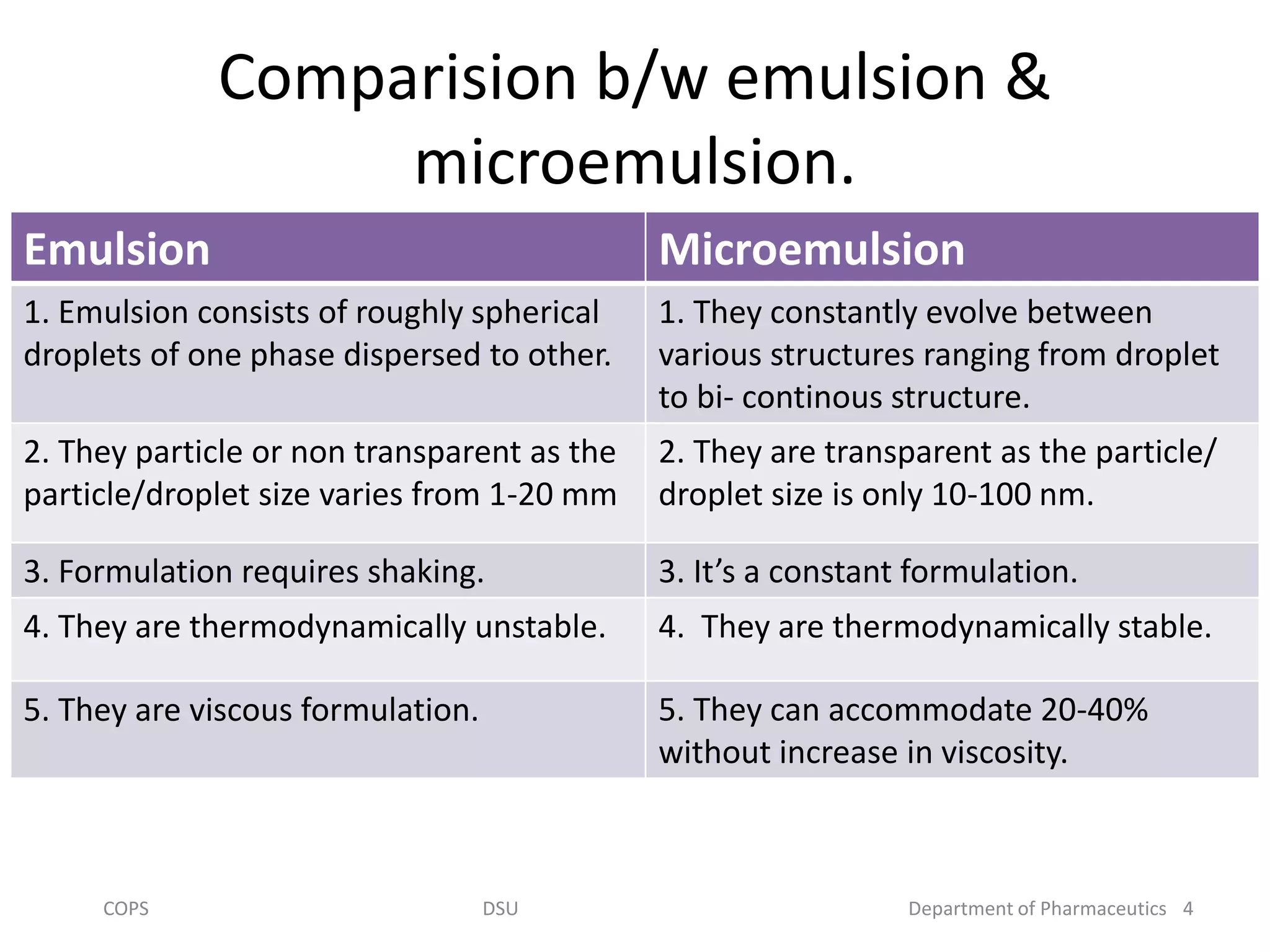
Comparision b/w emulsion &
microemulsion.
Emulsion Microemulsion
1. Emulsion consists of roughly spherical
droplets of one phase dispersed to other.
1. They constantly evolve between
various structures ranging from droplet
to bi- continous structure.
2. They particle or non transparent as the
particle/droplet size varies from 1-20 mm
2. They are transparent as the particle/
droplet size is only 10-100 nm.
3. Formulation requires shaking. 3. It’s a constant formulation.
4. They are thermodynamically unstable. 4. They are thermodynamically stable.
5. They are viscous formulation. 5. They can accommodate 20-40%
without increase in viscosity.
4COPS DSU Department of Pharmaceutics
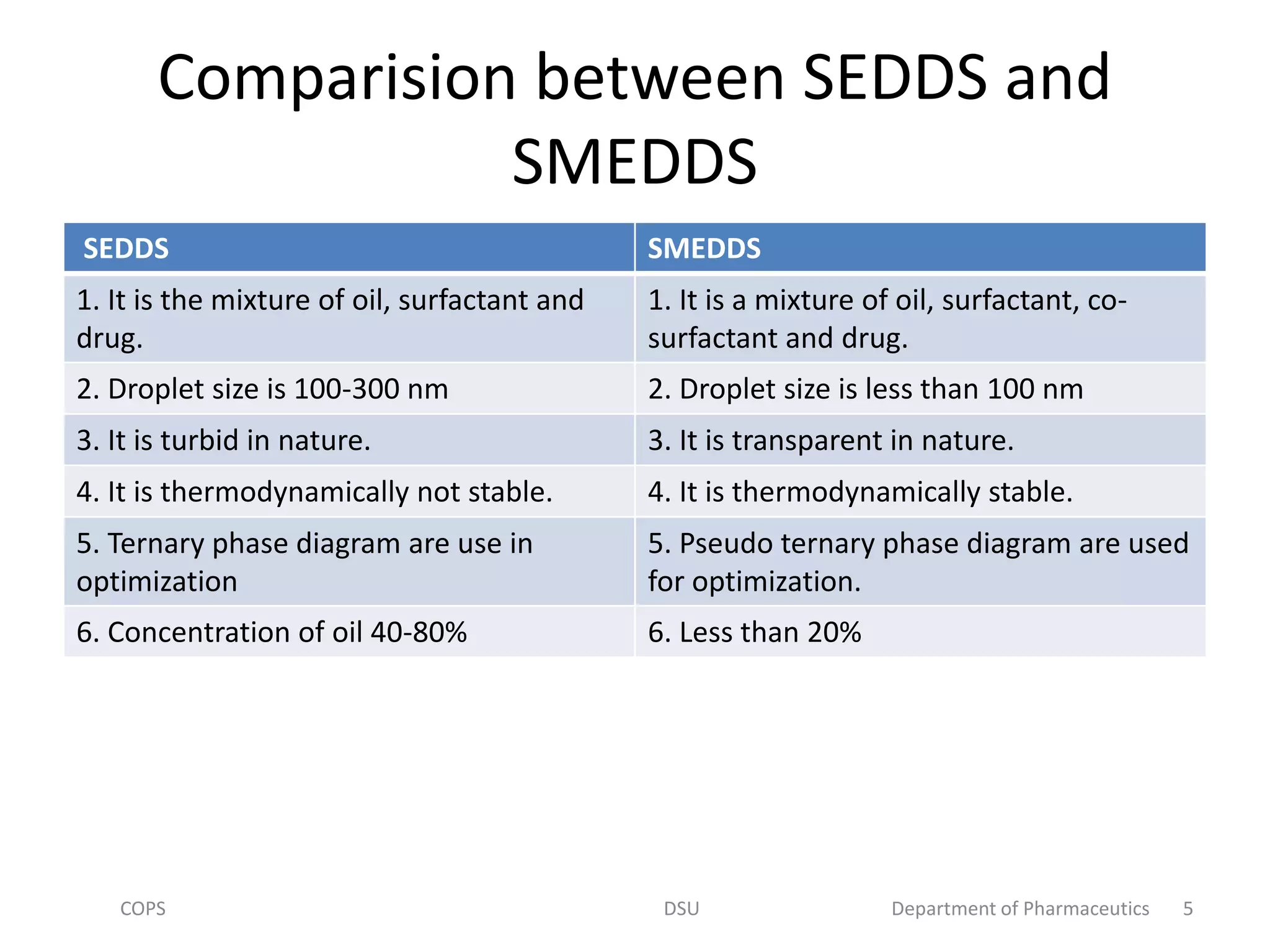
Comparision between SEDDS and
SMEDDS
SEDDS SMEDDS
1. It is the mixture of oil, surfactant and
drug.
1. It is a mixture of oil, surfactant, co-
surfactant and drug.
2. Droplet size is 100-300 nm 2. Droplet size is less than 100 nm
3. It is turbid in nature. 3. It is transparent in nature.
4. It is thermodynamically not stable. 4. It is thermodynamically stable.
5. Ternary phase diagram are use in
optimization
5. Pseudo ternary phase diagram are used
for optimization.
6. Concentration of oil 40-80% 6. Less than 20%
5COPS DSU Department of Pharmaceutics
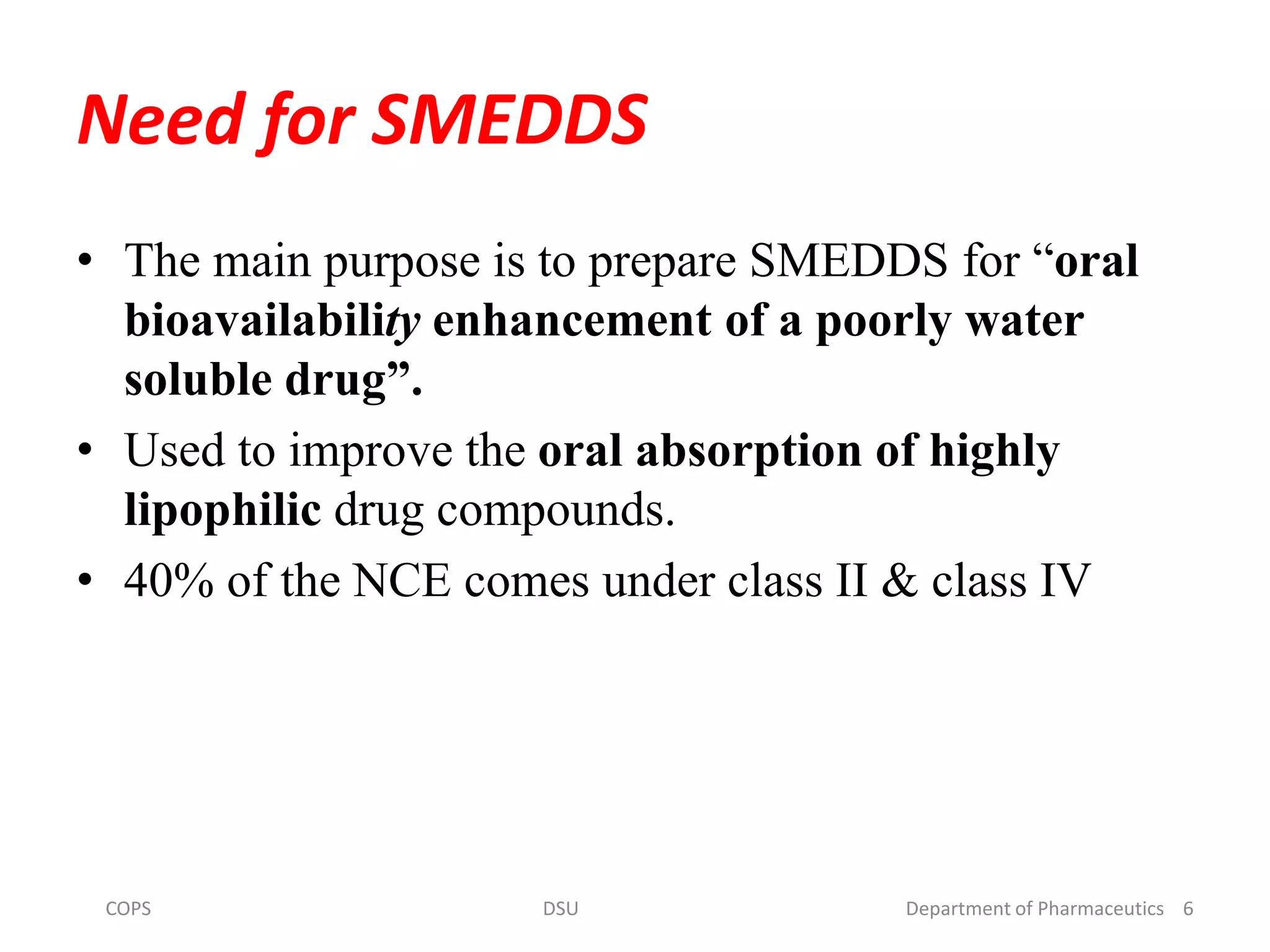
Need for SMEDDS
• The main purpose is to prepare SMEDDS for “oral
bioavailability enhancement of a poorly water
soluble drug”.
• Used to improve the oral absorption of highly
lipophilic drug compounds.
• 40% of the NCE comes under class II & class IV
6COPS DSU Department of Pharmaceutics
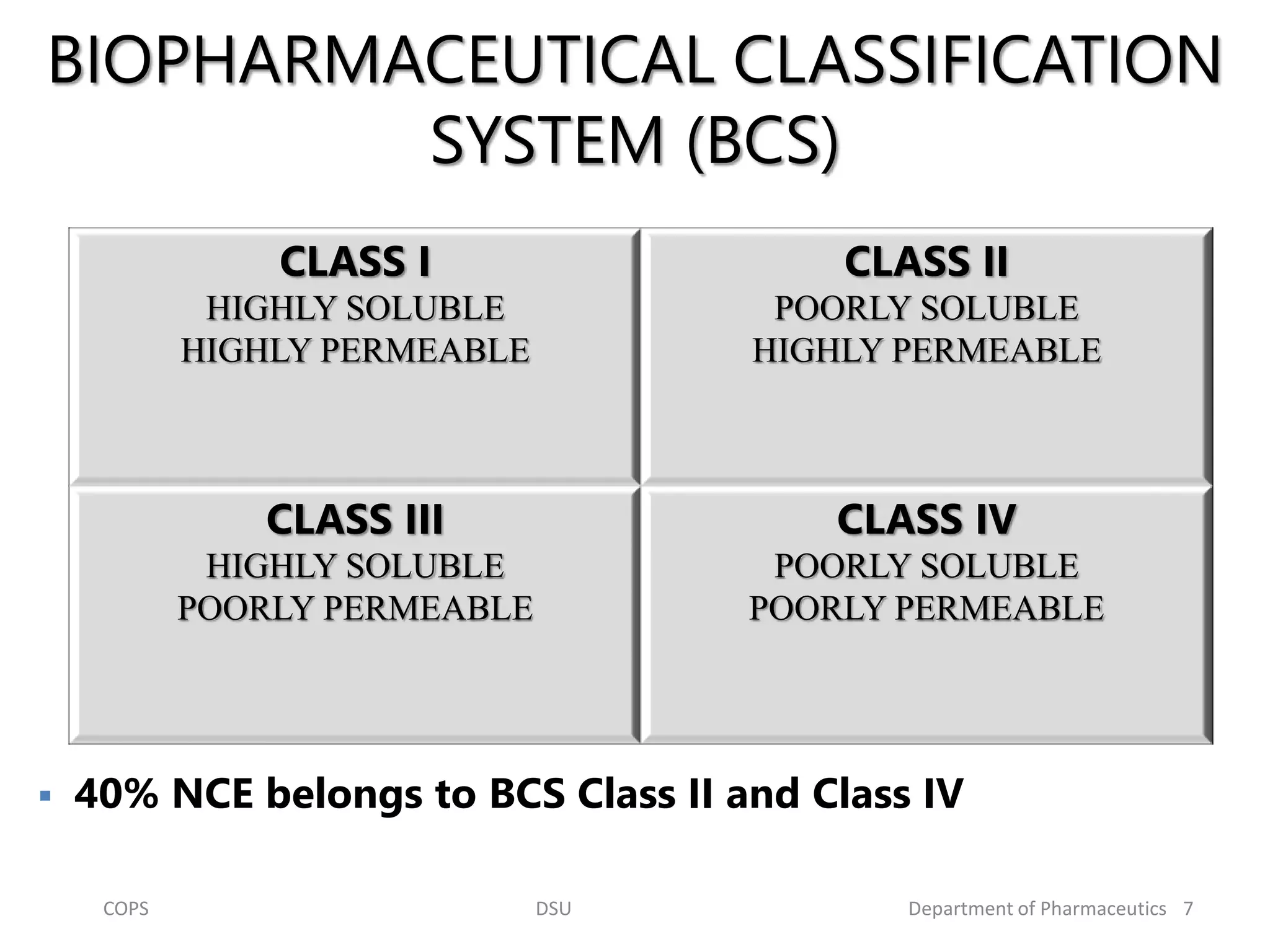
BIOPHARMACEUTICAL CLASSIFICATION
SYSTEM (BCS)
CLASS I
HIGHLY SOLUBLE
HIGHLY PERMEABLE
CLASS II
POORLY SOLUBLE
HIGHLY PERMEABLE
CLASS III
HIGHLY SOLUBLE
POORLY PERMEABLE
CLASS IV
POORLY SOLUBLE
POORLY PERMEABLE
 40% NCE belongs to BCS Class II and Class IV
7COPS DSU Department of Pharmaceutics
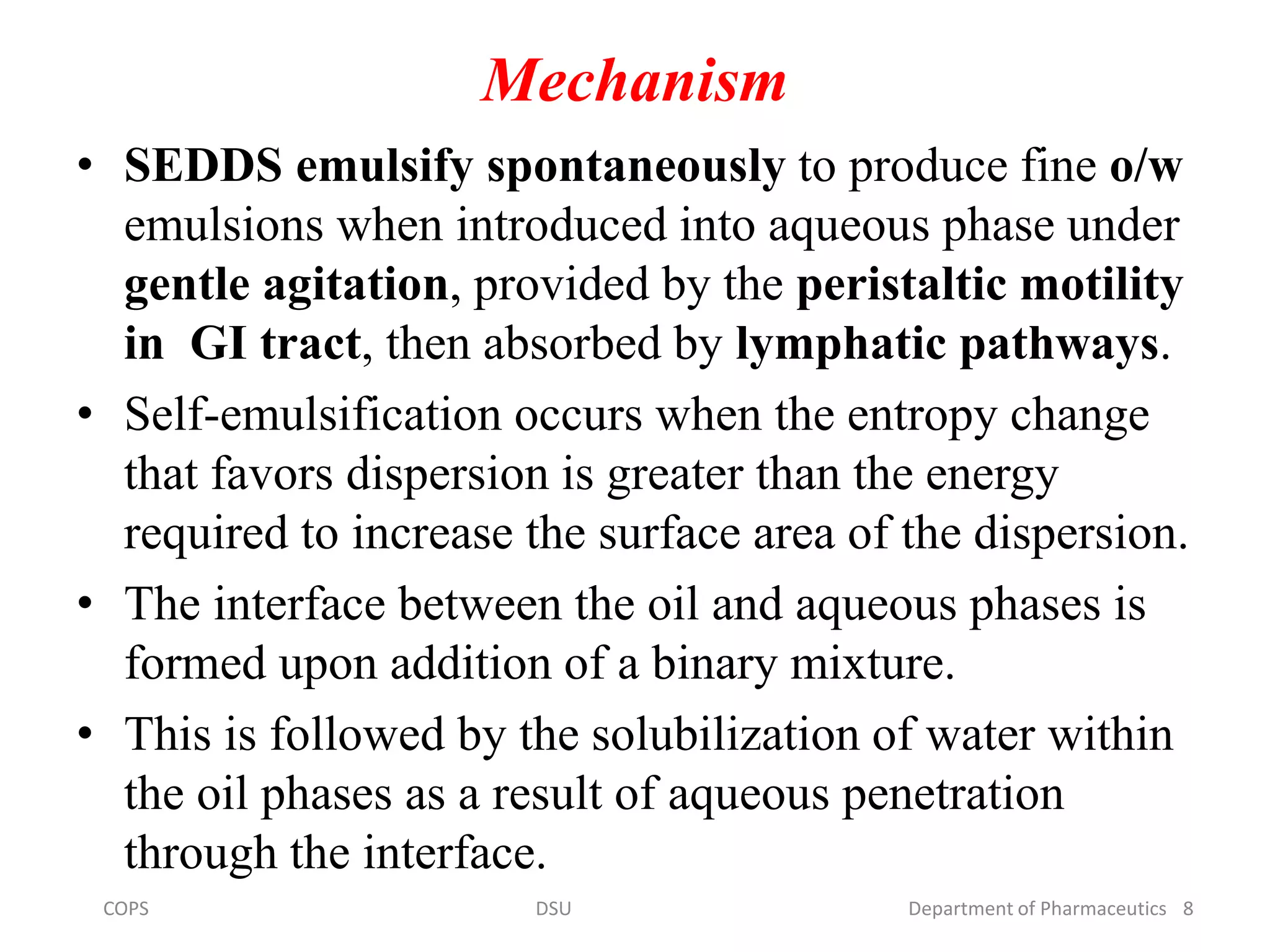
Mechanism
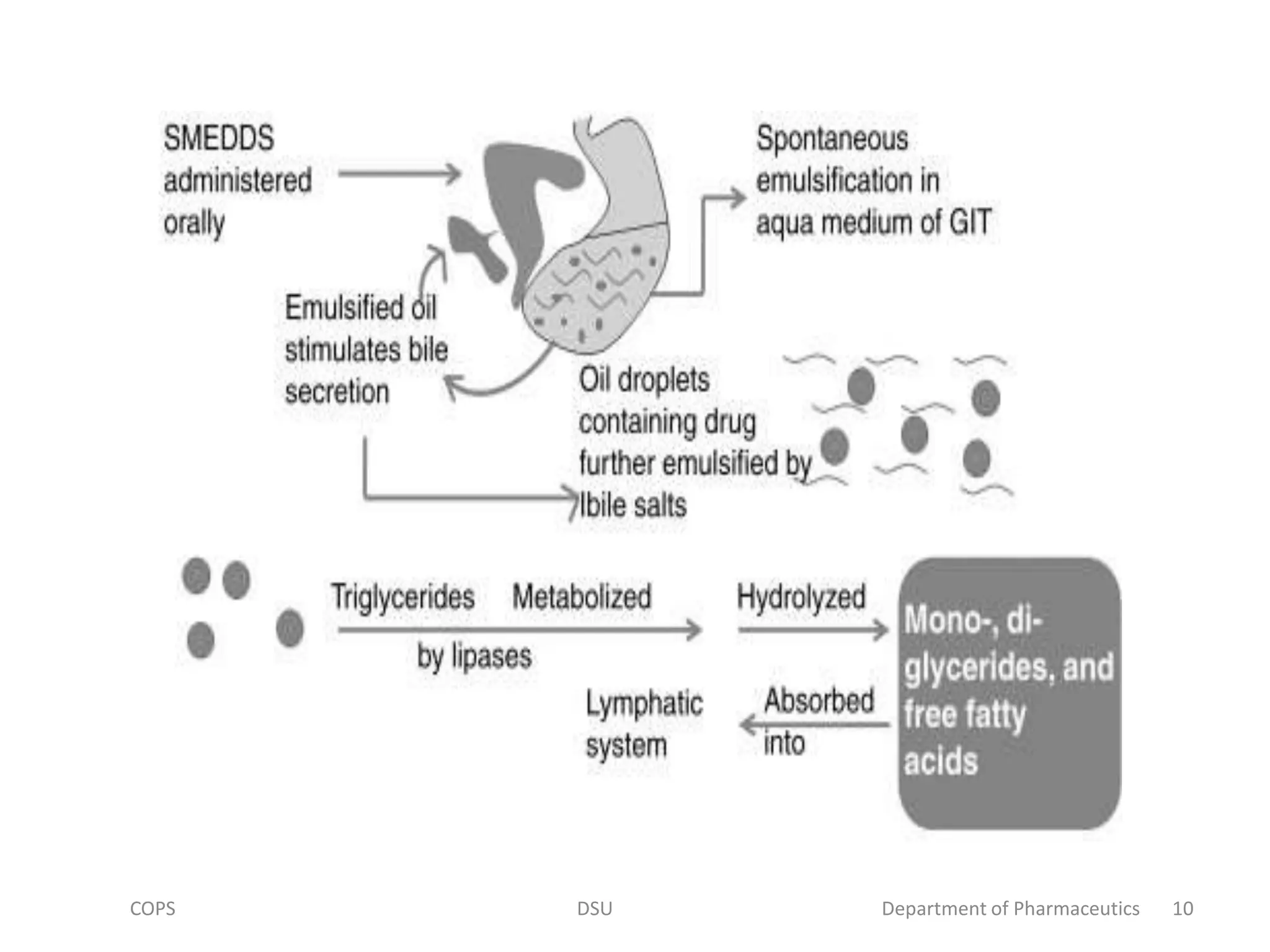
• SEDDS emulsify spontaneously to produce fine o/w
emulsions when introduced into aqueous phase under
gentle agitation, provided by the peristaltic motility
in GI tract, then absorbed by lymphatic pathways.
• Self-emulsification occurs when the entropy change
that favors dispersion is greater than the energy
required to increase the surface area of the dispersion.
• The interface between the oil and aqueous phases is
formed upon addition of a binary mixture.
• This is followed by the solubilization of water within
the oil phases as a result of aqueous penetration
through the interface.
8COPS DSU Department of Pharmaceutics
• Following gentle agitation of the self emulsifying
system, water will rapidly penetrate into the aqueous
cores and lead to interface disruptions and droplet
formation.
SEDDS SMEDDS
9COPS DSU Department of Pharmaceutics
10COPS DSU Department of Pharmaceutics
Advantages over conventional
emulsion
 Thermodynamically stable & easily stored.
 More reproducible blood-time profiles.
 Globule size:2-100nm,better absorption leads to increased
penetration to GIT and bioavailability of drug.
 Optical transparency.
 Can be formulated in various dosage forms.
 Can be autoclaved.
 Solubility of hydrophobic drug.
 Increased bioavailability of the drug.
11COPS DSU Department of Pharmaceutics
Advantages
• Improvement in oral bioavailability: Dissolution rate
dependant. Eg: In case of Halofantrine approximately
6-8 fold increase in bioavailability of drug was
reported in comparison to tablet formulation.
• Ease of manufacture and scale-up:
• Reduction in inter-subject and intra-subject variability
and food effects.
• Ability to deliver peptides that are prone to enzymatic
hydrolysis in GI.
12COPS DSU Department of Pharmaceutics
• No influence of lipid digestion process as
found in other LDDS.
• Increased drug loading capacity
• Protection of sensitive drug substances.
13COPS DSU Department of Pharmaceutics
Disadvantage
1. The drawbacks of this system include chemical
instabilities of drugs and high surfactant
concentrations in formulations (approximately 30-
60%) which irritate GIT.
2. Moreover, volatile co solvents in the conventional
self-micro emulsifying formulations are known to
migrate into the shells of soft or hard gelatin
capsules, resulting in the precipitation of the
lipophilic drugs.
3. The precipitation tendency of the drug on dilution
may be higher due to the dilution effect of the
hydrophilic solvent.
14COPS DSU Department of Pharmaceutics
4. One of the obstacles for the development of
SMEDDS and other lipid-based formulations is the
lack of good predicative in vitro models for
assessment of the formulations.
5. Traditional dissolution methods do not work, because
these formulations potentially are dependent on
digestion prior to release of the drug. This in vitro
model needs further development and validation
before its strength can be evaluated.
15COPS DSU Department of Pharmaceutics
Composition of SMEDDS
SMEEDS
(isotropic
solution)
Drug
Surfact
ant
Co-
surfact
ant
Oil
phase
16COPS DSU Department of Pharmaceutics
1. Role : to solubalise good amount of
lipophilic drug and intestinal lymphatic
uptake of lipophlic drug.
2. Nontoxic and safe components.
3.Oil from natural sources and modified
vegetable oil are suitable. The extension of
micro emulsion generally depends on nature
of oil. This is due to difference in oil
penetration into surfactant layer.
4. Medium chain TGs are preffered than
long chain because they are more
adsorbable, don’t get deposited in the body
and more solubility for lipophilic drugs.
E.g. corn oil, soyabean oil, triglycerides and
fatty acid methyl esters.
1. OIL PHASE
17COPS DSU Department of Pharmaceutics
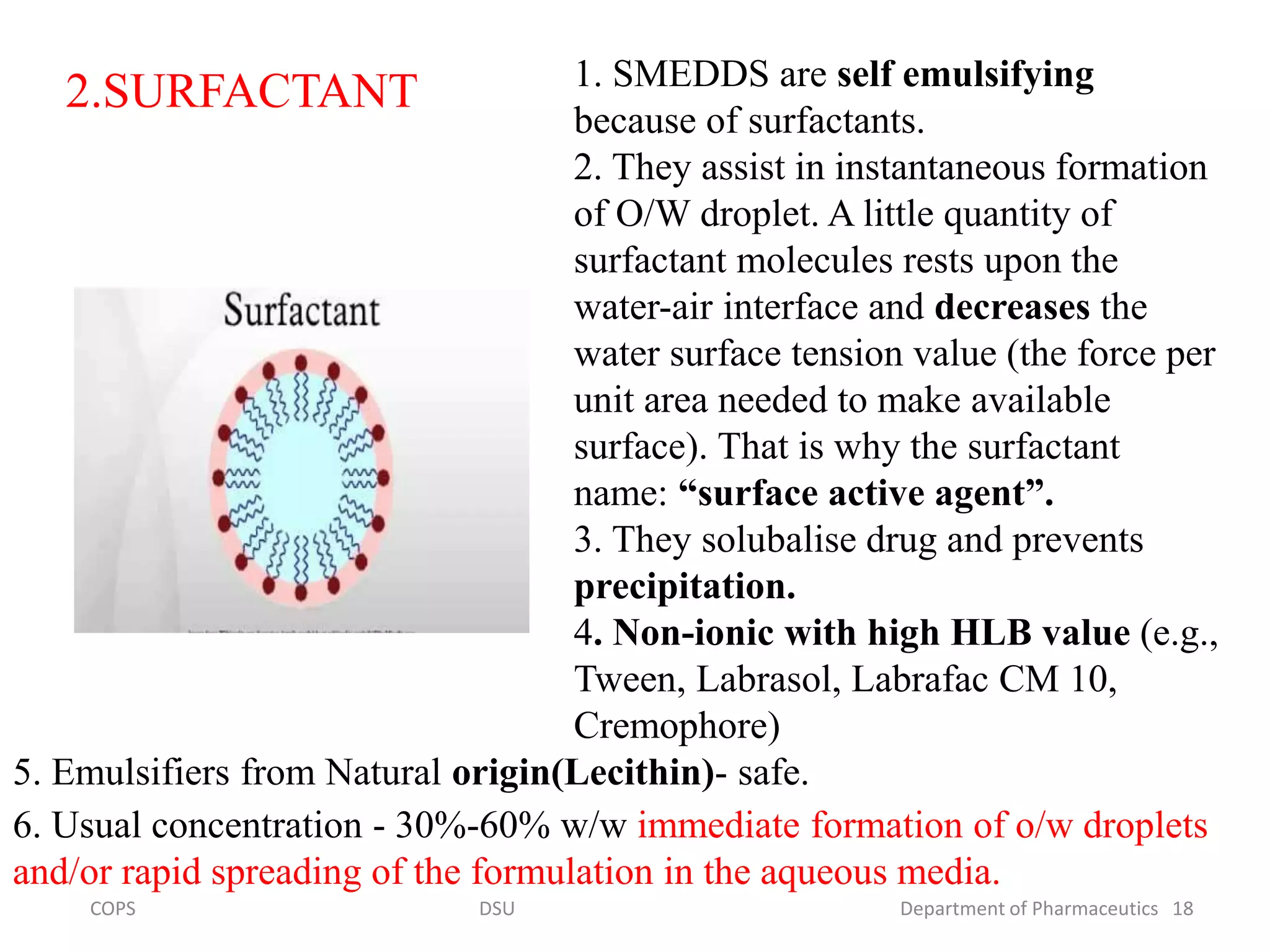
1. SMEDDS are self emulsifying
because of surfactants.
2. They assist in instantaneous formation
of O/W droplet. A little quantity of
surfactant molecules rests upon the
water-air interface and decreases the
water surface tension value (the force per
unit area needed to make available
surface). That is why the surfactant
name: “surface active agent”.
3. They solubalise drug and prevents
precipitation.
4. Non-ionic with high HLB value (e.g.,
Tween, Labrasol, Labrafac CM 10,
Cremophore)
2.SURFACTANT
6. Usual concentration - 30%-60% w/w immediate formation of o/w droplets
and/or rapid spreading of the formulation in the aqueous media.
5. Emulsifiers from Natural origin(Lecithin)- safe.
18COPS DSU Department of Pharmaceutics
1.Help to dissolve large amounts of either
the hydrophilic surfactant or the drug in
the lipid base, thus increases the
solubility.
2.Reduces the overall effect of surfactant.
3.Ethanol, Propylene glycol (PG),
Polyethylene glycol (PEG), etc (suitable
for oral administration.
5.Solvents can even act as co surfactants
in micro emulsion systems.
6.Alternately alcohols and other volatile
co solvents have the disadvantage of
evaporating into the shells of the soft
gelatin or hard sealed gelatin capsules in
conventional SMEDDS leading to drug
precipitation.
3. CO- SURFACTANT/
CO SOLVENT
19COPS DSU Department of Pharmaceutics
Mainly BCS classification class
II drugs :
• Nifedipine,
• Cyclosporin,
• Digoxin
• Steroids,
• Diazepam
• Artemether
• Carbamazepine
• Griseofulvin
• Glibenclamide
• Haloperidol
• Ibuprofen
• Phenytoin
Sodium
• FOLIC acid
4. DRUG
20COPS DSU Department of Pharmaceutics
Other components
• pH adjusters
• Flavours
• Antioxidant agents
– Lipophilic antioxidants(E.g. alpha tocopherol,
Propyl Gallate,Ascorbyl palmitate )
– [ stabilize the oily content of SMEDDS
formulation].
• Consistency builder
21COPS DSU Department of Pharmaceutics
Requirement for the formulation
The self micro-emulsification process is specific to
1.The nature of the oil/surfactant pair.
2.The surfactant concentration.
3.Oil/surfactant ratio.
4.The concentration and nature of co-surfactant and
surfactant/co-surfactant.
5.Temperature at which self micro-emulsification occurs.
6.Suitable drug candidate - BCS II classification drugs are
preferred.
Eg: nifidipine, cyclosporin, dixogin and steroids etc.
22COPS DSU Department of Pharmaceutics
Screening of excipients: Solubility studies
• Drug has to dissolve in to oil phase(lipophilic part) of
microemulsion.
• Water phase is combined with the surfactant and then
cosurfactant is added slowly with constant stirring
until the system is become transparent.
• The amount of surfactant and co-surfactant to be
added and the parent oil phase that can be
incorporated is determined with the help of pseudo
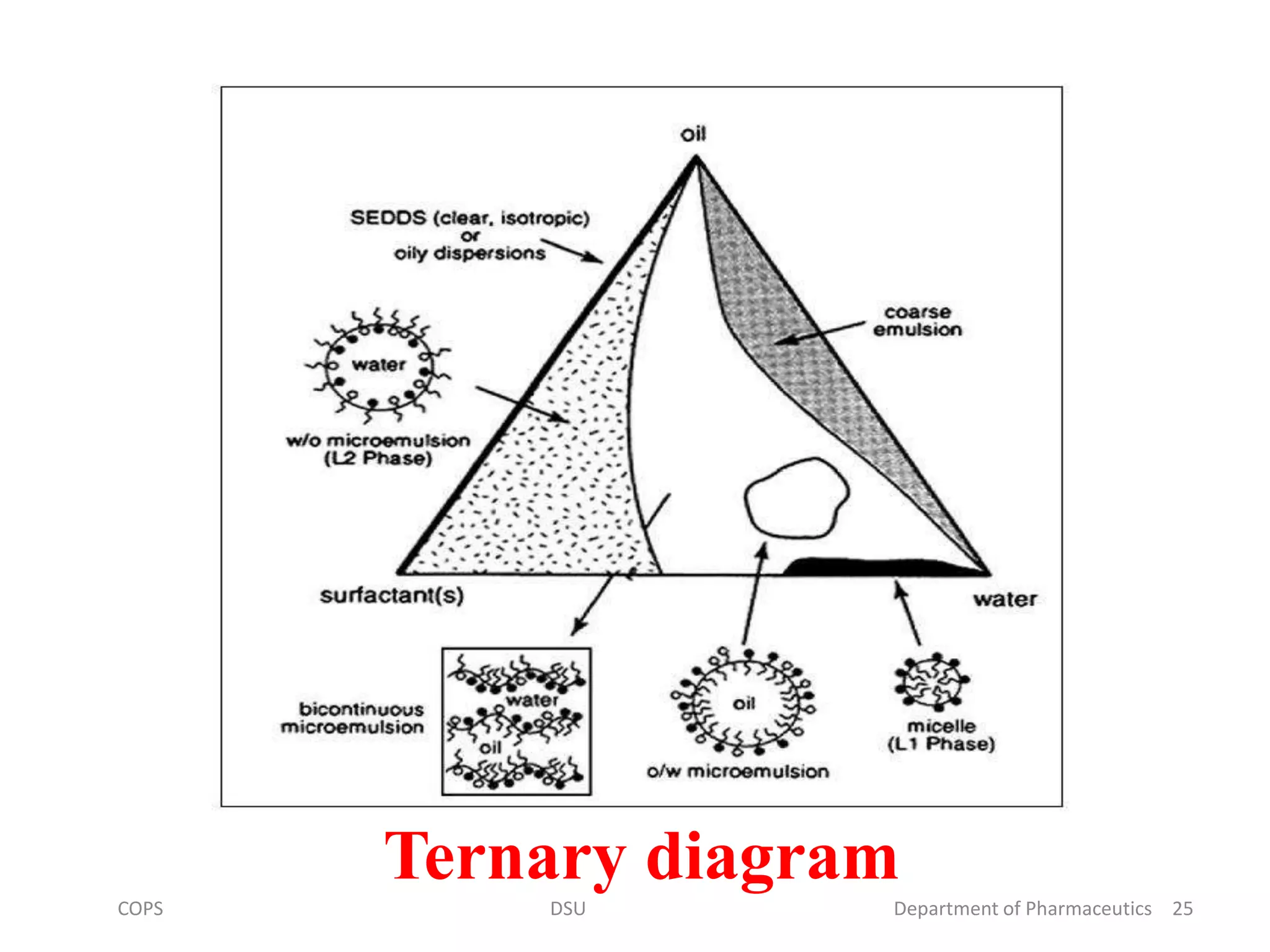
ternary phase diagram.
• Ultrasonicator can finally used to achieve the desired
range for the dispersed phase.
23COPS DSU Department of Pharmaceutics
• It is then allow to equilibrate.
• Gel may be prepared by the addition of the gelling
agent to above micro emulsion.
• Solidification using solid carriers for solid SMEEDS
• Eg: adsorbent material like kaolin (we can directly
adsorb ligquid into adsorbent --- solid).
24COPS DSU Department of Pharmaceutics
Ternary diagram
25COPS DSU Department of Pharmaceutics
METHODS OF PREPARATION
1. Phase Titration Method
2. Phase inversion Method
1. Phase Titration Method
• dilution of an oil-surfactant mixture with water.(w/o)
• dilution of a water-surfactant mixture with oil.(o/w)
• mixing all components at once. In some systems, the
order of ingredient addition may determine wheather
a microemulsion forms.
26COPS DSU Department of Pharmaceutics
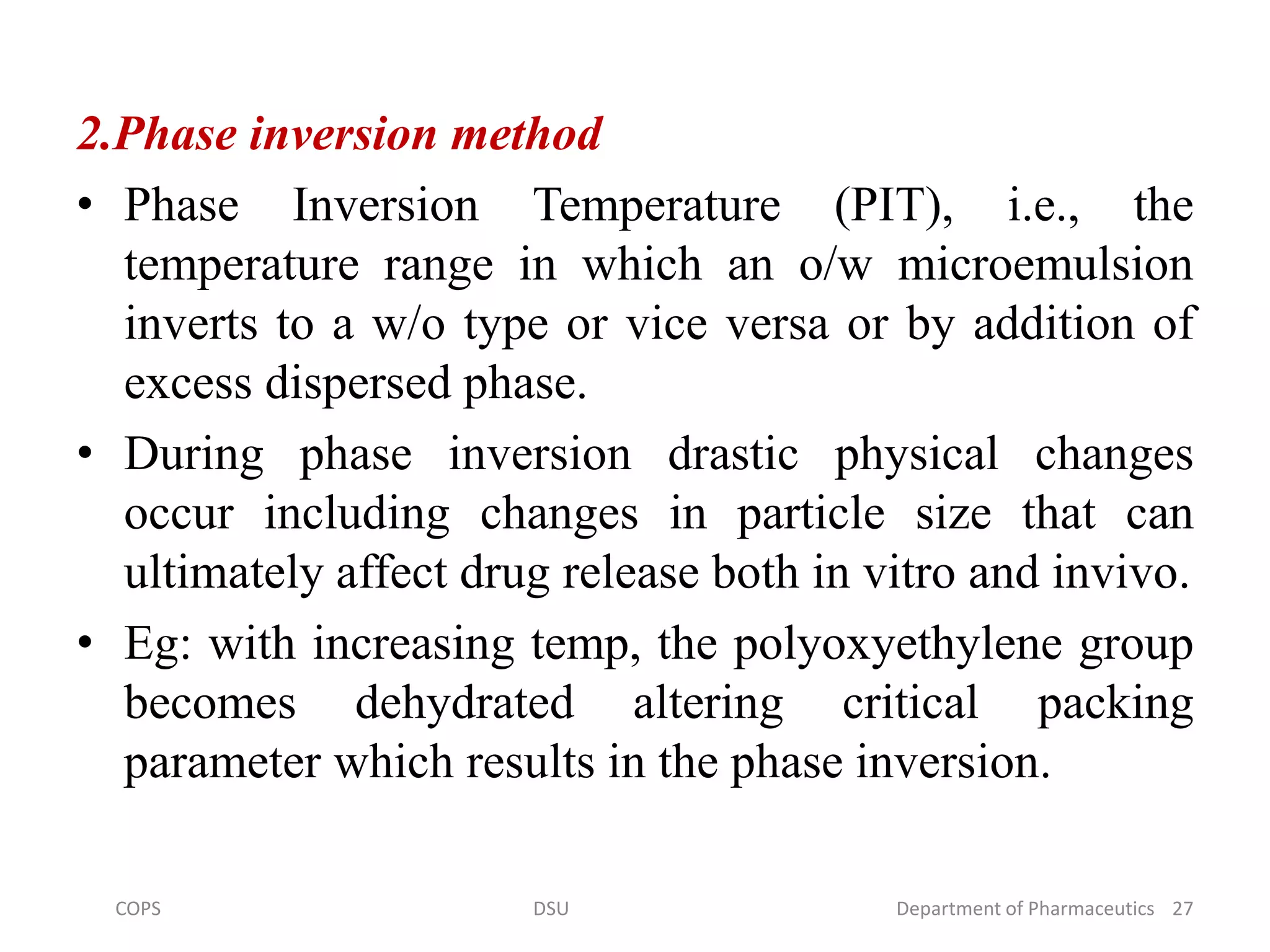
2.Phase inversion method
• Phase Inversion Temperature (PIT), i.e., the
temperature range in which an o/w microemulsion
inverts to a w/o type or vice versa or by addition of
excess dispersed phase.
• During phase inversion drastic physical changes
occur including changes in particle size that can
ultimately affect drug release both in vitro and invivo.
• Eg: with increasing temp, the polyoxyethylene group
becomes dehydrated altering critical packing
parameter which results in the phase inversion.
27COPS DSU Department of Pharmaceutics
APPLICATIONS
• SUPERSATURABLE SMEDDS (S-SMEDDS): The high
surfactant level typically present in SMEDDS formulation
can lead to GI side effects and a new class of
supersaturable formulations including supersaturable
SMEDDS. (S-SMEDDS) formulations have been
designed and developed to reduce the surfactant side
effects and achieve rapid absorption of poorly soluble
drugs and bioavailability.
Eg: NSAIDS & Ketoprofen.
• PROTECTION AGAINST BIODEGRADATION:
Liquid crystalline phase in SEDDS acts as barrier
between degrading environment and drug.
Eg: proteins and peptides.
28COPS DSU Department of Pharmaceutics
• SOLID SMEDDS: SMEDDS are normally prepared
as liquid dosage forms that can be administrated in
soft gelatin capsules, which have some disadvantages
especially in the manufacturing process. An
alternative method is the incorporation of liquid self
emulsifying ingredients into a powder in order to
create a solid dosage form (tablets, capsules). A pellet
formulation of progesterone in SMEDDS has been
prepared by the process of extrusion /spheronization
to provide a good in vitro drug release (100% within
30 min, T50% at 13 min). The same dose of
progesterone (16 mg) in pellets and in the SEDDS
liquid formulation resulted in similar AUC, C max
and T max values.
29COPS DSU Department of Pharmaceutics
Marketed Products
COPS DSU Department of Pharmaceutics 30
Reference
1. Tang J: Self-Emulsifying Drug Delivery Systems:
strategy for improving oral delivery of poorly
soluble drugs. Cur Drug Th 2007; 2: 85-93.
2. Spernath A, AserinA (December 2006).
"Microemulsions as carriers for drugs and
nutraceuticals". Adv Colloid Interface Sci 128-130:
47–64. doi:10.1016/j.cis.2006.11.016. PMID
17229398.
3. You tube video on SMEDDS by Dr. Trapti Saxena.
31COPS DSU Department of Pharmaceutics
32

self micro emulsifying drug delivery system

  • 1.
    Submitted to: Dr. J.Josephine Leno Jenita Asst. Professor, Department of Pharmaceutics, College of Pharmaceutical Sciences, DSU Dayananda sagar college of Pharmacy, Banglore. Presented by: Arpitha.B. M M Pharm (I SEM), Department of Pharmaceutics, College of Pharmaceutical Sciences, DSU Dayananda Sagar College of Pharmacy, Banglore. Self micro emulsifying drug delivery system
  • 2.
    Contents • Introduction • Needfor SMEEDS • Difference between SMEDDS & SEDDS • Advantages and disadvantages • Formulation aspects of SMEDDS • Application • Reference 2COPS DSU Department of Pharmaceutics
  • 3.
    Introduction SMEDDS are definedas isotropic mixtures of natural or synthetic oils, solid and liquid surfactants or alternatively, one or more hydrophillic solvents and co-solvents/surfactants, that have a unique ability of forming fine oil-in-water (o/w) micro emulsions upon mild agitation followed by dilution in aqueous media, such as GI fluids. • These are micro emulsion containing particle size from 10- 100nm. • Micro emulsion have been succesively used to improve the solubility, chemical stability and oral bioavailability of poorly water soluble drugs. (class II and IV as per BCS clasification) 3COPS DSU Department of Pharmaceutics
  • 4.
    Comparision b/w emulsion& microemulsion. Emulsion Microemulsion 1. Emulsion consists of roughly spherical droplets of one phase dispersed to other. 1. They constantly evolve between various structures ranging from droplet to bi- continous structure. 2. They particle or non transparent as the particle/droplet size varies from 1-20 mm 2. They are transparent as the particle/ droplet size is only 10-100 nm. 3. Formulation requires shaking. 3. It’s a constant formulation. 4. They are thermodynamically unstable. 4. They are thermodynamically stable. 5. They are viscous formulation. 5. They can accommodate 20-40% without increase in viscosity. 4COPS DSU Department of Pharmaceutics
  • 5.
    Comparision between SEDDSand SMEDDS SEDDS SMEDDS 1. It is the mixture of oil, surfactant and drug. 1. It is a mixture of oil, surfactant, co- surfactant and drug. 2. Droplet size is 100-300 nm 2. Droplet size is less than 100 nm 3. It is turbid in nature. 3. It is transparent in nature. 4. It is thermodynamically not stable. 4. It is thermodynamically stable. 5. Ternary phase diagram are use in optimization 5. Pseudo ternary phase diagram are used for optimization. 6. Concentration of oil 40-80% 6. Less than 20% 5COPS DSU Department of Pharmaceutics
  • 6.
    Need for SMEDDS •The main purpose is to prepare SMEDDS for “oral bioavailability enhancement of a poorly water soluble drug”. • Used to improve the oral absorption of highly lipophilic drug compounds. • 40% of the NCE comes under class II & class IV 6COPS DSU Department of Pharmaceutics
  • 7.
    BIOPHARMACEUTICAL CLASSIFICATION SYSTEM (BCS) CLASSI HIGHLY SOLUBLE HIGHLY PERMEABLE CLASS II POORLY SOLUBLE HIGHLY PERMEABLE CLASS III HIGHLY SOLUBLE POORLY PERMEABLE CLASS IV POORLY SOLUBLE POORLY PERMEABLE  40% NCE belongs to BCS Class II and Class IV 7COPS DSU Department of Pharmaceutics
  • 8.
    Mechanism • SEDDS emulsifyspontaneously to produce fine o/w emulsions when introduced into aqueous phase under gentle agitation, provided by the peristaltic motility in GI tract, then absorbed by lymphatic pathways. • Self-emulsification occurs when the entropy change that favors dispersion is greater than the energy required to increase the surface area of the dispersion. • The interface between the oil and aqueous phases is formed upon addition of a binary mixture. • This is followed by the solubilization of water within the oil phases as a result of aqueous penetration through the interface. 8COPS DSU Department of Pharmaceutics
  • 9.
    • Following gentleagitation of the self emulsifying system, water will rapidly penetrate into the aqueous cores and lead to interface disruptions and droplet formation. SEDDS SMEDDS 9COPS DSU Department of Pharmaceutics
  • 10.
    10COPS DSU Departmentof Pharmaceutics
  • 11.
    Advantages over conventional emulsion Thermodynamically stable & easily stored.  More reproducible blood-time profiles.  Globule size:2-100nm,better absorption leads to increased penetration to GIT and bioavailability of drug.  Optical transparency.  Can be formulated in various dosage forms.  Can be autoclaved.  Solubility of hydrophobic drug.  Increased bioavailability of the drug. 11COPS DSU Department of Pharmaceutics
  • 12.
    Advantages • Improvement inoral bioavailability: Dissolution rate dependant. Eg: In case of Halofantrine approximately 6-8 fold increase in bioavailability of drug was reported in comparison to tablet formulation. • Ease of manufacture and scale-up: • Reduction in inter-subject and intra-subject variability and food effects. • Ability to deliver peptides that are prone to enzymatic hydrolysis in GI. 12COPS DSU Department of Pharmaceutics
  • 13.
    • No influenceof lipid digestion process as found in other LDDS. • Increased drug loading capacity • Protection of sensitive drug substances. 13COPS DSU Department of Pharmaceutics
  • 14.
    Disadvantage 1. The drawbacksof this system include chemical instabilities of drugs and high surfactant concentrations in formulations (approximately 30- 60%) which irritate GIT. 2. Moreover, volatile co solvents in the conventional self-micro emulsifying formulations are known to migrate into the shells of soft or hard gelatin capsules, resulting in the precipitation of the lipophilic drugs. 3. The precipitation tendency of the drug on dilution may be higher due to the dilution effect of the hydrophilic solvent. 14COPS DSU Department of Pharmaceutics
  • 15.
    4. One ofthe obstacles for the development of SMEDDS and other lipid-based formulations is the lack of good predicative in vitro models for assessment of the formulations. 5. Traditional dissolution methods do not work, because these formulations potentially are dependent on digestion prior to release of the drug. This in vitro model needs further development and validation before its strength can be evaluated. 15COPS DSU Department of Pharmaceutics
  • 16.
  • 17.
    1. Role :to solubalise good amount of lipophilic drug and intestinal lymphatic uptake of lipophlic drug. 2. Nontoxic and safe components. 3.Oil from natural sources and modified vegetable oil are suitable. The extension of micro emulsion generally depends on nature of oil. This is due to difference in oil penetration into surfactant layer. 4. Medium chain TGs are preffered than long chain because they are more adsorbable, don’t get deposited in the body and more solubility for lipophilic drugs. E.g. corn oil, soyabean oil, triglycerides and fatty acid methyl esters. 1. OIL PHASE 17COPS DSU Department of Pharmaceutics
  • 18.
    1. SMEDDS areself emulsifying because of surfactants. 2. They assist in instantaneous formation of O/W droplet. A little quantity of surfactant molecules rests upon the water-air interface and decreases the water surface tension value (the force per unit area needed to make available surface). That is why the surfactant name: “surface active agent”. 3. They solubalise drug and prevents precipitation. 4. Non-ionic with high HLB value (e.g., Tween, Labrasol, Labrafac CM 10, Cremophore) 2.SURFACTANT 6. Usual concentration - 30%-60% w/w immediate formation of o/w droplets and/or rapid spreading of the formulation in the aqueous media. 5. Emulsifiers from Natural origin(Lecithin)- safe. 18COPS DSU Department of Pharmaceutics
  • 19.
    1.Help to dissolvelarge amounts of either the hydrophilic surfactant or the drug in the lipid base, thus increases the solubility. 2.Reduces the overall effect of surfactant. 3.Ethanol, Propylene glycol (PG), Polyethylene glycol (PEG), etc (suitable for oral administration. 5.Solvents can even act as co surfactants in micro emulsion systems. 6.Alternately alcohols and other volatile co solvents have the disadvantage of evaporating into the shells of the soft gelatin or hard sealed gelatin capsules in conventional SMEDDS leading to drug precipitation. 3. CO- SURFACTANT/ CO SOLVENT 19COPS DSU Department of Pharmaceutics
  • 20.
    Mainly BCS classificationclass II drugs : • Nifedipine, • Cyclosporin, • Digoxin • Steroids, • Diazepam • Artemether • Carbamazepine • Griseofulvin • Glibenclamide • Haloperidol • Ibuprofen • Phenytoin Sodium • FOLIC acid 4. DRUG 20COPS DSU Department of Pharmaceutics
  • 21.
    Other components • pHadjusters • Flavours • Antioxidant agents – Lipophilic antioxidants(E.g. alpha tocopherol, Propyl Gallate,Ascorbyl palmitate ) – [ stabilize the oily content of SMEDDS formulation]. • Consistency builder 21COPS DSU Department of Pharmaceutics
  • 22.
    Requirement for theformulation The self micro-emulsification process is specific to 1.The nature of the oil/surfactant pair. 2.The surfactant concentration. 3.Oil/surfactant ratio. 4.The concentration and nature of co-surfactant and surfactant/co-surfactant. 5.Temperature at which self micro-emulsification occurs. 6.Suitable drug candidate - BCS II classification drugs are preferred. Eg: nifidipine, cyclosporin, dixogin and steroids etc. 22COPS DSU Department of Pharmaceutics
  • 23.
    Screening of excipients:Solubility studies • Drug has to dissolve in to oil phase(lipophilic part) of microemulsion. • Water phase is combined with the surfactant and then cosurfactant is added slowly with constant stirring until the system is become transparent. • The amount of surfactant and co-surfactant to be added and the parent oil phase that can be incorporated is determined with the help of pseudo ternary phase diagram. • Ultrasonicator can finally used to achieve the desired range for the dispersed phase. 23COPS DSU Department of Pharmaceutics
  • 24.
    • It isthen allow to equilibrate. • Gel may be prepared by the addition of the gelling agent to above micro emulsion. • Solidification using solid carriers for solid SMEEDS • Eg: adsorbent material like kaolin (we can directly adsorb ligquid into adsorbent --- solid). 24COPS DSU Department of Pharmaceutics
  • 25.
    Ternary diagram 25COPS DSUDepartment of Pharmaceutics
  • 26.
    METHODS OF PREPARATION 1.Phase Titration Method 2. Phase inversion Method 1. Phase Titration Method • dilution of an oil-surfactant mixture with water.(w/o) • dilution of a water-surfactant mixture with oil.(o/w) • mixing all components at once. In some systems, the order of ingredient addition may determine wheather a microemulsion forms. 26COPS DSU Department of Pharmaceutics
  • 27.
    2.Phase inversion method •Phase Inversion Temperature (PIT), i.e., the temperature range in which an o/w microemulsion inverts to a w/o type or vice versa or by addition of excess dispersed phase. • During phase inversion drastic physical changes occur including changes in particle size that can ultimately affect drug release both in vitro and invivo. • Eg: with increasing temp, the polyoxyethylene group becomes dehydrated altering critical packing parameter which results in the phase inversion. 27COPS DSU Department of Pharmaceutics
  • 28.
    APPLICATIONS • SUPERSATURABLE SMEDDS(S-SMEDDS): The high surfactant level typically present in SMEDDS formulation can lead to GI side effects and a new class of supersaturable formulations including supersaturable SMEDDS. (S-SMEDDS) formulations have been designed and developed to reduce the surfactant side effects and achieve rapid absorption of poorly soluble drugs and bioavailability. Eg: NSAIDS & Ketoprofen. • PROTECTION AGAINST BIODEGRADATION: Liquid crystalline phase in SEDDS acts as barrier between degrading environment and drug. Eg: proteins and peptides. 28COPS DSU Department of Pharmaceutics
  • 29.
    • SOLID SMEDDS:SMEDDS are normally prepared as liquid dosage forms that can be administrated in soft gelatin capsules, which have some disadvantages especially in the manufacturing process. An alternative method is the incorporation of liquid self emulsifying ingredients into a powder in order to create a solid dosage form (tablets, capsules). A pellet formulation of progesterone in SMEDDS has been prepared by the process of extrusion /spheronization to provide a good in vitro drug release (100% within 30 min, T50% at 13 min). The same dose of progesterone (16 mg) in pellets and in the SEDDS liquid formulation resulted in similar AUC, C max and T max values. 29COPS DSU Department of Pharmaceutics
  • 30.
    Marketed Products COPS DSUDepartment of Pharmaceutics 30
  • 31.
    Reference 1. Tang J:Self-Emulsifying Drug Delivery Systems: strategy for improving oral delivery of poorly soluble drugs. Cur Drug Th 2007; 2: 85-93. 2. Spernath A, AserinA (December 2006). "Microemulsions as carriers for drugs and nutraceuticals". Adv Colloid Interface Sci 128-130: 47–64. doi:10.1016/j.cis.2006.11.016. PMID 17229398. 3. You tube video on SMEDDS by Dr. Trapti Saxena. 31COPS DSU Department of Pharmaceutics
  • 32.