Research Article ISSN 2277-3657
Available online at www.ijpras.com
Volume 2, issue 1 (2013),31-35
International Journal of
Pharmaceutical Research &
Allied Sciences
31
Green Synthesis and Characterization of Zero Valent Silver
Nanoparticles from the Leaf Extract of Datura Metel
Akshaya Kumar Ojha , Jogeswari Rout , Shikha Behera and P.L.Nayak*
P.L.Nayak Research Foundation and Centre for Excellence in Nano Science and Technology, Synergy Institute of
Technology, Bhubaneswar, Odisha, India.
plnayak@rediffmail.com
Subject: Nanotechnology
Abstract
In the present work, nano scaled zero valent silver were synthesized from the plant extract of Datura metel under
atmospheric conditions through green synthesis. A systematic characterization of silver nanoparticles was performed
using UV, SEM,TEM and antimicrobial studies. The diameter of silver nanoparticles was predominantly found
within the range 50-100 nm.The novelty of this study is to comprehend a suitable biocompactible herbal reductant
for biosynthesis of zerovalent silver nanoparticles at a very cost effective level and the results are quite encouraging.
Keywords: Silver nanoparticles ; green Synthesis; UV, SEM, antimicrobial
1. Introduction
Nanotechnology is a reliable and enabling
environment friendly process for the synthesis
ofnanoscale particles. Nanosizeresults in specific
physicochemical characteristicssuch as high surface
area to volume ratio, whichpotentially results in high
reactivity [1]. Biosynthesis of nanoparticles is a kind
of bottom up approach where the main reaction
occurringis reduction/oxidation. With the antioxidant
or reducing properties of plant extracts, they are
usually responsible for the reduction of metal
compounds into theirrespective nanoparticles. Green
synthesis provides advancement over chemical
andphysical method as it is cost effective,
environment friendly, easily scaled up for largescale
synthesis and in this method there is no need to use
high pressure, energy, temperature and toxic
chemicals[2]. Green synthesis offer better
manipulation, control over crystal growth and their
stabilization. This has motivatedan upsurge in
research on the synthetic routes that allows better
control of shape and size forvarious
nanotechnological applications.
Silver has long been recognized as having inhibitory
effect on microbes present in medical and industrial
process [3, 4]. The most important application of
silver and silver nanoparticles is in medical industry
such as topical ointments to prevent infection against
burn and open wounds [5].
A number of approaches are available for the
synthesis of silver nanoparticles for example,
reduction in solutions[ 6] chemical and
photochemical reactions in reverse micelles [7],
thermal decomposition of silver compounds [8],
radiation assisted [9], electrochemical [10],
sonochemical[11], microwave assisted process [12]
and recently via green chemistry route [13,14,15].
Here in the current work we have reported the
synthesis of green silver nanoparticles using the leaf
extract of the plant – Datura metel (common name-
Kamkamawlaw). Aqueous silver nitrate solution,
after reacting with datura leaf extract, led to rapid
formation of highly stable, crystalline silver
nanoparticles. The rate of nanoparticle synthesis was
very high, which justifies use of plants over
Available online at www.ijpras.com
32
microorganisms in the biosynthesis of metal
nanoparticles through greener and safer methods. In
the subsequent sections we have described the
synthesis of silver nanoparticles based upon the
change in color, change in pH, change in absorbance
and the particle size formed after reduction.
2. Plant Description
Datura metel
Family : Solanaceae
Common name : Kamkamawlaw
It is a medicinal plant widely used in
phytomedicine to cure diseases such as asthma,
cough, convulsion and insanity. The leaves and seeds
are widely used in herbal medicine as anesthetic,
antispasmodic, bronchodilator and as hallucinogenic
.A variety of phytochemicals comprising of
alkaloids, flavonoids, phenols, tannins, saponins and
sterols have been found in it. The total alkaloid
content is 0.26 - 0.42 %. The plant and fruit are
spasmolytic, anticancerous and anthelmintic. Leaf is
antitumour, antirheumatic and vermicide. Flower is
antiasthamatic, anaesthetic and is employed in
swellings and eruptions on face [16].
Fig 1.a. Datura Plant (Datura metel )
3. Material and Experimental methods
3.1 Reagents and Chemicals
0.001 M Silver Nitrate was obtained from Sigma
Aldrich. Freshly prepared triple distilled water was
used throughout the experiment.
3.2 Collection of extracts
Datura leaves were collected from the local region.
They were washed and cleaned with triple distilled
water and dried with water absorbent paper. Then it
was cut into small pieces with an ethanol sterilized
knife and crushed with mortar and pestle dispensed in
10 ml of sterile distilled water and heated for 2-3
minutes at 70-80°C. The extract was then filtered
using Whatman No.1 filter paper. The filtrate was
collected in a clean and dried conical flask by
standard sterilized filtration method and was stored at
4°C.
3.3 Synthesis of Zero Valent Silver Nanoparticles
During the synthesis of Silver Nanoparticles both the
precursor and the reducing agent were mixed in a
clean sterilized flask in 1:1 proportion. For the
reduction of Ag ions, 5ml of filtered plant extract was
mixed to 5 ml of freshly prepared 0.001 M aqueous
of AgNO3 solution with constant stirring at 50-600
C.
The Silver Nanoparticles so prepared were stabilized
by adding 1% of chitosan and 1% of PVA.
3.4 UV-Vis Spectra analysis
The reduction of pure Ag ions to Ag0
was monitored
by measuring the UV-Vis spectrum by sampling of
aliquots (0.3 ml) of Ag Nanoparticle solution diluting
the sample in 3 ml distilled water. UV-Vis spectral
analysis was done by using UV-Vis
spectrophotometer Systronics 118 at the range
of 200-600 nm and observed the absorption peaks at
400-440 nm regions due to the excitation of surface
plasmon vibrations in the AgNPs solution, which are
identical to the characteristics UV-visible spectrum
of metallic Iron and it was recorded.
3.5 pH analysis
1 mM aqueous silver nitrate (AgNO3) solution shows
3.8 pH, there is concerned change in pH was
determined of silver nanoparticle synthesis using
extracts of plant and spices, which was determined
using Digital pH meter Systronics.
3.6 SEM analysis
Scanning Electron Microscopic (SEM) analysis was
done using Hitachi S-4500 SEM machine. Thin films
of the sample were prepared on a carbon coated
copper grid by just dropping a very small amount of
the sample on the grid, extra solution was removed
using a blotting paper and then the film on the SEM
grid were allowed to dry by putting it under a
mercury lamp for 5 min.
3.7 TEM analysis
After bioreduction,the mixtures were sampled for
TEM observation on H-600 Electron Microscope
(Hitachi) at a voltage of 120kV.
3.6 Antimicrobial Activity
3.6.1 Antibacterial assay
By disc diffusion method, the antibacterial activities
of the datura plant extract reduced AgNPs were
studied. LB (Luria bertoni) media was used ,sterilized
and solidified.Then three bacterial strains(
S.aureus , S.typhi )were swabbed on the plates.Sterile
discs were dipped in silver nanoparticles solution (20
µg/ml) and placed in the nutrient media plate and
kept for incubation at 37ºC for 24 hrs.
inhibition for control, SNPs and silver nitrate were
measured and the mean values of zone diameter were
presented.
3.6.1 Antifungal assay
Potato dextrose agar plates were prepared, sterilized
and solidified.After solidification ,three fungal
cultures (F.oxysporum , R.arrhizus, A. niger
swabbed on these plates. The sterile discs were
dipped in silver nanoparticles solution
placed in the agar plate and kept for incubation for 7
days. After 7 days zone of inhibition was measured.
Table 1. Change in color of the solution during Iron
Sr.
No
Solution
Before
Reduction
1.
2.
Datura Leaf Extract Light green
0.001 MAgNo
Solution
Color intensity: - += Light color, ++=
4.2 pH analysis
Table 2 . Change in pH during iron nanoparticle synthesis
Plant Extract Plant Part Taken
Binomial
Name
Local name
Datura metel Kamkamawl
aw
Result: - += Positive, -= Negative.
4.3 UV visible spectroscopy and color change for
the Green synthesized silver nano particles
UV –Vis spectroscopy is most widely used technique
for structural characterization of silver
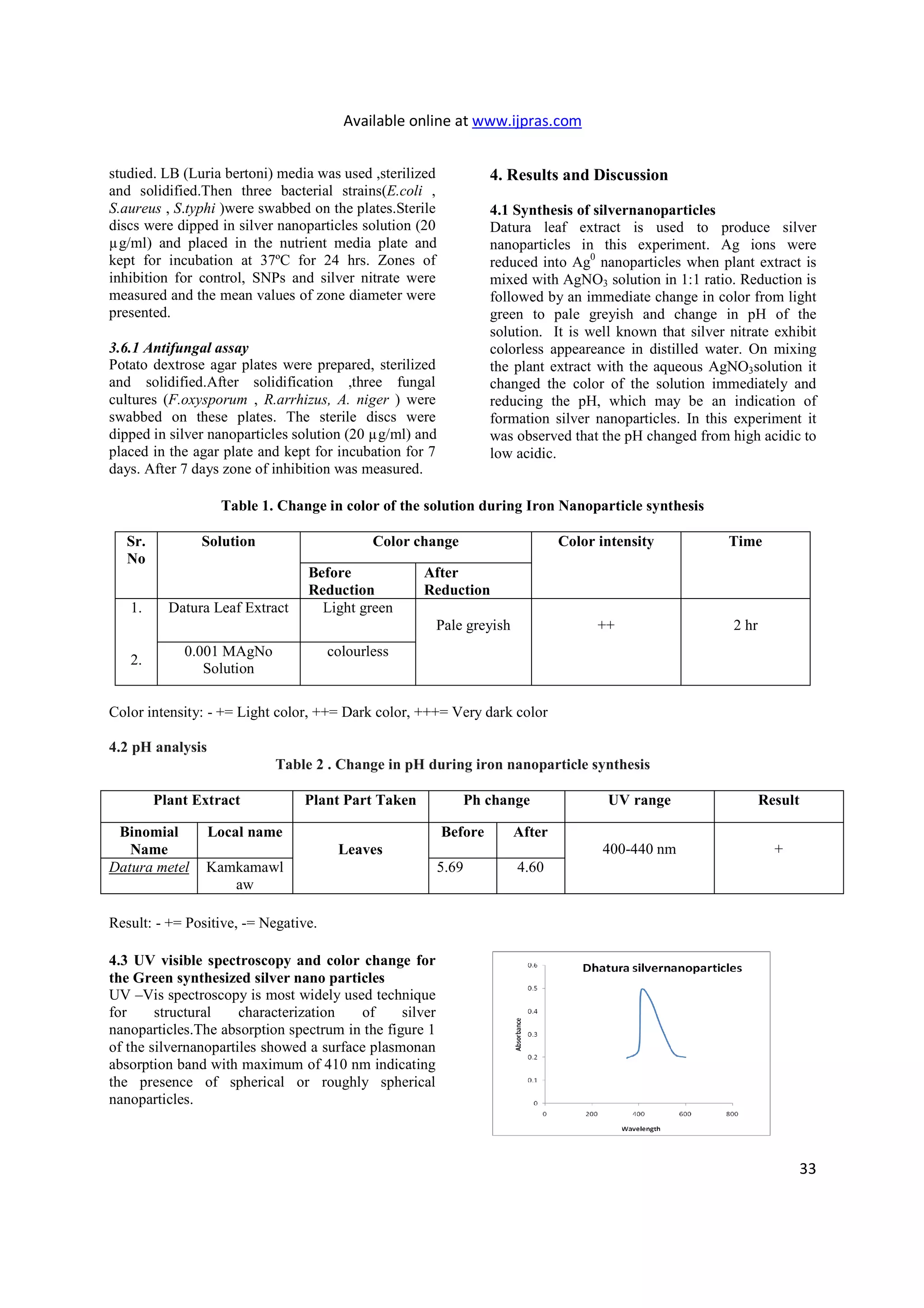
nanoparticles.The absorption spectrum in the figure 1
of the silvernanopartiles showed a surface plasmonan
absorption band with maximum of 410 nm indicating
the presence of spherical or roughly spherical
nanoparticles.
Available online at www.ijpras.com
studied. LB (Luria bertoni) media was used ,sterilized
and solidified.Then three bacterial strains(E.coli ,
were swabbed on the plates.Sterile
silver nanoparticles solution (20
µg/ml) and placed in the nutrient media plate and
kept for incubation at 37ºC for 24 hrs. Zones of
inhibition for control, SNPs and silver nitrate were
measured and the mean values of zone diameter were
Potato dextrose agar plates were prepared, sterilized
and solidified.After solidification ,three fungal
R.arrhizus, A. niger ) were
swabbed on these plates. The sterile discs were
solution (20 µg/ml) and
placed in the agar plate and kept for incubation for 7
days. After 7 days zone of inhibition was measured.
4. Results and Discussion
4.1 Synthesis of silvernanoparticles
Datura leaf extract is used to produce silver
nanoparticles in this experiment. Ag ions were
reduced into Ag0
nanoparticles when plant extract is
mixed with AgNO3 solution in 1:1 ratio. Reduction is
followed by an immediate change in color from light
green to pale greyish and change in pH of the
solution. It is well known that
colorless appeareance in distilled water. On mixing
the plant extract with the aqueous
changed the color of the solution immediately and
reducing the pH, which may be an indication of
formation silver nanoparticles. In this experiment it
was observed that the pH changed from high acidic to
low acidic.
Table 1. Change in color of the solution during Iron Nanoparticle synthesis
Color change Color intensity
Before
Reduction
After
Reduction
Light green
Pale greyish ++
colourless
+= Light color, ++= Dark color, +++= Very dark color
Table 2 . Change in pH during iron nanoparticle synthesis
Plant Part Taken Ph change UV range
Leaves
Before After
400-440 nm
5.69 4.60
4.3 UV visible spectroscopy and color change for
the Green synthesized silver nano particles
Vis spectroscopy is most widely used technique
for structural characterization of silver
nanoparticles.The absorption spectrum in the figure 1
of the silvernanopartiles showed a surface plasmonan
absorption band with maximum of 410 nm indicating
the presence of spherical or roughly spherical
33
nd Discussion
4.1 Synthesis of silvernanoparticles
Datura leaf extract is used to produce silver
in this experiment. Ag ions were
nanoparticles when plant extract is
solution in 1:1 ratio. Reduction is
followed by an immediate change in color from light
and change in pH of the
It is well known that silver nitrate exhibit
in distilled water. On mixing
the plant extract with the aqueous AgNO3solution it
changed the color of the solution immediately and
reducing the pH, which may be an indication of
nanoparticles. In this experiment it
was observed that the pH changed from high acidic to
Nanoparticle synthesis
Color intensity Time
2 hr
UV range Result
440 nm +
Available online at www.ijpras.com
34
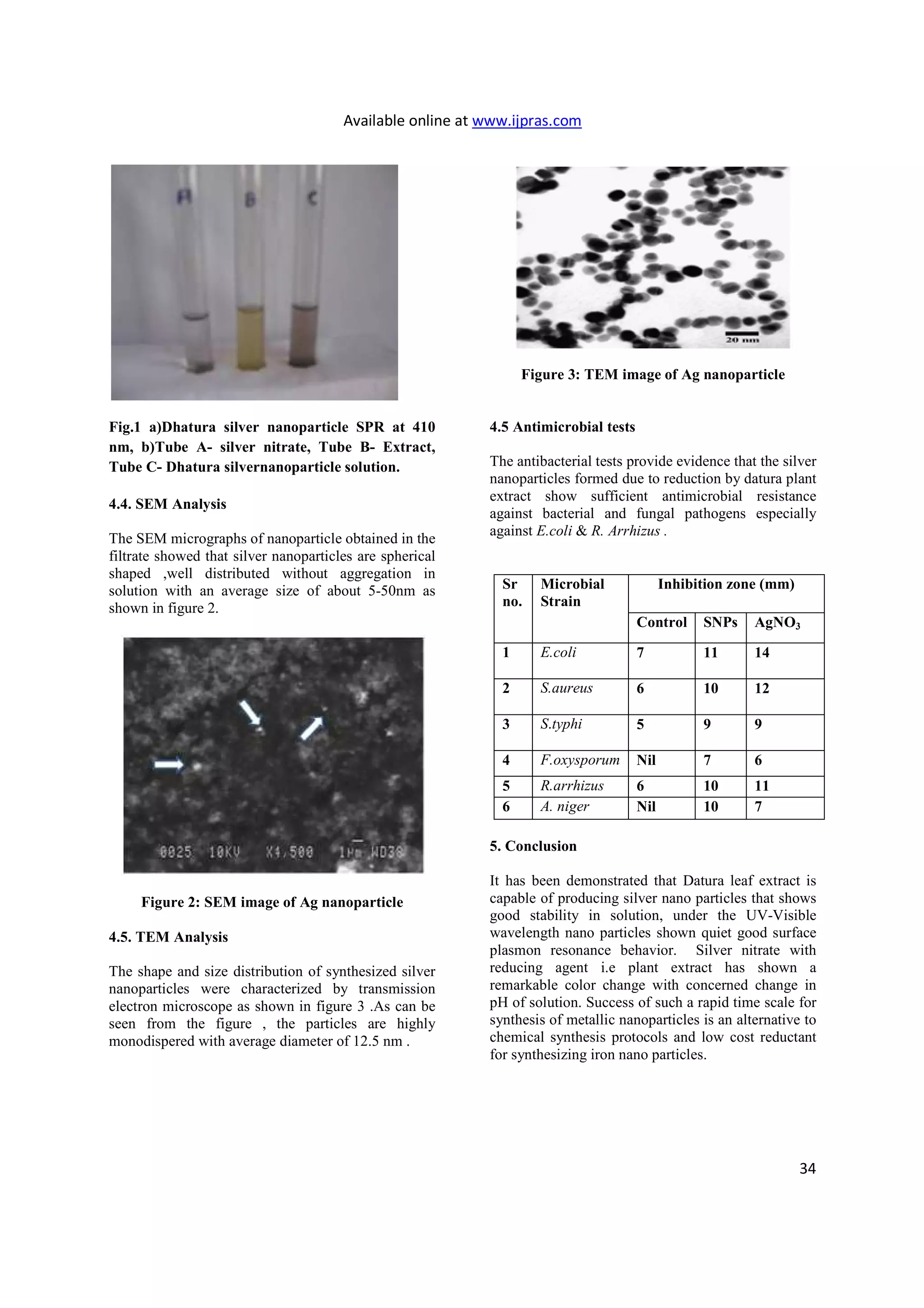
Fig.1 a)Dhatura silver nanoparticle SPR at 410
nm, b)Tube A- silver nitrate, Tube B- Extract,
Tube C- Dhatura silvernanoparticle solution.
4.4. SEM Analysis
The SEM micrographs of nanoparticle obtained in the
filtrate showed that silver nanoparticles are spherical
shaped ,well distributed without aggregation in
solution with an average size of about 5-50nm as
shown in figure 2.
Figure 2: SEM image of Ag nanoparticle
4.5. TEM Analysis
The shape and size distribution of synthesized silver
nanoparticles were characterized by transmission
electron microscope as shown in figure 3 .As can be
seen from the figure , the particles are highly
monodispered with average diameter of 12.5 nm .
Figure 3: TEM image of Ag nanoparticle
4.5 Antimicrobial tests
The antibacterial tests provide evidence that the silver
nanoparticles formed due to reduction by datura plant
extract show sufficient antimicrobial resistance
against bacterial and fungal pathogens especially
against E.coli & R. Arrhizus .
Sr
no.
Microbial
Strain
Inhibition zone (mm)
Control SNPs AgNO3
1 E.coli 7 11 14
2 S.aureus 6 10 12
3 S.typhi 5 9 9
4 F.oxysporum Nil 7 6
5 R.arrhizus 6 10 11
6 A. niger Nil 10 7
5. Conclusion
It has been demonstrated that Datura leaf extract is
capable of producing silver nano particles that shows
good stability in solution, under the UV-Visible
wavelength nano particles shown quiet good surface
plasmon resonance behavior. Silver nitrate with
reducing agent i.e plant extract has shown a
remarkable color change with concerned change in
pH of solution. Success of such a rapid time scale for
synthesis of metallic nanoparticles is an alternative to
chemical synthesis protocols and low cost reductant
for synthesizing iron nano particles.
Available online at www.ijpras.com
35
Acknowledgement
The authors are greatly thankful to Shri Binod Dash,
Chairman, Synergy Institute of Technology for
providing facilities to carry out this piece of research
work at Centre of Excellence in Nanoscience and
Technology,Synergy Institute Of Technology
Bhubaneswar Odisha.
“Cite this article”
A. K. Ojha, J. Rout , S. Behera ,P. L. Nayak
“Green Synthesis and Characterization of Zero
Valent Silver Nanoparticles from the Leaf Extract
of Datura Metel” Int. J. of Pharm. Res. & All.
Sci.2013; Volume 2, Issue 1,31-35
References
[1] Peijenburg et al., “Nanosilver: A Review Of
Available Data And Knowledge Gaps in Human and
Environmental RiskAssessment”, J. Nanotoxicology,
(2009), Vol. 3, No. 2, pp. 109-113.
[2] Forough M and Farhad K :“Biological and Green
Synthesis of Silver Nanoparticles”, (2010), Vol. 34,
pp. 281-287
[3] R. M. Jose, L. E. Jose, C. Alejandra
Nanotechnology 16, 2346–2353. (2005)
[4] C. Lok, C. Ho, R. Chen, Q. He, W. Yu, H. Sun, P.
K. Tam, J. Chiu, C. Che J. Biol. Inorg.
Chem. 12, 527–534 (2007)
[5] M. Ip, S. L. Lui, V. K. M. Poon, I. Lung, A. Burd
J. Medical Microbiol. 55, 59–63 (2006)
[6] D.V. Goia, E. Matijevic N. J. Chem. 22, 1203
(1998)
[7] C. Taleb, M. Petit, P. Pileni Chem. Mater. 9, 950
(1997)
[8] K. Esumi, T. Tano, K. Torigoe, K. Meguro Chem.
Mater. 2, 564 (1990)
[9] A. Henglein Langmuir 17, 2329 (2001)
[10] L. Rodriguez-Sanchez, M. C. Blanco, M. A.
Lopez-Quintela J. Phys. Chem. B 104, 9683
(2000)
[11] J. J. Zhu, S. W. Liu, O. Palchik, Y. Koltypin, A.
Gedanken Langmuir 16, 6396 (2000)
[12] Pastoriza-Santos, L. M. Liz-Marzan Langmuir
18, 2888 (2002)
[13] N. A. Begum, S. Mondal, S. Basu, R. A. Laskar,
D. Mandal Colloids and Surfaces B:
Biointerfaces 71(1), 113-118 (2009)
[14] H. Bar, D. K. Bhui, G. P. Sahoo, P. Sarkar, S. P.
De, A. Misra. Colloids and Surfaces A:
Physicochemical and Engineering Aspects 339, 134–
139 (2009)
[15] J. Y. Song, B. S. Kim Bioprocess Biosyst. Eng.
32, 79–84 (2009) 489
[16] De Britto A J, Gracelin D H S. I. J.of Applied
Bio and Pharma Tech. 2011: Vol. 2(2); pp 429-433.

Silver nanoparticles from the leaf extract of datura metel

  • 1.
    Research Article ISSN2277-3657 Available online at www.ijpras.com Volume 2, issue 1 (2013),31-35 International Journal of Pharmaceutical Research & Allied Sciences 31 Green Synthesis and Characterization of Zero Valent Silver Nanoparticles from the Leaf Extract of Datura Metel Akshaya Kumar Ojha , Jogeswari Rout , Shikha Behera and P.L.Nayak* P.L.Nayak Research Foundation and Centre for Excellence in Nano Science and Technology, Synergy Institute of Technology, Bhubaneswar, Odisha, India. plnayak@rediffmail.com Subject: Nanotechnology Abstract In the present work, nano scaled zero valent silver were synthesized from the plant extract of Datura metel under atmospheric conditions through green synthesis. A systematic characterization of silver nanoparticles was performed using UV, SEM,TEM and antimicrobial studies. The diameter of silver nanoparticles was predominantly found within the range 50-100 nm.The novelty of this study is to comprehend a suitable biocompactible herbal reductant for biosynthesis of zerovalent silver nanoparticles at a very cost effective level and the results are quite encouraging. Keywords: Silver nanoparticles ; green Synthesis; UV, SEM, antimicrobial 1. Introduction Nanotechnology is a reliable and enabling environment friendly process for the synthesis ofnanoscale particles. Nanosizeresults in specific physicochemical characteristicssuch as high surface area to volume ratio, whichpotentially results in high reactivity [1]. Biosynthesis of nanoparticles is a kind of bottom up approach where the main reaction occurringis reduction/oxidation. With the antioxidant or reducing properties of plant extracts, they are usually responsible for the reduction of metal compounds into theirrespective nanoparticles. Green synthesis provides advancement over chemical andphysical method as it is cost effective, environment friendly, easily scaled up for largescale synthesis and in this method there is no need to use high pressure, energy, temperature and toxic chemicals[2]. Green synthesis offer better manipulation, control over crystal growth and their stabilization. This has motivatedan upsurge in research on the synthetic routes that allows better control of shape and size forvarious nanotechnological applications. Silver has long been recognized as having inhibitory effect on microbes present in medical and industrial process [3, 4]. The most important application of silver and silver nanoparticles is in medical industry such as topical ointments to prevent infection against burn and open wounds [5]. A number of approaches are available for the synthesis of silver nanoparticles for example, reduction in solutions[ 6] chemical and photochemical reactions in reverse micelles [7], thermal decomposition of silver compounds [8], radiation assisted [9], electrochemical [10], sonochemical[11], microwave assisted process [12] and recently via green chemistry route [13,14,15]. Here in the current work we have reported the synthesis of green silver nanoparticles using the leaf extract of the plant – Datura metel (common name- Kamkamawlaw). Aqueous silver nitrate solution, after reacting with datura leaf extract, led to rapid formation of highly stable, crystalline silver nanoparticles. The rate of nanoparticle synthesis was very high, which justifies use of plants over
  • 2.
    Available online atwww.ijpras.com 32 microorganisms in the biosynthesis of metal nanoparticles through greener and safer methods. In the subsequent sections we have described the synthesis of silver nanoparticles based upon the change in color, change in pH, change in absorbance and the particle size formed after reduction. 2. Plant Description Datura metel Family : Solanaceae Common name : Kamkamawlaw It is a medicinal plant widely used in phytomedicine to cure diseases such as asthma, cough, convulsion and insanity. The leaves and seeds are widely used in herbal medicine as anesthetic, antispasmodic, bronchodilator and as hallucinogenic .A variety of phytochemicals comprising of alkaloids, flavonoids, phenols, tannins, saponins and sterols have been found in it. The total alkaloid content is 0.26 - 0.42 %. The plant and fruit are spasmolytic, anticancerous and anthelmintic. Leaf is antitumour, antirheumatic and vermicide. Flower is antiasthamatic, anaesthetic and is employed in swellings and eruptions on face [16]. Fig 1.a. Datura Plant (Datura metel ) 3. Material and Experimental methods 3.1 Reagents and Chemicals 0.001 M Silver Nitrate was obtained from Sigma Aldrich. Freshly prepared triple distilled water was used throughout the experiment. 3.2 Collection of extracts Datura leaves were collected from the local region. They were washed and cleaned with triple distilled water and dried with water absorbent paper. Then it was cut into small pieces with an ethanol sterilized knife and crushed with mortar and pestle dispensed in 10 ml of sterile distilled water and heated for 2-3 minutes at 70-80°C. The extract was then filtered using Whatman No.1 filter paper. The filtrate was collected in a clean and dried conical flask by standard sterilized filtration method and was stored at 4°C. 3.3 Synthesis of Zero Valent Silver Nanoparticles During the synthesis of Silver Nanoparticles both the precursor and the reducing agent were mixed in a clean sterilized flask in 1:1 proportion. For the reduction of Ag ions, 5ml of filtered plant extract was mixed to 5 ml of freshly prepared 0.001 M aqueous of AgNO3 solution with constant stirring at 50-600 C. The Silver Nanoparticles so prepared were stabilized by adding 1% of chitosan and 1% of PVA. 3.4 UV-Vis Spectra analysis The reduction of pure Ag ions to Ag0 was monitored by measuring the UV-Vis spectrum by sampling of aliquots (0.3 ml) of Ag Nanoparticle solution diluting the sample in 3 ml distilled water. UV-Vis spectral analysis was done by using UV-Vis spectrophotometer Systronics 118 at the range of 200-600 nm and observed the absorption peaks at 400-440 nm regions due to the excitation of surface plasmon vibrations in the AgNPs solution, which are identical to the characteristics UV-visible spectrum of metallic Iron and it was recorded. 3.5 pH analysis 1 mM aqueous silver nitrate (AgNO3) solution shows 3.8 pH, there is concerned change in pH was determined of silver nanoparticle synthesis using extracts of plant and spices, which was determined using Digital pH meter Systronics. 3.6 SEM analysis Scanning Electron Microscopic (SEM) analysis was done using Hitachi S-4500 SEM machine. Thin films of the sample were prepared on a carbon coated copper grid by just dropping a very small amount of the sample on the grid, extra solution was removed using a blotting paper and then the film on the SEM grid were allowed to dry by putting it under a mercury lamp for 5 min. 3.7 TEM analysis After bioreduction,the mixtures were sampled for TEM observation on H-600 Electron Microscope (Hitachi) at a voltage of 120kV. 3.6 Antimicrobial Activity 3.6.1 Antibacterial assay By disc diffusion method, the antibacterial activities of the datura plant extract reduced AgNPs were
  • 3.
    studied. LB (Luriabertoni) media was used ,sterilized and solidified.Then three bacterial strains( S.aureus , S.typhi )were swabbed on the plates.Sterile discs were dipped in silver nanoparticles solution (20 µg/ml) and placed in the nutrient media plate and kept for incubation at 37ºC for 24 hrs. inhibition for control, SNPs and silver nitrate were measured and the mean values of zone diameter were presented. 3.6.1 Antifungal assay Potato dextrose agar plates were prepared, sterilized and solidified.After solidification ,three fungal cultures (F.oxysporum , R.arrhizus, A. niger swabbed on these plates. The sterile discs were dipped in silver nanoparticles solution placed in the agar plate and kept for incubation for 7 days. After 7 days zone of inhibition was measured. Table 1. Change in color of the solution during Iron Sr. No Solution Before Reduction 1. 2. Datura Leaf Extract Light green 0.001 MAgNo Solution Color intensity: - += Light color, ++= 4.2 pH analysis Table 2 . Change in pH during iron nanoparticle synthesis Plant Extract Plant Part Taken Binomial Name Local name Datura metel Kamkamawl aw Result: - += Positive, -= Negative. 4.3 UV visible spectroscopy and color change for the Green synthesized silver nano particles UV –Vis spectroscopy is most widely used technique for structural characterization of silver nanoparticles.The absorption spectrum in the figure 1 of the silvernanopartiles showed a surface plasmonan absorption band with maximum of 410 nm indicating the presence of spherical or roughly spherical nanoparticles. Available online at www.ijpras.com studied. LB (Luria bertoni) media was used ,sterilized and solidified.Then three bacterial strains(E.coli , were swabbed on the plates.Sterile silver nanoparticles solution (20 µg/ml) and placed in the nutrient media plate and kept for incubation at 37ºC for 24 hrs. Zones of inhibition for control, SNPs and silver nitrate were measured and the mean values of zone diameter were Potato dextrose agar plates were prepared, sterilized and solidified.After solidification ,three fungal R.arrhizus, A. niger ) were swabbed on these plates. The sterile discs were solution (20 µg/ml) and placed in the agar plate and kept for incubation for 7 days. After 7 days zone of inhibition was measured. 4. Results and Discussion 4.1 Synthesis of silvernanoparticles Datura leaf extract is used to produce silver nanoparticles in this experiment. Ag ions were reduced into Ag0 nanoparticles when plant extract is mixed with AgNO3 solution in 1:1 ratio. Reduction is followed by an immediate change in color from light green to pale greyish and change in pH of the solution. It is well known that colorless appeareance in distilled water. On mixing the plant extract with the aqueous changed the color of the solution immediately and reducing the pH, which may be an indication of formation silver nanoparticles. In this experiment it was observed that the pH changed from high acidic to low acidic. Table 1. Change in color of the solution during Iron Nanoparticle synthesis Color change Color intensity Before Reduction After Reduction Light green Pale greyish ++ colourless += Light color, ++= Dark color, +++= Very dark color Table 2 . Change in pH during iron nanoparticle synthesis Plant Part Taken Ph change UV range Leaves Before After 400-440 nm 5.69 4.60 4.3 UV visible spectroscopy and color change for the Green synthesized silver nano particles Vis spectroscopy is most widely used technique for structural characterization of silver nanoparticles.The absorption spectrum in the figure 1 of the silvernanopartiles showed a surface plasmonan absorption band with maximum of 410 nm indicating the presence of spherical or roughly spherical 33 nd Discussion 4.1 Synthesis of silvernanoparticles Datura leaf extract is used to produce silver in this experiment. Ag ions were nanoparticles when plant extract is solution in 1:1 ratio. Reduction is followed by an immediate change in color from light and change in pH of the It is well known that silver nitrate exhibit in distilled water. On mixing the plant extract with the aqueous AgNO3solution it changed the color of the solution immediately and reducing the pH, which may be an indication of nanoparticles. In this experiment it was observed that the pH changed from high acidic to Nanoparticle synthesis Color intensity Time 2 hr UV range Result 440 nm +
  • 4.
    Available online atwww.ijpras.com 34 Fig.1 a)Dhatura silver nanoparticle SPR at 410 nm, b)Tube A- silver nitrate, Tube B- Extract, Tube C- Dhatura silvernanoparticle solution. 4.4. SEM Analysis The SEM micrographs of nanoparticle obtained in the filtrate showed that silver nanoparticles are spherical shaped ,well distributed without aggregation in solution with an average size of about 5-50nm as shown in figure 2. Figure 2: SEM image of Ag nanoparticle 4.5. TEM Analysis The shape and size distribution of synthesized silver nanoparticles were characterized by transmission electron microscope as shown in figure 3 .As can be seen from the figure , the particles are highly monodispered with average diameter of 12.5 nm . Figure 3: TEM image of Ag nanoparticle 4.5 Antimicrobial tests The antibacterial tests provide evidence that the silver nanoparticles formed due to reduction by datura plant extract show sufficient antimicrobial resistance against bacterial and fungal pathogens especially against E.coli & R. Arrhizus . Sr no. Microbial Strain Inhibition zone (mm) Control SNPs AgNO3 1 E.coli 7 11 14 2 S.aureus 6 10 12 3 S.typhi 5 9 9 4 F.oxysporum Nil 7 6 5 R.arrhizus 6 10 11 6 A. niger Nil 10 7 5. Conclusion It has been demonstrated that Datura leaf extract is capable of producing silver nano particles that shows good stability in solution, under the UV-Visible wavelength nano particles shown quiet good surface plasmon resonance behavior. Silver nitrate with reducing agent i.e plant extract has shown a remarkable color change with concerned change in pH of solution. Success of such a rapid time scale for synthesis of metallic nanoparticles is an alternative to chemical synthesis protocols and low cost reductant for synthesizing iron nano particles.
  • 5.
    Available online atwww.ijpras.com 35 Acknowledgement The authors are greatly thankful to Shri Binod Dash, Chairman, Synergy Institute of Technology for providing facilities to carry out this piece of research work at Centre of Excellence in Nanoscience and Technology,Synergy Institute Of Technology Bhubaneswar Odisha. “Cite this article” A. K. Ojha, J. Rout , S. Behera ,P. L. Nayak “Green Synthesis and Characterization of Zero Valent Silver Nanoparticles from the Leaf Extract of Datura Metel” Int. J. of Pharm. Res. & All. Sci.2013; Volume 2, Issue 1,31-35 References [1] Peijenburg et al., “Nanosilver: A Review Of Available Data And Knowledge Gaps in Human and Environmental RiskAssessment”, J. Nanotoxicology, (2009), Vol. 3, No. 2, pp. 109-113. [2] Forough M and Farhad K :“Biological and Green Synthesis of Silver Nanoparticles”, (2010), Vol. 34, pp. 281-287 [3] R. M. Jose, L. E. Jose, C. Alejandra Nanotechnology 16, 2346–2353. (2005) [4] C. Lok, C. Ho, R. Chen, Q. He, W. Yu, H. Sun, P. K. Tam, J. Chiu, C. Che J. Biol. Inorg. Chem. 12, 527–534 (2007) [5] M. Ip, S. L. Lui, V. K. M. Poon, I. Lung, A. Burd J. Medical Microbiol. 55, 59–63 (2006) [6] D.V. Goia, E. Matijevic N. J. Chem. 22, 1203 (1998) [7] C. Taleb, M. Petit, P. Pileni Chem. Mater. 9, 950 (1997) [8] K. Esumi, T. Tano, K. Torigoe, K. Meguro Chem. Mater. 2, 564 (1990) [9] A. Henglein Langmuir 17, 2329 (2001) [10] L. Rodriguez-Sanchez, M. C. Blanco, M. A. Lopez-Quintela J. Phys. Chem. B 104, 9683 (2000) [11] J. J. Zhu, S. W. Liu, O. Palchik, Y. Koltypin, A. Gedanken Langmuir 16, 6396 (2000) [12] Pastoriza-Santos, L. M. Liz-Marzan Langmuir 18, 2888 (2002) [13] N. A. Begum, S. Mondal, S. Basu, R. A. Laskar, D. Mandal Colloids and Surfaces B: Biointerfaces 71(1), 113-118 (2009) [14] H. Bar, D. K. Bhui, G. P. Sahoo, P. Sarkar, S. P. De, A. Misra. Colloids and Surfaces A: Physicochemical and Engineering Aspects 339, 134– 139 (2009) [15] J. Y. Song, B. S. Kim Bioprocess Biosyst. Eng. 32, 79–84 (2009) 489 [16] De Britto A J, Gracelin D H S. I. J.of Applied Bio and Pharma Tech. 2011: Vol. 2(2); pp 429-433.