Isma Haq
Roll # 01
2nd semester
 Larger fibers have been found to cause skin, eye
and upper respiratory tract irritation.
 A rash can appear when the fibers become
embedded in the outer layer of the skin.
 Eyes may become red and irritated after
exposure to fiberglass.
 Soreness in the nose and throat can result when
fibers are inhaled.
 Temporary stomach irritation may occur if fibers
are swallowed.
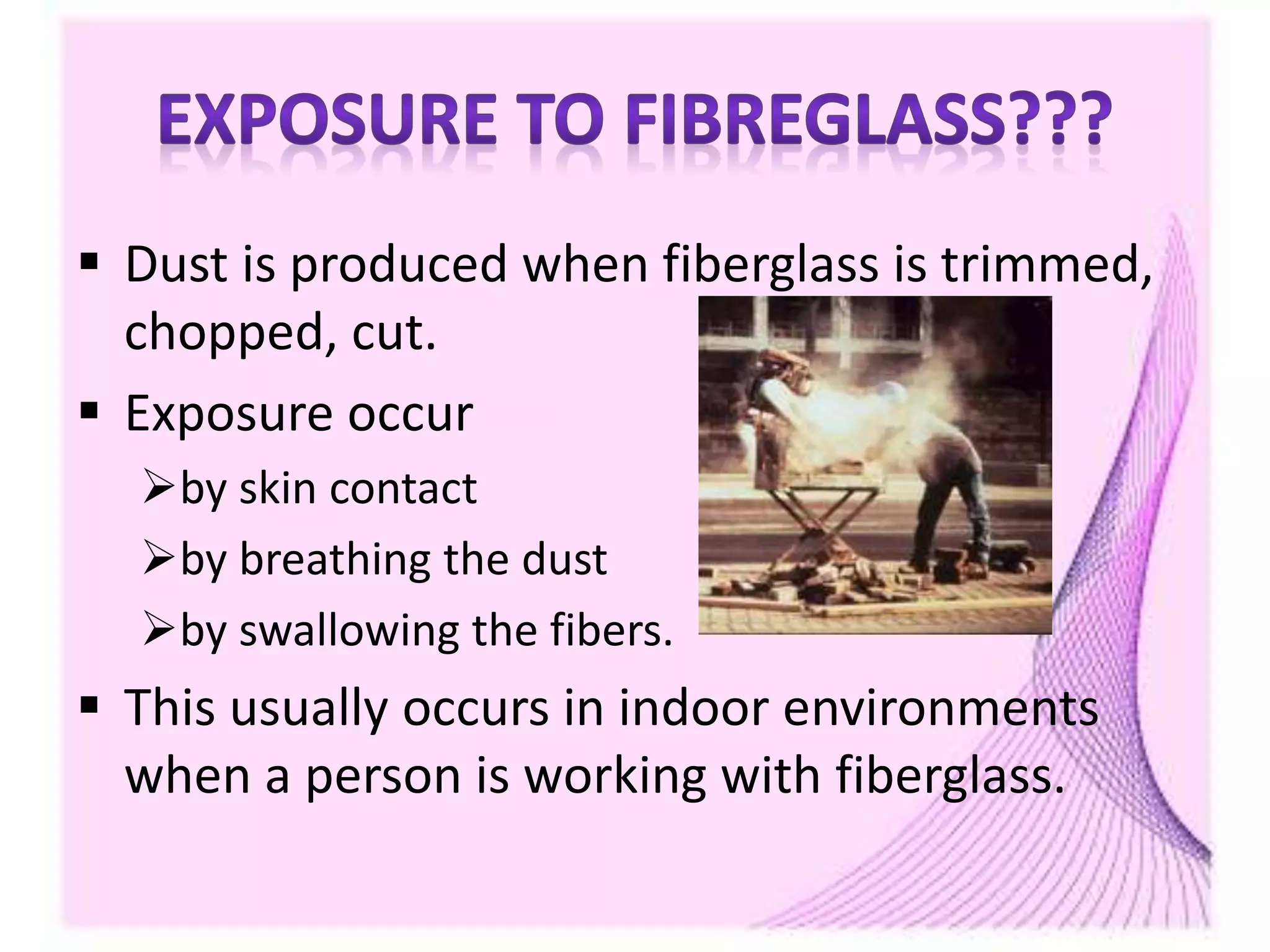
 Dust is produced when fiberglass is trimmed,
chopped, cut.
 Exposure occur
by skin contact
by breathing the dust
by swallowing the fibers.
 This usually occurs in indoor environments
when a person is working with fiberglass.
Safety measure means any action taken
BEFORE an activity to PREVENT danger or
risk during the activity.
Elimination/subsitution
Engineering control measures
Administrative controls
MSDS
Personal protective equipment (PPE)
Emergency Equipments
Elimination/subsitution
• Reduction of styrene emission in GRP
fabrication where conventional high-content
styrene resin can be replaced by
• Vapour suppressed resins
• Low styrene resins
• In fibreglass processing the main engineering
control method against hazards is exhaust
ventilation.
Ventilation
General
Dilution
Booth
Local
Exhaust
Push-
Pull
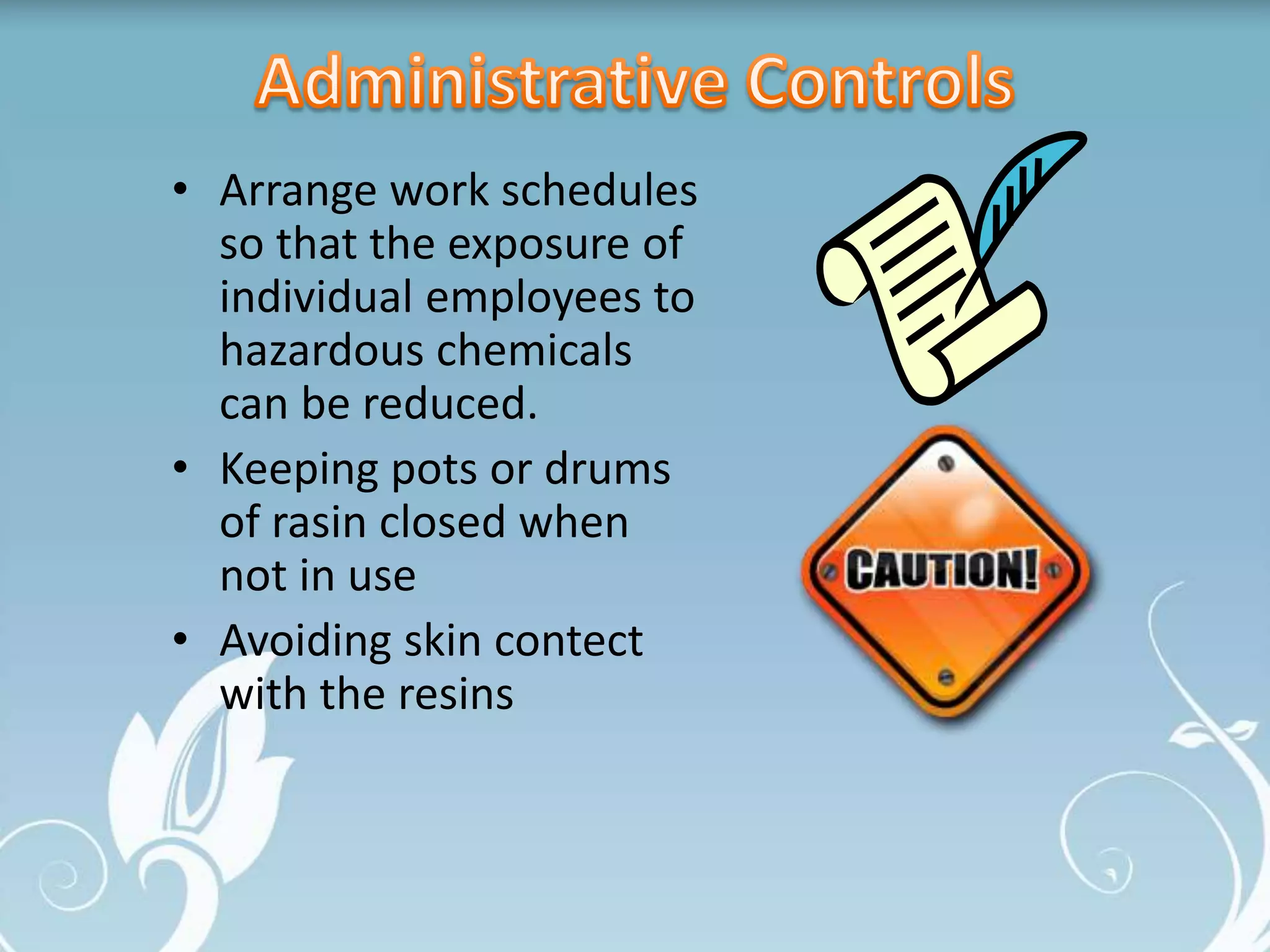
• Arrange work schedules
so that the exposure of
individual employees to
hazardous chemicals
can be reduced.
• Keeping pots or drums
of rasin closed when
not in use
• Avoiding skin contect
with the resins
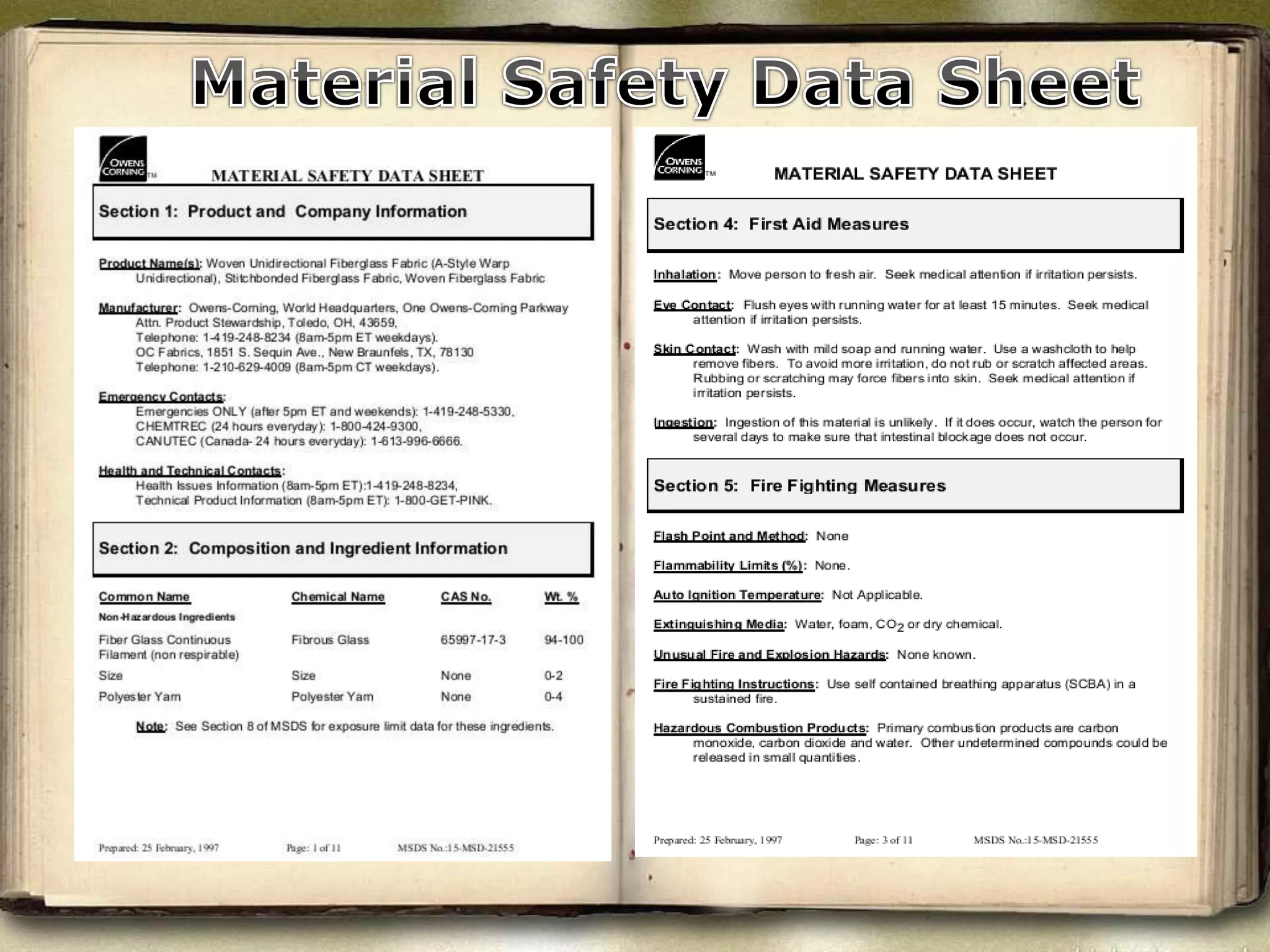
Material safety data sheets or
“MSDSs” are information sheets on
products that:
Tells what chemicals are in the
product,
What the hazards of the chemicals
are,
How to protect yourself from the
hazards.
40
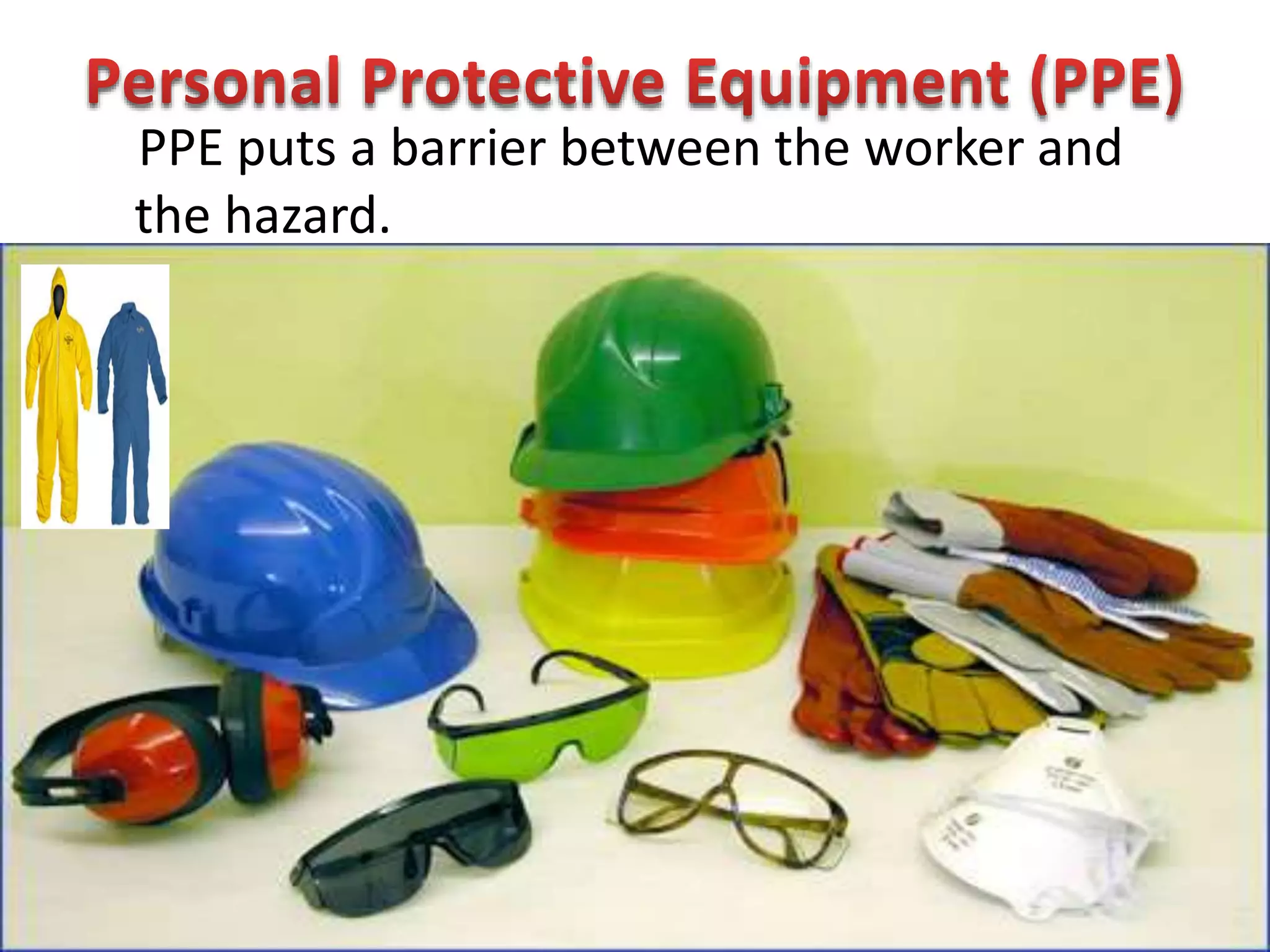
PPE puts a barrier between the worker and
the hazard.
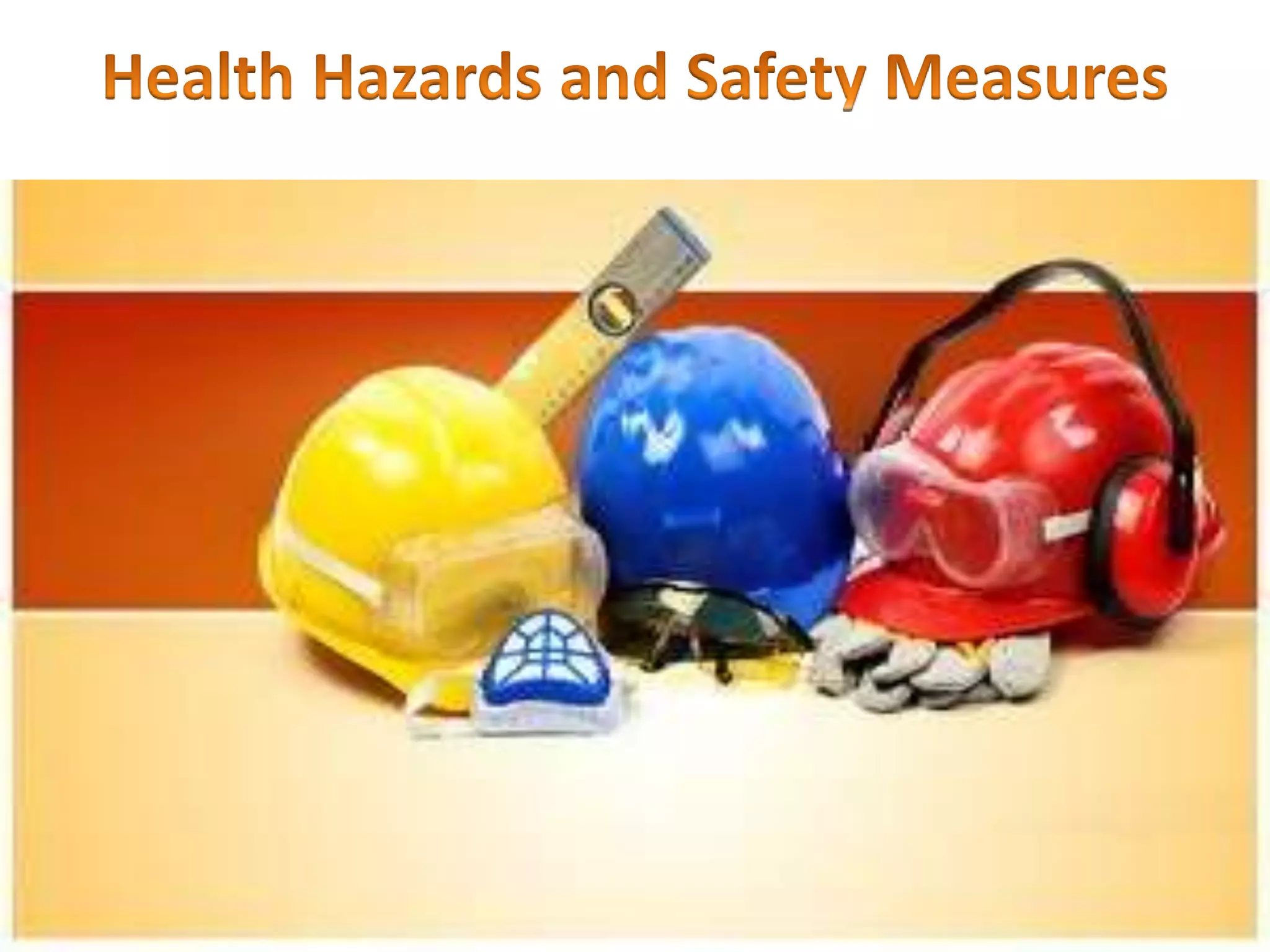
Safety hemet
Safety glasses
Respirators with filters
Gloves
Protective suits
Safety shoes
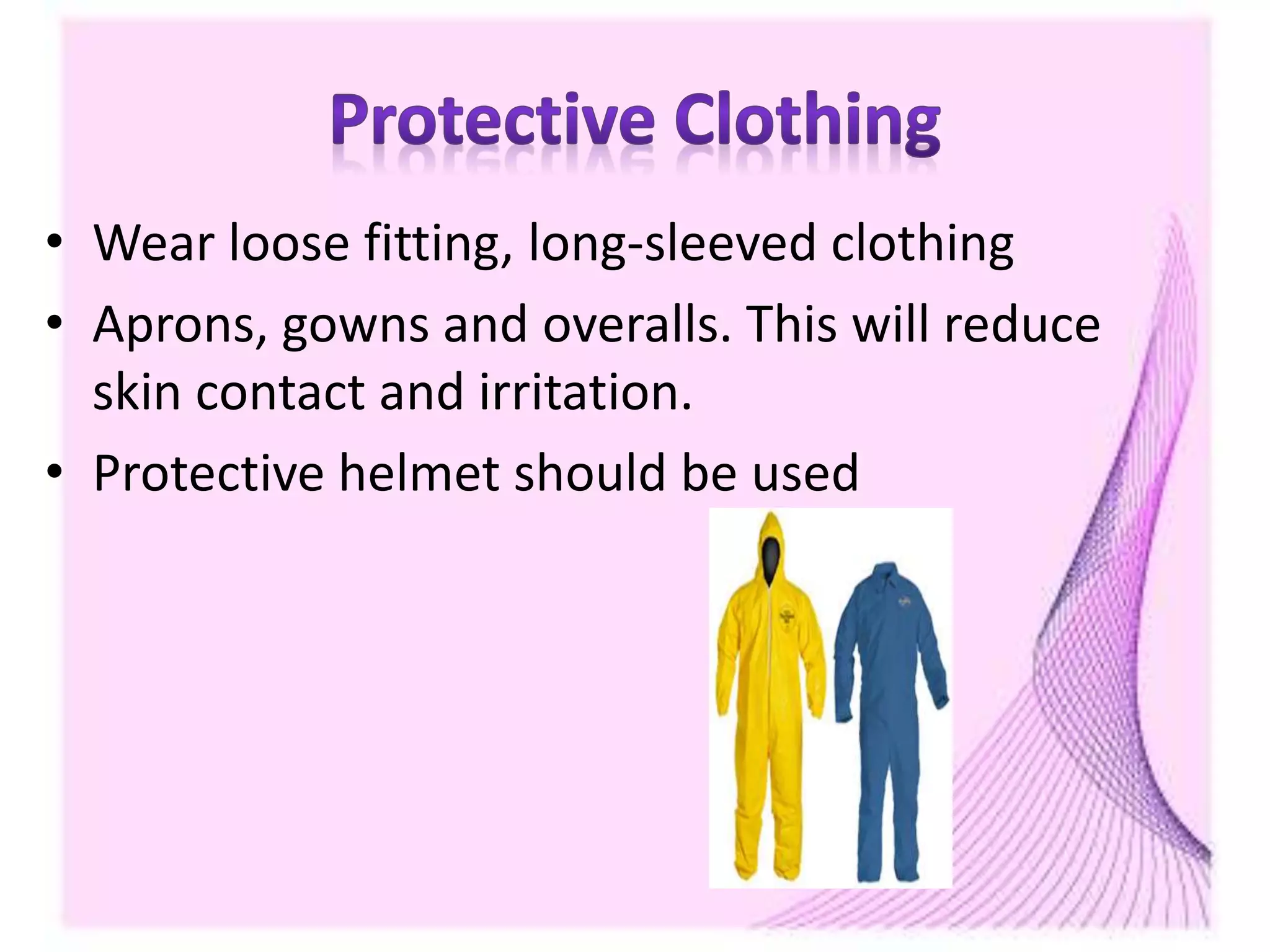
• Wear loose fitting, long-sleeved clothing
• Aprons, gowns and overalls. This will reduce
skin contact and irritation.
• Protective helmet should be used
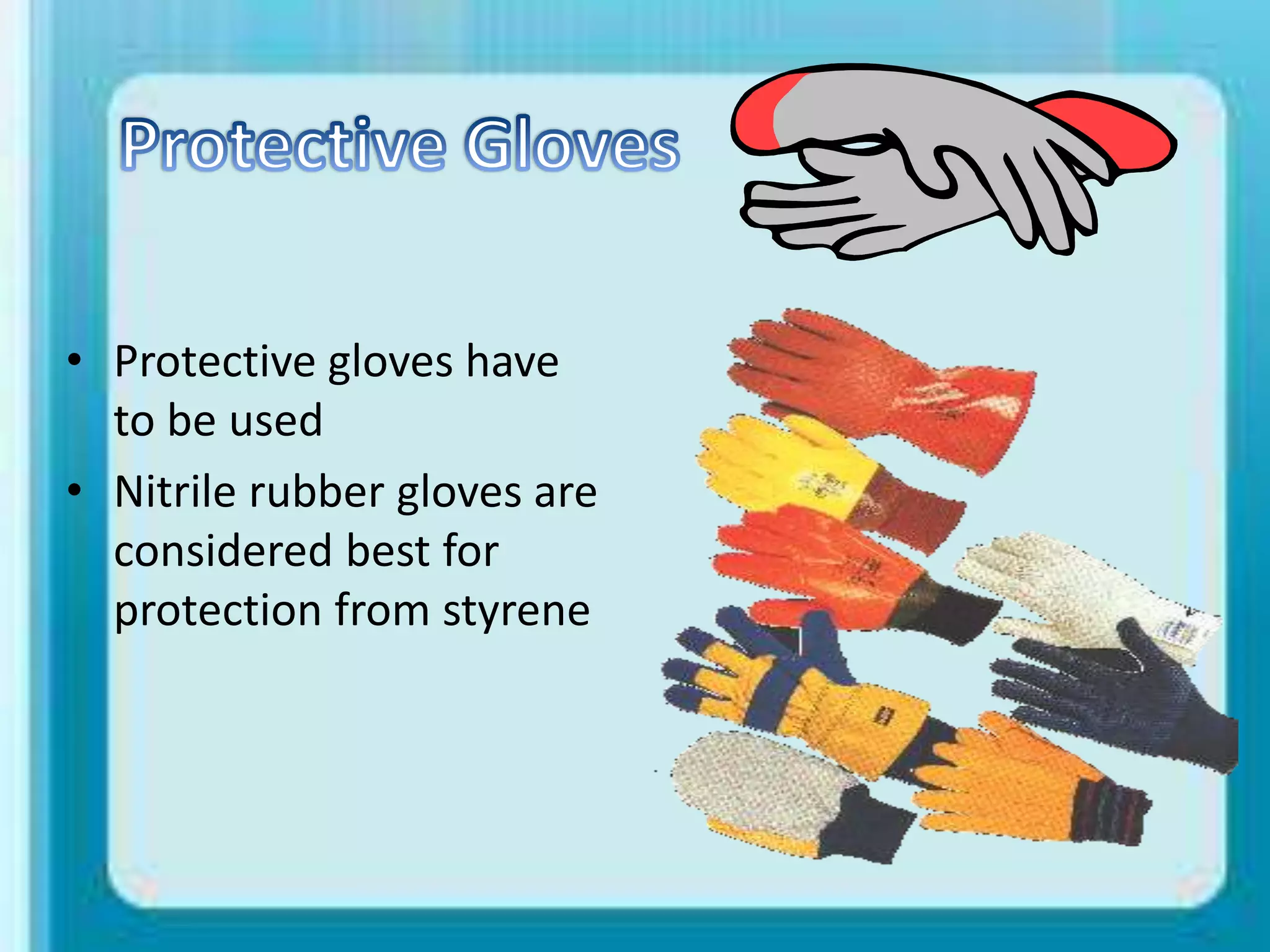
• Protective gloves have
to be used
• Nitrile rubber gloves are
considered best for
protection from styrene
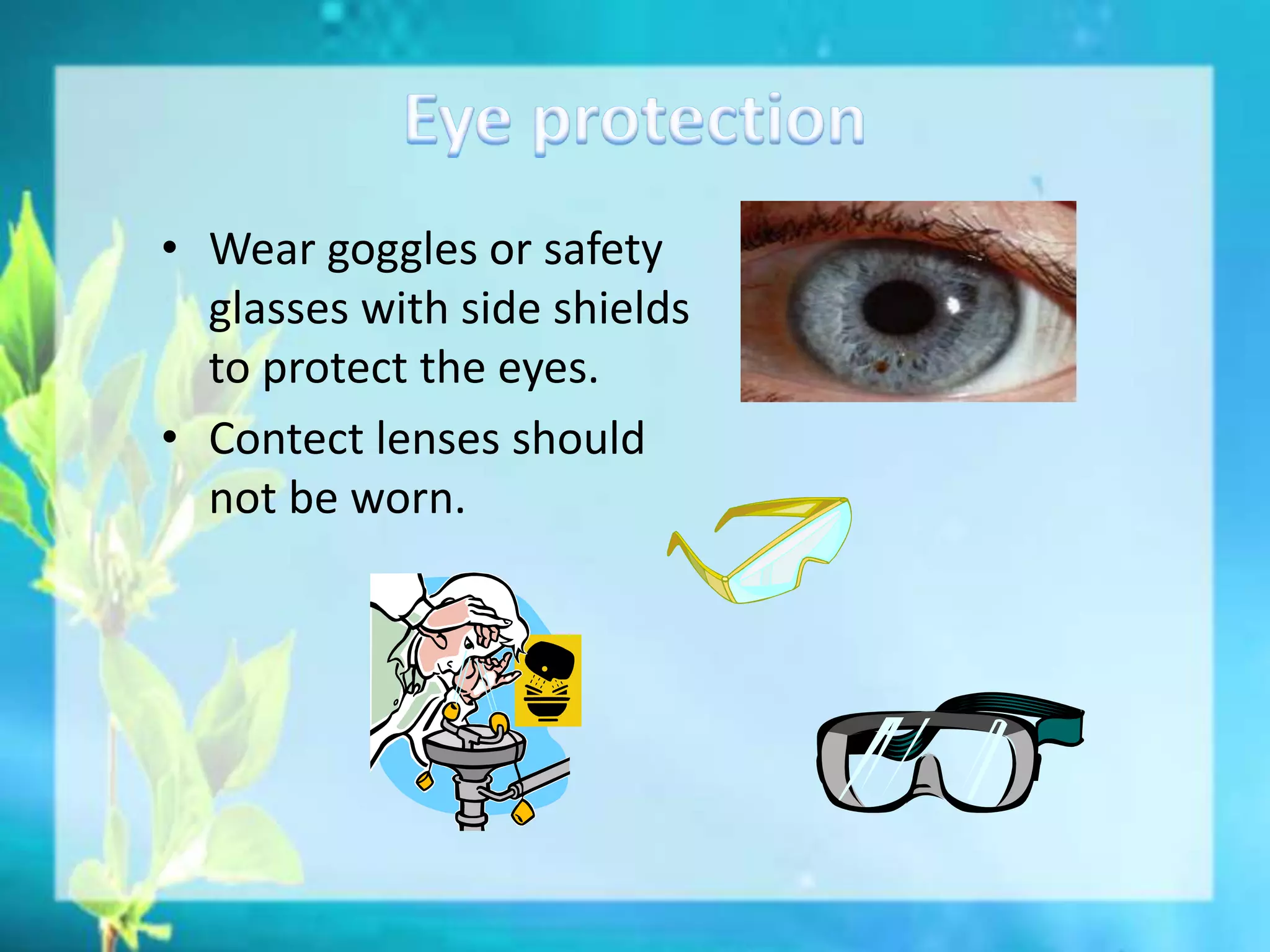
• Wear goggles or safety
glasses with side shields
to protect the eyes.
• Contect lenses should
not be worn.
• Prefilter:
protection against
airborne particles.
• Gass filter:
protection against gases
and fumes.
• Combination filter:
with a combination filter
containing both a dust
and a gas filter.
Dust in the air can settle
out on work surfaces, cups,
plates, utensils, and food.
The settled dust can be
swallowed with food or
drinks.
If the dust is hazardous, it
can cause health problems.
• Fire-fighting equipments.
• Emergency lights and backup for fume
extractionin case of power failure.
• Emergency shower and eyewashes.
• Firstaid facilities,such as first aid kit.
• Absorbent material for cleanup of minor
chemical spills.
• Visible fiberglass dust shoud be removed at
the end of each shift by wet sweeping
• Dry sweeping should not be used for clean-up
• Waste mateials should be placed in covered ,
sealed waste disposal containers
By using all these types of safety measures we
can minimize or eliminates the hazards in
different workplace and make a safer
environment for the workers.
Presentation mam zaib

Presentation mam zaib

  • 1.
    Isma Haq Roll #01 2nd semester
  • 3.
     Larger fibershave been found to cause skin, eye and upper respiratory tract irritation.  A rash can appear when the fibers become embedded in the outer layer of the skin.  Eyes may become red and irritated after exposure to fiberglass.  Soreness in the nose and throat can result when fibers are inhaled.  Temporary stomach irritation may occur if fibers are swallowed.
  • 4.
     Dust isproduced when fiberglass is trimmed, chopped, cut.  Exposure occur by skin contact by breathing the dust by swallowing the fibers.  This usually occurs in indoor environments when a person is working with fiberglass.
  • 5.
    Safety measure meansany action taken BEFORE an activity to PREVENT danger or risk during the activity.
  • 6.
    Elimination/subsitution Engineering control measures Administrativecontrols MSDS Personal protective equipment (PPE) Emergency Equipments
  • 7.
    Elimination/subsitution • Reduction ofstyrene emission in GRP fabrication where conventional high-content styrene resin can be replaced by • Vapour suppressed resins • Low styrene resins
  • 8.
    • In fibreglassprocessing the main engineering control method against hazards is exhaust ventilation. Ventilation General Dilution Booth Local Exhaust Push- Pull
  • 9.
    • Arrange workschedules so that the exposure of individual employees to hazardous chemicals can be reduced. • Keeping pots or drums of rasin closed when not in use • Avoiding skin contect with the resins
  • 10.
    Material safety datasheets or “MSDSs” are information sheets on products that: Tells what chemicals are in the product, What the hazards of the chemicals are, How to protect yourself from the hazards. 40
  • 12.
    PPE puts abarrier between the worker and the hazard.
  • 13.
    Safety hemet Safety glasses Respiratorswith filters Gloves Protective suits Safety shoes
  • 14.
    • Wear loosefitting, long-sleeved clothing • Aprons, gowns and overalls. This will reduce skin contact and irritation. • Protective helmet should be used
  • 15.
    • Protective gloveshave to be used • Nitrile rubber gloves are considered best for protection from styrene
  • 16.
    • Wear gogglesor safety glasses with side shields to protect the eyes. • Contect lenses should not be worn.
  • 17.
    • Prefilter: protection against airborneparticles. • Gass filter: protection against gases and fumes. • Combination filter: with a combination filter containing both a dust and a gas filter.
  • 18.
    Dust in theair can settle out on work surfaces, cups, plates, utensils, and food. The settled dust can be swallowed with food or drinks. If the dust is hazardous, it can cause health problems.
  • 19.
    • Fire-fighting equipments. •Emergency lights and backup for fume extractionin case of power failure. • Emergency shower and eyewashes. • Firstaid facilities,such as first aid kit. • Absorbent material for cleanup of minor chemical spills.
  • 20.
    • Visible fiberglassdust shoud be removed at the end of each shift by wet sweeping • Dry sweeping should not be used for clean-up • Waste mateials should be placed in covered , sealed waste disposal containers
  • 21.
    By using allthese types of safety measures we can minimize or eliminates the hazards in different workplace and make a safer environment for the workers.