Monosaccharides
 Sweet In taste
 Not hydrolysable
 Have three to seven carbons
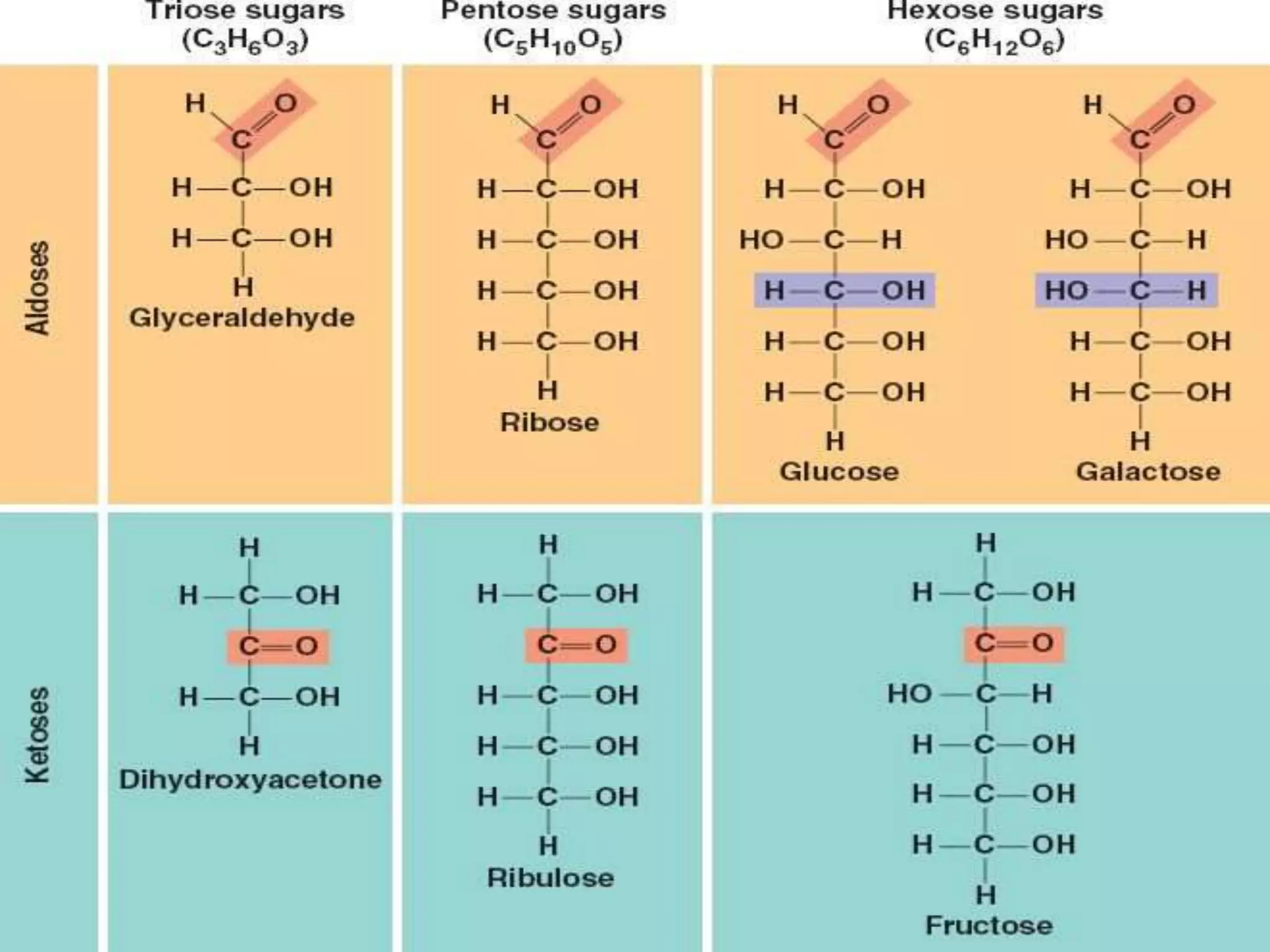
 3 carbons=Triose
 4 carbons=Tetrose
 5 carbons=Pentose
 6 carbons=Hexose
 7 carbons=Heptose
 Types:
1. Aldoses
2. Ketoses
Aldoses contain Aldehydic group –CHO
Ketoses contain Ketonic group –CO-
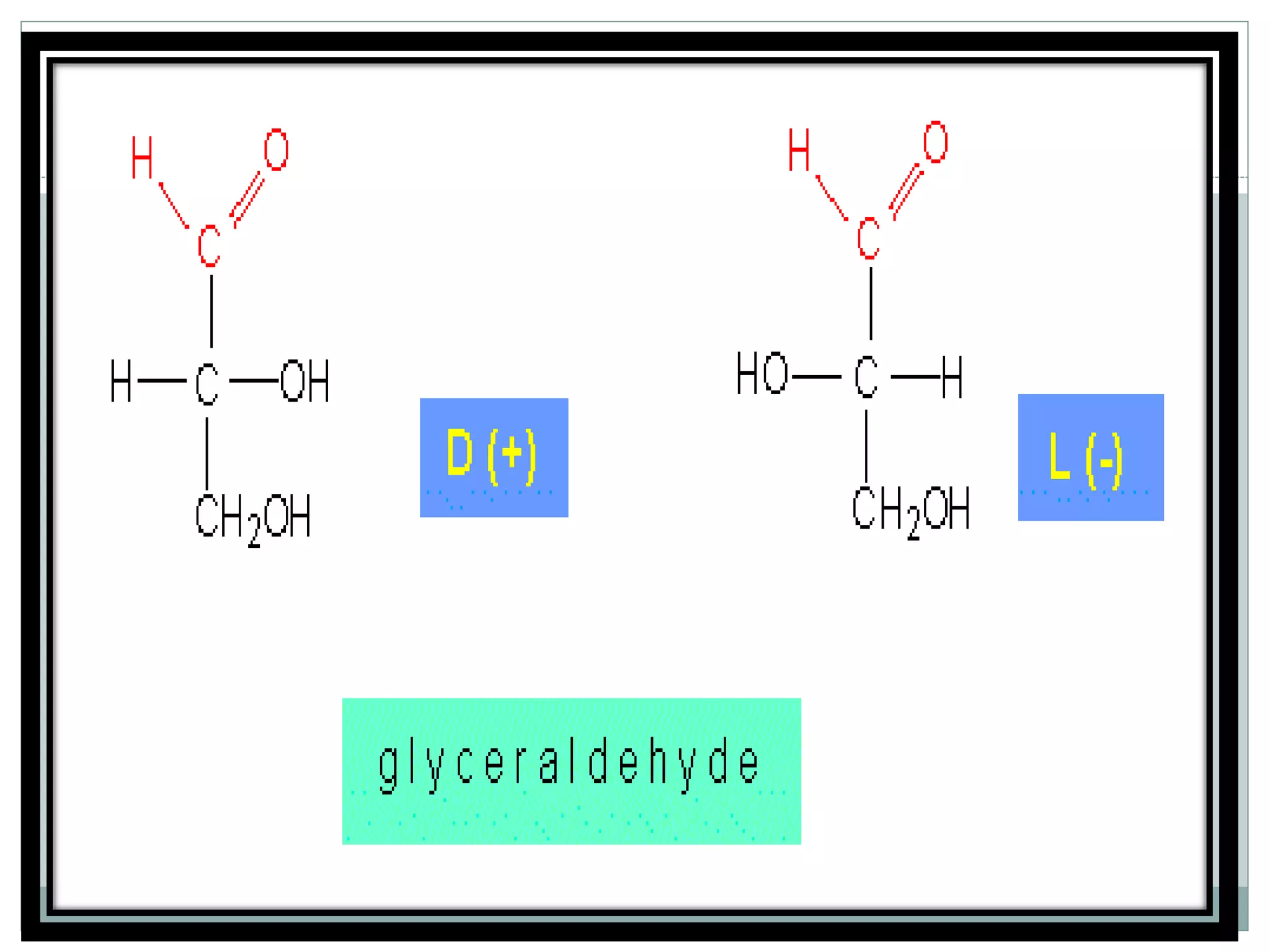
Trioses
 D-glyceraldehyde
 L- glyceraldehye
 Dihydroxyacetone
 Important in cellular respiration, in the glycolysis
step.
Pentoses
 Ribose
 Ribulose
 They form the backbone of polysaccharides
 They form the backbone of proteins
 They form the backbone of lipids
 They form the backbone of nucleic acids
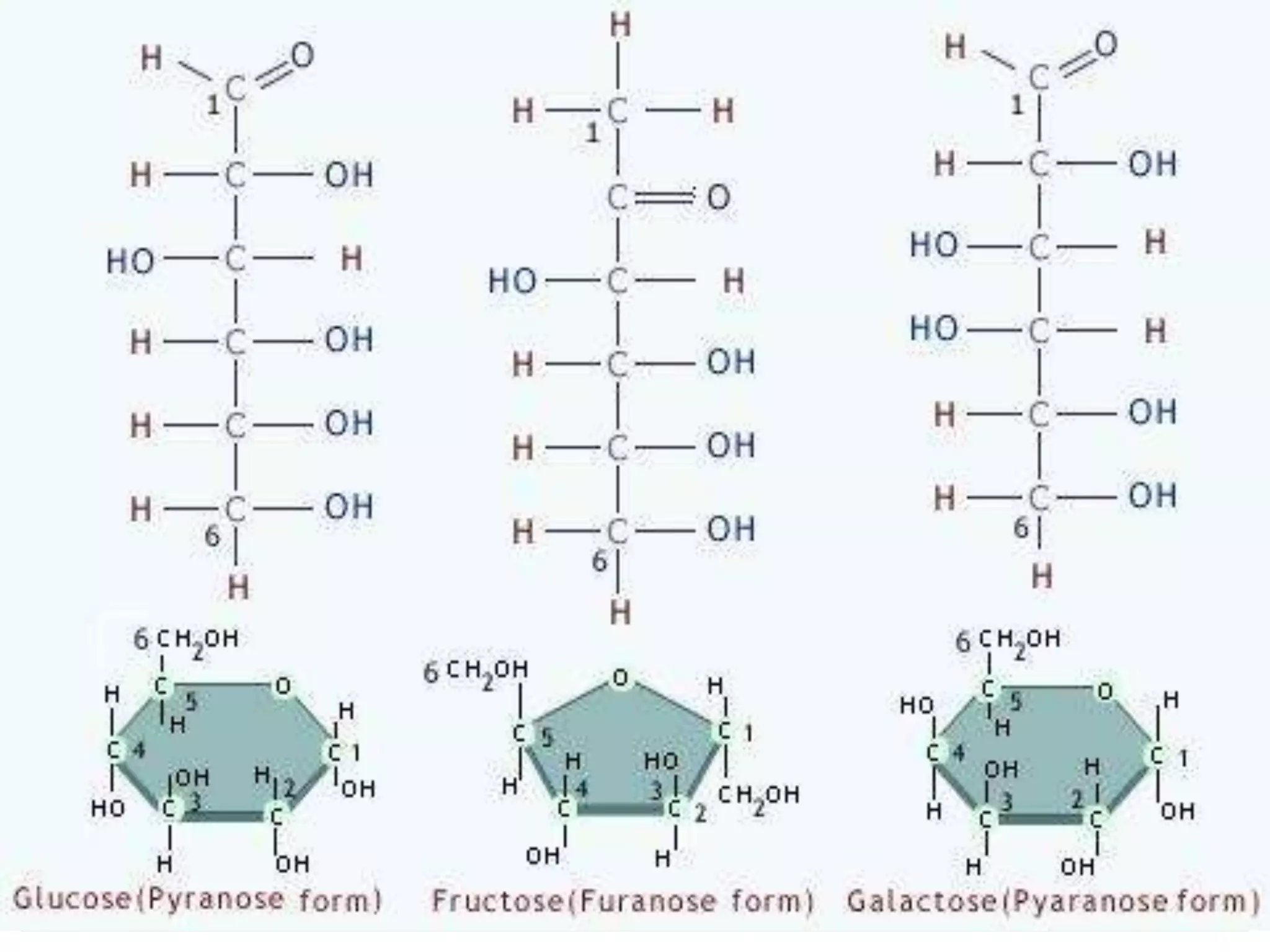
Hexoses
 Glucose
 Fructose
 Galactose
 Mannose
 Talose
 Allose
 Idose
Gluose
 Polyhydroxy aldehyde
 Dextrose=Dextrorotatory
 Grape sugar
 Blood Sugar
 110mg/1000mL in blood
 Energy source for the body
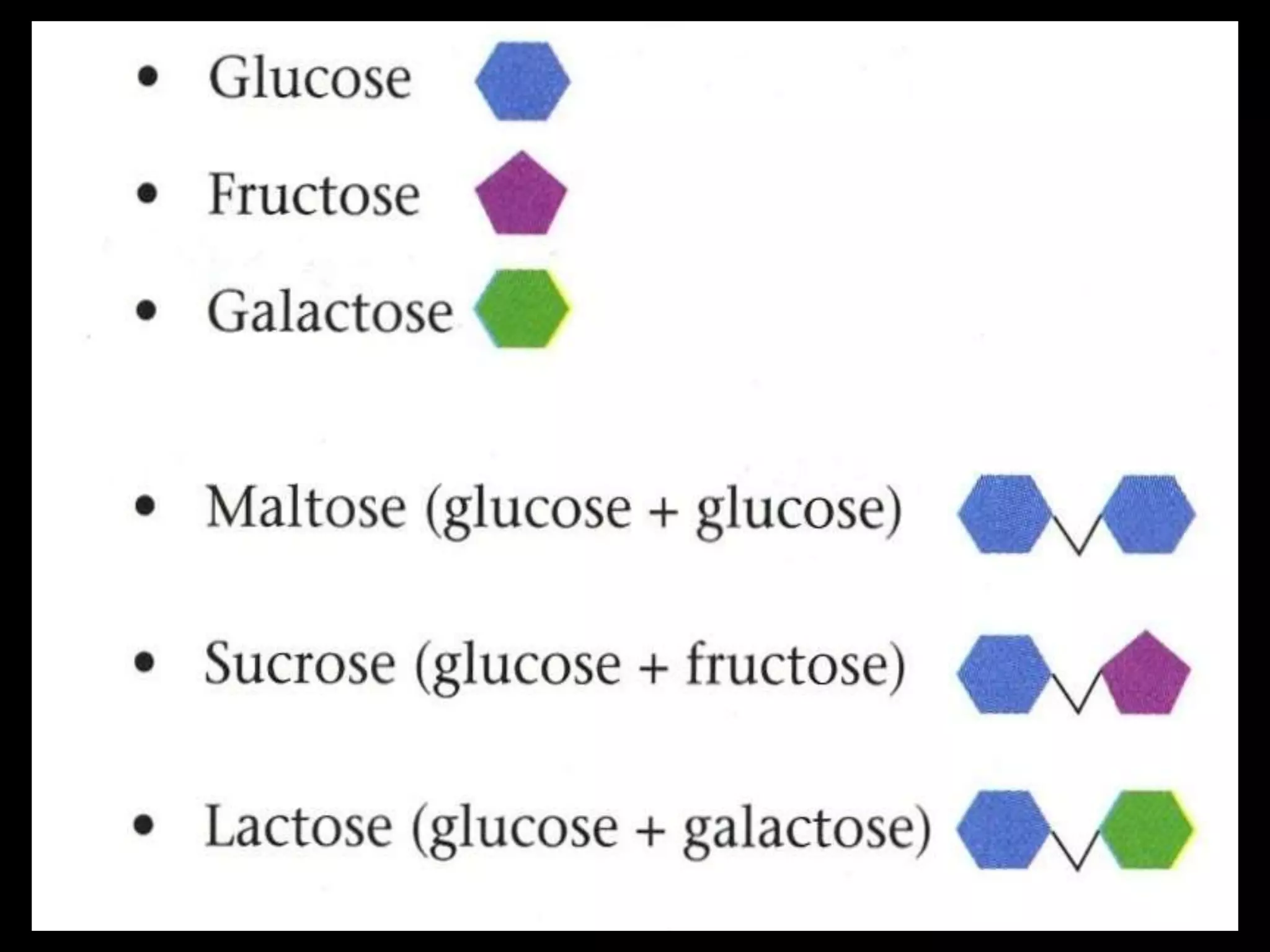
 Combines with others to form disaccharides
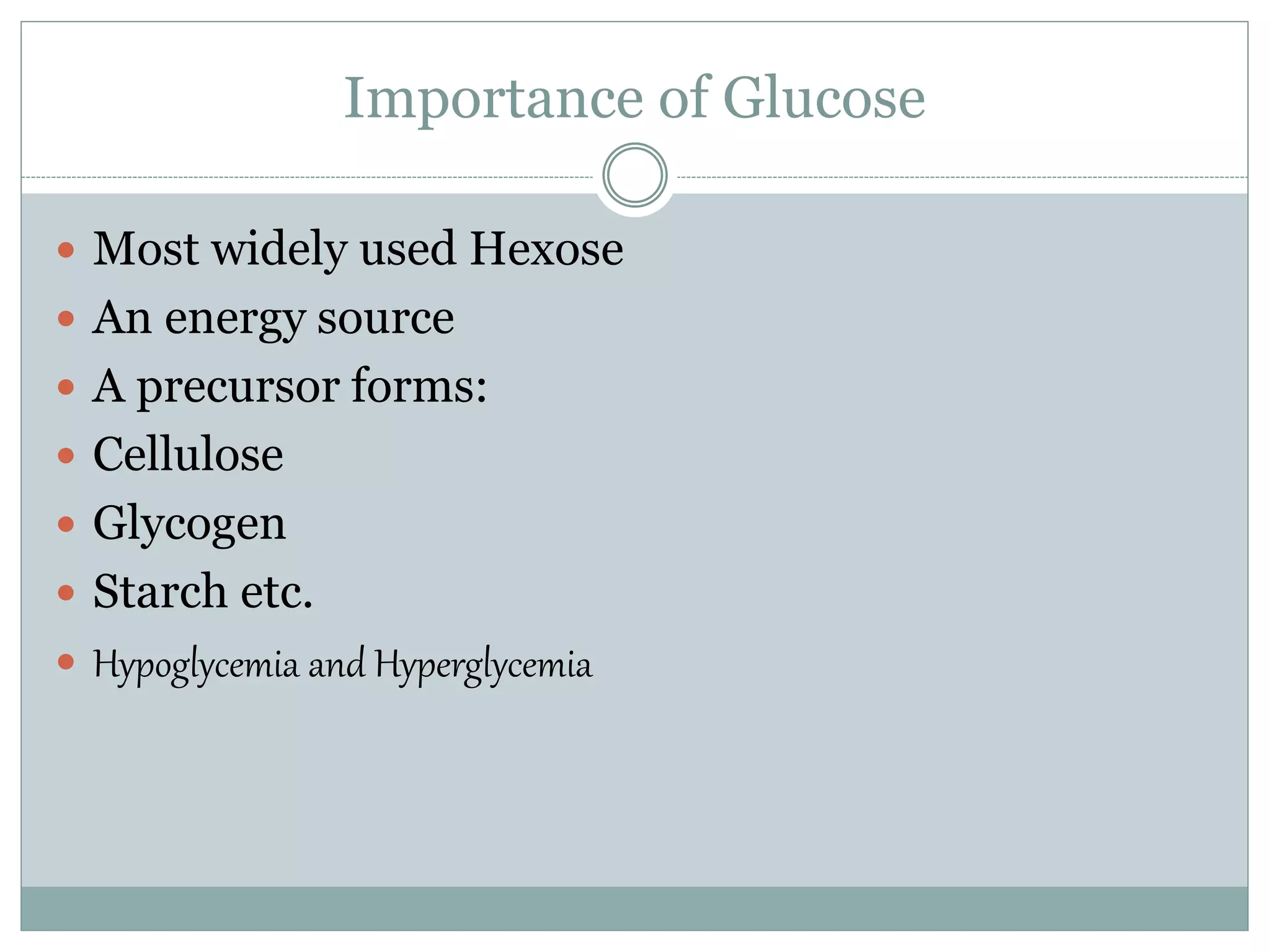
Importance of Glucose
 Most widely used Hexose
 An energy source
 A precursor forms:
 Cellulose
 Glycogen
 Starch etc.
 Hypoglycemia and Hyperglycemia
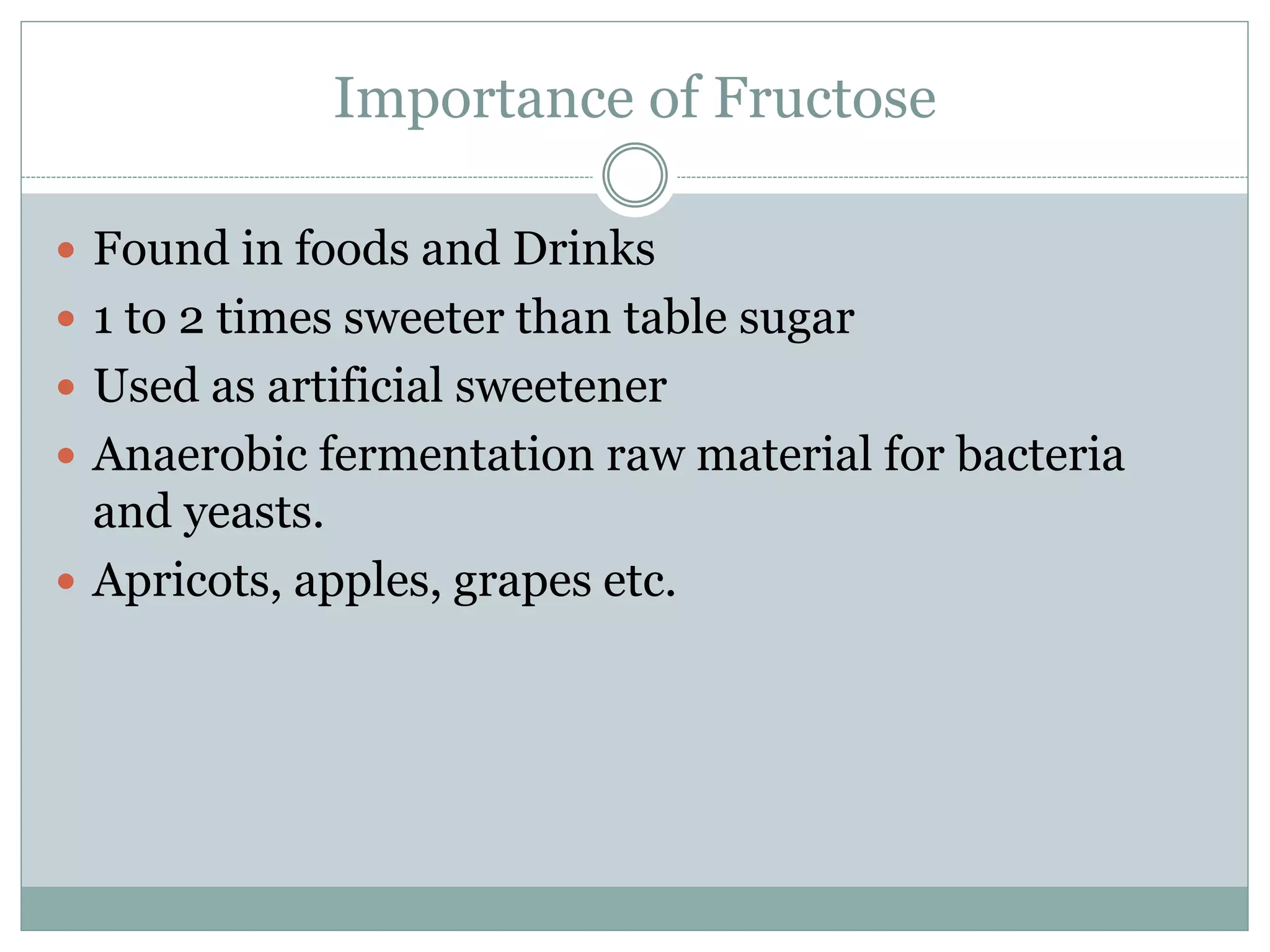
Importance of Fructose
 Found in foods and Drinks
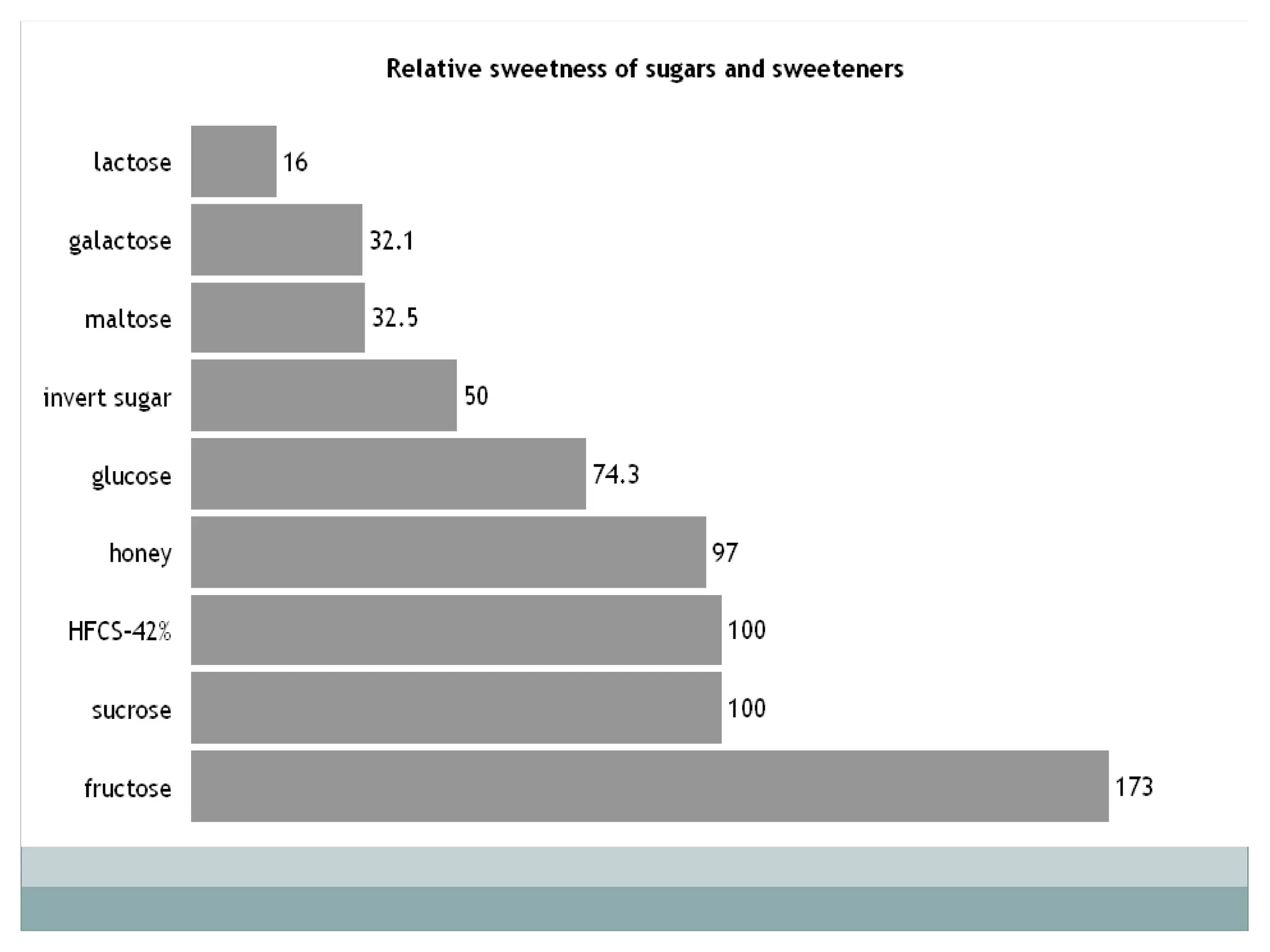
 1 to 2 times sweeter than table sugar
 Used as artificial sweetener
 Anaerobic fermentation raw material for bacteria
and yeasts.
 Apricots, apples, grapes etc.
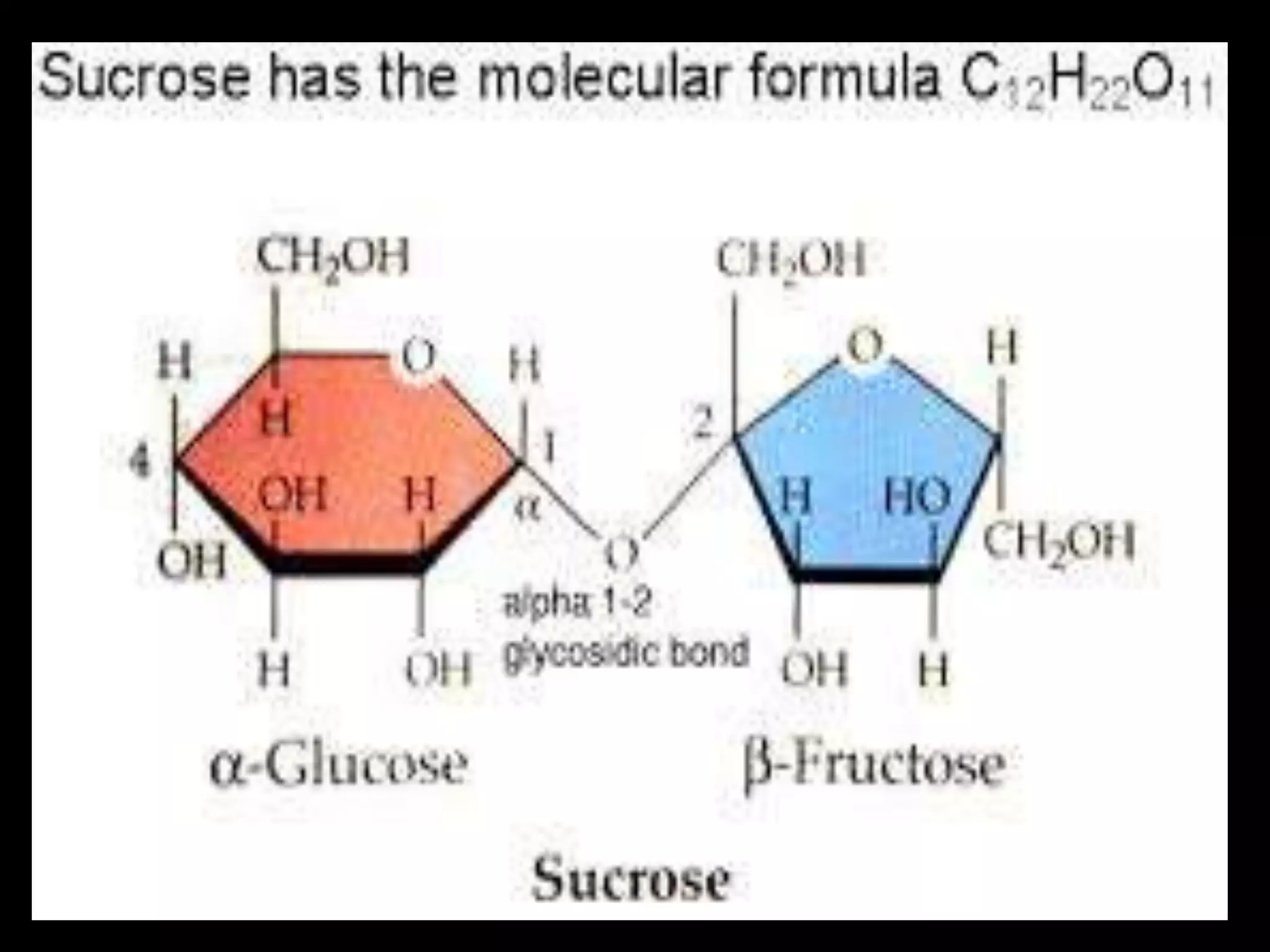
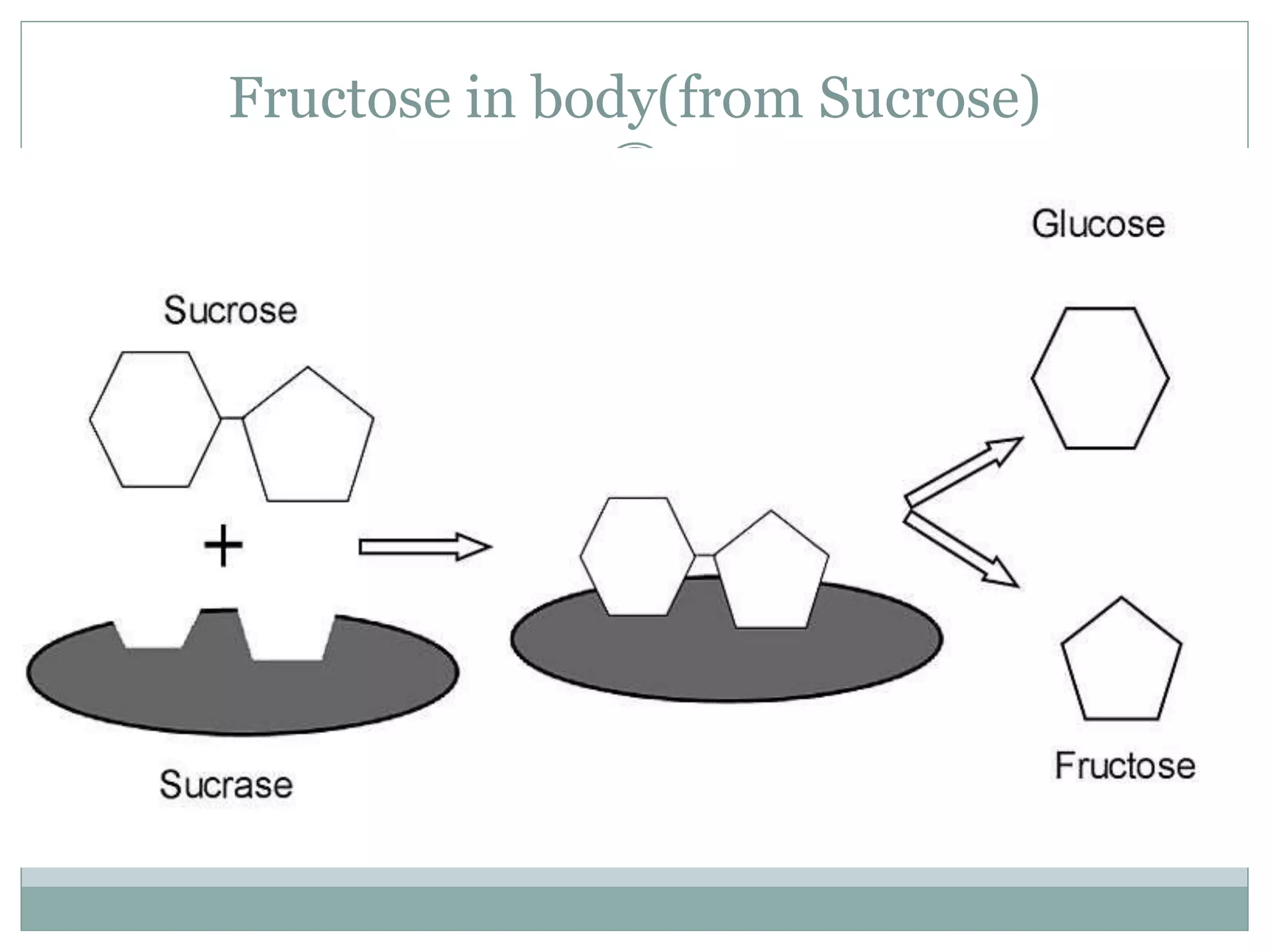
Fructose in body(from Sucrose)
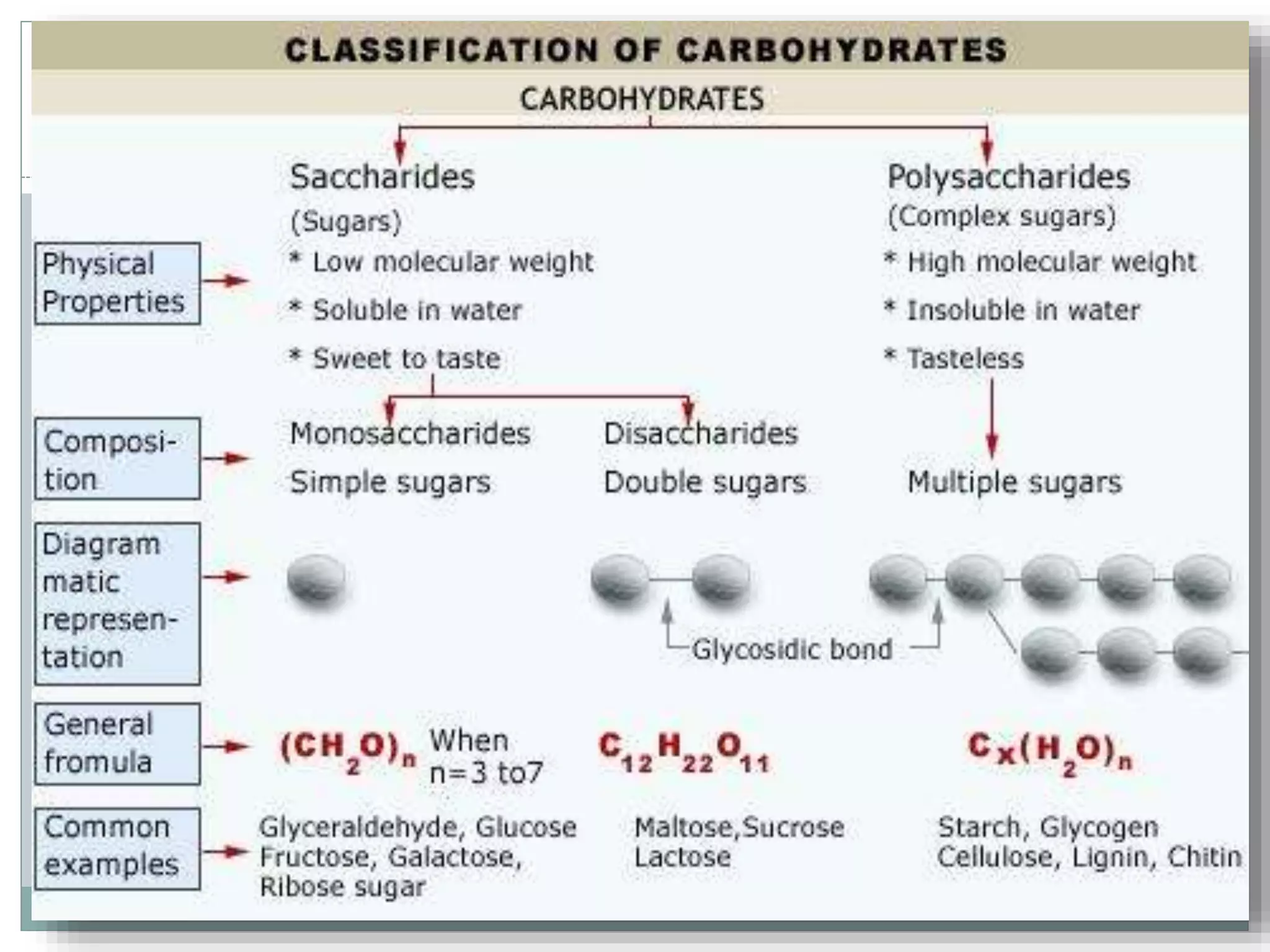
Classification of carbohydrates

Classification of carbohydrates

  • 3.
    Monosaccharides  Sweet Intaste  Not hydrolysable  Have three to seven carbons  3 carbons=Triose  4 carbons=Tetrose  5 carbons=Pentose  6 carbons=Hexose  7 carbons=Heptose
  • 4.
     Types: 1. Aldoses 2.Ketoses Aldoses contain Aldehydic group –CHO Ketoses contain Ketonic group –CO-
  • 7.
    Trioses  D-glyceraldehyde  L-glyceraldehye  Dihydroxyacetone  Important in cellular respiration, in the glycolysis step.
  • 8.
    Pentoses  Ribose  Ribulose They form the backbone of polysaccharides  They form the backbone of proteins  They form the backbone of lipids  They form the backbone of nucleic acids
  • 9.
    Hexoses  Glucose  Fructose Galactose  Mannose  Talose  Allose  Idose
  • 10.
    Gluose  Polyhydroxy aldehyde Dextrose=Dextrorotatory  Grape sugar  Blood Sugar  110mg/1000mL in blood  Energy source for the body  Combines with others to form disaccharides
  • 14.
    Importance of Glucose Most widely used Hexose  An energy source  A precursor forms:  Cellulose  Glycogen  Starch etc.  Hypoglycemia and Hyperglycemia
  • 15.
    Importance of Fructose Found in foods and Drinks  1 to 2 times sweeter than table sugar  Used as artificial sweetener  Anaerobic fermentation raw material for bacteria and yeasts.  Apricots, apples, grapes etc.
  • 16.