Ferromagnetic Nanomaterials
Farah Salim
2014-2015
Content:
▶Introduction to magnetic nanomaterials.
▶Magnetic properties.
▶Ferromagnetic materials.
▶Effects of temperature and the magnetic field on
ferromagnetic materials.
▶Basic properties of ferromagnetic materials.
▶Methods of Preparation.
▶Applications.
Introduction
• Magnetic nanoparticles are a class of nanoparticle
which can be manipulated using magnetic field.
• Such particles commonly consist of magnetic
elements such as ferromagnetic metals (iron,
nickel and cobalt), alloys and oxides.
• Require size control and narrow size distribution.
• Perform best in the size range 10-20 nm in
various applications.
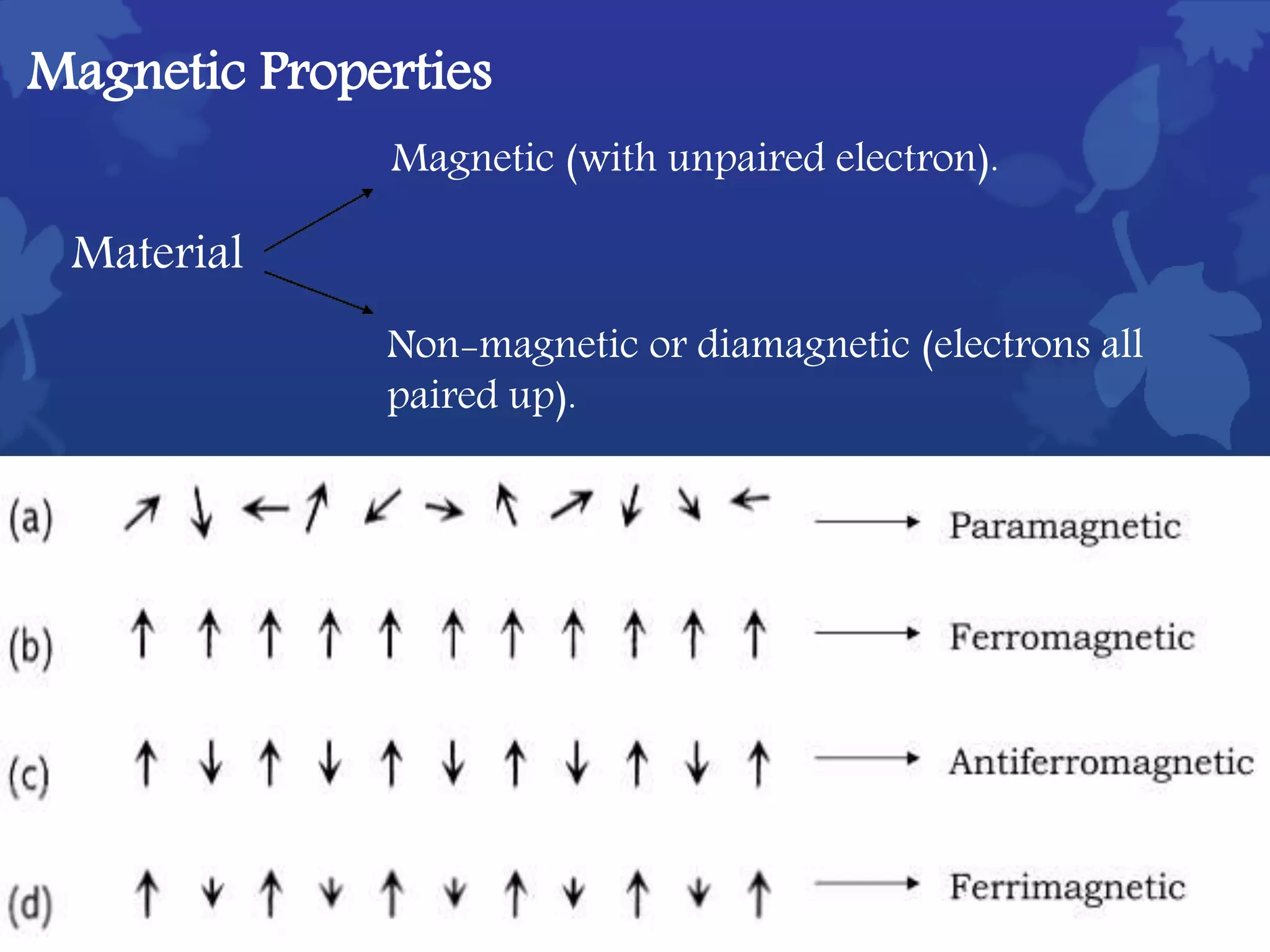
Magnetic Properties
Material
Magnetic (with unpaired electron).
Non-magnetic or diamagnetic (electrons all
paired up).
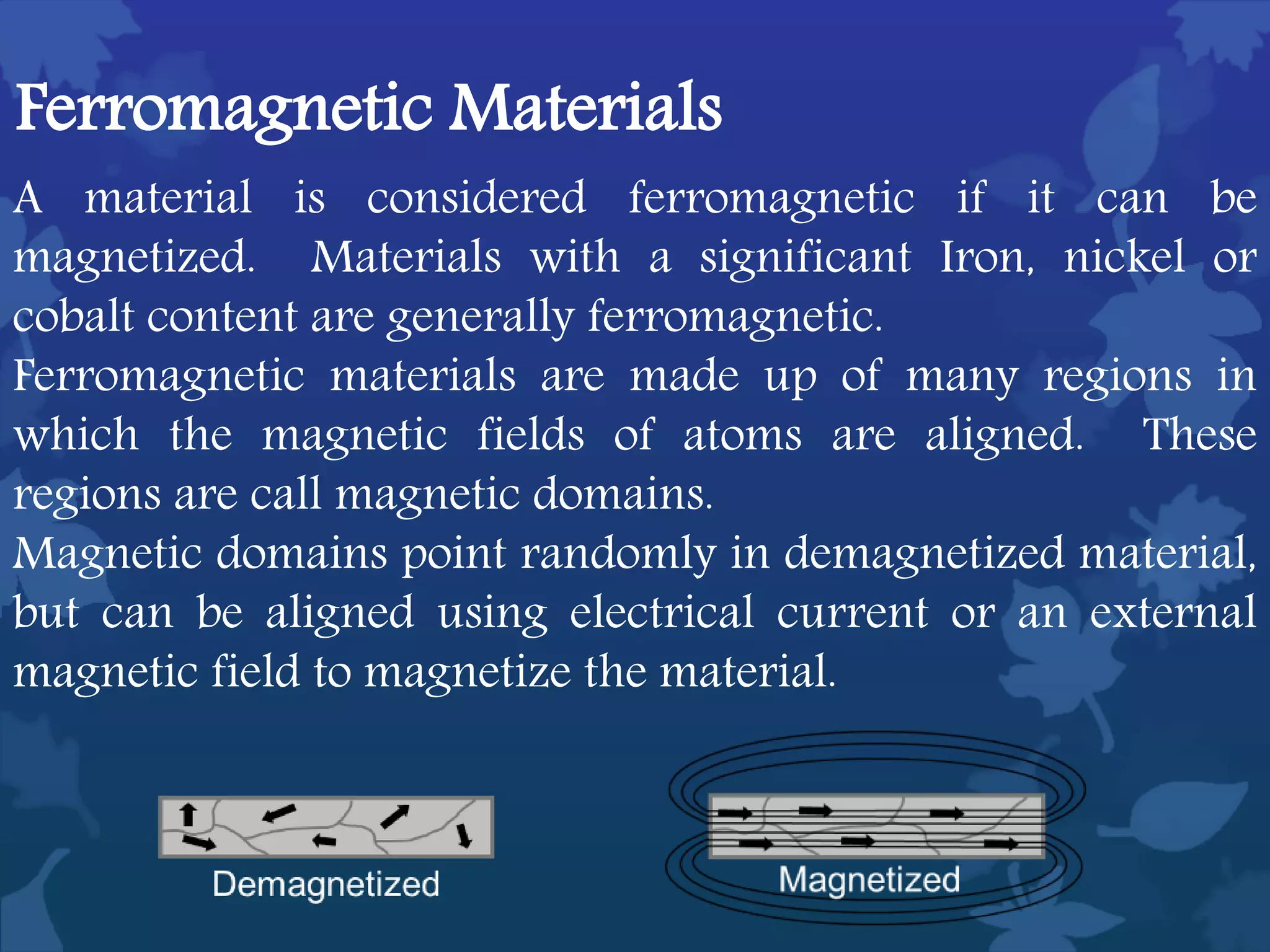
A material is considered ferromagnetic if it can be
magnetized. Materials with a significant Iron, nickel or
cobalt content are generally ferromagnetic.
Ferromagnetic materials are made up of many regions in
which the magnetic fields of atoms are aligned. These
regions are call magnetic domains.
Magnetic domains point randomly in demagnetized material,
but can be aligned using electrical current or an external
magnetic field to magnetize the material.
Ferromagnetic Materials
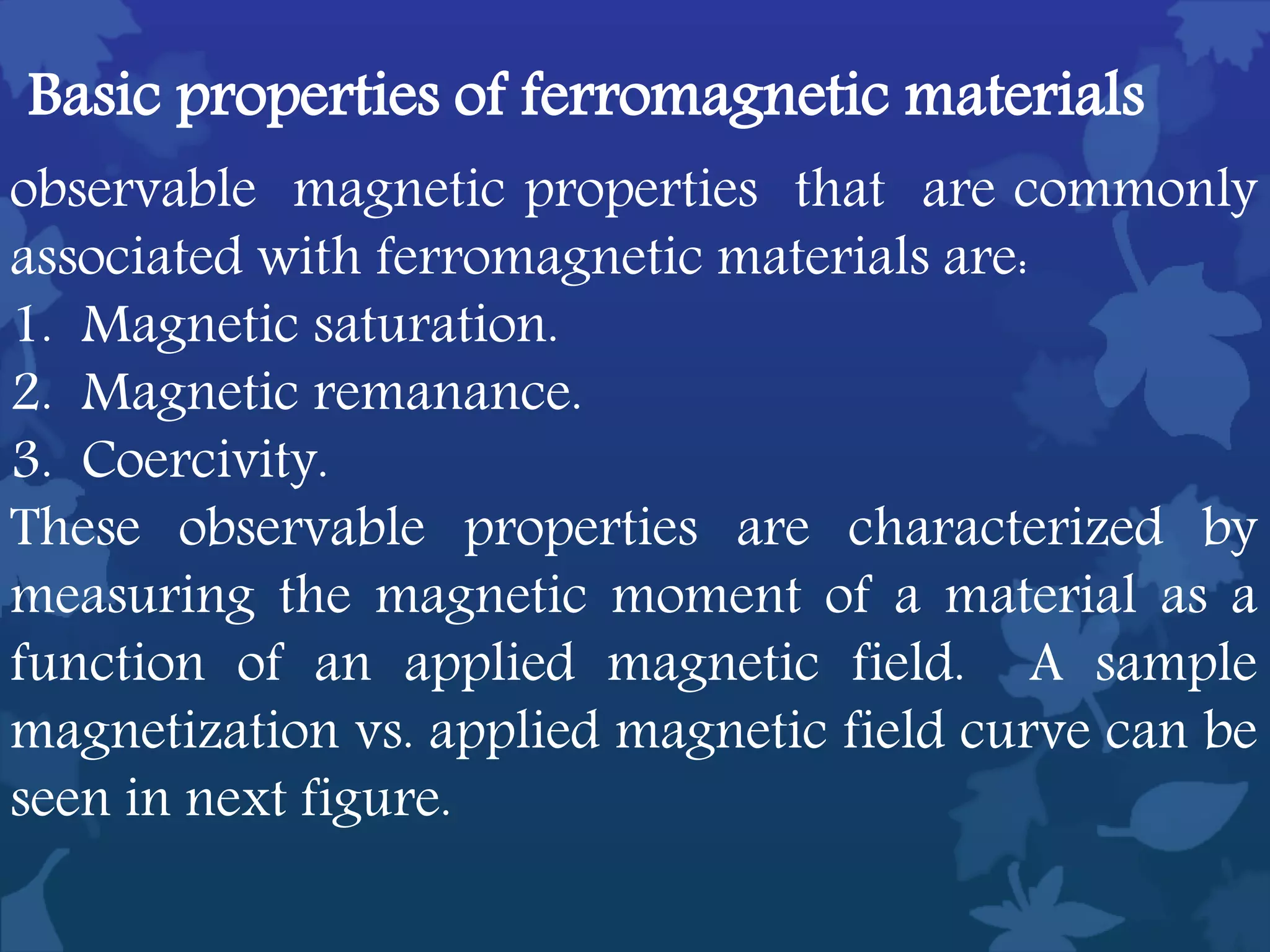
observable magnetic properties that are commonly
associated with ferromagnetic materials are:
1. Magnetic saturation.
2. Magnetic remanance.
3. Coercivity.
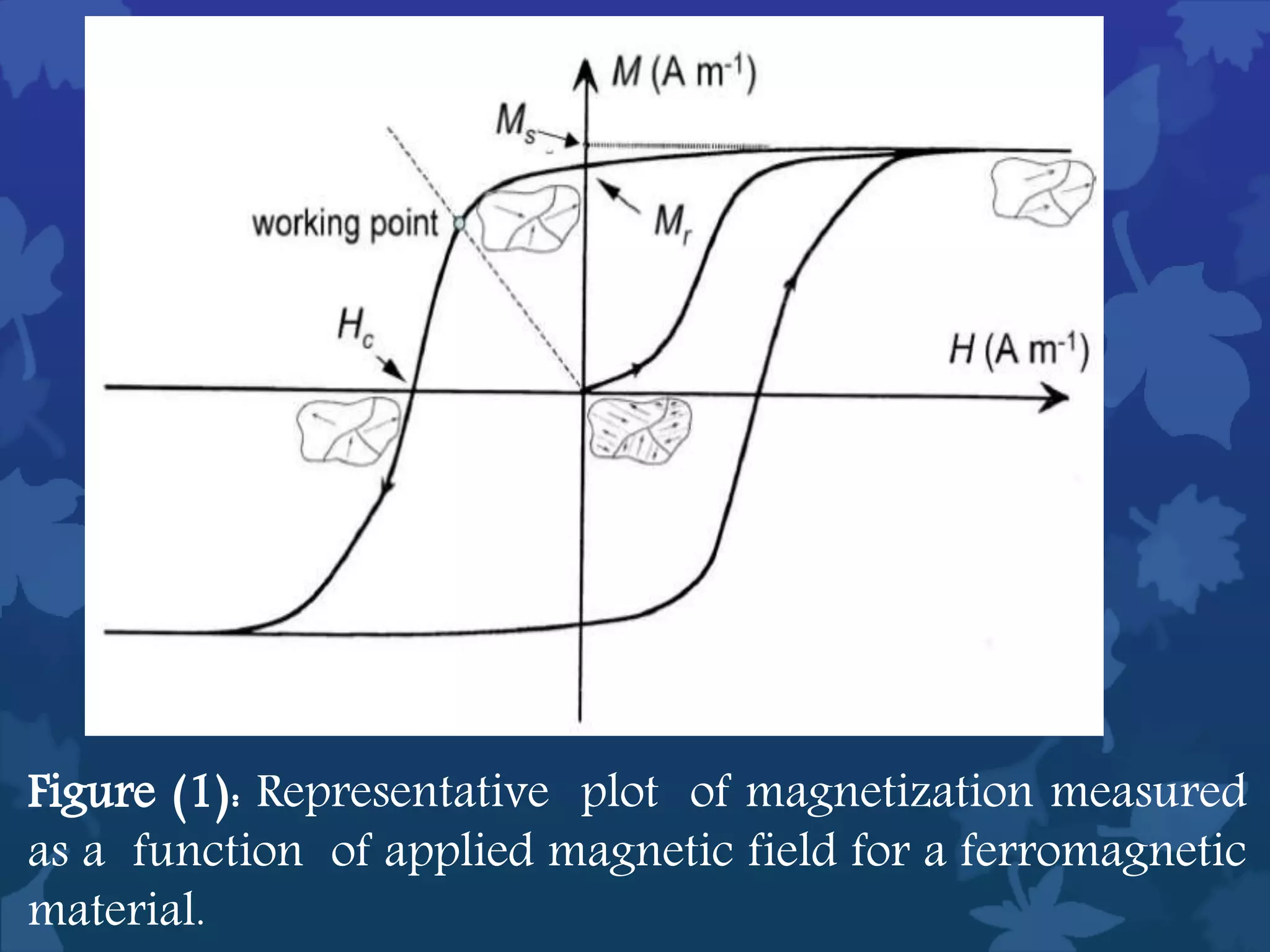
These observable properties are characterized by
measuring the magnetic moment of a material as a
function of an applied magnetic field. A sample
magnetization vs. applied magnetic field curve can be
seen in next figure.
Basic properties of ferromagnetic materials
Figure (1): Representative plot of magnetization measured
as a function of applied magnetic field for a ferromagnetic
material.
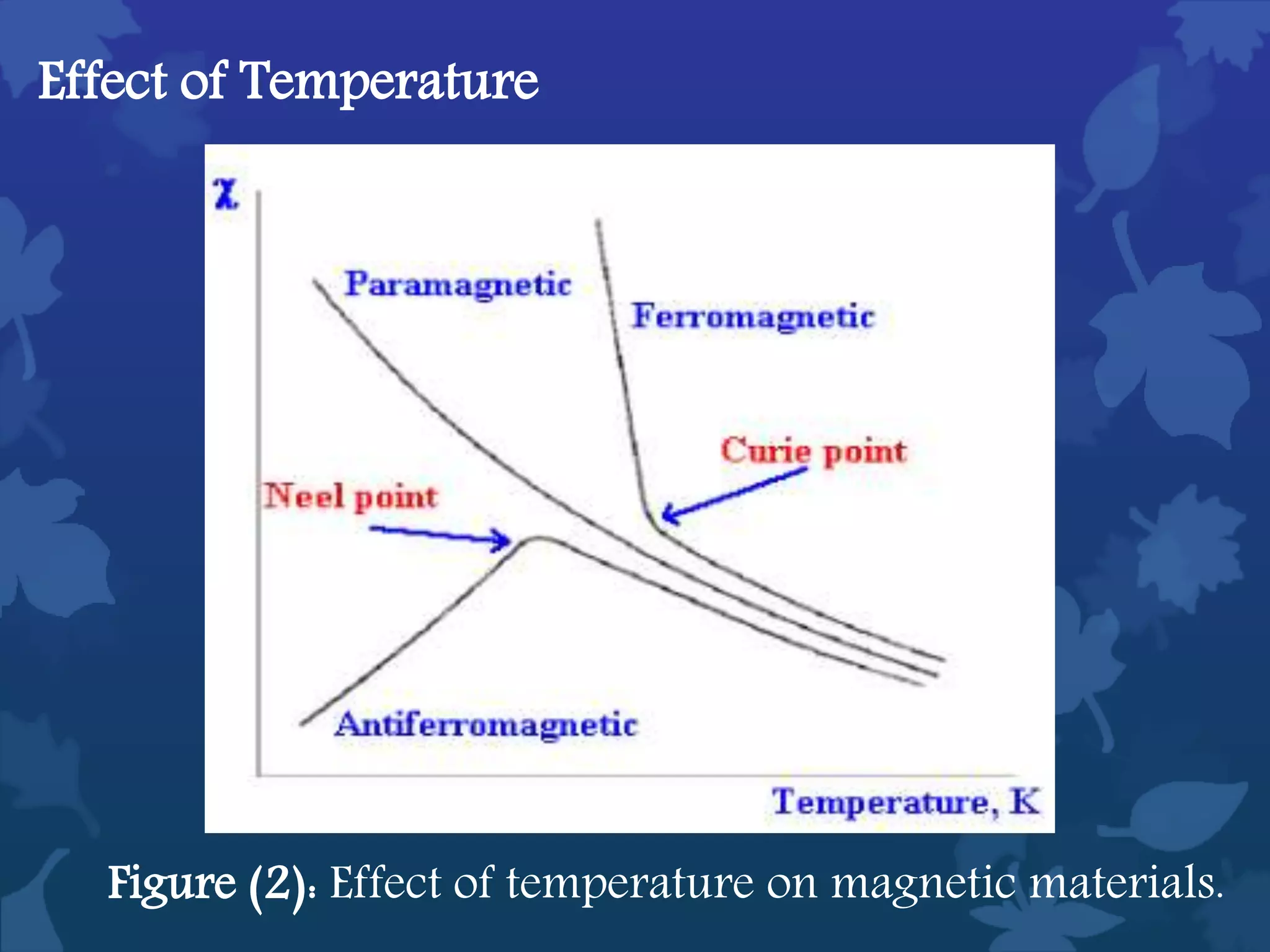
Effect of Temperature
Figure (2): Effect of temperature on magnetic materials.
Effect of the applied magnetic field
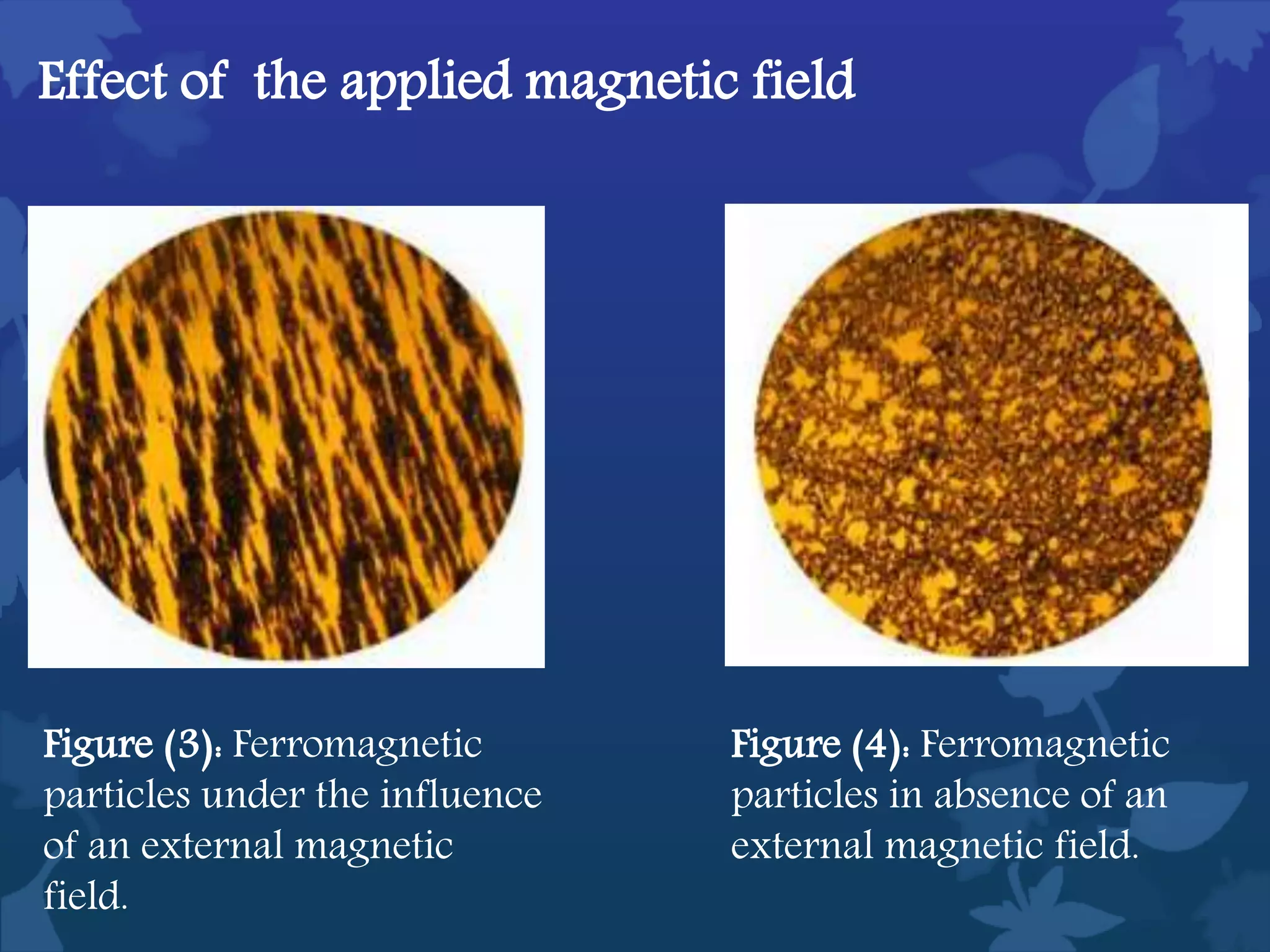
Figure (3): Ferromagnetic
particles under the influence
of an external magnetic
field.
Figure (4): Ferromagnetic
particles in absence of an
external magnetic field.
Methods of preparation:
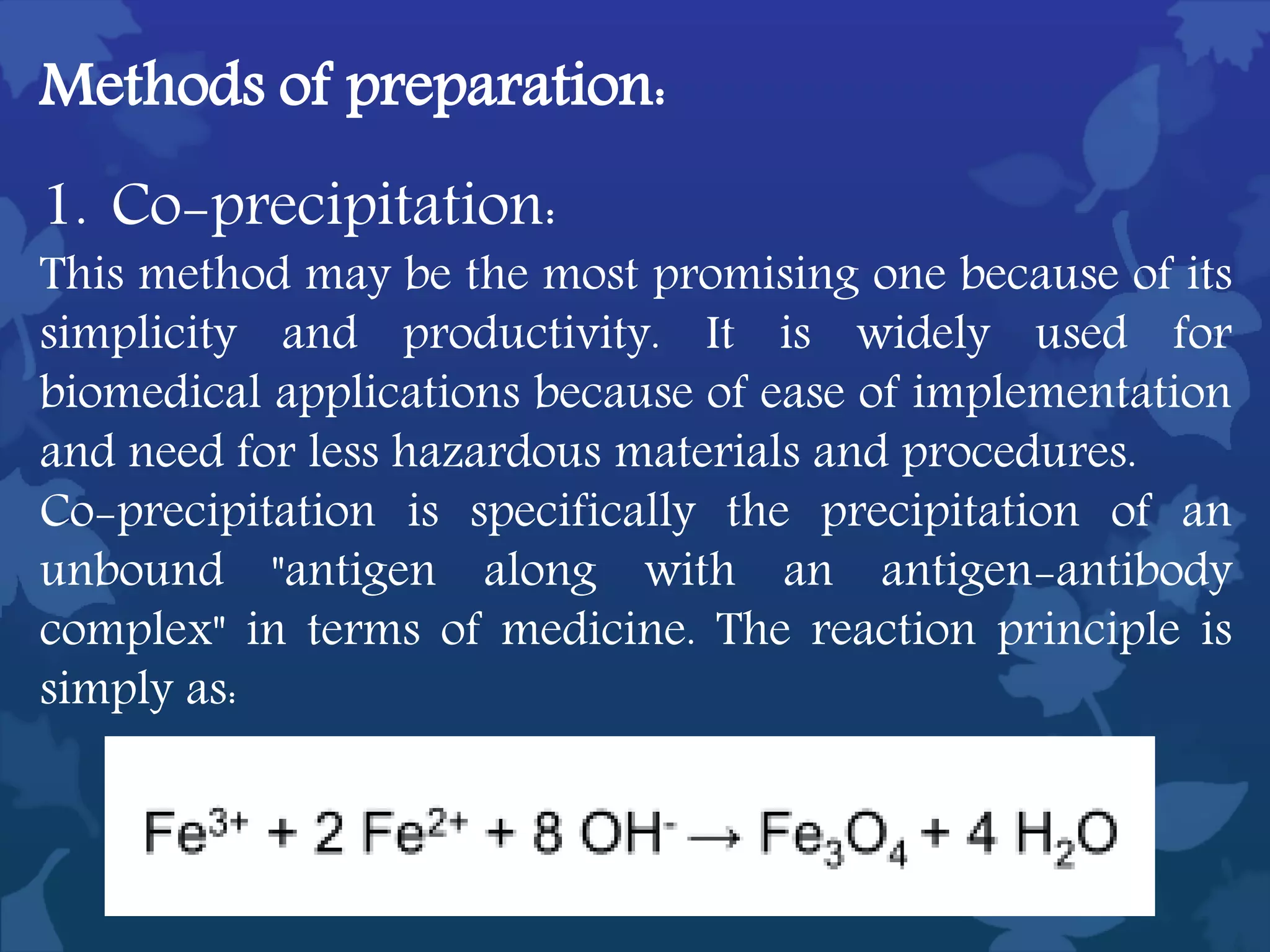
1. Co-precipitation:
This method may be the most promising one because of its
simplicity and productivity. It is widely used for
biomedical applications because of ease of implementation
and need for less hazardous materials and procedures.
Co-precipitation is specifically the precipitation of an
unbound "antigen along with an antigen-antibody
complex" in terms of medicine. The reaction principle is
simply as:
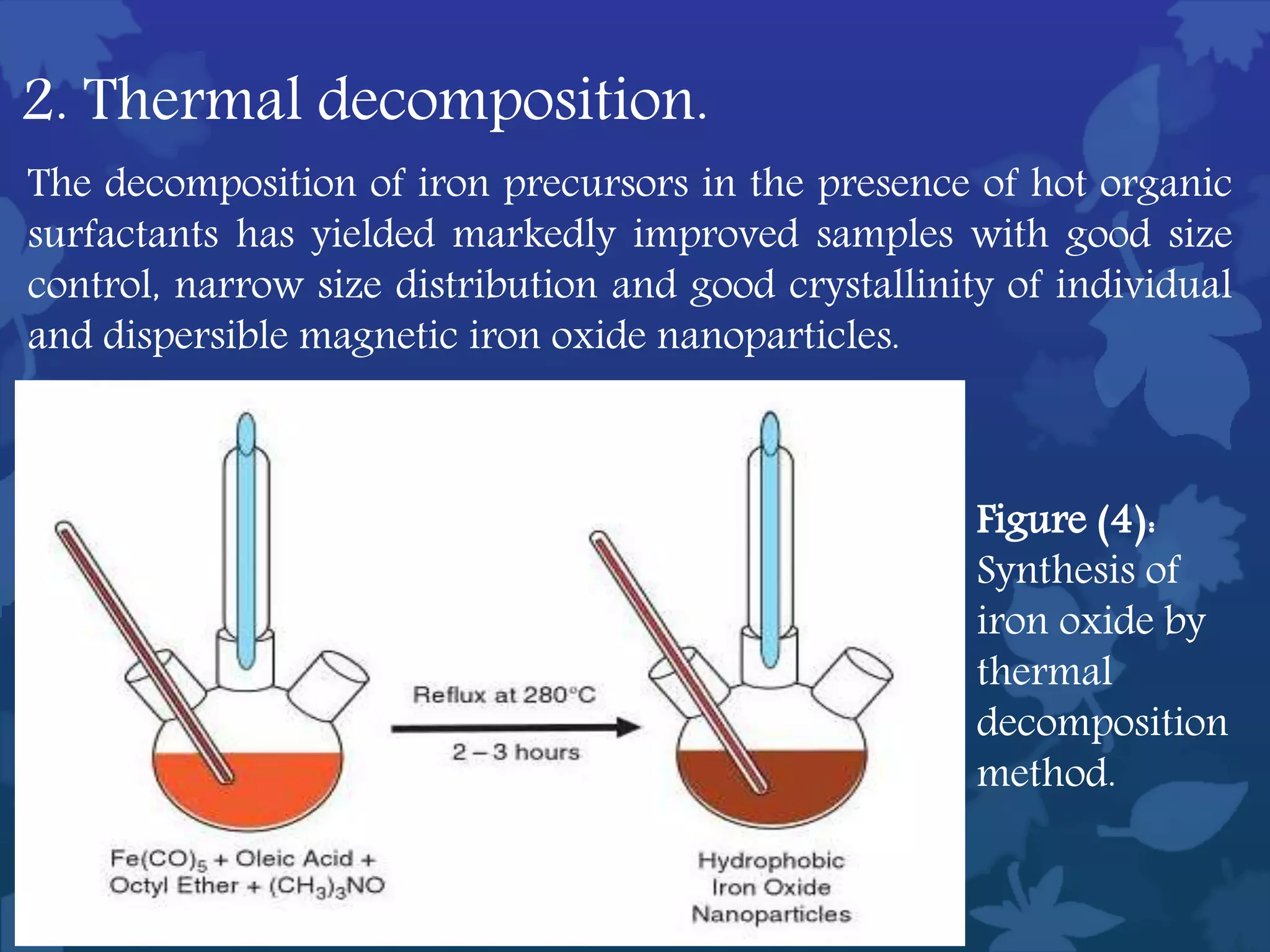
2. Thermal decomposition.
The decomposition of iron precursors in the presence of hot organic
surfactants has yielded markedly improved samples with good size
control, narrow size distribution and good crystallinity of individual
and dispersible magnetic iron oxide nanoparticles.
Figure (4):
Synthesis of
iron oxide by
thermal
decomposition
method.
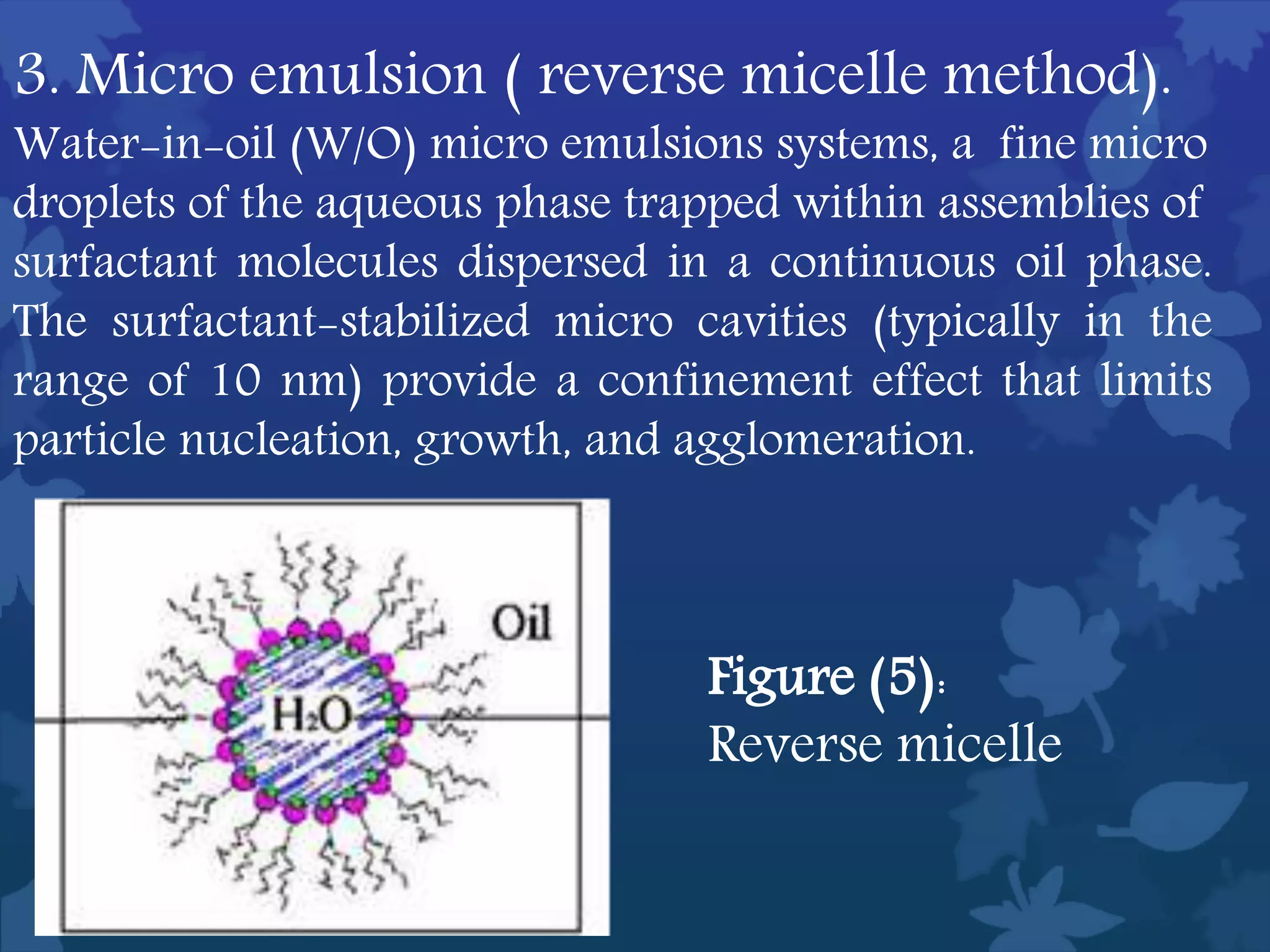
3. Micro emulsion ( reverse micelle method).
Water-in-oil (W/O) micro emulsions systems, a fine micro
droplets of the aqueous phase trapped within assemblies of
surfactant molecules dispersed in a continuous oil phase.
The surfactant-stabilized micro cavities (typically in the
range of 10 nm) provide a confinement effect that limits
particle nucleation, growth, and agglomeration.
Figure (5):
Reverse micelle
Applications
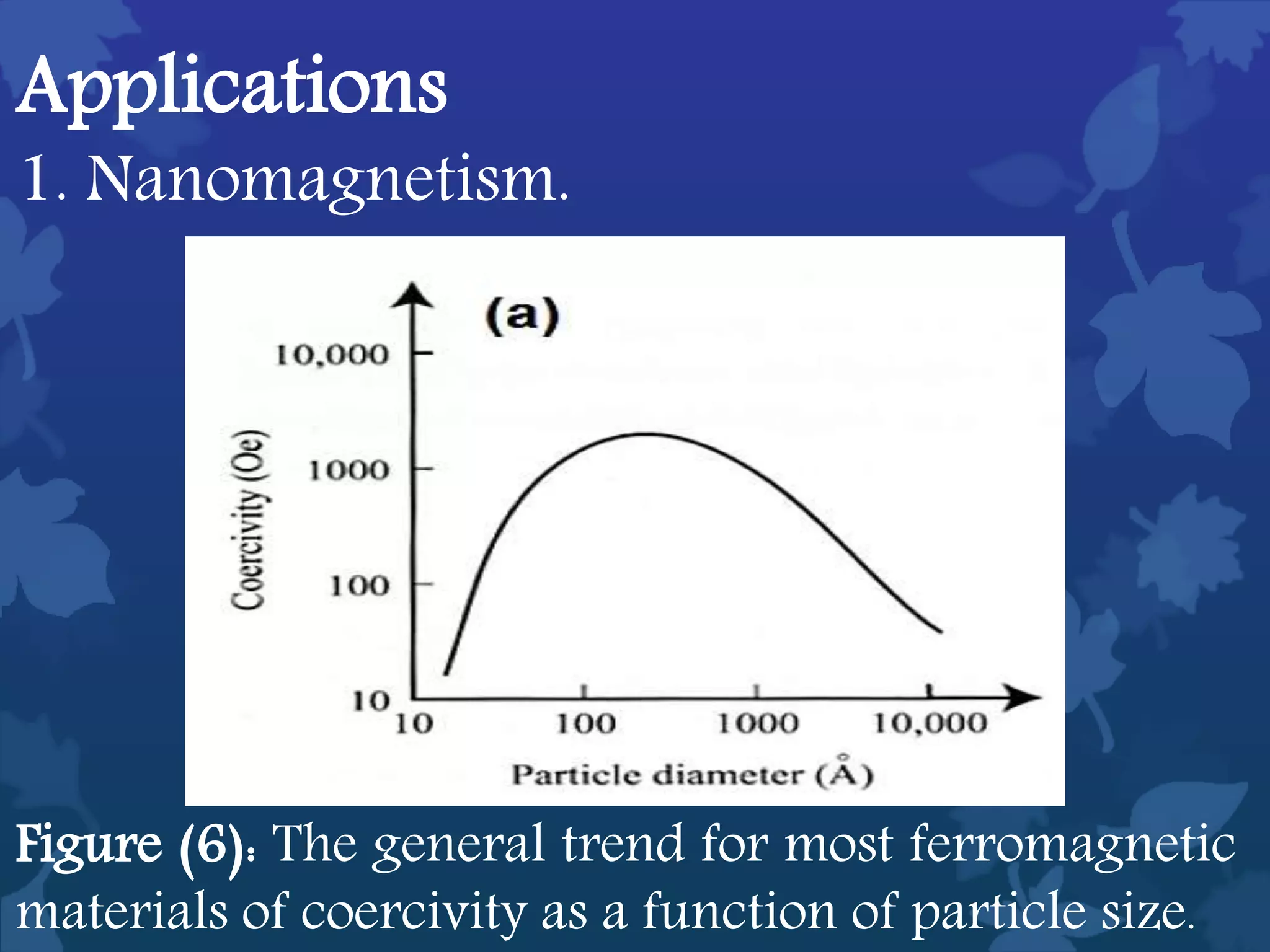
1. Nanomagnetism.
Figure (6): The general trend for most ferromagnetic
materials of coercivity as a function of particle size.
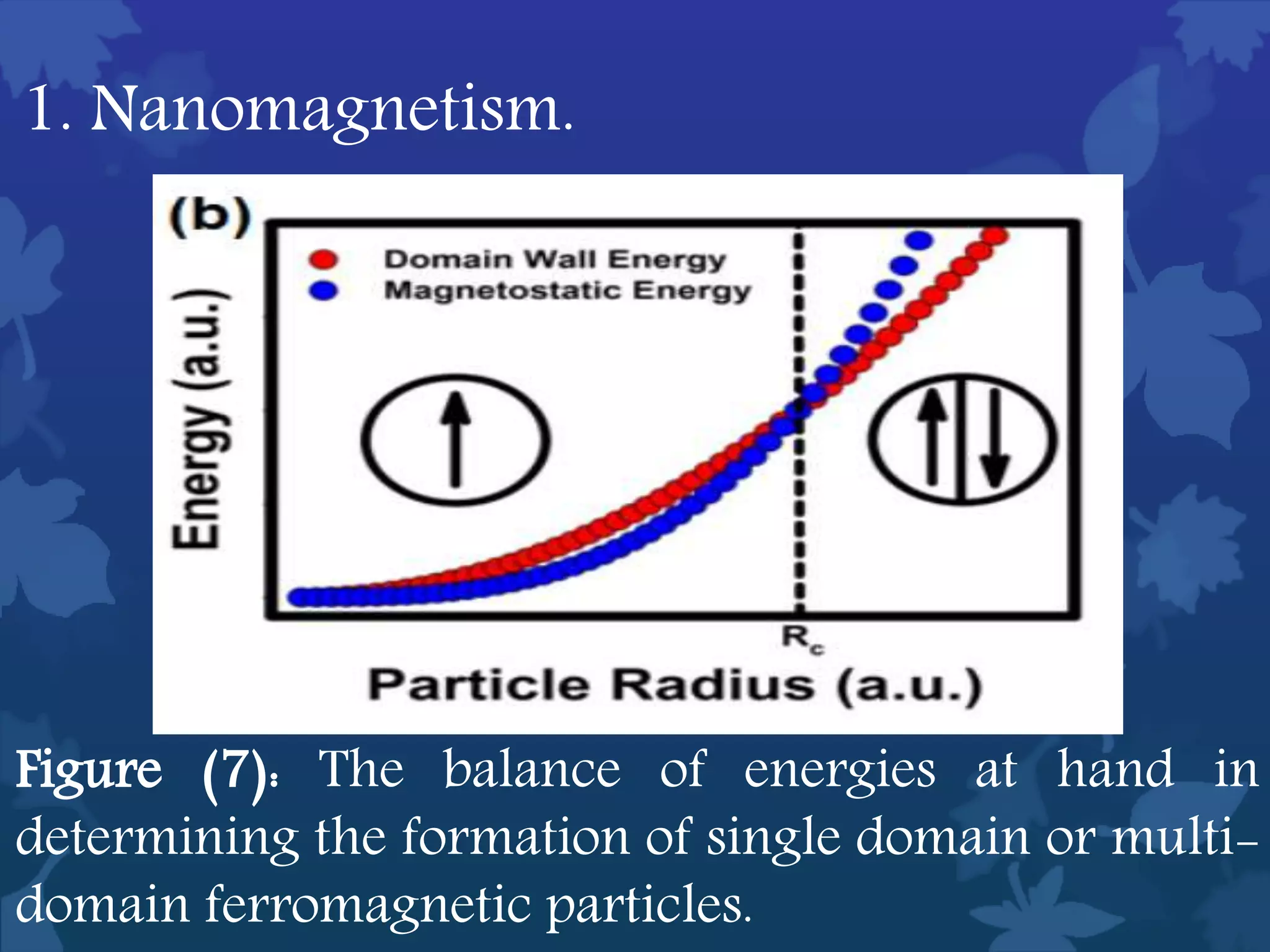
Figure (7): The balance of energies at hand in
determining the formation of single domain or multi-
domain ferromagnetic particles.
1. Nanomagnetism.
1. Nanomagnetism.
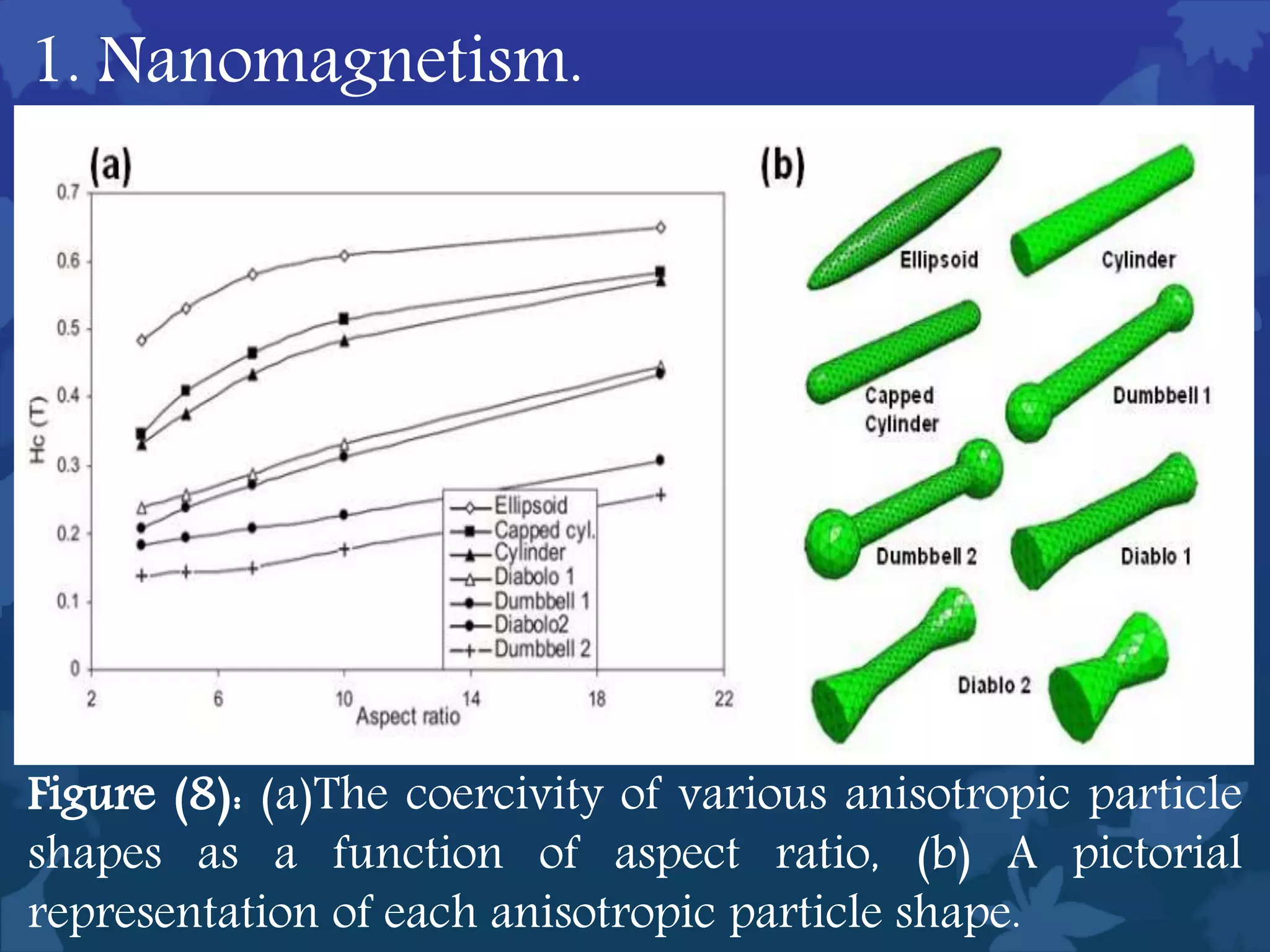
Figure (8): (a)The coercivity of various anisotropic particle
shapes as a function of aspect ratio, (b) A pictorial
representation of each anisotropic particle shape.
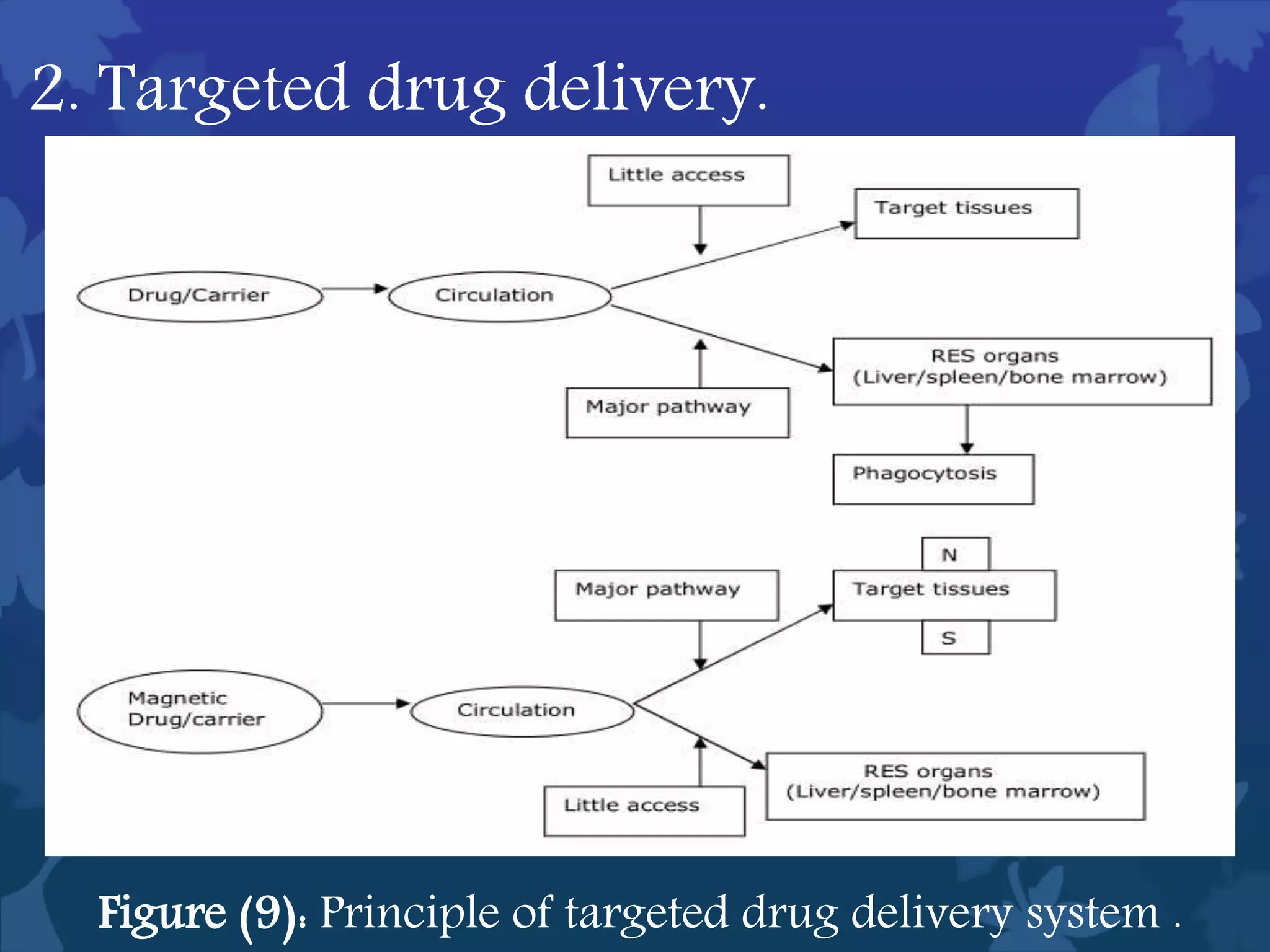
2. Targeted drug delivery.
Figure (9): Principle of targeted drug delivery system .
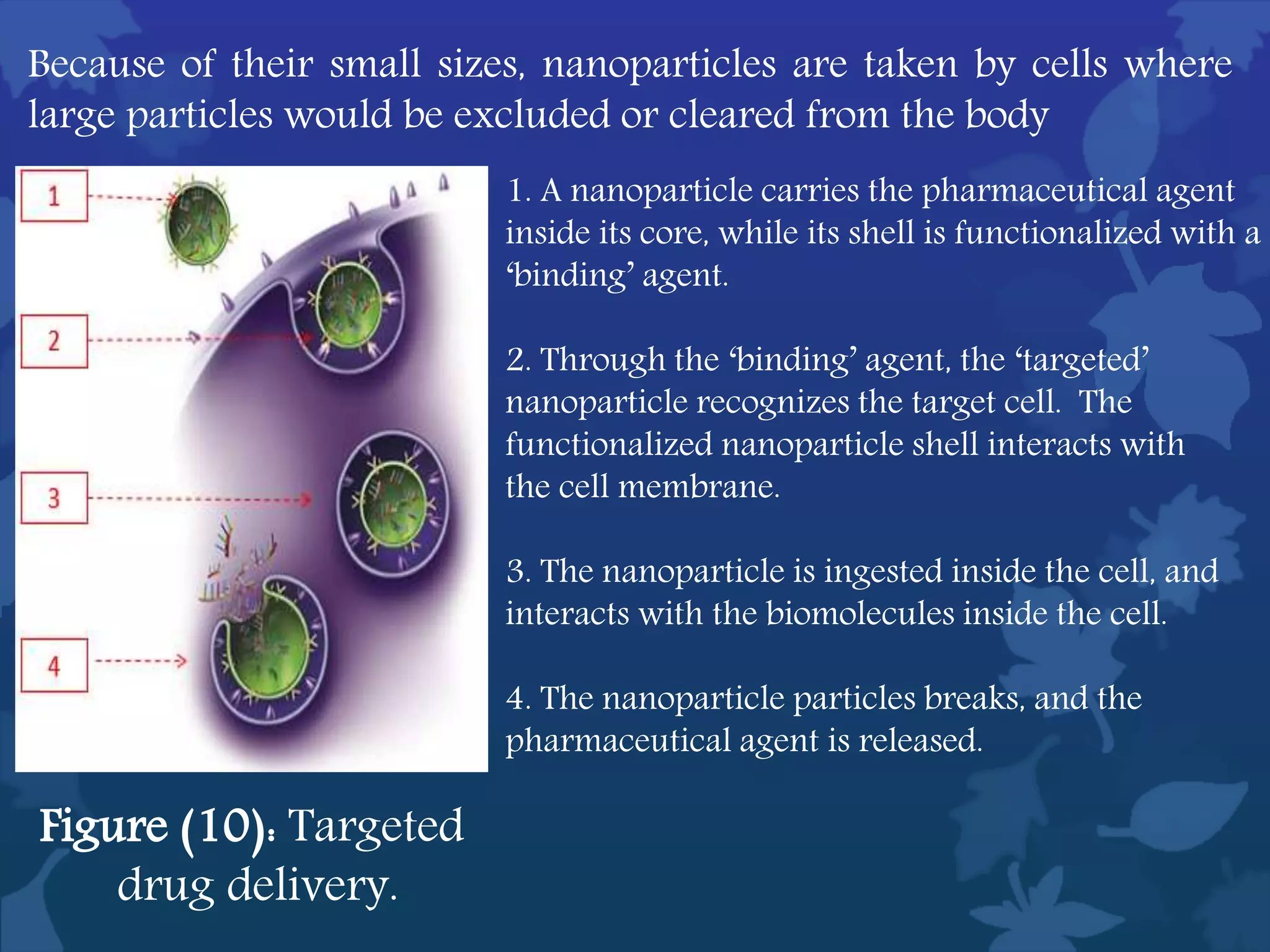
Because of their small sizes, nanoparticles are taken by cells where
large particles would be excluded or cleared from the body
1. A nanoparticle carries the pharmaceutical agent
inside its core, while its shell is functionalized with a
‘binding’ agent.
2. Through the ‘binding’ agent, the ‘targeted’
nanoparticle recognizes the target cell. The
functionalized nanoparticle shell interacts with
the cell membrane.
3. The nanoparticle is ingested inside the cell, and
interacts with the biomolecules inside the cell.
4. The nanoparticle particles breaks, and the
pharmaceutical agent is released.
Figure (10): Targeted
drug delivery.
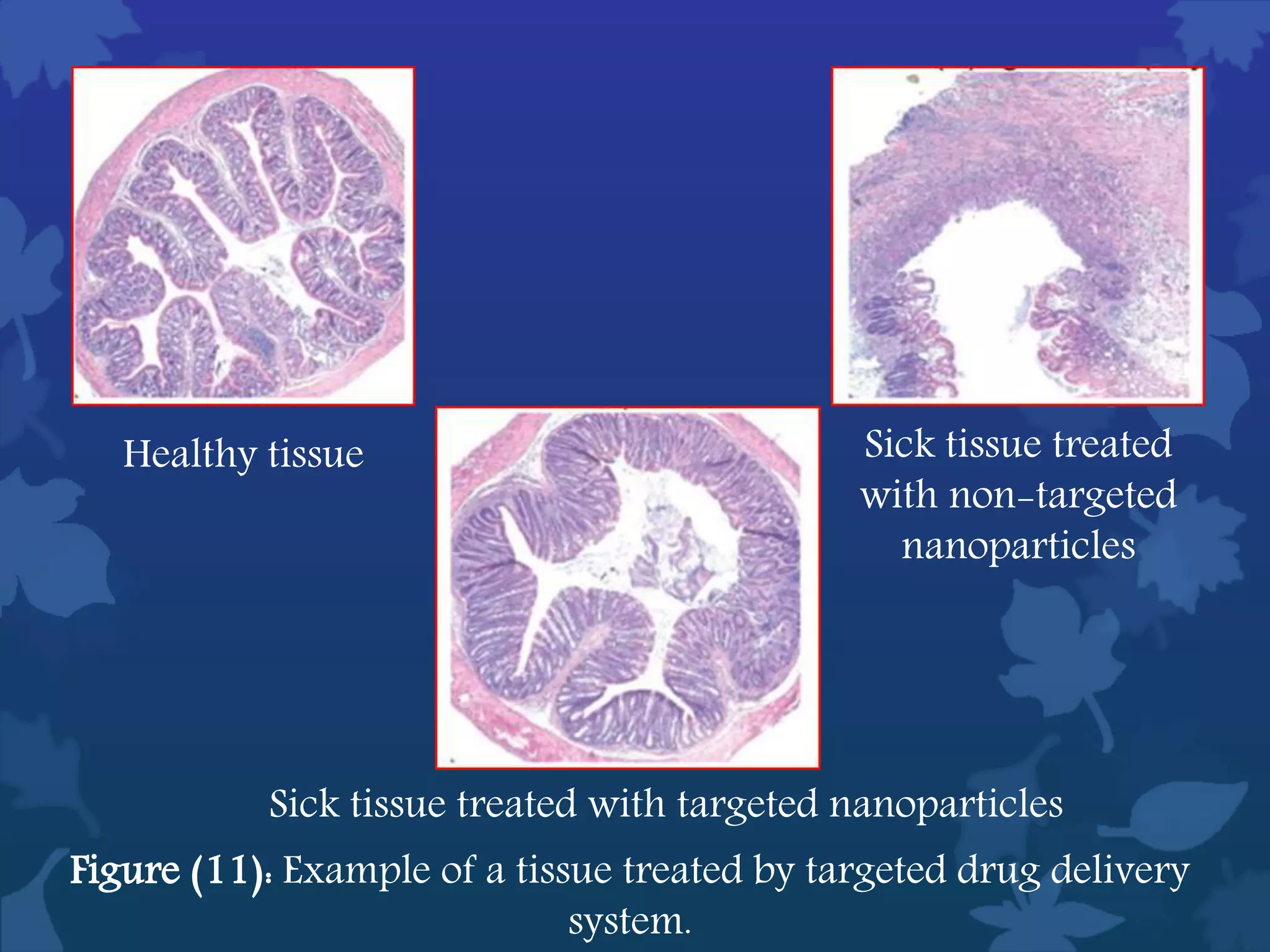
Healthy tissue Sick tissue treated
with non-targeted
nanoparticles
Sick tissue treated with targeted nanoparticles
Figure (11): Example of a tissue treated by targeted drug delivery
system.
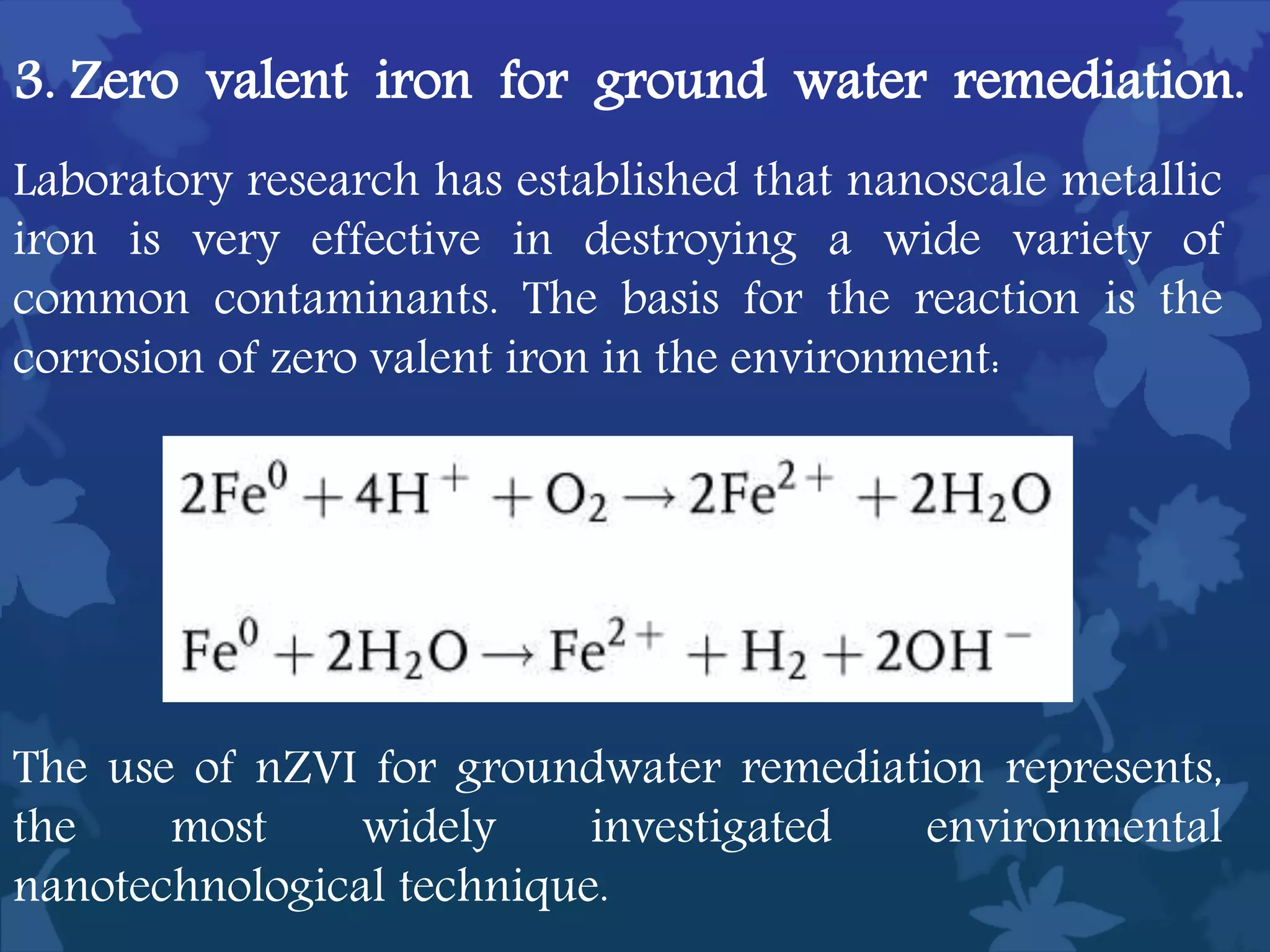
Laboratory research has established that nanoscale metallic
iron is very effective in destroying a wide variety of
common contaminants. The basis for the reaction is the
corrosion of zero valent iron in the environment:
3. Zero valent iron for ground water remediation.
The use of nZVI for groundwater remediation represents,
the most widely investigated environmental
nanotechnological technique.
Two approaches to application of ZVI for
Ground water remediation:
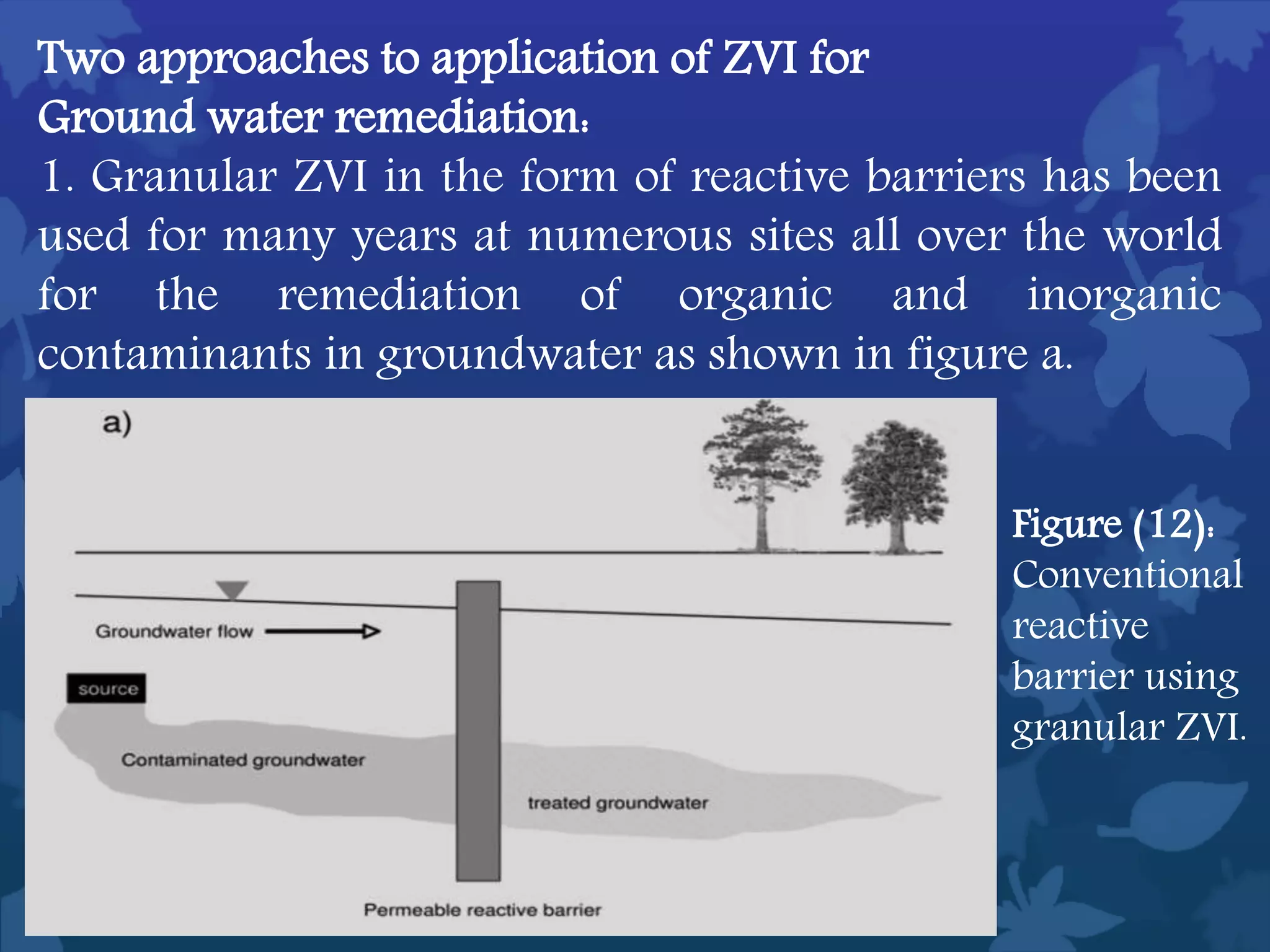
1. Granular ZVI in the form of reactive barriers has been
used for many years at numerous sites all over the world
for the remediation of organic and inorganic
contaminants in groundwater as shown in figure a.
Figure (12):
Conventional
reactive
barrier using
granular ZVI.
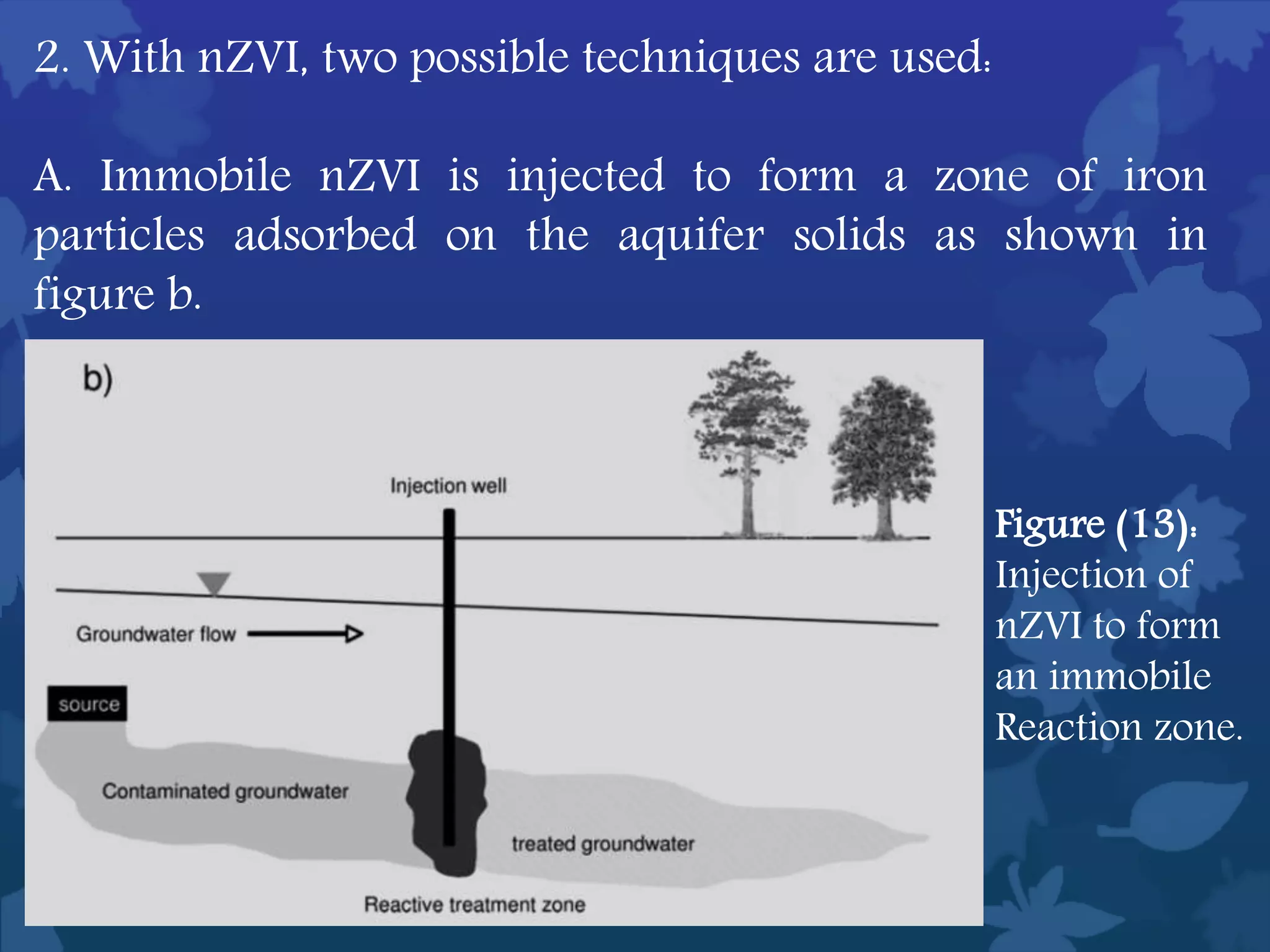
2. With nZVI, two possible techniques are used:
A. Immobile nZVI is injected to form a zone of iron
particles adsorbed on the aquifer solids as shown in
figure b.
Figure (13):
Injection of
nZVI to form
an immobile
Reaction zone.
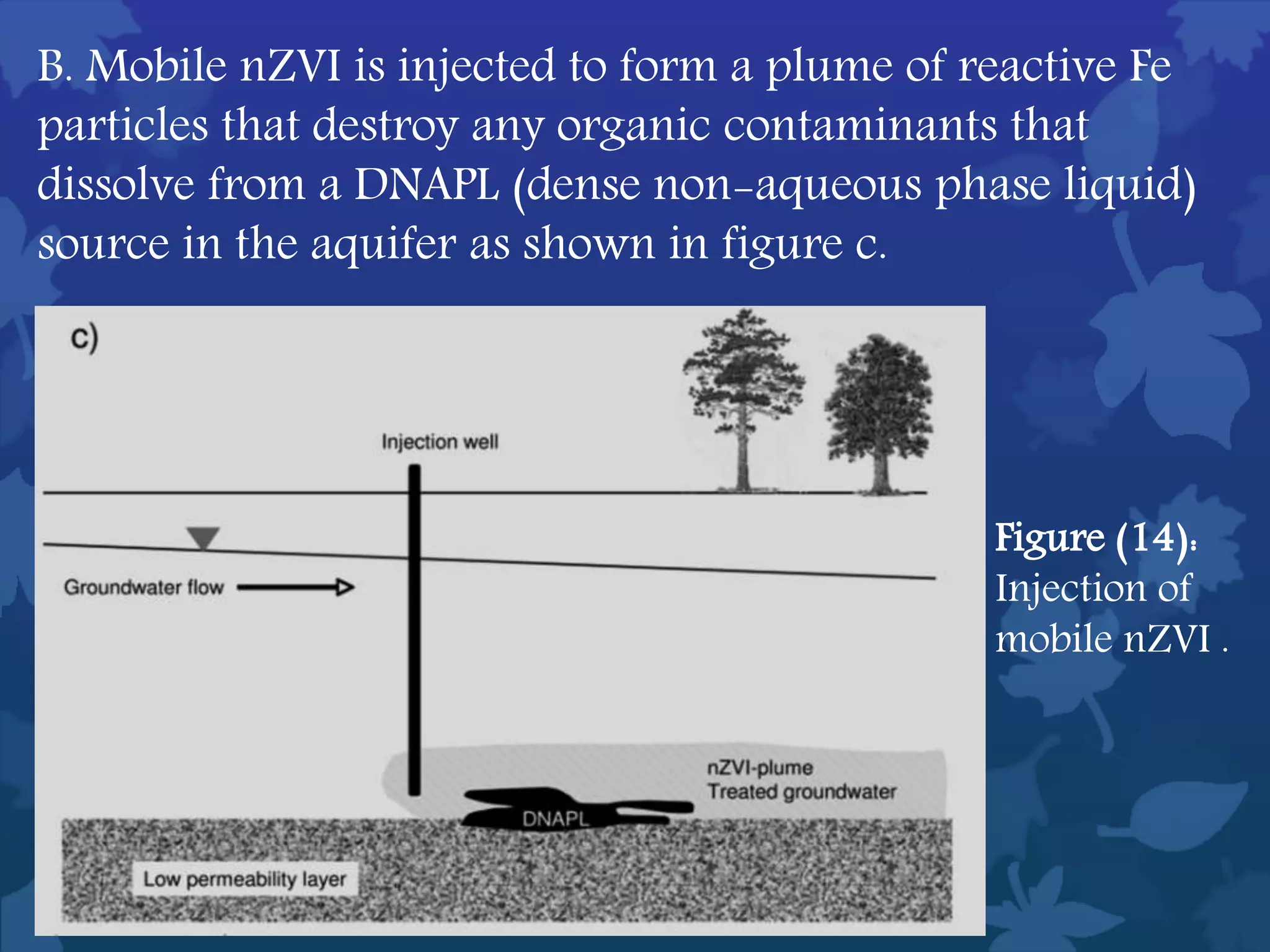
B. Mobile nZVI is injected to form a plume of reactive Fe
particles that destroy any organic contaminants that
dissolve from a DNAPL (dense non-aqueous phase liquid)
source in the aquifer as shown in figure c.
Figure (14):
Injection of
mobile nZVI .
Thank you

ferromagnetic nanomaterials

  • 1.
  • 2.
    Content: ▶Introduction to magneticnanomaterials. ▶Magnetic properties. ▶Ferromagnetic materials. ▶Effects of temperature and the magnetic field on ferromagnetic materials. ▶Basic properties of ferromagnetic materials. ▶Methods of Preparation. ▶Applications.
  • 3.
    Introduction • Magnetic nanoparticlesare a class of nanoparticle which can be manipulated using magnetic field. • Such particles commonly consist of magnetic elements such as ferromagnetic metals (iron, nickel and cobalt), alloys and oxides. • Require size control and narrow size distribution. • Perform best in the size range 10-20 nm in various applications.
  • 4.
    Magnetic Properties Material Magnetic (withunpaired electron). Non-magnetic or diamagnetic (electrons all paired up).
  • 5.
    A material isconsidered ferromagnetic if it can be magnetized. Materials with a significant Iron, nickel or cobalt content are generally ferromagnetic. Ferromagnetic materials are made up of many regions in which the magnetic fields of atoms are aligned. These regions are call magnetic domains. Magnetic domains point randomly in demagnetized material, but can be aligned using electrical current or an external magnetic field to magnetize the material. Ferromagnetic Materials
  • 6.
    observable magnetic propertiesthat are commonly associated with ferromagnetic materials are: 1. Magnetic saturation. 2. Magnetic remanance. 3. Coercivity. These observable properties are characterized by measuring the magnetic moment of a material as a function of an applied magnetic field. A sample magnetization vs. applied magnetic field curve can be seen in next figure. Basic properties of ferromagnetic materials
  • 7.
    Figure (1): Representativeplot of magnetization measured as a function of applied magnetic field for a ferromagnetic material.
  • 8.
    Effect of Temperature Figure(2): Effect of temperature on magnetic materials.
  • 9.
    Effect of theapplied magnetic field Figure (3): Ferromagnetic particles under the influence of an external magnetic field. Figure (4): Ferromagnetic particles in absence of an external magnetic field.
  • 10.
    Methods of preparation: 1.Co-precipitation: This method may be the most promising one because of its simplicity and productivity. It is widely used for biomedical applications because of ease of implementation and need for less hazardous materials and procedures. Co-precipitation is specifically the precipitation of an unbound "antigen along with an antigen-antibody complex" in terms of medicine. The reaction principle is simply as:
  • 11.
    2. Thermal decomposition. Thedecomposition of iron precursors in the presence of hot organic surfactants has yielded markedly improved samples with good size control, narrow size distribution and good crystallinity of individual and dispersible magnetic iron oxide nanoparticles. Figure (4): Synthesis of iron oxide by thermal decomposition method.
  • 12.
    3. Micro emulsion( reverse micelle method). Water-in-oil (W/O) micro emulsions systems, a fine micro droplets of the aqueous phase trapped within assemblies of surfactant molecules dispersed in a continuous oil phase. The surfactant-stabilized micro cavities (typically in the range of 10 nm) provide a confinement effect that limits particle nucleation, growth, and agglomeration. Figure (5): Reverse micelle
  • 14.
    Applications 1. Nanomagnetism. Figure (6):The general trend for most ferromagnetic materials of coercivity as a function of particle size.
  • 15.
    Figure (7): Thebalance of energies at hand in determining the formation of single domain or multi- domain ferromagnetic particles. 1. Nanomagnetism.
  • 16.
    1. Nanomagnetism. Figure (8):(a)The coercivity of various anisotropic particle shapes as a function of aspect ratio, (b) A pictorial representation of each anisotropic particle shape.
  • 17.
    2. Targeted drugdelivery. Figure (9): Principle of targeted drug delivery system .
  • 18.
    Because of theirsmall sizes, nanoparticles are taken by cells where large particles would be excluded or cleared from the body 1. A nanoparticle carries the pharmaceutical agent inside its core, while its shell is functionalized with a ‘binding’ agent. 2. Through the ‘binding’ agent, the ‘targeted’ nanoparticle recognizes the target cell. The functionalized nanoparticle shell interacts with the cell membrane. 3. The nanoparticle is ingested inside the cell, and interacts with the biomolecules inside the cell. 4. The nanoparticle particles breaks, and the pharmaceutical agent is released. Figure (10): Targeted drug delivery.
  • 19.
    Healthy tissue Sicktissue treated with non-targeted nanoparticles Sick tissue treated with targeted nanoparticles Figure (11): Example of a tissue treated by targeted drug delivery system.
  • 20.
    Laboratory research hasestablished that nanoscale metallic iron is very effective in destroying a wide variety of common contaminants. The basis for the reaction is the corrosion of zero valent iron in the environment: 3. Zero valent iron for ground water remediation. The use of nZVI for groundwater remediation represents, the most widely investigated environmental nanotechnological technique.
  • 21.
    Two approaches toapplication of ZVI for Ground water remediation: 1. Granular ZVI in the form of reactive barriers has been used for many years at numerous sites all over the world for the remediation of organic and inorganic contaminants in groundwater as shown in figure a. Figure (12): Conventional reactive barrier using granular ZVI.
  • 22.
    2. With nZVI,two possible techniques are used: A. Immobile nZVI is injected to form a zone of iron particles adsorbed on the aquifer solids as shown in figure b. Figure (13): Injection of nZVI to form an immobile Reaction zone.
  • 23.
    B. Mobile nZVIis injected to form a plume of reactive Fe particles that destroy any organic contaminants that dissolve from a DNAPL (dense non-aqueous phase liquid) source in the aquifer as shown in figure c. Figure (14): Injection of mobile nZVI .
  • 24.