
Reading … Set … Go!Application of Research-Based Instructional Practices Competency 2Component # 1-013-311Center for Professional LearningSession 4Instructor: Carmen S. Concepcionreadingsetgo.blogspot.com         Fall 2010
The Alphabet Game
Share Investigative Activity What does phonological awareness look like in your classroom?
Alphabetic Understanding, Phonics, and Word Study Survey
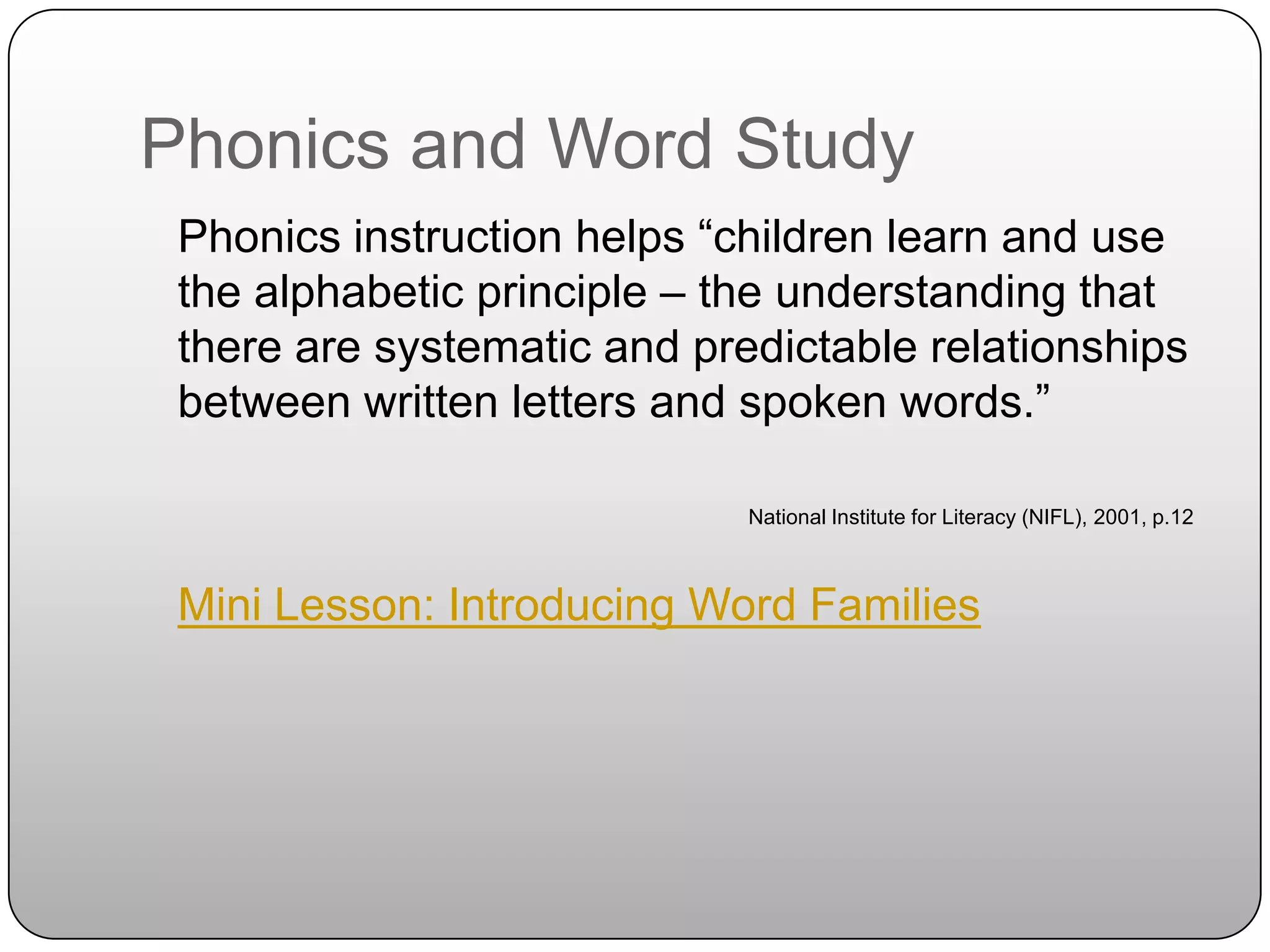
Phonics and Word Study	Phonics instruction helps “children learn and use the alphabetic principle – the understanding that there are systematic and predictable relationships between written letters and spoken words.”National Institute for Literacy (NIFL), 2001, p.12Mini Lesson: Introducing Word Families
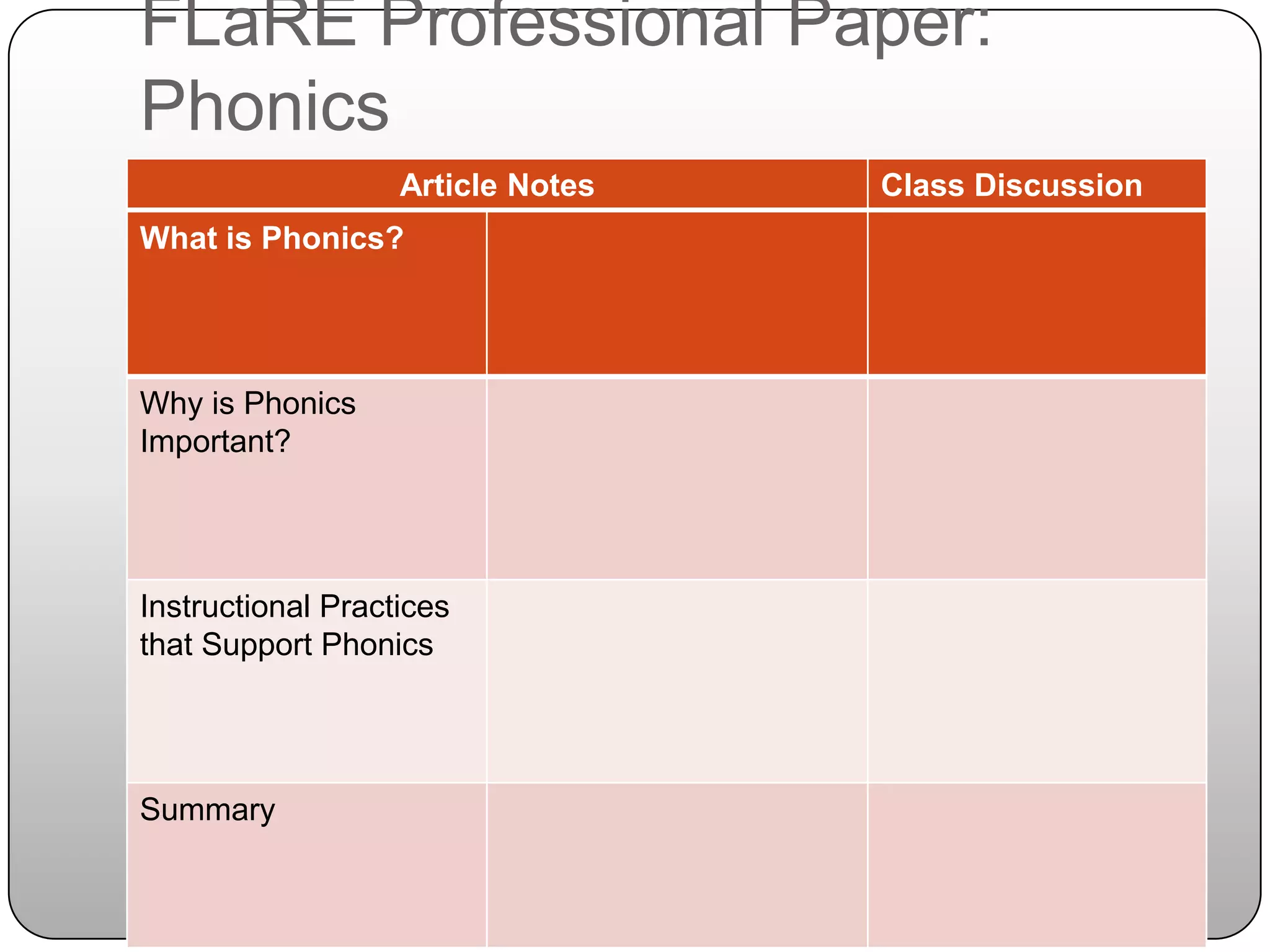
FLaRE Professional Paper: Phonics
Alphabetic Understanding and PhonicsThe goal of phonics instruction is to help children understand the alphabetic principle:	The sequence of letters in written words represents the sequence of sounds (or phonemes) in spoken words.
Letter Recognition	Recognizing, naming, and writing the letters of the alphabetIdentifying and distinguishing both upper case and lower case lettersLetter recognition activities help students learn:Letter namesThe sequence of letters in the alphabet
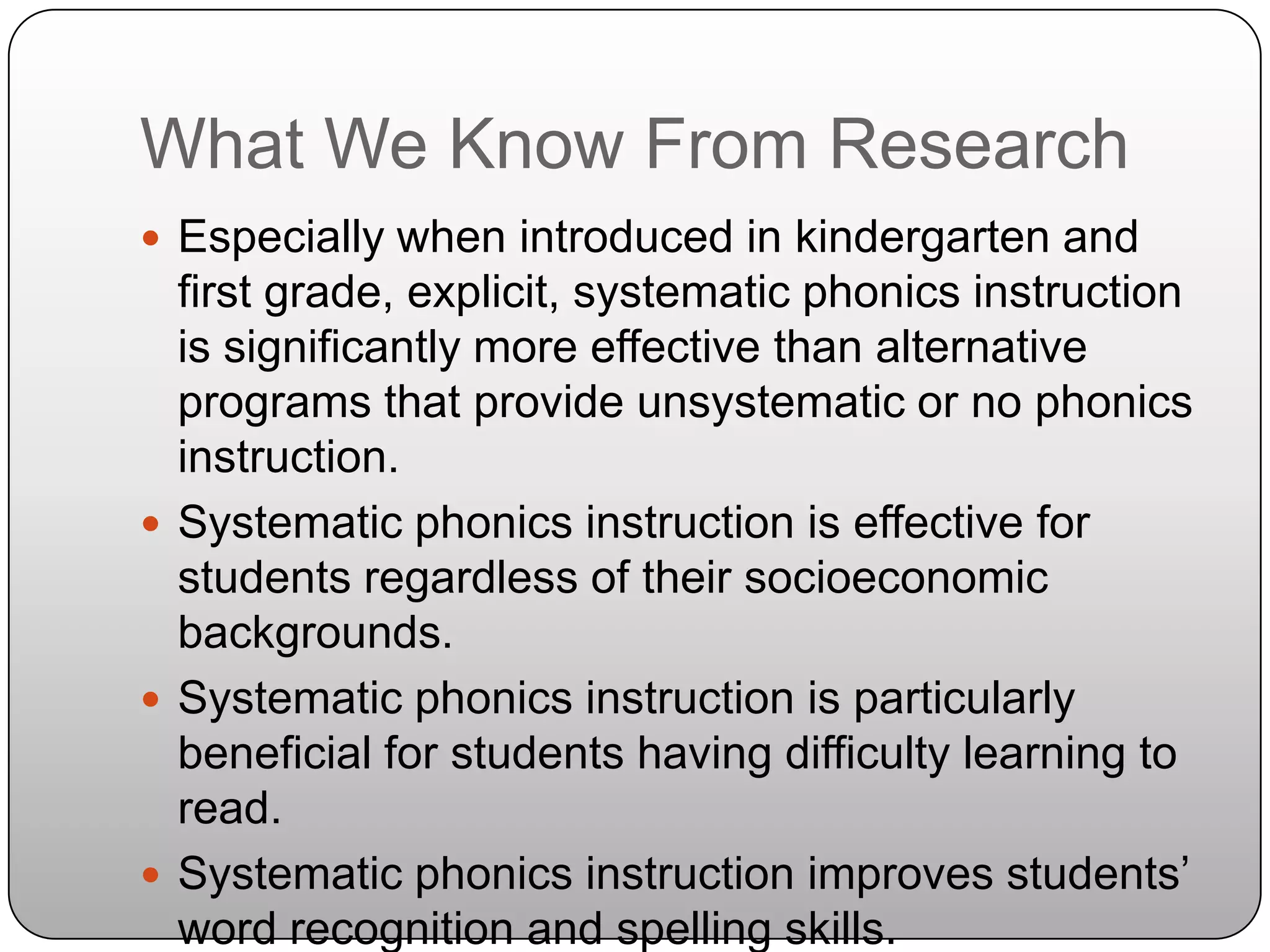
What We Know From ResearchEspecially when introduced in kindergarten and first grade, explicit, systematic phonics instruction is significantly more effective than alternative programs that provide unsystematic or no phonics instruction.Systematic phonics instruction is effective for students regardless of their socioeconomic backgrounds. Systematic phonics instruction is particularly beneficial for students having difficulty learning to read.Systematic phonics instruction improves students’ word recognition and spelling skills.
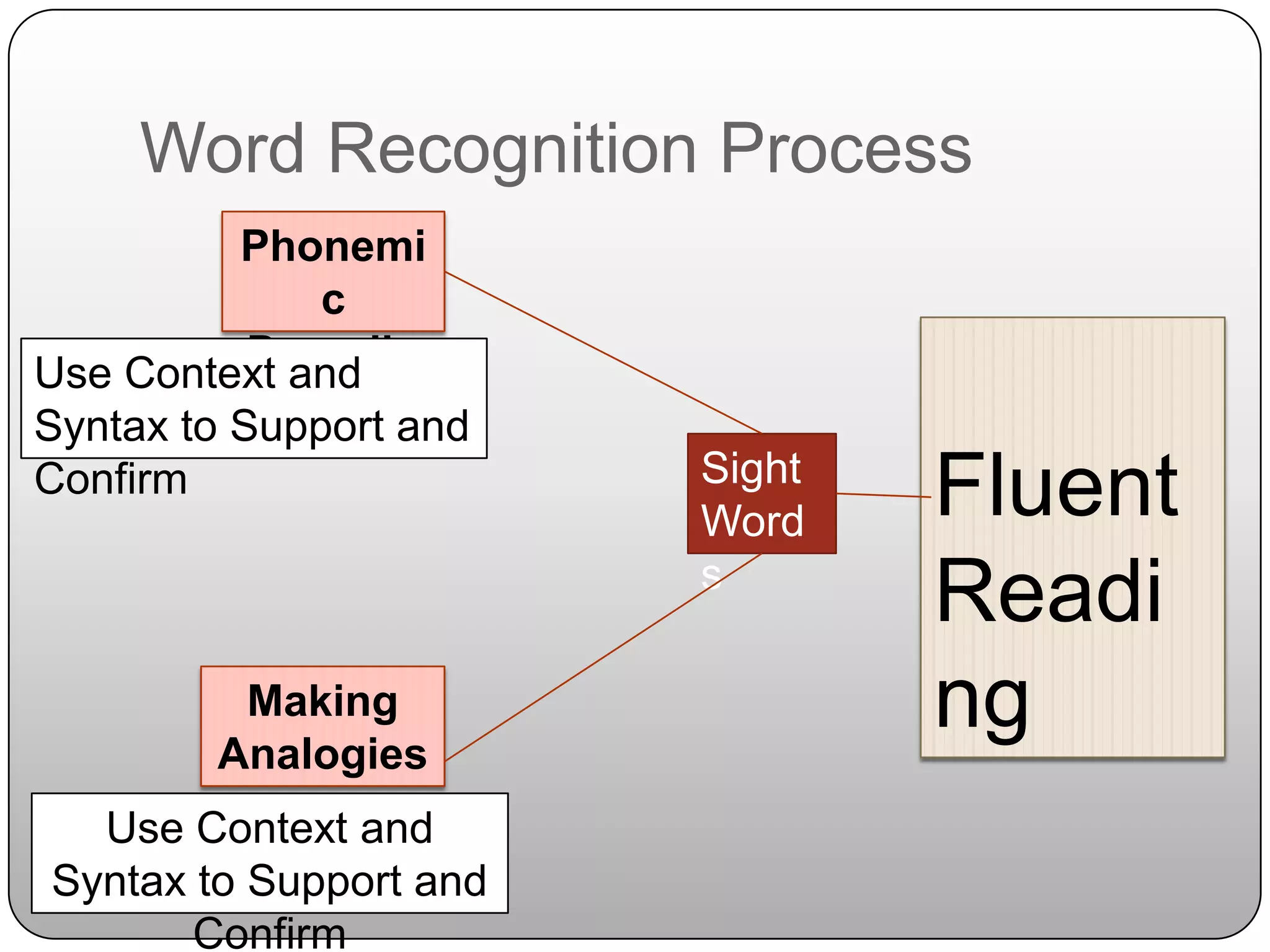
Word Recognition ProcessPhonemic DecodingFluent ReadingUse Context and Syntax to Support and ConfirmSightWordsMaking AnalogiesUse Context and Syntax to Support and Confirm
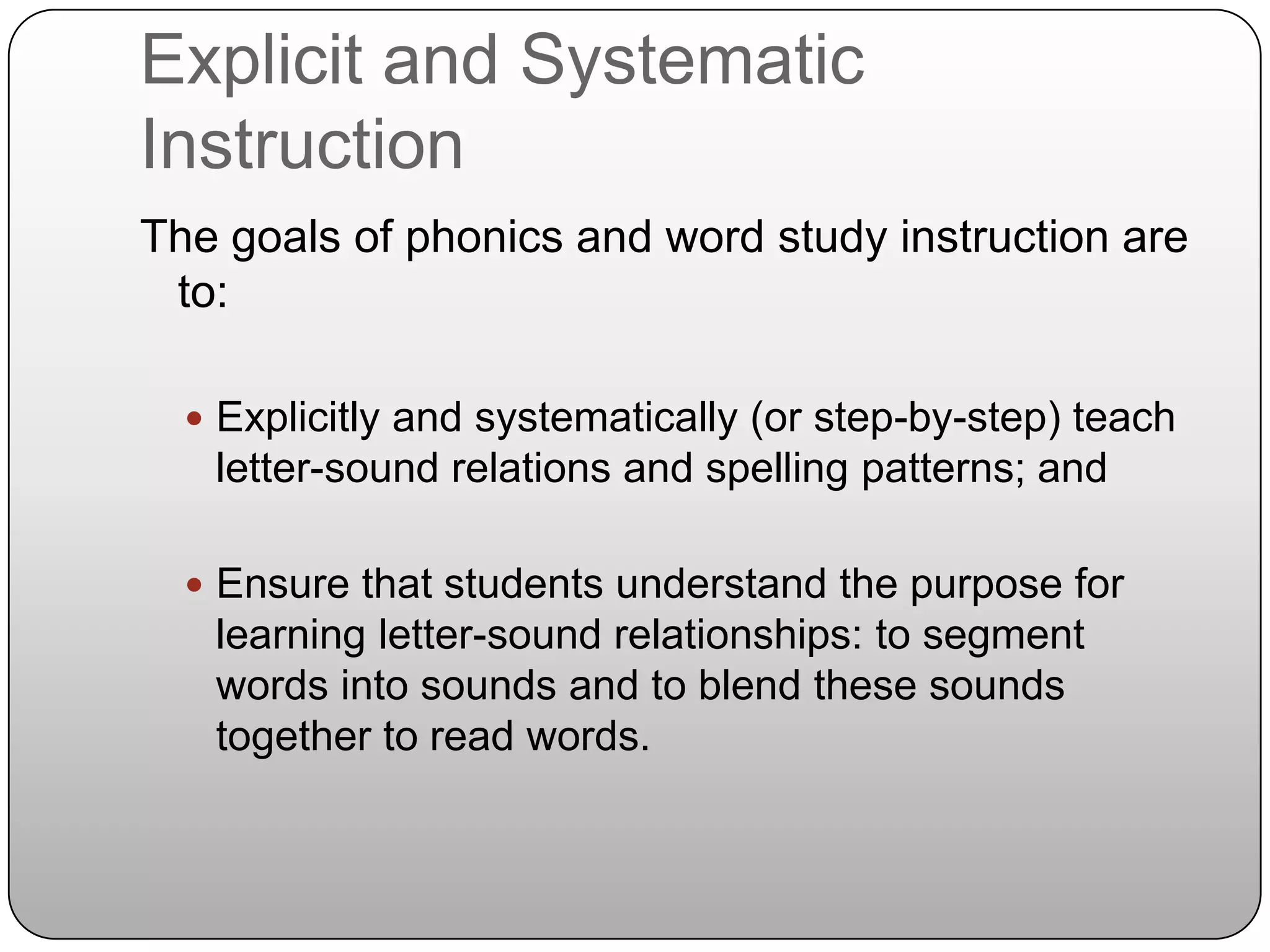
Explicit and Systematic InstructionThe goals of phonics and word study instruction are to:Explicitly and systematically (or step-by-step) teach letter-sound relations and spelling patterns; andEnsure that students understand the purpose for learning letter-sound relationships: to segment words into sounds and to blend these sounds together to read words.
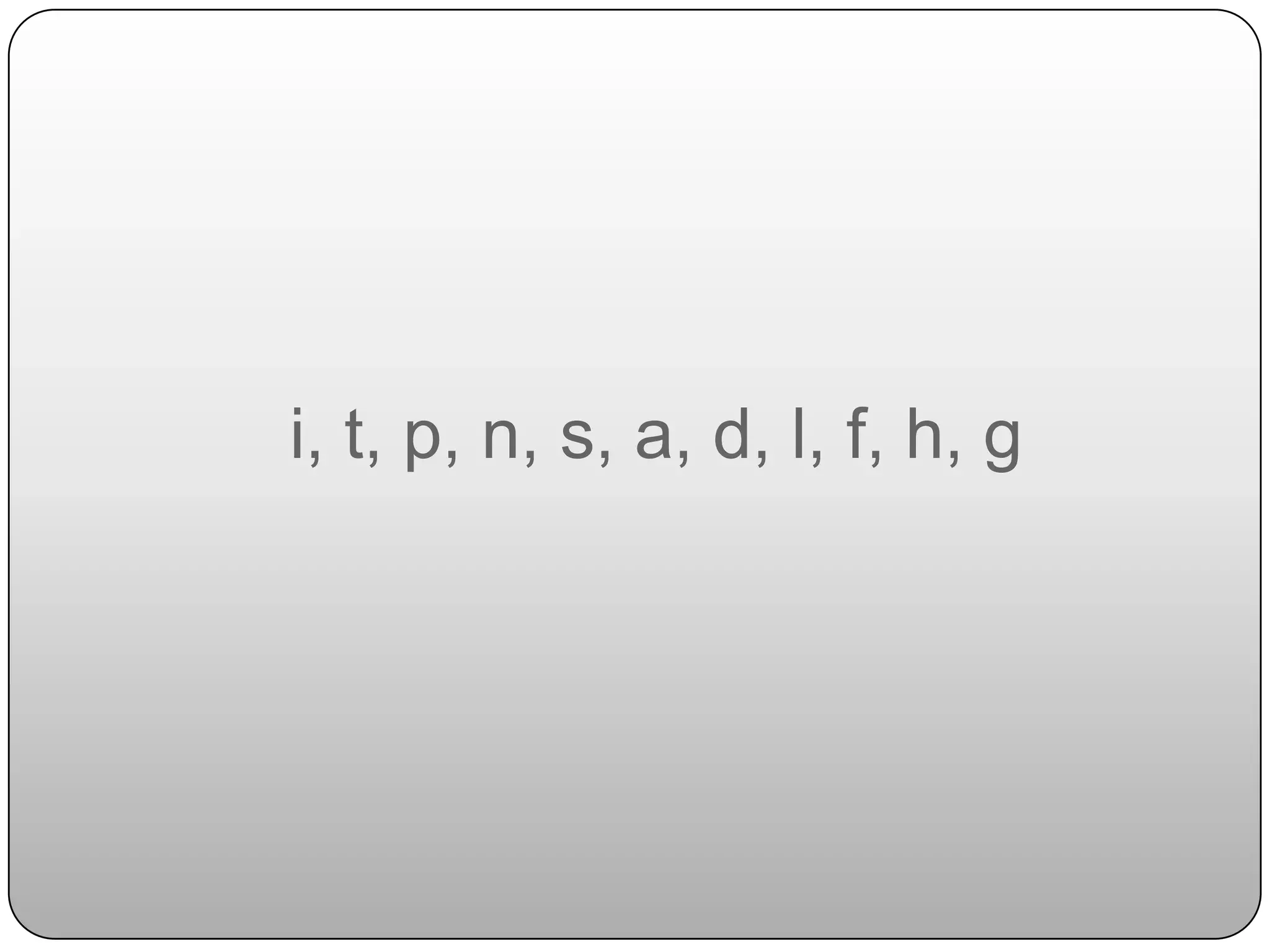
i, t, p, n, s, a, d, l, f, h, g
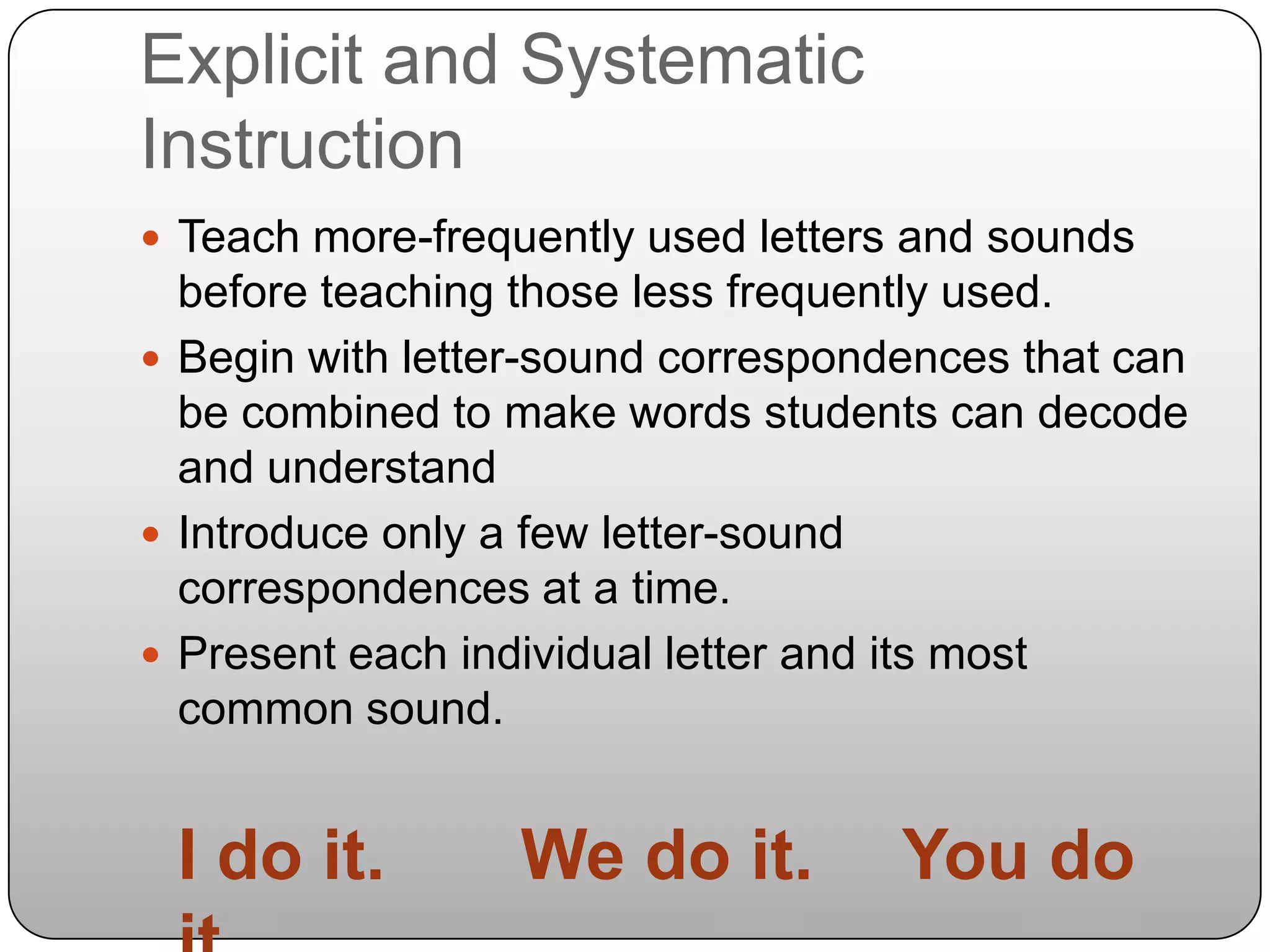
Explicit and Systematic InstructionTeach more-frequently used letters and sounds before teaching those less frequently used.Begin with letter-sound correspondences that can be combined to make words students can decode and understandIntroduce only a few letter-sound correspondences at a time.Present each individual letter and its most common sound.	I do it.	We do it.	You do it.
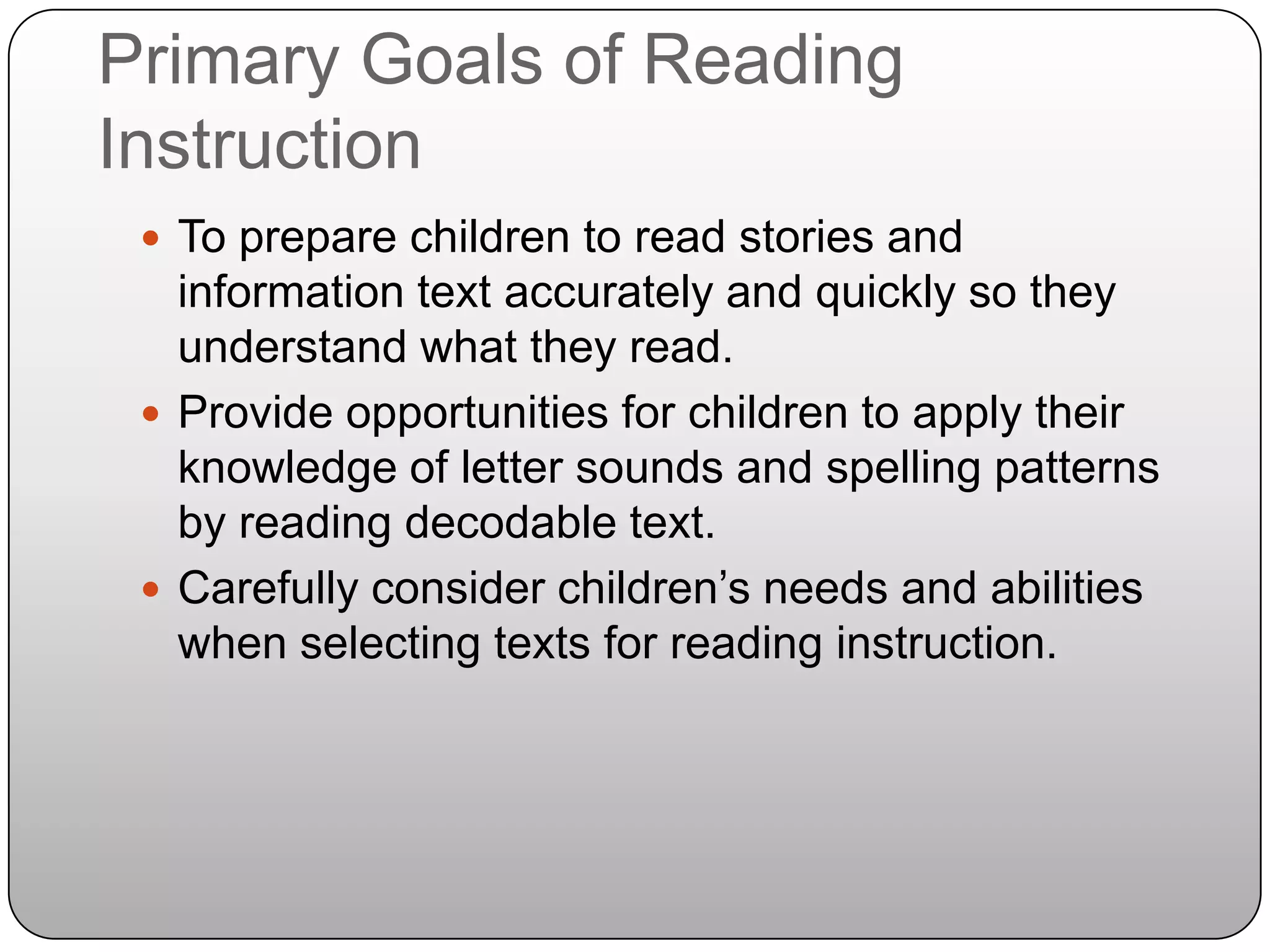
Primary Goals of Reading InstructionTo prepare children to read stories and information text accurately and quickly so they understand what they read.Provide opportunities for children to apply their knowledge of letter sounds and spelling patterns by reading decodable text.Carefully consider children’s needs and abilities when selecting texts for reading instruction.
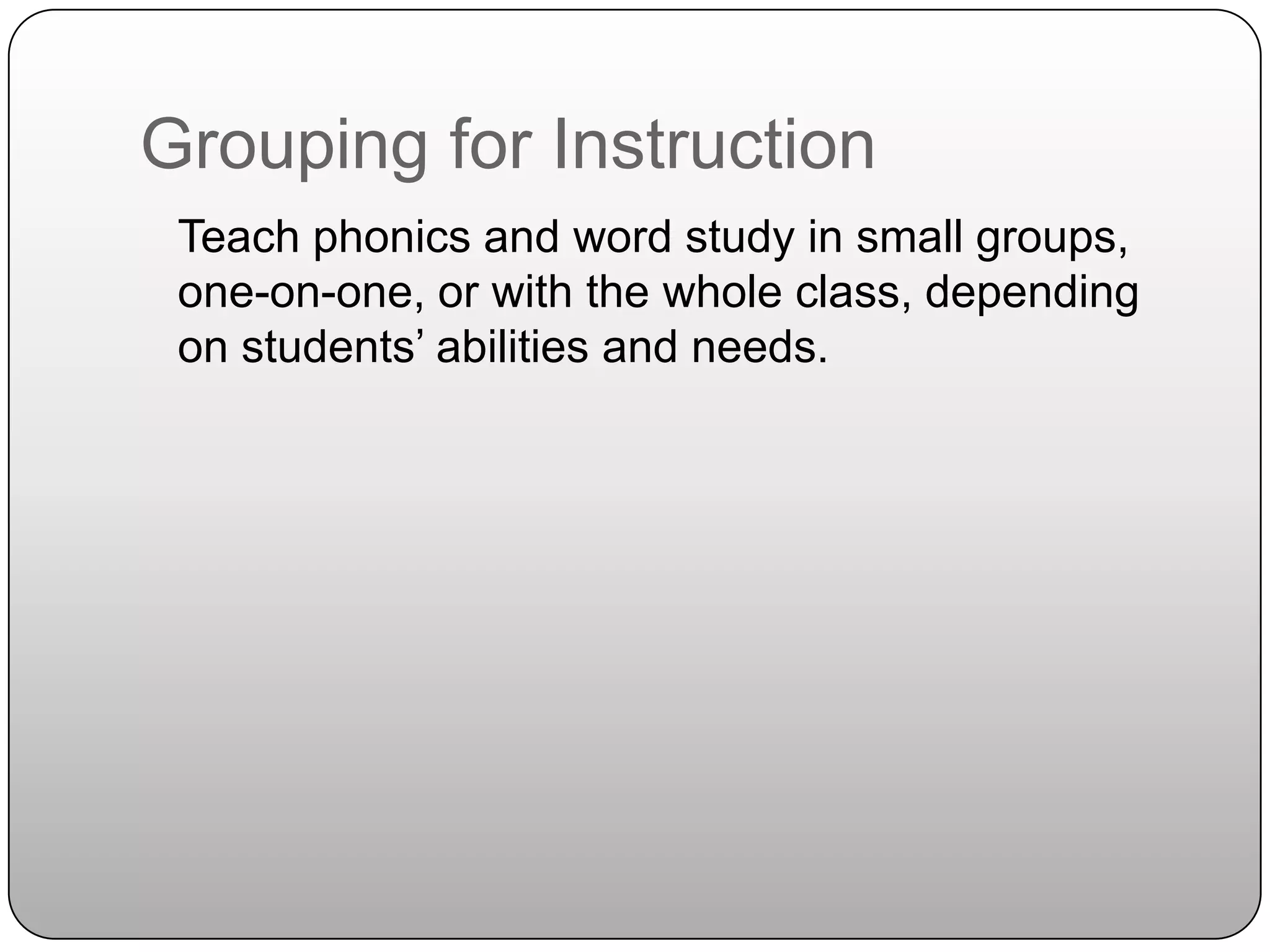
Grouping for Instruction	Teach phonics and word study in small groups, one-on-one, or with the whole class, depending on students’ abilities and needs.
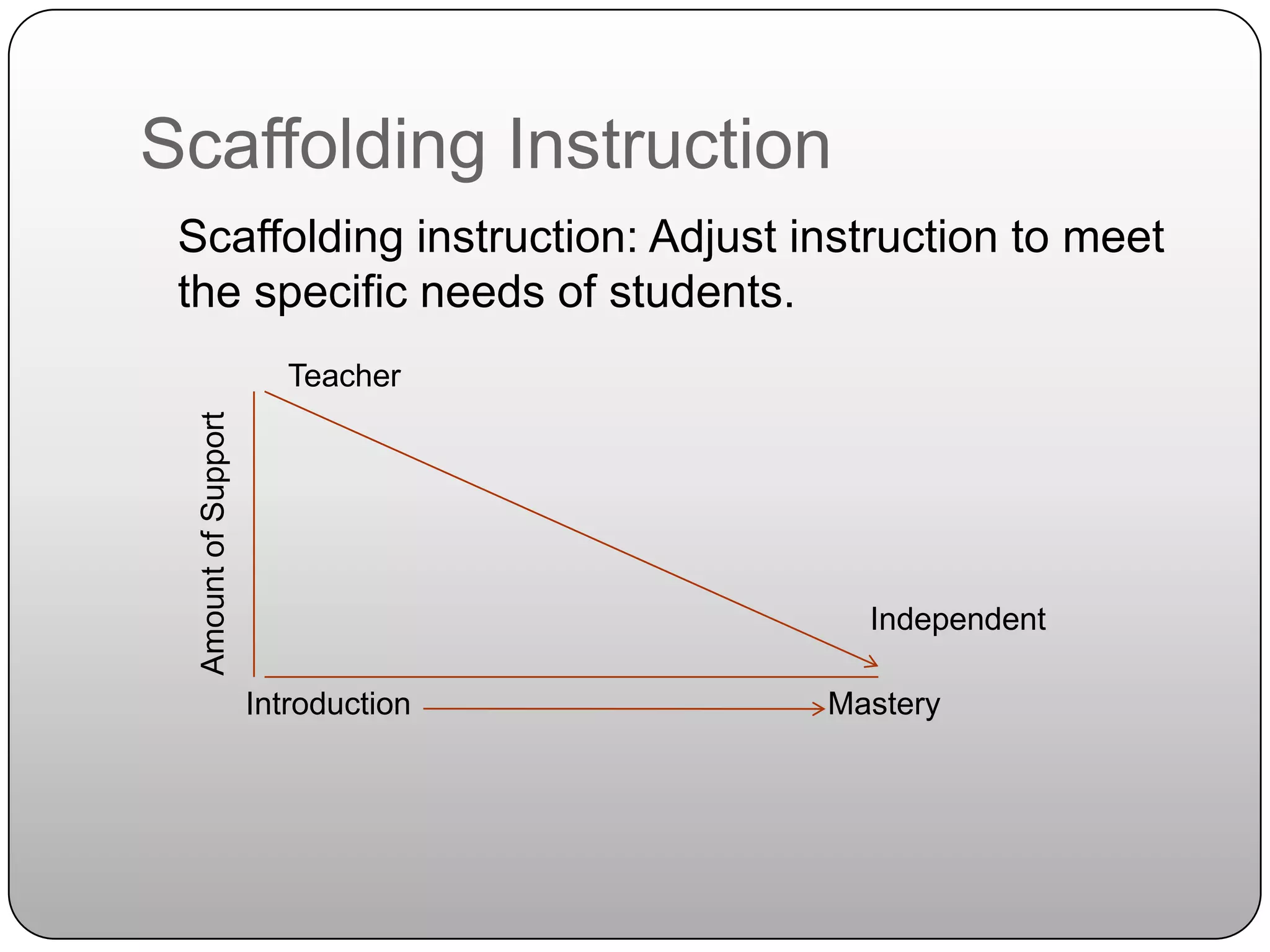
Scaffolding Instruction	Scaffolding instruction: Adjust instruction to meet the specific needs of students.TeacherAmount of SupportIndependentIntroductionMastery
Florida Center for Reading ResearchScavenger Hunt
For the next class…Visit www.fcrr.orgFind a lesson that addresses phonics or word studyBe prepared to share activity with class next time

Session 4

  • 1.
    Reading … Set… Go!Application of Research-Based Instructional Practices Competency 2Component # 1-013-311Center for Professional LearningSession 4Instructor: Carmen S. Concepcionreadingsetgo.blogspot.com Fall 2010
  • 2.
  • 3.
    Share Investigative ActivityWhat does phonological awareness look like in your classroom?
  • 4.
  • 5.
    Phonics and WordStudy Phonics instruction helps “children learn and use the alphabetic principle – the understanding that there are systematic and predictable relationships between written letters and spoken words.”National Institute for Literacy (NIFL), 2001, p.12Mini Lesson: Introducing Word Families
  • 6.
  • 7.
    Alphabetic Understanding andPhonicsThe goal of phonics instruction is to help children understand the alphabetic principle: The sequence of letters in written words represents the sequence of sounds (or phonemes) in spoken words.
  • 8.
    Letter Recognition Recognizing, naming,and writing the letters of the alphabetIdentifying and distinguishing both upper case and lower case lettersLetter recognition activities help students learn:Letter namesThe sequence of letters in the alphabet
  • 9.
    What We KnowFrom ResearchEspecially when introduced in kindergarten and first grade, explicit, systematic phonics instruction is significantly more effective than alternative programs that provide unsystematic or no phonics instruction.Systematic phonics instruction is effective for students regardless of their socioeconomic backgrounds. Systematic phonics instruction is particularly beneficial for students having difficulty learning to read.Systematic phonics instruction improves students’ word recognition and spelling skills.
  • 10.
    Word Recognition ProcessPhonemicDecodingFluent ReadingUse Context and Syntax to Support and ConfirmSightWordsMaking AnalogiesUse Context and Syntax to Support and Confirm
  • 11.
    Explicit and SystematicInstructionThe goals of phonics and word study instruction are to:Explicitly and systematically (or step-by-step) teach letter-sound relations and spelling patterns; andEnsure that students understand the purpose for learning letter-sound relationships: to segment words into sounds and to blend these sounds together to read words.
  • 12.
    i, t, p,n, s, a, d, l, f, h, g
  • 13.
    Explicit and SystematicInstructionTeach more-frequently used letters and sounds before teaching those less frequently used.Begin with letter-sound correspondences that can be combined to make words students can decode and understandIntroduce only a few letter-sound correspondences at a time.Present each individual letter and its most common sound. I do it. We do it. You do it.
  • 14.
    Primary Goals ofReading InstructionTo prepare children to read stories and information text accurately and quickly so they understand what they read.Provide opportunities for children to apply their knowledge of letter sounds and spelling patterns by reading decodable text.Carefully consider children’s needs and abilities when selecting texts for reading instruction.
  • 15.
    Grouping for Instruction Teachphonics and word study in small groups, one-on-one, or with the whole class, depending on students’ abilities and needs.
  • 16.
    Scaffolding Instruction Scaffolding instruction:Adjust instruction to meet the specific needs of students.TeacherAmount of SupportIndependentIntroductionMastery
  • 18.
    Florida Center forReading ResearchScavenger Hunt
  • 19.
    For the nextclass…Visit www.fcrr.orgFind a lesson that addresses phonics or word studyBe prepared to share activity with class next time

Editor's Notes

  • #5 Discuss answers
  • #6 Video: After watching video, have participants discuss some of the practices that they saw in the video
  • #7 CRISS Strategy: Two column notes Can take a variety of formats depending on subject area, instructional goals, and the nature of the text.Have participants share information by writing key words on promethean board
  • #8 Ask participants to share any teaching practices they’ve implemented with struggling readers to teach them alphabetic understanding and phonics.
  • #9 Along with phonemic awareness, the ability to name letters automatically and rapidly predicts ease and success with the process of learning to read.Teach letter recognition, naming, and sequencing activities until children can rapidly and accurately identify all uppercase and lowercase letters both sequentially and randomly.Use a variety of letter recognition activities to give students practice with the letters of the alphabet.An example of alphabet activities that can be used with students involves the Ap
  • #10 The primary goal is for all students to learn to read. Research has demonstrated that successful readers rely primarily on the letter-sound correspondences and spelling patterns in words, rather than context or pictures, to identify familiar and unfamiliar words.Explicit and systematic phonics instruction refers to instruction that is direct. There is a prescribed sequence of letter-sound introduction that is based on usefulness.
  • #11 National Reading Panel identifies word reading processes that students use to read words. Learning to use these processes is important to becoming a reader.Phonemic decoding and making analogies lead to development of sight words which facilitate fluent reading.Phonemic decoding: converting single letters and letter combinations into sounds and blending the sounds to read words.Making analogies: recalling words already learned and using parts of the spellings to read new words that have the same spelling or syllable patterns.Context and syntax (word order), along with the background knowledge of readers and their memory of text, can be used to support word identification and confirm word meanings.***Struggling readers, as well as students with disabilities, often have difficulty using context and syntax effectively. They may also lack the necessary background knowledge or language development for the context to be helpful. These students often overuse context and substitute their own words with little regard for the graphophonemic features of the written words.Sight words are words recognized automatically. The ultimate goal is for all words, regular and irregular, to become sight words.Some students, specially LEP students and students with disabilities, may need additional oral language development in order to apply these reading processes effectively.
  • #12 Students who have well-developed phonics and word study skills and apply them appropriately when reading and writing do NOT require the same level and intensity of instruction that struggling readers do.
  • #13 Have participants take a minute to make as many words as they can with the letters listed on the slide.Handout: Words Using First 11 Letter-Sound CorrespondenceAt least 120 words can be made and read if students know the first 11 letter sounds presented on the example sequence.
  • #17 Scaffolding is one feature of instruction that applies to effective instruction in any discipline, including reading instruction.A scaffold is a temporary support used to assist students during initial learning so they are challenged and able to develop new skills and concepts.Teachers, students, instructional practices, and materials can provide scaffolding.The key is to be flexible and make adjustments while teaching.Support is given when students need it and withdrawn gradually as they become more proficient with new concepts and skills.