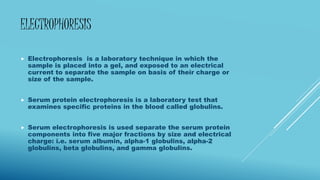
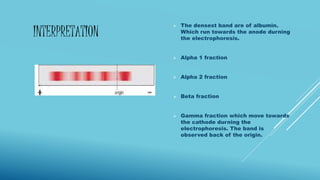
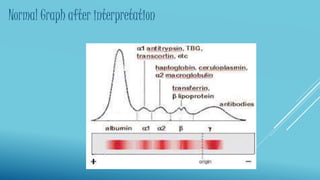
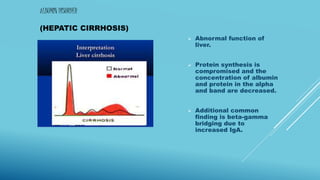
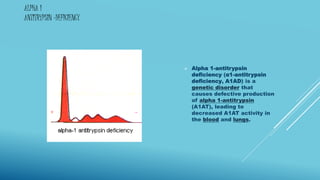
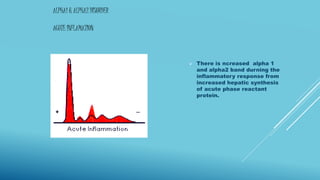
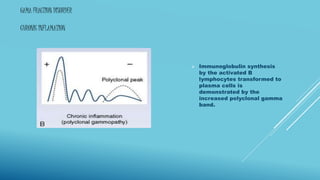
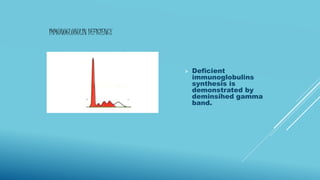
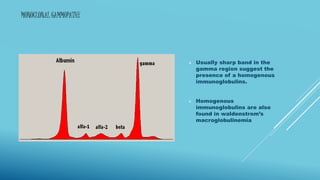
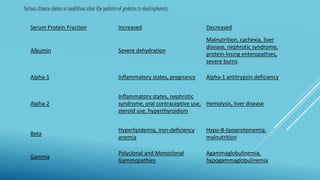
Serum protein electrophoresis is used to separate serum proteins into fractions based on their size and electrical charge. It has five major fractions: albumin, alpha1, alpha2, beta, and gamma globulins. Specific diseases and conditions cause abnormal patterns in the fractions. For example, liver disease decreases albumin levels while nephrotic syndrome increases alpha2 levels due to protein loss in the urine. The test is useful for identifying inflammatory states, immunodeficiencies, and monoclonal gammopathies.