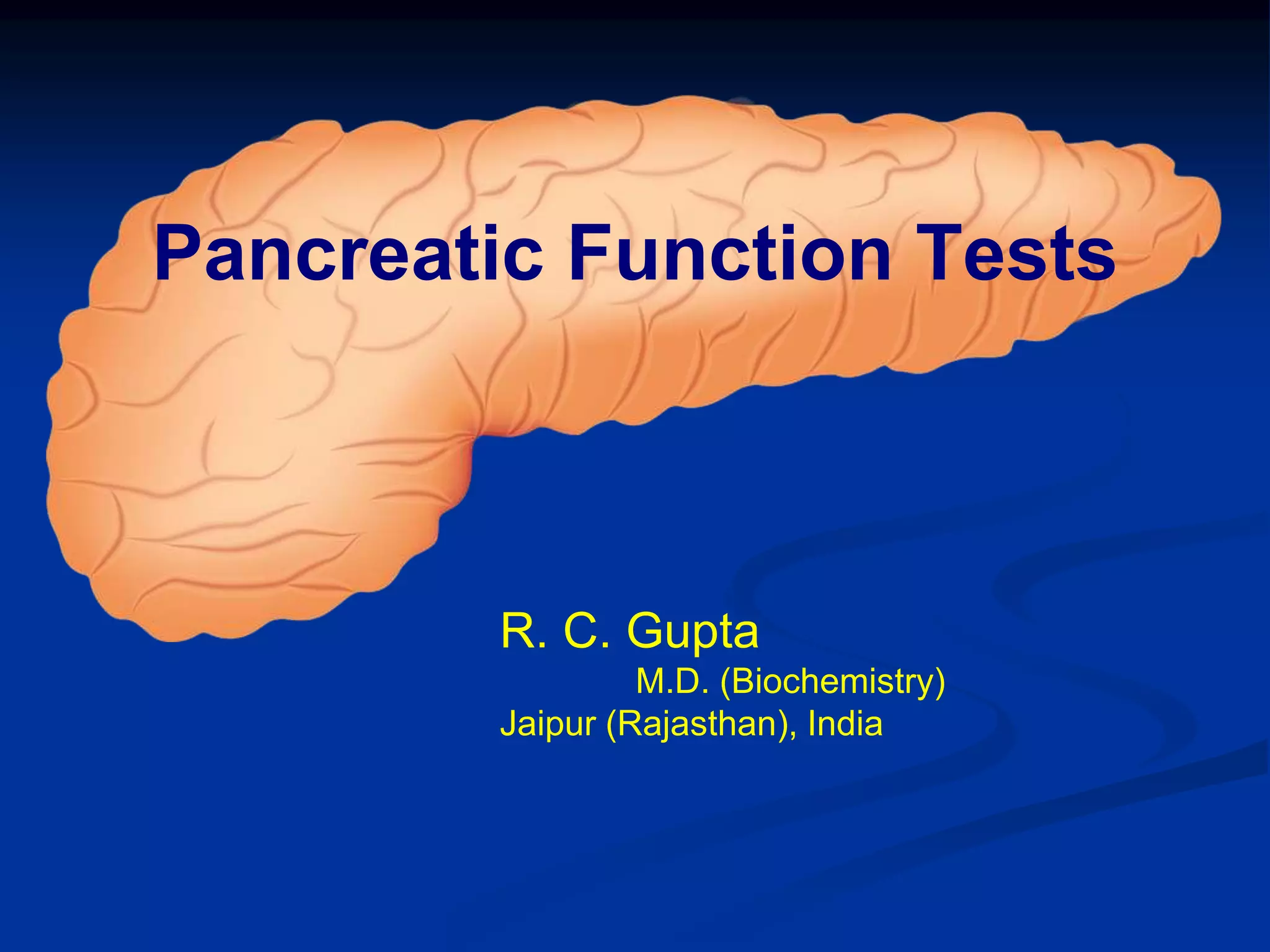
Pancreatic Function Tests
R. C. Gupta
M.D. (Biochemistry)
Jaipur (Rajasthan), India
Pancreatic function tests can be divided
into tests for diagnosing:
Diseases
of exocrine
pancreas
Exocrine
pancreatic
insufficiency
Tests for diagnosing diseases of the
exocrine portion of the pancreas are:
Serum
amylase
Serum
lipase
Sweat
chloride
Amylase is a digestive enzyme synthesized
in the pancreas and the salivary glands
Most of the amylase present in circulation
is of pancreatic origin
Serum amylase
In acute pancreatitis, amylase leaks into
circulation from the damaged cells
Serum amylase is, therefore, greatly
increased in acute pancreatitis
A smaller increase occurs in acute
parotitis
Lipase is another digestive enzyme
synthesized in the pancreas
It leaks into circulation from damaged
pancreatic cells in acute pancreatitis
Hence, serum lipase is increased in acute
pancreatitis
Serum lipase
This test is very useful in the diagnosis of
cystic fibrosis
Cystic fibrosis is also known as fibrocystic
disease of the pancreas or mucoviscidosis
It is a recessively inherited autosomal
disease
Sweat chloride
Cystic fibrosis affects a number of
exocrine glands including the pancreas
Very viscous mucus is secreted by
exocrine glands in this disease
The mucus can clog pancreatic ducts
and bronchioles
In addition, the chloride content of sweat
is increased
The rise in sweat chloride occurs due to
abnormality in a protein
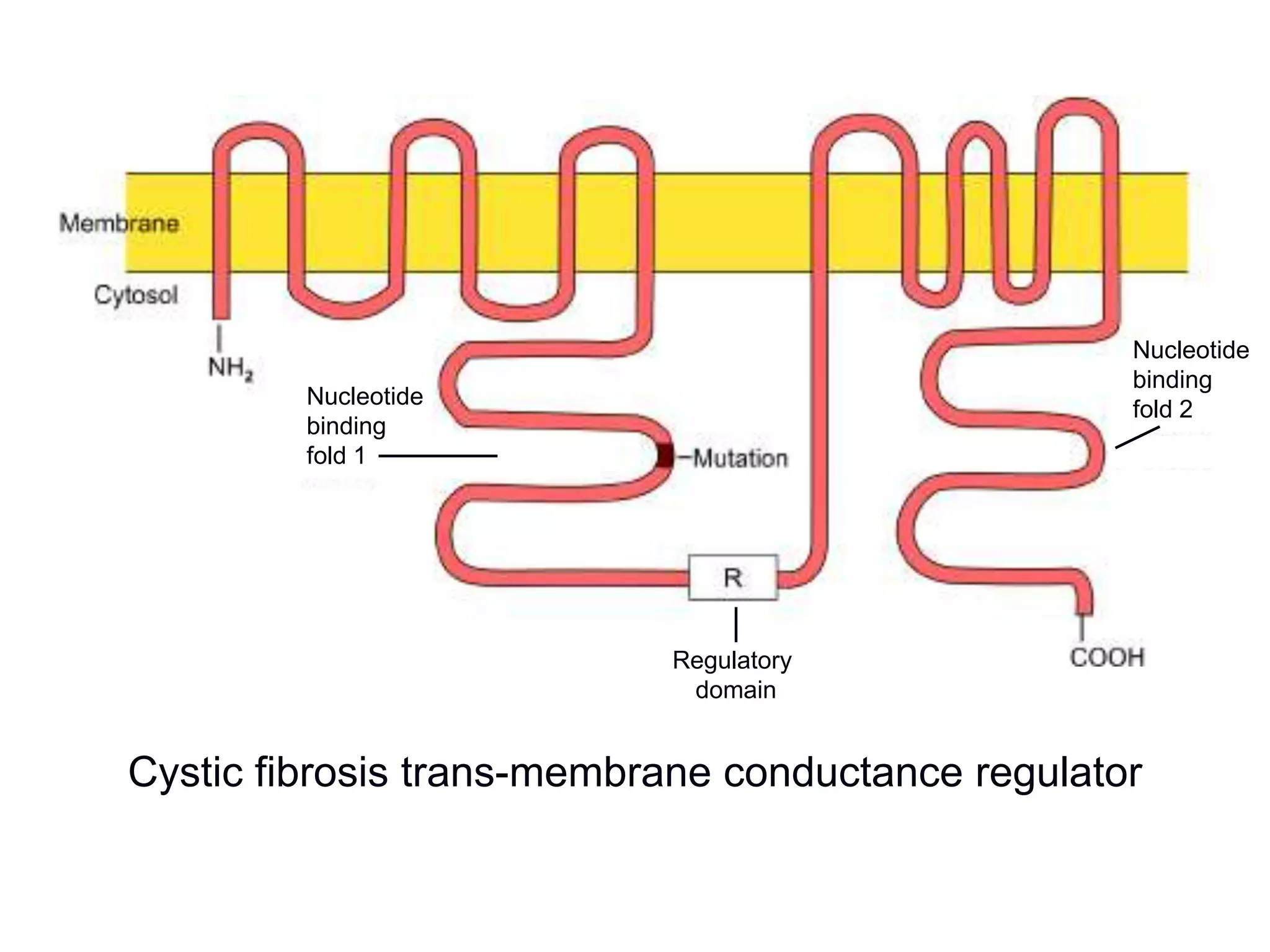
The protein is cystic fibrosis trans-
membrane conductance regulator (CFTR )
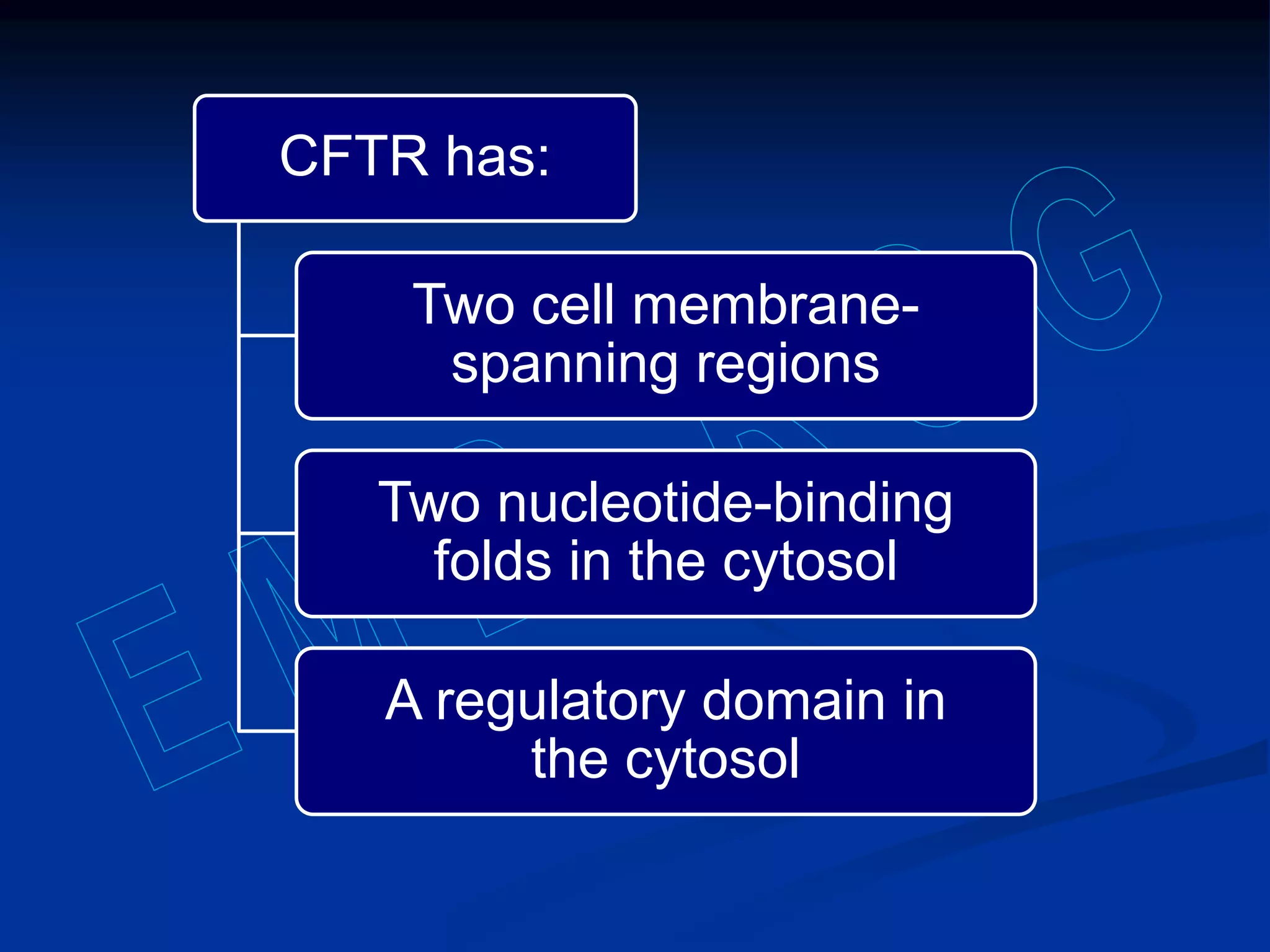
CFTR has:
Two cell membrane-
spanning regions
Two nucleotide-binding
folds in the cytosol
A regulatory domain in
the cytosol
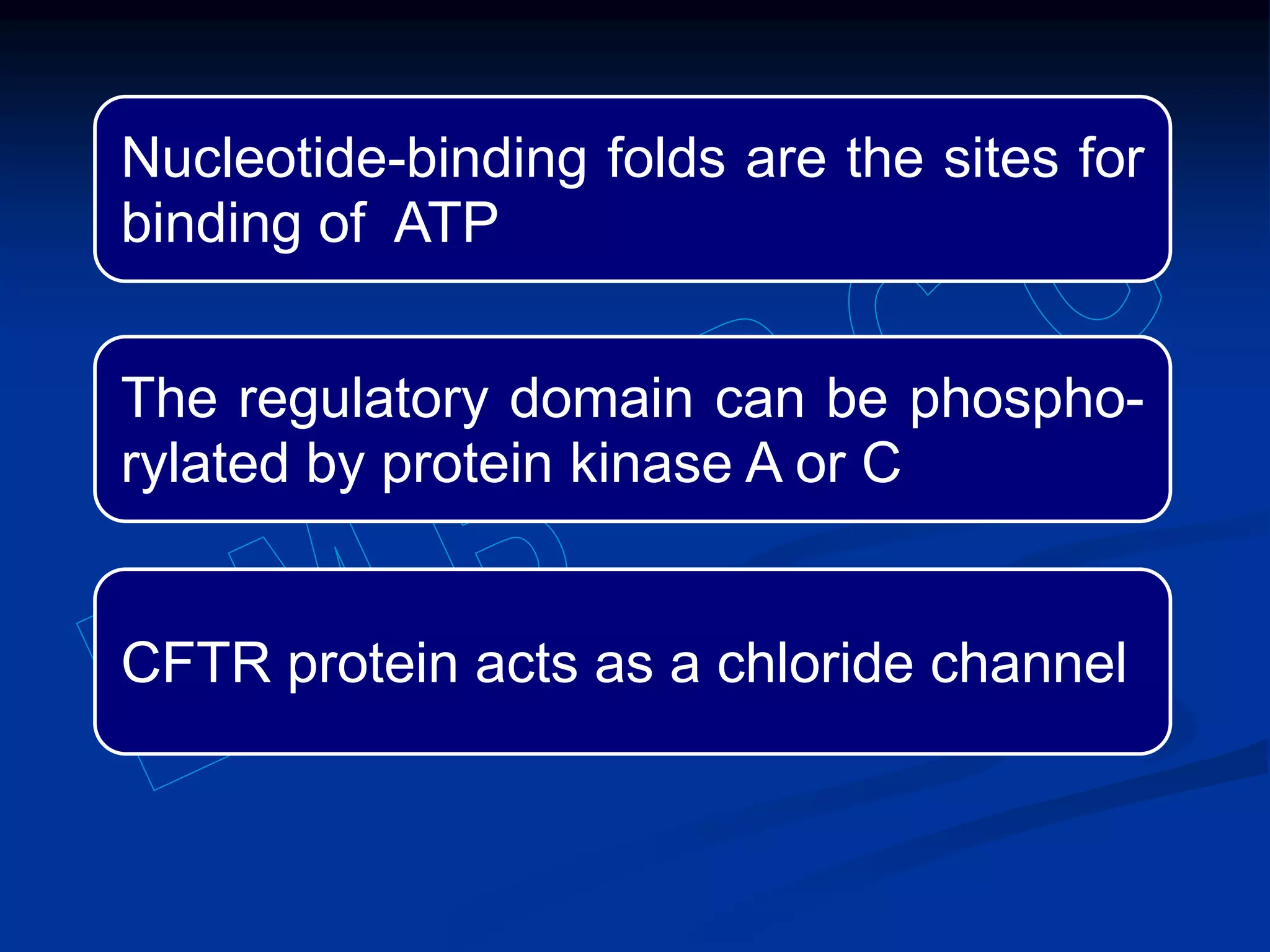
Nucleotide-binding folds are the sites for
binding of ATP
The regulatory domain can be phospho-
rylated by protein kinase A or C
CFTR protein acts as a chloride channel
The gene encoding CFTR protein is
known as CFTR gene
CFTR gene is located on chromosome 7
In 70% patients, there is a three base-pair
deletion in the gene
This leads to deletion of a phenylalanine
residue from nucleotide-binding fold 1
This deletion impairs chloride transport
across the membrane
In the remaining patients, other mutations
have been detected
Nucleotide
binding
fold 2
Regulatory
domain
Nucleotide
binding
fold 1
Cystic fibrosis trans-membrane conductance regulator
Diagnosis of cystic fibrosis can be made
by measuring sweat chloride
If the concentration is above 60 mEq/L, it
is diagnostic of cystic fibrosis
Exocrine pancreatic insufficiency
(EPI)
The most common causes of EPI are
chronic pancreatitis and cystic fibrosis
The tests for EPI can be direct or indirect
Early EPI is difficult to diagnose by
indirect tests
Oro-duodenal intubation is done to
aspirate pancreatic secretion from
duodenum near Ampulla of Vater
Secretin or cholecystokinin or both are
used to stimulate pancreatic secretion
Pancreatic juice is collected for a period
of 45 to 125 minutes
Direct test
Concentrations of bicarbonate and
pancreatic enzymes are measured in
pancreatic juice
Low concentrations indicate EPI
Indirect tests
Indirect tests for EPI are:
Measurement of
faecal fat
Measurement of
faecal elastase
Faecal fat
The patient is placed on a diet having
100 gm of fat per day
Stool is collected and fat excretion is
measured daily for three days
Normal persons excrete less than 7% of
the ingested fat
In EPI, the excretion of fat is above 20%
Faecal elastase
Elastase is secreted by the pancreas
It is not broken down in the intestines
Excretion of < 200 µg of elastase/gm of
stool indicates EPI
Pancreatic function tests

Pancreatic function tests

  • 1.
    Pancreatic Function Tests R.C. Gupta M.D. (Biochemistry) Jaipur (Rajasthan), India
  • 2.
    Pancreatic function testscan be divided into tests for diagnosing: Diseases of exocrine pancreas Exocrine pancreatic insufficiency
  • 3.
    Tests for diagnosingdiseases of the exocrine portion of the pancreas are: Serum amylase Serum lipase Sweat chloride
  • 4.
    Amylase is adigestive enzyme synthesized in the pancreas and the salivary glands Most of the amylase present in circulation is of pancreatic origin Serum amylase
  • 5.
    In acute pancreatitis,amylase leaks into circulation from the damaged cells Serum amylase is, therefore, greatly increased in acute pancreatitis A smaller increase occurs in acute parotitis
  • 6.
    Lipase is anotherdigestive enzyme synthesized in the pancreas It leaks into circulation from damaged pancreatic cells in acute pancreatitis Hence, serum lipase is increased in acute pancreatitis Serum lipase
  • 7.
    This test isvery useful in the diagnosis of cystic fibrosis Cystic fibrosis is also known as fibrocystic disease of the pancreas or mucoviscidosis It is a recessively inherited autosomal disease Sweat chloride
  • 8.
    Cystic fibrosis affectsa number of exocrine glands including the pancreas Very viscous mucus is secreted by exocrine glands in this disease The mucus can clog pancreatic ducts and bronchioles In addition, the chloride content of sweat is increased
  • 9.
    The rise insweat chloride occurs due to abnormality in a protein The protein is cystic fibrosis trans- membrane conductance regulator (CFTR )
  • 10.
    CFTR has: Two cellmembrane- spanning regions Two nucleotide-binding folds in the cytosol A regulatory domain in the cytosol
  • 11.
    Nucleotide-binding folds arethe sites for binding of ATP The regulatory domain can be phospho- rylated by protein kinase A or C CFTR protein acts as a chloride channel
  • 12.
    The gene encodingCFTR protein is known as CFTR gene CFTR gene is located on chromosome 7
  • 13.
    In 70% patients,there is a three base-pair deletion in the gene This leads to deletion of a phenylalanine residue from nucleotide-binding fold 1 This deletion impairs chloride transport across the membrane In the remaining patients, other mutations have been detected
  • 14.
  • 15.
    Diagnosis of cysticfibrosis can be made by measuring sweat chloride If the concentration is above 60 mEq/L, it is diagnostic of cystic fibrosis
  • 16.
    Exocrine pancreatic insufficiency (EPI) Themost common causes of EPI are chronic pancreatitis and cystic fibrosis The tests for EPI can be direct or indirect Early EPI is difficult to diagnose by indirect tests
  • 17.
    Oro-duodenal intubation isdone to aspirate pancreatic secretion from duodenum near Ampulla of Vater Secretin or cholecystokinin or both are used to stimulate pancreatic secretion Pancreatic juice is collected for a period of 45 to 125 minutes Direct test
  • 18.
    Concentrations of bicarbonateand pancreatic enzymes are measured in pancreatic juice Low concentrations indicate EPI
  • 19.
    Indirect tests Indirect testsfor EPI are: Measurement of faecal fat Measurement of faecal elastase
  • 20.
    Faecal fat The patientis placed on a diet having 100 gm of fat per day Stool is collected and fat excretion is measured daily for three days Normal persons excrete less than 7% of the ingested fat In EPI, the excretion of fat is above 20%
  • 21.
    Faecal elastase Elastase issecreted by the pancreas It is not broken down in the intestines Excretion of < 200 µg of elastase/gm of stool indicates EPI