

SEPTIC SHOCK
ASHOK KANURI
ANDHRA MEDICAL COLLEGE
VISAKHAPATNAM
DEFINITION
 INFECTION + SIRS with evidence of inadequate perfusion to major organs with
progressive failure of organ systems function
 SEPTICEMIA – A state of microbial invasion from a portal of entry into blood
stream which causes signs of illness
 BACTEREMIA – Presence of bacteria in the liquid component of blood
 MODS – Presence of altered organ function in acutely ill in whom homeostasis
cannot be maintained without intervention
SIRS-Systemic Inflammatory Response Syndrome
MODY-Multi Organ DYsfunction
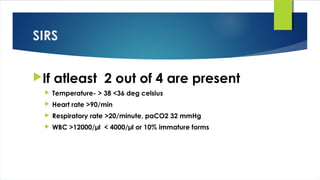
SIRS
If atleast 2 out of 4 are present
 Temperature- > 38 <36 deg celsius
 Heart rate >90/min
 Respiratory rate >20/minute, paCO2 32 mmHg
 WBC >12000/µl < 4000/µl or 10% immature forms
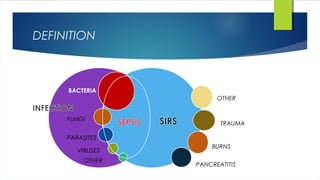
DEFINITION
BACTERIA
FUNGI
PARASITES
VIRUSES
OTHER
TRAUMA
BURNS
PANCREATITIS
OTHER
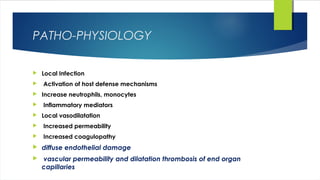
PATHO-PHYSIOLOGY
 Local Infection
 Activation of host defense mechanisms
 Increase neutrophils, monocytes
 Inflammatory mediators
 Local vasodilatation
 Increased permeability
 Increased coagulopathy
 diffuse endothelial damage
 vascular permeability and dilatation thrombosis of end organ
capillaries
ETIOLOGY
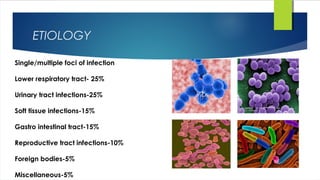
Single/multiple foci of infection
Lower respiratory tract- 25%
Urinary tract infections-25%
Soft tissue infections-15%
Gastro intestinal tract-15%
Reproductive tract infections-10%
Foreign bodies-5%
Miscellaneous-5%
EPIDEMIOLOGY
 Low socio-economic status and decreased accessibility to
quality health care
 Age extremes <10 years > 70 years
 Sex - Men > Women
 Predisposing factors
 Malignancy
 Chronic liver disease
 Chronic renal failure
 Immunosuppression, Diabetes, HIV
 Pregnancy, Abortion, Malnutrition
 Surgery, Trauma, Burns, Catheters
CLINICAL PRESENTATION
 Head & Neck- head ache, neck stiffness, altered mental status,
ear ache, sore throat, mandibular or cervical lymph node
enlargement
 Abdominal- Nausea, Vomiting, Diarrhea
 Pelvic & GUT- flank pain, pelvic pain, vaginal/ urethral
discharge, dysuria
 Bone & soft tissue-Limb pain, focal erythema, edema, swollen
joints
 Skin-gray mottled
 Other- fever with chills and rigor, fatigue, malaise
Physical Examination
 In a case of dropping vitals + signs of hypoperfusion
 Look for A B C
 See for foci of Infection
 Record rectal temperature
 Observe the skin color
 Narrow pulse pressure and Tachycardia is the earliest sign of
shock
Septic shock
 Clinical markers of progression to septic shock( at least 1)
 Alteration in mental status
 Hypoxemia Pao2 < 72 mm Hg
 Increased plasma lactate
 Oliguria (< 0.5 ml/kg for at least 1 hour)
May also present with complications
 Acute lung injury progressing to ARDS
 Acute renal failure
 Disseminated Intravascular Coagulation
 Mesenteric Ischemia
 Myocardial Infarction
 Liver failure
 Neurologic and cognitive sequalae
ARDS- Acute Respiratory Distress Syndrome
DIAGNOSIS
Complete Blood picture & Differential counts
 fever + signs of infection with leucocyte counts > 15000/µl,
neutrophil band count > 1500/µl
 Low Hb is associated with bad prognosis
 Platelets increase and later fall due to DIC
Blood biochemistry
Coagulation studies
Blood culture
Urinalysis
DIAGNOSIS
 Grams staining
 Culture of secretions
 Radiology – chest ,abdomen , extremities
 Ultrasound
 CT
 MRI
 Lumbar puncture
 Others- BP, Pulse oximetry, Echo cardiogram
TREATMENT
 A B C
 Respiratory support : Airway patency, O2, ventilation.
 Circulatory support : Crysralloid(20-30ml/kg), NS/RL.
 Anti- microbials : Emperical, later based on culture.
TREATMENT
 Temperature control : Antipyretic, physical cooling.
 Metabolic support : Tight glycemic control, electrolyte
imbalance.
 Anemia & coagulopathy correction
 Monitoring renal function
TREATMENT
 Nutritional support : Enteral, later TPN, glutamine rich
diet.
 Surgical : abscess drainage
Summary of medications
 Vasopressors – nor epinephrine, dopamine, dobutamine, vasopressin, phenylephrine,
epinephrine
 Isotonic crystalloids- normal saline, ringer lactate
 Colloids- albumin
 Antibiotics- cefotaxime, ticaricillin,piperacillin,vancomycin
 Corticosteroids- hydrocortisone, dexamethasone
 Human activated protein C- drotrecogin-alpha
DIFFERENTIAL DIAGNOSIS
 Acute renal failure
 Adrenal crisis
 Cardiogenic shock
 Diabetic keto acidosis
 DIC
 Heat stroke
 Hypovolemic shock
 Myocardial Infarction
 Neuroleptic malignant syndrome
 Pulmonary embolism
 Toxic shock syndrome
 Salicylate toxicity
 transfusion reaction
 Shock and pregnancy
Thank you

Septic shock

  • 1.
    SEPTIC SHOCK ASHOK KANURI ANDHRAMEDICAL COLLEGE VISAKHAPATNAM
  • 2.
    DEFINITION  INFECTION +SIRS with evidence of inadequate perfusion to major organs with progressive failure of organ systems function  SEPTICEMIA – A state of microbial invasion from a portal of entry into blood stream which causes signs of illness  BACTEREMIA – Presence of bacteria in the liquid component of blood  MODS – Presence of altered organ function in acutely ill in whom homeostasis cannot be maintained without intervention SIRS-Systemic Inflammatory Response Syndrome MODY-Multi Organ DYsfunction
  • 3.
    SIRS If atleast 2out of 4 are present  Temperature- > 38 <36 deg celsius  Heart rate >90/min  Respiratory rate >20/minute, paCO2 32 mmHg  WBC >12000/µl < 4000/µl or 10% immature forms
  • 4.
  • 5.
    PATHO-PHYSIOLOGY  Local Infection Activation of host defense mechanisms  Increase neutrophils, monocytes  Inflammatory mediators  Local vasodilatation  Increased permeability  Increased coagulopathy  diffuse endothelial damage  vascular permeability and dilatation thrombosis of end organ capillaries
  • 6.
    ETIOLOGY Single/multiple foci ofinfection Lower respiratory tract- 25% Urinary tract infections-25% Soft tissue infections-15% Gastro intestinal tract-15% Reproductive tract infections-10% Foreign bodies-5% Miscellaneous-5%
  • 7.
    EPIDEMIOLOGY  Low socio-economicstatus and decreased accessibility to quality health care  Age extremes <10 years > 70 years  Sex - Men > Women  Predisposing factors  Malignancy  Chronic liver disease  Chronic renal failure  Immunosuppression, Diabetes, HIV  Pregnancy, Abortion, Malnutrition  Surgery, Trauma, Burns, Catheters
  • 8.
    CLINICAL PRESENTATION  Head& Neck- head ache, neck stiffness, altered mental status, ear ache, sore throat, mandibular or cervical lymph node enlargement  Abdominal- Nausea, Vomiting, Diarrhea  Pelvic & GUT- flank pain, pelvic pain, vaginal/ urethral discharge, dysuria  Bone & soft tissue-Limb pain, focal erythema, edema, swollen joints  Skin-gray mottled  Other- fever with chills and rigor, fatigue, malaise
  • 9.
    Physical Examination  Ina case of dropping vitals + signs of hypoperfusion  Look for A B C  See for foci of Infection  Record rectal temperature  Observe the skin color  Narrow pulse pressure and Tachycardia is the earliest sign of shock
  • 10.
    Septic shock  Clinicalmarkers of progression to septic shock( at least 1)  Alteration in mental status  Hypoxemia Pao2 < 72 mm Hg  Increased plasma lactate  Oliguria (< 0.5 ml/kg for at least 1 hour)
  • 11.
    May also presentwith complications  Acute lung injury progressing to ARDS  Acute renal failure  Disseminated Intravascular Coagulation  Mesenteric Ischemia  Myocardial Infarction  Liver failure  Neurologic and cognitive sequalae ARDS- Acute Respiratory Distress Syndrome
  • 12.
    DIAGNOSIS Complete Blood picture& Differential counts  fever + signs of infection with leucocyte counts > 15000/µl, neutrophil band count > 1500/µl  Low Hb is associated with bad prognosis  Platelets increase and later fall due to DIC Blood biochemistry Coagulation studies Blood culture Urinalysis
  • 13.
    DIAGNOSIS  Grams staining Culture of secretions  Radiology – chest ,abdomen , extremities  Ultrasound  CT  MRI  Lumbar puncture  Others- BP, Pulse oximetry, Echo cardiogram
  • 14.
    TREATMENT  A BC  Respiratory support : Airway patency, O2, ventilation.  Circulatory support : Crysralloid(20-30ml/kg), NS/RL.  Anti- microbials : Emperical, later based on culture.
  • 15.
    TREATMENT  Temperature control: Antipyretic, physical cooling.  Metabolic support : Tight glycemic control, electrolyte imbalance.  Anemia & coagulopathy correction  Monitoring renal function
  • 16.
    TREATMENT  Nutritional support: Enteral, later TPN, glutamine rich diet.  Surgical : abscess drainage
  • 17.
    Summary of medications Vasopressors – nor epinephrine, dopamine, dobutamine, vasopressin, phenylephrine, epinephrine  Isotonic crystalloids- normal saline, ringer lactate  Colloids- albumin  Antibiotics- cefotaxime, ticaricillin,piperacillin,vancomycin  Corticosteroids- hydrocortisone, dexamethasone  Human activated protein C- drotrecogin-alpha
  • 18.
    DIFFERENTIAL DIAGNOSIS  Acuterenal failure  Adrenal crisis  Cardiogenic shock  Diabetic keto acidosis  DIC  Heat stroke  Hypovolemic shock  Myocardial Infarction  Neuroleptic malignant syndrome
  • 19.
     Pulmonary embolism Toxic shock syndrome  Salicylate toxicity  transfusion reaction  Shock and pregnancy
  • 20.