SEPSIS AND SEPTIC
SHOCK
Dr. Prasenjit Gogoi
MBBS, MEM
Attending Consultant
Apollo Hospital, Guwahati
Introduction
• Sepsis – A life threatening organ dysfunction caused by
a dysregulated host response to infection.
• Septic shock – Sepsis in which underlying circulatory
and cellular/metabolic abnormalities are profound enough
to substantially increase mortality.
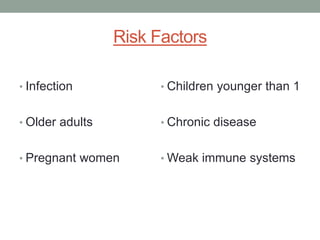
Risk Factors
• Infection
• Older adults
• Pregnant women
• Children younger than 1
• Chronic disease
• Weak immune systems
Causes
• Any infection – bacterial, viral or fungal.
• Most common
• Pneumonia
• Infection of digestive tract
• Infection of the urinary system
• Bloodstream infection
Signs and Symptoms
Signs and Symptoms
• Inflammatory
• High white blood cell count
• Immature white blood cells in the circulation
• Elevated plasma C-reactive protein
• Elevated procalcitonin
• Hemodynamic
• Low blood pressure
• Low central venous or mixed venous oxygen
saturation
• High cardiac index
Signs and Symptoms
• Organ Dysfunction
• Low oxygen level
• Low urine output
• High creatinine in the blood
• Coagulation abnormalities
• Absent bowel sounds
• Low platelet in the blood
• High bilirubin levels
• Tissue Perfusion
• High lactate in the blood
• Decreased capillary filling
Systemic Inflammatory Response
Syndrome
SEPSIS STEPS
Diagnosis
• Blood tests – drawn from two sites
• Evidence of infection
• Clotting problem
• Abnormal liver or kidney finctions
• Impaired oxygen availability
• Electrolyte imbalance
Diagnosis
• Other tests
• Urine
• Wound secretions
• Respiratory secretions
• Imaging tests
• X-rays
• USG
• CT
• MRI
Treatment
• Medications
• Antibiotics
• IV fluids
• Vasopressors
• Supportive care
• Oxygen
• Ventilation
• Dialysis
• Surgery
• Removal of source of infection – abscess, infected tissue
or gangrene.
Surviving Sepsis Campaign
Hour 1 Bundle of Care Elements
• Measure lactate levels.
• Obtain blood cultures before administering
antibiotics.
• Administer broad-spectrum antibiotics.
• Begin rapid administration of 30 mL/kg crystalloid for
hypotension or lactate level > 4 mmol/L.
• Apply vasopressors if hypotensive during or after fluid
resuscitation to maintain MAP > 65 mm Hg.
www.survivingsepsis.org
Thank you..!!

Sepsis

  • 1.
    SEPSIS AND SEPTIC SHOCK Dr.Prasenjit Gogoi MBBS, MEM Attending Consultant Apollo Hospital, Guwahati
  • 2.
    Introduction • Sepsis –A life threatening organ dysfunction caused by a dysregulated host response to infection. • Septic shock – Sepsis in which underlying circulatory and cellular/metabolic abnormalities are profound enough to substantially increase mortality.
  • 3.
    Risk Factors • Infection •Older adults • Pregnant women • Children younger than 1 • Chronic disease • Weak immune systems
  • 4.
    Causes • Any infection– bacterial, viral or fungal. • Most common • Pneumonia • Infection of digestive tract • Infection of the urinary system • Bloodstream infection
  • 7.
  • 8.
    Signs and Symptoms •Inflammatory • High white blood cell count • Immature white blood cells in the circulation • Elevated plasma C-reactive protein • Elevated procalcitonin • Hemodynamic • Low blood pressure • Low central venous or mixed venous oxygen saturation • High cardiac index
  • 9.
    Signs and Symptoms •Organ Dysfunction • Low oxygen level • Low urine output • High creatinine in the blood • Coagulation abnormalities • Absent bowel sounds • Low platelet in the blood • High bilirubin levels • Tissue Perfusion • High lactate in the blood • Decreased capillary filling
  • 10.
  • 11.
  • 12.
    Diagnosis • Blood tests– drawn from two sites • Evidence of infection • Clotting problem • Abnormal liver or kidney finctions • Impaired oxygen availability • Electrolyte imbalance
  • 13.
    Diagnosis • Other tests •Urine • Wound secretions • Respiratory secretions • Imaging tests • X-rays • USG • CT • MRI
  • 14.
    Treatment • Medications • Antibiotics •IV fluids • Vasopressors • Supportive care • Oxygen • Ventilation • Dialysis • Surgery • Removal of source of infection – abscess, infected tissue or gangrene.
  • 15.
    Surviving Sepsis Campaign Hour1 Bundle of Care Elements • Measure lactate levels. • Obtain blood cultures before administering antibiotics. • Administer broad-spectrum antibiotics. • Begin rapid administration of 30 mL/kg crystalloid for hypotension or lactate level > 4 mmol/L. • Apply vasopressors if hypotensive during or after fluid resuscitation to maintain MAP > 65 mm Hg. www.survivingsepsis.org
  • 16.