Ethical Issues in Research
Presented by
Ms. Shweta
(Research Scholar)
Ph. D
Course work 2017
Lakshmibai National Institute of Physical Education, Gwalior, India
(Deemed to be University)
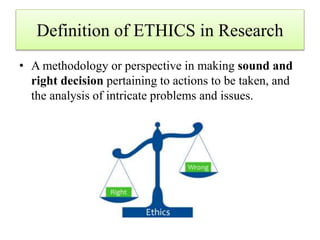
Definition of ETHICS in Research
• A methodology or perspective in making sound and
right decision pertaining to actions to be taken, and
the analysis of intricate problems and issues.
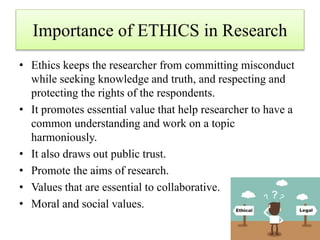
Importance of ETHICS in Research
• Ethics keeps the researcher from committing misconduct
while seeking knowledge and truth, and respecting and
protecting the rights of the respondents.
• It promotes essential value that help researcher to have a
common understanding and work on a topic
harmoniously.
• It also draws out public trust.
• Promote the aims of research.
• Values that are essential to collaborative.
• Moral and social values.
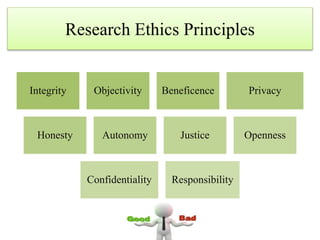
Research Ethics Principles
Integrity Objectivity Beneficence Privacy
Honesty Autonomy Justice Openness
Confidentiality Responsibility
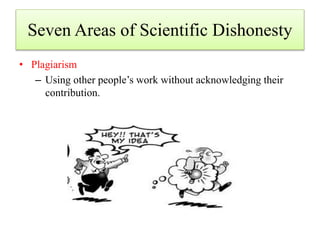
Seven Areas of Scientific Dishonesty
• Plagiarism
– Using other people’s work without acknowledging their
contribution.
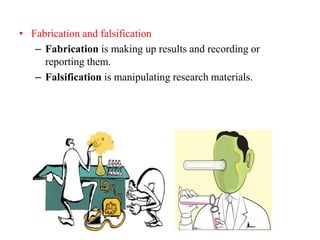
• Fabrication and falsification
– Fabrication is making up results and recording or
reporting them.
– Falsification is manipulating research materials.
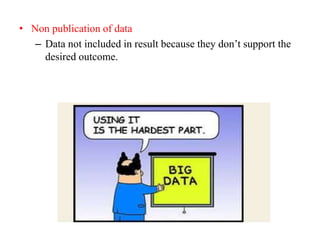
• Non publication of data
– Data not included in result because they don’t support the
desired outcome.
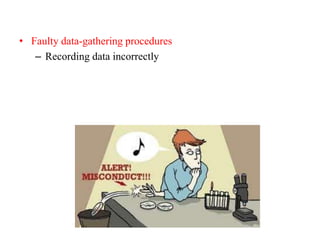
• Faulty data-gathering procedures
– Recording data incorrectly
• Poor Data Storage and Retention
– Should be available for verification of others.
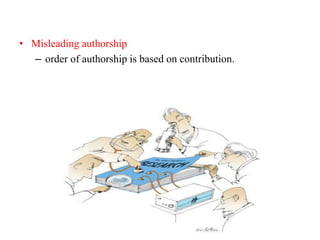
• Misleading authorship
– order of authorship is based on contribution.
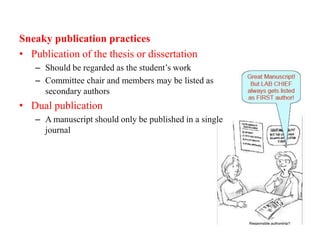
Sneaky publication practices
• Publication of the thesis or dissertation
– Should be regarded as the student’s work
– Committee chair and members may be listed as
secondary authors
• Dual publication
– A manuscript should only be published in a single
journal
Ethical issues regarding copyright
• You need permission to use figures and tables from other
published sources.
• Quotes are okay if properly referenced.
• Usually it is no problem getting permission for educational
purposes.
Animal Rights and Welfare
If the use of animals in research is inevitable, it is
suggested that the 3Rs
1. Reduce- the least number of animal subjects is
recommended.
2. Refine- if harm cannot be avoided.
3. Replace- replacement opinion must be explored
Participants and research ethics
• Participants of research include:
– The people directly involved in your research
– You as researcher
– The member of the academic community
NOTE:
You should treat everyone involved in your research whether directly or indirectly,
fairly and with honesty.
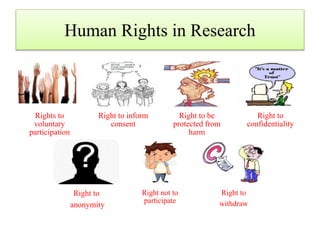
Human Rights in Research
Rights to
voluntary
participation
Right to inform
consent
Right to be
protected from
harm
Right to
confidentiality
Right to
anonymity
Right not to
participate
Right to
withdraw
Ethical issues in research

Ethical issues in research

  • 1.
    Ethical Issues inResearch Presented by Ms. Shweta (Research Scholar) Ph. D Course work 2017 Lakshmibai National Institute of Physical Education, Gwalior, India (Deemed to be University)
  • 2.
    Definition of ETHICSin Research • A methodology or perspective in making sound and right decision pertaining to actions to be taken, and the analysis of intricate problems and issues.
  • 3.
    Importance of ETHICSin Research • Ethics keeps the researcher from committing misconduct while seeking knowledge and truth, and respecting and protecting the rights of the respondents. • It promotes essential value that help researcher to have a common understanding and work on a topic harmoniously. • It also draws out public trust. • Promote the aims of research. • Values that are essential to collaborative. • Moral and social values.
  • 4.
    Research Ethics Principles IntegrityObjectivity Beneficence Privacy Honesty Autonomy Justice Openness Confidentiality Responsibility
  • 5.
    Seven Areas ofScientific Dishonesty • Plagiarism – Using other people’s work without acknowledging their contribution.
  • 6.
    • Fabrication andfalsification – Fabrication is making up results and recording or reporting them. – Falsification is manipulating research materials.
  • 7.
    • Non publicationof data – Data not included in result because they don’t support the desired outcome.
  • 8.
    • Faulty data-gatheringprocedures – Recording data incorrectly
  • 9.
    • Poor DataStorage and Retention – Should be available for verification of others.
  • 10.
    • Misleading authorship –order of authorship is based on contribution.
  • 11.
    Sneaky publication practices •Publication of the thesis or dissertation – Should be regarded as the student’s work – Committee chair and members may be listed as secondary authors • Dual publication – A manuscript should only be published in a single journal
  • 12.
    Ethical issues regardingcopyright • You need permission to use figures and tables from other published sources. • Quotes are okay if properly referenced. • Usually it is no problem getting permission for educational purposes.
  • 13.
    Animal Rights andWelfare If the use of animals in research is inevitable, it is suggested that the 3Rs 1. Reduce- the least number of animal subjects is recommended. 2. Refine- if harm cannot be avoided. 3. Replace- replacement opinion must be explored
  • 14.
    Participants and researchethics • Participants of research include: – The people directly involved in your research – You as researcher – The member of the academic community NOTE: You should treat everyone involved in your research whether directly or indirectly, fairly and with honesty.
  • 15.
    Human Rights inResearch Rights to voluntary participation Right to inform consent Right to be protected from harm Right to confidentiality Right to anonymity Right not to participate Right to withdraw