Downloaded 65 times
![−4 −3 −2 −1 1 2 3 4 5
−4
−3
−2
−1
1
2
3
4
x
y
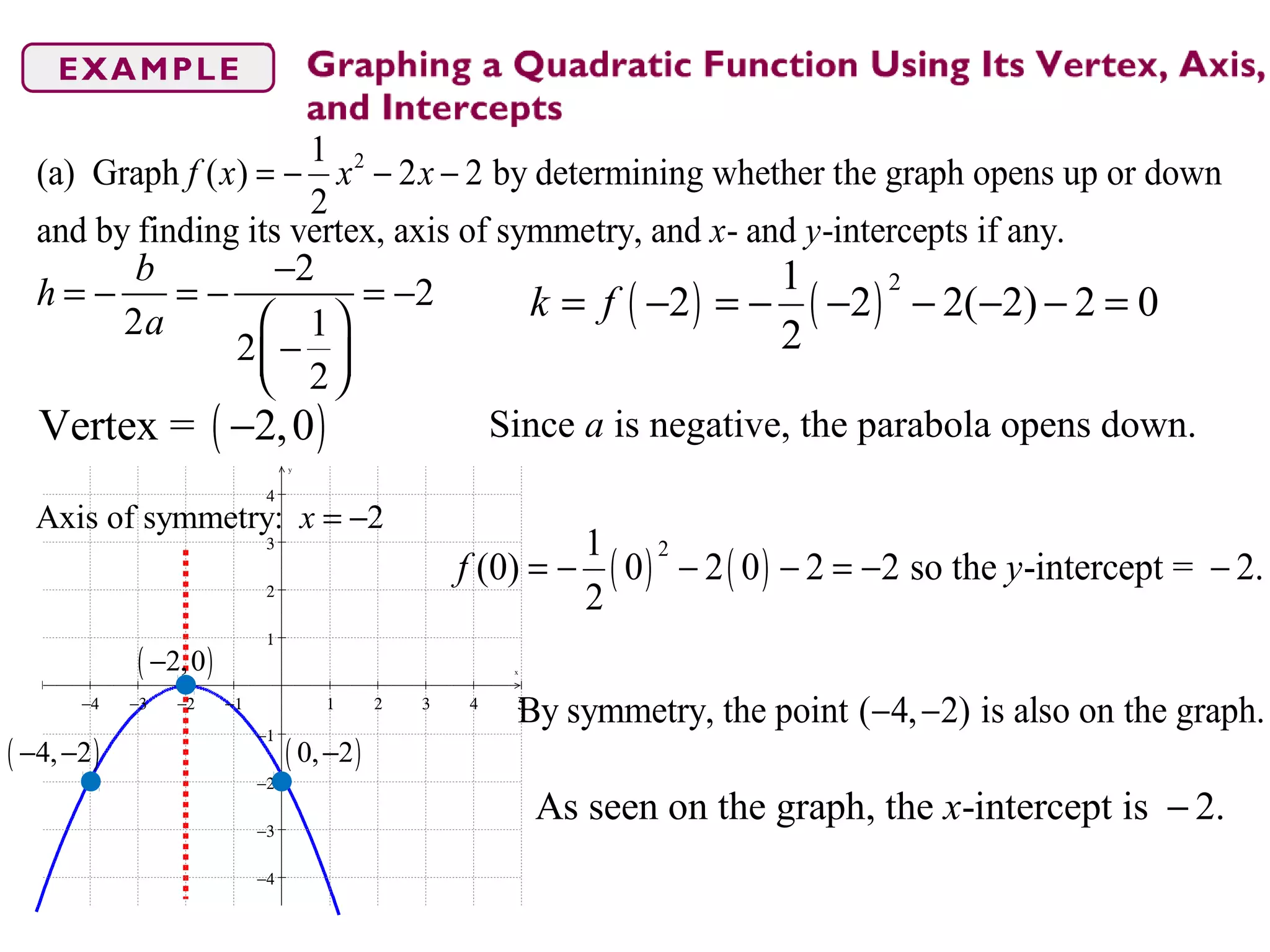
( )2,0−
( )0, 2−( )4, 2− −
(b) Determine the domain and the range of .
(c) Determine where is increasing and decreasing.
f
f
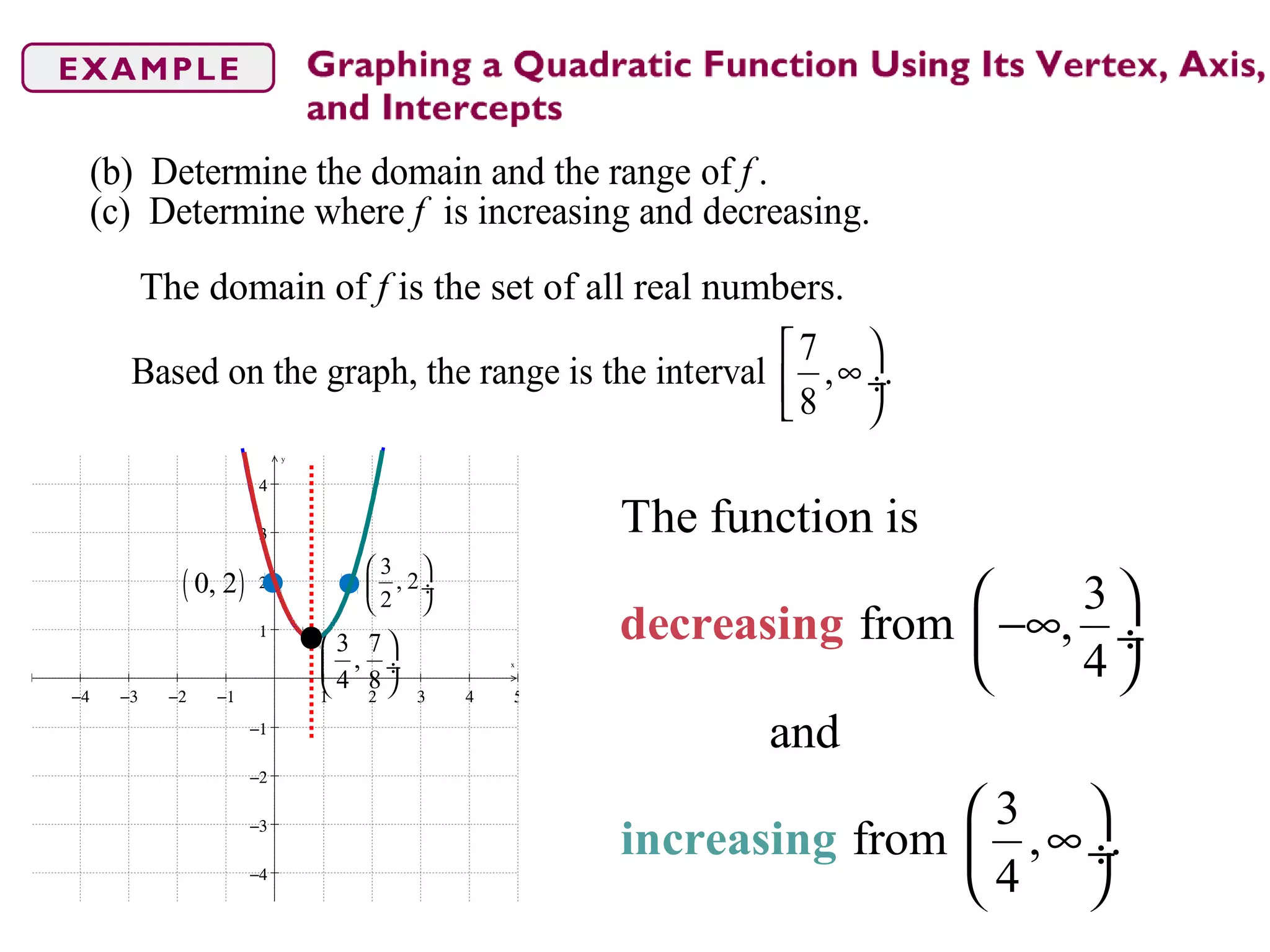
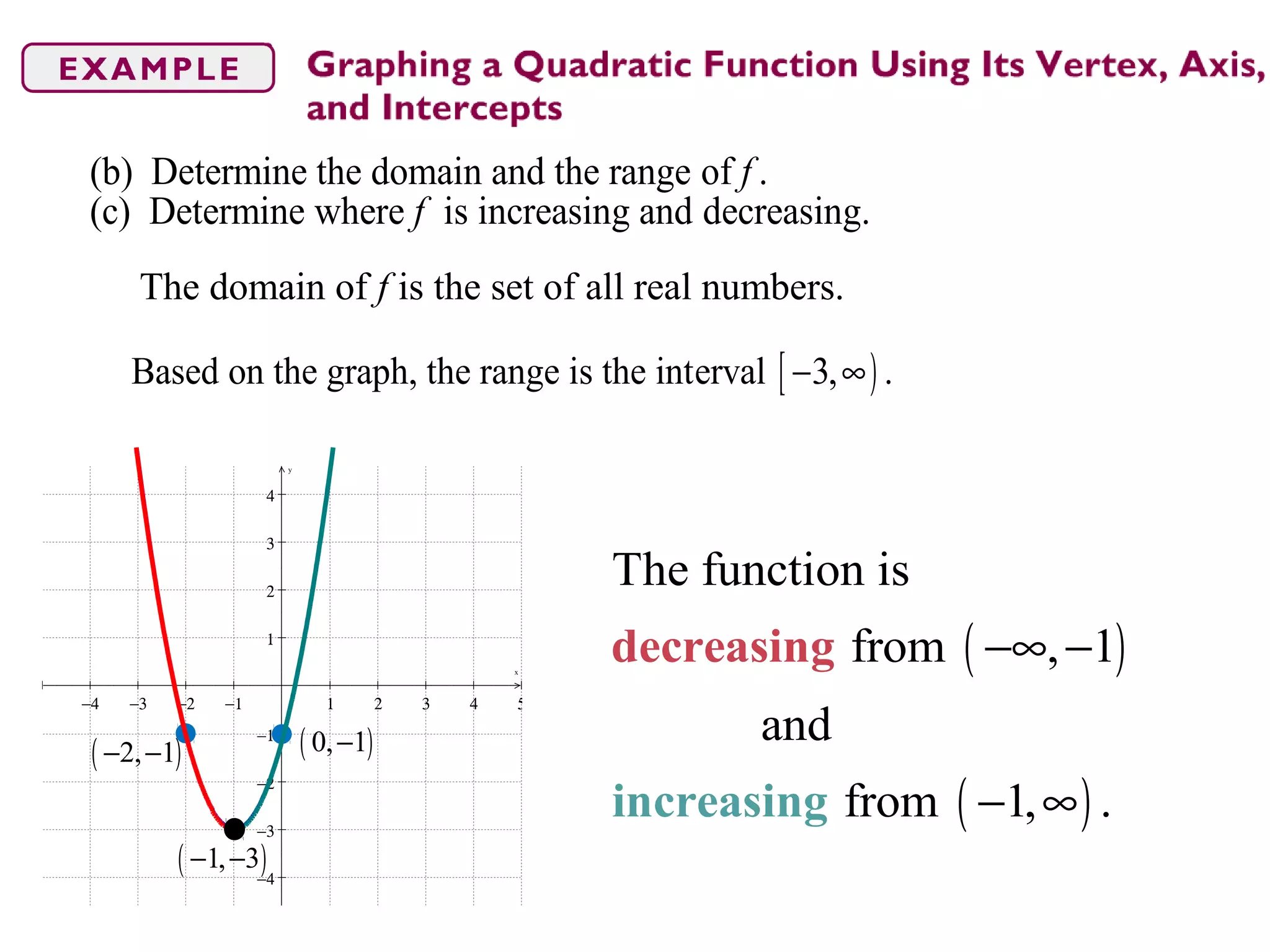
The domain of f is the set of all real numbers.
( ]Based on the graph, the range is the interval ,0 .−∞
( )
( )
The function is
from , 2
and
from 2, .
−∞ −
− ∞dec
increasing
reasing](https://image.slidesharecdn.com/section3-160229053539/75/Section-3-3-quadratic-functions-and-their-properties-20-2048.jpg)
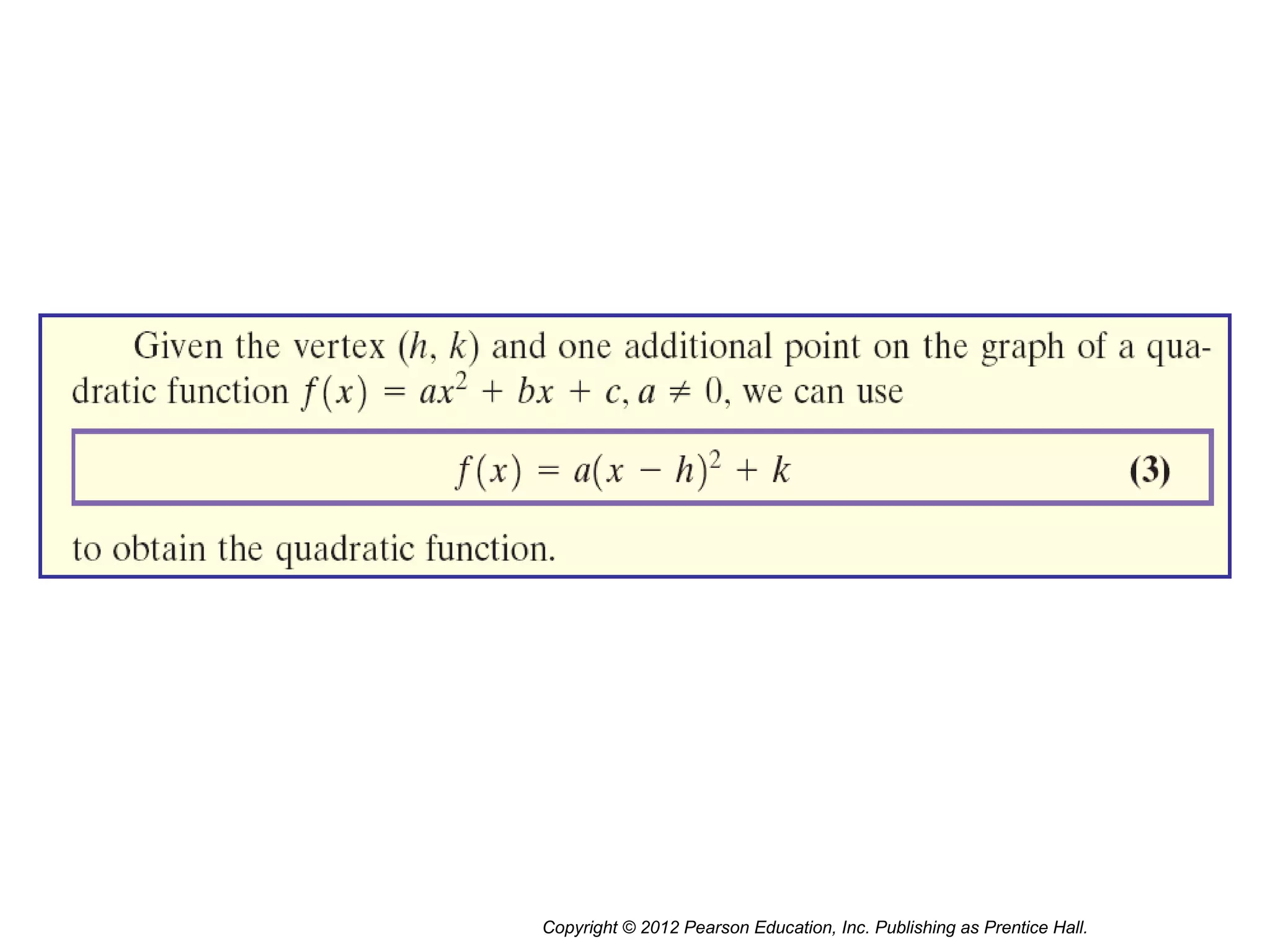
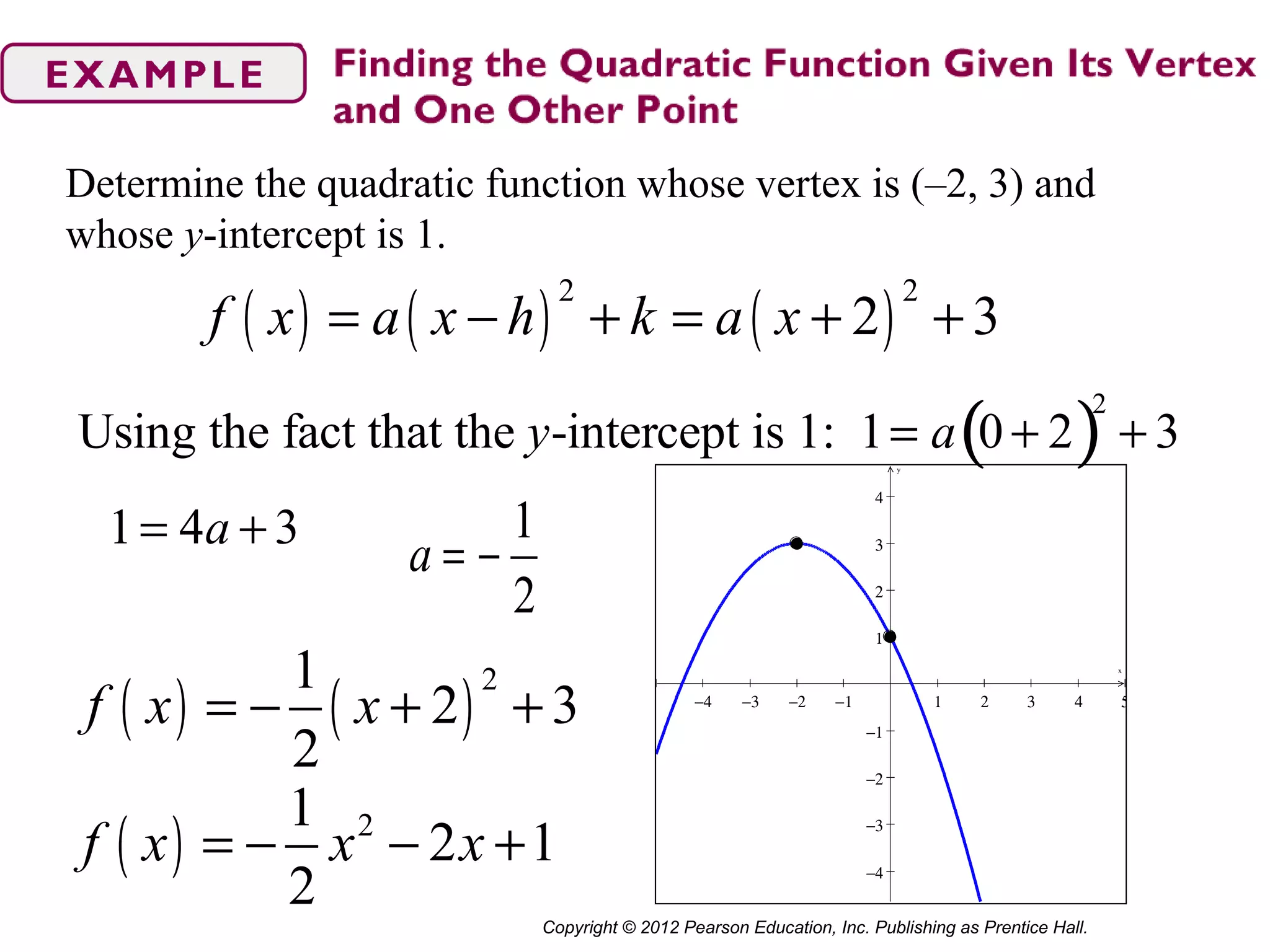
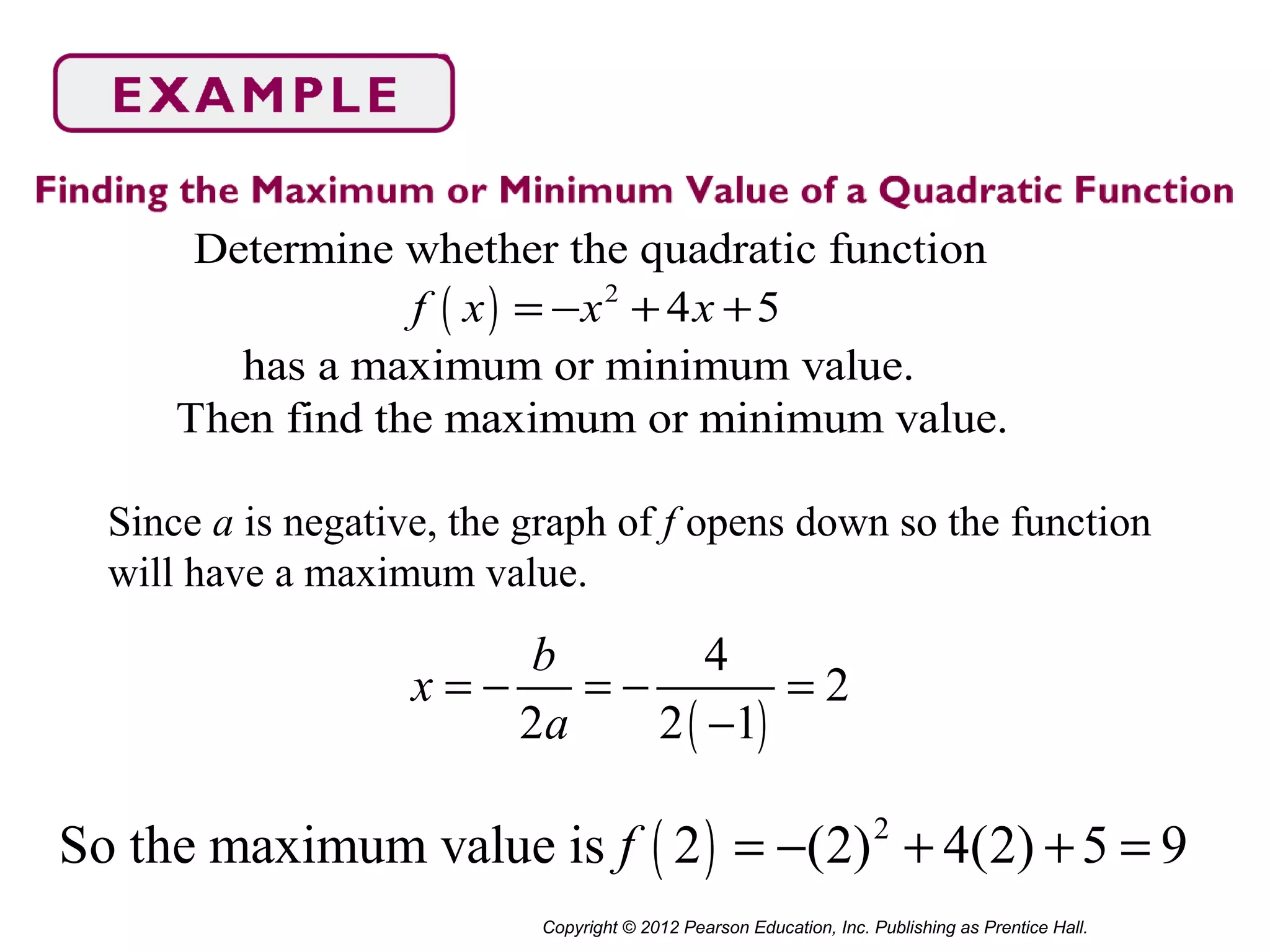

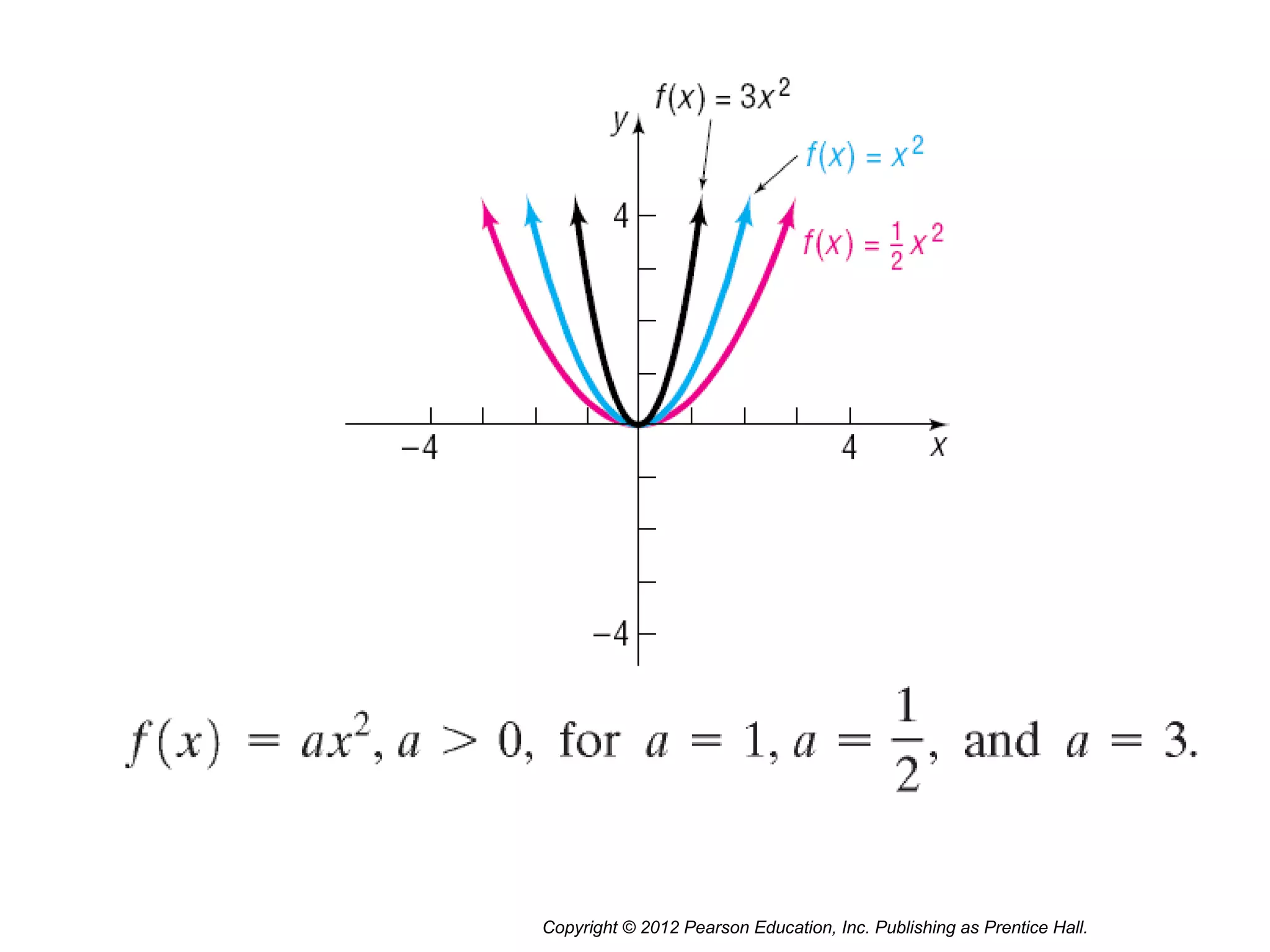
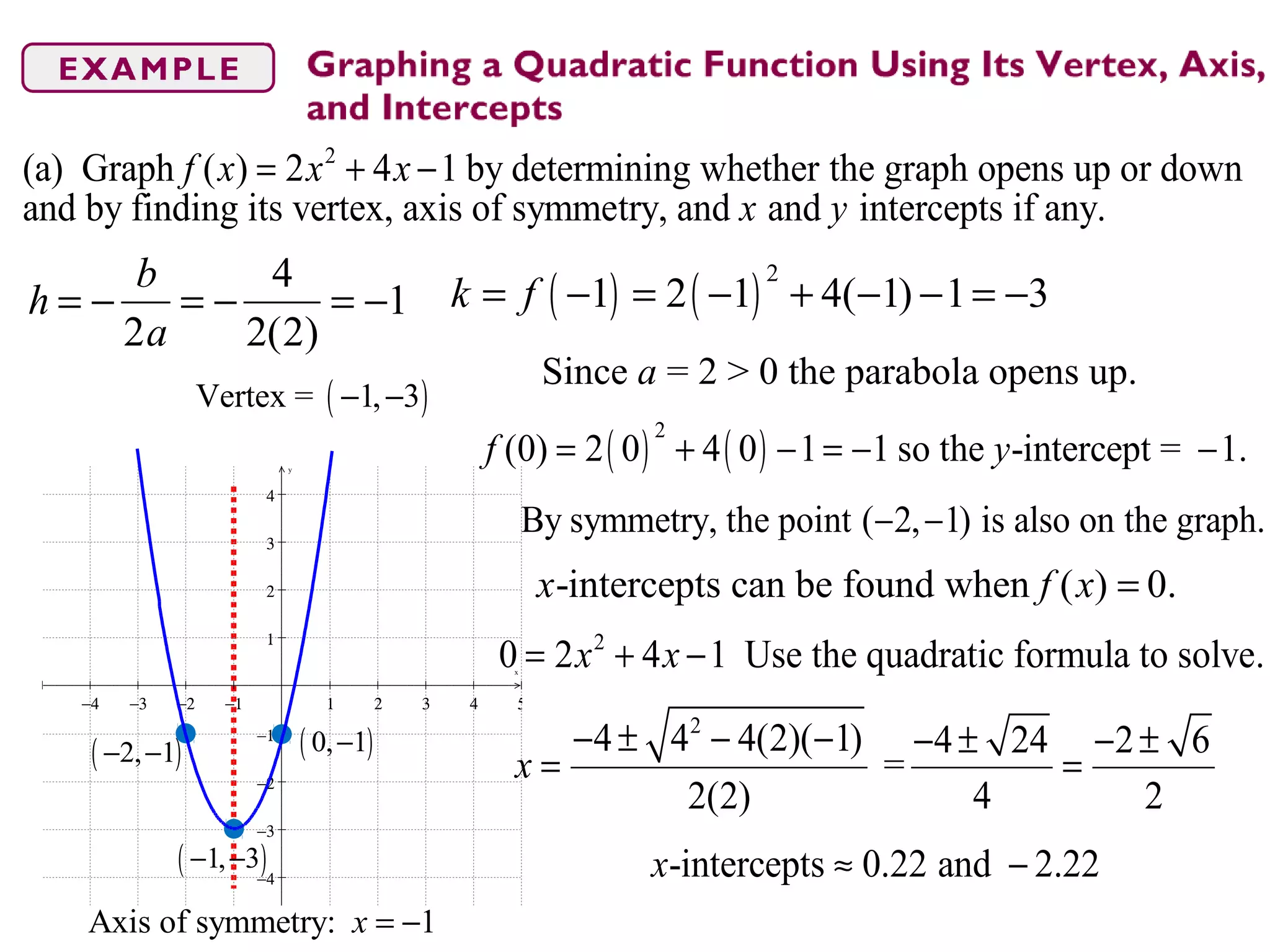
This document contains examples and explanations of properties of quadratic functions, including how to: - Graph quadratic functions by determining if the parabola opens up or down based on the leading coefficient, and finding the vertex, axis of symmetry, and intercepts. - Determine the domain and range of a quadratic function from its graph. - Identify where a quadratic function is increasing or decreasing based on its graph. - Find the quadratic function with given properties like a specific vertex or y-intercept. - Determine if a quadratic function has a maximum or minimum value and calculate its value.
Introduction to Quadratic Functions and Their Properties.
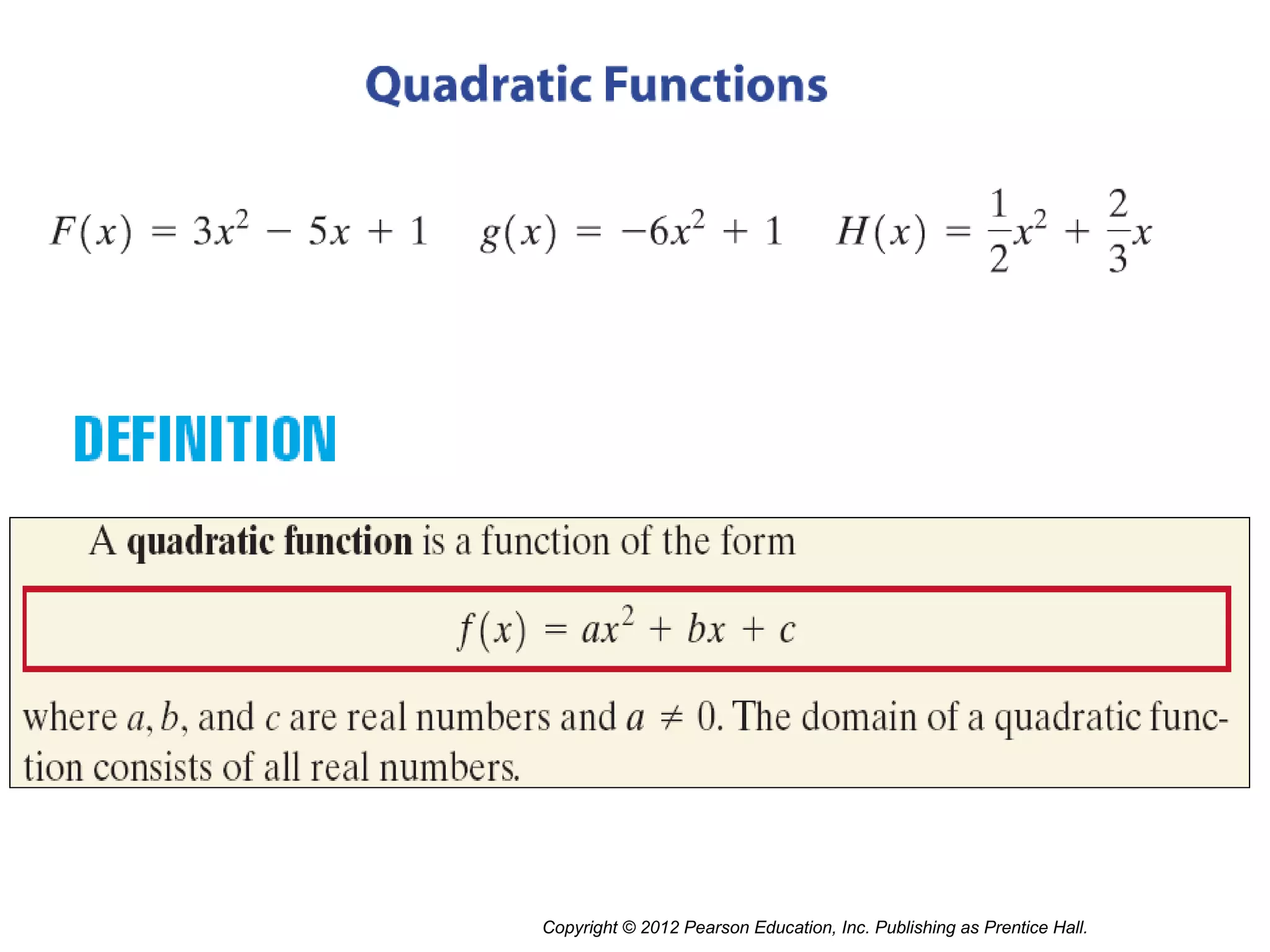
Presentation of various quadratic function equations without specific context.
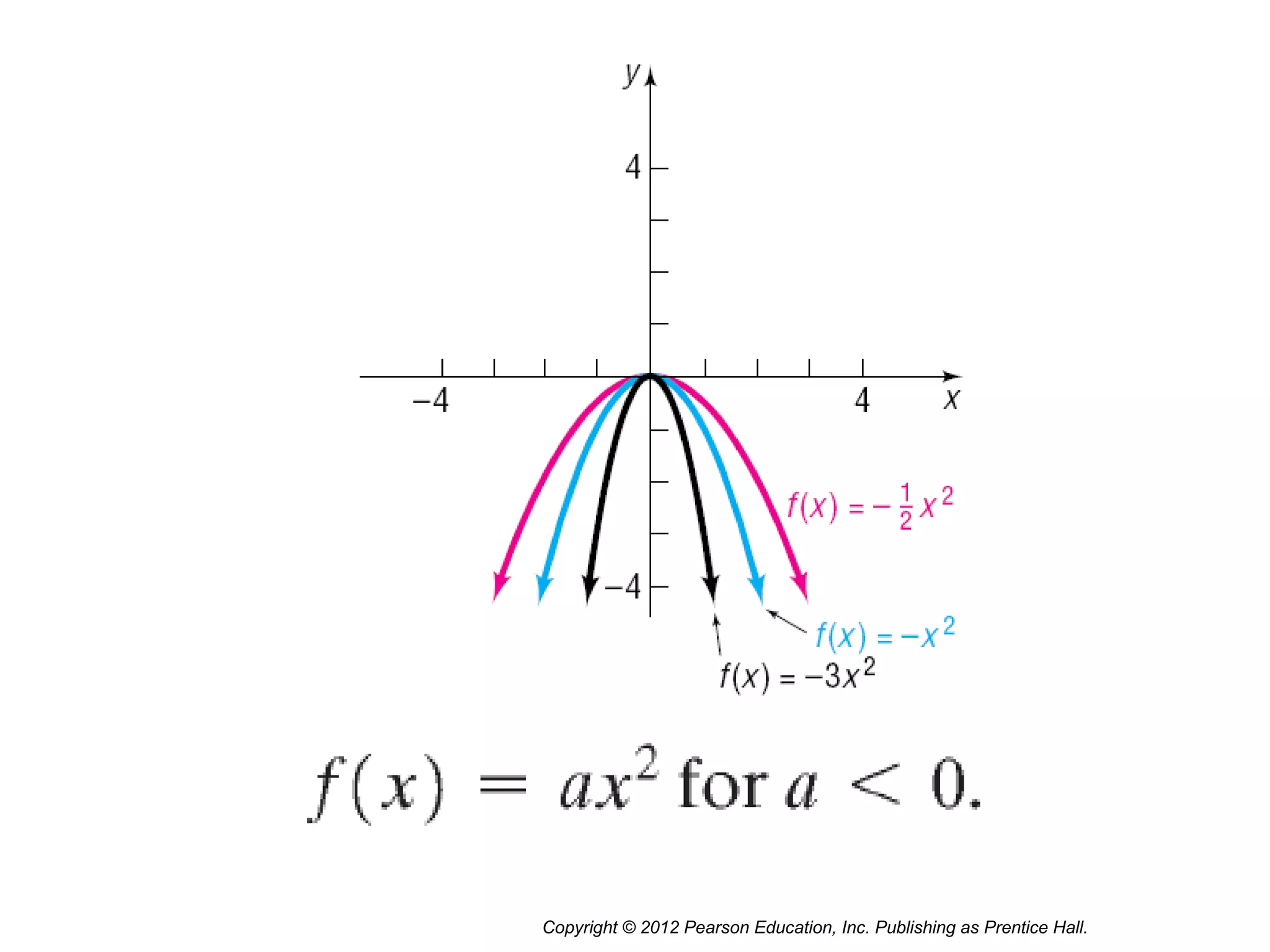
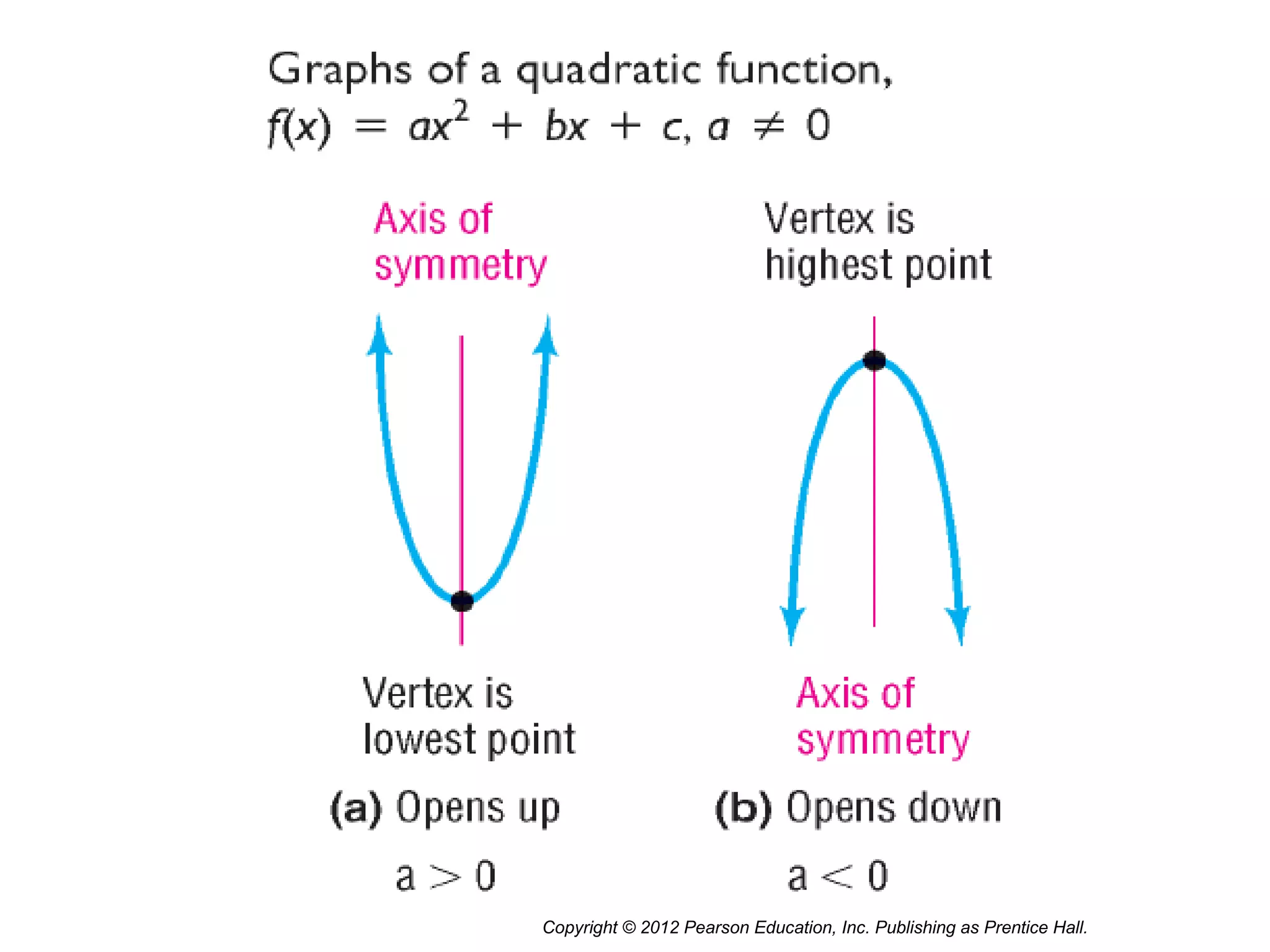
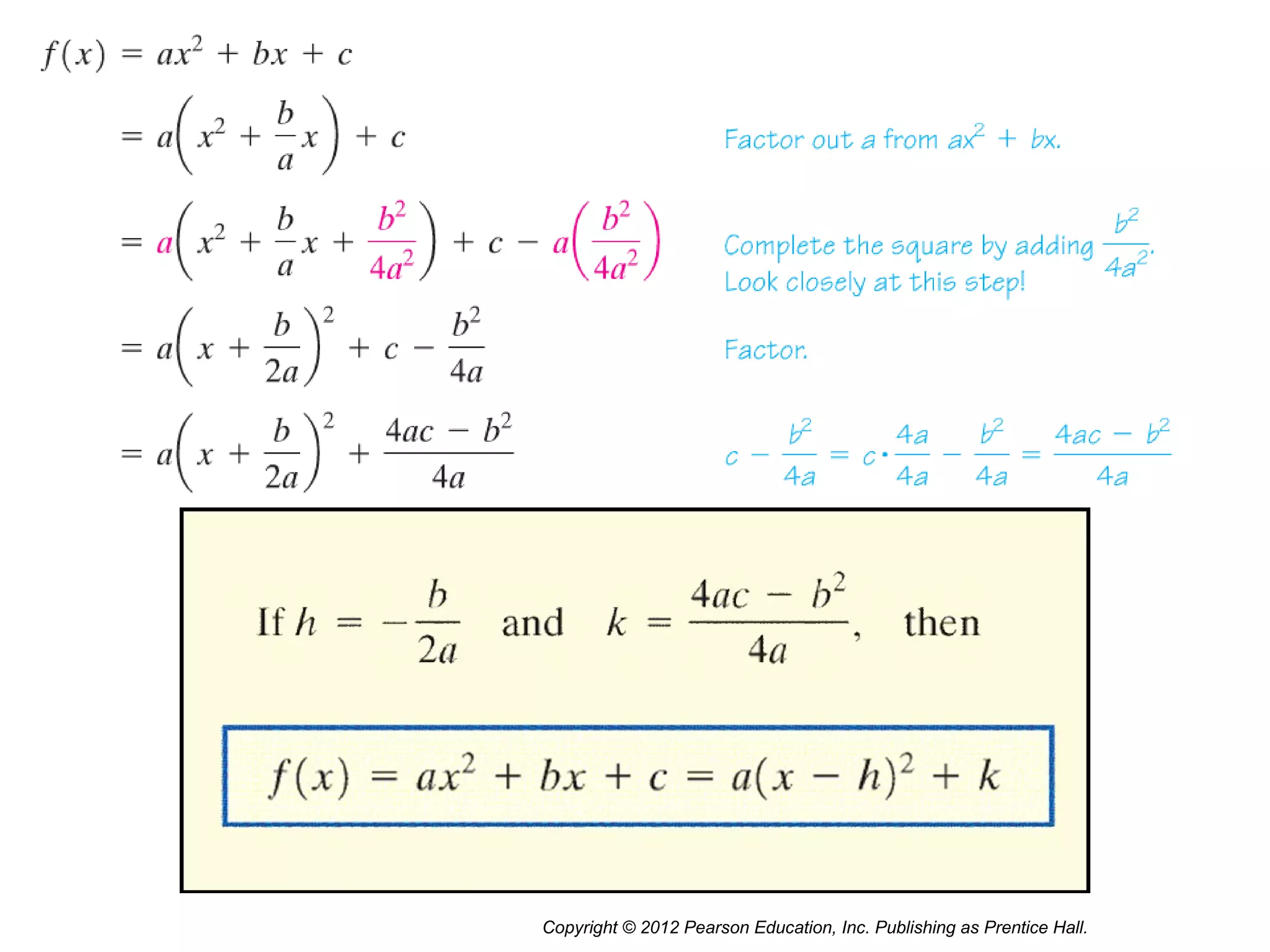
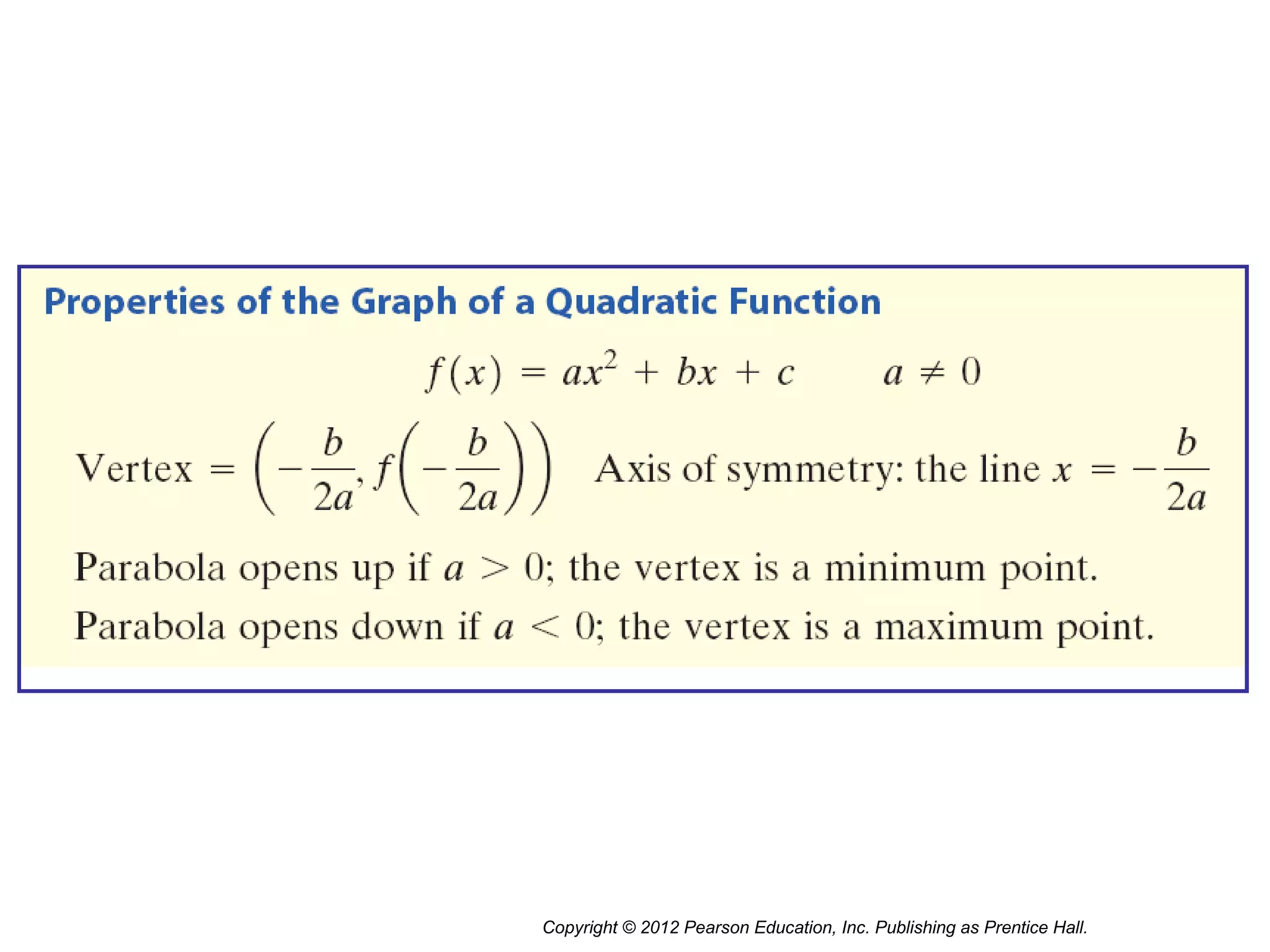
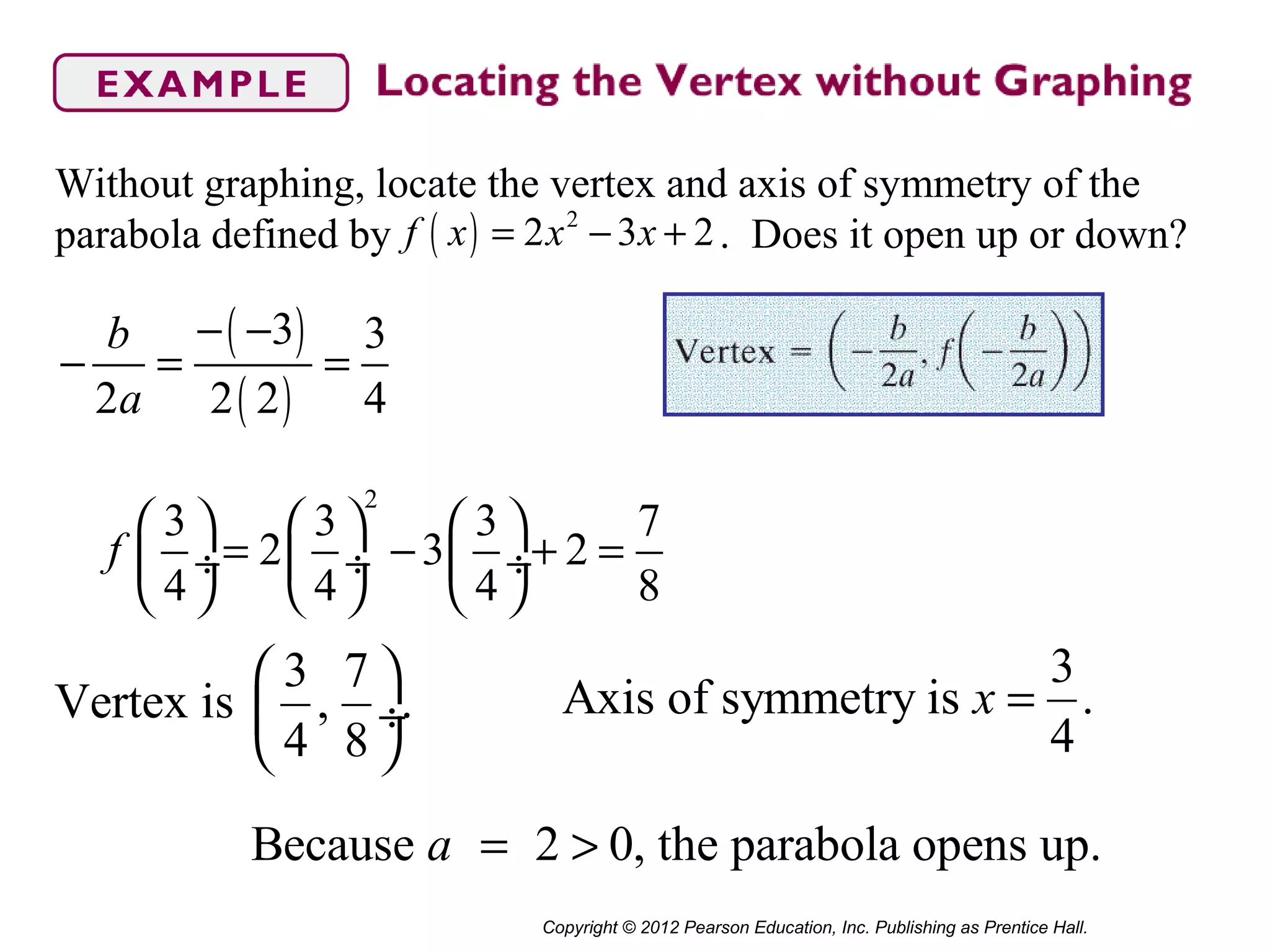
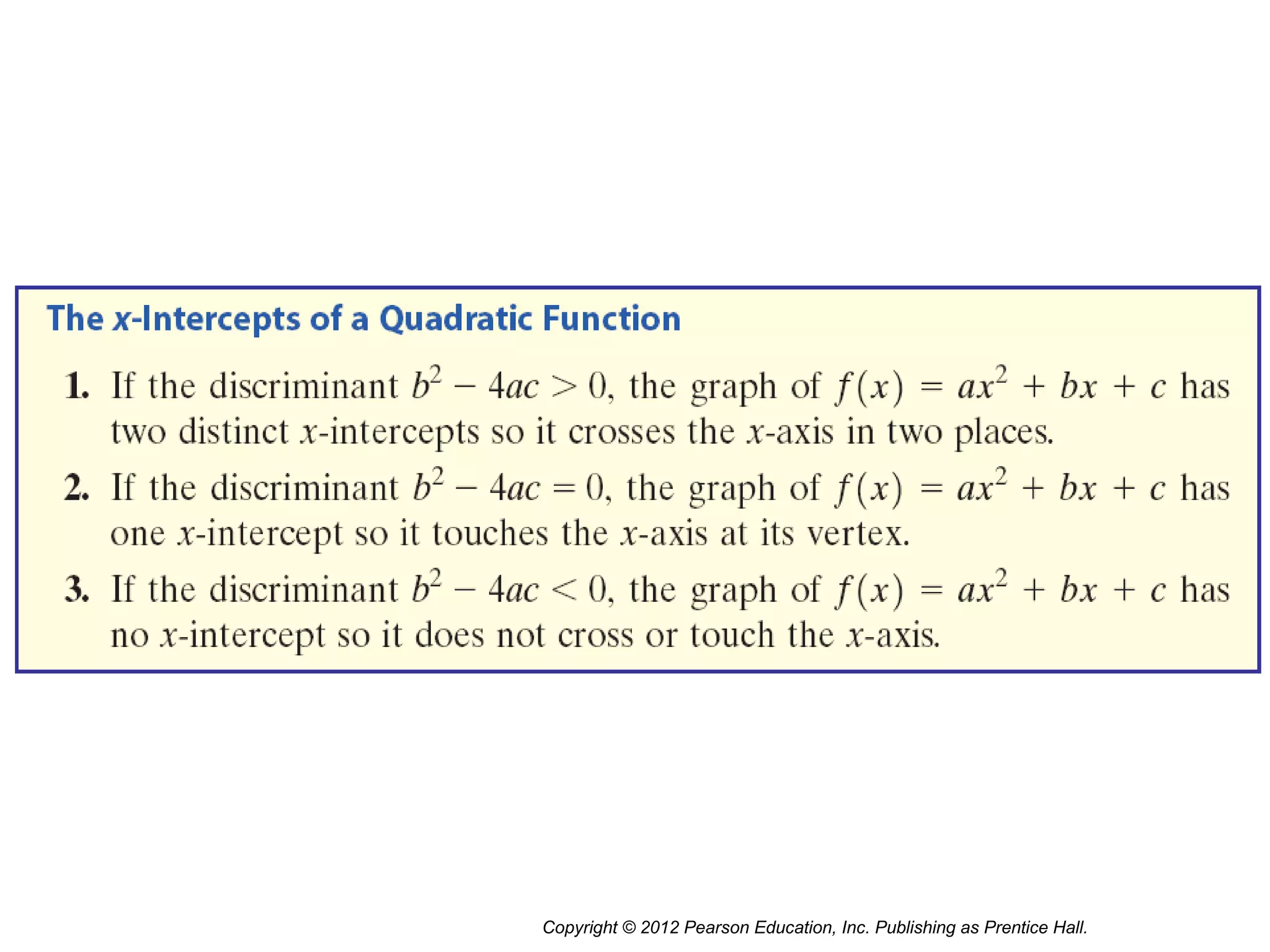
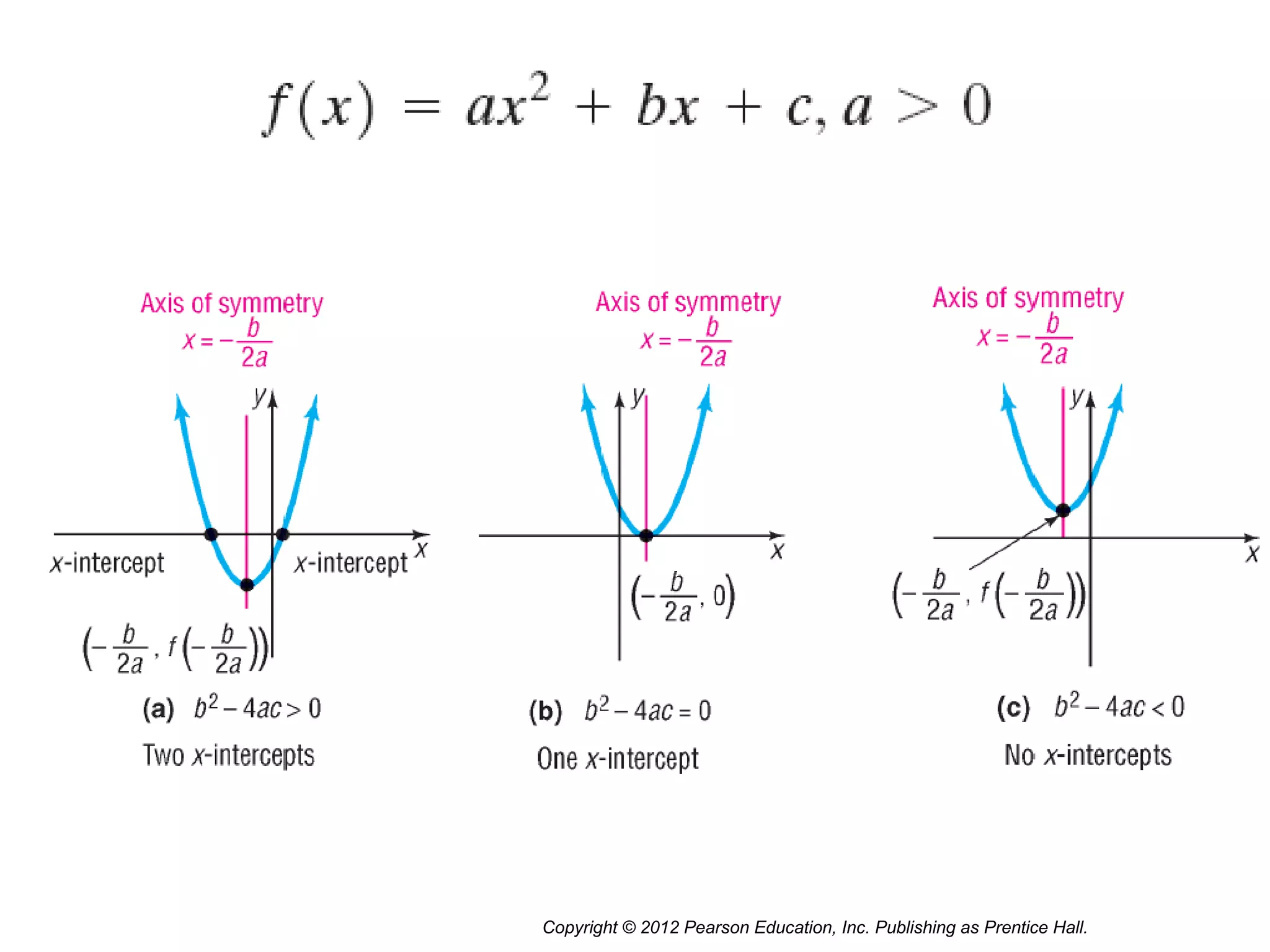
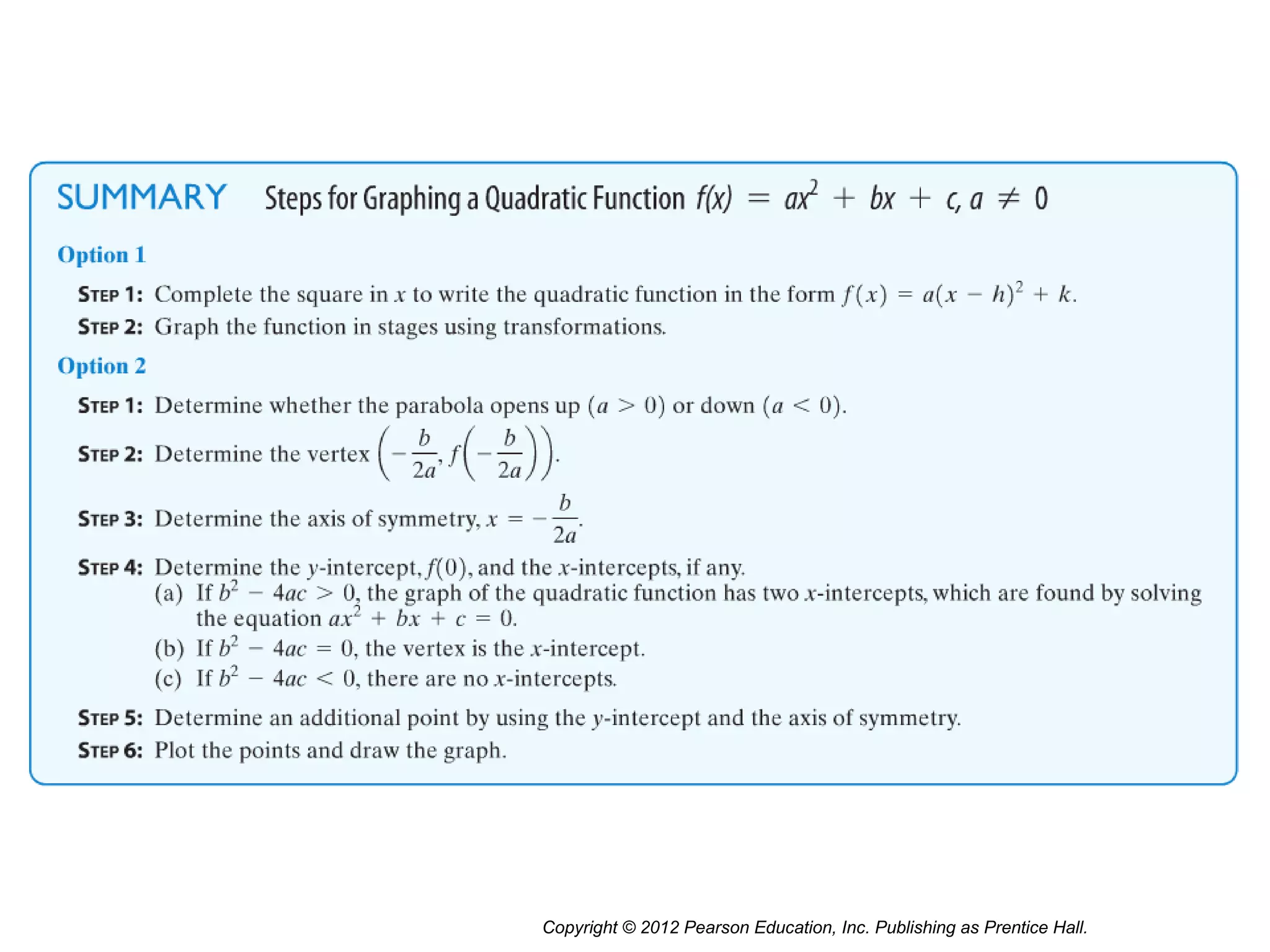
Explains how to locate the vertex and axis of symmetry of a parabola and its direction.
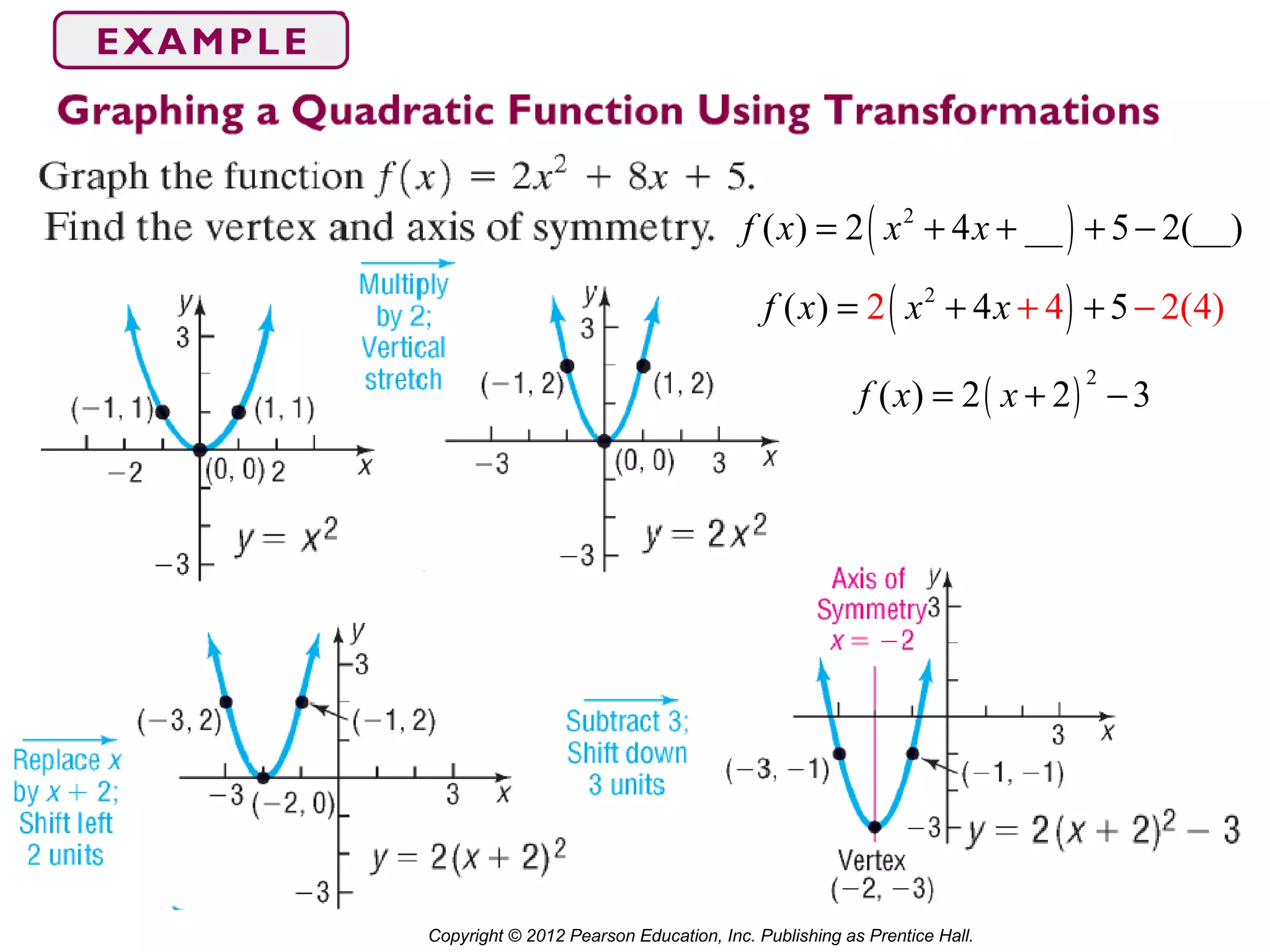
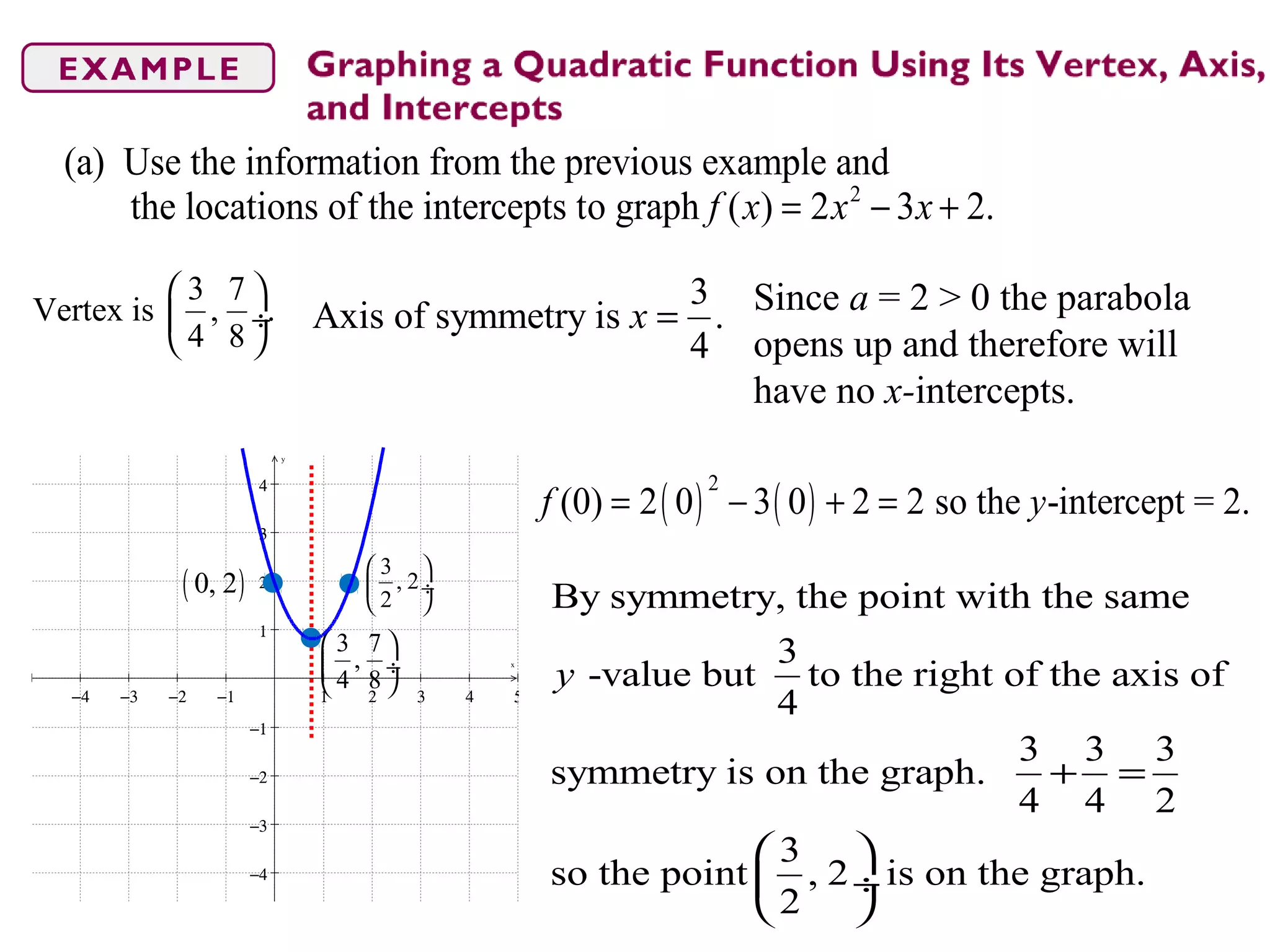
Graphing a quadratic function, determining intercepts, domain, and range.
Analyzing graphs of quadratic functions including domain, range, and increasing/decreasing intervals.
Finding a quadratic function given its vertex and y-intercept.
Analyzing a quadratic function to determine maximum or minimum values.


![Solving Equations With Variables On Both Sides[1]](https://cdn.slidesharecdn.com/ss_thumbnails/solvingequationswithvariablesonbothsides1-091004124445-phpapp02-thumbnail.jpg?width=640&height=640&fit=bounds)


