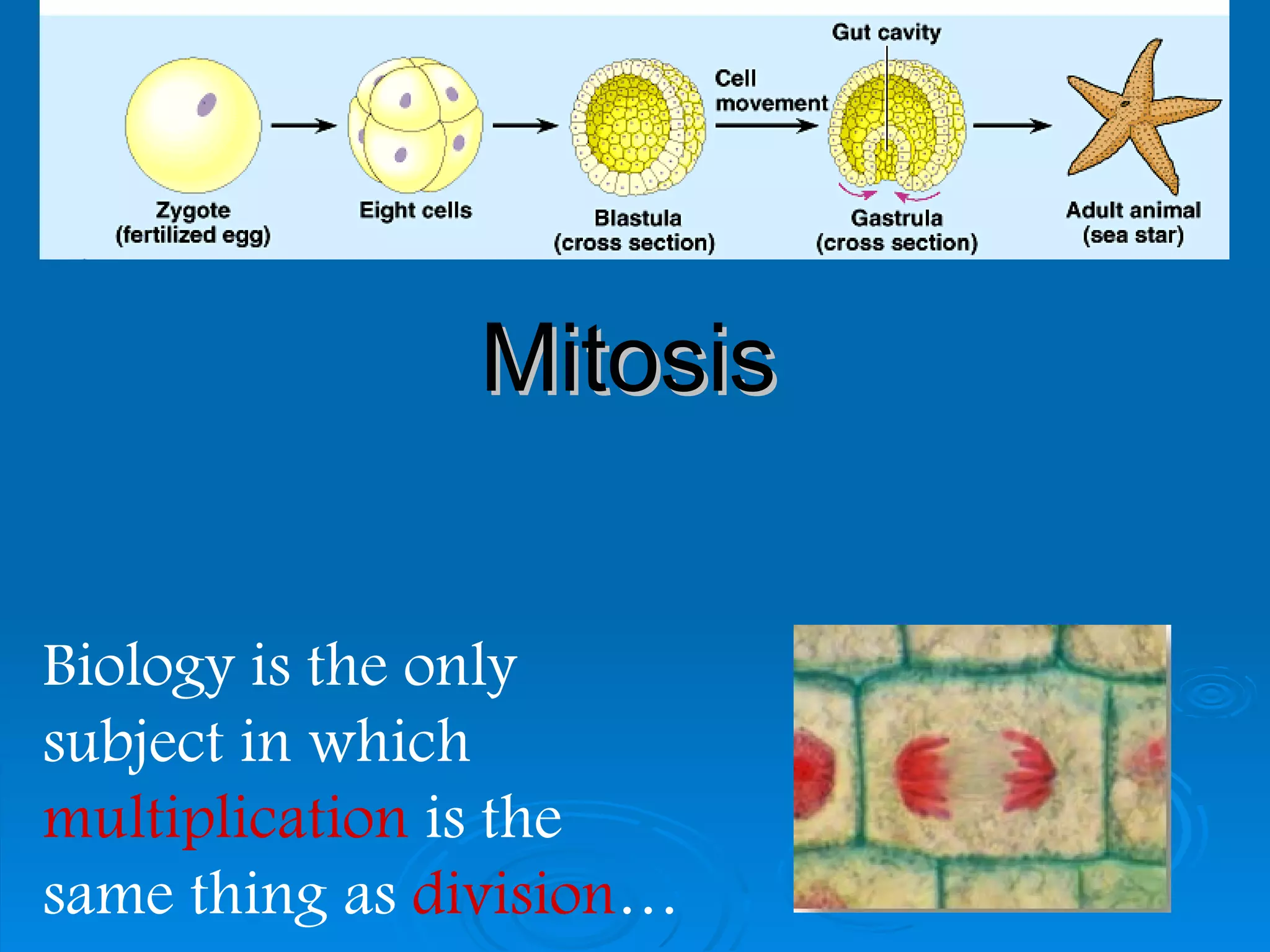
Mitosis


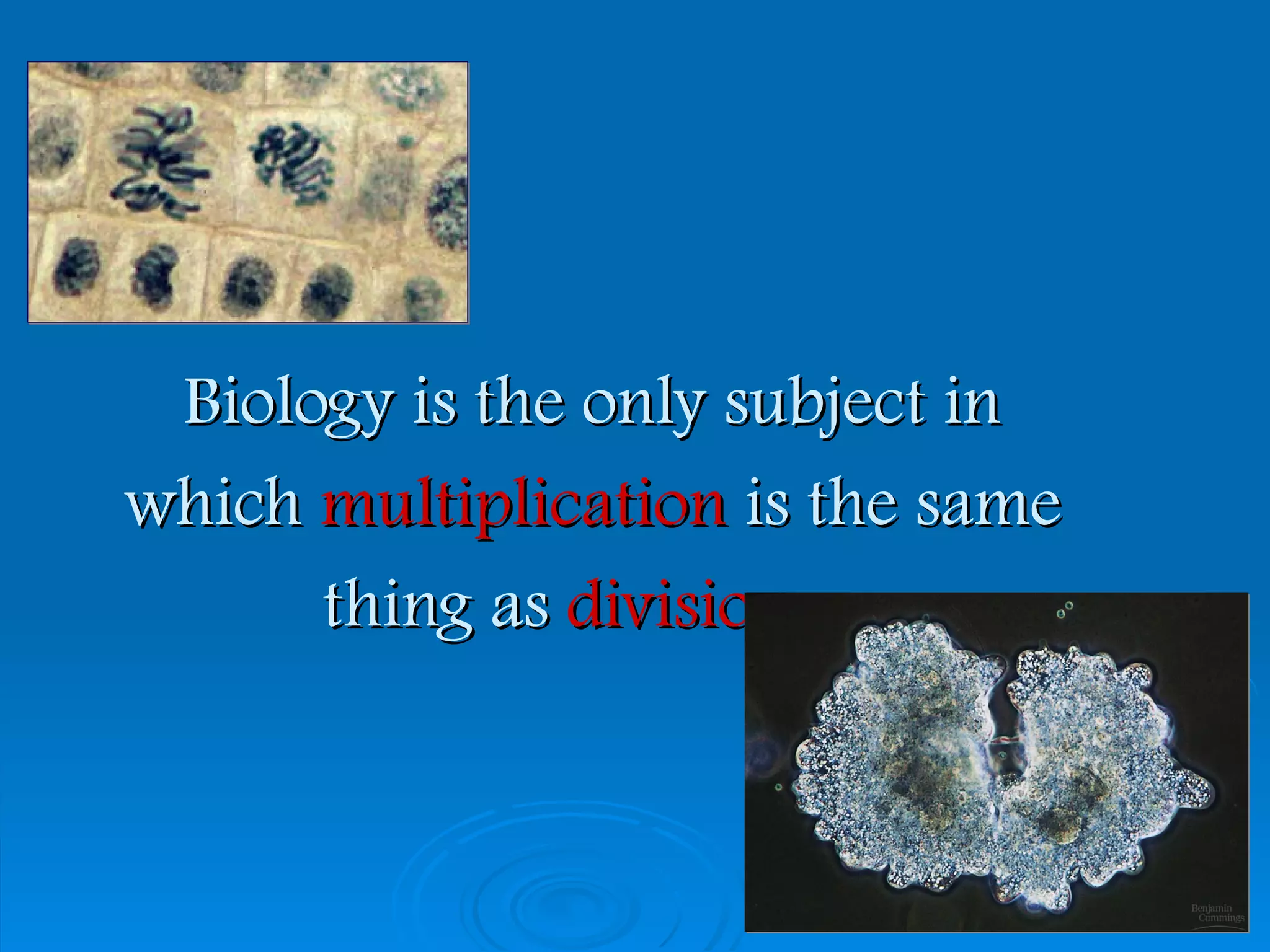
Biology is the only
subject in which
multiplication is the
same thing as division…
Where it all began…
You started as a cell smaller than
a period at the end of a sentence…
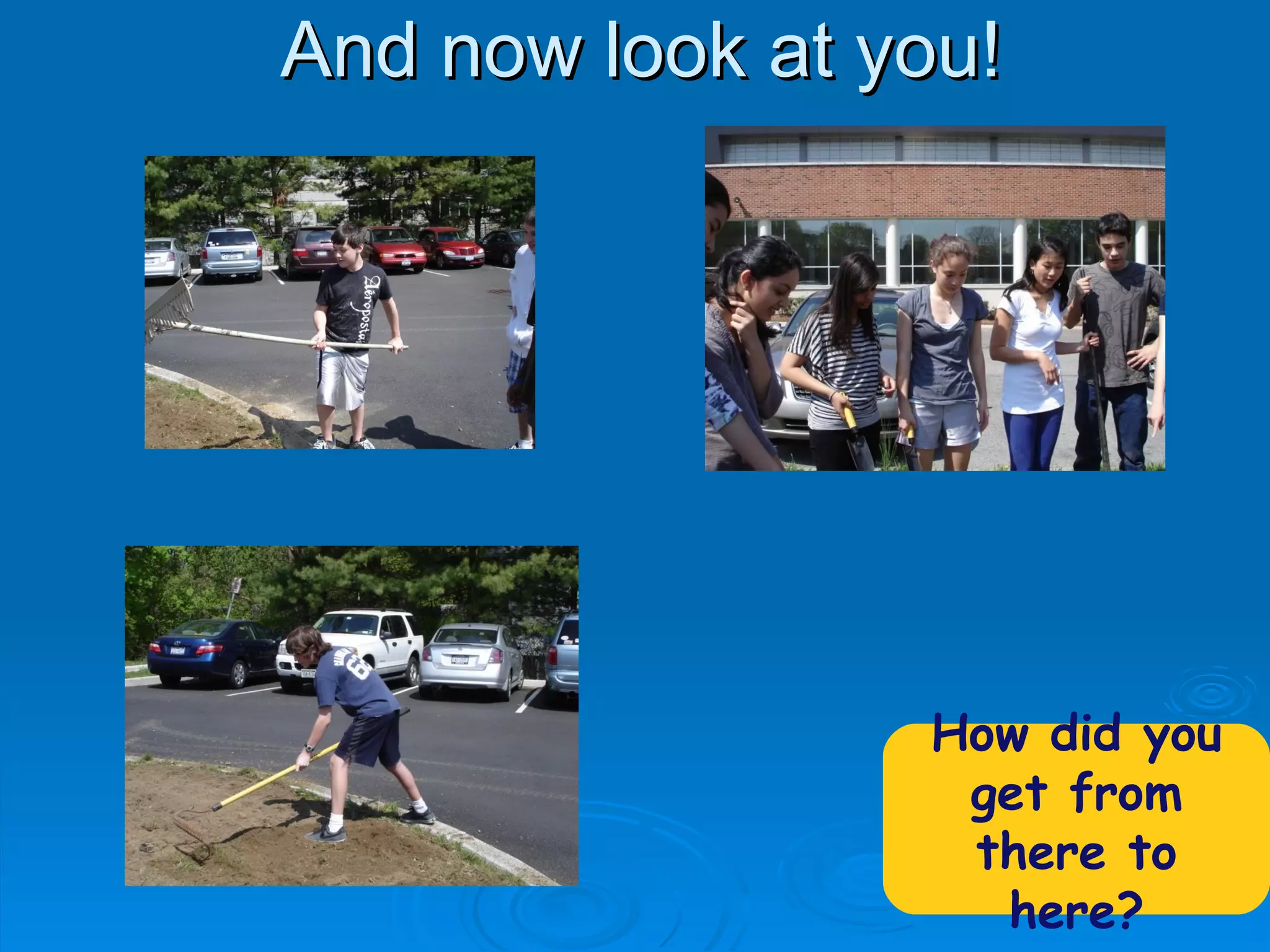
And now look at you!


                 How did you
                  get from
                  there to
                   here?
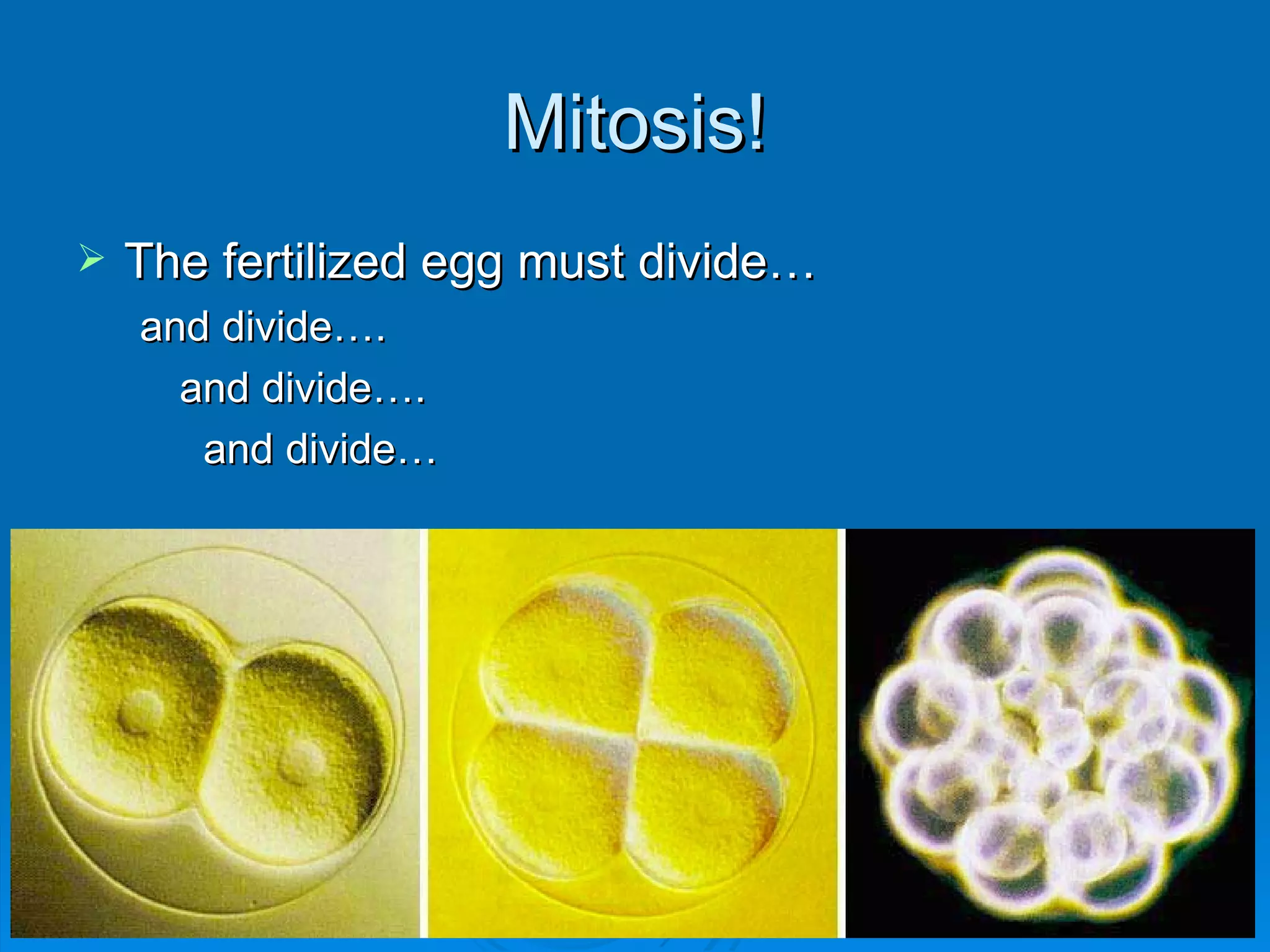
Mitosis!
   The fertilized egg must divide…
    and divide….
      and divide….
       and divide…
Why do cells divide…
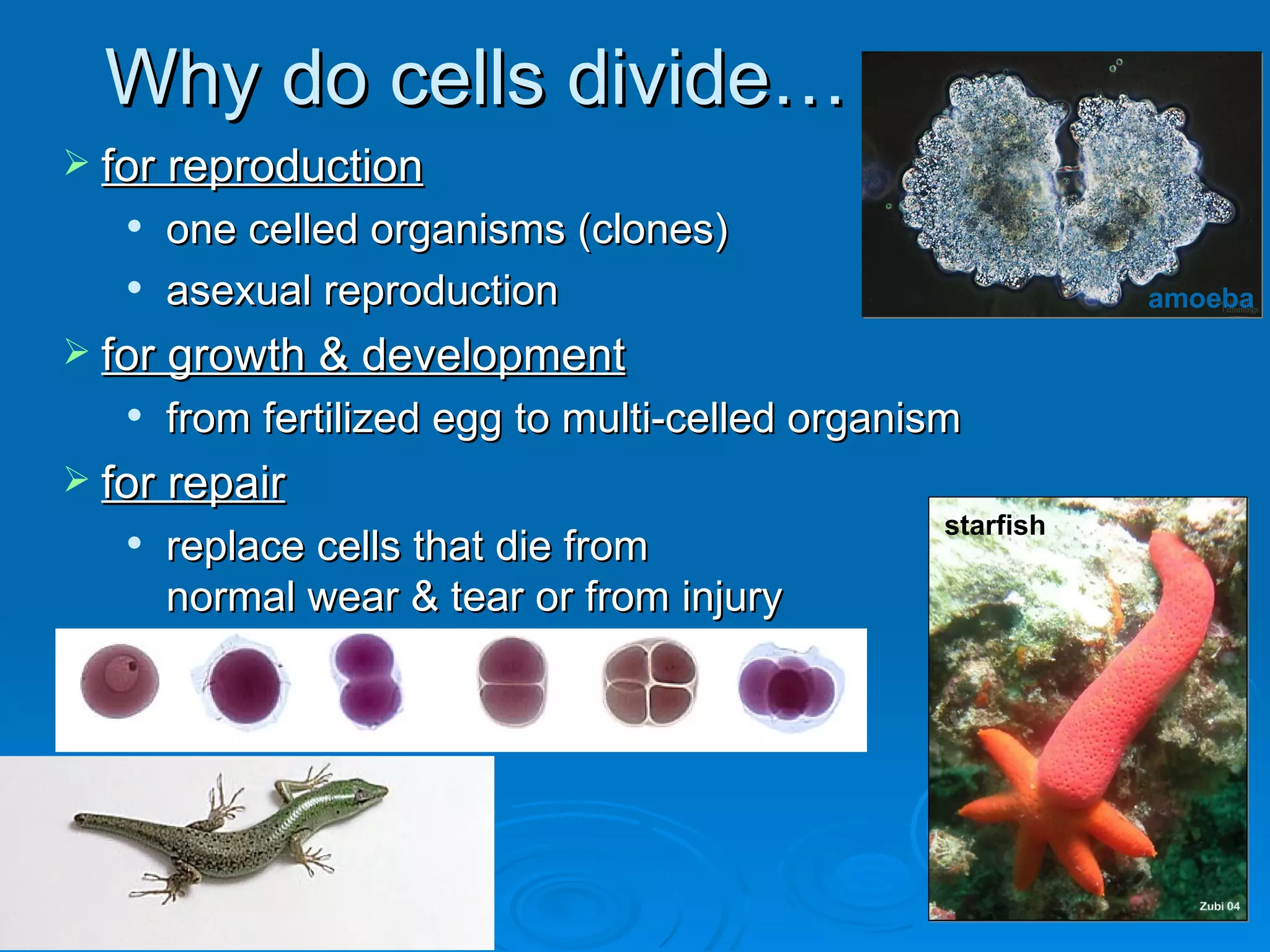
 for reproduction
      one celled organisms (clones)
      asexual reproduction                                 amoeba

 for growth & development
      from fertilized egg to multi-celled organism
 for repair
                                                 starfish
      replace cells that die from
       normal wear & tear or from injury
Dividing cells…
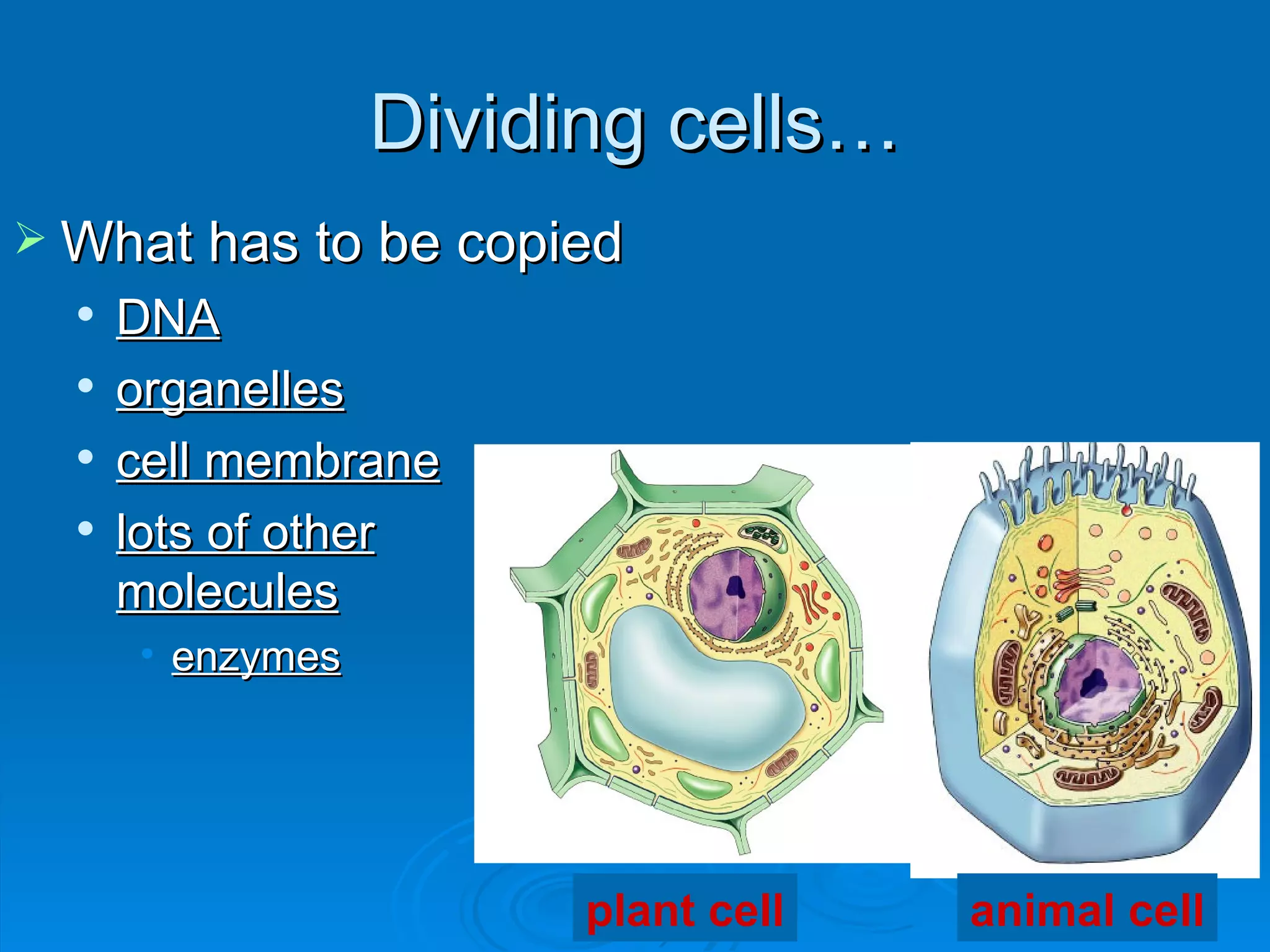
 What has to be copied
     DNA
     organelles
     cell membrane
     lots of other
      molecules
      • enzymes


                        plant cell   animal cell
Copying DNA
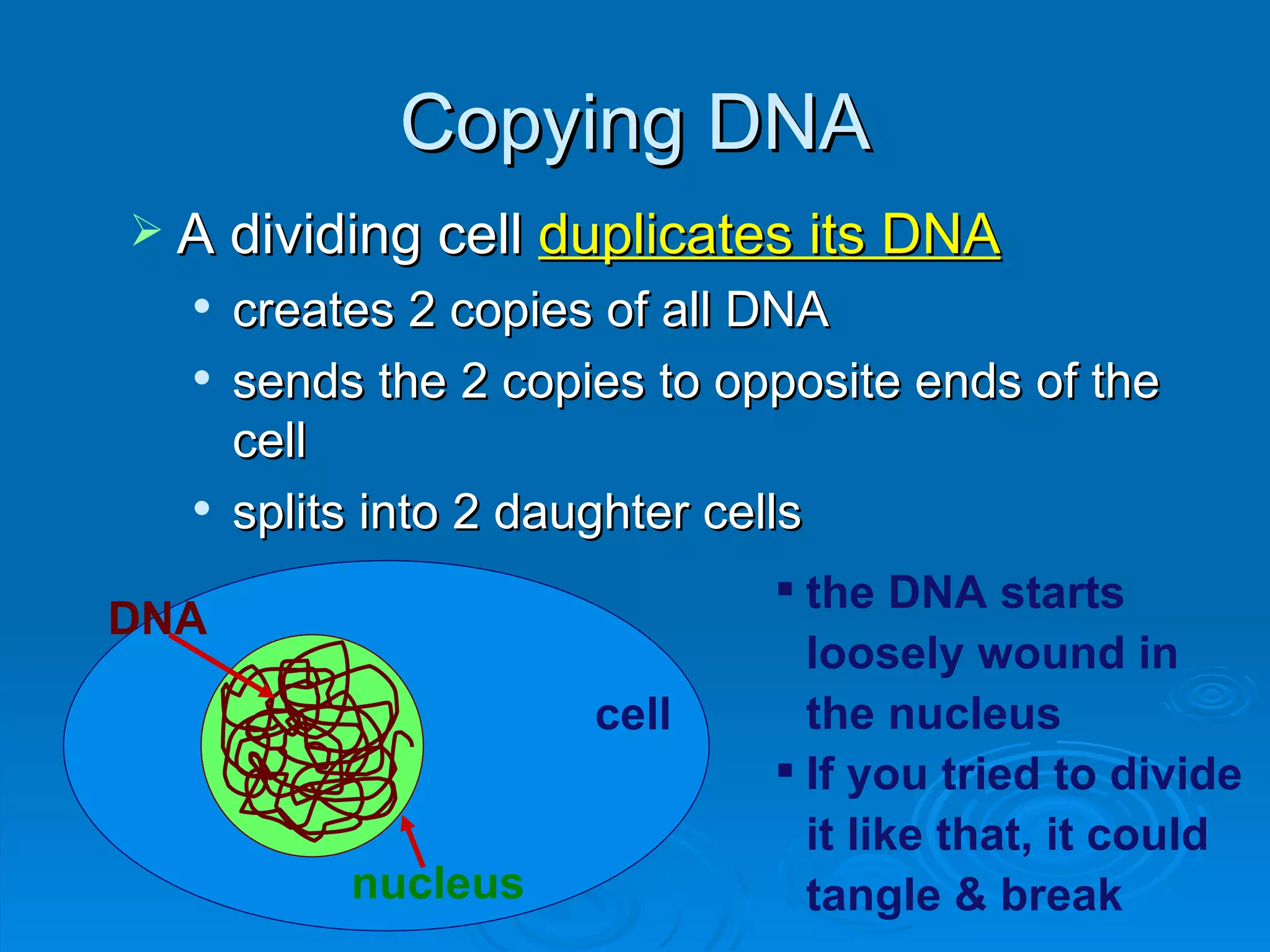
 A dividing cell duplicates its DNA
     creates 2 copies of all DNA
     sends the 2 copies to opposite ends of the
      cell
     splits into 2 daughter cells
                               the DNA starts
DNA
                                loosely wound in
                      cell      the nucleus
                               If you tried to divide
                                it like that, it could
           nucleus              tangle & break
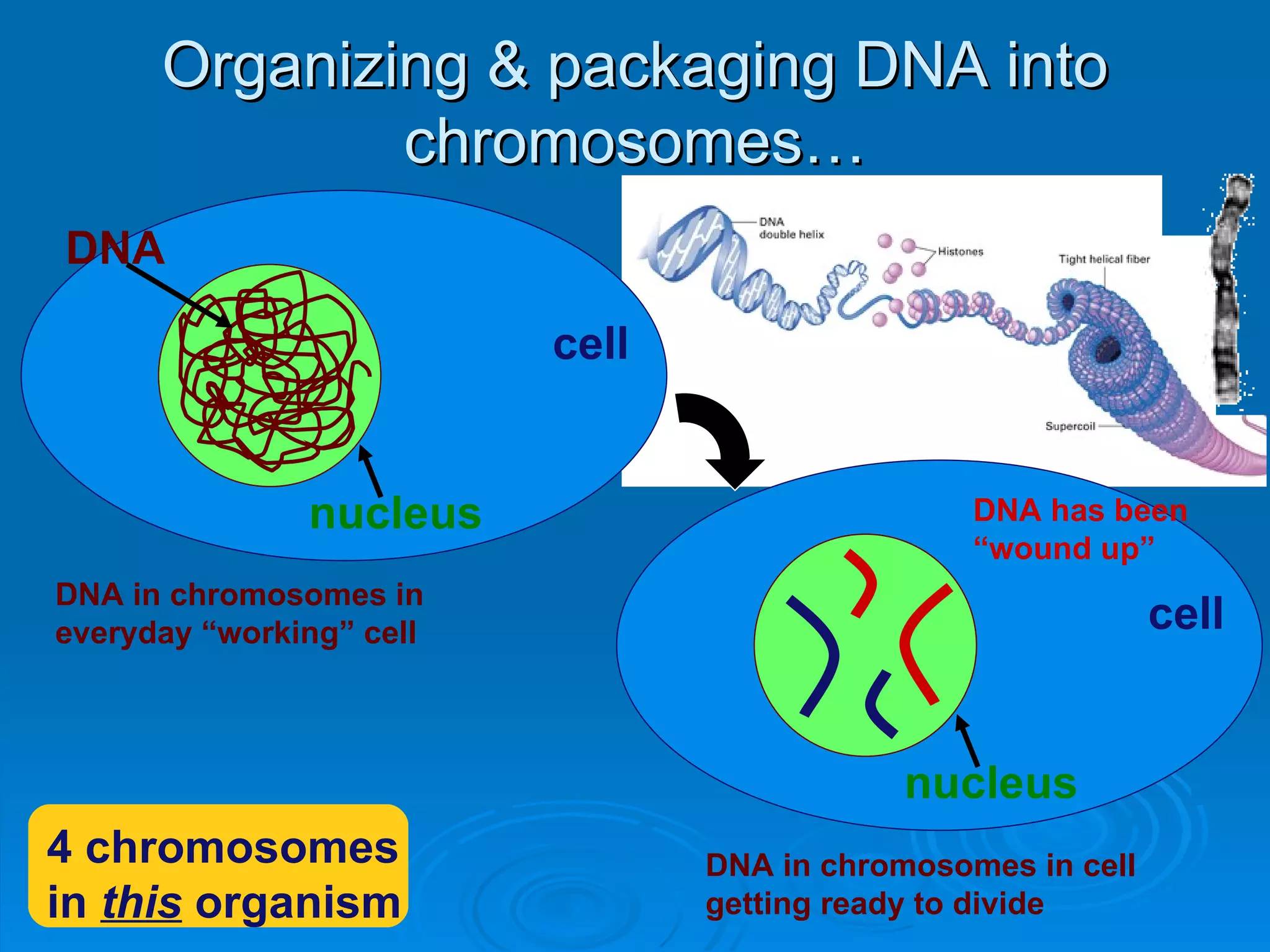
Organizing & packaging DNA into
              chromosomes…
DNA

                          cell


               nucleus                           DNA has been
                                                 “wound up”
DNA in chromosomes in
everyday “working” cell                                       cell


                                             nucleus
4 chromosomes                    DNA in chromosomes in cell
in this organism                 getting ready to divide
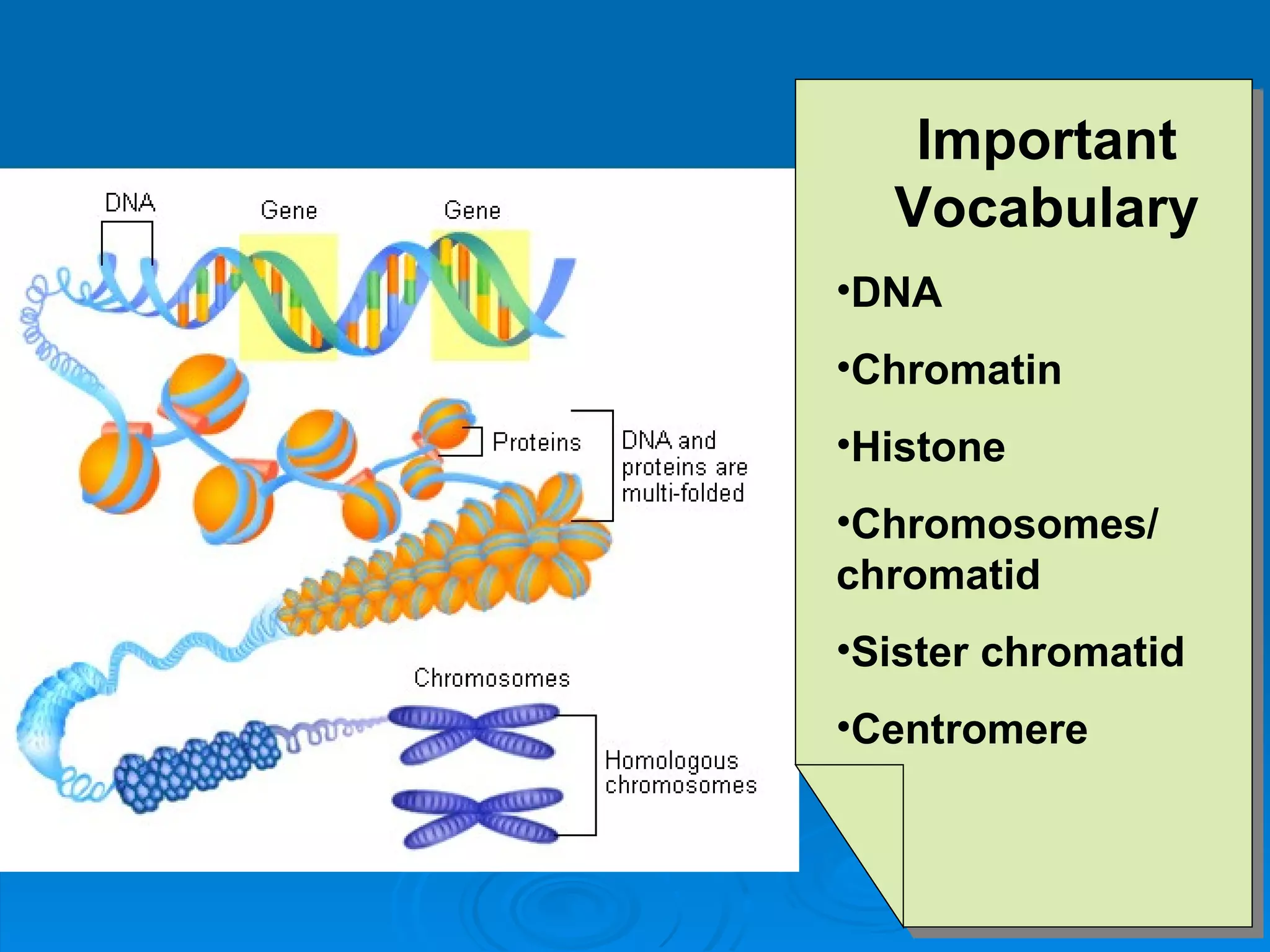
Important
  Vocabulary
•DNA
•Chromatin
•Histone
•Chromosomes/
chromatid
•Sister chromatid
•Centromere
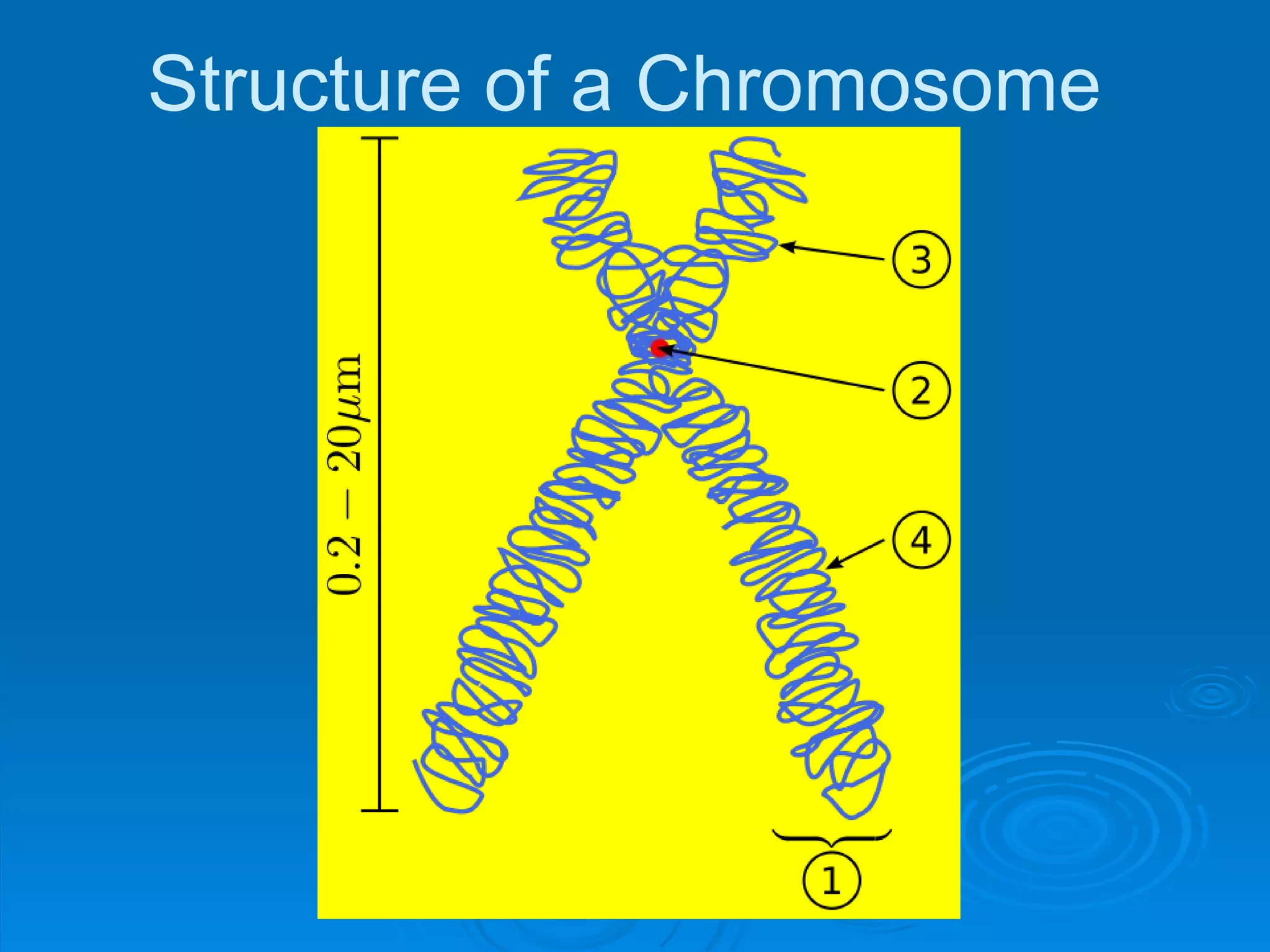
Structure of a Chromosome
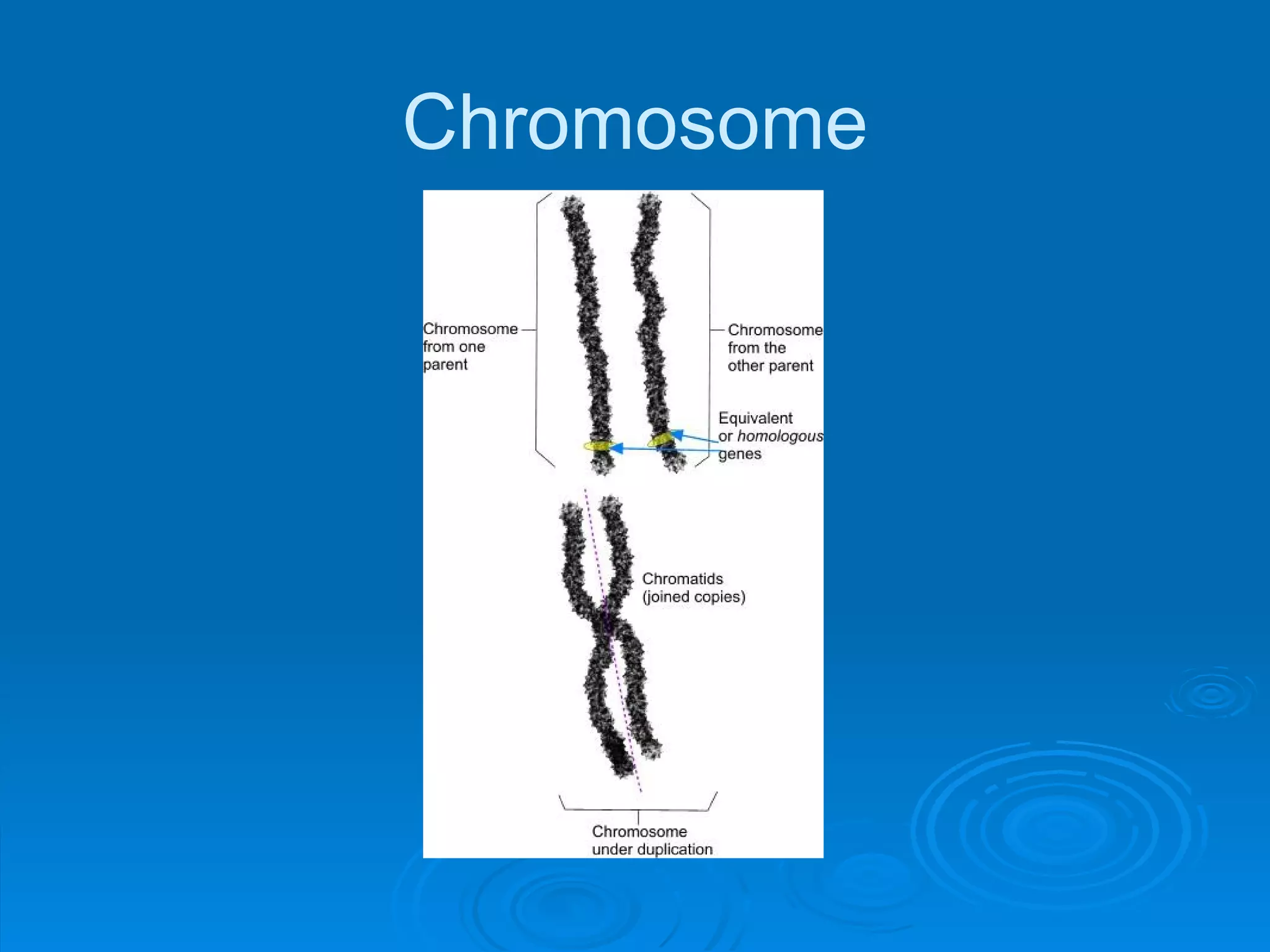
Chromosome
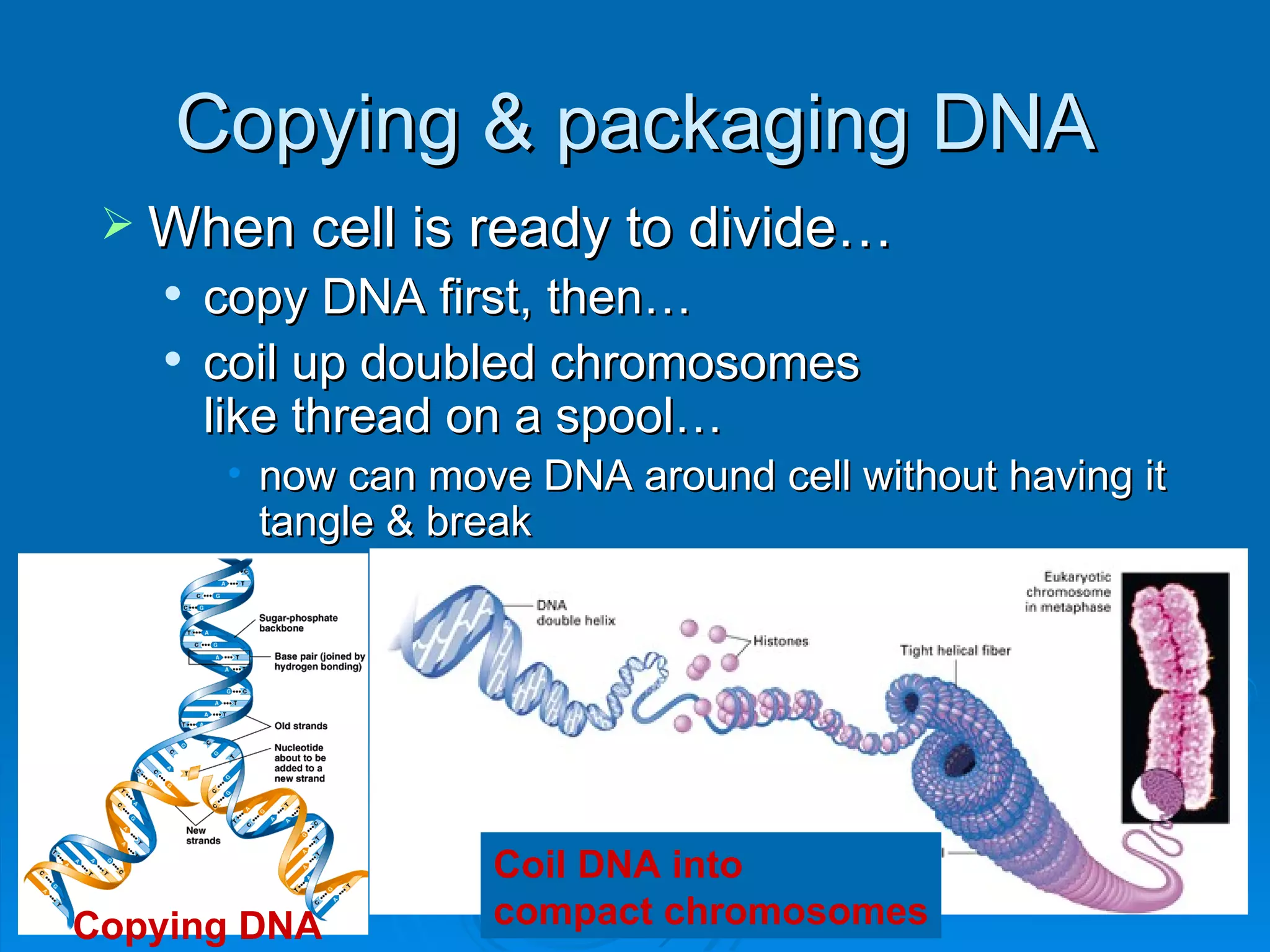
Copying & packaging DNA
  When cell is ready to divide…
       copy DNA first, then…
       coil up doubled chromosomes
        like thread on a spool…
        • now can move DNA around cell without having it
          tangle & break


                     Coil DNA into
Copying DNA          compact chromosomes
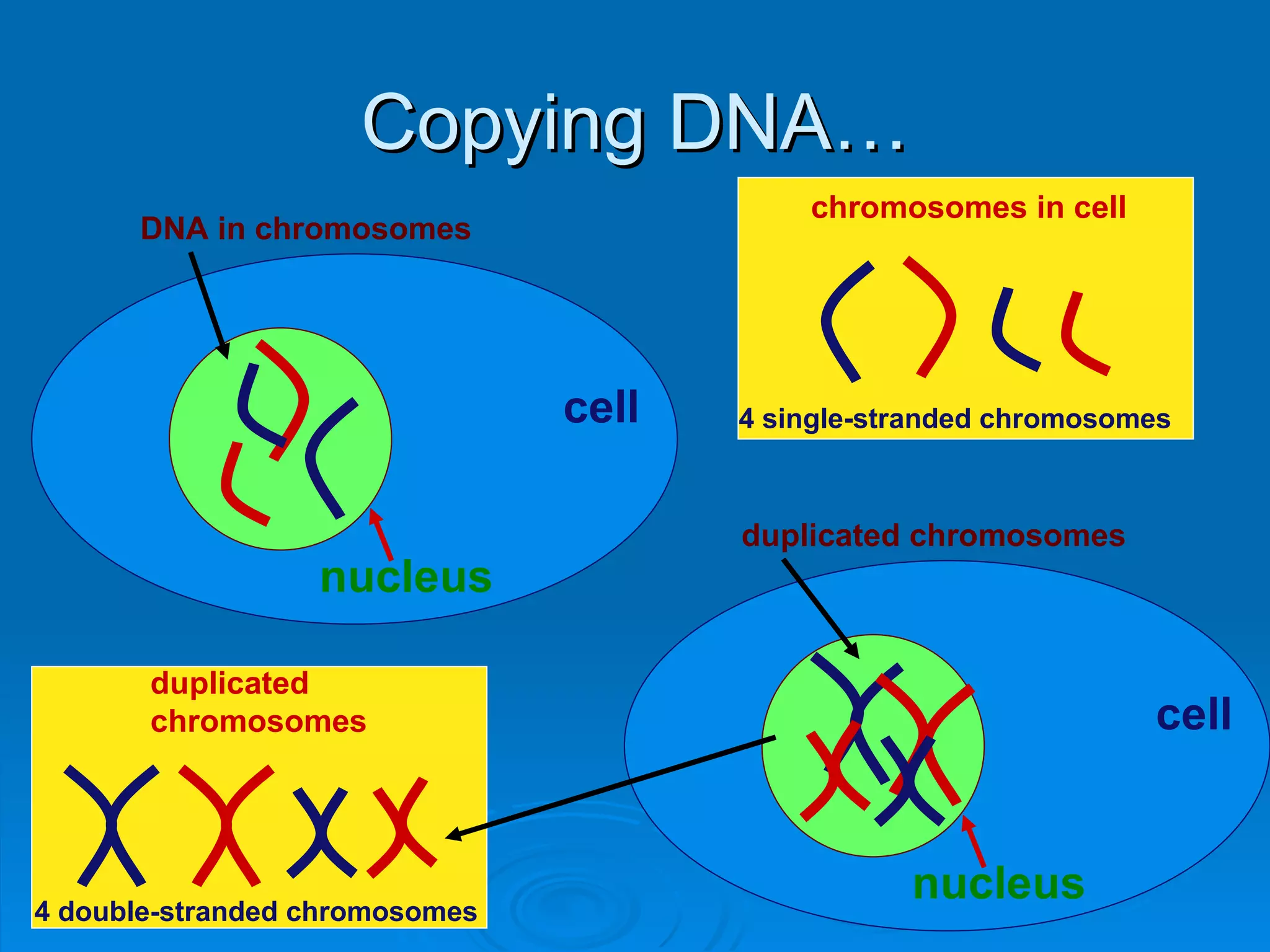
Copying DNA…
                                           chromosomes in cell
      DNA in chromosomes


                                cell   4 single-stranded chromosomes


                                       duplicated chromosomes
                  nucleus

       duplicated
       chromosomes                                                cell


4 double-stranded chromosomes
                                                  nucleus
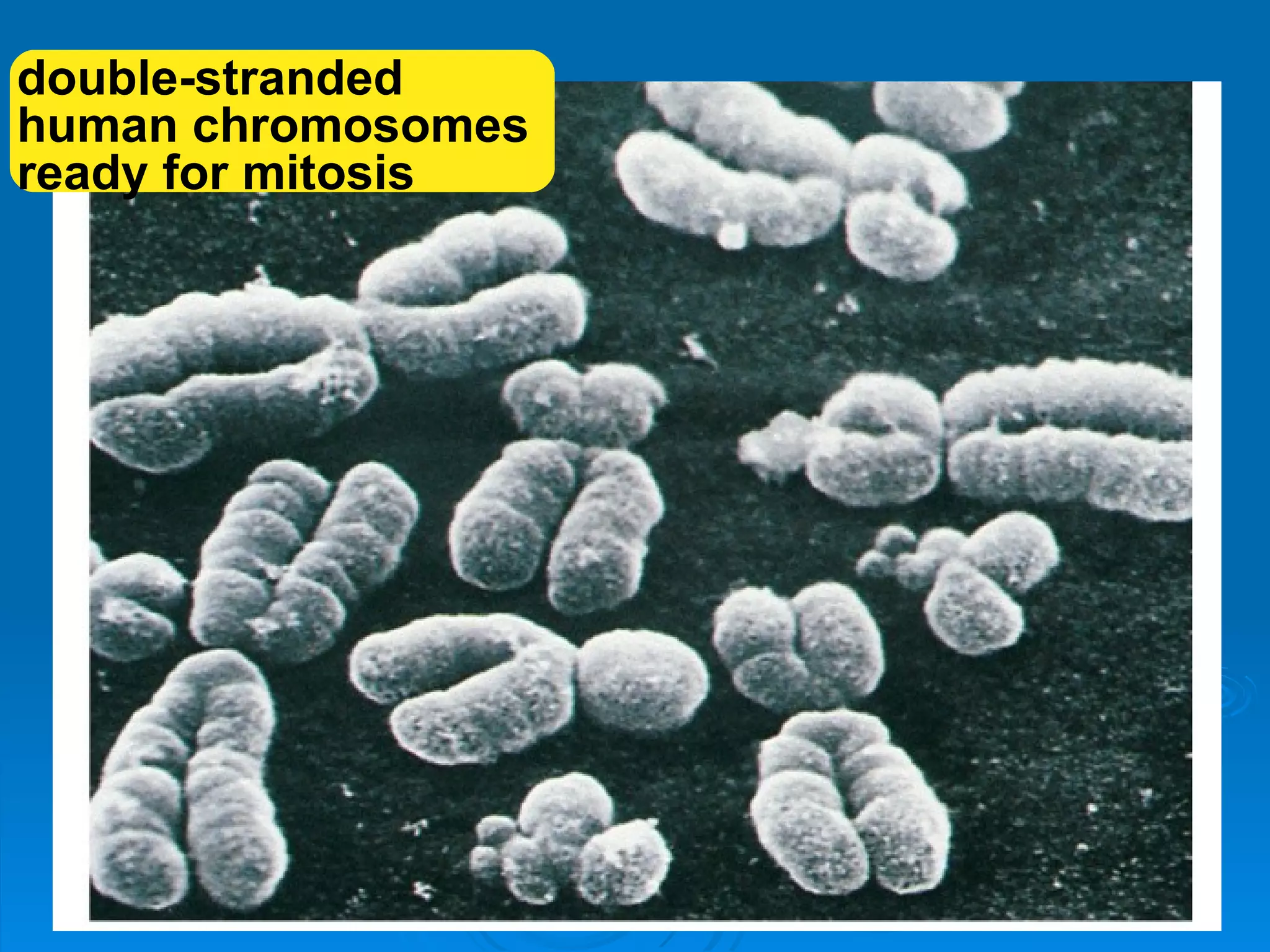
double-stranded
human chromosomes
ready for mitosis
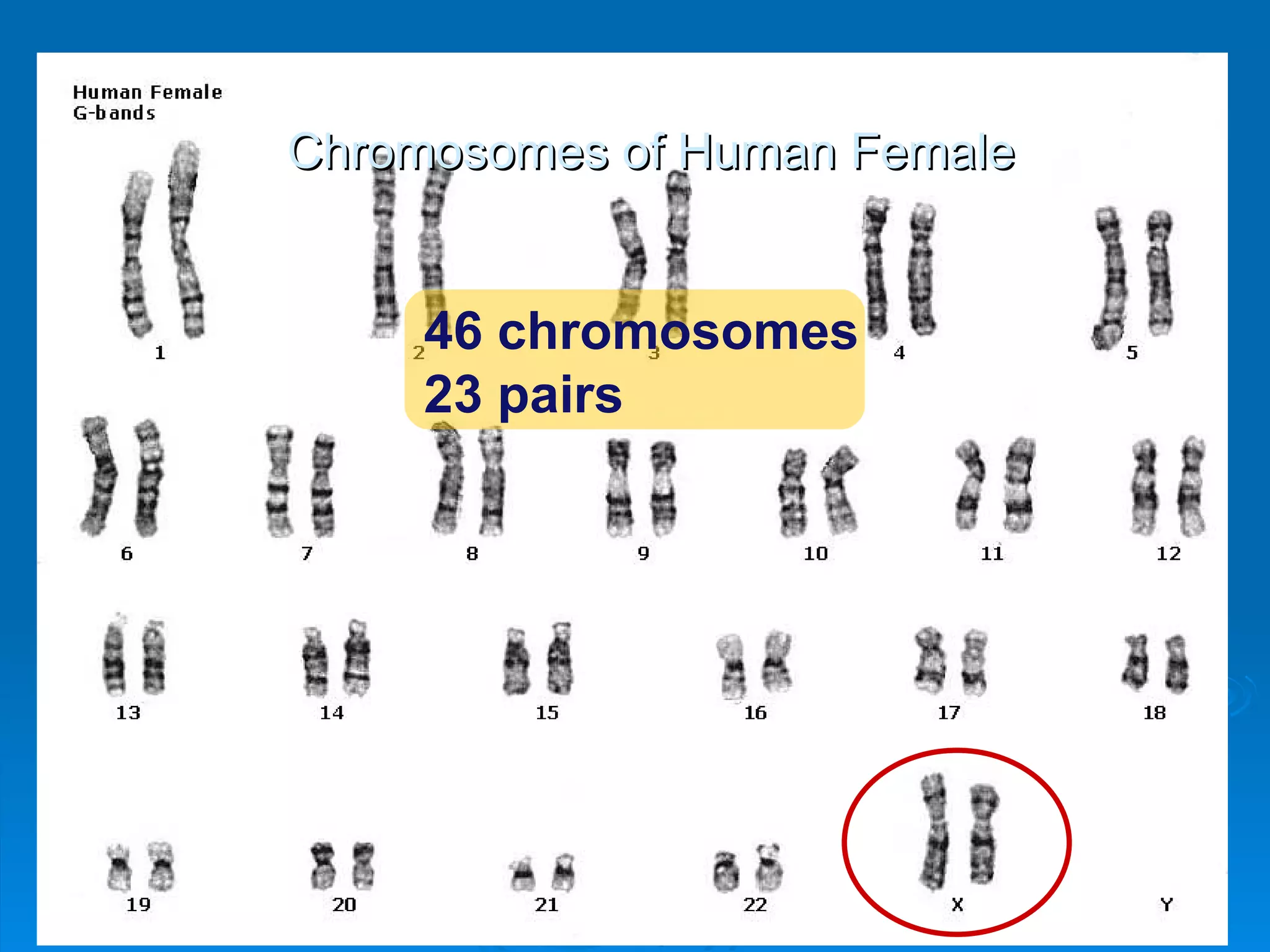
Chromosomes of Human Female


     46 chromosomes
     23 pairs
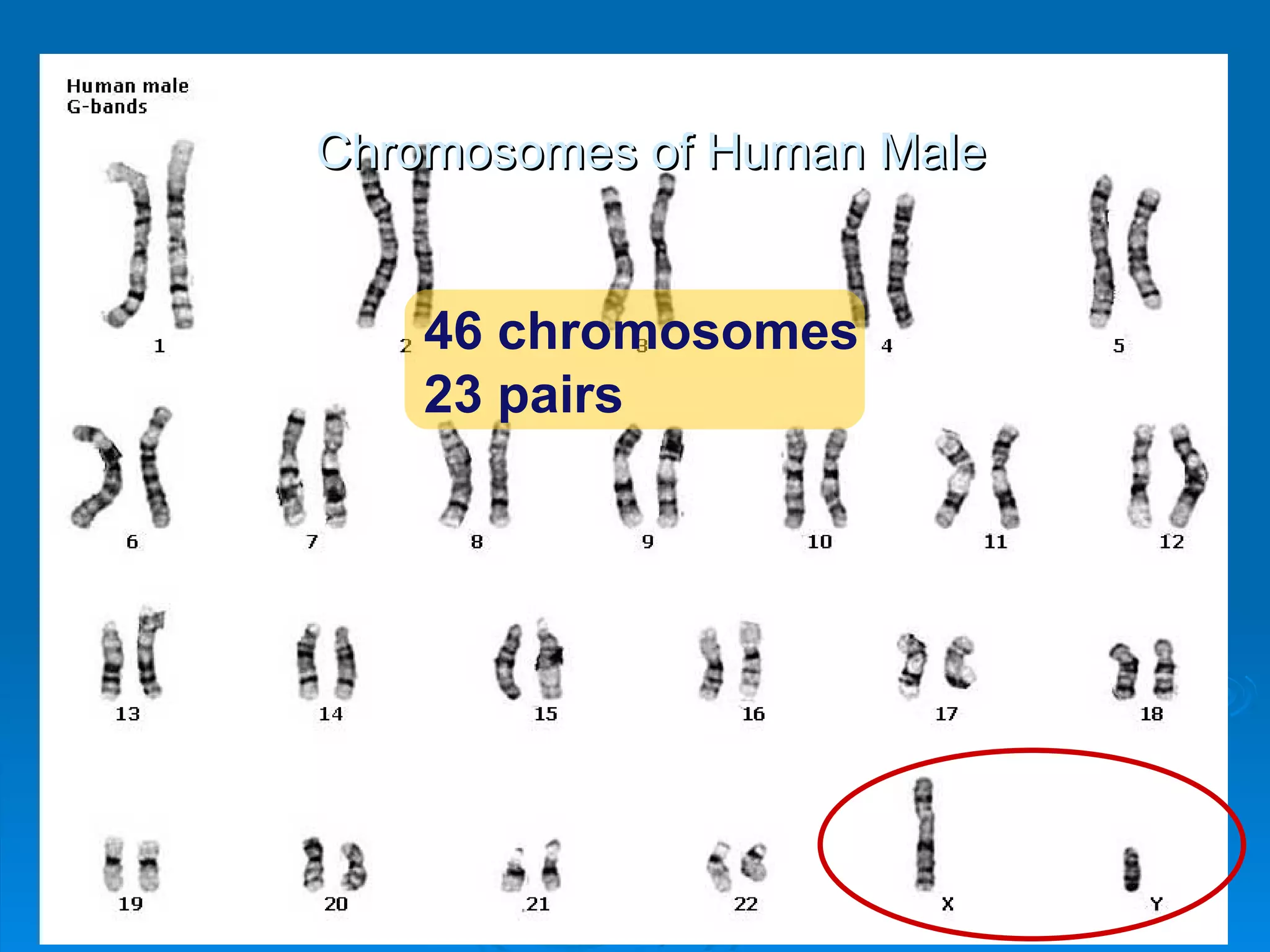
Chromosomes of Human Male


    46 chromosomes
    23 pairs
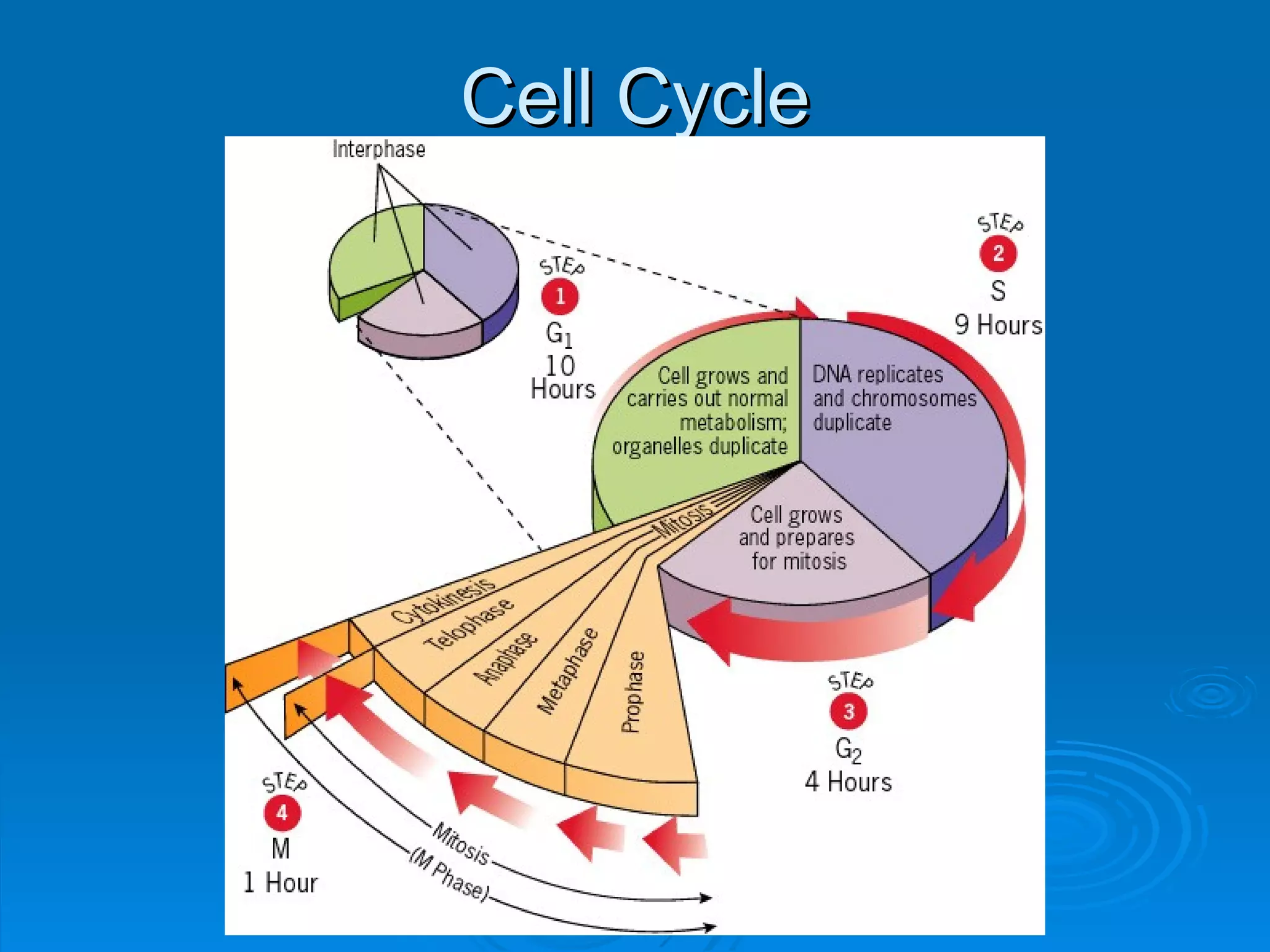
Cell Cycle
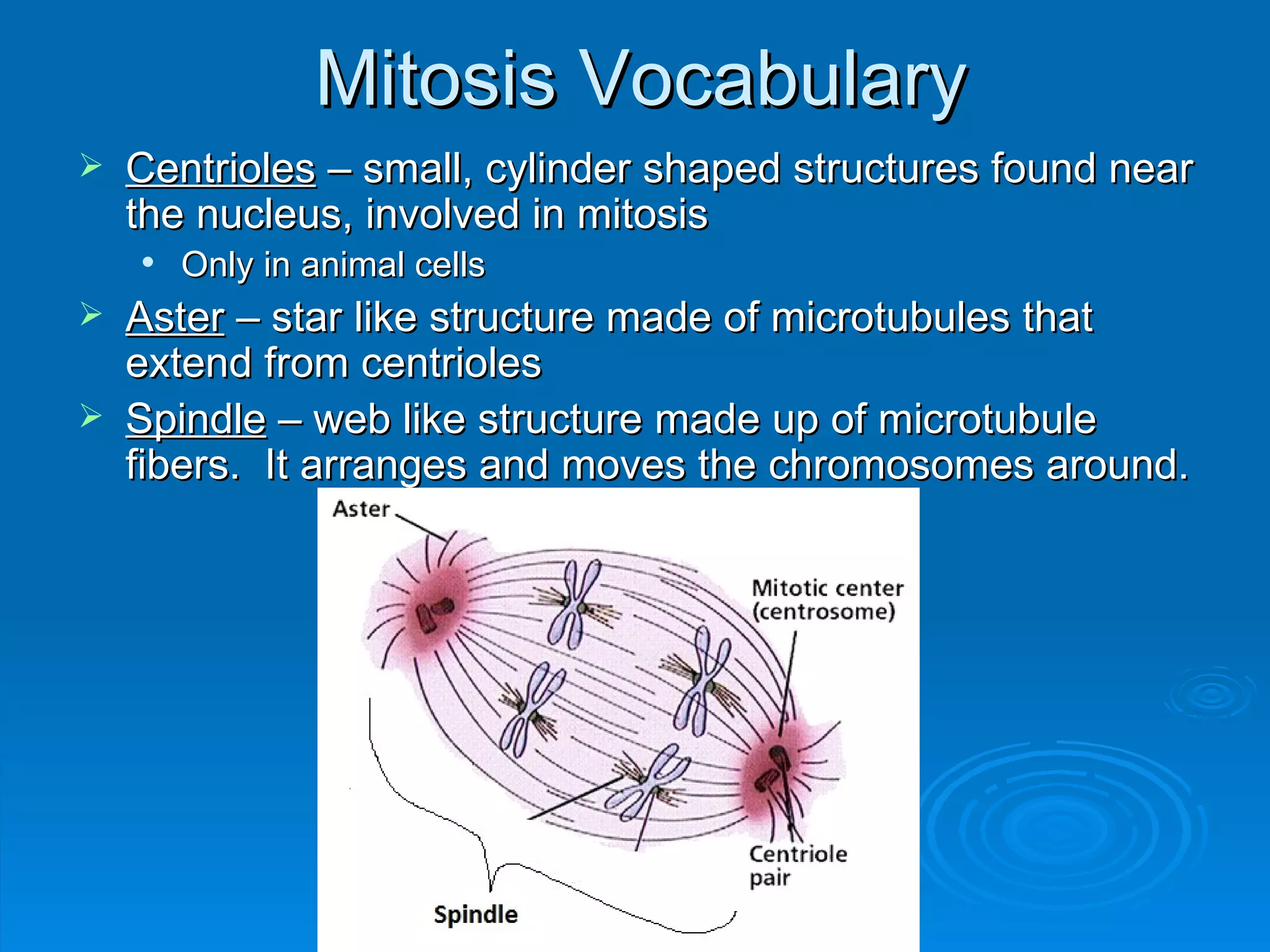
Mitosis Vocabulary
   Centrioles – small, cylinder shaped structures found near
    the nucleus, involved in mitosis
       Only in animal cells
   Aster – star like structure made of microtubules that
    extend from centrioles
   Spindle – web like structure made up of microtubule
    fibers. It arranges and moves the chromosomes around.
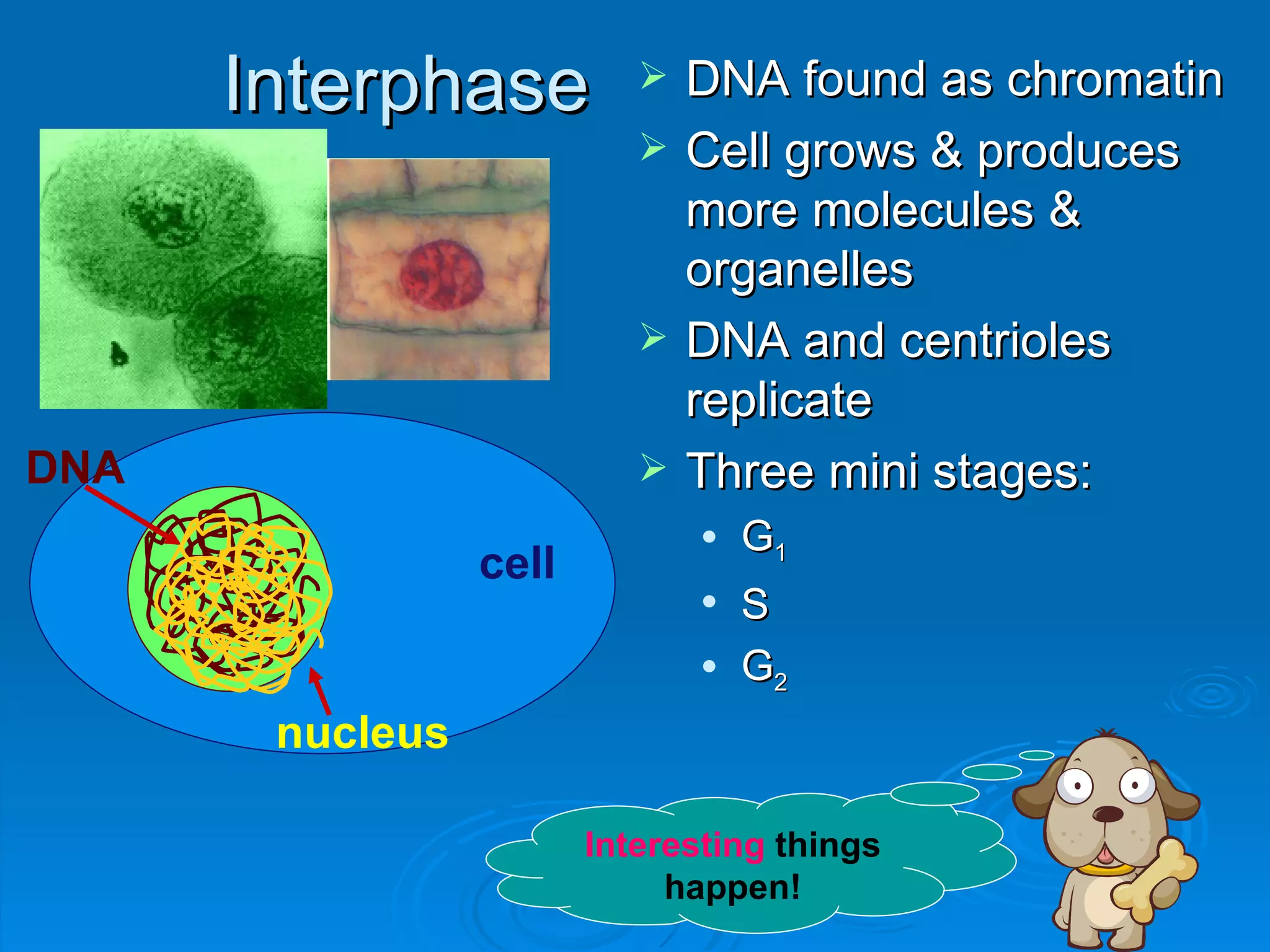
Interphase              DNA found as chromatin
                              Cell grows & produces
                               more molecules &
                               organelles
                              DNA and centrioles
                               replicate
DNA                           Three mini stages:
                                  G1
                 cell
                                  S
                                  G2
       nucleus

                        Interesting things
                             happen!
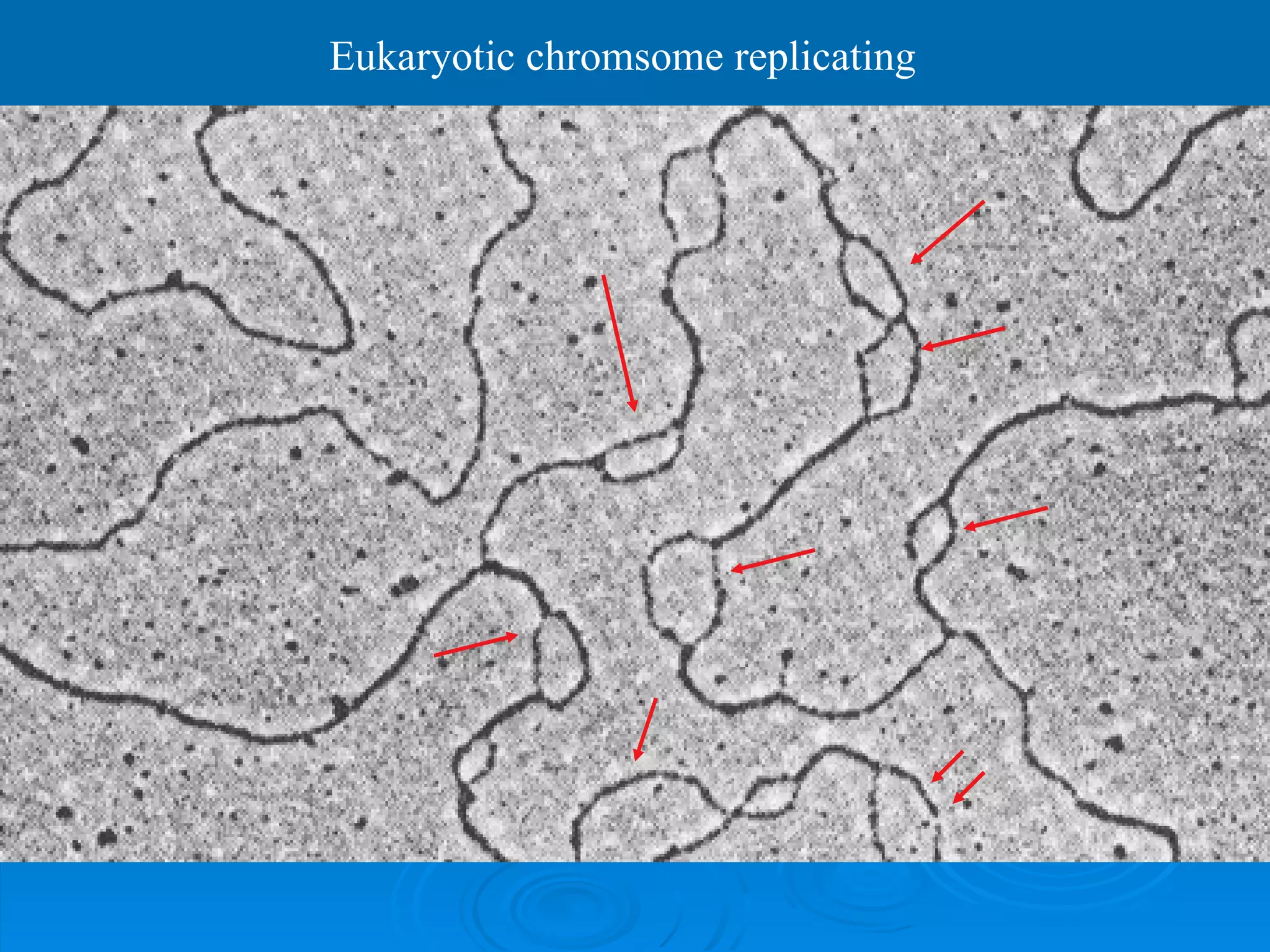
Eukaryotic chromsome replicating
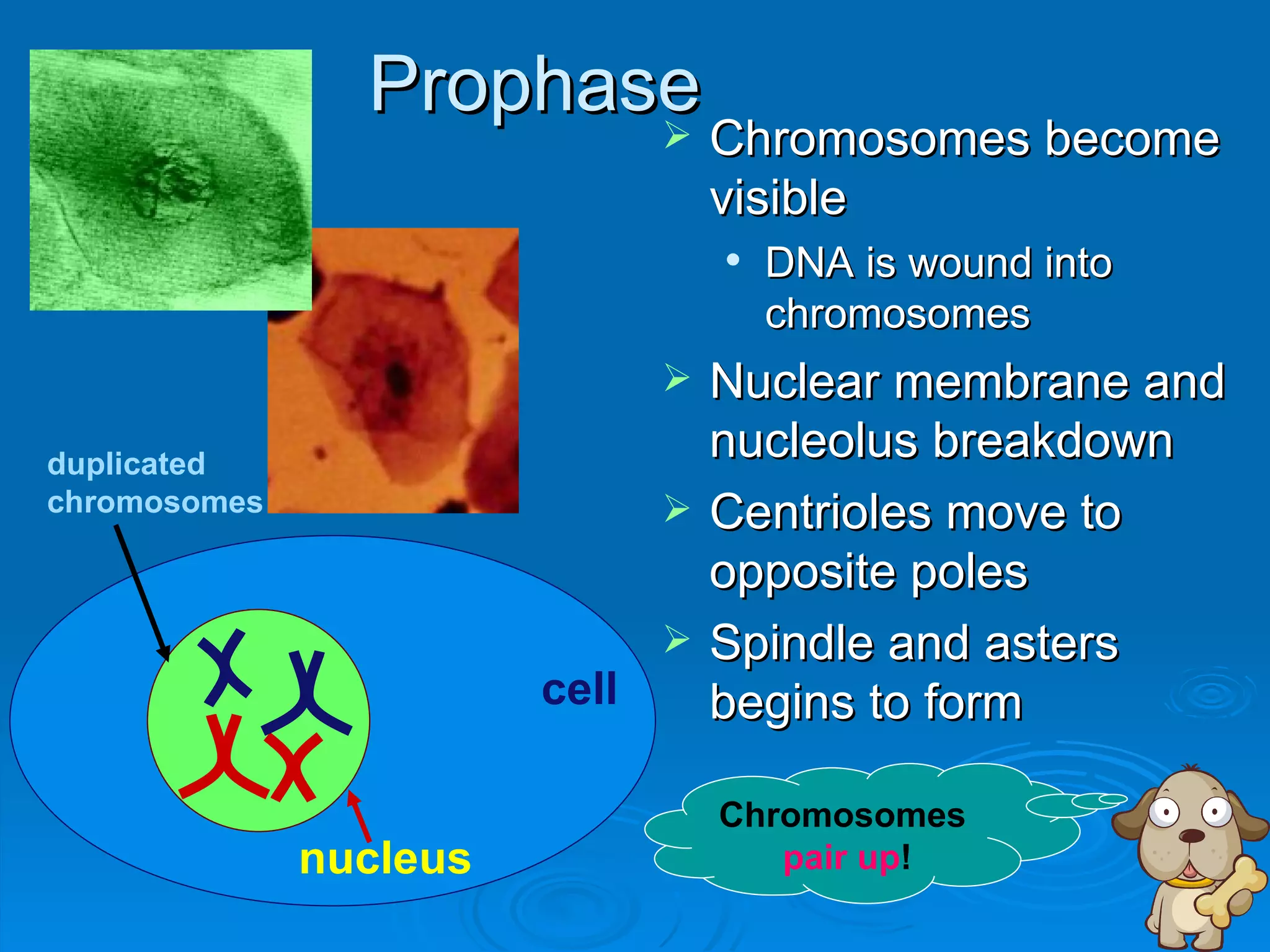
Prophase
                                  Chromosomes become
                                   visible
                                      DNA is wound into
                                       chromosomes
                                  Nuclear membrane and
duplicated
                                   nucleolus breakdown
chromosomes                       Centrioles move to
                                   opposite poles
                                  Spindle and asters
                        cell       begins to form

                                   Chromosomes
              nucleus                 pair up!
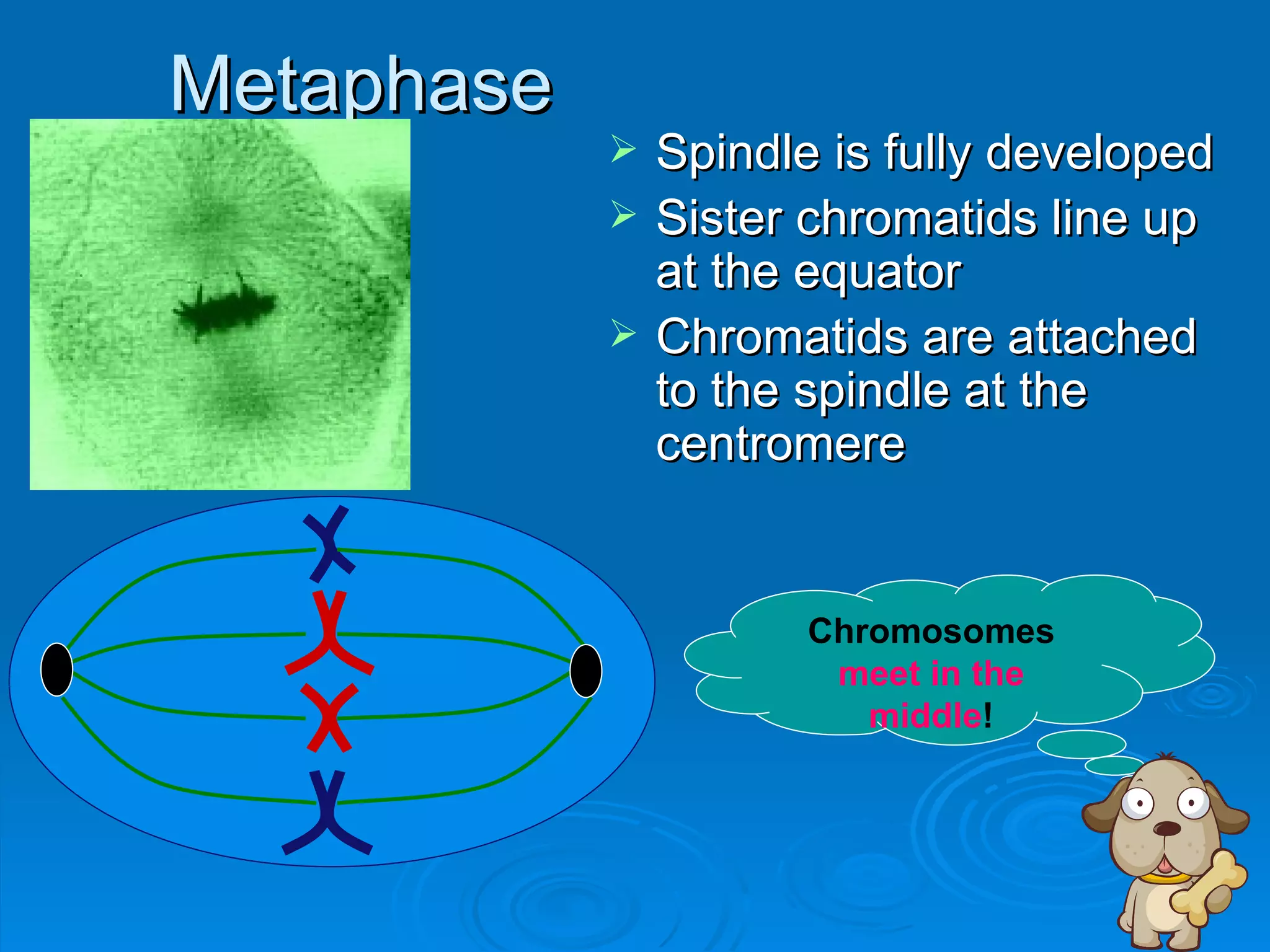
Metaphase
               Spindle is fully developed
               Sister chromatids line up
                at the equator
               Chromatids are attached
                to the spindle at the
                centromere


                       Chromosomes
                        meet in the
                          middle!
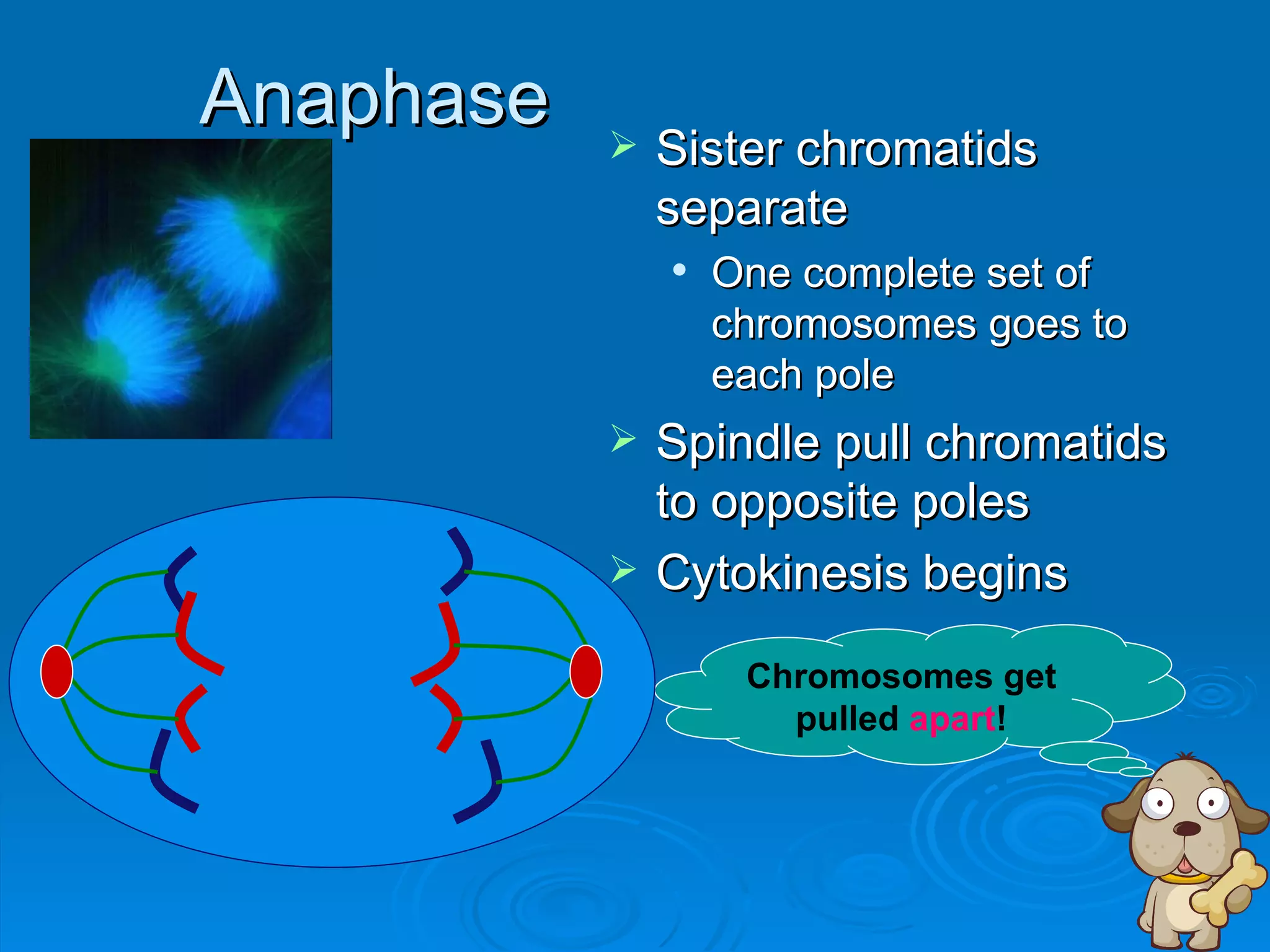
Anaphase      Sister chromatids
               separate
                  One complete set of
                   chromosomes goes to
                   each pole
              Spindle pull chromatids
               to opposite poles
              Cytokinesis begins

                    Chromosomes get
                      pulled apart!
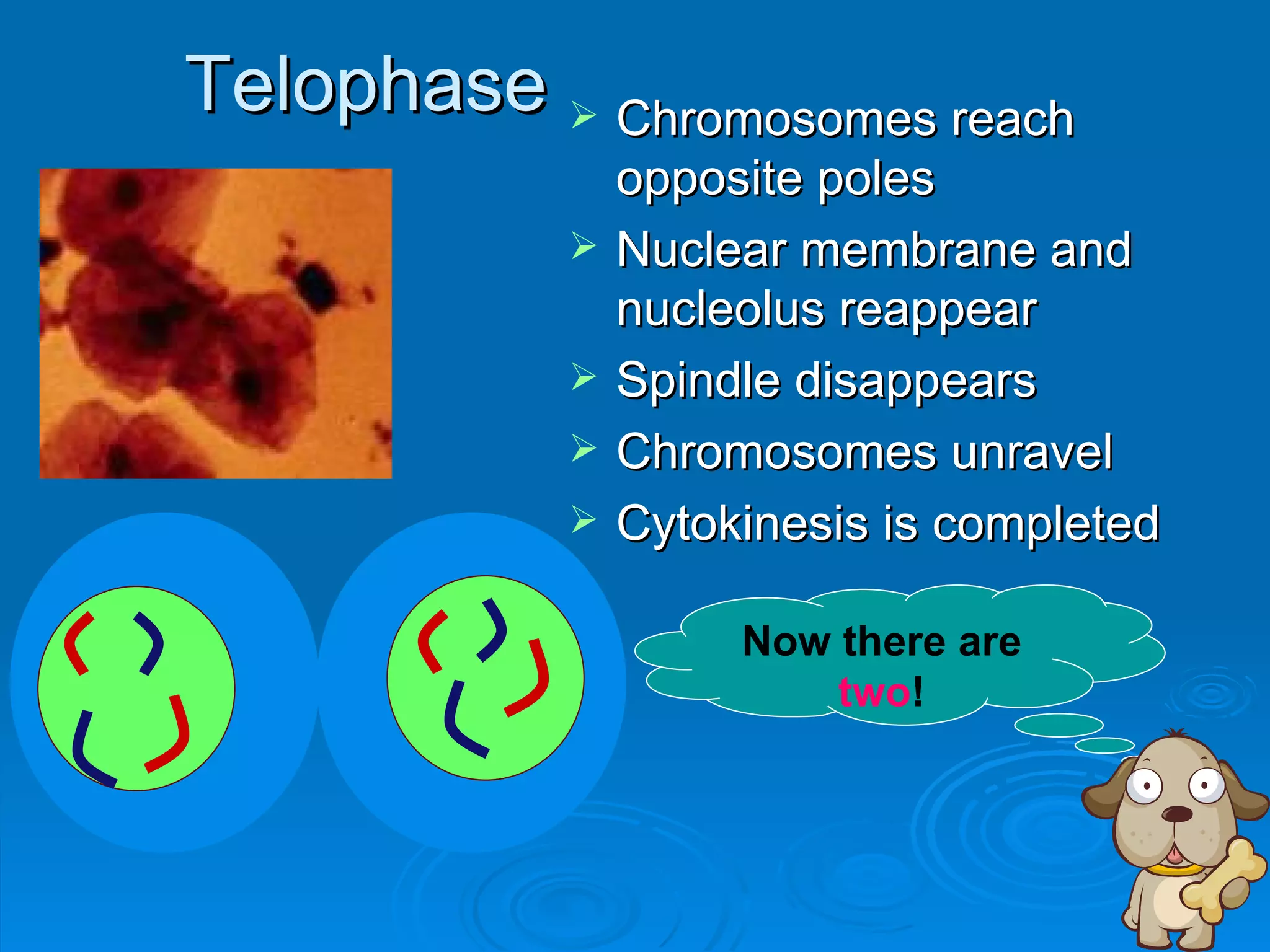
Telophase  Chromosomes reach
                opposite poles
               Nuclear membrane and
                nucleolus reappear
               Spindle disappears
               Chromosomes unravel
               Cytokinesis is completed

                     Now there are
                         two!
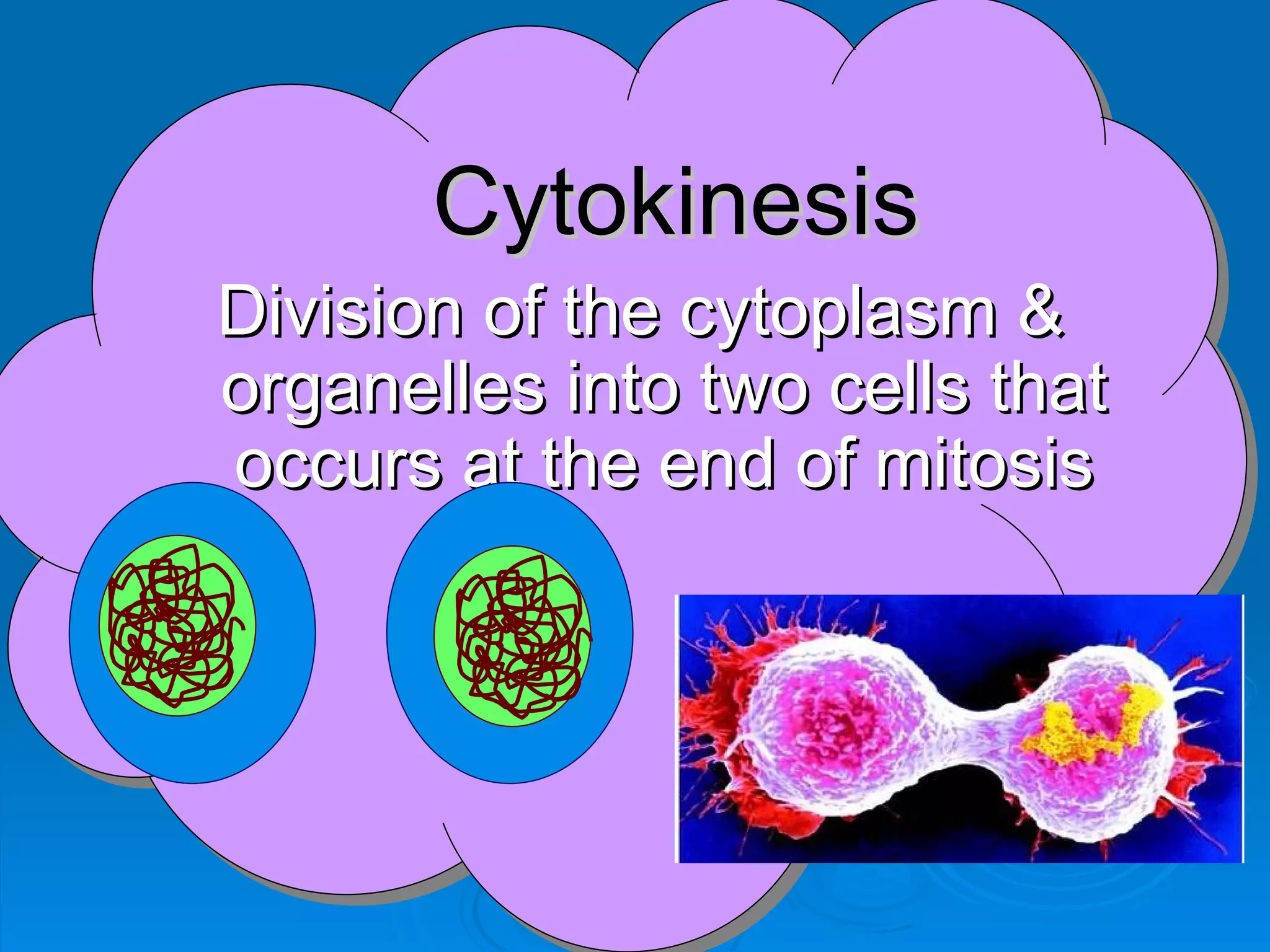
Cytokinesis
Division of the cytoplasm &
organelles into two cells that
occurs at the end of mitosis
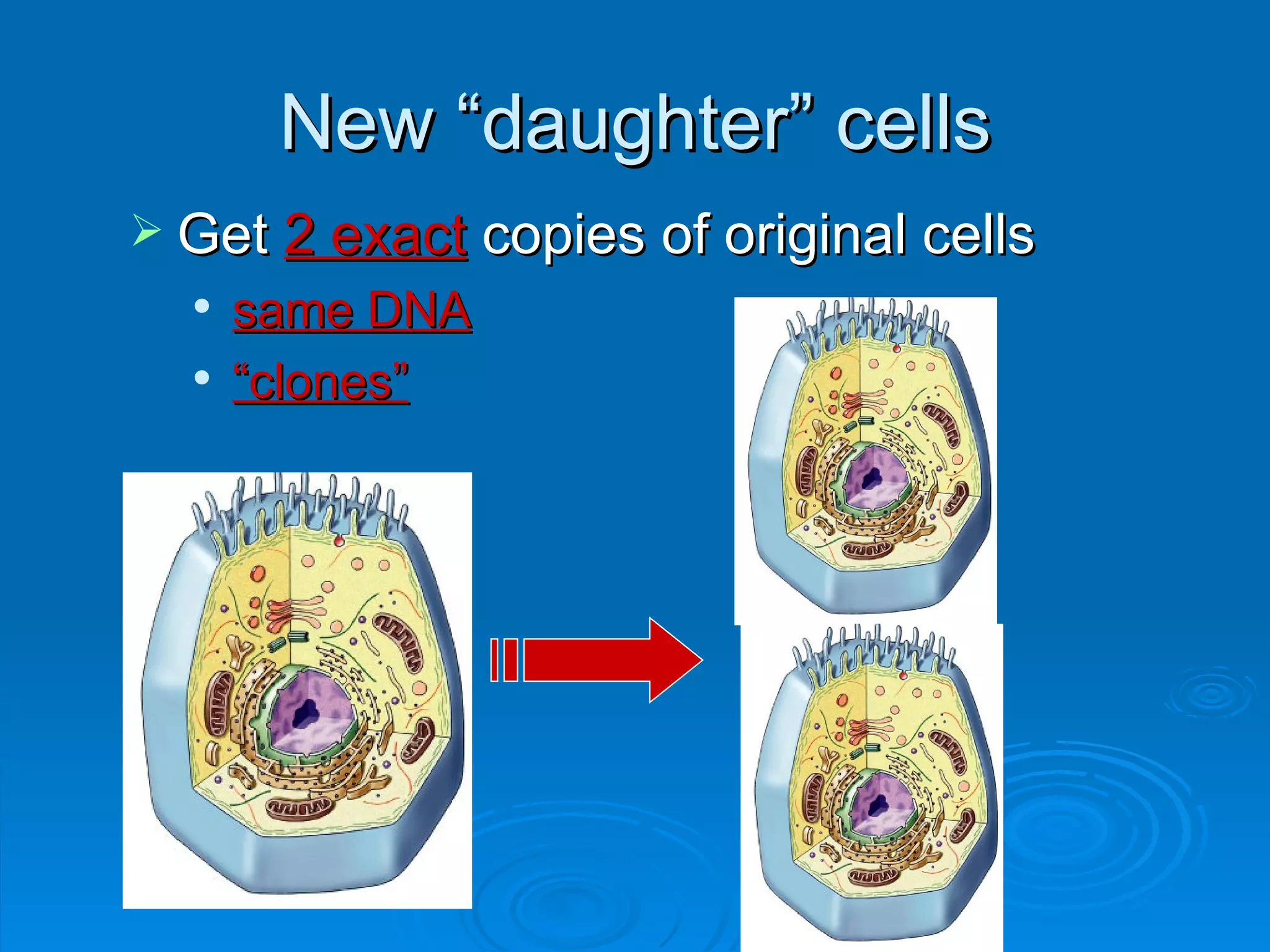
New “daughter” cells
 Get 2 exact copies of original cells
     same DNA
     “clones”
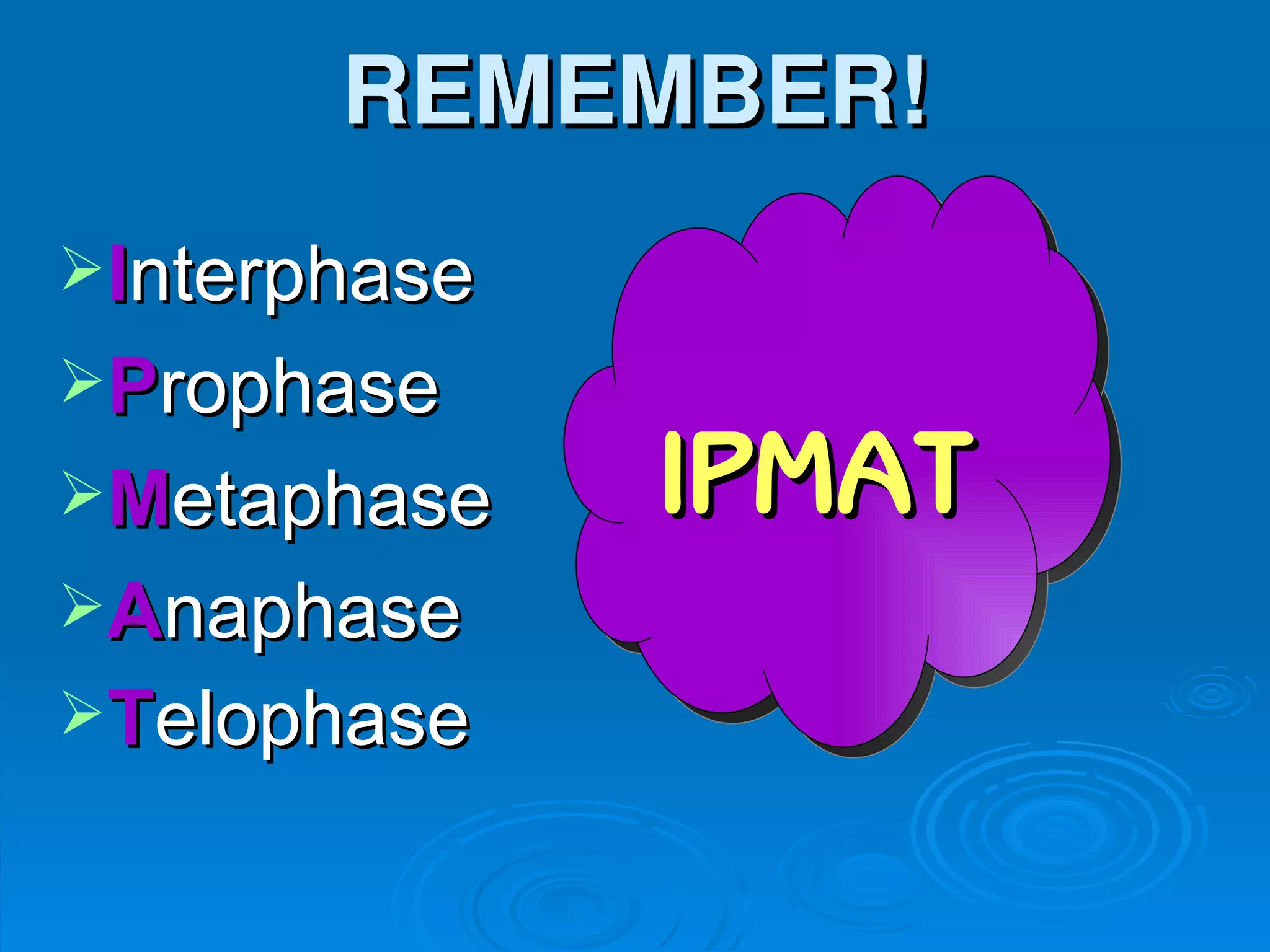
REMEMBER!
Interphase
Prophase
Metaphase    IPMAT
Anaphase
Telophase
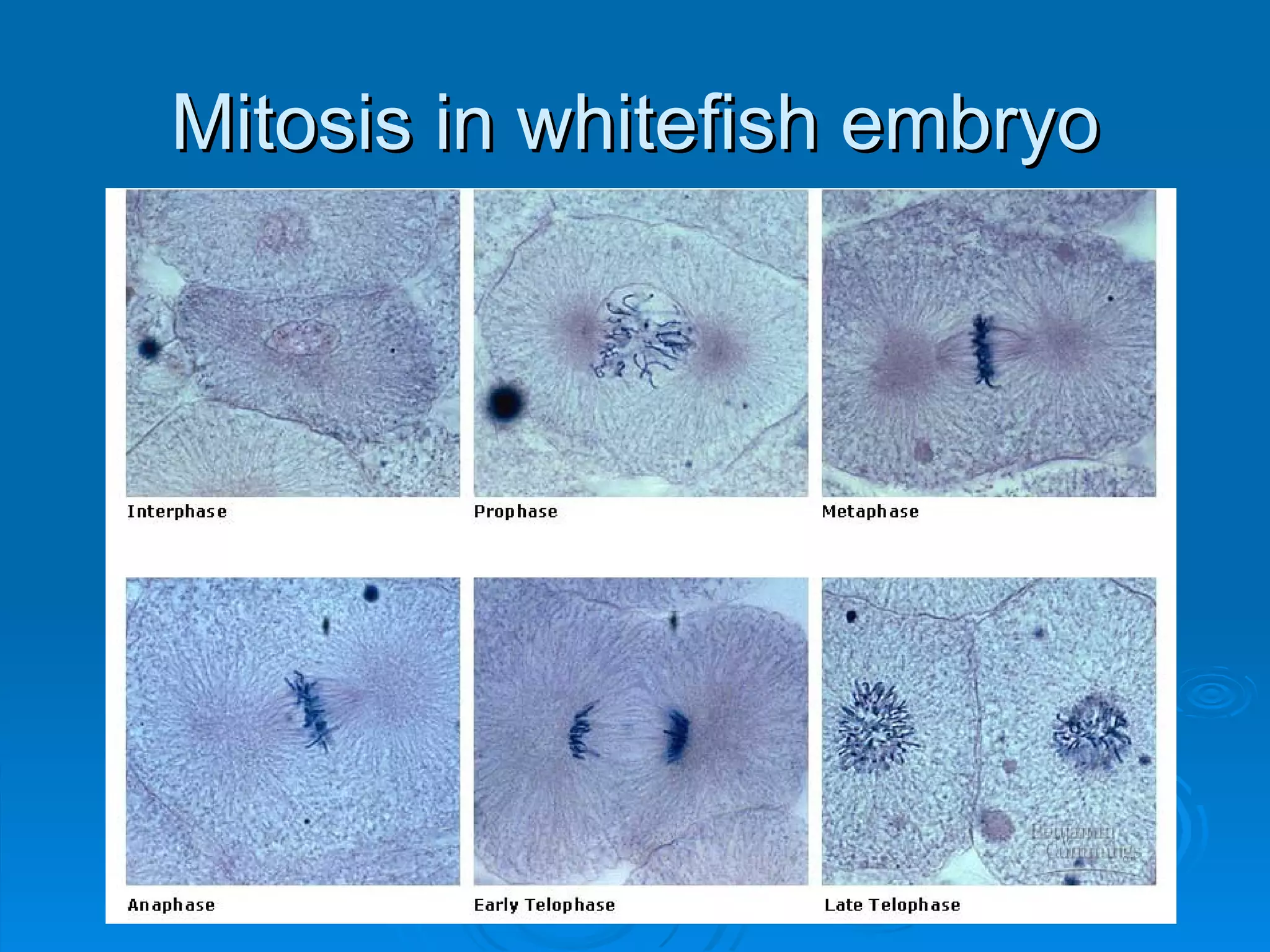
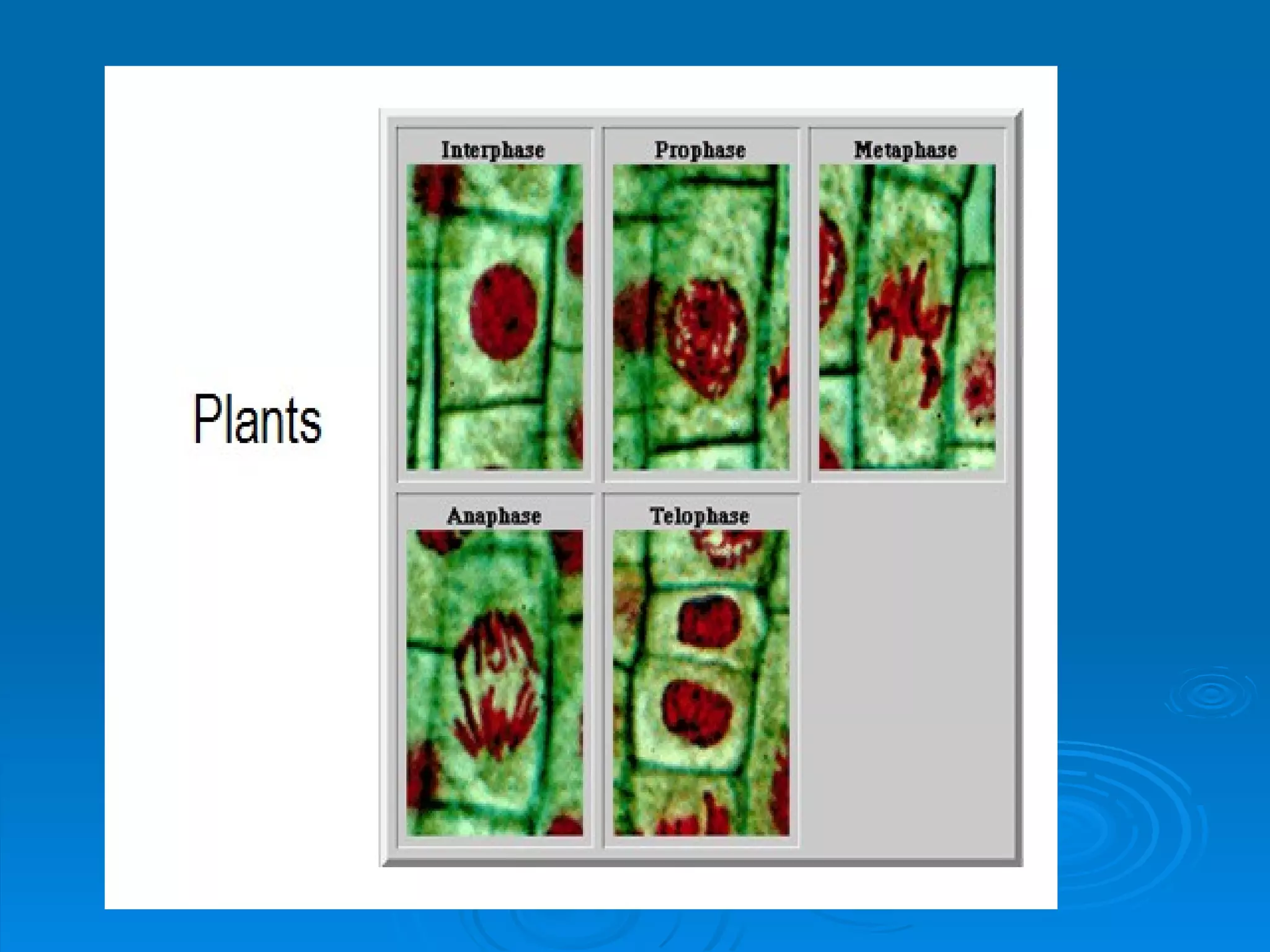
Mitosis in whitefish embryo
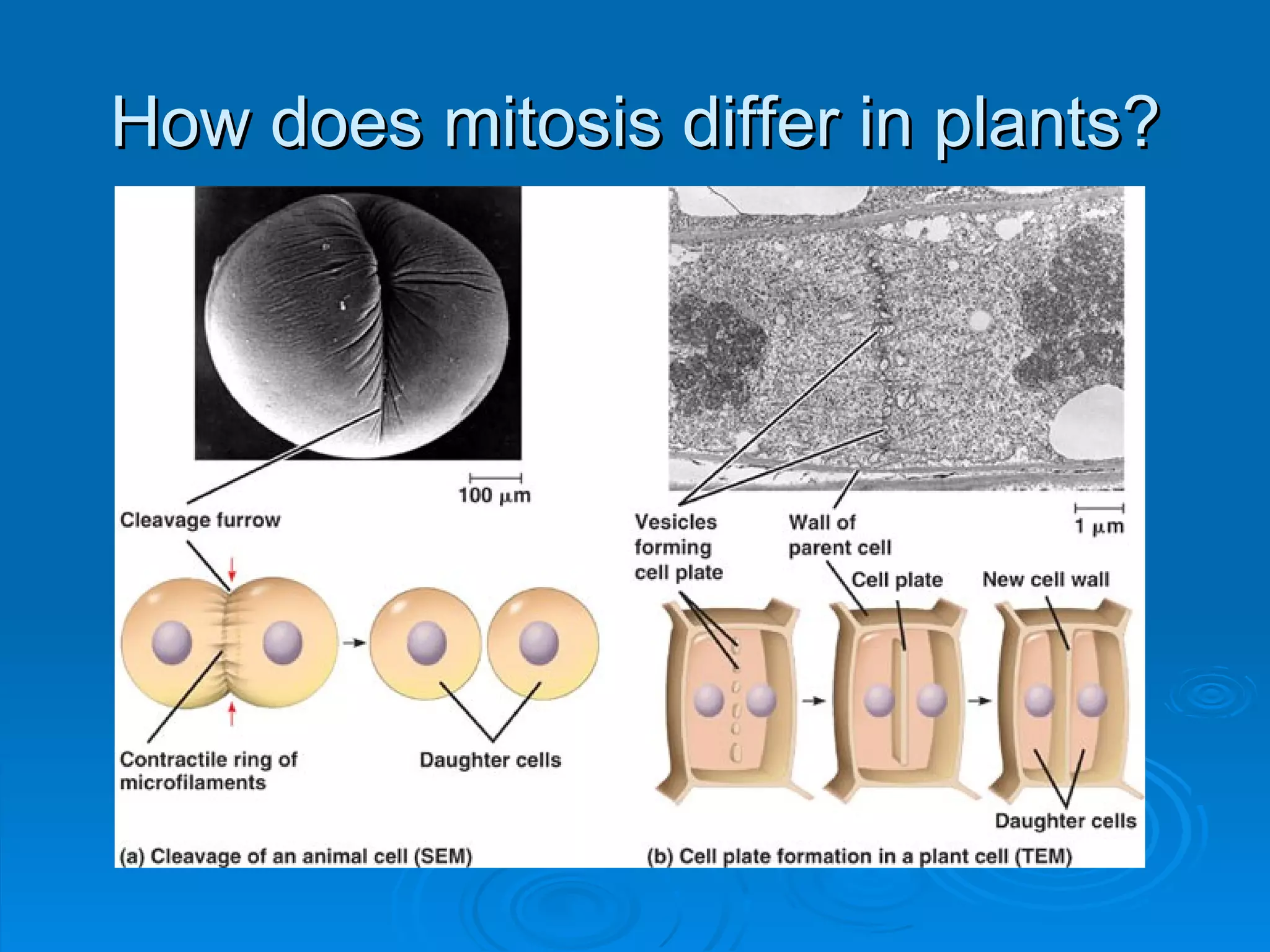
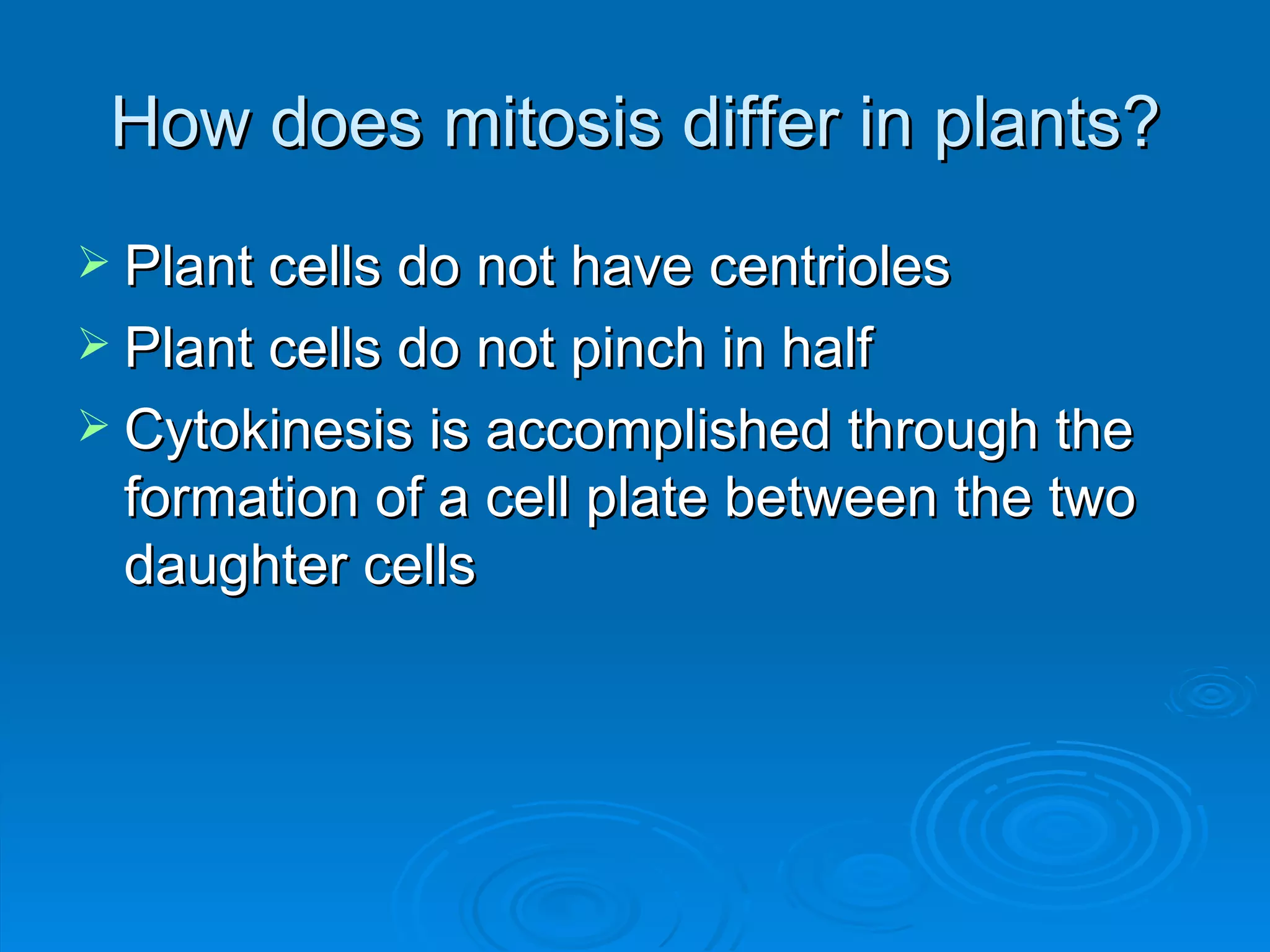
How does mitosis differ in plants?
 Plant cells do not have centrioles
 Plant cells do not pinch in half
 Cytokinesis is accomplished through the
  formation of a cell plate between the two
  daughter cells
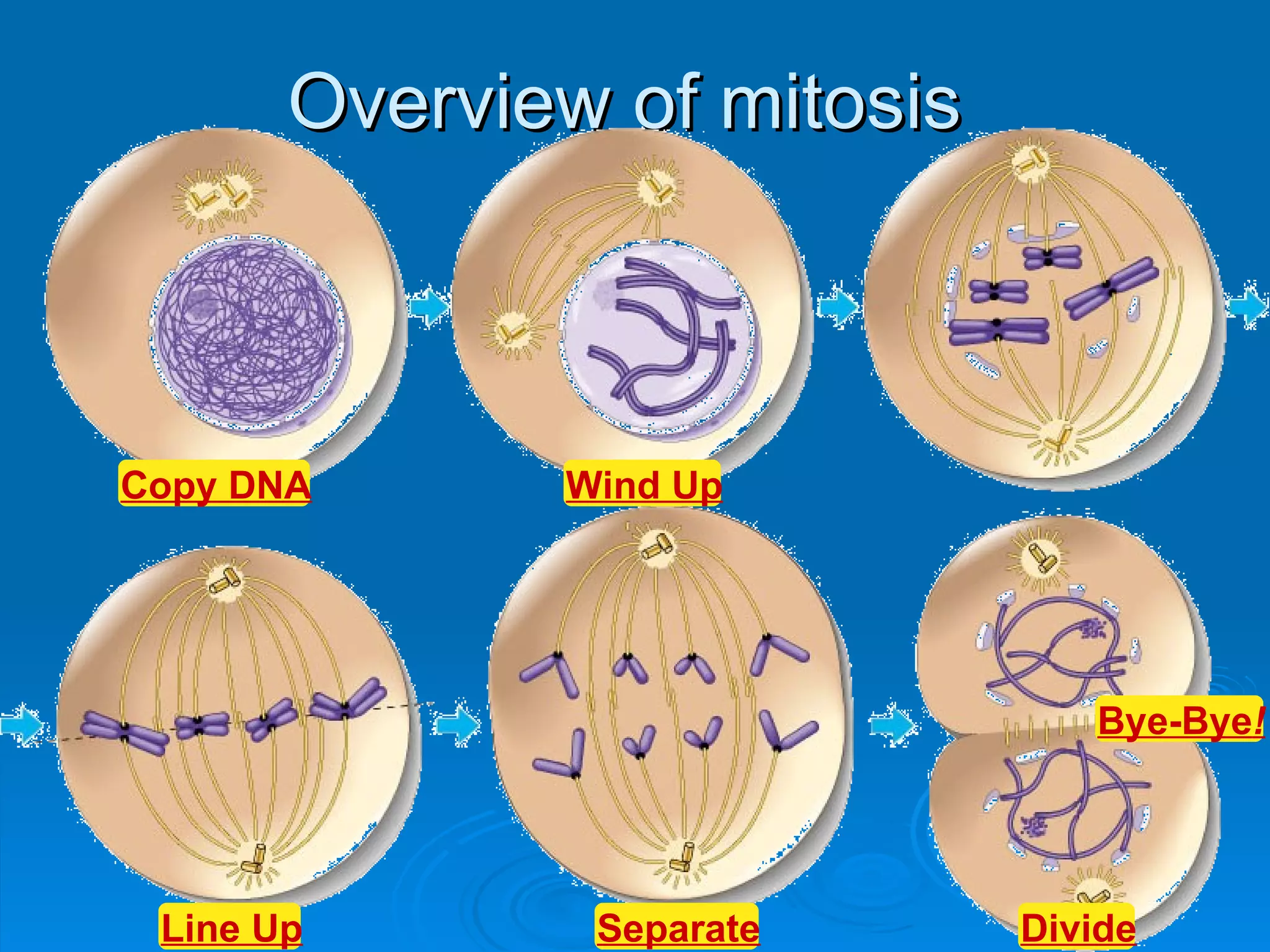
Overview of mitosis


Copy DNA      Wind Up


                                Bye-Bye!


 Line Up       Separate      Divide
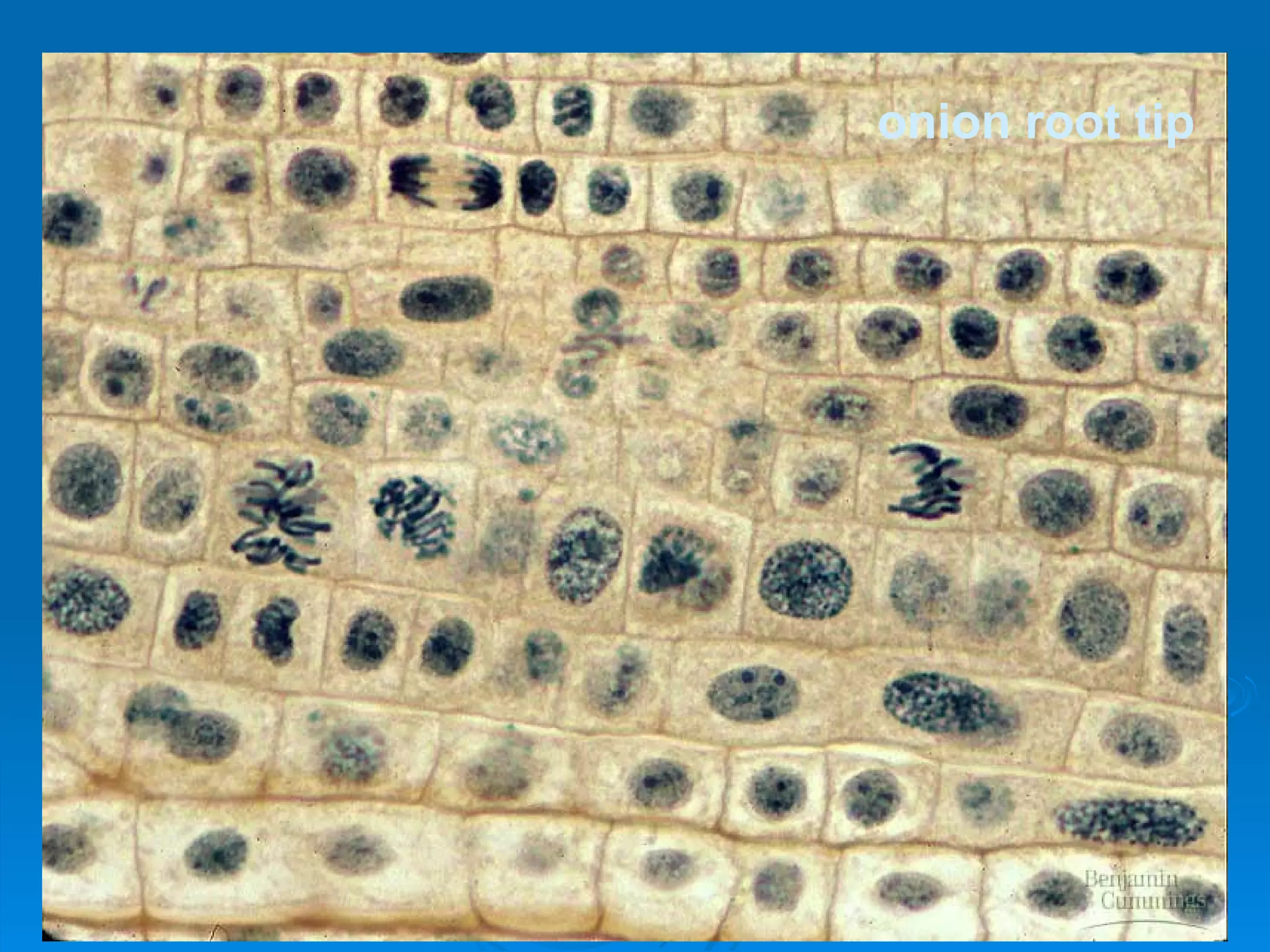
onion root tip
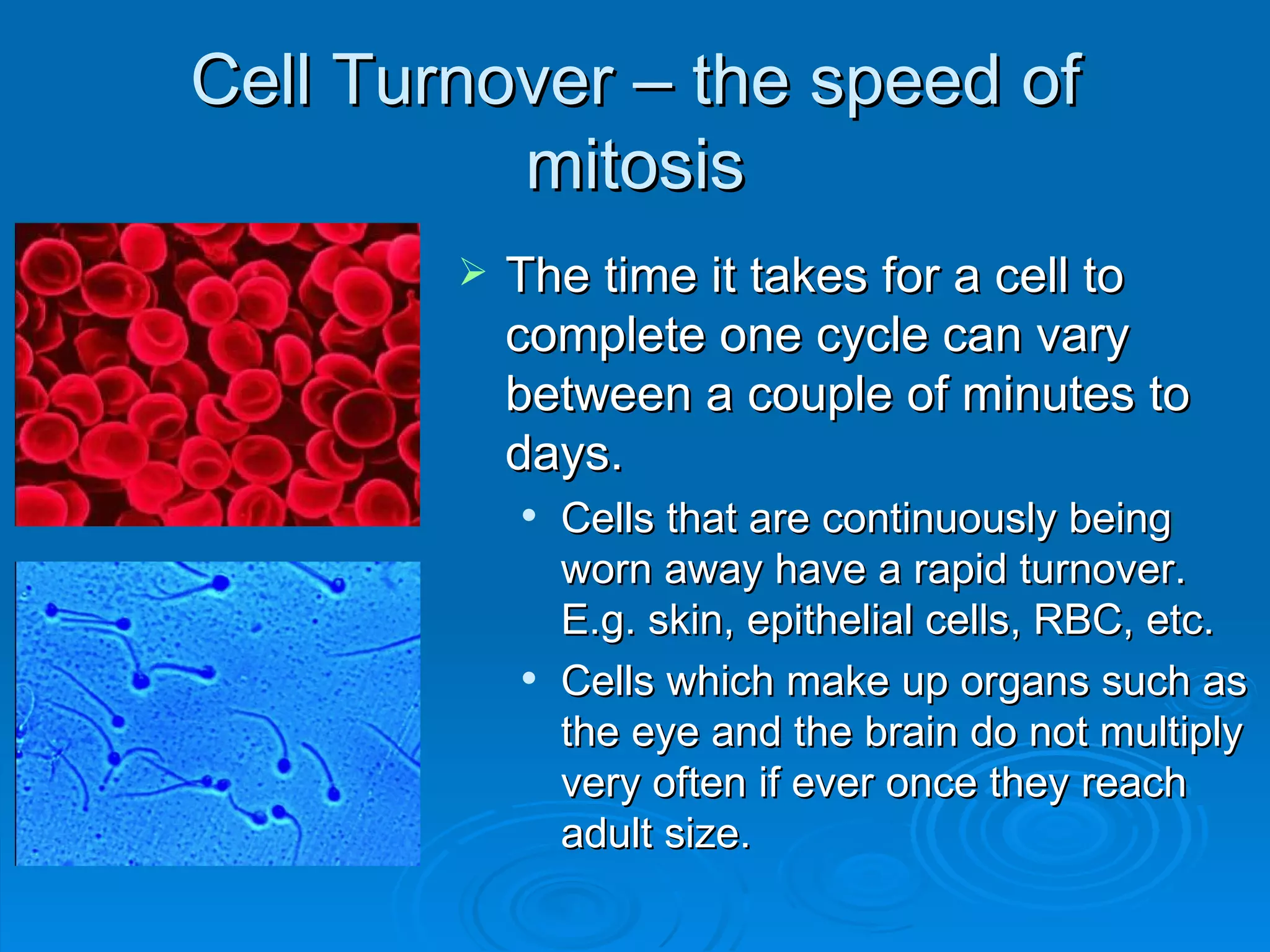
Cell Turnover – the speed of
          mitosis
           The time it takes for a cell to
            complete one cycle can vary
            between a couple of minutes to
            days.
               Cells that are continuously being
                worn away have a rapid turnover.
                E.g. skin, epithelial cells, RBC, etc.
               Cells which make up organs such as
                the eye and the brain do not multiply
                very often if ever once they reach
                adult size.
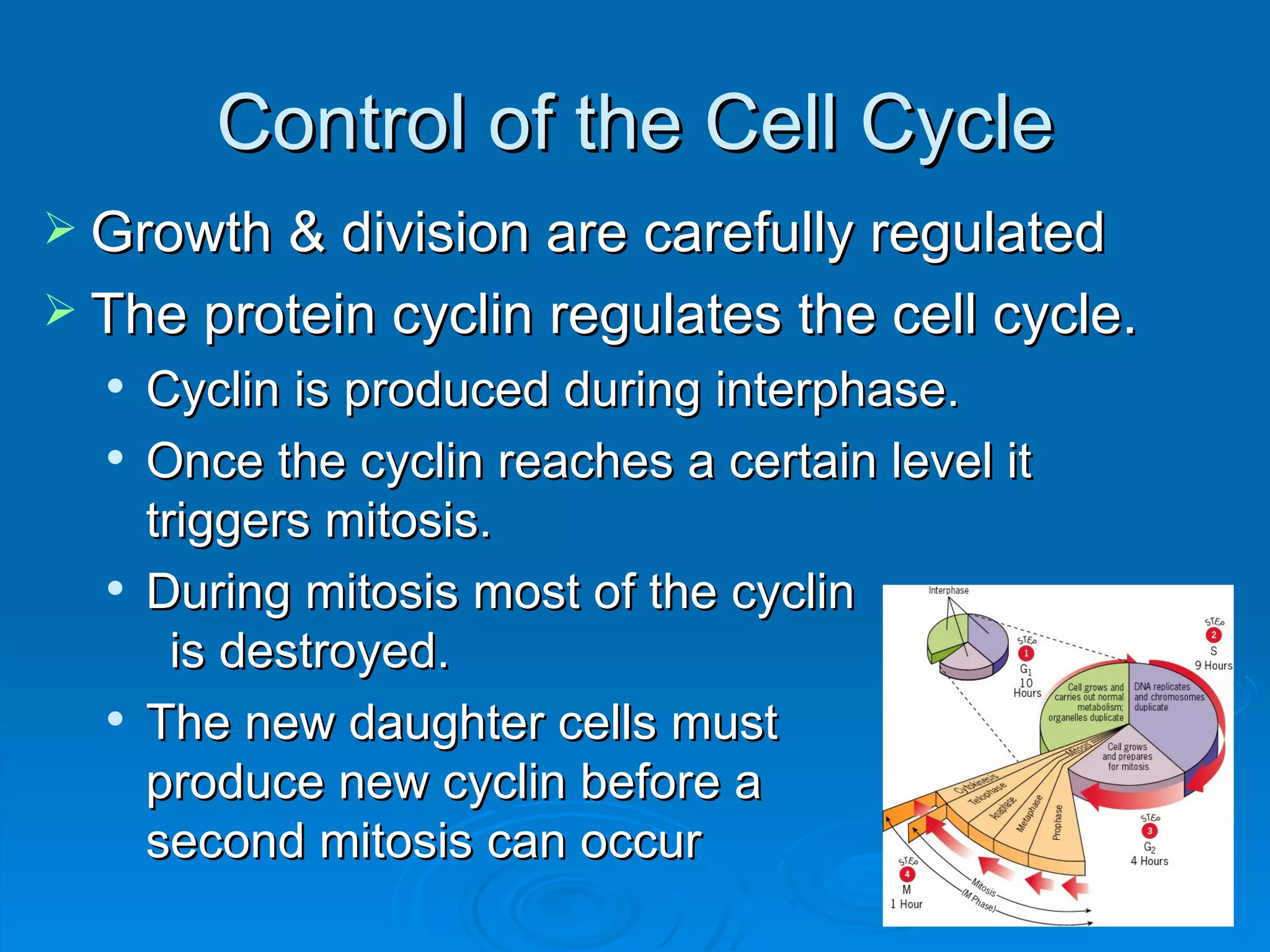
Control of the Cell Cycle
 Growth & division are carefully regulated
 The protein cyclin regulates the cell cycle.
     Cyclin is produced during interphase.
     Once the cyclin reaches a certain level it
      triggers mitosis.
     During mitosis most of the cyclin
        is destroyed.
     The new daughter cells must
      produce new cyclin before a
      second mitosis can occur
How do we know?
 Scientists found that when cyclin is
  injected into a nondividing cell, that cell
  forms a spindle
 They then found the amount of cyclin
  increased and decreased in timing with
  the cell cycle
Other Regulatory Proteins
 Internal
     Proteins in the cell respond to events inside
      the cell
       • E.g. makes sure cell does not enter mitosis until all
         chromosomes have been replicated
       • E.g. No anaphase until all chromosomes are
         attached to the spindle
Other Regulatory Proteins
 External
     Proteins that respond to events outside the
      cell
       • May stimulate growth – e.g. wound healing,
         embryonic development
       • May slow growth – e.g. prevent excessive growth,
         keep tissues from disrupting each other
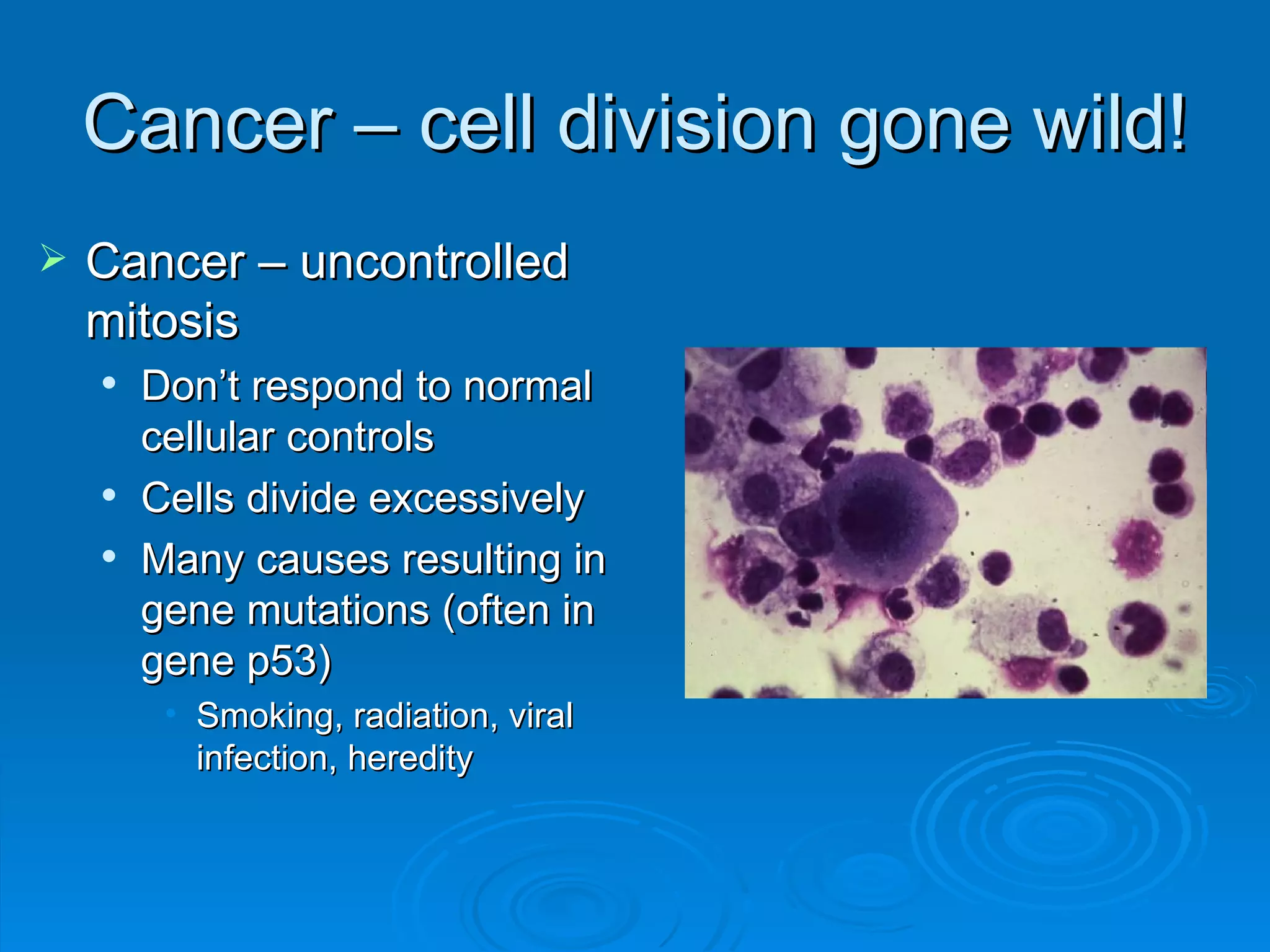
Cancer – cell division gone wild!
   Cancer – uncontrolled
    mitosis
       Don’t respond to normal
        cellular controls
       Cells divide excessively
       Many causes resulting in
        gene mutations (often in
        gene p53)
         • Smoking, radiation, viral
           infection, heredity
Cancer – cell division gone wild!
 Tumor – a mass of abnormal cells
     Benign tumor – abnormal cells remain in
      original location
     Malignant tumor – abnormal cells leave the
      original site and impair the function of one or
      more organs
Biology is the only subject in
which multiplication is the same
      thing as division…


                            2006-2007

Copy of mitosis 2010

  • 1.
    Mitosis Biology is theonly subject in which multiplication is the same thing as division…
  • 2.
    Where it allbegan… You started as a cell smaller than a period at the end of a sentence…
  • 3.
    And now lookat you! How did you get from there to here?
  • 4.
    Mitosis!  The fertilized egg must divide… and divide…. and divide…. and divide…
  • 5.
    Why do cellsdivide…  for reproduction  one celled organisms (clones)  asexual reproduction amoeba  for growth & development  from fertilized egg to multi-celled organism  for repair starfish  replace cells that die from normal wear & tear or from injury
  • 6.
    Dividing cells…  Whathas to be copied  DNA  organelles  cell membrane  lots of other molecules • enzymes plant cell animal cell
  • 7.
    Copying DNA  Adividing cell duplicates its DNA  creates 2 copies of all DNA  sends the 2 copies to opposite ends of the cell  splits into 2 daughter cells  the DNA starts DNA loosely wound in cell the nucleus  If you tried to divide it like that, it could nucleus tangle & break
  • 8.
    Organizing & packagingDNA into chromosomes… DNA cell nucleus DNA has been “wound up” DNA in chromosomes in everyday “working” cell cell nucleus 4 chromosomes DNA in chromosomes in cell in this organism getting ready to divide
  • 9.
  • 10.
    Structure of aChromosome
  • 11.
  • 12.
    Copying & packagingDNA  When cell is ready to divide…  copy DNA first, then…  coil up doubled chromosomes like thread on a spool… • now can move DNA around cell without having it tangle & break Coil DNA into Copying DNA compact chromosomes
  • 13.
    Copying DNA… chromosomes in cell DNA in chromosomes cell 4 single-stranded chromosomes duplicated chromosomes nucleus duplicated chromosomes cell 4 double-stranded chromosomes nucleus
  • 14.
  • 15.
    Chromosomes of HumanFemale 46 chromosomes 23 pairs
  • 16.
    Chromosomes of HumanMale 46 chromosomes 23 pairs
  • 17.
  • 18.
    Mitosis Vocabulary  Centrioles – small, cylinder shaped structures found near the nucleus, involved in mitosis  Only in animal cells  Aster – star like structure made of microtubules that extend from centrioles  Spindle – web like structure made up of microtubule fibers. It arranges and moves the chromosomes around.
  • 19.
    Interphase  DNA found as chromatin  Cell grows & produces more molecules & organelles  DNA and centrioles replicate DNA  Three mini stages:  G1 cell  S  G2 nucleus Interesting things happen!
  • 20.
  • 21.
    Prophase  Chromosomes become visible  DNA is wound into chromosomes  Nuclear membrane and duplicated nucleolus breakdown chromosomes  Centrioles move to opposite poles  Spindle and asters cell begins to form Chromosomes nucleus pair up!
  • 22.
    Metaphase  Spindle is fully developed  Sister chromatids line up at the equator  Chromatids are attached to the spindle at the centromere Chromosomes meet in the middle!
  • 23.
    Anaphase  Sister chromatids separate  One complete set of chromosomes goes to each pole  Spindle pull chromatids to opposite poles  Cytokinesis begins Chromosomes get pulled apart!
  • 24.
    Telophase  Chromosomesreach opposite poles  Nuclear membrane and nucleolus reappear  Spindle disappears  Chromosomes unravel  Cytokinesis is completed Now there are two!
  • 25.
    Cytokinesis Division of thecytoplasm & organelles into two cells that occurs at the end of mitosis
  • 26.
    New “daughter” cells Get 2 exact copies of original cells  same DNA  “clones”
  • 27.
  • 28.
  • 30.
    How does mitosisdiffer in plants?
  • 31.
    How does mitosisdiffer in plants?  Plant cells do not have centrioles  Plant cells do not pinch in half  Cytokinesis is accomplished through the formation of a cell plate between the two daughter cells
  • 32.
    Overview of mitosis CopyDNA Wind Up Bye-Bye! Line Up Separate Divide
  • 33.
  • 34.
    Cell Turnover –the speed of mitosis  The time it takes for a cell to complete one cycle can vary between a couple of minutes to days.  Cells that are continuously being worn away have a rapid turnover. E.g. skin, epithelial cells, RBC, etc.  Cells which make up organs such as the eye and the brain do not multiply very often if ever once they reach adult size.
  • 35.
    Control of theCell Cycle  Growth & division are carefully regulated  The protein cyclin regulates the cell cycle.  Cyclin is produced during interphase.  Once the cyclin reaches a certain level it triggers mitosis.  During mitosis most of the cyclin is destroyed.  The new daughter cells must produce new cyclin before a second mitosis can occur
  • 36.
    How do weknow?  Scientists found that when cyclin is injected into a nondividing cell, that cell forms a spindle  They then found the amount of cyclin increased and decreased in timing with the cell cycle
  • 37.
    Other Regulatory Proteins Internal  Proteins in the cell respond to events inside the cell • E.g. makes sure cell does not enter mitosis until all chromosomes have been replicated • E.g. No anaphase until all chromosomes are attached to the spindle
  • 38.
    Other Regulatory Proteins External  Proteins that respond to events outside the cell • May stimulate growth – e.g. wound healing, embryonic development • May slow growth – e.g. prevent excessive growth, keep tissues from disrupting each other
  • 39.
    Cancer – celldivision gone wild!  Cancer – uncontrolled mitosis  Don’t respond to normal cellular controls  Cells divide excessively  Many causes resulting in gene mutations (often in gene p53) • Smoking, radiation, viral infection, heredity
  • 40.
    Cancer – celldivision gone wild!  Tumor – a mass of abnormal cells  Benign tumor – abnormal cells remain in original location  Malignant tumor – abnormal cells leave the original site and impair the function of one or more organs
  • 41.
    Biology is theonly subject in which multiplication is the same thing as division… 2006-2007

Editor's Notes

  • #6 Unicellular organisms Cell division = reproduction Reproduces entire organism& increase population Multicellular organisms Cell division provides for growth & development in a multicellular organism that begins as a fertilized egg Also use cell division to repair & renew cells that die from normal wear & tear or accidents
  • #10 DNA – deoxyribonucleic acid, the hereditary material of the cell. Chromatin – thin twisted strands of DNA wrapped around proteins How DNA is found in a nondividing cell Histones – proteins DNA is wrapped around in chromatin Chromosomes/chromatid – short, thick, condensed DNA/protein structures found in dividing cells Sister chromatids – double chromosome found during cell division Centromere – region that connects sister chromatids and where the spindle attaches to the chromatids
  • #28 A mnemonic to help remember the stages of mitosis.