CELL CYCLE
The Cell Cycle

• Cells must divide to maintain maximum
  efficiency.
• Mitosis is the process in which somatic
  (body) cells divide to form a new cell.
• Mitosis consists of four phases.
• Interphase is the period in between each
  mitotic cell division.
Reproduction

• Asexual Reproduction: A single cell or group of
  cells each duplicates its genetic material and then
  splits into two new genetically identical cells.
   – The offspring are genetically identical

• Sexual Reproduction: Genetic material from each
  of two parents combines, producing offspring that
  differ genetically from either parent.
   – Involves the union of sex cells (egg and sperm)
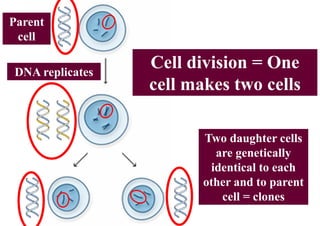
Parent
 cell

DNA replicates
                 Cell division = One
                 cell makes two cells

                        Two daughter cells
                          are genetically
                         identical to each
                        other and to parent
                           cell = clones
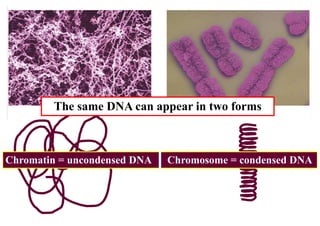
The same DNA can appear in two forms


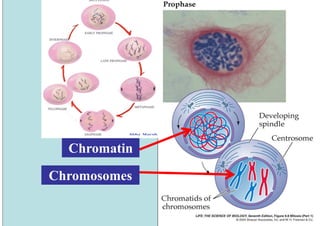
Chromatin = uncondensed DNA   Chromosome = condensed DNA
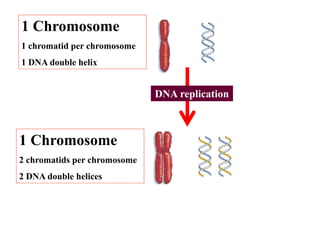
1 Chromosome
1 chromatid per chromosome
1 DNA double helix


                              DNA replication


1 Chromosome
2 chromatids per chromosome
2 DNA double helices
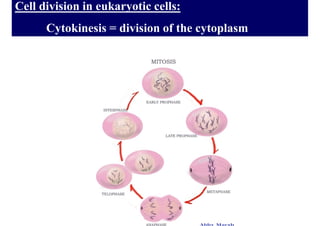
Cell division in eukaryotic cells:
      Cytokinesis = division of the cytoplasm
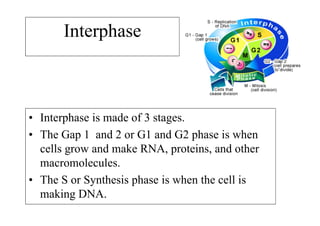
Interphase


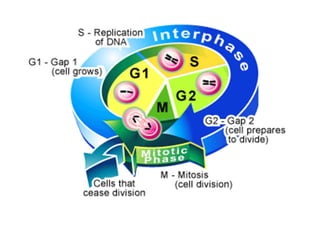
• Interphase is made of 3 stages.
• The Gap 1 and 2 or G1 and G2 phase is when
  cells grow and make RNA, proteins, and other
  macromolecules.
• The S or Synthesis phase is when the cell is
  making DNA.
DNA Replication

• During the S phase of the cell cycle, DNA
  replicates.
• A short section of the DNA uncoils.
• New nucleotides bond to the open sections of
  the DNA.
• The “new” and “old” sections of DNA
  separate and now there are 2 DNA strands.
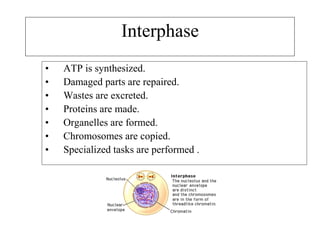
Interphase
•   ATP is synthesized.
•   Damaged parts are repaired.
•   Wastes are excreted.
•   Proteins are made.
•   Organelles are formed.
•   Chromosomes are copied.
•   Specialized tasks are performed .
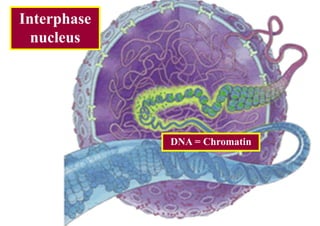
Interphase
  nucleus


             DNA = Chromatin
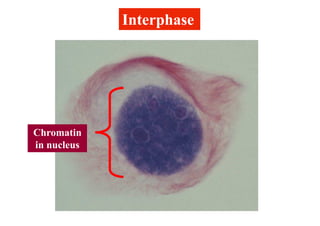
Interphase


Chromatin
in nucleus
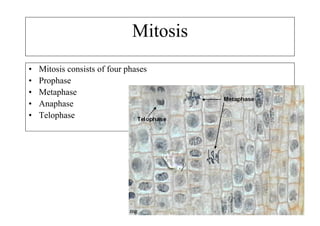
Mitosis
•   Mitosis consists of four phases
•   Prophase
•   Metaphase
•   Anaphase
•   Telophase
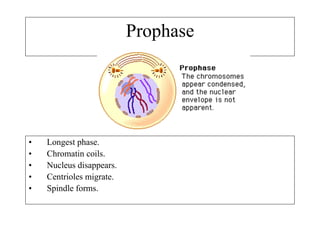
Prophase


•   Longest phase.
•   Chromatin coils.
•   Nucleus disappears.
•   Centrioles migrate.
•   Spindle forms.
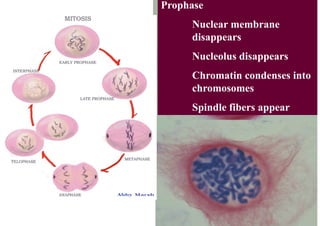
Prophase
     Nuclear membrane
     disappears
     Nucleolus disappears
     Chromatin condenses into
     chromosomes
     Spindle fibers appear
Chromatin

Chromosomes
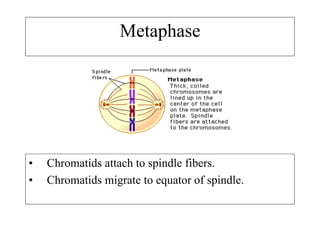
Metaphase


•   Chromatids attach to spindle fibers.
•   Chromatids migrate to equator of spindle.
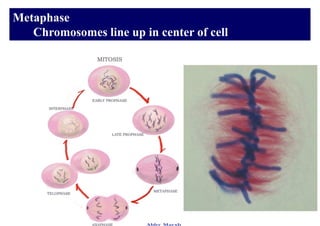
Metaphase
   Chromosomes line up in center of cell
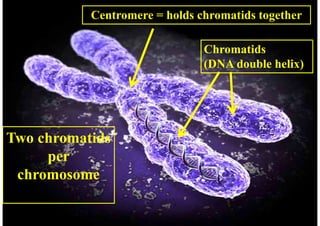
Centromere = holds chromatids together

                               Chromatids
                               (DNA double helix)


Two chromatids
     per
 chromosome
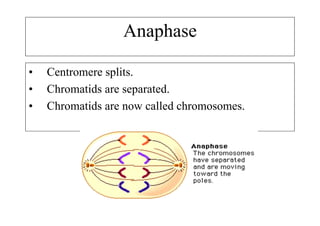
Anaphase

•   Centromere splits.
•   Chromatids are separated.
•   Chromatids are now called chromosomes.
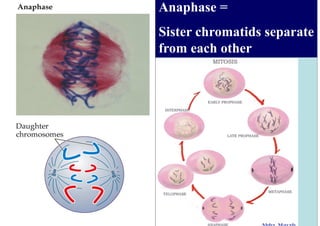
Anaphase =
Sister chromatids separate
from each other
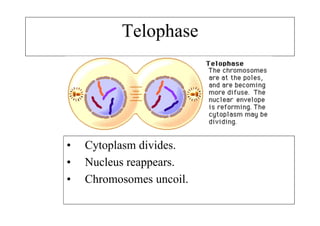
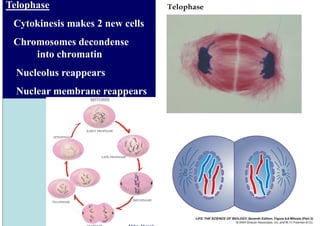
Telophase


•   Cytoplasm divides.
•   Nucleus reappears.
•   Chromosomes uncoil.
Telophase
 Cytokinesis makes 2 new cells
 Chromosomes decondense
     into chromatin
  Nucleolus reappears
  Nuclear membrane reappears
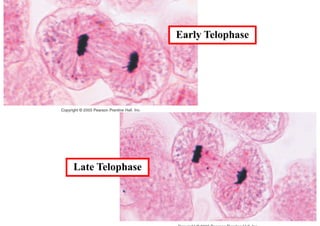
Early Telophase


Late Telophase
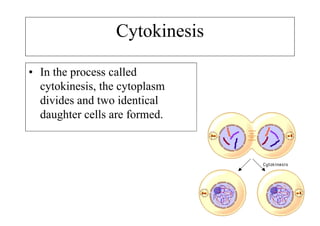
Cytokinesis

• In the process called
  cytokinesis, the cytoplasm
  divides and two identical
  daughter cells are formed.
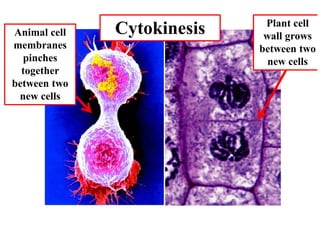
Plant cell
Animal cell   Cytokinesis    wall grows
membranes                   between two
  pinches                     new cells
  together
between two
 new cells
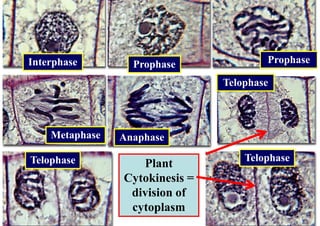
Interphase        Prophase              Prophase

                                Telophase


    Metaphase   Anaphase

Telophase                           Telophase
                   Plant
                Cytokinesis =
                 division of
                 cytoplasm
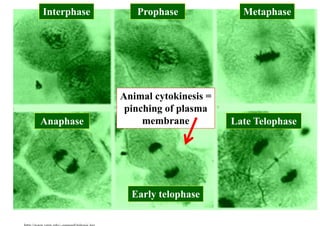
Interphase      Prophase              Metaphase


             Animal cytokinesis =
              pinching of plasma
Anaphase          membrane          Late Telophase


               Early telophase
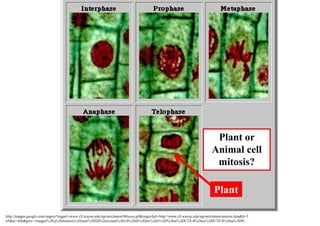
Plant or
Animal cell
 mitosis?

Plant

Mitosis [compatibility mode]

  • 1.
  • 2.
    The Cell Cycle •Cells must divide to maintain maximum efficiency. • Mitosis is the process in which somatic (body) cells divide to form a new cell. • Mitosis consists of four phases. • Interphase is the period in between each mitotic cell division.
  • 3.
    Reproduction • Asexual Reproduction:A single cell or group of cells each duplicates its genetic material and then splits into two new genetically identical cells. – The offspring are genetically identical • Sexual Reproduction: Genetic material from each of two parents combines, producing offspring that differ genetically from either parent. – Involves the union of sex cells (egg and sperm)
  • 4.
    Parent cell DNA replicates Cell division = One cell makes two cells Two daughter cells are genetically identical to each other and to parent cell = clones
  • 5.
    The same DNAcan appear in two forms Chromatin = uncondensed DNA Chromosome = condensed DNA
  • 6.
    1 Chromosome 1 chromatidper chromosome 1 DNA double helix DNA replication 1 Chromosome 2 chromatids per chromosome 2 DNA double helices
  • 8.
    Cell division ineukaryotic cells: Cytokinesis = division of the cytoplasm
  • 9.
    Interphase • Interphase ismade of 3 stages. • The Gap 1 and 2 or G1 and G2 phase is when cells grow and make RNA, proteins, and other macromolecules. • The S or Synthesis phase is when the cell is making DNA.
  • 10.
    DNA Replication • Duringthe S phase of the cell cycle, DNA replicates. • A short section of the DNA uncoils. • New nucleotides bond to the open sections of the DNA. • The “new” and “old” sections of DNA separate and now there are 2 DNA strands.
  • 11.
    Interphase • ATP is synthesized. • Damaged parts are repaired. • Wastes are excreted. • Proteins are made. • Organelles are formed. • Chromosomes are copied. • Specialized tasks are performed .
  • 12.
    Interphase nucleus DNA = Chromatin
  • 13.
  • 14.
    Mitosis • Mitosis consists of four phases • Prophase • Metaphase • Anaphase • Telophase
  • 15.
    Prophase • Longest phase. • Chromatin coils. • Nucleus disappears. • Centrioles migrate. • Spindle forms.
  • 16.
    Prophase Nuclear membrane disappears Nucleolus disappears Chromatin condenses into chromosomes Spindle fibers appear
  • 17.
  • 18.
    Metaphase • Chromatids attach to spindle fibers. • Chromatids migrate to equator of spindle.
  • 19.
    Metaphase Chromosomes line up in center of cell
  • 20.
    Centromere = holdschromatids together Chromatids (DNA double helix) Two chromatids per chromosome
  • 21.
    Anaphase • Centromere splits. • Chromatids are separated. • Chromatids are now called chromosomes.
  • 22.
    Anaphase = Sister chromatidsseparate from each other
  • 23.
    Telophase • Cytoplasm divides. • Nucleus reappears. • Chromosomes uncoil.
  • 24.
    Telophase Cytokinesis makes2 new cells Chromosomes decondense into chromatin Nucleolus reappears Nuclear membrane reappears
  • 25.
  • 26.
    Cytokinesis • In theprocess called cytokinesis, the cytoplasm divides and two identical daughter cells are formed.
  • 27.
    Plant cell Animal cell Cytokinesis wall grows membranes between two pinches new cells together between two new cells
  • 28.
    Interphase Prophase Prophase Telophase Metaphase Anaphase Telophase Telophase Plant Cytokinesis = division of cytoplasm
  • 29.
    Interphase Prophase Metaphase Animal cytokinesis = pinching of plasma Anaphase membrane Late Telophase Early telophase
  • 30.
    Plant or Animal cell mitosis? Plant