Science 9 Unit A:  Biological Diversity Science InAction Section 1.2: Pages 16-19
Lesson #2: Interdependence Learner Outcomes I can investigate and interpret dependencies among species that link the survival of one species to the survival of others I can identify examples of niches, and describe the role of variation in enabling closely related living things to survive in the same ecosystem
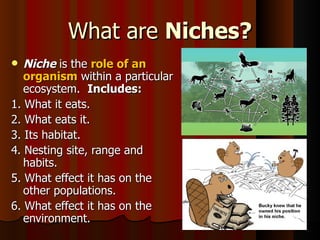
What are  Niches? Niche  is the  role of an organism  within a particular ecosystem.  Includes: 1. What it eats. 2. What eats it. 3. Its habitat. 4. Nesting site, range and habits. 5. What effect it has on the other populations. 6. What effect it has on the environment.
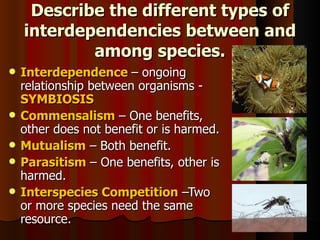
Describe the different types of interdependencies between and among species. Interdependence  – ongoing relationship between organisms -  SYMBIOSIS Commensalism  – One benefits, other does not benefit or is harmed. Mutualism   – Both benefit. Parasitism  – One benefits, other is harmed. Interspecies Competition   –Two or more species need the same resource.
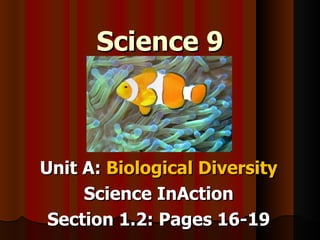
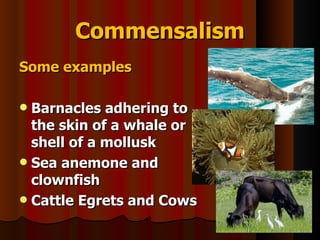
Commensalism Some examples Barnacles adhering to the skin of a whale or shell of a mollusk Sea anemone and clownfish Cattle Egrets and Cows
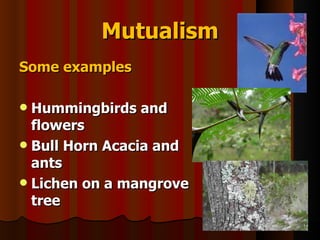
Mutualism Some examples Hummingbirds and flowers Bull Horn Acacia and ants Lichen on a mangrove tree
Parasitism Some examples Head louse on human Mosquito on animal Tapeworms
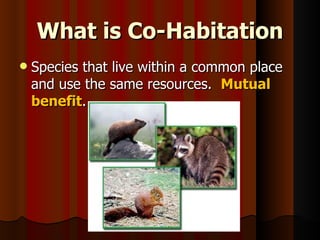
What is Co-Habitation Species that live within a common place and use the same resources.  Mutual benefit .
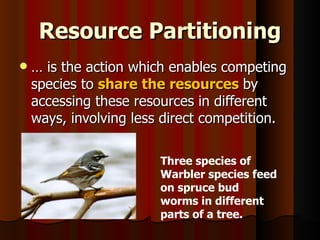
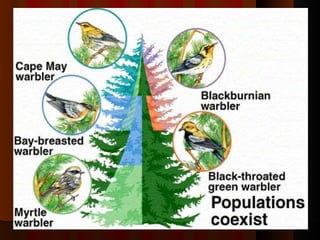
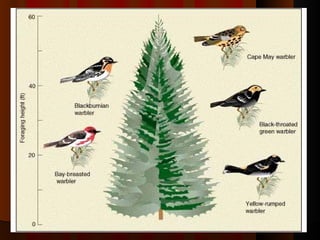
Resource Partitioning …  is the action which enables competing species to  share the resources  by accessing these resources in different ways, involving less direct competition. Three species of Warbler species feed on spruce bud worms in different parts of a tree.
 
 
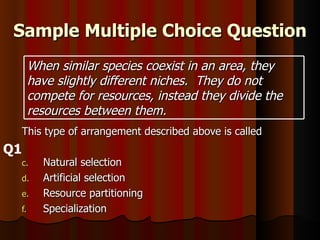
Sample Multiple Choice Question This type of arrangement described above is called  Natural selection Artificial selection Resource partitioning Specialization Q1 When similar species coexist in an area, they have slightly different niches.  They do not compete for resources, instead they divide the resources between them.
Sample Multiple Choice Question The association of an orchid and a mesophytic plant is an example of  Mutualism Commensalism Parasitism  Saprophytism Q2 Epiphytes are plants that grow on sturdier plants.  They do not take nourishment from their host and simply benefit from being exposed to sunlight.  An orchid is an example of an epiphyte.
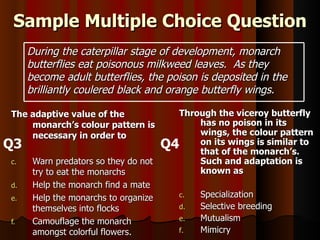
Sample Multiple Choice Question The adaptive value of the monarch’s colour pattern is necessary in order to Warn predators so they do not try to eat the monarchs Help the monarch find a mate Help the monarchs to organize themselves into flocks Camouflage the monarch amongst colorful flowers. Through the viceroy butterfly has no poison in its wings, the colour pattern on its wings is similar to that of the monarch’s.  Such and adaptation is known as Specialization Selective breeding Mutualism Mimicry Q3 Q4 During the caterpillar stage of development, monarch butterflies eat poisonous milkweed leaves.  As they become adult butterflies, the poison is deposited in the brilliantly coulered black and orange butterfly wings.
Sample Multiple Choice Question The association of a a bee and a clusia is an example of Parasitism  Commensalism Mutualism Heterotrophism Q5 As a bee pollinates clusia flowers, it is covered with a sticky resin that contains a powerful antibiotic.  This antibiotic kills bee bacteria in the bee hive.
Answers to Sample Multiple Choice Questions C B A D C
Did you ... ... investigate and interpret dependencies among species that link the survival of one species to the survival of others? ... identify examples of niches, and describe the role of variation in enabling closely related living things to survive in the same ecosystem?
Assess Your Learning Questions  Page 25 Questions 1-8 Societal and Environmental Context Questions 1-2 (for lessons #1 and #2)
AYL – page 25, 1-8 Question 1 Write a definition of biological diversity that includes a description of its three main components. ______________________________________________________________________________________________________________________________ Question 2 Define the terms niche and symbiosis.  Explain how these terms are related. Niche: _________________ _____________________  Symbiosis: _____________ _____________________ _______________________________________________________________
AYL – page 25, 1-8 Question 3 How does variability within a species affect its survival? ___________________________________________________________________________________________________________________________________________________ Question 4 Using examples, explain ways in which different species living within an ecosystem depend on one another. _________________________________________________________________________________________________________
AYL – page 25, 1-8 Question 5 How does natural selection enhance or reduce the variability of a species?  Explain your answer using an example. ______________________________________________________________________________________________________________________________ Question 6 Restate the meaning of interspecies competition in your own words.  Use an example to illustrate. ___________________________________________________________________________________________________________________________________________________
AYL – page 25, 1-8 Question 7 How does variation within a species contribute to the health of the species? ________________________________________________________________________________________________________________________________________________________________________ Question 8 Describe your niche. __________________________________________________________________________________________________________________________________________________________________________________________________________________
SEC – page 25, 1-2 Question 1 Explain how you think biological diversity benefits humans and other forms of life on earth. ______________________________________________________________________________________________________________________________ Question 2 Almost half of all life forms on the planet are insect.  How important is it to preserve those species?  Should we be concerned about ensuring that something small not be eliminated?  Why or why not?  Would it be better off without those insects?  Support your answer.
SEC – page 25, #2 ____________________________________________________________________________________________________________________________________________________________________________________________________________________________________________________________________________________________________________________

Science 9 Unit A Biological Diversity Section1.2 Lesson Interdependence

  • 1.
    Science 9 UnitA: Biological Diversity Science InAction Section 1.2: Pages 16-19
  • 2.
    Lesson #2: InterdependenceLearner Outcomes I can investigate and interpret dependencies among species that link the survival of one species to the survival of others I can identify examples of niches, and describe the role of variation in enabling closely related living things to survive in the same ecosystem
  • 3.
    What are Niches? Niche is the role of an organism within a particular ecosystem. Includes: 1. What it eats. 2. What eats it. 3. Its habitat. 4. Nesting site, range and habits. 5. What effect it has on the other populations. 6. What effect it has on the environment.
  • 4.
    Describe the differenttypes of interdependencies between and among species. Interdependence – ongoing relationship between organisms - SYMBIOSIS Commensalism – One benefits, other does not benefit or is harmed. Mutualism – Both benefit. Parasitism – One benefits, other is harmed. Interspecies Competition –Two or more species need the same resource.
  • 5.
    Commensalism Some examplesBarnacles adhering to the skin of a whale or shell of a mollusk Sea anemone and clownfish Cattle Egrets and Cows
  • 6.
    Mutualism Some examplesHummingbirds and flowers Bull Horn Acacia and ants Lichen on a mangrove tree
  • 7.
    Parasitism Some examplesHead louse on human Mosquito on animal Tapeworms
  • 8.
    What is Co-HabitationSpecies that live within a common place and use the same resources. Mutual benefit .
  • 9.
    Resource Partitioning … is the action which enables competing species to share the resources by accessing these resources in different ways, involving less direct competition. Three species of Warbler species feed on spruce bud worms in different parts of a tree.
  • 10.
  • 11.
  • 12.
    Sample Multiple ChoiceQuestion This type of arrangement described above is called Natural selection Artificial selection Resource partitioning Specialization Q1 When similar species coexist in an area, they have slightly different niches. They do not compete for resources, instead they divide the resources between them.
  • 13.
    Sample Multiple ChoiceQuestion The association of an orchid and a mesophytic plant is an example of Mutualism Commensalism Parasitism Saprophytism Q2 Epiphytes are plants that grow on sturdier plants. They do not take nourishment from their host and simply benefit from being exposed to sunlight. An orchid is an example of an epiphyte.
  • 14.
    Sample Multiple ChoiceQuestion The adaptive value of the monarch’s colour pattern is necessary in order to Warn predators so they do not try to eat the monarchs Help the monarch find a mate Help the monarchs to organize themselves into flocks Camouflage the monarch amongst colorful flowers. Through the viceroy butterfly has no poison in its wings, the colour pattern on its wings is similar to that of the monarch’s. Such and adaptation is known as Specialization Selective breeding Mutualism Mimicry Q3 Q4 During the caterpillar stage of development, monarch butterflies eat poisonous milkweed leaves. As they become adult butterflies, the poison is deposited in the brilliantly coulered black and orange butterfly wings.
  • 15.
    Sample Multiple ChoiceQuestion The association of a a bee and a clusia is an example of Parasitism Commensalism Mutualism Heterotrophism Q5 As a bee pollinates clusia flowers, it is covered with a sticky resin that contains a powerful antibiotic. This antibiotic kills bee bacteria in the bee hive.
  • 16.
    Answers to SampleMultiple Choice Questions C B A D C
  • 17.
    Did you ...... investigate and interpret dependencies among species that link the survival of one species to the survival of others? ... identify examples of niches, and describe the role of variation in enabling closely related living things to survive in the same ecosystem?
  • 18.
    Assess Your LearningQuestions Page 25 Questions 1-8 Societal and Environmental Context Questions 1-2 (for lessons #1 and #2)
  • 19.
    AYL – page25, 1-8 Question 1 Write a definition of biological diversity that includes a description of its three main components. ______________________________________________________________________________________________________________________________ Question 2 Define the terms niche and symbiosis. Explain how these terms are related. Niche: _________________ _____________________ Symbiosis: _____________ _____________________ _______________________________________________________________
  • 20.
    AYL – page25, 1-8 Question 3 How does variability within a species affect its survival? ___________________________________________________________________________________________________________________________________________________ Question 4 Using examples, explain ways in which different species living within an ecosystem depend on one another. _________________________________________________________________________________________________________
  • 21.
    AYL – page25, 1-8 Question 5 How does natural selection enhance or reduce the variability of a species? Explain your answer using an example. ______________________________________________________________________________________________________________________________ Question 6 Restate the meaning of interspecies competition in your own words. Use an example to illustrate. ___________________________________________________________________________________________________________________________________________________
  • 22.
    AYL – page25, 1-8 Question 7 How does variation within a species contribute to the health of the species? ________________________________________________________________________________________________________________________________________________________________________ Question 8 Describe your niche. __________________________________________________________________________________________________________________________________________________________________________________________________________________
  • 23.
    SEC – page25, 1-2 Question 1 Explain how you think biological diversity benefits humans and other forms of life on earth. ______________________________________________________________________________________________________________________________ Question 2 Almost half of all life forms on the planet are insect. How important is it to preserve those species? Should we be concerned about ensuring that something small not be eliminated? Why or why not? Would it be better off without those insects? Support your answer.
  • 24.
    SEC – page25, #2 ____________________________________________________________________________________________________________________________________________________________________________________________________________________________________________________________________________________________________________________