Science8 Unit C Lightand Optics Lesson5 The Wave Modelof Light
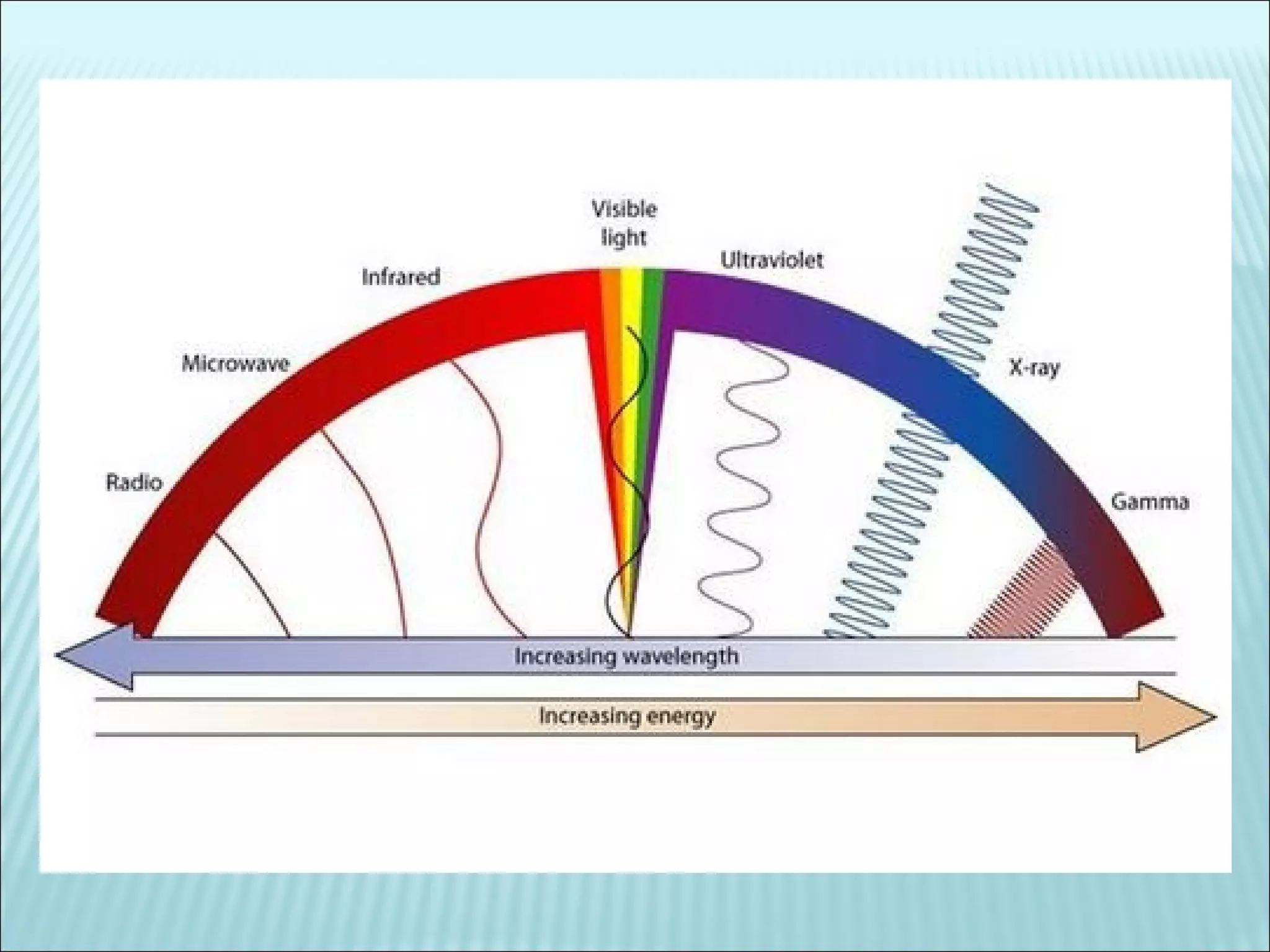
Light is part of the electromagnetic spectrum and travels in waves. Different colors of light have different wavelengths and frequencies. Various forms of electromagnetic radiation have technological applications and some can be dangerous.
Science8 Unit C Lightand Optics Lesson5 The Wave Modelof Light
1.
Light is partof the electromagnetic spectrum and travels in waves
2.
Lesson #5, Section3.1-3.2. Pages 212-220 Learner Outcomes I can describe the characteristics and composition of sunlight I can explain the wave properties of light and the electromagnetic spectrum I can describe some of the technological applications of electromagnetic spectrum radiation I can recognize the dangers associated with certain forms of radiation
3.
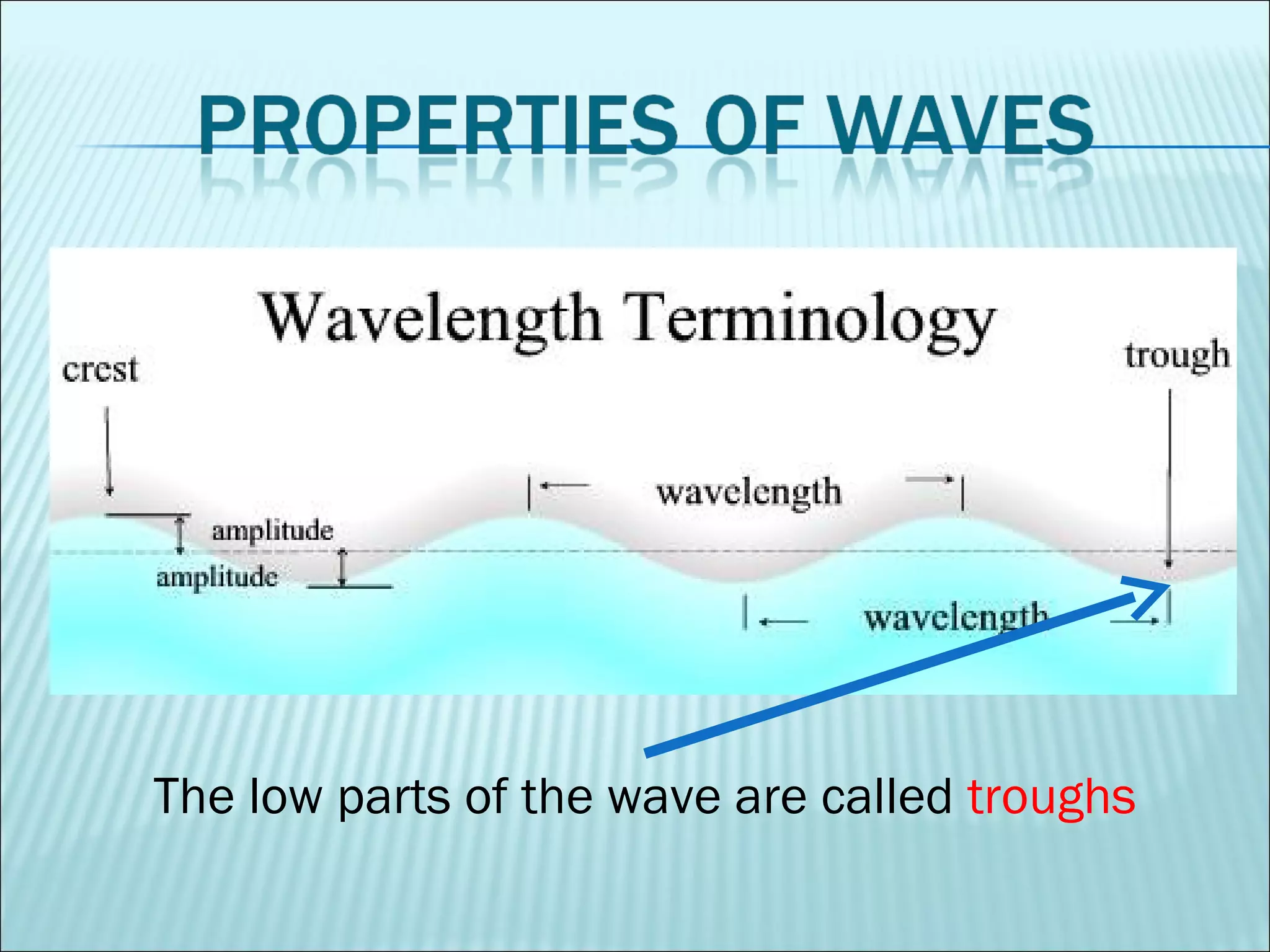
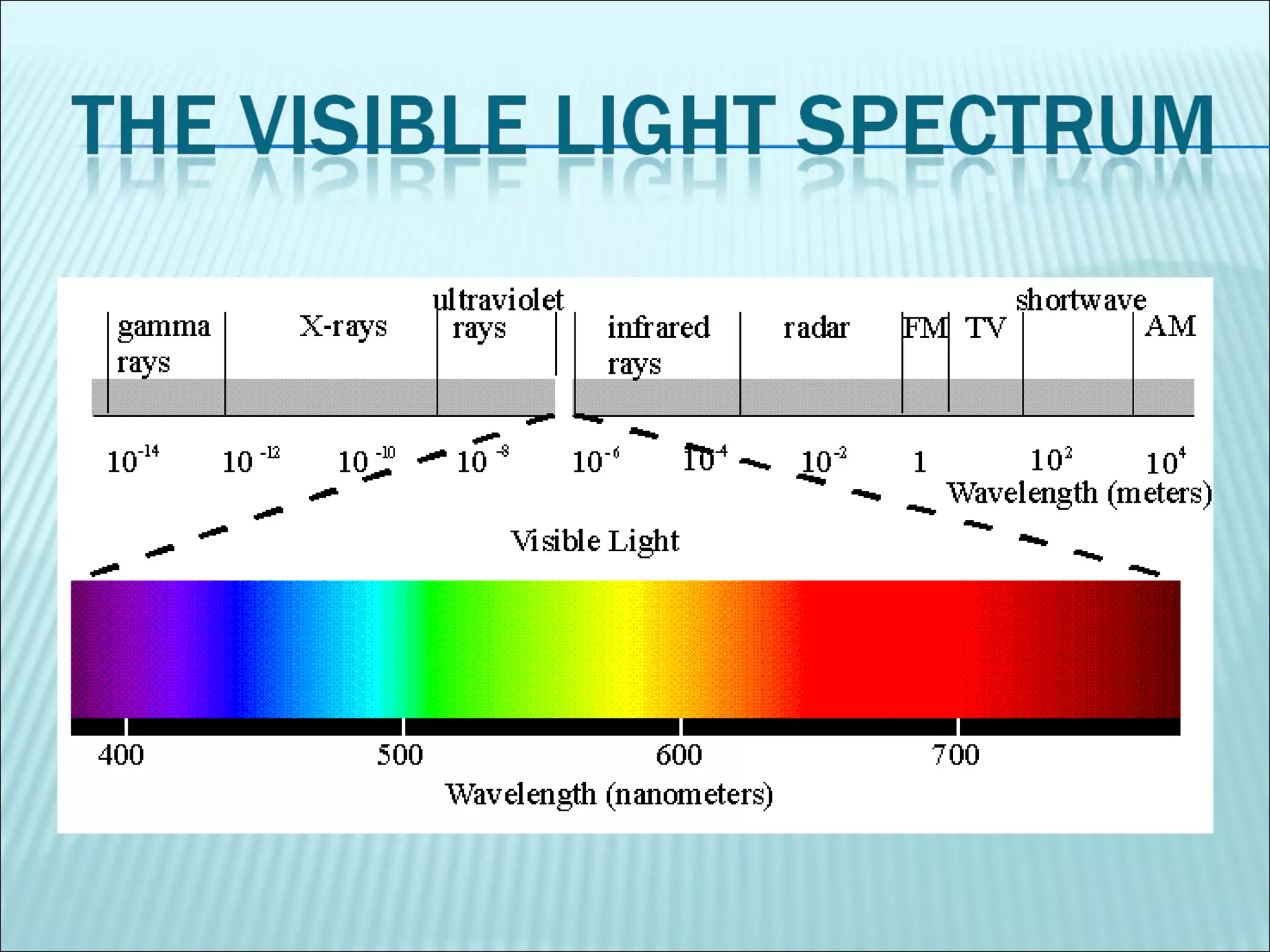
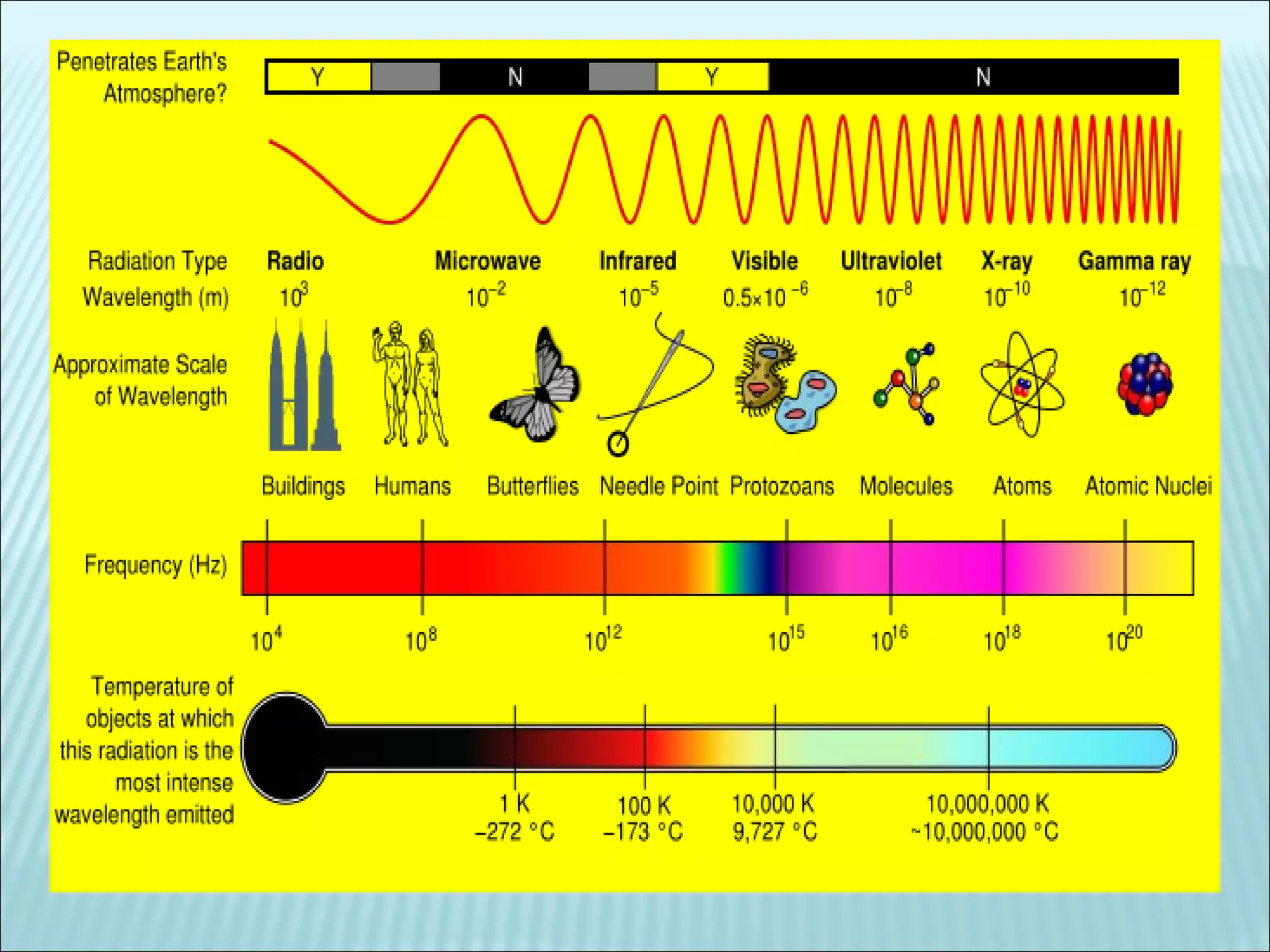
Waves and lighthave two big similarities Both are forms of energy Both travel out in all directions The Wave Model: Different colours of light have different wavelengths Waves with shorter wavelengths have higher energy than those with longer wavelengths
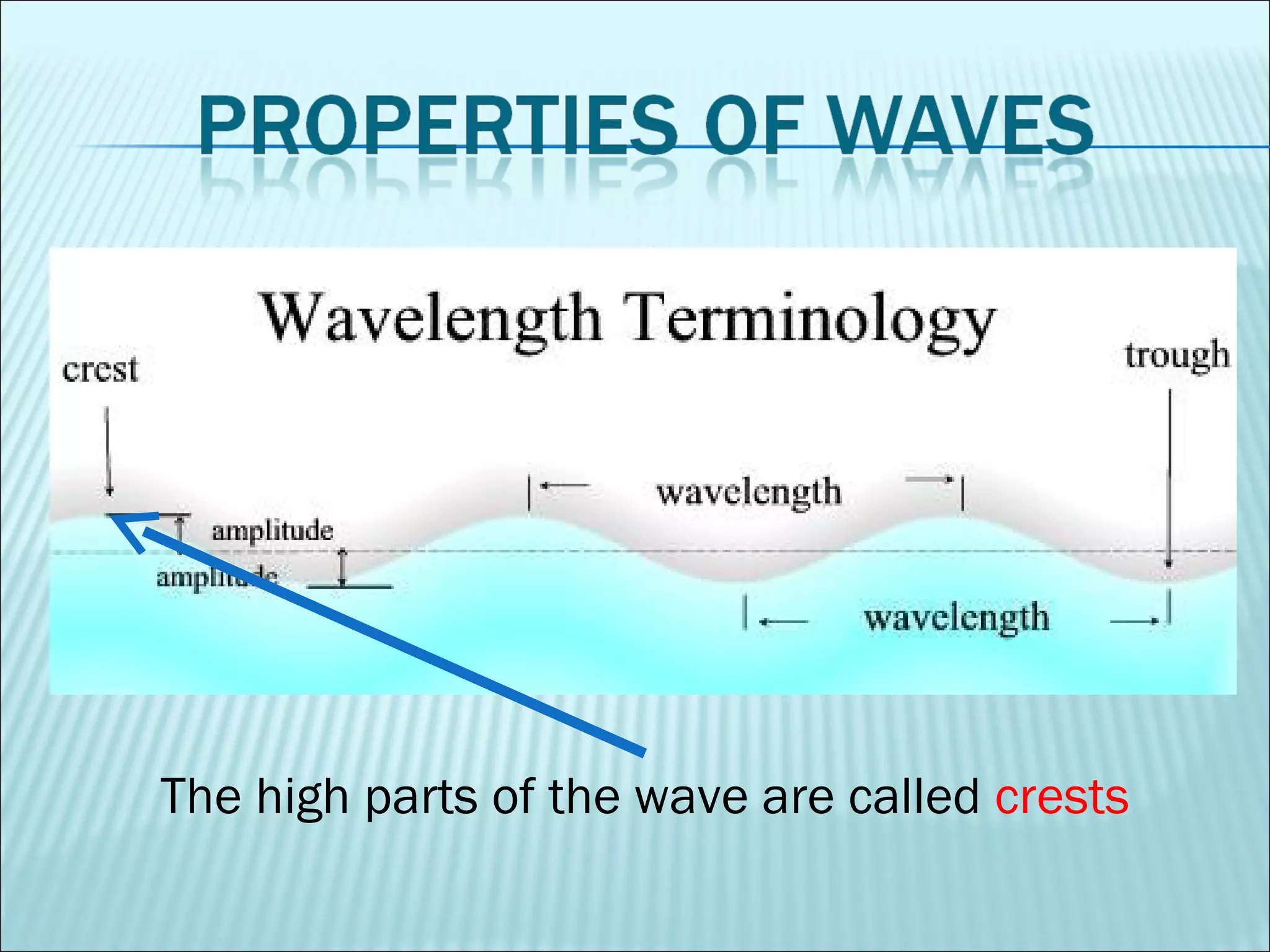
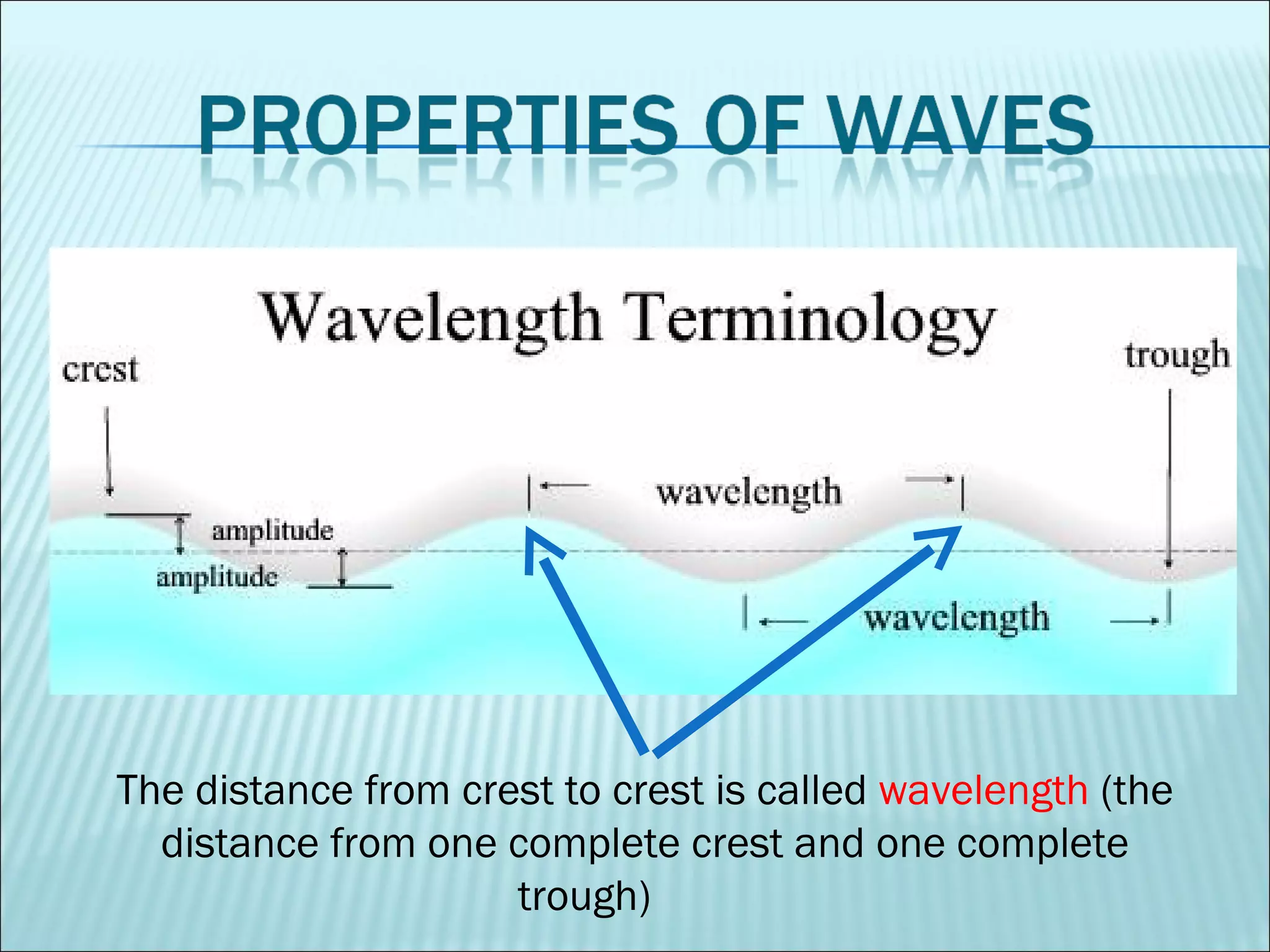
The distance fromcrest to crest is called wavelength (the distance from one complete crest and one complete trough)
7.
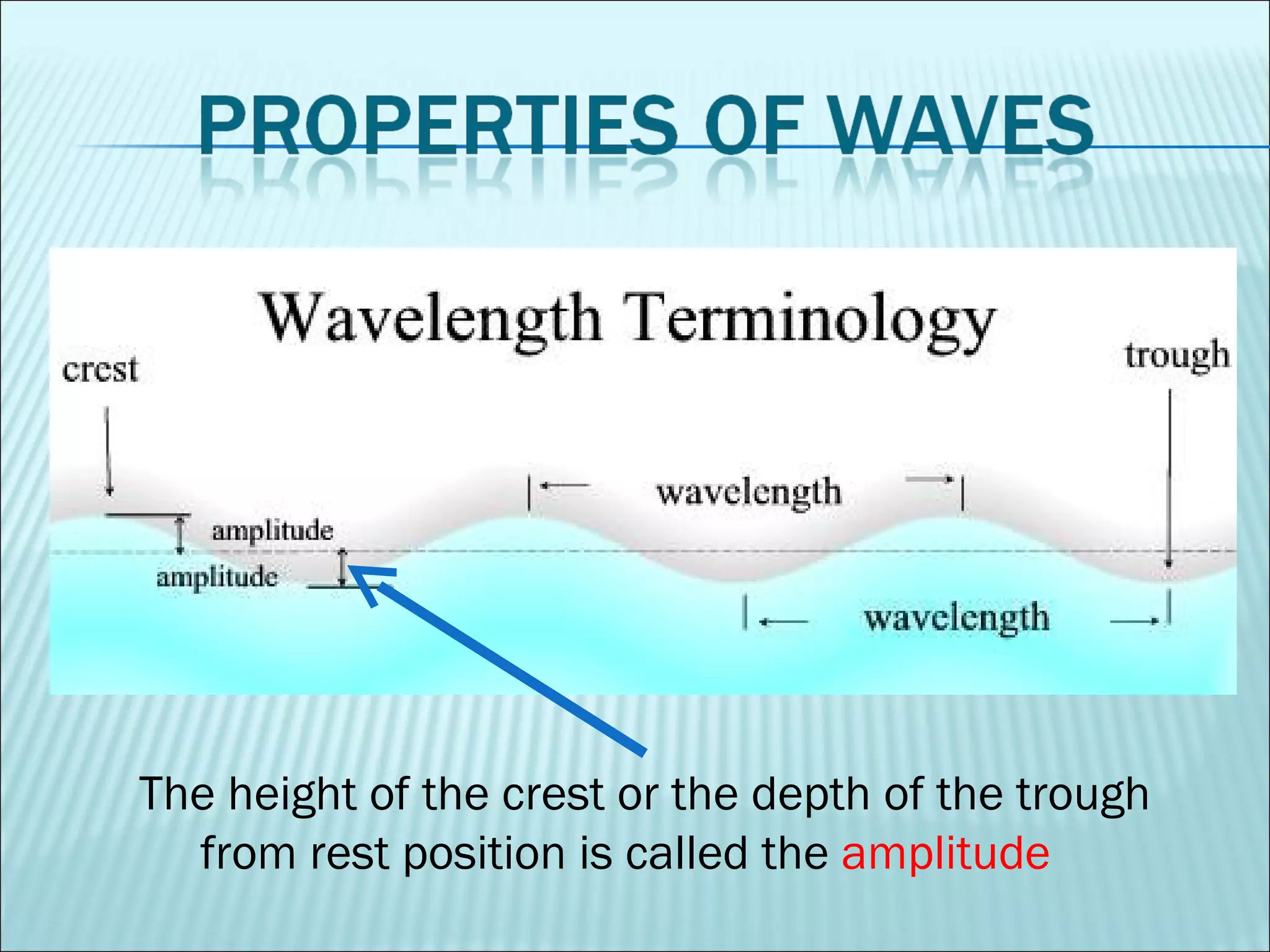
The height ofthe crest or the depth of the trough from rest position is called the amplitude
8.
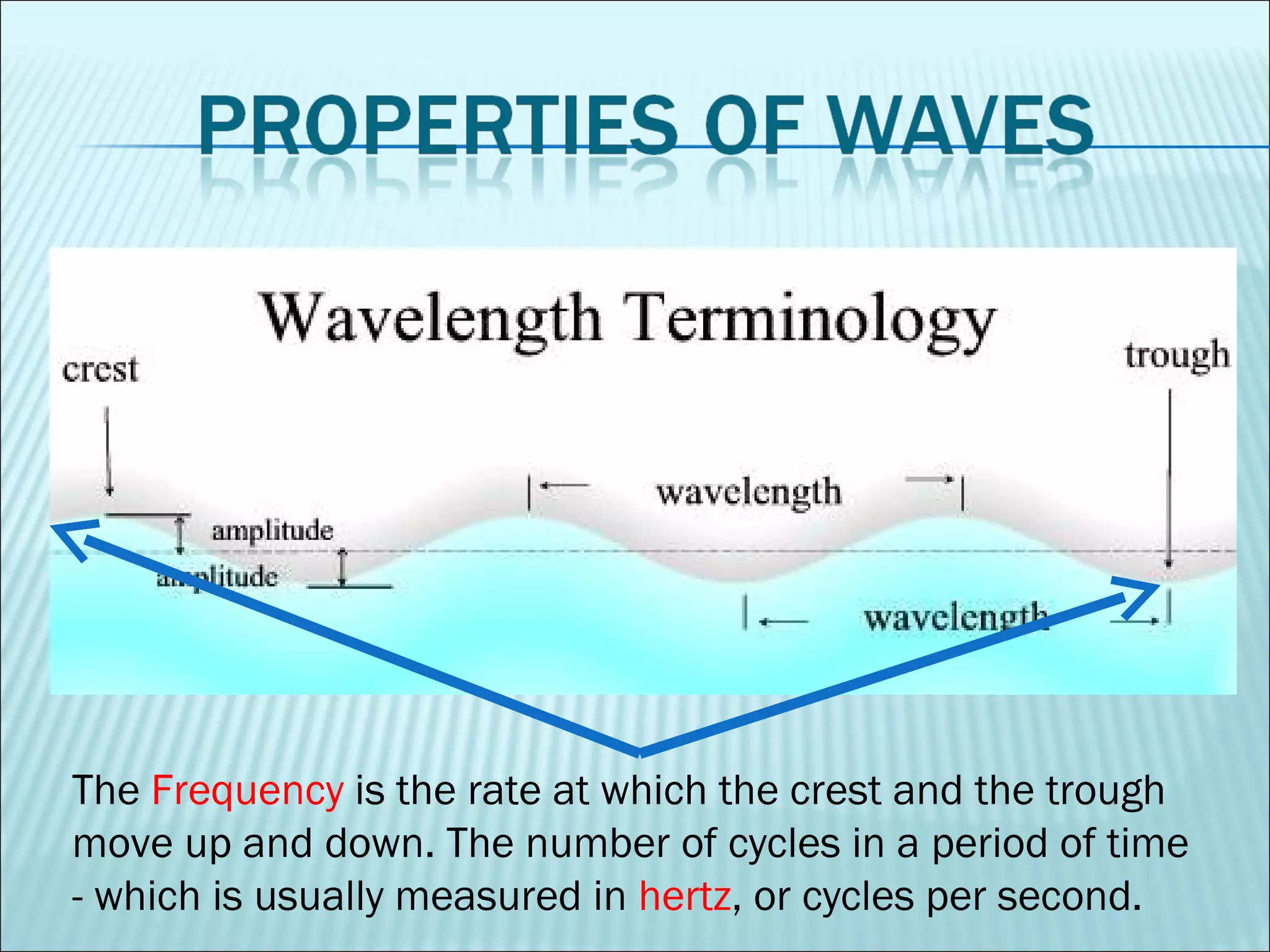
The Frequency is the rate at which the crest and the trough move up and down. The number of cycles in a period of time - which is usually measured in hertz , or cycles per second.
9.
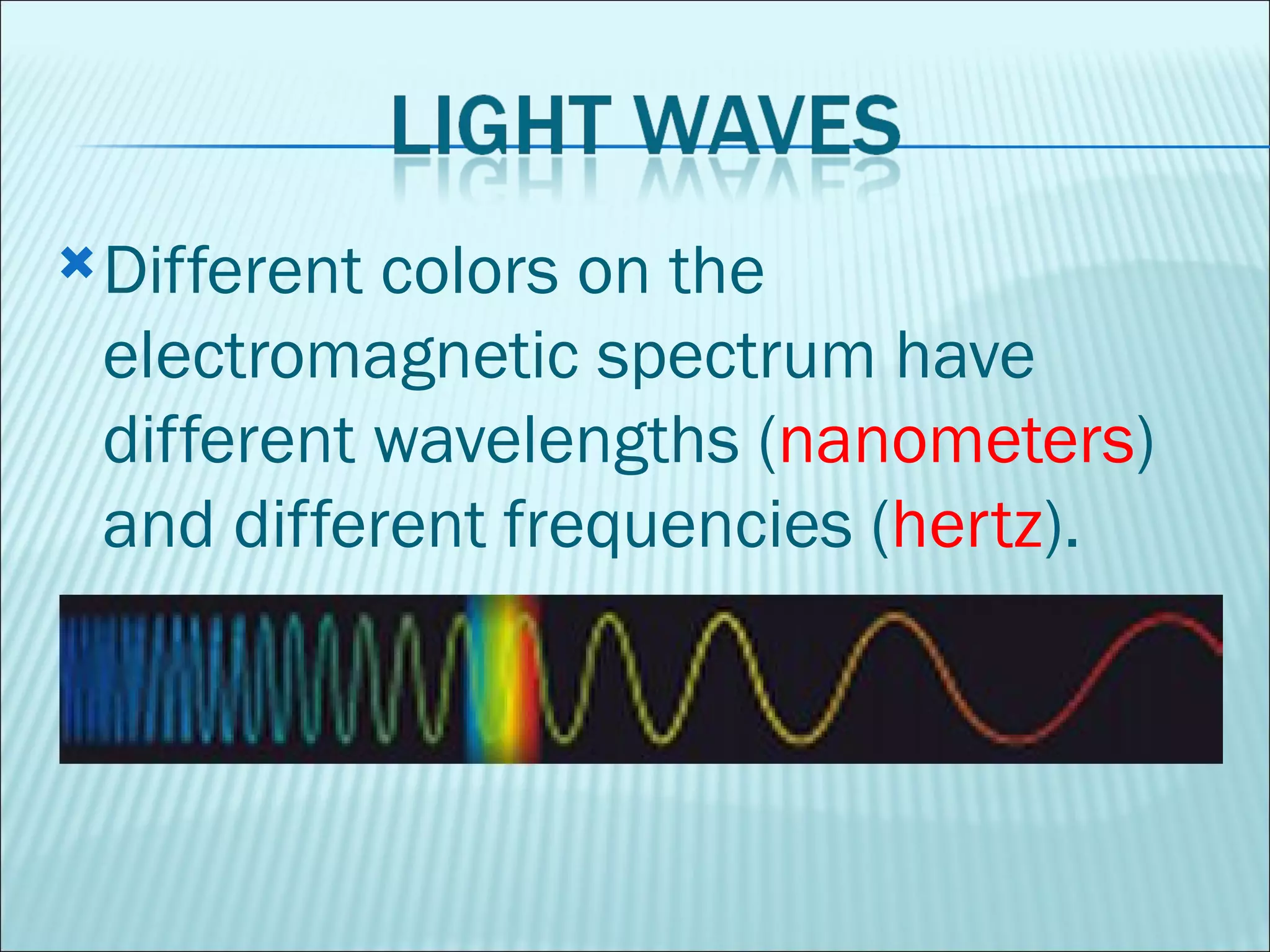
Different colors onthe electromagnetic spectrum have different wavelengths ( nanometers ) and different frequencies ( hertz ).
... describe thecharacteristics and composition of sunlight? ... explain the wave properties of light and the electromagnetic spectrum?
17.
#1. What propertiesdo light and the waves in your bath water share? ______________________________________________________________________________________ #2. Draw a diagram of a wave with an amplitude of 4 cm and a wavelength of 10 cm
18.
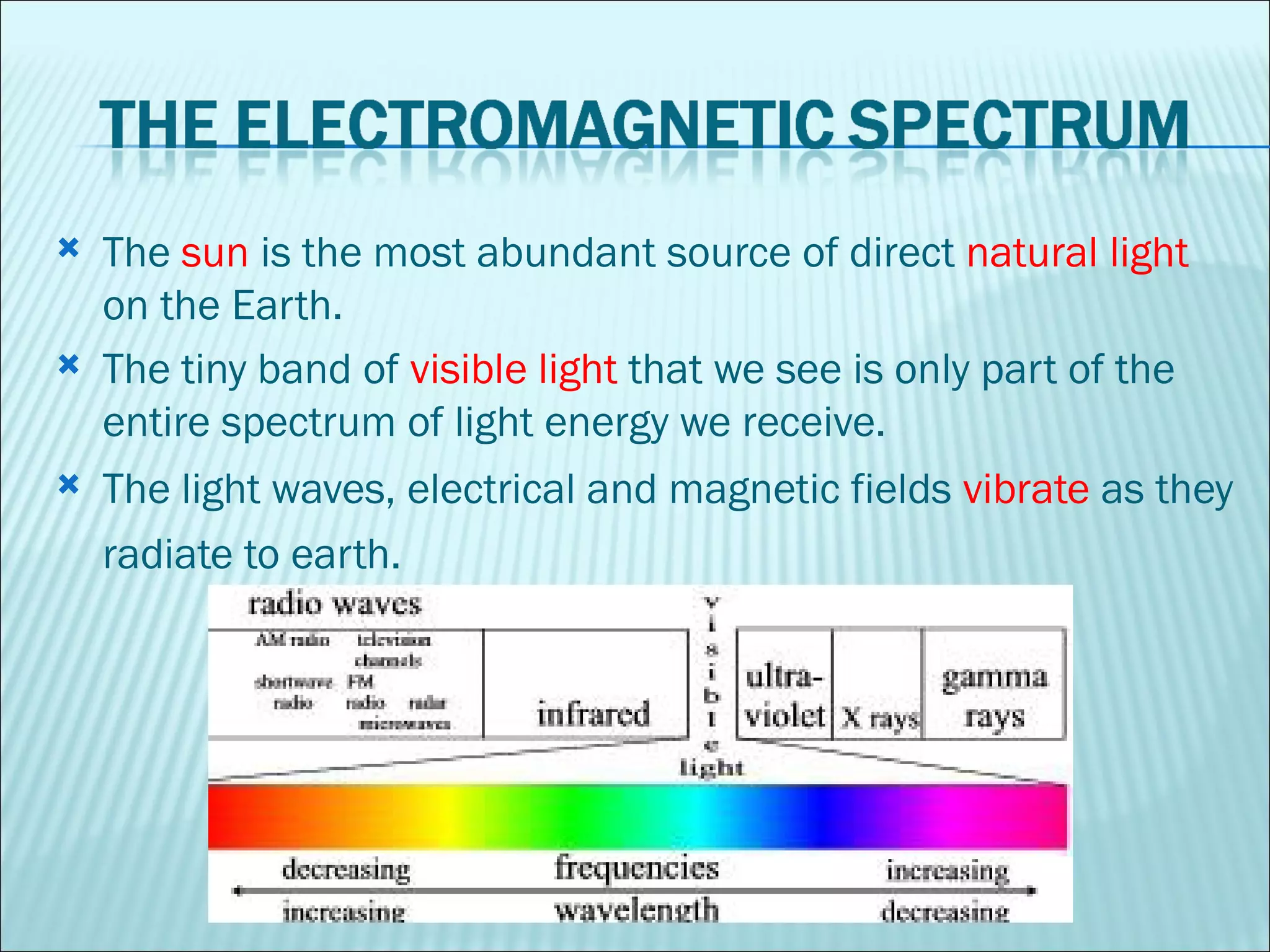
The sun is the most abundant source of direct natural light on the Earth. The tiny band of visible light that we see is only part of the entire spectrum of light energy we receive. The light waves, electrical and magnetic fields vibrate as they radiate to earth.
19.
Radiation is a natural part of our environment. Natural radiation reaches earth from outer space and continuously radiates from the rocks, soil, and water on the earth. Background radiation is that which is naturally and inevitably present in our environment. Levels of this can vary greatly. Radiation is energy traveling through space. Sunshine is one of the most familiar forms of radiation. Sunshine consists of radiation in a range of wavelengths from long-wave infrared to shorter wavelength ultraviolet .
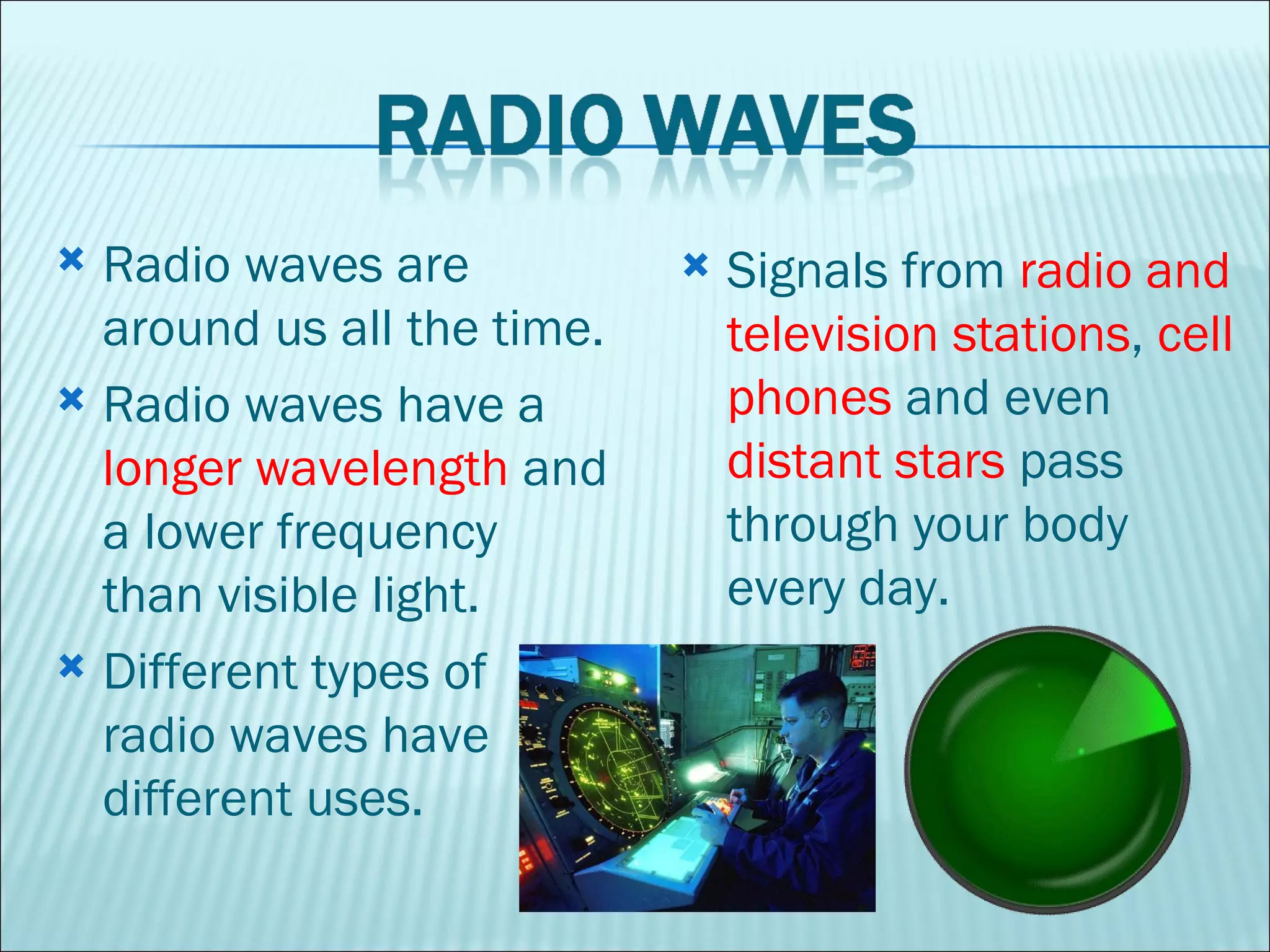
Radio waves arearound us all the time. Radio waves have a longer wavelength and a lower frequency than visible light. Different types of radio waves have different uses. Signals from radio and television stations , cell phones and even distant stars pass through your body every day.
22.
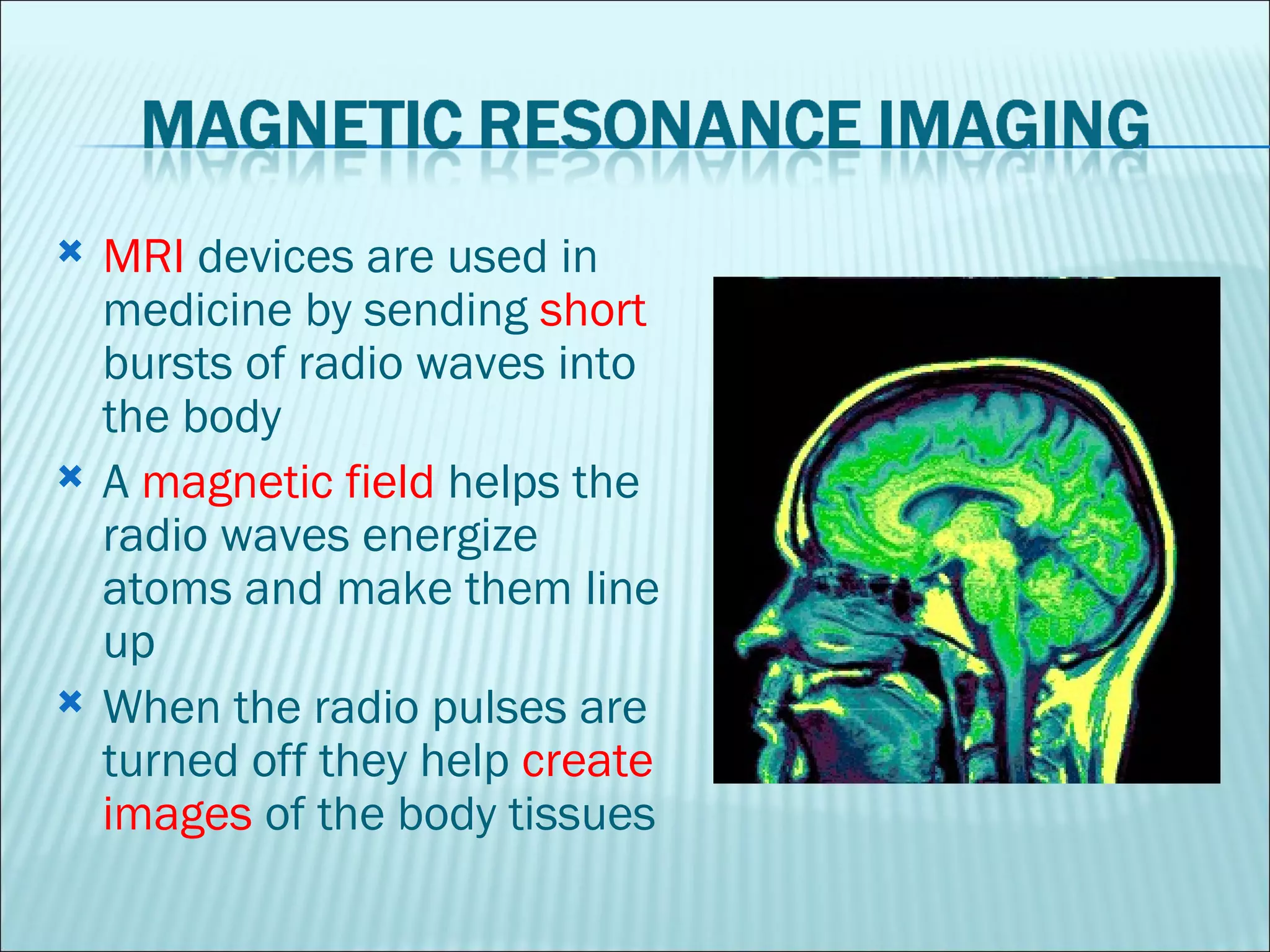
MRI devicesare used in medicine by sending short bursts of radio waves into the body A magnetic field helps the radio waves energize atoms and make them line up When the radio pulses are turned off they help create images of the body tissues
23.
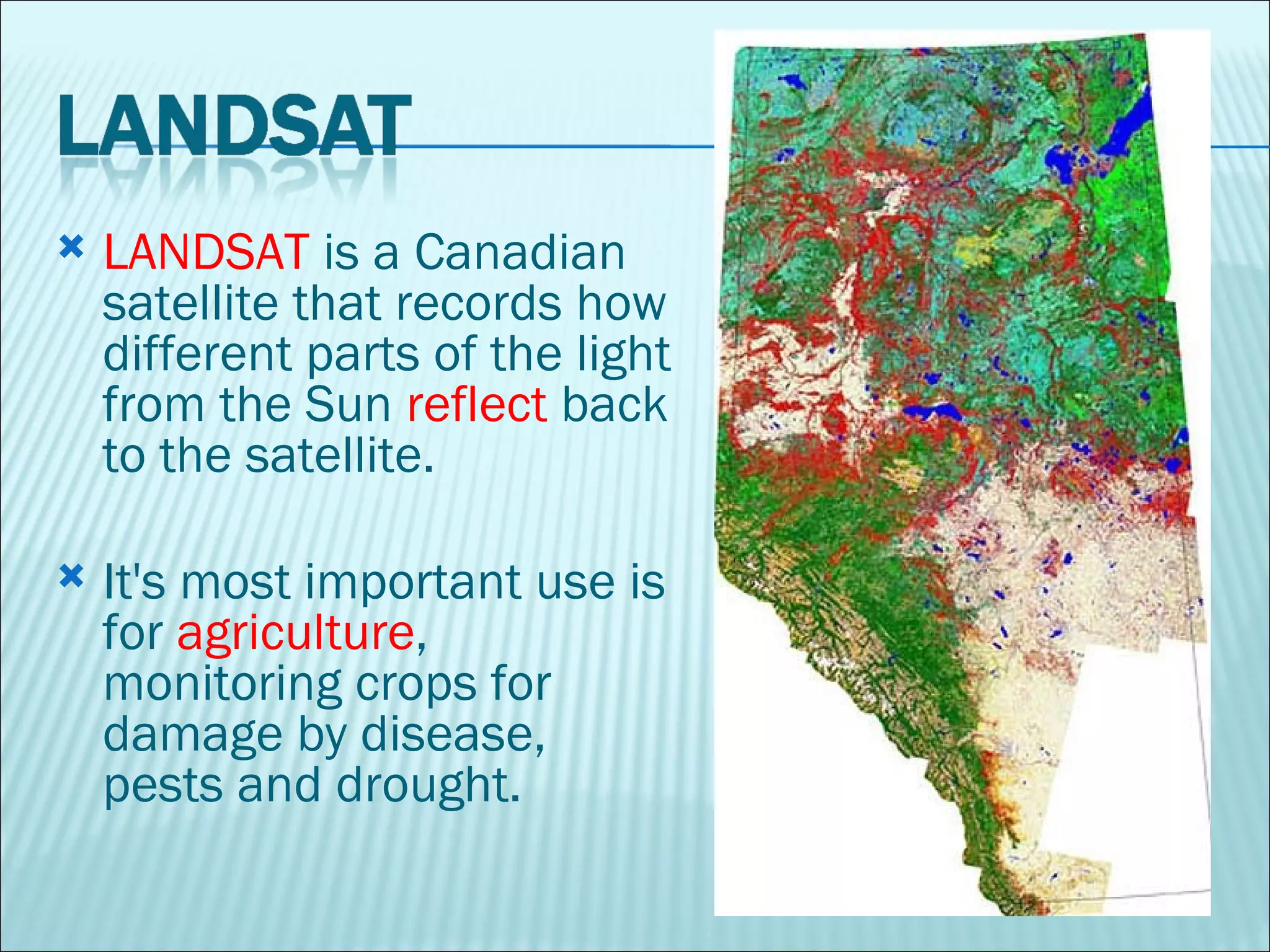
LANDSAT isa Canadian satellite that records how different parts of the light from the Sun reflect back to the satellite. It's most important use is for agriculture , monitoring crops for damage by disease, pests and drought.
24.
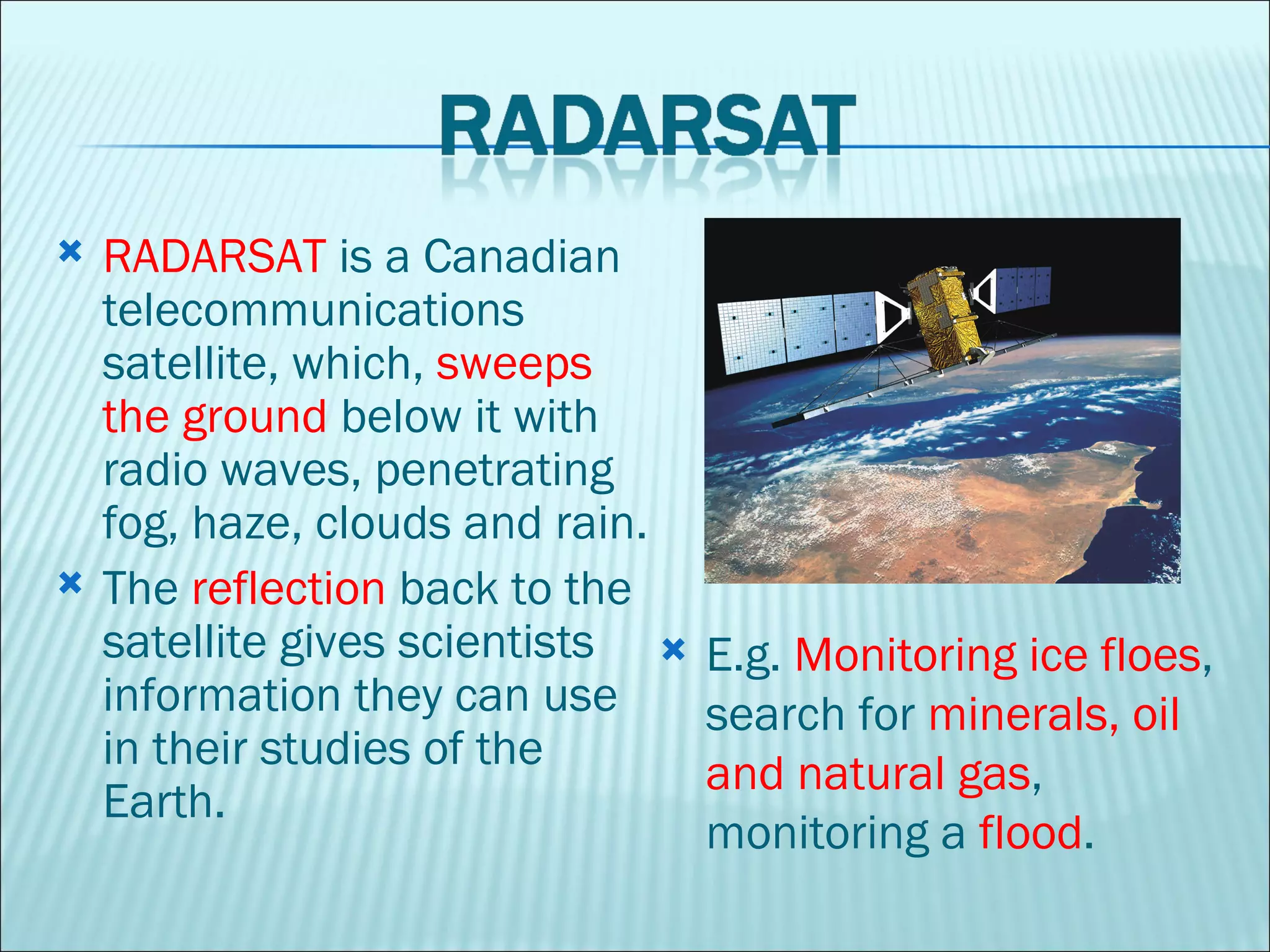
RADARSAT isa Canadian telecommunications satellite, which, sweeps the ground below it with radio waves, penetrating fog, haze, clouds and rain. The reflection back to the satellite gives scientists information they can use in their studies of the Earth. E.g. Monitoring ice floes , search for minerals, oil and natural gas , monitoring a flood .
25.
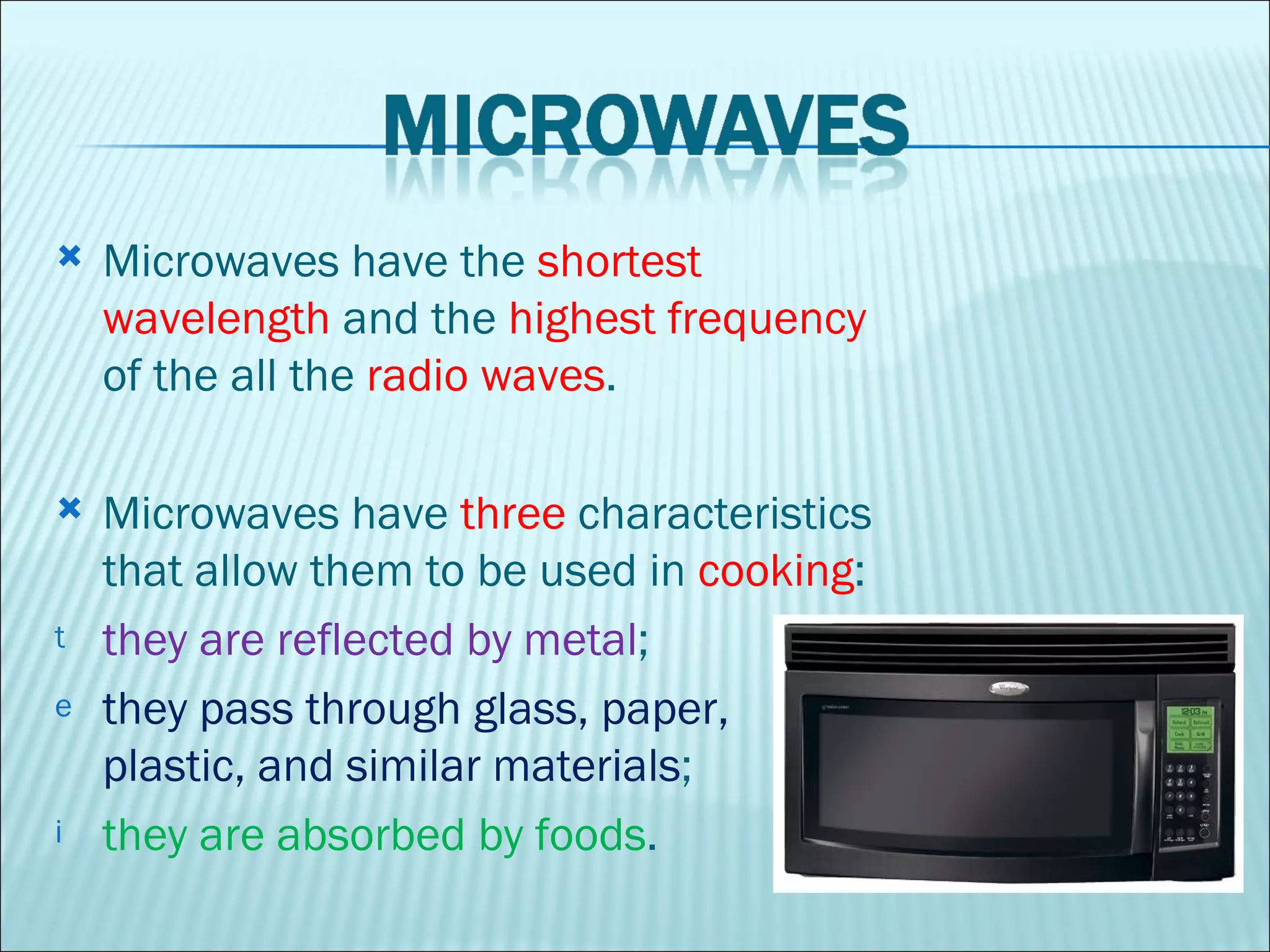
Microwaves have the shortest wavelength and the highest frequency of the all the radio waves . Microwaves have three characteristics that allow them to be used in cooking : they are reflected by metal ; they pass through glass, paper, plastic, and similar materials ; they are absorbed by foods .
26.
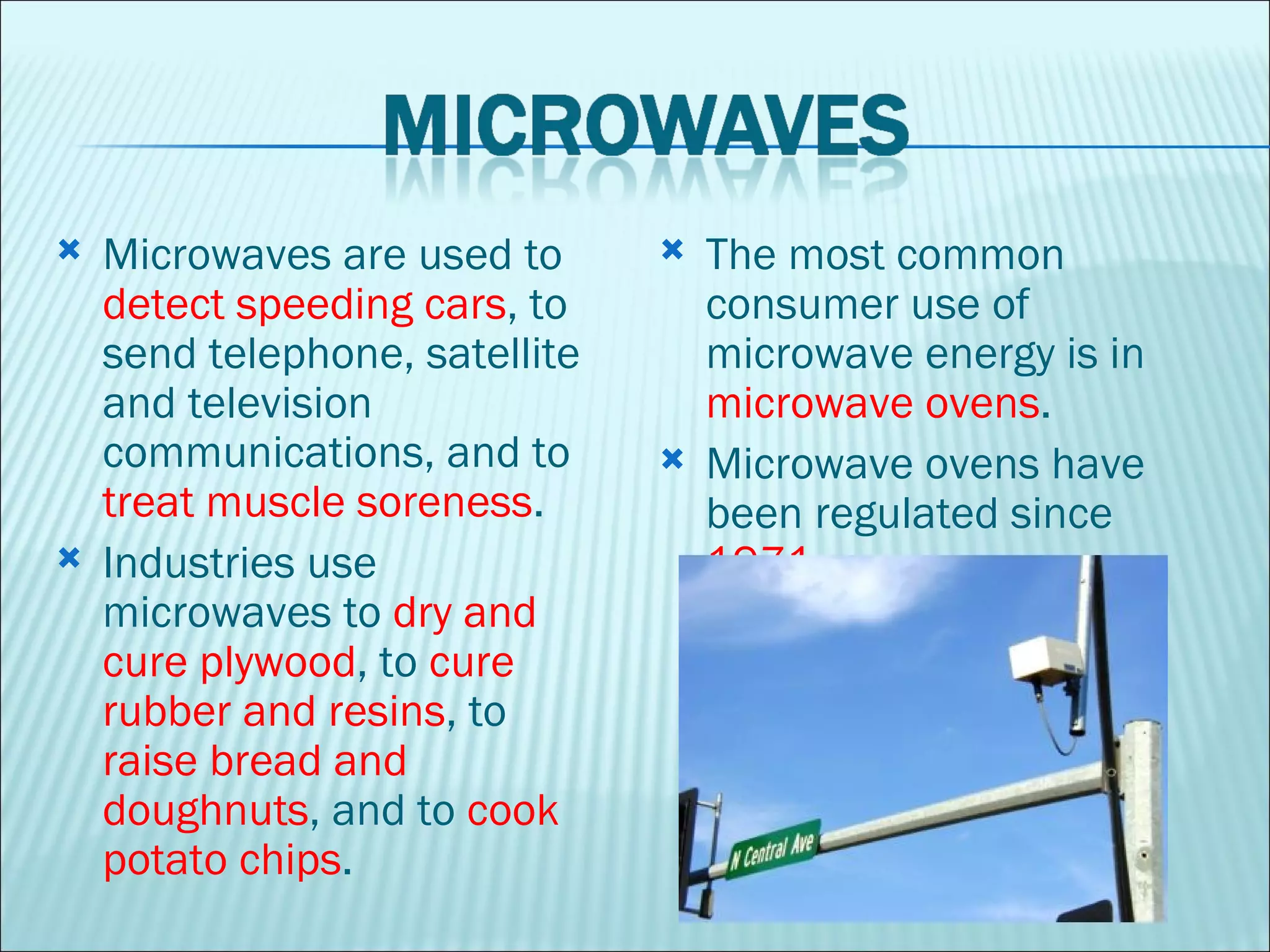
Microwaves are usedto detect speeding cars , to send telephone, satellite and television communications, and to treat muscle soreness . Industries use microwaves to dry and cure plywood , to cure rubber and resins , to raise bread and doughnuts , and to cook potato chips . The most common consumer use of microwave energy is in microwave ovens . Microwave ovens have been regulated since 1971 .
27.
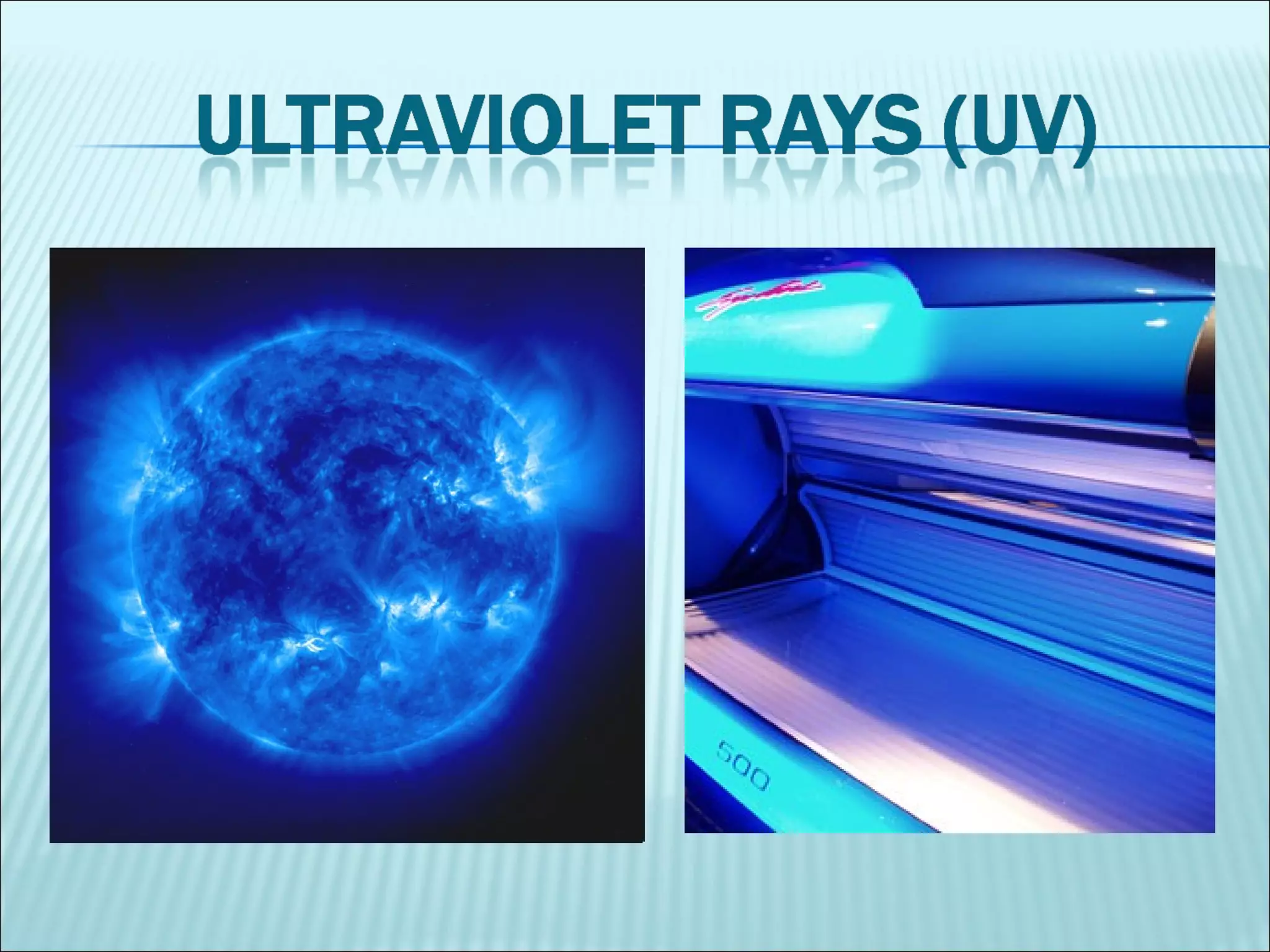
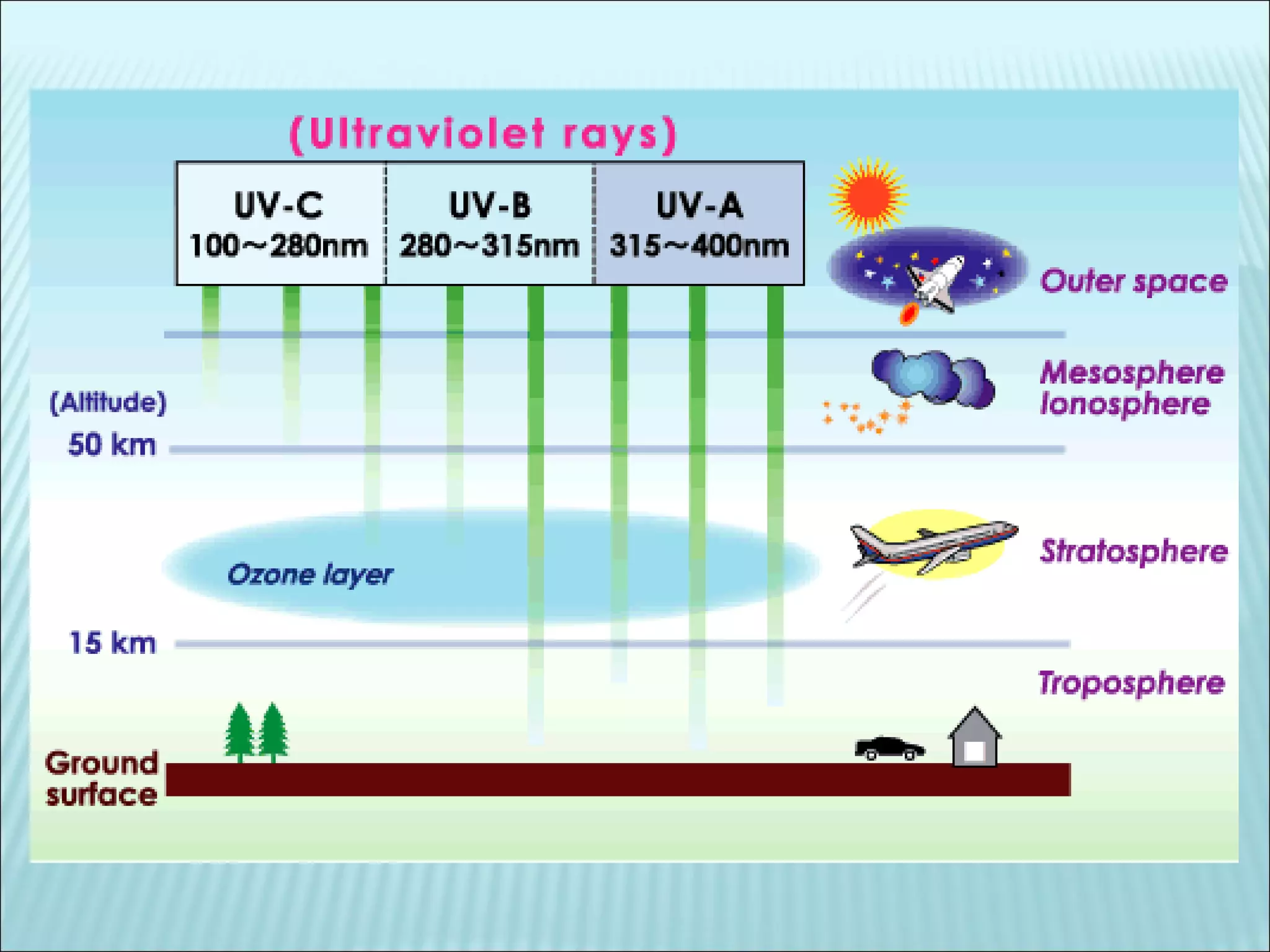
Just beyond the violet part of the visible spectrum are wavelengths of about 200 nm ., known as ultraviolet (UV) radiation. This radiation is very energetic . It causes tanning, but it can also do irreparable damage to us. UV rays can damage the cornea of the eye. More UV radiation is reaching us because the ozone layer in the atmosphere (which protects us from the damaging radiation by absorbing the UV rays) is being thinned . This thinning of the ozone layer is speeded-up by the use of aerosol sprays and Freon gas , which break up the ozone particles .
28.
29.
30.
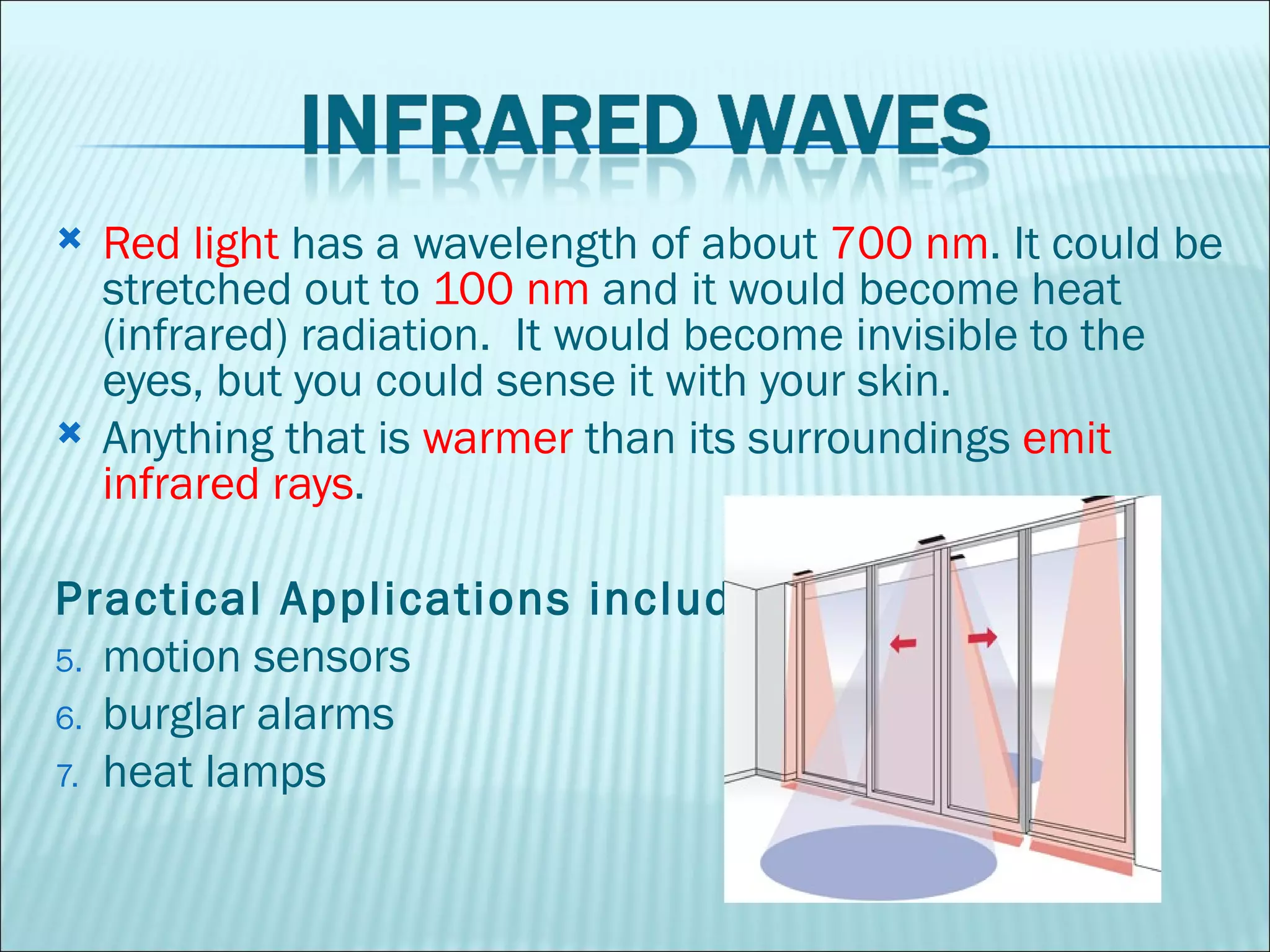
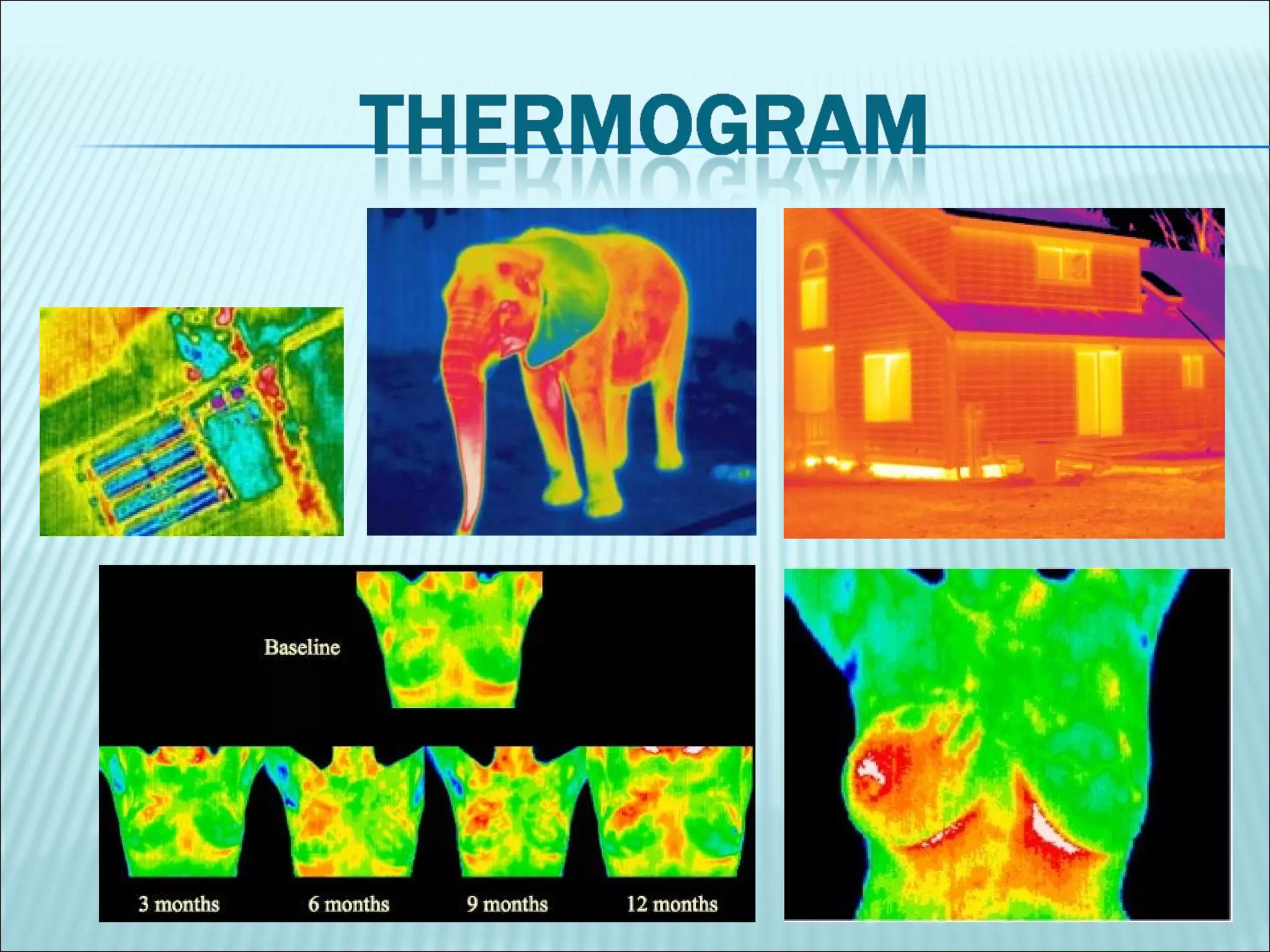
Red light has a wavelength of about 700 nm . It could be stretched out to 100 nm and it would become heat (infrared) radiation. It would become invisible to the eyes, but you could sense it with your skin. Anything that is warmer than its surroundings emit infrared rays . Practical Applications include: motion sensors burglar alarms heat lamps
31.
32.
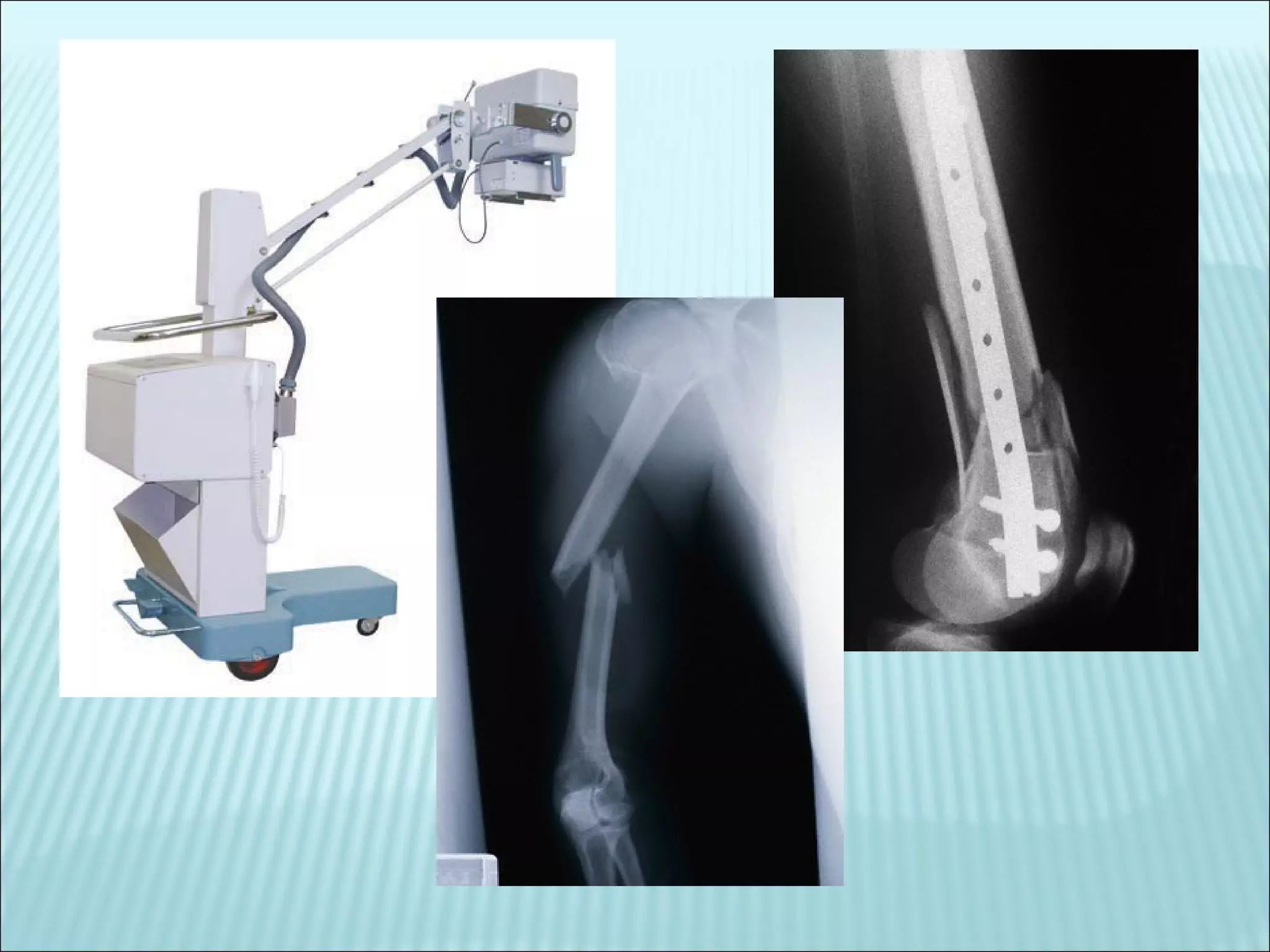
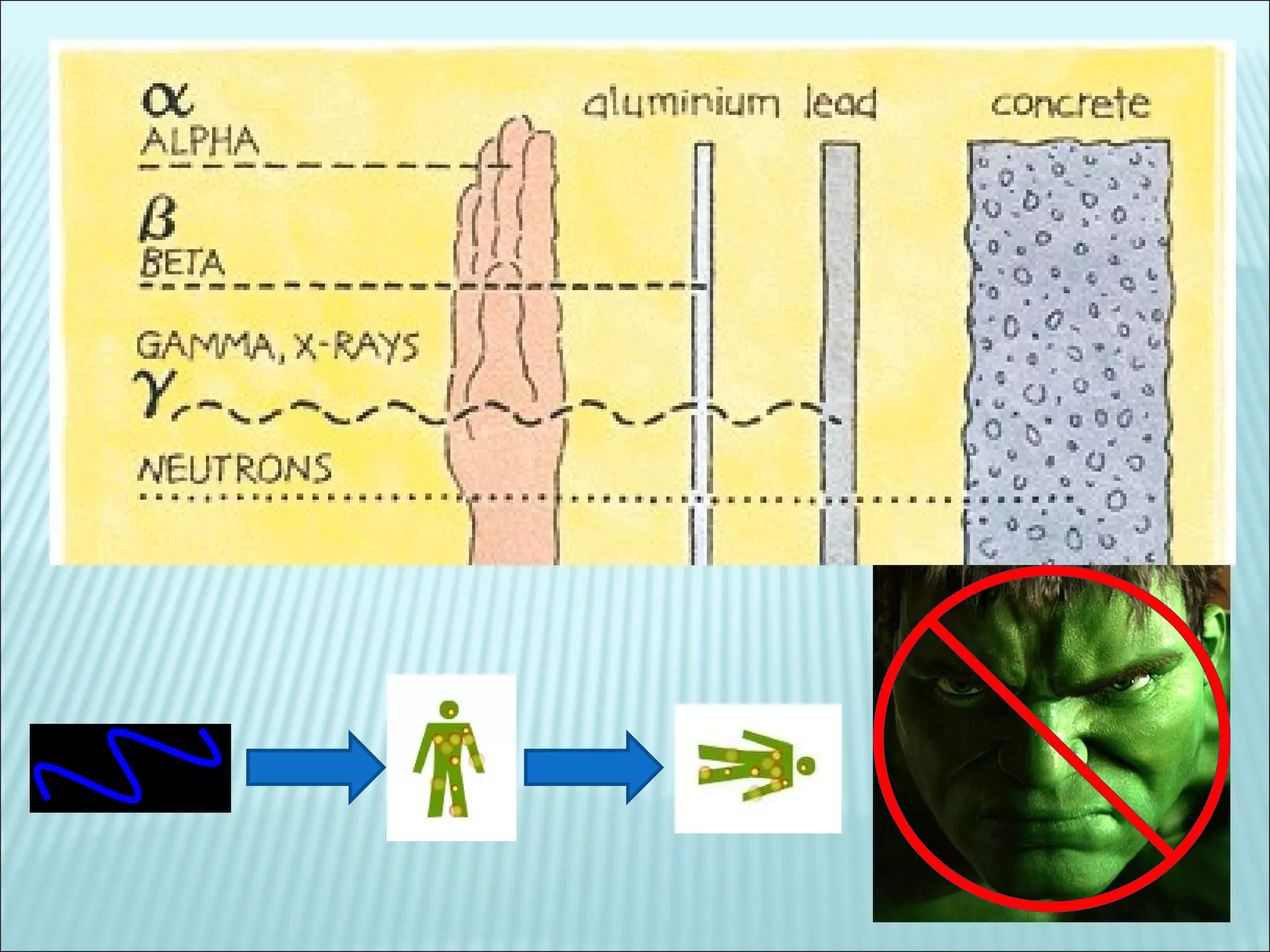
Even shorterwavelengths with higher frequencies are the X-rays. These waves pass through tissue (skin and muscle) and are absorbed by the bones . This radiation always stays in the bone and builds up over time. People who work as technicians taking the x-rays must protect themselves, by leaving the room where the x-ray is taken and also protect the patient's other areas of the body with lead vests to prevent over-exposure.
33.
34.
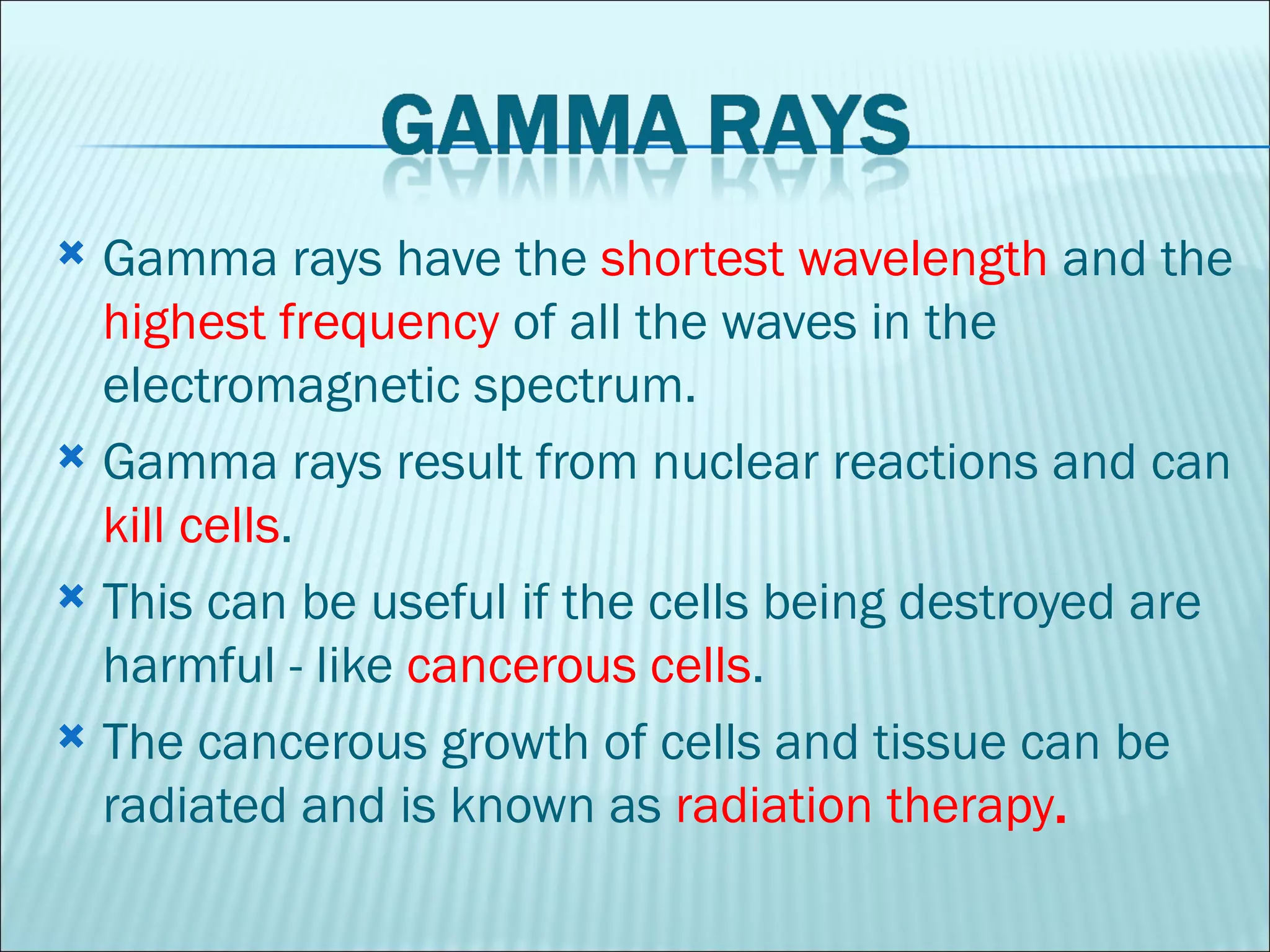
Gamma rays havethe shortest wavelength and the highest frequency of all the waves in the electromagnetic spectrum. Gamma rays result from nuclear reactions and can kill cells . This can be useful if the cells being destroyed are harmful - like cancerous cells . The cancerous growth of cells and tissue can be radiated and is known as radiation therapy .
35.
36.
... describe someof the technological applications of electromagnetic spectrum radiation? ... recognize the dangers associated with certain forms of radiation?
37.
#3. Why isit a good idea to wear a hat and sun block creams when spending time in the sun? ________________________________________________________________________________________________________ #4. Explain how radio waves can be used to determine the position of icebergs at sea? ________________________________________________________________________________________________________ #5. EMR can be used to treat cancer. What type of radiation would you use if you were an oncologist (cancer specialist)? Explain. ________________________________________________________________________________________________________