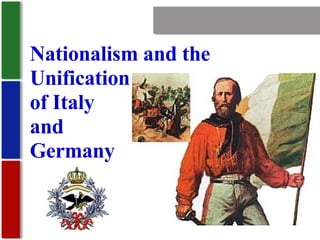
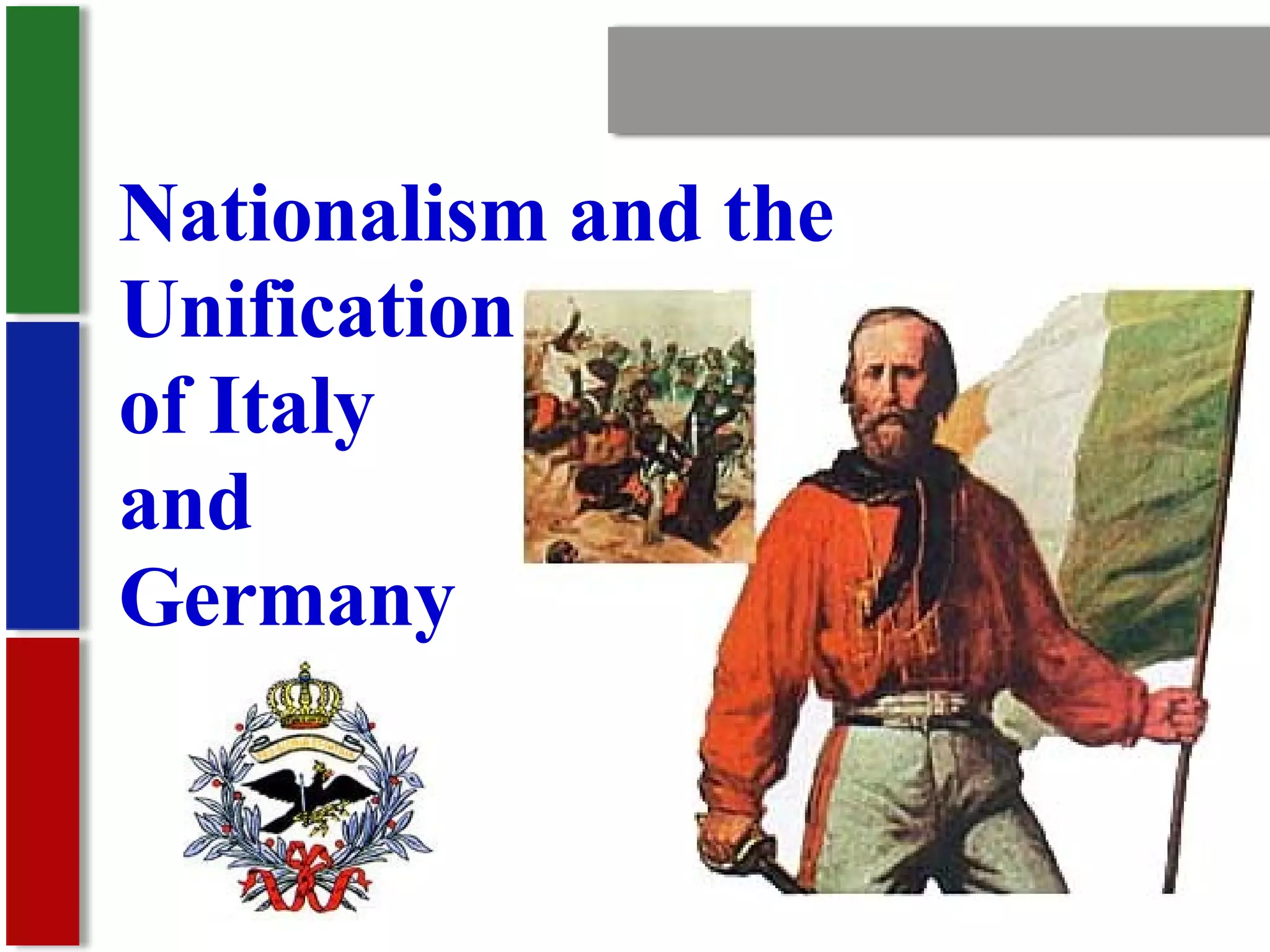
Nationalism Nationalism and the Unification of Italy and Germany
Nationalism Cultural Nationalism Focused on uniqueness of each group of people Not better, just different Created appreciation for history of national community Fostered pride in cultural accomplishments
Nationalism Political Nationalism Demanded loyalty from members of national group National culture was best Preserved when all people of that culture were contained in one national state
Nationalism Political Nationalism Sought to gather all members of one national group into a single nation Especially strong in German language areas Also felt among various Slavic groups in Austria-Hungary, Italy
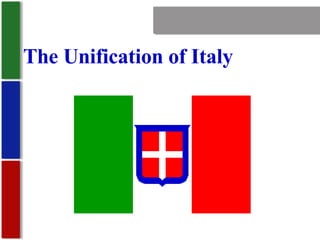
Nationalism The Unification of Italy
Nationalism Factors Hindering Italian  Unification At the end of the Napoleonic Era in 1815, certain factors mitigated against Italian unification.
Nationalism Factor One There was political division within the Congress of Vienna. Austria was opposed to Italian unification because it controlled the province of Venetia in northern Italy and fought any effort at unification.
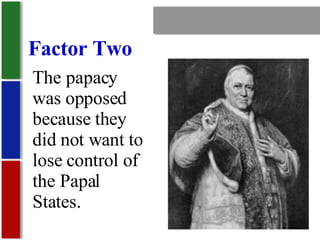
Nationalism Factor Two The papacy was opposed because they did not want to lose control of the Papal States.
Nationalism Factor Three There was discord among nationalists. Some favored a republic Others favored a liberal monarchy The existence of secret, patriotic societies would overcome these difficulties.
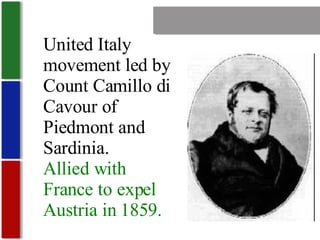
Nationalism United Italy movement led by Count Camillo di Cavour of Piedmont and Sardinia. Allied with France to expel Austria in 1859.
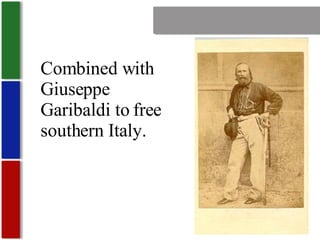
Nationalism Combined with Giuseppe Garibaldi to free southern Italy.
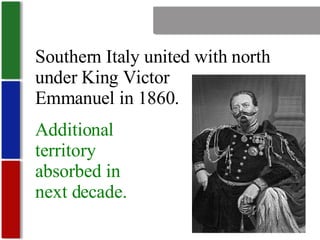
Nationalism Southern Italy united with north under King Victor Emmanuel in 1860. Additional territory absorbed in next decade.
Nationalism Last to be included were the Papal States in 1870.
Nationalism Problems After Unification The new Italian government was weak. The people of Italy lacked democratic tradition and responsibility. Ambitious nationalism existed without the real political and military power to accomplish it.
Nationalism The Unification of Germany
Nationalism Factors Hindering Unification In the north: Protestant Manufacturing Commerce In the south: Catholic Agricultural
Nationalism Factors Hindering Unification Opposition of Austria. Influential in post-Congress of Vienna Europe. Suppressed liberal and nationalistic movements within Germany.
Nationalism Factors Hindering Unification Opposition of France. A unified Germany would challenge France’s leadership in Europe. France felt more secure with weak neighbors.
Nationalism Factors Promoting Unity Common nationality. Napoleon’s influence: aroused German nationalism against him. Weakened Austrian authority. Reduced German states from 300 to less than 100.
Nationalism The Failure of 1848 Liberals convene the Frankfurt Assembly Proclaim a united Germany Wrote a constitution Offered the position of Emperor to the King of Prussia
Nationalism The Failure of 1848 Frederick William IV refused the offer. Liberals lacked military power to enforce ratification. Many liberals fled German territory. The way was open to autocratic leadership.
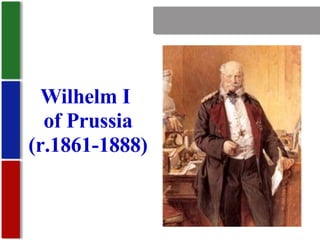
Nationalism Wilhelm I  of Prussia (r.1861-1888)
Nationalism Conservative. Doubled the size of the Prussian army. Junkers supported the king when the Reichstag refused monies for military expansion. Wilhelm then chose an aristocratic Junker as prime minister.
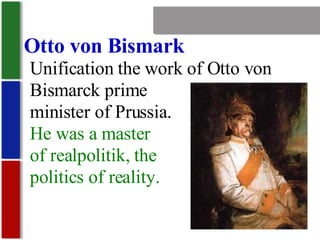
Nationalism Otto von Bismark Unification the work of Otto von Bismarck prime minister of Prussia. He was a master of realpolitik, the politics of reality.
Nationalism Otto von Bismark Opposed parliamentary government but was not against a constitutional monarchy with a strong monarch. He also knew that Prussia, and eventually Germany, would need a strong industrial base.
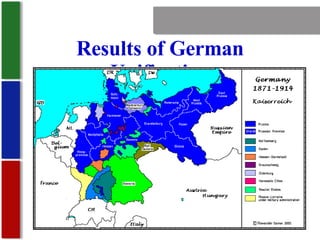
Nationalism In series of wars from 1864 to 1870 Bismarck united previously independent German states using the expanded army.
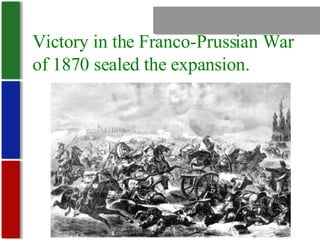
Nationalism Victory in the Franco-Prussian War of 1870 sealed the expansion.
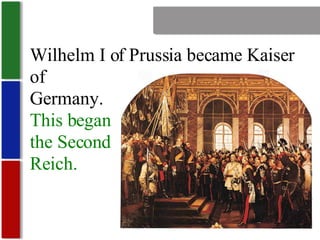
Nationalism Wilhelm I of Prussia became Kaiser of  Germany. This began  the Second  Reich.
Nationalism Results of German Unification
Nationalism Powerful new central European state created. Rich in natural and human resources. Militarily and economically, the German Empire will be stronger than Prussia had been alone.
Nationalism The unification of Germany was a blow to European liberalism because the new state was a conservative creation.

Nationalism

  • 1.
    Nationalism Nationalism andthe Unification of Italy and Germany
  • 2.
    Nationalism Cultural NationalismFocused on uniqueness of each group of people Not better, just different Created appreciation for history of national community Fostered pride in cultural accomplishments
  • 3.
    Nationalism Political NationalismDemanded loyalty from members of national group National culture was best Preserved when all people of that culture were contained in one national state
  • 4.
    Nationalism Political NationalismSought to gather all members of one national group into a single nation Especially strong in German language areas Also felt among various Slavic groups in Austria-Hungary, Italy
  • 5.
  • 6.
    Nationalism Factors HinderingItalian Unification At the end of the Napoleonic Era in 1815, certain factors mitigated against Italian unification.
  • 7.
    Nationalism Factor OneThere was political division within the Congress of Vienna. Austria was opposed to Italian unification because it controlled the province of Venetia in northern Italy and fought any effort at unification.
  • 8.
    Nationalism Factor TwoThe papacy was opposed because they did not want to lose control of the Papal States.
  • 9.
    Nationalism Factor ThreeThere was discord among nationalists. Some favored a republic Others favored a liberal monarchy The existence of secret, patriotic societies would overcome these difficulties.
  • 10.
    Nationalism United Italymovement led by Count Camillo di Cavour of Piedmont and Sardinia. Allied with France to expel Austria in 1859.
  • 11.
    Nationalism Combined withGiuseppe Garibaldi to free southern Italy.
  • 12.
    Nationalism Southern Italyunited with north under King Victor Emmanuel in 1860. Additional territory absorbed in next decade.
  • 13.
    Nationalism Last tobe included were the Papal States in 1870.
  • 14.
    Nationalism Problems AfterUnification The new Italian government was weak. The people of Italy lacked democratic tradition and responsibility. Ambitious nationalism existed without the real political and military power to accomplish it.
  • 15.
  • 16.
    Nationalism Factors HinderingUnification In the north: Protestant Manufacturing Commerce In the south: Catholic Agricultural
  • 17.
    Nationalism Factors HinderingUnification Opposition of Austria. Influential in post-Congress of Vienna Europe. Suppressed liberal and nationalistic movements within Germany.
  • 18.
    Nationalism Factors HinderingUnification Opposition of France. A unified Germany would challenge France’s leadership in Europe. France felt more secure with weak neighbors.
  • 19.
    Nationalism Factors PromotingUnity Common nationality. Napoleon’s influence: aroused German nationalism against him. Weakened Austrian authority. Reduced German states from 300 to less than 100.
  • 20.
    Nationalism The Failureof 1848 Liberals convene the Frankfurt Assembly Proclaim a united Germany Wrote a constitution Offered the position of Emperor to the King of Prussia
  • 21.
    Nationalism The Failureof 1848 Frederick William IV refused the offer. Liberals lacked military power to enforce ratification. Many liberals fled German territory. The way was open to autocratic leadership.
  • 22.
    Nationalism Wilhelm I of Prussia (r.1861-1888)
  • 23.
    Nationalism Conservative. Doubledthe size of the Prussian army. Junkers supported the king when the Reichstag refused monies for military expansion. Wilhelm then chose an aristocratic Junker as prime minister.
  • 24.
    Nationalism Otto vonBismark Unification the work of Otto von Bismarck prime minister of Prussia. He was a master of realpolitik, the politics of reality.
  • 25.
    Nationalism Otto vonBismark Opposed parliamentary government but was not against a constitutional monarchy with a strong monarch. He also knew that Prussia, and eventually Germany, would need a strong industrial base.
  • 26.
    Nationalism In seriesof wars from 1864 to 1870 Bismarck united previously independent German states using the expanded army.
  • 27.
    Nationalism Victory inthe Franco-Prussian War of 1870 sealed the expansion.
  • 28.
    Nationalism Wilhelm Iof Prussia became Kaiser of Germany. This began the Second Reich.
  • 29.
    Nationalism Results ofGerman Unification
  • 30.
    Nationalism Powerful newcentral European state created. Rich in natural and human resources. Militarily and economically, the German Empire will be stronger than Prussia had been alone.
  • 31.
    Nationalism The unificationof Germany was a blow to European liberalism because the new state was a conservative creation.