



SCIATIC NERVE
DR. MUSADDIQ KHAN DURRANI
MBBS, MCPS®
ANESTHESIA & INTENSIVE CARE
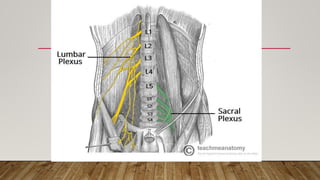
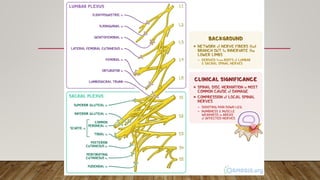
• Sacral plexus is a network of nerves formed by the lumbosacral trunk (L4, L5) and
sacral spinal nerves (S1 - S4).
• On the posterior pelvic wall.
• In front of the piriformis muscle
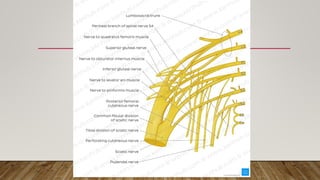
• The sacral plexus provides motor and sensory innervation through the following
nerves:
• Pudendal Nerve
• Sciatic Nerve (L4 - S3)
• Superior Gluteal Nerve
• Inferior Gluteal Nerve
• Nerve to Obturator Internus
• Nerve to Quadratus Femoris
• Posterior Femoral Cutaneous Nerve
• Perforating Cutaneous Nerve
• Nerve to Piriformis
• Obturator Nerve
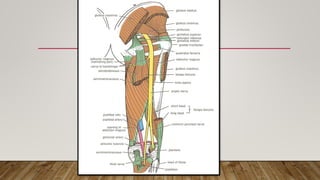
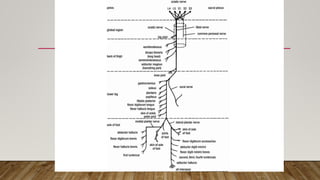
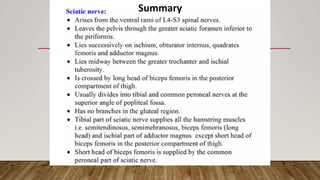
SCIATIC NERVE
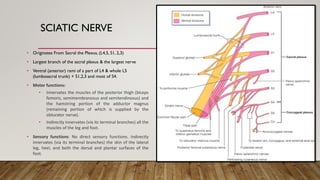
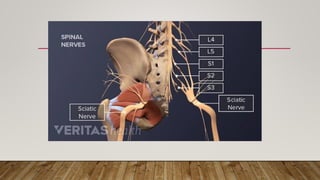
• Originates From Sacral the Plexus, (L4,5, S1, 2,3)
• Largest branch of the sacral plexus & the largest nerve
• Ventral (anterior) rami of a part of L4 & whole L5
(lumbosacral trunk) + S1,2,3 and most of S4.
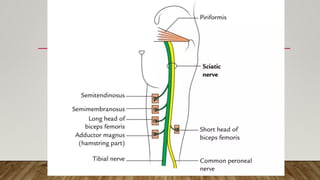
• Motor functions:
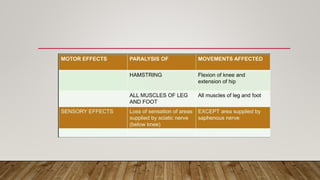
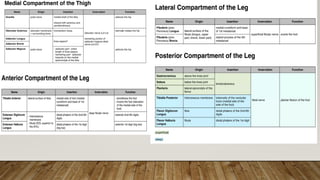
• Innervates the muscles of the posterior thigh (biceps
femoris, semimembranosus and semitendinosus) and
the hamstring portion of the adductor magnus
(remaining portion of which is supplied by the
obturator nerve).
• Indirectly innervates (via its terminal branches) all the
muscles of the leg and foot.
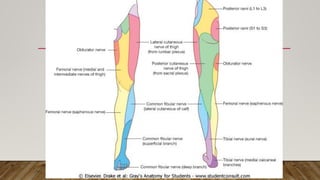
• Sensory functions: No direct sensory functions. Indirectly
innervates (via its terminal branches) the skin of the lateral
leg, heel, and both the dorsal and plantar surfaces of the
foot.
COARSE
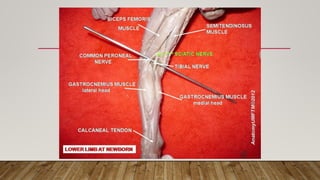
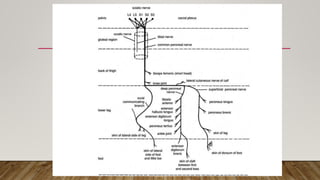
➢ Sciatic nerve is the widest nerve of the body,
➢ consisting of two components namely the tibial and common peroneal component, both of which initially
form a common trunk from the lumbosacral plexus.
➢ The tibial component is from the ventral branches of ventral rami of L4 to S3 spinal nerves.
➢ The common peroneal component is from the dorsal branches of ventral rami of L4 to S2 spinal nerves
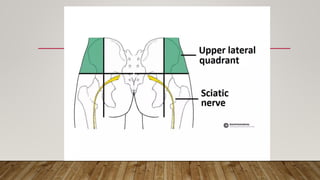
➢ Usually the sciatic nerve enters the gluteal region from the pelvic cavity by passing through the greater
sciatic foramen under the piriformis muscle.
➢ It descends beneath the gluteus maximus muscle, between the ischial tuberosity and greater trochanter
of femur and reaches the back of the thigh.At superior angle of popliteal fossa, sciatic nerve divides into
tibial and common peroneal nerves
• Sciatica describes the condition in which patients have pain along the sensory distribution
of the sciatic nerve.
• Thus the pain is experienced in the posterior aspect of the thigh, the posterior and lateral
sides of the leg, and the lateral part of the foot.
Causes of Sciatica :
• Prolapse of an intervertebral disc, with pressure on one or more of the roots of the sciatic
nerve (lower lumbar and sacral spinal nerves).
• Pressure on the sacral plexus or sciatic nerve by an interpelvic tumor, (Piriformis tumor)
• Inflammation of the sciatic nerve or its terminal branches.
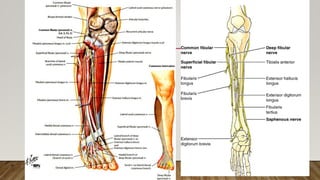
COMMON PERONEAL NERVE
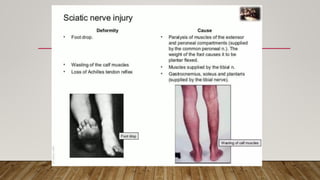
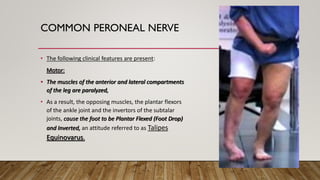
• The following clinical features are present:
Motor:
• The muscles of the anterior and lateral compartments
of the leg are paralyzed,
• As a result, the opposing muscles, the plantar flexors
of the ankle joint and the invertors of the subtalar
joints, cause the foot to be Plantar Flexed (Foot Drop)
and Inverted, an attitude referred to as Talipes
Equinovarus.
TIBIAL NERVE
• Deep, rarely injured
• All the muscles in the back of the leg and the sole of the foot are paralyzed.
• The opposing muscles Dorsiflex the foot at the ankle joint and Evert the foot at the
subtalar joint, an attitude referred to as Taleps Calcaneovalgus.
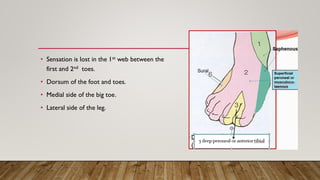
• Sensation is lost in the 1st web between the
first and 2nd toes.
• Dorsum of the foot and toes.
• Medial side of the big toe.
• Lateral side of the leg.
Sciatic Nerve PDF
Sciatic Nerve PDF
Sciatic Nerve PDF
Sciatic Nerve PDF
Sciatic Nerve PDF
Sciatic Nerve PDF

Sciatic Nerve PDF

  • 1.
    SCIATIC NERVE DR. MUSADDIQKHAN DURRANI MBBS, MCPS® ANESTHESIA & INTENSIVE CARE
  • 5.
    • Sacral plexusis a network of nerves formed by the lumbosacral trunk (L4, L5) and sacral spinal nerves (S1 - S4). • On the posterior pelvic wall. • In front of the piriformis muscle
  • 6.
    • The sacralplexus provides motor and sensory innervation through the following nerves: • Pudendal Nerve • Sciatic Nerve (L4 - S3) • Superior Gluteal Nerve • Inferior Gluteal Nerve • Nerve to Obturator Internus • Nerve to Quadratus Femoris • Posterior Femoral Cutaneous Nerve • Perforating Cutaneous Nerve • Nerve to Piriformis • Obturator Nerve
  • 7.
    SCIATIC NERVE • OriginatesFrom Sacral the Plexus, (L4,5, S1, 2,3) • Largest branch of the sacral plexus & the largest nerve • Ventral (anterior) rami of a part of L4 & whole L5 (lumbosacral trunk) + S1,2,3 and most of S4. • Motor functions: • Innervates the muscles of the posterior thigh (biceps femoris, semimembranosus and semitendinosus) and the hamstring portion of the adductor magnus (remaining portion of which is supplied by the obturator nerve). • Indirectly innervates (via its terminal branches) all the muscles of the leg and foot. • Sensory functions: No direct sensory functions. Indirectly innervates (via its terminal branches) the skin of the lateral leg, heel, and both the dorsal and plantar surfaces of the foot.
  • 8.
    COARSE ➢ Sciatic nerveis the widest nerve of the body, ➢ consisting of two components namely the tibial and common peroneal component, both of which initially form a common trunk from the lumbosacral plexus. ➢ The tibial component is from the ventral branches of ventral rami of L4 to S3 spinal nerves. ➢ The common peroneal component is from the dorsal branches of ventral rami of L4 to S2 spinal nerves ➢ Usually the sciatic nerve enters the gluteal region from the pelvic cavity by passing through the greater sciatic foramen under the piriformis muscle. ➢ It descends beneath the gluteus maximus muscle, between the ischial tuberosity and greater trochanter of femur and reaches the back of the thigh.At superior angle of popliteal fossa, sciatic nerve divides into tibial and common peroneal nerves
  • 22.
    • Sciatica describesthe condition in which patients have pain along the sensory distribution of the sciatic nerve. • Thus the pain is experienced in the posterior aspect of the thigh, the posterior and lateral sides of the leg, and the lateral part of the foot. Causes of Sciatica : • Prolapse of an intervertebral disc, with pressure on one or more of the roots of the sciatic nerve (lower lumbar and sacral spinal nerves). • Pressure on the sacral plexus or sciatic nerve by an interpelvic tumor, (Piriformis tumor) • Inflammation of the sciatic nerve or its terminal branches.
  • 23.
    COMMON PERONEAL NERVE •The following clinical features are present: Motor: • The muscles of the anterior and lateral compartments of the leg are paralyzed, • As a result, the opposing muscles, the plantar flexors of the ankle joint and the invertors of the subtalar joints, cause the foot to be Plantar Flexed (Foot Drop) and Inverted, an attitude referred to as Talipes Equinovarus.
  • 24.
    TIBIAL NERVE • Deep,rarely injured • All the muscles in the back of the leg and the sole of the foot are paralyzed. • The opposing muscles Dorsiflex the foot at the ankle joint and Evert the foot at the subtalar joint, an attitude referred to as Taleps Calcaneovalgus.
  • 25.
    • Sensation islost in the 1st web between the first and 2nd toes. • Dorsum of the foot and toes. • Medial side of the big toe. • Lateral side of the leg.