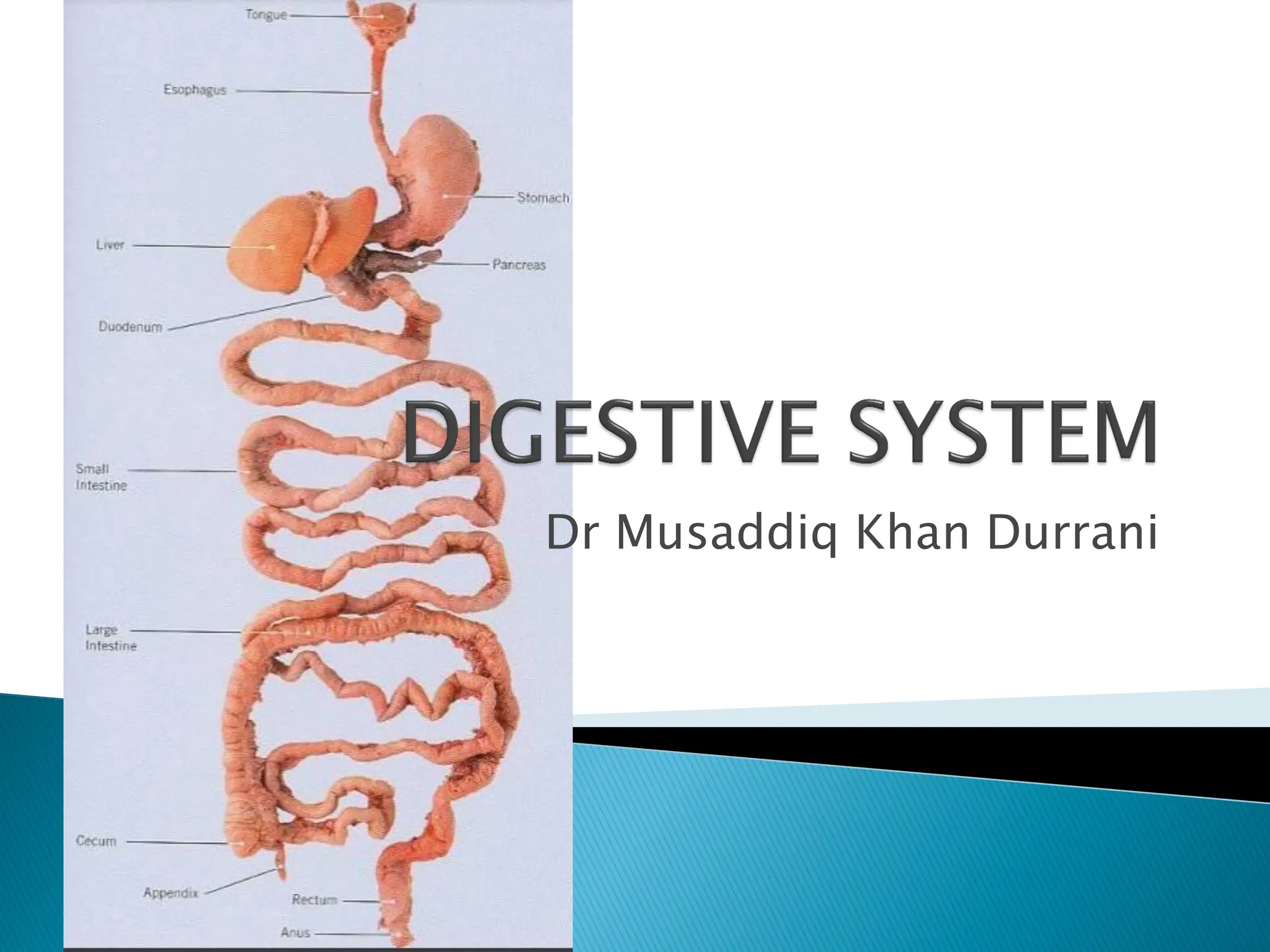
Dr Musaddiq Khan Durrani
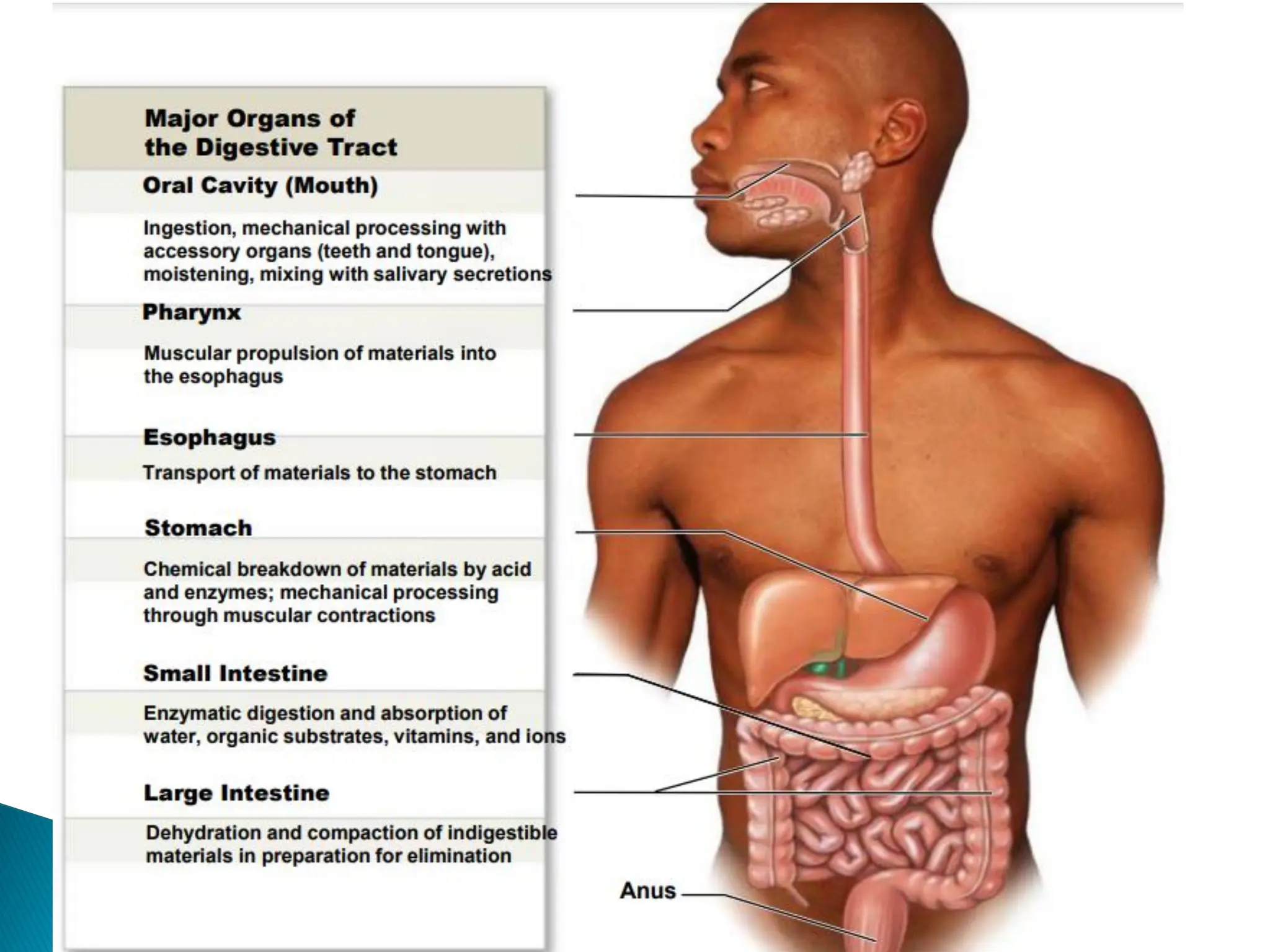
 Ingestion = intake of food
 Digestion = breakdown of complex nutrient
molecules into simple nutrient molecules
 Absorption = uptake of nutrients into the
blood and lymph
 Defecation = elimination of undigested
material
 Mechanical Digestion is the physical breakdown
of food into smaller particles by:
 – chewing with teeth
 – churning with stomach and intestines
 Chemical Digestion is series of hydrolysis
reactions by acid (from the stomach) and
enzymes (from saliva, stomach, pancreas,
intestines) that break down nutrient
macromolecules into their monomers: –
polysaccharides monosaccharides – proteins
(polypeptides) amino acids – fats glycerol and
fatty acids
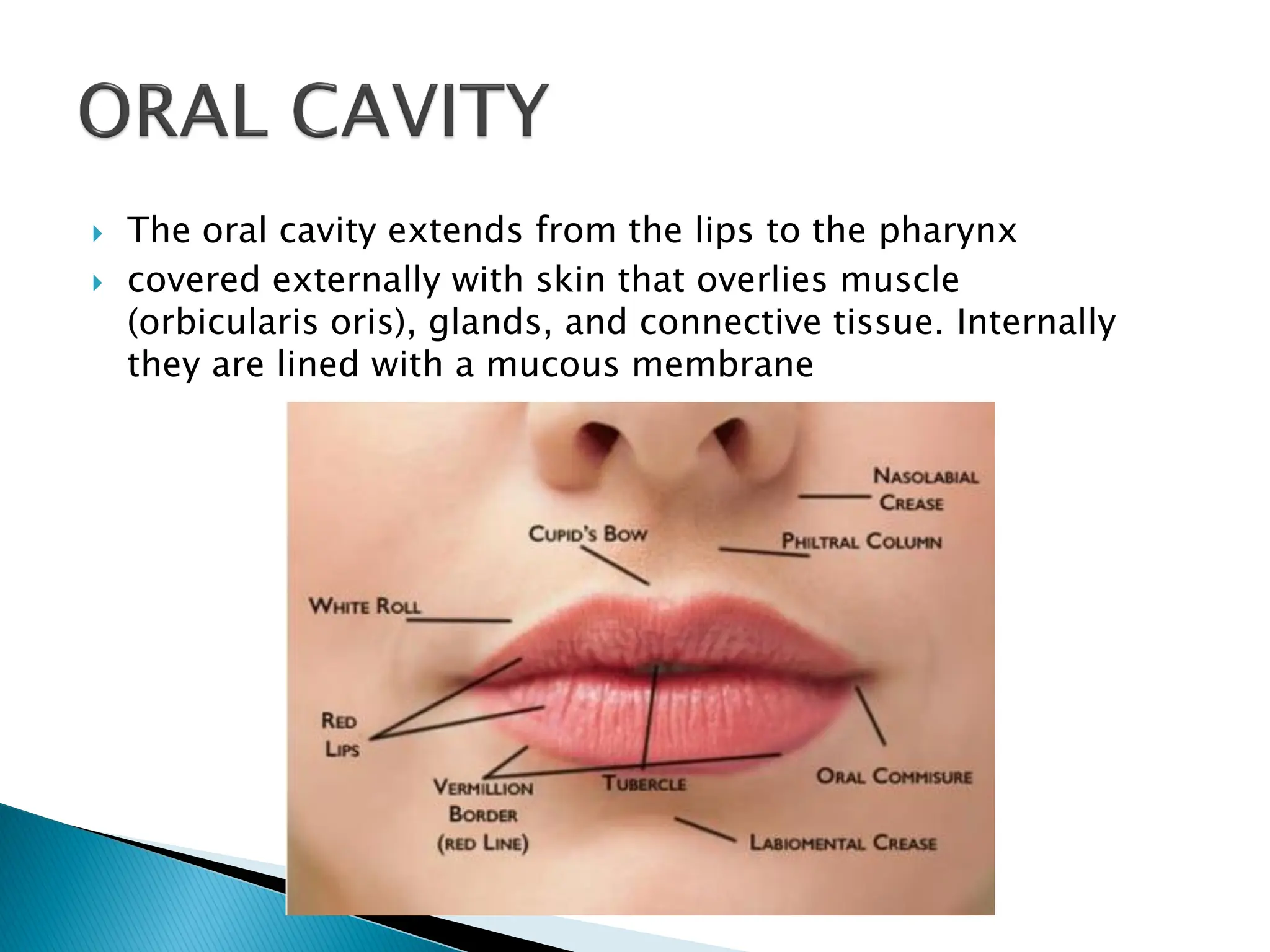
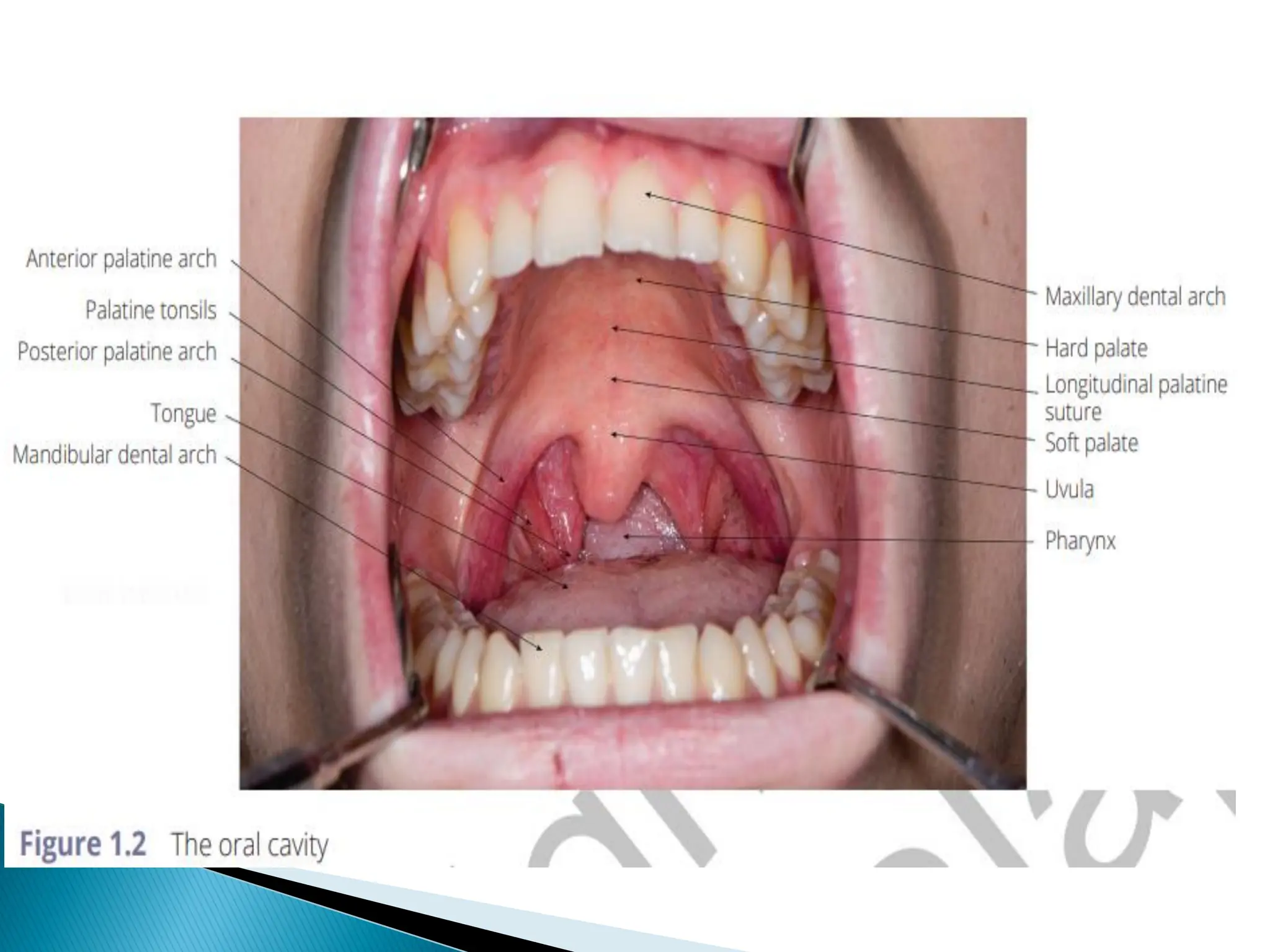
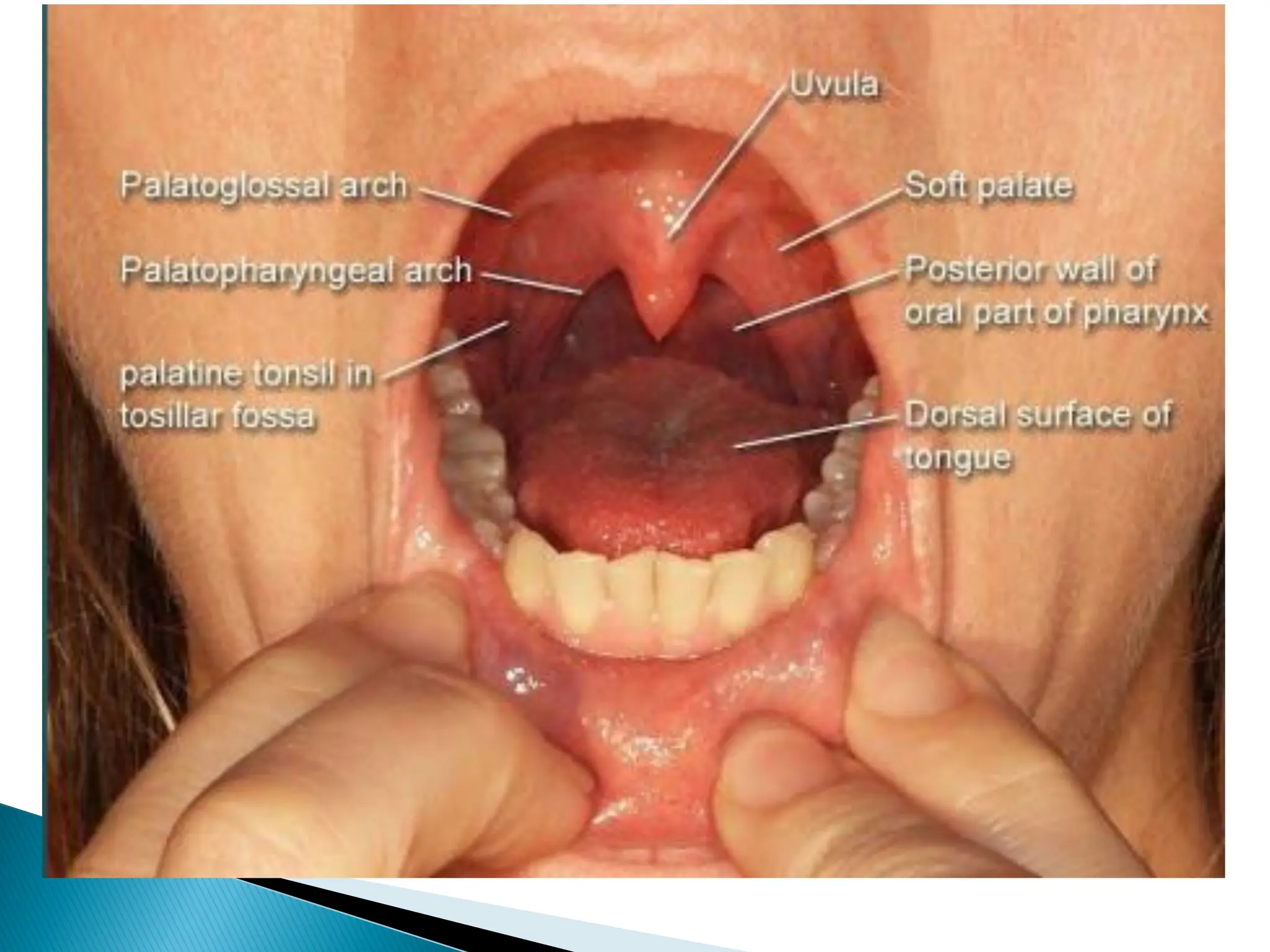
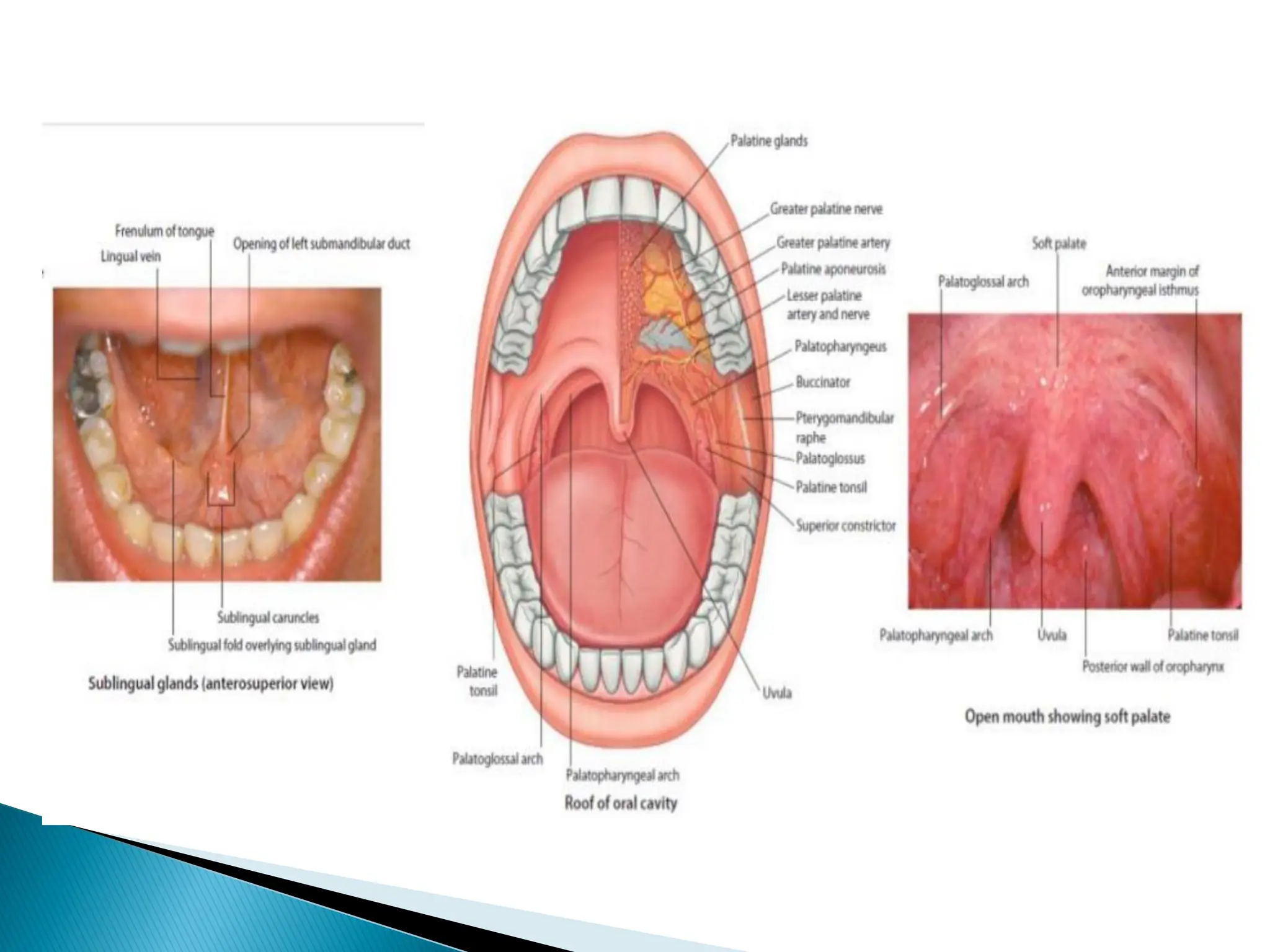
 The oral cavity extends from the lips to the pharynx
 covered externally with skin that overlies muscle
(orbicularis oris), glands, and connective tissue. Internally
they are lined with a mucous membrane
 Its primary function is to serve as the
entrance of the alimentary tract and to initiate
the digestive process by salivation and
propulsion of the alimentary bolus into the
pharynx.
 It also serves as a secondary respiratory
conduit, a site of sound modification for the
production of speech, and a chemosensory
organ
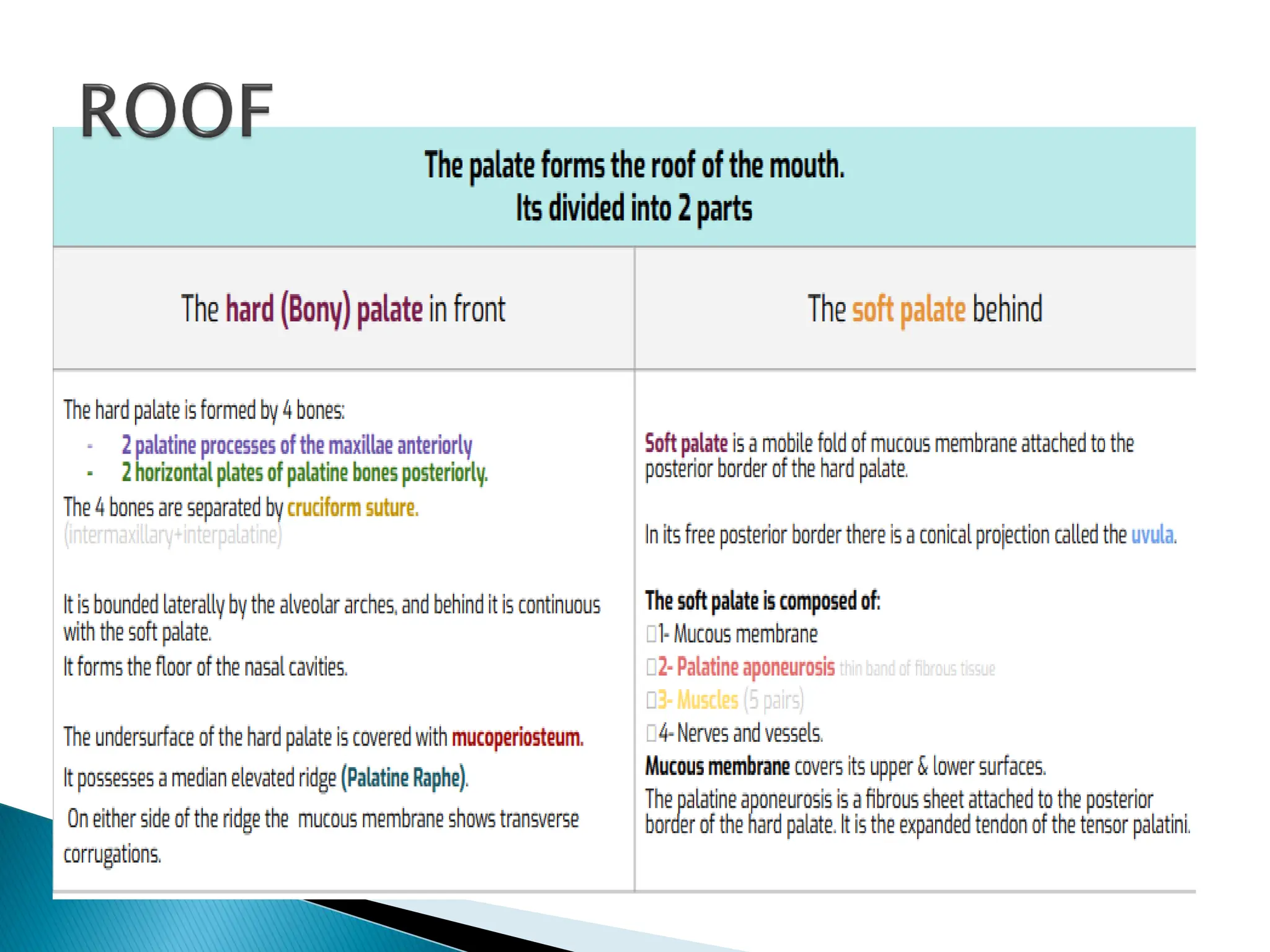
 It is bound by the lips anteriorly, the
cheeks(buccinator Muscle) laterally, the floor
of the mouth inferiorly, the oropharynx
posteriorly, and the palate superiorly.
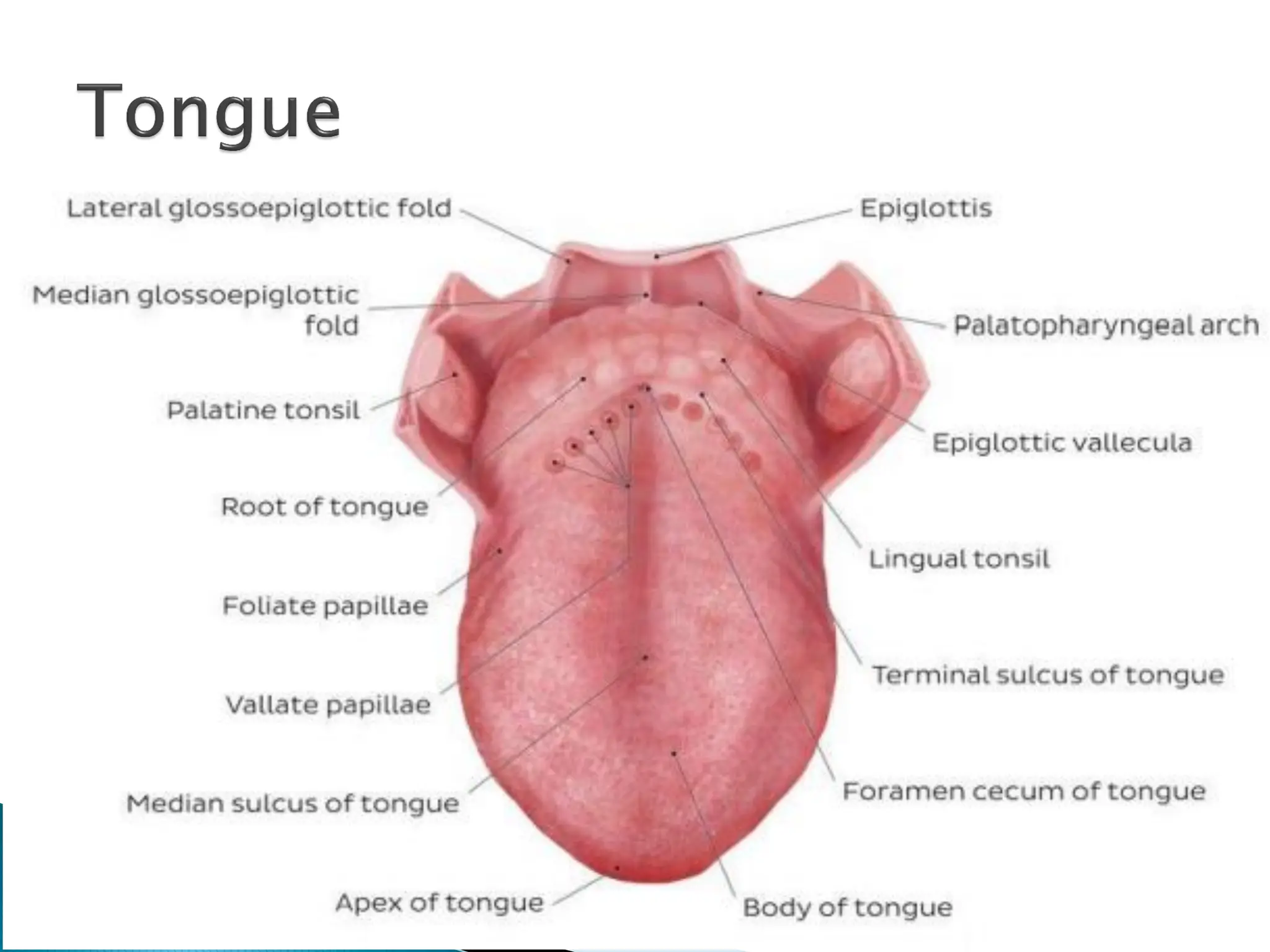
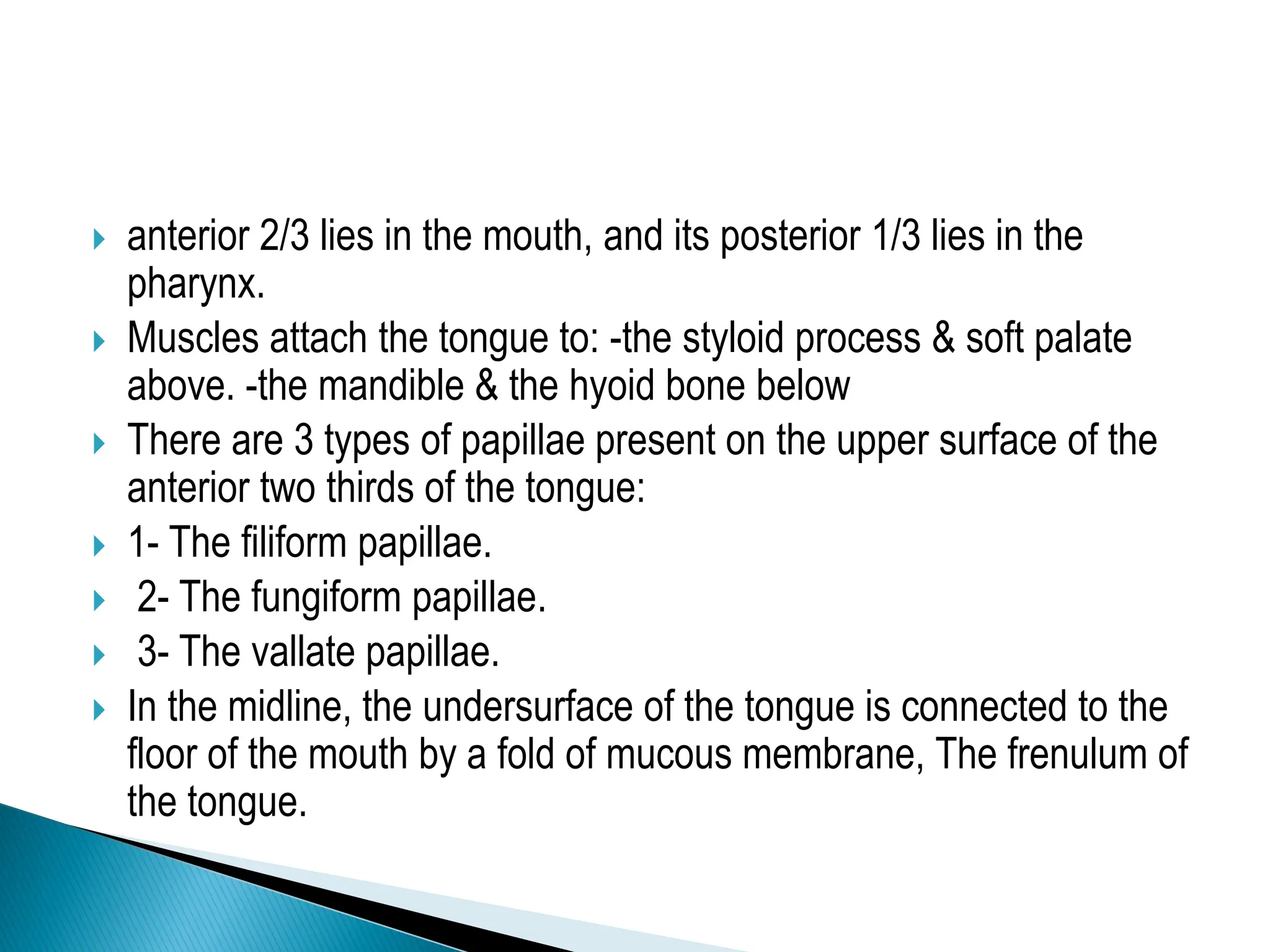
 anterior 2/3 lies in the mouth, and its posterior 1/3 lies in the
pharynx.
 Muscles attach the tongue to: -the styloid process & soft palate
above. -the mandible & the hyoid bone below
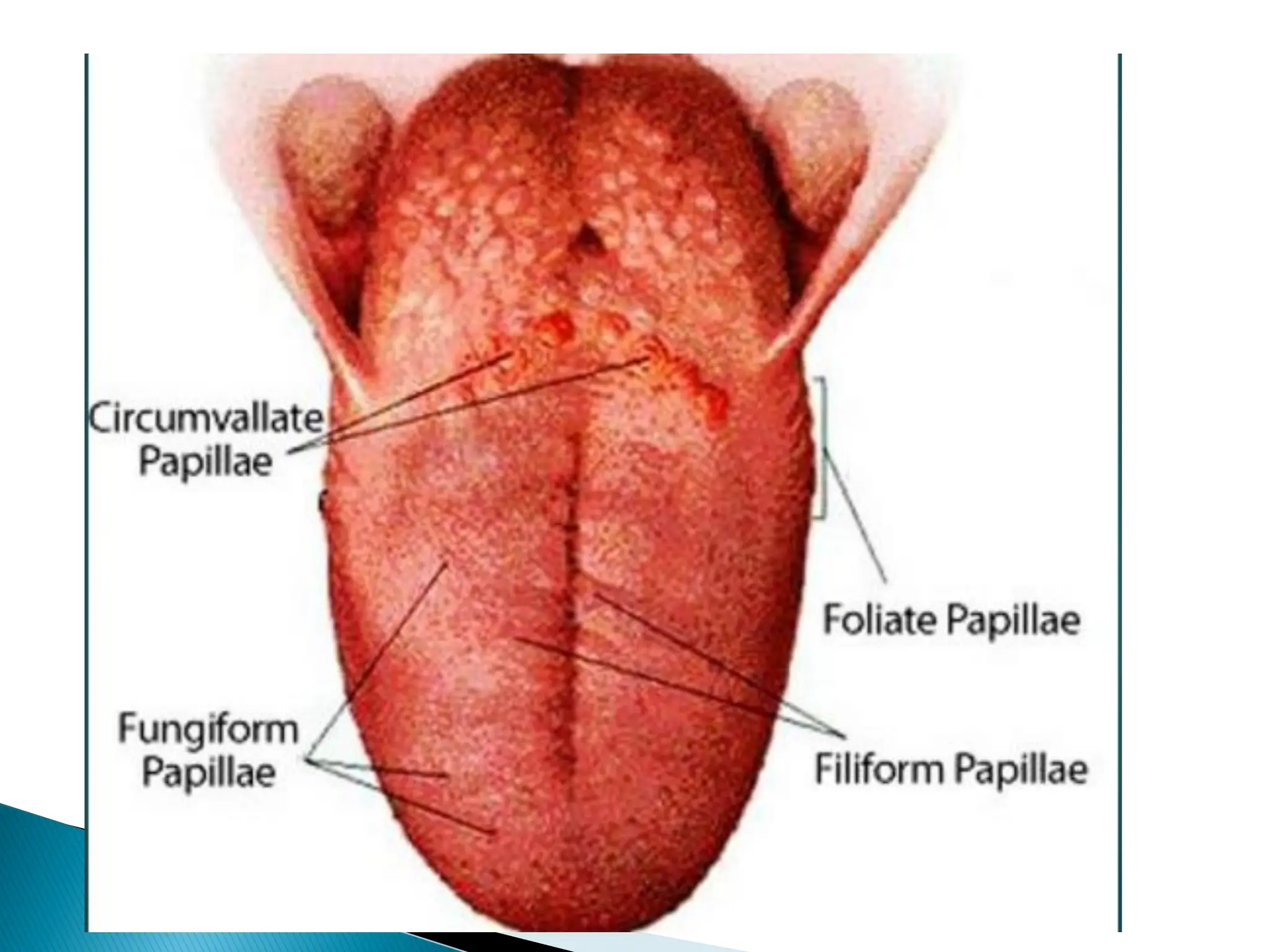
 There are 3 types of papillae present on the upper surface of the
anterior two thirds of the tongue:
 1- The filiform papillae.
 2- The fungiform papillae.
 3- The vallate papillae.
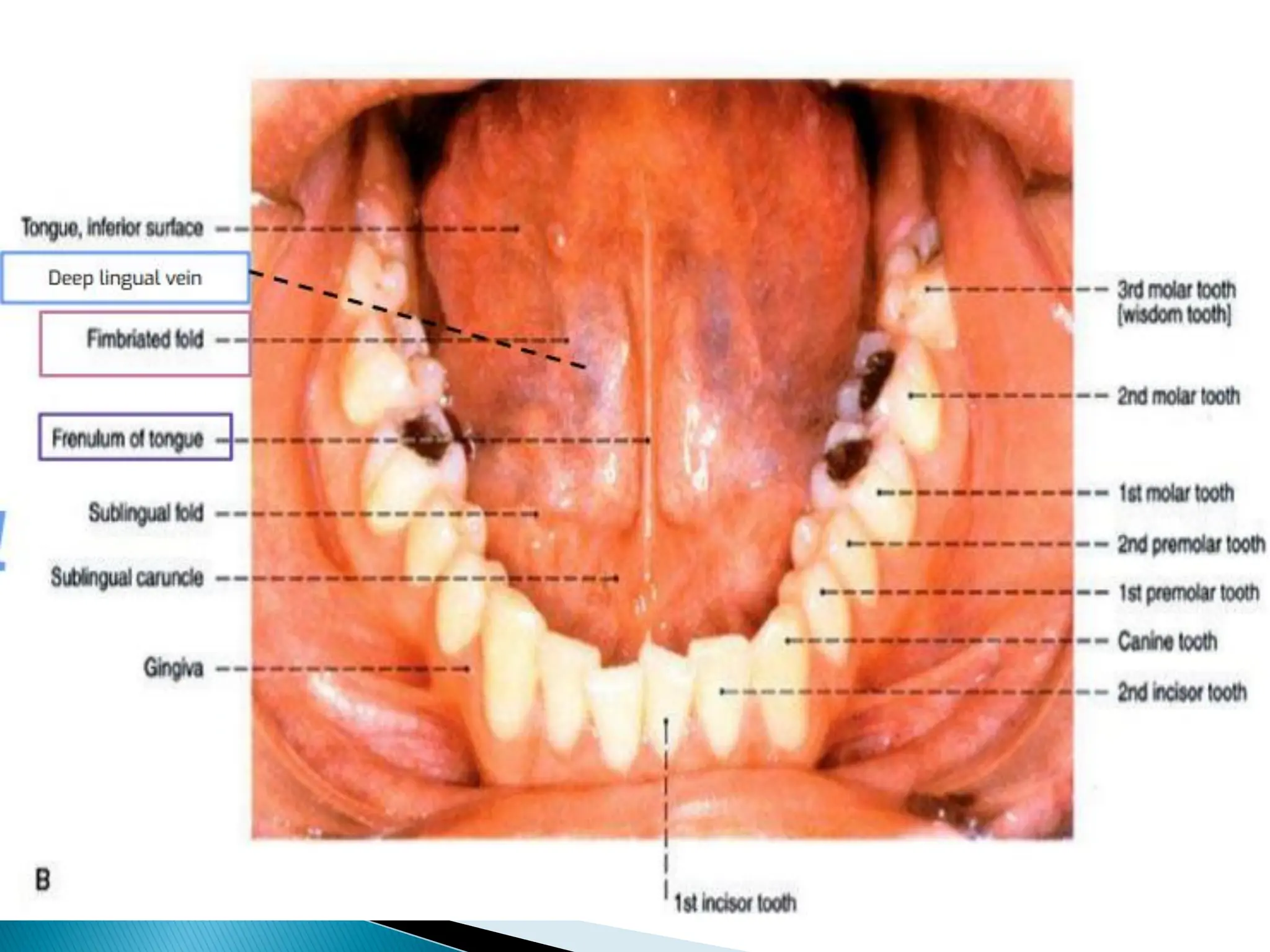
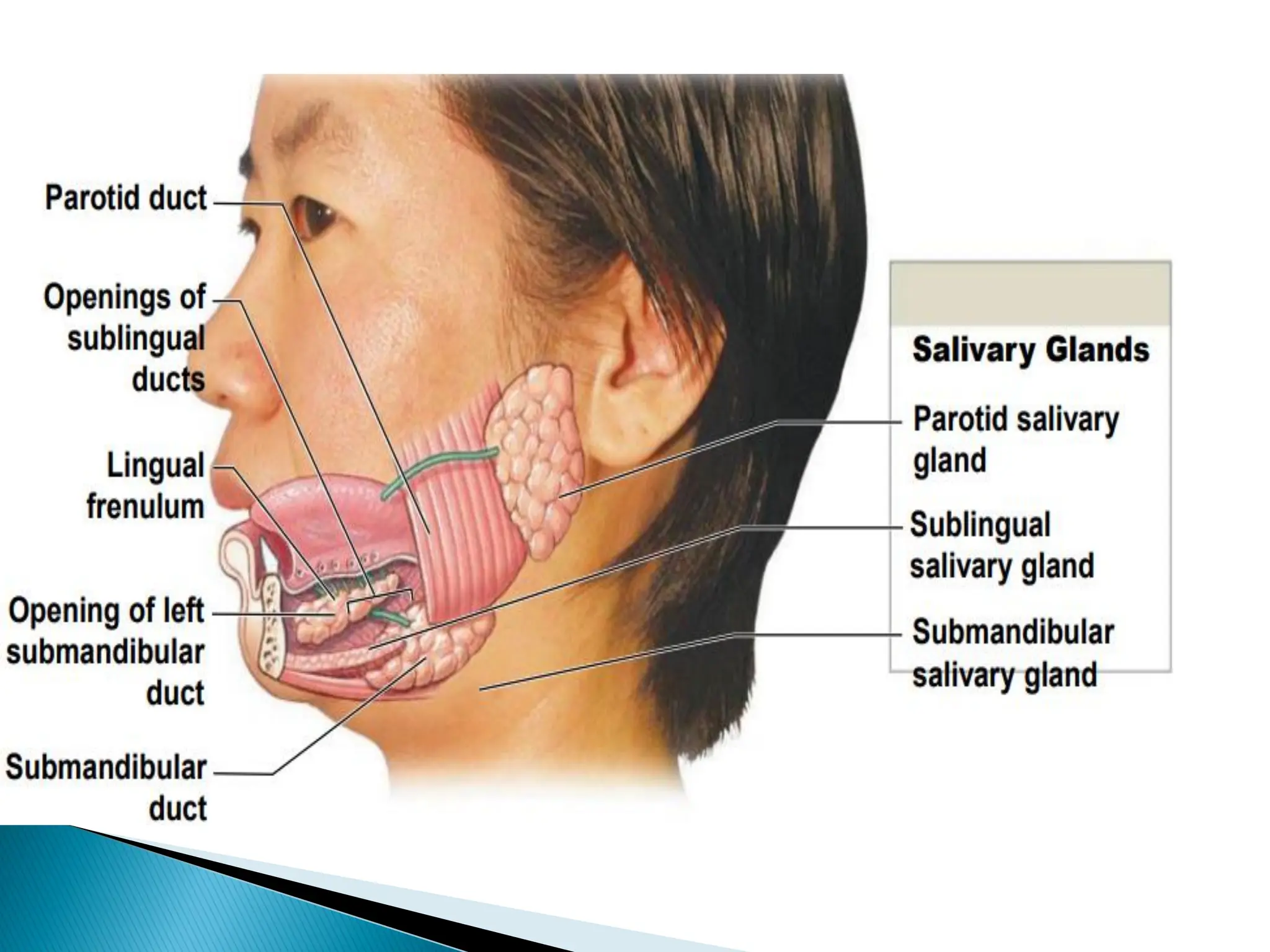
 In the midline, the undersurface of the tongue is connected to the
floor of the mouth by a fold of mucous membrane, The frenulum of
the tongue.
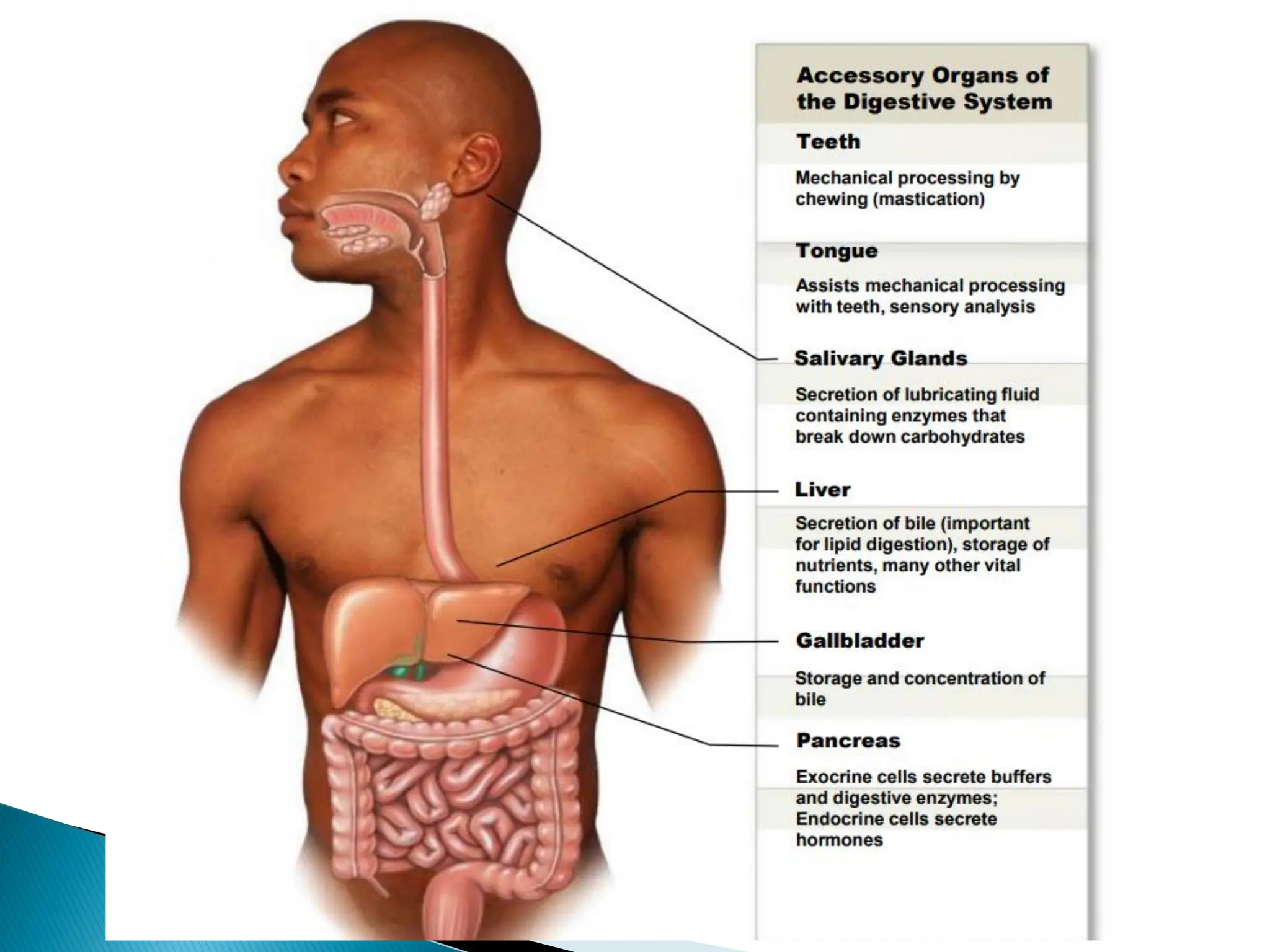
 1. Sensory analysis
 • Of material before swallowing
 2. Mechanical processing
 • Through actions of teeth, tongue, and palatal surfaces
 3. Lubrication • Mixing with mucus and salivary gland secretions
 4. Limited digestion
 • Of carbohydrates and lipids
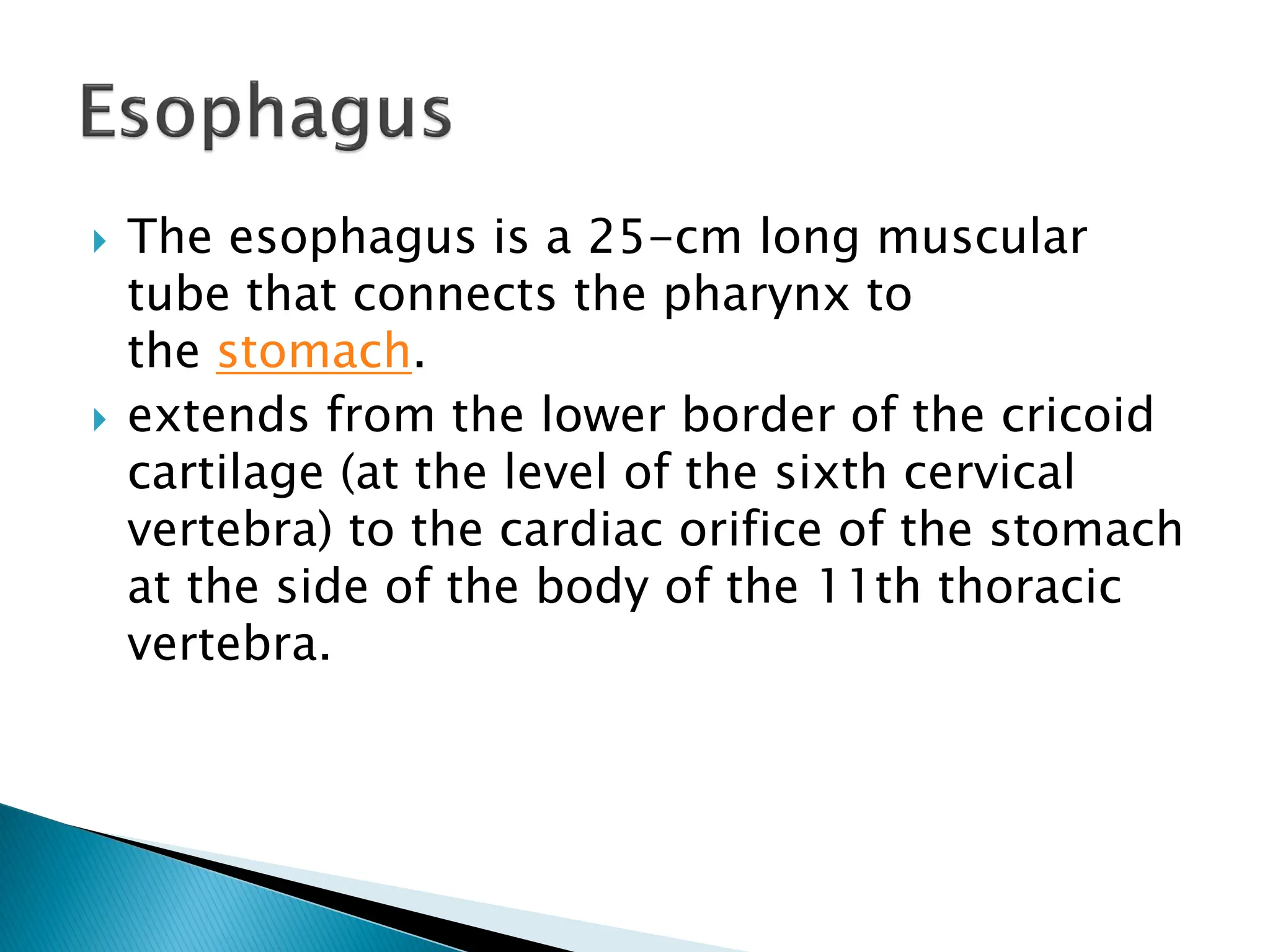
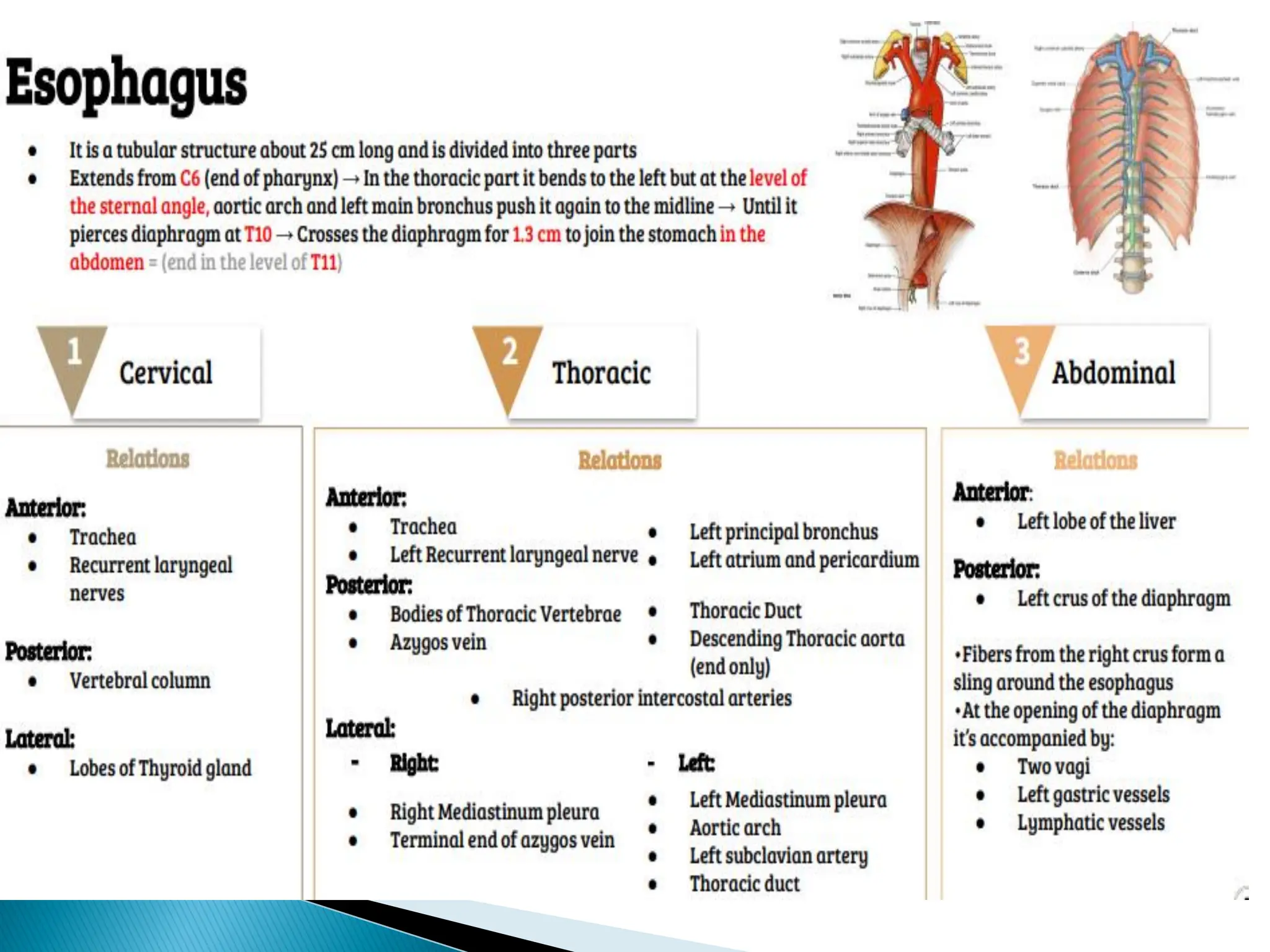
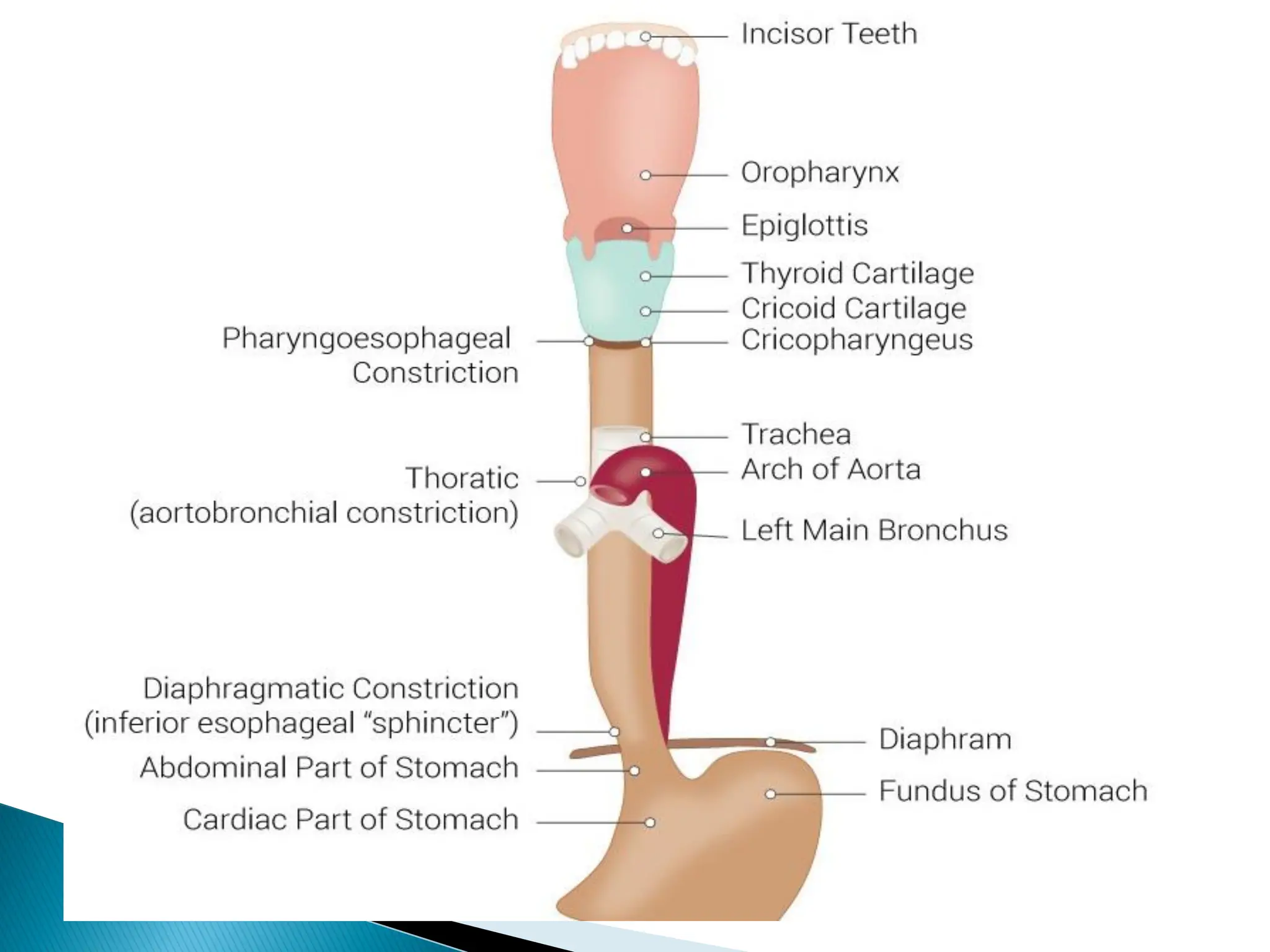
 The esophagus is a 25-cm long muscular
tube that connects the pharynx to
the stomach.
 extends from the lower border of the cricoid
cartilage (at the level of the sixth cervical
vertebra) to the cardiac orifice of the stomach
at the side of the body of the 11th thoracic
vertebra.
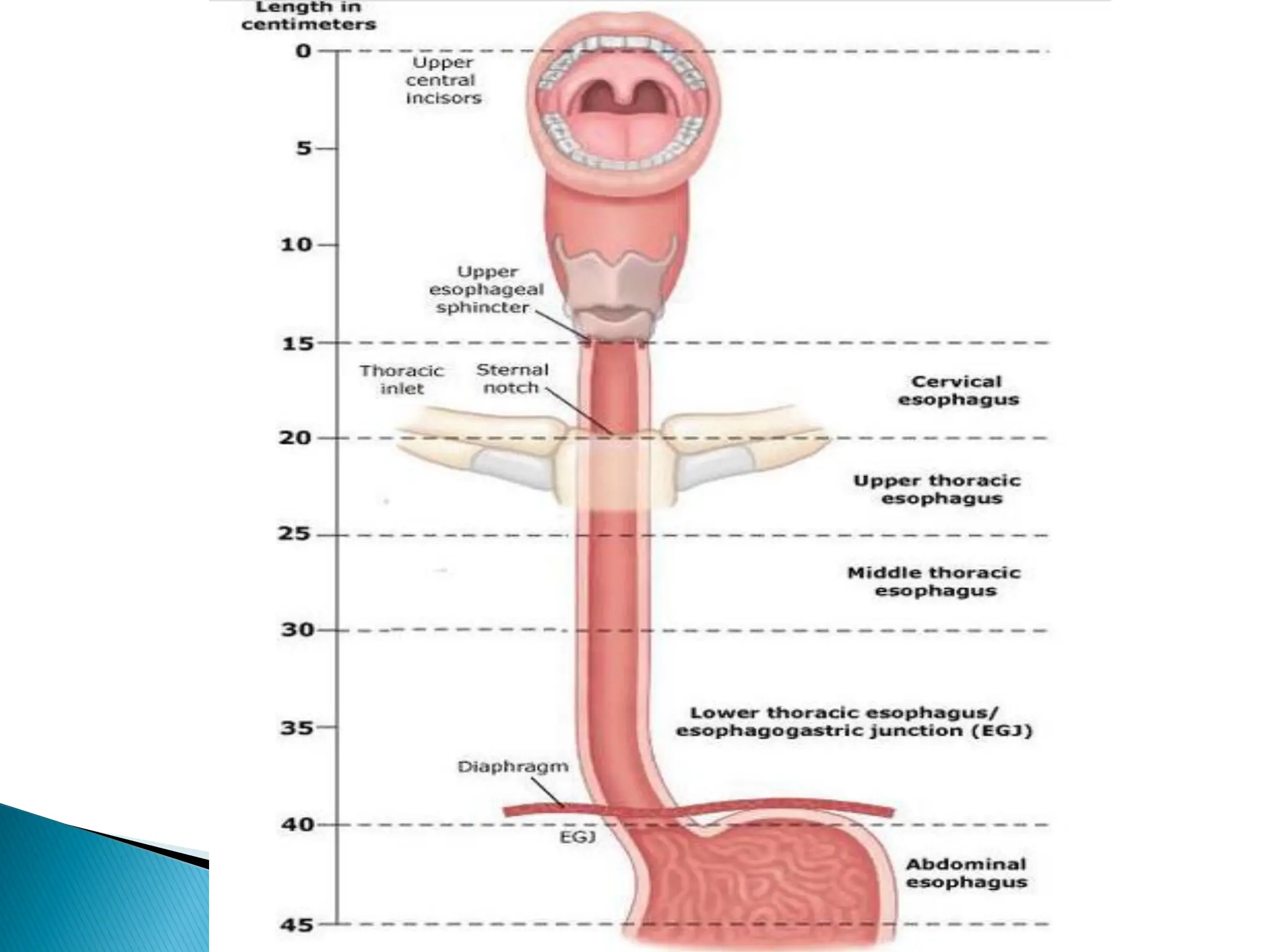
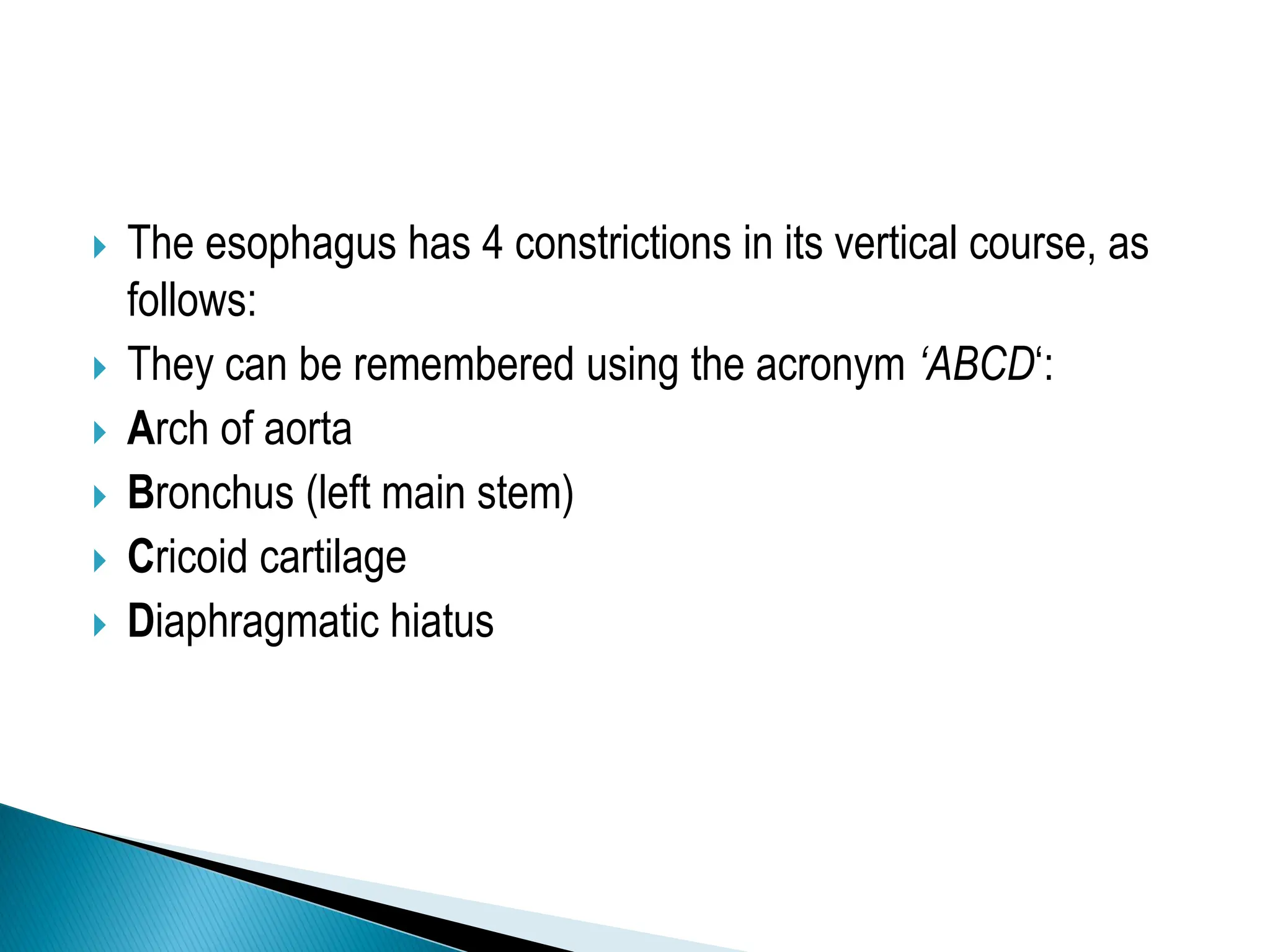
 The esophagus has 4 constrictions in its vertical course, as
follows:
 They can be remembered using the acronym ‘ABCD‘:
 Arch of aorta
 Bronchus (left main stem)
 Cricoid cartilage
 Diaphragmatic hiatus
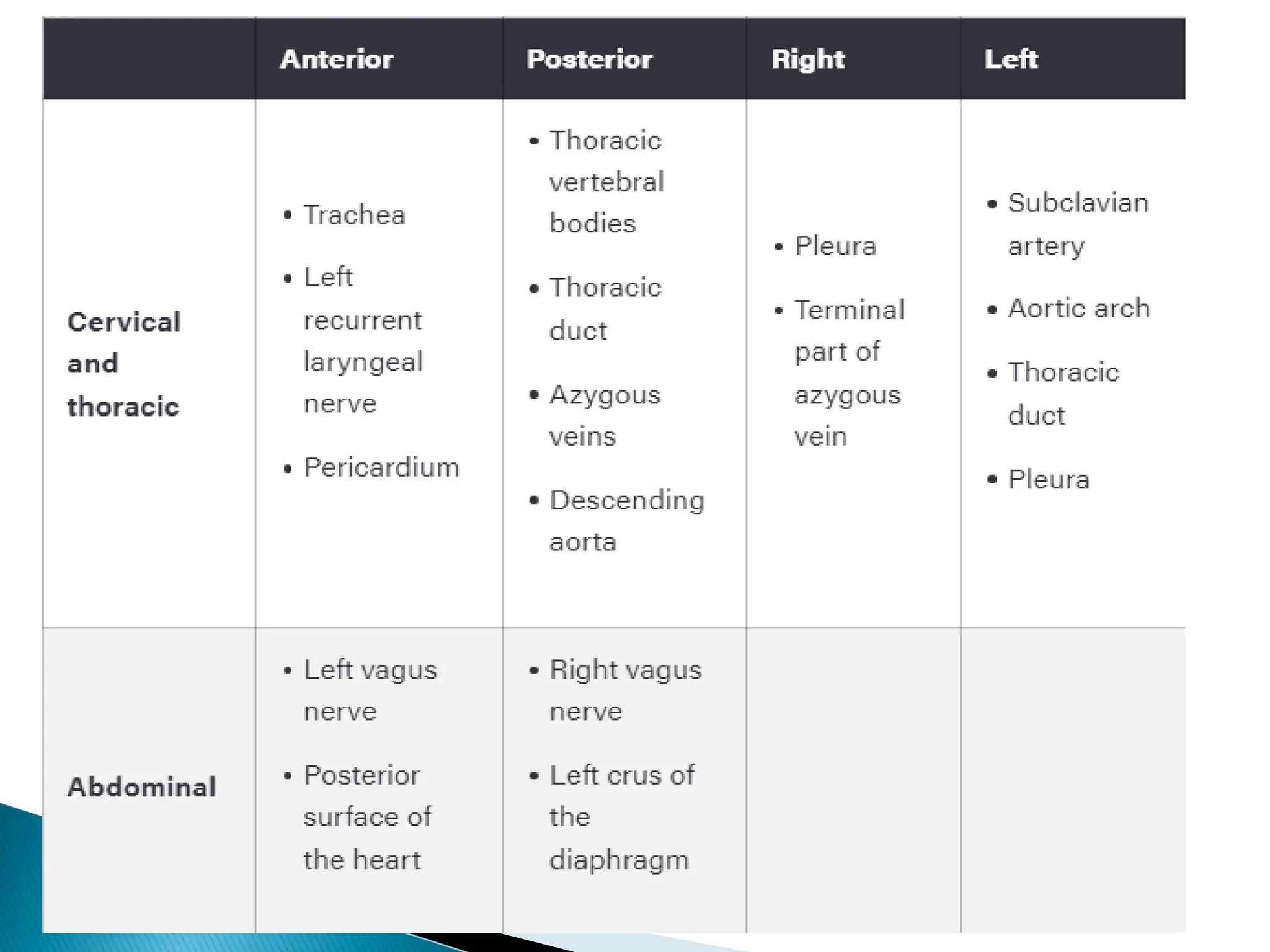
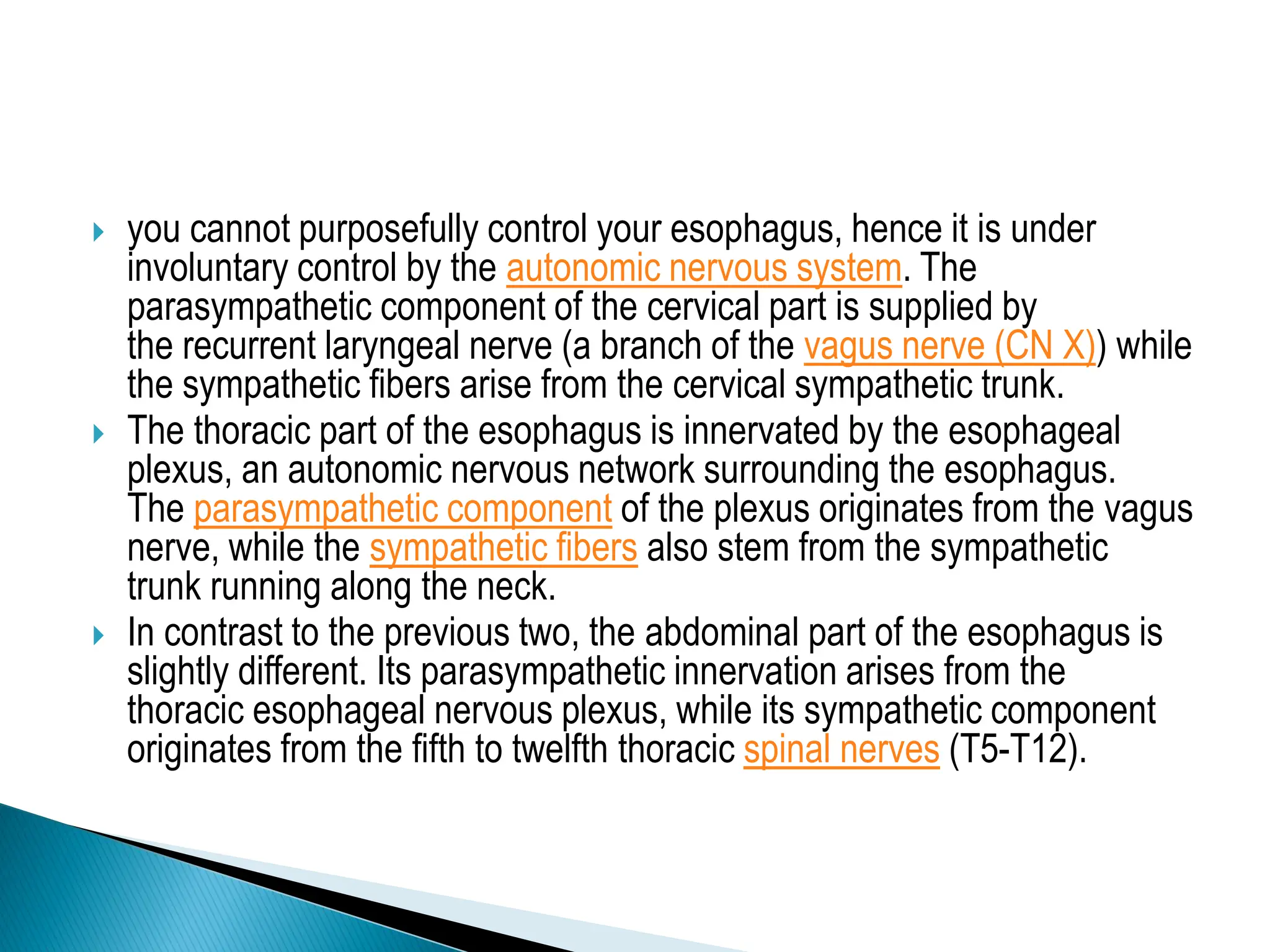
 you cannot purposefully control your esophagus, hence it is under
involuntary control by the autonomic nervous system. The
parasympathetic component of the cervical part is supplied by
the recurrent laryngeal nerve (a branch of the vagus nerve (CN X)) while
the sympathetic fibers arise from the cervical sympathetic trunk.
 The thoracic part of the esophagus is innervated by the esophageal
plexus, an autonomic nervous network surrounding the esophagus.
The parasympathetic component of the plexus originates from the vagus
nerve, while the sympathetic fibers also stem from the sympathetic
trunk running along the neck.
 In contrast to the previous two, the abdominal part of the esophagus is
slightly different. Its parasympathetic innervation arises from the
thoracic esophageal nervous plexus, while its sympathetic component
originates from the fifth to twelfth thoracic spinal nerves (T5-T12).
 Divided into 3 regions
Duodenum
Jejunum
ileum
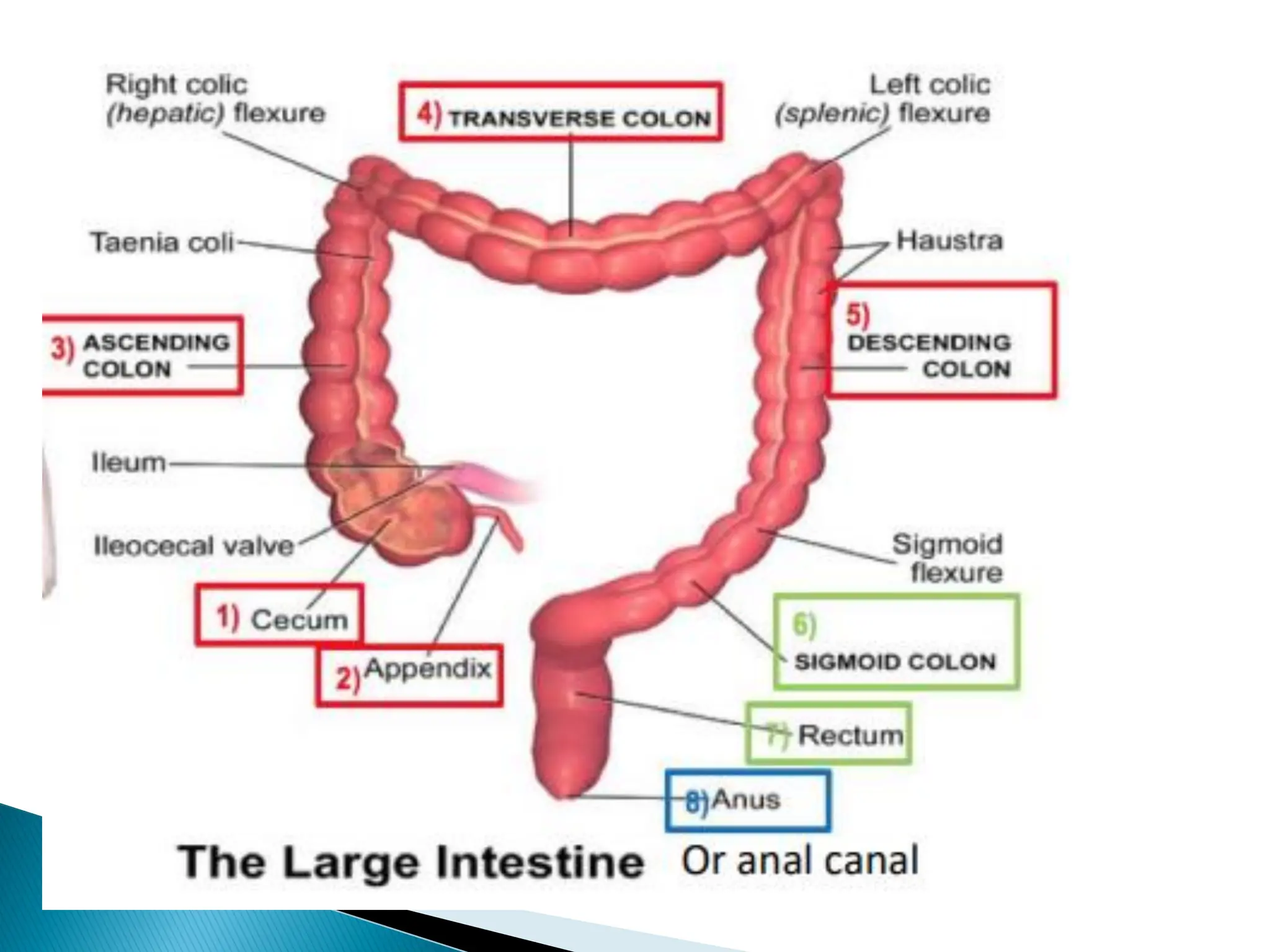
 Cecum
 Appendix
 Colon
 Ascending colon
 Transverse colon
 Descending colon
 Sigmoid colon
 Rectum
 Anal Canal
Digestive System Review anatomy for allied

Digestive System Review anatomy for allied

  • 1.
  • 2.
     Ingestion =intake of food  Digestion = breakdown of complex nutrient molecules into simple nutrient molecules  Absorption = uptake of nutrients into the blood and lymph  Defecation = elimination of undigested material
  • 3.
     Mechanical Digestionis the physical breakdown of food into smaller particles by:  – chewing with teeth  – churning with stomach and intestines  Chemical Digestion is series of hydrolysis reactions by acid (from the stomach) and enzymes (from saliva, stomach, pancreas, intestines) that break down nutrient macromolecules into their monomers: – polysaccharides monosaccharides – proteins (polypeptides) amino acids – fats glycerol and fatty acids
  • 7.
     The oralcavity extends from the lips to the pharynx  covered externally with skin that overlies muscle (orbicularis oris), glands, and connective tissue. Internally they are lined with a mucous membrane
  • 8.
     Its primaryfunction is to serve as the entrance of the alimentary tract and to initiate the digestive process by salivation and propulsion of the alimentary bolus into the pharynx.  It also serves as a secondary respiratory conduit, a site of sound modification for the production of speech, and a chemosensory organ
  • 9.
     It isbound by the lips anteriorly, the cheeks(buccinator Muscle) laterally, the floor of the mouth inferiorly, the oropharynx posteriorly, and the palate superiorly.
  • 15.
     anterior 2/3lies in the mouth, and its posterior 1/3 lies in the pharynx.  Muscles attach the tongue to: -the styloid process & soft palate above. -the mandible & the hyoid bone below  There are 3 types of papillae present on the upper surface of the anterior two thirds of the tongue:  1- The filiform papillae.  2- The fungiform papillae.  3- The vallate papillae.  In the midline, the undersurface of the tongue is connected to the floor of the mouth by a fold of mucous membrane, The frenulum of the tongue.
  • 20.
     1. Sensoryanalysis  • Of material before swallowing  2. Mechanical processing  • Through actions of teeth, tongue, and palatal surfaces  3. Lubrication • Mixing with mucus and salivary gland secretions  4. Limited digestion  • Of carbohydrates and lipids
  • 22.
     The esophagusis a 25-cm long muscular tube that connects the pharynx to the stomach.  extends from the lower border of the cricoid cartilage (at the level of the sixth cervical vertebra) to the cardiac orifice of the stomach at the side of the body of the 11th thoracic vertebra.
  • 25.
     The esophagushas 4 constrictions in its vertical course, as follows:  They can be remembered using the acronym ‘ABCD‘:  Arch of aorta  Bronchus (left main stem)  Cricoid cartilage  Diaphragmatic hiatus
  • 28.
     you cannotpurposefully control your esophagus, hence it is under involuntary control by the autonomic nervous system. The parasympathetic component of the cervical part is supplied by the recurrent laryngeal nerve (a branch of the vagus nerve (CN X)) while the sympathetic fibers arise from the cervical sympathetic trunk.  The thoracic part of the esophagus is innervated by the esophageal plexus, an autonomic nervous network surrounding the esophagus. The parasympathetic component of the plexus originates from the vagus nerve, while the sympathetic fibers also stem from the sympathetic trunk running along the neck.  In contrast to the previous two, the abdominal part of the esophagus is slightly different. Its parasympathetic innervation arises from the thoracic esophageal nervous plexus, while its sympathetic component originates from the fifth to twelfth thoracic spinal nerves (T5-T12).
  • 39.
     Divided into3 regions Duodenum Jejunum ileum
  • 40.
     Cecum  Appendix Colon  Ascending colon  Transverse colon  Descending colon  Sigmoid colon  Rectum  Anal Canal